Antibacterial agents
US20050070523A1
2005-03-31
10/931,400
2004-09-01
✅ Patent granted
US 7,304,050 B2
2007-12-04
-
-
Brenda Coleman
2025-08-30
Abstract:
Compounds of formula I and methods for their preparation are disclosed. Further disclosed are methods of making biologically active compounds of formula I as well as pharmaceutically acceptable compositions comprising compounds of formula I. Compounds of formula I as disclosed herein can be used in a variety of applications, including using the invention compounds to treat bacterial infections.
Inventors:
- Vara Prasad Venkata Nagendra Josyula 8 🇺🇸 Ann Arbor, MI, United States
- Susan Hagen 2 🇺🇸 Canton, MI, United States
Assignee:
- PFIZER INC. 1,836 🇺🇸 New York, NY, United States
Interested in similar patents?
Get notified when new applications in this technology area are published.
Classification:
C07D413/14 » CPC main
Heterocyclic compounds containing two or more hetero rings, at least one ring having nitrogen and oxygen atoms as the only ring hetero atoms containing three or more hetero rings
C07D401/14 » CPC further
Heterocyclic compounds containing two or more hetero rings, having nitrogen atoms as the only ring hetero atoms, at least one ring being a six-membered ring with only one nitrogen atom containing three or more hetero rings
C07D471/04 » CPC further
Heterocyclic compounds containing nitrogen atoms as the only ring hetero atoms in the condensed system, at least one ring being a six-membered ring with one nitrogen atom, not provided for by groups - in which the condensed system contains two hetero rings Ortho-condensed systems
A61K31/55 IPC
Medicinal preparations containing organic active ingredients; Heterocyclic compounds having nitrogen as a ring hetero atom, e.g. guanethidine or rifamycins having seven-membered rings, e.g. azelastine, pentylenetetrazole
C07D223/16 IPC
Heterocyclic compounds containing seven-membered rings having one nitrogen atom as the only ring hetero atom condensed with carbocyclic rings or ring systems Benzazepines; Hydrogenated benzazepines
A61P31/04 » CPC further
Antiinfectives, i.e. antibiotics, antiseptics, chemotherapeutics Antibacterial agents
Description
FIELD OF THE INVENTIONThe invention relates to compounds bearing an oxazolidinone core structure which exhibit antibacterial activity, methods for their preparation, as well as pharmaceutically acceptable compositions comprising such compounds.
BACKGROUND OF THE INVENTIONThe quinones and oxazolidinones are novel classes of antibacterial agents with potent activity against a number of human and veterinary pathogens. However, bacterial resitance to compounds within each of theses classes has been observed. As a result, there is a need for new antibacterial agents that possess the activity profiles of the oxazolidinones and quinones, and yet are active against resistant bacterial strains. A potential drug development strategy that addresses this need is aimed at combining key oxazolidinone and quinone structural motifs in one molecule, thus providing a quinone-oxazolidinone (“quin-ox”) antibacterial hybrid.
SUMMARY OF THE INVENTION These and other needs are met by the present invention, which is directed to a compound of formula I:
or a pharmaceutically acceptable salt thereof wherein
-
- A is O,
- NH, or
- S;
- B is
- C(═O)Ra,
- C(═S)Ra,
- heterocylco,
- heteroaryl,
- C(═O)-heterocyclo,
- C(═N)—CN, or
- C(═O)—heteteroaryl;
- either D is N, E is C, and F is CH when “------” is a bond, or D is CH, E is N, and F is CH2 when “------” is absent;
- J, K, Q independently are CRb or N, with the proviso that when any one of J, K, or Q is N, then the other two are CRb;
- “------” are each independently absent; or are bonds;
- Ra is H,
- (C1-C8)alkyl,
- (C3-C6)cycloalkyl,
- O—(C1-C4)alkyl,
- O—(C3-C6)cycloalkyl,
- S—(C1-C4) alkyl,
- S—(C3-C6)cycloalkyl,
- NH2,
- NH(C1-C4)alkyl,
- N((C1-C4)alkyl)2, or
- NH—(C3-C6)cycloalkyl,
- Rb is H;
- halo,
- (C1-C8)alkyl,
- (C3-C6)cycloalkyl,
- O—(C1-C4)alkyl,
- O—(C3-C6)cycloalkyl,
- S—(C1-C4) alkyl,
- S—(C3-C6)cycloalkyl,
- NH2,
- NH(C1-C4)alkyl,
- N((C1-C4)alkyl)2, or
- NH—(C3-C6)cycloalkyl;
- n is 0, 1, or 2;
- at least one of W, X, or Y is NP and the other two are each independently absent,
- —CH2—,
- —CH2—CH2—, or
- —C═C—;
- P is
wherein
indicates the point of attachment, - Z is N or C, provided that when Z is N, R5 is absent at that position;
- R1 is (C1-C6)alkyl,
- halo(C1-C6)alkyl,
- (C3-C6)cycloalkyl,
- halo(C3-C6)cycloalkyl,
- aryl, and
- heteroaryl;
- R2 is OH,
- O(C1-C6)alkyl,
- O(C3-C6)cycloalkyl,
- wherein m is an integer of from 1 to 10, Q is O or is absent, and R2a is H or (C1-C6)alkyl and R2b is (C1-C6)alkyl, aryl, or heteroaryl,
- O—(CHR2a)n—Y, wherein R2a is as defined above, n is an integer of from 2 to 10, Y is OH or NR2cR2d, wherein R2c and R2d are each independently H, (C1-C6)alkyl, or (C3-C6)cycloalkyl, or
- NR2d, wherein R2d is as defined above,
- wherein
wherein the point of attachment, 2a is as defined above, R2e is H or (C1-C6)alkyl, e is an integer of from 1 to 10, p is an integer of from 2 to 10, and X1 and Y1 are each independently NH or O;
- R3, R4, and R5 are each independently H,
- halo,
- NH2,
- (C1-C6)alkyl,
- halo(C1-C6)alkyl,
- (C1-C6)alkoxy, or
- halo(C1-C6)alkoxy; or
- R1, and R5, together with the carbons to which they are attached, are joined to form a 6-membered substituted or unsubstituted ring containing 1 or 2 heteroatroms selected from NH, N(C1-C6)alkyl, or O.
- A is O,
The invention is also directed to a compound which is
7-{7-[5-(Acetylamino-methyl)-2-oxo-oxazolidin-3-yl]-1,3,4,5-tetrahydro-benzo[c]azepin-2-yl}-8-chloro-1-cyclopropyl-6-fluoro-4-oxo- 1,4-dihydroquinoline-3-carboxylic acid;
7-{7-[5-(Acetylamino-methyl)-2-oxo-oxazolidin-3-yl]-1,3,4,5-tetrahydro-benzo[c]azepin-2-yl}-1-cyclopropyl-6-fluoro-8-methoxy-5-methyl-4-oxo-1,4-dihydro-quinoline-3-carboxylic acid;
7-{7-[5-(Acetylamino-methyl)-2-oxo-oxazolidin-3-yl]-1,3,4,5-tetrahydro-benzo[c]azepin-2-yl}-1-cyclopropyl-6-fluoro-5-methyl-4-oxo-1,4-dihydro-quinoline-3-carboxylic acid;
7-{7-[5-(Acetylamino-methyl)-2-oxo-oxazolidin-3-yl]-1,3,4,5-tetrahydro-benzo[c]azepin-2-yl}-1-cyclopropyl-6-fluoro-8-methoxy-4-oxo-1,4-dihydro-quinoline-3-carboxylic acid;
9-{7-[5-(Acetylamino-methyl)-2-oxo-oxazolidin-3-yl]-1,3,4,5-tetrahydro-benzo[c]azepin-2-yl}-8-fluoro-3-methyl-6-oxo-2,3-dihydro-6H-1-oxa-3a-aza-phenalene-5-carboxylic acid;
7-{7-[5-(Acetylamino-methyl)-2-oxo-oxazolidin-3-yl]-1,2,4,5-tetrahydro-benzo[d]azepin-3-yl}-1-cyclopropyl-6-fluoro-8-methoxy-5-methyl-4-oxo-1,4-dihydro-quinoline-3-carboxylic acid;
7-{7-[5-(Acetylamino-methyl)-2-oxo-oxazolidin-3-yl]-1,2,4,5-tetrahydro-benzo[d]azepin-3-yl}-1-cyclopropyl-6-fluoro-8-methoxy-4-oxo-1,4-dihydro-quinoline-3-carboxylic acid;
7-{7-[5-(Acetylamino-methyl)-2-oxo-oxazolidin-3-yl]-1,2,4,5-tetrahydro-benzo[d]azepin-3-yl}-1-(2,4-difluoro-phenyl)-6-fluoro-4-oxo-1,4-dihydro-[1,8]naphthyridine-3-carboxylic acid;
7-{7-[5-(Acetylamino-methyl)-2-oxo-oxazolidin-3-yl]-1,2,4,5-tetrahydro-benzo[d]azepin-3-yl}-1-cyclopropyl-6-fluoro-4-oxo-1,4-dihydro-quinoline-3-carboxylic acid;
7-{7-[5-(Acetylamino-methyl)-2-oxo-oxazolidin-3-yl]-1,2,4,5-tetrahydro-benzo[d]azepin-3-yl}-8-chloro-1-cyclopropyl-6-fluoro-4-oxo-1,4-dihydro-quinoline-3-carboxylic acid;
7-{7-[5-(Acetylamino-methyl)-2-oxo-oxazolidin-3-yl]-1,2,4,5-tetrahydro-benzo[d]azepin-3-yl}-1-cyclopropyl-6-fluoro-5-methyl4-oxo-1,4-dihydro-quinoline-3-carboxylic acid;
7-{7-[5-(Acetylamino-methyl)-2-oxo-oxazolidin-3-yl]-1,2,4,5-tetrahydro-benzo[d]azepin-3-yl}-1-cyclopropyl-6,8-difluoro-4-oxo-1,4-dihydro-quinoline-3-carboxylic acid;
7-{7-[5-(Acetylamino-methyl)-2-oxo-oxazolidin-3-yl]-1,3,4,5-tetrahydro-benzo[c]azepin-2-yl}-1-cyclopropyl-6,8-difluoro-4-oxo-1,4-dihydro-quinoline-3-carboxylic acid;
7-{7-[5-(Acetylamino-methyl)-2-oxo-oxazolidin-3-yl]-1,2,4,5-tetrahydro-benzo[d]azepin-3-yl}-1-cyclopropyl-6-fluoro-4-oxo-1,4-dihydro-[1,8]naphthyridine-3-carboxylic acid;
7-{7-[5-(Acetylamino-methyl)-2-oxo-oxazolidin-3-yl]-1,3,4,5-tetrahydro-benzo[c]azepin-2-yl}-1-cyclopropyl-6-fluoro-4-oxo-1,4-dihydro-[1,8]naphthyridine-3-carboxylic acid;
7-{7-[5-(Acetylamino-methyl)-2-oxo-oxazolidin-3-yl]-1,3,4,5-tetrahydro-benzo[c]azepin-2-yl}-1-cyclopropyl-6-fluoro-4-oxo-1,4-dihydro-quinoline-3-carboxylic acid;
7-{7-[5-(Acetylamino-methyl)-2-oxo-oxazolidin-3-yl]-1,3,4,5-tetrahydro-benzo[c]azepin-2-yl}-1-ethyl-6-fluoro-4-oxo-1,4-dihydro-[1,8]naphthyridine-3-carboxylic acid; or
7-{7-[5-(Acetylamino-methyl)-2-oxo-oxazolidin-3-yl]-1,3,4,5-tetrahydro-benzo[c]azepin-2-yl}-1-cyclopropyl-8-difluoromethoxy-6-fluoro-4-oxo-1,4-dihydro-[1,8]naphthyridine-3-carboxylic acid.
The invention is also directed to a compound of formula II
or a pharmaceutically acceptable salt thereof wherein
-
- W2 is O or S;
- either D is N, E is C, and F is CH when “------” is a bond, or D is CH, E is N, and F is CH2 when “------” is absent;
- J, K, Q independently are CRb or N, with the proviso that when any one of J, K, or Q is N, then the other two are CRb;
- “------” are each independently absent; or are bonds;
- Ra is H,
- (C1-C8)alkyl,
- (C3-C6)cycloalkyl,
- O—(C1-C4)alkyl,
- O—(C3-C6)cycloalkyl,
- S—(C1-C4) alkyl,
- S—(C3-C6)cycloalkyl,
- NH2,
- NH(C1-C4)alkyl,
- N((C1-C4)alkyl)2, or
- NH—(C3-C6)cycloalkyl,
- Rb is H;
- halo,
- (C1-C8)alkyl,
- (C3-C6)cycloalkyl,
- O—(C1-C4)alkyl,
- O—(C3-C6)cycloalkyl,
- S—(C1-C4) alkyl,
- S—(C3-C6)cycloalkyl,
- NH2,
- NH(C1-C4)alkyl,
- N((C1-C4)alkyl)2, or
- NH—(C3-C6)cycloalkyl;
- n is 0, 1, or 2;
- at least one of W, X, or Y is NP and the other two are each independently absent,
- —CH2—,
- —CH2—CH2—, or
- —C═C—;
- P is
wherein
indicates the point of attachment, - Z is N or C, provided that when Z is N, R5 is absent at that position;
- R1 is (C1-C6)alkyl,
- halo(C1-C6)alkyl,
- (C3-C6)cycloalkyl,
- halo(C3-C6)cycloalkyl,
- aryl, and
- heteroaryl;
- R2 is OH,
- O(C1-C6)alkyl,
- O(C3-C6)cycloalkyl,
- wherein m is an integer of from 1 to 10, Q is O or is absent, and R2a is H or (C1-C6)alkyl and R2b is (C1-C6)alkyl, aryl, or heteroaryl,
- O—(CHR2a)n—Y, wherein R2a is as defined above, n is an integer of from 2 to 10, Y is OH or NR2cR2d, wherein R2c and R2d are each independently H, (C1-C6)alkyl, or (C3-C6)cycloalkyl, or
- NR2d, wherein R2d is as defined above,
wherein - indicates the point of attachment, 2a is as defined above, R2e is H or (C1-C6)alkyl, e is an integer of from 1 to 10, p is an integer of from 2 to 10, and X1 and Y1 are each independently NH or O;
- R3, R4, and R5 are each independently H,
- halo,
- NH2,
- (C1-C6)alkyl,
- halo(C1-C6)alkyl,
- (C1-C6)alkoxy, or
- halo(C1-C6)alkoxy; or
- R1, and R5, together with the carbons to which they are attached, are joined to form a 6-membered substituted or unsubstituted ring containing 1 or 2 heteroatroms selected from NH, N(C1-C6)alkyl, or O; and
- R6 is H,
- OH,
- (C1-C6)alkyl,
- (C3-C6)cycloalkyl,
- (C1-C6)alkoxy,
- (C2-C6)alkenyl,
- NH2,
- NH(C1-C6)alkyl, or
- N((C1-C6)alkyl)2.
The invention is also directed to a compound which is
7-[7-(5-Carbamoyl-2-oxo-oxazolidin-3-yl)-1,3,4,5-tetrahydro-benzo[c]azepin-2-yl]-8-chloro-1-cyclopropyl-6-fluoro-4-oxo-1,4-dihydro-quinoline-3-carboxylic acid;
7-[7-(5-Carbamoyl-2-oxo-oxazolidin-3-yl)-1,3,4,5-tetrahydro-benzo[c]azepin-2-yl]-1-cyclopropyl-6-fluoro-8-methoxy-5-methyl-4-oxo-1,4-dihydro-quinoline-3-carboxylic acid;
7-[7-(5-Carbamoyl-2-oxo-oxazolidin-3-yl)-1,3,4,5-tetrahydro-benzo[c]azepin-2-yl]-1-cyclopropyl-6-fluoro-5-methyl-4-oxo-1,4-dihydro-quinoline-3-carboxylic acid;
7-[7-(5-Carbamoyl-2-oxo-oxazolidin-3-yl)-1,3,4,5-tetrahydro-benzo[c]azepin-2-yl]-1-cyclopropyl-6-fluoro-8-methoxy-4-oxo-1,4-dihydro-quinoline-3-carboxylic acid;
9-[7-(5-Carbamoyl-2-oxo-oxazolidin-3-yl)-1,3,4,5-tetrahydro-benzo[c]azepin-2-yl]-8-fluoro-3-methyl-6-oxo-2,3-dihydro-6H-1-oxa-3a-aza-phenalene-5-carboxylic acid;
7-[7-(5-Carbamoyl-2-oxo-oxazolidin-3-yl)-1,2,4,5-tetrahydro-benzo[d]azepin-3-yl]-1-cyclopropyl-6-fluoro-8-methoxy-5-methyl4-oxo-1,4-dihydro-quinoline-3-carboxylic acid;
7-[7-(5-Carbamoyl-2-oxo-oxazolidin-3-yl)-1,2,4,5-tetrahydro-benzo[d]azepin-3-yl]-1-cyclopropyl-6-fluoro-8-methoxy-4-oxo-1,4-dihydro-quinoline-3-carboxylic acid;
7-[7-(5-Carbamoyl-2-oxo-oxazolidin-3-yl)-1,2,4,5-tetrahydro-benzo[d]azepin-3-yl-]1-(2,4-difluoro-phenyl)-6-fluoro-4-oxo-1,4-dihydro-[1,8]naphthyridine-3-carboxylic acid;
7-[7-(5-Carbamoyl-2-oxo-oxazolidin-3-yl)-1,2,4,5-tetrahydro-benzo[d]azepin-3-yl]-1-cyclopropyl-6-fluoro-4-oxo-1,4-dihydro-quinoline-3-carboxylic acid;
7-[7-(5-Carbamoyl-2-oxo-oxazolidin-3-yl)-1,2,4,5-tetrahydro-benzo[d]azepin-3-yl]-8-chloro-1-cyclopropyl-6-fluoro-4-oxo-1,4-dihydro-quinoline-3-carboxylic acid;
7-[7-(5-Carbamoyl-2-oxo-oxazolidin-3-yl)-1,2,4,5-tetrahydro-benzo[d]azepin-3-yl]-1-cyclopropyl-6-fluoro-5-methyl-4-oxo-1,4-dihydro-quinoline-3-carboxylic acid;
7-[7-(5-Carbamoyl-2-oxo-oxazolidin-3-yl)-1,2,4,5-tetrahydro-benzo[d]azepin-3-yl]-1-cyclopropyl-6,8-difluoro-4-oxo-1,4-dihydro-quinoline-3-carboxylic acid;
7-[7-(5-Carbamoyl-2-oxo-oxazolidin-3-yl)-1,3,4,5-tetrahydro-benzo[c]azepin-2-yl]-1-cyclopropyl-6,8-difluoro-4-oxo-1,4-dihydro-quinoline-3-carboxylic acid;
7-[7-(5-Carbamoyl-2-oxo-oxazolidin-3-yl)-1,2,4,5-tetrahydro-benzo[d]azepin-3-yl]1-cyclopropyl-6-fluoro-4-oxo-1,4-dihydro-[1,8]naphthyridine-3-carboxylic acid;
7-[7-(5-Carbamoyl-2-oxo-oxazolidin-3-yl)-1,3,4,5-tetrahydro-benzo[c]azepin-2-yl]-1-cyclopropyl-6-fluoro-4-oxo-1,4-dihydro-[1,8]naphthyridine-3-carboxylic acid;
7-[7-(5-Carbamoyl-2-oxo-oxazolidin-3-yl)-1,3,4,5-tetrahydro-benzo[c]azepin-2-yl]-1-cyclopropyl-6-fluoro-4-oxo-1,4-dihydro-quinoline-3-carboxylic acid;
7-[7-(5-Carbamoyl-2-oxo-oxazolidin-3-yl)-1,3,4,5-tetrahydro-benzo[c]azepin-2-yl]-1-ethyl-6-fluoro-4-oxo-1,4-dihydro-[1,8]naphthyridine-3-carboxylic acid; or
7-[7-(5-Carbamoyl-2-oxo-oxazolidin-3-yl)-1,3,4,5-tetrahydro-benzo[c]azepin-2-yl]-8-difluoromethoxy-1-ethyl-6-fluoro-4-oxo-1,4-dihydro-quinoline-3-carboxylic acid.
The invention is further directed to a compound of formula III
or a pharmaceutically acceptable salt thereof wherein
-
- either D is N, E is C, and F is CH when “------” is a bond, or D is CH, E is N, and F is CH2 when “------” is absent;
- J, K, Q independently are CRb or N, with the proviso that when any one of J, K, or Q is N, then the other two are CRb;
- “------” are each independently absent; or are bonds;
- Rb is H;
- halo,
- (C1-C8)alkyl,
- (C3-C6)cycloalkyl,
- O—(C1-C4)alkyl,
- O—(C3-C6)cycloalkyl,
- S—(C1-C4)alkyl,
- S—(C3-C6)cycloalkyl,
- NH2,
- NH(C1-C4)alkyl,
- N((C1-C4)alkyl)2, or
- NH—(C3-C6)cycloalkyl;
- n is 0, 1, or 2;
- at least one of W, X, or Y is NP and the other two are each independently absent,
- —CH2—,
- —CH2—CH2—, or
- —C═C—;
- P is
wherein
indicates the point of attachment, - Z is N or C, provided that when Z is N, R5 is absent at that position;
- R1 is (C1-C6)alkyl,
- halo(C1-C6)alkyl,
- (C3-C6)cycloalkyl,
- halo(C3-C6)cycloalkyl,
- aryl, and
- heteroaryl;
- R2 is OH,
- O(C1-C6)alkyl,
- O(C3-C6)cycloalkyl,
- wherein m is an integer of from 1 to 10, Q is O or is absent, and R2a is H or (C1-C6)alkyl and R2b is (C1-C6)alkyl, aryl, or heteroaryl,
- O—(CHR2a)n—Y, wherein R2a is as defined above, n is an integer of from 2 to 10, Y is OH or NR2cR2d, wherein R2c and R2d are each independently H, (C1-C6)alkyl, or (C3-C6)cycloalkyl, or
- NR2d, wherein R2d is as defined above,
wherein - indicates the point of attachment, 2a is as defined above, R2e is H or (C1-C6)alkyl, e is an integer of from 1 to 10, p is an integer of from 2 to 10, and X1 and Y2 are each independently NH or O;
- R3, R4, and R5 are each independently H,
- halo,
- NH2,
- (C1-C6)alkyl,
- halo(C1-C6)alkyl,
- (C1-C6)alkoxy, or
- halo(C1-C6)alkoxy; or
- R1, and R5, together with the carbons to which they are attached, are joined to form a 6-membered substituted or unsubstituted ring containing 1 or 2 heteroatroms selected from NH, N(C1-C6)alkyl, or O; and
- R6 is H,
- OH,
- (C1-C6)alkyl,
- (C3-C6)cycloalkyl,
- (C1-C6)alkoxy,
- (C2-C6)alkenyl,
- NH2,
- NH(C1-C6)alkyl, or
- N((C1-C6)alkyl)2.
What is also provided is a compound which is
8-Chloro-7-[7-(5-cyano-2-oxo-oxazolidin-3-yl)-1,3,4,5-tetrahydro-benzo[c]azepin-2-yl]-1-cyclopropyl-6-fluoro-4-oxo-1,4-dihydro-quinoline-3-carboxylic acid;
7-[7-(5-Cyano-2-oxo-oxazolidin-3-yl)-1,3,4,5-tetrahydro-benzo[c]azepin-2-yl]-1-cyclopropyl-6-fluoro-8-methoxy-5-methyl-4-oxo-1,4-dihydro-quinoline-3-carboxylic acid;
7-[7-(5-Cyano-2-oxo-oxazolidin-3-yl)-1,3,4,5-tetrahydro-benzo[c]azepin-2-yl]-1-cyclopropyl-6-fluoro-5-methyl-4-oxo-1,4-dihydro-quinoline-3-carboxylic acid;
7-[7-(5-Cyano-2-oxo-oxazolidin-3-yl)-1,3,4,5-tetrahydro-benzo[c]azepin-2-yl]-1-cyclopropyl-6-fluoro-8-methoxy-4-oxo-1,4-dihydro-quinoline-3-carboxylic acid;
9-[7-(5-Cyano-2-oxo-oxazolidin-3-yl)-1,3,4,5-tetrahydro-benzo[c]azepin-2-yl]-8-fluoro-3-methyl-6-oxo-2,3-dihydro-6H-1-oxa-3a-aza-phenalene-5-carboxylic acid;
7-[7-(5-Cyano-2-oxo-oxazolidin-3-yl)-1,2,4,5-tetrahydro-benzo[d]azepin-3-yl]-1-cyclopropyl-6-fluoro-8-methoxy-5-methyl-4-oxo-1,4-dihydro-quinoline-3-carboxylic acid;
7-[7-(5-Cyano-2-oxo-oxazolidin-3-yl)-1,2,4,5-tetrahydro-benzo[d]azepin-3-yl]-1-cyclopropyl-6-fluoro-8-methoxy-4-oxo-1,4-dihydro-quinoline-3-carboxylic acid;
7-[7-(5-Cyano-2-oxo-oxazolidin-3-yl)-1,2,4,5-tetrahydro-benzo[d]azepin-3-yl]-1-(2,4-difluoro-phenyl)-6-fluoro-4-oxo-1,4-dihydro-[1,8]naphthyridine-3-carboxylic acid;
7-[7-(5-Cyano-2-oxo-oxazolidin-3-yl)-1,2,4,5,-tetrahydro-benzo[d]azepin-3-yl]-1-cyclopropyl-6-fluoro-4-oxo-1,4-dihydro-quinoline-3-carboxylic acid;
8-Chloro-7-[7-(5-cyano-2-oxo-oxazolidin-3-yl)-1,2,4,5-tetrahydro-benzo[d]azepin-3-yl]-1-cyclopropyl-6-fluoro-4-oxo-1,4-dihydro-quinoline-3-carboxylic acid;
7-[7-(5-Cyano-2-oxo-oxazolidin-3-yl)-1,2,4,5-tetrahydro-benzo[d]azepin-3-yl]-cyclopropyl-6-fluoro-5-methyl-4-oxo-1,4-dihydro-quinoline-3-carboxylic acid;
7-[7-(5-Cyano-2-oxo-oxazolidin-3-yl)-1,2,4,5-tetrahydro-benzo[d]azepin-3-yl]-1-cyclopropyl-6,8-difluoro-4-oxo-1,4-dihydro-quinoline-3-carboxylic acid;
7-[7-(5-Cyano-2-oxo-oxazolidin-3-yl)-1,3,4,5-tetrahydro-benzo[c]azepin-2-yl]-1-cyclopropyl-6,8-difluoro-4-oxo-1,4-dihydro-quinoline-3-carboxylic acid;
7-[7-(5-Cyano-2-oxo-oxazolidin-3-yl)-1,2,4,5-tetrahydro-benzo[d]azepin-3-yl]-1-cyclopropyl-6-fluoro-4-oxo-1,4-dihydro-[1,8]naphthyridine-3-carboxylic acid;
7-[7-(5-Cyano-2-oxo-oxazolidin-3-yl)-1,3,4,5-tetrahydro-benzo[c]azepin-2-yl]-1-cyclopropyl-6-fluoro-4-oxo-1,4-dihydro-[1,8]naphthyridine-3-carboxylic acid;
7-[7-(5-Cyano-2-oxo-oxazolidin-3-yl)-1,3,4,5-tetrahydro-benzo[c]azepin-2-yl]-1-cyclopropyl-6-fluoro-4-oxo-1,4-dihydro-quinoline-3-carboxylic acid;
7-[7-(5-Cyano-2-oxo-oxazolidin-3-yl)-1,3,4,5-tetrahydro-benzo[c]azepin-2-yl]-1-ethyl-6-fluoro-4-oxo-1,4-dihydro-[1,8]naphthyridine-3-carboxylic acid; or
7-[7-(5-Cyano-2-oxo-oxazolidin-3-yl)-1,3,4,5-tetrahydro-benzo[c]azepin-2-yl]-8-difluoromethoxy-1-ethyl-6-fluoro-4-oxo-1,4-dihydro-quinoline-3-carboxylic acid.
The invention also provides a compound of A compound of formula IV
or a pharmaceutically acceptable salt thereof wherein
-
- Z2 is
or CN; - either D is N, E is C, and F is CH when “------” is a bond, or D is CH, E is N, and F is CH2 when “------” is absent;
- J, K, Q independently are CRb or N, with the proviso that when any one of J, K, or Q is N, then the other two are CRb;
- “------” are each independently absent; or are bonds;
- Ra is H,
- (C1-C8)alkyl,
- (C3-C6)cycloalkyl,
- O—(C1-C4)alkyl,
- O—(C3-C6)cycloalkyl,
- S—(C1-C4)alkyl,
- S—(C3-C6)cycloalkyl,
- NH2,
- NH(C1-C4)alkyl,
- N((C1-C4)alkyl)2, or
- NH—(C3-C6)cycloalkyl,
- Rb is H;
- halo,
- (C1-C8)alkyl,
- (C3-C6)cycloalkyl,
- O—(C1-C4)alkyl,
- O—(C3-C6)cycloalkyl,
- S—(C1-C4)alkyl,
- S—(C3-C6)cycloalkyl,
- NH2,
- NH(C1-C4)alkyl,
- N((C1-C4)alkyl)2, or
- NH—(C3-C6)cycloalkyl;
- n is 0, 1, or 2;
- at least one of W, X, or Y is NP and the other two are each independently absent,
- —CH2—,
- —CH2—CH2—, or
- —C═C—;
- P is
wherein
indicates the point of attachment, - Z is N or C, provided that when Z is N, R5 is absent at that position;
- R1 is (C1-C6)alkyl,
- halo(C1-C6)alkyl,
- (C3-C6)cycloalkyl,
- halo(C3-C6)cycloalkyl,
- aryl, and
- heteroaryl;
- R2 is OH,
- O(C1-C6)alkyl,
- O(C3-C6)cycloalkyl,
- wherein m is an integer of from 1 to 10, Q is O or is absent, and R2a is H or (C1-C6)alkyl and R2bis (C1-C6)alkyl, aryl, or heteroaryl,
- O—(CHR2a )n—Y, wherein R2a is as defined above, n is an integer of from 2 to 10, Y is OH or NR2cR2d, wherein R2c and R2d are each independently H, (C1-C6)alkyl, or (C3-C6)cycloalkyl, or
- NR2d, wherein R2d is as defined above,
wherein - indicates the point of attachment, 2a is as defined above, R2e is H or (C1-C6)alkyl, e is an integer of from 1 to 10, p is an integer of from 2 to 10, and X1 and Y1 are each independently NH or O;
- R3, R4, and R5 are each independently H,
- halo,
- NH2,
- (C1-C6)alkyl,
- halo(C1-C6)alkyl,
- (C1-C6)alkoxy, or
- halo(C1-C6)alkoxy; or
- R1 and R5, together with the carbons to which they are attached, are joined to form a 6-membered substituted or unsubstituted ring containing 1 or 2 heteroatroms selected from NH, N(C1-C6)alkyl, O.
- Z2 is
The invention also provides a pharmaceutical formulation comprising a compound of formulas I, II, or III, admixed with a pharmaceutically acceptable diluent, carrier, or excipient.
The invention also provides a method of treating a bacterial infection in a mammal, comprising administering to a mammal in need thereof an effective amount of a compound of formulas I, II, or III.
DETAILED DESCRIPTION OF THE INVENTIONReference will now be made in detail to presently preferred compositions or embodiments and methods of the invention, which constitute the best modes of practicing the invention presently known to the inventors.
The term “alkyl” as used herein refers to a straight or branched hydrocarbon of from 1 to 11 carbon atoms and includes, for example, methyl, ethyl, n-propyl, isopropyl, n-butyl, sec-butyl, isobutyl, tert-butyl, n-pentyl, n-hexyl, and the like. The alkyl group can also be substituted with one or more of the substituents selected from lower alkoxy, lower thioalkoxy, halogen, nitro, cyano, oxo, thio, —OH, —SH, —F, —CF3, —OCF3, —NO2, —CO2H, —CO2C1-C6 alkyl, —NH2, —NHC1—C6 alkyl,
—CONR8R9, or —N(C1-C6alkyl)2.
The terms “(C1-C8)alkyl”, “(C1-C6)alkyl”, and “(C1-C4)alkyl” as used herein refer to subsets of alkyl which mean a straight or branched hydrocarbon radical having from 1 to 8, 1 to 6, or 1 to 4 carbon atoms respectivly, and include, for example, methyl, ethyl, n-propyl, isopropyl, n-butyl, sec-butyl, isobutyl, tert-butyl, n-pentyl, n-hexyl, n-heptyl, and n-octyl and the like.
The term “(C3-C6)cycloalkyl” means a hydrocarbon ring containing from 3 to 6 carbon atoms, for example, cyclopropyl, cyclobutyl, cyclopentyl, or cyclohexyl. Where possible, the cycloalkyl group may contain double bonds, for example, 3-cyclohexen-1-yl. The cycloalkyl ring may be unsubstituted or substituted by one or more substituents selected from alkyl, alkoxy, thioalkoxy, hydroxy, thiol, nitro, halogen, amino, alkyl and dialkylamino, formyl, carboxyl, CN, —NH—CO—R, —CO—NHR, —CO2R, —COR, wherein R is defined as above, aryl, heteroaryl, wherein alkyl, aryl, and heteroaryl are as defined herein, or as indicated above for alkyl, alkenyl, and alkynyl substitutents. Examples of substituted cycloalkyl groups include fluorocyclopropyl, 2-iodocyclobutyl, 2,3-dimethylcyclopentyl, 2,2-dimethoxycyclohexyl, and 3-phenylcyclopentyl.
The term “halo” includes chlorine, fluorine, bromine, and iodine.
The term “aryl” means a cyclic or polycyclic aromatic ring having from 5 to 12 carbon atoms, and being unsubstituted or substituted with one or more of the substituent groups recited above for alkyl groups including, halogen, nitro, cyano —OH, —SH, —F, —CF3, —OCF3, —NO2,
CO2C1—C6 alkyl, —NH2, —NHC1—C6 alkyl, —CONRaRb, wherein Ra and Rb are H or (C1-C6)alkyl or (C3-C6)cycloalkyl, SO2alkyl, —SO2NH2, or —N(C1-C6alkyl)2. Examples include, but are not limited to phenyl, 2-chlorophenyl, 3-chlorophenyl, 4-chlorophenyl, 2-methylphenyl, 3-methylphenyl, 4-methylphenyl, 2-methoxyphenyl, 3-methoxyphenyl, 4-methoxyphenyl, 2-chloro-3-methylphenyl, 2-chloro-4-methylphenyl, 2-chloro-5-methylphenyl, 3-chloro-2-methylphenyl, 3-chloro4-methylphenyl, 4-chloro-2-methylphenyl, 4-chloro-3-methylphenyl, 5-chloro-2-methylphenyl, 2,3-dichlorophenyl, 2,5-dichlorophenyl, 3,4-dichlorophenyl, 2,3-dimethylphenyl, 3,4-dimethylphenyl, thienyl, naphthyl, 4-thionaphthyl, tetralinyl, anthracinyl, phenanthrenyl, benzonaphthenyl, fluorenyl, 2-acetamidofluoren-9-yl, and 4′-bromobiphenyl.
The term “heteroaryl” means an aromatic cyclic or polycyclic ring system having from 1 to 4 heteroatoms selected from N, O, and S. Typical heteroaryl groups include 2- or 3-thienyl, 2- or 3-furanyl, 2- or 3-pyrrolyl, 2-, 4-, or 5-imidazolyl, 3-, 4-, or 5-pyrazolyl, 2-, 4-, or 5-thiazolyl, 3-, 4-, or 5-isothiazolyl, 2-, 4-, or 5-oxazolyl, 3-, 4-, or 5-isoxazolyl, 3- or 5-1,2,4-triazolyl, 4- or 5-1,2,3-triazolyl, tetrazolyl, 2-, 3-, or 4-pyridinyl, 3-, 4-, or 5-pyridazinyl, 2-pyrazinyl, 2-, 4-, or 5-pyrimidinyl, 2-, 3-, 4-, 5-, 6-, 7-, or 8-quinolinyl, 1-, 3-, 4-, 5-, 6-, 7-, or 8-isoquinolinyl, 2-, 3-, 4-, 5-, 6-, or 7-indolyl, 2-, 3-, 4-, 5-, 6-, or 7-benzo[b]thienyl, 2-, 4-, 5-, 6-, or 7-benzoxazolyl, 2-, 4-, 5-, 6-, or 7-benzimidazolyl, 2-, 4-, 5-, 6-, or 7-benzothiazolyl. The heteroaryl groups may be unsubstituted or substituted by 1 to 3 substituents selected from those described above for alkyl, alkenyl, and alkynyl, for example, cyanothienyl and formylpyrrolyl. Preferred aromatic fused heterocyclic rings of from 8 to 10 atoms include but are not limited to 2-, 3-, 4-, 5-, 6-, 7-, or 8-quinolinyl, 1-, 3-, 4-, 5-, 6-, 7-, or 8-isoquinolinyl-, 2-, 3-, 4-, 5-, 6-, or 7-indolyl, 2-, 3-, 4-, 5-, 6-, or 7-benzo[b]thienyl, 2-, 4-, 5-, 6-, or 7-benzoxazolyl, 2-, 4-, 5-, 6-, or 7-benzimidazolyl, 2-, 4-, 5-, 6-, or 7-benzothiazolyl. Heteroaryl also includes 2- and 3- aminomethylfuran, 2- and 3- aminomethylthiophene and the like.
The term “heterocyclic” means a monocyclic, fused, bridged, or spiro bicyclic heterocyclic ring systems. Monocyclic heterocyclic rings contain from about 3 to 12 ring atoms, with from 1 to 5 heteroatoms selected from N, O, and S, and preferably from 3 to 7 member atoms, in the ring. Bicyclic heterocyclics contain from about 5 to about 17 ring atoms, preferably from 5 to 12 ring atoms. Bicyclic heterocyclic rings may be fused, spiro, or bridged ring systems. Examples of heterocyclic groups include cyclic ethers (oxiranes) such as ethyleneoxide, tetrahydrofuran, dioxane, and substituted cyclic ethers, wherein the substituents are those described above for the alkyl and cycloalkyl groups. Typical substituted cyclic ethers include propyleneoxide, phenyloxirane (styrene oxide), cis-2-butene-oxide (2,3-dimethyloxirane), 3-chlorotetrahydrofuran, 2,6-dimethyl-1,4-dioxane, and the like. Heterocycles containing nitrogen are groups such as pyrrolidine, piperidine, piperazine, tetrahydrotriazine, tetrahydropyrazole, and substituted groups such as 3-aminopyrrolidine, 4-methylpiperazin-1-yl, and the like. Typical sulfur containing heterocycles include tetrahydrothiophene, dihydro-1,3-dithiol-2-yl, and hexahydrothiophen4-yl and substituted groups such as aminomethyl thiophene. Other commonly employed heterocycles include dihydro-oxathiol4-yl, dihydro-1H-isoindole, tetrahydro-oxazolyl, tetrahydro-oxadiazolyl, tetrahydrodioxazolyl, tetrahydrooxathiazolyl, hexahydrotriazinyl, tetrahydro-oxazinyl, morpholinyl, thiomorpholinyl, tetrahydropyrimidinyl, dioxolinyl, octahydrobenzofuranyl, octahydrobenzimidazolyl, and octahydrobenzothiazolyl. For heterocycles containing sulfur, the oxidized sulfur heterocycles containing SO or SO2 groups are also included. Examples include the sulfoxide and sulfone forms of tetrahydrothiophene.
The term “heteroaryl” means an aromatic cyclic or fused polycyclic ring system having from 1 to 8 heteroatoms selected from N, O, and S. The heteroaryl groups or fused heteroaryl groups may be unsubstituted or substituted by 1 to 3 substituents selected from those described above for alkyl, alkenyl, and alkynyl, for example, cyanothienyl and formylpyrrolyl.
Typical heteroaryl groups include 2- or 3-thienyl, 2- or 3-furyl, 2- or 3-pyrrolyl, 2-, 4-, or 5-imidazolyl, 3-, 4-, or 5-pyrazolyl, 2-, 4-, or 5-thiazolyl, 3-, 4-, or 5-isothiazolyl, 2-, 4-, or 5-oxazolyl, 3-, 4-, or 5-isoxazolyl, 3- or 5-1,2,4-triazolyl, 4- or 5-1,2,3-triazolyl, tetrazolyl, 2-, 3-, or 4-pyridyl, 3- or 4-pyridazinyl, 3-, 4-, or 5-pyrazinyl, 2-pyrazinyl, 2-, 4-, or 5-pyrimidinyl.
Aromatic fused heteroaryl groups of from 8 to 20 atoms include but are not limited to 1-, 2-, 3-, 5-, 6-, 7-, or 8-indolizinyl, 1-, 3-, 4-, 5-, 6-, or 7-isoindolyl, 2-, 3-, 4-, 5-, 6-, or 7-indolyl, 2-, 3-, 4-, 5-, 6-, or 7-indazolyl, 2-, 4-, 5-, 6-, 7-, or 8-purinyl, 1-, 2-, 3-, 4-, 6-, 7-, 8-, or 9-quinolizinyl, 2-, 3-, 4-, 5-, 6-, 7-, or 8-quinoliyl, 1-, 3-, 4-, 5-, 6-, 7-, or 8-isoquinoliyl, 1-, 4-, 5-, 6-, 7-, or 8-phthalazinyl, 2-, 3-, 4-, 5-, or 6-naphthyridinyl, 2-, 3-, 5-, 6-, 7-, or 8-quinazolinyl, 3-, 4-, 5-, 6-, 7-, or 8-cinnolinyl, 2-, 4-, 6-, or 7-pteridinyl, 1-, 2-, 3-, 4-, 5-, 6-, 7-, or 8-4aH carbazolyl, 1-, 2-, 3-, 4-, 5-, 6-, 7-, or 8-carbzaolyl, 1-, 3-, 4-, 5-, 6-, 7-, 8-, or 9-carbolinyl, 1-, 2-, 3-, 4-, 6-, 7-, 8-, 9-, or 10-phenanthridinyl, 1-, 2-, 3-, 4-, 5-, 6-, 7-, 8-, or 9-acridinyl, 1-, 2-, 4-, 5-, 6-, 7-, 8-, or 9-perimidinyl, 2-, 3-, 4-, 5-, 6-, 8-, 9-, or 10-phenathrolinyl, 1-, 2-, 3-, 4-, 6-, 7-, 8-, or 9-phenazinyl, 1-, 2-, 3-, 4-, 6-, 7-, 8-, 9-, or 10-phenothiazinyl, 1-, 2-, 3-, 4-, 6-, 7-, 8-, 9-, or 10-phenoxazinyl, 2-, 3-, 4-, 5-, 6-, or l-, 3-, 4-, 5-, 6-, 7-, 8-, 9-, or 10-benzisoqinolinyl, 2-, 3-, 4-, or thieno[2,3-b]furanyl, 2-, 3-, 5-, 6-, 7-, 8-, 9-, 10-, or 11-7H-pyrazino[2,3-c]carbazolyl,2-, 3-, 5-, 6-, or 7-2H-furo[3,2-b]-pyranyl, 2-, 3-, 4-, 5-, 7-, or 8-5H-pyrido[2,3-d]-o-oxazinyl, 1-, 3-, or 5-1H-pyrazolo[4,3-d]-oxazolyl, 2-, 4-, or 5-4H-imidazo[4,5-d]thiazolyl, 3-, 5-, or 8-pyrazino[2,3-d]pyridazinyl, 2-, 3-, 5-, or 6-imidazo[2,1-b]thiazolyl, 1-, 3-, 6-, 7-, 8-, or 9-furo[3,4-c]cinnolinyl, 1-, 2-, 3-, 4-, 5-, 6-, 8-, 9-, 10, or 11-4H-pyrido[2,3-c]carbazolyl, 2-, 3-, 6-, or 7-imidazo[1,2-b][1,2,4]triazinyl, 7-benzo[b]thienyl, 2-, 4-, 5-, 6-, or 7-benzoxazolyl, 2-, 4-, 5-, 6-, or 7-benzimidazolyl, 2-, 4-, 5-, 6-, or 7-benzothiazolyl, 1-, 2-, 4-, 5-, 6-, 7-, 8-, or 9-benzoxapinyl, 2-, 4-, 5-, 6-, 7-, or 8-benzoxazinyl, 1-, 2-, 3-, 5-, 6-, 7-, 8-, 9-, 10-, or 1 1-1H-pyrrolo[1,2-b][2]benzazapinyl. Typical fused heteroary groups include, but are not limited to 2-, 3-, 4-, 5-, 6-, 7-, or 8-quinolinyl, 1-, 3-, 4-, 5-, 6-, 7-, or 8-isoquinolinyl, 2-, 3-, 4-, 5-, 6-, or 7-indolyl, 2-, 3-, 4-, 5-, 6-, or 7-benzo[b]thienyl, 2-, 4-, 5-, 6-, or 7-benzoxazolyl, 2-, 4-, 5-, 6-, or 7-benzimidazolyl, 2-, 4-, 5-, 6-, or 7-benzothiazolyl.
When a bond is represented by a line such as “------” this is meant to represent that the bond may be absent or present provided that the resultant compound is stable and of satisfactory valency.
The term “patient” means all mammals, including humans. Other examples of patients include cows, dogs, cats, goats, sheep, pigs, and rabbits.
A “therapeutically effective amount” is an amount of a compound of the present invention that when administered to a patient, elicits the desired therapeutic outcome; i.e., inhibits bacterial infection.
It will be appreciated by those skilled in the art that compounds of the invention having one or more chiral centers may exist in and be isolated in optically active and racemic forms. Some compounds may exhibit polymorphism. It is to be understood that the present invention encompasses any racemic, optically-active, polymorphic, geometric, or stereoisomeric form, or mixtures thereof, of a compound of the invention, which possess the useful properties described herein, it being well known in the art how to prepare optically active forms (for example, by resolution of the racemic form by recrystallization techniques, by synthesis from optically-active starting materials, by chiral synthesis, or by chromatographic separation using a chiral stationary phase) and how to determine activity or cytotoxicity using the standard tests described herein, or using other similar tests which are well known in the art.
A “prodrug” is an inactive derivative of a drug molecule that requires a chemical or an enzymatic biotransformation in order to release the active parent drug in the body.
Specific and preferred values for compounds of Formulas I, II, and III are listed below for radicals, substituents, and ranges are for illustration purposes only, and they do not exclude other defined values or other values within defined ranges for the radicals and substituents.
Thus, turning now to a compound of formula I, a specific value for A is NH, as designated in formula IA.
A specific value for B is as designated in formula IB.
Specific values for D, E, and F are as designated in formula IC.
A specific value for K is as designated in formula ID.
A specific value for J is as designated in formula IE.
A specific value for
is as designated in formula IF.
Specific values for W, X, and Y are as desiginated in formulas IG-1, IG-2, and 1G-3.
Specific values for R1-R5 in compounds of formula IG-1, IG-2, and IG-3 include:
-
- R1 is (C1-C6)alkyl, cyclopropanyl, fluorocyclopropanyl, phenyl, 1,3 difluorophenyl, and
- R2 is CO2H;
- R3 is H, NH2,or (C1-C6)alkyl;
- R4 is H or halo; and
- R5 is H,
- halo,
- NH2,
- (C1-C6)alkyl,
- halo(C1-C6)alkyl,
- (C1-C6)alkoxy, or
- halo(C1-C6)alkoxy; or
- R1, and R5, together with the carbons to which they are attached, are joined to form a 6-membered substituted or unsubstituted ring containing 1 heteroatom selected from NH, N(C1-C6)alkyl, or O.
Turning now to a compound of formula II, a specific value for NR6 is as designated in formula IIA.
A specific value for W2 is as designated in formula IIB.
Specific values of D, E, and F are as designated in formula IIC.
A specific value for K is as designated in formula IID.
A specific value of J is as designated in formula IIE.
A specific value for
is as designated in formula IIF.
Specific values for W, X, and Y are as designated in formulas IIG-1, IIG-2, and IIG-3.
Specific values for R1-R5 in compounds of formula IIG-1, IIG-2, and IIG-3 include:
-
- R1 is (C1-C6)alkyl, cyclopropanyl, fluorocyclopropanyl, phenyl, 1,3 difluorophenyl, and
- R2 is CO2H;
- R3 is H, NH2,or (C1-C6)alkyl;
- R4 is H or halo; and
- R5 is H,
- halo,
- NH2,
- (C1-C6)alkyl,
- halo(C1-C6)alkyl,
- (C1-C6)alkoxy, or
- halo(C1-C6)alkoxy; or
- R1, and R5, together with the carbons to which they are attached, are joined to form a 6-membered substituted or unsubstituted ring containing 1 heteroatom selected from NH, N(C1-C6)alkyl, or O.
Turning now to a compound of formula III, specific values for D, E, and F are aas designated in formula IIIA.
A spcific value for K is as designated in formula IIIB.
A spcific value for J is as designated in formula IIIC.
A specific value for
is as designated in formula IIID.
Specific values for W, X, and Y are as designated in formulas IIIE-1, IIIE-2, and IIIE-3.
Specific values for R1-R5 in compounds of formula IIIG-1, IIIG-2, and IIIG-3 include:
-
- R1 is (C1-C6)alkyl, cyclopropanyl, fluorocyclopropanyl, phenyl, 1,3 difluorophenyl, and
- R2 is CO2H;
- R3 is H, NH2,or (C1-C6)alkyl;
- R4 is H or halo; and
- R5 is H,
- halo,
- NH2,
- (C1-C6)alkyl,
- halo(C1-C6)alkyl,
- (C1-C6)alkoxy, or
- halo(C1-C6)alkoxy; or
- R1, and R5, together with the carbons to which they are attached, are joined to form a 6-membered substituted or unsubstituted ring containing 1 heteroatom selected from NH, N(C1-C6)alkyl, or O.
As is readily apparent from this disclosure, compounds of the present invention are characterized by a quinone subunit which is covalently attached to a to a oxazolidinyl subunit. As retrosynthetically depicted in Scheme I, invention compounds can be prepared by coupling an appropriately substituted quinone subunit to an azepine-bearing oxazolidinone core. Reflecting the synthetic strategies summarized in Scheme I, the following section describing the preparation of the invention compounds has two sections. The first section summarizes the the preparation of oxazolidinone subunits. As a note, the preparation of the requisite oxazolidinone subunits was originally described in U.S. Provisional Patent Application Ser. No. 60/445,957, filed Feb. 7, 2003. The second section summarizes the coupling of quinone intermediates to the oxazolidinone subunits.
A. Preparation of Oxazolidinone Subunits
As retrosynthetically depicted in Scheme II, the oxazolidinone subunits used to prepare the invention compounds can be prepared from the corresponding benzocycloheptane via coupling procedures (D) available to the skilled artisan employing the oxazolidinone subunit itself or a synthon thereof. The requisite benzocycloheptyl compounds can be accessed via (A) annelation; (B) elaboration of a commercially available benzocycloheptane (B); or (C) ring expansion of a substituted di- tetrahydro naphthalene.
1. Subunits wherein Z2 is
-
- a. Preparation of Common Intermediates
The following compounds which were used in the synthesis of the compounds of the invention wherein Z2 is
were prepared as follows.
(R)-5-Hydroxymethyl-oxazolidin-2-one
The title compound was prepared according to the procedure described by K. Danielmeier and E. Steckhan in Tetrahedron Assymetry 1995, 6(5), 1181-1190.
N-(2,4-Dimethoxy-benzyl)-N-(2-oxo-oxazolidin-5-ylmethyl)-acetamide
The title compound was prepared as described in Tetrahedron Letters, 2001, 42, 3681.
(S)-N-Oxiranylmethyl-acetamide
To a solution of (S)-N-acetyl-3-bromo-2-acetoxypropylamine (5 g, 0.021 mmol) in acetonitrile (20 mL) and methanol (20 mL) was added potassium carbonate (0.021 mmol) portion-wise. The reaction mixture was stirred at 0° C. for 1 hour and then warmed to room temperature slowly and stirred overnight. To it 50 mL of ethyl acetate was added and the precipitate was removed by filtration. Organic solvents were removed and the residue was dissolved in 60 mL of ethyl acetate and remaining precipitate was filtered and organic solution was concentration under reduced pressure to yield 1.6 g (90% yield) to obtain the title compound.
b. Preparation of Bicyclo-containing Oxazolidinones
Schemes 1 and 2 provide approaches to bicyclo subunits containing an N linkage at the 1-position. Hofmann-type ring enlargement of from chroman-4-one analogue 1-1A (step I) provides amide 1-2A. Nitration (step II), and sequential reduction of the amide (step III), and nitro moieties (step IV) affords amine 1-5A. Protection of the amine moieties in 1-5A (step V), followed by coupling to the oxazolidinone core following the chemistry described above for Scheme I (step VI) provides the intermediate 1-6A. The acetamide side chain of the oxazolidinone is then elaborated in steps VII-X, via mesylation (step VII), conversion to the azide (step VIII), reduction to the amine (step IX), acetamide formation (step X), and deprotection (step XI) to provide the target compound 1-12A.
Scheme 2 provides an approach to amide 1-3A in a minimum of steps. Thus, the brominated analogue is coupled to the oxazolidinone core (step I) as outlined in Scheme 1. Deprotection (step II) provides the target compound 9B-3.
Scheme 3 provides approaches to bicyclo subunits containing N-linkages, wherein the N is “walked” around the ring to the 2- and 3-positions. Hofmann-type ring enlargement of chromanone analogue 3-1 (step I) provides a mixture of amide products 3-2A and 3-2B. Upon separation, 3-2A and 3-2B are converted to target compounds 3-10A and 3-10B via a multistep sequence commencing with reduction of the amide moiety (step II); protection (step III); and attachment of the oxazolidinone subunit (step IV) to provide compounds 3-5A and 3-5B. The acetamide side chain of the oxazolidinone subunit is then elaborated (steps V/V′-VIII/VIII′), using the chemistry described for Scheme 1 to provide the target compounds 3-9A and 3-9B, which are deprotected (step IX) to provide the target compound 3-10A and 3-10B.
2. Subunits wherein Z2 is
or CN
Subunits wherein Z2 is
or CN can be prepared as provided in Scheme 4. Thus, azepin 1 can be protected as the amide using methods available to the skilled artisan. It is important to note that the nitrogen atom of the azepine can be occupy any position (the 1- through the 5- positons) of the azepine ring. Nitration of compound 2 provides compound 3, which is subsequently hydrogenated to afford amine 4. Construction of the oxazolidinone ring is constructed from the amine moiety in compound 4 and reagents known to the skilled artisan to provide compound 5. The ester moiety in compound 5 is then converted to an amide moiety using methanol and ammonia to give compound 6. Compound 6 can then be converted to nitrile 7 using a dehydration agent.
B. Preparation of Quinone-Oxazolidinone Invention Compounds
As depicted in Scheme I, invention compounds are prepared by coupling an appropriately substituted quinone
wherein X is halo, triflate or a similar leaving group known to the skilled artisan and R2 is a borate ester CO2-BF2, is combined with an azepine-oxazolidinone subunit and triethylamine, in acetonitrile. The mixture is typically heated at 60° C. for 1 or more days. The mixture is then cooled to room temperature and concentrated. The residue is chromatographed over silica gel, typically eluting with MeOH in dichloromethane, to give the intermediate borate ester. This material is suspended in excess triethylamine, ethanol, and water. The mixture is refluxed for 1 to 2 days. The mixture is then cooled to room temperature and concentrated. The residue is partitioned between dichloromethane and water. The organic layer is washed with brine, dried (MgSO4), and concentrated to give the invention compound, which can be further purified by recrystallization, typically from EtOH-ether.
Pharmaceutical Formulations
The present invention also provides pharmaceutical compositions which comprise a bioactive invention compound or a salt such as a pharmaceutically acceptable salt thereof and optionally a pharmaceutically acceptable carrier. The compositions include those in a form adapted for oral, topical or parenteral use and can be used for the treatment of bacterial infection in mammals including humans.
The compounds, such as antibiotic compounds, also referred to herein as antimicrobial compounds, according to the invention can be formulated for administration in any convenient way for use in human or veterinary medicine, by analogy with other bioactive agents such as antibiotics. Such methods are known in the art and are not described in detail herein.
The composition can be formulated for administration by any route known in the art, such as subdermal, by-inhalation, oral, topical or parenteral. The compositions may be in any form known in the art, including but not limited to tablets, capsules, powders, granules, lozenges, creams or liquid preparations, such as oral or sterile parenteral solutions or suspensions.
The topical formulations of the present invention can be presented as, for instance, ointments, creams or lotions, eye ointments and eye or ear drops, impregnated dressings and aerosols, and may contain appropriate conventional additives such as preservatives, solvents to assist drug penetration and emollients in ointments and creams.
The formulations may also contain compatible conventional carriers, such as cream or ointment bases and ethanol or oleyl alcohol for lotions. Such carriers may be present, for example, from about 1% up to about 98% of the formulation. For example, they may form up to about 80% of the formulation.
Tablets and capsules for oral administration may be in unit dose presentation form, and may contain conventional excipients such as binding agents, for example syrup, acacia, gelatin, sorbitol, tragacanth, or polyvinylpyrollidone; fillers, for example lactose, sugar, maize-starch, calcium phosphate, sorbitol or glycine; tabletting lubricants, for example magnesium stearate, talc, polyethylene glycol or silica; disintegrants, for example potato starch; or acceptable wetting agents such as sodium lauryl sulphate. The tablets may be coated according to methods will known in normal pharmaceutical practice.
Oral liquid preparations may be in the form of, for example, aqueous or oily suspensions, solutions, emulsions, syrups or elixirs, or may be presented as a dry product for reconstitution with water or other suitable vehicle before use. Such liquid preparations may contain conventional additives, such as suspending agents, for example sorbitol, methyl cellulose, glucose syrup, gelatin, hydroxyethyl cellulose, carboxymethyl cellulose, aluminium stearate gel or hydrogenated edible fats, emulsifying agents, for example lecithin, sorbitan monooleate, or acacia; non-aqueous vehicles (which may include edible oils), for example almond oil, oily esters such as glycerine, propylene glycol, or ethyl alcohol; preservatives, for example methyl or propyl p-hydroxybenzoate or sorbic acid, and, if desired, conventional flavoring or coloring agents.
For parenteral administration, fluid unit dosage forms are prepared utilizing the compound and a sterile vehicle, water being preferred. The compound, depending on the vehicle and concentration used, can be either suspended or dissolved in the vehicle or other suitable solvent. In preparing solutions, the compound can be dissolved in water for injection and filter sterilized before filling into a suitable vial or ampoule and sealing. Advantageously, agents such as a local anesthetic preservative and buffering agents can be dissolved in the vehicle. To enhance the stability, the composition can be frozen after filling into the vial and the water removed under vacuum. The dry lyophilized powder is then sealed in the vial and an accompanying vial of water for injection may be supplied to reconstitute the liquid prior to use. Parenteral suspensions are prepared in substantially the same manner except that the compound is suspended in the vehicle instead of being dissolved and sterilization cannot be accomplished by filtration. The compound can be sterilized by exposure to ethylene oxide before suspending in the sterile vehicle. Advantageously, a surfactant or wetting agent is included in the composition to facilitate uniform distribution of the compound.
The compositions may contain, for example, from about 0.1% by weight, e.g., from about 10-60% by weight, of the active material, depending on the method of administration. Where the compositions comprise dosage units, each unit will contain, for example, from about 50-500 mg of the active ingredient. The dosage as employed for adult human treatment will range, for example, from about 100 to 3000 mg per day, for instance 1500 mg per day depending on the route and frequency of administration. Such a dosage corresponds to about 1.5 to 50 mg/kg per day. Suitably the dosage is, for example, from about 5 to 20 mg/kg per day.
Biological Activity
The invention compounds can be screened to identify bioactive molecules with different biological activities using methods available in the art. The bioactive molecules, for example, can possess activity against a cellular target, including but not limited to enzymes and receptors, or a microorganism. A target cellular ligand or microorganism is one that is known or believed to be of importance in the etiology or progression of a disease. Examples of disease states for which compounds can be screened for biological activity include, but are not limited to, inflammation, infection, hypertension, central nervous system disorders, and cardiovascular disorders.
In one embodiment, the invention provides methods of treating or preventing an infectious disorder in a subject, such as a human or other animal subject, are provided, by administering an effective amount of an invention compound as disclosed herein to the subject. In one embodiment, the compound is administered in a pharmaceutically acceptable form optionally in a pharmaceutically acceptable carrier. As used herein, an “infectious disorder” is any disorder characterized by the presence of a microbial infection, such as bacterial infections. Such infectious disorders include, for example central nervous system infections, external ear infections, infections of the middle ear, such as acute otitis media, infections of the cranial sinuses, eye infections, infections of the oral cavity, such as infections of the teeth, gums and mucosa, upper respiratory tract infections, lower respiratory tract infections, genitourinary infections, gastrointestinal infections, gynecological infections, septicemia, bone and joint infections, skin and skin structure infections, bacterial endocarditis, burns, antibacterial prophylaxis of surgery, and antibacterial prophylaxis in immunosuppressed patients, such as patients receiving cancer chemotherapy, or organ transplant patients. The compounds and compositions comprising the compounds can be administered by routes such as topically, locally or systemically. Systemic application includes any method of introducing the compound into the tissues of the body, e.g., intrathecal, epidural, intramuscular, transdermal, intravenous, intraperitoneal, subcutaneous, sublingual, rectal, and oral administration. The specific dosage of antimicrobial to be administered, as well as the duration of treatment, may be adjusted as needed.
The compounds of the invention may be used for the treatment or prevention of infectious disorders caused by a variety of bacterial organisms. Examples include Gram positive and Gram negative aerobic and anaerobic bacteria, including Staphylococci, for example S. aureus; Enterococci, for example E. faecalis; Streptococci, for example S. pneumoniae; Haemophilus, for example H. influenza; Moraxella, for example M. catarrhalis; and Escherichia, for example E. coli. Other examples include Mycobacteria, for example M. tuberculosis; intercellular microbes, for example Chlamydia and Rickettsiae; and Mycoplasma, for example M. pneumoniae.
The ability of a compound of the invention to inhibit bacterial growth, demonstrate in vivo activity, and enhanced pharmacokinetics are demonstrated using pharmacological models that are well known to the art, for example, using models such as the tests described below.
Test A—Antibacterial Assays
The compounds of the present invention were tested against an assortment of Gram-negative and Gram-positive organisms using standard microtitration techniques (Cohen et. al., Antimicrob., 1985;28:766; Heifetz, et. al., Antimicrob., 1974;6: 124). The results of the evaluation are shown in Tables 1A and B.
| TABLE 1A | |
| Minimum Inhibitory | |
| Concentrations μg/mL | |
| Gram Negative Bacteria |
| Compound No. or | H. influenzae | M. catarrhalis | E. coli | |
| Example No. | HI3542 | BC3534 | Tol C | |
| 12 | 0.06 | 0.25 | 4 | |
| 13 | 0.06 | 1 | 4 | |
| 14 | 0.06 | 2 | 16 | |
| 15 | 0.06 | 4 | 4 | |
| 16 | 0.125 | 16 | 64 | |
| 1 | 0.06 | 0.25 | 2 | |
| 2 | 0.06 | 8 | 16 | |
| 11 | 0.06 | 0.5 | 8 | |
| 3 | 0.06 | 16 | 32 | |
| 4 | 0.06 | 0.5 | 2 | |
| 6 | 0.06 | 0.13 | 2 | |
| 5 | 0.06 | 2 | 8 | |
| 7 | 0.06 | 0.25 | 2 | |
| 8 | 0.06 | 2 | 2 | |
| 9 | 0.06 | 0.5 | 4 | |
| 10 | 0.06 | 0.13 | 1 | |
| 17 | 0.5 | 64 | 64 | |
| 18 | 0.06 | 2 | 16 | |
| TABLE 1B | ||
| Minimum Inhibitory | ||
| Concentrations μg/mL | ||
| Compound | Gram Positive Bacteria |
| Structure or | E. faecalis | S. aureus | S pyogenes | |
| Example No. | MGH-2 | UC-76 | C203 | |
| 12 | 1 | 0.25 | 1 | |
| 13 | 8 | 0.5 | 2 | |
| 14 | 16 | 0.5 | 8 | |
| 15 | 4 | 2 | 4 | |
| 16 | 32 | 8 | 4 | |
| 1 | 1 | 0.06 | 2 | |
| 2 | 8 | 0.06 | 8 | |
| 11 | 8 | 0.06 | 16 | |
| 3 | 32 | 1 | 16 | |
| 4 | 1 | 0.06 | 1 | |
| 6 | 0.25 | 0.06 | 0.25 | |
| 5 | 32 | 1 | 8 | |
| 7 | 0.5 | 0.06 | 1 | |
| 8 | 16 | 0.5 | 8 | |
| 9 | 8 | 0.13 | 4 | |
| 10 | 0.25 | 0.06 | 0.25 | |
| 17 | 64 | 64 | 64 | |
| 18 | 8 | 1 | 0.06 | |
The compounds of the present invention were tested against E. coli transcription and translation (TnT) assay. The TnT assay is a cell free system that utilizes an E. coli S30 fraction and a “premix” to transcribe and translate the firefly luciferase gene from an exogenously supplied plasmid DNA. The amount of luciferase produced is measured by observing the luminescence produced after addition of a luciferase assay reagent. The TnT assay reagents, including the luciferase reporter plasmid pBESTluc, were purchased from Promega Corporation. The protocol was based upon the manufacturer's instructions (Promega Technical Bulletin number 92 “E. coli S30 Extract System for Circular DNA”). Luciferase assay reagent (LucLite Plus) was purchased from Packard Biosciences.
The assay was conducted in white, flat-bottomed, polystyrene 96-well plates. Each well contained S30, premix, amino acids, compound and DNA in a total volume of 35 microliters. The reactions were allowed to incubate at room temperature for 20 minutes, then quenched with 35 microliters of LucLite Plus. The plate was then sealed with an aluminum foil lid and allowed to mix on a plate shaker for five minutes. The plate was then uncovered and read on the LJL Analyst using the standard luminescence protocol. The assay can also be read with a Perkin-Elmer Microbeta Trilux using a 1450-105 96 well plate cassette utilizing a protocol with a 10 second counting time, no background correction, and upper PMT usage. The results of the evaluation are shown in Table 1C.
| TABLE 2C | ||
| Minimum Inhibitory | ||
| Compound Structure or | Concentrations μg/mL | |
| Example No. | E. coli TnT Assay | |
| 12 | 9.3 | |
| 13 | 0.6 | |
| 14 | 15 | |
| 15 | 15 | |
| 16 | 10 | |
| 1 | 9.4 | |
| 2 | 9.6 | |
| 11 | 10 | |
| 3 | — | |
| 4 | 4.0 | |
| 6 | 9.6 | |
| 5 | 22.4 | |
| 7 | 11.8 | |
| 8 | 23.0 | |
| 9 | 13.0 | |
| 10 | 5.4 | |
the following example are provided to illustrate but not limit the claimed invention.
EXAMPLE 1 7-{7-[5-(Acetylamino-methyl)-2-oxo-oxazolidin-3-yl]-1,3,4,5-tetrahydro-benzo[c]azepin-2-yl}-8-chloro-1-cyclopropyl-6-fluoro-4-oxo-1,4-dihydro-quinoline-3-carboxylic acidA mixture of 0.16 g (0.46 mmol) of 8-chloro-1-cyclopropyl-6,7-difluoro-4-oxo-1,4-dihydro-4-oxo-1,4-dihydro-quinoline-3-carboxylic acid boron difluoride chelate (prepared as in European Patent Application 0352123, 1989; Chem. Abstr. 1990, 113, 78178k), 0.14 g (0.46 mmol) of N-[2-oxo-3-(2,3,4,5-tetrahydro-1H-benzo[c]azepin-7-yl)-oxazolidin-5-ylmethyl]-acetamide, 0.14 g (1.4 mmol) of triethylamine, and acetonitrile (10 mL) was heated at 60° C. for 2 days. The mixture was cooled to room temperature and concentrated. The residue was chromatographed over silica gel, eluting with 10% MeOH in dichloromethane, to give the intermediate borate ester. This material was suspended in 10 equivalents of triethylamine, ethanol (EtOH)(10 mL) and water (0.5 mL) and was refluxed for 18 hours. The mixture was cooled to room temperature and concentrated. The residue was partitioned between dichloromethane and water. The organic layer was washed with brine, dried (MgSO4), and concentrated to give the title compound, which was recrystallized from EtOH-ether. MS (APCI): AP+, 583.2. NMR (CDCl3) 0.94 (m, 2 H), 1.27 (m, 2 H), 1.99 (m plus s, 5 H total), 3.03 (m, 2 H), 3.57 (m, 3 H), 3.66-3.77 (m, 2 H), 4.03 (t, 1 H), 4.29 (m, 1 H), 4.40 (s, 2 H), 4.73 (m, 1 H), 5.94 (br t, 1 H), 7.02 (d, J=8 Hz, 1 H), 7.20 (m, partially obscured by solvent, 1 H), 7.38 (d, J=2 Hz, 1 H), 8.00 (d, J=11 Hz, 1 H), 8.87 (s, 1 H).
EXAMPLE 2 7-{7-[5-(Acetylamino-methyl)-2-oxo-oxazolidin-3-yl]-1,3,4,5-tetrahydro-benzo[c]azepin-2-yl}-1-cyclopropyl-6-fluoro-8-methoxy-5-methyl-4-oxo-1,4-dihydro-quinoline-3-carboxylic acidThe title compound was prepared in a procedure analogous to that used in Example 1, using 1-cyclopropyl-6,7-difluoro-8-methoxy-5-methyl-4-oxo-1,4-dihydro-quinoline-3-carboxylic acid boron difluoride chelate. MS (APCI) AP+, 593.2. NMR (CDCl3) 0.85 (m, 2 H), 1.14-1.19 (m, 2 H), 1.99 (s plus m, 5 H), 2.72 (d, J=3 Hz, 3 H), 3.05 (m, 2 H), 3.35 (s, 3 H), 3.54-3.59 (m, 1 H), 3.67-3.77 (m, 4 H), 3.98-4.05 (m plus q, 2 H), 4.47 (s, 2 H), 4.7 (m, 1 H), 5.88 (br t, 1 H), 7.07 (d, J=8.3 Hz, 1 H), 7.21 (m, partially obscured by CDCl3, 1 H), 7.37 (d, J=2.2 Hz, 1 H), 8.74 (s, 1 H)
EXAMPLE 3 7-{7-[5-(Acetylamino-methyl)-2-oxo-oxazolidin-3-yl]-1,3,4,5-tetrahydro-benzo[c]azepin-2-yl}-1-cyclopropyl-6-fluoro-5-methyl-4-oxo-1,4-dihydro-quinoline-3-carboxylic acidThe title compound was prepared in a procedure analogous to that used in Example 1, using 1-cyclopropyl-6,7-difluoro -5-methyl-4-oxo-1,4-dihydro-quinoline-3-carboxylic acid boron difluoride chelate. MS (APCI) AP+, 563.2 NMR (DMSO) 1.01 (m, 2 H), 1.20 (m, 2 H), 1.75 (s, 3 H), 1.93 (m, 2 H), 2.69 (d, J=3 Hz, 3 H), 3.01 (m, 2 H), 3.33 (m, partially obscured by water), 3.60-3.64 (m, 2 H), 3.90 (m, 2 H), 4.00 (t, 1 H), 4.59-4.64 (m, 1 H), 4.75 (s, 2 H), 7.20-7.27 (m, 2 H), 7.34 (m, 1 H), 8.14 (t, 1 H), 8.80 (s, 1 H).
EXAMPLE 4 7-{7-[5-(Acetylamino-methyl)-2-oxo-oxazolidin-3-yl]-1,3,4,5-tetrahydro-benzo[c]azepin-2-yl}-1-cyclopropyl-6-fluoro-8-methoxy-4-oxo-1,4-dihydro-quinoline-3-carboxylic acidThe title compound was prepared in a procedure analogous to that used in Example 1, using 1-cyclopropyl-6,7-difluoro-8-methoxy-4-oxo-1,4-dihydro-quinoline-3-carboxylic acid boron difluoride chelate. The product was purified via trituration with ether. MS (APCI) AP+, 579.2. NMR (CDCl3) 1.00 (m, 2 H), 1.15-1.24 (m, 2 H), 1.99 (m plus s, 5 H), 3.03 (m, 2 H), 3.43 (s, 3 H), 3.53-3.59 (m, 1 H), 3.66-3.77 (m, 4 H), 3.97-4.05 (m, 2 H), 4.46 (s, 2 H), 4.70-4.75 (m, 1 H), 5.90 (br t, 1 H), 7.07 (d, J=8.3 Hz, 1 H), 7.19 (m, partially obscured by solvent, 1 H), 7.37 (d, 1 H), 7.82 (d, J=12 Hz, 1 H), 8.78 (s, 1 H).
EXAMPLE 5 9-{7-[5-(Acetylamino-methyl)-2-oxo-oxazolidin-3-yl]-1,3,4,5-tetrahydro-benzo[c]azepin-2-yl}-8-fluoro-3-methyl-6-oxo-2,3-dihydro-6H-1-oxa-3a-aza-phenalene-5-carboxylic acidThe title compound was prepared in a procedure analogous to that used in Example 1, using 8,9-difluoro-3-methyl-6-oxo-2,3-dihydro-6H-1-oxa-3a-aza-phenalene-5-carboxylic acid boron difluoride chelate. The product was purified via trituration with EtOH. MS (APCI) AP+, 565.2. NMR (CDCl3) 1.58 (d, J=6.8 Hz, 3 H), 1.98 (m plus s, 5 H), 3.01 (br t, 2 H), 3.54-3.57 (m, 1 H), 3.60-3.77 (m, 4 H), 4.02 (t, 1 H), 4.27 (m, 1 H), 4.34-4.46 (m, 4 H), 4.73 (m, 1 H), 5.93 (br t, 1 H), 7.00 (d, J=8.3 Hz, 1 H), 7.20 (m, 1 H), 7.35 (m, 1 H), 7.69 (d, J=12.2 Hz, 1 H), 8.55 (s, 1 H).
EXAMPLE 6 7-{7-[5-(Acetylamino-methyl)-2-oxo-oxazolidin-3-yl]-1,2,4,5-tetrahydro-benzo[d]azepin-3-yl}-1-cyclopropyl-6-fluoro-8-methoxy-5-methyl-4-oxo-1,4-dihydro-quinoline-3-carboxylic acidA mixture of 0.12 g (0.34 mmol) of 1-cyclopropyl-6,7-difluoro-8-methoxy-5-methyl-4-oxo-1,4-dihydro-quinoline-3-carboxylic acid boron difluoride chelate, 0.10 g (0.34 mmol) of N-[2-oxo-3-(2,3,4,5-tetrahydro-1H-benzo[d]azepin-7-yl)-oxazolidin-5-ylmethyl]-acetamide, 0.10 g (1.0 mmol) of triethylamine, and acetonitrile (10 mL) was heated at 60° C. for 2 days. The mixture was cooled to room temperature and concentrated. The residue was chromatographed over silica gel, eluting with 10% MeOH in dichloromethane, to give the intermediate borate ester. This material was suspended in 10 equivalents of triethylamine, EtOH (10 mL) and water (0.5 mL) and was refluxed for 18 hours. The mixture was cooled to room temperature and concentrated. The residue was partitioned between dichloromethane and water. The organic layer was washed with brine, dried (MgSO4), and concentrated. The title compound was isolated via silica gel chromatography, eluting with 10% MeOH in CH2Cl2. MS (APCI): AP+, 593.2. NMR (CDCl3) 0.83 (m, 2 H), 1.13 (m, 2 H), 2.00 (s, 3 H), 2.74 (d, J=3 Hz, 3 H), 3.08 (m, 4 H), 3.44 (m, 5 H), 3.58 (s plus m, 4 H), 3.67-3.71 (m, 1 H), 3.75-3.79 (m, 1 H), 3.98-4.06 (m plus t, 2 H), 4.75 (m, 1 H), 5.97 (br t, 1 H), 7.13 (d, J=8.3 Hz, 1 H), 7.20 (m, partially obscured by CDC13, 1 H), 7.38 (m, 1 H), 8.75 (s, 1 H)
EXAMPLE 7 7-{7-[5-(Acetylamino-methyl)-2-oxo-oxazolidin-3-yl]-1,2,4,5-tetrahydro-benzo[d]azepin-3-yl}-1-cyclopropyl-6-fluoro-8-methoxy-4-oxo-1,4-dihydro-quinoline-3-carboxylic acidThe title compound was prepared in a procedure analogous to that used in Example 6, using 1-cyclopropyl-6,7-difluoro-8-methoxy-4-oxo-1,4-dihydro-quinoline-3-carboxylic acid boron difluoride chelate. MS (APCI) AP+, 579.2 NMR (CDCl3) 0.98 (m, 2 H), 1.15-1.22 (m, 2 H), 2.00 (s, 3 H, acetyl), 3.08 (br t, 4 H), 3.45 (m, 4 H), 3.54-3.60 (m, 1 H), 3.69 (m plus s, 4 H total), 3.72-3.78 (m, 1 H), 3.97-4.06 (m plus t, 2 H), 4.71-4.76 (m, 1 H), 5.91 (br t, 1 H), 7.13 (d, J=8.3 Hz, 1 H), 7.20 (m, partially obscured by solvent, 1 H), 7.38 (m, 1 H), 7.87 (d, J=11.7 Hz, 1 H), 8.78 (s, 1 H).
EXAMPLE 8 7-{7-[5-(Acetylamino-methyl)-2-oxo-oxazolidin-3-yl]-1,2,4,5-tetrahydro-benzo[d]azepin-3-yl}-1-(2,4-difluoro-phenyl)-6-fluoro-4-oxo-1,4-dihydro-[1,8]naphthyridine-3-carboxylic acidThe title compound was prepared in a procedure analogous to that used in Example 6, using 7-chloro-1-(2,4-difluoro-phenyl)-6-fluoro-4-oxo-1,4-dihydro-[1,8]naphthyridine-3-carboxylic acid boron difluoride chelate. The product was purified via silica gel chromatography, eluting with 10% MeOH in CH2Cl2. MS (APCI) AP+, 622.2. NMR (CDCl3) 1.98 (s, 3 H), 2.80 (m, 4 H), 3.53-3.60 (m, 1 H), 3.65-3.74 (m, 6 H), 3.96-4.01 (m, 1 H), 4.69-4.75 (m, 1 H), 5.91 (br t, 1 H), 7.09 (m, 1 H), 7.13 (m, 3 H), 7.32 (m, 1 H), 7.36-7.42 (m, 1 H), 8.08 (d, J=14.4 Hz, 1 H), 8.63 (s, 1 H).
EXAMPLE 9 7-{7-[5-(Acetylamino-methyl)-2-oxo-oxazolidin-3-yl]-1,2,4,5-tetrahydro-benzo[d]azepin-3-yl}-1-cyclopropyl-6-fluoro-4-oxo-1,4-dihydro-quinoline-3-carboxylic acidThe title compound was prepared in a procedure analogous to that used in Example 6, using 1-cyclopropyl-6,7-difluoro-4-oxo-1,4-dihydro-quinoline-3-carboxylic acid boron difluoride chelate. MS (APCI) AP+, 549.2 NMR (CDCl3) 1.10-1.17 (m, 2 H), 1.29-1.34 (m, 2 H),1.93 (s, 3 H), 3.05-3.10 (m, 4 H), 3.44-3.51 (m, 1 H), 3.54-3.60 (m, 6 H), 3.71-3.75 (m, 1H), 3.96 (t, 1 H), 4.69 (m, 1 H), 6.78 (br t, 1 H), 7.08 (d, 1 H), 7.17 (m, 1 H), 7.26 (m, partially obscured by solvent, 1 H), 7.36 (s, 1 H), 7.93 (d, J=13.7 Hz, 1 H), 8.67 (s, 1 H).
EXAMPLE 10 7-{7-[5-(Acetylamino-methyl)-2-oxo-oxazolidin-3-yl]-1,2,4,5-tetrahydro-benzo[d]azepin-3-yl}-8-chloro-1-cyclopropyl-6-fluoro-4-oxo-1,4-dihydro-quinoline-3-carboxylic acidThe title compound was prepared in a procedure analogous to that used in Example 6, using 8-chloro-1-cyclopropyl-6,7-difluoro-4-oxo-1,4-dihydro-quinoline-3-carboxylic acid boron difluoride chelate. MS (APCI) AP+, 583.2 NMR (CDCl3) 0.95 (m, 2 H), 1.30 (m, 2 H), 2.00 (s, 3 H), 3.10-3.14 (m, 4 H), 3.40-3.45 (m, 4 H), 3.55-3.61 (m, 1 H), 3.67-3.78 (m, 2 H), 4.04 (t, 1 H), 4.33 (m, 1 H), 4.74 (m, 1 H), 5.90 (br t, 1 H), 7.13 (m, 1 H), 7.20 (m, partially obscured by solvent, 1 H), 7.38 (d, 2.2 Hz, 1 H), 8.01 (d, J=11 Hz, 1 H), 8.89 (s, 1 H).
EXAMPLE 11 7-{7-[5-(Acetylamino-methyl)-2-oxo-oxazolidin-3-yl]-1,2,4,5-tetrahydro-benzo[d]azepin-3-yl}-1-cyclopropyl-6-fluoro-5-methyl-4-oxo-1,4-dihydro-quinoline-3-carboxylic acidThe title compound was prepared in a procedure analogous to that used in Example 6, using 1-cyclopropyl-6,7-difluoro-5-methyl-4-oxo-1,4-dihydro-quinoline-3-carboxylic acid boron difluoride chelate. The product was triturated with EtOH to purify. MS (APCI) AP+, 563.2. NMR (CDCl3) 1.10-1.15 (m, 2 H), 1.30-1.34 (m, 2 H), 1.99 (s, 3 H), 2.81 (d, J=3.4 Hz, 3 H), 3.07-3.13 (m, 4 H), 3.40-3.43 (m, 1 H), 3.54-3.61 (m, 5 H), 3.66-3.77 (m, 2 H), 4.02 (t, 1 H), 4.70-4.76 (m, 1 H), 5.94 (br t, 1 H), 7.11-7.22 (m, 2 H—maybe 3 H—partially obscured by CDCl3), 7.42 (d, J=2 Hz, 1 H), 8.69 (s, 1 H).
EXAMPLE 12 7-{7-[5-(Acetylamino-methyl)-2-oxo-oxazolidin-3-yl]-1,2,4,5-tetrahydro-benzo[d]azepin-3-yl}-1-cyclopropyl-6,8-difluoro-4-oxo-1,4-dihydro-quinoline-3-carboxylic acidThe title compound was prepared in a procedure analogous to that used in Example 6, using N-[2-Oxo-3-(2,3,4,5-tetrahydro-1H-benzo[d]azepin-7-yl)-oxazolidin-5-ylmethyl]-acetamide (0.25 g) and 1-Cyclopropyl-6,7,8-trifluoro-4-oxo-1,4-dihydro-quinoline-3-carboxylic acid (0.23 g). The product was triturated with EtOH to purify. MS (APCI) AP+, 567. NMR (DMSO6) 1. 1 1.22 (m, 4H), 1.78 (s, 3H), 3.0 (m, 4H), 3.35 (m, 6H), 3.65 (m, 1H), 4.05 (m, 2H), 4.65 (m, 1H), 7.13 (d, 1H), 7.26 (dd, 1H), 7.35 (d, 1H), 7.78 (d, 1H), 8.17 (t, 1H), 8.62 (s, 1H).
EXAMPLE 13 7-{7-[5-(Acetylamino-methyl)-2-oxo-oxazolidin-3-yl]-1,3,4,5-tetrahydro-benzo[c]azepin-2-yl}-1-cyclopropyl-6,8-difluoro-4-oxo-1,4-dihydro-quinoline-3-carboxylic acidThe title compound was prepared in a procedure analogous to that used in Example 6, using N-[2-Oxo-3-(2,3,4,5-tetrahydro-1H-benzo[c]azepin-7-yl)-oxazolidin-5-ylmethyl]-acetamide (0.25 g) and 1-Cyclopropyl-6,7,8-trifluoro-4-oxo-1,4-dihydro-quinoline-3-carboxylic acid (0.23 g). The product was triturated with EtOH to purify. MS (APCI)AP+, 567. NMR (DMSO6) 1.1-1.22 (m, 4H), 1.78 (s, 3H), 1.87 (brm, 2H), 3.0 (brs, 2H), 3.38 (t, 2H), 3.7 (m, 3H), 4.04 (t, 2H), 4.43 (s, 2H), 4.61 (m, 1H), 7.13 (d, 1H), 7.26 (d, 1H), 7.35 (s, 1H), 7.78 (d, 1H), 8.2 (t, 1H), 8.61 (s, 1H).
EXAMPLE 14 7-{7-[5-(Acetylamino-methyl)-2-oxo-oxazolidin-3-yl]-1,2,4,5-tetrahydro-benzo[d]azepin-3-yl}-1-cyclopropyl-6-fluoro-4-oxo-1,4-dihydro-[1,8]naphthyridine-3-carboxylic acidThe title compound was prepared in a procedure analogous to that used in Example 6, using N-[2-Oxo-3-(2,3,4,5-tetrahydro-1H-benzo[d]azepin-7-yl)-oxazolidin-5-ylmethyl]-acetamide (0.25 g) and 1-Cyclopropyl-6,7-difluoro-4-oxo-1,4-dihydro-[1,8]naphthyridine-3-carboxylic acid (0.23 g). The product was triturated with EtOH to purify. MS (APCI) AP+, 550. NMR (DMSO6) 1.1 (m, 2H), 1.22 (m, 2H), 1.74 (s, 3H), 3.04 (m, 4H), 3.3 (m, 6H), 3.70 (m, 2H), 4.0 (m, 2H), 4.65 (m, 1H), 7.13 (d, 1H), 7.26 (dd, 1H), 7.35 (d, 1H), 8.0 (d, 1H), 8.14 (t, 1H), 8.52 (s, 1H).
EXAMPLE 15 7-{7-[5-(Acetylamino-methyl)-2-oxo-oxazolidin-3-yl]-1,3,4,5-tetrahydro-benzo[c]azepin-2-yl}-1-cyclopropyl-6-fluoro-4-oxo-1,4-dihydro-[1,8]naphthyridine-3-carboxylic acidThe title compound was prepared in a procedure analogous to that used in Example 6, using N-[2-Oxo-3-(2,3,4,5-tetrahydro1H-benzo[c]azepin-7-yl)-oxazolidin-5-ylmethyl]-acetamide (0.25 g) and 1-Cyclopropyl-6,7,8-trifluoro-4-oxo-1,4-dihydro-quinoline-3-carboxylic acid (0.23 g). The product was triturated with EtOH to purify. MS (APCI) AP+, 567. NMR (DMSO6) 1.04 (m, 2H), 1.17 (m, 2H), 1.74 (s, 3H), 1.91 (brs, 2H), 3.0 (d, 2H), 3.26 (t, 2H), 3.61 (m, 2H), 3.96 (t, 1H), 4.17 (brs, 1H), 4.61 (m, 2H), 4.96 (s, 1H), 7.20 (d, 1H), 7.3 (d, 1H), 7.35 (d, 1H), 7.91 (d, 1H), 8.13 (t, 1H), 8.52 (s, 1H).
EXAMPLE 16 7-{7-[5-(Acetylamino-methyl)-2-oxo-oxazolidin-3-yl]-1,3,4,5-tetrahydro-benzo[c]azepin-2-yl}-1-cyclopropyl-6-fluoro-4-oxo-1,4-dihydro-quinolne-3-carboxylic acidThe title compound was prepared in a procedure analogous to that used in Example 6, using N-[2-Oxo-3-(2,3,4,5-tetrahydro-1H-benzo[c]azepin-7-yl)-oxazolidin-5-ylmethyl]-acetamide (0.3 g) and 1-Cyclopropyl-6,7-difluoro-4-oxo-1,4-dihydro-[1,8]naphthyridine-3-carboxylic acid (0.28 g). The product was triturated with EtOH to purify. MS (APCI) AP+, 549. NMR (DMSO6) 1.09 (m, 2H), 1.22 (m, 2H), 1.61 (s, 3H), 1.96 (brs, 2H), 3.04 (brd, 2H), 3.35 (t, 2H), 3.65 (m, 2H), 3.96 (brm, 2H), 4.0 (t, 1H), 4.61 (m, 1H), 4.78 (s, 2H), 7.22 (d, 1H), 7.26 (d, 1H), 7.35 (m, 2H), 7.74 (d, 1H), 8.13 (t, 1H), 8.52 (s, 1H).
EXAMPLE 17 7-{7-[5-(Acetylamino-methyl)-2-oxo-oxazolidin-3-yl]-1,3,4,5-tetrahydro-benzo[c]azepin-2-yl}-1-ethyl-6-fluoro-4-oxo-1,4-dihydro-[1,8]naphthyridine-3-carboxylic acidThe title compound was prepared in a procedure analogous to that used in Example 1, using 7-chloro-1-ethyl-6-fluoro-4-oxo-1,4-dihydro-[1,8]naphthyridine-3-carboxylic acid boron difluoride chelate. The product was purified via trituration with EtOH. MS (APCI) AP+, 537.2 NMR (DMSO) 1.32 (t, 3 H), 1.75 (s, 3 H), 1.90 (br m, 2 H), 3.02 (m, 2 H), 3.63 (m, 1 H), 4.00 (t, 1 H), 4.12 (m, 1 H), 4.45 (m, 2 H), 4.62 (m, 1 H), 4.93 (s, 2 H), 7.26-7.33 (m, 2 H), 7.96 (d, J=14 Hz, 1 H), 8.14 (m, 1 H), 9.32 (s, 1 H).
EXAMPLE 18 7-{7-[5-(Acetylamino-methyl)-2-oxo-oxazolidin-3-yl]-1,3,4,5-tetrahydro-benzo[c]azepin-2-yl}-1-cyclopropyl-8-difluoromethoxy-6-fluoro-4-oxo-1,4-dihydro-[1,8]naphthyridine-3-carboxylic acidThe title compound was prepared in a procedure analogous to that used in Example 1, using 1-cyclopropyl-8-difluoromethoxy-6,7-difluoro-4-oxo-1,4-dihydro-quinoline-3-carboxylic acid boron difluoride chelate. The product was purified via trituration with ether. MS (APCI) AP+, 615.2. NMR (CDCl3) 0.97 (m, 2 H), 1.30 (m, 2 H), 1.99 (s plus m, 5 H), 3.03 (m, 2 H), 3.10 (m, 2 H), 3.54-3.70 (m, 3 H), 3.77 (m, 1 H), 4.03 (t, 1 H), 4.08 (m, 1 H), 4.44 (s, 2 H), 4.74 (m, 1 H), 5.94 (br t, 1 H), 6.18 (t, J=76 Hz, 1 H), 7.03 (d, J=8.3 Hz, 1 H), 7.42 (d, J=2 Hz, 1 H), 8.00 (d, J=11.7 Hz, 1 H), 8.81 (s, 1 H).
Formulations
The following illustrates representative pharmaceutical dosage forms, containing a compound of Formula I (“Invention Compound”), for therapeutic or prophylactic use in humans.
| (i) | Tablet | mg/tablet |
| ‘Invention Compound’ | 25.0 | |
| Lactose | 50.0 | |
| Corn Starch (for mix) | 10.0 | |
| Corn Starch (paste) | 10.0 | |
| Magnesium Stearate (1%) | 3.0 | |
| 300.0 | ||
The invention compound, lactose, and corn starch (for mix) are blended to uniformity. The corn starch (for paste) is suspended in 200 mL of water and heated with stirring to form a paste. The paste is used to granulate the mixed powders. The wet granules are passed through a No. 8 hand screen and dried at 80° C. The dry granules are lubricated with the 1% magnesium stearate and pressed into a tablet. Such tablets can be administered to a human from one to four times a day for treatment of pathogenic bacterial infections.
| (ii) | Tablet | mg/capsule |
| ‘Invention Compound | 10.0 | |
| Colloidal Silicon Dioxide | 1.5 | |
| Lactose | 465.5 | |
| Pregelatinized Starch | 120.0 | |
| Magnesium Stearate (1%) | 3.0 | |
| 600.0 | ||
| Preparation for | ||
| (iii) | Oral Solution | Amount |
| ‘Invention Compound’ | 400 mg | |
| Sorbitol Solution (70% N.F.) | 40 mL | |
| Sodium Benzoate | 20 mg | |
| Saccharin | 5 mg | |
| Cherry Flavor | 20 mg | |
| Distilled Water q.s. | 100 mL | |
The sorbitol solution is added to 40 mL of distilled water, and the invention compound is dissolved therein. The saccharin, sodium benzoate, flavor, and dye are added and dissolved. The volume is adjusted to 100 mL with distilled water. Each milliliter of syrup contains 4 mg of invention compound.
(iv) Parenteral Solution
In a solution of 700 mL of propylene glycol and 200 mL of water for injection is suspended 20 g of an invention compound. After suspension is complete, the pH is adjusted to 6.5 with 1N hydrochloric acid, and the volume is made up to 1000 mL with water for injection. The Formulation is sterilized, filled into 5.0 mL ampoules each containing 2.0 mL, and sealed under nitrogen.
| Amount | ||
| (v) | Injection 1 (1 mg/mL) | |
| ‘Invention Compound’ | 1.0 | |
| Dibasic Sodium Phosphate | 12.0 | |
| Monobasic Sodium Phosphate | 0.7 | |
| Sodium Chloride | 4.5 | |
| N Sodium hydroxide solution | q.s. | |
| (pH adjustment to 7.0-7.5) | ||
| Water for injection | q.s. ad 1 mL | |
| (vi) | Injection 2 (10 mg/mL) | |
| ‘Invention Compound’ | 10.0 | |
| Dibasic Sodium Phosphate | 1.1 | |
| Monobasic Sodium Phosphate | 0.3 | |
| Polyethylene glyco 400 | 200.0 | |
| N hydrochloric acid solution | q.s. | |
| (pH adjustment to 7.0-7.5) | ||
| Water for injection | q.s. ad 1 mL | |
| (vii) | Injection 2 (10 mg/mL) | |
| ‘Invention Compound’ | 20.0 | |
| Oleic Acid | 10.0 | |
| Trichloromonofluoromethane | 5,000.0 | |
| Dichlorodifluoromethane | 10,000.0 | |
| Dichlorotetrafluoroethane | 5,000.0. | |
All patents, and patent documents are incorporated by reference herein, as though individually incorporated by reference. The invention and the manner and process of making and using it, are now described in such full, clear, concise and exact terms as to enable any person skilled in the art to which it pertains, to make and use the same. It is to be understood that the foregoing describes preferred embodiments of the present invention and that modifications may be made therein without departing from the spirit or scope of the present invention as set forth in the claims. To particularly point out and distinctly claim the subject matter regarded as invention, the following claims conclude this specification.
Claims
1. A compound of formula I
or a pharmaceutically acceptable salt thereof wherein
A is O,
NH, or
S;
B is
C(═O)Ra,
C(═S)Ra,
heterocylco,
heteroaryl,
C(═O)-heterocyclo,
C(═N)—CN,or
C(═O)-heteteroaryl;
either D is N, E is C, and F is CH when “------” is a bond, or D is CH, E is N, and F is CH2 when “------” is absent;
J, K, Q independently are CRb or N, with the proviso that when any one of J, K, or Q is N, then the other two are CRb;
“------” are each independently absent; or are bonds;
Ra is H,
(C1-C8)alkyl,
(C3-C6)cycloalkyl,
O—(C1-C4)alkyl,
O—(C3-C6)cycloalkyl,
S—(C1-C4) alkyl,
S—(C3-C6)cycloalkyl,
NH2,
NH(C1-C4)alkyl,
N((C1-C4)alkyl)2, or
NH—(C3-C6)cycloalkyl,
Rb is H;
halo,
(C1-C8)alkyl,
(C3-C6)cycloalkyl,
O—(C1-C4)alkyl,
O—(C3-C6)cycloalkyl,
S—(C1-C4)alkyl,
S—(C3-C6)cycloalkyl,
NH2,
NH(C1-C4)alkyl,
N((C1-C4)alkyl)2, or
NH—(C3-C6)cycloalkyl;
n is 0, 1, or 2;
at least one of W, X, or Y is NP and the other two are each independently absent,
—CH2—,
—CH2—CH2—, or
—C═C—;
P is
wherein
indicates the point of attachment,
Z is N or C, provided that when Z is N, R5 is absent at that position;
R1 is (C1-C6)alkyl,
halo(C1-C6)alkyl,
(C3-C6)cycloalkyl,
halo(C3-C6)cycloalkyl,
aryl, and
heteroaryl;
R2 is OH,
O(C1-C6)alkyl,
O(C3-C6)cycloalkyl,
wherein m is an integer of from 1 to 10, Q is 0 or is absent, and R2a is H or (C1-C6)alkyl and R2bis (C1-C6)alkyl, aryl, or heteroaryl,
O—(CHR2a)n—Y, wherein R2a is as defined above, n is an integer of from 2 to 10, Y is OH or NR2cR2d, wherein R2c and R2d are each independently H, (C1-C6)alkyl, or (C3-C6)cycloalkyl, or
NR2d, wherein R2d is as defined above,
wherein
indicates the point of attachment, 2a is as defined above, R2e is H or (C1-C6)alkyl, e is an integer of from 1 to 10, p is an integer of from 2 to 10, and X1 and Y1 are each independently NH or O;
R3, R4, and R5 are each independently H,
halo,
NH2,
(C1-C6)alkyl,
halo(C1-C6)alkyl,
(C1-C6)alkoxy, or
halo(C1-C6)alkoxy; or
R1, and R5, together with the carbons to which they are attached, are joined to form a 6-membered substituted or unsubstituted ring containing 1 or 2 heteroatroms selected from NH, N(C1-C6)alkyl, or O.
2. The compound of claim 1 as designated in formula IA.
3. The compound of claim 1 as designated in formula IB.
4. The compound of claim 1 as designated in formula IC.
5. The compound of claim 1 as designated in formula ID.
6. The compound of claim 1 as designated in formula IE.
7. The compound of claim 1 as designated in formula IF.
8. The compound of claim 7 selected from the group consisting of formula IG-1, IG-2, and 1G-3.
9. The compound of claim 8, wherein
R1 is (C1-C6)alkyl, cyclopropanyl, fluorocyclopropanyl, phenyl, 1,3 difluorophenyl, and F
R2 is CO2H;
R3 is H, NH2,or (C1-C6)alkyl;
R4 is H or halo;
R5 is H,
halo,
NH2,
(C1-C6)alkyl,
halo(C1-C6)alkyl,
(C1-C6)alkoxy, or
halo(C1-C6)alkoxy; or
R1, and R5, together with the carbons to which they are attached, are joined to form a 6-membered substituted or unsubstituted ring containing 1 heteroatom selected from NH, N(C1-C6)alkyl, or O.
10. The compound which is
7-{7-[5-(Acetylamino-methyl)-2-oxo-oxazolidin-3-yl]-1,3,4,5-tetrahydro-benzo[c]azepin-2-yl}-8-chloro-1-cyclopropyl-6-fluoro-4-oxo-1,4-dihydro-quinoline-3-carboxylic acid;
7-{7-[5-(Acetylamino-methyl)-2-oxo-oxazolidin-3-yl]-1,3,4,5-tetrahydro-benzo[c]azepin-2-yl}-1-cyclopropyl-6-fluoro-8-methoxy-5-methyl-4-oxo-1,4-dihydro-quinoline-3-carboxylic acid;
7-{7-[5-(Acetylamino-methyl)-2-oxo-oxazolidin-3-yl]-1,3,4,5-tetrahydro-benzo[c]azepin-2-yl}-1-cyclopropyl-6-fluoro-5-methyl-4-oxo-1,4-dihydro-quinoline-3-carboxylic acid;
7-{7-[5-(Acetylamino-methyl)-2-oxo-oxazolidin-3-yl]-1,3,4,5-tetrahydro-benzo[c]azepin-2-yl}-1-cyclopropyl-6-fluoro-8-methoxy-4-oxo-1,4-dihydro-quinoline-3-carboxylic acid;
9-{7-[5-(Acetylamino-methyl)-2-oxo-oxazolidin-3-yl]-1,3,4,5-tetrahydro-benzo[c]azepin-2-yl}-8-fluoro-3-methyl-6-oxo-2,3-dihydro-6H-1-oxa-3a-aza-phenalene-5-carboxylic acid;
7-{7-[5-(Acetylamino-methyl)-2-oxo-oxazolidin-3-yl]-1,2,4,5-tetrahydro-benzo[d]azepin-3-yl}-1-cyclopropyl-6-fluoro-8-methoxy-5-methyl-4-oxo-1,4-dihydro-quinoline-3-carboxylic acid;
7-{7-[5-(Acetylamino-methyl)-2-oxo-oxazolidin-3-yl]-1,2,4,5-tetrahydro-benzo[d]azepin-3-yl}-1-cyclopropyl-6-fluoro-8-methoxy-4-oxo-1,4-dihydro-quinoline-3-carboxylic acid;
7-{7-[5-(Acetylamino-methyl)-2-oxo-oxazolidin-3-yl]-1,2,4,5-tetrahydro-benzo[d]azepin-3-yl}-1-(2,4-difluoro-phenyl)-6-fluoro-4-oxo-1,4-dihydro-[1,8]naphthyridine-3-carboxylic acid;
7-{7-[5-(Acetylamino-methyl)-2-oxo-oxazolidin-3-yl]-1,2,4,5-tetrahydro-benzo[d]azepin-3-yl}-1-cyclopropyl-6-fluoro-4-oxo-1,4-dihydro-quinoline-3-carboxylic acid;
7-{7-[5-(Acetylamino-methyl)-2-oxo-oxazolidin-3-yl]-1,2,4,5-tetrahydro-benzo[d]azepin-3-yl}-8-chloro-1-cyclopropyl-6-fluoro-4-oxo-1,4-dihydro-quinoline-3-carboxylic acid;
7-{7-[5-(Acetylamino-methyl)-2-oxo-oxazolidin-3-yl]-1,2,4,5-tetrahydro-benzo[d]azepin-3-yl}-1-cyclopropyl-6-fluoro-5-methyl-4-oxo-1,4-dihydro-quinoline-3-carboxylic acid;
7-{7-[5-(Acetylamino-methyl)-2-oxo-oxazolidin-3-yl]-1,2,4,5-tetrahydro-benzo[d]azepin-3-yl}-1-cyclopropyl-6,8-difluoro-4-oxo-1,4-dihydro-quinoline-3-carboxylic acid;
7-{7-[5-(Acetylamino-methyl)-2-oxo-oxazolidin-3-yl]-1,3,4,5-tetrahydro-benzo[c]azepin-2-yl}-1-cyclopropyl-6,8-difluoro-4-oxo-1,4-dihydro-quinoline-3-carboxylic acid;
7-{7-[5-(Acetylamino-methyl)-2-oxo-oxazolidin-3-yl]-1,2,4,5-tetrahydro-benzo[d]azepin-3-yl}-1-cyclopropyl-6-fluoro-4-oxo-1,4-dihydro-[1,8]naphthyridine-3-carboxylic acid;
7-{7-[5-(Acetylamino-methyl)-2-oxo-oxazolidin-3-yl]-1,3,4,5-tetrahydro-benzo[c]azepin-2-yl}-1-cyclopropyl-6-fluoro-4-oxo-1,4-dihydro-[1,8]naphthyridine-3-carboxylic acid;
7-{7-[5-(Acetylamino-methyl)-2-oxo-oxazolidin-3-yl]-1,3,4,5-tetrahydro-benzo[c]azepin-2-yl}-1-cyclopropyl-6-fluoro-4-oxo-1,4-dihydro-quinoline-3-carboxylic acid;
7-{7-[5-(Acetylamino-methyl)-2-oxo-oxazolidin-3-yl]-1,3,4,5-tetrahydro-benzo[c]azepin-2-yl}-1-ethyl-6-fluoro-4-oxo-1,4-dihydro-[1,8]naphthyridine-3-carboxylic acid; or
7-{7-[5-(Acetylamino-methyl)-2-oxo-oxazolidin-3-yl]-1,3,4,5-tetrahydro-benzo[c]azepin-2-yl}-1-cyclopropyl-8-difluoromethoxy-6-fluoro-4-oxo-1,4-dihydro-[1,8]naphthyridine-3-carboxylic acid.
11. A compound of formula II
or a pharmaceutically acceptable salt thereof wherein
W2is O or S;
either D is N, E is C, and F is CH when “------” is a bond, or D is CH, E is N, and F is CH2 when “------” is absent;
J, K, Q independently are CRb or N, with the proviso that when any one of J, K, or Q is N, then the other two are CRb;
“-------” are each independently absent; or are bonds;
Ra is H,
(C1-C8)alkyl,
(C3-C6)cycloalkyl,
O—(C1-C4)alkyl,
O—(C3-C6)cycloalkyl,
S—(C1-C4) alkyl,
S—(C3-C6)cycloalkyl,
NH2,
NH(C1-C4)alkyl,
N((C1-C4)alkyl)2, or
NH—(C3-C6)cycloalkyl,
Rb is H;
halo,
(C1-C8)alkyl,
(C3-C6)cycloalkyl,
O—(C1-C4)alkyl,
O—(C3-C6)cycloalkyl,
S—(C1-C4) alkyl,
S—(C3-C6)cycloalkyl,
NH2,
NH(C1-C4)alkyl,
N((C1-C4)alkyl)2, or
NH—(C3-C6)cycloalkyl;
n is 0, 1, or 2;
at least one of W, X, or Y is NP and the other two are each independently absent,
—CH2—,
—CH2—CH2—, or
—C═C—;
P is
wherein
indicates the point of attachment,
Z is N or C, provided that when Z is N, R5 is absent at that position;
R1 is (C1-C6)alkyl,
halo(C1-C6)alkyl,
(C3-C6)cycloalkyl,
halo(C3-C6)cycloalkyl,
aryl, and
heteroaryl;
R2 is OH,
O(C1-C6)alkyl,
O(C3-C6)cycloalkyl,
wherein m is an integer of from 1 to 10, Q is O or is absent, and R2a is H or (C1-C6)alkyl and R2bis (C1-C6)alkyl, aryl, or heteroaryl,
O—(CHR2a)n—Y, wherein R2a is as defined above, n is an integer of from 2 to 10, Y is OH or NR2cR2d, wherein R2c and R2d are each independently H, (C1-C6)alkyl, or (C3-C6)cycloalkyl, or
NR2d, wherein R2d is as defined above,
wherein
indicates the point of attachment, 2a is as defined above, R2e is H or (C1-C6)alkyl, e is an integer of from 1 to 10, p is an integer of from 2 to 10, and X1 and Y1 are each independently NH or O;
R3, R4, and R5 are each independently H,
halo,
NH2,
(C1-C6)alkyl,
halo(C1-C6)alkyl,
(C1-C6)alkoxy, or
halo(C1-C6)alkoxy; or
R1, and R5, together with the carbons to which they are attached, are joined to form a 6-membered substituted or unsubstituted ring containing 1 or 2 heteroatroms selected from NH, N(C1-C6)alkyl, or O; and
R6 is H,
OH,
(C1-C6)alkyl,
(C3-C6)cycloalkyl,
(C1-C6)alkoxy,
(C2-C6)alkenyl,
NH2,
NH(C1-C6)alkyl, or
N((C1-C6)alkyl)2.
12. The compound of claim 11 as designated in formula IIA.
13. The compound of claim 11 as designated in formula IIB.
14. The compound of claim 11 as designated in formula IIC.
15. The compound of claim 11 as designated in formula IID.
16. The compound of claim 11 as designated in formula IIE.
17. The compound of claim 11 as designated in formula IIF.
18. The compound of claim 17 selected from the group consisting of formula IIG-1, IIG-2, and IIG-3.
19. The compound of claim 18, wherein
R1 is (C1-C6)alkyl, cyclopropanyl, fluorocyclopropanyl, phenyl, 1,3 difluorophenyl, and
R2 is CO2H;
R3 is H, NH2,or (C1-C6)alkyl;
R4 is H or halo;
R5 is H,
halo,
NH2,
(C1-C6)alkyl,
halo(C1-C6)alkyl,
(C1-C6)alkoxy, or
halo(C1-C6)alkoxy; or
R1, and R5, together with the carbons to which they are attached, are joined to form a 6-membered substituted or unsubstituted ring containing 1 heteroatom selected from NH, N(C1-C6)alkyl, or O.
20. The compound which is
7-[7-(5-Carbamoyl-2-oxo-oxazolidin-3-yl)-1,3,4,5-tetrahydro-benzo[c]azepin-2-yl]-8-chloro-1-cyclopropyl-6-fluoro-4-oxo-1,4-dihydro-quinoline-3-carboxylic acid;
7-[7-(5-Carbamoyl-2-oxo-oxazolidin-3-yl)-1,3,4,5-tetrahydro-benzo[c]azepin-2-yl]-1-cyclopropyl-6-fluoro-8-methoxy-5-methyl-4-oxo-1,4-dihydro-quinoline-3-carboxylic acid;
7-[7-(5-Carbamoyl-2-oxo-oxazolidin-3-yl)-1,3,4,5-tetrahydro-benzo[c]azepin-2-yl]-1-cyclopropyl-6-fluoro-5-methyl-4-oxo-1,4-dihydro-quinoline-3-carboxylic acid;
7-[7-(5-Carbamoyl-2-oxo-oxazolidin-3-yl)-1,3,4,5-tetrahydro-benzo[c]azepin-2-yl]-1-cyclopropyl-6-fluoro-8-methoxy-4-oxo-1,4-dihydro-quinoline-3-carboxylic acid;
9-[7-(5-Carbamoyl-2-oxo-oxazolidin-3-yl)-1,3,4,5-tetrahydro-benzo[c]azepin-2-yl]-8-fluoro-3-methyl-6-oxo-2,3-dihydro-6H-1-oxa-3a-aza-phenalene-5-carboxylic acid;
7-[7-(5-Carbamoyl-2-oxo-oxazolidin-3-yl)-1,2,4,5-tetrahydro-benzo[d]azepin-3-yl]1-cyclopropyl-6-fluoro-8-methoxy-5-methyl-4-oxo-1,4-dihydro-quinoline-3-carboxylic acid;
7-[7-(5-Carbamoyl-2-oxo-oxazolidin-3-yl)-1,2,4,5-tetrahydro-benzo[d]azepin-3-yl]-1-cyclopropyl-6-fluoro-8-methoxy4-oxo-1,4-dihydro-quinoline-3-carboxylic acid;
7-[7-(5-Carbamoyl-2-oxo-oxazolidin-3-yl)-1,2,4,5-tetrahydro-benzo[d]azepin-3-yl]-1-(2,4-difluoro-phenyl)-6-fluoro-4-oxo-1,4-dihydro-[1,8]naphthyridine-3-carboxylic acid;
7-[7-(5-Carbamoyl-2-oxo-oxazolidin-3-yl)-1,2,4,5-tetrahydro-benzo[d]azepin-3-yl]-1-cyclopropyl-6-fluoro-4-oxo-1,4-dihydro-quinoline-3-carboxylic acid;
7-[7-(5-Carbamoyl-2-oxo-oxazolidin-3-yl)-1,2,4,5-tetrahydro-benzo[d]azepin-3-yl]-8-chloro-1-cyclopropyl-6-fluoro-4-oxo-1,4-dihydro-quinoline-3-carboxylic acid;
7-[7-(5-Carbamoyl-2-oxo-oxazolidin-3-yl)-1,2,4,5-tetrahydro-benzo[d]azepin-3-yl]-1-cyclopropyl-6-fluoro-5-methyl-4-oxo-1,4-dihydro-quinoline-3-carboxylic acid;
7-[7-(5-Carbamoyl-2-oxo-oxazolidin-3-yl)-1,2,4,5-tetrahydro-benzo[d]azepin-3-yl]-1-cyclopropyl-6,8-difluoro-4-oxo-1,4-dihydro-quinoline-3-carboxylic acid;
7-[7-(5-Carbamoyl-2-oxo-oxazolidin-3-yl)-1,3,4,5-tetrahydro-benzo[c]azepin-2-yl]-1-cyclopropyl-6,8-difluoro-4-oxo-1,4-dihydro-quinoline-3-carboxylic acid;
7-[7-(5-Carbamoyl-2-oxo-oxazolidin-3-yl)-1,2,4,5-tetrahydro-benzo[d]azepin-3-yl]-1-cyclopropyl-6-fluoro-4-oxo-1,4-dihydro-[1,8]naphthyridine-3-carboxylic acid;
7-[7-(5-Carbamoyl-2-oxo-oxazolidin-3-yl)-1,3,4,5-tetrahydro-benzo[c]azepin-2-yl]-1-cyclopropyl-6-fluoro-4-oxo-1,4-dihydro-[1,8]naphthyridine-3-carboxylic acid;
7-[7-(5-Carbamoyl-2-oxo-oxazolidin-3-yl)-1,3,4,5-tetrahydro-benzo[c] azepin-2-yl]-1-cyclopropyl-6-fluoro-4-oxo-1,4-dihydro-quinoline-3-carboxylic acid;
7-[7-(5-Carbamoyl-2-oxo-oxazolidin-3-yl)-1,3,4,5-tetrahydro-benzo[c]azepin-2-yl]-1-ethyl-6-fluoro-4-oxo-1,4-dihydro-[1,8]naphthyridine-3-carboxylic acid; or
7-[7-(5-Carbamoyl-2-oxo-oxazolidin-3-yl)-1,3,4,5-tetrahydro-benzo[c]azepin-2-yl]-8-difluoromethoxy-1-ethyl-6-fluoro-4-oxo-1,4-dihydro-quinoline-3-carboxylic acid.
21. A compound of formula III
or a pharmaceutically acceptable salt thereof wherein
either D is N, E is C, and F is CH when “------” is a bond, or D is CH, E is N, and F is CH2 when “------” is absent;
J, K, Q independently are CRb or N, with the proviso that when any one of J, K, or Q is N, then the other two are CRb;
“------” are each independently absent; or are bonds;
Rb is H;
halo,
(C1-C8)alkyl,
(C3-C6)cycloalkyl,
O—(C1-C4)alkyl,
O—(C3-C6)cycloalkyl,
S—(C1-C4) alkyl,
S—(C3-C6)cycloalkyl,
NH2,
NH(C1-C4)alkyl,
N((C1-C4)alkyl)2, or
NH—(C3-C6)cycloalkyl;
n is 0, 1, or 2;
at least one of W, X, or Y is NP and the other two are each independently absent,
—CH2—,
—CH2—CH2—, or
—C═C—;
P is
wherein
indicates the point of attachment,
Z is N or C, provided that when Z is N, R5 is absent at that position;
R1 is (C1-C6)alkyl,
halo(C1-C6)alkyl,
(C3-C6)cycloalkyl,
halo(C3-C6)cycloalkyl,
aryl, and
heteroaryl;
R2 is OH,
O(C1-C6)alkyl,
O(C3-C6)cycloalkyl,
wherein m is an integer of from 1 to 10, Q is O or is absent, and R2a is H or (C1-C6)alkyl and R2bis (C1-C6)alkyl, aryl, or heteroaryl,
O—(CHR2a)n—Y, wherein R2a is as defined above, n is an integer of from 2 to 10, Y is OH or NR2cR2d, wherein R2c and R2d are each independently H, (C1-C6)alkyl, or (C3-C6)cycloalkyl, or
NR2d, wherein R2d is as defined above,
wherein
indicates the point of attachment, 2a is as defined above, R2e is H or (C1-C6)alkyl, e is an integer of from 1 to 10, p is an integer of from 2 to 10, and X1 and Y1 are each independently NH or O;
R3, R4, and R5 are each independently H,
halo,
NH2,
(C1-C6)alkyl,
halo(C1-C6)alkyl,
(C1-C6)alkoxy, or
halo(C1-C6)alkoxy; or
R1, and R5, together with the carbons to which they are attached, are joined to form a 6-membered substituted or unsubstituted ring containing 1 or 2 heteroatroms selected from NH, N(C1-C6)alkyl, or O; and
R6 is H,
OH,
(C1-C6)alkyl,
(C3-C6)cycloalkyl,
(C1-C6)alkoxy,
(C2-C6)alkenyl,
NH2,
NH(C1-C6)alkyl, or
N((C1-C6)alkyl)2.
22. The compound of claim 21 as designated in formula IIIA.
23. The compound of claim 21 as designated in formula IIIB.
24. The compound of claim 21 as designated in formula IIIC.
25. The compound of claim 21 as designated in formula IIID.
26. The compound of claim 25 selected from the group consisting of formula IIIE-1, IIIE-2, and IIIE-3.
27. The compound of claim 26, wherein
R1 is (C1-C6)alkyl, cyclopropanyl, fluorocyclopropanyl, phenyl, 1,3 difluorophenyl, and
R2 is CO2H;
R3 is H, NH2,or (C1-C6)alkyl;
R4 is H or halo;
R5 is H,
halo,
NH2,
(C1-C6)alkyl,
halo(C1-C6)alkyl,
(C1-C6)alkoxy, or
halo(C1-C6)alkoxy; or
R1, and R5, together with the carbons to which they are attached, are joined to form a 6-membered substituted or unsubstituted ring containing 1 heteroatom selected from NH, N(C1-C6)alkyl, or O.
28. The compound which is
8-Chloro-7-[7-(5-cyano-2-oxo-oxazolidin-3-yl)-1,3,4,5-tetrahydro-benzo[c]azepin-2-yl]-1-cyclopropyl-6-fluoro-4-oxo-1,4-dihydro-quinoline-3-carboxylic acid;
7-[7-(5-Cyano-2-oxo-oxazolidin-3-yl)-1,3,4,5-tetrahydro-benzo[c]azepin-2-yl]-1-cyclopropyl-6-fluoro-8-methoxy-5-methyl-4-oxo-1,4-dihydro-quinoline-3-carboxylic acid;
7-[7-(5-Cyano-2-oxo-oxazolidin-3-yl)-1,3,4,5-tetrahydro-benzo[c]azepin-2-yl]-1-cyclopropyl-6-fluoro-5-methyl-4-oxo-1,4-dihydro-quinoline-3-carboxylic acid;
7-[7-(5-Cyano-2-oxo-oxazolidin-3-yl)-1,3,4,5-tetrahydro-benzo[c]azepin-2-yl]-1-cyclopropyl-6-fluoro-8-methoxy-4-oxo-1,4-dihydro-quinoline-3-carboxylic acid;
9-[7-(5-Cyano-2-oxo-oxazolidin-3-yl)-1,3,4,5-tetrahydro-benzo[c]azepin-2-yl]-8-fluoro-3-methyl-6-oxo-2,3-dihydro-6H-1-oxa-3a-aza-phenalene-5-carboxylic acid;
7-[7-(5-Cyano-2-oxo-oxazolidin-3-yl)-1,2,4,5-tetrahydro-benzo[d]azepin-3-yl]-1-cyclopropyl-6-fluoro-8-methoxy-5-methyl-4-oxo-1,4-dihydro-quinoline-3-carboxylic acid;
7-[7-(5-Cyano-2-oxo-oxazolidin-3-yl)-1,2,4,5-tetrahydro-benzo[d]azepin-3-yl]-1-cyclopropyl-6-fluoro-8-methoxy-4-oxo-1,4-dihydro-quinoline-3-carboxylic acid;
7-[7-(5-Cyano-2-oxo-oxazolidin-3-yl)-1,2,4,5-tetrahydro-benzo[d]azepin-3-yl]-1-(2,4-difluoro-phenyl)-6-fluoro-4-oxo-1,4-dihydro-[1,8]naphthyridine-3-carboxylic acid;
7-[7-(5-Cyano-2-oxo-oxazolidin-3-yl)-1,2,4,5-tetrahydro-benzo[d]azepin-3-yl]-1-cyclopropyl-6-fluoro-4-oxo-1,4-dihydro-quinoline-3-carboxylic acid;
8-Chloro-7-[7-(5-cyano-2-oxo-oxazolidin-3-yl)-1,2,4,5-tetrahydro-benzo[d]azepin-3-yl]-1-cyclopropyl-6-fluoro-4-oxo-1,4-dihydro-quinoline-3-carboxylic acid;
7-[7-(5-Cyano-2-oxo-oxazolidin-3-yl)-1,2,4,5-tetrahydro-benzo[d]azepin-3-yl]-1-cyclopropyl-6-fluoro-5-methyl-4-oxo-1,4-dihydro-quinoline-3-carboxylic acid;
7-[7-(5-Cyano-2-oxo-oxazolidin-3-yl)-1,2,4,5-tetrahydro-benzo[d]azepin-3-yl]-1-cyclopropyl-6,8-difluoro-4-oxo-1,4-dihydro-quinoline-3-carboxylic acid;
7-[7-(5-Cyano-2-oxo-oxazolidin-3-yl)-1,3,4,5-tetrahydro-benzo[c]azepin-2-yl]-1-cyclopropyl-6,8-difluoro-4-oxo-1,4-dihydro- quinoline-3-carboxylic acid;
7-[7-(5-Cyano-2-oxo-oxazolidin-3-yl)-1,2,4,5-tetrahydro-benzo[d]azepin-3-yl]-1-cyclopropyl-6-fluoro-4-oxo-1,4-dihydro-[1,8]naphthyridine-3-carboxylic acid;
7-[7-(5-Cyano-2-oxo-oxazolidin-3-yl)-1,3,4,5-tetrahydro-benzo[c]azepin-2-yl]-1-cyclopropyl-6-fluoro-4-oxo-1,4-dihydro-[1,8]naphthyridine-3-carboxylic acid;
7-[7-(5-Cyano-2-oxo-oxazolidin-3-yl)-1,3,4,5-tetrahydro-benzo[c]azepin-2-yl]-1-cyclopropyl-6-fluoro-4-oxo-1,4-dihydro-quinoline-3-carboxylic acid;
7-[7-(5-Cyano-2-oxo-oxazolidin-3-yl)-1,3,4,5-tetrahydro-benzo[c]azepin-2-yl]-1-ethyl-6-fluoro-4-oxo-1,4-dihydro-[1,8]naphthyridine-3-carboxylic acid; or
7-[7-(5-Cyano-2-oxo-oxazolidin-3-yl)-1,3,4,5-tetrahydro-benzo[c]azepin-2-yl]-8-difluoromethoxy-1-ethyl-6-fluoro-4-oxo-1,4-dihydro-quinoline-3-carboxylic acid.
29. A compound of formula IV
or a pharmaceutically acceptable salt thereof wherein
Z2 is
or CN;
either D is N, E is C, and F is CH when “------” is a bond, or D is CH, E is N, and F is CH2 when “------” is absent;
J, K, Q independently are CRb or N, with the proviso that when any one of J, K, or Q is N, then the other two are CRb;
“------” are each independently absent; or are bonds;
Ra is H,
(C1-C8)alkyl,
(C3-C6)cycloalkyl,
O—(C1-C4)alkyl,
O—(C3-C6)cycloalkyl,
S—(C1-C4)alkyl,
S—(C3-C6)cycloalkyl,
NH2,
NH(C1-C4)alkyl,
N((C1-C4)alkyl)2, or
NH—(C3-C6)cycloalkyl,
Rb is H;
halo,
(C1-C8)alkyl,
(C3-C6)cycloalkyl,
O—(C1-C4)alkyl,
O—(C3-C6)cycloalkyl,
S—(C1-C4)alkyl,
S—(C3-C6)cycloalkyl,
NH2,
NH(C1-C4)alkyl,
N((C1-C4)alkyl)2, or
NH—(C3-C6)cycloalkyl;
n is 0, 1, or 2;
at least one of W, X, or Y is NP and the other two are each independently absent,
—CH2—,
—CH2—CH2—, or
—C═C—;
P is
wherein
indicates the point of attachment,
Z is N or C, provided that when Z is N, R5 is absent at that position;
R1 is (C1-C6)alkyl,
halo(C1-C6)alkyl,
(C3-C6)cycloalkyl,
halo(C3-C6)cycloalkyl,
aryl, and
heteroaryl;
R2 is OH,
O(C1-C6)alkyl,
O(C3-C6)cycloalkyl,
wherein m is an integer of from 1 to 10, Q is O or is absent, and R2a is H or (C1-C6)alkyl and R2bis (C1-C6)alkyl, aryl, or heteroaryl,
O—(CHR2a)n—Y, wherein R2a is as defined above, n is an integer of from 2 to 10, Y is OH or NR2cR2d, wherein R2c and R2d are each independently H, (C1-C6)alkyl, or (C3-C6)cycloalkyl, or
NR2d, wherein R2d is as defined above,
wherein
indicates the point of attachment, 2a is as defined above, R2e is H or (C1-C6)alkyl, e is an integer of from 1 to 10, p is an integer of from 2 to 10, and X1 and Y1 are each independently NH or O;
R3, R4, and R5 are each independently H,
halo,
NH2,
(C1-C6)alkyl,
halo(C1-C6)alkyl,
(C1-C6)alkoxy, or
halo(C1-C6)alkoxy; or
R1, and R5, together with the carbons to which they are attached, are joined to form a 6-membered substituted or unsubstituted ring containing 1 or 2 heteroatroms selected from NH, N(C1-C6)alkyl, or O.
30. The compound of claim 29 as designated in formula IVA.
31. The compound of claim 29 as designated in formula IVB.
32. The compound of claim 29 as designated in formula IVC.
33. The compound of claim 29 as designated in formula IVD.
34. The compound of claim 33 selected from the group consisting of formula IVE-1, IVE-2, and IVE-3.
35. The compound of claim 34, wherein
R1 is (C1-C6)alkyl, cyclopropanyl, fluorocyclopropanyl, phenyl, 1,3 difluorophenyl, and
R2 is CO2H;
R3 is H, NH2,or (C1-C6)alkyl;
R4 is H or halo;
R5 is H,
halo,
NH2,
(C1-C6)alkyl,
halo(C1-C6)alkyl,
(C1-C6)alkoxy, or
halo(C1-C6)alkoxy; or
R1, and R5, together with the carbons to which they are attached, are joined to form a 6-membered substituted or unsubstituted ring containing 1 heteroatom selected from NH, N(C1-C6)alkyl, or O.
36. A pharmaceutical formulation comprising a compound of claim 1, 11, or 21 admixed with a pharmaceutically acceptable diluent, carrier, or excipient.
37. A method of treating a bacterial infection in a mammal, comprising administering to a mammal in need thereof an effective amount of a compound of claim 1, 11, 21, or 30.
Images & Drawings included:


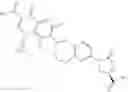


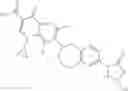


Sources:
- United States Patent and Trademark Office - verify current appl. status at the USPTO↗
Similar patent applications:
- » 20230145144
COMPOSITION, WET WIPER, SPRAY, MASK WITH ANTIBACTERIAL AGENT, FACE GUARD WITH ANTIBACTERIAL AGENT, AND ANTIBACTERIAL LIQUID MATERIAL - » 20230083613
METHOD FOR PREPARING MUSHROOM ANTIBACTERIAL AGENT AND ANTIBACTERIAL AGENT MADE THEREFROM - » 20240000084
ANTIPATHOGENIC AGENT, ANTIBACTERIAL AGENT, ANTIVIRAL AGENT, PATHOGEN DISPOSAL DEVICE, ANTIPATHOGENIC AGENT PRODUCTION METHOD, ANTIBACTERIAL TREATMENT METHOD, VIRUS INACTIVATION METHOD, AND PATHOGEN DISPOSAL METHOD - » 20160157492
Antibacterial agent composition and antiviral agent composition comprising silicon-containing compound; antibacterializing method, cleaning/mouth rinsing method; method for fixing antibacterial agent and antiviral agent - » 20110293542
Antibacterial agent composition and antiviral agent composition comprising silicon-containing compound; antibacterializing method, cleaning/mouth rinsing method; method for fixing antibacterial agent and antiviral agent - » 20130189220
Antibacterial agent, substrate surface treatment method using the same, antibacterial agent composition, and substrate surface treatment method using the same - » 20050136393
Oligodoxynucleotide (ODN) libraries, their use in screening for antibacterial agents, and catalytic ODN sequence for use as an antibacterial agent - » 20110197897
Antibacterial agent, and device used for active protection of incision margins and incorporating such an antibacterial agent - » 20080152727
Aqueous Composition Containing Metal Composition, and Deodorizing Agent, Antibacterial Agent and Antifungal Agent Composed of Such Aqueous Composition - » 20060134017
Oral treatment compositions containing an anti-adhesion agent, antibacterial agent and incompatible compound
Recent applications in this class:
- » 20250282769 2025-09-11
SOLID FORMS OF AN SGC STIMULATOR - » 20250282768 2025-09-11
PYRROLIDINONE DERIVATIVES AS INHIBITORS OF NF KAPPA B INDUCING KINASE - » 20250282767 2025-09-11
PIKFYVE KINASE INHIBITORS - » 20250276966 2025-09-04
Nitrogen-Linked Benzisoxazole Sulfonamide Derivatives - » 20250276965 2025-09-04
PROCESS FOR THE PREPARATION OF ANTIBACTERIAL COMPOUNDS - » 20250276964 2025-09-04
Benzisoxazole Derivatives and Uses thereof - » 20250263405 2025-08-21
HISTONE DEACETYLASE 6 INHIBITOR COMPOUNDS AND USES THEREOF - » 20250263404 2025-08-21
AMINOPYRIDINES AS ACTIVATORS OF PI3 KINASE - » 20250250264 2025-08-07
KIF18A INHIBITOR AND USE THEREOF - » 20250250263 2025-08-07
INHIBITING HISTONE DEACETYLASE 6 (HDAC6)
Recent applications for this Assignee:
- » 20250282789 2025-09-11
CRYSTALLINE PYRIMIDINYL-3,8-DIAZABICYCLO[3.2.1]OCTANYLMETHANONE COMPOUND AND USE THEREOF - » 20250281601 2025-09-11
VACCINATION AGAINST BACTERIAL AND BETACORONAVIRUS INFECTIONS - » 20250281589 2025-09-11
COMPOSITIONS AND METHODS FOR ELICITING AN IMMUNE RESPONSE PROTECTIVE AGAINST LYME DISEASE - » 20250270196 2025-08-28
GLP-1 Receptor Agonists and Uses Thereof - » 20250263765 2025-08-21
METHODS FOR PRODUCING NUCLEIC ACIDS - » 20250263411 2025-08-21
3,4-DIHYDRO-2,7-NAPHTHYRIDINE-1,6(2H,7H)-DIONES AS MEK INHIBITORS - » 20250257052 2025-08-14
GLP-1 RECEPTOR AGONISTS AND USES THEREOF - » 20250241915 2025-07-31
COMPOUNDS FOR THE TREATMENT OF BRAF-ASSOCIATED DISEASES AND DISORDERS - » 20250235524 2025-07-24
IMMUNOGENIC LNP COMPOSITIONS AND METHODS THEREOF - » 20250235510 2025-07-24
COMBINATION THERAPY USING GLUCOSE-DEPENDENT INSULINOTROPIC POLYPEPTIDE RECEPTOR ANTAGONIST COMPOUNDS AND GLP-1 RECEPTOR AGONIST PEPTIDES