Communications device for a wireless and land-line network
US20050101347A1
2005-05-12
10/987,915
2004-11-12
✅ Patent granted
US 9,125,227 B2
2015-09-01
-
-
Chuck Huynh
2029-01-09
Abstract:
A telecommunications converter module is disclosed. The telecommunications converter module includes a connection port configured to connect to a wireless communication device and an interface to a land-line communication network. The telecommunications converter module further includes a processor, in communication with said data port and said interface, that is configured to convert wireless telecommunication signals to land-line telecommunication signals and to convert land-line telecommunication signals to wireless telecommunication signals.
Assignee:
- VERIZON NEW YORK INC. 9 🇺🇸 New York, NY, United States
Applicant:
Interested in similar patents?
Get notified when new applications in this technology area are published.
Classification:
H04W88/021 » CPC main
Devices specially adapted for wireless communication networks, e.g. terminals, base stations or access point devices; Terminal devices adapted for Wireless Local Loop operation
H04M1/7385 » CPC further
Substation equipment, e.g. for use by subscribers; Interface circuits for coupling substations to external telephone lines Programmable or microprocessor-controlled
H04M1/72502 » CPC further
Substation equipment, e.g. for use by subscribers; Mobile telephones; Cordless telephones, i.e. devices for establishing wireless links to base stations without route selection; Cordless telephones with one base station connected to a single line
H04M11/066 » CPC further
Telephonic communication systems specially adapted for combination with other electrical systems; Simultaneous speech and data transmission, e.g. telegraphic transmission over the same conductors Telephone sets adapted for data transmision
H04W84/14 » CPC further
Network topologies; Hierarchically pre-organised networks, e.g. paging networks, cellular networks, WLAN [Wireless Local Area Network] or WLL [Wireless Local Loop]; Small scale networks; Flat hierarchical networks WLL [Wireless Local Loop]; RLL [Radio Local Loop]
H04M1/00 IPC
Substation equipment, e.g. for use by subscribers
H04W88/02 IPC
Devices specially adapted for wireless communication networks, e.g. terminals, base stations or access point devices Terminal devices
H04M1/738 IPC
Substation equipment, e.g. for use by subscribers Interface circuits for coupling substations to external telephone lines
H04M1/725 IPC
Substation equipment, e.g. for use by subscribers; Mobile telephones; Cordless telephones, i.e. devices for establishing wireless links to base stations without route selection Cordless telephones
H04M11/06 IPC
Telephonic communication systems specially adapted for combination with other electrical systems Simultaneous speech and data transmission, e.g. telegraphic transmission over the same conductors
Description
CROSS REFERENCE TO RELATED APPLICATIONSThis application is an original patent application based on provisional application Ser. No. 60/519,099, filed Nov. 12, 2003, and derives its priority therefrom.
TECHNICAL FIELDThe present invention relates generally to a communications system for transmission and reception of voice and/or data over a wireless network using conventional land-line telephone equipment.
BACKGROUNDCellular, Personal Communications Systems (PCS) and other types of wireless telephones that receive and transmit telephone calls on wireless networks have become commonplace. Indeed, wireless telephones have become so popular that some people have discontinued their conventional land-line home telephone service in favor of just having a wireless telephone service. In this way, users reduce their costs by eliminating their conventional land-line telephone service. However, drawbacks to eliminating the conventional home land-line service exist. For example, health concerns may be associated with extended periods of using a wireless telephone in close proximity to a user's body. Further, some users find it inconvenient not to have multiple telephones in various places of their home, as with conventional land-line telephone systems. Additionally, wireless telephone signals sometimes experience interference in various places of a house as the wireless telephone is moved from place to place. For these and other reasons, many people continue to maintain both a wireless telephone service (primarily for use outside of the home) and a conventional land-line telephone service for use at home.
The embodiments described hereinafter were developed in light of these and other disadvantages of existing communication systems.
SUMMARYA converter device is disclosed for enabling conventional land-line communication equipment, including land-line telephones, modems, etc., to place and receive calls over a wireless telephone network.
BRIEF DESCRIPTION OF THE DRAWINGSThese and other features and advantages will be apparent from the following detailed description and the appended claims, taken in conjunction with the accompanying drawings, in which:
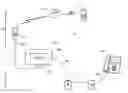
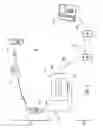
FIG. 1 is a diagram of a communications system, according to an exemplary embodiment, having a converter device that enables conventional land-line communication devices to place and/or receive calls on a wireless network; and
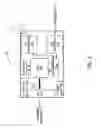
FIG. 2 is an exemplary block diagram of the communications device of FIG. 1, according to an embodiment.
DETAILED DESCRIPTIONReferring to FIG. 1, a communications system 10 is illustrated that includes a land-line network 12 and a wireless network 14. As described in detail below, land-line network 12 is connected to wireless network 14 through converter 24. Land-line network 12 is the hard-wired telephone network that is commonplace in most residential homes. In FIG. 1, land-line network 12 is illustrated as having two conventional telephone wall jacks 18 and a telephone 16 plugged into one of the wall jacks 18 via conventional telephone wire 26(a). Of course, land-line network 12 may include any number of wall jacks 18 distributed throughout the home and networked in a conventional manner. Any number of land-line telephones 16 (corded or cordless), modems (not shown) or other types of communication devices can be plugged into wall jacks 18.
Wireless network 14 may be a cellular, PCS, or any other type of wireless communication network used for wireless telephone communications. In a conventional manner, wireless telephone 22 communicates with other wireless telephones, e.g., wireless telephone 23, through a base station 20. Specifically, wireless telephone 22 can be used to send and receive telephone calls with other wireless telephones and with conventional land-line phones on the plain old telephone system (POTS), in manners known in the art, when the wireless telephone 22 is not connected to converter 24. When wireless telephone 22 is connected to converter 24 (as shown in FIG. 1), wireless telephone 22 and converter 24 together enable conventional land-line communication equipment (e.g., telephones) to place and receive telephone calls over the wireless network 14.
Converter 24 provides an interface between the hard-wired telephone network 12 in a user's home to a wireless network 14. Converter 24 is illustrated in FIG. 1 as being connected to the hard-wired home telephone network by simply connecting a line interface 24(d) of converter 24 to a conventional wall jack 18 via telephone wire 26(b), though other means for connecting converter 24 to the hard-wired home telephone network are envisioned and within the scope of the invention. An input/output port 24(a) of converter 24 is detachably connected to wireless telephone 22 via wire 27 to provide a communication path between wireless telephone 22 and converter 24. In some embodiments, converter 24 is connected to wireless telephone 22 through an existing data input/output connection on the wireless telephone 22. Wire 27 may be a serial, USB, or other appropriate connecting cable. Preferably, converter 24 is located within a building (e.g., residential home) where the wireless signal is strongest and the wireless telephone 22 receives the clearest signal.
Referring now to FIG. 2, a detailed block diagram of converter 24 is shown. As illustrated, converter 24 includes an input/output (I/O) port 24(a), a central processing unit (CPU) 24(b), RAM and ROM memory 24(c) and 24(d), an analog-to-digital (A/D) converter 24(e), a line interface 24(f), radio frequency (RF) transceiver 24(g), data bus 24(h), and power supply 24(i). Other embodiments of the converter 24 are envisioned and within the scope of the invention. In this embodiment, CPU 24(b) provides the processing capabilities of converter 24. For example, CPU 24(b) converts wireless telephone signals to conventional analog telephone signals and vice versa. CPU 24(b) communicates with RAM memory 24(c) and ROM memory 24(d) in conventional manners to store and retrieve data and operating instructions. CPU 24(b) communicates with wireless telephone 22 via I/O port 24(a) over two-way data bus 24(h). Specifically, CPU receives wireless telephone communications from wireless telephone 22 and sends wireless telephone communications to wireless telephone 22 via data bus 24(h) and I/O port 24(a). Similarly, CPU 24(b) communicates with the hard-wired telephone network 12 through A/D converter 24(e) and line interface 24(f). Specifically, line interface 24(f) provides the interface connection to connect a telephone wire 26(b) between converter 24 and wall jack 18. A/D converter 24(e) converts analog voice/data signals from the hard-wired telephone network 12 to digital signals used by the CPU 24(b) and visa versa. As shown in FIG. 2, CPU 24(b) may additionally communicate to the hard-wired telephone network 12 in a wireless manner via RF transceiver 24(g). Either as a supplement to or in place of hard-wiring converter 24 to hard-wired network 12 (via line interface 24(f)), converter 24 may communicate directly to cordless land-line telephone devices (not shown) through RF transceiver 24(g). Specifically, RF transceiver 24(g), if employed, can receive and transmit wireless radio frequency signals to/from cordless hand-held telephone units in much the same manner that known 900 Mhz, 2.4 Ghz, and 5.8 Ghz base units currently communicate with cordless hand-held telephone units. Power supply 24(i) powers the circuitry of converter 24 and further provides the line voltage and ringing current used by the line interface 24(f) to generate rings in the land-line network 12.
Now, exemplary methods of processing telephone calls using converter 24 will be discussed. First, the situation where a phone call is initiated from a third-party (e.g., telephone 23) to a residence using a converter 24 is described. A call initiated from telephone 23 is routed through base station 20 and received by wireless telephone 22 in a conventional manner. Though FIG. 1 shows telephone 23 as a wireless telephone, a call initiated from a conventional land-line telephone would similarly be routed through base station 20 to wireless telephone 22 in a known manner. When wireless telephone 22 receives the call, wireless telephone 22 generates a ring signal, which is conveyed to converter 24 via I/O port 24(a). Converter 24 converts the wireless ring signal to a conventional ring signal for a land-line telephone system, which is output via line interface 24(f) and/or RF transceiver 24(g). This causes land-line telephones (e.g., telephone 16) connected to the hard-wired land-line network 12 to ring. When the user answers one of the land-line phones, an off-hook signal is generated. Converter 24 receives the off-hook signal through line interface 24(f) and/or RF transceiver 24(g) and converts it to a wireless telephone format, which is conveyed to wireless telephone 22. Then, wireless telephone 22 is placed into off-hook mode and the call is connected. Wireless voice/data signals are received from the calling party by wireless telephone 22. Converter 24 converts those wireless voice/data signals to analog voice/data signals and conveys them to land-line network 12. Similarly, land-line telephone 16 sends analog voice/data signals to converter 24, which converts them to wireless voice/data signals and conveys them to wireless telephone 22. Wireless telephone 22 sends the wireless voice/data signals to the third-party caller in a conventional wireless manner. In this way, two-way communication is established between a conventional land-line telephone and a third-party caller (calling from either a wireless telephone or conventional land-line phone) via a wireless network.
Now, a method where a user of the land-line network 12 initiates a call to a third-party will be described. When a user initiates a call by picking up a land-line telephone (e.g., telephone 16) (either corded or cordless phone), a conventional off-hook signal is generated. Converter 24 receives the off-hook signal through line interface 24(f) and/or RF transceiver 24(g). Converter 24 converts the off-hook signal to a wireless network format compatible with the wireless network 14. Wireless telephone 22 receives the off-hook signal and goes into an off-hook mode. The user then dials the desired number on the land-line phone 16, which is also converted to the wireless network format by converter 24. Wireless telephone 22, in response to the signals, dials the corresponding number that is routed through base station 20 to the called party (e.g., wireless telephone 23). When the called party picks up, the call is completed between the land-line phone 16 and the called party via the wireless network.
In an alternative embodiment, a cell phone cartridge or “clone” cartridge can be used in place of wireless telephone 22 in the system to achieve the same end result. A clone cartridge is a device that is capable of sending and receiving wireless voice/data signals like a normal wireless telephone. However, a clone cartridge does not have any buttons, so the only means of input and output with a clone cartridge is through an I/O interface of the clone cartridge, which, when used with converter 24, is connected to I/O port 24(a) through wire 27. The use of a clone cartridge would allow the converter 24 to have the full functionality described hereinabove without the need to connect the user's wireless telephone 22 to the system. This arrangement would provide the benefit of maintaining the functionality of the land-line system as described above while the wireless telephone 22 is away from the house. Moreover, it provides the additional convenience of not having to constantly plug and unplug the wireless telephone 22 into the system.
The above-described embodiment provides a system where conventional land-line telephones and other communication devices can place and receive calls via a wireless network. In the described system, the user does not have to directly use the wireless telephone 22, thereby reducing some of the possible health concerns associated with wireless telephones. Further, the system allows a user to locate converter 24 where the wireless signal reception is strongest, thereby consistently providing a strong connection to third-party callers. In this way, users can enjoy many of the benefits of a land-line telephone without the expense of two telephone service billings. The user is billed only for use of wireless which connects to the non-user party and is not billed for use of user's landline telephone which connects only to the user's wireless telephone or clone. One skilled in the art, in light of this disclosure, will recognize other benefits associated with the described embodiments.
Various other modifications to the present invention may occur to those skilled in the art to which the present invention pertains. Other modifications not explicitly mentioned herein are also possible and within the scope of the present invention. For example, the foregoing description refers to communications received and/or initiated by the user utilizing a telephone as the land-line device 16. It is recognized however, that the above systems and processes are equally applicable to communications received and/or initiated by a computer or any other device capable of communicating on the land-line network 12. Accordingly, it is the following claims, including all equivalents, which define the scope of the present invention.
Claims
1. A telecommunications converter module for use between a wireless communication device and a landline communication network, said converter module comprising:
a connection port configured to connect to said wireless communication device;
an interface to said land-line communication network; and
a processor, in communication with said connection port and said interface, said processor configured to convert wireless telecommunication signals to land-line telecommunication signals and to convert land-line telecommunication signals to wireless telecommunication signals.
2. The converter module of claim 1, wherein said processor is configured to send wireless telecommunication signals to and receive wireless telecommunication signals from said wireless communication device through said connection port, and wherein said processor is configured to send land-line telecommunication signals to and receive land-line telecommunication signals from said land-line communication network through said interface.
3. The converter module of claim 1, wherein said interface is a line interface configured to be electrically connected to said land-line communication network.
4. The converter module of claim 1, wherein said interface is a radio frequency transceiver configured to communicate radio frequency signals to and from said land-line network.
5. The converter of claim 1, wherein said connection port is a serial port.
6. A device according to claim 1, wherein said connection port is a USB port.
7. A telecommunication system, comprising:
a land-line telecommunication network;
a wireless communication device; and
a converter in communication with said land-line network and said wireless communication device, said converter configured to convert wireless telecommunication signals to land-line communication signals and to convert land-line communication signals to wireless telecommunication signals.
9. A system according to claim 6, wherein said wireless communication device is a wireless telephone configured to communicate on a wireless network.
10. A system according to claim 6, wherein said wireless communication device is a clone cartridge.
11. A method for communicating on a wireless telecommunication network using a land-line communication device, comprising:
generating land-line communication signals on a land-line network using a land-line communication device;
converting said land-line communication signals to wireless communication signals;
transmitting said wireless communication signals over said wireless network using a wireless communication device.
12. The method of claim 11, further comprising:
receiving wireless communication signals from said wireless network;
converting said wireless communication signals to land-line communication signals; and
sending said land-line communication signals to said land-line communication device over the land-line network.
13. The method of claim 11, wherein said wireless communication device is a wireless telephone.
14. The method of claim 11, wherein said wireless communication device is a clone cartridge.
Images & Drawings included:
Sources:
- United States Patent and Trademark Office - verify current appl. status at the USPTO↗
Recent applications in this class:
- » 20120230314 2012-09-13
Wireless communication terminal, air interface apparatus and method for participating in wireless network - » 20110164516 2011-07-07
METHOD AND SYSTEM FOR PROVIDING INFORMATION ACCESS, MULTIMEDIA CONTENT ACCESS, AND PHONE CONNECTIVITY - » 20100034244 2010-02-11
WIRELESS FIXED TERMINAL - » 20080192709 2008-08-14
Wireless LAN device having terminal function, wireless LAN device having base station function, and wireless network having the wireless LAN device - » 20070004401 2007-01-04
Enhanced mobility wireless local loop phone - » 20060205411 2006-09-14
Apparatus and method for merging wireless telephone service with existing wired telephone equipment in a facility - » 20060183476 2006-08-17
Mobile communication terminal and communication management apparatus - » 20060148420 2006-07-06
Apparatus for wirelessly-coupling a Bluetooth-wireless cellular mobile handset to a docking station for connecting a standard telephone set to the cellular network - » 20060068703 2006-03-30
Methods and systems for proximity communication - » 20060052133 2006-03-09
System and method for providing an integrated mobile, data and communication manager
Recent applications for this Assignee:
- » 20140126349 2014-05-08
Rerouting T1 signal over a wide area network - » 20130186444 2013-07-25
Field-deployable cable-splicing outdoor-shelter - » 20110239483 2011-10-06
Heat gun air flow-extenders - » 20100149993 2010-06-17
System and method for multi-layer network analysis and design - » 20100149976 2010-06-17
System and method for adaptive removal of delay jitter effect and low end-to-end delay - » 20100118728 2010-05-13
Navigation within a wireless network - » 20090080637 2009-03-26
Dialing plan removal - » 11043367 2010-02-09
Nevigation within a wireless network