Method for manufacturing composite clubs
US20050155697A1
2005-07-21
10/819,139
2004-04-07
Abstract:
A method for manufacturing composite clubs includes the steps: forming a base material by forming a brushed surface on the peripheral surface of a metal tube; coating a bonding resin on the brushed surface of the metal tube; covering the entire outer surface of the metal tube that is coated with the base material with an impregnated glass fiber fabric or a carbon fiber fabric; wrapping the metal tube with a forming adhesive fabric to fix the glass fiber fabric; processing a two-stage heating for the metal tube; and removing the forming adhesive fabric from the metal tube and fabricating the surface of the metal tube to form a finished composite club that has reduced torsional deformation.
Interested in similar patents?
Get notified when new applications in this technology area are published.
Classification:
A63B53/10 » CPC main
Golf clubs Non-metallic shafts
A63B60/00 » CPC further
Details or accessories of golf clubs, bats, rackets or the like
B29C70/32 » CPC further
Shaping composites, i.e. plastics material comprising reinforcements, fillers or preformed parts, e.g. inserts comprising reinforcements only, e.g. self-reinforcing plastics; Shaping operations therefor; Shaping by lay-up, i.e. applying fibres, tape or broadsheet on a mould, former or core; Shaping by spray-up, i.e. spraying of fibres on a mould, former or core on a rotating mould, former or core
A63B60/14 » CPC further
Details or accessories of golf clubs, bats, rackets or the like; Handles Coverings specially adapted for handles, e.g. sleeves or ribbons
A63B2209/02 » CPC further
Characteristics of used materials with reinforcing fibres, e.g. carbon, polyamide fibres
B29L2031/5227 » CPC further
Other particular articles; Sports equipment ; Games; Articles for amusement ; Toys Clubs
Description
FIELD OF THE INVENTIONThe present invention relates to a method for manufacturing composite clubs to reduce torsional deformation.
BACKGROUND OF THE INVENTIONInnovated materials have been constantly introduced for club fabrication in order to enable hitting ball to fly a greater distance. One of the approaches is to generate maximum torsion to reduce deformation of the club. However, altering the material often results in excessive torsion during club swinging, and produces too much deformation. Compared with the conventional rigid clubs, although change of club manufacturing method can enhance club swinging effect, it does not provide required torsion. And it does not help much in reducing the torsional deformation. Users have to improve swinging technique to achieve the desired result. It is not effective. On the other hand, conventional clubs made from carbon fibers and glass fibers usually are fabricated by wrapping a solid steel core, then the steel core is removed to form a hollow club tube. The material forming the club tube has to withstand the swinging torsion. Deformation increases and the strength cannot be enhanced.
SUMMARY OF THE INVENTIONIn view of the aforesaid disadvantages occurred to the conventional clubs that have a greater torsional deformation and smaller strength, the present invention aims to provide a method for manufacturing composite clubs that can reduce the deformation and increase the strength. The method according to the invention includes forming a base material on a metal tube that has a brushed surface by coating a bonding resin; then covering the entire metal tube surface with a layer of glass fiber fabric or carbon fiber fabric or both; wrapping the fabric on the metal tube with a forming adhesive fabric; heating the wrapped metal tube in a two-stage process; peeling off the forming adhesive fabric; finally fabricating the surface to complete the finished product of the composite club.
The foregoing, as well as additional objects, features and advantages of the invention will be more readily apparent from the following detailed description, which proceeds with reference to the accompanying drawings.
BRIEF DESCRIPTION OF THE DRAWINGSFIG. 1 is the manufacturing process flow chart of the present invention.
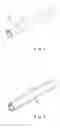
FIG. 2 is a perspective view of the metal tube of the present invention.
FIG. 3 is a perspective view of the metal tube coating with a bonding resin according to the present invention.
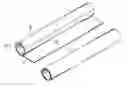
FIG. 4 is a schematic view of the metal tube wrapped with a glass fiber fabric according to the present invention.
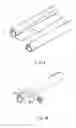
FIG. 5A is a schematic view of the metal tube wrapped with a forming adhesive fabric according to the present invention.
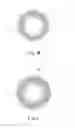
FIG. 5B is a cross section taken on line 5B-5B in FIG. 5A.
FIG. 6 is a cross section of another embodiment of the present invention.
DETAILED DESCRIPTION OF THE PREFERRED EMBODIMENTSPlease referring to FIG. 1, the method for manufacturing composite clubs according to the invention includes steps as follow:
-
- (a) Form base material 40:
- Prior to manufacturing the golf club, forming a brushed surface 10 on the peripheral surface of a metal tube 1 (referring to FIG. 2);
- (b) Bonding resin 41:
- Coating a bonding resin 11 on the brushed surface 10 of the metal tube 1 (referring to FIG. 3);
- (c) Impregnating fabric 42:
- Impregnating a layer of resin (not shown in the drawings) on a glass fiber fabric 2 (or carbon fiber fabric 20);
- (d)—Cover the metal tube 43:
- Covering the entire surface of the metal tube 1 coated with the base material with the impregnated glass fiber fabric 2 (or carbon fiber fabric 20) (referring to FIG. 4);
- (e) Wrap the forming adhesive fabric 44:
- Wrapping the metal tube 1 covered by the glass fiber fabric 2 (or carbon fiber fabric 20) with a forming adhesive fabric 3 to fix the glass fiber fabric 2 (or carbon fiber fabric 20) (referring to FIGS. 5A and 5B);
- (f) Two-stage heating 45:
- Heating the metal tube 1 wrapped with the forming adhesive fabric 3 to bond and cure the glass fiber fabric 2 (or carbon fiber fabric 20) on the surface of the metal tube 1; and
- (g) Fabricate the surface process 46:
- Removing the forming adhesive fabric 3 from the metal tube 1, and fabricating the surface of the metal tube 1 (such as coating paint) to become a finished club that has a reduced torsional deformation and an enhanced strength.
- (a) Form base material 40:
Refer to FIG. 6 for another embodiment of the invention. It is substantially like the one shown in FIG. 1. The difference is that the metal tube 1 coated with the bonding resin 11 is covered by both the glass fiber fabric 2 and the carbon fiber fabric 20. Then it is wrapped by the forming adhesive fabric 3, and heated in a two-stage heating process to bond the glass fiber fabric 2 and the carbon fiber fabric 20 on the surface of the metal tube 1. Then the forming adhesive fabric 3 is removed and the surface of the metal tube is processed. The finished composite club includes a metal tube 1 wrapped by two layers of fabrics.
By means of the aforesaid method, the resulting gold club has less deformation and a greater strength. It offers significant improvements over the conventional golf clubs.
Claims
1. A method for manufacturing composite clubs, comprising steps of:
(a) forming a base material by forming a brushed surface on the peripheral surface of a metal tube;
(b) coating a bonding resin on the brushed surface of the metal tube;
(c) impregnating a layer of resin on a glass fiber fabric;
(d) covering the entire outer surface of the metal tube coated with the base material with the impregnated glass fiber fabric;
(e) wrapping the metal tube that is covered by the glass fiber fabric with a forming adhesive fabric to fix the glass fiber fabric;
(f) processing a two-stage heating for the metal tube that is wrapped with the forming adhesive fabric to bond and cure the glass fiber fabric on the surface of the metal tube; and
(g) removing the forming adhesive fabric from the metal tube and fabricating the surface of the metal tube.
2. The method of claim 1, wherein the metal tube at step (d) is selectively covered by the glass fiber fabric or a carbon fiber fabric.
3. The method of claim 1, wherein the metal tube at step (d) is covered by the glass fiber fabric and a carbon fiber fabric.
Images & Drawings included:

Sources:
- United States Patent and Trademark Office - verify current appl. status at the USPTO↗
Similar patent applications:
- » 20190388743
Composite Golf Club Head and Method of Manufacturing the Same - » 20210236889
Composite golf club head and method for manufacturing the same - » 20070017084
Manufacturing method for a composite striking plate of a golf club head - » 20060145393
Manufacturing method and a molding die for a head body, made of a composite material, of a golf club
Recent applications in this class:
- » 20250144486 2025-05-08
GOLF SHAFT - » 20250144485 2025-05-08
GOLF CLUB SHAFT - » 20250135303 2025-05-01
GOLF SHAFT SYSTEM AND GOLF SHAFT - » 20250099825 2025-03-27
SYNERGISTIC GOLF CLUB AND GOLF BALL COMBINATION - » 20250099824 2025-03-27
GOLF CLUB SHAFT, GOLF PUTTER SHAFT, GOLF CLUB GRIP, GOLF CLUB SET AND GOLF CLUB - » 20240367016 2024-11-07
Core Apparatus for Manufacturing Straight and Bent Graphite Golf-Club Shafts - » 20240335712 2024-10-10
GOLF CLUB SHAFT - » 20240325832 2024-10-03
IMPROVED SHAFT FOR GOLF CLUB - » 20240307748 2024-09-19
GOLF CLUB SHAFT, GOLF CLUB, AND METHOD FOR MANUFACTURING GOLF CLUB SHAFT - » 20240226675 2024-07-11
ULTRA HIGH STIFFNESS PUTTER SHAFT