Process for oligomerization of ethylene to linear α-olefins
US20050192470A1
2005-09-01
11/037,982
2005-01-18
✅ Patent granted
US 7,429,684 B2
2008-09-30
-
-
Glenn Caldarola | In Suk Bullock
2026-11-03
Abstract:
A process for preparing α-olefins from ethylene wherein the α-olefins are substantially free of olefins having greater than 12 carbon atoms comprises contacting ethylene under oligomerization conditions with a 2,6-bis(phenylimino) pyridyl metal halide catalyst in which the metal is Fe, Ni, Co or Pd.
Inventors:
- Stephen Zushma 50 🇺🇸 Clinton, NJ, United States
- ABHIMANYU O. PATIL 70 🇺🇸 Westfield, NJ, United States
Assignee:
- ExxonMobile Research and Engineering Company 36 🇺🇸 Annandale, NJ, United States
Interested in similar patents?
Get notified when new applications in this technology area are published.
Classification:
B01J31/1815 » CPC main
Catalysts comprising hydrides, coordination complexes or organic compounds containing coordination complexes containing nitrogen, phosphorus, arsenic or antimony as complexing atoms, e.g. in pyridine ligands, or in resonance therewith, e.g. in isocyanide ligands C=N-R or as complexed central atoms the ligands containing nitrogen; Cyclic ligands, including e.g. non-condensed polycyclic ligands, comprising at least one complexing nitrogen atom as ring member, e.g. pyridine with more than one complexing nitrogen atom, e.g. bipyridyl, 2-aminopyridine
C07C2/32 » CPC further
Preparation of hydrocarbons from hydrocarbons containing a smaller number of carbon atoms by addition between unsaturated hydrocarbons by oligomerisation of well-defined unsaturated hydrocarbons without ring formation of alkenes, i.e. acyclic hydrocarbons having only one carbon-to-carbon double bond; Catalytic processes with hydrides or organic compounds as complexes, e.g. acetyl-acetonates
B01J2231/20 » CPC further
Catalytic reactions performed with catalysts classified in Olefin oligomerisation or telomerisation
B01J2531/824 » CPC further
Additional information regarding catalytic systems classified in; Complexes comprising metals of Group VIII as the central metal; Metals of the platinum group Palladium
B01J2531/842 » CPC further
Additional information regarding catalytic systems classified in; Complexes comprising metals of Group VIII as the central metal; Metals of the iron group Iron
B01J2531/845 » CPC further
Additional information regarding catalytic systems classified in; Complexes comprising metals of Group VIII as the central metal; Metals of the iron group Cobalt
B01J2531/847 » CPC further
Additional information regarding catalytic systems classified in; Complexes comprising metals of Group VIII as the central metal; Metals of the iron group Nickel
C07C2531/14 » CPC further
Catalysts comprising hydrides, coordination complexes or organic compounds containing organic compounds or metal hydrides containing organo-metallic compounds or metal hydrides of aluminium or boron
C07C2531/22 » CPC further
Catalysts comprising hydrides, coordination complexes or organic compounds containing coordination complexes Organic complexes
C07C2/02 IPC
Preparation of hydrocarbons from hydrocarbons containing a smaller number of carbon atoms by addition between unsaturated hydrocarbons
B01J31/00 IPC
Catalysts comprising hydrides, coordination complexes or organic compounds
Description
This application claims the benefit of U.S. Ser. No. 60/548,654 filed Feb. 27, 2004.
FIELD OF INVENTIONThe present invention relates to the preparation of linear α-olefins from ethylene. More particularly the present invention is concerned with improvements in the oligomerization of ethylene to selectively produce increased amounts of C4 to C10 linear α-olefins.
BACKGROUND OF INVENTIONLinear α-olefins are versatile intermediates in the preparation of a wide range of chemical products. For example, C4-C8 α-olefins are used as co-monomers with ethylene in copolymer formation, C12-C20 α-olefins are used as feedstock in surfactant formation and C6-C10 α-olefins are used as feedstocks for plasticizer formation.
Most commercially produced α-olefins are made by the oligomerization of ethylene in the presence of catalysts that tend to produce a mixture of α-olefins ranging from C4 to C30 and beyond. Examples of such commercially used catalysts include certain nickel-phosphine complexes, alkylaluminum compounds, and titanium halide with a Lewis acid.
In U.S. Pat. No. 6,103,946, for example, α-olefins are prepared from ethylene with an iron complex of a selected 2,6-pyridine dicarboxaldehyde bisimine and in some cases a selected activator such as an alkyl aluminum compound. The Schulz-Flory distribution (See B. Elvers, et al., Ed. Ullmann's Encyclopedia of Industrial Chemistry, Vol. A13, VCH Verlagsgesellschaft mbH Weinheim, 1989, p. 243-247 and 275-276) for the mixture of olefins prepared by that process is in the range of 0.7 to 0.87. The Schulz-Flory distribution is defined as:
-
- α=n(Cn+2 olefin)/n(Cn olefin) wherein n(Cn olefin) is the moles of olefin containing n carbon atoms and n(Cn+2 olefin) is the moles of olefin containing n+2 carbon atoms. For α values in the range of 0.70 to 0.87 the α-olefins are in the C4 to C20 and greater range.
Britovsek et al in Chem. Eur. J. 2000, 6, No. 12 pages 2221-2231 disclose the oligomerization of ethylene with a series of bis(imino)pyridyliron and cobalt complexes containing imino-aryl rings with methyl substituents in various positions on the aryl rings. In the majority of instances the α-values obtained were in the 0.63 to 0.79 range. In one instance in which the catalyst had only one methyl group in the ortho position the resulting mixture had an α-value of 0.50 with oligomer carbon numbers in the mixture ranging up to about 22.
Because the market demand for individual α-olefins making up these mixtures is not the same it would be useful to be able to vary the distribution to produce those olefins which are in greater demand which presently are those in the C4 to C10 range.
One object of the present invention is to produce linear a olefins from ethylene with an α-value of below about 0.45.
Another object is to produce substantial amounts of linear α-olefins from ethylene having carbon contents of from about C4 to about C10 and no α-olefins greater than C12.
These and other objects will become apparent from the description of the invention which follows.
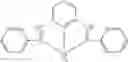
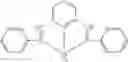
SUMMARY OF INVENTION According to one embodiment of the present invention there is provided a process for producing α-olefins from ethylene wherein the α-olefins produced are substantially free of olefins having greater than 12 carbon atoms. The process comprising contacting ethylene under oligomerization conditions with (a) an oligomerization catalyst having the formula
where M is Fe, Ni, Co or Pd; and X is a halogen; and (b) an activating co-catalyst.
Other embodiments will become apparent from the detailed description.
DETAILED DESCRIPTION OF THE INVENTIONThe process of the present invention is concerned with the oligomerization of ethylene to produce a mixture of α-olefins that is substantially free of olefins having greater than 12 carbon atoms. Indeed, the present invention provides α-olefins having an α-value of about 0.45 and less. Preferably the α-olefins produced are in the C4 to C12 range with not more than 0.5 mole % of the mixture being a C12 olefin.
The process of the invention is carried out by contacting ethylene under oligomerization conditions with (a) a catalyst having the formula
where M is Fe, Ni, Co or Pd; and X is a halogen; and (b) an activating co-catalyst.
In a preferred embodiment M is Fe, and X is bromine or chlorine.
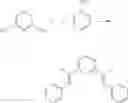
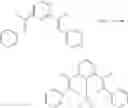
Compounds of formula I may be prepared by reacting a compound of formula II
with a compound having the formula MX2 where M and X are as described above.
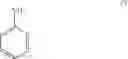
A compound of formula II may be prepared by reacting a compound of formula III
with a compound or mixture of compounds of the formula IV
The activating co-catalyst is selected from aluminoxanes which are well known in the art. Typically aluminoxanes are prepared by the controlled addition of water to an alkylaluminum compound such as trimethylaluminum. Indeed methyl aluminoxane, MAO, is the preferred co-catalyst. The ratio of metal complex to activating co-catalyst is from 1:10−2 to 1:106.
In the process ethylene is contacted with the catalyst and activating co-catalyst under oligomerization conditions. Such conditions include temperatures in the range of about 0° C. to about 100° C., ethylene pressures in the range of about 15 to 2000 psig for times ranging from about 1 minute to 24 hours.
In one embodiment the oligomerization is conducted in the presence of an inert solvent. Suitable solvents include toluene, ethylene, propane, butane, pentane, hexane, methylene chloride, carbon dioxide, and mixture thereof. Toluene is preferred.
In another embodiment the ethylene oligomerization is conducted by supporting the catalyst and activating co-catalyst on a porous carrier such as alumina, silica, cross-linked polymers and the like and contacting the supported catalyst with ethylene.
The invention is further illustrated by the following Examples and Comparative Examples.
EXAMPLE 1 Synthesis of 2,6-bis(phenylimino)methyl)pyridine
2,6-pyridine dicarboxaldehyde (0.3071 g, 2.3 mmol) was added to a solution of aniline (0.5292 g, 5.7 mmol) in absolute ethanol (20 mL) at room temperature. 0.5 mL of formic acid was then added to the above solution. The mixture was stirred at room temperature for 65 hours. The product was filtered, washed with cold ethanol and dried in a vacuum oven (50° C.) overnight. Yield 0.2245 g (34.2%).
EXAMPLE 2 Synthesis of 2,6-bis(phenylimino)pyridyliron(II) chloride
FeCl2 (0.0666 g, 0.5 mmol) was dissolved in hot n-butanol (20 mL) at 80° C. A suspension of 2,6-bis(phenylimino)pyridine (0.15 g, 0.5 mmol) in n-butanol was added dropwise at 80° C. After stirring at 80° C. for 30 min, the reaction mixture was allowed to cool to room temperature and stirred overnight. The reaction volume was reduced to a 3 mL and diethyl ether was added to precipitate the product, which was subsequently washed three times with diethyl ether and dried in vacuum oven. Yield: 0.1701 g (87.5%).
EXAMPLE 3 Ethylene Oligomerization Using the Catalyst of Example 2In an argon glovebox a toluene suspension was prepared in a 50 ml Parr glass liner by adding 2,6-bis(phenylimino)pyridyliron(II) chloride complex (6.3 mg, FW 370.07, 1.7×10⁻² mmoles) (product of Example 2) in 1 mL methylene chloride followed by 15 mL toluene and 2.044 g of 30% MAO solution in toluene (Al/Fe=621). In the glovebox, the glass liner was placed into the Parr reactor. The reactor was transfer to a hood containing the controller for the reactor. The reactor was pressurized with 500 psig of ethylene. The solution was stirred (stirring rate 500 RPM) at 25° C. for 30 minutes. The unreacted ethylene was vented to obtain the product. The product was analyzed by GC and by gas chromatography-mass spectrometry. GC analysis of the product shows peaks due to α-olefins up to C12. The detailed analysis of the individual α-olefins is given in Table I. The α value was found to be 0.4. There was no solid polymer formed in this reaction.
| TABLE I |
| Olefin Distribution |
| α-olefin | Wt % | Mole % | |
| C4 | 61 | 72.5 | |
| C6 | 25.5 | 20.1 | |
| C8 | 9.0 | 5.3 | |
| C10 | 3.3 | 1.5 | |
| C12 | 1.2 | 0.5 | |
Claims
1. A method for producing α-olefins from ethylene wherein the α-olefins are substantially free of α-olefins having greater than 12 carbon atoms, the method comprising:
contacting ethylene under oligomerization conditions with
(a) a catalyst having the formula
wherein M is. Fe, Ni, Co or Pd, and X is halogen; and
(b) an activating co-catalyst.
2. The method of claim 1 wherein the activating co-catalyst is an aluminoxane.
3. The method of claim 2 wherein the contacting is at a temperature in the range of about 0° C. to about 100° C. and at an ethylene pressure of about 15 to about 2000 psig.
4. The method of claim 3 wherein the contacting is conducted in the presence of an inert solvent.
5. The method of claim 4 wherein M is Fe and X is Cl.
6. A method for forming linear α-olefins from ethylene wherein the α-olefins have an α-value of 0.45 and lower, the method comprising contacting ethylene with a catalyst and an activating co-catalyst, said catalyst having the formula
wherein M is Fe, Ni, Co or Pd and X is halogen,
said activating co-catalyst being an aluminoxane,
said contacting being at a temperature in the range of 0 to 100° C., an ethylene pressure in the range of 15 to 2000 psig for about 1 minute to about 24 hours,
whereby linear α-olefins are produced having an α-value of 0.45 and lower.
7. The method of claim 6 wherein M is Fe and X is Cl.
Images & Drawings included:



Sources:
- United States Patent and Trademark Office - verify current appl. status at the USPTO↗
Recent applications in this class:
- » 20240424489 2024-12-26
PINCER-BASED COBALT CATALYSTS FOR HYDROGENATION REACTION AND ITS PROCESS OF PREPARATION THEREOF - » 20240359169 2024-10-31
ORGANIC METAL COMPLEX CATALYST FOR OLEFIN METATHESIS REACTION - » 20240326030 2024-10-03
PALLADIUM COMPLEX AND CATALYST EMBODIMENTS AND METHODS OF MAKING AND USING THE SAME - » 20240316543 2024-09-26
IMMOBOLIZED ORGANOMETALLIC CATALYST AND APPLICATION OF SAME - » 20240165597 2024-05-23
STERICALLY HINDERED N-ALIPHATIC N-HETEROCYCLIC CARBENE CATALYSTS AND METHODS USING SAME - » 20240082831 2024-03-14
METHODS FOR MAKING SUPPORTED LATE TRANSITION METAL CATALYSTS - » 20230173476 2023-06-08
Catalysts and methods for forming alkenyl substituted arenes - » 20230125951 2023-04-27
DI-NITROGEN LIGANDS FOR SUPPORTED COORDINATED PLATINUM HYDROSILYLATION CATALYSTS - » 20230064451 2023-03-02
CATALYST SYSTEM FOR SUZUKI CROSS-COUPLING REACTIONS - » 20230051807 2023-02-16
PORPHYRIN PHOTOSENSITIZER AND COBALOXIME COCATALYST AND METHODS OF USE THEREOF
Recent applications for this Assignee:
- » 20180163532 2018-06-14
Systems and methods for real-time monitoring of a line - » 20160229959 2016-08-11
Organosilica materials and uses thereof - » 20160145508 2016-05-26
HYDROPROCESSING FOR DISTILLATE PRODUCTION - » 20160101985 2016-04-14
Removal of occluded alkali metal cations from MSE-framework type molecular sieves - » 20150315490 2015-11-05
SYSTEMS AND METHODS FOR INCREASING DEASPHALTED OIL YIELD OR QUALITY - » 20150198545 2015-07-16
High temperature simulated distillation - » 20150045600 2015-02-12
Group 13-15 interstitial metal hydride catalysts and associated processes - » 20140272625 2014-09-18
Integrated operation of molten carbonate fuel cells - » 20140272619 2014-09-18
Integrated power generation and carbon capture using fuel cells - » 20130259783 2013-10-03
Linker exchange in zeolitic imidazolate frameworks