High temperature-resistant niobium wire
US20050199321A1
2005-09-15
11/071,795
2005-03-03
✅ Patent granted
US 7,704,448 B2
2010-04-27
-
-
Roy King | Ngoclan T Mai
2025-03-03
Abstract:
High temperature-resistant niobium wire enriched with phosphorous is suitable as a connecting wire for niobium, niobium oxide, or tantalum capacitors.
Assignee:
- W.C. HERAEUS GMBH 54 🇩🇪 Hanau, Germany
Interested in similar patents?
Get notified when new applications in this technology area are published.
Classification:
C22C27/02 » CPC further
Alloys based on rhenium or a refractory metal not mentioned in groups or Alloys based on vanadium, niobium, or tantalum
H01G9/0525 » CPC further
Electrolytic capacitors, rectifiers, detectors, switching devices, light-sensitive or temperature-sensitive devices; Processes of their manufacture; Details; Electrodes or formation of dielectric layers thereon characterised by their structure; Sintered electrodes Powder therefor
B22F2998/10 » CPC further
Supplementary information concerning processes or compositions relating to powder metallurgy Processes characterised by the sequence of their steps
C22C1/045 » CPC main
Making alloys by powder metallurgy Alloys based on refractory metals
B22F3/10 » CPC further
Manufacture of workpieces or articles from metallic powder characterised by the manner of compacting or sintering; Apparatus specially adapted therefor ; Presses and furnaces Sintering only
B22F5/12 » CPC further
Manufacture of workpieces or articles from metallic powder characterised by the special shape of the product of wires
Description
The invention relates to a high temperature-resistant niobium wire, a method for its production, and its use for connection to niobium, niobium oxide, or tantalum capacitors.
For the electrical connection of metal powder capacitors, wires made of refractory metals are used. Through the use of coarser, and thus less expensive, niobium powder in the production of niobium capacitors, sintering temperatures of >1,400° C. have been used up to now. As a rule, tantalum wires withstand these high temperatures. However, tantalum has approximately twice the density of niobium, which leads to high consumption of material. The finished capacitor, whose powder material consists essentially of niobium, as well as production waste from sintered blanks, cannot be separated economically from tantalum in order to feed the niobium once again to a recycling process. Niobium wires would solve this problem. Moreover, the price of tantalum is subject to great market fluctuations so that the costs for the precursor material are difficult to calculate and control. In sum, it is thus desirable to have available an economical alternative material based on niobium. Due to the stable price of niobium as precursor material, the use of niobium connecting wires would also be desirable in tantalum capacitors.
For undoped niobium, its use as solder for tantalum and tungsten up to 1,600° C. is known (Werner Espe, Werkstoffkunde der Hochvakuumtechnik [=Materials Science in High-vacuum Technology], Vol. 1, Metalle und metallisch leitende Werkstoffe [=Metals and Metallically Conducting Materials], Volkseigener Betrieb Deutscher Verlag der Wissenschaften [=People's Enterprise German Scientific Press], 1959). In the case of this use however, neither fine-grain stability nor stability against embrittlement and fracture under “back-and-forth bending stress” are called for.
Niobium wires were also recommended for the connection of powder anodes. U.S. Pat. No. 6,358,625 B1 describes, for example, anode wires made of niobium or tantalum which are treated with oxygen to improve their adhesion so that the result is an enrichment on the surface on the order of magnitude of 35% on an atomic basis with a thickness of approximately 50 μm. Normally, niobium and tantalum wires contain only slight amounts of oxygen. For tantalum, oxygen contents of 50-600 μg/g are specified. The surface enrichment does not have an effect on the properties in general, such as conductivity, but does increase adhesion. Sintering temperatures of 1,250° C. are specified. Oxygen-doped niobium wires, as described, for example, in DE 103 04 756, have their limit for use at approximately 1,300° C.
Thus, it is technologically important to find a suitable material based on niobium, said material withstanding, without coarse grain formation, temperatures of over 1,400° C. during use, and at the same time having electrical properties comparable to pure niobium. The material should furthermore not become brittle or break, in order to withstand the bending processes during the production of capacitors.
Surprisingly, it has been found that even small additions of phosphorous exert a significant influence on the recrystallization temperature, on the beginning of coarse grain formation, and on the progress of coarse grain formation in the case of niobium.
BRIEF DESCRIPTION OF THE DRAWINGSThe invention will now be described in greater detail with reference to the drawings, wherein:
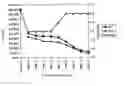
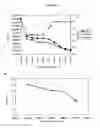
FIG. 1 comprises two graphs, the first of which (A) depicts the strength of a phosphorus-doped niobium wire according to the present invention as a function of sintering temperature, and the second of which (B) depicts the grain size of a phosphorus-doped niobium wire according to the present invention also as a function of sintering temperature; and
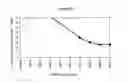
FIG. 2 is a graph depicting the bending number of a phosphorus-doped niobium wire according to the present invention as a function of sintering temperature.
Niobium doped with phosphorous shows, in an annealing at 1,400° C. for 20 minutes, a grain size of ASTM 9. Comparable grain size is achieved in the case of niobium doped with oxygen at 1,200° C., in the case of undoped niobium with oxygen at 900° C. A noticeable grain coarsening occurs in the case of niobium-phosphorous only at temperatures over 1,600° C.
At 1,600° C. grain sizes of ASTM 5 are still achieved.
With the material according to the invention there is a universal possibility for use of niobium wires in niobium capacitors. Since the material shows no massive coarse grain formation and does not become brittle even up to 1,600° C., there is in addition the possibility for use in tantalum capacitors. That is interesting in particular in the case of the smaller types since there the tantalum wire costs contribute significantly to the costs.
The doping of the niobium is done, for example, during the
-
- electron-beam melting by the addition of phosphorous or phosphorous-containing prealloys, or
- arc melting by the addition of phosphorous or phosphorous-containing prealloys, or
- sinter block production from niobium powder by the addition of phosphorous or phosphorous-containing prealloys or
- sinter block production from niobium powder already doped with phosphorous.
The phosphorous-containing alloy resulting can be processed at room temperature into wire with diameters of 0.15 to 0.4 nm. The wires are preferably used as connecting wires in niobium, niobium oxide, or tantalum capacitors. Such capacitors are produced from metallic powder. After sintering (together with the wire), the metal is “formed” on the surface, i. e. anodically oxidized, so that an extremely thin Nb2O2 layer or Ta2O5 layer is formed as the dielectric.
The following example explains the invention in more detail without restricting it.
A niobium melting block is doped with phosphorous by electron-beam melting with the homogeneous addition of a prealloy containing approximately 10% phosphorous. The result is a niobium alloy with a phosphorous content of 100 to 2,000 μg/g. The niobium alloy thus produced is drawn at room temperature into wire with diameters of 0.15 to 0.4 nm.
By means of annealing experiments that simulate the actual sintering process in the production of capacitors, the high temperature-resistance of the alloy can be demonstrated. Niobium (“Nb standard”) and niobium with 3000 μg/g oxygen (“NbO”) serve as reference samples.
The results are summarized in the following table:
| Bending number | |||
| Annealing | Resulting grain size | alternating back | |
| Niobium quality: | temperature: | according to ASTM | and forth |
| Nb Standard | 900° C. | 7 | >10 |
| Nb Standard | 1,000° C. | 4 | 5 |
| NbO | 900° C. | 12 | >10 |
| NbO | 1,200° C. | 7 | 8 |
| NbO | 1,300° C. | 4 | 2 |
| NbP | 900° C. | Deformation | Not determined |
| structure | |||
| NbP | 1,200° C. | 9 | >40 |
| NbP | 1,300° C. | 9 | >40 |
| NbP | 1,400° C. | 9 | >40 |
| NbP | 1,500° C. | 8 | >40 |
| NbP | 1,600° C. | 7 | >20 |
| NbP | 1,700° C. | 4 | >20 |
| NbP | 1,800° C. | 15 | |
| NbP | 1,900° C. | 12 | |
| NbP | 2,000° C. | 12 | |
The experiments show a grain stability up to approximately 1,500° C. From 1,600° C., a grain coarsening begins. The mechanical properties (bending number) are, after a sintering at 1,600° C., sufficient to ensure problem-free processing in the production of capacitors.
FIGS. 1 and 2 show the mechanical properties strength and elongation, the grain size (ASTM), and the bending number (bilateral bending) of the phosphorous-doped niobium according to the invention as wire with 0.24 mm diameter after 20-minute sintering at various temperatures. In this example wire, the phosphorous content is 350 μg/g.
(Rm=tensile strength, Rp0.2=0.2% elongation limit, A1254=strain at break relative to a starting length of 254 mm)
Claims
1. High temperature-resistant niobium wire enriched with phosphorous.
2. Niobium wire according to claim 1, wherein the phosphorous content is approximately 50 to approximately 2000 μg/g.
3. Method for the production of high temperature-resistant niobium wire enriched with phosphorous, comprising the following steps:
a) obtaining a material by:
i) doping niobium with phosphorous by electron-beam melting, arc melting, or sintering with the addition of phosphorous or phosphorous-containing prealloys, or
ii) sintering niobium powder already doped with phosphorous, and
b) drawing a wire from the material obtained.
4. Method according to claim 3, wherein the wire has a diameter of 0.2 to 0.4 mm.
5. Method according to claim 3, wherein the drawing of the wire is done at room temperature.
6. A niobium, niobium oxide, or tantalum capacitor comprising a connecting wire, wherein the connecting wire is a niobium wire according to claim 1.
7. Capacitor according to claim 6, wherein the niobium wire has a phosphorous content of approximately 50 to approximately 2000 μg/g.
Images & Drawings included:
Sources:
- United States Patent and Trademark Office - verify current appl. status at the USPTO↗
Recent applications in this class:
- » 20230383380 2023-11-30
MOLYBDENUM-CONTAINING ALLOYS AND ASSOCIATED SYSTEMS AND METHODS - » 20230357892 2023-11-09
METHOD FOR MAKING TUNGSTEN-REFACTORY METAL ALLOY POWDER AND TUNGSTEN-REFRACTORY METAL ALLOY POWDERS MADE BY THE METHOD - » 20220325380 2022-10-13
Tungsten-base alloy material and preparation method therefor - » 20210238711 2021-08-05
MOLYBDENUM-CONTAINING ALLOYS AND ASSOCIATED SYSTEMS AND METHODS - » 20160273074 2016-09-22
Method for producing a component from a composite material comprising a metal matrix and incorporated intermetallic phases - » 20150078950 2015-03-19
Process for making molybdenum or molybdenum-containing strip - » 20110243787 2011-10-06
POWER OF TUNGSTEN ALLOY WITH TRANSITION METAL DISSOLVED THEREIN AS SOLID SOLUTION AND PROCESS FOR PRODUCING THE SAME - » 20100154670 2010-06-24
High performance powdered metal mixtures for shaped charge liners - » 20100034686 2010-02-11
Method for making a non-toxic dense material - » 20090290685 2009-11-26
Molybdenum alloy; and X-ray tube rotary anode target, X-ray tube and melting crucible using the same
Recent applications for this Assignee:
- » 20120058043 2012-03-08
PROCESSES AND DEVICES FOR REMOVING RUTHENIUM AS RuO4 FROM RUTHENATE-CONTAINING SOLUTIONS BY DISTILLATION - » 20110293866 2011-12-01
Active implantable device - » 20110198983 2011-08-18
COMPOSITE PRODUCED FROM INTERMETALLIC PHASES AND METAL - » 20110171691 2011-07-14
GENETICALLY MODIFIED STRAINS FOR BIOTRANSFORMATIONS IN ANTHRACYCLINE PRODUCTION - » 20110165041 2011-07-07
Processes for the recovery of ruthenium from materials containing ruthenium or ruthenium oxides or from ruthenium-containing noble metal ore concentrates - » 20110162871 2011-07-07
SOLDER MATERIAL COMPRISING A METAL STEARATE AND USE OF METAL STEARATES IN SOLDER MATERIALS - » 20110151268 2011-06-23
MATERIAL COMPRISED OF METAL AND LACTIC ACID CONDENSATE AND ELECTRONIC COMPONENT - » 20110129406 2011-06-02
Metal fibers for catalyst non-wovens - » 20110014399 2011-01-20
Method for producing a stimulation electrode - » 20100329922 2010-12-30
Increasing the strength of iridium, rhodium, and alloys thereof