Method for making regenerated soil material for the production of a structural unit, the structural unit made from the regenerated soil material, and method for recycling the structural unit
US20060185559A1
2006-08-24
11/064,799
2005-02-23
✅ Patent granted
US 7,163,581 B2
2007-01-16
-
-
David M. Brunsman
2025-02-23
Abstract:
A method for making a regenerated soil material for the production of a structural unit includes the steps of: a) obtaining a raw soil material containing aluminum and silicon from a natural source; b) adding an active mineral containing aluminum and silicon to the raw soil material; c) cleaving the raw soil material and the active mineral in a base so as to dissociate aluminum monomer and silicon monomer out of the mixture of the raw soil material and the active mineral; and d) polymerizing the aluminum monomer and the silicon monomer so as to form silicon-oxy tetrahedron and aluminum-oxy tetrahedron in the mixture.
Inventors:
- Cheng-Feng Chang 1 🇹🇼 Lu-Chu Hsiang, Taiwan
- Cheng-Feng Chang 3 🇹🇼 Kaohsiung Hsien, Taiwan
Assignee:
- Cheng-Mao Chang 2 🇹🇼 Kaohsiung Hsien, Taiwan
Interested in similar patents?
Get notified when new applications in this technology area are published.
Classification:
C04B18/16 IPC
Use of agglomerated or waste materials or refuse as fillers for mortars, concrete or artificial stone ; Treatment of agglomerated or waste materials or refuse, specially adapted to enhance their filling properties in mortars, concrete or artificial stone; Waste materials; Refuse from building or ceramic industry
E04B1/16 IPC
Constructions in general; Structures which are not restricted either to walls, e.g. partitions, or floors or ceilings or roofs Structures made from masses, e.g. of concrete, cast or similarly formed with or without making use of additional elements, such as permanent forms, substructures to be coated with load-bearing material
B28B3/00 IPC
Producing shaped articles from the material by using presses ; Presses specially adapted therefor
Y02P40/10 » CPC further
Technologies relating to the processing of minerals Production of cement, e.g. improving or optimising the production methods; Cement grinding
Y02P40/10 » CPC further
Technologies relating to the processing of minerals Production of cement, e.g. improving or optimising the production methods; Cement grinding
Y02W30/91 » CPC further
Technologies for solid waste management; Reuse, recycling or recovery technologies Use of waste materials as fillers for mortars or concrete
Y02W30/91 » CPC further
Technologies for solid waste management; Reuse, recycling or recovery technologies Use of waste materials as fillers for mortars or concrete
Y10S264/915 » CPC further
Plastic and nonmetallic article shaping or treating: processes; Recycling consumer used articles or products From inorganic material containing articles or products, e.g. hydro-set, cement, plaster, wire, cable
C04B28/006 » CPC main
Compositions of mortars, concrete or artificial stone, containing inorganic binders or the reaction product of an inorganic and an organic binder, e.g. polycarboxylate cements containing mineral polymers, e.g. geopolymers of the Davidovits type
C04B28/001 » CPC further
Compositions of mortars, concrete or artificial stone, containing inorganic binders or the reaction product of an inorganic and an organic binder, e.g. polycarboxylate cements containing unburned clay
C04B20/04 » CPC further
Use of materials as fillers for mortars, concrete or artificial stone according to more than one of groups - and characterised by shape or grain distribution; Treatment of materials according to more than one of the groups - specially adapted to enhance their filling properties in mortars, concrete or artificial stone; Expanding or defibrillating materials; Treatment Heat treatment
C04B14/361 » CPC further
Use of inorganic materials as fillers, e.g. pigments, for mortars, concrete or artificial stone; Treatment of inorganic materials specially adapted to enhance their filling properties in mortars, concrete or artificial stone; Granular materials, e.g. microballoons; Inorganic materials not provided for in groups and - Soil, e.g. laterite
C04B22/062 » CPC further
Use of inorganic materials as active ingredients for mortars, concrete or artificial stone, e.g. accelerators, shrinkage compensating agents; Oxides, Hydroxides of the alkali or alkaline-earth metals
C04B2103/0088 » CPC further
Function or property of ingredients for mortars, concrete or artificial stone; Ingredients with a function or property not provided for elsewhere in Compounds chosen for their latent hydraulic characteristics, e.g. pozzuolanes
C04B18/167 » CPC further
Use of agglomerated or waste materials or refuse as fillers for mortars, concrete or artificial stone ; Treatment of agglomerated or waste materials or refuse, specially adapted to enhance their filling properties in mortars, concrete or artificial stone; Waste materials; Refuse from building or ceramic industry Recycled material, i.e. waste material reused in the production of the same material
C04B20/023 » CPC further
Use of materials as fillers for mortars, concrete or artificial stone according to more than one of groups - and characterised by shape or grain distribution; Treatment of materials according to more than one of the groups - specially adapted to enhance their filling properties in mortars, concrete or artificial stone; Expanding or defibrillating materials; Treatment Chemical treatment
C04B12/04 » CPC further
Cements not provided for in groups - Alkali metal or ammonium silicate cements Alkyl silicate cements; Silica sol cements; Soluble silicate cements
C04B28/26 » CPC further
Compositions of mortars, concrete or artificial stone, containing inorganic binders or the reaction product of an inorganic and an organic binder, e.g. polycarboxylate cements containing alkyl, ammonium or metal silicates; containing silica sols Silicates of the alkali metals
Description
BACKGROUND OF THE INVENTION1. Field of the Invention
The invention relates to a process for making a regenerated soil material, particularly to a process for making a regenerated soil material for the production of a structural unit, such as a wave-breaking block and the like. This invention also relates to the structural unit made from the regenerated soil material, and to a method for recycling the structural unit.
2. Description of the Related Art
Structural units, such as wave-breaking blocks and the like, are disposed at shores or river banks for flood protection. Conventional structural units are usually made by using a substantial amount of cement and sand as cementing material. However, the use of a substantial amount of cement and sand can arise in the following disadvantages:
1. A large amount of carbon dioxide is produced during the cement manufacture, which results in an environmental problem.
2. The sand used for the conventional structural units is usually obtained from a riverbed. Therefore, environmental damage is likely due to the over-exploitation of the riverbed for obtaining stones for making the sand.
3. The conventional structural unit is a concrete structure impermeable to water, and is usually different from the shore in color. Therefore, the view of the shore can be affected adversely.
4. The conventional structural unit made by blending sand with cement cannot be recycled or decomposed naturally. Therefore, when the conventional structural unit is discarded, it can cause permanent pollution to the environment.
Another conventional structural unit is made by using soil and cement as raw materials. The method for producing this conventional structural unit includes blending soil with cement into a mixture, and compacting the mixture by rolling to form the structural unit having a required density and strength. Although this conventional structural unit can be made without using sand, the production thereof is relatively complicated. Additionally, the compressive strength of the structural unit made from the soil and cement mixture is in a order below 10 MPa (mega-pascal), which is insufficient for practical use. Although the structural unit is made using soil as a primary material, the grains of the soil can bond to the cement after compacting, which in turn causes the structural unit to be impermeable to water.
SUMMARY OF THE INVENTIONTherefore, the object of the present invention is to provide a method for making a regenerated soil material for production of a structural unit, which has sufficient strength for practical use, which is water permeable, and which can be recycled.
In the first aspect of this invention, a method for making a regenerated soil material for the production of a structural unit includes the steps of:
a) obtaining a raw soil material containing aluminum and silicon from a natural source;
b) adding an active mineral containing aluminum and silicon to the raw soil material;
c) cleaving the raw soil material and the active mineral in a base so as to dissociate aluminum monomer and silicon monomer out of the mixture of the raw soil material and the active mineral; and
d) polymerizing the aluminum monomer and the silicon monomer so as to form silicon-oxy tetrahedron and aluminum-oxy tetrahedron in the mixture.
In the second aspect of this invention, a structural unit includes the regenerated soil material made by the aforesaid method.
In the third aspect of this invention, a method for recycling the structural unit includes the steps of:
a) breaking and milling the structural unit to form a recycled soil material;
b) adding an active mineral containing aluminum and silicon to the recycled soil material;
c) cleaving the recycled soil material and the active mineral in a base so as to dissociate aluminum monomer and silicon monomer out of the mixture of the recycled soil material and the active mineral; and
d) polymerizing the aluminum monomer and the silicon monomer so as to form silicon-oxy tetrahedron and aluminum-oxy tetrahedron in the mixture.
BRIEF DESCRIPTION OF THE DRAWINGSOther features and advantages of the present invention will become apparent in the following detailed description of the preferred embodiments with reference to the accompanying drawings, of which:
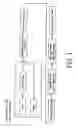
FIG. 1 is a flow diagram of the preferred embodiment of a method for making a regenerated soil material for the production of a structural unit according to this invention; and
FIG. 2 is a flow diagram of the preferred embodiment of a method for recycling a structural unit according to this invention.
DETAILED DESCRIPTION OF THE PREFERRED EMBODIMENTSReferring to FIG. 1, the preferred embodiment of the method for making a regenerated soil material for the production of a structural unit includes the steps of:
A) Obtaining a Raw Soil Material:
A raw soil material containing aluminum and silicon is obtained from a natural source. When the raw soil material includes clay, it is required to calcine the clay at an elevated temperature so as to break hydrogen bonds of the compound, such as aluminum hydroxide, contained in the clay, and so as to form metastable amorphous aluminum compounds and silicon compounds in the raw soil material. When the raw soil material includes sand, which contains no hydrogen bonds, the raw soil material can be used for the subsequent processing directly.
B) Adding an Active Mineral:
An active mineral containing aluminum and silicon is added to the raw soil material in a suitable amount depending on the amounts of aluminum and silicon contained in the raw soil material so as to supplement the amounts of aluminum and silicon contained in the raw soil material.
C) Cleaving:
The raw soil material and the active mineral are cleaved in a base so as to dissociate aluminum monomer and silicon monomer out of the mixture of the raw soil material and the active mineral.
D) Polymerizing:
The aluminum monomer and the silicon monomer are polymerized so as to make the regenerated soil material formed with silicon-oxy tetrahedron and aluminum-oxy tetrahedron in the mixture.
The regenerated soil material can be further processed by adding a proper amount of water thereto to form a slurry, and shaping the slurry in a mold to form the structural unit, such as a wave-breaking block, a slope protector, a stone material, a building structure, a grip structure, and the like.
Referring to FIG. 2, the preferred embodiment of a method for recycling the structural unit according to this invention includes the steps of:
1) Breaking and Milling:
The structural unit made from the aforementioned regenerated soil material is broken and milled to form a recycled soil material.
2) Adding an Active Mineral:
The active mineral containing aluminum and silicon is added to the recycled soil material in a suitable amount depending on the amounts of aluminum and silicon contained in the recycled soil material so as to supplement the amounts of aluminum and silicon contained in the recycled soil material.
3) Cleaving:
The recycled soil material and the active mineral are cleaved in a base so as to dissociate aluminum monomer and silicon monomer out of the mixture of the recycled soil material and the active mineral.
4) Polymerizing:
The aluminum monomer and the silicon monomer are polymerized so as to make the regenerated soil material formed with silicon-oxy tetrahedron and aluminum-oxy tetrahedron in the mixture.
As described above, the regenerated soil material can be further processed to form the structural unit.
The raw soil material suitable in this invention can be classified according to ASTM D2487 into a gravelly soil (GW, GP, GM, GC, GC-GM, GW-GM, GW-GC, GP-GM, and GP-GC) , a sandy soil (SW, SP, SM, SC, SC-SM, SW-SM, SW-SC, SP-SM, SP-SC), a powdery soil, and a clay soil (GL, ML, OL, CH, MH, OH, CL-ML, Pt). G stands for gravelly soil, O stands for organic clay, Pt stands for peat, W stands for a well-graded soil, P stands for a poorly-graded soil, L stands for low plasticity, and H stands for high plasticity.
The raw soil material obtained for this invention is first classified prior to further processing. As described above, when the raw soil material, such as clay, contains hydrogen bonds therein, it is required to calcine the raw soil material at an elevated temperature so as to break hydrogen bonds of the compound, such as aluminum hydroxide, contained in the raw soil material. If the hydrogen bonds contained in the raw soil material are not broken, the structural unit made therefrom may have a compressive strength insufficient for practical use. Furthermore, since a great amount of water may be absorbed due to the hydrogen bonds during the manufacture of the structural unit, the structural unit product may shrink and crack upon drying. Preferably, the raw soil material containing hydrogen bonds is calcined at 700° C. for 4 hours so as to break the hydrogen bonds of the compound, such as aluminum hydroxide, contained in the raw soil material, and to form metastable amorphous aluminum compounds and silicon compounds in the raw soil material.
The active mineral used in this invention is a mineral containing a relatively large amount of silicon dioxide and aluminum oxide. Examples of the active mineral suitable for use in this invention include fly ash, slag powder, zeolite powder, silica fume, and combinations thereof.
The raw soil material and the active mineral are cleaved by adding a sodium hydroxide solution having a concentration ranging from 5 to 10 M to the mixture so as to dissociate aluminum monomer and silicon monomer out of the mixture of the raw soil material and the active mineral.
The polymerizing step is then conducted by adding to the mixture of the raw soil material and the active mineral a polymerizing medium, such as sodium silicate or potassium silicate, so as to make the regenerated soil material formed with silicon-oxy tetrahedron and aluminum-oxy tetrahedron in the mixture. The tetrahedrons are bonded to each other via ionic bonds and covalent bonds primarily and via van der Waals bonds secondarily. Since the bonding of the tetrahedrons is similar to that of metal, a superior structural strength can be obtained thereby for the regenerated soil material. According to the atomic ratio of silicon to aluminum contained in the raw soil material, the tetrahedron structure formed in the regenerated soil material can be classified into the following four types:
(i): if Si:Al=1 (i.e., —Si—O—Al—), the tetrahedron structure is:
(ii): if Si:Al=2 (i.e., —Si—O—Al—O—Si—), the tetrahedron structure is:
(iii): if Si:Al=3 (i.e., —Si—O—Al—O—Si—O—Si—), the tetrahedron structure is:
(iv): if Si:Al>3, the tetrahedron structure is:
As described above, the regenerated soil material can be further processed by adding a proper amount of water thereto to form a slurry, then shaping the slurry by, for example, casting in a mold to form the structural unit, such as a wave-breaking block, a slope protector, a stone material, a building structure, a grip structure, and the like. According to test results, a preferred composition of the slurry for making the structural unit having superior compressive strength and water permeability includes 25-50 wt % of the soil, 25-50 wt % of the active mineral, 20-35 wt % water, 5-10 wt % of the polymerizing medium, and a minor amount of water.
The structural unit of this invention can be recycled after a period of use so as to reproduce the regenerated soil material. The structural unit is first broken and milled by using a ball mill having milling balls of diameter ranging from 50 to 80 mm to form a recycled soil material having a particle size less than 0.2 mm. The recycled soil material is then added with the active mineral, cleaved, and polymerized as described above so as to reproduce the regenerated soil material.
The following examples further illustrate the preferred embodiments of the invention, but are not to be construed as limiting.
EXAMPLES Example 1Following the procedure shown in FIG. 1, 1000 parts by weight of fly ash was added to 1000 parts by weight of calcined raw soil material to obtain a mixture. The mixture was cleaved by using 50 parts by weight of 10 M sodium hydroxide solution, and was subsequently polymerized by using 120 parts by weight of sodium silicate to obtain a regenerated soil material. Thereafter, 900 parts by weight of water was added to the regenerated soil material to obtain a slurry, which was then cast in a mold to form a structural unit, such as a wave-breaking block, a slope protector, a stone material, a building structure, a grip structure, and the like. The components and the amounts thereof used in Example 1 are shown in Table 1. The compositions of the fly ash and the soil material are shown in Table 2. Sodium silicate was produced by contacting 14.7% Na2O with 29.5% SiO2 in 55.8% water. Measured compressive strength, porosity, and permeability coefficient of the structural unit are shown in Table 3.
Examples 2-10The procedure of Example 1 was repeated using the components and the amounts thereof shown in Table 1. The raw soil material used in Examples 9 and 10 mainly included sand, which contains no hydrogen bonds, and which does not need to undergo calcination. The raw soil material used Examples 3-8 included both calcined soil and sand. Measured compressive strength, porosity, and permeability coefficient of the structural units are shown in Table 3.
| TABLE 1 |
| components and amounts thereof used in the |
| examples |
| Components (kg/m3) |
| Cal- | Calcined | Slag | ||||||
| Ex. | cined | recycled | Fly | pow- | Wa- | NaOH | ||
| # | soil | soil | ash | der | Sand | ter | (10M) | Na2SiO3 |
| 1 | 1000 | 0 | 1000 | 0 | 0 | 900 | 50 | 120 |
| 2 | 1000 | 0 | 0 | 1000 | 0 | 850 | 50 | 120 |
| 3 | 700 | 0 | 700 | 0 | 600 | 450 | 50 | 120 |
| 4 | 700 | 0 | 0 | 700 | 600 | 400 | 50 | 120 |
| 5 | 500 | 0 | 700 | 0 | 800 | 400 | 50 | 120 |
| 6 | 500 | 0 | 0 | 700 | 800 | 380 | 50 | 120 |
| 7 | 200 | 0 | 700 | 0 | 1100 | 300 | 50 | 120 |
| 8 | 200 | 0 | 0 | 700 | 1100 | 350 | 50 | 120 |
| 9 | 0 | 0 | 700 | 0 | 1300 | 200 | 50 | 120 |
| 10 | 0 | 0 | 0 | 700 | 1300 | 200 | 50 | 120 |
| 11 | 0 | 1000 | 1000 | 0 | 0 | 900 | 50 | 120 |
| 12 | 0 | 1000 | 0 | 1000 | 0 | 850 | 50 | 120 |
| 13 | 0 | 700 | 700 | 0 | 600 | 450 | 50 | 120 |
| 14 | 0 | 700 | 0 | 700 | 600 | 400 | 50 | 120 |
| 15 | 0 | 500 | 700 | 0 | 800 | 400 | 50 | 120 |
| 16 | 0 | 500 | 0 | 700 | 800 | 380 | 50 | 120 |
| TABLE 2 |
| Compositions of soil, fly ash, and slag powder |
| Weight Percentage (wt %) |
| materials | SiO2 | Al2O3 | Fe2O3 | CaO | MgO | Na2O + K2O | TiO2 | LOI* |
| Soil | 59.32 | 14.17 | 5.94 | 1.18 | 1.68 | 4.14 | 0.79 | 12.61 |
| Calcined Soil | 59.88 | 15.25 | 5.34 | 1.13 | 1.14 | 3.85 | 0.77 | 12.64 |
| Fly ash | 52.36 | 26.49 | 11.86 | 1.34 | 0.87 | 1.27 | 2.47 | 3.31 |
| Slag powder | 34.12 | 15.93 | 0.92 | 35.94 | 8.92 | 0.73 | 2.72 | 0.14 |
| Recycled soil | 58.32 | 20.17 | 0.78 | 7.15 | 0.68 | 8.14 | 0.79 | 3.61 |
| Calcined recycled soil | 59.11 | 21.32 | 0.33 | 7.14 | 0.58 | 8.12 | 0.79 | 2.61 |
*LOI: Lost on ignition |
| TABLE 3 |
| Test result for examples |
| Permeability | ||
| Porosity | coefficient |
| Compressive strength (MPa) | (%) | (m/sec) |
| Ex. # | 7 days | 28 days | 90 days | 90 days | 90 days |
| 1 | 15.3 | 20.7 | 20.8 | 41.2 | 2.1 × 10⁻⁶ |
| 2 | 15.6 | 20.8 | 20.9 | 39.6 | 1.7 × 10⁻⁶ |
| 3 | 16.2 | 21.6 | 21.9 | 37.5 | 2.4 × 10⁻⁶ |
| 4 | 20.4 | 25.5 | 26.1 | 36.6 | 3.6 × 10⁻⁶ |
| 5 | 20.7 | 25.8 | 26.1 | 37.3 | 9.8 × 10⁻⁵ |
| 6 | 22.3 | 27.9 | 28.3 | 36.5 | 9.2 × 10⁻⁵ |
| 7 | 21.3 | 26.4 | 27.0 | 32.9 | 3.4 × 10⁻⁶ |
| 8 | 25.3 | 29.3 | 29.6 | 34.3 | 4.7 × 10⁻⁶ |
| 9 | 27.2 | 27.6 | 27.6 | 33.1 | 7.8 × 10⁻⁵ |
| 10 | 30.3 | 31.2 | 32.4 | 29.1 | 8.8 × 10⁻⁵ |
| 11 | 20.1 | 25.1 | 25.3 | 35.3 | 3.3 × 10⁻⁶ |
| 12 | 22.3 | 27.7 | 27.9 | 34.8 | 2.5 × 10⁻⁶ |
| 13 | 24.8 | 30.9 | 31.1 | 36.3 | 4.5 × 10⁻⁶ |
| 14 | 25.5 | 32.1 | 32.1 | 33.3 | 1.7 × 10⁻⁶ |
| 15 | 26.7 | 34.1 | 34.7 | 32.8 | 8.9 × 10⁻⁵ |
| 16 | 28.3 | 36.9 | 37.2 | 33.2 | 9.2 × 10⁻⁵ |
Following the procedure shown in FIG. 2, a structural unit to be recycled was broken and milled by using a ball mill having milling balls of diameter ranging from 50 to 80 mm to form a recycled soil material having a particle size less than 0.2 mm. The recycled soil material was calcined to obtain a calcined recycled soil material. 1000 parts by weight of fly ash was added to 1000 parts by weight of the calcined recycled soil material to obtain a mixture. The mixture was cleaved by using 50 parts by weight of 10 M sodium hydroxide solution, and was then polymerized by using 120 parts by weight of sodium silicate to obtain a regenerated soil material. Thereafter, 900 parts by weight of water was added to the regenerated soil material to obtain a slurry, which was subsequently cast in a mold to form a structural unit, such as a wave-breaking block, a slope protector, a stone material, a building structure, a grip structure, and the like. The components and the amounts thereof used in Example 11 are shown in Table 1. The compositions of the fly ash and the soil material are shown in Table 2. Measured compressive strength, porosity, and permeability coefficient of the structural unit are shown in Table 3.
Examples 12-16The procedure of Example 11 was repeated using the components and the amounts thereof shown in Table 1. The raw soil material used Examples 13-16 included both calcined recycled soil material and sand. Measured compressive strength, porosity, and permeability coefficient of the structural units are shown in Table 3.
As shown in Table 3, for all of the structural units of the examples, the compressive strength after 28 days is above 20 MPa, the compressive strength after 90 days is comparable to that after 28 days, and the compressive strength after 7 days is 70-80% of that after 28 days. The compressive strengths of all of the structural units of the examples are above the values required for practical use. For example, the 28-day compressive strength required for the wave-breaking block should be above 17.16-20.6 MPa. Specifically, the raw soil material used in Examples 9 and 10 mainly included sand, which can be used directly without calcining. The 28-day compressive strengths for the structural units of Examples 9 and 10 are above 20 MPa. In Examples 11-16, in which the recycled soil material is used, the compressive strengths are increased significantly.
The following Table 4 shows the permeability coefficients of the regenerated soil material of this invention and various conventional soil materials.
| TABLE 4 |
| permeability coefficients of the regenerated |
| soil material of this invention and various conventional |
| soil materials |
| Permeability coefficient | ||
| materials | (m/sec) | |
| Clean gravel | 10−2˜1 | |
| Coarse sand | 10−2˜10−4 | |
| Fine sand | 10−4˜10−5 | |
| Powdery clay | 10−5˜10−7 | |
| Clay | <10−7 | |
| Common concrete | 10−10˜10−11 | |
| High performance concrete | <10−11 | |
| Regenerated soil material | 10−5˜10−7 | |
| of this invention | ||
As shown in Table 4, the permeability coefficient of the regenerated soil material of this invention is improved as compared to those of the conventional soil materials. Therefore, the aforesaid environmental problems suffered in the prior art can be avoided.
While the present invention has been described in connection with what is considered the most practical and preferred embodiments, it is understood that this invention is not limited to the disclosed embodiments but is intended to cover various arrangements included within the spirit and scope of the broadest interpretation so as to encompass all such modifications and equivalent arrangements.
Claims
I claim:1. A method for making a regenerated soil material for the production of a structural unit, comprising the steps of:
a) obtaining a raw soil material containing aluminum and silicon from a natural source;
b) adding an active mineral containing aluminum and silicon to the raw soil material;
c) cleaving the raw soil material and the active mineral in a base so as to dissociate aluminum monomer and silicon monomer out of the mixture of the raw soil material and the active mineral; and
d) polymerizing the aluminum monomer and the silicon monomer so as to form silicon-oxy tetrahedron and aluminum-oxy tetrahedron in the mixture.
2. The method as claimed in claim 1, wherein the raw soil material includes clay, the method further comprising a step of calcining the clay at an elevated temperature after the step a).
3. The method as claimed in claim 2, wherein the calcining step is conducted at a temperature of 700° C. for 4 hours.
4. The method as claimed in claim 1, wherein the raw soil material includes sand containing no hydrogen bond.
5. The method as claimed in claim 1, wherein the active mineral includes at least one material selected from the group consisting of fly ash, slag powder, zeolite powder and silica fume.
6. The method as claimed in claim 1, wherein the cleaving step is conducted by adding a sodium hydroxide solution having a concentration ranging from 5 to 10 M to the mixture.
7. The method as claimed in claim 1, wherein the polymerizing step is conducted by adding to the mixture of the raw soil material and the active mineral a polymerizing medium selected from the group consisting of sodium silicate and potassium silicate.
8. A structural unit, comprising a regenerated soil material made by the steps of:
a) obtaining a raw soil material containing aluminum and silicon from a natural source;
b) adding an active mineral containing aluminum and silicon to the raw soil material;
c) cleaving the raw soil material and the active mineral in a base so as to dissociate aluminum monomer and silicon monomer out of the mixture of the raw soil material and the active mineral; and
d) polymerizing the aluminum monomer and the silicon monomer so as to form silicon-oxy tetrahedron and aluminum-oxy tetrahedron in the mixture.
9. A method for recycling the structural unit of claim 8, comprising the steps of:
a) breaking and milling the structural unit to form a recycled soil material;
b) adding an active mineral containing aluminum and silicon to the recycled soil material;
c) cleaving the recycled soil material and the active mineral in a base so as to dissociate aluminum monomer and silicon monomer out of the mixture of the recycled soil material and the active mineral; and
d) polymerizing the aluminum monomer and the silicon monomer so as to form silicon-oxy tetrahedron and aluminum-oxy tetrahedron in the mixture.
10. The method as claimed in claim 9, wherein the recycled soil material has a particle size less then 0.2 mm.
11. The method as claimed in claim 9, wherein the active mineral includes at least one material selected from the group consisting of fly ash, slag powder, zeolite powder and silica fume.
12. The method as claimed in claim 9, wherein the cleaving step is conducted by adding a sodium hydroxide solution having a concentration ranging from 5 to 10 M to the mixture.
13. The method as claimed in claim 9, wherein the polymerizing step is conducted by adding to the mixture of the recycled soil material and the active mineral a polymerizing medium selected from the group consisting of sodium silicate and potassium silicate.
Images & Drawings included:


Sources:
- United States Patent and Trademark Office - verify current appl. status at the USPTO↗
Recent applications in this class:
- » 20250282683 2025-09-11
BRINE-REINFORCED GEOPOLYMER COMPOSITION - » 20250243115 2025-07-31
CARBON-FOOTPRINT-REDUCED CONCRETE SLAB ON GROUND SYSTEM AND METHOD FOR CONSTRUCTING SAME - » 20250230099 2025-07-17
GEOPOLYMER-BASED CONCRETE COMPOSITION - » 20250230098 2025-07-17
HIGHLY REACTIVE GEOPOLYMER FOAM FORMULATIONS FOR FAST CURE PROCESS - » 20250230097 2025-07-17
PROCESS FOR THE PRODUCTION OF GEOPOLYMER OR GEOPOLYMER COMPOSITE - » 20250223227 2025-07-10
METHOD FOR MANUFACTURING GEOPOLYMER FOAM - » 20250100932 2025-03-27
CHEMICAL ACTIVATION OF SUPERCALCINED CLAYS - » 20250066250 2025-02-27
GEOPOLYMER FORMULATION AND METHOD OF MAKING AND APPLYING FORMULATION - » 20250011236 2025-01-09
GEOPOLYMER PRODUCTION METHOD - » 20240327287 2024-10-03
CARBON-FOOTPRINT-REDUCED CONCRETE SLAB ON GROUND SYSTEM AND METHOD FOR CONSTRUCTING SAME
Recent applications for this Assignee:
- » 20060260514 2006-11-23
Method for recycling concrete waste