Hydrogen storage alloy
US20060216598A1
2006-09-28
11/385,779
2006-03-22
✅ Patent granted
US 7,749,656 B2
2010-07-06
-
-
Patrick Ryan | Ladan Mohaddes
2029-05-06
Abstract:
The invention provides a hydrogen storage alloy, and in particular, the hydrogen storage alloy according to the invention has a slight hysteresis and a maximum hydrogen concentration, (H/Lm (NixAlyMoz)), equal to 7. The hydrogen storage alloy, according to the invention, is an ABw type alloy and represented by the general formula: Lm(NixAlyMoz), and where 4.7≦w≦5.3, Lm is a La-rich misch metal and comprises La, Ce, Pr, and Nd, w=x+y+z, x, y and z are a mole number, respectively.
Interested in similar patents?
Get notified when new applications in this technology area are published.
Classification:
H01M4/383 » CPC main
Electrodes; Electrodes composed of, or comprising, active material; Selection of substances as active materials, active masses, active liquids of elements or alloys Hydrogen absorbing alloys
C01B3/0057 » CPC further
Hydrogen; Gaseous mixtures containing hydrogen; Separation of hydrogen from mixtures containing it ; Purification of hydrogen; Reversible uptake of hydrogen by an appropriate medium, i.e. based on physical or chemical sorption phenomena or on reversible chemical reactions, e.g. for hydrogen storage purposes ; Reversible gettering of hydrogen; Reversible uptake of hydrogen by electrodes characterised by the uptaking medium; Treatment thereof; Intermetallic compounds; Metal alloys; Treatment thereof containing a rare earth metal; Treatment thereof also containing nickel
H01M8/04208 » CPC further
Fuel cells; Manufacture thereof; Auxiliary arrangements, e.g. for control of pressure or for circulation of fluids; Arrangements for control of reactant parameters, e.g. pressure or concentration; Reactant storage and supply, e.g. means for feeding, pipes Cartridges, cryogenic media or cryogenic reservoirs
H01M8/065 » CPC further
Fuel cells; Manufacture thereof; Combination of fuel cells with means for production of reactants or for treatment of residues with means for production of gaseous reactants by dissolution of metals or alloys; by dehydriding metallic substances
Y02E60/10 » CPC further
Enabling technologies; Technologies with a potential or indirect contribution to GHG emissions mitigation Energy storage using batteries
Y02E60/10 » CPC further
Enabling technologies; Technologies with a potential or indirect contribution to GHG emissions mitigation Energy storage using batteries
Y02E60/32 » CPC further
Enabling technologies; Technologies with a potential or indirect contribution to GHG emissions mitigation; Hydrogen technology Hydrogen storage
Y02E60/32 » CPC further
Enabling technologies; Technologies with a potential or indirect contribution to GHG emissions mitigation; Hydrogen technology Hydrogen storage
Y02E60/50 » CPC further
Enabling technologies; Technologies with a potential or indirect contribution to GHG emissions mitigation; Hydrogen technology Fuel cells
Y02E60/50 » CPC further
Enabling technologies; Technologies with a potential or indirect contribution to GHG emissions mitigation; Hydrogen technology Fuel cells
H01M4/58 IPC
Electrodes; Electrodes composed of, or comprising, active material; Selection of substances as active materials, active masses, active liquids of inorganic compounds other than oxides or hydroxides, e.g. sulfides, selenides, tellurides, halogenides or LiCoF; of polyanionic structures, e.g. phosphates, silicates or borates
C22C19/03 IPC
Alloys based on nickel or cobalt based on nickel
H01M4/38 IPC
Electrodes; Electrodes composed of, or comprising, active material; Selection of substances as active materials, active masses, active liquids of elements or alloys
Description
BACKGROUND OF THE INVENTION1. Field of the Invention
This invention relates to a hydrogen storage alloy and, more specifically, to a hydrogen storage alloy with a slight hysteresis and a maximum hydrogen concentration, (H/Lm (NixAlyMoz)), equal to 7.
2. Description of the Prior Art
After hydrogen storage alloys that can store and release hydrogen were discovered, researches on hydrogen storage alloys have been continuously advanced.
LaNi.sub.5 alloy, which was initially developed (see Japanese Laid-open Patent Application No. 51-13934) is advantageous in its great storage of hydrogen. However, La is considerably expensive, coupled with another problem that the alloy is liable to be broken into fine pieces when repeating storage and release of hydrogen and is prone to be corroded on contact with alkaline or acid solutions.
In order to overcome the aforementioned problem, there has been proposed the use of Misch metal (hereinafter referred to simply as Mm) wherein part of La is replaced by Ce, Pr, Nd or other rare earth metals, or a LaNi.sub.5 hydrogen storage alloy wherein part of Ni is placed by a metal such as Co, Al, Mn or the like. These proposals are set out, for example, in Japanese Laid-open Patent Application Nos. 53-4918, 54-64014, 60-250558, 61-91862 and 61-233969.
Nevertheless, a hydrogen storage alloy with high hydrogen capacity is still required. Accordingly, one purpose of this invention is providing a hydrogen storage alloy with a maximum hydrogen concentration, (H/Lm (NixAlyMoz)), equal to 7. “H/Lm (NixAlyMoz)” represents hydrogen storage capacities. For example, a H/Lm (NixAlyMoz) equal to 7 means each lattice unit of a hydrogen storage alloy can store 7 hydrogen atoms.
Besides, the other purpose of this invention is providing a hydrogen storage alloy; more specifically, the hydrogen storage alloy has a slight hysteresis such that the hydrogen storage device for filling the hydrogen storage alloy can stably execute hydrogen absorption/desorption reactions.
SUMMARY OF THE INVENTIONOne main purpose of this invention is to provide a hydrogen storage alloy and, more specifically, a hydrogen storage alloy with a slight hysteresis and a maximum hydrogen concentration, (H/Lm (NixAlyMoz)), equal to 7.
The hydrogen storage alloy according to one preferred embodiment of this invention is an ABw type alloy and represented by the general formula: Lm(NixAlyMoz), wherein 4.7≦w≦5.3, w=x+y+z, and x, y and z are a mole number, respectively. Lm is a La-rich misch metal and comprises La, Ce, Pr, and Nd.
In one preferred embodiment, x is within a range from 4.3 to 5.0, y is within a range from 0 to 0.5, and z is within a range from 0 to 0.5.
In one preferred embodiment, when La occupies in an amount of 70 to 90 wt. % of Lm, Ce occupies in an amount of 5 to 25 wt. % of Lm, and (Nd+Pr) occupies in an amount less than or equal to 15 wt. % of Lm, a plateau desorption pressure of the hydrogen storage alloy is less than or equal to 5 atm. at room temperatures.
In another preferred embodiment, when La occupies in an amount of 50 to 70 wt. % of Lm, Ce occupies in an amount of 25 to 45 wt. % of Lm, and (Nd+Pr) occupies in an amount less than or equal to 10 wt. % of Lm, a plateau desorption pressure of the hydrogen storage alloy is less than or equal to 10 atm. at room temperatures.
The advantage and spirit of the invention may be understood by the following recitations together with the appended drawings.
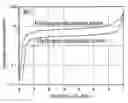
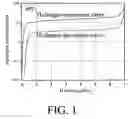
BRIEF DESCRIPTION OF THE APPENDED DRAWINGSFIG. 1 shows the PCT curve under hydrogen absorption/desorption tests for the hydrogen storage alloy in the first embodiment.
FIG. 2 shows the PCT curve under hydrogen absorption/desorption tests for the hydrogen storage alloy in the second embodiment.
FIG. 3 shows the PCT curve under hydrogen absorption/desorption tests for the hydrogen storage alloy in the third embodiment.
FIG. 4 shows the PCT curve under hydrogen absorption/desorption tests for the hydrogen storage alloy in the fourth embodiment.
DETAILED DESCRIPTION OF THE INVENTIONThis invention provides a hydrogen storage alloy and, more specifically, a hydrogen storage alloy with a slight hysteresis and a maximum hydrogen concentration, (H/Lm (NixAlyMoz)), equal to 7.
The hydrogen storage alloy according to one preferred embodiment of this invention is an ABw type alloy and represented by the general formula:
Lm(NixAlyMoz),
wherein 4.7≦w≦5.3, w=x+y+z, and x, y and z are a mole number, respectively. Lm is a La-rich misch metal and comprises La, Ce, Pr, and Nd.
In one preferred embodiment, x is within a range from 4.3 to 5.0, y is within a range from 0 to 0.5, and z is within a range from 0 to 0.5.
In one preferred embodiment, when La occupies in an amount of 70 to 90 wt. % of Lm, Ce occupies in an amount of 5 to 25 wt. % of Lm, and (Nd+Pr) occupies in an amount less than or equal to 15 wt. % of Lm, a plateau desorption pressure of the hydrogen storage alloy is less than or equal to 5 atm. at room temperatures.
In another preferred embodiment, when La occupies in an amount of 50 to 70 wt. % of Lm, Ce occupies in an amount of 25 to 45 wt. % of Lm, and (Nd+Pr) occupies in an amount less than or equal to 10 wt. % of Lm, a plateau desorption pressure of the hydrogen occlusive alloy is less than or equal to 10 atm. at room temperatures.
Several embodiments are described below for clearly showing the characteristics, spirits, and conveniences of this invention.
THE FIRST EMBODIMENT The hydrogen storage alloy of the first embodiment is an AB4.95 type alloy and represented by the general formula:
Lm(Ni4.85Mo0.1), and
wherein La occupies in an amount of 70 to 90 wt. % of Lm, Ce occupies in an amount of 5 to 25 wt. % of Lm, and (Nd+Pr) occupies in an amount less than or equal to 15 wt. % of Lm.
Please refer to FIG. 1. FIG. 1 shows the PCT (pressure-composition-isotherm) curve under hydrogen absorption/desorption tests for the hydrogen storage alloy in the first embodiment. The testing circumstance is under the constant temperature of 25° C.
As shown in FIG. 1, obviously, the hydrogen-absorption curve and the hydrogen-desorption curve both have a plateau region. The plateau desorption pressure of the hydrogen storage alloy in the first embodiment is roughly equal to 3.5 atm. One thing should be noted is that, compared with prior arts, the hydrogen storage alloy in the first embodiment has a maximum hydrogen concentration, (H/Lm (NixAlyMoz)), equal to 7. Besides, the plateau absorption pressure of the hydrogen storage alloy in the first embodiment is approximately equal to 15 atm.; this plateau desorption pressure shows the hydrogen storage alloy in the first embodiment has a slight hysteresis. The hysteresis shown in FIG. 1 is normal.
THE SECOND EMBODIMENT The hydrogen storage alloy of the second embodiment is an AB5.05 type alloy and represented by the general formula:
Lm(Ni4.85Al0.1Mo0.1), and
wherein La occupies in an amount of 70 to 90 wt. % of Lm, Ce occupies in an amount of 5 to 25 wt. % of Lm, and (Nd+Pr) occupies in an amount less than or equal to 15 wt. % of Lm.
Please refer to FIG. 2. FIG. 2 shows the PCT curve under hydrogen absorption/desorption tests for the hydrogen storage alloy in the second embodiment. The testing circumstance is under the constant temperature of 25° C.
As shown in FIG. 2, obviously, the hydrogen-absorption curve and the hydrogen-desorption curve both have a plateau region. The plateau desorption pressure of the hydrogen storage alloy in the second embodiment is roughly equal to 2.5 atm. One thing should be noted is that, compared with prior arts, the hydrogen storage alloy in the second embodiment has a maximum hydrogen concentration, (H/Lm (NixAlyMoz)), equal to 7. Besides, the plateau absorption pressure of the hydrogen storage alloy in the second embodiment is approximately equal to 7 atm.; this plateau desorption pressure shows the hydrogen storage alloy in the second embodiment has a slighter hysteresis than that in the first embodiment. The hysteresis shown in FIG. 2 is obviously improved compared with FIG. 1.
THE THIRD EMBODIMENT The hydrogen storage alloy of the third embodiment is an AB4.95 type alloy and represented by the general formula:
Lm(Ni4.85Mo0.1), and
wherein La occupies in an amount of 50 to 70 wt. % of Lm, Ce occupies in an amount of 25 to 45 wt. % of Lm, and (Nd+Pr) occupies in an amount less than or equal to 10 wt. % of Lm.
Please refer to FIG. 3. FIG. 3 shows the PCT curve under hydrogen absorption/desorption tests for the hydrogen storage alloy in the third embodiment. The testing circumstance is under the constant temperature of 25° C.
As shown in FIG. 3, obviously, the hydrogen-absorption curve and the hydrogen-desorption curve both have a plateau region. The plateau desorption pressure of the hydrogen storage alloy in the third embodiment is roughly equal to 7.5 atm. One thing should be noted is that, compared with prior arts, the hydrogen storage alloy in the third embodiment has a maximum hydrogen concentration, (H/Lm (NixAlyMoz)), equal to 7. Besides, the plateau absorption pressure of the hydrogen storage alloy in the third embodiment is approximately equal to 30 atm.; this plateau desorption pressure shows the hydrogen storage alloy in the third embodiment has a slight hysteresis. The hysteresis shown in FIG. 3 is normal.
THE FOURTH EMBODIMENT The hydrogen storage alloy of the fourth embodiment is an AB5.05 type alloy and represented by the general formula:
Lm(Ni4.85Al0.1Mo0.1), and
wherein La occupies in an amount of 50 to 70 wt. % of Lm, Ce occupies in an amount of 25 to 45 wt. % of Lm, and (Nd+Pr) occupies in an amount less than or equal to 10 wt. % of Lm.
Please refer to FIG. 4. FIG. 4 shows the PCT curve under hydrogen absorption/desorption tests for the hydrogen storage alloy in the fourth embodiment. The testing circumstance is under the constant temperature of 25° C.
As shown in FIG. 4, obviously, the hydrogen-absorption curve and the hydrogen-desorption curve both have a plateau region. The plateau desorption pressure of the hydrogen storage alloy in the fourth embodiment is roughly equal to 7 atm. One thing should be noted is that, compared with prior arts, the hydrogen storage alloy in the fourth embodiment has a maximum hydrogen concentration, (H/Lm (NixAlyMoz)), equal to 7. Besides, the plateau absorption pressure of the hydrogen storage alloy in the second embodiment is approximately equal to 20 atm.; this plateau desorption pressure shows the hydrogen storage alloy in the second embodiment has a slighter hysteresis than that in the third embodiment. The hysteresis shown in FIG. 4 is obviously improved compared with FIG. 3.
With the example and explanations above, the features and spirits of the invention will be hopefully well described. Those skilled in the art will readily observe that numerous modifications and alterations of the device may be made while retaining the teaching of the invention. Accordingly, the above disclosure should be construed as limited only by the metes and bounds of the appended claims.
Claims
What is claimed is:1. A hydrogen storage alloy with a slight hysteresis and a maximum hydrogen concentration, (H/Lm (NixAlyMoz)), equal to 7, the hydrogen storage alloy being an ABw type alloy and represented by the general formula:
Lm(NixAlyMoz), and
wherein 4.7≦w≦5.3, Lm is a La-rich misch metal and comprises La, Ce, Pr, and Nd, w=x+y+z, x, y and z are a mole number, respectively.
2. The hydrogen storage alloy of claim 1, wherein x is within a range from 4.3 to 5.0, y is within a range from 0 to 0.5, and z is within a range from 0 to 0.5.
3. The hydrogen storage alloy of claim 2, wherein when La occupies in an amount of 70 to 90 wt. % of Lm, Ce occupies in an amount of 5 to 25 wt. % of Lm, and (Nd+Pr) occupies in an amount less than or equal to 15 wt. % of Lm, a plateau desorption pressure of the hydrogen storage alloy is less than or equal to 5 atm. at room temperatures.
4. The hydrogen storage alloy of claim 2, wherein when La occupies in an amount of 50 to 70 wt. % of Lm, Ce occupies in an amount of 25 to 45 wt. % of Lm, and (Nd+Pr) occupies in an amount less than or equal to 10 wt. % of Lm, a plateau desorption pressure of the hydrogen storage alloy is less than or equal to 10 atm. at room temperatures.
Images & Drawings included:


Sources:
- United States Patent and Trademark Office - verify current appl. status at the USPTO↗
Similar patent applications:
- » 10394036
Hydrogen storage alloy, process for producing hydrogen storage alloy, hydrogen storage alloy electrode, process for producing hydrogen storage alloy electrode, and battery - » 10394229
Hydrogen storage alloy, process for producing hydrogen storage alloy, hydrogen storage alloy electrode, process for producing hydrogen storage alloy electrode, and battery - » 20150118557
Hydrogen storage alloy, hydrogen storage alloy electrode, secondary battery, and method for producing hydrogen storage alloy - » 20160333443
Hydrogen storage alloy, hydrogen storage alloy electrode, secondary battery, and method for producing hydrogen storage alloy - » 20120318413
Hydrogen Storage Alloy, Hydrogen Storage Alloy Electrode, Secondary Battery, And Method For Producing Hydrogen Storage Alloy - » 20100178561
Hydrogen storage alloy, hydrogen storage alloy electrode, secondary battery, and method for producing hydrogen storage alloy - » 20090214953
HYDROGEN STORAGE ALLOY, HYDROGEN STORAGE ALLOY ELECTRODE AND NICKEL METAL HYDRIDE SECONDARY BATTERY USING THE HYDROGEN STORAGE ALLOY - » 20090111023
HYDROGEN STORAGE ALLOYS, HYDROGEN STORAGE ALLOY ELECTRODE AND NICKEL METAL HYDRIDE BATTERY USING THE ALLOYS - » 20180114981
HYDROGEN STORAGE ALLOY, NEGATIVE ELECTRODE USING HYDROGEN STORAGE ALLOY, AND NICKEL-HYDROGEN SECONDARY BATTERY USING NEGATIVE ELECTRODE - » 20090104527
Hydrogen storage alloy, its production method, hydrogen storage alloy electrode, and secondary battery
Recent applications in this class:
- » 20250246614 2025-07-31
Rechargeable All-Water Atomic Battery - » 20240322145 2024-09-26
NICKEL-METAL HYDRIDE BATTERY - » 20240222610 2024-07-04
HYDROGEN STORAGE ALLOY - » 20240213461 2024-06-27
BIPOLAR ELECTRODE FOR METAL HYDRIDE BATTERY, METAL HYDRIDE BATTERY EQUIPPED WITH BIPOLAR ELECTRODE, METHOD FOR PRODUCING BIPOLAR ELECTRODE FOR METAL HYDRIDE BATTERY, AND METHOD FOR PRODUCING METAL HYDRIDE BATTERY - » 20230142372 2023-05-11
HYDROGEN STORAGE ALLOY - » 20230076463 2023-03-09
Hydrogen storage alloy for alkaline storage battery - » 20200185710 2020-06-11
Negative electrode active material, negative electrode, alkaline storage battery, and method of producing negative electrode active material - » 20190348671 2019-11-14
Hydrogen storage alloy - » 20190148723 2019-05-16
NEGATIVE ELECTRODE FOR NICKEL HYDROGEN SECONDARY BATTERY, AND NICKEL HYDROGEN SECONDARY BATTERY INCLUDING THE NEGATIVE ELECTRODE - » 20180131001 2018-05-10
Hydrogen storage multi-phase alloys