Container for providing easy access to beverage cans
US20060289322A2
2006-12-28
10/997,712
2004-11-24
✅ Patent granted
US 9,926,121 B2
2018-03-27
-
-
Luan K Bui
Jackson Walker, LLP
2025-02-20
Abstract:
Abstract of the Disclosure
A container having a multiplicity of cans therein. The container disclosed is modified from a rectangular, closed wall container to a container with part of the walls removed, thereby allowing easy access to the cans of the container. Applicant discloses a unique relationship between the walls of the opened container and the size of the beverage cans. Applicant also discloses a method for constructing a closed container that may be easily modified to remove the cans of the container.
Inventors:
- Brown Lingamfelter 1 🇺🇸 Stuart, FL, United States
- C. Brown Lingamfelter 3 🇺🇸 Stewart, FL, United States
Applicant:
Interested in similar patents?
Get notified when new applications in this technology area are published.
Classification:
B65D17/00 IPC
Rigid or semi-rigid containers specially constructed to be opened by cutting or piercing, or by tearing of frangible members or portions
B65D65/00 IPC
Wrappers or flexible covers; Packaging materials of special type or form
B65B11/004 » CPC further
Wrapping, e.g. partially or wholly enclosing, articles or quantities of material, in strips, sheets or blanks, of flexible material in blanks, e.g. sheets precut and creased for folding
B65B61/18 » CPC further
Auxiliary devices, not otherwise provided for, for operating on sheets, blanks, webs, binding material, containers or packages for making package-opening or unpacking elements
B65D5/0227 » CPC further
Rigid or semi-rigid containers of polygonal cross-section, e.g. boxes, cartons or trays, formed by folding or erecting one or more blanks made of paper by folding or erecting a single blank to form a tubular body with or without subsequent folding operations, or the addition of separate elements, to close the ends of the body with end closures formed by inward folding of flaps and securing them by heat-sealing, by applying adhesive to the flaps or by staples
B65B61/14 » CPC further
Auxiliary devices, not otherwise provided for, for operating on sheets, blanks, webs, binding material, containers or packages for incorporating, or forming and incorporating, handles or suspension means in packages
B65D5/4608 » CPC further
Rigid or semi-rigid containers of polygonal cross-section, e.g. boxes, cartons or trays, formed by folding or erecting one or more blanks made of paper; Details of containers or of foldable or erectable container blanks; Integral, inserted or attached portions forming internal or external fittings; Handles integral with the container Handgrip holes
B65D5/542 » CPC further
Rigid or semi-rigid containers of polygonal cross-section, e.g. boxes, cartons or trays, formed by folding or erecting one or more blanks made of paper; Details of containers or of foldable or erectable container blanks; Lines of weakness to facilitate opening of container or dividing it into separate parts by cutting or tearing for opening containers formed by erecting a blank in tubular form the lines of weakness being provided in the container body
B65D2571/0045 » CPC further
Bundles of articles held together by packaging elements for convenience of storage or transport, e.g. portable segregating carrier for plural receptacles such as beer cans, pop bottles; Bales of material; Bundling wrappers or trays; Handles or suspending means; Holes for hands
B65D2571/0058 » CPC further
Bundles of articles held together by packaging elements for convenience of storage or transport, e.g. portable segregating carrier for plural receptacles such as beer cans, pop bottles; Bales of material; Bundling wrappers or trays; Wrapper opening devices; Lines of weakness whereby contents can still be carried after the line has been torn The tear line defining a dispensing aperture provided with means for preventing the articles from freely exiting the wrapper, e.g. by rolling out
B65D2571/0066 » CPC further
Bundles of articles held together by packaging elements for convenience of storage or transport, e.g. portable segregating carrier for plural receptacles such as beer cans, pop bottles; Bales of material; Bundling wrappers or trays; Elements used to form the wrapper; Blanks formed from one single sheet
B65D2571/00141 » CPC further
Bundles of articles held together by packaging elements for convenience of storage or transport, e.g. portable segregating carrier for plural receptacles such as beer cans, pop bottles; Bales of material; Bundling wrappers or trays; Wrapper locking means integral with the wrapper glued
B65D2571/00561 » CPC further
Bundles of articles held together by packaging elements for convenience of storage or transport, e.g. portable segregating carrier for plural receptacles such as beer cans, pop bottles; Bales of material; Bundling wrappers or trays; Wrapper opening devices Lines of weakness
B65D2571/00574 » CPC further
Bundles of articles held together by packaging elements for convenience of storage or transport, e.g. portable segregating carrier for plural receptacles such as beer cans, pop bottles; Bales of material; Bundling wrappers or trays; Wrapper opening devices; Lines of weakness whereby contents can still be carried after the line has been torn
B65D2571/00728 » CPC further
Bundles of articles held together by packaging elements for convenience of storage or transport, e.g. portable segregating carrier for plural receptacles such as beer cans, pop bottles; Bales of material; Bundling wrappers or trays; Shape of the formed wrapper, i.e. shape of each formed element if the wrapper is made from more than one element tubular with end walls, e.g. walls not extending on the whole end surface the end walls being closed by gluing
B65D2571/00895 » CPC further
Bundles of articles held together by packaging elements for convenience of storage or transport, e.g. portable segregating carrier for plural receptacles such as beer cans, pop bottles; Bales of material; Bundling wrappers or trays; Other details of wrappers; Stacking elements for stacking one upon the other
B65D2571/00901 » CPC further
Bundles of articles held together by packaging elements for convenience of storage or transport, e.g. portable segregating carrier for plural receptacles such as beer cans, pop bottles; Bales of material; Bundling wrappers or trays; Other details of wrappers; Stacking elements for stacking side by side
B65D5/16 » CPC further
Rigid or semi-rigid containers of polygonal cross-section, e.g. boxes, cartons or trays, formed by folding or erecting one or more blanks made of paper by folding or erecting a single blank to form a tubular body with or without subsequent folding operations, or the addition of separate elements, to close the ends of the body the tubular body being formed with an aperture or removable portion arranged to allow removal or insertion of contents through one or more sides
B65D2571/00456 » CPC further
Bundles of articles held together by packaging elements for convenience of storage or transport, e.g. portable segregating carrier for plural receptacles such as beer cans, pop bottles; Bales of material; Bundling wrappers or trays; Handles or suspending means integral with the wrapper
B65D75/00 IPC
Packages comprising articles or materials partially or wholly enclosed in strips, sheets, blanks, tubes, or webs of flexible sheet material, e.g. in folded wrappers
B65D71/36 » CPC main
Bundles of articles held together by packaging elements for convenience of storage or transport, e.g. portable segregating carrier for plural receptacles such as beer cans or pop bottles; Bales of material; Packaging elements holding or encircling completely or almost completely the bundle of articles, e.g. wrappers the packaging elements, e.g. wrappers being formed by folding a single blank end walls having a tubular shape, e.g. tubular wrappers, with
B65D5/02 IPC
Rigid or semi-rigid containers of polygonal cross-section, e.g. boxes, cartons or trays, formed by folding or erecting one or more blanks made of paper by folding or erecting a single blank to form a tubular body with or without subsequent folding operations, or the addition of separate elements, to close the ends of the body
B65D5/54 IPC
Rigid or semi-rigid containers of polygonal cross-section, e.g. boxes, cartons or trays, formed by folding or erecting one or more blanks made of paper; Details of containers or of foldable or erectable container blanks Lines of weakness to facilitate opening of container or dividing it into separate parts by cutting or tearing
B65B11/00 IPC
Wrapping, e.g. partially or wholly enclosing, articles or quantities of material, in strips, sheets or blanks, of flexible material
Description
Detailed Description of the InventionThis is a continuation of and claims priority from U.S. Patent Application No. 10/935,209, filed September 7, 2004, which is a continuation of and claims priority from U.S. Patent Application No. 10/388,951, filed March 14, 2003 (now Patent No. 6,789,673, issued Sept. 14, 2004); which is a continuation of and claims priority from U.S. Patent Application No. 09/946,004, filed September 4, 2001 (U.S. Patent No. 6,550,651); which is a continuation of and claims priority from U.S. Patent Application No. 09/542,661, filed April 4, 2000 (U.S. Patent No. 6,283,293).
FIELD OF THE INVENTIONBeverage can containers, more specifically a beverage can container for providing easy access to the beverage cans contained therein.
BACKGROUND INFORMATIONBeverages, such as soda or beer, often come in cylindrical, aluminum, typically 12oz. cans. Traditionally, one could buy a single can or a “six pack.” The six pack is simply six cans contained in a typically rectangular paper container or hung on interconnected plastic rings.
More recently, cans of soda and beer have become available in packs of twelve cans. The twelve pack is typically rectangular cardboard with the cans, usually in a 4x3 matrix arrangement, stacked closely next to one another. The twelve pack has walls typically constructed of light cardboard or thick paperboard, being thicker than writing stock paper but not as robust or thick as corrugated cardboard. These twelve packs presently enjoy popularity with use by Coca-Cola and Pepsi-Cola, the two leading providers of soda as well as by many major domestic beer companies.
The twelve pack containers provide a convenient means to carry the beverage cans but are not handy for dispensing the cans. Typically, the consumer will purchase the twelve pack, bring it home, tear the pack open and pull out the cans to stack them in the refrigerator, discarding the container. Applicant provides, however, for a modification to the currently available twelve pack to convert the carrying container to a dispensing container. That is, the cans will remain within the carrying container, the container acting, as modified by applicant as a beverage can dispenser.
An object of Applicant’s present invention is to provide for a container for beverage cans which will allow easy access to the beverage cans for easy removal but will also hold the beverage cans therein.
It is also an object of Applicant’s present invention to provide a modification to currently existing beverage can containers so that the containers, as modified, will provide easy access to the cans therein.
This and other objects are provided for in a generally rectangular, paper beverage can container with a corner removed on a diagonal line across the two side walls, the line running from a front wall to the adjacent top wall.
There are a number of benefits with Applicant’s novel beverage container with a dispensing cutout therein. These include ease of access. This is obtained by placing the twelve pack container on edge with a cutout in the upper corner. Easy and fast accessibility to the cold beverage cans will increase consumption and sales of the product.
Applicant’s invention also provides for gravity feed to enhance access to the beverage cans. This is created by the weight of the cans when the beverage container is placed in a vertical position. This position naturally pushes the cans, under the influence of gravity, towards the front wall of the container. The cutout location is designed to take maximum advantage of this gravity feed.
Another advantage of Applicant’s invention is the ability to effectively utilize space, especially in a refrigerator or kitchen cabinet. By placement of the cutout in the position indicated, the container may be placed vertically to save space.
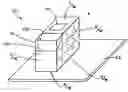
BRIEF DESCRIPTION OF THE DRAWINGSFig. 1 is a perspective view of the preferred embodiment of applicants invention.
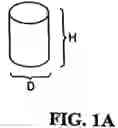
Fig. 1A is side view of a 12oz. beverage can.
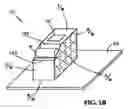
Fig. 1B is a perspective view of the beverage container modified accordingly to Applicant’s invention.
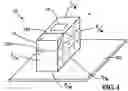
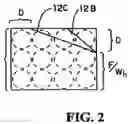
Fig. 2 is a side elevational view of the preferred embodiment of applicants invention.
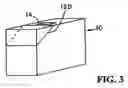
Fig. 3 is a side elevational view of an embodiment of Applicants invention.
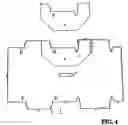
Fig. 4 is a two dimensional pattern of a typical paper twelve pack container illustrating the area removed to provide for applicants unique dispenser.
DETAILED DESCRIPTION OF THE PREFERRED EMBODIMENTLine 12A shows the position of a line on the front wall of a beverage container from one side wall to the next, the line being straight and meeting the edge between the front wall and the side wall at a 90 degree angle. The line 12D shows the position of a diagonal line across each of the two side walls between the front wall and the top wall, lines 12D, at 12B and 12C showing a preferred range of the position of line 12D with respect to the top wall. Line 12E is a line across the top wall, one side wall to the next and perpendicular to the edges of the top wall. The beverage container will be cut through along lines 12A, 12D and 12E to remove section 12 from the rest of the container (See Fig. 1B). The position of lines 12A, 12D and 12E may be premarked, scored (or otherwise weaken) by the manufacturer of the beverage container so as to direct the consumer to the position for cutting and removing portion 12.
Fig. 1 is a perspective view of a modified twelve pack container 10 with cylindrical aluminum 12oz. beverage cans A packed inside in a 4x3 arrangement and designating two side walls S/W, a top wall T/W, a bottom wall B/W, a front wall F/W and a rear wall R/W. It is noted that the two side walls have the greatest surface area, the top and bottom walls having a surface area between the two side walls and the front and rear walls, which have the least surface area. A support surface, such as a refrigerator shelf, is designated SS. The top, bottom, front and rear walls are defined when the container is placed on a support surface, as illustrated in Fig.1, with the F/W chosen to provide for the most convenient access. Fig. 1 also illustrates Applicant’s modification, being a cut or removed portion 12, the removed portion being a corner of the container where the front wall meets the top wall and defined by a diagonal line across the two sidewalls between the front wall and the top wall, and a line across the top wall and across the front wall, this line along which the removed portion is defined designated 12A.
Fig. 2 illustrates a side elevational view of the twelve pack of Fig. 1 wherein the dimension designated D is the approximate diameter of a 12oz. aluminum beverage can, typically about 6.6 centimeters. As can be seen in Figs. 1 and 2 the typical twelve pack beverage container is a little over 4 diameters long (about 26 cms) and about 3 “diameters” high (about 20 cms) to enclose therein, in a 3x4 matrix, twelve cans. Furthermore it sometimes includes a handle 14 thereon, the handle typically being walls defining a cut out in the top wall for the receipt of a hand thereinto. The height (H) of a typical 12oz. metal beverage can is about 12.6 cm.
In Fig. 2 it is seen that Applicant modifies the standard heavy paper wall twelve pack container by cutting off the corner created by the joinder of the front wall and top wall. This is preferably done in the manner illustrated in Figs. 1 and 2. The preferred height of the front wall defined after the cut across the front wall is less than two diameters but greater than one diameter, more preferably between 1.50 and 1.80 times D. Indeed, the most preferred height of the front wall defining the cut to remove portion 12 is between 11/4 diameter and 1 3/4 diameter. Such dimension allows easy receipt of the second course of cans but is high enough to prevent the second course of cans from falling out when there are still 3 courses in the container.
The preferred length of the top wall defined after the cut is between 1 and 3 diameters, preferably between 1 and 2 diameters. These cut dimensions are illustrated by lines 12B and 12C set forth in Fig. 2.
Cuts along the lines 12A, 12D and 12E may be made with a knife, razor or any other suitable instrument. When the cuts are made as set forth in Figs. 1 and 2, portion 12 can be removed (See Fig. 1B) and the single can at the top corner will then be removed and the container placed in the position illustrated in Fig.1 for easy dispensing of the remaining cans.
Fig. 3 provides for a diagonal cut 12C across the side walls S/W’s that terminates adjacent handle 14. Handle 14, in a 4 x 3 twelve pack is usually at 2 diameters from a top edge (half way across top wall T/W) to provide for proper balance.
Fig. 4 illustrates a flattened twelve pack pattern 16 which will fold together to provide for a typical twelve pack with dimension. Handle 14 is illustrated. Scored line 18 is made as part of the process of constructing the container, typically after the outer perimeter 20 defining the pattern 16 of the box is formed. Scored line 18 may be grooves, scratches or notches, or any other means known in the trade to weaken the paperboard such that it is easier for the user to remove portion twelve. Indeed, with proper scoring in ways known in the trade, it is fairly easy to remove portion twelve without a cutting instrument. Note in Fig. 4 that folding the pattern 16 will provide for the twelve pack illustrated in Figs.1-3 with the diagonal line 12D running across the side walls from the front wall F/W to the top wall T/W.
In an alternate preferred embodiment Applicant provides a twelve pack container with a line marked on the front wall F/W at between 1D and 2D, on the top wall T/W between 1D and 3D and across the two side walls S/W’s to define the pattern for removal of a corner 12 of a twelve pack container as illustrated in Figs.1-4 to show a consumer that they may cut the container along the line to convert it into the Applicants novel dispenser container as illustrated.
Although the invention has been described with reference to specific embodiments, this description is not meant to be construed in a limited sense. Various modifications of the disclosed embodiments, as well as alternative embodiments of the inventions will become apparent to persons skilled in the art upon the reference to the description of the invention. It is, therefore, contemplated that the appended claims will cover such modifications that fall within the scope of the invention.
Claims
What is Claimed is:1. A container comprising:
a plurality of walls including a front wall, a rear wall, a top wall, a bottom wall and two side walls, the walls containing a multiplicity of stacked cylindrical cans in substantially perpendicular can columns and can rows, the can columns located between the front wall and the rear wall, there being at least a top can row and a next-to-the-top can row, the top can row including a forward most can adjacent the front wall such that the forward most can is in contact with the front wall, and a rearward most can adjacent the rear wall such that the rearward most can is in contact with the rear wall, each can having a can top, a can bottom, a can height, a can diameter, and a longitudinal axis substantially parallel to the front wall, wherein the top wall and the bottom wall are spaced apart by a whole multiple of the can diameters, and the two side walls are spaced apart by the can height, the front wall and rear wall spaced apart by a whole multiple of the can diameters; and
a removable access portion, the removable access portion comprised of a portion of each of the top wall, the front wall and the two side walls, such that removal of the removable access portion leaves a pair of side wall edges, which side wall edges expose a substantial part of the can top and the can bottom of the forward most can, for ease of removal of the forward most can, and removal of the removable access portion further provides access to the cans remaining after removal of the forward most can;
wherein the front wall retains the cans in the next-to-the-top can row from rolling out of the container when the bottom wall is resting flat on a support surface.
2. A container for holding a multiplicity of cylindrical cans, the container comprising:
an even number of the cylindrical cans, each can comprising a can diameter and a can height, each can further comprising a longitudinal axis;
a rear wall having a rear wall height of a whole multiple of the can diameter;
a front wall spaced apart from the rear wall by a whole multiple of the can diameters, having a front wall height, the front wall height being less than the rear wall height, the front wall being substantially parallel to the longitudinal axes;
a bottom wall having a bottom wall length of a whole multiple of the can diameter;
a top wall having a top wall length less than the bottom wall length; and
two side walls, each of the side walls having a front edge running from the front wall to the top wall, the side walls separated by the can height.
3. The container of claim 2 wherein at least part of each edge of the two side walls is oblique with respect to the front wall and the top wall.
4. A container holding a multiplicity of substantially identical items arranged in a plurality of substantially perpendicular rows and columns, each item having an item diameter and an item height, wherein the arrangement has a top row and a next-to-the-top row, and wherein each column has a column width of the item diameter and each row has a row height of the item diameter, comprising:
a rear wall having a rear wall height of a whole multiple of the row height;
a bottom wall for resting on a support surface having a bottom wall length of a whole multiple of the column width;
a front wall having a front wall height less than the rear wall height but sufficiently high to restrain the next-to-the-top row of items when the bottom wall is resting on the support surface;
a top wall having a top wall length less than the bottom wall length;
two side walls, each of the side walls having a front edge connecting the front wall to the top wall, wherein at least part of each edge is oblique with respect to the front wall and the top wall, the side walls separated by the item height; and
wherein each of the items comprises a longitudinal axis substantially parallel to the front wall.
5. A container holding a multiplicity of cylindrical cans, each can having a can diameter and a can height, the container comprising:
a rear wall and a front wall each having a height of a whole multiple of the can diameter;
a bottom wall and a top wall each having a length of a whole multiple of the can diameter;
two side walls between the bottom and top walls, the side walls separated by the can height; and
a scored line having a front wall segment running on the front wall, a top wall segment running on the top wall, and side wall segments running on the side walls, the scored line defining a removable section of the container, and wherein at least a part of the front wall segment runs at a height less than the rear wall height, and at least a part of each of the side wall segments runs obliquely with respect to the front wall and the top wall;
wherein each of the cans comprises a longitudinal axis, and wherein the front wall is substantially parallel to the longitudinal axis.
6. A method of providing easy access to items arranged in a container in a plurality of substantially perpendicular rows and columns, each item having an item diameter and an item height, wherein the arrangement has a top row and a next-to-the-top row, and wherein each column has a column width of the item diameter and each row has a row height of the item diameter, comprising:
providing a rectangular paper container comprising six rectangular walls including two side walls separated by the item height, a front wall and a rear wall separated by a whole multiple of the column width, and a top wall and a bottom wall adapted to rest on a support surface, the bottom wall and top wall separated by a whole multiple of the row height, the rear wall having a rear wall height;
scoring a front wall score on the front wall, at least a part of the front wall score being made at a height less than the rear wall height but sufficiently high to restrain the next-to-the-top row of items when the bottom wall is resting on the support surface and when the front wall is separated at the front wall score;
scoring a top wall score on the top wall; and
scoring side wall scores on the side walls, at least a part of each of the side wall scores being made oblique to the front wall and the top wall;
wherein the scores define a section, the removal of which allows easy access to the items, and wherein each of the items comprises a longitudinal axis substantially parallel to the front wall.
7. A container comprising:
an even number of substantially identical cylindrical items contained within the container, each item having a height and a diameter; and
a rectangular carton, adapted to contain the items in a row and column arrangement of substantially perpendicular rows and columns, the row and column arrangement including a top row and a next-to-the-top row, the rectangular carton including a front wall, a rear wall, a top wall, a bottom wall for resting on a level support surface, and two side walls, the front and rear walls having a height, the top and bottom walls having a length, the rectangular carton further adapted to enclose the items such that the height of the front wall and the height of the rear wall is equal to a multiplicity of whole item diameters of the items and the length of the bottom wall and the length of the top wall is equal to a multiplicity of whole item diameters of the items and wherein the front wall includes a front wall scored line segment located such that removal of a front wall portion along the front wall scored line segment will define a lip that will retain the next-to-the-top row of cylindrical items from falling out of the container when the bottom wall is on a level support surface, and wherein the top wall includes a top wall scored line segment such that removal of a top wall portion along the top wall scored line segment results in, in conjunction with the removal of the front wall portion along the front wall scored line segment, an opening providing access to the items and, wherein each of the side walls include a scored line segment at least partly oblique, running between the front wall and the top wall.
8. A method of manufacturing a container:
providing a paper sheet member;
scoring a portion of the sheet member with a score line;
folding the sheet member around a plurality of items, each of the items having an item height, an item diameter, and a longitudinal axis, the folded sheet member defining a generally rectangular container having a top wall, a bottom wall, a front wall, a rear wall, and two side walls containing the items arranged in a plurality of substantially perpendicular rows and columns, the plurality of rows containing at least a top row and a next-to-the-top row, wherein a row height is equal to the item diameter and wherein the front wall and the rear wall are separated by a whole multiplicity of the item diameter and the top wall and the bottom wall are separated by a whole multiplicity of the row height, and the side walls are separated by the item height, and wherein folding the sheet member further comprises:
locating at least a portion of the score line on the front wall so as to define an edge that is sufficiently high to restrain the next-to-the-top row;
orienting the front wall substantially parallel to the longitudinal axes; and
locating at least a portion of the score line on the top wall and the side walls.
9. A container comprising:
a plurality of items, each item comprising an item diameter and an item height, each item further comprising a longitudinal axis, and wherein the items are arranged to include a bottom row;
a rear wall having a rear wall height of a whole multiple of the item diameters;
a front wall having a front wall height, the front wall height being less than the rear wall height but capable of restraining at least the bottom row of items from rolling out of the container, the front wall being substantially parallel to the longitudinal axes;
a bottom wall having a bottom wall length of a whole multiple of the item diameters;
a top wall having a top wall length less than the bottom wall length; and
two side walls, each of the side walls having a front edge running from the front wall to the top wall, wherein at least part of each edge is oblique with respect to the front wall and the top wall, the side walls separated by the item height.
10. A container holding a multiplicity of items, the container comprising:
an even number of the items, each item comprising an item diameter and an item height, each item further comprising a longitudinal axis;
a rear wall having a rear wall height of a whole multiple of the item diameter;
a front wall spaced apart from the rear wall by a whole multiple of the item diameters, having a front wall height, the front wall height being less than the rear wall height, the front wall being substantially parallel to the longitudinal axes;
a bottom wall having a bottom wall length of a whole multiple of the item diameter;
a top wall having a top wall length less than the bottom wall length; and
two side walls, each of the side walls having a front edge running from the front wall to the top wall, the side walls separated by the item height.
11. A container holding a multiplicity of substantially identical cans arranged in a plurality of substantially perpendicular rows and columns, each can having a can diameter and a can height, wherein the arrangement has a top row and a next-to-the-top row, and wherein each column has a column width of the can diameter and each row has a row height of the can diameter, comprising:
a rear wall having a rear wall height of a whole multiple of the row height;
a bottom wall for resting on a support surface having a bottom wall length of a whole multiple of the column width;
a front wall having a front wall height less than the rear wall height but sufficiently high to restrain the next-to-the-top row of cans when the bottom wall is resting on the support surface;
a top wall having a top wall length less than the bottom wall length; and
two side walls, each of the side walls having a front edge connecting the front wall to the top wall, wherein at least part of each edge is oblique with respect to the front wall and the top wall, the side walls separated by the can height;
wherein each of the cans comprises a longitudinal axis substantially parallel to the front wall.
12. A container holding a multiplicity of cylindrical cans, each can having a can diameter and a can height, the container comprising:
a rear wall and a front wall each having a height of a whole multiple of the can diameter;
a bottom wall and a top wall each having a length of a whole multiple of the can diameter, the top wall including a handle;
two side walls between the bottom and top walls, the side walls separated by the can height; and
a scored line having a front wall segment running on the front wall, a top wall segment running on the top wall, and side wall segments running on the side walls, the scored line defining a removable section of the container, and wherein at least a part of the front wall segment runs at a height less than the rear wall height, and at least a part of each of the side wall segments runs obliquely with respect to the front wall and the top wall;
wherein each of the cans comprises a longitudinal axis, and wherein the front wall is substantially parallel to the longitudinal axis.
13. A method of providing easy access to items arranged in a container in a plurality of substantially perpendicular rows and columns, each item having an item diameter and an item height, wherein the arrangement has a top row and a next-to-the-top row, and wherein each column has a column width of the item diameter and each row has a row height of the item diameter, comprising:
providing a rectangular paper container comprising six rectangular walls including two side walls separated by the item height, a front wall and a rear wall separated by a whole multiple of the column width, and a top wall having a handle and a bottom wall adapted to rest on a support surface, the bottom wall and the top wall separated by a whole multiple of the row height, the rear wall having a rear wall height;
scoring a front wall score on the front wall, at least a part of the front wall score being made at a height less than the rear wall height but sufficiently high to restrain the next-to-the-top row of items when the bottom wall is resting on the support surface and when the front wall is separated at the front wall score;
scoring a top wall score on the top wall; and
scoring side wall scores on the side walls, at least a part of each of the side wall scores being made oblique to the front wall and the top wall;
wherein the scores define a section, the removal of which allows easy access to the items, and wherein each of the items comprises a longitudinal axis substantially parallel to the front wall.
14. A container comprising:
a multiplicity of substantially identical items held in the container in a plurality of rows, each item having an item diameter, an item height, and a longitudinal axis, wherein each row has a row height of the item diameter;
a rear wall and a front wall each being substantially parallel to the longitudinal axes of the items, the rear wall and front wall separated by a whole multiple of the item diameter, the rear wall having a rear wall height;
a bottom wall and a top wall separated by a whole multiple of the row height;
two side walls between the bottom and top walls, the side walls separated by the item height;
the rear, front, bottom, top, and side walls forming a substantially rectangular carton holding the items in an arrangement wherein each row includes a forward most item in contact with the front wall and a rearward most item in contact with the rear wall; and
a scored line having a front wall segment running on the front wall, a top wall segment running on the top wall, and side wall segments running on the side walls, the scored line defining a removable section of the container, and wherein at least a part of the front wall segment runs at a height less than the rear wall height.
15. The container of Claim 14, wherein each of the items comprises a beverage can.
16. The container of Claim 14, wherein the multiplicity of substantially identical items is an even number of substantially identical items.
17. The container of Claim 16, wherein each of the items comprises a beverage can.
18. A container comprising:
a multiplicity of substantially identical items held in the container in a plurality of rows, each item having an item diameter, an item height, and a longitudinal axis, wherein each row has a row height of the item diameter;
a rear wall and a front wall each being substantially parallel to the longitudinal axes of the items, the rear wall and front wall separated by a whole multiple of the item diameter, the rear wall having a rear wall height;
a bottom wall and a top wall separated by a whole multiple of the row height;
two side walls between the bottom and top walls, the side walls separated by the item height;
the rear, front, bottom, top, and side walls forming a substantially rectangular carton holding the items in an arrangement wherein the plurality of rows comprises a top row and a next-to-the-top row, and each item in the top row is centered on a corresponding item in the next-to-the-top row to form a plurality of pairs of items wherein, for each pair of items, the longitudinal axes of the items in the pair of items are both in a plane that is substantially parallel to the front and rear walls and to a corresponding plane for each of the other pairs of items; and
a scored line having a front wall segment running on the front wall, a top wall segment running on the top wall, and side wall segments running on the side walls, the scored line defining a removable section of the container, and wherein at least a part of the front wall segment runs at a height less than the rear wall height.
19. The container of Claim 18, wherein each of the items comprises a beverage can.
20. The container of Claim 18, wherein the multiplicity of substantially identical items is an even number of substantially identical items.
21. The container of Claim 20, wherein each of the items comprises a beverage can.
22. A container comprising:
a multiplicity of substantially identical items held in the container in a plurality of rows, each item having an item diameter, an item height, and a longitudinal axis, wherein each row has a row height of the item diameter;
a rear wall and a front wall each being substantially parallel to the longitudinal axes of the items, the rear wall and front wall separated by a whole multiple of the item diameter, the rear wall having a rear wall height;
a bottom wall and a top wall separated by a whole multiple of the row height;
two side walls between the bottom and top walls, the side walls separated by the item height;
the rear, front, bottom, top, and side walls forming a substantially rectangular carton holding the items in an arrangement wherein the items in each row, with reference to the front and rear walls, are not staggered with respect to the items in any other row; and
a scored line having a front wall segment running on the front wall, a top wall segment running on the top wall, and side wall segments running on the side walls, the scored line defining a removable section of the container, and wherein at least a part of the front wall segment runs at a height less than the rear wall height.
23. The container of Claim 22, wherein each of the items comprises a beverage can.
24. The container of Claim 22, wherein the multiplicity of substantially identical items is an even number of substantially identical items.
25. The container of Claim 24, wherein each of the items comprises a beverage can.
Images & Drawings included:
Sources:
- United States Patent and Trademark Office - verify current appl. status at the USPTO↗
Similar patent applications:
- » 20050023170
Container for providing easy access to beverage cans - » 20050072705
Container for providing easy access to beverage cans - » 20050139501
Container for providing easy access to beverage cans - » 20060289323
Container for providing easy access to beverage cans - » 20160060011
Container for providing easy access to beverage cans
Recent applications in this class:
- » 20240351763 2024-10-24
Carrier For Containers - » 20240278968 2024-08-22
Carrier For Containers - » 20240208705 2024-06-27
PACK FOR CONSUMER ARTICLES PROVIDED WITH A HINGED CLOSING TAB - » 20240150101 2024-05-09
Carton For Containers - » 20240150100 2024-05-09
Carton For Containers - » 20230406588 2023-12-21
Carton and blank therefor - » 20230159245 2023-05-25
CARTON AND CARTON BLANK - » 20220258941 2022-08-18
CARTON AND BLANK THEREFOR - » 20220250820 2022-08-11
CARTON AND BLANK THEREFOR - » 20220055812 2022-02-24
Nested Beverage Carton Layout