Device to measure acceleration and deceleration of hip rotation
US20070112286A1
2007-05-17
11/256,517
2005-11-17
Abstract:
Hip rotation measuring device with an accelerometer, a micro-controller, a printed circuit board, a memory chip, a power supply such as batteries, an on-off switch, a start-stop recording switch, an acceleration direction switch an audible sound generator, a readout display such as an LCD display, standard support electronics such as resistors capacitors and regulators for operating the electronic components, a case to house the components, and a belt clip or other standard attachment device fixed to the outside of the case so that when the components are combined within the case and when the case is attached by the clip to an article of clothing that is in close proximity to a moving body part such as a hip, the readout display can show magnitude of acceleration or deceleration of hip movement of the user. The device can measure other body part acceleration and deceleration such as hand, foot, shoulders.
Interested in similar patents?
Get notified when new applications in this technology area are published.
Classification:
A61B5/11 » CPC main
Measuring for diagnostic purposes ; Identification of persons; Detecting, measuring or recording devices for testing the shape, pattern, colour, size or movement of the body or parts thereof, for diagnostic purposes Measuring movement of the entire body or parts thereof, e.g. head or hand tremor, mobility of a limb
A61B5/4528 » CPC further
Measuring for diagnostic purposes ; Identification of persons; For evaluating or diagnosing the musculoskeletal system or teeth Joints
A61B5/6831 » CPC further
Measuring for diagnostic purposes ; Identification of persons; Arrangements of detecting, measuring or recording means, e.g. sensors, in relation to patient specially adapted to be attached to or worn on the body surface; Means for maintaining contact with the body Straps, bands or harnesses
A63B69/00 » CPC further
Training appliances or apparatus for special sports
A63B69/3608 » CPC further
Training appliances or apparatus for special sports for golf Attachments on the body, e.g. for measuring, aligning, restraining
A61B5/4571 » CPC further
Measuring for diagnostic purposes ; Identification of persons; For evaluating or diagnosing the musculoskeletal system or teeth; Evaluating a particular part of the muscoloskeletal system or a particular medical condition Evaluating the hip
A61B5/7405 » CPC further
Measuring for diagnostic purposes ; Identification of persons; Details of notification to user or communication with user or patient ; user input means using sound
A61B2562/0219 » CPC further
Details of sensors; Constructional details of sensor housings or probes; Accessories for sensors; Details of sensors specially adapted for in-vivo measurements Inertial sensors, e.g. accelerometers, gyroscopes, tilt switches
A63B69/0002 » CPC further
Training appliances or apparatus for special sports for baseball
A63B69/0015 » CPC further
Training appliances or apparatus for special sports for cricket
A63B69/002 » CPC further
Training appliances or apparatus for special sports for football
A63B69/004 » CPC further
Training appliances or apparatus for special sports for the martial arts, e.g. karate, judo
A63B69/3623 » CPC further
Training appliances or apparatus for special sports for golf for driving
A63B69/38 » CPC further
Training appliances or apparatus for special sports for tennis
A63B71/0619 » CPC further
Games or sports accessories not covered in groups -; Indicating or scoring devices for games or players, or for other sports activities Displays, user interfaces and indicating devices, specially adapted for sport equipment, e.g. display mounted on treadmills
A63B2071/0625 » CPC further
Games or sports accessories not covered in groups -; Indicating or scoring devices for games or players, or for other sports activities; Displays, user interfaces and indicating devices, specially adapted for sport equipment, e.g. display mounted on treadmills; Visual, audio or audio-visual systems for entertaining, instructing or motivating the user Emitting sound, noise or music
A63B2220/40 » CPC further
Measuring of physical parameters relating to sporting activity Acceleration
A63B2225/50 » CPC further
Miscellaneous features of sport apparatus, devices or equipment Wireless data transmission, e.g. by radio transmitters or telemetry
A63B2244/15 » CPC further
Sports without balls Discus throwing
A63B2244/16 » CPC further
Sports without balls Spear or javelin throwing
A63B2244/20 » CPC further
Sports without balls Swimming
A61B5/103 IPC
Measuring for diagnostic purposes ; Identification of persons Detecting, measuring or recording devices for testing the shape, pattern, colour, size or movement of the body or parts thereof, for diagnostic purposes
Description
CROSS REFERENCE TO RELATED APPLICATIONSNot Applicable
STATEMENT REGARDING FEDERALLY SPONSORED RESEARCH OR DEVELOPMENTNot Applicable
DESCRIPTION OF ATTACHED APPENDIXNot Applicable
BACKGROUND OF THE INVENTIONThis invention relates generally to the field of electronic measuring devices and more specifically to a hip rotation measuring device.
Research has shown that increasing hip rotation acceleration dramatically improves racquet head speed in tennis, bat speed in baseball, club speed in golf, hand speed in boxing, throwing speed in baseball and football, and even peak hand force in swimming. Better athletes are known to have higher rates of hip acceleration and deceleration during their sport than poorer performing athletes. Until now, there has not been an easy, economical way for an athlete to measure his or her hip rotation acceleration or deceleration. Prior methods have required expensive and time consuming set-ups with body markers, computers and video cameras.
The prior art includes numerous methods of using electronic measuring means to evaluate range of motion of various parts of the human body, such as Crandall et al in his U.S. Pat. No. 4,922,925 that evaluates range of motion in the hand and wrist. Or Misevich et al U.S. Pat. No. 5,216,817 that measures the geometries and axes of rotation of parts of the human body. However, none of the prior art specifically teaches a portable device that measures acceleration or deceleration of a body part.
Since hip rotation is so important to any sport involving hip rotation, it would be very helpful to an athlete seeking to improve his or her performance to be able to easily, quickly and inexpensively measure his or her hip rotation acceleration and deceleration. It would also be helpful to an athlete to have immediate feedback about the magnitude of the acceleration and deceleration of other body parts such as the hands, feet, knees, arms or shoulders.
BRIEF SUMMARY OF THE INVENTIONThe primary object of the invention is to provide a device that measures and records the magnitude of acceleration and deceleration of hip rotation in a human being during a sport activity.
Another object of the invention is to provide a hip rotation measuring device that is worn by the user and gives immediate feedback regarding hip rotation acceleration and deceleration.
Another object of the invention is to provide a hip rotation measuring device that give immediate feedback to the wearer or instructor about the magnitude of the acceleration and deceleration of other body parts such as the hand, foot, shoulders and knee during a sport activity.
A further object of the invention is to provide a hip rotation measuring device that gives immediate feedback, via a transmitter and receiver, to a broadcaster during a sporting event about the magnitude of acceleration and deceleration of hip rotation or other body parts.
Yet another object of the invention is to provide a hip rotation measuring device that is inexpensive to manufacture.
Still yet another object of the invention is to provide a hip rotation measuring device that is light weight, portable and easily attached to the user so that it does not adversely affect the performance of the wearer during a sport activity.
Another object of the invention is to provide a hip rotation measuring device that is small enough and enclosed in a waterproof casing so that it can be attached to a person's swim suit so that it can be used while swimming.
Other objects and advantages of the present invention will become apparent from the following descriptions, taken in connection with the accompanying drawings, wherein, by way of illustration and example, an embodiment of the present invention is disclosed.
In accordance with a preferred embodiment of the invention, there is disclosed a hip rotation measuring device comprising: an accelerometer, a micro-controller, a printed circuit board, a memory chip, a power supply such as batteries, an on-off switch, a start-stop recording switch, an acceleration direction switch an audible sound generator, a readout display such as an LCD display, standard support electronics such as resistors capacitors and regulators for operating said electronic components, a case to house said components, and a belt clip or other standard attachment device fixed to the outside of said case so that when said components are combined within said case and when said case is attached by said clip to an article of clothing that is in close proximity to a moving body part such as a hip, said readout display can show magnitude of acceleration or deceleration of hip movement of the user.
BRIEF DESCRIPTION OF THE DRAWINGSThe drawings constitute a part of this specification and include exemplary embodiments to the invention, which may be embodied in various forms. It is to be understood that in some instances various aspects of the invention may be shown exaggerated or enlarged to facilitate an understanding of the invention.
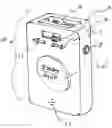
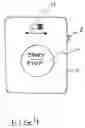
FIG. 1 is a perspective view of the invention.
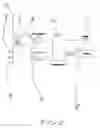
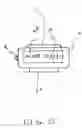
FIG. 2 is a schematic view of the electronic portion of the invention.
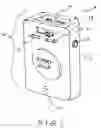
FIG. 3 is a rear perspective view of the invention.
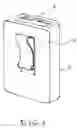
FIG. 4 is a front view of the invention.
FIG. 5 is a top view of the invention.
DETAILED DESCRIPTION OF THE PREFERRED EMBODIMENTSDetailed descriptions of the preferred embodiment are provided herein. It is to be understood, however, that the present invention may be embodied in various forms. Therefore, specific details disclosed herein are not to be interpreted as limiting, but rather as a basis for the claims and as a representative basis for teaching one skilled in the art to employ the present invention in virtually any appropriately detailed system, structure or manner.
referring now to FIG. 1 we see a perspective view of the invention 100. The outer case 2 is smaller than a pack of cigarettes and therefore portable and capable of attaching to a person's clothing by a clip 26 or other standard fastening device as shown in FIG. 3. Push button 6 starts and stops the process of measuring acceleration or deceleration. Slide switch 12 lets the user select direction of acceleration measurement as shown by arrow 10 or by arrow 14. Push button 8 turns the entire unit on or off. Apertures 23 allow sound from audio tone generator 22. Case 2 houses components that are shown in FIG. 2. Accelerometer 18 is attached to signal detecting and amplifying micro-controller 20 which includes a memory chip and powered by a battery power source 16. The circuit is further controlled by direction switch 12, on-off switch 8 and start-stop recording switch 6. The entire circuit is mounted on a standard printed circuit board, not shown. Additional support electronics 24 are standard components such as resistors, capacitors and voltage regulators. The micro-controller 20 sends information to display portion 4, preferably an LCD display, thereby showing the user the magnitude of acceleration and deceleration during a time period as defined by the time elapsed between pressing button 6 to start the recording of measurements and pressing button 6 again to stop the recording of measurements. An audio tone generated by standard tone generating device 22 sounds loudly at the start of recording, beeps softly during the duration of the recording period and then sounds loudly again and the end of the recording period.
During use, the user attaches the device 100 to his or her belt or pants top by clip 26 and moves the direction switch 12 in the direction he or she will be rotating his or her hips during a sport activity such as swinging a bat, tennis racquet, golf club, racquetball racquet, table tennis racquet, cricket bat, or throwing a baseball, football, javelin, discus or throwing a punch or kicking a soccer ball, football, or martial arts kick. The device 100 is switched on by pressing the on-off switch 8 to the “on” position. Then the start button 6, which also can be called the recording button, is pressed, at which time the device starts to record acceleration and deceleration in the direction of the direction switch 12. The user then presses button 6 again thereby stopping the recording process and initiating the display of maximum values during the elapsed time period for acceleration and deceleration. The display is cleared and the device starts to record again when the recording button 6 is pressed again. Pressing the on-off switch to the “off” position turns off the device 100.
The device can be easily modified with the addition of an audio speaker or earphone to provide an auditory message regarding magnitude of acceleration or deceleration instead of, or as well as, the visual readout 4 already described. Additionally, the information could be transmitted by standard transmitter and receiver means to a remote location such as a TV or radio announcer's booth or external display.
Additionally, the device 100 can be modified in size and shape to be worn on the wrist like a wristwatch to display readings for the hand during a punch or throw or it can be strapped to the ankle or foot to display reading during a kick, or inserted into a special pocket or attached to the back of a shirt, vest or coat to record the rotation of the shoulders during a swing, throw or punch. Finally, the entire unit 100 can be enclosed in a waterproof housing for use during swimming activity.
While the invention has been described in connection with a preferred embodiment, it is not intended to limit the scope of the invention to the particular form set forth, but on the contrary, it is intended to cover such alternatives, modifications, and equivalents as may be included within the spirit and scope of the invention as defined by the appended claims.
Claims
What is claimed is:1. Hip Rotation Measuring Device comprising:
an accelerometer;
a micro-controller;
a printed circuit board;
a memory chip;
a power supply such as batteries;
an on-off switch;
a start-stop recording switch;
an acceleration/deceleration direction switch
an audible sound generator;
a readout display such as an LCD display;
standard support electronics such as resistors capacitors and regulators for operating said electronic components;
a case to house said components; and
a belt clip or other standard attachment device fixed to the outside of said case
so that when said components are combined within said case and when said case is attached by said clip to an article of clothing that is in close proximity to a moving body part such as a hip, said readout display can show magnitude of acceleration or deceleration of hip movement of the user.
2. Hip Rotation Measuring Device as claimed in claim 1 wherein said measuring device can measure other body part acceleration and deceleration such as hand, foot, shoulders or knee.
3. Hip Rotation Measuring Device as claimed in claim 1 wherein said measuring device can be housed inside a waterproof enclosure for use during swimming activity.
4. Hip Rotation Measuring Device as claimed in claim 1 wherein said device is inexpensive to manufacture.
5. Hip Rotation Measuring Device as claimed in claim 1 wherein said measuring device is light weight and portable.
6. Hip Rotation Measuring Device as claimed in claim 1 wherein said measuring device is easy to operate.
7. Hip Rotation Measuring Device as claimed in claim 1 wherein said measuring device gives immediate feedback to the wearer or instructor about the magnitude of acceleration and deceleration of hip rotation during a sport activity.
8. Hip Rotation Measuring Device as claimed in claim 1 wherein said measuring device can include a standard transmitting portion that can give immediate feedback to a TV or radio broadcaster or an external display during a sporting event about the magnitude of acceleration and deceleration of hip rotation or other body parts such as the hand, foot, shoulders or knee.
9. Hip Rotation Measuring Device as claimed in claim 1 wherein said measuring device can provide immediate feedback to the wearer or care giver about the magnitude of acceleration and deceleration of body parts during the course of rehabilitation.
Images & Drawings included:
Sources:
- United States Patent and Trademark Office - verify current appl. status at the USPTO↗
Recent applications in this class:
- » 20250127423 2025-04-24
MOTION STATE MONITORING SYSTEM, CONTROL METHOD, AND NON-TRANSITORY COMPUTER READABLE MEDIUM - » 20250127422 2025-04-24
MOTION STATE MONITORING SYSTEM, CONTROL METHOD, AND NON-TRANSITORY COMPUTER READABLE MEDIUM - » 20250127421 2025-04-24
MOTION STATE MONITORING SYSTEM, METHOD FOR CONTROLLING THE SAME, AND NON-TRANSITORY COMPUTER READABLE MEDIUM STORING CONTROL PROGRAM - » 20250082227 2025-03-13
ELECTRODES FOR PHYSIOLOGICAL SIGNAL RECOGNITION - » 20250040831 2025-02-06
MOBILITY ESTIMATION DEVICE, MOBILITY ESTIMATION SYSTEM, MOBILITY ESTIMATION METHOD, AND RECORDING MEDIUM - » 20250031996 2025-01-30
IMAGE DIAGNOSTIC APPARATUS AND METHOD OF MONITORING PATIENT DURING EXAMINATION - » 20250031995 2025-01-30
DYNAMIC BALANCE ESTIMATION DEVICE, DYNAMIC BALANCE ESTIMATION SYSTEM, DYNAMIC BALANCE ESTIMATION METHOD, AND RECORDING MEDIUM - » 20250009258 2025-01-09
INFORMATION PROCESSING SYSTEM, INFORMATION PROCESSING DEVICE AND PROGRAM RECORDING MEDIUM - » 20240398258 2024-12-05
MOTION DATA COLLECTION DEVICE, METHOD AND APPARATUS, AND WEARABLE DEVICE - » 20240358278 2024-10-31
Fitness Training System for Merging Energy Expenditure Calculations from Multiple Devices