Media gap detection by reflective florescence
US20070151651A1
2007-07-05
11/589,327
2006-10-27
Abstract:
A method of gap detection between successive adhesive layers on a media carrier using reflective florescence. Roll of label media is obtained and placed on a printer (not shown). Labels pass by a UV light source and labels and carrier reflect back a portion of the UV light. The reflected light is detected by a photosensor. The difference in florescence between label and carrier is detected. Location of the change of florescence identifies the location of the beginning of gap/end of label or the end of gap/beginning of label. The printer is adjusted if necessary to ensure any markings, printing, logos, symbologies or other indicia is printed in the correct position on label.
Assignee:
- INTERMEC IP CORP. 210 🇺🇸 Everett, WA, United States
Interested in similar patents?
Get notified when new applications in this technology area are published.
Classification:
G01N21/64 » CPC main
Investigating or analysing materials by the use of optical means, i.e. using sub-millimetre waves, infrared, visible or ultraviolet light; Systems in which the material investigated is excited whereby it emits light or causes a change in wavelength of the incident light optically excited Fluorescence; Phosphorescence
G09F3/10 » CPC further
Labels, tag tickets, or similar identification or indication means ; Seals; Postage or like stamps; Fastening or securing by means not forming part of the material of the label itself by an adhesive layer
B65C9/40 IPC
Details of labelling machines or apparatus Controls; Safety devices
B65C9/42 IPC
Details of labelling machines or apparatus; Controls; Safety devices Label feed control
Description
CROSS-REFERENCES TO RELATED APPLICATIONSThis application is a continuation of U.S. patent application Ser. No. 11/365,479, filed Mar. 1, 2006, now pending, which claims the benefit of U.S. Provisional Application No. 60/658,059, filed Mar. 1, 2005 entitled Media Gap Detection by Reflective Florescence.
BACKGROUND OF THE INVENTION1. Field of Invention
The present invention relates to a reflective florescence used for gap detection of adhesive labels on a media carrier.
2. Description of Related Art
Current methods to detect gaps use transparency differences between the label and the carrier. The transparency difference between label and carrier must be large enough to be accurately detected, resulting in a minimum thickness of label and a maximum thickness of carrier.
There is a need for a method of gap detection that allows for a larger variety of labels to be manufactured without the restrictions created by current gap detection techniques.
SUMMARY OF THE INVENTIONAn embodiment includes a method of gap detection between successive adhesive layers on a media carrier using reflective florescence. A roll of label media is obtained and placed on a printer. The label roll includes labels carried by a carrier. The labels and carrier pass by a UV light source, and the labels and carrier reflect back a portion of the UV light. The reflected light is detected by a photosensor.
The difference in florescence between a label and the carrier is detected. The location of the change of florescence identifies the location of the beginning of gap/end of label or the end of gap/beginning of label. The printer is adjusted, if necessary, to ensure any markings, printing, logos, symbologies or other indicia is printed in the correct position on label.
Media thickness of both the label and the carrier can be reduced, thus increasing number of labels that can be wound on a roll. In addition, carrier quality can be reduced as transparency is not used. This allows use of recycled paper for carrier material.
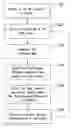
BRIEF DESCRIPTION OF THE DRAWINGSFIG. 1 is a flow chart of a method of gap detection according to one illustrated embodiment.
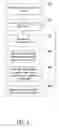
FIG. 2 is a schematic of a gap detection system according to one illustrated embodiment.
DETAILED DESCRIPTION OF THE INVENTIONTypically, a label roll 5 comprises a plurality of labels 10 on carrier 12. There is gap 30 between each successive label 10. The roll of labels 5 is placed on a printer (not shown). Labels 10 are typically cladded with a chalk and kaolin mixture to enhance the apparent whiteness of paper. This mixture also has a high degree of florescence.
A combined light source/detector 20 illuminates labels 10 and carrier 12 with UV light and measures the light from the media 10, 12 passing by the combined light source/detector 20. The combined light source/detector 20 includes a UV-emitting source that is preferably combined with a visual light sensitive detector. A UV emitting light source is preferably a light emitting diode light source. A visual light sensitive detector preferably utilizes a phototransistor to measure reflected light. Alternatively, a light source and a separate detector could be used.
Media 10, 12 pass by the combined light source/detector 20 and are illuminated by a UV light. The visual light sensitive detector of the combined light source/detector 20 measures the light from the media 10, 12. The detector of the combined light source/detector 20 measures the florescence or reflectivity difference between labels 10 and carrier 12. The florescence difference between cladded/coated label 10 and un-cladded/uncoated carrier 12 causes a light difference in the visual spectrum, which is identified by detector 20 and used for to determine the location of gap 30 and/or of label 10. Thus, gaps 30 between successive labels 10 and/or the position of each successive label 10 is detected and identified. If necessary, printer (not shown) can then be adjusted so that each label 10 is printed in the appropriate position on the label 10.
At 100, a roll of label media is obtained and placed on a printer (not shown).
At 200, the labels of the label media pass by a UV light source, and the labels and the carrier of the label media reflect back a portion of the UV light.
At 300, the light from the labels and carrier is detected by a photosensor.
At 400, the difference in florescence between label and carrier is detected.
At 500, the location of the change of florescence identifies the location of the beginning of gap/end of label or the end of gap/beginning of label.
At 600, the printer is adjusted, if necessary, to ensure any markings, printing, logos, symbologies or other indicia is printed in the correct position on label.
Using the florescence difference between the label and carrier allows thickness of both the label and the carrier to be reduced, thus increasing number of labels that can be wound on a roll. In addition, carrier quality can be reduced as transparency is not used. This allows use of recycled paper for carrier material.
Claims
1. A method of determining label position comprising the steps of:
obtaining a roll of label media;
passing the label media by a light source;
detecting the reflected light;
determining the location of differences in florescence; and
identifying the location of the beginning of gap/end of label and/or the end of gap/beginning of label.
2. The method of claim 1 further comprising the step of adjusting the printer and/or the label position.
Images & Drawings included:

Sources:
- United States Patent and Trademark Office - verify current appl. status at the USPTO↗
Similar patent applications:
- » 20070062636
Media gap detection by reflective florescence
Recent applications in this class:
- » 20250164396 2025-05-22
METHOD FOR VISUALIZING DENATURED STATE OR AGGREGATED STATE OF PROTEIN - » 20250102434 2025-03-27
LIGHT SOURCE APPARATUS, INSPECTION APPARATUS, EXPOSURE APPARATUS, LIGHT SOURCE CONTROL METHOD, INSPECTION METHOD, AND EXPOSURE METHOD - » 20250076197 2025-03-06
FAULT DIAGNOSIS APPARATUS BASED ON FLUORESCENCE MULTIVARIATE CORRECTION ANALYSIS OF TRANSFORMER OIL - » 20250052680 2025-02-13
BLOOD CELL ANALYZER FOR DETECTING ARCHAEOCYTE AND DETECTION METHOD - » 20250020590 2025-01-16
SYSTEM FOR DISCRIMINATING ECO-FRIENDLY MATERIAL FOR A VEHICLE AND A METHOD OF DISCRIMINATING ECO-FRIENDLY MATERIAL FOR A VEHICLE USING SAME - » 20240426753 2024-12-26
METHOD OF PREPARING SURFACES COMPRISING INSPECTING SURFACE - » 20240393242 2024-11-28
FLUORESCENT NANOPARTICLES FOR OILFIELD AND OTHER CHEMICAL PRODUCT INJECTION ASSURANCE, MONITORING AND TRACING - » 20240230533 2024-07-11
OPTICAL STABILIZATION TECHNIQUES INCORPORATING PIXEL CURRENT MEASUREMENTS - » 20240133809 2024-04-25
OPTICAL STABILIZATION TECHNIQUES INCORPORATING PIXEL CURRENT MEASUREMENTS - » 20240094124 2024-03-21
Fluorescence and scatter and absorption spectroscopic apparatus with a sapphire tube and method for analyzing inline low level hydrocarbon in a flow medium
Recent applications for this Assignee:
- » 20220398887 2022-12-15
Methods, apparatuses, and systems for dynamically managing assets - » 20190335168 2019-10-31
Volume dimensioning system calibration systems and methods - » 20180197394 2018-07-12
Systems, methods, and apparatus to permit communication between passive wireless transponders - » 20170372104 2017-12-28
Utilization of motion and spatial identification in RFID systems - » 20170357834 2017-12-14
Modulation index (depth) based grouping, addressing, and fingerprinting RFID tags - » 20170309994 2017-10-26
Wirelessly reconfigurable antenna - » 20170299395 2017-10-19
Systems, methods, and apparatus to determine physical location and routing within a field of low power beacons - » 20170262667 2017-09-14
RFID system with location capability - » 20170201589 2017-07-13
System and process for managing network communications - » 20160363661 2016-12-15
Synthetic aperture RFID handheld with tag location capability