Optical Solar Collector
US20070159705A1
2007-07-12
11/620,656
2007-01-06
Abstract:
The present invention provides an optical solar collector, in which a spherical or aspheric reflector coated with specular coating is set upon the optical circuit; on the other hand, an optical concentrator is built upon the front of the spherical or aspheric reflector oppositely and directly. Due to applying above-mentioned structure, like building up spherical or aspheric reflector on the optical circuit cooperating to an optical concentrator to construct an optical collecting system, so tile solar energy can be focused on said optical concentrator through the reflecting by said spherical or aspheric reflector, meanwhile the reflecting coatings coated on the surfaces of said spherical or aspheric reflectors can reflect the useful part of the solar light to the optical concentrator, but not the harmful part (such like ultraviolet below 400 nm in wavelength) absorbed completely by it, further to transfer it into disposable energy.
Inventors:
- HONGCHENG ZHANG 2 🇨🇳 Xiamen, China
- Tianqing Chen 2 🇨🇳 Xiamen, China
- Tianshu Chen 2 🇨🇳 Xiamen, China
- Shuiju Wang 2 🇨🇳 Xiamen, China
Interested in similar patents?
Get notified when new applications in this technology area are published.
Classification:
G02B17/0684 » CPC main
Systems with reflecting surfaces, with or without refracting elements; Catoptric systems, e.g. image erecting and reversing system using mirrors only, i.e. having only one curved mirror having non-imaging properties for light collecting, e.g. for use with a detector
G02B17/0876 » CPC further
Systems with reflecting surfaces, with or without refracting elements; Catadioptric systems having non-imaging properties for light collecting, e.g. for use with a detector
G02B19/0028 » CPC further
Condensers, e.g. light collectors or similar non-imaging optics characterised by the optical means employed refractive and reflective surfaces, e.g. non-imaging catadioptric systems
G02B19/0042 » CPC further
Condensers, e.g. light collectors or similar non-imaging optics characterised by the use for use with ambient light for use with direct solar radiation
G02B5/08 IPC
Optical elements other than lenses Mirrors
Description
BACKGROUND OF THE INVENTION
1. Field of the Invention
The present invention relates to an optical system, and more particularly to an optical solar collector.
2. Description of Prior Art
So far, energy lack is a worldwide problem. In accordance with expert's estimation, depending to the requirement of the energy now, the existing energy liking coal, natural gas and so on just only can be used for about 50 years. So, developing other energy beyond the earth, such as efficiently transferring solar energy into disposable energy, is a vital thorny problem facing to experts working in all trade and profession.
OBJECTS AND SUMMARY OF THE INVENTION
It is therefore a main object of the present invention to provide an optical solar collector used for collecting solar energy by an optical system.
For archiving the goal, the present invention provides an optical solar collector, in which a spherical reflector coated with specular coating is set upon the optical circuit; on the other hand, an optical concentrator is built upon the front of the spherical reflector oppositely and directly to construct an optical system; in said optical system, an aspheric flattening lens is set upon the forest of the optical circuit; said aspheric flattening lens is coated with reflection reducing coating on the surface.
an optical solar collector is provided by the present invention, in which an aspheric reflector coated with specular coating is set upon the optical circuit; on the other hand, an optical concentrator is built upon the front of the spherical reflector oppositely to construct an optical system; in said optical system, an aspheric flattening lens is set upon the forest of the optical circuit; said aspheric flattening lens is coated with reflection reducing coating on the surface.
Due to applying above-mentioned structure, like building up spherical or aspheric reflector on the optical circuit cooperating to an optical concentrator to construct an optical collecting system, so the solar energy can be focused on said optical concentrator through the reflecting by said spherical or aspheric reflector, meanwhile the reflecting coatings coated on the surfaces of said spherical or aspheric reflectors can reflect the useful part of the solar light to the optical concentrator, but not the harmful part (such like ultraviolet below 400 nm in wavelength) absorbed completely by it, further to transfer it into disposable energy.
BRIEF DESCRIPTION OF THE DRAWINGS
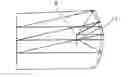
FIG. 1 is a sectional view showing the optical circuit in the first embodiment of the present invention.
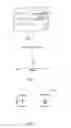
FIG. 2 is a curve chart showing the relationship of the chromatic aberration and the spherical aberration in the first embodiment of the present invention.
FIG. 3 is a diapoint showing the first embodiment of the present invention.
FIG. 4 is a sectional view showing the optical circuit in the second embodiment of the present invention.
FIG. 5 is a curve chart showing the relationship of the chromatic aberration and the spherical aberration in the second embodiment of the present invention.
FIG. 6 is a diapoint showing the second embodiment of the present invention.
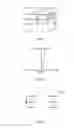
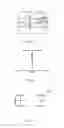
FIG. 7 is a sectional view showing the optical circuit in the third embodiment of the present invention.
FIG. 8 is a curve chart showing the relationship of the chromatic aberration and the spherical aberration in the third embodiment of the present invention.
FIG. 9 is a diapoint showing the third embodiment of the present invention.
DETAILED DESCRIPTION OF PREFERRED EMBODIMENTS
Before describing the detail of the embodiments, there are several term conceptions having to be stressed as followings:
Optical aberration: in the optical system the defects of the real image obtained through deflecting or reflecting by optical lens in geometry comparing with the ideal image. The ideal image is an image presented by an ideal optical system. But in real optical system, the image depends to a certain formation space and beam-defining aperture, meanwhile the image beam compositing of different lights with different wave length, and the reflectivity of a same median to different wave-length light also affect the image formation. Therefore there are a serial defects existing in a real optical system, these defects are aberration. The value of the aberration is responded to the quality of the optical system.
Spherical aberration: is an offset in position between a real point obtained by a concentric light beam shot from a point at an axis through deflecting by all reflecting surfaces in the optical system passes through different aperture angle, and an ideal point, said offset is spherical aberration. The difference of the image intercept obtained via the system by a different aperture angle light beam shot from a point on the axis and the image intercept at the nearest axis. The smaller said spherical aberration is, the better the energy evenness degree is, the uniform distribution of light on a chip facilitates to energy collecting.
Chromatic aberration: in optical system the image is formatted by most of white light. Said white light is composed of different wave-length homogeneous beams. The optical material has different chromatic reflectivity for different beams, so the white light is divided into different chromatic beams via deflecting by the first deflecting surface of the optical system, the each chromatic beam can be transmitted via different optical circuit so that the position of imaging and the size of imaging are different between the different chromatic beams, so the image formatted is presented with color blur circle. When the plurality of chromatic beams images, the optical aberration occurred by the different chromatic beams is called as chromatic aberration. The smaller the chromatic aberration is, the better energy is collected.
Diapoint: the optical design must correct the optical aberration of the optical system; since it is impossible to correct the optical aberration into the ideal degree completely, the better project of correcting optical aberration should be selected, and what degree the image correction need to get also should be decided, such as defining to aberration tolerance. The many light beams shot from a point on the axis passing through the optical system are not focused on a same point occurred by the optical aberration with the image surface, but to form a dispersed image in a certain confusion spot, so it is called diapoint. The spot density of the diapoint can be used to measure the quality of the imaging system. The higher the density of spot is, the better collection effect of energy is.
In the first embodiment of the present invention, as shown in FIG. 1 to FIG. 3, an optical solar collector is typically comprised of a spherical reflector 1 (or an aspheric reflector 1′) and an optical concentrator 2, wherein the surfaces of said spherical reflector 1 (or an aspheric reflector 1′) is coated with reflecting coating thereby reflecting the useful part of the solar light to the optical concentrator 2, but not the harmful part (such like ultraviolet below 400 nm in wavelength) absorbed completely by it. Said spherical reflector 1 (or an aspheric reflector 1′) is located into the light circuit of the sun light, on the other hand, the optical concentrator 2 is built upon the front of the spherical reflector 1 (or an aspheric reflector 1′) oppositely and directly to construct an optical system.
In this optical system, the optical aberration formatted is 0, the maximum spherical aberration is 2.46, referring to FIG. 2 showing the relationship of the chromatic aberration and the spherical aberration; FIG. 3 is showing the diapoint of the optical system.
In the second embodiment of the present invention, as shown in FIG. 4 to FIG. 6, an optical solar collector is typically comprised of a spherical reflector 1, an optical concentrator 2 and an aspheric flattening lens 3, wherein the surfaces of said spherical reflector 1 is coated with reflecting coating, said spherical reflector 1 is located into the light circuit of the sun light, the optical concentrator 2 is built upon the front of the spherical reflector 1 oppositely and directly to construct an optical system; in the optical system, the aspheric flattening lens 3 is set upon the forest of the optical circuit; said aspheric flattening lens 3 is coated with reflection reducing coating on the surface.
In this optical system, the optical aberration formatted is 0.023, the maximum spherical aberration is 1, referring to FIG. 5 showing the relationship of the chromatic aberration and the spherical aberration; FIG. 6 is showing the diapoint of the optical system.
In the third embodiment of the present invention, as shown in FIG. 7 to FIG. 9, an optical solar collector is typically comprised of an aspheric reflector 1′, an optical concentrator 2 and an aspheric flattening lens 3, wherein the surfaces of said aspheric reflector 1′ is coated with reflecting coating, said aspheric reflector 1′ is located into the light circuit of the sun light, the optical concentrator 2 is built upon the front of the aspheric reflector 1′ oppositely and directly to construct an optical system; in the optical system, the aspheric flattening lens 3 is set upon the forest of the optical circuit; said aspheric flattening lens 3 is coated with reflection reducing coating on the surface.
In this optical system, the optical aberration formatted is −0.048, the maximum spherical aberration is 0.026, referring to FIG. 8 showing the relationship of the chromatic aberration and the spherical aberration; FIG. 9 is showing the diapoint of the optical system
Claims
I claim:1. An optical solar collector, in which a spherical reflector coated with specular coating is set upon the optical circuit; on the other hand, an optical concentrator is built upon the front of the spherical reflector oppositely and directly to construct an optical system in said optical system, an aspheric flattening lens is set upon the forest of the optical circuit; said aspheric flattening lens is coated with reflection reducing coating on the surface.
2. An optical solar collector, in which an aspheric reflector coated with specular coating is set upon the optical circuit; on the other hand, an optical concentrator is built upon the front of the spherical reflector oppositely to construct an optical system; in said optical system, an aspheric flattening lens is set upon the forest of the optical circuit; said aspheric flattening lens is coated with reflection reducing coating on the surface.
Images & Drawings included:
Sources:
- United States Patent and Trademark Office - verify current appl. status at the USPTO↗
Similar patent applications:
- » 20150125113
FIBER OPTIC SOLAR COLLECTOR - » 20070159704
OPTICAL SOLAR COLLECTOR - » 20110308572
Solar collector optics - » 20240271827
SOLAR OPTICAL COLLECTOR SYSTEMS, METHODS OF MANUFACTURE, AND METHODS OF USE - » 20100212717
Solar collector with optical waveguide - » 20140190552
Variable optical density solar collector - » 20060231133
Concentrating solar collector with solid optical element - » 20100313955
Method of making solar collector assemblies with optical concentrator encapsulant - » 20140146305
Spectrophotometer for the automated optical characterization of solar collector tubes and method for the operation thereof - » 20130161845
METHOD OF FORMING AN OPTICAL SURFACE ON A SOLAR COLLECTOR SHELL