Floating device for play on the water
US20080026656A1
2008-01-31
11/724,163
2007-03-15
Abstract:
One is a floating platform made in the shape of a segment of a sphere (so in the shape of spherical dish,—previously in the text: “Dish”). The radius of the sphere is longer than the height of the center of gravity of the child (22). The Dish (10) is equipped with a round rim (12) and a flexible bellow (14) located on the edge of the Dish (10).
The other is a round pool (20), mainly inflatable, for placing the Dish (10), so the pool (10) diameter is about that of the submerged Dish diameter, corresponding to the sum of the Dish's weight and the child's weight.
The floating platform can be made also in the shape of a zone of a sphere (so in the shape spherical barrel,—previously in the text: “Barrel”). The Barrel's (16) radius is equal to the Dish's (10) sphere radius and the Barrel's (16) width is equal to the Dish's (10) diameter.
For either the Dish (10) or the Barrel (16) the round pool (20) can be formed by placing a circular float (26) on the surface of the water, for example a swimming pool (24).
Interested in similar patents?
Get notified when new applications in this technology area are published.
Classification:
B63B34/52 » CPC main
Vessels specially adapted for water sports or leisure; Body-supporting devices specially adapted for water sports or leisure; Body-supporting buoyant devices, e.g. bathing boats or water cycles Inflatable or partly inflatable
A63B2225/605 » CPC further
Miscellaneous features of sport apparatus, devices or equipment; Apparatus used in water Floating
A63B31/00 IPC
Swimming
A63B31/00 IPC
Swimming aids
Description
CROSS-REFERENCE TO RELATED APPLICATION
This application claims the benefit of provisional Patent Application No. 60/833,406, filed Jul. 27, 2006 by the present inventor.
BACKGROUND OF THE INVENTION
1. Field of the Invention
This invention relates to a floating device for play and recreation on open water and in a pool, including small pool for children in the homeowner's backyard.
2. Prior Art
There are known devices for play and recreation on the water as fashion floats, boards, noodles and so on. Such are devices, according to Catalogs of Companies: SEVYLOR, O'BRIEN, QUICKSILVER, etc. On all of these devices a person, mainly child, (further in the text: “child”) can only lay or sit, but can not stand or run because the devices do not have enough vertical stability and the child will overturn. This is due to the center of buoyancy of the floating device (the center of Archimedes forces) being located lower than the center of gravity of the child at his/her vertical position.
3. Objects and Advantages
Several objects and advantages of the present invention are:
-
- (a) To provide the devices with vertical stability on the water at any position of the child, including standing, running, creeping, etc.
- (b) To provide the possibility of using the devices on open water and in a pool of any size.
SUMMARY
In accordance with present invention, the floating devices are made either in the shape of a segment of a sphere (so in the shape of spherical dish,—further in the text: “Dish”) or in the shape of a zone of a sphere (so in the shape spherical barrel,—further in the text: “Barrel”). The radius of the sphere is longer than the height of the center of gravity of the child. The Dish (or the Barrel) is placed either in a small round pool with a diameter about equal to the sphere's submerged diameter or in any size swimming pool with a circular float on the water's surface with a diameter equal to the small round pool.
DRAWINGS—FIGURES
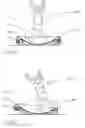
FIG. 1A and 1B show the Dish in a small round pool.
FIG. 2A and 2B show the Barrel in a small round pool.
FIG. 3A and 3B show the Dish in a swimming pool.
FIG. 4A and 4B show the Barrel in a swimming pool.
FIG. 5 shows the small round pool equipped with a circulation water system.
FIGS. 6A to 6E show geometric parameters of the components demonstrating their buoyancy and stability.
Photo 1 to 5 show working (small-scale) models of the Dish and the Barrel.
DRAWINGS—REFERENCE NUMERALS
| 10 | Dish |
| 12 | Rim |
| 14 | Bellow |
| 16 | Barrel |
| 18 | Floating Ring |
| 20 | Round pool |
| 22 | Child |
| 24 | Swimming pool |
| 26 | Circular float |
| 28 | Anchor |
| 30 | Tangent fitting |
| 32 | Water pump |
| 34 | Pipe |
DETAILED DESCRIPTION—FIG. 1A, 1B, 6A, 6B, 6C, 6D, 6E—PREFERRED EMBODIMENT
A Dish 10 (FIG. 1A) is made in the shape of a segment of a sphere and equipped with a rim 12, on the edge of which a flexible bellow 14 is mounted. One end of the bellow 14 is attached to the rim's 12 edge, while the other end of the bellow 14 is free. The curvature radius of Dish 10 “R” (FIG. 6A) is more than the gravity distance “GD” (FIG. 6C) of a child's 22 center of gravity “CG”. The Dish 10 is placed in a round pool 20 with a diameter about equal to that of the submerged Dish's 10 diameter “d”, corresponding to the sum of the Dish's 10 weight and the child's 22 weight. The child 22 is either in the center of the Dish 10 (FIG. 1A, 6D) or out of the center (FIG. 1B, 6E). The Dish's 10 diameter “D” (FIG. 6A) is determined by the desired limit of the tilt angle “α” (FIG. 6E).
Operation—FIG. 1A, 1B, 6A, 6C, 6D, 6E
The Child 22 can stand, run, creep, etc. along the surface of the Dish 10. Whether the Child 22 stands either at the center of the Dish 10 (FIG. 1A) or out of the center (FIG. 1B) (when the Dish 10 is tilted), the stability of the Dish 10 is secured because the center of buoyancy (the center or Archimedes forces) “CB” (FIG. 6A) of the Dish 10 (which is located at center of a sphere) is above the center of gravity “CG” (FIG. 6C) of the child 22 (which is located at low point of human stomach). Therefore the stability of the system is determined by the stability distance “SD” (FIG. 6D and 6E) which is similar to a pendulum, so the child 22 can not overturn. While the child 22 moves around, the Dish 10 will move in the opposite direction. The rim 12 limits a tilt angle (FIG. 1B): to prevent water running over the Dish's 10 edge. The elastic bellow 14 prevents incidental accidents from occurring (i.e. hand be coming caught under the Dish 10).
The Dish's 10 size (displacement) should be matched to the child's 22 weight. If any child weighing more stands, either the Dish 10 will sink to the pool's 20 bottom, or the rim 12 will set down on the edge of the pool 20.
DETAILED DESCRIPTION—FIG. 2A, 2B, 6A and 6B—ADDITIONAL EMBODIMENT
A Barrel 16 (FIG. 2A) is made in the shape of a zone of a sphere, so the width “W” (FIG. 6B) is equal to the Dish's 10 diameter “D” (FIG. 6A). Both sides of the Barrel 16 are equipped with rims 12 (without bellows). All geometric parameters of the Barrel 16 and the pool 20 are analogous to description above for the Dish 10.
Operation—FIG. 2A, 2B, 6A to 6E
Operation of the Barrel 16 is analogous to that described above for the Dish 10. An advantage of this version is that the child 22 can run, creep, etc. inside the inner surface of the sphere, like a hamster wheel.
DETAILED DESCRIPTION—FIG. 3A AND 4A—ADDITIONAL EMBODIMENT
A circular float 26 (FIG. 3A and 4A) is placed on the surface of a swimming pool 24. The float 26 has more buoyancy than the sum of the weight of the Dish 10 (or the Barrel 16) and the child 22. The float 26 is laid at anchor 28.
Operation—FIG. 3A and 4A
The float 26 is functionally the same as the round pool 20 described above. Operation of both the Barrel 26 and the Dish 10 are analogous to that described above. The anchor 28 prevents incidental motion of the float 26 while people are swimming in the pool 24.
DETAILED DESCRIPTION—FIG. 3B AND 4B—ADDITIONAL EMBODIMENT
On the edge of the Dish 10 (FIG. 3A) and on both edges of the Barrel 16 (FIG. 4B) floating rings 18 are mounted. The Dish 10 or the Barrel 16 can be placed on the surface of the swimming pool 24.
Operation—FIG. 3B and 4B
Operation of both the Barrel 26 and the Dish 10 are analogous to that described above. There is no float 26 here, so the floating rings 18 have a limited tilt angle.
DETAILED DESCRIPTION—FIG. 5—ADDITIONAL EMBODIMENT
The pool 20 (FIG. 5) is equipped with a pair of tangent fittings 30 (FIG. 5). A water pump is 32 connected with the fittings 30 by a pipe 34.
Operation—FIG. 5
The pump 32 forces water to move around. An advantage of that version is that the Dish 10 or the Barrel 16 will also move around while the child 22 plays. This action can be also performed by attaching a garden hose to the fitting 30.
CONCLUSION, RAMIFICATION, AND SCOPE OF INVENTION
The universal of technical solutions, described above, show a wide field of using the device for consumer as well as commercial use. The device can be used also in any pond, lake, pool, etc.
The geometric size of the device is determined by a child's weight. For example, for weight of about 50 lbs (22 kg) the dimensions should be about: the round pool diameter is 38.0″ (950.0 mm); the Dish (or the Barrel) curvature radius is 30.0″ (750.0 mm); the Dish diameter (or the Barrel width) is 40.0″ (1000.0 mm); the Dish (or the Barrel) tilt angle is 20 degree.
The pool diameter can be between that of the submerged Dish's diameter (minimum diameter) and the rim diameter (maximum diameter). At the minimum diameter of the pool it is possible to reach a larger limit of the tilt angle of the Dish (or the Barrel), i.e. when the rim will set down on the edge of the pool. At maximum diameter of the pool it is possible to reach a greater depth of the Dish (or the Barrel), i.e. on the same device that a child of greater weight can play.
The Dish can be adapted with an optional barrier/soft rail and net which can act as a wall so that infants can play in the Dish without supervision (as in a play pen).
Both the Dish and the Barrel may consist of one peace of rigid forming material or may be made of rigid sections (sectors) that are jointed together and are sealed by an elastic cover. This sectional design makes it possible to reduce shipping dimensions.
The functionality of the device is demonstrated by a small-scale model (Photo 1 to 5). The models are governed by the hydrodynamic principle of similarity.
- Photo 1 shows the round pool with water (made in the shape of a dish: with circular pumping system and without).
- Photo 2 shows the Dish and the Barrel.
- Photos 3 and 4 show the device in action.
- Photo 5 shows a circular float in a square pool and the device in action.
Claims
I Claim:1. One is a floating platform for children made in the shape of a segment of a sphere (so in the shape of a spherical dish,—previously in the text: “Dish”), equipped with a round rim located on the edge of the said Dish. Curvature radius of the said Dish is more than the gravity distance of said child's center of gravity
2. The Dish of claim 1, wherein said rim is equipped with a round flexible bellow, so one end of said bellow is attached to said rim edge, but another end of said bellow is free.
3. The Dish of claim 1, wherein said rim is made in the shape of a floating, mainly inflatable, ring.
4. The floating platform of claim 1, wherein said platform is made in the shape of a zone of a sphere (so in the shape spherical barrel,—previously in the text: “Barrel”). The said Barrel curvature radius is equal to the curvature radius of said Dish, but the said Barrel's width is equivalent to the said Dish's diameter. Both sides of the Barrel are equipped with said rims made analogously to the said Dish's rim.
5. The other is a round pool, mainly inflatable, for placing said Dish (or said Barrel), so said pool diameter is about that of the submerged Dish diameter, corresponding to the sum of the Dish's weight and the child's weight.
6. The round pool of claim 5, wherein the tangent fittings are installed for pressurized water supply: to force the water to move around.
7. The round pool of claim 5, which is formed by placing a circular float on the surface of the water, for example swimming pool.
Images & Drawings included:



Sources:
- United States Patent and Trademark Office - verify current appl. status at the USPTO↗
Recent applications in this class:
- » 20240336335 2024-10-10
Floating Hammock and Carrying Bag Apparatus - » 20240262467 2024-08-08
MODULAR INFLATABLE PLATFORM SYSTEM - » 20220258840 2022-08-18
Modular inflatable platform system - » 20200247508 2020-08-06
Inflatable platform - » 20120329347 2012-12-27
INFLATABLE DEVICE - » 20120231686 2012-09-13
PLATFORM RAFT - » 20120064786 2012-03-15
RECREATIONAL FLOTATION DEVICE - » 20110183557 2011-07-28
FLOATATION DEVICE AND RELATED METHOD OF USE - » 20100297900 2010-11-25
Recreational flotation device - » 20070184730 2007-08-09
RECREATIONAL AQUATIC AIRBORNE VEHICLE