Exercise/conditioning bodysuit for animals
US20080149045A1
2008-06-26
11/976,111
2007-10-22
✅ Patent granted
US 7,665,425 B2
2010-02-23
-
-
Yvonne R. Abbott
2028-03-20
Abstract:
A vest surrounds the animal's torso. Slings for supporting the front or rear legs can be attached to the vest. Besides straps with rings, the vest may have monitors for remote monitoring of the animal's vital signs.
Interested in similar patents?
Get notified when new applications in this technology area are published.
Classification:
A01K29/005 » CPC main
Other apparatus for animal husbandry Monitoring or measuring activity, e.g. detecting heat or mating
A01K13/006 » CPC further
Devices for grooming or caring of animals, e.g. curry-combs; Fetlock rings; Tail-holders ; Devices for preventing crib-biting; Washing devices; Protection against weather conditions or insects Protective coverings
A01K15/027 » CPC further
Devices for taming animals, e.g. nose-rings or hobbles; Devices for overturning animals in general; Training or exercising equipment; Covering boxes; Training or exercising equipment, e.g. mazes or labyrinths for animals ; Electric shock devices ; Toys specially adapted for animals Exercising equipment, e.g. tread mills, carousels
A01K15/04 IPC
Devices for taming animals, e.g. nose-rings or hobbles; Devices for overturning animals in general; Training or exercising equipment; Covering boxes Devices for impeding movement; Devices for impeding passage through fencing, e.g. hobbles or the like; Anti-kicking devices
A61D99/00 IPC
Subject matter not provided for in other groups of this subclass
A01K29/00 IPC
Other apparatus for animal husbandry
Description
This application claims benefit of provisional application 60/853,030, filed on Oct. 20, 2006 and incorporated herein by reference.
BACKGROUND OF THE INVENTION
Veterinary care often includes the long term rehabilitation of an injured animal. Any rehabilitation device for animals must be designed with the idea that the animal will not cooperate with any rehabilitation regimen. The device also needs minimal human intervention, light weight, easy for the person to apply to the animal and allow rehabilitation on a continuous basis while being used by the animal.
SUMMARY OF THE INVENTION
A vest surrounds the animal's torso and has a series of straps accommodating rings for the attachment of accessories. The accessories include straps attaching to the rings and encircling the animal's ankles to provide exercise and resistance to rehabilitate the animal. In addition, slings for supporting the front or rear legs can be attached to the vest. Besides straps with rings, the vest may have monitors for remote monitoring of the animal's vital signs.
BRIEF DESCRIPTION OF THE DRAWINGS
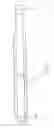
FIG. 1 is a view of the outside surface of the vest;
FIG. 2 is a view of the inside surface of the vest;
FIGS. 3a and 3b depict the inside and outside surfaces of a leg wrap;
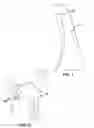
FIG. 4 is a perspective view of a sling
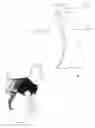
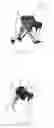
FIG. 5 is a side view of the vest and sling on an animal;
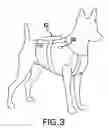
FIG. 6 is depicts cuffs usable with the vest;
FIG. 7 shows the vest and cuffs used on an animal; and
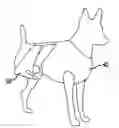
FIG. 8 is a view of an animal wearing a vest having telemetry.
DETAILED DESCRIPTION OF THE INVENTION
The bodysuit of the invention can be seen in FIG. 1. The bodysuit itself is preferably made of any suitable material lycra laminated neoprene or BreathOprene™. The side edges have mating fasteners so that the edges can be joined together to wrap about an animal. The body has a pair of apertures 12 for accommodating the front legs of the animal when it is wrapped around the animal's torso. Attached to the bodysuit is a central strap 14, a pair of diagonal straps 16, 18 and a front strap 20. In addition, a series of longitudinal straps 22 and a top strap 24 are spaced along the bodysuit. The longitudinal and top straps have a series of D-rings 26. The straps are formed by a first strap 28 superimposed on a second wider strap 30 with the D rings retained between the two straps.
FIG. 2 depicts the inner surface of the vest. One part of a mating fastener, such as a strip of hook fastener material 32, is secured to the inner surface that overlies the outer surface when encircling the animal's torso. Hook fastener material will mate directly with BreathOprene™ material, negating the need for a strip of loop material. Any suitable fastener, said as a zipper, can be used to secure the edges of the vest together.
FIGS. 3a and 3b show the outside and inside surfaces, respectively, of a leg wrap for use with the bodysuit. The leg wraps are made of lycra laminated neoprene and have an elongate section 42 for encircling the animal and an upper portion 44 for extending upwardly over the hindquarters of the animal. Straps 46 are secured to a mating fastener area 48 to secure the wrap about the animal's leg.
A sling 50 made of any suitable material, such as the hook compatible BreathOprene™ material. Two tabs 52 having fasteners, such as hook material, extend from the edges of the sling. FIG. 5 shows the sling attached to the vest and functioning to hold the right leg in flexion.
FIG. 6 shows cuffs having hook 54 and loop 56 fasteners so that they may encircle the lower portion of an animal's leg. The cuffs are made from lycra laminated neoprene and have D-rings 58 secured. The suit is worn by animals during physical rehabilitation exercise, as seen in FIG. 7. Straps 59 extend from the cuffs to the vest to provide resistance. The straps can also be attached to some point away from the animal. It is designed so that resistance and support can be adjusted on different parts of the body to help increase muscle, connect gate problems or help in conditioning of the animal.
The design provides support of the back and leg areas during exercises and can be worn indoors or out. In addition, the suit can be used to lift or hoist animals out of tubs, carts and off of tables without interfering with normal movement and urination/defecation of the animal. It can be used to help lift, carry and assist an injured animal or one recovering from surgery.
The vest can also be used with telemetry to allow the remote monitoring of an animals vital signs. The vest may or may not have the straps on the exterior. An opening 60 in the vest allows for the passage of wires from at least one sensor on the interior on the suit to the transmitter 62 on the exterior. The sensor may be for any condition of the animal, such as heart rate, respiratory rate or temperature. Of course, several conditions can be monitored simultaneously. While the transmitter may be on the interior, the animal's comfort is increased when on the exterior. The sensor readings can also be recorded for later analysis rather than being transmitted.
While the invention has been disclosed with reference to preferred embodiments, modifications and variations would be apparent to one of ordinary skill in the art. The invention encompasses such variations and modifications.
Claims
1. A vest for an animal comprising
a central portion having two sides, a front edge and a rear edge,
two apertures proximate the front edge for the front legs of an animal,
a side portion extending from each side of the central portion,
mating connectors on the side portions allowing the side portions to be connected to one another, and
a sling having two ends, the ends attached to the vest.
2-4. (canceled)
5. The vest of claim 1, further comprising a sensor on the vest.
6. (canceled)
7. The vest of claim 6, wherein the ends are releasably attached and the sling is U-shaped.
8. A vest for an animal comprising
a central portion having two sides, a front edge and a rear edge,
two apertures proximate the front edge for the front legs of an animal,
a side portion extending from each side of the central portion,
mating connectors on the side portions allowing the side portions to be connected to one another, and
sensors on the vest monitoring at least one condition of an animal.
9. The vest of claim 8, further comprising
a transmitter connected to the at least one sensor.
Images & Drawings included:
Sources:
- United States Patent and Trademark Office - verify current appl. status at the USPTO↗
Recent applications in this class:
- » 20250287926 2025-09-18
FEEDBACK DEVICE, REARING SYSTEM, FEEDBACK METHOD, AND PROGRAM - » 20250287925 2025-09-18
ANIMAL ACTIVITY RACK SYSTEM - » 20250280800 2025-09-11
LIVESTOCK LOCATION SYSTEM - » 20250280799 2025-09-11
MODEL-BASED DETECTION OF DEFICIENCY IN ANIMAL'S NUTRITIONAL STATE - » 20250275521 2025-09-04
COMPUTER VISION-BASED FEEDING MONITORING AND METHOD THEREFOR - » 20250268236 2025-08-28
MOBILE AUTONOMOUS PET CARE SYSTEM FOR LONG-TERM CARE OF PETS - » 20250248369 2025-08-07
DEVICE FOR DETECTING WAIST AND BACK PAINS IN SMALL ANIMALS - » 20250241276 2025-07-31
PET HEALTH MONITORING SYSTEM FOR PROACTIVE MEDICINE - » 20250221384 2025-07-10
Integrated Smart Collar-Based Pet Management and Monitoring System and Related Methods - » 20250212850 2025-07-03
SYSTEMS AND METHODS FOR ELECTRONIC TRANSACTIONS COMMUNICATING WITH EXTERNAL PET HOMING SYSTEMS