Cover For Solar Cells
US20080245412A1
2008-10-09
12/093,400
2006-11-14
Abstract:
A method for shading solar cells that are exposed to concentrated radiation is provided in order to avoid overheating.
Assignee:
- DURLUM-LEUCHTEN GMBH LICHTTECHNISCHE SPEZIALFABRIK 3 🇩🇪 Schopfheim, Germany
Interested in similar patents?
Get notified when new applications in this technology area are published.
Classification:
H01L31/0521 » CPC main
Semiconductor devices sensitive to infra-red radiation, light, electromagnetic radiation of shorter wavelength or corpuscular radiation and specially adapted either for the conversion of the energy of such radiation into electrical energy or for the control of electrical energy by such radiation; Processes or apparatus specially adapted for the manufacture or treatment thereof or of parts thereof; Details thereof adapted as photovoltaic [PV] conversion devices; Cooling means directly associated or integrated with the PV cell, e.g. integrated Peltier elements for active cooling or heat sinks directly associated with the PV cells using a gaseous or a liquid coolant, e.g. air flow ventilation, water circulation
F24S23/77 » CPC further
Arrangements for concentrating solar-rays for solar heat collectors with reflectors with flat reflective plates
F24S40/52 » CPC further
Safety or protection arrangements of solar heat collectors; Preventing malfunction of solar heat collectors; Preventing overheating or overpressure by modifying the heat collection, e.g. by defocusing or by changing the position of heat-receiving elements
H01L31/02162 » CPC further
Semiconductor devices sensitive to infra-red radiation, light, electromagnetic radiation of shorter wavelength or corpuscular radiation and specially adapted either for the conversion of the energy of such radiation into electrical energy or for the control of electrical energy by such radiation; Processes or apparatus specially adapted for the manufacture or treatment thereof or of parts thereof; Details thereof; Details; Coatings for devices characterised by at least one potential jump barrier or surface barrier for filtering or shielding light, e.g. multicolour filters for photodetectors
H01L31/054 » CPC further
Semiconductor devices sensitive to infra-red radiation, light, electromagnetic radiation of shorter wavelength or corpuscular radiation and specially adapted either for the conversion of the energy of such radiation into electrical energy or for the control of electrical energy by such radiation; Processes or apparatus specially adapted for the manufacture or treatment thereof or of parts thereof; Details thereof adapted as photovoltaic [PV] conversion devices Optical elements directly associated or integrated with the PV cell, e.g. light-reflecting means or light-concentrating means
Y02E10/40 » CPC further
Energy generation through renewable energy sources Solar thermal energy, e.g. solar towers
Y02E10/40 » CPC further
Energy generation through renewable energy sources Solar thermal energy, e.g. solar towers
Y02E10/50 » CPC further
Energy generation through renewable energy sources Photovoltaic [PV] energy
Y02E10/50 » CPC further
Energy generation through renewable energy sources Photovoltaic [PV] energy
H01L31/00 IPC
Semiconductor devices sensitive to infra-red radiation, light, electromagnetic radiation of shorter wavelength or corpuscular radiation and specially adapted either for the conversion of the energy of such radiation into electrical energy or for the control of electrical energy by such radiation; Processes or apparatus specially adapted for the manufacture or treatment thereof or of parts thereof; Details thereof
Description
BACKGROUND
The present invention relates to a solar collector essentially comprising solar cells mounted to carriers that can be cooled.
Such photovoltaic modules serve to directly convert solar radiation. The spectrum of electromagnetic radiation emitted by the sun can only be used to a limited extent, because the sensitivity of the solar cells is given only in the range from approximately 350-900 nm. The energy of the UV-radiation below 350 nm and the infrared radiation above 900 nm only results in heating the cells. Their effectiveness is at a maximum at temperatures about −20° C., and on and above 80° C. it is so low that any production of electricity is no longer profitable. At even higher temperatures the cells can be destroyed, with the values largely depending on the respective type of solar cells.
This problem drastically increases when the solar cells are operated with concentrated light. At a concentration factor of 10 a few minutes (of sunshine) on a clear summer's day are sufficient to reach temperatures that will have destructive effects. The cells must be cooled.
In prior art, it is attempted to dissipate the heat either via large-area cooling elements or to connect the solar cells and/or their carriers with a cooling element with a refrigerant flowing through it. It is also known to allow a refrigerant to flow around the solar cells in order to improve the heat transfer, with multiple problems occurring with regard to corrosion and short circuit proofing and a considerable portion of the electric energy generated by the cells must be used for the operation of the circulating pump of the refrigerant.
SUMMARY
The object of the invention is to provide a cooling method, which can be produced easily and at low cost and protects the solar cells from overheating.
The object is attained according to the invention such that in the radiation path, preferably between the concentrator and the solar cells, a transparent cover element is interposed, which is provided with electro-chromic and/or thermo-tropic and/or phototropic and/or photoelectro-chromic and/or photo-chromic features.
These features are provided by the so-called switchable glass, which is also used in architectural glass. Day light and solar heat can be reduced by the use of switchable glass. Glass tinting due to solar radiation is known, for example, in the form of self-tinting sun glasses. Their photoelectro-chromic layers tint gray or brown under solar radiation, however they remain clear. The switchable layers are differentiated depending on activation and structure. Any tinting (e.g., blue coloration) can occur by an electric current (electro-chromic layers), contact with a gas (gas-chromic layers), radiation (solar radiation), or by heat. The so-called thermo-chromic or thermo-tropic layers, when exceeding a certain temperature limit of the material, cause a change of color or a white cloudiness. With switchable mirrors on a metal-hydride basis the light permeability is increased with the help of hydrogen gas. Electric voltage clears the layers of light diffusing glass, which are produced based on liquid crystals or polarized particles.
The light diffusion reduces the solar energy input and thus diminishes the thermal stress of the solar cells.
When using electro-chromic glass an additional device is to be provided, controlling the level of radiation permeability of the glass. Here, the desired effect of protection from the sun can occur automatically by temperature sensors controlling the permeability of the glass via a control device. Unlike electro-chromic glass, in which the change of energy permeability is caused by electric fields, phototropic glass tints under the influence of the UV-radiation of sunlight and thermo-tropic glass depending on temperature but not on light intensity.
When the switchable glass on the side facing the sun is additionally provided with a layer reflecting infrared radiation the heat stress is reduced by approximately 35%. Additionally the side facing away from the sun may also be provided with a coating blocking UV-radiation, which reflects approximately 15% of the heat radiation.
BRIEF DESCRIPTION OF THE DRAWINGS
In the following, the invention is described schematically using the attached drawing. Shown is:
DETAILED DESCRIPTION OF THE PREFERRED EMBODIMENT
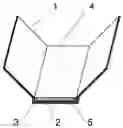
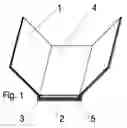
FIG. 1 shows, in a horizontal cross-section, a solar collector with concentrators 1, which are arranged mirror-inverted alongside the solar cells. The light perpendicularly impinging the reflective surfaces of the concentrators 1 is reflected to the solar cells 2 and concentrated. The carrier 3 stabilizes and fixes the entire module. The transparent cover element 4 is mounted above the solar cells 2, provided with electro-chromic and/or thermo-tropic and/or photo-tropic and/or photoelectron-chromic and/or photo-chromic features, together with the carrier 3 forming the hollow space 5. This hollow space 5 can be sealed hermetically and/or filled with a refrigerant, or be open and/or ventilated. When using electro-chromic glass the sensors and/or the control devices can be arranged in this hollow space 5. When the cover element 4 is equipped with additional filter layers it is advantageous for the UV-protective layer to be provided at the side facing the solar cells and the IR-protective layer at the opposite side, because otherwise the long-wave radiation heats the glass.
Claims
1. A method for shading solar cells radiated with concentrated sunlight, comprising interposing a transparent cover element in a radiation path in order to avoid overheating the solar cells, and the transparent cover element is provided with at least one of electro-chromic, and/or thermo-tropic, photo-tropic or photoelectro-chromic features.
2. A method according to claim 1, further comprising providing the cover element with a layer that reflects of infrared or UV-radiation.
3. A method according to claim 1, further comprising controlling radiation permeability via temperature sensors and a control device.
4. A method according to claim 1, wherein the transparent cover element is interposed between a concentrator and the solar cells.
Images & Drawings included:
Sources:
- United States Patent and Trademark Office - verify current appl. status at the USPTO↗
Similar patent applications:
- » 20150183922
Polyisocyanate composition, solar cell member covering material, solar cell member with cover layer, microcapsule, and binder for ink - » 20190019910
COVER GLASS FOR SOLAR CELL, SOLAR CELL MODULE PROVIDED WITH COVER GLASS FOR SOLAR CELL, AND TRANSPARENT PROTECTIVE FILM - » 20160035923
COVER GLASS FOR SOLAR CELL, SOLAR CELL MODULE PROVIDED WITH COVER GLASS FOR SOLAR CELL, COATING LIQUID FOR FORMING TRANSPARENT FILM, AND METHOD FOR FORMING TRANSPARENT PROTECTIVE FILM - » 20100288344
METHODS AND APPARATUS FOR WAVELENGTH CONVERSION IN SOLAR CELLS AND SOLAR CELL COVERS - » 20240322052
ULTRAVIOLET LIGHT SHIELDING ARTICLES AND SOLAR CELL COVERS INCLUDING THE SAME - » 20110168240
TRANSLUCENT COVER FOR SOLAR CELLS - » 20100180938
COATING COMPOSITION FOR PROTECTION COVER OF SOLAR CELL - » 20130213468
COATING COMPOSITION FOR PROTECTION COVER OF SOLAR CELL - » 20050076948
Roof cover type solar cell module - » 20150114445
Transparent cover for solar cells and modules
Recent applications in this class:
- » 20230197873 2023-06-22
Optimized Architecture to Maximize Solar Cell Efficiency via the Optimal Spatial Configuration of Existing or Future Transparent Thin-film PV Materials Targeting Different Regions of the Solar Spectrum - » 20210217914 2021-07-15
PHOTOVOLTAIC PANEL AND A MINICHANNEL COOLER SOLAR COLLECTOR COMBINATION (PV-T) - » 20200259032 2020-08-13
Thermal radiation body for cooling heating element and method for manufacturing the same - » 20180323326 2018-11-08
Photovoltaic system with non-uniformly cooled photovoltaic cells - » 20170294549 2017-10-12
Photovoltaic system with non-uniformly cooled photovoltaic cells - » 20160204296 2016-07-14
LIQUID IMMERSING PHOTOVOLTAIC MODULE - » 20160197222 2016-07-07
Cooling system for high performance solar concentrators - » 20160079460 2016-03-17
MANUFACTURING PROCESS OF A HYBRID SOLAR PANEL - » 20160005906 2016-01-07
Optoelectronic Thermal Interfaces for 3-Dimensional Billet Devices, Including Vertical Multijunction Photovoltaic Receivers Using Heat Sinked Anode/Billet/Cathode For High Intensity Beaming and Wireless Power Transmission - » 20150349177 2015-12-03
FLUID COOLED INTEGRATED PHOTOVOLTAIC MODULE
Recent applications for this Assignee:
- » 20080251124 2008-10-16
Solar Collectors Comprising a Cooling Machine - » 20080230111 2008-09-25
Solar Collector Comprising a Heat Engine