Sulfonated-perfluorocyclobutane polyelectrolyte membranes for fuel cells
US20080261102A1
2008-10-23
12/144,392
2008-06-23
✅ Patent granted
US 7,960,046 B2
2011-06-14
-
-
Peter D. Mulcahy | Henry Hu
2028-06-23
Abstract:
A process for preparing a polymer comprising sulfonating a perfluorocyclobutane polymer with a sulfonating agent to form a sulfonated perfluorocyclobutane polymer, wherein the sulfonating agent comprises oleum, SO3 or a combination thereof is provided. A process for preparing proton exchange membranes and fuel cells comprising the proton exchange membrane are also provided.
Inventors:
- Timothy J. Fuller 139 🇺🇸 Pittsford, NY, United States
- Michael Schoeneweiss 1 🇺🇸 West Henrietta, NY, United States
Assignee:
- GM GLOBAL TECHNOLOGY OPERATIONS LLC 17,253 🇺🇸 Detroit, MI, United States
- GENERAL MOTORS CORPORATION 1,735 🇺🇸 Detroit, MI, United States
Interested in similar patents?
Get notified when new applications in this technology area are published.
Classification:
H01M8/10 IPC
Fuel cells; Manufacture thereof Fuel cells with solid electrolytes
H01M4/926 » CPC main
Electrodes; Inert electrodes with catalytic activity, e.g. for fuel cells; Selection of catalytic material; Metals of platinum group supported on carriers, e.g. powder carriers on carbon or graphite
B01D71/82 » CPC further
Semi-permeable membranes for separation processes or apparatus characterised by the material; Manufacturing processes specially adapted therefor; Organic material; Macromolecular material not specifically provided for in a single one of groups - characterised by the presence of specified groups, e.g. introduced by chemical after-treatment
C08F214/182 » CPC further
Copolymers of compounds having one or more unsaturated aliphatic radicals, each having only one carbon-to-carbon double bond, and at least one being terminated by a halogen; Monomers containing fluorine Monomers containing fluorine not covered by the groups -
C08G61/12 » CPC further
Macromolecular compounds obtained by reactions forming a carbon-to-carbon link in the main chain of the macromolecule Macromolecular compounds containing atoms other than carbon in the main chain of the macromolecule
C08G65/40 » CPC further
Macromolecular compounds obtained by reactions forming an ether link in the main chain of the macromolecule from hydroxy compounds or their metallic derivatives derived from phenols from phenols (I) and other compounds (II), e.g. OH-Ar-OH + X-Ar-X, where X is halogen atom, i.e. leaving group
C08G65/48 » CPC further
Macromolecular compounds obtained by reactions forming an ether link in the main chain of the macromolecule from hydroxy compounds or their metallic derivatives Polymers modified by chemical after-treatment
C08G75/02 » CPC further
Macromolecular compounds obtained by reactions forming a linkage containing sulfur with or without nitrogen, oxygen, or carbon in the main chain of the macromolecule Polythioethers
C08J5/2256 » CPC further
Manufacture of articles or shaped materials containing macromolecular substances; Manufacture of shaped structures of ion-exchange resins; Films, membranes or diaphragms based on organic and/or inorganic macromolecular compounds; Synthetic macromolecular compounds based on macromolecular compounds obtained by reactions other than those involving carbon-to-carbon bonds, e.g. obtained by polycondensation
H01M8/0289 » CPC further
Fuel cells; Manufacture thereof; Details Means for holding the electrolyte
H01M8/1025 » CPC further
Fuel cells; Manufacture thereof; Fuel cells with solid electrolytes characterised by the electrolyte material; Polymeric electrolyte materials characterised by the chemical structure of the main chain of the ion-conducting polymer having only carbon and oxygen, e.g. polyethers, sulfonated polyetheretherketones [S-PEEK], sulfonated polysaccharides, sulfonated celluloses or sulfonated polyesters
H01M8/1027 » CPC further
Fuel cells; Manufacture thereof; Fuel cells with solid electrolytes characterised by the electrolyte material; Polymeric electrolyte materials characterised by the chemical structure of the main chain of the ion-conducting polymer having carbon, oxygen and other atoms, e.g. sulfonated polyethersulfones [S-PES]
H01M8/1034 » CPC further
Fuel cells; Manufacture thereof; Fuel cells with solid electrolytes characterised by the electrolyte material; Polymeric electrolyte materials characterised by the chemical structure of the main chain of the ion-conducting polymer having phosphorus, e.g. sulfonated polyphosphazenes [S-PPh]
H01M8/1037 » CPC further
Fuel cells; Manufacture thereof; Fuel cells with solid electrolytes characterised by the electrolyte material; Polymeric electrolyte materials characterised by the chemical structure of the main chain of the ion-conducting polymer having silicon, e.g. sulfonated crosslinked polydimethylsiloxanes
H01M8/1039 » CPC further
Fuel cells; Manufacture thereof; Fuel cells with solid electrolytes characterised by the electrolyte material; Polymeric electrolyte materials halogenated, e.g. sulfonated polyvinylidene fluorides
H01M8/1067 » CPC further
Fuel cells; Manufacture thereof; Fuel cells with solid electrolytes characterised by the electrolyte material; Polymeric electrolyte materials characterised by their physical properties, e.g. porosity, ionic conductivity or thickness
H01M8/1072 » CPC further
Fuel cells; Manufacture thereof; Fuel cells with solid electrolytes characterised by the electrolyte material; Polymeric electrolyte materials characterised by the manufacturing processes by chemical reactions, e.g. polymerisation or crosslinking
H01M8/1088 » CPC further
Fuel cells; Manufacture thereof; Fuel cells with solid electrolytes characterised by the electrolyte material; Polymeric electrolyte materials characterised by the manufacturing processes; After-treatment of the membrane other than by polymerisation Chemical modification, e.g. sulfonation
B01D2325/14 » CPC further
Details relating to properties of membranes Membrane materials having negatively charged functional groups
C08J2371/12 » CPC further
Characterised by the use of polyethers obtained by reactions forming an ether link in the main chain ; Derivatives of such polymers; Polyethers derived from hydroxy compounds or from their metallic derivatives from phenols Polyphenylene oxides
C08J2481/06 » CPC further
Characterised by the use of macromolecular compounds obtained by reactions forming in the main chain of the macromolecule a linkage containing sulfur with or without nitrogen, oxygen, or carbon only; Polysulfones; Derivatives of such polymers Polysulfones; Polyethersulfones
H01M4/921 » CPC further
Electrodes; Inert electrodes with catalytic activity, e.g. for fuel cells; Selection of catalytic material; Metals of platinum group Alloys or mixtures with metallic elements
H01M8/0234 » CPC further
Fuel cells; Manufacture thereof; Details; Collectors; Separators, e.g. bipolar separators; Interconnectors; Porous and characterised by the material Carbonaceous material
H01M8/1004 » CPC further
Fuel cells; Manufacture thereof; Fuel cells with solid electrolytes characterised by membrane-electrode assemblies [MEA]
Y02E60/50 » CPC further
Enabling technologies; Technologies with a potential or indirect contribution to GHG emissions mitigation; Hydrogen technology Fuel cells
Y02E60/50 » CPC further
Enabling technologies; Technologies with a potential or indirect contribution to GHG emissions mitigation; Hydrogen technology Fuel cells
Y02P70/50 » CPC further
Climate change mitigation technologies in the production process for final industrial or consumer products Manufacturing or production processes characterised by the final manufactured product
Y02P70/50 » CPC further
Climate change mitigation technologies in the production process for final industrial or consumer products Manufacturing or production processes characterised by the final manufactured product
Y10T428/2929 » CPC further
Stock material or miscellaneous articles; Coated or structually defined flake, particle, cell, strand, strand portion, rod, filament, macroscopic fiber or mass thereof; Rod, strand, filament or fiber Bicomponent, conjugate, composite or collateral fibers or filaments [i.e., coextruded sheath-core or side-by-side type]
Y10T428/298 » CPC further
Stock material or miscellaneous articles; Coated or structually defined flake, particle, cell, strand, strand portion, rod, filament, macroscopic fiber or mass thereof; Rod, strand, filament or fiber Physical dimension
C08J5/22 IPC
Manufacture of articles or shaped materials containing macromolecular substances; Manufacture of shaped structures of ion-exchange resins Films, membranes or diaphragms
C08G75/00 IPC
Macromolecular compounds obtained by reactions forming a linkage containing sulfur with or without nitrogen, oxygen, or carbon in the main chain of the macromolecule
C08G73/24 IPC
Macromolecular compounds obtained by reactions forming a linkage containing nitrogen with or without oxygen or carbon in the main chain of the macromolecule, not provided for in groups - Copolymers of a fluoronitroso organic compound and another fluoro organic compound, e.g. nitroso rubbers
Description
BACKGROUND OF THE INVENTION
The present invention relates to electrochemical conversion cells, commonly referred to as fuel cells, which produce electrical energy by processing first and second reactants. For example, electrical energy can be generated in a fuel cell through the oxidation of an oxygen-containing gas and the reduction of a hydrogenous gas. By way of illustration and not limitation, a typical cell comprises a membrane electrode assembly positioned between a pair of flow fields accommodating respective ones of the reactants. More specifically, a cathode flowfield plate and an anode flowfield plate can be positioned on opposite sides of the membrane electrode assembly. The voltage provided by a single cell unit is typically too small for useful application so it is common to arrange a plurality of cells in a conductively coupled “stack” to increase the electrical output of the electrochemical conversion assembly.
By way of background, the conversion assembly generally comprises a membrane electrode assembly, an anode flowfield, and a cathode flowfield. The membrane electrode assembly in turn comprises a proton exchange membrane separating an anode and cathode. The membrane electrode assembly generally comprises, among other things, a catalyst supported by a high surface area support material and is characterized by enhanced proton conductivity under wet conditions. For the purpose of describing the context of the present invention, it is noted that the general configuration and operation of fuel cells and fuel cell stacks is beyond the scope of the present invention. Rather, the present invention is directed to particular polyelectrolyte membranes, processes for preparing polyelectrolyte membranes and polyelectrolyte membrane fuel cells. Regarding the general configuration and operation of fuel cells and fuel cell stacks, applicants refer to the vast collection of teachings covering the manner in which fuel cell “stacks” and the various components of the stack are configured. For example, a plurality of U.S. patents and published applications relate directly to fuel cell configurations and corresponding methods of operation. More specifically, FIGS. 1 and 2 of U.S. Patent Application Pub. No. 2005/0058864, and the accompanying text, present a detailed illustration of the components of a fuel cell stack—this particular subject matter is expressly incorporated herein by reference.
BRIEF SUMMARY OF THE INVENTION
Recently, proton exchange or polyelectrolyte membrane (PEM) fuel cells have attracted considerable interest as sources of non-polluting, high-density power for automotive propulsion. However, for widespread commercialization, low cost, high-performance PEMs with improved durability are still being sought. Presently, PEM fuel cells operate at temperatures up to 95° C. with external humidification being required to maintain proton conductivity that deteriorates rapidly as the membranes dry out. Perfluorosulfonic acid membranes have been the preferred materials for PEM, but they suffer from poor mechanical integrity and they are expensive. Consequently, new alternative PEM materials are continuously being sought.
The present invention is directed to a process for preparing a polymer. The process comprises sulfonating a perfluorocyclobutane polymer with a sulfonating agent to form a sulfonated perfluorocyclobutane polymer. The sulfonating agent comprises oleum, SO3 or a combination thereof.
In accordance with another embodiment of the present invention, a process for preparing a proton exchange membrane is provided. The process comprises the steps of: (a) sulfonating a perfluorocyclobutane polymer with a sulfonating agent to form a sulfonated perfluorocyclobutane polymer and (b) forming the sulfonated perfluorocyclobutane polymer into a proton exchange membrane. The sulfonating agent comprises oleum, SO3 or a combination thereof.
In accordance with yet another embodiment of the present invention, a fuel cell is provided. The fuel cell comprises a proton exchange membrane formed by sulfonating a perfluorocyclobutane polymer with oleum to form a sulfonated perfluorocyclobutane polymer and (b) forming the sulfonated perfluorocyclobutane polymer into a proton exchange membrane. The sulfonating agent comprises oleum, SO3 or a combination thereof.
In accordance with a further embodiment of the present invention, a process for assembling a device comprises the act of preparing a membrane electrode assembly. The membrane electrode assembly comprises electrically conductive material on either side of a proton exchange membrane. The proton exchange membrane is prepared according to a process comprising the act of sulfonating a perfluorocyclobutane polymer with a sulfonating agent to form a sulfonated perfluorocyclobutane polymer, wherein the sulfonating agent comprises oleum, SO3 or a combination thereof. The device comprises an electrochemical conversion assembly comprising at least one electrochemical conversion cell configured to convert first and second reactants to electrical energy. The electrochemical conversion cell comprises the membrane electrode assembly, an anode flowfield portion and a cathode flowfield portion defined on opposite sides of the membrane electrode assembly. A first reactant supply configured to provide a first reactant to an anode side of the membrane electrode assembly via the anode flowfield portion, and a second reactant supply configured to provide a second reactant to a cathode side of the membrane electrode assembly via said cathode flowfield portion.
BRIEF DESCRIPTION OF THE FIGURES
The following detailed description of specific embodiments of the present invention can be best understood when read in conjunction with the following figures.
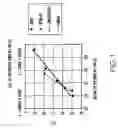
FIG. 1 is a graph depicting that the amount of sulfonation is determined by the ratio of oleum to polymer used;
FIG. 2 is a graph depicting the conductivity vs. % relative humidity of sulfonated perfluorocyclobutane-biphenyl vinyl ether (BPVE) polymers 4 with different Ion Exchange Capacities (I.E.C.s);
FIG. 3 is a graph depicting conductivity vs. % relative humidity of sulfonated perfluorocyclobutane-hexafluoroisopropylidene biphenyl vinyl ether (BPVE 6F) copolymers, 6 with different I.E.C.s;
FIG. 4 is a graph depicting water uptakes for various sulfonated perfluorocyclobutane polymers;
FIG. 5 is a graph depicting volume swell at 25 and 100° C. in water for PFCB Polymers, plotted as semi-log (A) and linear graph (B);
FIG. 6 is a graph of fuel cell data of sulfonated BPVE polymers depicting cell voltage (in volts) versus current density (in Amperes/cm2), which has been IR-corrected for the experimentally measured High Frequency Resistance (HFR); and
FIG. 7 is a graph of fuel cell data of sulfonated BPVE 6F copolymers depicting cell voltage (in volts) versus current density (in Amperes/cm2), which has been IR-corrected for the experimentally measured High Frequency Resistance (HFR).
DETAILED DESCRIPTION
The inventors have discovered a new process for preparing new proton conducting membranes made with perfluorocyclobutanes polymers (PFCBs) having sulfonic acid groups (SPFCBs,), which may be used in PEM fuel cells that can operate over a broad range of relative humidity and at temperatures around 95° C. The properties of the SPFCB films are dependent on the chemical structure and the ion exchange capacity of the film, which can be tailored by the reaction conditions used. These SPFCB-films are reasonable alternatives to perfluorosulfonic acid membranes, presently being used in PEM fuel cells, because the sulfonated polymers have high intrinsic proton conductivity and inherent dimensional-, hydrolytic- and high-temperature stability.
PFCBs are commercially available from Tetramer Technologies, under license agreements from Dow Chemical. Examples of PFCBs are provided with the structures 1-3:
The synthesis of PFCBs is described in U.S. Pat. Nos. 5,037,917 and 5,159,037—this particular subject matter is expressly incorporated herein by reference.
To form potentially useful PEMs, subsequent sulfonation of the PFCBs is required. Prior art teaches a sulfonation procedure that uses chlorsulfonic acid, which has limited synthesis utility and scope and which produces inconsistent membrane materials. The inventors have discovered a novel process for synthesizing SPFCBs. The process comprises sulfonating a perfluorocyclobutane polymer with a sulfonating agent to form a sulfonated perfluorocyclobutane polymer. The sulfonating agent comprises oleum, SO3 or a combination thereof. One skilled in the art will appreciate that various PFCBs are available for use in the present process, any of which may be employed herein. In one embodiment, the PFCB comprises the formula:
-
- wherein X is O or S;
- R is
-
- n is greater than about 20.
In one embodiment, n is from about 20 to about 500. Specific examples of such PFCBs include, but are not limited to, structures 1-3, defined in detail above.
In addition, one skilled in the art will appreciate that various concentrations of the sulfonating agent may be employed to sulfonate a PFCB polymer, any of which may be employed herein. In one embodiment, the oleum comprises 10% oleum. In another embodiment, the oleum comprises 20% oleum. In yet another embodiment, the oleum comprises 30% oleum. Moreover, one skilled in the art will appreciate that various SPFCBs may be formed from reacting a PFCB with a sulfonating agent. In one embodiment, the sulfonated polymers have between 0-2 sulfonic acids per repeat unit. Examples of such SPFCBs include, but are not limited to, structures 4-6:
Furthermore, one skilled in the art will appreciate the various experimental parameters in which the process for preparing the sulfonated polymer may be performed, any of which may be employed herein. In one embodiment, the process further comprises the step of dissolving the PFCB polymer in methylene chloride prior to sulfonating the PFCB. In another embodiment, the process is performed from about −20° C. to about 200° C.
In accordance with another embodiment of the present invention, a process for preparing a proton exchange membrane is provided. The process comprises the steps of: (a) sulfonating a perfluorocyclobutane polymer with a sulfonating agent to form a sulfonated perfluorocyclobutane polymer and (b) forming the sulfonated perfluorocyclobutane polymer into a proton exchange membrane. The sulfonating agent comprises oleum, SO3 or a combination thereof.
In accordance with yet another embodiment of the present invention, a fuel cell is provided. The fuel cell comprises a proton exchange membrane formed by sulfonating a perfluorocyclobutane polymer with a sulfonating agent to form a sulfonated perfluorocyclobutane polymer and (b) forming the sulfonated perfluorocyclobutane polymer into a proton exchange membrane. The sulfonating agent comprises oleum, SO3 or a combination thereof. As shown in the Example, SPFCB membranes prepared according to the present invention have markedly improved and consistent fuel cell performance compared with those of the prior art. In one embodiment, the SPFCB copolymer has an ion exchange capacity of from about 0.6 to about 2.5 meq/gram. In another embodiment, the SPFCB copolymer has an ion exchange capacity of from about 1.3 to about 2.0 meq/gram.
In accordance with a further embodiment of the present invention, a process for assembling a device comprises the act of preparing a membrane electrode assembly. The membrane electrode assembly comprises electrically conductive material on either side of a proton exchange membrane. The proton exchange membrane is prepared according to a process comprising the act of sulfonating a perfluorocyclobutane polymer with a sulfonating agent to form a sulfonated perfluorocyclobutane polymer, wherein the sulfonating agent comprises oleum, SO3 or a combination thereof. The device comprises an electrochemical conversion assembly comprising at least one electrochemical conversion cell configured to convert first and second reactants to electrical energy. The electrochemical conversion cell comprises the membrane electrode assembly, an anode flowfield portion and a cathode flowfield portion defined on opposite sides of the membrane electrode assembly. A first reactant supply configured to provide a first reactant to an anode side of the membrane electrode assembly via the anode flowfield portion, and a second reactant supply configured to provide a second reactant to a cathode side of the membrane electrode assembly via said cathode flowfield portion.
EXAMPLE
Treatment of Polymers with Structures 1, 2, and 3 with 30% Oleum
The properties of the SPFCB films are dependent on the chemical structure and the ion exchange capacity of the films, and performance can be tailored by the reaction conditions used. The amount of oleum specified in Table 1 is added to the respective polymer 1, 2 or 3, (ca 1 gram) dissolved in methylene chloride (5 mL) in a screw cap jar. The jar lid is secured and then the jar is shaken vigorously. A purple gel immediately forms, and then the jar is placed on a roll mill for between 0.5 and 1 hour. A clear liquid phase separates, which is decanted off and discarded, and the purple solid is added to vigorously stirred water (250 mL) using a Waring blender. The polymer becomes swollen white crumbs, which are isolated by vacuum filtration, washed with water and then air-dried. The sulfonated polymer (ca 1 g) readily dissolves in tetrahydrofuran (4 mL) and methanol (2 mL).
The solution is filtered through an 80-micron polypropylene filter cloth and is cast onto a glass plate (8-inch×8 inch) using a six-inch coating applicator bar with an 18-mil coating gap. The coated film is covered with a Pyrex glass dish, and then air-dried (to touch in about 10 minutes). A free-standing film is produced after floating the film off the glass with water. After extensive washing with water and air-drying, a 25-micrometer thick film is obtained. Pieces of the film (ca 0.02 g) are characterized by titration with standardized sodium hydroxide (0.010N) to determine its acid ion exchange capacity (see FIG. 1), by measuring proton conductivity versus percent relative humidity (see FIGS. 2 and 3), and by determining water uptake after 1-hour immersion in water at 25 and 100° C. (boiling water), see FIG. 4. Percent volume swell is determined for the PFCB polymers as well, see FIG. 5. A piece of the film (4-inch×4-inch) is then tested in a fuel cell using electrodes made of catalyst coated diffusion media (CCDM) made with a coating of platinum on carbon (Tanaka) that is milled with A-K 900 SS PFSA ionomer solution and then coated on top of carbon-fiber diffusion media with a microporous layer.
| TABLE 1 |
| Reaction Conditions to Prepare Sulfonated Perfluorocyclobutane |
| Polymers Made with 30% Oleum |
| % H2O Up- | oleum/ | Thickness | |||||
| Polymer | IEC, meas | IEC calcd | take 100 C. | polymer | ratio | FCD # | μ |
| BPVE | 1.49 | 1.51 | 27.3 | 0.6171/1.0298 | 0.5992 | ||
| BPVE | 1.66 | 1.65 | 28.7 | 0.7244/1.0096 | 0.7175 | ||
| BPVE | 1.65 | 1.65 | 43.4 | 0.7289/1.0134 | 0.7193 | 1335 | 23 |
| BPVE | 1.78 | 1.78 | 105 | 0.8168/1.0033 | 0.8141 | 1408 | 11 |
| BPVE | 1.92 | 1.90 | 156 | 0.9655/1.0030 | 0.9626 | 1329 | 25 |
| % H2O Up- | oleum/ | Thickness | |||||
| Polymer | IEC, meas | IEC calcd | take 100 C. | polymer | ratio | FCD # | μ |
| BPVE 6F | 1.52 | 1.51 | 95 | 0.6383/1.0030 | 0.6364 | 1410 | 22 |
| BPVE 6F | 1.58 | 1.56 | 73.8 | 0.6776/1.0280 | 0.6591 | 1303 | |
| BPVE 6F | 1.73 | 1.73* | 164 | 0.7698/1.0412 | 0.7393* | 1313 | |
| BPVE 6F | 1.80 | 1.80 | 161 | 0.7927/1.0237 | 0.7743 | 1330 | 25 |
| BPVE 6F | 1.93 | 1.93 | 474 | 0.932/1.116* | 0.8351* | 1320 | |
The ion exchange capacity of the sulfonated polymers 4-6 is dependent on the weight (or molar) ratio of the 30%-oleum used per gram of polymer (see FIG. 1). Thus, the I.E.C. of the respective polymers can be specifically controlled by the amount of oleum added. The sulfonation reaction is quite fast and non-selective towards the different biphenyl ether groups in the PFCB backbone, and reaction times are less than one hour. The polymer 5 can be sulfonated with 30% oleum within 20 minutes under the conditions described, but poor films were obtained with both the starting polymer and the sulfonated polymer due to its low molecular weight. Thus, films of the sulfonated polymer 5 were too brittle to be evaluated.
Good fuel cell performances were obtained for films made of the SBPVE polymer 4 with ion exchange capacities between 1.4 and 1.9 meq. of sulfonic acid per gram (see FIG. 6). With the sulfonated copolymer 6, flooding of the fuel cell took place with the PEM that had an I.E.C. of 1.9 meq/g of sulfonic acid. The other materials with between 1.52 and 1.8 meq/g of sulfonic acid showed very good fuel cell performance under the high-relative humidity conditions used (see FIG. 7).
All of the fuel cell results are summarized in Table 2.
| TABLE 2 |
| Summary of Fuel Cell Tests on PFCB Polymers. |
| Fuel | Water | Volume | ||||||
| Cell | Sulfonating | Uptake | Swell | |||||
| Polymer | I.E.C. | Test | Agent | Vuncorr Low P, 50 kPa g | Vuncorr High P, 170 kPa g | Assessment | 100 C. | 100 C. |
| BPVE- | 1.4 | FCD | CISO3H | 0.361 v at 0.8 A/cm 2 | 0.31 at 1.0 A/cm 2 | No Good | x | x |
| 6F | 1295 | |||||||
| BPVE- | 1.5 | FCD | 30% oleum | 0.556 v at 1.2 A/cm 2 | 0.529 v at 1.2 A/cm 2 | Good | 29 | 24 |
| 6F | 1410 | |||||||
| BPVE- | 1.58 | FCD | 30% oleum | 0.604 v at 1.2 A/cm 2 | 0.557 v at 1.2 A/cm 2 | Good | 74 | 104 |
| 6F | 1303 | |||||||
| BPVE | 1.65 | FCD | 30% oleum | 0.564 v at 1.2 A/cm 2 | 0.529 v at 1.2 A/cm 2 | Good | 43 | 36 |
| 1335 | ||||||||
| BPVE | 1.68 | FCD | CISO3H | 0.268 v at 0.4 A/cm 2 | 0.27 v at 0.6 A/cm 2 | No Good | x | x |
| 1309 | ||||||||
| BPVE- | 1.73 | FCD | 30% oleum | 0.600 at 1.2 A/cm 2 | 0.586 v at 1.2 A/cm 2 | Good | 164 | 244 |
| 6F | 1313 | |||||||
| BPVE- | 1.75 | FCD | CISO3H | 0.434 v at 1.2 A/cm 2 | 0.57 v at 1.2 A/cm 2 | Fair | 36 | x |
| 6F | 1394 | |||||||
| BPVE | 1.78 | FCD | 30% oleum | 0.629 v at 1.2 A/cm 2 | 0.624 v at 1.2 A/cm 2 | Good | 105 | 84 |
| 1408 | ||||||||
| BPVE- | 1.8 | FCD | 30% oleum | 0.625 v at 1.2 A/cm 2 | 0.63 v at 1.2 A/cm 2 | Good | 161 | 151 |
| 6F | 1330 | |||||||
| BPVE | 1.9 | FCD | 30% oleum | 0.606 v at 1.2 A/cm 2 | 0.637 v at 1.2 A/cm 2 | Good | 156 | 238 |
| 1329 | ||||||||
| BPVE- | 1.93 | FCD | 30% oleum | 0.311 v at 1.2 A/cm 2 | 0.493 v at 1.2 A/cm 2 | No Good | 474 | 393 |
| 6F | 1320 | |||||||
In general, there is considerable concern about the oxidative stability of hydrocarbon membranes in fuel cells, and one ex-situ test consists of an assessment of membrane stability on immersion in Fenton's reagent. The polymers 4 and 6 showed a 17 to 18 wt. % loss after 19 hours in a Fenton's test solution made with 4-ppm Fe2+ (ferrous chloride tetrahydrate) and 3% hydrogen peroxide in an oven set at 70° C. This compares with Nafion 112, which loses less than 0.5 wt. % under the same conditions.
Claims
What is claimed is:1. A process for preparing a polymer comprising sulfonating a perfluorocyclobutane polymer with a sulfonating agent to form a sulfonated perfluorocyclobutane polymer, wherein the sulfonating agent comprises oleum, SO3 or a combination thereof.
2. The process of claim 1, wherein the perfluorocyclobutane polymer comprises the formula:
wherein:
X is O or S;
R is
and
n is greater than about 20.
3. The process of claim 2, wherein n is from about 20 to about 50.
4. The process of claim 2, wherein the perfluorocyclobutane polymer comprises the formula:
; and wherein n is from about 20 to about 500.
5. The process of claim 1, wherein the sulfonated perfluorocyclobutane polymer comprises 0-2 sulfonic acid groups per repeating unit.
6. The process of claim 1, wherein oleum comprises 10% oleum, 20% oleum or 30% oleum.
7. The process of claim 1, further comprising the step of dissolving the perfluorocyclobutane polymer in methylene chloride prior to sulfonating the polymer.
8. The process of claim 1, wherein sulfonating a perfluorocyclobutane polymer yields a sulfonated perfluorocyclobutane polymer with an ion exchange capacity of from about 0.6 to about 2.5 meq/gram.
9. The process of claim 8, wherein sulfonating a perfluorocyclobutane polymer yields a sulfonated perfluorocyclobutane polymer with an ion exchange capacity of from about 1.3 to about 2.0 meq/gram.
10. The process of claim 1, wherein the process is performed from about −20° C. to about 200° C.
11. A process for preparing a proton exchange membrane comprising the steps of: (a) sulfonating a perfluorocyclobutane polymer with a sulfonating agent to form a sulfonated perfluorocyclobutane polymer and (b) forming the sulfonated perfluorocyclobutane polymer into a proton exchange membrane, wherein the sulfonating agent comprises oleum, SO3 or a combination thereof.
12. A fuel cell comprising the proton exchange membrane of claim 11.
13. A process for assembling a device, the process comprising the act of preparing a membrane electrode assembly, wherein: the membrane electrode assembly comprises electrically conductive material on either side of a proton exchange membrane; wherein the proton exchange membrane is prepared according to a process comprising the act of sulfonating a perfluorocyclobutane polymer with a sulfonating agent to form a sulfonated perfluorocyclobutane polymer, wherein the sulfonating agent comprises oleum, SO3 or a combination thereof; and wherein the device comprises an electrochemical conversion assembly comprising at least one electrochemical conversion cell configured to convert first and second reactants to electrical energy, the electrochemical conversion cell comprising the membrane electrode assembly, an anode flowfield portion and a cathode flowfield portion defined on opposite sides of the membrane electrode assembly, a first reactant supply configured to provide a first reactant to an anode side of the membrane electrode assembly via the anode flowfield portion, and a second reactant supply configured to provide a second reactant to a cathode side of the membrane electrode assembly via said cathode flowfield portion.
Images & Drawings included:



Sources:
- United States Patent and Trademark Office - verify current appl. status at the USPTO↗
Similar patent applications:
Recent applications in this class:
- » 20250239628 2025-07-24
AMORPHOUS CARBON GRAPHITIC STRUCTURE PRECURSORS - » 20250210672 2025-06-26
MEMBRANE-ELECTRODE ASSEMBLY - » 20250183327 2025-06-05
METAL-LOADED CATALYST, ELECTRODE AND BATTERY - » 20250183326 2025-06-05
ELECTRODE CATALYST, METHOD FOR PRODUCING SAME, AND FUEL CELL - » 20250174676 2025-05-29
CARBON CARRIER AND METAL-SUPPORTED CATALYST CONTAINING SAME, ELECTRODE, AND BATTERY - » 20250174675 2025-05-29
MEMBRANE FOR ELECTROCHEMICAL DEVICES - » 20250167255 2025-05-22
METAL-LOADED CATALYST, ELECTRODE, AND BATTERY - » 20250167254 2025-05-22
FUEL CELLS HAVING HIGH CAPACITANCE ANODES FOR MITIGATING AIR-AIR START DEGRADATION - » 20250167253 2025-05-22
GRAFTED CATALYST - » 20250158084 2025-05-15
PLATINUM-RHENIUM ALLOY CATALYST, PREPARATION METHOD, AND FUEL CELL
Recent applications for this Assignee:
- » 20250293679 2025-09-18
PROGNOSIS AND CONTROL OF POWER MODULE FOR ELECTRIC LOAD - » 20250293365 2025-09-18
FIBER-REINFORCED POLYMER BATTERY ENCLOSURES, COMPOSITE COMPONENTS, AND METHODS WITH INTEGRATED POLYMER SEALS - » 20250293279 2025-09-18
MEMBRANE ELECTRODE ASSEMBLY - » 20250293272 2025-09-18
METAL BEAD SEAL BUCKLING LOAD AND PRESSURE UNIFORMITY WITH AN ENFORCEMENT LAYER - » 20250293270 2025-09-18
METHOD OF SHAPING BIPOLAR PLATES - » 20250289417 2025-09-18
DETERMINATION OF EVASIVE MANEUVER ACTION TO AVOID ONCOMING ROAD HAZARD OF A VEHICLE - » 20250289366 2025-09-18
SYSTEM AND METHOD FOR NOTIFYING PASSENGERS OF NEARBY OBJECTS - » 20250286485 2025-09-11
CONTROL CIRCUIT FOR A DIRECT CURRENT MOTOR - » 20250286331 2025-09-11
ELECTRICAL CONNECTOR MOUNTING - » 20250286096 2025-09-11
MEMBRANE ELECTRODE ASSEMBLY HAVING AN ORGANIC SOLVENT