MULTI-LAYERED MOLDED ARTICLE WITH MOISTURE PROTECTION
US20090169799A1
2009-07-02
12/168,223
2008-07-07
Abstract:
A multi-layered molded article (100) includes a soft layer (12) and a substrate (14) moldingly bonded to the soft layer. The substrate has a bonding surface (142) bonded to the soft layer and peripheral end surfaces (146) at the edges of the substrate.
Assignee:
- FIH (HONG KONG) LIMITED 1,461 🇭🇰 Kowloon, Hong Kong
Interested in similar patents?
Get notified when new applications in this technology area are published.
Classification:
B29C45/14778 » CPC main
Injection moulding, i.e. forcing the required volume of moulding material through a nozzle into a closed mould; Apparatus therefor incorporating preformed parts or layers, e.g. injection moulding around inserts or for coating articles the article consisting of a material with particular properties, e.g. porous, brittle
B29C45/14311 » CPC further
Injection moulding, i.e. forcing the required volume of moulding material through a nozzle into a closed mould; Apparatus therefor incorporating preformed parts or layers, e.g. injection moulding around inserts or for coating articles using means for bonding the coating to the articles
B32B3/04 » CPC further
Layered products comprising a layer with external or internal discontinuities or unevennesses, or a layer of non-planar form ; Layered products having particular features of form characterised by features of form at particular places, e.g. in edge regions characterised by layer folded at the edge, e.g. over another layer
B32B3/26 » CPC further
Layered products comprising a layer with external or internal discontinuities or unevennesses, or a layer of non-planar form ; Layered products having particular features of form characterised by a particular shape of the outline of the cross-section of a continuous layer; characterised by a layer with cavities or internal voids ; characterised by an apertured layer
B32B5/024 » CPC further
Layered products characterised by the non- homogeneity or physical structure, i.e. comprising a fibrous, filamentary, particulate or foam layer; Layered products characterised by having a layer differing constitutionally or physically in different parts characterised by structural features of a layer Woven fabric
B32B5/24 » CPC further
Layered products characterised by the non- homogeneity or physical structure, i.e. comprising a fibrous, filamentary, particulate or foam layer; Layered products characterised by having a layer differing constitutionally or physically in different parts characterised by the presence of two or more layers which are next to each other and are fibrous, filamentary, formed of particles or foamed one layer being a fibrous or filamentary layer
B32B7/02 » CPC further
Layered products characterised by the relation between layers; Layered products characterised by the relative orientation of features between layers, or by the relative values of a measurable parameter between layers, i.e. products comprising layers having different physical, chemical or physicochemical properties; Layered products characterised by the interconnection of layers Physical, chemical or physicochemical properties
B32B9/025 » CPC further
Layered products comprising a layer of a particular substance not covered by groups - comprising animal or vegetable substances, e.g. cork, bamboo, starch comprising leather
B32B25/04 » CPC further
Layered products comprising natural or synthetic rubber comprising rubber as the main or only constituent of a layer, next to another layer of a
B32B27/06 » CPC further
Layered products comprising synthetic resin as the main or only constituent of a layer, next to another layer of a
B32B27/283 » CPC further
Layered products comprising synthetic resin comprising synthetic resins not wholly covered by any one of the sub-groups - comprising polysiloxanes
B32B27/302 » CPC further
Layered products comprising synthetic resin comprising vinyl (co)polymers; comprising acrylic (co)polymers comprising aromatic vinyl (co)polymers, e.g. styrenic (co)polymers
B32B27/34 » CPC further
Layered products comprising synthetic resin comprising polyamides
B32B27/365 » CPC further
Layered products comprising synthetic resin comprising polyesters comprising polycarbonates
B29K2711/08 » CPC further
Use of natural products or their composites, not provided for in groups - , for preformed parts, e.g. for inserts Leather
B29K2713/00 » CPC further
Use of textile products or fabrics for preformed parts, e.g. for inserts
B29L2031/3431 » CPC further
Other particular articles; Electrical apparatus, e.g. sparking plugs or parts thereof Telephones, Earphones
B29L2031/3437 » CPC further
Other particular articles; Electrical apparatus, e.g. sparking plugs or parts thereof; Telephones, Earphones Cellular phones
B32B2250/02 » CPC further
Layers arrangement 2 layers
B32B2307/7265 » CPC further
Properties of the layers or laminate; Other properties; Permeability to liquids, absorption Non-permeable
Y10T428/23979 » CPC further
Stock material or miscellaneous articles; Pile or nap type surface or component Particular backing structure or composition
B32B9/04 IPC
Layered products comprising a layer of a particular substance not covered by groups - comprising such substance as the main or only constituent of a layer, next to another layer of a
Description
CROSS-REFERENCE TO RELATED APPLICATIONS
This application is one of the ten related co-pending U.S. patent applications listed below. All listed applications have the same assignee and were concurrently filed herewith. The disclosure of each of the listed applications is incorporated by reference into all the other listed applications.
| Attorney Docket | ||
| No. | Title | Inventors |
| US18024 | MULTI-LAYERED MOLDED ARTICLE | Kun-Tsan Wu et al. |
| WITH DECORATIVE LAYER AND | ||
| METHOD | ||
| US18396 | MULTI-LAYERED MOLDED ARTICLE | Kun-Tsan Wu et al. |
| WITH IMPROVED BONDING BETWEEN | ||
| LAYERS | ||
| US18397 | MULTI-LAYERED MOLDED ARTICLE | Kun-Tsan Wu et al. |
| WITH MOISTURE PROTECTION | ||
| US18398 | MULTI-LAYERED MOLDED ARTICLE | Kun-Tsan Wu et al. |
| WITH MOISTURE PROTECTION | ||
| US18399 | WATERPROOF MULTI-LAYERED | Kun-Tsan Wu et al. |
| MOLDED ARTICLE | ||
| US18400 | MULTI-LAYERED MOLDED ARTICLE | Kun-Tsan Wu et al. |
| WITH TACTILITY | ||
| US18401 | MULTI-LAYERED MOLDED ARTICLE | Kun-Tsan Wu et al. |
| WITH EMI PROTECTION | ||
| US18402 | METHOD FOR MAKING | Kun-Tsan Wu et al. |
| MULTI-LAYERED MOLDED ARTICLES | ||
| US18403 | METHOD FOR MAKING | Kun-Tsan Wu et al. |
| MULTI-LAYERED MOLDED ARTICLES | ||
| US18404 | METHOD FOR MAKING | Kun-Tsan Wu et al. |
| MULTI-LAYERED MOLDED ARTICLES | ||
BACKGROUND
1. Field of the Invention
The present invention relates to multi-layer molded articles.
2. Description of Related Art
Molded articles, such as molded shells, are widely used in many technological fields. One example is a molded shell used with a portable electronic device (e.g., a mobile phone) for protecting internal electronic components. Another example is a molded shell used with furniture (e.g., a mini sofa) to provide decoration.
The molded shells may include a plastic substrate having some kind of decorative and/or protective (hereinafter “second”) layer formed thereon. The molded shell may be made using an insert molding process. The second layer is placed in the mold cavity and then bonds to the molten plastic injected into the mold for forming the substrate.
Various difficulties may be faced when manufacturing this multi-layer molded article.
Therefore, there is room for improvement within the art.
BRIEF DESCRIPTION OF THE DRAWINGS
Many aspects of the multi-layered molded article can be better understood with reference to the following drawing. The components in the drawings are not necessarily drawn to scale, the emphasis instead being placed upon clearly illustrating the principles of the multi-layered molded article. Moreover, in the drawings like reference numerals designate corresponding parts throughout the several views.
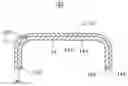
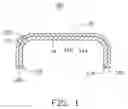
FIG. 1 is a cross-section view of a first exemplary embodiment of a multi-layered molded article.
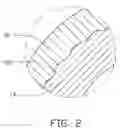
FIG. 2 is an enlarged view of a circled portion II of FIG. 1.
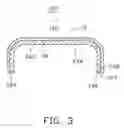
FIG. 3 is a cross-section view of a second exemplary embodiment of a multi-layered molded article.
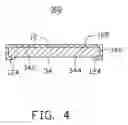
FIG. 4 is a cross-section view of a third exemplary embodiment of a multi-layered molded article.
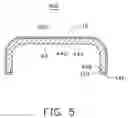
FIG. 5 is a cross-section view of a fourth exemplary embodiment of a multi-layered molded article.
DETAILED DESCRIPTION OF THE EXEMPLARY EMBODIMENTS
Referring to FIG. 1 and FIG. 2, in a first exemplary embodiment, a first multi-layered molded article 100 is shown. The Article 100 includes a soft layer 12 and a first substrate 14 moldingly bonded to the soft layer 12.
The soft layer 12 can be made of a material that is soft relative to the first substrate 14. Exemplary soft materials include leather (natural and artificial), all types of fabrics, woven clothes, textiles, and nylon. One surface of the soft layer 12 acts as a bonding surface 122. The bonding surface 122 should have a rough or coarse surface, formed by, for example, a plurality of tiny pores or projections (schematically shown). For some soft materials, the pores and projections of the bonding surface 122 may be a natural property of the material. For other soft materials, the pores and projections may be formed by grinding or sandblasting the bonding surface 122. The tiny pores and projections of the bonding surface 122 interlock with the molten material used to make the first substrate 14, thereby increasing the bonding of the soft layer 12 to the first substrate 14.
The first substrate 14 can be formed by injection molding a moldable material. The moldable material can be any of plastic, rubber, and silicone. The plastic material can be any of polyvinylchloride resin (PVC), polyethylene terephthalate (PET), acrylonitrile-butadiene-styrene (ABS), polycarbonate (PC), polyimide (PI), liquid crystal polymer (LCP), polyetherimide (PEI), polyphenylene sulfide (PPS), polystyrene (PS), polypropylene (PP). In particular, ABS and PC exhibit good adhesion to many softer materials.
The first substrate 14 includes a first attaching surface 142, a first molding surface 144 opposite to the first attaching surface 142, and first peripheral end surfaces 146 at the edges of the first substrate 14. The first substrate 14 is molded onto the soft layer 12 by using, for example, methods set forth in some of our related applications. The first attaching surface 142 and the first peripheral end surfaces 146 of the first substrate 14 bond to and interlock with the bonding surface 122 of the soft layer 12. A peripheral end 124 of the soft layer 12 covers first peripheral end surfaces 146.
Referring to FIG. 3, in a second embodiment, a second multi-layered molded article 200 includes the soft layer 12 and a second substrate 24 moldingly bonded to and interlocked with the soft layer 12. The second substrate 24 includes a second attaching surface 242, a second molding surface 244 opposite the second attaching surface 242, and second peripheral end surfaces 246 at the edges of the second substrate 24. The second substrate 24 has first peripheral notches 248 defined in the second attaching surface 242 and second peripheral end surfaces 246. The second substrate 24 is molded onto the soft layer 12 by using, for example, methods set forth in some of our related applications. The second attaching surface 242 bonding to and interlocking with the bonding surface 122 of the soft layer 12. The peripheral ends 124 of the soft layer 12 are embedded in first peripheral notches 248 of the second substrate 24. That is, the soft layer 12 covers the second attaching surface 242 and at least part of the second peripheral end surfaces 246.
Referring to FIG. 4, in a third embodiment, a third multi-layered molded article 300 includes the soft layer 12 and a third substrate 34 moldingly bonded to the soft layer 12. The third substrate 34 includes a third attaching surface 342, a third molding surface 344 opposite third attaching surface 342, and third peripheral end surfaces 346 at edges of the third substrate 34. The third substrate 34 is molded onto the soft layer 12, by using, for example, methods set forth in some of our related applications. The third attaching surface 342 and the third peripheral end surfaces 346 of the third substrate 34 bond to and interlock with the bonding surface 122 of the soft layer 12. Advantageously, the third molding surface 344 is also attached to the bonding surface 122 of the soft layer 12. That is, the soft layer 12 covers the third attaching surface 342, third peripheral end surfaces 346, and at least part of the third molding surface 344.
Referring to FIG. 5, in a fourth embodiment, a fourth multi-layered molded article 400 includes the soft layer 12 and a fourth substrate 44 moldingly bonded to the soft layer 12. The fourth substrate 44 includes a fourth attaching surface 442, a fourth molding surface 444 opposite the fourth attaching surface 442, and fourth peripheral end surfaces 446 at the edges of the fourth substrate 44. The fourth substrate 44 has second peripheral notches 448 defined in the fourth molding surface 444 and fourth peripheral end surfaces 446. The fourth substrate 44 is molded onto the soft layer 12, by using, for example, methods set forth in some of our related applications. The fourth attaching surface 442 and the fourth peripheral end surfaces 446 of the fourth substrate 44 bond to and interlock with the bonding surface 122 of the soft layer 12. The peripheral ends 124 of the soft layer 12 are embedded in second peripheral notches 448 of the fourth substrate 24. That is, the soft layer 12 covers the fourth attaching surface 442, the fourth peripheral end surfaces 446, and at least part of the fourth molding surface 444.
Thus, as can be seen from the various exemplary embodiments, moisture is prevented from entering between the soft layer 12 and the substrate.
It should be also understood, however, that even though numerous characteristics and advantages of the present embodiments have been set forth in the foregoing description, together with details of the structures and functions of the embodiments, the disclosure is illustrative only, and changes may be made in detail, especially in matters of shape, size, and arrangement of parts within the principles of the invention to the full extent indicated by the broad general meaning of the terms in which the appended claims are expressed.
Claims
What is claimed is:1. A multi-layered molded article, comprising:
a soft layer; and
a substrate moldingly attached to the soft layer, the substrate having an attaching surface attached to the soft layer and at least one peripheral end surface at an edge of the substrate;
wherein the soft layer covers at least part of the at least one peripheral end surface.
2. The multi-layered molded article as claimed in claim 1, wherein the soft layer is made of one of leather, fabrics, woven clothes, textiles, and nylon.
3. The multi-layered molded article as claimed in claim 1, wherein the soft layer has a bonding surface having a plurality of tiny pores or protrusions interlocked with the substrate.
4. The multi-layered molded article as claimed in claim 1, wherein the substrate is made of one of plastic, rubber, and silicone.
5. The multi-layered molded article as claimed in claim 1, wherein the substrate has peripheral notches defined in a bonding surface and peripheral end surfaces, a peripheral end of the soft layer being embedded in the peripheral notch.
6. The multi-layered molded article as claimed in claim 5, wherein the substrate further includes a molding surface opposite to the bonding surface, the soft layer covering the attaching surface, the peripheral end surface, and at least part of the molding surface.
7. The multi-layered molded article as claimed in claim 1, wherein the substrate further includes a molding surface opposite the attaching surface, the substrate including a peripheral notch defined in the molding surface and the peripheral end surfaces, a peripheral end of the soft layer being embedded in the peripheral notch.
8. The multi-layered molded article as claimed in claim 1, wherein the soft layer is made of a material selected from the group consisting of leather, fabrics, woven clothes, textiles, and nylon, and the substrate is made of a material selected from the group consisting of acrylonitrile-butadiene-styrene and polycarbonate.
Images & Drawings included:
Sources:
- United States Patent and Trademark Office - verify current appl. status at the USPTO↗
Similar patent applications:
- » 20090162660
MULTI-LAYERED MOLDED ARTICLE WITH MOISTURE PROTECTION - » 20100260965
MULTI-LAYERED MOLDED ARTICLE WITH MOISTURE PROTECTION
Recent applications in this class:
- » 20250065549 2025-02-27
JOINED BODY MANUFACTURING METHOD AND BASE MATERIAL MANUFACTURING METHOD - » 20250033259 2025-01-30
METHOD FOR PRODUCING INTERCONNECTED COMPONENTS OF AN INTERIOR-TRIM PART, AND INTERCONNECTED COMPONENTS OF AN INTERIOR-TRIM PART - » 20230364838 2023-11-16
MOLD INSERT FOR A TOOLING DEVICE FOR PRODUCING AN OPTICAL COMPONENT BY INJECTION MOLDING, AND TOOLING DEVICE HAVING SUCH A MOLD INSERT - » 20230117817 2023-04-20
Thermoplastic encapsulated thermal imaging systems and methods - » 20220266488 2022-08-25
Injection overmolding with heat/cool cycling for making optical lenses using 3D-printed functional wafers - » 20200269480 2020-08-27
Method for producing a shaped plastic part having a decorated surface - » 20160303783 2016-10-20
METHOD AND DEVICE FOR PRODUCING INTEGRALLY MOLDED GLASS-RESIN ARTICLE - » 20160263796 2016-09-15
Method for manufacturing a faucet component - » 20160167270 2016-06-16
CARBON FIBER REINFORCED POLYMER PLATE AND MANUFACTURING METHOD - » 20150111006 2015-04-23
In-mold label forming surfaces for molded articles
Recent applications for this Assignee:
- » 20220140846 2022-05-05
Antenna structure and wireless communication device using same - » 20220094077 2022-03-24
Antenna structure and wireless communication device using same - » 20220059931 2022-02-24
Antenna structure and wireless communication device - » 20220021116 2022-01-20
Single antenna structure capable of operating in multiple band widths - » 20220010948 2022-01-13
Anti-loosing structure and backlight module - » 20200170133 2020-05-28
Housing, electronic device, and method for manufacturing same - » 20200122194 2020-04-23
Frame and surface treatment method for the frame - » 20200060034 2020-02-20
Housing, method for manufacturing the same, and electronic device having the same - » 20200016805 2020-01-16
Housing, electronic device, and method for manufacturing the same - » 20190368052 2019-12-05
COMPOSITE AND METHOD FOR MAKING SAME