Camshaft variator device
US20090223471A1
2009-09-10
12/085,206
2005-11-16
✅ Patent granted
US 8,443,774 B2
2013-05-21
WO; PCT/ES2005/000625; 20051116
WO; WO2007/057479; 20070524
Ching Chang
Walker, McKenzie & Walker, P.C.
2026-08-08
Abstract:
The invention relates to a camshaft variator device for an internal combustion engine which includes a crankshaft and a camshaft. The invention includes: a first component which is rigidly connected to the camshaft of the engine, such that the rotation of the first component causes the camshaft to rotate; a second component which is rotated by the crankshaft of the engine; a third component which connects the first and second components to one another and which, in turn, rotates the first component in relation to the second component in order to vary the position and partial speed of the camshaft in respect of the crankshaft; and a fourth component which is used to impart a longitudinal and reciprocating longitudinal movement to the third component. The purpose of the device is to enable the opening and closing time and duration of the valves to be varied by varying the position and partial speed of the camshaft in relation to the crankshaft.
Inventors:
- Pedro A. Plasencia Marichal 1 🇪🇸 Tenerife, Spain
- Pedro A. Plasencia Marichal 1 🇪🇸 S/C de Tenerife, Spain
Applicant:
Interested in similar patents?
Get notified when new applications in this technology area are published.
Classification:
F01L1/34403 » CPC main
Valve-gear or valve arrangements, e.g. lift-valve gear characterised by the provision of means for changing the timing of the valves without changing the duration of opening and without affecting the magnitude of the valve lift changing the angular relationship between crankshaft and camshaft, e.g. using helicoidal gear using helically teethed sleeve or gear moving axially between crankshaft and camshaft
F01L1/356 » CPC further
Valve-gear or valve arrangements, e.g. lift-valve gear characterised by the provision of means for changing the timing of the valves without changing the duration of opening and without affecting the magnitude of the valve lift changing the angular relationship between crankshaft and camshaft, e.g. using helicoidal gear making the angular relationship oscillate, e.g. non-homokinetic drive
F01L1/34 » CPC further
Valve-gear or valve arrangements, e.g. lift-valve gear characterised by the provision of means for changing the timing of the valves without changing the duration of opening and without affecting the magnitude of the valve lift
Description
The present invent relates to an internal combustion engines, more exactly a device to vary the position and angular speed of the camshaft of the internal combustion engine.
A classical internal combustion engine which includes an engine block, a plurality of reciprocating pistons, moving inside the cylinders, a crankshaft coupled to the pistons for being rotated by the reciprocation of the pistons and a camshaft moved by the crankshaft through either a chain drive or belt drive. As the camshaft rotates, the profile of the camshaft, cam lobes fixed to the camshaft push the admission valves or exhaust valves, causing the valves to open. Further rotation of the camshaft allows springs to return the valves to closed position. The design of the cam lobes and the position determines, among other things, when the valves open, the length of time the valves are held open.
In a standard four stroke engine, a cycle of operation (admission, compression, power and exhaust) takes place over four strokes of the piston, made in two crankshaft revolutions. When a piston is at the top of the cylinder at the beginning of the intake stroke, the intake valve opens and the descending piston draw in the air-fuel mixture. At the bottom of the stroke, the intake valve closes and the piston starts upward on the compression stroke. Just before or as the piston reaches the top again, the compressed air-fuel mixture is ignited by the firing of a spark plug, forcing the piston down on its power stroke. As the piston reaches the bottom of its stroke, the exhaust valve opens, allowing combustion products to be forced out through the exhaust valve.
Some internal combustion engines use dual camshaft, one to operate the intake valves (admission) and the other to operate the exhaust valves. Both camshafts in a dual camshaft engine can be driven by a chain drive or belt drive.
The performance of an internal combustion engine can be improved by changing the positional relationship of the camshaft relative to the crankshaft. For example, the camshaft can be retarded or delayed closing the intakes valves. In a dual camshaft engine, retarding or advancing the camshaft can be accomplished by changing the positional relationship of one of the camshaft, usually the camshaft that operates the intakes valves of the engine, relative to the other camshaft and the crankshaft. Retarding or advancing the camshaft varies the timing of the engine in terms of the operation of the intake valves relative to the exhaust valves, or in terms of the operation of the valves relative to the position of the crankshaft. This one is achieved by the device of my property the U.S. Pat. No. 6,640,760.
In the other hand the performance of an internal combustion engine can be improved if the admission valve is able to stay open more time in the admission stroke, to allow enter more quantity of air-fuel mixture.
Then the performance of an internal combustion engine can be improved in both ways:
1.—Changing the position of the camshaft in relation to the crankshaft or changing the position of the admission camshaft in relation to the exhaust camshaft and the crankshaft (function already achieved in the U.S. Pat. No. 6,640,760)
2.—Keep the admission valve opened during more time to allow more quantity of air-fuel mixture enter in to the piston.
DESCRIPTION
The camshaft variator device #11 is designed to use with a classical internal combustion engine, for example a car.
The internal combustion engine includes a crankshaft #13 and a camshaft #15 having a longitudinal axis #17.
The camshaft variator device #11 includes a 1° component #19, preferably in alignment with the longitudinal axis #17 of the camshaft #15, to be joined with the camshaft #15, furthermore the rotation of the device #11 cause the rotation of the camshaft #15; a second component #21 preferably in alignment with the longitudinal axis #17 of the camshaft #15, to be rotated by the crankshaft #13; and a 3° component #23, preferably in alignment with the longitudinal axis of the camshaft #15 for joining the 1° and 2° component #19, 21 to one another so that the first component #19 will rotate when the 2° component #21 is rotated by the crankshaft #13 and for rotating the 1° component #19 relative to the 2° component #21 to rearrange the positional relationship of the camshaft #15 relative to the crankshaft #13.
The camshaft variator device #11 is preferably designed in order to the longitudinal movement of the 3° component #23 relative to the 1° component #19 causes the rotation of the 1° component #19 in relation to the 2° component #21, and preferably includes a 4° component #25 for causing longitudinal movement of the 3° component #23. The 4° component #25 includes a motive power component like an electric motor #100, 101, said electric motor rotates the 4° component via the coaction between the gear of the electric motor and the 4° component gears to produce a longitudinal movement and alternative longitudinal movement of the 3° component #23. The 1° component #19 includes preferably a transmission mechanism of the 1° component #19, it has one or more (preferably 3) spiral teeth #31 an a 3° component #23 that includes preferably a transmission mechanism #33 that it has one or more (at least 3) spiral teeth #35 to act with the spiral teeth #31 from the transmission mechanism of the 1° component #29, therefore the longitudinal movement of the transmission mechanism of the 3° component #33 relative to the transmission mechanism of the 1° component #29 will cause the rotation of the transmission mechanism of the first component #29. The transmission mechanism of the component #29 could be machined or constructed like a shaft with teeth in spiral of carbon steel or similar. The transmission mechanism of the 3° component #33 could be machined and constructed in carbon steel, like a ring with spiral teeth.
The 2° component #21 preferably includes a wheel #37 with an external pulley with teeth to fit with a chain drive or belt drive #39, said pulley is moved for another pulley with gear teeth #40, joined in the crankshaft #13 (See FIG. 4) therefore, the gear #37 has external teeth to use with a chain drive or external grooves to use with a belt drive.
The 2° component #21 includes preferably a body or a ring joined to a gear drive. The ring #41 could be machined in carbon steel or made of plastic like nylon or similar.
The 3° component #23 is preferably secured to the 2° component #21 in a manner which prevents rotation of the transmission mechanism of the 3° component #33 in relation to the 2° component #21, and which allows longitudinal movement of the transmission mechanism of the 3° component in relation to the 2° component #21. For example, the 3° component #23 includes a plurality of spaced apart male members or guides #43, and the 2° component #21 may have a plurality of spaced apart female members or apertures #45 in the ring #41 for slidably receiving the guides #43 of the 3° component #23 to secure the 2° and 3° component #21, 23 together in a manner which allows longitudinal movement of the 3° component #23 relative to the 2° component #21 while restricting or preventing rotation of the component #23 in relation to the 2° component #21. The guides or rods #43 may be machined or manufactures of carbon steel or could have a hole in the inner to reduce weight (See FIG. 9A).
The bushings #47 maybe machined or otherwise manufactured out of bronze or the like.
The 3° component #23 preferably includes a move brick #49 for joining the transmission mechanism of the 3° component #33 to the guides #43. For example, the move brick #49 may have holes #51 therein for receiving the ends of the guides #43 being fixedly attached thereto via the transmission mechanism of the 3° component #33.
The move brick #49 may be machined or constructed of carbon steel or similar, the camshaft variator device #11 preferably includes a 1° thrust bearing #55 located between the 1° component #19 and the 2° component #21 for allowing unrestricted rotation between the 1° component #19 and the 2° component #21, and in the other hand a 2° thrust bearing #57 positioned between the 3° component #23 and the 4° component #25 for allowing unrestricted rotation between 3° component #23 and the 4° component #25.
The 3° component #23 preferably included and edge #59, 61 that belongs to the move brick #49, both edges #59 and 61# are useful to:
Allow the longitudinal movement of the 4° component #25 with the 3° component #23 and at the same time to allow the rotation of the 4° component #25 in relation to the 3° component #23.
The 3° component #23 preferably includes a plurality of screws #63 along the move brick #49 and a transmission mechanism of the 3° component #33 to join these pieces together, in the other hand the transmission mechanism of the 3° component #33 has an edge #105 kind tongue and groove to fit in the move brick #49 to ensure no rotation between the transmission mechanism of the 3° component and the move brick #49.
The 4° component #25 preferably includes a 1° and 2° ring container #71, 65; both rings #71, 65 are joined to create a cavity to locate the thrust bearing #57 to prevent or restrain the longitudinal movement of the 4° component #25 in relation to the thrust bearing #57 and therefore to the 3° component #23. These 2 container pieces #71 and 65 may be made of nylon or similar material.
The first container ring #65 has in a face a plurality (at least 2) profiles of variable length in its length #65A to apply a longitudinal force (when the container ring #65 rotates) in the plurality of round profiles #69A located in the ring #69.
The 4° component #25 must include a plurality of screws along the 1° container ring #65 and the 2° container ring #71 to keep said pieces together.
The 2° component #21 preferably includes a 3° and 4° container rings #75, 77, said rings are joined to locate the principal thrust bearing #55 in the center in relation to the ring #41 and also the said rings #75, 77 join the thrust bearing #55 to the 2° component #21 allowing the rotation of both pieces. The 3° and 4° container ring #75, 77 may be machined, made of plastic like nylon or the like.
The 2° component #21 must included a plurality of screws to join the 1° container ring #75, the 2° container ring #77 and the ring #41.
The transmission mechanism of the 1° component #29 preferably is a shaft with an end #79 and the other end #81 where is located the spiral teeth #31.
The 1° component #19 preferably includes a first connection #83 joined to the end #79 of the transmission mechanism of the 1° component #29 via tongue #85 and groove located in the end of the shaft #79. There are a pair of screws #86 to join the shaft #81 via tongue and grove #85 to the 1° component #19. The 1° component includes a 1° connector #83, a 2° connector #93 and a 3° connector #95, said connectors are joined via a pin #96.
The 1° component #19 includes a 2° and 3° connectors #93 and 95 to locate the thrust bearing #55 to avoid the longitudinal movement of the 2° component #21 in relation to the 1° component #19 and to allow the rotation of the 2° component #21 in relation to the 1° component 19,
thanks to the transmission mechanism of the 1° component #29 and the transmission mechanism of the 3° component #33.
The 2° and 3° connector #93, 95 have a hole located in the inner to be join via screw to the camshaft #15. The camshaft #15 will rotate when the crankshaft #13 will rotate the 2° component #21 thanks to the timing belt or chain #39 and the wheel member #37, causing the 3° component #23 to rotate via the coaction between the ring #41 and the guides #43, causing the 1° component #19 to rotate via the coaction between the 1° and 3° transmission mechanism #29, 33 as shown in the drawings. Then the camshaft variator device can advance or retard the valve timing when different sensors in the engine to send the respective signal to move the electric motor #100 and rotating the 4° component #25 at the same time to apply a longitudinal force over the 3° component #23 in order to rotate the 1° component #19 in relation to the 2° component #21 in the longitudinal axis #17 of the camshaft #15, thanks to the transmission mechanism of the 1° component and 3° component #29, 33 and the interaction between the nylon ring #41 and the guides #43. Another design of the guides (See FIG. 9A) shows the same guide with a hole in the inner to be lighter.
The 4° component #25 includes many parts to apply a longitudinal force to the 3° component #23. It looks like the 4° component of the U.S. Pat. No. 6,640,760, but it is located in other position and it has more parts. The before location was the end of the 3° component #23 and now it is located between the 2° component #21 and the 3° component #23 to achieve a shorter device and more accurate function.
The 4° component including:
-
- A ring with a plurality of rods #69 (at least 2 rods) with round profiles #69A located in the end of the rods and holes located in the end of the rods. These holes fit the rods #98.
- Another ring #65 including in a face a plurality of profiles of variable height in its length #65A and in the other face including a plurality of cavities, in these cavities are located a plurality of profiles of variable height along its length #67A and at the same time this piece includes: a plurality of gear teeth #65B located in the outer side, and a change section located in the rear side to fit the thrust bearing #57.
- Another ring #67 including a plurality of cavities located in one side of the ring, in these cavities are located a plurality of profiles of variable height along its length #73B, also including a plurality (at least 4) profiles of variable height along its length #67A located in the opposite side, also including gear teeth #67B located in the outer side.
- Another ring #73 including a semi-circular cavity #73A located in one face where is located an eccentric piece #91 and in the opposite side including a plurality of profiles of variable height along its length #73B.
- Another ring #71 including a change section located in one face, in other hand the ring #65 including a change section located in the rear; a thrust bearing #57 is located in both changes section of ring #71 and ring #65.
The electric motor #100 located in the rods #98, via the coaction with the gear teeth #102 move the straight teeth #65B of the ring #65 to cause the rotation of the ring #65; when the ring #65 rotates the coaction between the profiles of variable height along its length #65A with the round profiles #69A of the ring #69 produce a longitudinal movement of the ring #65, therefore the longitudinal movement of the ring #65 (4° component #25) produce a longitudinal movement of the 3° component #23. The longitudinal movement of the 3° component #23 produces the rotation of the 1° component #19 via the coaction between the transmission mechanism of the 1° component #29 and the transmission mechanism of the 3° component #33.
It cause the rotation of the 1° component #19 relative to the 2° component #21 and therefore the rotation of the camshaft #15 in relation to the 2° component #21. The 4° component #25 is a reliable component an at the same time said 4° component #25 is a simple design.
All the improvement in the device is in order to improve reliability and function. One of the additional advantages of the 4° component #25 is varying the height of the profiles #65A of the ring #65 and therefore modify the device to the particular demand of each motor in a wide range of rpm.
Therefore the device can advance or retard the valve timing when the 4° component #25 produce a longitudinal movement in the 3° component #23, it cause a rotation of the 1° component #19 in relation to the 2° component #21 in the longitudinal axis #17 of the camshaft #15 via the coaction between the 1° and 3° transmission mechanism #29, 33 and the via the coaction between the ring #41 and rods #43, as shown in the drawings.
The camshaft variator device is a mechanic device able to rearrange the camshaft of an internal combustion engine to allow high horsepower and high torque at high revolution per minute (rpm), and high power, high torque, less fuel consumption and smooth idle speed at low rpm. The purpose of the device is improving the power in a wide range of rpm. The camshaft variator device including: a 1° component #19 for being connected or joined to the camshaft #15, a 2° component #21 joined to the crankshaft #13 via a timing belt or chain, and a 3° component #23 for joining the 1° and 2° component #19, 21 in a manner which allow the 1° component #19 and the 2° component #21 to move with different velocities, which produce a rotational movement in the 1° component #19 when a longitudinal force is applied to the 3° component, which is capable of rearranging the position of the camshaft #15 in relation to the crankshaft #13 while the engine is working. One of the main purposes of the rearranging the camshaft is to change the angle between intake and exhaust cam, because the angle plays an important role in the amount of fuel-air mixture that enters the piston cylinder. Depending on whether the cam opens the intake valve earlier or later, it allows more or less quantity of fuel-air mixture. For example, an engine with an angle between the intake or admission cams and exhaust cams of 114° typically has high power and high torque at low rpm, and good idle speed. On the other hand, an engine with an angle between the intake cam and exhaust cam of 108° has high power and high torque at high rpm. When the intake cam opens the intake valve earlier, the exhaust valve does not close completely, and the exhaust gases escape through the exhaust valve, creating a vacuum. This vacuum boost the intake gases (fuel-air mixture) and allows bigger quantities of intake gases to enter the piston cylinder. That is exactly what is needed at high rpm, because it is required to fill the piston cylinder with fuel-air mixture as much as possible to get more efficient combustion process. When the intake cam opens the intake valve earlier at low rpm, part of the intake gases escape through the exhaust valve because it not close completely and the fitting of the piston cylinder is poor. The result is bad idle speed, high fuel consumption, low horsepower and low torque at lower rpm. While the engine is working in both high and low rpm, the present invention makes the intake camshaft rotate, changing the angle between the intake and exhaust cams so that, therefore, it is possible to get better filling of the piston cylinder when the present invention cause the intake valve to open earlier, closing the angle between the intake and exhaust cams at high rpm. The present invention is preferably set to low rpm, which means that the angle between the intake and exhaust cam are at typical “factory” setting at low rpm, with a relatively wide angle between the intake and exhaust cam, causing the intake valve to open later. The present invention allows the angle between the intake or admission cams and the exhaust cams to be changed by merely applying longitudinal force to improve power and torque at high and low rpm, thus providing high horsepower and torque, with low fuel consumption and less wear.
The new design of the 4° component #25 varies the angle of the camshaft and also allows an additional function in order to change the time that the valve is opened. Thank to a 2° electric motor #101 that interacts with the gear teeth #67B rotating the ring #67 to produce a longitudinal movement of the ring #73 due to the interaction on the variable height on its length profiles #73B. When the ring #73 moves in horizontal sense to interacts in the semicircular zone #73A, the eccentric #91 rotates to produce an alternative longitudinal movement on the ring #67 and this one moves the ring #65 thanks to the interaction of the variable height on its length profiles #73B and 67A respectively. The 3° component #23 is going to move in alternative longitudinal move because it is joined with the 4° component #25.
The alternative longitudinal movement of the ring #73 is produced by the eccentric #91 in the precise moment when the valve is still opened to vary the time, therefore the valve stays opened longer time. The movement is achieved because the eccentric #91 is synchronized with the 2° component #21 and at the same time with the crankshaft #13 therefore the eccentric #91 rotates when the 2° component #21 rotates. The alternative longitudinal movement is transmitted via the coaction of the gear teeth #106 that belongs to the eccentric #91 and the gear teeth #107, 108 respectively. The gear teeth #107, 108 rotates the gear teeth 41A that belong to the 2° component #21, and the crankshaft #13 through the drive chain or drive belt rotate the 2° component #21.
The 4° component produces the alternative longitudinal movement when the camshaft #15 is going to close the admission valve to produce a retard of the camshaft #15 in relation to the crankshaft #13. It makes the admission valve stays opened longer time. The result is a bigger amount of air-fuel mixture to the cylinder.
Ones the valve is already closed the eccentric #91 doesn't work and the movement finish and the 4° component #25 and the 3° component #23 back to the original position, therefore the camshaft #15 back to the original position. The 4° component #25 is simple and at the same time allows 2 functions in the motor engine:
-
- change the camshaft angle and
- allow the valve stays opened longer time.
The design of the device allows the use of cheap and light materials like plastic, instead of carbon steel.
Although the present invention has been described and illustrated with respect to a preferred embodiment and a preferred use therefore, it is not to be so limited since modifications and changes can be made therein which are within the full intended scope of the invention.
BRIEF DESCRIPTION OF THE DRAWINGS
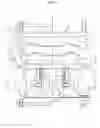
FIG. 1: It is a side view of the camshaft variator device, where it shows a longitudinal cut.
FIG. 2: It is a longitudinal cut of the camshaft variator device.
FIG. 3: It is a longitudinal section of the disassembled variator camshaft device.
FIG. 4: It is a view of the line 4-4 of the FIG. 2
FIG. 5: It is a view of the line 5-5 of the FIG. 2
FIG. 6: It is a view of the longitudinal section of the transmission mechanism of the 1° component.
FIG. 7: It is a perspective view of the transmission mechanism
FIG. 8: It is a perspective view of the move brick of the 3° component
FIG. 9: It is a perspective view of the rods of the 3° component
FIG. 10: It is a frontal view of the ring of the 2° component
FIG. 11: It is a perspective view of the 4° component
FIG. 12: It is a view of the line 12-12 of the FIG. 1
Claims
1. A camshaft variator device for an internal combustion engine including a crankshaft and a camshaft; said camshaft variator device comprising:
a) A first component for fixed attachment to said camshaft so that rotation of said first component will cause said camshaft to rotate; said first component including a transmission mechanism of the first component having at least one spiral tooth;
b) A second component for being rotated by said crankshaft; and
c) A third component to join said first and second components to one another so that said first component will rotate when said second component is rotated by said crankshaft and for rotating said first component relative to said second component to rearrange the positional relationship of said camshaft relative to said crankshaft; said third component including a transmission mechanism of the third component having at least one spiral tooth for coacting with said spiral tooth of said transmission mechanism of the first component so that longitudinal movement of said transmission mechanism of the third component relative to said transmission mechanism of the first component will cause rotation of said transmission mechanism of the first component;
said third component including a plurality of spaced apart male members, and
said second component having a plurality of spaced apart female members for slidably receiving said male members of said third component to secure said second and third component together in a manner which allows longitudinal movement of said third component relative to said second component while preventing rotation of said third component relative to said second component.
2. A camshaft variator device of claim 1 in which longitudinal movement of said third component relative to said first component causes rotation of said first component relative to said second component.
3. The camshaft variator device of claim 2 in which is included fourth component for causing longitudinal movement of said third component
4. The camshaft variator device of claim 3 in which said fourth component includes motive power component for applying a longitudinal force to said third component.
5. The camshaft variator device of claim 3 characterized because the fourth component includes a ring with a plurality of rods (at least two) and each rod includes a round profiles and a hole located in the end of the rod.
6. The camshaft variator device of claim 3 characterized because the fourth component including another ring with a plurality of variable height along its length profiles and located in the most external eccentric zone of the ring includes a plurality of cavities that fit a plurality of variable height along its length profile of the another ring of the fourth component; said ring including in the edge gear teeth and in one face a change section to fit a thrust bearing.
7. The camshaft variator device of claim 3 characterized because the fourth component including a ring; said ring includes in a face a plurality of cavities to fit a plurality of variable height along its length profile, and in the opposite face It has a plurality (at least 4) of variable height along its length profile to fit in the ring of the claim 6; also the ring of claim 7 includes in the edge gear teeth.
8. The camshaft variator device of claim 3 characterized because the fourth component includes a ring; said ring includes in a face a semi-circular cavity to fit an eccentric, and in the opposite face includes a plurality of variable height along its length to coact in the ring of claim 7.
9. The camshaft variator device of claim 3 characterized because the fourth component includes a ring; said ring includes in a face a change section to fit a thrust bearing; said thrust bearing is located between the change section of the said ring and the ring of the claim 6.
11. The camshaft variator device of claim 1 characterized because the second component includes in the edge a plurality of gear teeth to produce alternative movement to the 4° component via the coaction of the gear teeth between the second component and fourth component.
12. The camshaft variator device of claim 11 characterized because the fourth component moves in alternative way via the coaction of a plurality of eccentrics and a plurality of gear teeth synchronized between the second component and the fourth component.
14. The camshaft variator device of claim 1 characterized by a 1° component, it is a shaft, said first component includes a change section to located the screw head of the camshaft to join the first component to the camshaft, also there is a pin to avoid the rotation between the first component and the camshaft.
15. The camshaft variator device of claim 1 characterized by a 1° component with a graduated section; the purpose of the graduated section is a manual adjust of the camshaft in order to the crankshaft.
16. The camshaft variator device of claim 3 characterized because the longitudinal movement of the 4° component is restricted in relation to the 3° component thanks to a pair of edge located in the 3° component. It allows the longitudinal movement of the third and fourth component together;
and at the same time allows the rotation of the fourth components in relation to the 3° component thanks to a thrust bearing between the third and fourth component.
Images & Drawings included:



Sources:
- United States Patent and Trademark Office - verify current appl. status at the USPTO↗
Similar patent applications:
Recent applications in this class:
- » 20240392706 2024-11-28
Valve timing changing device - » 20210148256 2021-05-20
Mechanical cam phasing systems and methods - » 20200182106 2020-06-11
Mechanical cam phasing systems and methods - » 20200173316 2020-06-04
Cam phasing systems and methods - » 20190234250 2019-08-01
Mechanical cam phasing systems and methods - » 20180252124 2018-09-06
Mechanical cam phasing systems and methods - » 20180209310 2018-07-26
Cam phasing systems and methods - » 20180119581 2018-05-03
Sheet metal locking cover for a cam phaser - » 20170022855 2017-01-26
Mechanical cam phasing system and methods - » 20160369665 2016-12-22
Continuous variable valve duration apparatus and engine provided with the same