Concept Taxonomy is a normalized comprehensive natural language schema for the ontology to humanize data facilitating the collaboration, communication, storage, retrieval and knowledge of all types of information across disciplines and languages
US20100070540A1
2010-03-18
12/629,892
2009-12-03
Abstract:
Concept Taxonomy data structure and naming system, is a normalized schema and ontology for secure universal storage, retrieval and back-up of information which parallels natural language, thought and etymology. Concept Taxonomy is the implementation and classification of a method to intuitively conceptualize, categorize, characterize, locate and compose any type of information. Concepts are elucidated by the compositions of propositions of predicate thought concepts to referent object concepts. The normalized data structure allows for maximum compactness and control of data, removing redundancy and storing each individual piece of data only once.
Assignee:
- Jeffrey Danial 1 🇺🇸 Carlsbad, CA, United States
Interested in similar patents?
Get notified when new applications in this technology area are published.
Classification:
G06Q10/087 » CPC main
Administration; Management; Logistics, e.g. warehousing, loading, distribution or shipping; Inventory or stock management, e.g. order filling, procurement or balancing against orders Inventory or stock management, e.g. order filling, procurement, balancing against orders
G06Q10/0875 » CPC further
Administration; Management; Logistics, e.g. warehousing, loading, distribution or shipping; Inventory or stock management, e.g. order filling, procurement or balancing against orders; Inventory or stock management, e.g. order filling, procurement, balancing against orders Itemization of parts, supplies, or services, e.g. bill of materials
G06Q30/0627 » CPC further
Commerce, e.g. shopping or e-commerce; Buying, selling or leasing transactions; Electronic shopping; Item investigation; Directed, with specific intent or strategy using item specifications
Description
CROSS-REFERENCE TO RELATED APPLICATION(S)
Not Applicable
STATEMENT REGARDING FEDERALLY SPONSORED RESEARCH OR DEVELOPMENT
Not Applicable
REFERENCE TO SEQUENCE LISTING, A TABLE, OR A COMPUTER PROGRAM LISTING COMPACT DISC APPENDIX
Not Applicable
BACKGROUND OF THE INVENTION
History of the Field
A schema to humanize data specifically relates to how information is conceptualized, communicated, referenced, stored and retrieved. Beginning with the creation of characters, civilization has strived to improve communication for the sake of progress and productivity. A universal method of communication has long been the dream of philosophers, linguists, computer programmers and scientists.
Aristotle provided great insight on the classification of information and provided an ontology for conceptualization, language, communication and trade. His “Treatise on Categories,” provides a glimmer of the possibilities that civilization can experience when information is structured for ease and completeness of communication. In the “Classical Theory of Concepts on the Definition of Terms,” Aristotle began the process of defining the term concept. The meaning of concept is explored in mainstream cognitive science and philosophy.
More recently computers have been used to classify information in a variety of concept taxonomies. The U.S. Pat. No. 4,868,733 (Fujisawa, et al Sep. 19, 1989 Document filing system with knowledge-base network of concept interconnected by generic, subsumption, and superclass relations) offers a method of using concept networks for the of classification of information. This taxonomy provides a method to address all types of information but fails the test of normalization and natural language ease of use. The language and ideas of superclass and subsumption relations are intricate and labored.
The U.S. Pat. No. 6,349,275 (Schumacher, et al. Feb. 19, 2002 Multiple concurrent language support system for electronic catalogue using a concept based knowledge representation) uses the idea of concepts for language independent presentation contexts. The Concept Taxonomy is framed for use as templates for presentation contexts and thus limits the use of concepts proposed for ease of use in a multi-discipline environment.
Though effective at referencing and classifying specific types of information the above schemas lack intuitive usability, normalization and broad multi-disciplined applicability of the present invention. In short, their taxonomy in some ways limits their usefulness.
The most advanced state of the art universal communication schema for the description of information must and can:
-
- be able to meet the communication needs of all clients independent of language and discipline
- provide a precise and natural structure for the classification of all types of information
- be easy to adopt by users and application developers alike
- provide a robust and comprehensive organic method of encompassing all data
- be able to classify all types of information according to the needs of each individual user and application provider
Current State of the Field
It is common for information users such as companies and individuals to use multiple databases and schemata. In fact, it is likely that users have duplicates of the same information trapped in the various applications they employ. Users would benefit from having access to their own universal data storage and retrieval mechanism. Application and service providers could tap into users needs to provide additional services updating the users central storage mechanism and retrieving users instructions.
-
- For example, users might have data in a cellular telephone, other data in an email host, and yet other data in their company telephone system. Each application is implemented with independent data and schema for the storage and retrieval of a users application specific information. Various applications would thus contain different pieces of a users information in disparate databases and schemata.
- In another case, information from one application is needed to complete a process in a second application. For example, users of an inventory system application update delivery information, which must later be migrated to the users of the accounting system. In this case the user must employ a developer who understands the schema of the two specific applications needing the data transferred. It is possible for developers of applications to communicate their data via a standard schema, allowing an easy migration of data.
- In another case, a software development company has acquired its competitor. The company now has two sets of data, APIs and clients to deliver upgrades and sell new products. The challenges of first consolidating the information and then converting their existing downstream software clients are daunting. Imagine trying to convince your clients to learn a whole new system.
- Medical information is often difficult to access and suspect for loss or misrepresentation. Patients have little, if any, access to their own medical records. There is a large variety of computer systems and applications and thus, schemata being used by the medical community. Doctors find great difficulty in securing data, sharing it with other doctors, patients and other interested parties.
The easy reference, specification and consolidation of disparate application data would improve any users and application developers productivity. To convince the application developers and users to adopt a schema it must be easy to understand, profitable, comprehensive and make universal, natural, intuitive sense.
BRIEF SUMMARY OF THE INVENTION
Concept Taxonomy (data structure and naming system) is a schema which parallels natural language thought and etymology. This natural language database model makes it easy to create, categorize, typecast, locate, share, conceptualize, consolidate and communicate information more effectively, accurately, productively and creatively.
The invention examines works on the creation of languages to understand how we interpret and communicate information. We find in the English language that the word concept casts the broadest net over all other words, ideas and perspectives of communication. Communication of ideas and things began with the creation of concepts symbolized by strings of characters.
Concept Taxonomy asserts: a concept is an elemental view, a way to both categorize or look at a piece of information and type cast or label, filter and locate a piece of information. Concepts help us to distinguish between the creation of one perspective of information and another.
All concept elements have a parent branch category that emanate from the root concept element “creation” more commonly known as a universal. Grounded in the category of creation, a parent branch category of a concept can offer every perspective from which to view the information of the concept. The type of the concept allows us to label, locate and decode the information giving it life.
Concept Taxonomy initiates the database with the characterization of the creation string “creation”. The concept of creation encompasses the idea of creation of all forms and disciplines of information, while offering a root concept for the ontology of intercommunication. The root concept creation allows us to communicate the creation of all other concepts such as types, locations, time, objects, languages, philosophies, etymologies, concepts, files, streams and all other things. We naturally say the creation of anything is a branch of the category of creation. The idea of Concept Taxonomy is that the creation of a new concept category is as basic as the creation of its label.
Using the concept of creation of string concepts as our starting point we must then search for how concepts are related to each other and other things. In particular, we examine how language and philosophy are intertwined to describe and relate concepts to each other.
In the English language sentences are compositions of subjects, verbs and objects used to communicate and clarify ideas. Concepts are always the subject of concept compositions, and thus, a concept composition relates a concept (like the subject in a sentence) to a predicate thought (like a verb) of a referent object (like an object).
By framing concept composition in this way Concept Taxonomy simply embodies the idea of communication of concepts in languages and structures regardless of compositional intent. Concept Taxonomy operates on a higher philosophical plane to allow the composition of concepts devoid of the specifics of language.
The Concept Taxonomy composition formula asserts: concepts in any language may be elucidated by composing their relationships to sets of propositions of a predicate thought to a referent object of discourse. In some languages propositions begin with the referent object, in the English language propositions begin with a predicate thought. Although written with the English Language in mind Concept Taxonomy is useful across all language platforms. Concepts are themselves the predicate thoughts and referent objects used to clarify other concepts.
BRIEF DESCRIPTION OF SEVERAL VIEWS OF THE DRAWING
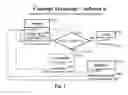
FIG. 1) Concept Taxonomy—schema a
FIG. 2) Concept Taxonomy—schema b
FIG. 3) Sample Concept Taxonomy basic representation symbols
FIG. 4) Concepts categories and inheritance of propositions
FIG. 5) Concept composition propositional predicate calculus
FIG. 6) Sample diagram of a “dog” concept
FIG. 7) Strings of characters
FIG. 8) Concepts and strings
FIG. 9) Notes of characters and symbols
FIG. 10) Numeric text a number format
FIG. 11) Types and locations of concept of information
FIG. 12) Sample concept type composition
FIG. 13) Sample concept type ontology
FIG. 14) Sample composition for the “creation string” type—the root
FIG. 15) Central data storage and information exchange
FIG. 16) Sample concept category ontology
FIG. 17) Sample ontology of compositions of concept descriptions
FIG. 18) Data control, security, access and garbage collection
DETAILED DESCRIPTION OF THE INVENTION
Concept Taxonomy is a comprehensive natural method of referencing, storing, communicating and unifying all information. Users and application developers are provided a natural organic method to communicate all concepts by using a universal language independent schema.
Concept Taxonomy provides a communication method for users and programmers which:
-
- is instinctive, familiar and organic
- follows the ideas in natural language sentence composition and applies it to concept vector beings
- information is easily conceptualized to be used for:
- categories
- types
- compositions
- thoughts
- objects
- locations and formats of things
- will allow the easy composition of new propositions to illuminate existing concepts
- can keep a complete history of concepts, compositions and propositions
We are able to effectively classify and describe all types of information as an ontology of Concept Taxonomy by using words and ideas to express and structure information in a precise and well defined naturally understandable manner.
FIG. 1) Concept Taxonomy—Schema a
A set of tables used to store, add, modify, delete and retrieve elements.
A table of concepts [110] is comprised of elements each having at least:
-
- The unique id [120] for the concept
- The category id [140] of the concept referencing concepts(id) [120] of the parent
- The type id [160] of the concept referencing concepts(id) [120] of a type
- The information id [180] of the concept referencing a location and format [410] cast by the type id [160] of the concept
A table of propositions [310] is comprised of elements each having at least:
-
- The unique id [320] for the proposition
- The predicate thought id [340] of the proposition referencing a concepts(id) [120]
- The referent object id [360] of a proposition referencing a concepts(id) [120]
A table of compositions [210] is comprised of elements each having at least:
-
- The unique id [220] for the composition
- The concept id [240] of the composition referencing a concepts(id) [120]
- The proposition id [260] of the composition referencing a propositions(id) [320]
A table of strings [10] is comprised of elements each having at least:
-
- The unique id [20] for the string
- The information [40] of the string is a set of uniquely ordered characters or symbols [60] represented as a standard binary type such as Universal Text Format or ASCII
FIG. 2) Concept Taxonomy—Schema b
A set of tables used to store, add, modify, delete and retrieve elements.
A table of concepts [110] is comprised of elements each having at least:
-
- The unique id [120] for the concept
- The category id [140] of the concept referencing the concepts(id) [120] of the parent
- The type id [160] of the concept referencing the concepts(id) [120] of a type
- The information id [180] of the concept referencing a location and format [410] cast by the type id [160] of the concept
A table of compositions [210] is comprised of elements each having at least:
-
- The unique id [220] of the composition
- The concept id [240] of the composition referencing the concepts (id)
- The predicate thought id [340] of a composition referencing a concepts (id)
- The referent object id [360] of a composition referencing a concepts (id)
A table of strings [10] is comprised of elements each having at least:
-
- The unique id [20] of the string
- The information [40] of the string is a set of uniquely ordered characters or symbols [60] represented as a standard binary type such as Universal Text Format or ASCII
FIG. 3) Sample Concept Taxonomy Basic Representation Symbols
-
- Ovular shapes represent string concepts.
- Square shapes represent note concepts.
- Triangular shapes represent concept elements having a:
- unique id [120] in the center of the triangle which can be pointed to on any side
- solid line with an arrow pointing to the left side of the triangle [140] originating from the parent category concept of the concept [120]
- dotted line emanating from the top of the triangle [160] pointing to the type concept [120] of the concept
- dashed line emanating from the right side of the triangle [180] pointing to the location where the information is found
- When the concept is of a string type one can combine the concept and the string into a single or combined shape as depicted.
- When presenting a set of concepts in the context of a specific category branch and type of information only the id and label of the concept are needed for clarification in the representative shape of the concept.
- Horizontal arrows represent proposition elements having a:
- unique id [320] in the center of the arch
- reference to a predicate thought concept at the tail of the arrow
- reference to a referent object concept at the head of the arrow
- L shape arrows represent composition elements having a:
- unique id for the composition in the center of the arrow
- reference to the concept of the composition at the tail of the arrow
- reference to the proposition of the composition at the head of the arrow
FIG. 4) Concepts Categories and Inheritance of Propositions
The root of all concepts is creation, such as the concept of “creation of a thing”. Concepts are vector-beings beginning with the creation of category of the concept, a concepts branch extends from its parent category to a type of information. New concepts are conceived out of an existing concept pointing to any type of information new or existing, such as, a concept, string, composition, proposition, note, number or other type.
Concepts offer areas of knowledge referenced as categories, types, subject concepts, predicate thoughts and referent objects. Concepts can be type cast as anything such as named prototypes, common nouns, proper nouns, or instances of a parent prototype category.
Concepts are elucidated by their parent category branch, type and the array of their related propositions. A concept may have its own compositions of propositions. A parent category branch or type of a concept may also grant awareness, impose, propagate, mate, mutate or offer propositions through inherited compositions in order to produce an evolved solution to a particular problem.
The meaning of a “concept” is understood and interpreted by exploring the composition of its propositions, the composition of propositions of its parent category hierarchy, and its effect in propositions elucidating other concepts.
FIG. 5) Concept Composition Propositional Predicate Calculus
Concepts may be clarified, revealed or detailed by the composition of informed thoughts to objects of information. By using the simplest of terms, we allow individuals and programmers to begin communicating on the most natural and organic level weaving the building blocks of a Concept Taxonomy.
Concept composition closely follows the rules of sentence structure to allow the flexibility for organic expansion.
-
- English language sentence: composition (subject, verb, object)
- Concept Taxonomy: composition (concept, predicate thought, referent object)
A subject can always be a concept, yet a concept is not always a subject. Thus, it is possible to say the composition is of a subject concept, a predicate thought concept and a referent object concept, yet preferable to use Concept Taxonomy.
We learn from predicate calculus the inner structure of propositions have two main constituent parts:
-
- I. The referent object of discourse and
- II. A predicate thought is a verb or verb-clause asserting a quality or attribute to the object.
Predicate calculus generalizes the “predicate thought | referent object” form (where | symbolizes concatenation of symbols).
Concepts of a Predicate Thought
(Description, operator, sign, term, verb, adjective, formula, SQL, program, process, action, sentiment, truth value, attribute name, property)
Thought is a mental process which allows beings to be conscious, make decisions, imagine and operate on symbols in a rational or irrational manner. It is an element instance of thinking and is used as its synonym. In philosophy, thought is also a synonym for idea. Thoughts are collections of ideas that result from the adoption of a particular paradigm.
Concepts of Referent Objects
(concept, concrete object, real thing, conceived object, data, data set, schema, meaning, attribute value)
The referent object is simply what is being referred by the predicate thought. It may itself be the predicate used in another instance to elucidate another concept or even the concept which is being elucidated.
FIG. 6) Sample Diagram of a “Dog” Concept
Here we see how the “creation object entity dog” is elucidated by two compositions. We also see one possible break down of the composition “A dog has 4 legs” into the proposition “has 4 legs” and the two concepts the predicate “verb has” and the object “legs quantity 4”.
FIG. 7) Strings of Characters
A character is a written elemental symbol that embodies an idea, sound or concept. Strings of characters are the instruments of written communication. All languages and sciences use strings to interpret and communicate ideas, numbers, words and concepts.
-
- A string is a label used to distinguish concepts, people, animals, things, places and products.
- A string can identify a category of concepts, or a single concept, either uniquely, or within a given context.
A string of characters can be represented and stored in Universal Text Formats (such as UTF8 or ASCII). A table of strings [10] may be located in a storage medium with records each having an id [20] a token id value [30] and information [40] stored as characters [50] in a universal text format type such as UTF8 [60] may be referenced by one concept or many concepts.
request_string_id(“String”) string_id:
A string id request function would accept a request string and return the token id representing the string. In this process the function would:
1. see if the string is already in the strings table then return token id for the string
2. otherwise, create token id for the new string
3. insert a record for the string in the strings table with new token id and new string
4. return the id of the new string
FIG. 8) Concepts and Strings
Concepts are the core elements in concept language schema, the fundamental ontological category of being from which all categories and types evolve. A concept is a type of information in the context of a parent concept category branch. It is a cognitive unit of meaning that may be created of a string of characters to represent a physical object or abstract idea.
Conceptualization of the creation of a string of characters is the root of written communication. A new system may be initialized by inserting the string “creation” in the strings table and then inserting the root concept concepts(0) to reference the string creation. By using the word creation for the root we enable ourselves to conceptualize the concepts of the category of creation. We can conceptualize the creation of type, the creation of location, the creation of time or the creation of anything.
Concepts of the creation string type have a label corresponding to the string value referenced by the concepts information id. One string, for example, pound may represent a label for two or more different concepts. In the context of units of measure pound would be a unit of weight and in the context of a type of currency pound would be a British note for legal tender.
Each unique string in concept language schema is intended to have a unique token id. Should two data sets need to be merged concept language database would create a conversion of string id's to the target data base string id. An ontology of existing strings may be accessed via the web or a network and offered on a distributed set of servers.
FIG. 9) Notes of Characters and Symbols
A note is a string of characters attributed to a thought regarding an object of a concept. A notes type casts a concepts information id into the location of the table of notes and references an (id) to retrieve information formatted as characters in a standard format such as UTF8, labeled as a note.
The note type differs from the string type in a number of ways. A note may be connected to a particular type shared by a group of concepts and when being updated or deleted, it must be updated accordingly. When a note is used by a group, an edit to the note may become the proposition of a specific concept by being copied to a new location and assigned an id. Sometimes we just want to update the note and have it updated in all the concepts referencing it. Although there are many ways in which a note might be needed for access update and storage, Concept Taxonomy only makes the provision for all cases and allows programmers and users to decide for themselves their ontology, while Concept Taxonomy offers an ontology for intercommunication.
A string of characters can be represented and stored in Universal Text Formats (such as UTF8 or ASCII). A table of notes [510] may be located in a storage medium with records each having an id [520], a token id value[530] and information [540] stored as characters [550] in a Universal Text Format type such as UTF8 [60] and may be referenced by one concept or many concepts.
FIG. 10) Numeric Text a Number Format
Numeric text is a format mentioned in the invention in order to help the categorization of special fields such as addresses, zip codes and telephone numbers. These fields require exactness in storage since they are specific to each location. For example, an address may be 342¾ Main Street. We would want to label the mailing envelope correctly in accordance to the address rather than 342.75 which is the numerical equivalent. When storing numbers the back end system would make a floating point conversion on the number where possible to speed up its usage in floating point operations. One may have additional type constrictions as in zip codes in the U.S. where one may split the number into two parts to deal with Zip+4 usage. The addition of the numeric text is not required to make the database work. It is here mainly to show the flexibility of the data structure.
A table of numbers [610] may be located in a storage medium with records each having an id [620], a token id value [630] and information [640] stored as characters [650] in a Universal Text Format type such as UTF8 [60] and may be referenced by one concept or many concepts.
Insert_numerictext_id(“Numeric Text String”) string_id:
An insert numeric text id request function would accept a numeric text string and return the token id representing the numeric text string. In this process the function would:
1. See if the string is already in the strings table then return token id for the string
2. Otherwise, create token id for the new string
3. Insert a record for the string in the strings table with new token id, new string, if possible, enter a floating point equivalent in a float field
4. Return the id of the new numeric text
Types
FIG. 11) Types and Locations of Concept of Information
Concept type information is decoded on the fly by the database in order to return the information requested. The type of information determines the location where the information is stored. If the information is of type(0), known as the default type, the system [410] determines to get the information from the table of strings. Otherwise the system retrieves:
-
- the proposed location(x) composed for type(x) of information [420]
- the index field(x) composed for type(x) of information [430] which is referenced by the information id of the concept [120]
- the type format(x) for type(x) of information [440]
- the information of type format(x) from location(x) where index field(x) (id)=information id [450]
Wherever the system does not find a location(x), field(x) or type format(x) it traces up the hierarchy of inheritance to see if their composition is there. Finally, if not found the system assumes the default type for the location, field or format.
Concept Taxonomy makes it possible to have data reside in many specific locations. Locations include existing local tables (for example: strings [10], compositions [210] and propositions [310]), new tables (for example notes [510], numeric text [610]), local files, remote files [710] and streams [810]). It is even possible to find two locations for the same information. This may be done to have access to replicated information in a network. Thus a system might decide to keep a copy of information on a remote computer. Furthermore, the system provides for the organic growth of the database by allowing users to create their own tables and references to streams. The database may keep track of information in streams [450], store the streams location [810],and the streams present data.
The basic relational types for Concept Taxonomy will include types for concepts [110], propositions [310] and compositions [210]. One may for example have a concept of the composition type which refers to the composition “dog has 4 legs” as a child of the category biology of the concept.
FIG. 12) Sample Concept Type Composition
FIG. 13) Sample Concept Type Ontology
FIG. 14) Sample Composition for the “Creation String” Type—the Root Concept—concepts(0)
Types in concept language can take on a wide array of meanings. A type can be a data type, an elemental language type, a monetary type or simply a descriptive phrase. As Concept Taxonomy types themselves are concepts, they allow individuals and developers to build and expand their own ontology, while using a central database of core ontology of types provided as a measure for intercommunication.
The type of a concept both labels and gives reference to the location and format of the concepts information id. The information id is used to reference an indexed record in the location of the type in order to retrieve the information of value.
Default Type for Information: The Creation of Strings of Characters
Communication of concepts began primarily by the creation of strings of characters or symbols. This is the reason concept ontology begins with the category “creation” of the root type labeled “creation string” of the root concept labeled creation. Hence, the default concept type is type(0) which is the concept of creation of the creation string creation its location and format.
Concept Taxonomy provides for the embodiment of any type while offering a unified information structure able to encapsulate all other forms of information in a natural organic manner.
Type(0) is the cast composed of a concept of a “type” category labeled the “creation string” of type UTF8, having propositions for the “location” as the “table strings” where the information id references the “table strings” “field id” to retrieve the element of information stored as characters. Type(0) is the most general type of concept embodying the possibility of creation strings to represent all types and categories of information. The concept characterized as “creation” is the root of all concepts of information while the “creation string” is the root type. The concept “creation” embodies all concepts of things and information. We might even conceive the concept “creation” of the “creation string” “concept”, as being particular concept ontology for a lower plane of taxonomies.
In FIG. 12, we see that types may embody many different ideas and locations for information. They tell us how we cast a concepts definition and link it to other information. For example, although the concepts database may not be managing a data stream, it can still keep references and store data. We also see that a concept may be a prototype concept or an item concept. A proposed format for a type can extend the type ontology and reduce data but it is not required.
FIG. 15) Central Data Storage and Information Exchange
Concept Taxonomy offers the simple intuitive taxonomy to store data. As such, it may reside on a device or in a central data storage location accessible on a network by applications on various devices. A centralized ontology offers programmers a unified messaging model and the ability to code for communication and presentation on the device. A central data storage medium also provides possibilities to application developers who can make use of built secure IT infrastructure. One data base will be able to consolidate and warehouse any and all types of information. Replication of branches of the core ontology may be easily made by multiple processors spread across a network. Much like the internet the first processor to get a request for a certain type of concept may answer a request for a concept. Due to the nature of concept networks and the highly linear nature of a normalized taxonomy, specific branches of the taxonomy may also be spread across multiple asymmetric concurrent processes with independent security structures.
FIG. 16) Sample Concept Category Ontology
Information can reside in a multitude of places and be cast in a multitude of formats.
FIG. 17) Sample Ontology of Compositions of Concept Descriptions
In this sample ontology we see how a composition of concept descriptions can be used to elucidate the specific meaning of a concept. The example compositions(5) states the concept of the “thought inheritance” is “described” as “inheritance defines how parent relationships are to be inherited” of the object “thought inheritance”.
FIG. 18) Data Control, Security, Access and Garbage Collection
In addition to the base of the Concept Taxonomy schema the variables below are attached to every record in the concept taxonomy to help with data tracking and control.
-
- Entry date: time stamp and date when the record was inserted
- Termination date: date when the record was requested to be deleted
- Entry user id: concept id of the user who entered the information
- Original record id: pointer to the modified record indicating that the current record is a copy of the modified original record
- Security id: concept id which indicates security access rights and restrictions for programs and users accessing the record
- IP address id: IP address of the user computer which made the update to the record
- Session id: browser or program session accessing the data to update the record
- Group access id: group of people given access to this record
- User access id: concept which represents a password or SQL method for a user having access to a specific record
We offer users the benefit of keeping modified and deleted data until garbage collection is instituted. Users may purchase extensions on the amount of time record histories are kept until garbage collection deletes the backed-up record, a business method of the ontology. The variable for original record id allows the system to keep backed up records in slower and cheaper storage mediums to reduce the cost of historical data.
It is possible to have each of these variables recorded for each record or combine some variables such as group access id, entry user id and user access id into a single concept on a concept tree. By creating a concept tree specifically for security and access rights, we can monitor the state of the database, access and security.
Finally, these variables are not required to make the Concept Taxonomy functional. Their use would more likely be incorporated into the central data store to keep track and control of the data. The variable group access id, for example, may only be needed for the user of the data in some instances and by some processes.
Claims
1. A machine-readable program storage medium tangibly embodying sequences of instructions, the sequences of instructions for execution by at least one processing system to perform steps for defining a schema for a database, the database for storing and retrieving the Concept Taxonomy to be as follows:
Concepts, categories and types of things are primarily communicated by the creation of strings of characters and or symbols
Concepts are described as identifying a cognitive unit of meaning, where the creation of a parent concept category branch gives context to a type of information
Concepts are elucidated by the composition of their propositions of a predicate thought concept to a referent object concept
Information types are concepts composed of references for proposed labels, types and locations for information
2. The Concept Taxonomy and apparatus of claim 1, where in, a list of unique elements of concepts, compositions, propositions, types, formats, locations, strings and tables are produced as a namespace dictionary for use as a standard measure for the exchange and communication of information.
3. The Concept Taxonomy and apparatus of claim 1, where in, one embodiment having a set of tables including:
A table of concepts comprised of elements each having at least:
The unique id for the concept
The category of a concept referencing the concept of the parent
The type of a concept referencing the concept of a type
The information of the concept referencing a location and format cast by the type of the concept
A table of propositions comprised of elements each having at least:
The unique id for the proposition
The predicate thought of the proposition referencing a concept
The referent object of the proposition referencing a concept
A table of compositions comprised of elements each having at least:
The unique id for the composition
The concept of the composition
The proposition of the composition
A table of strings comprised of elements each having at least:
The unique id for the string
The unique information of the string as a set of characters or symbols represented in a binary format
4. The Concept Taxonomy and apparatus of claim 1, where in, one embodiment having a set of tables including:
A table of concepts comprised of elements each having at least:
The unique id for the concept
The category of a concept referencing the concept of the parent
The type of a concept referencing the concept of a type
The information of the concept referencing a location and format cast by the type of the concept
A table of compositions is comprised of elements each having at least:
The unique id for the composition
The concept of the composition
The predicate thought of the composition referencing a concept
The referent object of the composition referencing a concept
A table of strings is comprised of elements each having at least:
The unique id for the string
The unique information of the string as a set of characters or symbols represented in a binary format
5. The Concept Taxonomy and apparatus of claim 1, where in, one embodiment has a default type of information being a string of characters or symbols.
6. The Concept Taxonomy and apparatus of claim 1, where in, a network is used to request permission from one concept schema to access elements of another concept schema.
7. The Concept Taxonomy and apparatus of claim 1, where in, users of the concepts store can be charged rent for their storage space and bandwidth access to their concepts stored at a central facility.
8. The Concept Taxonomy and apparatus of claim 1, where in, a business concept offers developers, solution providers and marketing companies, the benefit of cross marketing back end data storage solutions, applications and services to their clients information.
9. The Concept Taxonomy and apparatus of claim 1, where in, the sale of marketing language and business intelligence statistics can be offered.
10. The Concept Taxonomy and apparatus of claim 1, where in, a set of rules can be provided through the Taxonomy to provide language translation which is able to offer concept information based on a dictionary and the local cultures statistics in the database on usage of idioms.
11. The Concept Taxonomy and apparatus of claim 1, where in, the variables for entry date, termination date, entry user id, original record id, security id, IP address id, session id, group access id and user access id provide the ability to charge users for the benefits of additional security and keep a history of deleted records by offering various levels of service for keeping such information.
12. The Concept Taxonomy and apparatus of claim 1, where in, users may buy a token to register their concept namespace with a central database and offer the availability of their updated Concept Taxonomy Ontology to other users.
13. The Concept Taxonomy and apparatus of claim 1, where in, an asymmetrical multi-processing system is used to deliver information.
14. The Concept Taxonomy and apparatus of claim 1, where in, an asymmetrical internet or intranet concept services may be offered.
Images & Drawings included:



Sources:
- United States Patent and Trademark Office - verify current appl. status at the USPTO↗
Recent applications in this class:
- » 20250173675 2025-05-29
SUGGESTING A RECIPE TO A CUSTOMER OF AN ONLINE CONCIERGE SYSTEM BASED ON ITEMS LIKELY TO BE AVAILABLE - » 20250173674 2025-05-29
DELIVERY SYSTEM - » 20250173673 2025-05-29
SUPPLY AND INVENTORY PREDICTIONS IN SUPPLY CHAIN NETWORKS - » 20250173672 2025-05-29
SIMULATION SERVICE MODEL FOR INVENTORY OPTIMIZATION - » 20250173671 2025-05-29
ARTIFICIAL INTELLIGENCE WAREHOUSE MANAGEMENT TRANSSHIPMENT SYSTEM - » 20250173670 2025-05-29
TECHNIQUES FOR PASSIVE DETECTION OF A STOCK ITEM USING A LOW ENERGY WIRELESS TAG AND REAL-TIME FEEDBACK - » 20250173669 2025-05-29
LOGICAL COMPOSITE DEVICES IN COMMUNICATION NETWORK INVENTORIES - » 20250165921 2025-05-22
MEDICAL CABINET COMMUNICATION SYSTEM AND METHODS - » 20250165920 2025-05-22
SYSTEMS AND METHODS FOR ADDRESSING CROSS-PEGGING IN A MULTI-LEVEL SEARCH - » 20250165919 2025-05-22
DYNAMIC INVENTORY TRACKING AND DISPENSING SYSTEM