LIGHT EMITTING APPARATUS
US20100181580A1
2010-07-22
12/669,093
2008-06-24
Abstract:
A light emitting apparatus including a light emitting element of a gallium nitride based semiconductor and a light converter absorbing a part of primary light emitted from the light emitting element to emit secondary light with a longer wavelength than the primary light, the light converter includes, as a red light emitting phosphor, divalent europium activated nitride red light emitting phosphor substantially represented by (MI1-aEua)MIISiN3 and includes, as a green or yellow light emitting phosphor, any selected from divalent europium activated oxynitride green light emitting phosphor substantially represented by EubSicAldOeNf, divalent europium activated oxynitride yellow light emitting phosphor substantially represented by MIIIgEuhSiiAljOkNl and trivalent cerium activated silicate green light emitting phosphor substantially represented by MIV3(MV1-mCem)2(SiO4)3, and forward current applied to the light emitting element is 25 mA or more. The light emitting apparatus with excellent life property, high reliability, efficiency and color rendition or high color gamut is provided.
Interested in similar patents?
Get notified when new applications in this technology area are published.
Classification:
C09K11/7734 » CPC main
Luminescent, e.g. electroluminescent, chemiluminescent materials containing inorganic luminescent materials containing rare earth metals containing europium Aluminates
C04B35/16 » CPC further
Shaped ceramic products characterised by their composition ; Ceramics compositions ; Processing powders of inorganic compounds preparatory to the manufacturing of ceramic products based on oxide ceramics based on silicates other than clay
C04B35/22 » CPC further
Shaped ceramic products characterised by their composition ; Ceramics compositions ; Processing powders of inorganic compounds preparatory to the manufacturing of ceramic products based on oxide ceramics based on silicates other than clay rich in calcium oxide, e.g. wollastonite
C04B35/44 » CPC further
Shaped ceramic products characterised by their composition ; Ceramics compositions ; Processing powders of inorganic compounds preparatory to the manufacturing of ceramic products based on oxide ceramics based on aluminates
C04B35/581 » CPC further
Shaped ceramic products characterised by their composition ; Ceramics compositions ; Processing powders of inorganic compounds preparatory to the manufacturing of ceramic products based on non-oxide ceramics based on borides, nitrides, or silicides based on aluminium nitride
C04B35/584 » CPC further
Shaped ceramic products characterised by their composition ; Ceramics compositions ; Processing powders of inorganic compounds preparatory to the manufacturing of ceramic products based on non-oxide ceramics based on borides, nitrides, or silicides based on silicon nitride
C04B35/597 » CPC further
Shaped ceramic products characterised by their composition ; Ceramics compositions ; Processing powders of inorganic compounds preparatory to the manufacturing of ceramic products based on non-oxide ceramics based on borides, nitrides, or silicides based on silicon oxynitride, e.g. SIALONS
C09K11/0883 » CPC further
Luminescent, e.g. electroluminescent, chemiluminescent materials containing inorganic luminescent materials Arsenides; Nitrides; Phosphides
C09K11/7721 » CPC further
Luminescent, e.g. electroluminescent, chemiluminescent materials containing inorganic luminescent materials containing rare earth metals containing cerium Aluminates
C09K11/7739 » CPC further
Luminescent, e.g. electroluminescent, chemiluminescent materials containing inorganic luminescent materials containing rare earth metals containing europium; Phosphates with alkaline earth metals with halogens
H01L33/504 » CPC further
Semiconductor devices with at least one potential-jump barrier or surface barrier specially adapted for light emission; Processes or apparatus specially adapted for the manufacture or treatment thereof or of parts thereof; Details thereof characterised by the semiconductor body packages; Wavelength conversion elements characterised by the materials, e.g. binder; Wavelength conversion materials Elements with two or more wavelength conversion materials
C04B2235/3203 » CPC further
Aspects relating to ceramic starting mixtures or sintered ceramic products; Composition of constituents of the starting material or of secondary phases of the final product; Constituents and secondary phases not being of a fibrous nature; Metal oxides, mixed metal oxides, or oxide-forming salts thereof, e.g. carbonates, nitrates, (oxy)hydroxides, chlorides; Alkali metal oxides or oxide-forming salts thereof Lithium oxide or oxide-forming salts thereof
C04B2235/3206 » CPC further
Aspects relating to ceramic starting mixtures or sintered ceramic products; Composition of constituents of the starting material or of secondary phases of the final product; Constituents and secondary phases not being of a fibrous nature; Metal oxides, mixed metal oxides, or oxide-forming salts thereof, e.g. carbonates, nitrates, (oxy)hydroxides, chlorides; Alkaline earth oxides or oxide forming salts thereof, e.g. beryllium oxide Magnesium oxides or oxide-forming salts thereof
C04B2235/3208 » CPC further
Aspects relating to ceramic starting mixtures or sintered ceramic products; Composition of constituents of the starting material or of secondary phases of the final product; Constituents and secondary phases not being of a fibrous nature; Metal oxides, mixed metal oxides, or oxide-forming salts thereof, e.g. carbonates, nitrates, (oxy)hydroxides, chlorides; Alkaline earth oxides or oxide forming salts thereof, e.g. beryllium oxide Calcium oxide or oxide-forming salts thereof, e.g. lime
C04B2235/3213 » CPC further
Aspects relating to ceramic starting mixtures or sintered ceramic products; Composition of constituents of the starting material or of secondary phases of the final product; Constituents and secondary phases not being of a fibrous nature; Metal oxides, mixed metal oxides, or oxide-forming salts thereof, e.g. carbonates, nitrates, (oxy)hydroxides, chlorides; Alkaline earth oxides or oxide forming salts thereof, e.g. beryllium oxide Strontium oxides or oxide-forming salts thereof
C04B2235/3215 » CPC further
Aspects relating to ceramic starting mixtures or sintered ceramic products; Composition of constituents of the starting material or of secondary phases of the final product; Constituents and secondary phases not being of a fibrous nature; Metal oxides, mixed metal oxides, or oxide-forming salts thereof, e.g. carbonates, nitrates, (oxy)hydroxides, chlorides; Alkaline earth oxides or oxide forming salts thereof, e.g. beryllium oxide Barium oxides or oxide-forming salts thereof
C04B2235/3224 » CPC further
Aspects relating to ceramic starting mixtures or sintered ceramic products; Composition of constituents of the starting material or of secondary phases of the final product; Constituents and secondary phases not being of a fibrous nature; Metal oxides, mixed metal oxides, or oxide-forming salts thereof, e.g. carbonates, nitrates, (oxy)hydroxides, chlorides Rare earth oxide or oxide forming salts thereof, e.g. scandium oxide
C04B2235/3225 » CPC further
Aspects relating to ceramic starting mixtures or sintered ceramic products; Composition of constituents of the starting material or of secondary phases of the final product; Constituents and secondary phases not being of a fibrous nature; Metal oxides, mixed metal oxides, or oxide-forming salts thereof, e.g. carbonates, nitrates, (oxy)hydroxides, chlorides; Rare earth oxide or oxide forming salts thereof, e.g. scandium oxide Yttrium oxide or oxide-forming salts thereof
C04B2235/3229 » CPC further
Aspects relating to ceramic starting mixtures or sintered ceramic products; Composition of constituents of the starting material or of secondary phases of the final product; Constituents and secondary phases not being of a fibrous nature; Metal oxides, mixed metal oxides, or oxide-forming salts thereof, e.g. carbonates, nitrates, (oxy)hydroxides, chlorides; Rare earth oxide or oxide forming salts thereof, e.g. scandium oxide Cerium oxides or oxide-forming salts thereof
C04B2235/3262 » CPC further
Aspects relating to ceramic starting mixtures or sintered ceramic products; Composition of constituents of the starting material or of secondary phases of the final product; Constituents and secondary phases not being of a fibrous nature; Metal oxides, mixed metal oxides, or oxide-forming salts thereof, e.g. carbonates, nitrates, (oxy)hydroxides, chlorides Manganese oxides, manganates, rhenium oxides or oxide-forming salts thereof, e.g. MnO
C04B2235/3852 » CPC further
Aspects relating to ceramic starting mixtures or sintered ceramic products; Composition of constituents of the starting material or of secondary phases of the final product; Constituents and secondary phases not being of a fibrous nature; Non-oxide ceramic constituents or additives Nitrides, e.g. oxynitrides, carbonitrides, oxycarbonitrides, lithium nitride, magnesium nitride
C04B2235/3865 » CPC further
Aspects relating to ceramic starting mixtures or sintered ceramic products; Composition of constituents of the starting material or of secondary phases of the final product; Constituents and secondary phases not being of a fibrous nature; Non-oxide ceramic constituents or additives; Nitrides, e.g. oxynitrides, carbonitrides, oxycarbonitrides, lithium nitride, magnesium nitride Aluminium nitrides
C04B2235/3873 » CPC further
Aspects relating to ceramic starting mixtures or sintered ceramic products; Composition of constituents of the starting material or of secondary phases of the final product; Constituents and secondary phases not being of a fibrous nature; Non-oxide ceramic constituents or additives; Nitrides, e.g. oxynitrides, carbonitrides, oxycarbonitrides, lithium nitride, magnesium nitride Silicon nitrides, e.g. silicon carbonitride, silicon oxynitride
C04B2235/5436 » CPC further
Aspects relating to ceramic starting mixtures or sintered ceramic products; Composition of constituents of the starting material or of secondary phases of the final product; Constituents or additives of the starting mixture chosen for their shape or used because of their shape or their physical appearance; Particle size related information expressed by the size of the particles or aggregates thereof micrometer sized, i.e. from 1 to 100 micron
C04B2235/767 » CPC further
Aspects relating to ceramic starting mixtures or sintered ceramic products; Aspects relating to sintered or melt-casted ceramic products; Physical characteristics; Crystal structural characteristics, e.g. symmetry Hexagonal symmetry, e.g. beta-SiN, beta-Sialon, alpha-SiC or hexa-ferrites
H01L33/502 » CPC further
Semiconductor devices with at least one potential-jump barrier or surface barrier specially adapted for light emission; Processes or apparatus specially adapted for the manufacture or treatment thereof or of parts thereof; Details thereof characterised by the semiconductor body packages; Wavelength conversion elements characterised by the materials, e.g. binder Wavelength conversion materials
H01L33/00 IPC
Semiconductor devices with at least one potential-jump barrier or surface barrier specially adapted for light emission; Processes or apparatus specially adapted for the manufacture or treatment thereof or of parts thereof; Details thereof
Description
TECHNICAL FIELD
The present invention relates to a light emitting apparatus with highly excellent reliability.
BACKGROUND ART
A light emitting apparatus having a semiconductor light emitting element and a phosphor in combination has been attracting attention and being studied and developed actively, as such a light emitting apparatus is considered as a next-generation light emitting apparatus whose low power consumption, compact size, high luminance, and high color gamut, as well as high color rendition are expected to be achieved. As the primary light to be emitted from the light emitting element, usually the light in a range from the longer ultraviolet to the visible blue, namely from 380 to 480 nm is used. Further, a light converter employing various phosphors appropriate for this use has been proposed.
Furthermore, for the light emitting apparatus of this type, an attempt has recently been made not only to improve luminous efficiency (brightness) but also to increase input energy to achieve higher brightness. If the input energy is increased, efficient heat dissipation of the entire light emitting apparatus including the light converter is required. In view of this, the structure and material for example of the whole light emitting apparatus are being developed. Currently, however, a temperature rise of the light emitting element and the light converter during operation is unavoidable. Further, the resistance to and the chemical stability under the longer ultraviolet light or visible blue light used as the primary light are important factors.
In a current white light emitting apparatus, a combination of a blue-emission light emitting element (peak wavelength: around 450 nm) and a trivalent cerium activated (Y, Gd)3(Al, Ga)5O12 phosphor or divalent europium activated 2(Sr, Ba, Ca)O.SiO2 phosphor excited by the blue light to emit yellow light is mainly used.
Particularly the divalent europium activated 2(Sr, Ba, Ca)O.SiO2 phosphor (disclosed for example in U.S. Pat. No. 6,809,347 (Patent Document 1) and U.S. Pat. No. 6,943,380 (Patent Document 2)), however, is highly hygroscopic (highly soluble in water), and is thus accompanied by a technical problem that the phosphor chemically reacts with moisture in a resin when the light emitting apparatus is operated for a long period of time, resulting in considerable deterioration in properties. It is therefore imperative to improve the chemical stability of a phosphor used for the light emitting apparatus of this type.
Regarding the light emitting apparatus of this type, Japanese Patent Laying-Open No. 2002-60747 (Patent Document 3) for example discloses that SrGa2S4:Eu2+ and SrS:Eu2+ are chiefly used as a green phosphor and a red phosphor respectively for improving the color rendering property. Thiogallate and sulfide, however, are chemically unstable. In particular, sulfide has a property of being likely to decompose when irradiated with ultraviolet light.
Further, Japanese National Patent Publication No. 11-500584 (Patent Document 4) for example discloses that at least one rare earth doped thiogallate or rare earth doped aluminate or rare earth doped orthosilicate is used for a luminous substance pigment powder. Thiogallate, however, is chemically unstable as described above, and is thus accompanied by a technical problem that free S reacts with a metal to significantly deteriorate the properties of the light emitting apparatus.
Furthermore, U.S. Pat. No. 6,812,500 (Patent Document 5) for example discloses, as an inorganic luminescence material, at least one selected from garnets doped with rare earths, alkaline earth metal sulfides doped with rare earths, thiogallates doped with rare earths, aluminates doped with rare earths, and orthosilicates doped with rare earths. Thiogallate, however, is chemically unstable, and free S reacts with a metal to significantly deteriorate the properties of the light emitting apparatus as described above. Further, sulfide is also chemically unstable and accordingly accompanied by a technical problem that sulfide has a property of being likely to decompose when irradiated with ultraviolet light.
Patent Document 1: U.S. Pat. No. 6,809,347
Patent Document 2: U.S. Pat. No. 6,943,380
Patent Document 3: Japanese Patent Laying-Open No. 2002-60747
Patent Document 4: Japanese National Patent Publication No. 11-500584
Patent Document 5: U.S. Pat. No. 6,812,500
DISCLOSURE OF THE INVENTION
Problems to be Solved by the Invention
The present invention has been made to solve the problems above, and an object of the invention is to provide a light emitting apparatus with excellent life property, high reliability, high efficiency, and high color rendition or high color gamut (NTSC ratio).
Means for Solving the Problems
The inventors of the present invention have thoroughly examined, studied and explored the above-described technical problems. Consequently the inventors have confirmed through a number of experiments that nitride and oxynitride phosphors are chemically stable and excellent in resistance to and chemical stability under the longer ultraviolet or the visible blue light used as the primary light, and found that a light emitting apparatus having such phosphors used for a light converter is excellent in stability of properties of the light emitting apparatus even white being operated for a long period of time. Specifically, the present invention is as follows.
A light emitting apparatus of the present invention includes a light emitting element of a gallium nitride based semiconductor, and a light converter absorbing a part of primary light emitted from the light emitting element to emit secondary light having a longer wavelength than that of the primary light. The light converter includes a red light emitting phosphor and a green or yellow light emitting phosphor. The red light emitting phosphor is a divalent europium activated nitride red light emitting phosphor substantially represented by
(MI1-aEua)MIISiN3 general formula (A)
(in general formula (A), MI is at least one element selected from Mg, Ca, Sr, and Ba, MII is at least one element selected from Al, Ga, In, Sc, Y, La, Gd, and Lu, and 0.001≦a≦0.10). The green or yellow light emitting phosphor is any selected from:
a divalent europium activated oxynitride green light emitting phosphor that is β-type SiAlON substantially represented by
EubSicAldOeNf general formula (B)
(in general formula (B), 0.005≦b≦0.4, c+d=12, and e+f=16);
a divalent europium activated oxynitride yellow light emitting phosphor that is α-type SiAlON substantially represented by
MIIIgEuhSiiAljOkNl general formula (C)
(in general formula (C), MIII is at least one element selected from Li, Na, K, Rb, Cs, Mg, Ca, Sr, and Ba, 0<g≦3.0, 0.005≦h≦0.4, i+j=12, and k+l=16); and
a trivalent cerium activated silicate green light emitting phosphor substantially represented by
MIV3(MV1-mCem)2(SiO4)3 general formula (D)
(in general formula (D), MIV is at least one element selected from Mg, Ca, Sr, and Ba, MV is at least one element selected from Al, Ga, In, Sc, Y, La, Gd, and Lu, and 0.005≦m≦0.5). A forward current applied to the light emitting element is not less than 25 mA (such a light emitting apparatus will be referred to as “light emitting apparatus of the first aspect” hereinafter).
The present invention also provides a light emitting apparatus including a light emitting element of a gallium nitride based semiconductor, and a light converter absorbing a part of primary light emitted from the light emitting element to emit secondary light having a longer wavelength than that of the primary light. The light converter includes a divalent europium activated oxynitride yellow light emitting phosphor that is α-type SiAlON substantially represented by
MIIIgEuhSiiAljOkNl general formula (C)
(in general formula (C), MIII is at least one element selected from Li, Na, K, Rb, Cs, Mg, Ca, Sr, and Ba, 0<g≦3.0, 0.005≦h≦0.4, i+j=12, and k+l=16). A forward current applied to the light emitting element is not less than 25 mA (such a light emitting apparatus will be referred to as “light emitting apparatus of the second aspect” hereinafter).
Preferably, the light emitting apparatus of the first aspect and the light emitting apparatus of the second aspect of the present invention as described above satisfy condition (1) or (2) as follows.
(1) The primary light emitted from the light emitting element has a peak wavelength of 430 to 480 nm.
(2) The primary light emitted from the light emitting element has a peak wavelength of 380 to 420 nm, and the light converter further includes a blue light emitting phosphor that is
a divalent europium activated halophosphate blue light emitting phosphor substantially represented by
(MVI,Eu)10(PO4)6.Cl2 general formula (E)
(in general formula (E), MVI is at least one element selected from Mg, Ca, Sr, and Ba),
a divalent europium activated aluminate blue light emitting phosphor substantially represented by
p(MVII,Eu)O.qAl2O3 general formula (F)
(in general formula (F), MVII is at least one element selected from Mg, Ca, Sr, Ba, and Zn, p>0, q>0, 0.1≦p/q≦1.0), or
a divalent europium and manganese activated aluminate blue light emitting phosphor substantially represented by
p(MVII,Eur,Mns)O.qAl2O3 general formula (G)
(in general formula (G), MVII is at least one element selected from Mg, Ca, Sr, Ba, and Zn, p>0, q>0, 0.1≦p/q≦1.0, r>0, s>0, and 0.001≦s/r≦0.2).
Preferably, the light emitting apparatus of the first aspect and the light emitting apparatus of the second aspect of the present invention includes at least two light emitting elements.
Preferably, in the light emitting apparatus of the first aspect of the present invention, a divalent europium activated nitride red light emitting phosphor is used that is represented by the above-described general formula (A) where MII is at least one element selected from Al, Ga and In.
Preferably, in the light emitting apparatus of the first aspect and the light emitting apparatus of the second aspect of the present invention, a trivalent cerium activated silicate green light emitting phosphor is used that is represented by the above-described general formula (D) where MV is at least one element selected from Ga, In, Sc, and Y.
EFFECTS OF THE INVENTION
The light emitting apparatus of the present invention can efficiently absorb the light emitted from the light emitting element to produce white light with excellent life property, high reliability, high efficiency, and high color rendition or high color gamut (NTSC ratio).
BRIEF DESCRIPTION OF THE DRAWINGS
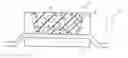
FIG. 1 is a cross section schematically showing a light emitting apparatus 1 in a preferred example of the present invention.
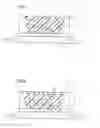
FIG. 2 is a cross section schematically showing a light emitting apparatus 11 in another preferred example of the present invention.
DESCRIPTION OF THE REFERENCE SIGNS
1, 11 light emitting apparatus, 2 light emitting element, 3, 12 light converter, 4 red light emitting phosphor, 5 green or yellow light emitting phosphor, 6 sealant, 13 yellow light emitting phosphor
BEST MODES FOR CARRYING OUT THE INVENTION
The light emitting apparatus of the first aspect of the present invention basically includes a light emitting element of a gallium nitride (GaN) based semiconductor, and a light converter absorbing a part of primary light emitted from the light emitting element to emit secondary light with its longer wavelength than that of the primary light. The light converter in the light emitting apparatus of the present invention includes, as a red light emitting phosphor, the following (A) a divalent europium activated nitride red light emitting phosphor and, as a green or yellow light emitting phosphor, the following (B) a divalent europium activated oxynitride green light emitting phosphor that is β-type SiAlON, (C) a divalent europium activated oxynitride yellow light emitting phosphor that is α-type SiAlON, or (D) a trivalent cerium activated silicate green light emitting phosphor.
(A) Divalent Europium Activated Nitride Red Light Emitting Phosphor
The divalent europium activated nitride red light emitting phosphor is substantially represented by
(MI1-aEua)MIISiN3. general formula (A)
In general formula (A), MT is at least one element selected from Mg (magnesium), Ca (calcium), Sr (strontium), and Ba (barium). In general formula (A), MII is at least one element selected from Al (aluminum), Ga (gallium), In (indium), Sc (scandium), Y (yttrium), La (lanthanum), Gd (gadolinium), and Lu (lutetium). In particular, in terms of properties, MII is preferably at least one element selected from Al, Ga and In, and Al is most preferable. In general formula (A), Eu represents europium, Si represents silicon and N represents nitrogen.
In general formula (A), a value of “a” representing the proportion (concentration) of Eu satisfies the relation 0.001≦a≦0.10, which is preferably 0.005≦a≦0.02. If a value of “a” is smaller than 0.001, a sufficient brightness cannot be obtained. If a value of “a” is larger than 0.10, the brightness is considerably deteriorated due to concentration quenching or the like.
Specific examples of the divalent europium activated nitride red light emitting phosphor may include, but surely are not limited to, (Ca0.99Eu0.01)AlSiN3, (Ca0.96Sr0.03Eu0.01)AlSiN3, (Ca0.99Eu0.01)(Al0.95Ga0.05)SiN3, (Ca0.85Eu0.015)(Al0.99In0.01)SiN3, (Ca0.985Eu0.015)AlSiN3, (Ca0.99Eu0.01)(Al0.99Ga0.01)SiN3, (Ca0.98Eu0.02)AlSiN3, (Ca0.94Mg0.05Eu0.01)(Al0.99In0.01)SiN3, (Ca0.94Mg0.05Eu0.01)(Al0.99Ga0.01)SiN3, (Ca0.97Sr0.01Eu0.02)(Al0.99Ga0.01)SiN3, (Ca0.84Sr0.15Eu0.01)AlSiN3, (Ca0.995Eu0.005)AlSiN3, (Ca0.989Sr0.010Eu0.001)(Al0.985Ga0.015)SiN3, and (Ca0.93Mg0.02Eu0.05)AlSiN3, for example.
While the average particle size of the divalent europium activated nitride red light emitting phosphor is not limited to a particular one, the average particle size measured by Blaine's method is preferably in a range of 3 to 10 μm, and more preferably in a range of 4 to 7 μm. If the average particle size of the red light emitting phosphor is smaller than 3 μm, crystal growth is insufficient and the brightness could be considerably deteriorated. If the average particle size of the red light emitting phosphor is larger than 10 μm, an abnormally grown large particle is likely to be generated, which is not suitable for practical use.
(B) Divalent Europium Activated Oxynitride Green Light Emitting Phosphor that is β-Type SiAlON
The divalent europium activated oxynitride green light emitting phosphor is substantially represented by
EubSicAldOeNf. general formula (B)
In general formula (B), Eu represents europium, Si represents silicon, Al represents aluminum, O represents oxygen, and N represents nitrogen. In general formula (B), a value of “b” representing the proportion (concentration) of Eu satisfies the relation 0.005≦b≦0.4. If a value of “b” is smaller than 0.005, a sufficient brightness cannot be obtained. If a value of “b” is larger than 0.4, the brightness is considerably deteriorated due to concentration quenching or the like. In terms of powder properties stability and host crystal homogeneity, a value of “b” in the formula above preferably satisfies the relation 0.01≦b≦0.2. In general formula (B), respective numerical values of “c” representing the proportion (concentration) of Si and “d” representing the proportion (concentration) of Al satisfy the relation c+d=12, and respective numerical values of “e” representing the proportion (concentration) of O and “f” representing the proportion (concentration) of N satisfy the relation e+f=16.
Specific examples of the divalent europium activated oxynitride green light emitting phosphor that is β-type SiAlON may include, but surely are not limited to, Eu0.01Si11.80Al0.20O0.04N15.96, Eu0.05Si11.50Al0.50O0.05N15.90, Eu0.30Si9.80Al2.20O0.30N15.70, Eu0.15Si10.00Al2.00O0.20N15.80, Eu0.01Si11.60Al0.40O0.01N15.99, and Eu0.005Si11.70Al0.30O0.03N15.97, for example.
While the average particle size of the divalent europium activated oxynitride green light emitting phosphor is not limited to a particular one, the average particle size measured by Blaine's method is preferably in a range of 3 to 10 μm, and more preferably in a range of 4 to 7 μm. If the average particle size of the oxynitride green light emitting phosphor is smaller than 3 μm, crystal growth is insufficient and the brightness could be considerably deteriorated. If the average particle size of the oxynitride green light emitting phosphor is larger than 10 μm, an abnormally grown large particle is likely to be generated, which is not appropriate for practical use.
(C) Divalent Europium Activated Oxynitride Yellow Light Emitting Phosphor that is α-Type SiAlON
The divalent europium activated oxynitride yellow light emitting phosphor is substantially represented by
MIIIgEuhSiiAljOkNl. general formula (C)
In general formula (C), MIII is at least one element selected from Li (lithium), Na (sodium), K (potassium), Rb (rubidium), Cs (cesium), Mg, Ca, Sr, and Ba. In terms of properties, MIII is preferably at least one element selected from Li, Ca and Sr. In general formula (C), Eu represents europium, Si represents silicon, Al represents aluminum, O represents oxygen and N represents nitrogen.
In general formula (C), a value of “g” representing the proportion (concentration) of MIII satisfies the relation 0<g≦3.0, which is preferably 0.1≦g≦1.5. If a value of “g” is larger than 3.0, the brightness is considerably deteriorated. A value of “h” representing the proportion (concentration) of Eu in general formula (C) satisfies the relation 0.005≦h≦0.4. If a value of “h” is smaller than 0.005, a sufficient brightness cannot be obtained. If a value of “h” is larger than 0.4, the brightness is considerably deteriorated due to concentration quenching or the like. In terms of powder properties stability and host crystal homogeneity, a value of “h” in the formula above preferably satisfies the relation 0.01≦h≦0.2. In general formula (C), respective numerical values of “i” representing the proportion (concentration) of Si and “j” representing the proportion (concentration) of Al satisfy the relation i+j=12, and respective numerical values of “k” representing the proportion (concentration) of O and “l” representing the proportion (concentration) of N satisfy the relation k+l=16.
Specific examples of the divalent europium activated oxynitride yellow light emitting phosphor that is α-type SiAlON may include, but surely are not limited to, Ca0.70Li0.05Eu0.025Si9.75Al2.25O0.75N15.25, Ca0.40Mg0.10Eu0.03 Si10.00Al2.00O1.10N14.90, Ca0.75Eu0.01Si9.75Al2.25O0.76N15.24, Ca0.05Li0.10Eu0.01Si11.50Al0.50O0.20N15.80, Ca1.00Sr0.10Eu0.20Si10.00Al2.00O0.30N15.70, and Ca0.35Li0.20Eu0.05Si10.60Al1.40O1.25N14.75, for example.
While the average particle size of the divalent europium activated oxynitride yellow light emitting phosphor is not limited to a particular one, the average particle size measured by Blaine's method is preferably in a range of 4 to 12 μm, and more preferably in a range of 6 to 9 μm. If the average particle size of the oxynitride yellow light emitting phosphor is smaller than 4 μm, crystal growth is insufficient and the brightness could be considerably deteriorated. If the average particle size of the oxynitride yellow light emitting phosphor is larger than 12 μm, an abnormally grown large particle is likely to be generated, which is not suitable for practical use.
(D) Trivalent Cerium Activated Silicate Green Light Emitting Phosphor
The trivalent cerium activated silicate green light emitting phosphor is substantially represented by
MIV3(MV1-mCem)2(SiO4)3. general formula (D)
In general formula (D), MIV is at least one element selected from Mg, Ca, Sr, and Ba. In general formula (D), MV is at least one element selected from Al, Ga, In, Sc, Y, La, Gd, and Lu. In terms of properties, MTV is preferably at least one element selected from Ga, In, Sc, and Y, and is most preferably Sc. In general formula (D), Ce represents cerium, Si represents silicon and O represents oxygen.
In general formula (D), a value of “m” representing the proportion (concentration) of Ce satisfies the relation 0.005≦m≦0.5, which is preferably 0.01≦m≦0.2. If a value of “m” is smaller than 0.005, a sufficient brightness cannot be obtained. If a value of “m” is larger than 0.5, the brightness is considerably deteriorated due to concentration quenching or the like.
Specific examples of the trivalent cerium activated silicate green light emitting phosphor may include, but surely are not limited to, (Ca0.98Mg0.02)3(Sc0.90Ce0.10)2(SiO4)3, (Ca0.99Mg0.01)3(Sc0.79Y0.01Ce0.20)2(SiO4)3, (Ca0.97Mg0.03)3(Sc0.85Ce0.15)2(SiO4)3, Ca3(Sc0.85Ce0.15)2(SiO4)3, (Ca0.9Mg0.1)3(Sc0.70Ga0.15Ce0.15)2(SiO4)3, (Ca0.9Mg0.1)3(Sc0.80Ce0.20)2(SiO4)3, (Ca0.85Mg0.15)3(Sc0.50Y0.20Ce0.30)2(SiO4)3, Ca3(Sc0.98In0.01Ce0.01)2(SiO4)3, (Ca0.99Sr0.01)3(Sc0.84In0.10Y0.01Ce0.05)2(SiO4)3, and (Ca0.95Mg0.05)3(Sc0.80Ce0.20)2(SiO4)3, for example.
While the average particle size of the trivalent cerium activated silicate green light emitting phosphor is not limited to a particular one, the average particle size measured by Blaine's method is preferably in a range of 5 to 12 μm, and more preferably in a range of 7 to 10 μm. If the average particle size of the silicate green light emitting phosphor is smaller than 5 μm, crystal growth is insufficient and the brightness could be considerably deteriorated. If the average particle size of the silicate green light emitting phosphor is larger than 12 μm, an abnormally grown large particle is likely to be generated, which is not suitable for practical use.
The light converter in the light emitting apparatus of the first aspect of the present invention includes the above-described (A) divalent europium activated nitride red light emitting phosphor as a red light emitting phosphor and, and includes, as a green or yellow light emitting phosphor, the above-described (B) divalent europium activated oxynitride green light emitting phosphor that is β-type SiAlON, (C) divalent europium activated oxynitride yellow light emitting phosphor that is α-type SiAlON or (D) trivalent cerium activated silicate green light emitting phosphor. In the light emitting apparatus of the first aspect of the present invention, the mixture ratio between the red light emitting phosphor and the green or yellow light emitting phosphor is not limited to a particular one. It is preferable to mix the red light emitting phosphor at a weight ratio in a range of 1 to 35% relative to the green or yellow light emitting phosphor, and it is more preferable to mix the red light emitting phosphor at a weight ratio in a range of 5 to 25% relative to the green or yellow light emitting phosphor.
In the case where the light emitting apparatus of the first aspect of the present invention includes the above-described (A) divalent europium activated nitride red light emitting phosphor as a red light emitting phosphor and includes, as a green or yellow light emitting phosphor, (B) divalent europium activated oxynitride green light emitting phosphor that is β-type SiAlON and has a narrow half width of the fluorescence spectrum, the light emitting apparatus emitting white light with favorable color reproducibility can be achieved. In the case where the light emitting apparatus of the first aspect of the present invention includes the above-described (A) divalent europium activated nitride red light emitting phosphor as a red light emitting phosphor and includes, as a green or yellow light emitting phosphor, (C) divalent europium activated oxynitride yellow light emitting phosphor that is α-type SiAlON, the light emitting apparatus emitting white light of warm white can be achieved. In the case where the light emitting apparatus of the first aspect of the preset invention includes the above-described (A) divalent europium activated nitride red light emitting phosphor as a red light emitting phosphor and includes, as a green or yellow light emitting phosphor, (D) trivalent cerium activated silicate green light emitting phosphor having a wide half width of the emission spectrum, the light emitting apparatus emitting white light with high color rendition can be achieved.
A feature of the light emitting apparatus of the first aspect is that a forward current (IF) applied to the light emitting element is 25 mA or more. If the forward current applied to the light emitting element is less than 25 mA, the effect of favorable life property achieved by the light emitting apparatus of the first aspect of the present invention is not clearly exhibited. In the examples as described below, the light emitting apparatus was continuously operated under the condition of 35 mA and evaluated. In the cases where the light emitting apparatus is continuously operated under the conditions of 25 mA and 30 mA, similar effects can be obtained. Thus, the forward current applied to the light emitting element is preferably in a range of 25 to 35 mA.
The light emitting apparatus of the second aspect of the present invention basically includes a light emitting element of a gallium nitride (GaN) based semiconductor, and a light converter absorbing a part of primary light emitted from the light emitting element to emit secondary light having the longer wavelength than that of the primary light, and the light converter includes the above-described (C) divalent europium activated oxynitride yellow light emitting phosphor that is α-type SiAlON. In such a light emitting apparatus of the second aspect, a forward current (IF) applied to the light emitting element is also 25 mA or more. If the forward current applied to the light emitting element is less than 25 mA, the effect of favorable life property of the light emitting apparatus of the second aspect of the present invention could not be clearly exhibited. In the examples as described below, the light emitting apparatus was continuously operated under the condition of 35 mA and evaluated. In the cases where the light emitting apparatus is continuously operated under the conditions of 25 mA and 30 mA, similar effects can be obtained. Thus, the forward current applied to the light emitting element is preferably in a range of 25 to 35 mA.
In the above-described light emitting apparatuses of the first and second aspects respectively of the present invention (these light emitting apparatuses will be hereinafter referred to as “light emitting apparatus of the present invention” where they are to be collectively referred to), a gallium nitride (GaN) based semiconductor may preferably be used for the light emitting element that emits primary light with a peak wavelength in the blue region of 430 to 480 nm (more preferably 440 to 480 nm). If a light emitting element having a peak wavelength of less than 430 nm is used, contribution of the blue light component is smaller and the color rendering property is deteriorated, which could not be practical for use. If a light emitting element having a peak wavelength exceeding 480 nm is used, the brightness of white is lower, which could not be practical for use.
For the light emitting element used in the light emitting apparatus of the present invention as described above, a gallium nitride (GaN) based semiconductor emitting primary light having a peak wavelength in the blue to violet region of 380 to 420 nm (more preferably 390 to 405 nm) may be used. If a light emitting element having a peak wavelength of less than 380 nm is used, a resin used as a sealant is deteriorated to a degree that cannot be neglected, which could not be practical for use. If a light emitting element having a peak wavelength exceeding 420 nm is used, the brightness of a blue light emitting phosphor (as described later) is lower.
In the case where the light emitting element emitting the primary light having a peak wavelength of 380 to 420 nm as described above is used, the light converter in the light emitting apparatus of the present invention further includes, as a blue light emitting phosphor, (E) divalent europium activated halophosphate blue light emitting phosphor, or (F) divalent europium activated aluminate blue light emitting phosphor or (G) divalent europium and manganese activated aluminate blue light emitting phosphor.
(E) Divalent Europium Activated Halophosphate Blue Light Emitting Phosphor
The divalent europium activated halophosphate blue light emitting phosphor is substantially represented by
(MVI,Eu)10(PO4)6.Cl2. general formula (E)
In general formula (E), MVI is at least one element selected from Mg, Ca, Sr, and Ba. In general formula (E), Eu represents europium, P represents phosphorus, O represents oxygen, and Cl represents chlorine.
Specific examples of the divalent europium activated halophosphate blue light emitting phosphor may include, but surely are not limited to, (Sr0.70Ba0.27Ca0.01Eu0.02)10(PO4)6.Cl2, (Sr0.64Ba0.30Ca0.05Eu0.01)10(PO4)6.Cl2, (Sr0.62Ba0.35Ca0.01Eu0.02)10(PO4)6.Cl2, Sr0.685Ba0.250Ca0.050Eu0.015)10(PO4)6.Cl2, (Sr0.695Ba0.275Ca0.010Eu0.020)10(PO4)6.Cl2, and (Sr0.70Ba0.28Ca0.01Eu0.01)10(PO4)6.Cl2, for example.
While the average particle size of the divalent europium activated halophosphate blue light emitting phosphor is not limited to a particular one, the average particle size measured by Blaine's method is preferably in a range of 4 to 10 μm. If the average particle size of the halophosphate blue light emitting phosphor is smaller than 4 μm, crystal growth is insufficient and the brightness could be considerably deteriorated. If the average particle size of the halophosphate blue light emitting phosphor is larger than 10 μm, an abnormally grown large particle is likely to be generated, which is not suitable for practical use.
(F) Divalent Europium Activated Aluminate Blue Light Emitting Phosphor
The divalent europium activated aluminate blue light emitting phosphor is substantially represented by
p(MVII,Eu)O.qAl2O3. general formula (F)
In general formula (F), MVII is at least one element selected from Mg, Ca, Sr, Ba, and Zn (zinc). In terms of properties, MVII is at least one element selected from Mg, Sr and Ba. In general formula (F), Eu represents europium, Al represents aluminum and O represents oxygen.
In general formula (F), p and q are numerical values satisfying the relations p>0, q>0 and 0.1≦p/q≦1.0. If p/q is smaller than 0.1 or larger than 1.0, the brightness is considerably deteriorated.
Specific examples of the divalent europium activated aluminate blue light emitting phosphor may include, but surely are not limited to, (Ba0.70Eu0.30)MgAl10O17, (Ba0.65Eu0.35)(Mg0.99Mn0.01)Al10O17, (Ba0.55Sr0.10Eu0.35)MgAl10O17, (Ba0.80Eu0.20)MgAl10O17, (Ba0.82Sr0.03Eu0.15)MgAl10O17, (Ba0.75Sr0.15Eu0.10)MgAl10O17, (Ba0.25Sr0.60Eu0.15)MgAl10O17, (Ba0.50Sr0.30Eu0.20)MgAl10O17, (Ba0.60Sr0.20Eu0.20)MgAl10O17, (Ba0.70Sr0.15Eu0.15)MgAl10O17, and (Ba0.30Sr0.50Eu0.20)MgAl10O17, for example.
While the average particle size of the divalent europium activated aluminate blue light emitting phosphor is not limited to a particular one, the average particle size measured by Blaine's method is preferably in a range of 2 to 7 μm. If the divalent europium activated aluminate blue light emitting phosphor having an average particle size smaller than 2 μm is used, crystal growth is insufficient and the brightness could be considerably deteriorated. If the divalent europium activated aluminate blue light emitting phosphor having an average particle size larger than 7 μm is used, an abnormally grown large particle is likely to be generated, which is not suitable for practical use.
(G) Divalent Europium and Manganese Activated Aluminate Blue Light Emitting Phosphor
The divalent europium and manganese activated aluminate blue light emitting phosphor is substantially represented by
p(MVII,Eur,Mns)O.qAl2O3. general formula (G)
in general formula (G), MVII is at least one element selected from Mg, Ca, Sr, Ba, and Zn, and is preferably at least one element selected from Mg, Sr and Ba in terms of properties. In general formula (G), Eu represents europium, Mn represents manganese, Al represents aluminum, and O represents oxygen.
In general formula (G), p and q are numerical values satisfying the relations p>0, q>0, and 0.1≦p/q≦1.0. If p/q is smaller than 0.1 or larger than 1.0, the brightness is considerably deteriorated. In general formula (G), r and s are numerical values satisfying the relations r>0, s>0, and 0.001≦s/r≦0.2. If s/r is smaller than 0.001, contribution of light emission by Mn is insufficient. If s/r is larger than 0.2, light emission by Mn is too strong, and the brightness of white is deteriorated.
Specific examples of the divalent europium and manganese activated aluminate blue light emitting phosphor may include, but surely are not limited to, (Ba0.74Sr0.01Eu0.25)(Mg0.999Mn0.001)MgAl10O17, (Ba0.86Eu0.14)(Mg0.99Mn0.01)Al10O17, (Ba0.40Sr0.50Eu0.10)(Mg0.99Mn0.01)Al10O17, (Ba0.50Sr1.30Eu0.20)(Mg0.999Mn0.001)Al10O17, (Ba0.45Sr0.40Eu0.15)(Mg0.9985Mn0.0015)Al10O17, and (Ba0.65Sr0.20Eu0.15)(Mg0.97Mn0.03)Al10O17, for example.
While the average particle size of the divalent europium and manganese activated aluminate blue light emitting phosphor is not limited to a particular one, the average particle size measured by Blaine's method is preferably in a range of 2 to 7 μm. If the divalent europium and manganese activated aluminate blue light emitting phosphor having an average particle size smaller than 2 μm is used, crystal growth is insufficient and the brightness could be considerably deteriorated. If the divalent europium and manganese activated aluminate blue light emitting phosphor having an average particle size larger than 7 μm is used, an abnormally grown large particle is likely to be generated, which is not suitable for practical use.
In the case where the light converter further includes the blue light emitting phosphor, the mixture ratio of the blue light emitting phosphor is not limited to a particular one. It is preferable to mix the blue light emitting phosphor at a weight ratio in a range of 0.2 to 50%, which is more preferably 10 to 40%, relative to the red light emitting phosphor and the green or yellow light emitting phosphor (in the case of the light emitting apparatus of the first aspect), or yellow light emitting phosphor (in the case of the light emitting apparatus of the second aspect).
The light emitting apparatus of the first aspect and the light emitting apparatus of the second aspect that are thus implemented with the light emitting element having a peak wavelength of 380 to 420 nm and the light converter further including a blue light emitting phosphor each correspond to a light emitting apparatus emitting white light with high color gamut and high color rendition with which the blue light emitting phosphor of the above-described (E) to (G) is combined so as to correct the blue spectrum, namely a light emitting apparatus combined with a phosphor for correcting the color rendition and color gamut of the blue region.
The above-described light emitting apparatus of the present invention preferably includes two or more light emitting elements. If the light emitting apparatus includes one light emitting element and the forward current is 20 mA, the effect of favorable life property of the light emitting apparatus of the present invention could not be clearly exhibited. In the case where the light emitting apparatus includes two or more light emitting elements, the forward current applied to the light emitting elements is preferably 25 mA or more in total.
The light emitting apparatus of the present invention as described above efficiently absorbs the light emitted from the light emitting element, and thus white light with excellent life property, high reliability, high efficiency and high color rendition or high color gamut (NTSC ratio) can be obtained. Here, whether or not the life property is excellent in terms of brightness can be confirmed in the following way for example. In a constant temperature and humidity oven bath with a temperature of 60° C. and a relative humidity of 90%, a forward current of 35 mA is applied and the light emitting apparatus is operated for 500 hours. Thereafter, a forward current of 20 mA is applied and the optical output (photocurrent) is measured. The initial value of the optical output and the value after 500 hours are compared with each other. Further, whether or not the life property is excellent in terms of chromaticity (x, y) can be confirmed by measuring the chromaticity by means of MCPD-2000 (manufactured by Otsuka Electronics Co., Ltd.) after the light emitting element is operated for 500 hours, similarly to the above-described method for confirmation in terms of the brightness, and comparing the initial value of the chromaticity with the value of the chromaticity after 500 hours.
As long as the light emitting apparatus of the present invention has the features as described above, the components, elements and the like other than those as described above are not particularly limited. Here, FIG. 1 is a cross section schematically showing a light emitting apparatus 1 in a preferred example of the present invention. FIG. 1 shows, as an example of the light emitting apparatus of the first aspect of the present invention, light emitting apparatus 1 where light emitting apparatus 1 basically includes a light emitting element 2 and a light converter 3, and light converter 3 includes a red light emitting phosphor 4 and a green or yellow light emitting phosphor 5. In FIG. 1, the example is shown where light converter 3 is implemented such that light emitting element 2, red light emitting phosphor 4 and green or yellow light emitting phosphor 5 are sealed in a sealant 6, and light converter 3 can absorb a part of primary light emitted from light emitting element 2 to emit secondary light whose wavelength is equal to or longer than the wavelength of the primary light. FIG. 2 is also a cross section schematically showing a light emitting apparatus 11 in another preferred example of the present invention. FIG. 2 shows, as an example of the light emitting apparatus of the second aspect of the present invention, light emitting apparatus 11 where light emitting apparatus 11 basically includes a light emitting element 2 and a light converter 12, and light converter 12 includes a yellow light emitting phosphor 13. In FIG. 2, the example is shown where light converter 12 is implemented such that light emitting element 2 and yellow light emitting phosphor 13 are sealed in a sealant 6, and light converter 12 can absorb a part of primary light emitted from light emitting element 2 to emit secondary light whose wavelength is equal to or longer than the wavelength of the primary light. As sealant 6, epoxy resin, silicone resin, urea resin, or the like that is a translucent resin material may be used. Sealant 6, however, is not limited to the above-referenced resins. Light converters 3, 12 may include, in addition to the above-described phosphors and sealant, any appropriate additive such as SiO2, TiO2, ZrO2, Al2O3, and Y2O3 to the extent that does not deteriorate the effects of the present invention.
The above-described red light emitting phosphors, green or yellow light emitting phosphors and blue light emitting phosphors used for the light emitting apparatus of the present invention are well known, and these phosphors can be manufactured by any appropriate known method or are available in the form of products.
In the following, the present invention will be described in more detail with reference to examples and comparative examples. The present invention, however, is not limited to them.
Example 1
Light emitting apparatus 1 of the example shown in FIG. 1 was produced in the following manner. For light emitting element 2, a gallium nitride (GaN) based semiconductor having a peak wavelength of 450 nm was used. For light converter 3, a red light emitting phosphor having the composition (Ca0.99Eu0.01)AlSiN3 (average particle size (Blaine's method): 6.2 μm) was used as red light emitting phosphor 4, and a green light emitting phosphor having the composition Eu0.05Si11.50Al0.50O0.05N15.95 (β-type SiAlON) (average particle size (Blaine's method): 4.0 μm) was used as green or yellow light emitting phosphor 5. The green light emitting phosphor and the red light emitting phosphor were mixed at a ratio of 82:18 (percent by weight), and the mixture at a predetermined ratio was dispersed in a silicone resin to produce the light converter. The qualities (brightness and chromaticity) of the light emitting apparatus incorporating the produced light converter were evaluated.
For evaluation, the light emitting apparatus was first operated with a forward current (IF) of 20 mA, and the optical output (photocurrent) from the light emitting apparatus was measured as an initial value. Further, in a constant temperature and humidity oven bath with a temperature of 60° C. and a relative humidity of 90%, the light emitting apparatus was operated with a forward current (IF) of 35 mA for 500 hours. After this, at room temperature (around 25° C.), the light emitting apparatus was operated with a forward current (IF) of 20 mA and the optical output (photocurrent) from the light emitting apparatus was measured. Likewise, the chromaticity (x, y) was measured with MCPD-2000 (manufactured by Otsuka Electronics Co., Ltd.) by measuring the initial value of white light emitted from the light emitting apparatus and the value after 500 hours. The results are summarized in Table 1.
Comparative Example 1
A light emitting apparatus was produced similarly to Example 1 except that a yellow light emitting phosphor having the composition 2(Sr0.80Ba0.16Ca0.01Eu0.03)O.SiO2 (average particle size: 8.5 μm) was used, and the qualities of the apparatus were evaluated. The results are summarized in Table 1.
| TABLE 1 | ||
| brightness |
| (initial | brightness | initial | after 500 hrs |
| value) | (after 500 hrs) | x | y | x | y | |
| Example 1 | 98.8% | 90.3% | 0.307 | 0.321 | 0.306 | 0.319 |
| Comparative | 100.0% | 74.5% | 0.308 | 0.321 | 0.288 | 0.286 |
| Example 1 | ||||||
It is seen from Table 1 that the light emitting apparatus of the present invention is remarkably excellent in life property (reliability) (variation of luminous intensity and chromaticity) relative to the conventional product.
Example 2
Light emitting apparatus 1 of the example shown in FIG. 1 was produced in the following manner. The light emitting apparatus was produced similarly to Example 1 except for the followings. For light emitting element 2, a gallium nitride (GaN) based semiconductor having a peak wavelength of 460 nm was used. For light converter 3, a red light emitting phosphor having the composition (Ca0.96Sr0.03Eu0.01)AlSiN3 (average particle size (Blaine's method): 5.7 μm) was used as red light emitting phosphor 4, and a green light emitting phosphor having the composition (Ca0.98Mg0.02)3(Sc0.90Ce0.10)2(SiO4)3 (average particle size (Blaine's method): 7.1 μm) was used as green or yellow light emitting phosphor 5. The green light emitting phosphor and the red light emitting phosphor were mixed at a ratio of 73.7:26.3 (percent by weight), and the mixture was used. The qualities of the produced light emitting apparatus were evaluated similarly to Example 1. The results are summarized in Table 2.
Comparative Example 2
A light emitting apparatus was produced similarly to Example 1 except that a yellow light emitting phosphor having the composition 2(Sr0.72Ba0.25Ca0.01Eu0.02)O.SiO2 (average particle size: 8.8 μm) was used, and the qualities of the apparatus were evaluated. The results are summarized in Table 2.
| TABLE 2 | ||
| brightness |
| (initial | brightness | initial | after 500 hrs |
| value) | (after 500 hrs) | x | y | x | y | |
| Example 2 | 97.9% | 88.6% | 0.296 | 0.308 | 0.294 | 0.305 |
| Comparative | 100.0% | 74.0% | 0.297 | 0.309 | 0.276 | 0.273 |
| Example 2 | ||||||
It is seen from Table 2 that the light emitting apparatus of the present invention is remarkably excellent in life property (reliability) (variation of luminous intensity and chromaticity) relative to the conventional product.
Examples 3-10, Comparative Examples 3-10
Light emitting apparatuses with various combinations of phosphors were produced similarly to Example 1, and the qualities of the apparatuses were evaluated. The compositions and average particle sizes of the phosphors as used and the peak wavelengths of the light emitting elements are shown in Table 3, and the results of evaluation are summarized in Table 4,
| TABLE 3 | |||
| peak wavelength | |||
| average | of light emitting | ||
| phosphor composition | particle size | element | |
| Example 3 | red: (Ca0.99Eu0.01)(Al0.95Ga0.05)SiN3 | 5.5 μm | 445 nm |
| yellow: Ca0.70Li0.05Eu0.025Si9.75Al2.25O0.75N15.25 | 4.3 μm | ||
| Comparative | 2(Sr0.900Ba0.070Ca0.005Eu0.025)O•SiO2 | 9.7 μm | 445 nm |
| Example 3 | |||
| Example 4 | red: (Ca0.985Eu0.015)(Al0.99In0.01)SiN3 | 6.8 μm | 470 nm |
| green: Eu0.01Si11.80Al0.20O0.04N15.96 | 3.8 μm | ||
| Comparative | 2(Sr0.77Ba0.20Eu0.03)O•SiO2 | 10.2 μm | 470 nm |
| Example 4 | |||
| Example 5 | red: (Ca0.98Eu0.02)AlSiN3 | 5.8 μm | 430 nm |
| green: (Ca0.99Mg0.01)3(Sc0.79Y0.01Ce0.20)2(SiO4)3 | 7.9 μm | ||
| Comparative | 2(Sr0.750Ba0.205Ca0.010Eu0.035)O•SiO2 | 9.0 μm | 430 nm |
| Example 5 | |||
| Example 6 | red: (Ca0.99Eu0.01)(Al0.99Ga0.01)SiN3 | 5.1 μm | 480 nm |
| yellow: Ca0.40Mg0.10Eu0.03Si10.00Al2.00O1.10N14.90 | 5.7 μm | ||
| Comparative | 2(Sr0.900Ba0.064Ca0.001Eu0.035)O•SiO2 | 8.8 μm | 480 nm |
| Example 6 | |||
| Example 7 | red: (Ca0.985Eu0.015)AlSiN3 | 5.1 μm | 460 nm |
| green: (Ca0.97Mg0.03)3(Sc0.85Ce0.15)2(SiO4)3 | 5.7 μm | ||
| Comparative | 2(Sr0.900Ba0.070Ca0.005Eu0.025)O•SiO2 | 9.6 μm | 460 nm |
| Example 7 | |||
| Example 8 | red: (Ca0.99Eu0.01)AlSiN3 | 5.3 μm | 455 nm |
| green: Eu0.005Si11.70Al0.30O0.03N15.97 | 5.0 μm | ||
| Comparative | 2(Sr0.795Ba0.176Ca0.004Eu0.025)O•SiO2 | 11.0 μm | 455 nm |
| Example 8 | |||
| Example 9 | yellow: Ca0.70Li0.05Eu0.025Si9.75Al2.25O0.75N15.25 | 4.3 μm | 445 nm |
| Comparative | 2(Sr0.900Ba0.070Ca0.005Eu0.025)O•SiO2 | 9.7 μm | 445 nm |
| Example 9 | |||
| Example 10 | yellow: Ca0.40Mg0.10Eu0.03Si10.00Al2.00O1.10N14.90 | 5.7 μm | 480 nm |
| Comparative | 2(Sr0.900Ba0.064Ca0.001Eu0.035)O•SiO2 | 8.8 μm | 480 nm |
| Example 10 | |||
| TABLE 4 | ||
| brightness |
| (initial | brightness | initial | after 500 hrs |
| value) | (after 500 hrs) | x | y | x | y | |
| Example 3 | 98.3% | 89.3% | 0.451 | 0.419 | 0.449 | 0.416 |
| Comparative | 100.0% | 74.6% | 0.450 | 0.420 | 0.431 | 0.384 |
| Example 3 | ||||||
| Example 4 | 98.0% | 88.8% | 0.325 | 0.340 | 0.324 | 0.337 |
| Comparative | 100.0% | 74.1% | 0.324 | 0.339 | 0.303 | 0.305 |
| Example 4 | ||||||
| Example 5 | 98.5% | 88.8% | 0.288 | 0.296 | 0.286 | 0.293 |
| Comparative | 100.0% | 74.3% | 0.288 | 0.294 | 0.266 | 0.258 |
| Example 5 | ||||||
| Example 6 | 98.9% | 89.3% | 0.420 | 0.405 | 0.419 | 0.402 |
| Comparative | 100.0% | 73.9% | 0.419 | 0.406 | 0.400 | 0.369 |
| Example 6 | ||||||
| Example 7 | 98.6% | 89.6% | 0.311 | 0.327 | 0.309 | 0.325 |
| Comparative | 100.0% | 73.7% | 0.310 | 0.328 | 0.291 | 0.292 |
| Example 7 | ||||||
| Example 8 | 98.8% | 89.7% | 0.305 | 0.317 | 0.304 | 0.315 |
| Comparative | 100.0% | 74.1% | 0.305 | 0.316 | 0.285 | 0.279 |
| Example 8 | ||||||
| Example 9 | 98.5% | 89.8% | 0.441 | 0.409 | 0.439 | 0.406 |
| Comparative | 100.0% | 74.4% | 0.440 | 0.410 | 0.421 | 0.373 |
| Example 9 | ||||||
| Example 10 | 98.8% | 89.5% | 0.420 | 0.408 | 0.419 | 0.405 |
| Comparative | 100.0% | 73.7% | 0.419 | 0.409 | 0.400 | 0.372 |
| Example 10 | ||||||
It is seen from Table 4 that the light emitting apparatuses of the present invention are remarkably excellent in life property (reliability) (variation of luminous intensity and chromaticity) relative to the conventional products.
Example 11
A light emitting apparatus was produced similarly to Example 1 except for the followings. For the light emitting element, a gallium nitride (GaN) based semiconductor having a peak wavelength of 390 nm was used. For the light converter, a red light emitting phosphor having the composition (Ca0.99Eu0.01)AlSiN3 (average particle size (Blaine's method): 6.2 μm), a green light emitting phosphor having the composition Eu0.05Si11.50Al0.50O0.05N15.95 (β-type SiAlON) (average particle size (Blaine's method): 4.0 μm), and a blue light emitting phosphor having the composition (Ba0.70Eu0.30)MgAl10O17 (average particle size (Blaine's method): 3.2 μm) were used. The green light emitting phosphor, the red light emitting phosphor and the blue light emitting phosphor were mixed at a ratio of 43.7:16.3:40.0 (percent by weight), and the mixture was used. The qualities of the produced light emitting apparatus were evaluated similarly to Example 1. The results are summarized in Table 5.
Comparative Example 11
A light emitting apparatus was produced similarly to Example 1 except that a yellow light emitting phosphor having the composition 2(Sr0.80Ba0.16Ca0.01Eu0.03)O.SiO2 (average particle size (Blaine's method): 8.5 μm) was used and that a gallium nitride (GaN) based semiconductor having a peak wavelength of 460 nm was used for the light emitting element, and the qualities of the apparatus were evaluated. The results are summarized in Table 5,
| TABLE 5 | ||
| brightness |
| (initial | brightness | initial | after 500 hrs |
| value) | (after 500 hrs) | x | y | x | y | |
| Example 11 | 94.5% | 86.4% | 0.306 | 0.320 | 0.305 | 0.317 |
| Comparative | 100.0% | 74.3% | 0.307 | 0.319 | 0.288 | 0.283 |
| Example 11 | ||||||
It is seen from Table 5 that the light emitting apparatus of the present invention is remarkably excellent in life property (reliability) (variation of luminous intensity and chromaticity) relative to the conventional product.
Examples 12-19, Comparative Examples 12-19
Light emitting apparatuses with various combinations of phosphors were produced similarly to Example 1, and the qualities of the apparatuses were evaluated. The compositions and average particle sizes of the phosphors as used and the peak wavelengths of the light emitting elements are shown in Table 6, and the results of evaluation are summarized in Table 7.
| TABLE 6 | |||
| peak wavelength | |||
| average | of light emitting | ||
| phosphor composition | particle size | element | |
| Example 12 | red: (Ca0.96Sr0.03Eu0.01)AlSiN3 | 5.7 μm | 410 nm |
| green: (Ca0.98Mg0.02)3(Sc0.90Ce0.10)2(SiO4)3 | 7.1 μm | ||
| blue: (Ba0.65Eu0.35)(Mg0.99Mn0.01)Al10O17 | 3.7 μm | ||
| Comparative | 2(Sr0.72Ba0.25Ca0.01Eu0.02)O•SiO2 | 8.8 μm | 450 nm |
| Example 12 | |||
| Example 13 | red: (Ca0.99Eu0.01)(Al0.95Ga0.05)SiN3 | 5.5 μm | 380 nm |
| yellow: Ca0.70Li0.05Eu0.025Si9.75Al2.25O0.75N15.25 | 4.3 μm | ||
| blue: (Sr0.70Ba0.27Ca0.01Eu0.02)10(PO4)6•Cl2 | 5.3 μm | ||
| Comparative | 2(Sr0.900Ba0.070Ca0.005Eu0.025)O•SiO2 | 9.7 μm | 440 nm |
| Example 13 | |||
| Example 14 | red: (Ca0.985Eu0.015)(Al0.99In0.01)SiN3 | 6.8 μm | 405 nm |
| green: Eu0.01Si11.80Al0.20O0.04N15.96 | 3.8 μm | ||
| blue: (Ba0.55Sr0.10Eu0.35)MgAl10O17 | 3.3 μm | ||
| Comparative | 2(Sr0.77Ba0.20Eu0.03)O•SiO2 | 10.2 μm | 470 nm |
| Example 14 | |||
| Example 15 | red: (Ca0.98Eu0.02)AlSiN3 | 5.8 μm | 420 nm |
| green: (Ca0.99Mg0.01)3(Sc0.79Y0.01Ce0.20)2(SiO4)3 | 7.9 μm | ||
| blue: (Ba0.74Sr0.01Eu0.25)(Mg0.999Mn0.001)MgAl10O17 | 4.3 μm | ||
| Comparative | 2(Sr0.750Ba0.205Ca0.010Eu0.035)O•SiO2 | 9.0 μm | 455 nm |
| Example 15 | |||
| Example 16 | red: (Ca0.99Eu0.01)(Al0.99Ga0.01)SiN3 | 5.1 μm | 395 nm |
| yellow: Ca0.40Mg0.10Eu0.03Si10.00Al2.00O1.10N14.90 | 5.7 μm | ||
| blue: (Sr0.80Ba0.15Ca0.02Eu0.03)10(PO4)6•Cl2 | 4.8 μm | ||
| Comparative | 2(Sr0.900Ba0.064Ca0.001Eu0.035)O•SiO2 | 8.8 μm | 460 nm |
| Example 16 | |||
| Example 17 | red: (Ca0.985Eu0.015)AlSiN3 | 5.1 μm | 400 nm |
| green: (Ca0.97Mg0.03)3(Sc0.85Ce0.15)2(SiO4)3 | 5.7 μm | ||
| blue: (Ba0.70Sr0.15Eu0.15)MgAl10O17 | 3.0 μm | ||
| Comparative | 2(Sr0.900Ba0.070Ca0.005Eu0.025)O•SiO2 | 9.6 μm | 475 nm |
| Example 17 | |||
| Example 18 | red: (Ca0.99Eu0.01)AlSiN3 | 5.3 μm | 385 nm |
| green: Eu0.005Si11.70Al0.30O0.03N15.97 | 5.0 μm | ||
| blue: (Ba0.70Sr0.05Eu0.25)(Mg0.995Mn0.005)MgAl10O17 | 3.4 μm | ||
| Comparative | 2(Sr0.795Ba0.176Ca0.004Eu0.025)O•SiO2 | 11.0 μm | 450 nm |
| Example 18 | |||
| Example 19 | yellow: Ca0.70Li0.05Eu0.025Si9.75Al2.25O0.75N15.25 | 4.3 μm | 380 nm |
| blue: (Sr0.70Ba0.27Ca0.01Eu0.02)10(PO4)6•Cl2 | 5.3 μm | ||
| Comparative | 2(Sr0.900Ba0.070Ca0.005Eu0.025)O•SiO2 | 9.7 μm | 465 nm |
| Example 19 | |||
| TABLE 7 | ||
| brightness |
| (initial | brightness | initial | after 500 hrs |
| value) | (after 500 hrs) | x | y | x | y | |
| Example 12 | 92.2% | 83.5% | 0.296 | 0.309 | 0.293 | 0.306 |
| Comparative | 100.0% | 74.1% | 0.296 | 0.310 | 0.274 | 0.273 |
| Example 12 | ||||||
| Example 13 | 94.3% | 85.6% | 0.451 | 0.420 | 0.449 | 0.417 |
| Comparative | 100.0% | 74.7% | 0.450 | 0.420 | 0.430 | 0.385 |
| Example 13 | ||||||
| Example 14 | 93.9% | 85.2% | 0.324 | 0.340 | 0.322 | 0.337 |
| Comparative | 100.0% | 74.0% | 0.325 | 0.339 | 0.305 | 0.303 |
| Example 14 | ||||||
| Example 15 | 95.0% | 85.7% | 0.288 | 0.295 | 0.286 | 0.291 |
| Comparative | 100.0% | 74.3% | 0.288 | 0.296 | 0.266 | 0.259 |
| Example 15 | ||||||
| Example 16 | 94.8% | 85.6% | 0.420 | 0.405 | 0.418 | 0.402 |
| Comparative | 100.0% | 73.7% | 0.421 | 0.405 | 0.400 | 0.368 |
| Example 16 | ||||||
| Example 17 | 95.5% | 86.8% | 0.311 | 0.326 | 0.309 | 0.323 |
| Comparative | 100.0% | 73.9% | 0.310 | 0.326 | 0.290 | 0.291 |
| Example 17 | ||||||
| Example 18 | 94.8% | 86.1% | 0.304 | 0.316 | 0.302 | 0.313 |
| Comparative | 100.0% | 74.4% | 0.305 | 0.317 | 0.285 | 0.280 |
| Example 18 | ||||||
| Example 19 | 94.3% | 85.5% | 0.440 | 0.410 | 0.438 | 0.407 |
| Comparative | 100.0% | 74.5% | 0.440 | 0.409 | 0.420 | 0.374 |
| Example 19 | ||||||
It is seen from Table 7 that the light emitting apparatuses of the present invention are remarkably excellent in life property (reliability) (variation of luminous intensity and chromaticity) relative to the conventional products.
It should be construed that embodiments and examples disclosed herein are by way of illustration in all respects, not by way of limitation. It is intended that the scope of the present invention is defined by claims, not by the description above, and includes all modifications and variations equivalent in meaning and scope to the claims.
Claims
1. A light emitting apparatus comprising a light emitting element of a gallium nitride based semiconductor, and a light converter absorbing a part of primary light emitted from the light emitting element to emit secondary light having a longer wavelength than that of the primary light, said light converter including a red light emitting phosphor and a green or yellow light emitting phosphor,
said red light emitting phosphor being a divalent europium activated nitride red light emitting phosphor substantially represented by general formula (A): (MI1-aEua)MIISiN3 where MI is at least one element selected from Mg, Ca, Sr, and Ba, MII is at least one element selected from Al, Ga, In, Sc, Y, La, Gd, and Lu, and 0.001≦a≦0.10,
said green or yellow light emitting phosphor being any selected from:
a divalent europium activated oxynitride green light emitting phosphor that is β-type SiAlON substantially represented by general formula (B): EubSicAldOeNf where 0.005≦b≦0.4, c+d=12, and e+f=16;
a divalent europium activated oxynitride yellow light emitting phosphor that is α-type SiAlON substantially represented by general formula (C): MIIIgEuhSiiAljOkNl where MIII is at least one element selected from Li, Na, K, Rb, Cs, Mg, Ca, Sr, and Ba, 0<g≦3.0, 0.005≦h≦0.4, i+j=12, and k+l=16; and
a trivalent cerium activated silicate green light emitting phosphor substantially represented by
MIV3(MV1-mCem)2(SiO4)3 general formula (D)
where MIV is at least one element selected from Mg, Ca, Sr, and Ba, MV is at least one element selected from Al, Ga, In, Sc, Y, La, Gd, and Lu, and 0.005≦m≦0.5), and
a forward current applied to the light emitting element being not less than 25 mA.
2. The light emitting apparatus according to claim 1, wherein
the primary light emitted from the light emitting element has a peak wavelength of 430 to 480 nm.
3. The light emitting apparatus according to claim 1, wherein
the primary light emitted from the light emitting element has a peak wavelength of 380 to 420 nm, and
said light converter further includes a blue light emitting phosphor that is a divalent europium activated halophosphate blue light emitting phosphor substantially represented by general formula (E): (MVI, Eu)10(PO4)6.Cl2 where MVI is at least one element selected from Mg, Ca, Sr, and Ba,
a divalent europium activated aluminate blue light emitting phosphor substantially represented by general formula (F): p(MVII, Eu)O.qAl2O3 where MVII is at least one element selected from Mg, Ca, Sr, Ba, and Zn, p>0, q>0, 0.1≦p/q≦1.0, or
a divalent europium and manganese activated aluminate blue light emitting phosphor substantially represented by general formula (G): p(MVII, Eur, Mns)O.qAl2O3
where MVII is at least one element selected from Mg, Ca, Sr, Ba, and Zn, p>0, q>0, 0.1≦p/q≦1.0, r>0, s>0, and 0.001≦s/r≦0.2.
4. The light emitting apparatus according to claim 1, wherein
the light emitting apparatus comprises at least two said light emitting elements.
5. The light emitting apparatus according to claim 1, wherein
a divalent europium activated nitride red light emitting phosphor is used that is represented by said general formula (A) where MII is at least one element selected from Al, Ga and In.
6. The light emitting apparatus according to claim 1, wherein
a trivalent cerium activated silicate green light emitting phosphor is used that is represented by said general formula (D) where MV is at least one element selected from Ga, In, Sc, and Y.
7. A light emitting apparatus comprising a light emitting element of a gallium nitride based semiconductor, and a light converter absorbing a part of primary light emitted from the light emitting element to emit secondary light having a longer wavelength than that of the primary light, said light converter including a divalent europium activated oxynitride yellow light emitting phosphor that is α-type SiAlON substantially represented by general formula (C): MIIIgEuhSiiAljOkNl where MIII is at least one element selected from Li, Na, K, Rb, Cs, Mg, Ca, Sr, and Ba, 0<g≦3.0, 0.005≦h≦0.4, i+j=12, and k+l=16, and a forward current applied to the light emitting element being not less than 25 mA.
8. The light emitting apparatus according to claim 7, wherein
the primary light emitted from the light emitting element has a peak wavelength of 430 to 480 nm.
9. The light emitting apparatus according to claim 7, wherein
the primary light emitted from the light emitting element has a peak wavelength of 380 to 420 nm, and
said light converter further includes a blue light emitting phosphor that is a divalent europium activated halophosphate blue light emitting phosphor substantially represented by general formula (E): (MVI, Eu)10(PO4)6.Cl2 where MVI is at least one element selected from Mg, Ca, Sr, and Ba,
a divalent europium activated aluminate blue light emitting phosphor substantially represented by general formula (F): p(MVII, Eu)O.qAl2O3 where MVII is at least one element selected from Mg, Ca, Sr, Ba, and Zn, p>0, q>0, 0.1≦p/q≦1.0, or
a divalent europium and manganese activated aluminate blue light emitting phosphor substantially represented by general formula (G): p(MVII, Eur, Mns)O.qAl2O3 where MVII is at least one element selected from Mg, Ca, Sr, Ba, and Zn, p>0, q>0, 0.1≦p/g≦1.0, r>0, s>0, and 0.001≦s/r≦0.2.
10. The light emitting apparatus according to claim 7, wherein
the light emitting apparatus comprises at least two said light emitting elements.
Images & Drawings included:
Sources:
- United States Patent and Trademark Office - verify current appl. status at the USPTO↗
Similar patent applications:
- » 20070120496
Light emitting apparatus, LED lighting, LED light emitting apparatus, and control method of light emitting apparatus - » 20160035940
Light emitting apparatus, manufacturing method of light emitting apparatus, light receiving and emitting apparatus, and electronic equipment - » 20150021627
Light emitting apparatus, manufacturing method of light emitting apparatus, light receiving and emitting apparatus, and electronic equipment - » 20180157076
Method for manufacturing light emitting apparatus, light emitting apparatus, and window - » 20220173266
Method for manufacturing light emitting apparatus, light emitting apparatus, and projector - » 20100321941
METHOD FOR MANUFACTURING LIGHT EMITTING APPARATUS, LIGHT EMITTING APPARATUS, AND MOUNTING BASE THEREOF - » 20140004634
Method for manufacturing light emitting apparatus, light emitting apparatus, and mounting base thereof - » 20110101881
Light emitting apparatus, method for driving the light emitting apparatus, and display apparatus including the light emitting apparatus - » 20070115210
Light emitting apparatus, method for driving the light emitting apparatus, and display apparatus including the light emitting apparatus - » 20120274673
Light emitting apparatus, method for driving the light emitting apparatus, and display apparatus including the light emitting apparatus
Recent applications in this class:
- » 20240271039 2024-08-15
YELLOW LUMINOPHORE AND LIGHT SOURCE - » 20240067877 2024-02-29
Lighting device - » 20230287266 2023-09-14
METHODS FOR GENERATING MELATONIN-RESPONSE-TUNED WHITE LIGHT WITH HIGH COLOR RENDERING - » 20220356396 2022-11-10
BETA-SIALON PHOSPHOR PARTICLE AND LIGHT EMITTING DEVICE - » 20220325175 2022-10-13
Yellow luminophore and light source - » 20220315836 2022-10-06
Lighting device - » 20220251444 2022-08-11
Phosphor plate and light emitting device using the same - » 20220228059 2022-07-21
Phosphor composition - » 20220204842 2022-06-30
Phosphor powder and light-emitting device - » 20220169924 2022-06-02
METHODS FOR GENERATING MELATONIN-RESPONSE-TUNED WHITE LIGHT WITH HIGH COLOR RENDERING