VERTICAL AXIS TURBINE
US20100194112A1
2010-08-05
12/669,082
2008-07-16
Abstract:
This invention relates to vertical axis turbines particularly ones which are suitable for use in swirling conditions. The vertical turbine (10) may have first and second rotors (13,14) mounted about the axis for contra rotation and a generator (14) located between the rotors for generating electricity in response to rotation of the rotors characterised in that one rotor is a substantial mirror image of the other.
Interested in similar patents?
Get notified when new applications in this technology area are published.
Classification:
F03D3/005 » CPC main
Wind motors with rotation axis substantially perpendicular to the air flow entering the rotor axis vertical
F03D3/061 » CPC further
Wind motors with rotation axis substantially perpendicular to the air flow entering the rotor ; Rotors Form
F03D9/25 » CPC further
Adaptations of wind motors for special use; Combinations of wind motors with apparatus driven thereby; Wind motors specially adapted for installation in particular locations; Wind motors characterised by the driven apparatus the apparatus being an electrical generator
F05B2210/16 » CPC further
Working fluid Air or water being indistinctly used as working fluid, i.e. the machine can work equally with air or water without any modification
F05B2240/214 » CPC further
Components; Rotors for wind turbines with vertical axis of the Musgrove or "H"-type
F05B2240/40 » CPC further
Components Use of a multiplicity of similar components
Y02B10/30 » CPC further
Integration of renewable energy sources in buildings Wind power
Y02B10/30 » CPC further
Integration of renewable energy sources in buildings Wind power
Y02E10/20 » CPC further
Energy generation through renewable energy sources Hydro energy
Y02E10/20 » CPC further
Energy generation through renewable energy sources Hydro energy
Y02E10/30 » CPC further
Energy generation through renewable energy sources Energy from the sea, e.g. using wave energy or salinity gradient
Y02E10/30 » CPC further
Energy generation through renewable energy sources Energy from the sea, e.g. using wave energy or salinity gradient
Y02E10/74 » CPC further
Energy generation through renewable energy sources; Wind energy Wind turbines with rotation axis perpendicular to the wind direction
Y02E10/74 » CPC further
Energy generation through renewable energy sources; Wind energy Wind turbines with rotation axis perpendicular to the wind direction
F03D3/02 » CPC further
Wind motors with rotation axis substantially perpendicular to the air flow entering the rotor having a plurality of rotors
F03B13/26 IPC
Adaptations of machines or engines for special use; Combinations of machines or engines with driving or driven apparatus ; Power stations or aggregates characterised by using wave or tide energy using tide energy
Description
This invention relates to a vertical axis turbine and in particular, but not exclusively to a wind turbine for use in urban domestic locations and other built up areas or a turbine for use in tidal flow.
As a result of significant concerns about global warming, there is a need for small efficient wind turbines for domestic use. Currently those available have horizontal axis configurations. This is undesirable, because they spend a lot of time ‘hunting’ the winds that change direction constantly in urban or built up areas; they produce significant horizontal and gyroscopic forces on their mountings as a result of this ‘hunting’ and significant vibrations. Through all of this, and blade noise, they tend to be quite noisy. While a horizontal axis machine is ‘hunting’ the wind in this way, it is not producing electricity efficiently. Very similar conditions can pertain in tidal flow.
Large scale vertical axis wind turbines are known but current designs are not readily scalable so that they can be roof or chimney mounted.
From one aspect the invention consists in a vertical axis turbine having first and second rotors mounted about the axis for contra-rotation and a generator located between the rotors for generating electricity in response to rotation of the rotors characterised in that the one rotor is a substantial mirror image of the other.
Each rotor may include a central hub and a plurality of outwardly extending cantilevered arms; each arm having an aerofoil blade extending generally parallel to the axis.
The generator is preferably an axial flux generator and each rotor may carry at least part of the generator.
For example one rotor may carry an array of magnets, whilst the other may carry an array of coils. Alternatively, each rotor may carry an array of magnets or coils and they may rotate adjacent an intervening which carries the other of magnets or coils.
From a further aspect the invention consists in a vertical axis turbine having at least one rotor including a central hub, a plurality of outwardly extending arms each arm having an aerofoil blade extending generally parallel to the axis.
Preferably the arms are cantilevered.
The invention may still further include a vertical axis turbine having a pair of contra-rotating rotors and an axial flux generator located between the rotors.
In that case each rotor may carry at least a part of the generator.
Although the invention has been defined above it is to be understood it includes any inventive combination of the features set out above or in the following description.
The invention can be performed in various ways and a specific embodiment will now be described, by way of example, with reference to the accompanying drawings in which:
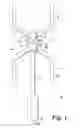
FIG. 1 is a schematic view of an embodiment of the invention;
FIG. 2 is a side view of a practical construction;
FIG. 3 is a view from below of a third embodiment of turbine of FIG. 2.
FIG. 4 is a side, view of a further embodiment; and
FIG. 5 is an enlarged scrap view of a part of the turbine.
A wind turbine, generally indicated at 10 has a vertically extending shaft 11 which carries rotors 12,13 for contra-rotation thereon. Rotor 13 is preferably constructed exactly in the same way as rotor 12, but is inverted relative to rotor 12, so it essentially constitutes the mirror image of rotor 12.
A generator, generally indicated at 14 is located between the rotors.
Each rotor 12, 13, comprises a central hub 15, a number of spaced cantilevered arms 16 (typically 3) and an upstanding aerofoil section blade 17 attached to each arm to extend generally parallel to the axis of shaft 11. As 13 is inverted with respect to 12 and the blades are orientated to the wind such that, wind travelling in any direction will rotate the rotors 12, 13, in opposite directions about the shaft 11 as indicated by arrows A and B. The generator 14 conveniently comprises a first plate 18 mounted on rotor 12 and a second plate 19 mounted on rotor 11. In this example, plate 18 carries magnets 20, whilst plate 19 carries coils 21. Electricity generated by the magnetic flux lines by the coils, due to the relative rotation can be fed out through a cable 22, which is connected to the interconnected coils 21 by a slip-ring (not shown).
The design has a number of advantages:
-
- 1. Contra-rotation doubles the effective speed of the generator, and hence increases its output, for the same wind speed. Wind speeds are very low in urban and built up areas and the challenge for small generators (operating in such areas) is to have sufficient speed (revolutions) in the generator, to make power, but from a very low wind speed most of the time. Contra rotation effectively doubles the available wind speed, as seen by the generator.
- 2. As the rotors 12, 13 are essentially symmetrical, any vibration of forces will tend to cancel out. Minimising noise as well as mechanical loads.
- 3. There is no gyroscopic load.
- 4. The blade 17 of the two rotors are effectively the equivalent of a single rotor of double the individual blade length, but without the leverage loads that would result from the longer blade. This enables the blades to be free of the supporting structures seen on most vertical axis machines, reducing weight, and therefore mechanical loads, and also improving airflow over the blades (being in free wind) and hence efficiency.
- 5. Unlike most vertical axis turbines, the shaft 11 can stop just above the lowermost hub 15 and does not need to extend the full length of the rotors. Further no external supporting structure is required.
- 6. The positioning of the generator enables a compact design which does not use any mechanical coupling and thus avoids the losses that would result.
- 7. The design is cheap to manufacture as only a single rotor needs to be tooled for.
FIG. 2 illustrates a practical design of a turbine 10 in which the hubs 15 and cantilever arms 16 have been shaped to reduce air resistance. In FIG. 3 cut outs 22 are provided in the arms 16 to reduce weight. Preferably the arms, blades and hubs of any of these designs are made from carbon fibre materials and can be moulded. In some instances each arm and blade pair may be formed integral. The aerofoil section of the blades 16 can be seen in FIG. 3.
Although to this point described in terms of wind, the design is also suitable for use in tidal flow. In either case the mid point mounting enables an effectively large blade tubine to be formed without being subjected to over large forces. Each vertically aligned pair of blades is the equivalent to one blade of twice the weight. However by splitting the design at the midpoint the issue of weight, strength and loading that occur with large blades are avoided. It is therefore possible to build quite substantial turbines. As a rough rule of thumb, 2 metres of blade is needed to generate 1 kilowatt of power. Thus the present turbine could generate 1 kilowatt with a set of 1 metre blades, rather than having to use 2 metre blades.
The contra-rotating nature of the design also means that torque levels tend to cancel out reducing vibration and some noise cancellation may occur due to the oppositely sensed generation of the noise.
In FIGS. 4 and 5 each arm 16 is formed integrally with its respective blade 17. This can enhance strength and can reduce air resistance and drag.
Claims
1. A vertical axis turbine having first and second rotors mounted about the axis for contra rotation and a generator located between the rotors for generating electricity in response to rotation of the rotors characterised in that the one rotor is substantially a mirror image of the other.
2. A turbine as claimed in claim 1 wherein each rotor includes a central hub, a plurality of outwardly extending cantilevered arms; each arm having an aerofoil blade extending generally parallel to the axis.
3. A turbine as claimed in claim 1 wherein the generator is an axial flux generator.
3. A turbine as claimed in claim 1 wherein each rotor carries at least a part of the generator.
5. A vertical axis turbine having at least one rotor including a central hub, a plurality of outwardly extending arms each arm having an aerofoil blade extending generally parallel to the axis.
6. A vertical axis turbine having a pair of contra-rotating rotors and an axial flux generator located between the rotors.
7. A turbine as claimed in claim 6, wherein each rotor carries at least a part of the generator.
8. A method of using a turbine as claimed in claim 1 comprising placing the turbine in wind or tidal flow.
9. A turbine as claimed in claim 2 wherein the generator is an axial flux generator.
10. A turbine as claimed in claim 2 wherein each rotor carries at least a part of the generator.
11. A turbine as claimed in claim 3 wherein each rotor carries at least a part of the generator.
Images & Drawings included:



Sources:
- United States Patent and Trademark Office - verify current appl. status at the USPTO↗
Similar patent applications:
- » 20240418146
Rotor for a Vertical Axis Turbine and Vertical Axis Turbine - » 20070224029
Blades for a Vertical Axis Wind Turbine, and the Vertical Axis Wind Turbine - » 20070231139
Mounting Structure for Support Arms in a Vertical Axis Wind Turbine, and the Vertical Axis Wind Turbine - » 20080227378
Blade For Vertical Axis Wind Turbine and Lift Type Vertical Axis Wind Turbine Having the Same - » 20190128241
Floating wind turbine having twin vertical-axis turbines with improved efficiency - » 20160201652
System and method for integrating a horizontal axis wind turbine and a vertical axis wind turbine - » 20080304968
Vertical-axis turbine for capturing the force of moving gases or liquids and a method for its use - » 20080267777
Modified darrieus vertical axis turbine - » 20090155074
Vertical axis turbine - » 20080152495
Vertical axis turbine apparatus
Recent applications in this class:
- » 20250075679 2025-03-06
ROTATIONAL FORCE GENERATOR REVOLVING AND ROTATING ACCORDING TO FLOW OF FLUID - » 20240328385 2024-10-03
VERTICAL AXIS WIND TURBINE WITH VARIABLE THICKNESS BLADE - » 20240318627 2024-09-26
VERTICAL WIND SPEED ACCELERATION TYPE WIND TURBINE - » 20240287962 2024-08-29
VERTICAL AXIS WIND POWER SYSTEM AND METHOD - » 20240167452 2024-05-23
VERTICAL AXIS MULTI-STAGE WIND TURBINE GENERATOR - » 20240133359 2024-04-25
Mastless wind turbine for power generation - » 20240060467 2024-02-22
Mastless wind turbine with stationary sails for improved power generation - » 20230417218 2023-12-28
Vertical-Axis Renewable-Power Generator - » 20230374972 2023-11-23
Hurricane vertical-axis wind turbines - » 20230358209 2023-11-09
WIND TURBINE SYSTEM