Thermal imaging camera comprising a cover plate
US20100200751A1
2010-08-12
12/677,007
2008-09-02
✅ Patent granted
US 8,796,622 B2
2014-08-05
WO; PCT/EP2008/007165; 20080902
WO; WO2009/033594; 20090319
David Porta | Edwin Gunberg
Hoffmann & Baron, LLP
2029-05-13
Abstract:
This invention relates to a thermal imaging camera comprising a thermal imaging sensor and a cover plate that can be displaced between an open and a closed position by means of an electric drive. The invention is characterized in that the open and the closed position of the cover plate (1) form respectively self-locking end positions and that an electric drive is provided to switch between the end positions, said drive being supplied with no current in the self-locking end positions.
Inventors:
- Martin Stratmann 14 🇩🇪 Freiburg, Germany
- Jorg Kaiser 2 🇩🇪 Emmendingen, Germany
- Patrick Zahn 3 🇩🇪 Buchenbach, Germany
- Karl Schuler 4 🇩🇪 Titisee-Neustadt, Germany
Assignee:
- TESTO AG 59 🇩🇪 Lenzkirch, Germany
Applicant:
Interested in similar patents?
Get notified when new applications in this technology area are published.
Classification:
G03B11/043 » CPC further
Filters or other obturators specially adapted for photographic purposes; Hoods or caps for eliminating unwanted light from lenses, viewfinders or focusing aids Protective lens closures or lens caps built into cameras
H04N5/2251 » CPC further
Details of television systems; Studio circuitry; Studio devices; Studio equipment ; Cameras comprising an electronic image sensor, e.g. digital cameras, video cameras, TV cameras, video cameras, camcorders, webcams, camera modules for embedding in other devices, e.g. mobile phones, computers or vehicles; Television cameras ; Cameras comprising an electronic image sensor, e.g. digital cameras, video cameras, camcorders, webcams, camera modules specially adapted for being embedded in other devices, e.g. mobile phones, computers or vehicles Constructional details
G03B2217/007 » CPC further
Details of cameras or camera bodies; Accessories therefor Details of energy supply or management
G03B11/04 » CPC further
Filters or other obturators specially adapted for photographic purposes Hoods or caps for eliminating unwanted light from lenses, viewfinders or focusing aids
G03B9/66 » CPC further
Exposure-making shutters; Diaphragms Means for cocking shutter separate from means for releasing shutter
G03B9/10 » CPC main
Exposure-making shutters; Diaphragms; Shutters Blade or disc rotating or pivoting about axis normal to its plane
H01L31/09 IPC
Semiconductor devices sensitive to infra-red radiation, light, electromagnetic radiation of shorter wavelength or corpuscular radiation and specially adapted either for the conversion of the energy of such radiation into electrical energy or for the control of electrical energy by such radiation; Processes or apparatus specially adapted for the manufacture or treatment thereof or of parts thereof; Details thereof in which radiation controls flow of current through the device, e.g. photoresistors Devices sensitive to infra-red, visible or ultraviolet radiation
H01L31/02 IPC
Semiconductor devices sensitive to infra-red radiation, light, electromagnetic radiation of shorter wavelength or corpuscular radiation and specially adapted either for the conversion of the energy of such radiation into electrical energy or for the control of electrical energy by such radiation; Processes or apparatus specially adapted for the manufacture or treatment thereof or of parts thereof; Details thereof Details
H04N5/33 » CPC further
Details of television systems; Transforming light or analogous information into electric information Transforming infra-red radiation
H04N5/225 IPC
Details of television systems; Studio circuitry; Studio devices; Studio equipment ; Cameras comprising an electronic image sensor, e.g. digital cameras, video cameras, TV cameras, video cameras, camcorders, webcams, camera modules for embedding in other devices, e.g. mobile phones, computers or vehicles Television cameras ; Cameras comprising an electronic image sensor, e.g. digital cameras, video cameras, camcorders, webcams, camera modules specially adapted for being embedded in other devices, e.g. mobile phones, computers or vehicles
H04N5/232 » CPC further
Details of television systems; Studio circuitry; Studio devices; Studio equipment ; Cameras comprising an electronic image sensor, e.g. digital cameras, video cameras, TV cameras, video cameras, camcorders, webcams, camera modules for embedding in other devices, e.g. mobile phones, computers or vehicles; Television cameras ; Cameras comprising an electronic image sensor, e.g. digital cameras, video cameras, camcorders, webcams, camera modules specially adapted for being embedded in other devices, e.g. mobile phones, computers or vehicles Devices for controlling television cameras, e.g. remote control ; Control of cameras comprising an electronic image sensor
G01J5/00 IPC
Radiation pyrometry, e.g. infrared or optical thermometry
G01J5/52 IPC
Radiation pyrometry, e.g. infrared or optical thermometry using comparison with reference sources, e.g. disappearing-filament pyrometer
Description
The invention relates to a thermal imaging camera with a thermal image sensor and a cover plate movable between an open and a closed position by means of an electrical actuator.
In the field of thermal imaging cameras, thermal image sensors based on the bolometer principle are often used. Bolometers with many thousand small individual thermopiles as individual sensors (pixels) can produce precise and finely resolved thermal images.
The cover plate is normally open, except during calibration of the thermal imaging sensor. There is, thus, the risk that the thermal imaging sensor can become contaminated and permanently harmed, particularly when objectives are changed. There is also the risk of overloading the sensor in case it is directed at the sun with the sensor exposed, which can lead to its destruction. In addition, the periodic actuation of the cover plate for the duration of the thermal image sensor calibration requires electric power.
On the other hand, the cover plate can be kept closed, and be opened only during a measurement. Thus, the sensor is indeed protected, but the cover plate must be kept open during the measurement, which can be done either manually or electrically. In the latter case, power is also consumed during the measurement, which shortens the operating time, particularly for battery-operated portable devices.
It is, therefore, the problem of the invention to create an electrically operated cover plate that can be operated in a power-saving manner and, therefore, be used energy-efficiently for thermal imaging sensor calibration and mechanical covering of the sensor.
This problem is solved in that the open position and the closed position of the cover plate each form self-retaining end positions, and in that an electrical actuator that is shut off in the self-retaining end positions is provided for switching between the two end positions.
In the first end position, the sensor is advantageously completely covered and, therefore, protected. In the second end position, the sensor is completely open, i.e., in the measurement position.
The advantage over the known solutions is that the cover plate is self-retaining in both end positions and, thus, the cover plate can remain in the two end positions without continuously using energy. A current pulse is necessary only to change between the two end positions, but requires only a minimal expenditure of energy overall. Thus, the operating time can be considerably extended for battery-operated portable devices, which can be crucial, particularly in field use with mobile thermal imaging cameras.
It is particularly advantageous if the cover plate has a bistable tilting element that can be shifted by an electrical actuator. For this purpose, the cover plate can be connected to a pivot arm, at the end of which a pivot bearing is provided and is engaged with a pivot actuator. Offset from the rotational axis, an engagement position is provided for a spring as the tilting element that fixes the two end positions.
It is additionally advantageous if the cover plate comprises a temperature sensor, in particular, a thermocouple. The temperature of the cover plate can thereby be exactly determined, and calibration of the thermal imaging sensor is more precise, relative to a pure measurement of the housing temperature.
Additional advantageous configurations follow from the subordinate claims, as well as from combinations of the individual characteristics.
An embodiment of the invention will be explained below based on the drawings.
Therein:
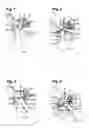
FIG. 1 shows a front view onto a cover plate in one end position,
FIG. 2 shows a perspective oblique view of the cover plate from FIG. 1,
FIG. 3 shows a front view onto a cover plate in a second end position,
FIG. 4 shows a perspective oblique view of the cover plate from FIG. 3.
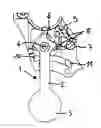
FIGS. 1 and 2 show a cover plate 1 of a thermal imaging camera in the closed end position, in which a thermal imaging sensor belonging to the thermal imaging camera is covered. Cover plate 1 has a pivot arm 2 having a cover disk 3 at one end and a mount 4 at the other end in the form of a pivot bearing at which pivot arm 2 is connected to an electric motor 5. At the side and offset from the axis of rotation pivot arm 2, there is a suspension point 6 for a spring 7, which is constructed as a leg spring 7 and has two legs 8, one of which is fixed to pivot arm mounting point 6 and the other of which is fixed to a stationary mounting point 9 on the housing. Legs 8 are each movably seated in mounting points 6, 9. Spring 7 is therefore relaxed in both end positions and holds in the cover plate against a stop 10 (FIGS. 1 and 2) or a stop 11 (FIGS. 3 and 4).
By means of the rotation of motor 5, pivot arm 2 is pivoted, and spring 7 is initially tensioned because legs 6 and 9 are pressed together. As soon as the dead point has been passed, spring 7 relaxes. The cover plate is, therefore, held in the second end position, and pivot arm 2 rests against second stop 11, as can be seen in FIGS. 3 and 4. To tilt the cover plate back again, the polarity is reversed at motor 5, and pivot spring 7 is pressed together again until the dead point is overcome and the cover plate has again tilted back into the first end position. Motor 5 is powered only during the short switching phases, while it is turned off in the two end positions of cover plate 3.
Since motor 5 need not meet any requirements with respect to its retaining force in the end positions, an inexpensive electric motor can be used here. In addition, because a complete revolution is not needed to tilt the cover plate, any other actuator can also be used that is capable of overcoming the dead point of the pivot arm, such as a solenoid, a voice coil actuator or the like. Thus, the actuator can be manufactured economically, and the cover plate is also manually operable if necessary.
Claims
1. Infrared camera with a thermal imaging sensor and a shutter aperture adjustable between an open and a closed position by means of an electric drive (5), wherein the open position and the closed position of the shutter aperture (1) each form a self-locking end position and wherein, for changing between the two end positions, an electric drive (5) is provided that is switched to be deactivated in the self-locking end positions, wherein the shutter aperture (1) is connected to one end of a pivot arm (2) on whose other end a pivot bearing (4) is provided and on which the electric drive (5) attaches, characterized in that, a contact point (6) for a spring (7) is provided offset to the rotational axis of the pivot bearing (4), wherein, as a tipping element, the spring (7) fixes the two end positions.
2. Infrared camera according to claim 1, characterized in that the shutter aperture (1) has a bistable tipping element that can be switched over by the electric drive.
3. Infrared camera according to claim 1, characterized in that the spring (7) is constructed as a leg spring and has two legs of which one is mounted on the pivot arm suspension point (6) and the other is mounted on a fixed suspension point (9) on the housing.
4. Infrared camera according to claim 1, characterized in that the spring (7) is freed from stress in both end positions.
5. Infrared camera according to claim 1, characterized in that the electric drive (5) has a coil and a permanent magnet.
6. Infrared camera according to claim 1, characterized in that the electric drive has an electric motor (5), for example, a stepper motor, geared motor, or the like.
7. Infrared camera according to claim 1, characterized in that the bistable element has a leg spring (7).
8. Infrared camera according to claim 1, characterized in that the shutter aperture has a temperature sensor, in particular, a thermocouple.
Images & Drawings included:
Sources:
- United States Patent and Trademark Office - verify current appl. status at the USPTO↗
Recent applications in this class:
- » 20230384651 2023-11-30
Blade driving device, imaging device, and electronic device - » 20230375898 2023-11-23
CAMERA - » 20230288778 2023-09-14
CAMERA MODULE AND MOBILE TERMINAL - » 20230273505 2023-08-31
Camera shutter device having a two-armed lever - » 20220283477 2022-09-08
Driving mechanism - » 20210103202 2021-04-08
SHUTTER STRUCTURE AND PHOTOGRAPHING DEVICE - » 20200218130 2020-07-09
Electronic apparatus - » 20200201141 2020-06-25
Shutter unit and imaging apparatus - » 20200012173 2020-01-09
Focal-plane shutter, and imaging device and electronic apparatus comprising focal-plane shutter - » 20190317382 2019-10-17
BLADE DRIVING DEVICE, IMAGING DEVICE AND ACTUATOR COMPRISING THE BLADE DRIVING DEVICE
Recent applications for this Assignee:
- » 20170148491 2017-05-25
Method for creating a 3D model of an object and corresponding model calculation device and model calculation device - » 20170039760 2017-02-09
Method for creating a 3D representation and corresponding image recording apparatus - » 20170026636 2017-01-26
METHOD FOR THE POSITIONALLY ACCURATE PROJECTION OF A MARK ONTO AN OBJECT, AND PROJECTION APPARATUS - » 20170023386 2017-01-26
PROBE HOLDER FOR A MEASURING INSTRUMENT - » 20170003324 2017-01-05
Measuring arrangement and method for contactless electric current measurement - » 20160356818 2016-12-08
Current meter - » 20160320325 2016-11-03
DEEP-FRYER OIL MEASURING APPARATUS - » 20160189362 2016-06-30
3D recording device, method for producing a 3D image, and method for setting up a 3D recording device - » 20150365608 2015-12-17
INSPECTION ARRANGEMENT AND INSPECTION METHOD FOR A SOLAR INSTALLATION - » 20150198468 2015-07-16
Volumetric-flow measuring apparatus having a foldable flow straightener