Ornithine derivative
US20100216803A1
2010-08-26
12/531,713
2008-03-25
✅ Patent granted
US 8,030,489 B2
2011-10-04
WO; PCT/JP2008/055474; 20080325
WO; WO2008/123207; 20081016
Janet Andres | Timothy R Rozof
2028-03-25
Abstract:
Provided is a compound which is useful as a therapeutic agent for chronic renal insufficiency and a therapeutic agent for diabetic nephropathy.
The present inventors have made extensive studies on an ornithine derivative having an antagonistic action against an EP4 receptor, and as a result, they have found that by introducing cycloalkanediyl at a C terminal of the ornithine part of the compound of the present invention, the physicochemical properties such as solubility, and the like can be improved, thereby giving further preferred properties as a pharmaceutical. Therefore, they have completed the present invention.
The compound of the present invention exhibits a good antagonistic action against an EP4 receptor, and thus, it is useful as a therapeutic agent for chronic renal insufficiency and diabetic nephropathy.
Inventors:
- Ryushi Seo 17 🇯🇵 Tokyo, Japan
- Eisuke NOZAWA 7 🇯🇵 Tokyo, Japan
- Keisuke Matsuura 5 🇯🇵 Tokyo, Japan
- Tatsuya Zenkoh 5 🇯🇵 Tokyo, Japan
Assignee:
- ASTELLAS PHARMA INC. 481 🇯🇵 Tokyo, Japan
- Astellas Pharma Inc. 105 🇯🇵 Chuo-ku, Japan
Interested in similar patents?
Get notified when new applications in this technology area are published.
Classification:
A61P13/12 » CPC further
Drugs for disorders of the urinary system of the kidneys
C07C311/08 » CPC main
Amides of sulfonic acids, i.e. compounds having singly-bound oxygen atoms of sulfo groups replaced by nitrogen atoms, not being part of nitro or nitroso groups; Sulfonamides having sulfur atoms of sulfonamide groups bound to acyclic carbon atoms of an acyclic saturated carbon skeleton having the nitrogen atom of at least one of the sulfonamide groups bound to a carbon atom of a six-membered aromatic ring
A61P1/04 » CPC further
Drugs for disorders of the alimentary tract or the digestive system for ulcers, gastritis or reflux esophagitis, e.g. antacids, inhibitors of acid secretion, mucosal protectants
A61P3/00 » CPC further
Drugs for disorders of the metabolism
A61P3/10 » CPC further
Drugs for disorders of the metabolism for glucose homeostasis for hyperglycaemia, e.g. antidiabetics
A61P5/24 » CPC further
Drugs for disorders of the endocrine system of the sex hormones
A61P7/00 » CPC further
Drugs for disorders of the blood or the extracellular fluid
A61P7/02 » CPC further
Drugs for disorders of the blood or the extracellular fluid Antithrombotic agents; Anticoagulants; Platelet aggregation inhibitors
A61P9/10 » CPC further
Drugs for disorders of the cardiovascular system for treating ischaemic or atherosclerotic diseases, e.g. antianginal drugs, coronary vasodilators, drugs for myocardial infarction, retinopathy, cerebrovascula insufficiency, renal arteriosclerosis
A61P9/12 » CPC further
Drugs for disorders of the cardiovascular system Antihypertensives
A61P13/02 » CPC further
Drugs for disorders of the urinary system of urine or of the urinary tract, e.g. urine acidifiers
A61P13/04 » CPC further
Drugs for disorders of the urinary system for urolithiasis
A61P15/00 » CPC further
Drugs for genital or sexual disorders ; Contraceptives
A61P17/00 » CPC further
Drugs for dermatological disorders
A61P17/02 » CPC further
Drugs for dermatological disorders for treating wounds, ulcers, burns, scars, keloids, or the like
A61P17/04 » CPC further
Drugs for dermatological disorders Antipruritics
A61P17/16 » CPC further
Drugs for dermatological disorders Emollients or protectives, e.g. against radiation
A61P35/00 » CPC further
Antineoplastic agents
A61P35/04 » CPC further
Antineoplastic agents specific for metastasis
A61P43/00 » CPC further
Drugs for specific purposes, not provided for in groups -
C07C229/48 » CPC further
Compounds containing amino and carboxyl groups bound to the same carbon skeleton having amino or carboxyl groups bound to carbon atoms of rings other than six-membered aromatic rings of the same carbon skeleton with amino groups and carboxyl groups bound to carbon atoms of the same non-condensed ring
C07C237/22 » CPC further
Carboxylic acid amides, the carbon skeleton of the acid part being further substituted by amino groups having the carbon atoms of the carboxamide groups bound to acyclic carbon atoms of the carbon skeleton having nitrogen atoms of amino groups bound to the carbon skeleton of the acid part, further acylated
C07C271/22 » CPC further
Derivatives of carbamic acids, i.e. compounds containing any of the groups , the nitrogen atom not being part of nitro or nitroso groups; Esters of carbamic acids having oxygen atoms of carbamate groups bound to acyclic carbon atoms with the nitrogen atoms of the carbamate groups bound to hydrogen atoms or to acyclic carbon atoms to carbon atoms of hydrocarbon radicals substituted by carboxyl groups
C07C271/24 » CPC further
Derivatives of carbamic acids, i.e. compounds containing any of the groups , the nitrogen atom not being part of nitro or nitroso groups; Esters of carbamic acids having oxygen atoms of carbamate groups bound to acyclic carbon atoms with the nitrogen atom of at least one of the carbamate groups bound to a carbon atom of a ring other than a six-membered aromatic ring
C07C311/51 » CPC further
Amides of sulfonic acids, i.e. compounds having singly-bound oxygen atoms of sulfo groups replaced by nitrogen atoms, not being part of nitro or nitroso groups; Compounds containing any of the groups , X being a hetero atom, Y being any atom Y being a hydrogen or a carbon atom
C07D207/327 » CPC further
Heterocyclic compounds containing five-membered rings not condensed with other rings, with one nitrogen atom as the only ring hetero atom with only hydrogen or carbon atoms directly attached to the ring nitrogen atom having two double bonds between ring members or between ring members and non-ring members with only hydrogen atoms, hydrocarbon or substituted hydrocarbon radicals, directly attached to ring carbon atoms with substituted hydrocarbon radicals directly attached to the ring nitrogen atom Radicals substituted by carbon atoms having three bonds to hetero atoms with at the most one bond to halogen, e.g. ester or nitrile radicals
C07D209/14 » CPC further
Heterocyclic compounds containing five-membered rings, condensed with other rings, with one nitrogen atom as the only ring hetero atom condensed with one carbocyclic ring; Indoles; Hydrogenated indoles with substituted hydrocarbon radicals attached to carbon atoms of the hetero ring Radicals substituted by nitrogen atoms, not forming part of a nitro radical
C07D213/81 » CPC further
Heterocyclic compounds containing six-membered rings, not condensed with other rings, with one nitrogen atom as the only ring hetero atom and three or more double bonds between ring members or between ring members and non-ring members having three double bonds between ring members or between ring members and non-ring members having no bond between the ring nitrogen atom and a non-ring member or having only hydrogen or carbon atoms directly attached to the ring nitrogen atom with hetero atoms or with carbon atoms having three bonds to hetero atoms with at the most one bond to halogen, e.g. ester or nitrile radicals, directly attached to ring carbon atoms; Carbon atoms having three bonds to hetero atoms, with at the most one bond to halogen, e.g. ester or nitrile radicals Amides; Imides
C07D217/26 » CPC further
Heterocyclic compounds containing isoquinoline or hydrogenated isoquinoline ring systems with hetero atoms or with carbon atoms having three bonds to hetero atoms with at the most one bond to halogen, e.g. ester or nitrile radicals, directly attached to carbon atoms of the nitrogen-containing ring Carbon atoms having three bonds to hetero atoms with at the most one bond to halogen
C07D231/12 » CPC further
Heterocyclic compounds containing 1,2-diazole or hydrogenated 1,2-diazole rings not condensed with other rings having two or three double bonds between ring members or between ring members and non-ring members with only hydrogen atoms, hydrocarbon or substituted hydrocarbon radicals, directly attached to ring carbon atoms
C07D231/56 » CPC further
Heterocyclic compounds containing 1,2-diazole or hydrogenated 1,2-diazole rings condensed with carbocyclic rings or ring systems Benzopyrazoles; Hydrogenated benzopyrazoles
C07D257/04 » CPC further
Heterocyclic compounds containing rings having four nitrogen atoms as the only ring hetero atoms not condensed with other rings Five-membered rings
C07D263/34 » CPC further
Heterocyclic compounds containing 1,3-oxazole or hydrogenated 1,3-oxazole rings not condensed with other rings having two or three double bonds between ring members or between ring members and non-ring members with hetero atoms or with carbon atoms having three bonds to hetero atoms with at the most one bond to halogen, e.g. ester or nitrile radicals, directly attached to ring carbon atoms
C07D271/06 » CPC further
Heterocyclic compounds containing five-membered rings having two nitrogen atoms and one oxygen atom as the only ring hetero atoms not condensed with other rings 1,2,4-Oxadiazoles; Hydrogenated 1,2,4-oxadiazoles
C07D271/10 » CPC further
Heterocyclic compounds containing five-membered rings having two nitrogen atoms and one oxygen atom as the only ring hetero atoms not condensed with other rings 1,3,4-Oxadiazoles; Hydrogenated 1,3,4-oxadiazoles
C07D271/12 » CPC further
Heterocyclic compounds containing five-membered rings having two nitrogen atoms and one oxygen atom as the only ring hetero atoms condensed with carbocyclic rings or ring systems
C07D295/14 » CPC further
Heterocyclic compounds containing polymethylene-imine rings with at least five ring members, 3-azabicyclo [3.2.2] nonane, piperazine, morpholine or thiomorpholine rings, having only hydrogen atoms directly attached to the ring carbon atoms with substituted hydrocarbon radicals attached to ring nitrogen atoms substituted by carbon atoms having three bonds to hetero atoms with at the most one bond to halogen, e.g. ester or nitrile radicals
C07D333/38 » CPC further
Heterocyclic compounds containing five-membered rings having one sulfur atom as the only ring hetero atom not condensed with other rings not substituted on the ring sulphur atom with hetero atoms or with carbon atoms having three bonds to hetero atoms with at the most one bond to halogen, e.g. ester or nitrile radicals, directly attached to ring carbon atoms Carbon atoms having three bonds to hetero atoms with at the most one bond to halogen, e.g. ester or nitrile radicals
C07D333/70 » CPC further
Heterocyclic compounds containing five-membered rings having one sulfur atom as the only ring hetero atom condensed with carbocyclic rings or ring systems; Benzo[b]thiophenes; Hydrogenated benzo[b]thiophenes with hetero atoms or with carbon atoms having three bonds to hetero atoms with at the most one bond to halogen, e.g. ester or nitrile radicals, directly attached to carbon atoms of the hetero ring; Carbon atoms having three bonds to hetero atoms with at the most one bond to halogen attached in position 2
C07D403/12 » CPC further
Heterocyclic compounds containing two or more hetero rings, having nitrogen atoms as the only ring hetero atoms, not provided for by group containing two hetero rings linked by a chain containing hetero atoms as chain links
C07D413/12 » CPC further
Heterocyclic compounds containing two or more hetero rings, at least one ring having nitrogen and oxygen atoms as the only ring hetero atoms containing two hetero rings linked by a chain containing hetero atoms as chain links
C07D419/12 » CPC further
Heterocyclic compounds containing two or more hetero rings, at least one ring having nitrogen, oxygen, and sulfur atoms as the only ring hetero atoms containing two hetero rings linked by a chain containing hetero atoms as chain links
C07C2601/08 » CPC further
Systems containing only non-condensed rings with a five-membered ring the ring being saturated
C07C2601/14 » CPC further
Systems containing only non-condensed rings with a six-membered ring The ring being saturated
C07C2603/18 » CPC further
Systems containing at least three condensed rings; Ortho- or ortho- and peri-condensed systems containing three rings containing at least one ring with less than six ring members containing five-membered rings only one five-membered ring Fluorenes; Hydrogenated fluorenes
A61K31/498 IPC
Medicinal preparations containing organic active ingredients; Heterocyclic compounds having nitrogen as a ring hetero atom, e.g. guanethidine or rifamycins having six-membered rings with two nitrogen atoms as the only ring heteroatoms, e.g. piperazine Pyrazines or piperazines ortho- and peri-condensed with carbocyclic ring systems, e.g. quinoxaline, phenazine
C07D209/42 » CPC further
Heterocyclic compounds containing five-membered rings, condensed with other rings, with one nitrogen atom as the only ring hetero atom condensed with one carbocyclic ring; Indoles; Hydrogenated indoles with hetero atoms or with carbon atoms having three bonds to hetero atoms with at the most one bond to halogen, directly attached to carbon atoms of the hetero ring Carbon atoms having three bonds to hetero atoms with at the most one bond to halogen, e.g. ester or nitrile radicals
A61K31/404 IPC
Medicinal preparations containing organic active ingredients; Heterocyclic compounds having nitrogen as a ring hetero atom, e.g. guanethidine or rifamycins having five-membered rings with one nitrogen as the only ring hetero atom, e.g. sulpiride, succinimide, tolmetin, buflomedil condensed with carbocyclic rings, e.g. carbazole Indoles, e.g. pindolol
C07D207/34 » CPC further
Heterocyclic compounds containing five-membered rings not condensed with other rings, with one nitrogen atom as the only ring hetero atom with only hydrogen or carbon atoms directly attached to the ring nitrogen atom having two double bonds between ring members or between ring members and non-ring members with hetero atoms or with carbon atoms having three bonds to hetero atoms with at the most one bond to halogen, e.g. ester or nitrile radicals, directly attached to ring carbon atoms
A61K31/40 IPC
Medicinal preparations containing organic active ingredients; Heterocyclic compounds having nitrogen as a ring hetero atom, e.g. guanethidine or rifamycins having five-membered rings with one nitrogen as the only ring hetero atom, e.g. sulpiride, succinimide, tolmetin, buflomedil
C07D231/14 » CPC further
Heterocyclic compounds containing 1,2-diazole or hydrogenated 1,2-diazole rings not condensed with other rings having two or three double bonds between ring members or between ring members and non-ring members with hetero atoms or with carbon atoms having three bonds to hetero atoms with at the most one bond to halogen, e.g. ester or nitrile radicals, directly attached to ring carbon atoms
A61K31/415 IPC
Medicinal preparations containing organic active ingredients; Heterocyclic compounds having nitrogen as a ring hetero atom, e.g. guanethidine or rifamycins having five-membered rings with two or more ring hetero atoms, at least one of which being nitrogen, e.g. tetrazole 1,2-Diazoles
C07D215/12 » CPC further
Heterocyclic compounds containing quinoline or hydrogenated quinoline ring systems having no bond between the ring nitrogen atom and a non-ring member or having only hydrogen atoms or carbon atoms directly attached to the ring nitrogen atom with substituted hydrocarbon radicals attached to ring carbon atoms
A61K31/47 IPC
Medicinal preparations containing organic active ingredients; Heterocyclic compounds having nitrogen as a ring hetero atom, e.g. guanethidine or rifamycins having six-membered rings with one nitrogen as the only ring hetero atom Quinolines; Isoquinolines
C07D215/48 » CPC further
Heterocyclic compounds containing quinoline or hydrogenated quinoline ring systems having no bond between the ring nitrogen atom and a non-ring member or having only hydrogen atoms or carbon atoms directly attached to the ring nitrogen atom with hetero atoms or with carbon atoms having three bonds to hetero atoms with at the most one bond to halogen, e.g. ester or nitrile radicals, directly attached to ring carbon atoms Carbon atoms having three bonds to hetero atoms with at the most one bond to halogen
C07D215/227 IPC
Heterocyclic compounds containing quinoline or hydrogenated quinoline ring systems having no bond between the ring nitrogen atom and a non-ring member or having only hydrogen atoms or carbon atoms directly attached to the ring nitrogen atom with hetero atoms or with carbon atoms having three bonds to hetero atoms with at the most one bond to halogen, e.g. ester or nitrile radicals, directly attached to ring carbon atoms; Oxygen atoms attached in position 2 or 4 only one oxygen atom which is attached in position 2
A61K31/4704 IPC
Medicinal preparations containing organic active ingredients; Heterocyclic compounds having nitrogen as a ring hetero atom, e.g. guanethidine or rifamycins having six-membered rings with one nitrogen as the only ring hetero atom; Quinolines; Isoquinolines 2-Quinolinones, e.g. carbostyril
C07D471/04 IPC
Heterocyclic compounds containing nitrogen atoms as the only ring hetero atoms in the condensed system, at least one ring being a six-membered ring with one nitrogen atom, not provided for by groups - in which the condensed system contains two hetero rings Ortho-condensed systems
A61K31/437 IPC
Medicinal preparations containing organic active ingredients; Heterocyclic compounds having nitrogen as a ring hetero atom, e.g. guanethidine or rifamycins having six-membered rings with one nitrogen as the only ring hetero atom ortho- or peri-condensed with heterocyclic ring systems the heterocyclic ring system containing a five-membered ring having nitrogen as a ring hetero atom, e.g. indolizine, beta-carboline
C07D241/04 IPC
Heterocyclic compounds containing 1,4-diazine or hydrogenated 1,4-diazine rings not condensed with other rings having no double bonds between ring members or between ring members and non-ring members
A61K31/495 IPC
Medicinal preparations containing organic active ingredients; Heterocyclic compounds having nitrogen as a ring hetero atom, e.g. guanethidine or rifamycins having six-membered rings with two nitrogen atoms as the only ring heteroatoms, e.g. piperazine
C07D241/44 » CPC further
Heterocyclic compounds containing 1,4-diazine or hydrogenated 1,4-diazine rings condensed with carbocyclic rings or ring systems with only hydrogen or carbon atoms directly attached to the ring nitrogen atoms; Benzopyrazines with hetero atoms or with carbon atoms having three bonds to hetero atoms with at the most one bond to halogen, e.g. ester or nitrile radicals, directly attached to carbon atoms of the hetero ring
Description
TECHNICAL FIELD
The present invention relates to a pharmaceutical, and particularly a compound useful as a therapeutic agent for chronic renal insufficiency and diabetic nephropathy.
BACKGROUND ART
PGE2 is known as one of the metabolites in an arachidonic acid cascade. The PGE2 exhibits various activities such as a pain inducing and increasing action, a pro- or anti-inflammatory action, an uterine contractile action, a digestive peristalsis promoting action, an awaking action, a suppressive effect on gastric acid secretion, a hypotensive action, a platelet aggregation inhibition action, a bone-resorption promoting action, an angiogenic action, and the like.
PGE2 receptors are divided into four subtypes, EP1, EP2, EP3 and EP4, which have a wide distribution in various tissues. The activation of the EP 1 receptor is believed to increase intracellular Ca2+. The EP3 receptor is one of the receptors having different routes for second-messenger systems. Further, the activation of the EP2 and EP4 receptors is believed to cause the activation of an adenylate cyclase, and thus increase the intracellular cAMP level. Especially, the EP4 receptor is considered to be associated with smooth muscle relaxation, pro- or anti-inflammatory reactions, lymphocyte differentiation, mesangial cell relaxation or proliferation, gastric or enteric mucus secretion, or the like.
The inhibitors of the PGE2 receptor, that is, the “PGE2 antagonists”, exhibit binding activities to the PGE2 receptors. That is, the PGE2 antagonists exhibit a PGE2-antagonistic or PGE2-inhibiting action. Therefore, the PGE2 antagonists are expected as pharmaceuticals to treat PGE2-mediated diseases. It is expected that these PGE2 antagonists can be used as therapeutic drugs to treat EP4 receptors-related diseases, such as renal diseases, inflammatory diseases, various pains, or the like, by acting on the EP4 receptors, in humans or animals.
As a compound having a PGE2 antagonistic action, there has been reported a compound represented by the following formula, and particularly, such a compound is useful as an EP4 receptor agonist (Patent Document 1).
(wherein particularly X represents —CO— or lower alkylene, R5 represents H or lower alkyl, and R2 represents lower alkyl or aryl which may be substituted. Refer to the following publication for the details.)
[Patent Document 1] Pamphlet of International Publication No. WO 2005/061475
DISCLOSURE OF THE INVENTION
Problem that the Invention is to Solve
It is an object of the present invention to provide a novel pharmaceutical having a selective antagonistic action to an EP4 receptor, and particularly a novel compound useful as a therapeutic agent for chronic renal insufficiency and diabetic nephropathy.
Means for Solving the Problem
At first, the present applicants have made studies on a compound having an antagonistic action against an EP4 receptor, and as a result, they have found that the compound as disclosed in Patent Document 1 has a good antagonistic action against an EP4 receptor. Then, the present inventors have made further studies, and thus, they have found that by the introduction of a cycloalkanediyl structure, physicochemical properties such as solubility, and the like can be improved, thereby giving further preferred properties as a pharmaceutical, thereby completing the present invention.
Specifically, the present invention relates to a compound of the formula (I) or a pharmaceutically acceptable salt thereof, and a pharmaceutical composition containing the compound of the formula (I) or a pharmaceutically acceptable salt thereof, and a pharmaceutically acceptable excipient.
(wherein
A represents cycloalkanediyl,
X represents a single bond, —O—, —NH—, or —NR0—,
Y represents a single bond, —R00—, or —Y1—R00—,
Y1 represents —O—, —S—, —S(O)—, —S(O)2—, or —NHS(O)2—,
R1 represents —CO2H or a biological equivalent thereof,
R2 represents —R0, —C(O)—R0, —R21, —C(O)—R21,
R21 represents -(aryl which may be substituted), -(hetero ring which may be substituted), —R00-(aryl which may be substituted), —R00-(hetero ring which may be substituted), -(lower alkenylene)-(aryl which may be substituted), or -(lower alkenylene)- (hetero ring which may be substituted),
R3 represents —R0, -(aryl which may be substituted), -(cycloalkyl which may be substituted), —R00 -(aryl which may be substituted), or —R00 -(cycloalkyl which may be substituted),
R4 and R5 each represent H or R0,
R0 represents lower alkyl, and
R00 represents lower alkylene.
Hereinbelow, these symbols have the same meanings as defined above unless otherwise specifically mentioned in the present specification).
Further, the present invention relates to a pharmaceutical composition for treating chronic renal insufficiency or diabetic nephropathy, containing the compound of the formula (I) or a pharmaceutically acceptable salt thereof, specifically, to a prophylactic or therapeutic agent for chronic renal insufficiency or diabetic nephropathy, containing the compound of the formula (I) or a pharmaceutically acceptable salt thereof.
In addition, the present invention further relates to use of the compound of the formula (I) or a pharmaceutically acceptable salt thereof for the production of a therapeutic agent for chronic renal insufficiency or a therapeutic agent for diabetic nephropathy, and a method for treating chronic renal insufficiency or diabetic nephropathy, comprising administering to a patient an effective amount of the compound of the formula (I) or a pharmaceutically acceptable salt thereof.
Effect of the Invention
The compound of the formula (I) or a pharmaceutically acceptable salt thereof has an antagonistic action against an EP4 receptor, and therefore, it can be used as a prophylactic and/or therapeutic agent for renal diseases, particularly chronic renal insufficiency or diabetic nephropathy, or the like.
BEST MODE FOR CARRYING OUT THE INVENTION
Hereinbelow, the present invention will be described in detail.
In the present specification, the “lower alkyl” preferably refers to a linear or branched alkyl group having 1 to 6 carbon atoms (which is hereinafter simply referred to as C1-6), for example, a methyl group, an ethyl group, an n-propyl group, an isopropyl group, an n-butyl group, an isobutyl group, a sec-butyl group, a tert-butyl group, an n-pentyl group, an n-hexyl group, or the like. In an embodiment, it is a C1-4 alkyl group, and in another embodiment, a methyl group, an ethyl group, or a tert-butyl group.
The “lower alkenyl” refers to a linear or branched C2-6 alkenyl group, for example, a vinyl group, a propenyl group, a butenyl group, a pentenyl group, a 1-methylvinyl group, a 1-methyl-2-propenyl group, a 1,3-butadienyl group, a 1,3-pentadienyl group, or the like. In another embodiment, it is C2-4 alkenyl, in a further embodiment, vinyl or propenyl, and in yet another embodiment, propenyl.
The “lower alkylene” refers to a divalent group (C1-6 alkylene) formed by the removal of one hydrogen atom at any position of the above-described “lower alkyl”. In an embodiment, it is a C1-4 alkylene group, in another embodiment, a C1-3 alkylene group, and in a further embodiment, a C1-2 alkylene group.
The “lower alkenylene” refers to a linear or branched C2-6 alkenylene group, for example, a vinylene group, an ethylidene group, a propenylene group, a butenylene group, a pentenylene group, a hexenylene group, a 1,3-butadienylene group, a 1,3-pentadienylene group, or the like. In an embodiment, it is a C2-4 alkenylene group, and in another embodiment, an ethylidene group or a propenylene group.
The “halogen” means F, Cl, Br, or I.
The “halogeno-lower alkyl” refers to a C1-6 alkyl group substituted with one or more halogen atoms. In an embodiment, it is a lower alkyl group substituted with 1 to 5 halogen atoms, and in another embodiment, a trifluoromethyl group, a 2-fluoroethyl group, or a 3-fluoropropyl group.
The “cycloalkyl” refers to a C3-10 saturated hydrocarbon ring group, which may have a bridge. It is, for example, a cyclopropyl group, a cyclobutyl group, a cyclopentyl group, a cyclohexyl group, a cycloheptyl group, a cyclooctyl group, an adamantyl group, or the like. In an embodiment, it is a C3-8 cycloalkyl group, in another embodiment, a C3-6 cycloalkyl group, and in an even further embodiment, a cyclopentyl group or a cyclohexyl group.
The “cycloalkanediyl” and the “cycloalkylene” each refer to a divalent group (C3-8 cycloalkanediyl) formed by removal of any two hydrogen atoms of the C3-8 cycloalkane, and the binding position may be any one of 1,1-, 1,2-, 1,3-, or 1,4-diyl. In an embodiment, it is cyclobutanediyl, cyclopentanediyl, or cyclohexanediyl, and in another embodiment, 1,2-cyclobutanediyl, 1,2-cyclopentanediyl, or 1,2-cyclohexanediyl.
The “aryl” refers to a C6-14 mono- to tricyclic aromatic hydrocarbon ring group, which contains a partially hydrogenated ring group. It is, for example, a phenyl group, a naphthyl group, a 5-tetrahydronaphthyl group, a 4-indenyl group, a 1-fluorenyl group, or the like. In an embodiment, it is phenyl or naphthyl, and in another embodiment, phenyl.
The “hetero ring” means a ring group containing i) a monocyclic 3- to 8-membered, and in another embodiment, 5- to 7-membered hetero ring, containing 1 to 4 hetero atoms selected from oxygen, sulfur, and nitrogen, and ii) a bi- to tricyclic hetero ring containing 1 to 5 hetero atoms selected from oxygen, sulfur, and nitrogen, formed by condensation with one or two rings in which the monocyclic hetero ring is selected from a monocyclic hetero ring, a benzene ring, C5-8 cycloalkane, and C5-8 cycloalkene. The ring atom, sulfur or nitrogen, may be oxidized to form an oxide or a dioxide.
As the “hetero ring”, the following embodiments may be mentioned:
(1) Monocyclic saturated hetero ring
i) those containing 1 to 4 nitrogen atoms, for example, azepanyl, diazepanyl, aziridinyl, azetidinyl, pyrrolidinyl, imidazolyldinyl, piperidinyl, pyrazolidinyl, piperazinyl, azocanyl, and the like;
ii) those containing 1 to 3 nitrogen atoms and 1 to 2 sulfur atoms and/or 1 to 2 oxygen atoms, for example, thiomorpholinyl, thiazolidinyl, isothiazolidinyl, oxazolidinyl, morpholinyl, and the like;
iii) those containing 1 to 2 sulfur atoms, for example, tetrahydrothiinyl and the like;
iv) those containing 1 to 2 sulfur atoms and 1 to 2 oxygen atoms, for example, oxathiolane, and the like;
v) those containing 1 to 2 oxygen atoms, for example, oxiranyl, dioxoranyl, oxoranyl, tetrahydropyranyl, 1,4-dioxanyl, and the like;
(2) Monocyclic unsaturated hetero ring group
i) those containing 1 to 4 nitrogen atoms, for example, pyrrolyl, imidazolyl, pyrazolyl, pyridyl, dihydropyridyl, pyrimidinyl, pyrazinyl, pyridazinyl, triazolyl, tetrazolyl, dihydrotriazinyl, azepinyl, and the like;
ii) those containing 1 to 3 nitrogen atoms and 1 to 2 sulfur atoms and/or 1 to 2 oxygen atoms, for example, thiazolyl, isothiazolyl, thiadiazolyl, dihydrothiazinyl, oxazolyl, isooxazolyl, oxadiazolyl, oxadinyl, and the like;
iii) those containing 1 to 2 sulfur atoms, for example, thienyl, thiepinyl, dihydrodithiinyl, dihydrodithionyl, and the like;
iv) those containing 1 to 2 sulfur atoms and 1 to 2 oxygen atoms, for example, dihydrooxathiinyl, and the like;
v) those containing 1 to 2 oxygen atoms, for example, furyl, pyranyl, oxepinyl, dioxolyl, and the like;
(3) Condensed polycyclic saturated hetero ring group
i) those containing 1 to 5 nitrogen atoms, for example, quinuclidine, 7-azabicyclo[2.2.1]heptyl, 3-azabicyclo[3.2.2]nonanyl, and the like;
ii) those containing 1 to 4 nitrogen atoms and 1 to 3 sulfur atoms and/or 1 to 3 oxygen atoms, for example, trithiadiazaindenyldioxoloimidazolidinyl, and the like;
iii) those containing 1 to 3 sulfur atoms and/or 1 to 3 oxygen atoms, for example, 2,6-dioxabicyclo[3.2.2]octo-7-yl, and the like;
(4) Condensed polycyclic unsaturated hetero ring
i) those containing 1 to 5 nitrogen atoms, for example, indolyl, isoindolyl, indolinyl, indolidinyl, benzoimidazolyl, quinolyl, tetrahydroquinolyl, isoquinolyl, tetrahydroisoquinolyl, indazolyl, imidazopyridyl, benzotriazolyl, tetrazolopyridazinyl, carbazolyl, quinoxalinyl, dihydroindazolyl, benzopyrimidinyl, naphthyridinyl, quinazolinyl, cinnolinyl, and the like;
ii) those containing 1 to 4 nitrogen atoms and 1 to 3 sulfur atoms and/or 1 to 3 oxygen atoms, for example, benzothiazolyl, dihydrobenzothiazolyl, benzothiadiazolyl, imidazothiazolyl, imidazothiadiazolyl, benzooxazolyl, benzooxadiazolyl, and the like;
iii) those containing 1 to 3 sulfur atoms, for example, benzothienyl, benzodithiinyl, and the like;
iv) 1 to 3 sulfur atoms and 1 to 3 oxygen atoms, for example, benzooxathiinyl, phenoxadinyl, and the like;
v) those containing 1 to 3 oxygen atoms, for example, benzodioxolyl, benzofuranyl, isobenzofuranyl, chromenyl, benzodihydrofuranyl, and the like;
The “nitrogen-containing hetero ring” means that at least one nitrogen atom is contained in the hetero ring, as in i) and ii) of (1), i) and ii) of (2), i) and ii) of (3), i) and ii) of (4), and the like.
The “—CO2H or a biological equivalent thereof” means —CO2H, or another atom or atom group having an electronic or steric configuration that is equivalent to —CO2H and having common biological properties, and includes a carboxylic acid bioisostere, a protected carboxylic group, or a prodrug of a carboxylic acid, in the narrow meaning usually used by a skilled person in the art.
The —CO2H or the “carboxylic acid bioisostere in a narrow meaning” means a group capable of releasing acidic protons, in an embodiment, examples thereof include —CO2H, hydroxamic acid (R—CO—NH—OH), acylcyanamide (R—CO—NH—CN), acylsulfonamide (R—CO—NH—SO2—R′), tetrazole, oxadiazolone, oxadiazolthione, oxathiadiazole, thiadiazolone, triazolthione, hydroxyisoxazole, and the like, and in another embodiment, include —CO2H, acylsulfonamide, tetrazole, oxadiazolone, oxadiazolthione, and thiadiazolone.
Examples of the “protected carboxylic” group can include the following:
(1) Esterified carboxylic group, specifically a —CO—O—R0 group, a —CO—O-(lower alkenyl) group, a —CO—O-(lower alkynyl) group, a —CO—R00—O—R0 group, a —CO—O—R00-(aryl) group, a —CO—O—R00—O-(aryl) group, or the like; and
(2) Amidated carboxylic group, specifically a —CO—NH2 group, a —CO—NH—R0 group, a —CO—NR02 group, a —CO—N(R0)-(aryl) group, a —CO—N(R0)—R00-(aryl) group, a —CO—NH—R00—OH group, a —CO—NH—R00—CO2H group, or the like.
In (1) and (2) above, the “aryl” may be substituted with a methoxy group.
The “prodrug of a carboxylic acid” means a substituent that can be converted into —CO2H by solvolysis or under a physiological condition.
The expression “which may be substituted” means that it is “not substituted” or “substituted with 1 to 5 substituents which are the same as or different from each other”. Further, if it has a plurality of substituents, the substituents may be the same as or different from each other.
The substituent for the “aryl which may be substituted”, the “hetero ring which may be substituted”, and the “cycloalkyl which may be substituted” is a group selected from —R0, —R00, —OH, —R00—OR0, —OH, —OR0, —O—R00—OH, —O—R00—O-(hetero ring), —O—C(O)—R00, halogen, oxo, —NR02, —NH—SO2—R0, —NR0—CO—R0, —NH—R00—OR0, —NR0—R00—OR0, —CO—R0, —SO2—R0, -(lower alkenyl), phenyl, pyrrolidinyl, pyrrolyl which may be substituted with a lower alkyl group, pyrazolyl, piperidinyl, and piperazinyl, and in another embodiment, a group selected from —R0, —R00, —OH, —R00—OR0, —OH, halogen, and —NR02.
Embodiments of the present invention will be described below.
(1) The compound, wherein A is C3-6 cycloalkanediyl, for example, cyclopropane-1,2-diyl, cyclobutane-1,2-diyl, cyclopentane-1,2-diyl, or cyclohexane-1,2-diyl, in an embodiment, cyclopentane-1,2-diyl or cyclohexane-1,2-diyl, and in another embodiment, cyclopentane-1,2-diyl, in an even further embodiment, cis-cyclopentane-1,2-diyl or cis-cyclohexane-1,2-diyl, and in yet another embodiment, cis-cyclopentane-1,2-diyl.
(2) The compound, wherein X is a single bond or —O—, and in an embodiment, —O—.
(3) The compound, wherein Y is a single bond, C1-4 alkylene, or —O—(C1-2 alkylene)-, in an embodiment, a single bond, methylene, ethylene, or —O—CH2—, and in another embodiment, a single bond.
(4) The compound, wherein R1 is —CO2H, —CO2—(C1-4 alkyl), —CO—NH—SO2—R0, —CO—NH—SO2—R00—OH, —CO—NH—SO2-(halogeno-lower alkyl), tetrazol-5-yl, 5-thioxo-4,5-dihydro-1,3,4-oxadiazol-2-yl, 5-oxo-4,5-dihydro-1,2,4-oxadiazol-3-yl, or 2-oxide-3H-1,2,3,5-oxathiazol-4-yl, in another embodiment, —CO2H, —COO2—(C1-4 alkyl), —CO—NH—SO2—(C1-4 alkylene)-OH, or tetrazol-5-yl, and in yet another embodiment, —CO2H, —CO2—(C1-4 alkyl), or tetrazol-5-yl.
(5) The compound, wherein R2 is —C(O)—R21.
(6) The compound, wherein R21 is phenyl or a mono- or bicyclic hetero ring, each of which may be substituted with a group selected from Group G0, or —CH═CH-(phenyl which may be substituted with a group selected from Group G0), in another embodiment, phenyl, pyridyl, pyrrolyl, pyrazolyl, indolyl, imidazopyridyl, quinolyl, benzofuryl, or -(lower alkenylene)-(phenyl), each of which may be substituted with a group selected from Group G0, in an even further embodiment, phenyl, pyrrolyl, indolyl, quinolyl, or -(lower alkenylene)-(phenyl), each of which may be substituted with a group selected from Group G0, and in yet another embodiment, indolyl or quinolyl, each of which may be substituted with a group selected from Group G0. Here, Group G0 means a substituent group consisting of —R0,
- —OH, —OR0, halogen, acetyl, and —N(R0)2, and in another embodiment, a substituent group consisting of —R0, —OH, halogen, acetyl, and —N(R)2.
(7) The compound, wherein R3is —R0, —R00-(aryl which may be substituted), or —R00-(cycloalkyl which may be substituted), in another embodiment, —CH2-(phenyl which may be substituted with a group selected from Group G0), and in an even further embodiment, benzyl.
(8) The compound, wherein R4 and R5 are H.
(9) The compound, wherein the configuration of the ornithine part of the compound of the formula (I) is the same as that of natural L-ornithine.
(10) The compound, including a combination of at least two of (1) to (9).
As another embodiment, the following compounds may be mentioned.
(11) The compound, wherein A is cyclopentane-1,2-diyl or cyclohexane-1,2-diyl, X is —O—, R2 is —C(O)—R21, R21 is phenyl, pyridyl, pyrrolyl, pyrazolyl, indolyl, imidazopyridyl, quinolyl, benzofuryl, or -(lower alkenylene)-(phenyl), each of which may be substituted with a group selected from —C(O)—R21, R21 is —R0, —OH, —OR0, halogen, acetyl, and —N(R0)2, and R3 is —R0, —R00-(aryl which may be substituted), or —R00-(cycloalkyl which may be substituted).
(12) The compound, wherein A is cyclopentane-1,2-diyl, R21 is phenyl, pyrrolyl, indolyl, quinolyl, or -(lower alkenylene)-(phenyl), each of which may be substituted with a group selected from —R0, —OH, halogen, acetyl, and —N(R0)2, and R3 is benzyl.
Examples of the specific compounds encompassed by the present invention include the following compounds.
- (1R,2S)-2-({N5-[(benzyloxy)carbonyl]-N2-(quinolin-2-ylcarbonyl)-L-ornithyl}amino)cyclopentanecarboxylic acid,
- (1R,2S)-2-({N5-[(benzyloxy)carbonyl]-N2-[(1-methyl-1H-indol-6-yl)carbonyl]-L-ornithyl}amino)cyclopentanecarboxylic acid,
- (1R,2S)-2-({N5-[(benzyloxy)carbonyl]-N2-[3-(dimethylamino)benzoyl]-L-ornithyl}amino)cyclopentanecarboxylic acid,
- (1R,2S)-2-({N5-[(benzyloxy)carbonyl]-N2-(3-chlorobenzoyl)-L-ornithyl}amino)cyclopentanecarboxylic acid,
- (1R,2S)-2-({N5-[(benzyloxy)carbonyl]-N2-[(1-methyl-1H-indol-4-yl)carbonyl]-L-ornithyl}amino)cyclopentanecarboxylic acid,
- (1R,2S)-2-({N5-[(benzyloxy)carbonyl]-N2-[(2E)-3-(2-hydroxyphenyl)furfur-2-enoyl]-L-ornithyl}amino)cyclopentanecarboxylic acid,
- (1R,2S)-2-({N5-[(benzyloxy)carbonyl]-N2-[(1,4-dimethyl-1H-pyrrol-2-yl)carbonyl]-L-ornithyl}amino)cyclopentanecarboxylic acid,
- (1R,2S)-2-({N2-[(3-acetyl-1-methyl-1H-indol-6-yl)carbonyl]-N5-[(benzyloxy)carbonyl]-L-ornithyl}amino)cyclopentanecarboxylic acid, and
- (1R,2S)-2-({N5-[(benzyloxy)carbonyl]-N2-[(1-methyl-1H-indol-7-yl)carbonyl]-L-ornithyl}amino)cyclopentanecarboxylic acid.
The compound of the formula (I) may in some cases exist in the form of other tautomers or geometrical isomers, depending on the kinds of the substituents. In the present specification, the compound may be described in only one form of isomer, but the present invention includes the isomers, isolated forms of the isomers, or a mixture thereof.
Furthermore, the compound of the formula (I) may have asymmetric carbon atoms or asymmetries in some cases, and correspondingly, it may exist in the form of optical isomers such as an R-form and an S-form. The present invention includes both a mixture and an isolated form of these optical isomers.
Further, the “pharmaceutically acceptable prodrugs” of the compound of the formula (I) are also included in the present invention. The “pharmaceutically acceptable prodrug” is a compound having a group which can be converted into an amino group, a hydroxyl group, a carboxyl group, and the like, of the present invention, by solvolysis or under a physiological condition. Examples of the group for forming a prodrug include those as described in Prog. Med., 5, 2157-2161 (1985) or “Iyakuhin no Kaihatsu (Development of Medicines)” (Hirokawa Shoten, 1990), vol. 7, “Bunshi Sekkei (Molecular Design)”, pp. 163-198.
Furthermore, the compounds of the formula (I) may form a salt with an acid or a base, depending on the kind of the substituents, and this salt is included in the present invention, as long as it is a pharmaceutically acceptable salt. Specifically, examples thereof include acid addition salts with inorganic acids such as hydrochloric acid, hydrobromic acid, hydroiodic acid, sulfuric acid, nitric acid, phosphoric acid, and the like, and with organic acids such as formic acid, acetic acid, propionic acid, oxalic acid, malonic acid, succinic acid, fumaric acid, maleic acid, lactic acid, malic acid, tartaric acid, citric acid, methanesulfonic acid, ethanesulfonic acid, p-toluenesulfonic acid, aspartic acid, glutamic acid, and the like, and salts with inorganic bases such as sodium, potassium, magnesium, calcium, aluminum, and the like, and organic bases such as methylamine, ethylamine, ethanolamine, lysine, ornithine, and the like, ammonium salts, and others.
Furthermore, the present invention also includes various hydrates or solvates, and polymorphic crystal substances of the compound of the formula (I) and a pharmaceutically acceptable salt thereof. Also, furthermore, the present invention includes the compounds labeled with various radioactive isotopes or non-radioactive isotopes.
(Production Methods)
The compound of the formula (I) and a pharmaceutically acceptable salt thereof can be prepared by applying various known synthetic methods, using the characteristics based on their basic skeletons or the kinds of the substituents. At this time, depending on the types of the functional groups, it is in some cases effective from the viewpoint of the production techniques to substitute the functional group with an appropriate protecting group (a group which is capable of being easily converted into the functional group), during the steps from starting materials to intermediates. Examples of such a functional group include an amino group, a hydroxyl group, a carboxyl group, and the like, and examples of the protecting group thereof include those as described in “Protective Groups in Organic Synthesis (3rd edition, 1999)”, edited by Greene and Wuts, and the like, which may be appropriately selected and used depending on the reaction conditions. In these methods, a desired compound can be obtained by introducing the protecting group to carry out the reaction, and then, if desired, removing the protecting group.
In addition, the prodrug of the compound of the formula (I) can be prepared by introducing a specific group during the steps from starting materials to intermediates, in the same manner as for the afore-mentioned protecting groups, or by carrying out the reaction using the obtained compound of the formula (I). The reaction can be carried out by applying a method known by a person skilled in the art, such as common esterification, amidation, dehydration, and the like.
Hereinbelow, the representative production methods for the compound of the formula (I) will be described. Each of the production processes may also be carried out with reference to the References appended in the present description. Further, the production methods of the present invention are not limited to the examples as shown below.
(Production Process 1)
(wherein R represents C1-4 alkyl or a protecting group of a carboxylic acid).
The present production process is a method for obtaining the present compound (I-a) by reacting a compound (II) with a compound (III).
The reaction can be carried out using the compound (II) and the compound (III) in equivalent amounts or either thereof in an excessive amount in the presence of a condensing agent, from under cooling to under heating, preferably at −20° C. to 60° C. usually stirring for 0.1 hour to 5 days, in a solvent which is inert to the reaction. Here, the solvent is not particularly limited, but examples thereof include aromatic hydrocarbons such as benzene, toluene, xylene, and the like, halogenated hydrocarbons, such as dichloromethane (DCM), 1,2-dichloroethane (DCE), chloroform, and the like, ethers such as diethyl ether, tetrahydrofuran (THF), dioxane, dimethoxyethane (DME), and the like, N,N-dimethylformamide (DMF), dimethyl sulfoxide (DMSO), ethyl acetate, acetonitrile, water, and the like, or a mixture thereof. Examples of the condensing agent include, but are not limited to, 1-[bis(dimethylamino)methylene]-1H-1,2,3-triazolo[4,5-b]pyridin-1-ium-3-oxaide hexafluorophosphate (HATU), 1-(3-dimethylaminopropyl)-3-ethylcarbodiimide (WSC), dicyclohexylcarbodiimide (DCC), 1,1′-carbonyldiimidazole (CDI), diphenylphosphoryl azide, phosphorus oxychloride, and the like. It is favorable for the reaction in some cases to use an additive (for example, 1-hydroxybenzotriazole (HOBt), and the like) in some cases. It may be advantageous in some cases for the smooth progress of the reaction to carry out the reaction in the presence of an organic salt such as triethylamine, N,N-diisopropylethylamine (DIPEA), N-methylmorpholine, and the like, or an inorganic salt such as potassium carbonate, sodium carbonate, potassium hydroxide, and the like.
Further, a method in which the compound (II) is derived into a reactive derivative thereof, and then the reactive derivative is reacted with the compound (III) can also be used. Here, examples of the reactive derivative of the carboxylic acid include oxyhalides obtained by the reaction of a halogenating agent such as phosphorus oxychloride, thionyl chloride, and the like, mixed acid anhydrides such as isobutyl chloroformate, and the like, active esters obtained by condensation with HOBt, and the like. The reaction of the reactive derivative and the compound (III) can be carried out, from under cooling to under heating, preferably at −20° C. to 60° C., in a solvent which is inert to the reaction, such as halogenated hydrocarbons, aromatic hydrocarbons, ethers, and the like.
(Production Process 2)
The present production process is a method for obtaining a compound (I-b) of the present invention by carrying out the amidation of an amine (IV) and a carboxylic acid (V). The amidation can be carried out by using various reaction conditions represented by the above-described Production Process 1
(Production Process 3)
(wherein L represents a leaving group, preferably Cl or a 4-nitrophenoxy group).
Further, the compound (I-a) of the present invention can be prepared by reacting a compound (VI) with a compound (VII) or a compound (VIII). In the case of using the compound (VII), production can be made by using the same condition as the above-described Production Process 1. Further, in the case of using the compound (VIII), the reaction can be carried out using the compound (VI) and the compound (VIII) in equivalent amounts or either thereof in an excessive amount, from under cooling to heating under reflux, preferably at 0° C. to 80° C. usually stirring for 0.1 hour to 5 days, in a solvent which is inert to the reaction or without a solvent. Here, the solvent is not particularly limited, but examples thereof include aromatic hydrocarbons, ethers, halogenated hydrocarbons, DMF, DMSO, ethyl acetate, acetonitrile as shown in Production Process 1, or a mixture thereof. It may be advantageous in some cases for the smooth progress of the reaction to carry out the reaction in the presence of an organic base such as triethylamine, N,N-diisopropylethylamine, N-methylmorpholine, and the like, or an inorganic base such as potassium carbonate, sodium carbonate, potassium hydroxide, and the like.
As the compound (VIII), various alkyl chloroformates or alkyl 4-nitrophenylcarbamates can be used. The alkyl 4-nitrophenylcarbamate can be prepared by performing a reaction using 4-nitrophenyl chlorocarbamate and a corresponding alcohol in equivalent amounts or either thereof in an excessive amount at −20° C. to 80° C. usually for about 0.1 hour to 1 day, from under cooling to under heating, in the presence of a base, in a solvent which is inert to the reaction.
Further, in the compound (I-a) and the compound (I-b) of the present invention, by hydrolysis at an ester site with an acid or an alkali, or by removal of the protecting group of a carboxylic acid, the compound of the formula (I) in which the R site is H can be obtained.
(Production Process 4)
The present production process is a method for obtaining a compound (I-c) of the present invention by reacting a compound (IX) with a compound (X).
The reaction is carried out by using the compound (IX) and the compound (X) in equivalent amounts or either thereof in an excessive amount at −45° C. to heating under reflux in the presence of a reducing agent in a solvent which is inert to the reaction, and in an embodiment, by stirring it at 0° C. to room temperature, usually for 0.1 hour to 5 days. Here, the solvent is not particularly limited, but examples thereof include alcohols such as methanol, ethanol, and the like, ethers, or a mixture thereof. Examples of the reducing agent include sodium cyanoborohydride, triacetoxy sodium borohydride, sodium borohydride, and the like. It is preferable in some cases to carry out the reaction in the presence of a dehydrating agent such as molecular sieves, and the like or an acid such as acetic acid, hydrochloric acid, a titanium (IV) isopropoxide complex, and the like. Depending on the reaction, when an imine compound formed as an intermediate in the reaction system may be stably isolated, a reducing reaction may be separately carried out after obtaining the imine compound. Further, the reaction can be carried out in a solvent such as methanol, ethanol, ethyl acetate, and the like, in the presence or absence of an acid such as acetic acid, hydrochloric acid, and the like, using a reduction catalyst (for example, palladium-carbon, Raney nickel, and the like), instead of treatment with the reducing agent. In this case, it is preferable to carry out the reaction under a hydrogen atmosphere at normal pressure to 50 atmospheres under heating from 0° C.
(Production Process 5)
(wherein Ar means aryl which may be substituted or a hetero ring which may be substituted. Further, P2 means a protecting group of a phenol, for example acetyl or tetrahydropyranyl. These symbols have the same meanings as defined above unless specifically otherwise mentioned in the present specification).
The compound (I-d) of the present invention can be prepared by deprotection of the protecting group of the hydroxyl group of the compound (XI) under the condition depending on the types thereof, for example, by the method as described in “Protective Groups in Organic Synthesis (3rd edition, 1999)”.
(Production Process 6)
The compound (I-f) of the present invention can be prepared by reduction of an olefin of the compound (I-e) of the present invention.
(Starting Material Synthesis)
Starting Material Production Process 1
The compound (II-a) can be prepared by subjecting a compound (XIII) and a carboxylic acid (V) to amidation in the same manner as in the method represented by Production Process 1, and then subjecting the carboxylic ester to hydrolysis under acid or alkali conditions.
Starting Material Production Process 2
The compound (IV) can be prepared by subjecting a compound (XIV) and the amine (III) to amidation in the same manner as in the method represented by Production Process 1, and then removing the tert-butoxycarbonyl group.
Starting Material Production Process 3
(wherein P1 represents a protecting group of an amino group, and preferably a benzyloxycarbonyl group. Hereinbelow, these symbols have the same meanings as defined above unless otherwise specifically mentioned in the present specification).
The compound (IV) can be prepared by removing the protecting group of an amino group of the compound (XV).
Starting Material Production Process 4
(wherein P1 represents a protecting group of an amino group, and preferably a (9H-fluorene-9-ylmethoxy)carbonyl group).
The compound (IX) can be prepared by reacting a compound (XVI) with an amine (III-a) in the same manner as in the method represented by Production Process 1, and then subjecting the obtained compound (XVII) to deprotection.
The compound of the formula (I) is isolated and purified as its free compound, a pharmaceutically acceptable salt, a hydrate, a solvate, or a polymorphic crystal substance thereof. The pharmaceutically acceptable salt of the compound of the formula (I) can also be prepared in accordance with a conventional method for a salt formation reaction.
Isolation and purification are carried out by employing common chemical operations such as extraction, fractional crystallization, various types of fraction chromatography, and the like.
Various isomers can be prepared by selecting an appropriate starting compound, or can be separated by making use of the difference in the physicochemical properties between isomers. For example, the optical isomer can be derived into an optically pure isomer by means of general optical resolution methods (for example, fractional crystallization for inducing diastereomers with optically active bases or acids, chromatography using a chiral column, etc., and the like). In addition, the isomers can also be prepared from an appropriate optically active starting material.
The pharmacological activity of the compound of the formula (I) was confirmed by the following test.
Test Example 1: Evaluation Test on rat EP4 Receptor Affinity
Cell Culture and Transfection
Using a 10 cm collagen-coated dish (Asahi Glass), HEK293 cells were cultured in a D-MEM culture medium, washed with a phosphate buffer saline (PBS), the culture medium was removed off at a confluence (90 to 100% density state), and then the cells were detached with N,N,N′,N′-tetrakis(carboxymethyl)ethylenediamine (EDTA). The cells were counted and seeded on a 15 cm collagen-coated dish to a confluence of 70%. The next day, to an Opti-MEM culture medium at 1.2 mL/dish was added Lipofectamine 2000 (Invitrogen) at 60 μL/dish, followed by being left to stand at room temperature for 5 minutes. A plasmid in which a rat EP4 (alignment number 1) had been inserted into a TA cloning site of pcDNA3.1-V5-His-topo was added thereto to 15 μg/dish. After leaving it to stand at room temperature for 30 minutes, the resultant was added to the dish, and cultured for 20 to 24 hours. The cell culture was carried out in a CO2 incubator (37° C., 5% CO2).
Preparation of Membrane Fraction
The culture medium was removed by suction, 10 mL of cooled PBS was added thereto per 15 cm dish, and the cells were scraped using a cell scraper (Sumitomo Bakelite). They were washed with cooled PBS (1,200 rpm, 4° C., 5 min), and then suspended in 6 mL of cooled 20 mM Tris-HCl (pH 7.4; Nakalai Tesque Inc., including 5 mM EDTA (Nakalai Tesque Inc.) per dish. Then, it was homogenized using a Polytron and the homogenate was centrifuged (26,000 rpm, 20 min, 4° C.). The obtained precipitate was resuspended in cooled 20 mM Tris-HCl, and homogenized again using a Polytron, and the homogenate was centrifuged (26,000 rpm, 20 min, 4° C.). The obtained precipitate was resuspended in 50 mM HEPES (pH 7.5; Dojindo Laboratories) to 1 mL per dish, homogenized again using a Polytron, and freeze-stored at −80° C. as a membrane fraction. At this time, a part thereof was used for the measurement of the protein concentration. Measurement of the protein concentration was carried out using a Bio-Rad Protein assay kit (Bio-Rad Laboratories) in accordance with the appended standard Protocol in duplicate.
Binding Assay
[3H] PGE2 50 μL (final concentration 0.3 nM; Perkin Elmer), 100 μL (20 μg/well) of a membrane fraction prepared from the rat EP4 expression cell, and 50 μL of a test compound were mixed in a 96-well microplate (Sumitomo Bakelite), incubated at room temperature for 1 hour, then filtered by suction on a UniFilter-96 GF/B (Perkin Elmer) using a FilterMate Harvester (Perkin Elmer), and washed three times with 300 μL/well of a cooled assay buffer. Dilution of [3H]PGE2 and the membrane fraction was carried out using an assay buffer (50 mM HEPES, 10 mM MgCl2), and dilution of the test compound and the unlabeled PGE2 was carried out using DMSO and an assay buffer. Further, in the case of the addition of a human serum albumin (HSA), dilution was carried out using an assay buffer containing 4% HSA (final concentration 1%; Sigma). The UniFilter-96 GF/B was treated by preliminarily washing twice with 200 μL/well of a cooled assay buffer. The UniFilter-96 GF/B after filtration was dried in a dryer overnight, 50 μL/well of MicroScint20 (Perkin Elmer) was added thereto, and then the radioactivity was measured using a TopCount (Perkin Elmer). For measurement of the non-specific binding, an unlabeled PGE2 (final concentration 1 μM; Cayman) was added. All of the measurements were carried out in duplicate, and the specific binding amount was determined by subtracting the non-specific binding amount from the total binding amount.
According to Test Example 1 as above, the rat EP4 receptor affinity (Ki) of the compound of the formula (I) was measured. The Ki values of the representative Example compounds of the present invention are shown in Table 1 below.
| TABLE 1 | ||
| Ex | Ki (nM) | |
| 2 | 0.92 | |
| 22 | 0.53 | |
| 23 | 0.43 | |
| 25 | 0.66 | |
| 26 | 1.6 | |
| 31 | 1.1 | |
| 32 | 1.3 | |
| 36 | 9.8 | |
| 50 | 0.78 | |
| 55 | 0.92 | |
| 57 | 0.72 | |
| 60 | 1.1 | |
| 76 | 1.8 | |
| 83 | 0.52 | |
| 87 | 0.82 | |
| 92 | 4.6 | |
| 93 | 0.79 | |
| 119 | 2.1 | |
| 120 | 9.8 | |
| 159 | 6 | |
| 160 | 0.43 | |
| 164 | 0.29 | |
| 165 | 0.26 | |
| 169 | 0.29 | |
| 176 | 4 | |
Test Example 2: Test to Study the Effect on Urine Albumin in Streptozotocin-Induced (STZ) Diabetic Rats.
Eight-week old male Wistar (Crj) rats were divided into groups with unbiased urinary albumin excretion (UAE), and STZ (50 mg/kg) was intravenously administered thereto. From the next day of administration of STZ, the drug was continuously orally administered, and urine was periodically collected in a metabolism cage for 24 hours to measure the UAE. As a result, in a group with drug administration, the UAE inhibitory action was confirmed, and for example, in the case of oral administration of 30 mg/kg of the compound of Example 23, at the fourth week of administration, the group with drug administration showed an UAE inhibition action of 0.9±0.1 mg/day, as compared with that of the vehicle group of 3.1±0.7 mg/day.
Test Example 3: Solubility Test
To 13 μL of a 10 mM DMSO solution of a test material that had been prepared in advance was added exactly 1 mL of a first liquid for a disintegration test of Japanese Pharmacopoeia, followed by shaking at 25° C. for 20 hours, thereby giving a sample stock solution. Next, using a filter impregnated with 200 μL of the sample stock solution, 200 μL of a fresh sample stock solution was added for filtration to obtain a liquid, which was taken as a sample solution. Apart from this, to 10 μL of the 10 mM DMSO solution of the test material was added accurately 1 mL of methanol, followed by stirring, thereby giving a standard solution. 10 μL of the sample solution and the standard solution were tested by liquid chromatography, respectively, and the ratio of the peak area of the sample solution to the peak area of the standard solution was determined, thereby calculating the solubility. For example, the solubilities of the compounds of Examples 23, 25, 31, 32, 50, 55, 57, 60, 93, and 284 were 51 μg/mL, 26 μg/mL, ≧53 μg/mL, 46 μg/mL, 47 μg/mL, ≧52 μg/mL, ≧50 μg/mL, 40 μg/mL, ≧53 μg/mL, and <1 μg/mL, respectively.
As a result of the above-described test, it was confirmed that the compound of the formula (I) exhibited an antagonistic action against an EP4 receptor. Accordingly, it can be used as a therapeutic agent for renal diseases (for example, acute nephritis, recurrent hematuria, persistent hematuria, chronic nephritis, rapidly progressive glomerulonephritis, acute renal insufficiency, chronic renal insufficiency, diabetic nephropathy, Bartter's syndrome, and the like), inflammatory skin diseases (for example, sunburn, burns, eczema, dermatitis, and the like), ischemic heart diseases due to arteriosclerosis (especially, myocardial infarction, angina, and the like), cerebrovascular disorders caused by arteriosclerosis (strokes including stroke and lacunar infarction, cerebral thrombosis, cerebral hemorrhage, subarachnoid hemorrhage, cerebral infarction, and the like), peptic ulcer diseases (gastric ulcer, duodenal ulcer, and the like), metastatic malignancy and metastasis thereof (colon cancer, breast cancer, and the like), and the like, or the analogous diseases in humans and animals, in particular, renal diseases such as chronic renal insufficiency, diabetic nephropathy, and the like.
The compound of the formula (I) or a pharmaceutically acceptable salt thereof is useful as a pharmaceutical preparation having a diuretic effect. Those having a diuretic effect are useful as a therapeutic or prophylactic agent for various types of edema (for example, cardiac edema, cerebral edema, and the like), hypertension such as malignant hypertension, and the like, a premenstrual syndrome, urinary calculus, a poor urine disease caused by an acute or chronic disease, hyperphosphatemia, and the like.
A preparation containing one or two or more kinds of the compound of the formula (I) or a pharmaceutically acceptable salt thereof as an active ingredient can be prepared in accordance with a generally used method, using a pharmaceutically acceptable carrier, excipient, or the like, that is usually used in the art.
The administration can be carried out in any form of oral administration via tablets, pills, capsules, granules, powders, liquid preparations, or the like, or parenteral administration via injections such as intraarticular, intravenous, intramuscular, or other types of injections, suppositories, eye drops, eye ointments, percutaneous liquid preparations, ointments, percutaneous patches, transmucosal liquid preparations, transmucosal patches, inhalations, and the like.
Regarding the solid composition for oral administration according to the present invention, tablets, powders, granules, or the like are used. In such a solid composition, one or two or more kinds of active ingredients are mixed with at least one inert excipient such as lactose, mannitol, glucose, hydroxypropylcellulose, microcrystalline cellulose, starch, polyvinyl pyrrolidone, and/or magnesium aluminometasilicate. According to a conventional method, the composition may contain inert additives such as a lubricant such as magnesium stearate, a disintegrator such as carboxymethylstarch sodium, a stabilizing agent, and a solubilizing aid. As occasion demands, the tablets or the pills may be coated with a film of a sugar coating, or a gastric or enteric coating agent.
The liquid composition for oral administration includes pharmaceutically acceptable emulsions, soluble liquid preparations, suspensions, syrups, elixirs, or the like, and contains a generally used inert diluent such as purified water or ethanol. In addition to the inert diluent, this liquid composition may contain an adjuvant such as a solubilizing agent, a moistening agent, and a suspending agent, a sweetener, a flavor, an aromatic, and an antiseptic.
Injections for parenteral administration include sterile aqueous or non-aqueous soluble liquid preparations, suspensions and emulsions. The aqueous solvent includes, for example, distilled water for injection and physiological saline. Examples of the non-aqueous solvent include propylene glycol, polyethylene glycol, plant oils such as olive oil, alcohols such as ethanol, Polysorbate 80 (Japanese Pharmacopeia), and the like. Such a composition may further contain a tonicity agent, an antiseptic, a moistening agent, an emulsifying agent, a dispersing agent, a stabilizing agent, or a solubilizing aid. These are sterilized, for example, by filtration through a bacteria retaining filter, blending of a bactericide, or irradiation. In addition, these can also be used by preparing a sterile solid composition, and dissolving or suspending it in sterile water or a sterile solvent for injection prior to its use.
The agent for external use includes ointments, plasters, creams, jellies, patches, sprays, lotions, eye drops, eye ointments, and the like. The agents contain generally used ointment bases, lotion bases, aqueous or non-aqueous liquid preparations, suspensions, emulsions, and the like. Examples of the ointment bases or the lotion bases include polyethylene glycol, propylene glycol, white vaseline, bleached bee wax, polyoxyethylene hydrogenated castor oil, glyceryl monostearate, stearyl alcohol, cetyl alcohol, lauromacrogol, sorbitan sesquioleate, and the like.
Regarding the transmucosal agents such as an inhalation, a transnasal agent, and the like, those in the form of a solid, liquid, or semi-solid state are used, and can be prepared in accordance with a conventionally known method. For example, a known excipient, and also a pH adjusting agent, an antiseptic, a surfactant, a lubricant, a stabilizing agent, a thickening agent, or the like may be appropriately added thereto. For their administration, an appropriate device for inhalation or blowing can be used. For example, a compound may be administered alone or as a powder of formulated mixture, or as a solution or suspension in combination with a pharmaceutically acceptable carrier, using a conventionally known device or sprayer, such as a measured administration inhalation device, and the like. The dry powder inhaler or the like may be for single or multiple administration use, and a dry powder or a powder-containing capsule may be used. Alternatively, this may be in a form such as a pressurized aerosol spray which uses an appropriate propellant, for example, a suitable gas such as chlorofluoroalkane, hydrofluoroalkane, carbon dioxide, and the like, or other forms.
In oral administration, the daily dose is generally from about 0.001 to 100 mg/kg, preferably from 0.1 to 30 mg/kg, and more preferably 0.1 to 10 mg/kg, per body weight, administered in one portion or in 2 to 4 divided portions. In the case of intravenous administration, the daily dose is suitably administered from about 0.0001 to 10 mg/kg per body weight, once a day or two or more times a day. In addition, a transmucosal agent is administered at a dose from about 0.001 to 100 mg/kg per body weight, once a day or two or more times a day. The dose is appropriately decided in response to the individual case by taking the symptoms, the age, and the gender, and the like into consideration.
The compound of the formula (I) can be used in combination with various therapeutic or prophylactic agents for the diseases for which the compound of the formula (I) is considered to be effective. The combined preparation may be administered simultaneously, or separately and continuously, or at a desired time interval. The preparations to be co-administered may be a blend, or may be prepared individually.
EXAMPLES
Hereinbelow, the production processes of the compound of the formula (I) are described with reference to the Examples in more detail. The compounds of the formula (I) are not limited to the compounds as described in the Examples below. In addition, the production processes of the starting compounds are shown in the Production Examples.
Production Example 1
To a mixture of methyl (1S,2R)-2-[(tert-butoxycarbonyl)amino]cyclopentanecarboxylate (0.84 g) and ethyl acetate (2.5 ml) was added a 4 M hydrogen chloride/ethyl acetate solution (5.0 ml) under ice-cooling, followed by stirring at room temperature for 2.5 hours. The reaction mixture was concentrated under reduced pressure to obtain methyl (1S,2R)-2-aminocyclopentanecarboxylate hydrochloride (0.72 g).
Production Example 2
To a mixture of methyl 4-(3-methoxy-3-oxopropyl)benzoate (10 g) and sulfuric acid (50 ml) was added dropwise fumed nitric acid (5.7 ml) under ice-cooling, followed by stirring at room temperature for 4 hours. The reaction mixture was poured into ice-water and extracted with chloroform. The organic layer was washed with saturated brine, dried over anhydrous magnesium sulfate, and concentrated under reduced pressure. To the residue were added methanol and concentrated sulfuric acid, followed by stirring at 105° C. for 1 hour. The reaction mixture was concentrated under reduced pressure, and a saturated aqueous sodium hydrogen carbonate solution was added to the residue under ice-cooling. The resulting solid was collected by filtration and washed with a saturated aqueous sodium hydrogen carbonate solution and water to obtain methyl 4-(3-methoxy-3-oxopropyl)-3-nitrobenzoate (12 g).
Production Example 3
The mixture of methyl 4-(3-methoxy-3-oxopropyl)-3-nitrobenzoate (12 g), THF (180 ml), and palladium-carbon (1.2 g) was stirred at room temperature for 4 days under a hydrogen atmosphere. The insolubles of the reaction mixture were separated by filtration through Celite and the filtrate was concentrated under reduced pressure. To the residue were added methanol (100 ml) and p-toluenesulfonic acid monohydrate (0.10 g), followed by heating under reflux for 1 hour, and then allowing to be cooled at room temperature. The reaction mixture was concentrated under reduced pressure. To the residue was added chloroform, followed by washing with a saturated sodium bicarbonate solution and drying over anhydrous magnesium sulfate. The solvent was removed by evaporation under reduced pressure. The residue was washed with methanol to obtain methyl 2-oxo-1,2,3,4-tetrahydroquinoline-7-carboxylate (7.0 g).
Production Example 4
To a mixture of methyl 2-oxo-1,2,3,4-tetrahydroquinoline-7-carboxylate (4.0 g) and DMF (80 ml) was added sodium hydride (0.86 g) under ice-cooling, followed by stirring under ice-cooling for 10 minutes. To a reaction mixture was added aryl bromide (2.9 g) under ice-cooling, followed by stirring at room temperature for 1.5 hours. To the reaction mixture were added ethyl acetate and water. The aqueous layer was separated, followed by extraction with ethyl acetate. The organic layer was combined, washed with water and saturated brine in this order, dried over anhydrous magnesium sulfate, and concentrated under reduced pressure. The residue was purified by silica gel column chromatography (hexane:ethyl acetate=6:1→3:1) to obtain methyl 1-aryl-2-oxo-1,2,3,4-tetrahydroquinoline-7-carboxylate (4.9 g).
Production Example 5
To a mixture of methyl N5-[(benzyloxy)carbonyl]-N2-[(1-methyl-1H-indol-2-yl)carbonyl]-L-ornithinate (13.2 g), THF (65 ml), and methanol (65 ml) was added a 1 M aqueous sodium hydroxide solution (60 ml) under ice-cooling, followed by stirring at room temperature for 3 hours. To the reaction mixture was added 1 M hydrochloric acid (60 ml) under ice-cooling, and the solvent was removed by evaporation under reduced pressure. The residue was stirred at room temperature for 14 hours, and the solid precipitated was collected by filtration and washed with water to obtain N5-[(benzyloxy)carbonyl]-N2-[(1-methyl-1H-indol-2-yl)carbonyl]-L-ornithine (11.6 g).
Production Example 6
To a mixture of (1S,2R)-2-[(tert-butoxycarbonyl)amino]cyclopentanecarboxylic acid (0.88 g) and DMF (8.0 ml) were added cesium carbonate (2.5 g) and methyl iodide (0.82 g) under ice-cooling, followed by stirring at room temperature for 1.5 hours. To the reaction mixture ethyl acetate and water under ice-cooling were added. The organic layer was separated, the aqueous layer was extracted with ethyl acetate (15 ml), and the organic layer was combined and washed with a 10% aqueous citric acid solution, a saturated sodium bicarbonate solution, water, and saturated brine in this order. The organic layer was dried over anhydrous magnesium sulfate and concentrated under reduced pressure to obtain methyl (1S,2R)-2-[(tert-butoxycarbonyl)amino]cyclopentanecarboxylate (0.85 g).
Production Example 7
Methyl (1R,2S)-2-({N5-[(benzyloxy)carbonyl]-N2-(tert-butoxycarbonyl)-L-ornithyl}amino)cyclopentanecarboxylate (11.33 g) was suspended in ethyl acetate (34 ml), and a 4 M hydrogen chloride/ethyl acetate solution (52 ml) was added thereto, followed by stirring at room temperature for 2 hours. The reaction mixture was concentrated under reduced pressure, and to the residue were added ethyl acetate (150 ml) and a saturated sodium bicarbonate solution (150 ml), followed by stirring for 5 minutes and performing a liquid separation operation. The aqueous layer was extracted with ethyl acetate (100 ml), and then the organic layer was combined, washed with saturated brine, and dried over anhydrous magnesium sulfate. The solvent was removed by evaporation under reduced pressure to obtain methyl (1R,25)-2-({N5-[(benzyloxy)carbonyl]-L-ornithyl}amino)cyclopentanecarboxylate (9.0 g).
Production Example 8
To a mixture of tert-butyl (1R,2S)-2-({N5-[(benzyloxy)carbonyl]-N2-[(9H-fluorene-9-ylmethoxy)carbonyl]-L-ornithyl}amino)cyclopentanecarboxylate (4.0 g) and chloroform(80 ml) was added piperidine (6.0 ml) under ice-cooling, followed by stirring at room temperature for 13 hours. The reaction mixture was washed with a saturated sodium bicarbonate solution, water, and saturated brine in this order, and the organic layer was dried over anhydrous magnesium sulfate. The organic layer was concentrated under reduced pressure and the residue was purified by silica gel column chromatography (hexane:ethyl acetate=1:1, and then 0→2→5% methanol/chloroform) to obtain tert-butyl (1R,2S)-2-({N5-[(benzyloxy)carbonyl]-L-ornithyl}amino)cyclopentanecarboxylate (2.6 g).
Production Example 9
To a mixture of methyl 3-acetyl-1H-indole-6-carboxylate (0.92 g) and DMF (18 ml) was added sodium hydride (0.18 g) under ice-cooling, followed by stirring at room temperature for 0.5 hour. Next, methyl iodide (0.29 ml) was added thereto under ice-cooling, followed by stirring at room temperature for 5 hours. Then, water was added thereto under ice-cooling, followed by stirring at room temperature. The solid precipitated was collected by filtration, washed with water, and purified by silica gel column chromatography (hexane/THF=2:1→chloroform /THF=9:1) to obtain methyl 3-acetyl-1-methyl-1H-indole-6-carboxylate (0.98 g).
Production Example 10
To a mixture of ethyl 5-formyl-4-methyl-1H-pyrrole-2-carboxylate (0.97 g) and DMF (10 ml) was added sodium hydride (0.23 g) under ice-cooling, followed by stirring at room temperature for 0.5 hour. To a reaction mixture was added methyl iodide under ice-cooling, followed by stirring at room temperature for 15 hours. To the reaction mixture was added water under ice-cooling, followed by stirring at room temperature. The solid precipitated was collected by filtration and washed with water to obtain ethyl 5-formyl-1,4-dimethyl-1H-pyrrole-2-carboxylate (1.0 g).
Production Example 11
To a mixture of ethyl 5-formyl-1,4-dimethyl-1H-pyrrole-2-carboxylate (0.99 g) and methanol (10 ml) was added sodium borohydride (0.38 g) under ice-cooling, followed by stirring for 5 minutes under ice-cooling. To a reaction mixture was added a saturated aqueous ammonium chloride solution under ice-cooling, followed by stirring at room temperature for 0.5 hour. To the reaction mixture were added water and ethyl acetate, and the aqueous layer was separated and extracted with ethyl acetate. The organic layer was combined, washed with a saturated sodium bicarbonate solution and saturated brine in this order, dried over anhydrous magnesium sulfate, and concentrated under reduced pressure. The residue was purified by silica gel column chromatography (hexane/ethyl acetate=4:1) to obtain ethyl 5-hydroxymethyl-1,4-dimethyl-1H-pyrrole-2-carboxylate (0.66 g).
Production Example 12
To a mixture of methyl 3-hydroxy benzoate (0.40 g) and DMF (10 ml) were added cesium carbonate (1.2 g) and 2-(2-bromoethoxy)tetrahydro-2H-pyrane (0.60 g), followed by stirring at room temperature over one night. To the reaction mixture were added water and ethyl acetate, and the organic layer was separated, dried over anhydrous magnesium sulfate, and concentrated under reduced pressure. The residue was purified by silica gel column chromatography to obtain methyl 3-[2-(tetrahydro-2H-pyran-2-yloxy)ethoxy]benzoate (0.57 g).
Production Example 13
To a mixture of methyl N-methylindole-6-carboxylate (1.5 g) and acetic acid (22.5 ml) was added sodium cyanoboride (1.62 g), followed by stirring at room temperature for 1 hour. The reaction mixture was poured into ice-water (100 ml), and sodium hydroxide (pellet) was added thereto to adjust the pH to about 10, followed by extraction with ethyl acetate (60 ml). The organic layer was washed with a saturated sodium bicarbonate solution three times, and saturated brine in this order, and dried over anhydrous magnesium sulfate, and the solvent was then removed by evaporation under reduced pressure. The residue was purified by silica gel column chromatography (hexane:ethyl acetate=1:1) to obtain methyl N-methylindoline-6-carboxylate (900 mg) as a pale yellow oily substance.
Production Example 14
A mixture of ethyl 5-hydroxymethyl-1,4-dimethyl-1H-pyrrole-2-carboxylate (2.2 g), ethanol (15 ml), and palladium-carbon (2.2 g) was stirred at room temperature for 2 hours under a hydrogen atmosphere of 3 atmospheres. The insolubles of the reaction mixture were separated by filtration through Celite and the filtrate was concentrated to about 10 ml under reduced pressure. THF (10 ml) was added to the residue, and a 1 M aqueous sodium hydroxide solution (20 ml) was further added at room temperature, followed by stirring at room temperature for 13 days. The reaction mixture was washed with diethyl ether, and 1 M hydrochloric acid (20 ml) was added to the aqueous layer under ice-cooling. The solid precipitated was collected by filtration and washed with water to obtain 1,4,5-trimethyl-1H-pyrrole-2-carboxylic acid (0.79 g).
Production Example 15
A mixture of tert-butyl [(1S,2R)-2-carboxyliccyclopentyl]carbamate (3.0 g), ammonium carbonate (3.77 g), HATU (5.97 g), and DMF (90 ml) was ice-cooled, and DIPEA (8.21 ml) was added thereto, followed by stirring at room temperature over one night. The reaction mixture was diluted with water (200 ml) and extracted twice with ethyl acetate (100 ml). The organic layer was washed with a 1 M aqueous hydrochloric acid, a saturated sodium bicarbonate solution, and saturated brine in this order and dried over anhydrous magnesium sulfate. The solvent was then removed by evaporation under reduced pressure. The residue was washed with hexane (20 ml) to obtain tert-butyl [(1S,2R)-2-carbamoylcyclopentyl]carbamate (2.0 g) as a white solid.
Production Example 16
A mixture of tert-butyl [(1S,2R)-2-carbamoylcyclopentyl]carbamate (500 mg) and DMF (5.0 ml) was ice-cooled, and 2,4,6-trichloro-1,3,5-triazine (404 mg) was added thereto, followed by stirring under ice-cooling for 1 hour, and further at room temperature for 2 hours. To the reaction mixture were added ethyl acetate and a saturated sodium bicarbonate solution, and then liquid-separation was carried out. The aqueous layer was extracted with ethyl acetate, and the combined organic layer was washed with saturated brine, dried over anhydrous magnesium sulfate and then concentrated under reduced pressure. The residue was purified by silica gel column chromatography (hexane:ethyl acetate=3:2) to obtain tert-butyl [(1S,2R)-2-cyanocyclopentyl]carbamate (430 mg) as a white solid.
Production Example 17
To a mixture of ethyl 1-ethyl-4-methyl-1H-pyrrole-2-carboxylate (0.66 g), methanol (5.0 ml), and THF (5.0 ml) was added a 1 M aqueous sodium hydroxide solution (5.0 ml) under ice-cooling, followed by stirring at room temperature for 8.5 days. Water was added to the reaction mixture and the solvent was removed by evaporation under reduced pressure. The residue was washed with diethyl ether, and citric acid was added to the aqueous layer under ice-cooling. The solid precipitated was collected by filtration, washed with water, and dried to obtain 1-ethyl-4-methyl-1H-pyrrole-2-carboxylic acid (0.44 g).
Production Example 18
tert-Butyl [(1S,2R)-2-cyanocyclopentyl]carbamate (415 mg) and hydrochloric acid hydroxylamine (411 mg) were suspended in ethanol (6.2 ml), triethylamine (0.83 ml) was added thereto at room temperature, and the reaction mixture was then stirred at 70° C. for 24 hours. The reaction mixture was left to be cooled, and hydrochloric acid hydroxylamine (411 mg) and triethylamine (0.83 ml) were added thereto, followed by stirring at 75° C. for an additional 48 hours. The reaction mixture was left to be cooled, and water (30 ml) was added thereto, followed by extraction with ethyl acetate (40 ml). The organic layer was washed with a saturated sodium bicarbonate solution and saturated brine in this order and dried over anhydrous magnesium sulfate. The solvent was then removed by evaporation under reduced pressure. The residue was purified by silica gel column chromatography (1.5% methanol-chloroform) to obtain tert-butyl {(1S,2R)-2-[amino(hydroxyimino)methyl]cyclopentyl}carbamate (315 mg) as a white solid.
Production Example 19
To a mixture of 1-(3-tert-butoxy-3-oxopropyl)cyclopentanecarboxylic acid (0.95 g) and toluene (10 ml) were added triethylamine (0.48 g), and diphenylphosphoryl azide (1.2 g) under ice-cooling, followed by stirring at room temperature for 1 hour. The reaction mixture was stirred at 100° C. for 0.5 hour, and then stirred under ice-cooling to give a mixture A. Apart from this, a mixture of DMF (2.0 ml) and benzyl alcohol (0.45 ml) was stirred at room temperature, and sodium hydride (0.18 g) was added thereto, followed by stirring for 0.5 hour to give a mixture B. Next, to the mixture A was added the mixture B under ice-cooling, followed by stirring at room temperature for 1 hour. To the reaction mixture were added ethyl acetate and water, and the aqueous layer was separated and extracted with ethyl acetate. The organic layer was combined, washed with a 10% aqueous citric acid solution, a saturated sodium bicarbonate solution, water, and saturated brine in this order, dried over anhydrous magnesium sulfate, and concentrated under reduced pressure. The residue was purified by silica gel column chromatography (hexane:ethyl acetate=10:1) to obtain tert-butyl 3-(1-{[(benzyloxy)carbonyl]amino}cyclopentyl)propanoate (0.59 g).
Production Example 20
To a mixture of tert-butyl 3-(1-{[(benzyloxy)carbonyl]amino}cyclopentyl)propanoate (0.58 g), dioxane (17 ml), and palladium-carbon (0.12 g) was added 1 M hydrochloric acid (1.7 ml) under ice-cooling, followed by stirring at room temperature for 1 hour under a hydrogen atmosphere. The insolubles in the reaction mixture were separated by filtration through Celite and the filtrate was concentrated under reduced pressure. The residue was washed with diethyl ether to obtain tert-butyl 3-(1-aminocyclopentyl)propanoate (0.11 g).
Production Example 21
To a mixture of ethyl 3-[(tert-butoxycarbonyl)amino]benzoate (3.8 g) and DMF (20 ml) were added 60% sodium hydride (1.1 g) and 2-bromoethylmethyl ether (3.9 g) under ice-cooling, followed by stirring at room temperature over one night. To the reaction mixture were added 60% sodium hydride (0.28 g) and 2-bromoethylmethyl ether (0.98 g), followed by stirring at room temperature for 6 hours. Water and ethyl acetate were added thereto, and the organic layer was then separated, washed with 1 M hydrochloric acid and saturated brine in this order, dried over anhydrous magnesium sulfate, and concentrated under reduced pressure. The residue was purified by silica gel column chromatography to obtain ethyl 3-[(tert-butoxycarbonyl)(2-methoxyethyl)amino]benzoate (2.7 g).
Production Example 22
To a mixture of 4-methoxybenzyl (1R,2S)-2-[(tert-butoxycarbonyl)amino]cyclopentanecarboxylate (2.2 g) and methanol (11 ml) was added p-toluene sulfonic acid hydrate (1.2 g) at room temperature, followed by stirring at 40° C. for 13 hours. Further, p-toluene sulfonic acid hydrate (0.24 g) was added thereto, followed by stirring at 40° C. for 3 hours. The reaction mixture was concentrated under reduced pressure, and 1 M hydrochloric acid and diethyl ether were added to the residue. The aqueous layer was separated, and the organic layer was extracted with 1 M hydrochloric acid. The aqueous layer was combined, and sodium hydrogen carbonate was added thereto under ice-cooling to adjust the pH to about 7. The reaction mixture was extracted with ethyl acetate and washed with saturated brine. The organic layer was dried over anhydrous magnesium sulfate and concentrated under reduced pressure to obtain 4-methoxybenzyl (1R,2S)-2-aminocyclopentanecarboxylate (1.1 g).
Production Example 23
A mixture of tert-butyl [(1S,2R)-2-cyanocyclopentyl]carbamate (2.8 g), toluene (50 ml), sodium azide (2.1 g), and triethylamine hydrochloride (4.5 g) was stirred at 130° C. for 24 hours. To the reaction mixture was added water (40 ml) at room temperature. The aqueous layer was separated, citric acid was added thereto under ice-cooling, and the solid precipitated was collected by filtration and washed with water to obtain tert-butyl [(1S,2R)-2-(2H-tetrazole-5-yl)cyclopentyl]carbamate (3.0 g).
Production Example 24
To a mixture of 4-methoxybenzyl (1R,2S)-2-({N5-[(benzyloxy)carbonyl]-N2-(tert-butoxycarbonyl)-L-ornithyl}amino)cyclopentanecarboxylate (2.5 g) and methanol (25 ml) was added p-toluene sulfonic acid hydrate (1.2 g) at room temperature, followed by stirring at 40° C. for 24 hours. The reaction mixture was concentrated under reduced pressure, and ethyl acetate and water were added to the residue. Sodium hydrogen carbonate was added thereto under ice-cooling to adjust the pH to about 8, and the organic layer was separated. The aqueous layer was extracted with ethyl acetate (50 ml), and the organic layer was combined and extracted with a 10% aqueous citric acid solution. To the aqueous layer was added sodium hydrogen carbonate under ice-cooling to adjust the pH to about 8, followed by extraction with ethyl acetate and washing with saturated brine. The organic layer was dried over anhydrous magnesium sulfate and concentrated under reduced pressure to obtain 4-methoxybenzyl (1R,2S)-2-({N5-[(benzyloxy)carbonyl]-L-ornithyl}amino)cyclopentanecarboxylate (1.6 g).
Production Example 25
A mixture of tert-butyl [(1S,2R)-2-{amino[({[(2-ethyl hexyl)oxy]carbonyl}oxy)imino]methyl}cyclopentyl]carbamate (492 mg) and xylene (10 ml) was stirred at an outside temperature of 140° C. for 4 hours. The reaction mixture was left to be cooled, ethyl acetate (40 ml) was added, followed by washing with saturated brine. The organic layer was dried over anhydrous magnesium sulfate and the solvent was then removed by evaporation under reduced pressure. The residue was purified by silica gel column chromatography (1% methanol-chloroform) to obtain tert-butyl [(1S,2R)-2-(5-oxo-4,5-dihydro-1,2,4-oxadiazol-3-yl)cyclopentyl]carbamate (328 mg) as a pale yellow solid.
Production Example 26
To a mixture of sodium hydride (522 mg) and DMF (30 ml) was added methyl 1H-indazole-4-carboxylate (2.0 g) under ice-cooling, followed by stirring for 20 minutes. To the reaction mixture was added methyl iodide (1.41 ml), followed by stirring under ice-cooling for 30 minutes, and further at room temperature for 1 hour. The reaction mixture was ice-cooled, and water (100 ml) was added thereto, followed by stirring for 15 minutes. The insolubles were removed by filtration and the filtrate was extracted with ethyl acetate (80 ml). The organic layer was washed with a saturated sodium bicarbonate solution and saturated brine in this order and dried over anhydrous magnesium sulfate. The solvent was then removed by evaporation under reduced pressure. The residue was purified by silica gel column chromatography (hexane:ethyl acetate=3:1→1:1) to obtain methyl 1-methyl-1H-indazole-4-carboxylate (900 mg) as a pale yellow solid and methyl 2-methyl-2H-indazole-4-carboxylate (600 mg) as a pale red oil.
Production Example 27
To a mixture of benzyl [(1S,2S)-2-hydroxycyclopentyl]carbamate (1.3 g) and benzene (13 ml) were added, tert-butyl bromoacetate (3.2 g), hydrogen tetrabutyl ammonium sulfate (0.46 g), and a 50% aqueous NaOH solution (13 ml) under ice-cooling, followed by stirring under ice-cooling for 1 hour and further at room temperature for 2 hours. The reaction mixture was poured into ice-water, extracted with ethyl acetate, then washed with water and saturated brine in this order, dried over anhydrous magnesium sulfate, and concentrated under reduced pressure. The residue was purified by silica gel column chromatography (hexane:ethyl acetate=10:1→7:1→5:1) to obtain tert-butyl {[(1S,2S)-2-{[(benzyloxy)carbonyl]amino}cyclopentyl]oxy}acetate (1.3 g).
Production Example 28
To a mixture of tert-butyl {[(1S,2S)-2-{[(benzyloxy)carbonyl]amino}cyclopentyl]oxy}acetic acid (1.3 g), ethanol (13 ml), and palladium-carbon (0.30 g) was added 1 M hydrochloric acid (3.7 ml) under ice-cooling, followed by stirring at room temperature for 4 hours under a hydrogen atmosphere. The insolubles in the reaction mixture were separated by filtration through Celite and the filtrate was concentrated under reduced pressure. The residue was washed with diethyl ether to obtain tert-butyl {[(1S,2S)-2-aminocyclopentyl]oxy}acetate hydrochloride (0.89 g).
Production Example 29
To a mixture of 3-[(tert-butoxycarbonyl)(2-methoxyethyl)amino]benzoic acid (0.57 g) and ethyl acetate (10 ml) was added a 4 M hydrogen chloride/ethyl acetate solution (5.0 ml) under ice-cooling, followed by stirring at room temperature over one night. The solid precipitated was collected by filtration to obtain 3-[(2-methoxyethyl)amino]benzoic acid hydrochloride (0.38 g).
Production Example 30
To a mixture of tert-butyl {(1S,2R)-2-[amino(hydroxyimino)methyl]cyclopentyl}carbamate (320 mg) and acetonitrile (8.0 ml) were added 1,1′-carbonothioyl bis(1H-imidazole) (391 mg) and DBU (787 μl) in this order, followed by stirring at room temperature for 1 hour. The reaction mixture was diluted with water (15 ml), and 1 M hydrochloric acid was added thereto to adjust the pH to about 4, followed by extraction with ethyl acetate (40 ml). The organic layer was washed with saturated brine and dried over anhydrous magnesium sulfate, and the solvent was then removed by evaporation under reduced pressure. The residue was purified by silica gel column chromatography (3% methanol-chloroform) and then washed with cooled ethyl acetate (2 ml) to obtain tert-butyl [(1S,2R)-2-(5-thioxo-4,5-dihydro-1,2,4-oxadiazol-3-yl)cyclopentyl]carbamate (160 mg) as a white solid.
Production Example 31
A mixture of tert-butyl {(1S,2R)-2-[amino(hydroxyimino)methyl]cyclopentyl}carbamate (350 mg) and methylene chloride (3.5 ml) was ice-cooled, and pyridine (291 μl) was added thereto, and then a solution of thionyl chloride (131 μl) in methylene chloride (3.5 ml) was added thereto, followed by stirring at the same temperature for 1 hour and 30 minutes. The reaction mixture was concentrated under reduced pressure, and water (30 ml) and ethyl acetate (40 ml) were added to the residue, followed by liquid separation. The organic layer was washed with 1 M hydrochloric acid and saturated brine in this order and dried over anhydrous magnesium sulfate. The solvent was then removed by evaporation under reduced pressure. The residue was purified by silica gel column chromatography (0.5% methanol-chloroform) to obtain tert-butyl [(1S,2R)-2-(2-oxide-3H-1,2,3,5-oxathiadiazol-4-yl)cyclopentyl]carbamate (230 mg) as a white solid.
Production Example 32
A mixture of tert-butyl [(1S,2R)-2-carboxyliccyclopentyl]carbamate (1.03 g) and DMF (15.5 ml) was ice-cooled and CDI(947 mg) was added thereto, followed by stirring at the same temperature for 2 hours. To the reaction mixture was added hydrazine hydrate (900 mg), followed by stirring at the same temperature for 1 hour and further at room temperature for 2 hours. The reaction mixture was diluted with water (50 ml) and a saturated sodium bicarbonate solution (50 ml), and extracted three times with ethyl acetate (80 ml). The organic layer was washed with saturated brine and dried over anhydrous magnesium sulfate, and the solvent was then removed by evaporation under reduced pressure. The residue was washed with diisopropyl ether (10 ml) to obtain tert-butyl [(1S,2R)-2-(hydrazinocarbonyl)cyclopentyl]carbamate (800 mg) as a white solid.
Production Example 33
A mixture of tert-butyl [(1S,2R)-2-(hydrazinocarbonyl)cyclopentyl]carbamate (370 mg) and ethanol (5.6 ml) was ice-cooled, and dithioxomethane (230 μl) and potassium hydroxide (120 mg) were added thereto in this order, followed by stirring at the same temperature for 30 minutes. The reaction mixture was stirred at room temperature for 1 hour, warmed, and heated for 6 hours under reflux. The reaction mixture was left to be cooled, and water (50 ml) and diethyl ether (50 ml) were added thereto, followed by liquid separation. The aqueous layer was ice-cooled, and 1 M hydrochloric acid was added thereto to adjust the pH to about 4, followed by extraction with ethyl acetate (50 ml). The organic layer was washed with saturated brine, dried over anhydrous magnesium sulfate, and then concentrated under reduced pressure. The residue was washed with diisopropyl ether (5 ml) to obtain tert-butyl [(1S,2R)-2-(5-thioxo-4,5-dihydro-1,3,4-oxadiazol-2-yl)cyclopentyl]carbamate (308 mg) as a white solid.
Production Example 34
To a mixture of tert-butyl [(1S,2R)-2-(hydrazinocarbonyl)cyclopentyl]carbamate (400 mg) and THF (12 ml) were added N-methylisothiocyanate (146 μl) and DBU (738 μl) in this order, followed by stirring at 65° C. for 10 hours. The reaction mixture was concentrated under reduced pressure, and water (50 ml) was added to the residue, followed by washing with diethyl ether. The aqueous layer was adjusted to a pH of about 4 with 1 M hydrochloric acid and extracted with ethyl acetate (50 ml). The organic layer was washed with saturated brine, dried over magnesium sulfate, and then concentrated under reduced pressure. The residue was purified by silica gel column chromatography (1% methanol-chloroform) and then washed with diisopropyl ether (3 ml) to obtain tert-butyl [(1S,2R)-2-(4-methyl-5-thioxo-4,5-dihydro-1H-1,2,4-triazol-3-yl)cyclopentyl]carbamate (320 mg) as a white solid.
Production Example 35
To a mixture of tert-butyl {(1 S,2R)-2-[amino(hydroxyimino)methyl]cyclopentyl}carbamate (415 mg) and THF (8.3 ml) was added 1,1′-carbonothionyl bis(1H-imidazole) (507 mg), followed by stirring at room temperature for 1 hour. The reaction mixture was diluted with water (25 ml) and extracted with ethyl acetate (40 ml). The organic layer was washed with water and dried over anhydrous magnesium sulfate, and the solvent was then removed by evaporation under reduced pressure. The residue was dissolved in THF (8.3 ml), and a boron trifluoride/diethyl ether complex (1.21 g) was added thereto, followed by stirring at room temperature for 8 hours. The reaction mixture was diluted with water (40 ml) and extracted with ethyl acetate (40 ml). The organic layer was washed with 1 M hydrochloric acid and saturated brine in this order, dried over anhydrous magnesium sulfate, and then concentrated under reduced pressure. The residue was purified by silica gel column chromatography (0.4% methanol-chloroform) to obtain tert-butyl [(1S,2R)-2-(5-oxo-4,5-dihydro-1,2,4-thiadiazol-3-yl)cyclopentyl]carbamate (62 mg) as a white solid and tert-butyl [(1S,2S)-2-(5-oxo-4,5-dihydro-1,2,4-thiadiazol-3-yl)cyclopentyl]carbamate (103 mg) as a white solid.
Production Example 36
To a mixture of rel-(1R,2S)-2-(methoxycarbonyl)cyclobutanecarboxylic acid (1.3 g) and acetone (15 ml) were added triethylamine (1.7 ml) and ethyl chloroformate (1.1 ml) at −10° C., followed by stirring under ice-cooling for 2 hours. To a reaction mixture was added an aqueous solution (3.3 ml) of sodium azide (1.1 g) under ice-cooling, followed by stirring at room temperature for 4 hours. To the reaction mixture were added water and diethyl ether, and the aqueous layer was then extracted with diethyl ether. The organic layer was combined and washed with a 10% aqueous citric acid solution, a saturated sodium bicarbonate solution, water, and saturated brine in this order, dried over anhydrous magnesium sulfate, and concentrated under reduced pressure. To the residue were added toluene (20 ml) and benzyl alcohol (2.5 ml), followed by stirring at 130° C. for 21 hours. The reaction mixture was concentrated under reduced pressure and the residue was purified by silica gel column chromatography (hexane:ethyl acetate=5:1→4:1). To the purified product thus obtained was added pyridine (15 ml), and further added anhydrous acetic acid (3.0 ml) under ice-cooling, followed by stirring at room temperature for 1 hour. The reaction mixture was concentrated under reduced pressure, and a saturated sodium bicarbonate solution was added to the residue, followed by stirring. To the reaction mixture were added ethyl acetate and water, and the aqueous layer was separated and extracted with ethyl acetate. The organic layer was combined and washed with a 10% aqueous citric acid solution, a saturated sodium bicarbonate solution, water, and saturated brine in this order, dried over anhydrous magnesium sulfate, and concentrated under reduced pressure. The residue was purified by silica gel column chromatography (hexane:ethyl acetate=8:1→5:1→4:1) to obtain methyl rel-(1R,2S)-2-{[(benzyloxy)carbonyl]amino}cyclobutanecarboxylate (1.1 g).
Production Example 37
A mixture of rel-(1R,5S)-3-oxabicyclo[3.1.0]hexane-2,4-dione (1.1 g) and 2-methyl-2-propanol (10 ml) was stirred at 110° C. for 2.5 days. The reaction mixture was concentrated under reduced pressure to obtain rel-(1R,2S)-2-(tert-butoxycarbonyl)cyclopropanecarboxylic acid (1.8 g).
Production Example 38
To a mixture of rel-(1R,2S)-2-(tert-butoxycarbonyl)cyclopropanecarboxylic acid (1.8 g) and acetone (21 ml) were added triethylamine (2.0 ml) and ethyl chloroformate (1.3 ml) at −10° C., followed by stirring at −10° C. for 3 hours. To the reaction mixture was added an aqueous solution (7.0 ml) of sodium azide (1.3 g), followed by stirring at room temperature for 4 hours. To the reaction mixture were added water and diethyl ether, and then the aqueous layer was separated and extracted with diethyl ether. The organic layer was combined and washed with a 10% aqueous citric acid solution, a saturated sodium bicarbonate solution, water, and saturated brine in this order, dried over anhydrous magnesium sulfate, and concentrated under reduced pressure. To the residue were added toluene (13 ml) and 2-methyl-2-propanol (9.2 ml), followed by stirring at 110° C. for 13 hours. The reaction mixture was concentrated under reduced pressure and the residue was purified by silica gel column chromatography (hexane:ethyl acetate=20:1→15:1) to obtain tert-butyl rel-(1R,2S)-2-[(tert-butoxycarbonyl)amino]cyclopropanecarboxylate (0.55 g).
Production Example 39
To a mixture of methyl N5-[(benzyloxy)carbonyl]-L-ornithinate hydrochloride, DMF (100 ml), 1-methyl-1H-indol-2-carboxylic acid (5.6 g), and HOBt (4.5 g) was added WSC (5.2 g) under ice-cooling, followed by stirring at room temperature for 19 hours. To the reaction mixture were added water (200 mL) and ethyl acetate under ice-cooling, followed by thorough stirring. The solid precipitated was collected by filtration and washed with water. The obtained solid was suspended in a 50% aqueous ethanol solution (60 ml), stirred, then collected by filtration, and washed with a 50% aqueous ethanol solution to obtain methyl N5-[(benzyloxy)carbonyl]-N2-[(1-methyl-1H-indol-2-yl]-L-ornithinate (13.2 g).
Production Example 40
To a mixture of tert-butyl (1R,2S)-2-({N5-[(benzyloxy)carbonyl]-N2-[(1-methyl-1H-indol-2-yl)carbonyl]-L-ornithyl}amino)cyclopentanecarboxylate (3.0 g), methanol (50 ml), and THF (50 ml) were added 1 M hydrochloric acid (5.1 ml) and palladium-carbon (5.4 g) under ice-cooling, followed by stirring at room temperature for 3 hours under a hydrogen atmosphere. The insolubles of the reaction mixture were separated by filtration through Celite and the filtrate was concentrated under reduced pressure to obtain tert-butyl (1R,2S)-2-({N2-[(1-methyl-1H-indol-2-yl)carbonyl]-L-ornithyl}amino)cyclopentanecarboxylate hydrochloride (2.6 g).
Production Example 42
A mixture of benzyl [(1S,2S)-2-(cyanomethoxy)cyclopentyl]carbamate (0.44 g), toluene (10 mL), sodium azide (0.26 mg), and triethylamine hydrochloride (0.55 g) was stirred at 130° C. for 8 hours. To the reaction mixture was added water, followed by washing with ethyl acetate. The aqueous layer was added with citric acid, followed by extraction with ethyl acetate. Then, it was dried over anhydrous magnesium sulfate, and concentrated under reduced pressure. The residue was purified by silica gel column chromatography to obtain benzyl [(1S,2S)-2-(1H-tetrazole-5-ylmethoxy)cyclopentyl]carbamate (0.22 g).
Production Example 43
A mixture of (1R,2S)-2-[(tert-butoxycarbonyl)amino]cyclopentanecarboxylic acid (1.0 g), DMF (10 ml), 3-(aminosulfonyl)propylacetic acid (0.95 ml), CDI(0.85 g), and DBU (0.80 g) was stirred at room temperature for 3 days. To the reaction mixture were added 1 M hydrochloric acid and ethyl acetate, and the organic layer was separated. The organic layer was washed with a saturated sodium bicarbonate solution, then dried over anhydrous magnesium sulfate, and concentrated under reduced pressure to obtain 3-{[({(1R,2S)-2-[(tert-butoxycarbonyl)amino]cyclopentyl}carbonyl)amino]sulfonyl}propylacetic acid (1.2 g).
Production Example 44
To a mixture of 3-{[({(1R,2S)-2-[(tert-butoxycarbonyl)amino]cyclopentyl}carbonyl)amino]sulfonyl}propylacetic acid (1.2 g) and methanol (12 ml) was added a 4 M hydrogen chloride/ethyl acetate solution (6.0 ml) under ice-cooling, followed by stirring at room temperature over one night. The reaction mixture was concentrated under reduced pressure to obtain (1R,2S)-2-amino-N-[(3-hydroxypropyl)sulfonyl]cyclopentane carboxamide hydrochloride (1.1 g).
The compounds of Production Examples 45, 58, 59, 61, 75, 78, 84, 85, 88, and 89 were prepared in the same manner as in the method of Production Example 1, the compound of Production Example 52 was prepared in the same manner as in the method of Production Example 5, the compounds of Production Examples 46, 56, 57, 60, and 73 were prepared in the same manner as in the method of Production Example 6, the compounds of Production Examples 50, 63, 77, 83, and 91 were prepared in the same manner as in the method of Production Example 7, the compounds of Production Examples 53 and 67 were prepared in the same manner as in the method of Production Example 10, the compounds of Production Examples 47, 54, 64, 65, 66, 70, 71, 72, 80, and 81 were prepared in the same manner as in the method of Production Example 17, the compounds of Production Examples 48, 49, 55, 62, 74, 76, 82, and 90 were prepared in the same manner as in the method of Example 1, the compounds of Production Examples 68, 69, and 79 were prepared in the same manner as in the method of Production Example 26, the compounds of Production Examples 41 and 86 were synthesized in the same manner as in the method of Production Example 27, the compound of Production Example 87 was synthesized in the same manner as in the method of Production Example 28, the compound of Production Example 92 was prepared in the same manner as in the method of Production Example 37, and the compound of Production Example 51 was prepared in the same manner as in the method of Production Example 39. The structures and the physicochemical data of the compounds of Production Examples are shown in Tables 2 to 12.
Example 1
Production Process A1
To a mixture of tert-butyl (1R,2S)-2-aminocyclopentanecarboxylate (0.21 g), DMF (4.0 ml), and N5-[(benzyloxy)carbonyl]-N2-[(1-methyl-1H-indol-2-yl)carbonyl]-L-ornithine (0.40 g) were added HATU (0.40 g) and diisopropylethylamine (0.27 g) under ice-cooling, followed by stirring at room temperature for 11 hours. To the reaction mixture were added ethyl acetate and water under ice-cooling, the organic layer was separated, and the aqueous layer was extracted with ethyl acetate. The organic layer was combined and washed with a 10% aqueous citric acid solution, a saturated sodium bicarbonate solution, water, and saturated brine in this order. The organic layer was dried over anhydrous magnesium sulfate and concentrated under reduced pressure. The residue was purified by silica gel column chromatography (hexane:THF=5:2→2:1) to obtain tert-butyl (1R,2S)-2-({N5-[(benzyloxy)carbonyl]-N2-[(1-methyl-1H-indol-2-yl)carbonyl]-L-ornithyl}amino)cyclopentanecarboxylate (0.41 g).
Example 2
Production Process B1
To a mixture of tert-butyl (1R,2S)-2-({N5-[(benzyloxy)carbonyl]-N2-[(1-methyl-1H-indol-2-yl)carbonyl]-L-ornithyl}amino)cyclopentanecarboxylate (0.40 g) and chloroform (10 ml) was added a 4 M hydrogen chloride/ethyl acetate solution (20 ml) under ice-cooling, followed by stirring at room temperature for 3 hours. The reaction mixture was concentrated under reduced pressure, and to the residue were added ethyl acetate and water. The aqueous layer was separated, and the organic layer was washed with saturated brine and dried over anhydrous magnesium sulfate. The organic layer was concentrated under reduced pressure, and diethyl ether was added to the residue for solidification, followed by washing with diethyl ether and a 50% aqueous methanol solution. Further, it was purified by silica gel column chromatography (0→2% MeOH/chloroform), and the obtained solid was washed with a 50% aqueous methanol solution to obtain (1R,2S)-2-({N5-[(benzyloxy)carbonyl]-N2-[(1-methyl-1H-indol-2-yl)carbonyl]-L-ornithyl}amino)cyclopentanecarboxylic acid (0.25 g).
Example 3
Production Process B2
To a mixture of methyl (1S,2R)-2-({N5-[(benzyloxy)carbonyl]-N2-[(1-methyl-1H-indol-2-yl)carbonyl]-L-ornithyl}amino)cyclopentanecarboxylate (0.25 g), THF (2.0 ml), and methanol (2.0 ml) was added a 1 M aqueous sodium hydroxide solution (2.0 ml) under ice-cooling, followed by stirring at room temperature for 5 hours. To the reaction mixture was added 1 M hydrochloric acid (2.0 ml) under ice-cooling, followed by stirring at room temperature. The solid precipitated was collected by filtration and washed with water to obtain (1S,2R)-2-({N5-[(benzyloxy)carbonyl]-N2-[(1-methyl-1H-indol-2-yl)carbonyl]-L-ornithyl}amino)cyclopentanecarboxylic acid (0.22 g).
Example 4
Production Process D1
To a mixture of 2-oxo-2-phenylethyl (1R,2S)-2-({N5-[(benzyloxy)carbonyl]-N2-[(1,4,5-trimethyl-1H-pyrrol-2-yl)carbonyl]-L-ornithyl}amino)cyclopentanecarboxylate (0.30 g) and DMF (3.0 ml) were added zinc (0.61 g) and acetic acid (3.0 ml) under ice-cooling, followed by stirring at room temperature for 6 hours. To the reaction mixture was added ethyl acetate and the insolubles were separated by filtration through Celite. The filtrate was concentrated under reduced pressure, and a 1 M aqueous sodium hydroxide solution was added to the residue, followed by washing with diethyl ether. Citric acid was added thereto under ice-cooling, and the solid precipitated was collected by filtration and washed with water to obtain (1R,2S)-2-({N5-[(benzyloxy)carbonyl]-N2-[(1,4,5-trimethyl-1H-pyrrol-2-yl)carbonyl]-L-ornithyl}amino)cyclopentanecarboxylic acid (0.19 g).
Example 5
Production Process H
To a mixture of 4-methoxybenzyl (1R,2S)-2-({N5-[(benzyloxy)carbonyl]-N2-[(1,3-dimethyl-1H-pyrazole-5-yl)carbonyl]-L-ornithyl}amino)cyclopentanecarboxylate (0.50 g) and methylene chloride (5.0 ml) was added trifluoroacetic acid (5.0 ml) under ice-cooling, followed by stirring for 1 hour under ice-cooling. The reaction mixture was concentrated under reduced pressure, and diethyl ether and a saturated sodium bicarbonate solution were added to the residue. The organic layer was separated, the aqueous layer was then washed with diethyl ether, and citric acid was added thereto under ice-cooling. The solid precipitated was collected by filtration, washed with water, then purified by silica gel column chromatography (5% methanol/chloroform), solidified with a 50% aqueous ethanol solution, and washed to obtain (1R,2S)-2-({N5-[(benzyloxy)carbonyl]-N2-[(1,3-dimethyl-1H-pyrazole-5-yl)carbonyl]-L-ornithyl}amino)cyclopentanecarboxylic acid (37 mg).
Example 6
Production Process F
To a mixture of tert-butyl (1R,2S)-2-({N5-[(benzyloxy)carbonyl]-L-ornithyl}amino)cyclopentanecarboxylate (0.40 g) and DMF (11 ml) were added 8-quinolinecarboaldehyde (0.16 g) and sodium borohydride (0.35 g) under ice-cooling, followed by stirring at room temperature over one night. To the reaction mixture was added water, followed by neutralization with a saturated sodium bicarbonate solution and extraction with ethyl acetate. The organic layer was dried over anhydrous magnesium sulfate and concentrated under reduced pressure. The residue was purified by silica gel column chromatography (chloroform:ethyl acetate=4/1-1/1). To the purified product thus obtained was added THF (6.0 ml), and added di-tert-butyl dicarbonate (0.14 g) and sodium hydrogen carbonate (53 mg) at room temperature, followed by stirring at room temperature over one night. Water was added to the reaction mixture, followed by extraction with ethyl acetate. The organic layer was dried over anhydrous magnesium sulfate and concentrated under reduced pressure. The residue was purified by silica gel column chromatography (hexane/ethyl acetate=3:1→1:1). To the product was added ethyl acetate (4.0 ml), and further added a 4 M hydrogen chloride/ethyl acetate solution (4.0 ml) under ice-cooling, followed by stirring at room temperature over one night. The reaction mixture was concentrated under reduced pressure, and a saturated sodium bicarbonate solution was added to the residue to adjust the pH to about 7, followed by extraction with a solution of 2-propanol:chloroform at 1:3. The organic layer was dried over anhydrous magnesium sulfate and concentrated under reduced pressure. To the residue were added ethyl acetate and a 4 M hydrogen chloride/ethyl acetate solution, and the precipitated crystals were collected by filtration and washed with ethyl acetate to obtain (1R,2S)-2-({N5-[(benzyloxy)carbonyl]-N2-(quinoline-8-ylmethyl)-L-ornithyl}amino)cyclopentanecarboxylic acid dihydrochloride (66 mg).
Example 7
Production Process G
To a mixture of 2-oxo-2-phenylethyl (1R,2S)-2-({N5-[(benzyloxy)carbonyl]-L-ornithyl}amino)cyclopentanecarboxylate hydrochloride (0.30 g) and methylene chloride (6.0 ml) were added 4-chlorobenzaldehyde (87 mg), sodium acetate (53 mg), and sodium borohydride (215 mg) at room temperature, followed by stirring at room temperature over one night. To a reaction mixture was added a saturated sodium bicarbonate solution under ice-cooling to adjust the pH to about 7, followed by extraction with ethyl acetate. The organic layer was dried over anhydrous magnesium sulfate and concentrated under reduced pressure. The residue was purified by silica gel column chromatography to obtain 2-oxo-2-phenylethyl (1R,2S)-2-({N5-[(benzyloxy)carbonyl]-N2-(4-chlorobenzyl)-L-ornithyl}amino)cyclopentanecarboxylate (0.34 g).
Example 8
Production Process D2
To a mixture of 2-oxo-2-phenylethyl (1R,2S)-2-({N5-[(benzyloxy)carbonyl]-N2-(4-chlorobenzyl)-L-ornithyl}amino)cyclopentanecarboxylate (0.24 g), acetic acid (2.4 ml), and DMF (2.4 ml) was added zinc (0.50 g) under ice-cooling, followed by stirring at room temperature for 6 hours. To the reaction mixture were added ethyl acetate and the insolubles were separated by filtration through Celite. The filtrate was concentrated under reduced pressure, and a 1 M aqueous sodium hydroxide solution was added to the residue, followed by washing with diethyl ether. Citric acid was added o the aqueous layer to adjust the pH to about 6 and the solid precipitated was collected by filtration to obtain sodium (1R,2S)-2-({N5-[(benzyloxy)carbonyl]-N2-(4-chlorobenzyl)-L-ornithyl}amino)cyclopentanecarboxylate (111 mg).
Example 9
Production Process B3
To a mixture of methyl (1R,2S)-2-({N2-(3-acetoxybenzoyl)-N5-[(benzyloxy)carbonyl]-L-ornithyl}amino)cyclopentanecarboxylate (0.35 g), methanol (3.0 ml), and THF (3.0 ml) was added a 1 M aqueous sodium hydroxide solution (1.9 ml) under ice-cooling, followed by stirring at room temperature over one night. Further, to the reaction mixture were added a 1 M aqueous sodium hydroxide solution (1.0 ml) under ice-cooling, followed by stirring at room temperature for 4 hours. After completion of the reaction, 1 M hydrochloric acid was added thereto under ice-cooling, followed by extraction with ethyl acetate. The organic layer was dried over anhydrous magnesium sulfate and concentrated under reduced pressure. The residue was purified by silica gel column chromatography, and diisopropyl ether and ethyl acetate were added to the purified product obtained to give a solid. The solid was collected by filtration to obtain (1R,2S)-2-({N5-[(benzyloxy)carbonyl]-N2-(3-hydroxybenzoyl)-L-ornithyl}amino)cyclopentanecarboxylic acid (0.12 g).
Example 10
Production Process I
To a mixture of methyl (1R,2S)-2-[(N5-[(benzyloxy)carbonyl]-N2-{3-[2-(tetrahydro-2H-pyran-2-yloxy)ethoxy]benzoyl}-L-ornithyl)amino]cyclopentanecarboxylate (0.64 g), methanol (10 ml), and methylene chloride (6.0 ml) was added p-toluenesulfonic acid monohydrate (0.22 g) under ice-cooling, followed by stirring at room temperature over one night. The reaction mixture was concentrated under reduced pressure, and ethyl acetate was added to the residue, followed by washing with water. The organic layer was dried over anhydrous magnesium sulfate and concentrated under reduced pressure. The residue was purified by silica gel column chromatography to obtain methyl (1R,2S)-2-({N5-[(benzyloxy)carbonyl]-N2-[3-(2-hydroxyethoxy)benzoyl]-L-ornithyl}amino)cyclopentanecarboxylate (0.39 g).
Example 11
Production Process D3
2-Oxo-2-phenylethyl (1R,2S)-2-({N5-[(benzyloxy)carbonyl]-N2-[(2E)-3-pyridin-2-ylpro-2-penoyl]-L-ornithyl}amino)cyclopentanecarboxylate (0.40 g) was treated in the same manner as in Example 4 (Production Process D1) to obtain (1R,2S)-2-({N5-[(benzyloxy)carbonyl]-N2-(3-pyridin-2-ylpropanoyl)-L-ornithyl}amino)cyclopentanecarboxylic acid (0.21 g).
Example 12 and Example 115
Production Process S
To a mixture of methyl rel-(1R,2S)-2-({N5-[(benzyloxy)carbonyl]-N2-[(1-methyl-1H-indol-2-yl)carbonyl]-L-ornithyl}amino)cyclobutanecarboxylate (0.44 g), methanol (12 ml), THF (12 ml), and water (8.0 ml) was added potassium carbonate (0.57 mg) under ice-cooling, followed by stirring at room temperature for 18 hours. The reaction mixture was concentrated under reduced pressure, and diethyl ether and water were added to the residue. The insolubles were separated by filtration, and the organic layer was then separated. To the aqueous layer was added 1 M hydrochloric acid (8.2 ml) under ice-cooling, followed by extraction with chloroform. The organic layer was washed with saturated brine (40 ml). The organic layer was dried over anhydrous magnesium sulfate, concentrated under reduced pressure, and purified by silica gel column chromatography (1→2% methanol/chloroform) to obtain a low polarity component and a high polarity component, which were each washed with a 50% aqueous ethanol solution for solidification. Thus, the low polarity component (Example 12, 86 mg) and the high polarity component (Example 155, 92 mg) were obtained, respectively.
Example 13
Production Process B4
To a mixture of tert-butyl (1R,2S)-2-({N5-[(benzyloxy)carbonyl]-N2-[(2E)-3-pyridin-2-ylpro-2-penoyl]-L-ornithyl}amino)cyclopentanecarboxylate (0.34 g) and ethyl acetate (4.0 ml) were added a 4 M hydrogen chloride/ethyl acetate solution (6.0 ml) and 4 M hydrogen chloride/dioxane solution (4.0 ml) under ice-cooling, followed by stirring at room temperature for 2 hours. The reaction mixture was concentrated under reduced pressure, and isopropanol and ethyl acetate were added to the residue, followed by recrystallization. To the crystal was added a saturated sodium bicarbonate solution, followed by extraction with an isopropanol/chloroform=1:3 solution, and the organic layer was dried over anhydrous magnesium sulfate and concentrated under reduced pressure. To the residue was added isopropanol/ethyl acetate and the solid precipitated was collected by filtration to obtain sodium (1R,2S)-2-({N5-[(benzyloxy)carbonyl]-N2[(2E)-3-pyridin-2-ylpro-2-penoyl]-L-ornithyl}amino)cyclopentanecarboxylate (0.14 g).
Example 102
Production Process B7
To a mixture of tert-butyl (1R,2S)-2-({N5-[(benzyloxy)carbonyl]-N2-(3-methoxybenzyl)-L-ornithyl}amino)cyclopentanecarboxylate (0.28 g) and ethyl acetate (3.0 ml) was added a 4 M hydrogen chloride/ethyl acetate solution (3.0 ml) at room temperature, followed by stirring at room temperature over one night. The reaction mixture was concentrated under reduced pressure, and a saturated sodium bicarbonate solution was added to the residue for neutralization, followed by extraction with ethyl acetate. The organic layer was dried over anhydrous magnesium sulfate and then concentrated under reduced pressure, and the residue was purified by silica gel column chromatography. To the compound obtained were added ethyl acetate and a 4 M-hydrogen chloride/ethyl acetate solution (0.5 mL), and the solid precipitated was collected by filtration to obtain (1R,2S)-2-({N5-[(benzyloxy)carbonyl]-N2-(3-methoxybenzyl)-L-ornithyl}amino)cyclopentanecarboxylic acid hydrochloride (0.12 g).
Example 14
Production Process D4
2-Oxo-2-phenylethyl (1R,2S)-2-({N5-[(benzyloxy)carbonyl]-N2-[(1-methyl-1H-indol-7-yl)methyl]-L-ornithyl}amino)cyclopentanecarboxylate (0.21 g) was treated in the same manner as in Example 4 (Production Process D1) to obtain (1R,2S)-2-({N5-[(benzyloxy)carbonyl]-N2-[(1-methyl-1H-indol-7-yl)methyl]-L-ornithyl}amino)cyclopentanecarboxylic acid (0.13 g). Then, acetonitrile (4.0 mL) and oxalic acid (23 mg) were added thereto and the solid precipitated was collected by filtration. The obtained solid was recrystallized from acetonitrile to obtain (1R,2S)-2-({N5-[(benzyloxy)carbonyl]-N2-[(1-methyl-1H-indol-7-yl)methyl]-L-ornithyl}amino)cyclopentanecarboxylic acid oxalate (76 mg).
Example 15
Production Process B5
Methyl (1R,2S)-2-({N5-[(benzyloxy)carbonyl]-N2-[(4-methoxypyridin-2-yl)carbonyl]-L-ornithyl}amino)cyclopentanecarboxylate (0.67 g) was treated in the same manner as in Example 3 (Production Process B2) to obtain (1R,2S)-2-({N5-[(benzyloxy)carbonyl]-N2-[(4-methoxypyridin-2-yl)carbonyl]-L-ornithyl}amino)cyclopentanecarboxylic acid (0.10 g). Then, ethyl acetate and 4 M hydrogen chloride/ethyl acetate (0.1 mL) were added thereto, followed by concentration under reduced pressure, to obtain (1R,2S)-2-({N5-[(benzyloxy)carbonyl]-N2-[(4-methoxypyridin-2-yl)carbonyl]-L-ornithyl}amino)cyclopentanecarboxylic acid hydrochloride (61 mg).
Example 16
Production Process B6
tert-Butyl (1R,2S)-2-({N5-[(benzyloxy)carbonyl]-N2-(quinoline-7-ylmethyl)-L-ornithyl}amino)cyclopentanecarboxylate (0.32 g) was treated in the same manner as in Example 2 (Production Process B1) to obtain (1R,2S)-2-({N5-[(benzyloxy)carbonyl]-N2-(quinoline-7-ylmethyl)-L-ornithyl}amino)cyclopentanecarboxylic acid. Then, acetonitrile and fumaric acid were added thereto, and the solid precipitated was then recrystallized from acetonitrile to obtain (1R,2S)-2-({N5-[(benzyloxy)carbonyl]-N2-(quinoline-7-ylmethyl)-L-ornithyl}amino)cyclopentanecarboxylic acid fumarate (0.21 g).
Example 17
Production Process A2
A mixture of benzyl [(1S,2S)-2-(2H-tetrazole-5-ylmethoxy)cyclopentyl]carbamate (0.22 g), ethanol (5.0 ml), and palladium-carbon (50 mg) were stirred at room temperature for 4 hours under a hydrogen atmosphere. The insolubles in the reaction mixture were separated by filtration through Celite, and a 4 M hydrogen chloride/ethyl acetate solution was added to the filtrate, followed by concentration under reduced pressure. The residue was treated in the same manner as in Example 1 (Production Process A1) to obtain benzyl [(4S)-4-{[(1-methyl-1H-indol-2-yl)carbonyl]amino}-5-oxo-5-{[(1S,2S)-2-(1H-tetrazole-5-ylmethoxy)cyclopentyl]amino}pentyl]carbamate (0.15 g).
Example 18
Production Process E
To a mixture of tert-butyl (1R,2S)-2-({N2-[(1-methyl-1H-indol-2-yl)carbonyl]-L-ornithyl}amino)cyclopentanecarboxylate hydrochloride (0.41 g) and DMF (4.0 ml) were added cyclohexylmethyl 4-nitrophenylcarbamate (0.28 g) and triethylamine (94 mg) under ice-cooling, followed by stirring at room temperature for 1 hour. To the reaction mixture was added water (10 ml) under ice-cooling, followed by stirring at room temperature for 1 hour. The solid precipitated was collected by filtration, washed with water, and purified by silica gel column chromatography (chloroform/THF=10:1) to obtain tert-butyl (1R,2S)-2-({N5-[(cyclohexylmethoxy)carbonyl]-N2-[(1-methyl-1H-indol-2-yl)carbonyl]-L-ornithyl}amino)cyclopentanecarboxylate (0.41 g).
Example 19
Production Process A4
To a mixture of tert-butyl rel-(1R,2S)-2-[(tert-butoxycarbonyl)amino]cyclopropanecarboxylate (0.54 g) and diethyl ether (4.0 ml) was added a solution of p-toluene sulfonic acid monohydrate (0.40 g) in diethyl ether (16 ml) at room temperature, followed by stirring at room temperature for 5 hours. The reaction mixture was concentrated under reduced pressure to obtain tert-butyl rel-(1R,2S)-2-aminocyclopentanecarboxylate p-toluene sulfonate (0.68 g). Tert-butyl rel-(1R,2S)-2-({N5-[(benzyloxy)carbonyl]-N2-[(1-methyl-1H-indol-2-yl)carbonyl]-L-ornithyl}amino)cyclopropanecarboxylate (0.20 g) was obtained by using tert-butyl rel-(1R,2S)-2-aminocyclopropanecarboxylate p-toluene sulfonate (0.64 g) in the same method as for Production Process A1.
Example 20
Production Process A3
To a mixture of methyl rel-(1R,2S)-2-{[(benzyloxy)carbonyl]amino}cyclobutanecarboxylate (1.0 g), methanol (20 ml) and 1 M hydrochloric acid (4.0 ml) was added palladium-carbon (4.0 g) at room temperature, followed by stirring at room temperature for 2 hours under a hydrogen atmosphere. The insolubles in the reaction mixture were separated by filtration through Celite and the filtrate was concentrated under reduced pressure. To the residue were added ethyl acetate and acetonitrile, the solid precipitated was separated by filtration, and the filtrate was concentrated to obtain methyl rel-(1R,2S)-2-aminocyclobutanecarboxylate hydrochloride (0.70 g). Methyl rel-(1R,2S)-2-({N5-[(benzyloxy)carbonyl]-N2-[(1-methyl-1H-indol-2-yl)carbonyl]-L-ornithyl}amino)cyclobutanecarboxylate (0.45 g) was obtained by using methyl rel-(1R,2S)-2-aminocyclobutanecarboxylate hydrochloride (0.31 g) in the same method as for Production Process A1.
Example 222
Production Process B8
2-Oxo-2-phenylethyl (1R,2S)-2-({N5-[(benzyloxy)carbonyl]-N2-(2,3-dihydro-1H-indol-6-ylcarbonyl)-L-ornithyl}amino)cyclopentanecarboxylate was obtained from ten-butyl 6-{[(1R)-4-{[(benzyloxy)carbonyl]amino}-1-({(1R,2S)-2-[(2-oxo-2-phenylethoxy)carbonyl]cyclopentyl}carbamoyl)butyl]carbamoyl}indoline-1-carboxylate by using the same method as for Production Process B1.
In the same manner as in the methods of Examples, the compounds of Examples as shown in Tables below were prepared using each of the corresponding starting materials. The structures of the compounds of Examples 1 to 284 are respectively shown in Tables 13 to 48, and the physicochemical data and the production methods are shown in Tables 49 to 59.
In addition, the following abbreviations are used in Production Examples, Examples, and Tables as below. Pre: Production Example No., Ex: Example No., Str: structural formula, Syn: production process (which means that production was made in the same manner as in the production processes of the corresponding A1 to S in Examples above. For example, B1 of Example 23 shows that production was made in the same manner as in Example 2. Further, in the case where a plural form is described, it means that the reactions are carried out in the described order.), Sal: salt (the numeral of the acid component represents a compositional ratio, and for example, 2HCl represents dihydrochloride). Dat: physicochemical data (NMR1: δ (ppm) in 1H NMR in DMSO-d6, NMR2: δ (ppm) in 1H NMR in CDCl3, NMR3: δ (ppm) in 1H NMR in CD3OD, FAB:FAB-MS (cation), FAB-N:FAB-MS (anion), ESI:ESI-MS (cation), ESI-N:ESI-MS (anion), EI:EI-MS (cation)), Me: methyl, Et: ethyl, Ph: phenyl, Bn: benzyl, Z: benzyloxycarbonyl group, nPr: normal propyl, 1Pr: isopropyl, cHex: cyclohexyl, tBu: tert-butyl, Boc: tert-butoxycarbonyl, Ac: acetyl, TfO: trifluoromethanesulfonyloxy.
| TABLE 2 | ||
| Pre | Str | Dat |
| 1 | NMR2: 8.77-8.20 (2H, brs), 3.95-3.85 (1H, m), 3.79 (3H, s), 3.09-2.97 (1H, m), 2.31-1.97 (5H, m), 1.81-1.64 (1H, m) | |
| 2 | NMR2: 8.56 (1H, d, J = 1.8 Hz), 8.18 (1H, dd, J = 1.8, 8.1 Hz), 7.53 (1H, d, J = 8.1 Hz), 3.95 (3H, s), 3.68 (3H, s), 3.28 (2H, t, J = 7.5 Hz), 2.75 (2H, t, J = 7.5 Hz) | |
| 3 | NMR1: 10.2 (1H, brs), 7.54-7.46 (2H, m), 7.31 (1H, d, J = 7.8 Hz), 3.82 (3H, s), 3.00-2.88 (2H, m), 2.53-2.42 (2H, m) | |
| 4 | ESI+: 246 | |
| 5 | NMR1: 12.8-12.5 (1H, br.s), 8.63 (1H, d, J = 7.8 Hz), 7.65 (1H, d, J = 7.9 Hz), 7.53 (1H, d, J = 8.4 Hz), 7.40-7.23 (7H, m), 7.21 (1H, s), 7.15-7.06 (1H, m), 5.00 (2H, s), 4.41-4.30 (1H, m), 3.97 (3H, s), 3.11-2.97 (2H, m), 1.93-1.43 (4H, m) | |
| 6 | ESI+: 244 | |
| 7 | ESI+: 392 | |
| 8 | ESI+: 434 | |
| 9 | ESI+: 232 | |
| TABLE 3 | ||
| 10 | ESI+: 237 (M + MeCN + H)+ | |
| 11 | ESI+: 198 | |
| 12 | FAB+: 281 | |
| 13 | ESI+: 192 | |
| 14 | ESI+: 194 (M + MeCN + H)+ | |
| 15 | ESI+: 229 | |
| 16 | ESI+: 252 (M + MeCN + H)+ | |
| 17 | NMR1: 12.1-11.8 (1H, brs), 6.88 (1H, s), 6.59 (1H, s), 4.21 (2H, q, J = 7.1 Hz), 1.99 (3H, s), 1.24 (3H, t, J = 7.1 Hz) | |
| 18 | ESI+: 244 | |
| TABLE 4 | ||
| 19 | ESI+: 348 | |
| 20 | ESI+: 214 | |
| 21 | FAB+: 324 | |
| 22 | ESI+: 250 | |
| 23 | ESI+: 254 | |
| 24 | ESI+: 498 | |
| 25 | ESI+: 270 | |
| 26 | ESI+: 191 | |
| TABLE 5 | |||
| 27 | ESI+: 350 | ||
| 28 | ESI+: 216 | ||
| 29 | ESI+: 196 | ||
| 30 | ESI+: 286 | ||
| 31 | ESI+: 290 | ||
| 32 | ESI+: 244 | ||
| 33 | ESI+: 286 | ||
| 34 | ESI+: 299 | ||
| 35 | ESI+: 286 | ||
| TABLE 6 | ||
| 36 | ESI+: 264 | |
| 37 | NMR2: 8.18-7.65 (1 H, brs), 2.19-2.11 (1 H, m), 2.09-2.01 (1 H, m), 1.77-1.58 (1 H, m), 1.45 (9 H, s), 140-1.28 (1 H, m) | |
| 38 | ESI+: 258 | |
| 39 | ESI+: 438 | |
| 40 | ESI+: 457 | |
| 41 | FAB+: 275 | |
| 42 | FAB+: 318 | |
| 43 | FAB−: 391 | |
| TABLE 7 | ||
| 44 | ESI+: 251 | |
| 45 | NMR2: 8.77-8.20 (2 H, brs), 3.95-3.82 (1 H, m), 3.79 (3 H, s), 3.09-2.97 (1 H, m), 2.31-1.97 (5 H, m), 1.81-1.64 (1 H, m) | |
| 46 | ESI+: 244 | |
| 47 | ESI+: 232 | |
| 48 | ESI+: 492 | |
| 49 | ESI+: 506 | |
| 50 | ESI+: 406 | |
| 51 | ESI+: 436 | |
| 52 | ESI+: 422 | |
| TABLE 8 | ||
| 53 | ESI+: 182 | |
| 54 | ESI+: 154 | |
| 55 | ESI+: 656 | |
| 56 | ESI+: 258 | |
| 57 | ESI+: 258 | |
| 58 | ESI+: 158 | |
| 59 | ESI+: 158 | |
| 60 | ESI+: 348 | |
| TABLE 9 | ||
| 61 | ESI+: 248 | |
| 62 | ESI+: 596 | |
| 63 | ESI+: 496 | |
| 64 | FAB−: 265 | |
| 65 | ESI+: 218 | |
| 66 | ESI+: 178 | |
| 67 | NMR2: 6.76 (1 H, s), 6.63 (1 H, s), 4.34-4.18 (4 H, m), 2.06 (3 H, s), 1.42-1.24 (6 H, m) | |
| 68 | ESI+: 191 | |
| TABLE 10 | ||
| 69 | ESI+: 191 | |
| 70 | ESI+: 177 | |
| 71 | ESI+: 177 | |
| 72 | FAB+: 296 | |
| 73 | ESI+: 350 | |
| 74 | ESI+: 598 | |
| 75 | ESI+: 154 | |
| 76 | ESI+: 502 | |
| TABLE 11 | ||
| 77 | ESI+: 402 | |
| 78 | ESI+: 170 | |
| 79 | ESI+: 191 | |
| 80 | ESI+: 177 | |
| 81 | ESI+: 177 | |
| 82 | ESI+: 518 | |
| 83 | ESI+: 418 | |
| 84 | ESI+: 186 | |
| TABLE 12 | ||
| 85 | ESI+: 190 | |
| 86 | ESI+: 350 | |
| 87 | ESI+: 216 | |
| 88 | ESI+: 186 | |
| 89 | ESI+: 199 | |
| 90 | ESI+: 534 | |
| 91 | ESI+: 434 | |
| 92 | ESI+: 159 | |
| TABLE 13 | ||
| Ex | Str | |
| 21 | ||
| 2 | ||
| 3 | ||
| 22 | ||
| 23 | ||
| 24 | ||
| 9 | ||
| 25 | ||
| TABLE 14 | ||
| 26 | ||
| 27 | ||
| 28 | ||
| 29 | ||
| 30 | ||
| 31 | ||
| 32 | ||
| 33 | ||
| TABLE 15 | ||
| 34 | ||
| 35 | ||
| 36 | ||
| 37 | ||
| 38 | ||
| 39 | ||
| 40 | ||
| 41 | ||
| TABLE 16 | ||
| 15 | ||
| 42 | ||
| 43 | ||
| 44 | ||
| 45 | ||
| 46 | ||
| 47 | ||
| 48 | ||
| TABLE 17 | ||
| 49 | ||
| 50 | ||
| 51 | ||
| 52 | ||
| 53 | ||
| 54 | ||
| 55 | ||
| 56 | ||
| TABLE 18 | ||
| 57 | ||
| 58 | ||
| 59 | ||
| 60 | ||
| 61 | ||
| 62 | ||
| 63 | ||
| 64 | ||
| TABLE 19 | ||
| 65 | ||
| 66 | ||
| 4 | ||
| 67 | ||
| 68 | ||
| 69 | ||
| 11 | ||
| 70 | ||
| TABLE 20 | ||
| 71 | ||
| 72 | ||
| 73 | ||
| 74 | ||
| 75 | ||
| 76 | ||
| 77 | ||
| 78 | ||
| TABLE 21 | ||
| 79 | ||
| 80 | ||
| 81 | ||
| 13 | ||
| 6 | ||
| 82 | ||
| 83 | ||
| 5 | ||
| TABLE 22 | ||
| 84 | ||
| 85 | ||
| 86 | ||
| 87 | ||
| 88 | ||
| 89 | ||
| 90 | ||
| 91 | ||
| TABLE 23 | ||
| 92 | ||
| 93 | ||
| 94 | ||
| 8 | ||
| 95 | ||
| 96 | ||
| 97 | ||
| 98 | ||
| TABLE 24 | ||
| 99 | ||
| 100 | ||
| 101 | ||
| 102 | ||
| 103 | ||
| 104 | ||
| 105 | ||
| 106 | ||
| TABLE 25 | ||
| 107 | ||
| 108 | ||
| 109 | ||
| 110 | ||
| 111 | ||
| 112 | ||
| 113 | ||
| 114 | ||
| TABLE 26 | ||
| 115 | ||
| 16 | ||
| 116 | ||
| 117 | ||
| 118 | ||
| 14 | ||
| 119 | ||
| 120 | ||
| TABLE 27 | ||
| 121 | ||
| 122 | ||
| 123 | ||
| 124 | ||
| 125 | ||
| 126 | ||
| 127 | ||
| 128 | ||
| TABLE 28 | ||
| 129 | ||
| 130 | ||
| 131 | ||
| 132 | ||
| 133 | ||
| 134 | ||
| 135 | ||
| 136 | ||
| TABLE 29 | ||
| 137 | ||
| 138 | ||
| 139 | ||
| 140 | ||
| 141 | ||
| 142 | ||
| 143 | ||
| 144 | ||
| TABLE 30 | ||
| 145 | ||
| 146 | ||
| 147 | ||
| 148 | ||
| 149 | ||
| 17 | ||
| 150 | ||
| 151 | ||
| TABLE 31 | ||
| 152 | ||
| 153 | ||
| 154 | ||
| 12 | ||
| 155 | ||
| 156 | ||
| 157 | ||
| 158 | ||
| TABLE 32 | ||
| 159 | ||
| 160 | ||
| 161 | ||
| 162 | ||
| 163 | ||
| 164 | ||
| 165 | ||
| 166 | ||
| TABLE 33 | ||
| 167 | ||
| 168 | ||
| 169 | ||
| 170 | ||
| 171 | ||
| 172 | ||
| 173 | ||
| 174 | ||
| TABLE 34 | ||
| 175 | ||
| 176 | ||
| 275 | ||
| 276 | ||
| 277 | ||
| 284 | ||
| TABLE 35 | ||
| 177 | ||
| 1 | ||
| 178 | ||
| 179 | ||
| 180 | ||
| 181 | ||
| 182 | ||
| 183 | ||
| TABLE 36 | ||
| 184 | ||
| 185 | ||
| 186 | ||
| 187 | ||
| 188 | ||
| 189 | ||
| 190 | ||
| 191 | ||
| TABLE 37 | ||
| 192 | ||
| 193 | ||
| 194 | ||
| 195 | ||
| 196 | ||
| 197 | ||
| 198 | ||
| 199 | ||
| TABLE 38 | ||
| 200 | ||
| 201 | ||
| 10 | ||
| 202 | ||
| 203 | ||
| 204 | ||
| 205 | ||
| 206 | ||
| TABLE 39 | ||
| 207 | ||
| 208 | ||
| 209 | ||
| 210 | ||
| 211 | ||
| 212 | ||
| 213 | ||
| 214 | ||
| TABLE 40 | ||
| 215 | ||
| 216 | ||
| 217 | ||
| 218 | ||
| 219 | ||
| 220 | ||
| 221 | ||
| 222 | ||
| TABLE 41 | ||
| 223 | ||
| 224 | ||
| 225 | ||
| 226 | ||
| 227 | ||
| 228 | ||
| 229 | ||
| 230 | ||
| TABLE 42 | ||
| 231 | ||
| 232 | ||
| 233 | ||
| 234 | ||
| 235 | ||
| 236 | ||
| 237 | ||
| 238 | ||
| TABLE 43 | ||
| 239 | ||
| 240 | ||
| 241 | ||
| 242 | ||
| 243 | ||
| 244 | ||
| 245 | ||
| 246 | ||
| TABLE 44 | ||
| 247 | ||
| 248 | ||
| 249 | ||
| 250 | ||
| 251 | ||
| 252 | ||
| 253 | ||
| 7 | ||
| TABLE 45 | ||
| 254 | ||
| 255 | ||
| 256 | ||
| 257 | ||
| 258 | ||
| 259 | ||
| 260 | ||
| 261 | ||
| TABLE 46 | ||
| 262 | ||
| 263 | ||
| 264 | ||
| 265 | ||
| 266 | ||
| 267 | ||
| 268 | ||
| 19 | ||
| TABLE 47 | ||
| 20 | ||
| 269 | ||
| 270 | ||
| 271 | ||
| 18 | ||
| 272 | ||
| 273 | ||
| 274 | ||
| TABLE 48 | ||
| Ex | Str | |
| 278 | ||
| 279 | ||
| 280 | ||
| 281 | ||
| 282 | ||
| 283 | ||
| TABLE 49 | ||
| Ex | Syn | Dat |
| 21 | B2 | ESI+: 563 |
| 2 | B1 | NMR1: 12.1-12.0 (1H, brs), 8.37 (1H, d, J = 8.3 Hz), 7.84 (1H, d, J = 8.4 Hz), |
| 7.64 (1H, d, J = 7.9 Hz), 7.52 (1H, d, J = 8.4 Hz), 7.39-7.20 (7H, m), 7.19 (1H, s), | ||
| 7.13-7.07 (1H, m), 5.01 (2H, s), 4.48-4.27 (2H, m), 3.95 (3H, s), 3.10-2.95 (2H, m), | ||
| 2.90-2.80 (1H, m), 1.99-1.41 (10H, m); ESI+: 535 | ||
| 3 | B2 | ESI+: 535 |
| 22 | B2 | NMR1: 12.19 (1H, s), 8.45 (1H, d, J = 8.2 Hz), 7.69 (1H, d, J = 8.6 Hz), 7.64 (1H, d, |
| J = 8.0 Hz), 7.52 (1H, d, J = 8.6 Hz), 7.39-7.20 (7H, m), 7.17 (1H, s), 7.14-7.07 (1H, | ||
| m), 5.00 (2H, s), 4.50-4.40 (1H, m), 4.18-4.09 (1H, m), 3.95 (3H, s), 3.09-2.96 (2H, | ||
| m), 2.63-2.56 (1H, m), 1.90-1.27 (12H, m); FAB+: 549 | ||
| 23 | B1 | NMR1: 12.1-11.9 (1H, brs), 8.75 (1H, d, J = 8.5 Hz), 8.59 (1H, d, J = 8.5 Hz), |
| 8.21-8.13 (3H, m), 8.10 (1H, d, J = 8.1 Hz), 7.93-7.85 (1H, m), 7.78-7.70 (1H, m), | ||
| 7.38-7.14 (6H, m), 4.98 (2H, s), 4.70-4.58 (1H, m), 4.46-4.33 (1H, m), 3.10-2.95 (2H, | ||
| m), 2.93-2.83 (1H, m), 2.01-1.40 (10H, m); ESI+: 533 | ||
| 24 | B2 | ESI−: 519 |
| 9 | B3 | FAB+: 498 |
| 25 | B2 | NMR1: 12.1-11.9 (1H, brs), 8.23 (1H, d, J = 8.3 Hz), 8.06 (1H, s), 7.87 (1H, d, J = 8.3 Hz), |
| 7.58 (2H, s), 7.47-7.45 (1H, m), 7.38-7.19 (6H, m), 6.47 (1H, d, J = 2.9 Hz), | ||
| 5.00 (2H, s), 4.57-4.47 (1H, m), 4.40-4.29 (1H, m), 3.86 (3H, s), 3.10-2.95 (2H, m), | ||
| 2.91-2.80 (1H, m), 1.99-1.40 (10H, m); FAB+: 535 | ||
| 26 | B2 | NMR1: 12.1-11.9 (1H, brs), 8.33 (1H, d, J = 8.2 Hz), 7.84 (1H, d, J = 8.4 Hz), |
| 7.52-7.14 (9H, m), 7.13-7.04 (1H, m), 5.00 (2H, s), 4.53-4.39 (1H, m), 4.38-4.26 (1H, m), | ||
| 3.81 (3H, s), 3.13-2.92 (2H, m), 2.90-2.77 (1H, m), 2.00-1.35 (10H, m); FAB+: 512 | ||
| 27 | B2 | ESI−: 549 |
| 28 | B2 | ESI+: 547 |
| 29 | B1 | FAB+: 563 |
| 30 | B2 | ESI−: 573 |
| 31 | B2 | NMR1: 12.0 (1H, s), 8.21 (1H, d, J = 8.2 Hz), 7.82 (1H, d, J = 8.3 Hz), 7.41-7.08 (9H, |
| m), 6.90-6.80 (1H, m), 5.00 (2H, s), 4.52-4.39 (1H, m), 4.38-4.28 (1H, m), | ||
| 3.11-2.78 (9H, m), 2.00-1.36 (10H, m); FAB+: 525 | ||
| 32 | B2 | NMR1: 12.0 (1H, s), 8.52 (1H, d, J = 8.2 Hz), 7.98-7.92 (1H, m), 7.90-7.80 (2H, m), |
| 7.61 (1H, d, J = 9.2 Hz), 7.54-7.47 (1H, m), 7.40-7.17 (6H, m), 5.01 (2H, s), | ||
| 4.50-4.40 (1H, m), 4.38-4.27 (1H, m), 3.09-2.93 (2H, m), 2.90-2.79 (1H, m), | ||
| 2.00-1.38 (10H, m); FAB+: 516 | ||
| 33 | B2 | ESI+: 565 |
| 34 | B2 | FAB+: 553 |
| 35 | B2 | NMR1: 11.99 (1H, s), 8.65 (1H, s), 8.53 (1H, s), 8.00 (1H, d, J = 8.3 Hz), 7.86 (1H, |
| d, J = 8.5 Hz), 7.40-7.27 (5H, m), 7.21-7.15 (1H, m), 5.00 (2H, s), 4.53-4.45 (1H, m), | ||
| 4.40-4.30 (1H, m), 3.04-2.93 (2H, m), 2.88-2.80 (1H, m), 1.97-1.35 (10H, m); | ||
| ESI−: 471 | ||
| 36 | B2 | NMR1: 11.99 (1H, s), 7.81 (1H, d, J = 8.4 Hz), 7.40-7.18 (7H, m), 5.65 (1H, s), |
| 5.00 (2H, s), 4.44-4.29 (2H, m), 3.52 (3H, s), 3.05-2.95 (2H, m), 2.88-2.80 (1H, m), | ||
| 2.14 (3H, s), 2.12 (3H, s), 1.96-1.40 (10H, m); ESI−: 511 | ||
| 37 | B2 | FAB+: 536 |
| TABLE 50 | ||
| 38 | B2 | NMR1: 12.02 (1H, s), 7.78 (1H, d, J = 8.3 Hz), 7.77 (1H, d, J = 8.3 Hz), |
| 7.40-7.27 (5H, m), 7.23-7.16 (1H, m), 6.91-6.88 (1H, m), 6.86 (1H, dd, J = 1.6, 4.0 Hz), | ||
| 6.00 (1H, dd, J = 2.8, 4.0 Hz), 5.00 (2H, s), 4.40-4.27 (2H, m), 3.80 (3H, s), 3.07-2.94 (2H, | ||
| m), 2.88-2.78 (1H, m), 1.95-1.36 (10H, m); FAB+: 485 | ||
| 39 | B2 | NMR1: 12.07-11.96 (1H, brs), 8.58 (1H, d, J = 6.8 Hz), 8.38 (1H, s), 8.10-8.01 (2H, |
| m), 7.63 (1H, d, J = 8.7 Hz), 7.40-7.16 (7H, m), 7.20-6.95 (1H, m), 4.99 (2H, s), | ||
| 4.60-4.51 (1H, m), 4.42-4.32 (1H, m), 3.07-2.95 (2H, m), 2.90-2.82 (1H, m), | ||
| 2.00-1.35 (10H, m); FAB+: 522 | ||
| 40 | B2 | ESI−: 510 |
| 41 | D1 | FAB+: 536 |
| 15 | B5 | Sal: HCl |
| FAB+: 513 | ||
| 42 | B2 | ESI−: 540 |
| 43 | B1 | NMR1: 12.30-11.70 (1H, br), 9.46 (1H, s), 8.92 (1H, d, J = 8.1 Hz), 8.43 (1H, d, J = 2.0 Hz), |
| 8.34 (1H, d, J = 9.5 Hz), 8.25 (1H, d, J = 2.0 Hz), 8.03 (1H, d, J = 9.5 Hz), | ||
| 7.98 (1H, d, J = 8.1 Hz), 7.38-7.24 (6H, m), 5.01 (2H, s), 4.58-4.47 (1H, m), | ||
| 4.40-4.30 (1H, m), 3.10-2.97 (2H, m), 2.90-2.83 (1H, m), 1.98-1.43 (10H, m); | ||
| ESI+: 522 | ||
| 44 | B2 | ESI+: 549 |
| 45 | B2 | ESI+: 549 |
| 46 | D1 | NMR1: 12.01 (1H, s), 8.18-8.13 (2H, m), 7.83 (1H, d, J = 8.4 Hz), 7.70 (1H, dd, J = 1.6, |
| 8.7 Hz), 7.47 (1H, d, J = 8.7 Hz), 7.40 (1H, d, J = 3.1 Hz), 7.38-7.18 (6H, m), | ||
| 6.53 (1H, d, J = 3.1 Hz), 5.00 (2H, s), 4.52-4.43 (1H, m), 4.38-4.28 (1H, m), | ||
| 3.82 (3H, s), 3.08-2.97 (2H, m), 2.89-2.80 (1H, m), 1.99-1.41 (10H, m); ESI+: 535 | ||
| 47 | B2 | ESI+: 549 |
| 48 | B2 | ESI+: 549 |
| 49 | D1 | NMR1: 8.53-8.45 (2H, m), 8.10-8.00 (2H, m), 7.82-7.74 (1H, m), 7.40-7.18 (6H, m), |
| 7.13 (1H, dd, J = 6.5, 9.2 Hz), 6.91-6.85 (1H, m), 4.99 (2H, s), 4.61-4.52 (1H, m), | ||
| 4.42-4.30 (1H, m), 3.07-2.96 (2H, m), 2.90-2.80 (1H, m), 1.99-1.33 (10H, m); | ||
| ESI−: 520 | ||
| 50 | D1 | NMR1: 12.02 (1H, s), 7.96 (1H, d, J = 8.4 Hz), 7.92 (1H, d, J = 8.4 Hz), 7.60 (1H, d, |
| J = 8.1 Hz), 7.50 (1H, d, J = 7.3 Hz), 7.42 (1H, d, J = 3.1 Hz), 7.38-7.26 (6H, m), | ||
| 7.24-7.18 (1H, m), 6.84 (1H, d, J = 3.1 Hz), 5.00 (2H, s), 4.60-4.50 (1H, m), | ||
| 4.41-4.32 (1H, m), 3.83 (3H, s), 3.07-2.97 (2H, m), 2.90-2.82 (1H, m), | ||
| 1.99-1.42 (10H, m); FAB+: 535 | ||
| 51 | B2 | ESI−: 547 |
| 52 | D1 | FAB+: 499 |
| 53 | B2 | ESI+: 524 |
| 54 | B2 | ESI+: 524 |
| 55 | B2 | ESI−: 522 |
| 56 | B1 | NMR1: 12.0-11.9 (1H, brs), 8.20 (1H, d, J = 8.3 Hz), 8.00 (1H, s), 7.87 (1H, d, J = 8.3 Hz), |
| 7.60-7.55 (1H, m), 7.51 (1H, d, J = 8.3 Hz), 7.39-7.18 (7H, m), 5.00 (2H, s), | ||
| 4.56-4.47 (1H, m), 4.40-4.29 (1H, m), 3.79 (3H, s), 3.10-2.96 (2H, m), 2.89-2.81 (1H, | ||
| m), 2.26 (3H, s), 2.00-1.41 (10H, m); ESI+: 549 | ||
| TABLE 51 | ||
| 57 | B1 | NMR1: 12.0 (1H, s), 7.75 (1H, d, J = 8.4 Hz), 7.66 (1H, d, J = 8.4 Hz), 7.40-7.26 (5H, |
| m), 7.24-7.16 (1H, m), 6.69-6.63 (2H, m), 5.01 (2H, s), 4.37-4.25 (2H, m), 3.73 (3H, | ||
| s), 3.06-2.92 (2H, m), 288-2.78 (1H, m), 1.98 (3H, s), 1.95-1.34 (10H, m); ESI+: 499 | ||
| 58 | B2 | ESI−: 524 |
| 59 | B1 | ESI−: 549 |
| 60 | B1 | NMR1: 12.1-11.9 (1H, brs), 8.46 (1H, s), 8.34 (1H, d, J = 8.2 Hz), 8.19 (1H, d, J = 8.3 Hz), |
| 8.14 (1H, s), 7.89 (1H, d, J = 8.3 Hz), 7.80-7.75 (1H, m), 7.39-7.18 (6H, m), | ||
| 5.00 (2H, s), 4.57-4.47 (1H, m), 4.39-4.29 (1H, m), 3.93 (3H, s), 3.10-2.95 (2H, m), | ||
| 2.90-2.80 (1H, m), 2.45 (3H, s), 2.00-1.41 (10H, m); ESI+: 577 | ||
| 61 | D1 | FAB+: 549 |
| 62 | D1 | FAB+: 547 |
| 63 | D1 | ESI−: 521 |
| 64 | D1 | FAB+: 579 |
| 65 | D1 | FAB+: 537 |
| 66 | D1 | ESI−: 531 |
| 4 | D1 | ESI+: 513 |
| 67 | D1 | FAB+: 560 |
| 68 | B2 | FAB+: 561 |
| 69 | D1 | FAB+: 532 |
| 11 | D3 | ESI−: 509 |
| 70 | D1 | FAB+: 538 |
| 71 | B1 | FAB+: 533 |
| 72 | B1 | FAB+: 524 |
| 73 | B1 | FAB+: 533 |
| 74 | B1 | ESI+: 542 |
| 75 | B1 | ESI+: 533 |
| 76 | B1 | NMR1: 12.10-11.92 (1H, brs), 8.39 (1H, d, J = 8.4 Hz), 8.12 (1H, d, J = 8.4 Hz), |
| 8.09-8.00 (2H, m), 7.76 (1H, d, J = 7.7 Hz), 7.38-7.26 (5H, m), 7.21-7.15 (1H, m), | ||
| 4.99 (2H, s), 4.60-4.51 (1H, m), 4.42-4.32 (1H, m), 3.06-2.95 (2H, m), 2.90-2.84 (1H, | ||
| m), 1.98-1.35 (10H, m); FAB+: 517 | ||
| 77 | D1 | ESI+: 513 |
| 78 | D1 | ESI+: 500 |
| 79 | B1 | ESI−: 534 |
| 80 | B1 | ESI−: 534 |
| 81 | B1 | ESI+: 563 |
| 13 | B4 | ESI−: 507 |
| 6 | F | Sal: 2HCl |
| FAB+: 519 | ||
| 82 | B1 | FAB+: 580 |
| TABLE 52 | ||
| 83 | A1 | NMR1: 16.0-15.7 (1H, brs), 8.21 (1H, d, J = 8.2 Hz), 7.75 (1H, d, J = 8.0 Hz), |
| 7.63 (1H, d, J = 8.0 Hz), 7.51 (1H, d, J = 8.2 Hz), 7.39-7.23 (6H, m), 7.19-7.06 (3H, m), | ||
| 5.00 (2H, s), 4.52-4.42 (1H, m), 4.29-4.18 (1H, m), 3.93 (3H, s), 3.66-3.56 (1H, m), | ||
| 3.01-2.86 (2H, m), 2.15-1.89 (4H, m), 1.81-1.60 (2H, m), 1.41-1.13 (4H, m); | ||
| ESI+: 559 | ||
| 5 | H | NMR1: 12.0 (1H, s), 8.24 (1H, d, J = 8.2 Hz), 7.83 (1H, d, J = 8.3 Hz), 7.41-7.26 (5H, |
| m), 7.23-7.16 (1H, m), 6.72 (1H, s), 5.00 (2H, s), 4.44-4.25 (2H, m), 3.93 (3H, s), | ||
| 3.08-2.91 (2H, m), 2.89-2.79 (1H, m), 2.15 (3H, s), 1.97-1.34 (10H, m); ESI+: 500 | ||
| 84 | C | ESI+: 557 |
| 85 | H | ESI+: 591 |
| 86 | B1 | FAB+: 548 |
| 87 | A1 | NMR1: 12.09-11.95 (1H, brs), 8.35 (1H, d, J = 8.3 Hz), 7.90 (1H, d, J = 8.3 Hz), |
| 7.63 (1H, d, J = 7.8 Hz), 7.51 (1H, d, J = 8.3 Hz), 7.38-7.16 (8H, m), 7.13-7.07 (1H, m), | ||
| 5.00 (2H, s), 4.54-4.46 (1H, m), 4.44-4.36 (1H, m), 3.95 (3H, s), 3.14-2.94 (3H, m), | ||
| 2.06-1.38 (10H, m); FAB+: 575 | ||
| 88 | H | ESI+: 542 |
| 89 | C | ESI+: 537 |
| 90 | C | ESI+: 575 |
| 91 | D1 | ESI+: 579 |
| 92 | B1 | NMR1: 12.6-12.3 (1H, brs), 8.36 (1H, d, J = 8.1 Hz), 7.97 (1H, d, J = 7.3 Hz), |
| 7.64 (1H, d, J = 7.9 Hz), 7.52 (1H, d, J = 8.3 Hz), 7.39-7.18 (8H, m), 7.14-7.07 (1H, m), | ||
| 5.00 (2H, s), 4.45-4.32 (1H, m), 4.08 (2H, s), 4.01-3.97 (4H, m), 3.75-3.66 (1H, m), | ||
| 3.10-2.95 (2H, m), 2.01-1.37 (10H, m); ESI+: 565 | ||
| 93 | D1 | NMR1: 12.0 (1H, s), 8.51 (1H, d, J = 8.2 Hz), 7.82 (1H, d, J = 8.3 Hz), 7.63 (1H, d, J = 7.8 Hz), |
| 7.42-7.14 (8H, m), 7.08-6.99 (1H, m), 6.49 (1H, d, J = 2.9 Hz), 5.02 (2H, | ||
| s), 4.51-4.42 (1H, m), 4.41-4.31 (1H, m), 3.71 (3H, s), 3.12-2.95 (2H, m), | ||
| 2.92-2.81 (1H, m), 2.00-1.43 (10H, m); FAB+: 535 | ||
| 94 | D1 | FAB+: 555 |
| 8 | D2 | FAB+: 502 |
| 95 | B1 | ESI−: 534 |
| 96 | B1 | ESI−: 534 |
| 97 | D1 | ESI+: 514 |
| 98 | C | ESI+: 589 |
| 99 | C | ESI+: 577 |
| 100 | C | ESI−: 571 |
| 101 | D1 | FAB+: 575 |
| 102 | B7 | Sal: HCl |
| FAB+: 498 | ||
| 103 | C | ESI+: 575 |
| 104 | B1 | ESI+: 522 |
| 105 | C | ESI+: 591 |
| TABLE 53 | ||
| 106 | C | ESI+: 559 |
| 107 | C | ESI+: 559 |
| 108 | C | ESI+: 524 |
| 109 | A1 | NMR1: 14.30-13.90 (1H, br), 8.34 (1H, d, J = 8.2 Hz), 7.97 (1H, d, J = 8.2 Hz), |
| 7.63 (1H, d, J = 7.9 Hz), 7.50 (1H, d, J = 8.2 Hz), 7.39-7.14 (8H, m), 7.12-7.06 (1H, m), | ||
| 5.00 (2H, s), 4.57-4.47 (1H, m), 4.42-4.32 (1H, m), 3.95 (3H, s), 3.42-3.16 (1H, m), | ||
| 3.10-2.92 (2H, m), 2.08-1.35 (10H, m); ESI−: 589 | ||
| 110 | D1 | ESI+: 562 |
| 111 | A1 | NMR1: 11.30-11.12 (1H, brs), 8.26 (1H, d, J = 8.2 Hz), 7.79 (1H, d, J = 8.8 Hz), |
| 7.63 (1H, d, J = 8.2 Hz), 7.51 (1H, d, J = 8.2 Hz), 7.39-7.06 (9H, m), 5.00 (2H, s), | ||
| 4.59-4.32 (2H, m), 3.94 (3H, s), 3.31-3.14 (1H, m), 3.08-2.90 (2H, m), | ||
| 2.10-1.34 (10H, m); ESI−: 593 | ||
| 112 | C | ESI+: 575 |
| 113 | D1 | FAB+: 569 |
| 114 | D1 | FAB+: 565 |
| 115 | D1 | FAB+: 507 |
| 16 | B6 | Sal: fumarate |
| FAB+: 519 | ||
| 116 | B6 | Sal: fumarate |
| ESI+: 519 | ||
| 117 | D4 | Sal: oxalate |
| FAB+: 498 | ||
| 118 | B1 | NMR1: 12.6-12.4 (1H, brs), 8.43 (1H, d, J = 8.2 Hz), 7.75 (1H, d, J = 7.8 Hz), |
| 7.64 (1H, d, J = 8.0 Hz), 7.52 (1H, d, J = 8.5 Hz), 7.39-7.16 (8H, m), 7.14-7.07 (1H, m), | ||
| 5.00 (2H, s), 4.53-4.41 (1H, m), 4.07-3.88 (6H, m), 3.82-3.75 (1H, m), 3.09-2.96 (2H, | ||
| m), 1.94-1.39 (10H, m); ESI+: 565 | ||
| 14 | D4 | Sal: oxalate |
| FAB+: 521 | ||
| 119 | A1 | NMR1: 14.27 (1H, s), 8.35 (1H, d, J = 8.3 Hz), 8.10 (1H, d, J = 7.8 Hz), 7.63 (1H, d, |
| J = 8.0 Hz), 7.50 (1H, d, J = 8.3 Hz), 7.37-7.14 (8H, m), 7.12-7.07 (1H, m), 5.00 (2H, | ||
| s), 4.46-4.34 (2H, m), 3.94 (3H, s), 3.44-3.35 (1H, m), 3.14-2.94 (2H, m), | ||
| 2.06-1.82 (4H, m), 1.71-1.36 (6H, m); ESI−: 589 | ||
| 120 | A1 | NMR1: 13.45 (1H, s), 8.30 (1H, d, J = 8.6 Hz), 7.97 (1H, d, J = 8.6 Hz), 7.61 (1H, d, |
| J = 8.1 Hz), 7.49 (1H, d, J = 8.1 Hz), 7.38-7.12 (8H, m), 7.11-7.06 (1H, m), 5.01 (2H, | ||
| s), 4.64-4.54 (1H, m), 4.35-4.25 (1H, m), 3.94 (3H, s), 3.44 (3H, s), 3.36-3.27 (1H, | ||
| m), 3.10-2.90 (2H, m), 2.23-2.02 (4H, m), 1.70-1.22 (6H, m): FAB+: 604 | ||
| 121 | A1 | NMR1: 12.55 (1H, s), 8.32 (1H, d, J = 8.2 Hz), 7.81 (1H, d, J = 8.6 Hz), 7.63 (1H, d, |
| J = 7.9 Hz), 7.51 (1H, d, J = 8.6 Hz), 7.39-7.14 (8H, m), 7.13-7.06 (1H, m), 5.01 (2H, | ||
| s), 4.60-4.50 (1H, m), 4.42-4.32 (1H, m), 3.95 (3H, s), 3.14-2.92 (3H, m), | ||
| 2.22-1.80 (4H, m), 1.70-1.36 (6H, m); FAB+: 591 | ||
| 122 | C | ESI+: 538 |
| 123 | C | FAB+: 523 |
| 124 | C | ESI−: 539 |
| 125 | C | ESI+: 523 |
| TABLE 54 | ||
| 126 | C | ESI+: 566 |
| 127 | C | ESI+: 537 |
| 128 | C | ESI+: 536 |
| 129 | C | ESI+: 522 |
| 130 | C | ESI+: 557 |
| 131 | C | ESI+: 557 |
| 132 | C | FAB+: 607 |
| 133 | C | FAB+: 555 |
| 134 | C | FAB+: 559 |
| 135 | C | FAB+: 559 |
| 136 | C | FAB+: 540 |
| 137 | C | ESI+: 559 |
| 138 | C | FAB+: 549 |
| 139 | C | ESI−: 589 |
| 140 | C | FAB+: 539 |
| 141 | C | ESI−: 571 |
| 142 | C | ESI−: 587 |
| 143 | C | ESI−: 587 |
| 144 | C | FAB+: 553 |
| 145 | C | ESI+: 560 |
| 146 | C | ESI+: 560 |
| 147 | C | ESI+: 572 |
| 148 | C | FAB+: 546 |
| 149 | C | FAB+: 578 |
| 17 | A2 | ESI+: 589 |
| 150 | C | FAB+: 589 |
| 151 | C | FAB+: 619 |
| 152 | B1 | ESI+: 507 |
| 153 | C | ESI−: 567 |
| 154 | C | ESI−: 576 |
| 12 | S | ESI+: 521 |
| 155 | S | ESI+: 521 |
| 156 | C | FAB+: 592 |
| 157 | B1 | ESI+: 527 |
| TABLE 55 | ||
| 158 | B1 | ESI+: 487 |
| 159 | B1 | NMR1: 12.1-11.9 (1H, brs), 8.37 (1H, d, J = 8.3 Hz), 7.84 (1H, d, J = 8.4 Hz), |
| 7.64 (1H, d, J = 7.9 Hz), 7.52 (1H, d, J = 8.5 Hz), 7.31-7.24 (1H, m), 7.19 (1H, s), | ||
| 7.13-7.02 (2H, m), 4.48-4.28 (2H, m), 3.96 (3H, s), 3.71 (2H, d, J = 6.8 Hz), | ||
| 3.07-2.91 (2H, m), 2.90-2.79 (1H, m), 1.98-1.39 (11H, m), 0.86 (6H, d, J = 6.7 Hz); | ||
| ESI+: 501 | ||
| 160 | B1 | NMR1: 12.1-11.9 (1H, brs), 8.36 (1H, d, J = 8.2 Hz), 7.84 (1H, d, J = 8.2 Hz), |
| 7.64 (1H, d, J = 7.9 Hz), 7.52 (1H, d, J = 8.4 Hz), 7.31-7.24 (1H, m), 7.18 (1H, s), | ||
| 7.13-7.07 (1H, m), 7.06-6.98 (1H, m), 4.48-4.27 (2H, m), 3.96 (3H, s), 3.74 (2H, d, J = 6.5 Hz), | ||
| 3.07-2.91 (2H, m), 2.90-2.79 (1H, m), 2.00-1.37 (16H, m), 1.27-1.04 (3H, | ||
| m), 0.99-0.82 (2H, m); ESI+: 541 | ||
| 161 | B1 | ESI+: 528 |
| 162 | C, B1 | ESI+: 563 |
| 163 | C | FAB+: 603 |
| 164 | C | NMR1: 16.0-15.7 (1H, brs), 11.4 (1H, d, J = 1.5 Hz), 8.14 (1H, d, J = 8.3 Hz), |
| 7.82 (1H, d, J = 8.0 Hz), 7.44-7.23 (6H, m), 7.19-7.01 (3H, m), 6.83 (1H, dd, J = 8.9, 2.4 Hz), | ||
| 5.01 (2H, s), 4.54-4.42 (1H, m), 4.36-4.23 (1H, m), 3.75 (3H, s), 3.65-3.54 (1H, | ||
| m), 3.01-2.82 (2H, m), 2.17-1.89 (4H, m), 1.81-1.58 (2H, m), 1.38-1.11 (4H, m); | ||
| FAB+: 575 | ||
| 165 | D1 | NMR1: 12.0 (1H, s), 11.4 (1H, s), 8.30 (1H, d, J = 8.3 Hz), 7.89 (1H, d, J = 8.3 Hz), |
| 7.42-7.02 (9H, m), 6.84 (1H, dd, J = 8.9, 2.4 Hz), 5.00 (2H, s), 4.56-4.43 (1H, m), | ||
| 4.41-4.28 (1H, m), 3.76 (3H, s), 3.13-2.93 (2H, m), 2.91-2.78 (1H, m), | ||
| 2.00-1.37 (10H, m); FAB+: 551 | ||
| 166 | C | FAB+: 576 |
| 167 | C | ESI−: 590 |
| 168 | C | ESI+: 558 |
| 169 | C | NMR1: 16.0-15.7 (1H, brs), 8.15 (1H, d, J = 8.2 Hz), 7.75 (1H, d, J = 7.9 Hz), |
| 7.46-7.23 (6H, m), 7.20-6.86 (4H, m), 5.01 (2H, s), 4.52-4.41 (1H, m), | ||
| 4.28-4.17 (1H, m), 3.89 (3H, s), 3.77 (3H, s), 3.65-3.55 (1H, m), 3.01-2.83 (2H, m), | ||
| 2.16-1.58 (6H, m), 1.45-1.10 (4H, m); ESI+: 589 | ||
| 170 | D1 | NMR1: 12.0 (1H, s), 8.31 (1H, d, J = 8.3 Hz), 7.84 (1H, d, J = 8.3 Hz), 7.43 (1H, d, J = 9.0 Hz), |
| 7.38-7.17 (6H, m), 7.15-7.05 (2H, m), 6.92 (1H, dd, J = 9.0, 2.4 Hz), | ||
| 5.01 (2H, s), 4.51-4.26 (2H, m), 3.92 (3H, s), 3.77 (3H, s), 3.13-2.94 (2H, m), | ||
| 2.91-2.77 (1H, m), 1.97-1.40 (10H, m); ESI−: 563 | ||
| 171 | D1 | ESI+: 539 |
| 172 | D1 | FAB+: 555 |
| 173 | B1 | ESI+: 534 |
| 174 | C | ESI+: 577 |
| 175 | C | FAB+: 559 |
| 176 | A1 | NMR1: 11.9-11.4 (1H, brs), 8.33 (1H, d, J = 8.4 Hz), 7.83 (1H, d, J = 8.0 Hz), |
| 7.64 (1H, d, J = 7.9 Hz), 7.52 (1H, d, J = 8.4 Hz), 7.41-7.03 (9H, m), 5.00 (2H, s), | ||
| 4.75-4.60 (1H, brs), 4.50-4.35 (2H, m), 3.95 (3H, s), 3.55-3.40 (2H, m), | ||
| 3.31-3.19 (1H, m), 3.11-2.95 (2H, m), 2.93-2.80 (1H, m), 2.04-1.37 (13H, m); FAB+: 656 | ||
| TABLE 56 | ||
| 177 | A1 | ESI+: 577 |
| 1 | A1 | ESI+: 591 |
| 178 | A1 | ESI+: 549 |
| 179 | A1 | ESI+: 563 |
| 180 | C | ESI+: 589 |
| 181 | C | FAB+: 535 |
| 182 | C | FAB+: 554 |
| 183 | C | FAB+: 549 |
| 184 | C | ESI−: 524 |
| 185 | C | FAB+: 565 |
| 186 | C | ESI+: 561 |
| 187 | C | ESI+: 619 |
| 188 | C | ESI+: 589 |
| 189 | C | FAB+: 539 |
| 190 | C | FAB+: 530 |
| 191 | C | FAB+: 579 |
| 192 | C | ESI+: 567 |
| 193 | C | ESI+: 487 |
| 194 | C | ESI+: 527 |
| 195 | C | ESI+: 550 |
| 196 | C | ESI+: 499 |
| 197 | C | ESI+: 536 |
| 198 | C | FAB+: 526 |
| 199 | C | FAB+: 654 |
| 200 | C | FAB+: 527 |
| 201 | C | FAB+: 640 |
| 10 | I | FAB+: 556 |
| 202 | C | ESI+: 578 |
| 203 | A1 | ESI+: 577 |
| 204 | A1 | ESI+: 563 |
| 205 | C | ESI+: 653 |
| 206 | A1 | ESI+: 563 |
| 207 | A1 | ESI+: 563 |
| 208 | C | ESI+: 640 |
| 209 | C | ESI+: 653 |
| TABLE 57 | ||
| 210 | C | ESI+: 563 |
| 211 | C | ESI+: 617 |
| 212 | C | FAB+: 538 |
| 213 | C | FAB+: 538 |
| 214 | C | FAB+: 538 |
| 215 | C | ESI+: 605 |
| 216 | C | ESI+: 555 |
| 217 | C | FAB+: 540 |
| 218 | C | FAB+: 607 |
| 219 | C | ESI+: 633 |
| 220 | C | ESI+: 667 |
| 221 | C | ESI+: 665 |
| 222 | B8 | ESI+: 641 |
| 223 | C | ESI+: 697 |
| 224 | C | ESI+: 655 |
| 225 | C | ESI+: 651 |
| 226 | C | ESI+: 631 |
| 227 | C | ESI+: 678 |
| 228 | A1 | ESI+: 589 |
| 229 | C | FAB+: 650 |
| 230 | C | FAB+: 627 |
| 231 | C | ESI−: 654 |
| 232 | C | ESI+: 589 |
| 233 | C | ESI+: 580 |
| 234 | C | ESI+: 589 |
| 235 | C | ESI+: 598 |
| 236 | C | ESI+: 589 |
| 237 | C | ESI+: 573 |
| 238 | C | ESI+: 631 |
| 239 | C | ESI+: 618 |
| 240 | C | ESI+: 592 |
| 241 | C | ESI+: 592 |
| 242 | A1 | ESI+: 619 |
| 243 | C | FAB+: 565 |
| 244 | C | FAB+: 592 |
| TABLE 58 | ||
| 245 | C | ESI+: 636 |
| 246 | C | ESI+: 620 |
| 247 | C | ESI+: 711 |
| 248 | C | ESI+: 604 |
| 249 | C | ESI+: 662 |
| 250 | C | ESI+: 697 |
| 251 | A1 | ESI+: 621 |
| 252 | C | FAB+: 653 |
| 253 | C | FAB+: 673 |
| 7 | G | ESI+: 620 |
| 254 | C | ESI+: 592 |
| 255 | C | ESI+: 592 |
| 256 | C | ESI+: 632 |
| 257 | C | ESI−: 691 |
| 258 | G | FAB+: 554 |
| 259 | C | ESI+: 578 |
| 260 | C | ESI+: 680 |
| 261 | C | FAB+: 687 |
| 262 | C | FAB+: 683 |
| 263 | G | FAB+: 625 |
| 264 | G | FAB+: 575 |
| 265 | G | FAB+: 575 |
| 266 | G | FAB+: 616 |
| 267 | A1 | ESI+: 621 |
| 268 | G | FAB+: 639 |
| 19 | A4 | ESI+: 563 |
| 20 | A3 | ESI+: 535 |
| 269 | E | ESI+: 583 |
| 270 | E | ESI+: 543 |
| 271 | E | ESI+: 557 |
| 18 | E | ESI+: 597 |
| 272 | C | FAB+: 584 |
| 273 | C | ESI+: 590 |
| 274 | C | FAB+: 669 |
| 275 | C | FAB+: 683 |
| TABLE 59 | ||
| 276 | C | ESI−: 655 |
| 277 | C | FAB+: 673 |
| 278 | A1 | FAB+: 667 |
| 279 | D1 | NMR1: 12.0 (1H, s), 8.32 (1H, d, J = 8.3 Hz), 7.83 (1H, d, J = 8.3 Hz), |
| 7.45-7.18 (8H, m), 7.13-7.07 (2H, m), 5.01 (2H, s), 4.49-4.27 (2H, m), | ||
| 3.92 (3H, s), 3.09-2.80 (3H, m), 2.39 (3H, s), 1.98-1.39 (10H, m); FAB+: 549 | ||
| 280 | A1 | ESI+: 637 |
| 281 | A1 | ESI+: 640 |
| 282 | D1 | NMR1: 12.1-12.0 (1H, brs), 7.93 (1H, d, J = 8.0 Hz), 7.77 (1H, d, J = 8.7 Hz), |
| 7.40-7.27 (5H, m), 7.22-7.16 (1H, m), 7.07 (1H, d, J = 2.0 Hz), 6.93 (1H, d, J = 2.0 Hz), | ||
| 5.00 (2H, s), 4.38-4.25 (2H, m), 3.77 (3H, s), 3.07-2.90 (2H, m), | ||
| 2.88-2.78 (1H, m), 1.96-1.33 (10H, m); ESI+: 519 | ||
| 283 | D1 | NMR1: 12.0-11.9 (1H, brs), 8.53 (1H, d, J = 8.0 Hz), 7.90 (1H, d, J = 10.0 Hz), |
| 7.80 (1H, d, J = 4.6 Hz), 7.41-7.25 (5H, m), 7.24-7.14 (2H, m), 5.01 (2H, s), | ||
| 4.44-4.28 (2H, m), 3.07-2.92 (2H, m), 2.89-2.80 (1H, m), 1.96-1.36 (10H, m); | ||
| ESI+: 522 | ||
[Sequence List Free Text]
The following sequence numeral list <400> has a description of base sequences of a rat EP4 (sequence number 1).
Claims
1. A compound of the formula (I) or a pharmaceutically acceptable salt thereof:
(wherein
A represents cycloalkanediyl,
X represents a single bond, —O—, —NH—, or —NR0—,
Y represents a single bond, —R00—, or —Y1—R00—,
Y1 represents —O—, —S—, —S(O)—, —S(O)2—, or —NHS(O)2—,
R1 represents —CO2H or a biological equivalent thereof,
R2 represents —R0, —C(O)—R0, —R21, or —C(O)—R21,
R21 represents -(aryl which may be substituted), -(hetero ring which may be substituted), —R00-(aryl which may be substituted), —R00-(hetero ring which may be substituted), -(lower alkenylene)-(aryl which may be substituted), or -(lower alkenylene)-(hetero ring which may be substituted),
R3 represents —R0, -(aryl which may be substituted), -(cycloalkyl which may be substituted), —R00-(aryl which may be substituted), or —R00-(cycloalkyl which may be substituted),
R4 and R5 each represent H or R0,
R0 represents lower alkyl, and
R00 represents lower alkylene).
2. The compound or a pharmaceutically acceptable salt thereof as described in claim 1, wherein
A is cyclopentane-1,2-diyl or cyclohexane-1,2-diyl,
X is —O—,
R2 is —C(O)—R21,
R21 is phenyl, pyridyl, pyrrolyl, pyrazolyl, indolyl, imidazopyridyl, quinolyl, benzofuryl, or -(lower alkenylene)-(phenyl), each of which may be substituted with a group selected from —R0, —OH, —OR0, halogen, acetyl, and —N(R0)2, and
R3 is —R0, —R00-(aryl which may be substituted), or —R00-(cycloalkyl which may be substituted).
3. The compound or a pharmaceutically acceptable salt thereof as described in claim 2, wherein
A is cyclopentane-1,2-diyl,
R21 is phenyl, pyrrolyl, indolyl, quinolyl, or -(lower alkenylene)-(phenyl), each of which may be substituted with a group selected from —R0, —OH, halogen, acetyl, and —N(R0)2, and
R3 is benzyl.
4. A compound selected from:
(1R,2S)-2-({N5-[(benzyloxy)carbonyl]-N2-(quinolin-2-ylcarbonyl)-L-ornithyl}amino)cyclopentanecarboxylic acid,
(1R,2S)-2-({N5-[(benzyloxy)carbonyl]-N2-[(1-methyl-1H-indol-6-yl)carbonyl]-L-ornithyl}amino)cyclopentanecarboxylic acid,
(1R,2S)-2-({N5-[(benzyloxy)carbonyl]-N2-[3-(dimethylamino)benzoyl]-L-ornithyl}amino)cyclopentanecarboxylic acid,
(1R,2S)-2-({N5-[(benzyloxy)carbonyl]-N2-(3-chlorobenzoyl)-L-ornithyl}amino)cyclopentanecarboxylic acid,
(1R,2S)-2-({N5-[(benzyloxy)carbonyl]-N2-[(1-methyl-1H-indol-4-yl)carbonyl]-L-ornithyl}amino)cyclopentanecarboxylic acid,
(1R,2S)-2-({N5-[(benzyloxy)carbonyl]-N2-[(2E)-3-(2-hydroxyphenyl)prop-2-enoyl]-L-ornithyl}amino)cyclopentanecarboxylic acid,
(1R,2S)-2-({N5-[(benzyloxy)carbonyl]-N2-[(1,4-dimethyl-1H-pyrrol-2-yl)carbonyl]-L-ornithyl}amino)cyclopentanecarboxylic acid,
(1R,2S)-2-({N2-[(3-acetyl-1-methyl-1H-indol-6-yl)carbonyl]-N5-[(benzyloxy)carbonyl]-L-ornithyl}amino)cyclopentanecarboxylic acid, and
(1R,2S)-2-({N5-[(benzyloxy)carbonyl]-N2-[(1-methyl-1H-indol-7-yl)carbonyl]-L-ornithyl}amino)cyclopentanecarboxylic acid;
or a pharmaceutically acceptable salt thereof
5. A pharmaceutical composition comprising the compound or a pharmaceutically acceptable salt thereof as described in claim 1, and a pharmaceutically acceptable excipient.
6. A pharmaceutical composition for preventing or treating chronic renal insufficiency or diabetic nephropathy, comprising the compound or a pharmaceutically acceptable salt thereof as described in claim 1.
7. Use of the compound or a pharmaceutically acceptable salt thereof as described in claim 1 for production of a prophylactic or therapeutic agent for chronic renal insufficiency or diabetic nephropathy.
8. A method for preventing or treating chronic renal insufficiency or diabetic nephropathy, comprising administering to a patient an effective amount of the compound or a pharmaceutically acceptable salt thereof as described in claim 1.
Images & Drawings included:


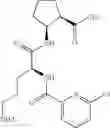


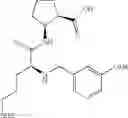


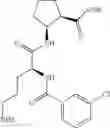


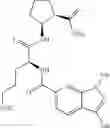


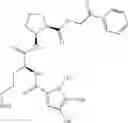


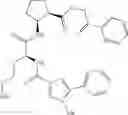


Sources:
- United States Patent and Trademark Office - verify current appl. status at the USPTO↗
Similar patent applications:
- » 10412279
Pharmaceutically active ornithine derivatives, ammonium salts thereof and methods of making same - » 20060079531
Pharmaceutically active ornithine derivatives, ammonium salts thereof and methods of making same - » 20070142638
Ornithine derivatives as prostaglandin e2 agonists or antagonists - » 20110250137
RADIOISOTOPE-LABELED LYSINE AND ORNITHINE DERIVATIVES, THEIR USE AND PROCESSES FOR THEIR PREPARATION
Recent applications in this class:
- » 20250263366 2025-08-21
CASPASE 6 INHIBITORS AND USES THEREOF - » 20240025845 2024-01-25
METASTASIS-INHIBITING COMPOSITION OF NOVEL METHYLSULFONAMIDE DERIVATIVE COMPOUND - » 20230202974 2023-06-29
CASPASE 6 INHIBITORS AND USES THEREOF - » 20220315528 2022-10-06
INHIBITORS OF PHOSPHOLIPID SYNTHESIS AND METHODS OF USE - » 20210107867 2021-04-15
Ultra short acting anti-arrhythmic agents - » 20200165197 2020-05-28
SULFONAMIDE MACROMOLECULES USEFUL AS SINGLE-ION CONDUCTING POLYMER ELECTROLYTE - » 20200071268 2020-03-05
Sulfonium compound, positive resist composition, and resist pattern forming process - » 20200031766 2020-01-30
Method for preparing (R)-N-[4-(1-amino-ethyl)-2,6-difluoro-phenyl]-methanesulfonamide - » 20190352257 2019-11-21
Ultra short acting anti-arrhythmic agents - » 20190169121 2019-06-06
Method for preparing N-[4-(2-{[2-(4-methane sulfonamidophenoxy) ethyl] (methyl)amino}ethyl)phenyl]methanesulfonamide (dofetilide)
Recent applications for this Assignee:
- » 20250177603 2025-06-05
THROMBIN-CARRYING HEMOSTATIC SHEET - » 20250154272 2025-05-15
ANTI-CLDN4/ANTI-CD137 BISPECIFIC ANTIBODY - » 20250084062 2025-03-13
SUBSTITUTED QUINOLINE DERIVATIVE - » 20250025567 2025-01-23
ANTIBODY-DRUG COMPLEX CONTAINING TOLL-LIKE RECEPTOR 7/8 DUAL AGONIST COMPOUND - » 20240317804 2024-09-26
CELL PENETRATING PEPTIDE - » 20240209108 2024-06-27
Anti-CLDN4/anti-CD137 bispecific antibody - » 20240182483 2024-06-06
QUINAZOLINE COMPOUND FOR INDUCING DEGRADATION OF G12D MUTANT KRAS PROTEIN - » 20240180906 2024-06-06
Combination of Talazoparib and an Anti-Androgen for the Treatment of DDR Gene Mutated Metastatic Castration-Sensitive Prostate Cancer - » 20240166736 2024-05-23
Anti-TSPAN8/anti-CD3 bispecific antibody and anti-TSPAN8 antibody - » 20240164692 2024-05-23
ELECTROCARDIOGRAM ANALYSIS ASSISTANCE DEVICE, PROGRAM, ELECTROCARDIOGRAM ANALYSIS ASSISTANCE METHOD, ELECTROCARDIOGRAM ANALYSIS ASSISTANCE SYSTEM, PEAK ESTIMATION MODEL GENERATION METHOD, AND SEGMENT ESTIMATION MODEL GENERATION METHOD