COMPOSITE ALLOY BONDING WIRE AND MANUFACTURING METHOD THEREOF
US20100239455A1
2010-09-23
12/408,952
2009-03-23
Abstract:
A manufacturing method for a composite alloy bonding wire and products thereof. A primary material of Ag is melted in a vacuum melting furnace, and then a secondary metal material of Pd is added into the vacuum melting furnace and is co-melted with the primary material to obtain a Ag—Pd alloy solution. The obtained Ag—Pd alloy solution is drawn to obtain a Ag—Pd alloy wire. The Ag—Pd alloy wire is then drawn to obtain a Ag—Pd alloy bonding wire with a predetermined diameter.
Interested in similar patents?
Get notified when new applications in this technology area are published.
Classification:
B21C1/003 » CPC main
Manufacture of metal sheets, metal wire, metal rods, metal tubes by drawing Drawing materials of special alloys so far as the composition of the alloy requires or permits special drawing methods or sequences
B21C37/047 » CPC further
Manufacture of metal sheets, bars, wire, tubes or like semi-manufactured products, not otherwise provided for; Manufacture of tubes of special shape of bars or wire of fine wires
B23K35/3006 » CPC further
Rods, electrodes, materials, or media, for use in soldering, welding, or cutting characterised by the composition or nature of the material; Selection of soldering or welding materials proper with the principal constituent melting at less than 1550 degrees C Ag as the principal constituent
C22F1/14 » CPC further
Changing the physical structure of non-ferrous metals or alloys by heat treatment or by hot or cold working of noble metals or alloys based thereon
H01L24/43 » CPC further
Arrangements for connecting or disconnecting semiconductor or solid-state bodies; Methods or apparatus related thereto; Means for bonding being attached to, or being formed on, the surface to be connected, e.g. chip-to-package, die-attach, "first-level" interconnects; Manufacturing methods related thereto; Wire connectors; Manufacturing methods related thereto Manufacturing methods
H01L24/45 » CPC further
Arrangements for connecting or disconnecting semiconductor or solid-state bodies; Methods or apparatus related thereto; Means for bonding being attached to, or being formed on, the surface to be connected, e.g. chip-to-package, die-attach, "first-level" interconnects; Manufacturing methods related thereto; Wire connectors; Manufacturing methods related thereto; Structure, shape, material or disposition of the wire connectors prior to the connecting process of an individual wire connector
H01L2224/437 » CPC further
Indexing scheme for arrangements for connecting or disconnecting semiconductor or solid-state bodies and methods related thereto as covered by; Means for bonding being attached to, or being formed on, the surface to be connected, e.g. chip-to-package, die-attach, "first-level" interconnects; Manufacturing methods related thereto; Wire connectors; Manufacturing methods related thereto; Manufacturing methods Involving monitoring, e.g. feedback loop
H01L2924/12041 » CPC further
Indexing scheme for arrangements or methods for connecting or disconnecting semiconductor or solid-state bodies as covered by; Details of semiconductor or other solid state devices to be connected; Device type; Passive devices, e.g. 2 terminal devices; Optical Diode LED
H01L2924/14 » CPC further
Indexing scheme for arrangements or methods for connecting or disconnecting semiconductor or solid-state bodies as covered by; Details of semiconductor or other solid state devices to be connected; Device type Integrated circuits
H01L2924/01046 » CPC further
Indexing scheme for arrangements or methods for connecting or disconnecting semiconductor or solid-state bodies as covered by; Chemical elements Palladium [Pd]
H01L2924/013 » CPC further
Indexing scheme for arrangements or methods for connecting or disconnecting semiconductor or solid-state bodies as covered by Alloys
H01L2924/01201 » CPC further
Indexing scheme for arrangements or methods for connecting or disconnecting semiconductor or solid-state bodies as covered by; Semiconductor purity grades 1N purity grades, i.e. 90%
H01L2924/01202 » CPC further
Indexing scheme for arrangements or methods for connecting or disconnecting semiconductor or solid-state bodies as covered by; Semiconductor purity grades 2N purity grades, i.e. 99%
H01L2924/01203 » CPC further
Indexing scheme for arrangements or methods for connecting or disconnecting semiconductor or solid-state bodies as covered by; Semiconductor purity grades 3N purity grades, i.e. 99.9%
H01L2924/01204 » CPC further
Indexing scheme for arrangements or methods for connecting or disconnecting semiconductor or solid-state bodies as covered by; Semiconductor purity grades 4N purity grades, i.e. 99.99%
H01L2224/43986 » CPC further
Indexing scheme for arrangements for connecting or disconnecting semiconductor or solid-state bodies and methods related thereto as covered by; Means for bonding being attached to, or being formed on, the surface to be connected, e.g. chip-to-package, die-attach, "first-level" interconnects; Manufacturing methods related thereto; Wire connectors; Manufacturing methods related thereto; Manufacturing methods; Methods of manufacturing wire connectors involving a specific sequence of method steps with repetition of the same manufacturing step
H01L2224/4321 » CPC further
Indexing scheme for arrangements for connecting or disconnecting semiconductor or solid-state bodies and methods related thereto as covered by; Means for bonding being attached to, or being formed on, the surface to be connected, e.g. chip-to-package, die-attach, "first-level" interconnects; Manufacturing methods related thereto; Wire connectors; Manufacturing methods related thereto; Manufacturing methods; Mechanical processes Pulling
H01L2924/00015 » CPC further
Indexing scheme for arrangements or methods for connecting or disconnecting semiconductor or solid-state bodies as covered by; Technical content checked by a classifier the subject-matter covered by the group, the symbol of which is combined with the symbol of this group, being disclosed as prior art
H01L2924/20755 » CPC further
Indexing scheme for arrangements or methods for connecting or disconnecting semiconductor or solid-state bodies as covered by; Parameters; Diameter ranges larger or equal to 50 microns less than 60 microns
H01L2924/20756 » CPC further
Indexing scheme for arrangements or methods for connecting or disconnecting semiconductor or solid-state bodies as covered by; Parameters; Diameter ranges larger or equal to 60 microns less than 70 microns
H01L2924/20757 » CPC further
Indexing scheme for arrangements or methods for connecting or disconnecting semiconductor or solid-state bodies as covered by; Parameters; Diameter ranges larger or equal to 70 microns less than 80 microns
H01L2924/20758 » CPC further
Indexing scheme for arrangements or methods for connecting or disconnecting semiconductor or solid-state bodies as covered by; Parameters; Diameter ranges larger or equal to 80 microns less than 90 microns
H01L2924/20759 » CPC further
Indexing scheme for arrangements or methods for connecting or disconnecting semiconductor or solid-state bodies as covered by; Parameters; Diameter ranges larger or equal to 90 microns less than 100 microns
H01L2924/2076 » CPC further
Indexing scheme for arrangements or methods for connecting or disconnecting semiconductor or solid-state bodies as covered by; Parameters; Diameter ranges equal to or larger than 100 microns
H01L2224/43848 » CPC further
Indexing scheme for arrangements for connecting or disconnecting semiconductor or solid-state bodies and methods related thereto as covered by; Means for bonding being attached to, or being formed on, the surface to be connected, e.g. chip-to-package, die-attach, "first-level" interconnects; Manufacturing methods related thereto; Wire connectors; Manufacturing methods related thereto; Manufacturing methods; Post-treatment of the connector Thermal treatments, e.g. annealing, controlled cooling
H01L2924/00014 » CPC further
Indexing scheme for arrangements or methods for connecting or disconnecting semiconductor or solid-state bodies as covered by; Technical content checked by a classifier the subject-matter covered by the group, the symbol of which is combined with the symbol of this group, being disclosed without further technical details
H01L2924/01049 » CPC further
Indexing scheme for arrangements or methods for connecting or disconnecting semiconductor or solid-state bodies as covered by; Chemical elements Indium [In]
H01L2924/00011 » CPC further
Indexing scheme for arrangements or methods for connecting or disconnecting semiconductor or solid-state bodies as covered by; Technical content checked by a classifier Not relevant to the scope of the group, the symbol of which is combined with the symbol of this group
H01L2924/01005 » CPC further
Indexing scheme for arrangements or methods for connecting or disconnecting semiconductor or solid-state bodies as covered by; Chemical elements Boron [B]
C22C5/06 » CPC further
Alloys based on noble metals Alloys based on silver
B21C1/00 IPC
Manufacture of metal sheets, metal wire, metal rods, metal tubes by drawing
B21C1/00 IPC
Metal drawing
Description
BACKGROUND OF THE INVENTION
1. Field of the Invention
The present invention generally relates to a bonding wire used as a packaging wire, in particular, to a bonding wire used in semiconductor packaging process.
2. Description of Related Art
In semiconductor device packaging processes for IC, LED, SAW, a wire bonding process is often performed to electrically connect the chip to the substrate by bonding wire, which used as a signal and electrical current transmitting medium between the chip and the substrate.
The primary characteristics of a bonding wire, such as breaking load, elongation, loop, melting point, and bondability with IC chips are dependent on the materials used as the bonding wire. The performance of the packaged semiconductor device is influenced by the characteristics of the bonding wire. According to different types of chip and substrate, the adapted bonding wire has different specification.
The conventional bonding wires are usually made of pure Au material. Pure Au bonding wire has better physical properties, such as elongation and electrical conductivity. However, pure Au bonding wire inevitably leads to high cost.
Therefore, the subject of the present invention is to solve the above mentioned problem to provide a low cost bonding wire with performance comparable to pure Au bonding wire.
SUMMARY OF THE INVENTION
The subject of this invention is to provide a low cost composite alloy bonding wire made of silver and Palladium, capable of having performance as good as a pure Au bonding wire.
In order to obtain the above mentioned subject, a manufacturing method for a composite alloy bonding wire is disclosed. A primary metal material of Ag is melted in a vacuum melting furnace, and then a secondary metal material of Pd is added into the vacuum melting furnace and is co-melted with the primary metal material of Ag to obtain a Ag—Pd alloy solution. The obtained Ag—Pd alloy solution is then cast and drawn to obtain a Ag—Pd alloy wire. Finally, the obtained Ag—Pd alloy wire is then drawn to obtain a Ag—Pd alloy bonding wire with a predetermined diameter.
Besides, a composite alloy bonding wire made by the abovementioned manufacturing method is provided. The composite alloy bonding wire includes 90.00˜99.99 wt. % Ag and 0.01˜10.00 wt. % Pd.
The composite alloy bonding wire is capable of having performance as good as a pure Au bonding wire and decreasing the manufacturing cost.
BRIEF DESCRIPTION OF DRAWING
The features of the invention believed to be novel are set forth with particularity in the appended claims. The invention itself, however, may be best understood by reference to the following detailed description of the invention, which describes an exemplary embodiment of the invention, taken in conjunction with the accompanying drawings, in which:
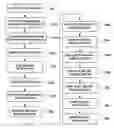
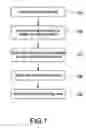
FIG. 1 is a flow chart for manufacturing composite alloy bonding wire of the present invention; and
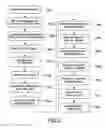
FIG. 2 shows detailed sub-steps in the flow chart of FIG. 1.
DETAILED DESCRIPTION OF THE INVENTION
In cooperation with attached drawings, the technical contents and detailed description of the present invention are described thereinafter according to a preferable embodiment, being not used to limit its executing scope. Any equivalent variation and modification made according to appended claims is all covered by the claims claimed by the present invention.
Refer to FIG. 1 and FIG. 2, which respectively are a flow chart for manufacturing composite alloy bonding wire of the present invention and a drawing showing detailed sub-steps in the flow chart of FIG. 1. Step 100, a primary material of Ag is provided.
Step 102, the primary material is melted in a vacuum melting furnace (step 102a). Specific amount of a secondary metal material of Pd is added into the vacuum melting furnace (step 102b), and co-melted with the primary material in the vacuum melting furnace to obtain a Ag—Pd alloy solution (step 102c). The Ag—Pd alloy solution consists of 90.00˜99.99 wt. % Ag and 0.01˜10.00 wt. % Pd.
Subsequently, continuous casting and drawing processes are performed on the Ag—Pd alloy solution to obtain a Ag—Pd alloy wire with diameter of 4-8 mm (step 102d). The Ag—Pd alloy wire is rewired by a reeling machine (step 102e) and then composition analysis (102f) is performed on the Ag—Pd alloy wire to check if the obtained composition meets the requirement.
Step 104, a drawing process is performed on the Ag—Pd alloy wire; the obtained Ag—Pd alloy wire with a diameter of 4-8 mm is drawn by a first thick drawing machine to obtain a Ag—Pd alloy wire with a diameter of 3 mm or smaller than 3 mm (step 104a). The Ag—Pd alloy wire with a diameter of 3 mm or smaller than 3 mm is drawn by a second thick drawing machine to obtain a Ag—Pd alloy wire with a predetermined diameter of 1 mm or smaller than 1 mm (step 104b). The Ag—Pd alloy wire with diameter 1 mm or smaller than 1 mm is drawn by a first thin drawing machine to obtain a Ag—Pd alloy wire with a diameter of 0.5 mm or smaller than 0.5 mm (step 104c). Then the Ag—Pd alloy wire with a diameter of 0.5 mm or smaller than 0.5 mm is sequentially drawn by the second thin drawing machine (step 104d), a very thin drawing machine (step 104e) and an ultra thin drawing machine (step 104f) to obtain an ultra thin Ag—Pd alloy bonding wire with a predetermined diameter of 0.0508 mm (2.00 mil) to 0.010 mm (0.40 mil).
Step 106, the surface of the Ag—Pd alloy bonding wire is cleaned.
Step 108, the Ag—Pd alloy bonding wire is annealed to ensure a final product with desirable physical properties of breaking load and elongation.
The Ag—Pd alloy bonding wire can be applied to packaging process of IC, LED and SAW.
The invention is more detailed described by three embodiments below:
EMBODIMENT 1
A primary material of Ag is provided and is melted in a vacuum melting furnace. Then, specific amount of a secondary metal material of Pd is added into the vacuum melting furnace, and is co-melted with the primary material in the vacuum melting furnace to obtain a Ag—Pd alloy solution. The Ag—Pd alloy solution consists of: 99.99 wt. % Ag and 0.001 wt. % Pd.
Continuous casting and drawing processes are performed on the Ag—Pd alloy solution to obtain a Ag—Pd alloy wire with a diameter of 4 mm. The Ag—Pd alloy wire is rewired by a reeling machine and then composition analysis is performed on the Ag—Pd alloy wire to check if the obtained composition meets the requirement.
A drawing process is performed on the Ag—Pd alloy wire; the obtained Ag—Pd alloy wire with a diameter of 4 mm is drawn by a first thick drawing machine to obtain a Ag—Pd alloy wire with a diameter of 3 mm. The Ag—Pd alloy wire with a diameter of 3 mm is drawn by a second thick drawing machine to obtain a Ag—Pd alloy wire with a diameter of 1 mm. The Ag—Pd alloy wire with a diameter of 1 mm is drawn by a first thin drawing machine to obtain a Ag—Pd alloy wire with a diameter of 0.18 mm. Then the Ag—Pd alloy wire with a diameter of 0.18 mm is sequentially drawn by the second thin drawing machine, a very thin drawing machine and an ultra thin drawing machine to obtain an ultra thin Ag—Pd alloy bonding wire with a predetermined diameter of 0.050 mm to 0.010 mm.
Finally, the surface of Ag—Pd alloy bonding wire is cleaned and is annealed.
EMBODIMENT 2
A primary material of Ag is provided and is melted in a vacuum melting furnace. Then, specific amount of a secondary metal material of Pd is added into the vacuum melting furnace, and is co-melted with the primary material in the vacuum melting furnace to obtain a Ag—Pd alloy solution. The Ag—Pd alloy solution consists of: 95.00 wt. % Ag and 5.00 wt. % Pd.
Continuous casting and drawing processes are performed on the Ag—Pd alloy solution to obtain a Ag—Pd alloy wire with a diameter of 6 mm. The Ag—Pd alloy wire is rewired by a reeling machine and then composition analysis is performed on the Ag—Pd alloy wire to check if the obtained composition meets the requirement.
A drawing process is performed on the Ag—Pd alloy wire; the obtained Ag—Pd alloy wire with a diameter of 6 mm is drawn by a first thick drawing machine to obtain a Ag—Pd alloy wire with a diameter of 3 mm. The Ag—Pd alloy wire with a diameter of 3 mm is drawn by a second thick drawing machine to obtain a Ag—Pd alloy wire with a diameter of 1.0 mm. The Ag—Pd alloy wire with a diameter of 1.0 mm is drawn by a first thin drawing machine to obtain a Ag—Pd alloy wire with a diameter of 0.18 mm. Then the Ag—Pd alloy wire with a diameter of 0.18 mm is sequentially drawn by the second thin drawing machine, a very thin drawing machine and an ultra thin drawing machine to obtain an ultra thin Ag—Pd alloy bonding wire with a predetermined diameter of 0.050 mm to 0.010 mm.
Finally, the surface of Ag—Pd alloy bonding wire is cleaned and is annealed.
EMBODIMENT 3
A primary material of Ag is provided and is melted in a vacuum melting furnace. Then, specific amount of a secondary metal material of Pd is added into the vacuum melting furnace, and is co-melted with the primary material in the vacuum melting furnace to obtain a Ag—Pd alloy solution. The Ag—Pd alloy solution consists of: 90.00 wt. % Ag and 10.00 wt. % Pd.
Continuous casting and drawing processes are performed on the Ag—Pd solution to obtain a Ag—Pd alloy wire with a diameter of 8 mm. The Ag—Pd alloy wire is rewired by a reeling machine and then composition analysis is performed on the Ag—Pd alloy wire to check if the obtained composition meets the requirement.
A drawing process is performed on the Ag—Pd alloy wire; the obtained Ag—Pd alloy wire with a diameter of 8 mm is drawn by a first thick drawing machine to obtain a Ag—Pd alloy wire with a diameter of 2 mm. The Ag—Pd alloy wire with a diameter of 2 mm is drawn by a second thick drawing machine to obtain a Ag—Pd alloy wire with a diameter of 1.0 mm. The Ag—Pd alloy wire with a diameter of 1.0 mm is drawn by a first thin drawing machine to obtain a Ag—Pd alloy wire with a diameter of 0.18 mm. Then the Ag—Pd alloy wire with a diameter of 0.18 mm is sequentially drawn by the second thin drawing machine, a very thin drawing machine and an ultra thin drawing machine to obtain an ultra thin Ag—Pd alloy bonding wire with a predetermined diameter of 0.050 mm to 0.010 mm.
Finally, the surface of Ag—Pd alloy bonding wire is cleaned and is annealed.
While the invention is described in by way of examples and in terms of preferred embodiments, it is to be understood that the invention is not limited thereto. On the contrary, the aim is to cover all modifications, alternatives and equivalents falling within the spirit and scope of the invention as defined by the appended claims.
Claims
1. A manufacturing method for a composite alloy bonding wire, comprising the steps in order of:
a) providing a primary material of Ag;
b) melting the primary material in a vacuum melting furnace, adding a secondary metal material of Pd into the vacuum melting furnace and co-melting with the primary material in the vacuum melting furnace to obtain a Ag-Pd alloy solution;
c) continuously casting and drawing the Ag-Pd alloy solution to obtain a Ag-Pd alloy wire with a diameter of 4-8 mm to be rewired by a reeling machine; and
d) drawing the rewired Ag-Pd alloy wire to obtain a Ag-Pd alloy bonding wire with a predetermined diameter.
2. The manufacturing method according to claim 1, wherein the weight percent of Ag in step a) is 90.00%-99.99%.
3. (canceled)
4. The manufacturing method according to claim 1, wherein the surface of the Ag-Pd alloy bonding wire is cleaned and is annealed after step d).
5. (canceled)
6. (canceled)
7. (canceled)
8. The manufacturing method according to claim 1, wherein the step d) further includes the steps of:
d1) drawing by a first thick drawing machine to obtain a Ag-Pd alloy wire with a diameter of 3 mm or smaller than 3 mm;
d2) drawing by a second thick drawing machine to obtain a Ag-Pd alloy wire with a diameter of 1 mm or smaller than 1 mm;
d3) drawing by a first thin drawing machine to obtain a Ag-Pd alloy wire with a diameter of 0.5 mm or smaller than 0.5 mm;
d4) drawing by a first thin drawing machine to obtain a Ag-Pd alloy wire with a diameter of 0.5 mm or smaller than 0.5 mm; and
d5) drawing by a second thin drawing machine, a very thin drawing machine and an ultra thin drawing machine to obtain a Ag-Pd alloy wire with a diameter of 0.050 mm to 0.010 mm.
Images & Drawings included:
Sources:
- United States Patent and Trademark Office - verify current appl. status at the USPTO↗
Similar patent applications:
Recent applications in this class:
- » 20200324328 2020-10-15
Method for manufacturing cold-forged, extruded aluminum alloy tube - » 20200298296 2020-09-24
Method for converting wire rod of nonferrous metals and alloys thereof to wire with high elongation and in the annealed state - » 20170209908 2017-07-27
Fabrication of high-entropy alloy wire and multi-principal element alloy wire - » 20170151595 2017-06-01
Method for manufacturing single-crystalline metal ultrafine wire - » 20170113255 2017-04-27
Chassis for small electronic device and method for forming same, and rolled aluminum alloy laminated sheet material for chassis for small electronic device - » 20130164169 2013-06-27
COMPOSITE ALLOY BONDING WIRE - » 20130160902 2013-06-27
MANUFACTURING METHOD FOR COMPOSITE ALLOY BONDING WIRE - » 20120125070 2012-05-24
Method for producing a small thin-walled tube from a magnesium alloy - » 20120093681 2012-04-19
COMPOSITE ALLOY BONDING WIRE AND MANUFACTURING METHOD THEREOF - » 20120064357 2012-03-15
TYRE BEAD WIRE AND PROCESS FOR PRODUCTION THEREOF