Efficient process to induce enantioselectivity in procarbonyl compounds
US20100286408A1
2010-11-11
12/667,985
2008-07-30
✅ Patent granted
US 9,156,756 B2
2015-10-13
WO; PCT/IN2008/000476; 20080730
WO; WO2009/095931; 20090806
Joseph Kosack | Matthew Coughlin
Blank Rome LLP
2028-07-30
Abstract:
An efficient method to induce the enantioselectivity in procarbonyl compounds using chiral organometallic complexes. The present invention is also described a method for producing organo metallic complexes using a base and a metal halide.
Inventors:
- Chava Satyanarayana 1 🇮🇳 Andhra Pradesh, India
- Bollu Ravindra Babu 2 🇮🇳 Andhra Pradesh, India
- Chava Satyanarayana 1 🇮🇳 Hyderabad, India
- Bollu Ravindra Babu 1 🇮🇳 Hyderabad, India
Assignee:
- Laurus Labs Private Limited 2 🇮🇳 Hyderabad (Andhra Pradesh), India
- Aptuit Laurus Pvt. Ltd. 1 🇮🇳 Banjara Hills, Hyderabad, India
Applicant:
Interested in similar patents?
Get notified when new applications in this technology area are published.
Classification:
C07D207/08 IPC
Heterocyclic compounds containing five-membered rings not condensed with other rings, with one nitrogen atom as the only ring hetero atom with only hydrogen or carbon atoms directly attached to the ring nitrogen atom having no double bonds between ring members or between ring members and non-ring members with hydrocarbon radicals, substituted by hetero atoms, attached to ring carbon atoms
C07C211/52 IPC
Compounds containing amino groups bound to a carbon skeleton having amino groups bound to carbon atoms of six-membered aromatic rings of the carbon skeleton having amino groups bound to only one six-membered aromatic ring the carbon skeleton being further substituted by halogen atoms or by nitro or nitroso groups
C07C29/42 » CPC main
Preparation of compounds having hydroxy or O-metal groups bound to a carbon atom not belonging to a six-membered aromatic ring increasing the number of carbon atoms by reactions with formation of hydroxy groups, which may occur via intermediates being derivatives of hydroxy, e.g. O-metal by reaction with aldehydes or ketones with compounds containing triple carbon-to-carbon bonds, e.g. with metal-alkynes
C07D265/18 » CPC further
Heterocyclic compounds containing six-membered rings having one nitrogen atom and one oxygen atom as the only ring hetero atoms 1,3-Oxazines; Hydrogenated 1,3-oxazines condensed with carbocyclic rings or ring systems condensed with one six-membered ring with hetero atoms directly attached in position 2
C07F1/005 » CPC further
Compounds containing elements of Groups 1 or 11 of the Periodic System without C-Metal linkages
C07F3/003 » CPC further
Compounds containing elements of Groups 2 or 12 of the Periodic System without C-Metal linkages
C07F1/00 IPC
Compounds containing elements of Groups 1 or 11 of the Periodic System
C07F3/00 IPC
Compounds containing elements of Groups 2 or 12 of the Periodic System
Description
FIELD OF INVENTION
Present invention is directed towards the cost effective and industrially applicable process to induce enantioselectivity with improved yields. The present invention is also describes an improved process for making organometallic complexes.
BACKGROUND OF THE INVENTION
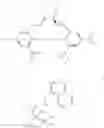
Asymmetric addition of organometallic compounds to carbonyls is a useful method for the production of chiral secondary/tertiary-alcohols. Typically for asymmetric synthesis, the active catalyst is generated in situ by the reaction of Lewis acid with chiral ligands. Addition of organometallic reagents to aldehydes and activated ketones has been achieved with excellent enantioselectivity. With inactivated ketones there has been some success, e.g., using salen 1 and camphanosulphonamide ligand 2.
Generally, stoichiometric amount of the promoters [Lewis acid, e.g., ZnR2 (R=alkyl/aryl), Zn(OTf)2, Cu(OTf)2, etc] is required for these asymmetric syntheses. Although, employing these promoters chiral alcohols has been obtained in high yields and ee upto 99%, they have limited applicability in industrial kale synthesis of the pharmaceutical intermediates, because they are expensive, difficult to store, difficult to handle, especially dialkyl zinc's are highly pyrophoric and require special modification to transfer the reagent. Moreover the liberated byproduct methane/ethane (when using ZnMe2/ZnEt2) are a concern on industrial scale synthesis.
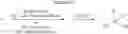
To overcome this problem, herein we report an efficient synthesis of active organometallic catalyst formed in situ from chiral auxiliaries and Metal halides. For example ephedrine zincate 3 was obtained by first deprotonation of alcohol (achiral auxiliary) and N-pyrollidene norephidrine (chiral auxiliary) with a base (e.g. NaH); to the resulting alkoxides was added zinc halides (scheme 1A). The advantages include the low cost of zinc halides, ease of storing, handling and transfer. Moreover, the byproduct (sodium halides) formed has no safety issues. Based upon this concept, other active catalysts were synthesized using chiral ligands (such as binols, amino alcohols, amino alcohol derivatives, ethylenediamine, alkylated ethylene diamines and ethylenediamine derivatives in combination with metal source based on zinc and copper (scheme 1).
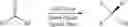
Using these chiral catalysts alkylation/alkynation of aldehydes afforded corresponding secondary alcohols (scheme-2),
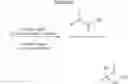
while addition to ketones/β-ketoesters afforded corresponding tertiary alcohols (scheme 3A and 3B).
SUMMARY OF THE INVENTION
The main object of the present invention is to provide an improved process to make organometallic complexes using metal halides
Another object of the present invention is to provide a process to induce the enantioselectivity in proketones.
Another object of the present invention is to provide a process to prepare an amino alcohol of formula
by the addition of (un) substituted alkane/alkyne (R2) to a ketone using an organometallic complex
Another object of the present invention is to provide an improved process to prepare organometallic complex without using Dialkyl zinc.
DETAILED DESCRIPTION OF THE INVENTION
In accordance with the present invention the main object is to prepare organometallic complex comprising the steps of;
-
- Preparing the salts of chiral and/or achiral additives
- Adding metal halide to the above obtained salts and converting to chiral and/or achiral metal complex
- Adding Grignard reagent/lithium reagent or Zinc reagent etc, to the above chiral and/or achiral metal complex to form chiral organometal complex.
- (or)
- Adding terminal alkyne and a base to the above chiral metal complex to form chiral organometal complex.
The process as described above wherein metal salts of chiral and achiral additives are prepared by treating the chiral and/or achiral additives with a base selected from metal hydrides, metal alkoxides or metal hydroxides or organic bases such as DBU, HMDS, lower alkyl amines etc, and metal hydrides are more preferred.
The process as described above wherein the metal halide is a transitional metal halide and the most preferred metal halides are being Zinc and copper halides.
The process as described above wherein the Grignard reagent is selected from alkyl, alkenyl, alkynyl and aryl magnesium halides.
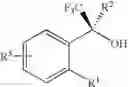
In a specific embodiment of the present invention is to provide an efficient method to induce the enantioselectivity in procarbonyl compounds and their enantiomers which are shown below;
Wherein R1 is
-
- C1-C6-alkyl, C2-C6-alkenyl, or C2-C6-alkynyl, unsubstituted or mono- or di-substituted with a substituent selected from the group consisting of: halo (Cl, Br, F, I), CF3, CN, NO2, NH2, NH(C1-C6-alkyl), N(C1-C6-alkyl)2, CONH2, CONH(C1-C6-alkyl), CON(C1-C6-alkyl)2, NHCONH2, NHCONH(C1-C6-alkyl), NHCON(C1-C6-alkyl)2, CO2—C1-C6-alkyl, C3-C7-cycloalkyl, or C1-C6-alkoxy;
- phenyl, biphenyl, or naphthyl, unsubstituted or substituted with one to four substituent selected from R3, R4, R5, and R6;
- R3, R4, R5, and R6 are independently: halo (Cl, Br, F, I), CF3, CN, NO2, NH2, NH(C1-C6-alkyl), N(C1-C6-alkyl)2, CONH2, CONH(C1-C6-alkyl), CON(C1-C6-alkyl)2, NHCONH2, NHCONH(C1-C6-alkyl), NHCON(C1-C6-alkyl)2, aryl, CO2—C1-C6-alkyl, C1-C6-alkyl, C2-C6-alkenyl, C2-C6-alkynyl, C3-C7-cycloalkyl, or C1-C6-alkoxy, such that C1-C6-alkyl is unsubstituted or substituted with aryl, aryl is defined as phenyl, biphenyl, or naphthyl, unsubstituted or substituted with C1-C6-alkyl, C1-C6-alkoxy, NO2, or halo (Cl, Br, F, I);
R2 is:
-
- H
- C1-C6-alkyl, C2-C6-alkenyl, or C2-C6-alkynyl, unsubstituted or mono- or di-substituted with a substituent selected from the group consisting of: halo (Cl, Br, F, I), CF3, CN, NO2, NH2, NH(C1-C6-alkyl), N(C1-C6-alkyl)2, CONH2, CONH(C1-C6-alkyl), CON(C1-C6-alkyl)2, NHCONH2, NHCONH(C1-C6-alkyl), NHCON(C1-C6-alkyl)2, CO2—C1-C6-alkyl, C3-C7-cycloalkyl, or C1-C6-alkoxy;
- a. C1-C4-perfluoroalkyl,
R is:
-
- C1-C6-alkyl, C2-C6-alkenyl, or C2-C6-alkynyl, unsubstituted or mono- or di-substituted with a substituent selected from the group consisting of: halo (Cl, Br, F, I), CF3, CN, NO2, NH2, NH(C1-C6-alkyl), N(C1-C6-alkyl)2, CONH2, CONH(C1-C6-alkyl), CON(C1-C6-alkyl)2, NHCONH2, NHCONH(C1-C6-alkyl), NHCON(C1-C6-alkyl)2, CO2—C1-C6-alkyl, C3-C7-cycloalkyl, or C1-C6-alkoxy;
comprising the steps of: - Preparing the salts of chiral and/or achiral additives
- Adding metal halide to the above obtained salts and converting to chiral and/or achiral metal complex
- Adding the Grignard reagent/lithium reagent or Zinc reagent etc, to the above chiral and/or achiral metal complex to form chiral organometal complex.
- Adding the procarbonyl compounds to the chiral organometal complex
- C1-C6-alkyl, C2-C6-alkenyl, or C2-C6-alkynyl, unsubstituted or mono- or di-substituted with a substituent selected from the group consisting of: halo (Cl, Br, F, I), CF3, CN, NO2, NH2, NH(C1-C6-alkyl), N(C1-C6-alkyl)2, CONH2, CONH(C1-C6-alkyl), CON(C1-C6-alkyl)2, NHCONH2, NHCONH(C1-C6-alkyl), NHCON(C1-C6-alkyl)2, CO2—C1-C6-alkyl, C3-C7-cycloalkyl, or C1-C6-alkoxy;
The process as described above wherein salts of chiral and achiral additives are prepared by treating the chiral and achiral additives with metal hydride or metal alkoxides or metal hydroxides or organic bases whereas metal hydrides are more preferred.
The process as described above wherein the metal halide is a transitional metal halide and the most preferred metal halides are being Zinc and copper halides.
The process as described above wherein the Grignard reagent is selected from alkyl, alkenyl, alkynyl and aryl magnesium halides.
The process as described above wherein the Lithium/Zinc reagent is selected from alkyl, alkenyl, alkynyl and aryl Lithium/Zinc reagents.
A further embodiment of the invention is the process for the preparation of an amino alcohol of formula:
Wherein
R3 is halo (Cl, Br, F, I)
R1 is amino or substituted amino
R2 is C1-C6-alkyl, C2-C6-alkenyl, or C2-C6-alkynyl, unsubstituted or mono- or di-substituted with a substituent selected from the group consisting of: halo (Cl, Br, F, I), CF3, CN, NO2, NH2, NH(C1-C6-alkyl), N(C1-C6-alkyl)2, CONH2, CONH(C1-C6-alkyl), CON(C1-C6-alkyl)2, NHCONH2, NHCONH(C1-C6-alkyl), NHCON(C1-C6-alkyl)2, CO2—C1-C6-alkyl, C3-C7-cycloalkyl, or C1-C6-alkoxy;
comprising the steps of:
-
- Adding slowly an alkanol and chiral additive to a base in an organic solvent
- Treating the above reaction mass with a metal halide to get chiral/achiral metal complex
- Adding organometallic reagent of formula R2M, wherein M represents Li, Zn or MgX; X is Cl, Br, I and F; to the metal complex to get an organometal complex
- Mixing a carbonyl compound with the organometal complex to give the chiral alcohol.
The process as described above wherein the chiral additive is pyrrolidinyl norephidrine or its enantiomer or diastereomer.
The process as described above wherein the metal halide is a transitional metal halide and the most preferred metal halides are being Zinc and copper halides.
The process as described above wherein the base is selected from metal hydrides, metal alkoxides, metal hydroxides and organic bases.
The process as described above wherein the preferred metal hydride is sodium hydride.
The compounds of the present invention have asymmetric centers and this invention includes all of the optical isomers and mixtures thereof.
EXAMPLES
The present invention will now be further explained in the following examples. However, the present invention should not be construed as limited thereby. One of ordinary skill in the art will understand how to vary the exemplified preparations to obtain the desired results.
Example-1
Preparation of (S)-5-Chloro-α-(cyclopropylethynyl)-2-amino-α-(trifluoromethyl)benzene methanol
A solution of chloromagnesium-cyclopropylacetylide (CPA-MgCl) was prepared by adding neat cyclopropyl acetylene (3.62 g, 54.7 mmol) to a stirred solution of n-butyl magnesium chloride (2M solution in THF, 26.8 ml, 53.7 mmol) at 0-5° C. The solution was stirred for another 2 h at 0-5° C. In another dry flask, to anhydrous THF (80 ml) at 0-5° C., NaH (57% dispersion in mineral oil, 4.71 g, 117.7 mmol) was added slowly. The ice-bath was removed and the contents stirred at ambient temp for 30 min and cooled again to 0-5° C. 2,2,2-Trifluoroethanol (4.3 g, 3.13 ml, 42.9 mmol), and (1R,2S)-pyrrolidinyl norephidrine (13.5 g, 65.8 mmol) were added and the resulting pale yellow solution was stirred at ambient temp for 60 min. A solution of zinc bromide (11.98 g, 54 mmol) in THF (40 ml) was added and the suspension was stirred for 60 min at 25-30° C. The solution of CPA-MgCl was then warmed to 25-30° C. and then transferred to the ephedrine zincate reagent by cannula, over 15 min., with THF (5 ml) as a wash, and the suspension was stirred for another 2 h. 4-Chloro-2-trifluoroacetylaniline (10 g, 44.7 mmol) was added in one portion to the reaction mixture and stirred for 15 h.
The reaction mixture was quenched with 30% aq K2CO3 (5.5 ml) and aged for 1 h. The solid material was filtered and washed with THF (5×10 ml). The combined filtrate concentrated to approx 10 ml under reduced pressure, toluene (100 ml) was added and sequentially washed with 30% citric acid (2×50 ml) and water (50 ml). The combined aqueous layer was back-extracted with toluene (25 ml) and saved for pyrrolidinyl norephidrine recovery. The combined organic phase was concentrated to approx 10 ml and hexane (50 ml) was added slowly with stirring. The mixture was cooled to 0° C., the solid was collected by filtration, washed with cold hexane (2×10 ml) and dried to give 10 g of pure (S)-5-Chloro-α-(cyclopropylethynyl)-2-amino-α-(trifluoromethyl)benzene methanol as a white solid.
Example-2
Preparation of (S)-5-Chloro-α-(cyclopropylethynyl)-2-amino-α-(trifluoromethyl)benzene methanol hydrochloride
A solution of chloromagnesium-cyclopropylacetylide (CPA-MgCl) was prepared by adding neat cyclopropyl acetylene (3.62 g, 54.7 mmol) to a stirred solution of n-butyl magnesium chloride (2M solution in THF, 26.8 ml, 53.7 mmol) at 0-5° C. The solution was stirred for another 2 h at 0-5° C. In another dry flask, to anhydrous THF (80 ml) at 0-5° C., NaH (57% dispersion in mineral oil, 4.71 g, 117.7 mmol) was added slowly. The ice-bath was removed and the contents stirred at ambient temp for 30 min and cooled again to 0-5° C. 2,2,2-Trifluoroethanol (4.3 g, 3.13 ml, 42.9 mmol), and (1R,2S)-pyrrolidinylnorephidrine (13.5 g, 65.8 mmol) were added and the resulting pale yellow solution was stirred at ambient temp for 60 min. A solution of zinc bromide (11.98 g, 54 mmol) in THF (40 ml) was added and the suspension was stirred for 60 min at 25-30° C. The solution of CPA-MgCl was then warmed to 25-30° C. and then transferred to the ephedrine zincate reagent by cannula, over 15 min., with THF (5 ml) as a wash, and the suspension was stirred for another 2 h. 4-Chloro-2-trifluoroacetylaniline (10 g, 44.7 mmol) was added in one portion to the reaction mixture and stirred for 15 h.
The reaction mixture was quenched with 30% aq K2CO3 (5.5 ml) and aged for 1 h. The solid material was filtered and washed with THF (5×10 ml). The combined filtrate concentrated completely under reduced pressure. The residue was dissolved in isopropyl acetate (100 ml) and sequentially washed with 30% citric acid (2×50 ml) and water (50 ml). The combined aqueous layer was back-extracted with IPAc (25 ml) and saved for pyrrolidinylnorephidrine recovery. To the combined organic phase was added 12N HCl (4.1 ml). The resulting mixture was aged at 25-30° C. and then dried azeotropically and flushed with IPAc (2×25 ml). The slurry was aged for another 24 h at 25-30° C. and then filtered and washing was performed with cold IPAc (3×10 ml) and dried to afford 10 g of analytically pure (S)-5-Chloro-a-(cyclopropylethynyl)-2-amino-α-(trifluoromethyl)benzene methanol hydrochloride as a white solid.
Example-3
Preparation of (S)-5-Chloro-α-(cyclopropylethynyl)-2-amino-α-(trifluoromethyl)benzene methanol
A solution of chloromagnesium-cyclopropylacetylide (CPA-MgCl) was prepared by adding neat cyclopropyl acetylene (36.2 g, 0.548 mol) to a stirred solution of n-butyl magnesium chloride (2M solution in THF, 268.0 ml, 0.535 mol) at 0-5° C. The solution was stirred for another 2 h at 0-5° C. In another dry flask, to anhydrous THF (300 ml) at 0-5° C., NaH (57% dispersion in mineral oil, (44.0 g, 0.916 mol) was added slowly. The ice-bath was removed and the contents stirred at ambient temp for 30 min and cooled again to 0-5° C. 2,2,2-Trifluoroethanol (43 g, 0.429 mol), and (1R,2S)-pyrrolidinyl norephidrine (135 g, 0.65 mol) were added and the resulting pale yellow solution was stirred at ambient temp for 60 min. Zinc chloride (73.1 g, 0.53 mol) was added in four lots and stirred for 60 min at 25-30° C. The solution of CPA-MgCl was then warmed to 25-30° C. and then transferred to the ephedrine zincate reagent, over 15 min., and the suspension was stirred for another 2 h. 4-Chloro-2-trifluoroacetylaniline (100 g, 0.447 mol) was added in one portion to the reaction mixture and stirred for reaction completion.
The reaction mixture was diluted with toluene (300 ml) and stirred for 1 h and quenched into 1M citric acid solution (1000 ml) and stirred for 10 min. Toluene layer was separated and washed with water (2×500 ml). The toluene layer was concentrated completely to give residue. The obtained residue was dissolved in methanol (300 ml) and isolated by adding DM water (450 ml).
Yield: 130 g
Claims
1. A process for preparing an organometallic complex comprising the steps of:
preparing salts of chiral additives, achiral additives, or both;
adding a metal halide to the above obtained salts to obtain a chiral metal complex, an achiral metal complex, or both chiral and achiral metal complexes; and
adding a Grignard reagent/lithium reagent or zinc reagent to the above chiral, achiral, or chiral and achiral metal complexes to form at least a chiral organometal complex.
2. The process of claim 1, wherein the step of preparing salts comprises treating the chiral, the achiral, or the chiral and achiral additives with a base.
3. The process of claim 2, wherein the base is one or more of a metal hydride, metal alkoxide, metal hydroxide and organic base.
4. The process of claim 2, wherein the base is a metal hydride.
5. The process of claim 1, wherein the metal halide is a transitional metal halide.
6. The process of claim 5, wherein the metal halide is one or both of zinc and copper halides.
7. A process for inducing the enantioselectivity in procarbonyl compounds and to produce enantiomers of formula;
wherein R1 is C1-C6-alkyl, C2-C6-alkenyl, or C2-C6-alkynyl, unsubstituted or mono- or di-substituted with a substituent selected from the group consisting of: halo (Cl, Br, F, I), CF3, CN, NO2, NH2, NH(C1-C6-alkyl), N(C1-C6-alkyl)2, CONH2, CONH(C1-C6-alkyl), CON(C1-C6-alkyl)2)NHCONH2, NHCONH(C1-C6-alkyl), NHCON(C1-C6-alkyl)2, CO2—C1-C6-alkyl, C3-C7-cycloalkyl, or C1-C6-alkoxy; phenyl, biphenyl, or naphthyl, unsubstituted or substituted with one to four substituents selected from R3, R4, R5, and R6;
wherein R3, R4, R5, and R6 are independently: halo (Cl, Br, F, I), CF3, CN, NO2, NH2, NH(C1-C6-alkyl), N(C1-C6-alkyl)2, CONH2, CONH(C1-C6-alkyl), CON(C1-C6-alkyl)2, NHCONH2, NHCONH(C1-C6-alkyl), NHCON(C1-C6-alkyl)2, aryl, CO2—C1-C6-alkyl, C1-C6-alkyl, C2-C6-alkenyl, C2-C6-alkynyl, C3-C7-cycloalkyl, or C1-C6-alkoxy, such that C1-C6-alkyl is unsubstituted or substituted with an aryl substituent, and
wherein the aryl substituent is phenyl, biphenyl, or naphthyl, unsubstituted or substituted with C1-C6-alkyl, C1-C6-alkoxy, NO2, or halo (Cl, Br, F, I);
R2 is: H, C1-C6-alkyl, C2-C6-alkenyl, or C2-C6-alkynyl, unsubstituted or mono- or di-substituted with a substituent selected from the group consisting of: halo (Cl, Br, F, I), CF3, CN, NO2, NH2, NH(C1-C6-alkyl), N(C1-C6-alkyl)2, CONH2, CONH(C1-C6-alkyl), CON(C1-C6-alkyl)2, NHCONH2, NHCONH(C1-C6-alkyl), NHCON(C1-C6-alkyl)2, CO2—C1-C6-alkyl, C3-C7-cycloalkyl, or C1-C6-alkoxy; C1-C4-perfluoroalkyl,
R is: C1-C6-alkyl, C2-C6-alkenyl, or C2-C6-alkynyl, unsubstituted or mono- or di-substituted with a substituent selected from the group consisting of: halo (Cl, Br, F, I), CF3, CN5NO2, NH2, NH(C1-C6-alkyl), N(C1-C6-alkyl)2, CONH2, CONH(C1-C6-alkyl), CON(C1-C6-alkyl)2, NHCONH2, NHCONH(C1-C6-alkyl), NHCON(C1-C6-alkyl)2, CO2˜C1-C6-alkyl, C3-C7-cycloalkyl, or C1-C6-alkoxy;
the process comprising the steps of:
preparing salts of chiral additives, achiral additives, or both;
adding a metal halide to the above obtained salts to obtain a chiral metal complex, an achiral metal complex, or both chiral and achiral metal complexes; and
adding a Grignard reagent/lithium reagent or zinc reagent to the above chiral, achiral, or chiral and achiral metal complexes to form at least a chiral organometal complex; and
adding a procarbonyl compound to the chiral organometal complex.
8. The process of claim 7, wherein the step of preparing salts comprises treating the chiral, the achiral, or the chiral and achiral additives with a base.
9. The process of claim 8, wherein the base is selected from metal hydrides, metal alkoxides, metal hydroxides and organic bases.
10. The process of claim 8, wherein the base is a metal hydride.
11. The process of claim 7, wherein the metal halide is a transitional metal halide.
12. The process of claim 11, wherein the metal halide is selected from zinc and copper halides.
13. A process for the preparation of an amino alcohol of formula:
wherein
R3 is halo (Cl, Br, F, I);
R1 is amino or substituted amino;
R2 is C1-C6-alkyl, C2-C6-alkenyl, or C2-C6-alkynyl, unsubstituted or mono- or di-substituted with a substituent selected from the group consisting of: halo (Cl, Br, F, I), CF3, CN, NO2, NH2, NH(C1-C6-alkyl), N(C1-C6-alkyl)2, CONH2, CONH(C1-C6-alkyl), CON(C1-C6-alkyl)2, NHCONH2, NHCONH(C1-C6-alkyl), NHCON(C1-C6-alkyl)2, CO2—C1-C6-alkyl, C3-C7-cycloalkyl, or C1-C6-alkoxy;
comprising the steps of:
adding an alkanol and chiral additive to a base in an organic solvent to form a reaction mass;
treating the reaction mass with a metal halide to obtain a chiral metal complex;
adding an organometallic reagent of formula R2M, wherein M represents Li, Zn or MgX; and wherein X is Cl, Br, I or F; to the chiral metal complex in a solvent;
stirring the suspension to obtain a chiral organometal complex; and
mixing a carbonyl compound with the chiral organometal complex to produce the chiral amino alcohol.
14. The process of claim 13, wherein the base is selected from metal hydrides, metal alkoxides, metal hydroxides and organic bases.
15. The process of claim 13, wherein the base is a metal hydride.
16. The process of claim 15, wherein the metal halide is a transitional metal halide.
17. The process of claim 13, wherein the metal halide is selected from zinc and copper halides.
18. A process for preparing an organometallic complex comprising the steps of:
preparing a salt of a chiral additive, an achiral additive, or both a chiral and achiral additive;
adding a metal halide to either or all of the salts to form one or more metal complexes; and
adding a terminal alkyne and a base to the metal complexes to form at least a chiral organometal complex.
19. The process of claim 18, further comprising prepared the salt by treating a chiral, an achiral, or a chiral and achiral additive with a base.
20. The process of claim 2, wherein the base is one or more of a metal hydride, metal alkoxide, metal hydroxide and organic base.
21. The process of claim 2, wherein the base is a metal hydride.
22. The process of claim 1, wherein the metal halide is a transitional metal halide.
23. The process of claim 5, wherein the metal halide is one of a zinc and copper halide.
Images & Drawings included:




Sources:
- United States Patent and Trademark Office - verify current appl. status at the USPTO↗
Similar patent applications:
Recent applications in this class:
- » 20250059118 2025-02-20
PROCESS FOR ETHYNYLATING SPECIFIC ALPHA, BETA-UNSATURATED KETONES - » 20240294449 2024-09-05
PROCESS FOR THE SYNTHESIS OF PROPARGYLIC ALCOHOL BY REACTING FORMALDEHYDE WITH ACETYLENE IN THE PRESENCE OF A HOMOGENEOUS COPPER CATALYST - » 20210261488 2021-08-26
CATALYTIC ETHYNYLATION - » 20150336863 2015-11-26
Process for the production of 2-alkyl-3-butyn-2-ols - » 20120123166 2012-05-17
METHOD OF PREPARING 1-HYDROXY-1,3,3,5,5-PENTAMETHYLCYCLOHEXANE - » 20110295042 2011-12-01
Method for preparing propargylic alcohol catalyzed by 2-morpholinoisobornane-10-thiol - » 20100016643 2010-01-21
Process for preparing 1,4-butanediol - » 20090227819 2009-09-10
Process for ubiquinone intermediates - » 20090221860 2009-09-03
Transport of ethyne in form of α-alkynols as ethyne precursors - » 20070112226 2007-05-17
Method for the production of propargyl alcohol
Recent applications for this Assignee:
- » 20120264933 2012-10-18
Efficient process to induce enantioselectivity in procarbonyl compounds