Embedded die package and process flow using a pre-molded carrier
US20110068461A1
2011-03-24
12/955,565
2010-11-29
✅ Patent granted
US 8,304,896 B2
2012-11-06
-
-
Quoc Hoang
2031-01-04
Abstract:
An embedded die package includes a carrier with an electrical device in the cavity of the carrier, a first dielectric layer covering the sides and top of the electrical device except for vias over selected bonding pads of the electrical device, a plurality of metal conductors, each of which is in contact with at least one of the vias, one or more additional dielectric layers lying over the metal conductors and the first dielectric layer, wherein a top layer of the one or more dielectric layers has openings with metalization underneath coupled to at least one of the metal conductors, and solder bumps protruding from each of the openings.
Assignee:
- Fairchild Semiconductor Corporation 571 🇺🇸 South Portland, ME, United States
Interested in similar patents?
Get notified when new applications in this technology area are published.
Classification:
H01L23/5389 » CPC main
Details of semiconductor or other solid state devices; Arrangements for conducting electric current within the device in operation from one component to another, i.e. interconnections, e.g. wires, lead frames the interconnection structure between a plurality of semiconductor chips being formed on, or in, insulating substrates the chips being integrally enclosed by the interconnect and support structures
H01L24/19 » CPC further
Arrangements for connecting or disconnecting semiconductor or solid-state bodies; Methods or apparatus related thereto; Means for bonding being attached to, or being formed on, the surface to be connected, e.g. chip-to-package, die-attach, "first-level" interconnects; Manufacturing methods related thereto; High density interconnect [HDI] connectors; Manufacturing methods related thereto Manufacturing methods of high density interconnect preforms
H01L24/24 » CPC further
Arrangements for connecting or disconnecting semiconductor or solid-state bodies; Methods or apparatus related thereto; Means for bonding being attached to, or being formed on, the surface to be connected, e.g. chip-to-package, die-attach, "first-level" interconnects; Manufacturing methods related thereto; High density interconnect [HDI] connectors; Manufacturing methods related thereto; Structure, shape, material or disposition of the high density interconnect connectors after the connecting process of an individual high density interconnect connector
H01L24/97 » CPC further
Arrangements for connecting or disconnecting semiconductor or solid-state bodies; Methods or apparatus related thereto; Batch processes at chip-level, i.e. with connecting carried out on a plurality of singulated devices, i.e. on diced chips the devices being connected to a common substrate, e.g. interposer, said common substrate being separable into individual assemblies after connecting
H01L23/49816 » CPC further
Details of semiconductor or other solid state devices; Arrangements for conducting electric current to or from the solid state body in operation, e.g. leads, terminal arrangements ; Selection of materials therefor consisting of soldered constructions; Leads, on insulating substrates,; Additional leads joined to the metallisation on the insulating substrate, e.g. pins, bumps, wires, flat leads Spherical bumps on the substrate for external connection, e.g. ball grid arrays [BGA]
H01L2224/04105 » CPC further
Indexing scheme for arrangements for connecting or disconnecting semiconductor or solid-state bodies and methods related thereto as covered by; Means for bonding being attached to, or being formed on, the surface to be connected, e.g. chip-to-package, die-attach, "first-level" interconnects; Manufacturing methods related thereto; Bonding areas; Manufacturing methods related thereto; Structure, shape, material or disposition of the bonding areas prior to the connecting process Bonding areas formed on an encapsulation of the semiconductor or solid-state body, e.g. bonding areas on chip-scale packages
H01L2224/12105 » CPC further
Indexing scheme for arrangements for connecting or disconnecting semiconductor or solid-state bodies and methods related thereto as covered by; Means for bonding being attached to, or being formed on, the surface to be connected, e.g. chip-to-package, die-attach, "first-level" interconnects; Manufacturing methods related thereto; Bump connectors; Manufacturing methods related thereto; Structure, shape, material or disposition of the bump connectors prior to the connecting process Bump connectors formed on an encapsulation of the semiconductor or solid-state body, e.g. bumps on chip-scale packages
H01L2224/20 » CPC further
Indexing scheme for arrangements for connecting or disconnecting semiconductor or solid-state bodies and methods related thereto as covered by; Means for bonding being attached to, or being formed on, the surface to be connected, e.g. chip-to-package, die-attach, "first-level" interconnects; Manufacturing methods related thereto; High density interconnect [HDI] connectors; Manufacturing methods related thereto Structure, shape, material or disposition of high density interconnect preforms
H01L2224/211 » CPC further
Indexing scheme for arrangements for connecting or disconnecting semiconductor or solid-state bodies and methods related thereto as covered by; Means for bonding being attached to, or being formed on, the surface to be connected, e.g. chip-to-package, die-attach, "first-level" interconnects; Manufacturing methods related thereto; High density interconnect [HDI] connectors; Manufacturing methods related thereto; Structure, shape, material or disposition of high density interconnect preforms of an individual HDI interconnect Disposition
H01L2224/73267 » CPC further
Indexing scheme for arrangements for connecting or disconnecting semiconductor or solid-state bodies and methods related thereto as covered by; Means for bonding being of different types provided for in two or more of groups; Location after the connecting process on different surfaces Layer and HDI connectors
H01L2224/92244 » CPC further
Indexing scheme for arrangements for connecting or disconnecting semiconductor or solid-state bodies and methods related thereto as covered by; Methods for connecting semiconductor or solid state bodies including different methods provided for in two or more of groups - ; Specific sequence of method steps; Connecting different surfaces of the semiconductor or solid-state body with connectors of different types; Sequential connecting processes the first connecting process involving a layer connector the second connecting process involving a build-up interconnect
H01L2924/01005 » CPC further
Indexing scheme for arrangements or methods for connecting or disconnecting semiconductor or solid-state bodies as covered by; Chemical elements Boron [B]
H01L2924/01006 » CPC further
Indexing scheme for arrangements or methods for connecting or disconnecting semiconductor or solid-state bodies as covered by; Chemical elements Carbon [C]
H01L2924/01013 » CPC further
Indexing scheme for arrangements or methods for connecting or disconnecting semiconductor or solid-state bodies as covered by; Chemical elements Aluminum [Al]
H01L2924/01029 » CPC further
Indexing scheme for arrangements or methods for connecting or disconnecting semiconductor or solid-state bodies as covered by; Chemical elements Copper [Cu]
H01L2924/01033 » CPC further
Indexing scheme for arrangements or methods for connecting or disconnecting semiconductor or solid-state bodies as covered by; Chemical elements Arsenic [As]
H01L2924/01047 » CPC further
Indexing scheme for arrangements or methods for connecting or disconnecting semiconductor or solid-state bodies as covered by; Chemical elements Silver [Ag]
H01L2924/01078 » CPC further
Indexing scheme for arrangements or methods for connecting or disconnecting semiconductor or solid-state bodies as covered by; Chemical elements Platinum [Pt]
H01L2924/01079 » CPC further
Indexing scheme for arrangements or methods for connecting or disconnecting semiconductor or solid-state bodies as covered by; Chemical elements Gold [Au]
H01L2924/01082 » CPC further
Indexing scheme for arrangements or methods for connecting or disconnecting semiconductor or solid-state bodies as covered by; Chemical elements Lead [Pb]
H01L2924/014 » CPC further
Indexing scheme for arrangements or methods for connecting or disconnecting semiconductor or solid-state bodies as covered by; Alloys Solder alloys
H01L2924/19041 » CPC further
Indexing scheme for arrangements or methods for connecting or disconnecting semiconductor or solid-state bodies as covered by; Details of hybrid assemblies other than the semiconductor or other solid state devices to be connected; Structure; Component type being a capacitor
H01L2924/19042 » CPC further
Indexing scheme for arrangements or methods for connecting or disconnecting semiconductor or solid-state bodies as covered by; Details of hybrid assemblies other than the semiconductor or other solid state devices to be connected; Structure; Component type being an inductor
H01L2924/19043 » CPC further
Indexing scheme for arrangements or methods for connecting or disconnecting semiconductor or solid-state bodies as covered by; Details of hybrid assemblies other than the semiconductor or other solid state devices to be connected; Structure; Component type being a resistor
H01L2224/92 » CPC further
Indexing scheme for arrangements for connecting or disconnecting semiconductor or solid-state bodies and methods related thereto as covered by; Methods for connecting semiconductor or solid state bodies including different methods provided for in two or more of groups - Specific sequence of method steps
H01L2224/82 » CPC further
Indexing scheme for arrangements for connecting or disconnecting semiconductor or solid-state bodies and methods related thereto as covered by; Methods for connecting semiconductor or other solid state bodies using means for bonding being attached to, or being formed on, the surface to be connected by forming build-up interconnects at chip-level, e.g. for high density interconnects [HDI]
H01L2924/15153 » CPC further
Indexing scheme for arrangements or methods for connecting or disconnecting semiconductor or solid-state bodies as covered by; Details of package parts other than the semiconductor or other solid state devices to be connected; Die mounting substrate; Shape the die mounting substrate comprising a recess for hosting the device
H01L2924/15165 » CPC further
Indexing scheme for arrangements or methods for connecting or disconnecting semiconductor or solid-state bodies as covered by; Details of package parts other than the semiconductor or other solid state devices to be connected; Die mounting substrate Monolayer substrate
H01L2924/15311 » CPC further
Indexing scheme for arrangements or methods for connecting or disconnecting semiconductor or solid-state bodies as covered by; Details of package parts other than the semiconductor or other solid state devices to be connected; Die mounting substrate; Connection portion the connection portion being formed only on the surface of the substrate opposite to the die mounting surface being a ball array, e.g. BGA
H01L2924/181 » CPC further
Indexing scheme for arrangements or methods for connecting or disconnecting semiconductor or solid-state bodies as covered by; Details of package parts other than the semiconductor or other solid state devices to be connected Encapsulation
H01L2924/00 » CPC further
Indexing scheme for arrangements or methods for connecting or disconnecting semiconductor or solid-state bodies as covered by
H01L2224/97 » CPC further
Indexing scheme for arrangements for connecting or disconnecting semiconductor or solid-state bodies and methods related thereto as covered by; Batch processes at chip-level, i.e. with connecting carried out on a plurality of singulated devices, i.e. on diced chips the devices being connected to a common substrate, e.g. interposer, said common substrate being separable into individual assemblies after connecting
H01L2224/83 » CPC further
Indexing scheme for arrangements for connecting or disconnecting semiconductor or solid-state bodies and methods related thereto as covered by; Methods for connecting semiconductor or other solid state bodies using means for bonding being attached to, or being formed on, the surface to be connected using a layer connector
H01L23/485 IPC
Details of semiconductor or other solid state devices; Arrangements for conducting electric current to or from the solid state body in operation, e.g. leads, terminal arrangements ; Selection of materials therefor consisting of lead-in layers inseparably applied to the semiconductor body consisting of layered constructions comprising conductive layers and insulating layers, e.g. planar contacts
H01L23/12 IPC
Details of semiconductor or other solid state devices Mountings, e.g. non-detachable insulating substrates
Description
CROSS-REFERENCE TO RELATED APPLICATIONS
This application is a divisional of U.S. patent application Ser. No. 12/175,171 filed Jul. 17, 2008, the entire application of which is hereby incorporated by reference.
FIELD OF THE INVENTION
This invention relates to packaging for molded electrical device or multiple electrical devices.
BACKGROUND OF THE INVENTION
In the past electrical devices such as semiconductor die have often been packaged by first mounting the device on a leadframe and then making connections to external leads, and then encapsulated. However, as miniaturization of electrical devices has advanced, new packaging techniques have been developed, and are still being developed, for shrinking the packaged semiconductor device or devices by such methods as putting multiple die in a package, and using solder bump interconnects with thin mold coverings.
Although solder bumps and thin molding provide a small package, the semiconductor die is fragile and generally must be packaged with enough rigidity to protect the die and seal the die. Another constraint is that packaging methods, to be economically feasible for the commercial market, need to be versatile so that it can be used with different device sizes and geometries and still provide a package with foot prints which match de facto standards in the industry.
SUMMARY OF THE INVENTION
The invention comprises, in one form thereof, a method of forming an embedded package. The method comprises the steps of forming a carrier having a first plurality of cavities, placing an electrical device in each of the first plurality of cavities, forming a first dielectric layer around and over each of the electrical devices and over the upper surfaces of the carriers, forming vias through the dielectric layer to selected bonding pads on each of the electrical devices, and forming a second plurality of metal conductors, each of which is in contact with one of the vias and extends a distance away from those vias. The method also includes forming one or more additional dielectric layers over each of the second plurality of metal conductors and exposed portions of the first dielectric layer, forming openings in one of the one or more additional dielectric layers over a metal conductor, forming a third plurality of solder bumps each of which is coupled to one of the second plurality of metal conductors; and singulating the first plurality of cavities.
In another form, the invention comprises an embedded die package which includes a pre-molded carrier with a first electrical device in a first cavity of the carrier, a first dielectric layer covering the sides and top of the first electrical device except for vias over selected bonding pads of the electrical device, a first plurality of metal conductors, each of which is in contact with at least one of the vias, one or more additional dielectric layers lying over the metal conductors and the first dielectric layer, wherein a top layer of the one or more dielectric layers has openings over a portion of each of the metal conductors, and a second plurality of solder bumps protruding from each of the openings.
In yet another form, the inventions comprises an embedded die package as described in the above forms, except that the pre-molded carrier is a flat horizontal surface rather than a pre-molded carrier with cavities.
BRIEF DESCRIPTION OF THE DRAWINGS
The aforementioned and other features, characteristics, advantages, and the invention in general will be better understood from the following more detailed description taken in conjunction with the accompanying drawings, in which:
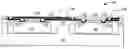
FIG. 1A is a diagrammatical cross sectional view of a pre-molded carrier according to an embodiment of the present invention;
FIG. 1B is a diagrammatical cross sectional view of the pre-molded carrier shown in FIG. 1A after two semiconductor die have been die attached in two cavities of the pre-molded carrier;
FIG. 1C is a diagrammatical cross sectional view of the pre-molded carrier shown in FIG. 1B after a first dielectric layer has been formed;
FIG. 1D is a diagrammatical cross sectional view of the pre-molded carrier shown in FIG. 1C after metal interconnects have been formed;
FIG. 1E is a diagrammatical cross sectional view of the pre-molded carrier shown in FIG. 1D after a second dielectric layer has been formed;
FIG. 1F is a diagrammatical cross sectional view of the pre-molded carrier shown in FIG. 1E after solder bumps have been formed;
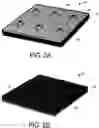
FIGS. 2A and 2B show respective top and bottom perspective views of a packaged semiconductor die according to an embodiment of the present invention;
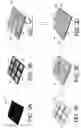
FIGS. 3A, 3B, 3C, 3D, 3E, and 3F show various stages in the forming of embedded die packages according to an embodiment of the present invention; and
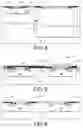
FIGS. 4, 5, and 6 are diagrammatical cross sectional views that show some of the embodiments possible in practicing the current invention.
It will be appreciated that for purposes of clarity and where deemed appropriate, reference numerals have been repeated in the figures to indicate corresponding features. Also, the relative size of various objects in the drawings has in some cases been distorted to more clearly show the invention.
DETAILED DESCRIPTION
FIG. 1A is a diagrammatical cross sectional view of a pre-molded carrier 20 formed from encapsulating material such as epoxy molding compound. The carrier 20 shown in FIG. 1 has two cavities 22 and 24 which have an exterior sidewall 26 for cavity 22 and an exterior sidewall 28 for cavity 24. A thicker center wall 30 separates the two cavities 22, 24, which represent two adjacent package sites on the pre-molded carrier. The cavities 22, 24 have a base 32.
FIG. 1B shows the pre-molded carrier 20 after two semiconductor die 34 and 36 have been die attached in the cavities 22 and 24, respectively. In FIG. 1B the semiconductor dies 34 and 36 extend above the side walls 26, 28 and the center wall 30 of the pre-molded carrier 20. Each of the semiconductor dies 34 and 36 have bond pads 38. The die attachment can be made with standard die-attach methods such as, but not limited to, epoxy or a die attach film 40. In FIG. 1C dielectric material 42 fills the gaps between the semiconductor dies 34 and 36, the sidewalls 26, 28, and the center wall 30, and extends above and on top of the semiconductor dies 34 and 36. Vias 44 have been made through the dielectric material 42 to the bond pads 38.
The dielectric material 42 may be formed in any of several know methods, including using the process of vacuum film lamination with a material such as Ajinomoto Build-Up FILM (ABF) followed by laser drilling of the vias 44. The vias 44 can also be formed by spin coating or spray coating of polyimide or photoresist followed by photolithography.
Metallization is deposited, patterned and etched to form metal interconnects 48 from the bond pads 38 to locations not directly over the semiconductor dies 22 and 24, as shown in FIG. 1D. In one embodiment of the present invention, the metallization is formed by first coating the surface of the dielectric layer 42 and the exposed bond pads 38 with a thin metal seed layer through electroless Cu plating or Cu sputter deposition, putting down a patterned photoresist layer, and electroplating additional metal in the exposed areas of the thin metal layer. The photoresist is then removed and the metal seed layer is removed using acid etching. In another embodiment of the present invention, the metal interconnects are formed by Al sputter deposition to the desired final interconnect thickness. A photoresist layer is then deposited and patterned to match the interconnect routing. The Al metal is etched away followed by photoresist removal, which leaves the final interconnect pattern.
With reference to FIG. 1E, after the metal interconnects 48 are formed, a second dielectric layer 52 is then applied and patterned over the first level of dielectric material 42 and the metal interconnects 48. This process for dielectric layer 52 application may match the process for the first dielectric layer 42 application.
In FIG. 1F solder bumps 56 have been formed using one of several known processes such as, but not limited to, stencil printing or ball drop followed by a reflow cycle. Depending on the interconnect metal composition, a solderable under bump metallization (UBM) layer may be required. This can be achieved through electroless plating methods. The formation of the embedded die packages 58 are completed by the singulation of the two packages.
FIGS. 2A and 2B show respective top 60 and bottom 62 perspective views of a packaged semiconductor die 64 according to an embodiment of the present invention. The package shown in these figures have a pre-molded carrier 66, a second dielectric layer 68 has the solder bumps 56 protruding through.
FIGS. 3A-3F show various stages in the forming of the embedded die packages 70 according to an embodiment of the present invention. FIG. 3A shows a pre-molded carrier 72 with a matrix of nine cavities 74. Semiconductor dies 76 are placed in each of the six cavities 74 as shown in FIG. 3B.
FIG. 3C shows the embedded die packages after a first dielectric layer 80 has been formed over the dies 76, vias have been formed in the first dielectric layer 80, and metal conductors 82 have been formed between each of the bond pads 78 and sites 84 where the solder bumps 56 will be placed. Then a second dielectric layer 86 is formed over the first dielectric layer 80 and the metal conductors 82, and openings 88 are made in the second dielectric layer 86 to expose the sites 84 for the solder bumps 56 as shown in FIG. 3D.
FIG. 3E shows the solder bumps 56 in place on the sites 84, and FIG. 3F shows the individual die packages 70 after a singulation process.
FIGS. 4, 5, and 6 show some of the embodiments possible in practicing the current invention. In FIG. 4 the semiconductor die 34 is in a cavity 22 which is next to a much deeper cavity 90 which contains a passive electrical element 92 such as an inductor, a resistor, or a capacitor. The semiconductor die 34 may have a height of about 20 μm and the electrical element 92 may have a height of 1 mm, but the height of each can vary with application requirements. In addition, the widths of the semiconductor die 34 and the electrical element 92 may be different as shown in FIG. 4. Thus the pre-molded carrier 94 is formed to accommodate the heights and widths of the semiconductor die 34 and the electrical element 92.
FIG. 5 is a diagrammatical cross sectional view of a pre-molded carrier according to another embodiment of the present invention with interconnection metalization made between the two semiconductor die 34 and 36. Interconnections can be made at different vertical levels using general PC board or redistribution layer technology. In FIG. 5 a metal interconnect 96 lies between a the first dielectric layer 42 and a second dielectric layer 94 that may be thicker than the second dielectric layer 52 shown in FIG. 1E. The metal interconnect 96 connects together bonding pads 38 of semiconductor dies 34 and 36 as part of an embedded die package 98 which is a multi-chip package. A metal interconnect 100 forms a connection from a bonding pad 102 to a metal interconnect 104 which lies on the second dielectric layer 94 which extends to the metal interconnect 96. Another metal interconnect 106 forms a connection from bonding pad 108 to a second metal interconnect 110 lying on the second dielectric layer 94. A third dielectric layer 112 covers the metal interconnects 104 and 110 and the exposed regions of the second dielectric layer 94. Also shown in FIG. 5 are solder bumps 56 which extend through openings in the third dielectric layer 112 to the metal interconnects 104 and 110.
In FIG. 6 the pre-molded carrier 114 does not have sidewalls 26, 28 or center walls 30, but rather has a flat horizontal surface. The process described above with respect to FIGS. 1A-F is still applicable to forming the embodiment shown in FIG. 6. In applications in which a bonding pad 38 is not used, there may be no metal interconnect to the bonding pad in the embedded die package, an example of which is shown in FIG. 6.
While the invention has been described with reference to particular embodiments, it will be understood by those skilled in the art that various changes may be made and equivalents may be substituted for elements thereof without departing from the scope of the invention. In addition, many modifications may be made to adapt a particular situation or material to the teachings of the invention without departing from the scope of the invention.
Therefore, it is intended that the invention not be limited to the particular embodiments disclosed as the best mode contemplated for carrying out this invention, but that the invention will include all embodiments falling within the scope and spirit of the appended claims.
Claims
1. An embedded die package comprising:
a pre-molded carrier with a first electrical device in a first cavity of said carrier;
a first dielectric layer covering the sides and top of said first electrical device except for vias over selected bonding pads of said electrical device;
a plurality of first metal conductors, each of which is in contact with at least one of said vias;
one or more additional dielectric layers lying over said metal conductors and said first dielectric layer, wherein a top layer of said one or more dielectric layers has openings with metallization underneath coupled to at least one of said plurality of first metal conductors; and
a plurality of solder bumps protruding from each of said openings.
2. The package set forth in claim 1 wherein said electrical device is an active device.
3. The package set forth in claim 1 wherein said electrical device is a passive device.
4. The package set forth in claim 1 wherein at least one of said solder bumps is placed in a location outside of the lateral perimeter of said electrical device.
5. The package set forth in claims 1 wherein at least one of said solder bumps is placed in a location inside of the lateral perimeter of said electrical device.
6. The package set forth in claim 1 wherein said singulation step produces an embedded package containing two or more cavities, each of which contains an electrical device.
7. The package set forth in claim 6 wherein at least one of said electrical devices is an active device and at least another of said electrical devices is a passive device.
8. The package set forth in claim 1 further including the step of forming a plurality of second metal conductors, each of which is coupled to at least one of said plurality of first metal conductors.
9. The package set forth in claim 1 wherein at lease one of said solder bumps is formed through at least one of said openings forming an electrical connection to one of said plurality of first metal conductors.
10. An embedded die package comprising:
a pre-molded carrier with a first electrical device in a first cavity of said carrier;
a first dielectric layer covering the sides and top of said first electrical device except for vias over selected bonding pads of said electrical device;
a plurality of metal conductors, each of which is in contact with at least one of said vias;
one or more additional dielectric layers lying over said plurality of metal conductors and said first dielectric layer, wherein a top layer of said one or more dielectric layers has openings with metallization underneath coupled to at least one of said plurality of metal conductors; and
a plurality of solder bumps protruding from each of said openings;
wherein at least one of said solder bumps is located inside of the lateral perimeter of said electrical device, and at least one of said solder bumps forms a direct electrical connection to one of said second plurality of metal conductors.
11. The package set forth in claim 10 wherein said electrical device is an active device.
12. The package set forth in claim 10 wherein said electrical device is a passive device.
Images & Drawings included:

Sources:
- United States Patent and Trademark Office - verify current appl. status at the USPTO↗
Similar patent applications:
Recent applications in this class:
- » 20250293174 2025-09-18
SEMICONDUCTOR DEVICE AND METHOD OF MANUFACTURE - » 20250293173 2025-09-18
CHIP PACKAGE AND METHOD OF FORMING THE SAME - » 20250293172 2025-09-18
SEMICONDUCTOR PACKAGE WITH BRIDGE DIE OVER EMBEDDED INTERPOSER - » 20250285986 2025-09-11
SCALABLE ELECTRONICS MANUFACTURING WITH RIGID TILE PANEL EMBEDDING - » 20250273586 2025-08-28
PACKAGE COMPRISING A BASE PORTION AND INTEGRATED DEVICES - » 20250273585 2025-08-28
PACKAGE COMPRISING SUBSTRATES AND INTEGRATED DEVICES - » 20250266367 2025-08-21
CHIP PACKAGE AND MANUFACTURING METHOD THEREOF - » 20250266366 2025-08-21
PACKAGING STRUCTURE, METHOD FOR PREPARING PACKAGING STRUCTURE, AND ELECTRONIC DEVICE - » 20250253261 2025-08-07
ELECTRONIC PACKAGE AND MANUFACTURING METHOD THEREOF - » 20250253260 2025-08-07
CHIP PACKAGE AND METHOD OF FORMING THE SAME
Recent applications for this Assignee:
- » 20150194521 2015-07-09
Trench-based power semiconductor devices with increased breakdown voltage characteristics - » 20150187873 2015-07-02
Superjunction structures for power devices - » 20140264573 2014-09-18
Accumulation-mode field effect transistor with improved current capability - » 20140203355 2014-07-24
FIELD EFFECT TRANSISTOR AND SCHOTTKY DIODE STRUCTURES - » 20140103428 2014-04-17
TRENCH SUPERJUNCTION MOSFET WITH THIN EPI PROCESS - » 20140061852 2014-03-06
Unbalanced parallel circuit protection fuse device - » 20140054691 2014-02-27
Field effect transistor with gated and non-gated trenches - » 20140042536 2014-02-13
Trench-based power semiconductor devices with increased breakdown voltage characteristics - » 20140042532 2014-02-13
Trench-based power semiconductor devices with increased breakdown voltage characteristics - » 20130277735 2013-10-24
Wafer level MOSFET metallization