Self-expanding plastic stent
US20110087336A1
2011-04-14
12/901,418
2010-10-08
✅ Patent granted
US 8,323,351 B2
2012-12-04
-
-
Thomas J Sweet | Matthew Schall
2031-03-09
Abstract:
The self-expanding plastic stent is a resilient plastic stent with such expansional strength that a small diameter delivery system may be used to implant the stent, thereby minimizing possible complications for the patient. The stent is made from a braided monofilament, which may be polyetheretherketone (PEEK), polyetherketone (PEK), polyetherketoneketone (PEKK), polyaryletherketone (PAEK), polyetherketoneether-ketoneketone (PEKEKK), or any blends and alloys of these particular resins. The plastic stent may or may not be covered with polymer film. When used, the polymer film includes materials based on polyurethanes, silicones, or materials that biodegrade or erode in the body. Specifically the biodegradable materials might include poly-L-lactide, poly-D-lactide, polyglycolide, ε-caprolactone (epsilon-caprolactone), starch, and collagen or its polymer blends, alloys or copolymers. This material is heat-treated. The monofilament preferably has a diameter of 0.2-0.7 mm. The self-expanding plastic stent demonstrates better mechanical features, processibility, and shape memory.
Inventors:
- PETR KUBENA 2 🇨🇿 Hradec Kralove, Czech Republic
- LUCIE KOTALOVA 1 🇨🇿 Hradec Kralove, Czech Republic
Assignee:
- Ella-CS, S.R.O. 1 🇨🇿 Hradec Kralove, Czech Republic
Interested in similar patents?
Get notified when new applications in this technology area are published.
Classification:
A61F2/90 » CPC main
Filters implantable into blood vessels; Prostheses, i.e. artificial substitutes or replacements for parts of the body; Appliances for connecting them with the body; Devices providing patency to, or preventing collapsing of, tubular structures of the body, e.g. stents; Devices providing patency to, or preventing collapsing of, tubular structures of the body, e.g. stents; Stents in a form characterised by the wire-like elements; Stents in the form characterised by a net-like or mesh-like structure characterised by a net-like or mesh-like structure
A61L31/10 » CPC further
Materials for other surgical articles, e.g. stents, stent-grafts, shunts, surgical drapes, guide wires, materials for adhesion prevention, occluding devices, surgical gloves, tissue fixation devices; Materials for coatings Macromolecular materials
A61L31/18 » CPC further
Materials for other surgical articles, e.g. stents, stent-grafts, shunts, surgical drapes, guide wires, materials for adhesion prevention, occluding devices, surgical gloves, tissue fixation devices; Materials characterised by their function or physical properties, e.g. injectable or lubricating compositions, shape-memory materials, surface modified materials Materials at least partially X-ray or laser opaque
A61F2210/0004 » CPC further
Particular material properties of prostheses classified in groups - or or or or subgroups thereof bioabsorbable
A61L31/06 » CPC further
Materials for other surgical articles, e.g. stents, stent-grafts, shunts, surgical drapes, guide wires, materials for adhesion prevention, occluding devices, surgical gloves, tissue fixation devices; Macromolecular materials obtained otherwise than by reactions only involving carbon-to-carbon unsaturated bonds
C08L71/00 » CPC further
Compositions of polyethers obtained by reactions forming an ether link in the main chain ; Compositions of derivatives of such polymers
A61F2/04 IPC
Filters implantable into blood vessels; Prostheses, i.e. artificial substitutes or replacements for parts of the body; Appliances for connecting them with the body; Devices providing patency to, or preventing collapsing of, tubular structures of the body, e.g. stents; Prostheses implantable into the body Hollow or tubular parts of organs, e.g. bladders, tracheae, bronchi or bile ducts
Description
CROSS REFERENCE TO RELATED APPLICATIONS
This application claims priority to Czech utility model patent application no. 2009-21803, filed Oct. 12, 2009.
BACKGROUND OF THE INVENTION
1. Field of the Invention
The present invention relates to medical implants, and particularly to self-expandable plastic stents that are compressible for insertion into tubular organs of the body and that expand after insertion to stay in place by resilience of the stents. The stent according to the present invention is to be used predominantly in the esophagus, intestines, biliary ways and air ways.
2. Description of the Related Art
The stents used in the esophagus, intestines, biliary ways and air ways are made both of metal and polymeric materials. When delivering the stent to a desired place, the stent is first compressed into a delivery system, which is then introduced into the respective organ in which the stent is released out of the delivery system in the specified place; the stent spontaneously deploys due to its expansional strength. According to this strength, which can be increased also by the diameter of the used monofilament, it is necessary to choose the appropriate diameter of the delivery system. It is obvious that using the delivery system of a larger diameter is connected with more possible complications for a patient than in cases where there it is possible to use the delivery system of a smaller diameter. Heretofore, known polymeric stents (braided, cut out of tubes etc.) have rather low expansional strength. Thus, they require use of larger diameter delivery systems in order to achieve the appropriate stent expansion after its deployment and to hold the stent in the intended anatomic area.
Thus, a self-expanding plastic stent solving the aforementioned problems is desired.
SUMMARY OF THE INVENTION
The aim of the invention is to create a plastic stent of such expansional strength that the stent allows using a small diameter delivery system, compared to the commonly used self-expandable stents, thereby minimizing possible complications for the patient. The aim is achieved by a stent braided of polyetheretherketone (PEEK) monofilament or polyetherketone (PEK), polyetherketoneketone (PEKK), polyaryletherketone (PAEK), polyetherketoneetherketoneketone (PEKEKK), or any blends and alloys of these particular resins. The plastic stent may or may not be covered with polymer film. The polymer film includes materials based on polyurethanes, silicones, or materials that biodegrade or erode in the body. Specifically, the biodegradable materials may include poly-L-lactide, poly-D-lactide, polyglycolide, ε-caprolactone (epsilon-caprolactone), starch, and/or collagen or its polymer blends, alloys or copolymers. This material is heat-treated. Preferably, the monofilament has a diameter of 0.2-0.7 mm. The self-expanding plastic stent has better mechanical features, processibility and shape memory than conventional stents.
These and other features of the present invention will become readily apparent upon further review of the following specification and drawing.
BRIEF DESCRIPTION OF THE DRAWINGS
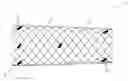
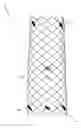
The sole drawing FIGURE is an elevation view of a self-expanding plastic stent according to the present invention.
DETAILED DESCRIPTION OF THE PREFERRED EMBODIMENTS
The self-expanding plastic stent is a resilient plastic stent with such expansional strength that a small diameter delivery system may be used to implant the stent, thereby minimizing possible complications for the patient. The stent is made from a braided monofilament, which may be polyetheretherketone (PEEK), polyetherketone (PEK), polyetherketoneketone (PEKK), polyaryletherketone (PAEK), polyetherketoneetherketoneketone (PEKEKK), or any blends and alloys of these particular resins. The plastic stent may or may not be covered or coated with polymer film. When used, the polymer film includes materials based on polyurethanes, silicones, or materials that biodegrade or erode in the body. Specifically the biodegradable materials might include poly-L-lactide, poly-D-lactide, polyglycolide, ε-caprolactone (epsilon-caprolactone), starch, and collagen or its polymer blends, alloys or copolymers. This material is heat-treated. The monofilament preferably has a diameter of 0.2-0.7 mm. The self-expanding plastic stent demonstrates better mechanical features, processibility, and shape memory.
In the embodiment shown in the sole drawing, the self-expanding plastic stent 10 is made of heat-treated polyetheretherketone (PEEK) monofilament having a diameter of 0.5 mm. This particular stent 10 is designed for placement into the esophagus, although other embodiments of the stent 10 may be designed for implantation into the intestines, the biliary ducts, the airways, or other tubular organs or vessels. In this embodiment, the stent body 12 has a diameter of 16 mm and is radially enlarged into a flare 14 of 25 mm diameter at one end 14. The stent 10 has a length of 60 mm. The monofilaments 16 are braided into cross netting, but the strings may also be made in various shapes and dimensions. The monofilament may be provided with radiopaque markers 18.
It is to be understood that the present invention is not limited to the embodiments described above, but encompasses any and all embodiments within the scope of the following claims.
Claims
We claim:1. A self-expanding plastic stent, comprising a plastic monofilament braided into a tubular body forming a stent, the tubular body being resilient, whereby the stent is compressible for insertion by a delivery system into a tubular body structure and expands to prevent constriction of the tubular body structure after implantation.
2. The self-expanding plastic stent according to claim 1, wherein the plastic monofilament consists of a polyetheretherketone (PEEK) monofilament.
3. The self-expanding plastic stent according to claim 1, wherein the plastic monofilament consists of a polyetherketone (PEK) monofilament.
4. The self-expanding plastic stent according to claim 1, wherein the plastic monofilament consists of a polyetherketoneketone (PEKK) monofilament.
5. The self-expanding plastic stent according to claim 1, wherein the plastic monofilament consists of a polyaryletherketone (PAEK) monofilament.
6. The self-expanding plastic stent according to claim 1, wherein the plastic monofilament consists of a polyetherketoneetherketoneketone (PEKEKK) monofilament.
7. The self-expanding plastic stent according to claim 1, wherein the plastic monofilament comprises:
a monofilament made from at least one resin selected from the group consisting of polyetheretherketone (PEEK), polyetherketone (PEK), polyetherketoneketone (PEKK), polyaryletherketone (PAEK), polyetherketoneether-ketoneketone (PEKEKK); and
a polymer film at least partially covering the monofilament, the polymer film being selected from the group consisting of polyurethanes, silicones, and biodegradable polymers.
8. The self-expanding plastic stent according to claim 7, wherein the biodegradable polymer is at least one polymer selected from the group consisting of poly-L-lactide, poly-D-lactide, polyglycolide, ε-caprolactone (epsilon-caprolactone), starch, and collagen.
9. The self-expanding plastic stent according to claim 1, wherein the plastic monofilament comprises:
a monofilament made from at least one resin selected from the group consisting of polyetheretherketone (PEEK), polyetherketone (PEK), polyetherketoneketone (PEKK), polyaryletherketone (PAEK), polyetherketoneether-ketoneketone (PEKEKK); and
a polymer film at least partially covering the monofilament, the polymer film being a biodegradable polymer.
10. The self-expanding plastic stent according to claim 9, wherein the biodegradable polymer is at least one polymer selected from the group consisting of poly-L-lactide, poly-D-lactide, polyglycolide, ε-caprolactone (epsilon-caprolactone), starch, and collagen.
11. The self-expanding plastic stent according to claim 9, wherein the biodegradable polymer is a copolymer made from at least two polymers selected from the group consisting of poly-L-lactide, poly-D-lactide, polyglycolide, ε-caprolactone (epsilon-caprolactone), starch, and collagen.
12. The self-expanding plastic stent according to claim 1, wherein the plastic monofilament is heat treated.
13. The self-expanding plastic stent according to claim 1, wherein the plastic monofilament has a diameter between 0.2 mm and 0.7 mm.
14. The self-expanding plastic stent according to claim 1, wherein the stent comprises an esophageal stent, the tubular body having a length of about 60 mm, a diameter of about 16 mm, and a flared end having a diameter of about 25 mm.
15. The self-expanding plastic stent according to claim 1, further comprising at least one radiopaque marker mounted on the tubular body.
Images & Drawings included:
Sources:
- United States Patent and Trademark Office - verify current appl. status at the USPTO↗
Recent applications in this class:
- » 20250288438 2025-09-18
INTRACRANIAL STENT AND METHOD FOR INTRACRANIAL STENT - » 20250281314 2025-09-11
STENT WITH ANTI-MIGRATION FEATURES - » 20250255739 2025-08-14
GEOMETRICALLY TUNABLE HYDROGEL-BASED CHEMICALLY-ELUTING SHUNT PROSTHESIS - » 20250248831 2025-08-07
DURABLE STENT GRAFT WITH TAPERED STRUTS AND STABLE DELIVERY METHODS AND DEVICES - » 20250248830 2025-08-07
METHOD AND DEVICE FOR CORRECTING A DEFORMED HEART VALVE FRAME - » 20250221835 2025-07-10
Covered Stent System and Preparation Method Thereof - » 20250213375 2025-07-03
A STENT THAT REDUCES DAMAGE AFTER BRAIN HAEMORRHAGE - » 20250205066 2025-06-26
IMPLANT - » 20250205065 2025-06-26
IMPLANT - » 20250195245 2025-06-19
NEUROVASCULAR IMPLANTS AND DELIVERY SYSTEMS