HEAT SINK
US20110247796A1
2011-10-13
12/843,076
2010-07-26
Abstract:
A heat sink includes a main body, a base formed on a bottom of the main body, and a conducting member attached to a bottom of the base. The heat exchange coefficient of the conducting member is higher than the heat exchange coefficient of the base.
Assignee:
- HON HAI PRECISION INDUSTRY CO., LTD. 12,828 🇹🇼 Tu-Cheng, Taiwan
Interested in similar patents?
Get notified when new applications in this technology area are published.
Classification:
H01L23/3736 » CPC main
Details of semiconductor or other solid state devices; Arrangements for cooling, heating, ventilating or temperature compensation ; Temperature sensing arrangements; Selection of materials, or shaping, to facilitate cooling or heating, e.g. heatsinks; Cooling facilitated by selection of materials for the device or materials for thermal expansion adaptation, e.g. carbon Metallic materials
F28F13/14 » CPC further
Arrangements for modifying heat-transfer, e.g. increasing, decreasing by endowing the walls of conduits with zones of different degrees of conduction of heat
F28F21/084 » CPC further
Constructions of heat-exchange apparatus characterised by the selection of particular materials of metal; Heat exchange elements made from metals or metal alloys from aluminium or aluminium alloys
F28F21/085 » CPC further
Constructions of heat-exchange apparatus characterised by the selection of particular materials of metal; Heat exchange elements made from metals or metal alloys from copper or copper alloys
H01L23/367 » CPC further
Details of semiconductor or other solid state devices; Arrangements for cooling, heating, ventilating or temperature compensation ; Temperature sensing arrangements; Selection of materials, or shaping, to facilitate cooling or heating, e.g. heatsinks Cooling facilitated by shape of device
H01L23/373 » CPC further
Details of semiconductor or other solid state devices; Arrangements for cooling, heating, ventilating or temperature compensation ; Temperature sensing arrangements; Selection of materials, or shaping, to facilitate cooling or heating, e.g. heatsinks Cooling facilitated by selection of materials for the device or materials for thermal expansion adaptation, e.g. carbon
H01L2924/0002 » CPC further
Indexing scheme for arrangements or methods for connecting or disconnecting semiconductor or solid-state bodies as covered by; Technical content checked by a classifier Not covered by any one of groups , and
H01L2924/00 » CPC further
Indexing scheme for arrangements or methods for connecting or disconnecting semiconductor or solid-state bodies as covered by
F28F7/00 IPC
Elements not covered by group , or
Description
BACKGROUND
1. Technical Field
The present disclosure relates to a heat sink.
2. Description of Related Art
Heat sinks are mostly made of aluminum or copper. Generally, heat sinks made of aluminum are used more often than those made of copper for cost effectiveness. However, for heat dissipation, the heat sinks made of aluminum are not as efficient as heat sinks made of copper. As a result, heat sinks that efficient both in heat dissipation and in buisking cost are needed.
BRIEF DESCRIPTION OF THE DRAWINGS
Many aspects of the present embodiments can be better understood with reference to the following drawings. The components in the drawings are not necessarily drawn to scale, the emphasis instead being placed upon clearly illustrating the principles of the present embodiments. Moreover, in the drawings, all the views are schematic, and like reference numerals designate corresponding parts throughout the several views.
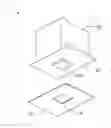
FIG. 1 is an exploded, isometric view of an exemplary embodiment of a heat sink.
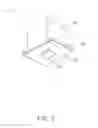
FIG. 2 is an assembled, isometric view of the heat sink FIG. 1.
DETAILED DESCRIPTION
The disclosure, including the accompanying drawings, is illustrated by way of example and not by way of limitation. It should be noted that references to “an” or “one” embodiment in this disclosure are not necessarily to the same embodiment, and such references mean at least one.
Referring to FIG. 1, an exemplary embodiment of a heat sink 1 includes a base 22, a main body 20 extending up from the base 22, and a conducting member 10. In the embodiment, the conducting member 10 is made of copper.
The main body 20 is made of copper, and the base 22 is made of aluminum. A protrusion 220 protrudes down from a bottom of the base 22 extending from the main body 20. The conducting member 10 defines an opening 12 in a center, corresponding to the protrusion 220.
Referring to FIG. 2, in assembly, the conducting member 10 is attached to the bottom of the base 22 and the protrusion 220 of the base 22 extends through the opening 12 of the conducting member 10. In use, the protrusion 220 abuts against an electronic element for dissipating heat generated by the electronic element.
In the embodiment, the protrusion 220 is used to make the conducting member 10 be attached to the base 22 precisely.
In other embodiments, the conducting member 10 can be any shape, and made of other material, such as, graphite.
In this embodiment, the thickness of the conducting member 10 is about 0.3 millimeters. In other embodiments, the thickness of the conducting member 10 can be changed, and the heat dissipation efficiency of the heat sink 1 will be better if the conducting member 10 is thicker.
It is believed that the present embodiments and their advantages will be understood from the foregoing description, and they will be apparent that various changes may be made thereto without departing from the spirit and scope of the description or sacrificing all of their material advantages, the examples hereinbefore described merely being exemplary embodiment.
Claims
What is claimed is:1. A heat sink, comprising:
a base; and
a main body extending up from the base; and
a conducting member attached to a bottom of the base opposite to the main body;
wherein the heat exchange coefficient of the conducting member is larger than the heat exchange coefficient of the base.
2. The heat sink of claim 1, wherein the main body is made of copper.
3. The heat sink of claim 1, wherein the main body is made of aluminum.
4. The heat sink of claim 1, wherein the conducting member is made of copper.
5. The heat sink of claim 1, wherein the conducting member is made of graphite.
6. The heat sink of claim 1, wherein a protrusion extends down from the bottom of the base, and the conducting member defines an opening, the protrusion extends through the opening of the conducting member.
Images & Drawings included:

Sources:
- United States Patent and Trademark Office - verify current appl. status at the USPTO↗
Similar patent applications:
- » 20170271238
Bonded body, power module substrate with heat sink, heat sink, method of manufacturing bonded body, method of manufacturing power module substrate with heat sink, and method of manufacturing heat sink - » 20170271237
Bonded body, power module substrate with heat sink, heat sink, method of manufacturing bonded body, method of manufacturing power module substrate with heat sink, and method of manufacturing heat sink - » 20180108593
Bonded body, substrate for power module with heat sink, heat sink, method for producing bonded body, method for producing substrate for power module with heat sink, and method for producing heat sink - » 20180040535
Bonded body, substrate for power module with heat sink, heat sink, method for producing bonded body, method for producing substrate for power module with heat sink, and method for producing heat sink - » 20180090413
Bonded body, substrate for power module with heat sink, heat sink, method for producing bonded body, method for producing substrate for power module with heat sink, and method for producing heat sink - » 20180068871
Bonded body, substrate for power module with heat sink, heat sink, method for producing bonded body, method for producing substrate for power module with heat sink, and method for producing heat sink - » 20070039726
Fin for a heat sink, heat sink and method for manufacturing a heat sink - » 20110281520
WIRELESS HEAT SINK, WIRELESS HEAT SINK SYSTEM AND WIRELESS HEAT SINKING METHOD FOR THE SAME - » 20140240989
Method of making a heat sink assembly, heat sink assemblies made therefrom, and illumants using the heat sink assembly - » 20110279968
Heat sink having auto switching function, heat sink system and heat sinking method for the same
Recent applications in this class:
- » 20250157877 2025-05-15
SEMICONDUCTOR SUBSTRATE - » 20250149401 2025-05-08
PACKAGE STRUCTURE AND MANUFACTURING METHOD THEREOF - » 20250140641 2025-05-01
INTEGRATED CIRCUIT (IC) STRUCTURES WITH THERMAL COMPONENTS - » 20250132224 2025-04-24
PRINTED CIRCUIT BOARD - » 20250132223 2025-04-24
DEVICES AND METHODS FOR FORMING DEVICES WITH LIDS - » 20250125216 2025-04-17
DIE AND MANUFACTURING METHOD THEREOF AS WELL AS SEMICONDUCTOR PACKAGE WITH THE SAME - » 20250125215 2025-04-17
INTEGRATED CIRCUIT DEVICE INCLUDING A HIGH THERMAL CONDUCTIVITY ELECTRICALLY INSULATING STRUCTURE - » 20250118625 2025-04-10
SEMICONDUCTOR CIRCUIT STRUCTURE WITH DIRECT DIE HEAT REMOVAL STRUCTURE - » 20250118624 2025-04-10
MANUFACTURING METHOD OF A HEAT DISSIPATION SUBSTRATE FOR A POWER SEMICONDUCTOR MODULE, AND A MANUFACTURING METHOD OF A POWER SEMICONDUCTOR MODULE INCLUDING THE SAME - » 20250112116 2025-04-03
SEMICONDUCTOR CIRCUIT STRUCTURE WITH DIRECT DIE HEAT REMOVAL STRUCTURE
Recent applications for this Assignee:
- » 20140233961 2014-08-21
Optical communication module including optical-electrical signal converters and optical signal generators - » 20140083669 2014-03-27
HEAT SINK - » 20140063746 2014-03-06
Electronic device with heat dissipation assembly - » 20140061224 2014-03-06
AUTOMATIC VENDING MACHINE - » 20140060914 2014-03-06
Enclosure with shield apparatus - » 20140058727 2014-02-27
MULTIMEDIA RECORDING SYSTEM AND METHOD - » 20140055955 2014-02-27
Fastener - » 20140055322 2014-02-27
DISPLAY SYSTEM AND HEAD-MOUNTED DISPLAY APPARATUS - » 20140054439 2014-02-27
CONTAINER DATA CENTER WITH SUPPORTING APPARATUS - » 20140054311 2014-02-27
AUTOMATIC VENDING MACHINE WITH MOVING MEMBER FOR PRODUCTS