Continuous ambulatory hemofiltration device
US20110282262A1
2011-11-17
12/587,021
2009-10-01
✅ Patent granted
US 8,419,944 B2
2013-04-16
-
-
Melanie Hand
John Alumit
2030-11-28
Abstract:
A Continuous Ambulatory Haemofiltration consisting of an outer casing, multifunction pump, haemofilter, reversed osmosis filter, power source, drainage bag, blood lines and fluid lines, characterized in that the haemofiltrate from the haemolfilter is moved to a reversed osmosis filter. The ultrafiltrate fluid from the reversed osmosis filter flows to the out-flow tube of the haemofilter veineus line through a specific fluid line. The exit of the reversed osmosis filter is connected to a drainage bag. The multifunction pump moves blood from the jagular perm catherter to the haemofilter, and fluids between the haemofilter, reversed osmosis filter, veineus line and drainage bag. An electrode is placed at the in-flow tube of the haemofilter to measure incoming blood osmolality. The electrode is connected to a microprocessor that is further connected to a computer-controlled valve at the out-flow line of the reversed osmosis filter. The microprocessor is connected with a memory card.
Applicant:
Interested in similar patents?
Get notified when new applications in this technology area are published.
Classification:
B01D61/00 IPC
Processes of separation using semi-permeable membranes, e.g. dialysis, osmosis, or ultrafiltration; Apparatus specially adapted therefor; Semi-permeable membranes or their production
B01D61/00 IPC
Processes of separation using semi-permeable membranes, e.g. dialysis, osmosis or ultrafiltration; Apparatus, accessories or auxiliary operations specially adapted therefor
A61M1/34 » CPC further
Suction or pumping devices for medical purposes; Devices for carrying-off, for treatment of, or for carrying-over, body-liquids; Drainage systems Filtering material out of the blood by passing it through a membrane, i.e. hemofiltration or diafiltration
B01D61/243 » CPC main
Processes of separation using semi-permeable membranes, e.g. dialysis, osmosis or ultrafiltration; Apparatus, accessories or auxiliary operations specially adapted therefor; Dialysis ; Membrane extraction Dialysis
A61M1/341 » CPC further
Suction or pumping devices for medical purposes; Devices for carrying-off, for treatment of, or for carrying-over, body-liquids; Drainage systems; Filtering material out of the blood by passing it through a membrane, i.e. hemofiltration or diafiltration; Regulation parameters by measuring the filtrate rate or volume
A61M1/3482 » CPC further
Suction or pumping devices for medical purposes; Devices for carrying-off, for treatment of, or for carrying-over, body-liquids; Drainage systems; Filtering material out of the blood by passing it through a membrane, i.e. hemofiltration or diafiltration with treatment of the filtrate by filtrating the filtrate using another cross-flow filter, e.g. a membrane filter
B01D61/28 » CPC further
Processes of separation using semi-permeable membranes, e.g. dialysis, osmosis or ultrafiltration; Apparatus, accessories or auxiliary operations specially adapted therefor; Dialysis ; Membrane extraction Apparatus therefor
B01D61/32 » CPC further
Processes of separation using semi-permeable membranes, e.g. dialysis, osmosis or ultrafiltration; Apparatus, accessories or auxiliary operations specially adapted therefor; Dialysis ; Membrane extraction Controlling or regulating
A61M2209/088 » CPC further
Ancillary equipment; Supports for equipment on the body
B01D2311/246 » CPC further
Details relating to membrane separation process operations and control; Quality control Concentration control
B01D2313/243 » CPC further
Details relating to membrane modules or apparatus; Specific pressurizing or depressurizing means Pumps
B01D2313/345 » CPC further
Details relating to membrane modules or apparatus; Energy carriers Electrodes
B01D11/00 IPC
Solvent extraction
A61M37/00 IPC
Other apparatus for introducing media into the body ; Percutany, i.e. introducing medicines into the body by diffusion through the skin
C02F1/44 IPC
Treatment of water, waste water, or sewage by dialysis, osmosis or reverse osmosis
Description
CROSS-REFERENCE TO RELATED APPLICATION
This application claims the benefit of the priority filing date in PCT/CN2007/002663 referenced in WIPO Publication WO 2008/104108. The earliest priority date claimed is Feb. 28, 2007.
FEDERALLY SPONSORED RESEARCH
Not Applicable
SEQUENCE LISTING OR PROGRAM
Not Applicable
STATEMENT REGARDING COPYRIGHTED MATERIAL
Portions of the disclosure of this patent document contain material that is subject to copyright protection. The copyright owner has no objection to the facsimile reproduction by anyone of the patent document or the patent disclosure as it appears in the Patent and Trademark Office file or records, but otherwise reserves all copyright rights whatsoever.
BACKGROUND
1. Technical Field
This invention relates to a medical apparatus, particularly a Continuous Ambulatory Haemofiltration Device.
2. Technical Background
The kidney has many vital functions which include removal of excessive water and electrolytes and removal of metabolic waste product. When the kidney fails to do its functions, a patient will die unless he receives renal replacement therapy. The available renal replacement therapy these days are the following:
Renal transplantation. A shortage of graft kidneys makes this option limited. In addition, patients must be placed on expensive immunosuppressive medications that have a lot of side effects, and patients must be regularly monitored. There are many contraindication of renal transplantation.
Peritoneal dialysis. This requires large amounts of expensive fluids and other disposables. In addition, it has many complications, and the efficiency of the peritoneal membrane decreases markedly with time. This type of renal replacement therapy requires daily effort from the patient for fluid exchange.
Conventional haemodialysis. Large numbers of end stage renal failure patients receive conventional haemodialysis which requires large number of nursing staff, a lot of expensive fluids and disposables. In addition, patients must come to the haemodialysis unit about 3 times per week and be injected with two large needles in each haemodialysis session. Furthermore, this type of therapy has a lot of complications. In haemodialysis units, conventional haemofiltration and haemodiafiltration can be performed but require even more expensive fluids and disposables.
DESCRIPTION OF THE INVENTION
The present invention decreases the medic care cost, inconvenience and agony of renal failure patients. The object of the present invention is to provide a small-sized, ambulatory haemofiltration device that can produce hameofiltration replacement solution itself.
The technical scheme to achieve the invention is as follows: A Continuous Ambulatory Haemofiltration (CAHF) Device, consisting of an outer casing, a multifunction pump, a haemofilter, a reversed osmosis filter, a power source, a drainage bag, blood lines and fluid lines, characterized in that blood moves from a patient to a haemofilter, then the haemofiltrate produced therein is moved to a reversed osmosis filter.
The ultrafiltrate fluid from the reversed osmosis filter flows to the out-flow tube of the haemofilter veineus line through a specific fluid line. The exit of the reversed osmosis filter is connected to a drainage bag. The role of the a multifunction pump is to move the blood from the jagular perm catherter to the haemofilter, and to move fluids between the haemofilter, the reversed osmosis filter, the veineus line and the drainage bag. An electrode is placed at the in-flow tube of the haemofilter to measure the incoming blood osmolality. The electrode is connected to a microprocessor that is further connected to a computer-controlled valve that is placed at the out-flow line of the reversed osmosis filter. The microprocessor is connected with a memory card.
The in-flow line to the reversed osmosis filter, the out-flow line of the reversed osmosis filter, and the ultrafiltrate line from the reversed osmosis filter, are connected to a volumetric device to measure the volumes of fluids going through those lines. The volumetric device is connected with the microprocessor that is connected to the memory card.
The power source is in the form of two rechargable batteries that are connected in parallel form. The multifunctional pump is a coaxial (axle-sharing) multifunctional pump. There are two impellers driven by one micro electric motor. The one impeller impels the blood from the patient's body to the haemofilter, and the haemofiltrate from the haemofilter to the reversed osmosis filter. The other impeller impels the ultrafiltrate (product fluid) from the reversed osmosis filter to the tube connected with the patient's body vein.
The haemofilter and the reversed osmosis filter are placed in tunnels at either side of the casing, and other parts are placed in the center between the two tunnels. There are 2 power indicating alarms on the outer casing of the device. One indicates low blood flow through the haemofilter and the other one indicates low battery power. There is a binding belt on the outer casing. A valve is placed at the fluid line that connects the reversed osmosis filter and the inlet of haemofilter. A valve is placed at the fluid line that connects the reversed osmosis filter and haemofilter itself. The branch of the fluid line carrying the dialysate to the hameofilter itself must enter to the haemofilter through the upper end of one side of the haemofilter to the dialysate compartment.
A store of mixed powder of sodium chloride and sodium biacarbonate is provided to add enough sodium chloride or biacarbonate to the ultrafiltrate from the reversed osmosis filter. Part of the ultrfiltrate from the reverse osmosis filter will go through cartilage houses, through small branch tube lines with a one-way valve, toward the cartilage houses.
There are electrodes to measure the sodium concentration in the fluid coming from each cartilage house before it reenters the main line going to the haemofilter. There are controll valves on the exit of each micro cartilage house. The sodium concentrations measurments will be transmitted to the electronic microprocesor which will send information to the memory card and to the pre-programmed electronic card, which will then adjust the amount of fluid coming from the cartilges houses through the controll valves.
There are replacement microcartilages. One contains sodium bicarbonate powder and the another contains powder of the other required electrolytes, including, calcium, potassium, and sodium chloride. Each one of these microcartilages will be fixed to one of the cartilage houses.
The present device, having a simple and portable structure, can be easily bound to a patient's body. When the power-indicating alarm is activated, one of the batteries can be replaced without affecting the continuous operation of the device as the two batteries are connected in parallel form. If the blood flow alarm light turns on, it indicates a failure of the device function and the patient must go to the hospital immediately. The haemofiltrate from the haemofilter is then moved to a reversed osmosis filter. The ultrafiltrate from the reversed osmosis filter flows back to a patient's body as replacement solution. This greatly reduces the medical care cost of a patient.
SUMMARY OF THE INVENTION
The present invention decreases the medic care cost, inconvenience and agony of renal failure patients. The object of the present invention is to provide a small-sized, ambulatory haemofiltration device that can produce hameofiltration replacement solution itself.
The invention is a Continuous Ambulatory Haemofiltration (CAHF) Device consisting of an outer casing, a multifunction pump, a haemofilter, a reversed osmosis filter, a power source, a drainage bag, blood lines and fluid lines, characterized in that the haemofiltrate from the haemolfilter is moved to a reversed osmosis filter; ultrafiltrate fluid from the reversed osmosis filter flows to the out-flow tube of the haemofilter veineus line through a specific fluid line; the exit of the reversed osmosis filter is connected to a drainage bag; the multifunction pump moves blood from the jagular perm catherter to the haemofilter, and moves fluids between the haemofilter, reversed osmosis filter, veineus line and drainage bag; an electrode placed at the in-flow tube of the haemofilter measures the incoming blood osmolality, the electrode is connected to a microprocessor that is further connected to a computer-controlled valve placed at the out-flow line of the reversed osmosis filter; and the microprocessor is connected to a memory card.
The present device, having a simple and portable structure, can be easily bound to a patient's body. When the power-indicating alarm is activated, one of the batteries can be replaced without affecting the continuous operation of the device as the two batteries are connected in parallel form. If the blood flow alarm light turns on, it indicates a failure of the device function and the patient must go to the hospital immediately. The haemofiltrate from the haemofilter is then moved to a reversed osmosis filter. The ultrafiltrate from the reversed osmosis filter flows back to a patient's body as replacement solution. This greatly reduces the medical care cost of a patient.
FIGURES
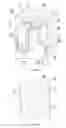
FIG. 1 is a structural view of the inside of the device;
FIG. 2 is an illustrative view of the back of the device;
FIG. 3 is an illustrative view of the connection of major parts of the device;
FIG. 4 is an illustrative view of the cartilage houses;
FIG. 5 is an illustrative view of the connecting scheme between the device and artery and veins
DESCRIPTION
As shown in FIGS. 1 and 2, the Continuous Ambulatory Haemofiltration (CAHF) Device consists of an outer casing(1), a multifunction pump(2), a haemofilter(3), a power source(4), a drainage bag(5), blood lines and fluid lines. The haemofiltrate from the haemolfilter(3) is moved to a reversed osmosis filter(8) through a fluid line(7). The exit of the reversed osmosis filter(8) is connected to a drainage bag(5). The ultrafiltrate from the reversed osmosis filter(8) is connected to the inlet, the exit of haemofilter(3), and to the haemofilter(3) itself via a fluid line(12), respectively. Valves (16 and 17) are placed at the fluid lines that connect the reversed osmosis filter(8) and the inlet of the haemofilter(3), and the haemofilter(3) itself, respectively. The branch of the fluid line carrying the dialysate to the hameofilter (3) itself must enter to the haemofilter(3) through the upper end of one side of the haemofilter(3) to the dialysate compartment. The multifunction pump (2) moves the blood from the jagular perm catherter(18) to the haemofilter(3), and moves fluids between the haemofilter(3), the reversed osmosis filter(8), the fluid line(12), and the drainage bag(5).
The multifunction pump(2) has two impellers driven by one micro electric motor. One impeller impels the blood from the patient's body to the haemofilter(3), and the haemofiltrate from the haemofilter(3) to the reversed osmosis filter(8). The other impeller impels the ultrafiltrate (product fluid) from the reversed osmosis filter(8) to the tube connected with the fluid line(12). An electrode(19) is placed at the in-flow tube of the haemofilter(3) to measure the incoming blood osmolality. The electrode(19) is connected to a microprocessor(20) that is further connected to a computer-controlled valve(21) that is placed at the out-flow line of the reversed osmosis filter(8). The microprocessor is connected with a memory card(23). Electrodes (24, 25 and 26) are placed at the inlet, exit and out-flow line of the ultrafiltrate of the reversed osmosis filter(8), respectively. The three electrodes are connected to volumetric devices to measure fluids going through those lines. The volumetric devices are connected with a microprocessor(27) to send those information to a memory card(23). The power source(4) is composed of two rechargeable batteries connected in parallel form. The haemofilter(3) and the reversed osmosis filter(8) are placed in tunnels at either side of the casing, and other parts are placed in the center between the two tunnels.
Two light alarms(28) are placed on the outer casing(1). One indicates low blood flow through the haemofilter, and the other one indicates low battery power. A binding belt(29) is mounted on the outer casing(1). A store of mixed powder of sodium chloride and sodium biacarbonate (30) is provided to add enough sodium chloride or biacarbonate to the ultrafiltrate from the reversed osmosis filter(8).
In order to make this invention better understood, the working process of the device is concisely described hereunder. Blood flows from the jagular perm catherter to the haemofilter. The purified blood flows back to the patient's body. The haemofiltrate is moved to the reversed osmosis filter. The rejected fluid by the reversed osmosis filter flows to the drainage bag, while the ultrafiltrate flows back to the patient's body as replacement solution. To avoid clotting in the haemofilter, part of the ultrafiltrate (20-30%) from the reversed osmosis filter must be connected to incoming blood through the haemofilter. Part of the ultrafiltrate can also be connected to the haemofilter itself as dialysate. The percentage of ultrafiltrate to the inlet of the haemofilter, or to the haemofilter itself, can be adjusted by a doctor by adjusting the valves on the lines going to these sites. An electrode is placed at the in-flow tube of the haemofilter to measure the incoming blood osmolality. The electrode feedbacks the measurement to a microprocessor that controls the operation of a valve being placed at the out-flow line of the reversed osmosis filter, and thereby controls the volume of fluid flowing into the patient's body according to the patient's blood osmolality. All relevant information is stored in the memory card. Electrodes (24, 25 and 26) are placed at the inlet, exit and out-flow line of the ultrafiltrate of the reversed osmosis filter, respectively. The three electrodes are connected with a volumetric device and with a microprocessor(27) that stores information in memory card(23) regarding the amount of fluids going in and out of the reversed osmosis filter. In this way, a patient need not see a doctor frequently, and he/she only needs to see a doctor once a month to have his/her status monitored by a doctor who checks the information in the memory card using a computer. If needed, part of the ultrafiltrate from the reverse osmosis filter can go through cartilage houses[no. 35 and no. 38], as seen in FIG. 4, through small branch tube lines with a one-way valve pointing toward the cartilage houses.
There are electrodes to measure the sodium concentration in the fluid coming from each cartilage house before it reenters the main line going to the haemofilter [No. 40 in FIG. 4]. There are control valves on the exit of each micro cartilage house [no. 39 in FIG. 4]. The sodium concentration measurements goes to an electronic microprocessor which will send information to the memory card and to the programmed electronic card. Then the electronic microprocessor will adjust the amount of fluid coming from the cartilges houses through the control valves no. 39. There are replacement microcartilages [no. 36 in FIG. 4]. One contains sodium bicarbonate powder and the another contains powder of the other required electrolytes, including, calcium, potassium, and sodium chloride. Each of these microcartilages are fixed to one of the cartilage houses. The device is fixed to the right side of the chest of the patient, or other adequate place, by a binding belt where it can be connected to the right-sided jagular perm catheter. In addition, the device can be connected to an artery[no. 33 in FIG. 5] and vein [no. 34 in FIG. 5]. In the event the device is pulled out accidently, both artery and vein will be closed by pulled flaps. The flaps will be pulled away from the opening of the by pass tube [no. 32 in FIG. 5] because, during accedental pulling of the device, the connecting piece of the device will pull the flaps closed. This mechanism is designed to avoid bleeding in the event of an accidental pulling of the device.
Claims
What is claimed is:1. A Continuous Ambulatory Haemofiltration (CAHF) Device consisting of an outer casing, a multifunction pump, a haemofilter, a reversed osmosis filter, a power source, a drainage bag, blood lines and fluid lines, characterized in that:
the haemofiltrate from the haemolfilter is moved to a reversed osmosis filter;
ultrafiltrate fluid from the reversed osmosis filter flows to the out-flow tube of the haemofilter veineus line through a specific fluid line;
the exit of the reversed osmosis filter is connected to a drainage bag;
the multifunction pump moves blood from the jagular perm catherter to the haemofilter, and moves fluids between the haemofilter, reversed osmosis filter, veineus line and drainage bag;
an electrode placed at the in-flow tube of the haemofilter measures the incoming blood osmolality, the electrode being connected to a microprocessor that is further connected to a computer-controlled valve placed at the out-flow line of the reversed osmosis filter, and
the microprocessor being connected to a memory card.
2. The Continuous Ambulatory Haemofiltration Device according to claim 1, characterized in that the in-flow line to the reversed osmosis filter, the out-flow line from the reversed osmosis filter, and the ultrafiltrate line from the reversed osmosis filter are connected to a volumetric device to measure the volumes of fluids going through those lines, the volumetric device being connected to the microprocessor that is connected to the memory card.
3. The Continuous Ambulatory Haemofiltration Device according to claim 1, characterized in that the power source is in the form of two rechargable batteries that are connected in parallel form.
4. The Continuous Ambulatory Haemofiltration Device according to claim 2, characterized in that the power source is in the form of two rechargable batteries that are connected in parallel form.
5. The Continuous Ambulatory Haemofiltration Device according to claim 1, characterized in that the multifunctional pump is coaxial (axle-sharing) with at least two impellers driven by at least one micro electric motor, one impeller impels the blood from the patient's body to the haemofilter, and impels the haemofiltrate from the haemofilter to the reversed osmosis filter, and the other impeller impels the ultrafiltrate (product fluid) from the reversed osmosis filter to the tube connected with the patient's body vein.
6. The Continuous Ambulatory Haemofiltration Device according to claim 2, characterized in that the multifunctional pump is coaxial (axle-sharing) with at least two impellers driven by at least one micro electric motor, one impeller impels the blood from the patient's body to the haemofilter, and impels the haemofiltrate from the haemofilter to the reversed osmosis filter, and the other impeller impels the ultrafiltrate (product fluid) from the reversed osmosis filter to the tube connected with the patient's body vein.
7. The Continuous Ambulatory Haemofiltration Device according to claim 1, characterized in that the haemofilter and the reversed osmosis filter are placed in tunnels at either side of the outer casing, and other parts are placed in the center between the two tunnels.
8. The Continuous Ambulatory Haemofiltration Device according to claim 1, characterized in that the device is fixed to the right side of the chest of the patient by a binding belt where it is connected to the right-sided jagular perm catheter, the device being connected with an artery and vein, and if pulled out accidentally, connecting pieces of the device cause both artery and vein to close by pulling flaps away from the opening of a by pass tube so that the blood will go directly from the artery to the vein through the by pass tube to avoid bleeding.
9. The Continuous Ambulatory Haemofiltration Device according to claim 1, characterized in that part of the ultrafiltrate (20-30%) from the reversed osmosis filter can be connected to incoming blood through the haemofilter to dilute the blood and avoid clotting in the haemofilter.
10. The Continuous Ambulatory Haemofiltration Device according to claim 1, characterized in that the ultrafiltrate fluid from the reversed osmosis filter can be used as a dialysate to perform haemodialysis or haemodiafiltration, given that the fluid line carrying the dialysate to the hameofilter enters the haemofilter through the upper end of one side of the haemofilter to the dialysate compartment.
11. The Continuous Ambulatory Haemofiltration Device according to claim 1, characterized in that a store of mixed powder of sodium chloride and sodium biacarbonate can be provided to add sodium chloride or biacarbonate to the ultrafiltrate from the reversed osmosis filter if needed.
12. A Continuous Ambulatory Haemofiltration (CAHF) Device consisting of an outer casing, a multifunction pump, a haemofilter, a reversed osmosis filter, a power source, a drainage bag, blood lines and fluid lines, at least two replaceable microcartilage, and at least one cartilage house, characterized in that:
the haemofiltrate from the haemolfilter is moved to a reversed osmosis filter;
ultrafiltrate fluid from the reversed osmosis filter flows to the out-flow tube of the haemofilter veineus line through a specific fluid line;
the exit of the reversed osmosis filter is connected to a drainage bag;
the multifunction pump moves blood from the jagular perm catherter to the haemofilter, and moves fluids between the haemofilter, reversed osmosis filter, veineus line and drainage bag;
an electrode placed at the in-flow tube of the haemofilter measures the incoming blood osmolality, the electrode being connected to a microprocessor that is further connected to a computer-controlled valve placed at the out-flow line of the reversed osmosis filter,
the microprocessor being connected to a memory card; and
the at least two replaceable microcartilages, one containing sodium bicarbonate powder and the other containing other needed electrolyte powder including calcium, potassium and sodium chloride, are fixed on a corresponding cartilage house where part of the ultrafiltrate from the reversed osmosis filter can pass through and mix with those electrolytes before mixing again with the main stream of ultrafiltrate going back to the blood and returning to the body.
13. The Continuous Ambulatory Haemofiltration Device according to claim 12, wherein the electrodes connected to the microprocessor measuring sodium concentrations are fixed on small tube branches returning the ultafiltrate after it mixes with the electrolytes going back to the main stream ultrafiltrate returning to the blood;
14. The Continuous Ambulatory Haemofiltration Device according to claim 12, wherein the microprocessor controls valves fixed on the exits of the cartilage houses so that the right concentrations of the electrolytes in the ultrafiltrate going back to the blood is assured.
15. The Continuous Ambulatory Haemofiltration Device according to claim 1, wherein the outer casing of the device comprises at least two light alarms, one indicating low blood flow in the device and the other indicating low battery power.
Images & Drawings included:



Sources:
- United States Patent and Trademark Office - verify current appl. status at the USPTO↗
Recent applications in this class:
- » 20250242309 2025-07-31
APPARATUS AND METHOD FOR SEPARATING ORGANIC ACID ALKALI SALTS INTO ORGANIC ACIDS AND ALKALI SALTS BY USING DIFFUSION DIALYSIS - » 20240408547 2024-12-12
MICROFLUIDIC DIALYSIS MODULE AND CONTINUOUS PURIFICATION METHOD FOR DRUG CARRIERS OR BIOMEDICINE USING THE SAME - » 20240252988 2024-08-01
Dialysis Devices And Sensor Caps And Systems And Methods Incorporating The Same - » 20240066470 2024-02-29
FILTRATION MEDIA - » 20240001302 2024-01-04
METHOD AND APPARATUS FOR ENHANCED TRANSPORT - » 20230347290 2023-11-02
ADSORBENT, METHOD FOR MANUFACTURING THE SAME, ADSORPTION SHEET, ARTIFICIAL DIALYSIS MEMBRANE, AND ARTIFICIAL DIALYZER - » 20220023800 2022-01-27
DIALYZER COMPRISING A FLUORINE-CONTAINING HOLLOW FIBER MEMBRANE - » 20200360860 2020-11-19
SYSTEM AND METHOD FOR EXTRACTING IONS WITHOUT UTILIZING ION EXCHANGE - » 20200215488 2020-07-09
Dialysis cell for sample preparation for a chemical analysis method - » 20190193028 2019-06-27
Liver support system devices and methods thereof