Apple Tree Named 'PREMIER STAR'
US20120060246P1
2012-03-08
12/807,537
2010-09-07
Abstract:
A new and distinct variety of apple tree is described and which is denominated varietally as ‘Premier Star’ and which is mature for harvesting and shipment during the month of February under the ecological conditions prevailing near Hope, Nelson, New Zealand.
Interested in similar patents?
Get notified when new applications in this technology area are published.
Classification:
A01H5/00 IPC
Products
A01H5/00 IPC
Angiosperms, i.e. flowering plants, characterised by their plant parts; Angiosperms characterised otherwise than by their botanic taxonomy
Description
BACKGROUND OF THE NEW VARIETY
The present invention relates to a new and distinct variety of apple tree, ‘Malus Pumila Mil’ and which has been denominated varietally as ‘Premier Star’; and more specifically to an apple tree which is principally characterized as to novel by producing an attractive, highly colored apple which is mature for harvesting and shipment at its orchard of origin which is located near Hope, Nelson, New Zealand during the month of February.
ORIGIN AND ASEXUAL REPRODUCTION
It has long been recognized that a very important factor contributing to the success of any variety of apple tree bearing fruit for the fresh markets is its ability to produce an attractively colored fruit which has a distinctive, noteworthy flavor, and which further has good handling and storage characteristics. The new variety ‘Premier Star’ is noteworthy as producing an attractively and distinctly colored fruit having a bright red blush and which is further ripe for harvesting, processing and/or shipment in Hope, Nelson, New Zealand during the month of February. The present variety of fruit is harvested during the same season with other well known varieties such as the ‘Imperial Gala’ (unpatented) from which it was derived as a chance mutation; the ‘Galaxy’ apple tree, U.S. Plant Pat. No. 6,955; the ‘Baigent’ apple tree, U.S. Plant Pat. No. 10,016; the ‘Royal Gala’ apple tree, U.S. Plant Pat. No. 4,121; the ‘Fulford’ apple tree, U.S. Plant Pat. No. 7,598; and the ‘Applewaites’ apple tree, U.S. Plant Pat. No. 8,720. As noted above, the ‘Premier Star’ apple tree, of the present invention, was discovered as a chance, branch mutation of an ‘Imperial Gala’ (unpatented) apple tree that was then growing within the cultivated area of an orchard of the inventor's which is located in Hope, Nelson, New Zealand in 1999. The inventors noted the unique characteristics of the present tree, and marked the chance, branch mutation, for further observation. After observing the chance mutation for several years, and evaluating the fruit produced by same, the inventors removed bud wood from the chance mutation and then asexually propagated it by budding it into M-9 rootstock (unpatented). The newly created trees were then planted in the orchard of origin which is located near Hope, Nelson, New Zealand. Since that time, these first asexually reproduced trees have been continually observed, and have subsequently produced fruit. Further studies of these first asexually produced trees have convinced the inventors that the first asexual propagation of this new variety produced trees which are true to the original chance mutation.
As compared to other apple varieties, that it is most closely similar to, the present variety ‘Premier Star’ is distinguishable from its parent and other known Gala-type varieties by its distinctive coloration. More particularly, the present variety ‘Premier Star’ has a coloration which is characterized by a bright red blush which covers approximately 70 to 90 percent of the fruit surface. In comparison the parent, ‘Imperial Gala’ (unpatented), produces fruit having a distinctive orange-red striping which covers about 50 to 70 percent of the fruit surface. Further, the present variety ‘Premier Star’ is distinguishable from the variety ‘Galaxy’ (U.S. Plant Pat. No. 6,955) because this previously patented variety produces fruit having a skin color which is 90 to 100 percent a solid cherry red with indistinct dark red overstriping. Moreover, in comparison to the variety ‘Baigent’ (U.S. Plant Pat. No. 10,016) the fruit produced by this previously patented tree has a coloration which has bold red striping with flecks of brown color. The present new variety is also distinguishable therefrom because of its bright red blush. In comparison to the variety ‘Royal Gala’ (U.S. Plant Pat. No. 4,121), which produces fruit having a skin color that has 40 to 60 percent orange-red striping, the new variety is clearly distinguishable therefore in view of its bright red blush. Additionally, relative to the previously patented variety ‘Fulford’ (U.S. Plant Pat. No. 7,598) which produces fruit having only a 50 to 70 percent bright red blush, the present variety is clearly distinguishable by providing a bright red blush which covers between 70 and 90 percent of the fruit surface. Finally, in connection with the variety ‘Applewaites’ (U.S. Plant Pat. No. 8,720), the present variety is clearly distinguishable because the fruit of the new variety is harvested some 2 to 4 days after this variety.
SUMMARY OF THE NEW VARIETY
The ‘Premier Star’ apple tree is characterized principally as to novelty by producing an attractive, highly colored fruit which is ripe for harvesting and shipment during the last week of February under the ecological conditions prevailing near Hope, Nelson, New Zealand. The present variety is easily distinguishable from the fruit produced by the ‘Imperial Gala’ apple tree (unpatented) from which it was derived as a chance mutation by producing a highly colored fruit which has a 70 to 90 percent bright red blush as compared to the ‘Imperial Gala’ which produces fruit having orange-red fruit having orange-red striping which covers about 50-70 percent of the fruit surface.
BRIEF DESCRIPTION OF THE DRAWINGS
The accompanying drawings are color photographs of various aspects of the present plant. The colors are nearly as true as is reasonably possible in color representations of this type. Due to chemical development, processing, and printing the leaves and fruit of the present variety may or may not be accurate when compared to the actual specimen. For this reason, future color references should be made to the color plates as provided by The Royal Horticultural Society Colour Chart, London and other general color descriptions as provided for, hereinafter.
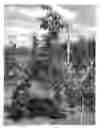
FIG. 1 is a photograph which shows the growth habit of a second generation tree of the variety ‘Premier Star’ when grown on M-9 rootstock (unpatented) within the orchard or origin which is located near Hope, Nelson, New Zealand.
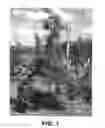
FIG. 2 is a photograph showing the growth habit of the fruit produced by the ‘Premier Star’ apple tree when grown on the same second generation trees which are grown at the orchard of origin which is located near Hope, Nelson, New Zealand.
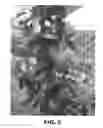
FIG. 3 is a photograph which exhibits the blooming characteristics of second generation ‘Premier Star’ apple tree now growing on M-9 rootstock (unpatented) at the orchard of origin which is located near Hope, Nelson, New Zealand.
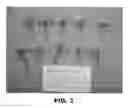
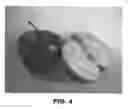
FIG. 4 is a photograph which shows one fruit which is mature for harvesting and shipment and a second fruit divided in the axial plane to show the flesh characteristics thereof.
NOT A COMMERCIAL WARRANTY
The following detailed description has been prepared to solely comply with the provisions of 35 U.S.C. §112, and does not constitute a commercial warranty, (either expressed or implied), that the present variety will, in the future, display the botanical, pomological or other characteristics as set forth, hereinafter. Therefore, this disclosure may not be relied upon to support any future legal claims including, but not limited to, breach of warranty of merchantability, or fitness for any particular purpose, or non-infringement which is directed, in whole, or in part, to the present variety.
DETAILED DESCRIPTION
Referring more specifically to the pomological details of this new and distinct variety of apple tree, the following was observed during the 2009 growing season under the ecological conditions prevailing in a test orchard which is located near Hope, Nelson, New Zealand. All major color code designations are referenced to The Royal Horticultural Society Colour Chart (3rd Edition) provided by The Royal Horticultural Society of Great Britain.
- Tree:
-
- Size.—Generally — Average as compared to other apple cultivars. The observed, third generation trees, which are 4 years old, are currently growing in an orchard which is located near Hope, Nelson, New Zealand. The observed trees have a height of about 3 meters; and a width or diameter of about 1.2 meters when measured at a height of about 1 meter above the surface of the earth.
- Vigor.—Considered average for the variety.
- Growth type.—Ramified.
- Growth habit.—Spreading.
-
- Trunk:
-
- Size.—About 5 cm. in diameter when measured at a location which is about 20 cm. above the graft union.
- Bark texture.—Generally — Smooth.
- Bark color.—Grey-Green (RHS 197D).
- Bark lenticels.—Size — About 3.3 mm. long; and about 1.6 mm. wide.
- Bark lenticels.—Color — Grey-Yellow (RHS 162D).
- Bark lenticels.—Concentration — About 4 bark lenticels are found per square centimeter of bark surface area.
-
- Branches:
-
- Size.—About 28 mm. in diameter when measured on 2 year old branches at a distance of about 50 cm. from the trunk.
- Crotch angle.—Generally — About 20 degrees below, to about 40 degrees above the horizontal plane. The crotch angle is not distinctive of the present variety, however.
- Branches.—Color — Generally speaking, Grey-Brown (RHS 199B).
- Branches.—Lenticels — The present variety produces lenticels which are about 3 mm. long; and about 1 mm. wide.
- Branch lenticels.—Color — Grey-Yellow (RHS 162D).
- Branch lenticels.—Concentration — About 5 lenticels are found per square meter of bark surface area.
- Winter hardiness.—Generally — The present variety is hardy as compared to the region in which it is currently being cultivated, that being, in Hope, Nelson, New Zealand.
- Chilling requirements.—The present variety appears to have the same chilling requirement as the variety ‘Royal Gala’ (U.S. Plant Pat. No. 4,121) when grown under the same ecological conditions in Hope, Nelson New Zealand.
- Dormant, 1 year old shoots.—Pubescence — Average for the species.
- Dormant, 1 year old shoots.—Size — About 40 cm.
- Dormant, 1 year old shoots.—Diameter — About 5 mm.
- Dormant, 1 year old shoots.—Color — Grey-Orange (RHS 177B).
- Dormant, 1 year old shoots.—Internode Length — About 31 mm.
- Dormant, 1 year old shoots.—Lenticels — Size — About 1.4 mm. long; and about 1.4 mm. wide.
- Dormant, 1 year old shoots.—Lenticels — Density — About 5 lenticels are found per square centimeter.
-
- Leaves:
-
- Leaf position relative to shoot.—Considered upwardly dispersed.
- Leaf.—Length — Considered average. About 85 mm. when measured on 1 year old shoots.
- Leaf.—Width — About 45 mm.
- Leaf.—Overall shape — Considered ovate.
- Leaf.—Apex shape — Considered acuminate.
- Leaf.—Base shape — Considered obtuse.
- Leaf marginal form.—Generally — Crenate.
- Leaf color.—Upper surface — Dark Green (RHS 139A).
- Leaf color.—Lower surface — A dull Green (RHS 139C).
- Leaf petiole.—Length — About 24.7 mm.
- Leaf stipules.—Shape — Considered lanceolate.
- Leaf stipules.—Length — About 8.3 mm. long.
- Leaf stipules.—Width — About 2.5 mm.
-
- Flowers:
-
- Buds.—Generally — One flower bud per spur is normally found.
- Flower buds.—Shape — Considered pointed.
- Flower buds.—Length — About 7 mm.
- Flower buds.—Diameter — About 3 mm.
- Flower buds.—Color — Grey (RHS 201C).
- Flower size at full expansion.—About 35 mm. in diameter.
- Flowers per cluster.—5 to 6 flowers appear in each cluster.
- Flower petals.—Quantity — Typically 5 flower petals appear in each flower.
- Flower petal orientation.—Generally — Touching.
- Flower petal.—Length — About 18 mm.
- Flower petal.—Width — About 10 mm.
- Flower petal apex.—Shape — Rounded.
- Flower petal margin.—Form — Considered smooth.
- Flower petal.—Upper surface color — White (RHS 155D).
- Flower petal.—Lower surface color — Stained with a Reddish-Purple color (RHS 59D) when fully opened. Please see FIG. 3.
- Sepals.—Length — About 6 mm.
- Sepals.—Width — About 3 mm.
- Sepals.—Color — Green (RHS 145A).
- Pedicle.—Length — About 33 mm.
- Stamens.—Quantity — Numerous.
- Anthers.—Length — About 5 mm.
- Anthers.—Color — Yellow (RHS 11C).
- Pistil.—Length — About 8 mm.
- Pistil.—Color — Green (RHS 145C).
- Date of full bloom.—About 11 Oct. 2009 under the ecological conditions prevailing near Hope, Nelson, New Zealand.
- Pollination requirement.—Similar to that which is required for the ‘Royal Gala’ apple tree (U.S. Plant Pat. No. 4,121). In this regard, any diploid cultivar (other than ‘Royal Gala’ or ‘Royal Gala’ Sports) which flower at similar times can serve to pollinize the new variety ‘Premier Star’.
-
- Fruit:
-
- Size.—Considered large for the species.
- Fruit height.—About 66 mm.
- Fruit width.—About 75 mm.
- Fruit shape.—Globose and considered conical.
- Fruit ribbing.—Not present.
- Aperture of the eye.—Shape — Considered closed.
- Eye size.—Small.
- Eye basin.—Depth — About 9 mm.
- Eye basin.—Width — About 31 mm.
- Stalk.—Size — About 2 mm. in diameter.
- Stalk.—Length — About 26 mm.
- Stalk.—Color — Grey-Brown (RHS 199A).
- Stalk cavity.—Depth — About 16 mm.
- Stalk cavity.—Width — About 29 mm.
- Fruit lenticels.—Size — About 1.4 mm. in both its length and width.
- Fruit lenticels.—Density — About 4 lenticels are found per square centimeter of fruit surface.
- Fruit bloom.—Generally — Absent.
- Fruit surface texture.—Greasiness — Considered absent.
- Ground skin color.—Yellow-Green (RHS 149D).
- Skin overcolor.—Bright Red (RHS 45A).
- Skin overcolor.—Pattern — Considered a solid blush.
- Overcolor.—Amount — Considered high for the species, that is, it is about 70 to 90 percent of the fruit surface.
- Amount of russet.—Eye basin — Considered absent, or very low.
- Amount of russet.—Cheeks — Considered absent, or very low.
- Amount of russet.—Stalk cavity — Considered absent, or very low.
- Flesh.—Texture — Considered medium, firm and crisp.
- Flesh.—Color — Considered White (RHS 4D).
- Flesh pressure.—Generally — About 7 kilograms to 9 kilograms.
- Fruit brix.—About 12 degrees to about 13 degrees at the time of harvesting.
-
- Seeds:
-
- Quantity.—Typically 5 are found per fruit.
- Seeds.—Color — Grey-Orange (RHS 166A).
- Seeds.—Length — About 9 mm.
- Seeds.—Width — About 6 mm.
- Seed locules.—Numbers — 5.
- Seed locules.—Width — About 10 mm.
- Seed locules.—Depth — About 5 mm.
- Seed locules.—Length — About 15 mm.
- Fruit maturity for consumption.—During the month of February at Hope, Nelson, New Zealand, the present variety is typically ripe for harvesting and shipment at about February 27, under typical environmental conditions.
- Fruit use.—Primarily for fresh eating for both local and long distance markets, as well as for processed consumption.
- Keeping quality.—Similar to that of the fruit produced by the ‘Royal Gala’ apple tree (U.S. Plant Pat. No. 4,121).
- Resistance to disease.—The present variety is considered susceptible to all insects and diseases found in the region of Hope, Nelson, New Zealand. Otherwise, the variety is not known to have any other resistances to diseases common to apple trees. Although the new variety of apple tree possesses the described characteristics when grown under the ecological conditions prevailing near Hope, Nelson, New Zealand, it should be understood that variations of the usual magnitude and characteristics incident to changes in growing conditions, fertilization, pruning, pest control and horticultural management practices are to be expected.
-
Claims
Having thus described and illustrated our new variety of apple tree, what we claim is new, and desire to secure by Plant Letters Patent is:1. A new and substantially distinct variety of apple tree, as illustrated and described, and which is characterized as to novelty by bearing an attractively colored apple which is mature for harvesting and shipment during the month of February under the ecological conditions prevailing near Hope, Nelson, New Zealand.
Images & Drawings included:
Sources:
- United States Patent and Trademark Office - verify current appl. status at the USPTO↗
Recent applications in this class:
- » 20240292771 2024-08-29
Campanula plant named 'Twilight' - » 20240251691 2024-07-25
HYDRANGEA PLANT NAMED 'HYLV17520' - » 20240251690 2024-07-25
Vaccinium Plant Named 'BWPBLUE02' - » 20240251689 2024-07-25
BLUEBERRY PLANT NAMED 'FC13-113' - » 20240251688 2024-07-25
BLUEBERRY PLANT NAMED 'FCM14-057' - » 20240237567 2024-07-11
PONGAMIA VARIETIES - » 20240224827 2024-07-04
PELARGONIUM PLANT NAMED 'PEQZ0103' - » 20240215470 2024-06-27
Agapanthus plant named 'Monsapho' - » 20240215469 2024-06-27
plant named ‘LOCORA3519’ - » 20240206359 2024-06-20
CORYLUS PLANT NAMED 'BWM01'