In situ process for mercury removal
US20120073811A1
2012-03-29
13/218,141
2011-08-25
✅ Patent granted
US 9,089,789 B2
2015-07-28
-
-
Catherine Loikith
Phillips 66 Company
2033-10-25
Abstract:
Methods and system relate to in-situ treatment of fluid to remove a heavy metal, such as mercury. The treatment utilizes a sorbent injected into a wellbore and disposed in a flow path of the fluid being produced to above ground. The mercury retained by the sorbent upon contact with the fluid may remain within a reservoir from which the fluid is recovered.
Assignee:
- CONOCOPHILLIPS COMPANY 1,115 🇺🇸 Houston, TX, United States
- PHILLIPS 66 COMPANY 465 🇺🇸 Houston, TX, United States
Applicant:
Interested in similar patents?
Get notified when new applications in this technology area are published.
Classification:
B01J20/0233 » CPC further
Solid sorbent compositions or filter aid compositions; Sorbents for chromatography; Processes for preparing, regenerating or reactivating thereof comprising inorganic material comprising compounds of metals not provided for in Compounds of Cu, Ag, Au
B01J20/0237 » CPC further
Solid sorbent compositions or filter aid compositions; Sorbents for chromatography; Processes for preparing, regenerating or reactivating thereof comprising inorganic material comprising compounds of metals not provided for in; Compounds of Cu, Ag, Au Compounds of Cu
B01J20/0244 » CPC further
Solid sorbent compositions or filter aid compositions; Sorbents for chromatography; Processes for preparing, regenerating or reactivating thereof comprising inorganic material comprising compounds of metals not provided for in; Compounds of Zn, Cd, Hg Compounds of Zn
B01J20/08 » CPC further
Solid sorbent compositions or filter aid compositions; Sorbents for chromatography; Processes for preparing, regenerating or reactivating thereof comprising inorganic material comprising oxides or hydroxides of metals not provided for in group comprising aluminium oxide or hydroxide; comprising bauxite
B01J20/103 » CPC further
Solid sorbent compositions or filter aid compositions; Sorbents for chromatography; Processes for preparing, regenerating or reactivating thereof comprising inorganic material comprising silica or silicate comprising silica
B01J20/12 » CPC further
Solid sorbent compositions or filter aid compositions; Sorbents for chromatography; Processes for preparing, regenerating or reactivating thereof comprising inorganic material comprising silica or silicate Naturally occurring clays or bleaching earth
B01J20/18 » CPC further
Solid sorbent compositions or filter aid compositions; Sorbents for chromatography; Processes for preparing, regenerating or reactivating thereof comprising inorganic material comprising silica or silicate; Alumino-silicates Synthetic zeolitic molecular sieves
B01J20/20 » CPC further
Solid sorbent compositions or filter aid compositions; Sorbents for chromatography; Processes for preparing, regenerating or reactivating thereof comprising inorganic material comprising free carbon; comprising carbon obtained by carbonising processes
E21B43/02 IPC
Methods or apparatus for obtaining oil, gas, water, soluble or meltable materials or a slurry of minerals from wells Subsoil filtering
E21B33/12 IPC
Sealing or packing boreholes or wells in the borehole Packers; Plugs
E21B43/26 IPC
Methods or apparatus for obtaining oil, gas, water, soluble or meltable materials or a slurry of minerals from wells; Methods for stimulating production by forming crevices or fractures
B01J20/0285 » CPC further
Solid sorbent compositions or filter aid compositions; Sorbents for chromatography; Processes for preparing, regenerating or reactivating thereof comprising inorganic material comprising compounds of metals not provided for in characterised by the type of anion Sulfides of compounds other than those provided for in
B01J20/3236 » CPC further
Solid sorbent compositions or filter aid compositions; Sorbents for chromatography; Processes for preparing, regenerating or reactivating thereof; Processes for preparing, regenerating, or reactivating; Impregnating or coating ; Solid sorbent compositions obtained from processes involving impregnating or coating characterised by the coating or impregnating layer; Inorganic material layers containing metal, other than zeolites, e.g. oxides, hydroxides, sulphides or salts
C10G25/003 » CPC further
Refining of hydrocarbon oils in the absence of hydrogen, with solid sorbents Specific sorbent material, not covered by or
B01J20/3204 » CPC further
Solid sorbent compositions or filter aid compositions; Sorbents for chromatography; Processes for preparing, regenerating or reactivating thereof; Processes for preparing, regenerating, or reactivating; Impregnating or coating ; Solid sorbent compositions obtained from processes involving impregnating or coating characterised by the carrier, support or substrate used for impregnation or coating Inorganic carriers, supports or substrates
B01D2253/1124 » CPC further
Adsorbents used in seperation treatment of gases and vapours; Inorganic adsorbents; Metals or metal compounds not provided for in or Metal oxides
B01D2253/1128 » CPC further
Adsorbents used in seperation treatment of gases and vapours; Inorganic adsorbents; Metals or metal compounds not provided for in or Metal sulfides
B01D2253/25 » CPC further
Adsorbents used in seperation treatment of gases and vapours Coated, impregnated or composite adsorbents
B01D2257/602 » CPC further
Components to be removed; Heavy metals or heavy metal compounds Mercury or mercury compounds
C10G2300/205 » CPC further
Aspects relating to hydrocarbon processing covered by groups -; Characteristics of the feedstock or the products; Impurities Metal content
C10G2300/4037 » CPC further
Aspects relating to hydrocarbon processing covered by groups -; Characteristics of the process deviating from typical ways of processing In-situ processes
E21B43/38 » CPC further
Methods or apparatus for obtaining oil, gas, water, soluble or meltable materials or a slurry of minerals from wells; Arrangements for separating materials produced by the well in the well
C09K8/52 IPC
Compositions for drilling of boreholes or wells; Compositions for treating boreholes or wells, e.g. for completion or for remedial operations Compositions for preventing, limiting or eliminating depositions, e.g. for cleaning
B01D15/00 » CPC main
Separating processes involving the treatment of liquids with solid sorbents ; Apparatus therefor
B01J20/02 » CPC further
Solid sorbent compositions or filter aid compositions; Sorbents for chromatography; Processes for preparing, regenerating or reactivating thereof comprising inorganic material
B01J20/06 » CPC further
Solid sorbent compositions or filter aid compositions; Sorbents for chromatography; Processes for preparing, regenerating or reactivating thereof comprising inorganic material comprising oxides or hydroxides of metals not provided for in group
B01J20/32 IPC
Solid sorbent compositions or filter aid compositions; Sorbents for chromatography; Processes for preparing, regenerating or reactivating thereof; Processes for preparing, regenerating, or reactivating Impregnating or coating ; Solid sorbent compositions obtained from processes involving impregnating or coating
C10G25/00 » CPC further
Refining of hydrocarbon oils in the absence of hydrogen, with solid sorbents
C09K8/80 » CPC further
Compositions for drilling of boreholes or wells; Compositions for treating boreholes or wells, e.g. for completion or for remedial operations; Compositions for stimulating production by acting on the underground formation Compositions for reinforcing fractures, e.g. compositions of proppants used to keep the fractures open
Description
CROSS-REFERENCE TO RELATED APPLICATIONS
This application is a non-provisional application which claims the benefit of and priority to U.S. Provisional Application Ser. No. 61/386,877 filed Sep. 27, 2010, entitled “In Situ Process for Mercury Removal,” which is hereby incorporated by reference in its entirety.
STATEMENT REGARDING FEDERALLY SPONSORED RESEARCH OR DEVELOPMENT
None
FIELD OF THE INVENTION
Embodiments of the invention relate to methods and systems for subsurface removal of mercury from fluids being produced to surface.
BACKGROUND OF THE INVENTION
Produced fluids including hydrocarbon gases and oil often contain unacceptable levels of heavy metals such as mercury. Presence of the mercury in the fluids can limit options for materials used in fluid handling facilities due to corrosiveness and can cause problems with downstream processing units as well as health and environmental issues if released as waste. Common approaches to remove mercury in such produced fluids utilize treatments for the fluids once the fluids are recovered from subterranean reservoirs and brought to a surface of the earth.
Surface systems often employ mercury treatment vessels packed with sorbent for the mercury. In operation, the fluid passes through the vessels and contacts the sorbent for removal of the mercury. Various compositions provide the sorbent loaded into the treatment vessels.
Problems associated with past techniques for mercury removal include corrosion hazards associated with materials, such as aluminum used to make heat exchangers, that the fluid contacts before exiting the mercury treatment vessels. The mercury located at the surface also presents safety risks from occupational exposure. Further, capital costs of the treatment vessels and operating costs with hazardous waste shipment and disposal of the mercury and contaminated spent equipment make prior approaches for the mercury removal at the surface expensive.
Therefore, a need exists for methods and systems suitable for treatment of fluids to remove heavy metals.
BRIEF SUMMARY OF THE DISCLOSURE
In one embodiment, a method of removing mercury from a fluid includes injecting a solid sorbent for heavy metal into a wellbore intersecting a subterranean reservoir containing hydrocarbon products. Passing the hydrocarbon products into contact with the sorbent results in sorption of heavy metal from the hydrocarbon products. Further, the method includes recovering the products to above ground from the wellbore after the products pass into contact with the sorbent.
According to one embodiment, a method includes fracturing a subterranean formation to generate fractures with a fluid containing a solid sorbent for heavy metal. Passing hydrocarbon products into contact with the sorbent disposed in the fractures results in sorption of heavy metal from the hydrocarbon products. The method further includes recovering the products produced from the formation and treated to remove the heavy metal by the contact with the sorbent.
For one embodiment, a method includes packing part of a wellbore intersecting a subterranean reservoir containing hydrocarbon products with solid sorbent for mercury. During production, the products contact the sorbent disposed underground. The contact results in sorption of the mercury from the hydrocarbon products prior to above ground removal of the products from the wellbore.
BRIEF DESCRIPTION OF THE DRAWINGS
A more complete understanding of the present invention and benefits thereof may be acquired by referring to the following description taken in conjunction with the accompanying drawings.
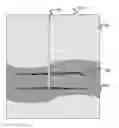
FIG. 1 is a schematic of a well completed by generating fractures that contain a solid sorbent for sorption of heavy metal, according to one embodiment of the invention.
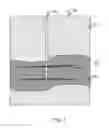
FIG. 2 is a schematic of a well completed with a packing that contains a solid sorbent for sorption of heavy metal, according to one embodiment of the invention.
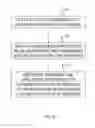
FIG. 3 is a flow chart illustrating a method of removing heavy metal from hydrocarbon products as the products are produced to surface, according to one embodiment of the invention.
DETAILED DESCRIPTION
Turning now to the detailed description of the preferred arrangement or arrangements of the present invention, it should be understood that the inventive features and concepts may be manifested in other arrangements and that the scope of the invention is not limited to the embodiments described or illustrated. The scope of the invention is intended only to be limited by the scope of the claims that follow.
Embodiments of the invention relate to in-situ treatment of fluid for heavy metal removal. The treatment utilizes sorbent injected into a wellbore and disposed in a flow path of the fluid being produced to above ground. The mercury retained by the sorbent upon contact with the fluid may remain within a reservoir from which the fluid is recovered.
Examples of the fluid include hydrocarbon streams of gas and/or oil. In some embodiments, the fluid may contain one or more of arsenic, beryllium, lead, cadmium, chromium, nickel, zinc, mercury and barium as the heavy metal that a sorbent composition sorbs during treatment of the fluid. While described herein with reference to mercury removal, the treatment may remove other ones of the heavy metals. As used herein, “mercury” refers to elemental mercury and/or mercury within or from compounds, such as mercuric chloride, mercury oxide and combinations thereof, containing mercury and at least one other element. In some embodiments, the treatment removes at least 90%, at least 95% or at least 99% of the mercury from the fluid.
Various suitable compositions enable sorption of the mercury. In some embodiments, the sorbent includes a substrate or support material that is porous and impregnated with a compound active on the support material for sorption of the mercury. Examples of the support material include bauxite, zeolites, clays, activated carbon, alumina (Al2O3), silica (SiO2), titania (TiO2), zirconia (ZrO2) and combinations thereof
Selection of the support material may depend on structural strength thereof as some applications described herein utilize the sorbent as proppant in fracturing-fluid and the proppant requires sufficient strength to hold open resulting fractures. Thus, conventional proppant may provide the support material that is impregnated with the compound active on the proppant for sorption of the mercury. In some embodiments, the fracturing-fluid contains a mixture of the sorbent and proppant nonreactive with the mercury.
For some embodiments, the sorbent includes the support material impregnated with one of silver, copper, tin and zinc in one of metallic, oxide and sulfide forms. Such compositions have shown effectiveness in sorption of mercury. Particular examples of the sorbent thus include bauxite, for example, impregnated with copper oxide (CuO), copper sulfide (CuS), zinc oxide (ZnO), silver (Ag) or silver sulfide (Ag2S). With respect to preparing the sorbent loaded with copper or zinc sulfide, sulfiding of supported metal oxides such as the copper or zinc oxides to form the copper or zinc sulfide may occur before or after injection of the sorbent into the wellbore and may rely on presence of hydrogen sulfide in the fluid. In some applications at temperatures below about 150°, a sulfur loaded support material such as activated carbon impregnated with between about 1 weight percent and about 30 weight percent sulfur may define the sorbent without the sulfur being loaded onto the support material as metal sulfide.
FIG. 1 illustrates an exemplary arrangement for the in-situ treatment. The arrangement includes a borehole 100 drilled into a formation 102 to intersect a subterranean reservoir 104 containing the fluid to be produced. Well completion includes generating fractures that contain a solid sorbent 106 for mercury sorption. Pumping of the fracturing-fluid into the borehole 100 at sufficient pressure and rate causes the fractures to form, spread and open. The fractures induced by the pressure extend away from the borehole 100 and through the reservoir 104. The fracturing-fluid mixed with the sorbent 106 carries the sorbent 106 into the fractures. The proppant and/or sorbent 106 keep the fracture open once hydraulic pressure from the pumping of the fracturing-fluid is removed. The sorbent 106 thus remains in place within the fractures once injected.
During production operations, the fluid passes into contact with the sorbent 106 resulting in sorption of the mercury from the fluid. The fluid then flows through the borehole 100 to surface 108 where the fluid is recovered above ground upon exiting the borehole 100. Implementation of the fracture with the sorbent 106 disposed therein enables mercury removal from the fluid even if the fractures provide no stimulating benefit to production rate.
FIG. 2 shows another exemplary arrangement for the in-situ treatment of the fluid. This arrangement includes a wellbore 200 extending into a formation 202 with a reservoir 204 of the fluid. A packing disposed within a drilled length of the wellbore 200 contains a solid sorbent 206 for mercury sorption. In some embodiments, the sorbent 206 fills an annular area around perforated tubing run in the wellbore 200 and through which the fluid enters for flowing toward surface 208. A flow path of the fluid from the reservoir 204 to the wellbore 200 or the surface 208 thus may traverse through the sorbent 206 that is in fluid communication with the wellbore 200 and the reservoir 204. The sorbent 206 may function to support and stabilize openhole completions or walls of the reservoir 204 where drilled to form the wellbore 200.
The fluid passes into contact with the sorbent 206 during production and results in sorption of the mercury from the fluid. The fluid then flows through the wellbore 200 toward the surface 208. The fluid that is recovered above ground upon exiting the wellbore 200 contains a lower mercury concentration than the fluid in the reservoir 204 prior to contact with the sorbent 206.
FIG. 3 illustrates a flow chart for a method of removing heavy metal from hydrocarbon products as the products are produced to surface. In an initial sorbent placement step 300, injection of sorbent for mercury into a wellbore disposes the sorbent in fluid communication with inflow of the products into the wellbore from an underground formation. Treatment step 301 includes passing the products into contact with the sorbent located underground in the placement step 300. Next, the products contacted with the sorbent to remove mercury from the products flow to the surface through the wellbore, in a recovery step 302.
Although the systems and processes described herein have been described in detail, it should be understood that various changes, substitutions, and alterations can be made without departing from the spirit and scope of the invention as defined by the following claims. Those skilled in the art may be able to study the preferred embodiments and identify other ways to practice the invention that are not exactly as described herein. It is the intent of the inventors that variations and equivalents of the invention are within the scope of the claims while the description, abstract and drawings are not to be used to limit the scope of the invention. The invention is specifically intended to be as broad as the claims below and their equivalents.
Claims
1. A method, comprising:
injecting a solid sorbent for heavy metal into a wellbore intersecting a subterranean reservoir containing hydrocarbon products;
passing the hydrocarbon products into contact with the sorbent resulting in sorption of heavy metal from the hydrocarbon products; and
recovering the products to above ground from the wellbore after the products pass into contact with the sorbent.
2. The method according to claim 1, further comprising generating formation fractures within the reservoir and into which the sorbent is disposed.
3. The method according to claim 1, wherein the contact of the products with the sorbent results in sorption of mercury from the products.
4. The method according to claim 1, further comprising generating formation fractures within the reservoir and into which the sorbent is disposed, wherein the sorbent includes impregnated proppant.
5. The method according to claim 1, wherein the sorbent is packed within a drilled length of the wellbore.
6. The method according to claim 1, wherein the sorbent includes one of supported silver, copper, tin and zinc in one of metallic, oxide and sulfide forms.
7. The method according to claim 1, wherein the sorbent includes copper oxide.
8. The method according to claim 1, wherein the sorbent includes copper oxide impregnated on bauxite.
9. The method according to claim 1, wherein the sorbent includes copper sulfide.
10. The method according to claim 1, wherein the sorbent is disposed in formation fractures within the reservoir and is impregnated proppant formed from bauxite.
11. The method according to claim 1, wherein the contact of the products with the sorbent results in sorption of one of arsenic, beryllium, lead, cadmium, chromium, nickel, zinc, mercury and barium from the products.
12. The method according to claim 1, wherein the sorbent includes a substrate formed from one of zeolite, silica, alumina, titania, zirconia, activated carbon, clay and bauxite and impregnated with a compound active on the substrate for sorption of mercury.
13. A method, comprising:
fracturing a subterranean formation to generate fractures with a fluid containing a solid sorbent for heavy metal;
passing hydrocarbon products into contact with the sorbent disposed in the fractures resulting in sorption of heavy metal from the hydrocarbon products; and
recovering the products produced from the formation and treated to remove the heavy metal by the contact with the sorbent.
14. The method according to claim 13, wherein the sorbent includes proppant impregnated with one of silver, copper, tin and zinc in one of metallic, oxide and sulfide forms.
15. The method according to claim 13, wherein the fluid contains a mixture of the sorbent of supported silver, copper, tin and zinc in one of metallic, oxide and sulfide forms and proppant nonreactive with the heavy metal.
16. The method according to claim 13, wherein the contact of the products with the sorbent results in sorption of mercury from the products.
17. The method according to claim 13, wherein the hydrocarbon products are gaseous.
18. A method, comprising:
packing part of a wellbore intersecting a subterranean reservoir containing hydrocarbon products with solid sorbent for mercury; and
producing the hydrocarbon products, wherein during the producing the products contact the sorbent disposed underground resulting in sorption of the mercury from the hydrocarbon products prior to above ground removal of the products from the wellbore.
19. The method according to claim 18, wherein the sorbent is packed within a drilled length of the wellbore in an annular area around tubing through which the products flow.
20. The method according to claim 18, wherein the sorbent includes a support material impregnated with one of silver, copper, tin and zinc in one of metallic, oxide and sulfide forms.
Images & Drawings included:

Sources:
- United States Patent and Trademark Office - verify current appl. status at the USPTO↗
Recent applications in this class:
- » 20230415071 2023-12-28
LOW TEMPERATURE DECONTAMINATION OF TRITIATED WATER - » 20230311025 2023-10-05
SYSTEMS AND ADSORPTION FILTERS FOR FILTERING PARTICULATE MATTER FROM FLUID STREAMS - » 20220280885 2022-09-08
System and method for liquid hydrocarbon desulfurization - » 20210101091 2021-04-08
Removal of hydrophobic particles using carbon dioxide - » 20200009472 2020-01-09
Disposal System for Unused Pharmaceuticals - » 20190232195 2019-08-01
Granular media for backwashable particle filter and free phase oil coalescer - » 20190091604 2019-03-28
Method And Apparatus For Preparation Of A Urea Solution - » 20190091603 2019-03-28
Methods and apparatus for clarification of pyrolysis oils - » 20170259188 2017-09-14
Process for purification of an organic composition - » 20160361667 2016-12-15
Disposal System for Unused Pharmaceuticals
Recent applications for this Assignee:
- » 20250277414 2025-09-04
FIBER-TO-CASING BONDING - » 20250154421 2025-05-15
DECREASING EXCESS OCTANE DURING GASOLINE BLENDING - » 20240401451 2024-12-05
ESP SHIELDING VIA TOE-DOMINANT SOLVENT INJECTION - » 20240352819 2024-10-24
Method and apparatus for milling a window in casing - » 20240328314 2024-10-03
KINETIC MODELING OF PETROLEUM EVOLUTION - » 20240327739 2024-10-03
LOOP LINE FOR H2S TREATMENT - » 20240325999 2024-10-03
AUTOMATED TANK MIXING FOR CUSTODY TRANSFER - » 20240310353 2024-09-19
DETERMINATION OF CHLORIDE CONCENTRATION IN DRILLING FLUIDS - » 20240309722 2024-09-19
Delivering fluid to a subsea wellhead - » 20240271035 2024-08-15
Proppant from captured carbon