Bioadhesive gel based on hydroxyethylcellulose
US20120083515A1
2012-04-05
13/293,484
2011-11-10
✅ Patent granted
US 8,790,685 B2
2014-07-29
-
-
Jake Vu
Silvia Salvadori, P.C.
2031-11-14
Abstract:
Disclosed are compositions in the form of a bioadhesive gel that adheres to the mucous membranes, in particular the vaginal mucosa, for the application of active ingredients and/or principles, comprising hydroxyethylcellulose as the only gelling agent.
Assignee:
- MITECH-IDEA s.r.l. 1 🇮🇹 Milano, Italy
- Mipharm S.p.A. 1 🇮🇹 Milan, Italy
Applicant:
Interested in similar patents?
Get notified when new applications in this technology area are published.
Classification:
A61K9/0036 » CPC main
Medicinal preparations characterised by special physical form; Galenical forms characterised by the site of application; Urogenital system, e.g. vagina, uterus, cervix, penis, scrotum, urethra, bladder; Personal lubricants Devices retained in the vagina or cervix for a prolonged period, e.g. intravaginal rings, medicated tampons, medicated diaphragms
A61K47/10 » CPC further
Medicinal preparations characterised by the non-active ingredients used, e.g. carriers or inert additives; Targeting or modifying agents chemically bound to the active ingredient; Organic compounds, e.g. natural or synthetic hydrocarbons, polyolefins, mineral oil, petrolatum or ozokerite containing oxygen, e.g. ethers, acetals, ketones, quinones, aldehydes, peroxides Alcohols; Phenols; Salts thereof, e.g. glycerol; Polyethylene glycols [PEG]; Poloxamers; PEG/POE alkyl ethers
A61P15/00 » CPC further
Drugs for genital or sexual disorders ; Contraceptives
A61P31/00 » CPC further
Antiinfectives, i.e. antibiotics, antiseptics, chemotherapeutics
A61P37/08 » CPC further
Drugs for immunological or allergic disorders Antiallergic agents
A61K31/192 IPC
Medicinal preparations containing organic active ingredients; Acids; Anhydrides, halides or salts thereof, e.g. sulfur acids, imidic, hydrazonic, hydroximic acids; Carboxylic acids, e.g. valproic acid having aromatic groups, e.g. sulindac, 2-arylpropionic acids, ethacrynic acid
A61P31/04 » CPC further
Antiinfectives, i.e. antibiotics, antiseptics, chemotherapeutics Antibacterial agents
A61P31/10 » CPC further
Antiinfectives, i.e. antibiotics, antiseptics, chemotherapeutics Antimycotics
A61K31/155 IPC
Medicinal preparations containing organic active ingredients; Amines Amidines (), e.g. guanidine (HN—C(=NH)—NH), isourea (N=C(OH)—NH), isothiourea (—N=C(SH)—NH)
A61K31/4164 IPC
Medicinal preparations containing organic active ingredients; Heterocyclic compounds having nitrogen as a ring hetero atom, e.g. guanethidine or rifamycins having five-membered rings with two or more ring hetero atoms, at least one of which being nitrogen, e.g. tetrazole 1,3-Diazoles
A61K47/38 » CPC further
Medicinal preparations characterised by the non-active ingredients used, e.g. carriers or inert additives; Targeting or modifying agents chemically bound to the active ingredient; Macromolecular organic or inorganic compounds, e.g. inorganic polyphosphates; Polysaccharides; Derivatives thereof, e.g. gums, starch, alginate, dextrin, hyaluronic acid, chitosan, inulin, agar or pectin Cellulose; Derivatives thereof
Description
CROSS-REFERENCE TO RELATED APPLICATIONS
The present application is a continuation of prior U.S. patent application Ser. No. 10/567,890, filed Sep. 15, 2006, entitled “BIOADHESIVE GEL BASED ON HYDROXYETHYLCELLULOSE,” which is a 35 U.S.C. §371 National Phase conversion of PCT/EP2004/008577, filed Jul. 30, 2004, which claims priority of Italian Application No. MI2003A001640, filed Aug. 8, 2003, the entire disclosures of which are incorporated herein by reference. The PCT International Application was published in the English language.
TECHNICAL FIELD
This invention relates to compositions in the form of a bioadhesive gel that adheres to the mucous membranes, in particular the vaginal mucosa, for the application of active ingredients and/or principles.
BACKGROUND OF THE INVENTION
Bioadhesion is the property whereby some hydrogels adhere to biological tissues, in particular to mucous-coated epithelia such as the gastric, buccal, vaginal and rectal mucosae.
This property has been exploited to develop drug delivery systems, especially in order to increase the time over which drugs remain in contact with certain sites or areas of therapeutic interest, giving rise to systemic effects (thus increasing transmucosal absorption) or local effects. The most commonly used polymers that are capable of forming hydrogels and imparting bio- and/or muco-adhesion are acrylic or methacrylic acid polymers, possibly cross-linked, and chitosan, or its derivatives.
In particular, for drugs designed for gynaecological use, a bioadhesive gel able to ensure prolonged contact between the active ingredient and the vaginal mucosa, and gradual release of that ingredient over time, provides the ideal solution in terms of efficacy and compliance by patients. Bioadhesive vaginal gels have consequently been disclosed, for example, in U.S. Pat. No. 6,159,491, US 2002012674, US 2003091642, WO 200047144, WO 200203896, WO 200143720 and WO 9610989. In all these cases, an acrylic acid polymer (Carbomer or polycarbophil) is used as viscosity-controlling or bioadhesive agent.
WO 200015192 describes mucoadhesive formulations in which chitosan is used instead of the acrylic acid polymer.
However, the problem of obtaining a bioadhesive formulation that presents the following advantages and properties:
-
- release of drug for up to approximately 24 hours;
- absence of gelling/bioadhesive agents. characterised by the presence of acid groups, which are therefore sensitive to the ionic strength of the medium, and sometimes need to be neutralised with bases;
- the possibility of carrying drugs with different chemico-physical properties, in particular water-soluble drugs and lipophilic drugs which are substantially insoluble in water;
- reduction of the time and cost of the treatment remains substantially unsolved.
SUMMARY OF THE INVENTION
It has now been found that said objectives can be achieved by bioadhesive gel formulations that adhere to the mucous membranes, in particular the vaginal mucosa, comprising hydroxyethylcellulose as the only bioadhesive polymer. This gelling excipient has no acid groups and is therefore not dependent on the ionic strength of the medium; it also has a matrix effect which allows particularly slow, gradual release of the active ingredient, for up to 24 hours.
DETAILED DESCRIPTION
This invention therefore relates to compositions in the form of an aqueous gel for the intravaginal delivery of active ingredients, comprising hydroxyethylcellulose as the only gelling and bioadhesive agent.
The compositions of the invention may also contain glycerol, diethylene glycol monoethyl ether, surfactants, preservatives, acidifiers and other excipients in common use for the form of delivery considered herein.
The compositions of the invention will preferably contain 1 to 5% by weight of hydroxyethylcellulose, 25 to 90% by weight of water, 5 to 25% by weight of glycerol, 5 to 50% by weight of diethylene glycol monoethyl ether, 0.01 to 10% by weight of surfactants, 0.05 to 1% by weight of preservatives, and 0.01 to 1% by weight of acidifiers.
Preferably, the hydroxyethylcellulose content is higher than 2% and less than 4%.
Hydroxyethylcellulose is commercially available from many sources: it is preferred an hydroxyethylcellulose having a degree of substitution of about 1.5 (corresponding to 3 hydroxyethyl groups every two saccharide units) and a molecular weight estimated from intrinsic viscosity measurements ranging from 1.0 to 1.3×10⁶. Hydroxyethylcellulose having said characteristic is available under the trade-mark Natrosol 250 HX by Hercules Inc. UK.
The percentage of active ingredient will obviously depend on the characteristics of the selected drug, and may vary within a wide range, for example from 0.01 to 10% by weight.
Active ingredients which can be advantageously formulated according to the invention include antifungals, antiseptics and antimicrobials, antibiotics, analgesics, local anaesthetics, antihistamines, anti-inflammatory agents, contraceptives, hormones, and combinations thereof.
Examples of these active ingredients include, in particular, econazole, miconazole, fluconazole, ciclopiroxolamine, nifuratel, nystatin, chlorhexidine, ibuprofen, ketoprofen, naproxen, benzydamine, benzalkonium chloride or other quaternary ammonium antiseptics, nonoxynol-9 and all other active ingredients of interest for gynaecological applications.
EXAMPLES
The following examples are provided only for the purpose of illustrating the invention and do not limit the invention in any manner.
Example 1
| Composition | Percentage | |
| Purified water | 81.9% | |
| Glycerol | 12.9% | |
| Chlorhexidine digluconate, 20% solution w/v | 2.7% | |
| Hydroxyethylcellulose (Natrosol 250 HX) | 2.5% | |
Example 2
Ibuprofen Vaginal Gel
| Composition | Percentage | |
| Ibuprofen | 0.100% | |
| Benzalkonium chloride | 0.150% | |
| Polyoxyethyen-20-monocetyl ether (Brij 58) | 0.500% | |
| Hydroxyethylcellulose (Natrosol 250 HX) | 2.500% | |
| Diethylene glycol monoethyl ester (Transcutol P) | 10.000% | |
| Purified water | 86.750% | |
Example 3
Econazole Nitrate Vaginal Gel
| Composition | Percentage | |
| Econazole nitrate | 1.000% | |
| Benzalkonium chloride | 0.150% | |
| Hydroxyethylcellulose (Natrosol 250 HX) | 2.500% | |
| Polysorbate 80 (Tween 80) | 4.000% | |
| Glycerol | 10.000% | |
| Diethylene glycol monoethyl ester (Transcutol P) | 40.000% | |
| Purified water | 42.350% | |
Example 4
Study of Bioadhesion of Vaginal Gels
Bioadhesion was measured in vitro using a suitably modified Lloyd dynamometer. The measurement substrate (rabbit gastric mucosa or polypropylene) was fixed with an adhesive to the upper support, which in turn was connected to the mobile crossbar, and 200 mg of the test formulation were placed on the lower support so as to cover the surface evenly. After effecting close contact between the formulation and the substrate (30 s), the crossbar was raised at a defined, constant speed until the two surfaces separated.
A 20 N load cell was used for the measurements [J. Y. Chang, Y-K. Oh, H. S. Kong, E. J. Kim et al., J. Control. Release 82 (2002) 39-50; S. Skulason, T. Kristmundsdottir, W. P. Holbrook, Bio-Gels Pharmaceuticals].
Five measurements were taken for each sample; the parameters considered were the maximum breaking load (ML) and the adhesion work (W).
The operating conditions used in the study are reported below.
| Apparatus | Lloyd LRX Tensiometer |
| Equipped with clamps for adhesion tests |
| Test conditions | Crossbar speed | 0.1 mm/s |
| Load cell | 20 N | |
| Contact time between substrate | 30 s | |
| and gel | ||
| Contact surface | rabbit gastric mucosa/ | |
| Polypropylene | ||
RESULTS
The results are shown in Table 1.
| TABLE 1 | ||
| Rabbit gastric mucosa | Polypropylene |
| FORMULATION | ML (N) | W (Nmm) | ML (N) | W (Nmm) |
| EXAMPLE 1 | 0.088 ± 0.017 | 0.095 ± 0.030 | 0.101 ± | 0.099 ± |
| EXAMPLE 2 | 0.076 ± 0.012 | 0.069 ± 0.010 | 0.019 | 0.014 |
| EXAMPLE 3 | 0.179 ± 0.032 | 0.155 ± 0.032 | ||
Example 5
pH 4.0 Diffusion Test of Gels of Examples 1, 2 and 3
Diffusion medium: lactate buffer, pH 4.0
Diffusion volume: 50 mL
Temperature: 37±0.5° C.
Agitation speed: 50 rpm
Quantity of sample: 1.5 g
Release area: 4.5 cm2
Release membrane: cellulose acetate 0.45 μm.
The test for release of the drug from the gel was performed using diffusion cells, with cellulose acetate membranes having a 4.5 cm2 surface. The quantity of gel applied was 1.5 g. At given times, an automated system took predetermined sample aliquots, with immediate UV spectrophotometer reading at 254 nm.
BRIEF DESCRIPTION OF THE SEVERAL VIEWS OF THE DRAWINGS
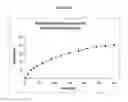
FIG. 1 shows the diffusion profile of chlorhexidine as the mean of 8 samples±standard deviation.
FIG. 2 shows the diffusion profile of chlorhexidine from the 8 samples.
Table 2 shows the percentages released for the 8 chlorhexidine samples.
| TABLE 2 | ||||||||||
| sample | sample | sample | sample | sample | sample | sample | sample | |||
| time | 1 | 2 | 3 | 4 | 5 | 6 | 7 | 8 | mean | SD |
| 0 | 0 | 0 | 0 | 0 | 0 | 0 | 0 | 0 | 0 | 0 |
| 10 | 12.89 | 8.532 | 11.94 | 10.37 | 11.54 | 4.473 | 12.28 | 9.514 | 10.19 | 2.74 |
| 20 | 20.05 | 19.09 | 19.92 | 19.39 | 18.9 | 17.3 | 20.35 | 18.51 | 19.19 | 0.98 |
| 30 | 25.29 | 23.73 | 26.29 | 24.53 | 23.49 | 22.86 | 25.73 | 24.65 | 24.57 | 1.17 |
| 40 | 29.94 | 28.16 | 31.35 | 29.54 | 27.11 | 27.24 | 29.5 | 27.47 | 28.79 | 1.53 |
| 60 | 37.63 | 33.33 | 39.02 | 38.09 | 34.48 | 35.99 | 37.73 | 35.43 | 36.46 | 1.97 |
| 90 | 48.43 | 45.46 | 51.11 | 50.36 | 42.11 | 40.69 | 45.84 | 43.93 | 45.99 | 3.76 |
| 120 | 57.25 | 53.77 | 59.81 | 60.04 | 49.54 | 51.69 | 53.37 | 51.09 | 54.57 | 4.01 |
| 150 | 64.1 | 60.13 | 65.16 | 64.99 | 56.34 | 60.75 | 62.1 | 60.35 | 61.74 | 2.99 |
| 180 | 69.83 | 65.88 | 70.99 | 72.06 | 59.42 | 64.05 | 65.88 | 63.19 | 66.41 | 4.31 |
| 210 | 75.2 | 72.57 | 76.17 | 79.41 | 66.23 | 70.77 | 71.62 | 69.9 | 72.73 | 4.10 |
| 240 | 78.71 | 74.61 | 79.33 | 82.52 | 69.9 | 73.52 | 74.98 | 73.03 | 75.83 | 4.07 |
| 270 | 81.79 | 78.38 | 81.54 | 84.88 | 72.61 | 77.04 | 77.86 | 74.84 | 78.62 | 3.99 |
| 300 | 84.36 | 81.24 | 83.65 | 87.96 | 76.38 | 79.6 | 80.6 | 79.33 | 81.64 | 3.58 |
FIG. 3 shows the diffusion profile of ibuprofen as the mean of 8 samples±standard deviation.
Table 3 shows the percentages released for the 8 ibuprofen samples.
| TABLE 3 | ||||||||||
| time | sample | sample | sample | sample | sample | sample | sample | sample | ||
| (min) | 1 | 2 | 3 | 4 | 5 | 6 | 7 | 8 | mean | SD |
| 0 | 0 | 0 | 0 | 0 | 0 | 0 | 0 | 0 | 0 | 0 |
| 30 | 15.56 | 17.83 | 18.96 | 18.96 | 4.18 | 3.22 | 17.06 | 11.26 | 13.38 | 6.05 |
| 60 | 24.34 | 26.60 | 26.88 | 19.53 | 33.15 | 24.14 | 26.71 | 19.95 | 25.16 | 4.06 |
| 90 | 30.56 | 28.02 | 32.26 | 28.02 | 34.44 | 36.37 | 30.57 | 37.01 | 32.16 | 3.28 |
| 120 | 40.19 | 33.39 | 45.28 | 30.56 | 36.05 | 44.74 | 42.16 | 39.59 | 38.99 | 4.94 |
| 150 | 47.26 | 47.54 | 45.56 | 56.60 | 47.63 | 44.74 | 43.77 | 43.77 | 47.11 | 3.89 |
| 180 | 57.45 | 41.60 | 53.49 | 46.69 | 47.31 | 44.74 | 44.09 | 44.41 | 47.47 | 4.99 |
| 240 | 57.73 | 54.62 | 54.62 | 59.71 | 52.11 | 51.81 | 53.03 | 52.11 | 54.47 | 2.70 |
| 300 | 68.20 | 61.69 | 59.99 | 63.67 | 68.88 | 61.87 | 69.49 | 62.17 | 64.49 | 3.52 |
| 360 | 70.18 | 66.79 | 64.24 | 59.71 | 76.80 | 74.67 | 69.79 | 71.31 | 69.19 | 5.17 |
| 420 | 61.98 | 74.99 | 65.65 | 73.30 | 77.41 | 84.72 | 77.71 | 76.50 | 74.03 | 6.73 |
| 480 | 78.39 | 72.16 | 71.60 | 71.31 | 81.98 | 84.72 | 81.07 | 80.15 | 77.67 | 4.93 |
FIG. 4 shows the diffusion profile of econazole as the mean of 8 samples±standard deviation.
Table 4 shows the percentages released of the 8 econazole samples.
| TABLE 4 | ||||||||||
| sample | sample | sample | sample | sample | sample | sample | sample | |||
| Time | 1 | 2 | 3 | 4 | 5 | 6 | 7 | 8 | mean | SD |
| 1 | 8.9 | 8.9 | 10.7 | 11.7 | 9.1 | 8.8 | 10.3 | 12 | 10.1 | 1.3 |
| 2 | 12.3 | 15.5 | 18.4 | 19.1 | 14.4 | 15 | 17.3 | 19.5 | 16.4 | 2.5 |
| 3 | 24.1 | 21.6 | 24 | 25 | 22.1 | 25.3 | 21.1 | 23.6 | 23.4 | 1.6 |
| 4 | 29 | 26.2 | 28.8 | 30.1 | 30.4 | 28.2 | 25.8 | 32.1 | 28.8 | 2.1 |
| 5 | 34.1 | 30.4 | 32.8 | 34.5 | 36 | 33.4 | 30.2 | 33.7 | 33.1 | 2.0 |
| 6 | 40 | 34.2 | 35.4 | 37.6 | 38.4 | 36.5 | 34 | 36.3 | 36.6 | 2.1 |
| 7 | 40.5 | 36.8 | 37.4 | 39.9 | 41 | 39.2 | 37 | 38.4 | 38.8 | 1.6 |
| 8 | 44.4 | 39.3 | 38.6 | 41.3 | 43.2 | 40.2 | 39.6 | 41.2 | 41.0 | 2.0 |
| 9 | 45.2 | 40.6 | 40 | 43 | 45.8 | 42.1 | 42.3 | 44.2 | 42.9 | 2.1 |
| 10 | 46.1 | 41.8 | 40.9 | 44 | 47.3 | 44 | 45 | 45.4 | 44.3 | 2.1 |
| 11 | 47.2 | 42.8 | 41.4 | 44.8 | 48 | 45.3 | 46.3 | 46.7 | 45.3 | 2.3 |
| 12 | 48.6 | 43.6 | 42.6 | 45.8 | 49.2 | 47.1 | 48.2 | 48.1 | 46.7 | 2.4 |
| 13 | 49.2 | 44.3 | 43.1 | 46.4 | 50.3 | 49.6 | 50.2 | 49.2 | 47.8 | 2.8 |
| 14 | 50.2 | 45.2 | 43.6 | 46.9 | 51 | 49.8 | 50.8 | 50.1 | 48.5 | 2.8 |
| 15 | 50.7 | 45.4 | 43.7 | 47.6 | 51.1 | 50 | 51.1 | 50.6 | 48.8 | 2.9 |
| 16 | 51.3 | 46 | 44.3 | 47.4 | 51.3 | 50.3 | 51.4 | 50.8 | 49.1 | 2.8 |
| 17 | 51.9 | 46.3 | 44.7 | 47.7 | 51.5 | 50.4 | 51.7 | 50.9 | 49.4 | 2.8 |
| 18 | 52.6 | 46.3 | 45 | 47.7 | 51.7 | 50.7 | 51.9 | 51.1 | 49.6 | 2.9 |
| 19 | 53.1 | 46.8 | 46.7 | 48.2 | 52 | 51.1 | 52 | 51.3 | 50.2 | 2.5 |
| 20 | 53.3 | 46.9 | 49.3 | 50.1 | 52.2 | 51.2 | 52.3 | 51.5 | 50.9 | 2.0 |
| 21 | 53.1 | 47 | 52.2 | 50.3 | 52.3 | 51.4 | 52.6 | 51.7 | 51.3 | 1.9 |
| 22 | 53.9 | 47.8 | 54.2 | 51.2 | 52.5 | 51.6 | 52.7 | 51.9 | 52.0 | 2.0 |
| 23 | 54.1 | 48.3 | 55.3 | 51.9 | 52.7 | 51.8 | 52.9 | 52.2 | 52.4 | 2.0 |
| 24 | 55.2 | 50.1 | 56.1 | 52 | 53.2 | 52.4 | 53.1 | 52.4 | 53.1 | 1.9 |
Claims
1-6. (canceled)
7. A method of delivering an active ingredient in the form of a bioadhesive gel composition to the mucosa of a subject in need thereof, said method comprising applying to an outer surface of said mucosa a composition comprising at least one said active ingredient, said composition formed into a gel and rendered bioadhesive by addition thereto of hydroxyethylcellulose, and said composition further comprising glycerol and diethylene glycol monoethyl ether, together with at least one surfactant, preservative and acidifier.
8. The method according to claim 7, wherein said mucosa is a vaginal mucosa of said subject.
9. The method according to claim 7, wherein said composition comprises 1 to 5% by weight of hydroxyethylcellulose, 25 to 90% by weight of water, 5 to 25% by weight of glycerol, 5 to 50% by weight of diethylene glycol monoethylether, 0.01 to 10% by weight of surfactant, 0.05 to 1% by weight of preservative, and 0.01 to 1% by weight of acidifier.
10. The method according to claim 7, wherein said composition comprises, as said active ingredient, at least one selected from the group consisting of antifungals, antiseptics, local anaesthetics, antihistamines, anti-inflammatory agents, contraceptives, hormones, and combinations thereof.
11. The method according to claim 10, wherein the active ingredient is at least one selected from the group consisting of econazole, miconazole, fluconazole, cyclopiroxolamine, nifuratel, chlorhexidine, ibuprofen, ketoprofen, naptoxen, benzydamine, benzalkonium chloride or other quaternary ammonium antiseptics, and nonxynol-9.
Images & Drawings included:


Sources:
- United States Patent and Trademark Office - verify current appl. status at the USPTO↗
Recent applications in this class:
- » 20250248928 2025-08-07
NANOPARTICLES AND NANOPARTICLE-RELEASING VAGINAL RINGS - » 20250170055 2025-05-29
DRUG DELIVERY SYSTEM - » 20250114299 2025-04-10
COMBINATION THERAPY INTRAVAGINAL RINGS - » 20240374508 2024-11-14
DEVICES AND METHODS OF USE THEREOF FOR NON-HORMONAL CONTRACEPTION - » 20240358633 2024-10-31
METHOD OF PROVIDING BIRTH CONTROL - » 20240335373 2024-10-10
Methods, Systems and Devices for Post-Fabrication Drug Loading - » 20240335372 2024-10-10
Sustained-Release Vaginal Films - » 20240252428 2024-08-01
METHODS OF PROVIDING BIRTH CONTROL - » 20240115490 2024-04-11
DRUG DELIVERY SYSTEM FOR ULTRA-LOW DOSE ESTROGEN COMBINATIONS AND METHODS AND USES THEREOF - » 20230404911 2023-12-21
DRUG DELIVERY SYSTEM FOR ULTRA-LOW DOSE ESTROGEN COMBINATIONS AND METHODS AND USES THEREOF