PDMS-PVP block copolymers
US20120083573A1
2012-04-05
13/325,584
2011-12-14
✅ Patent granted
US 8,344,090 B2
2013-01-01
-
-
Ling Choi | Chun-Cheng Wang
2031-12-14
Abstract:
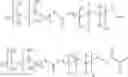
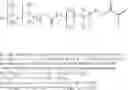
Methods for preparing functionalized polyvinylpyrrolidones with polymerizable functions. Also, amphipathic polydimethylsiloxane-PVP block copolymers, such as
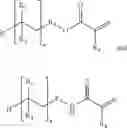
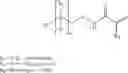
and (meth)acrylated and (meth)acrylamide-functionalized polyvinylpyrrolidone compounds, such as
The block copolymers are useful as biomaterial components in biomedical devices. They provide improved wettability, lubricity, and material compatibility to the biomedical device, e.g., ophthalmic lenses.
Inventors:
- Keith R. McCrea 18 🇺🇸 Concord, CA, United States
- James Parakka 6 🇺🇸 San Bruno, CA, United States
- Robert S. Ward 3 🇺🇸 Berkeley, CA, United States
Assignee:
- DSM IP ASSETS B.V. 1,844 🇳🇱 Heerlen, Netherlands
Interested in similar patents?
Get notified when new applications in this technology area are published.
Classification:
C08G77/442 » CPC further
Macromolecular compounds obtained by reactions forming a linkage containing silicon with or without sulfur, nitrogen, oxygen or carbon in the main chain of the macromolecule; Block-or graft-polymers containing polysiloxane sequences containing vinyl polymer sequences
C08G77/452 » CPC further
Macromolecular compounds obtained by reactions forming a linkage containing silicon with or without sulfur, nitrogen, oxygen or carbon in the main chain of the macromolecule; Block-or graft-polymers containing polysiloxane sequences containing nitrogen-containing sequences
C08L83/10 » CPC further
Compositions of macromolecular compounds obtained by reactions forming in the main chain of the macromolecule a linkage containing silicon with or without sulfur, nitrogen, oxygen or carbon only; Compositions of derivatives of such polymers Block- or graft-copolymers containing polysiloxane sequences
C08F2810/40 » CPC further
Chemical modification of a polymer taking place solely at one end or both ends of the polymer backbone, i.e. not in the side or lateral chains
C08L39/06 » CPC further
Compositions of homopolymers or copolymers of compounds having one or more unsaturated aliphatic radicals, each having only one carbon-to-carbon double bond, and at least one being terminated by a single or double bond to nitrogen or by a heterocyclic ring containing nitrogen; Compositions of derivatives of such polymers; Homopolymers or copolymers of monomers containing heterocyclic rings having nitrogen as ring member Homopolymers or copolymers of N-vinyl-pyrrolidones
G02B1/043 » CPC further
Optical elements characterised by the material of which they are made; Optical coatings for optical elements made of organic materials, e.g. plastics; Lenses Contact lenses
C08L83/06 » CPC further
Compositions of macromolecular compounds obtained by reactions forming in the main chain of the macromolecule a linkage containing silicon with or without sulfur, nitrogen, oxygen or carbon only; Compositions of derivatives of such polymers; Polysiloxanes containing silicon bound to oxygen-containing groups
A61L15/26 » CPC further
Chemical aspects of, or use of materials for, bandages, dressings or absorbent pads; Bandages, dressings or absorbent pads for physiological fluids such as urine or blood, e.g. sanitary towels, tampons containing macromolecular materials Macromolecular compounds obtained otherwise than by reactions only involving carbon-to-carbon unsaturated bonds; Derivatives thereof
A61L27/18 » CPC further
Materials for prostheses or for coating prostheses; Macromolecular materials obtained otherwise than by reactions only involving carbon-to-carbon unsaturated bonds
C08L83/04 » CPC further
Compositions of macromolecular compounds obtained by reactions forming in the main chain of the macromolecule a linkage containing silicon with or without sulfur, nitrogen, oxygen or carbon only; Compositions of derivatives of such polymers Polysiloxanes
C08F8/10 » CPC further
Chemical modification by after-treatment Acylation
C08F8/14 » CPC further
Chemical modification by after-treatment Esterification
C08F126/10 » CPC further
Homopolymers of compounds having one or more unsaturated aliphatic radicals, each having only one carbon-to-carbon double bond, and at least one being terminated by a single or double bond to nitrogen or by a heterocyclic ring containing nitrogen by a heterocyclic ring containing nitrogen N-Vinyl-pyrrolidone
C08L53/00 » CPC further
Compositions of block copolymers containing at least one sequence of a polymer obtained by reactions only involving carbon-to-carbon unsaturated bonds; Compositions of derivatives of such polymers
C08L2666/02 » CPC further
Composition of polymers characterized by a further compound in the blend, being organic macromolecular compounds, natural resins, waxes or and bituminous materials, non-macromolecular organic substances, inorganic substances or characterized by their function in the composition Organic macromolecular compounds, natural resins, waxes or and bituminous materials
C08G81/02 IPC
Macromolecular compounds obtained by interreacting polymers in the absence of monomers, e.g. block polymers at least one of the polymers being obtained by reactions involving only carbon-to-carbon unsaturated bonds
C08F30/08 IPC
Homopolymers and copolymers of compounds having one or more unsaturated aliphatic radicals, each having only one carbon-to-carbon double bond, and containing phosphorus, selenium, tellurium or a metal containing a metal containing silicon
C08F293/00 » CPC main
Block polymers
C08F293/00 » CPC main
Macromolecular compounds obtained by polymerisation on to a macromolecule having groups capable of inducing the formation of new polymer chains bound exclusively at one or both ends of the starting macromolecule
Description
CROSS-REFERENCE
The present application is a 37 C.F.R. §1.53(b) divisional of, and claims priority to, U.S. application Ser. No. 12/531,200 (filing date: Dec. 14, 2009). Application Ser. No. 12/531,200 is the national phase under 35 U.S.C. §371 of International Application No. PCT/US2008/056825, filed on Mar. 13, 2008 which claims priority under 35 U.S.C. 119(e) to U.S. Provisional Application Ser. No. 60/895,042 filed on Mar. 15, 2007. The entire contents of each of these applications is hereby incorporated by reference.
FIELD OF THE INVENTION
This invention relates to polymerizable poly(N-vinyl-2-pyrrolidone) (PVP) and amphipathic copolymers containing polydimethylsiloxane (PDMS) and polyvinylpyrrolidone. Such copolymers are of particular use as components in biomedical devices such as ophthalmic applications and wound care.
BACKGROUND OF THE INVENTION
N-vinyl-2-pyrrolidone and its polymer, poly(N-vinyl-2-pyrrolidone) (PVP), is a water soluble and biocompatible polymer that has been widely used for a range of commercial applications including for tablet binding, hair fixation, wetting agents in ophthalmic lens formulations, membranes, adhesives, hydrophilic coatings, etc. Several methods for preparation of functionalized polyvinylpyrrolidones have been reported, for instance using azo radical initiators in the presence of chain transfer agents (e.g., mercaptoethanol, isopropanol, isopropoxyethanol, mercaptoethylamine, mercaptopropionic acid). See e.g. U.S. Pat. No. 5,135,297 (SURFACE COATING OF POLYMER OBJECTS); U.S. Pat. No. 6,756,449 B2 (ANB BLOCK COPOLYMERS CONTAINING POLY (VINYL PYRROLIDONE) UNITS, MEDICAL DEVICES, AND METHODS); and US 2005/0119404 A1 (PROCESS FOR THE PREPARATION OF AMPHIPHILIC POLY (N-VINYL-2-PYRROLIDONE) BLOCK COPOLYMERS). The disclosure of each of these documents is included herein by reference.
It is desirable in some cases to build functionality into the PVP to prepare materials that will be retained permanently in the final functional polymer device without leaching of the PVP component during use. For instance, (meth)acrylated or (meth)acrylamide functionalized PVP derivatives will find utility in contact lens compositions. In practice, during irradiation or thermal polymerization of the contact lens mix, the functional PVP will be covalently bonded into the crosslinked network and provide a non-leachable wettable ophthalmic lens.
Copolymers that incorporate silicone (PDMS) blocks and hydrophilic moieties such as PVP, poly(dialkylacrylamide) (e.g. polydimethyacrylamide, polyN-isopropylacrylamide and the like), and polyalkyleneglycol should compatibilize the hydrophobic and hydrophilic components of a contact lens formulation generating optically clear and functional lenses. These copolymers would be useful as active components in applications such as silicone hydrogel lenses. In addition, amphiphilic moieties will also find use in lens care solutions targeted for specific types of contact lens. Besides ophthalmic and lens care solutions, other applications for the amphipathic block copolymers include use in tissue engineering, transdermal implants and wound dressings, industrial adhesives, sealants, surface protecting agents, drug release agents and other biomedical applications.
SUMMARY OF THE INVENTION
The present invention discloses methods for preparation of functionalized polyvinyl-pyrrolidone (PVP) with polymerizable functions and also of novel amphipathic polydimethylsiloxane—PVP copolymers. The block copolymers of the present invention are particularly useful as biomaterial components in biomedical devices. Preferred embodiments of materials disclosed in this invention provide improved wettability, lubricity, and material compatibility to the biomedical device (e.g. an ophthalmic lens).
One generic embodiment of this invention is an amphipathic diblock copolymer compound having the following structure:
In typical specific embodiments of that diblock copolymer, R1 is butyl, “a” ranges from 2 to 50, R2 is (CH2)3 or (CH2)3—O—(CH2)2, “b” is 1, X is O or NH, R3 is H, R4 is pyrrolidinone, and “d” ranges from 10 to 10,000. These novel amphipathic diblock copolymers may be formulated for use: as a lens care component for contact lenses, e.g., silicone hydrogel lenses; as an oxygen permeable and wettable backing material for a wound healing device; as a scaffold for tissue engineering; or as a component for controlled drug release.
Another generic embodiment of this invention is an amphipathic triblock copolymer compound having the following structure:
In typical specific embodiments of that triblock copolymer, R2 is (CH2)3 or (CH2)3—O—(CH2)2, R3 is H, R4 is pyrrolidinone, X is O or NH, “a” ranges from 2 to 50, “b” is 1, “c” is 2, and “d” ranges from 10 to 10,000. These novel amphipathic triblock copolymers may be formulated for use: as a lens care component for contact lenses, e.g., silicone hydrogel lenses; as an oxygen permeable and wettable backing material for a wound healing device; as a scaffold for tissue engineering; or as a component for controlled drug release.
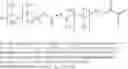
Yet another generic embodiment of the present invention is an amphipathic diblock copolymer compound bearing polymerizable functionality, and having this structure:
In typical specific embodiments of that diblock copolymer, R1 is butyl, “a” ranges from 2 to 50, R2 is (CH2)3 or (CH2)3—O—(CH2)2, “b” is 1, X is O or NH, R3 is H, R4 is pyrrolidinone, “d” ranges from 10 to 10,000, R5 is C(CH3)2—O—CH2—CH2 or C(CH3), Y is O or NH, and R6 is CH3. These novel amphipathic diblock copolymers may be formulated for use: as a lens care component for silicone hydrogel contact lenses; as an oxygen permeable and wettable backing material for a wound healing device; as a scaffold for tissue engineering; or as a component for controlled drug release.
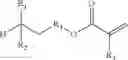
This invention also provides a (meth)acrylated polyvinylpyrrolidone compound of the general structure depicted below.
wherein R1 is hydrogen or C1-8-alkyl, preferably H; R2 is pyrrolidinone; n=1-10,000; R3 is a divalent aliphatic linkage chain containing up to 8 carbon atoms and up to 2 oxygen, sulfur, and/or nitrogen atoms in the linkage chain, such as C(CH3)2—CH2—CH2, C(CH3)2, S—(CH2)2, C(CH3)2—O—C(═O)—NH—(CH2)2, C(CH3)2—CH2—CH2—O—C(═O)—NH—(CH2)2, or S—(CH2)2-O—C(═O)—NH—(CH2)2; and R4 is hydrogen or C1-8-alkyl, such as CH3. In specific embodiments: R1═H, R3═C(CH3)2—O—CH2—CH2, R4═CH3, and n=10-1000; or R1═H, R3═C(CH3)2, R4═H, and n=10-1000, or R1═H, R3═S—(CH2)3, R4═CH3, and n=10-1000, or R1═H, R3═C(CH3)2—O—C(═O)—NH—(CH2)3, R4═CH3, and n=10-1000. This compound is suitable for use as a polymerizable wetting agent in a contact lens formulation.
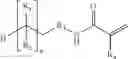
This invention likewise provides a (meth)acrylamide functionalized polyvinylpyrrolidone of the general structure depicted below, which is likewise suitable for use as a polymerizable wetting agent in a contact lens formulation.
In the formula: R1 is hydrogen or C1-8-alkyl; R2 is pyrrolidinone; n=1-10,000; R3 is a divalent aliphatic linkage chain containing up to 8 carbon atoms and up to 2 oxygen, sulfur, and/or nitrogen atoms in the linkage chain, such as S—(CH2)m wherein m is 1-6; and R4 is hydrogen or C1-8-alkyl, such as CH3. In specific embodiments, R1═H, R3═S—(CH2)m, “m”=1 to 6, R4═H, and n=10-10,000 or R1═H, R3═S—(CH2)m, “m”=1 to 3, R4═CH3, and n=10-10,000.
DETAILED DESCRIPTION OF THE INVENTION
The present invention provides methods for preparation of PVP with polymerizable functionalization for use, e.g., as hydrophilic wetting agents in contact lenses. The present invention provides a new class of compositions of matter, comprising functionalized hybrid PDMS/polar amphipathic copolymer block systems. These materials may be used in both industrial and biomedical devices such as components for ophthalmic devices (hydrogels), tissue engineering, transdermal implants, industrial adhesives, sealants, surface protecting agents, etc. For instance, (meth)acrylated PVP derivatives will find effective use in contact lens compositions that contain photopolymerizable components. In practice, during irradiation of the contact lens mix, the (meth)acrylated PVP will polymerize along with the other polymerizable components to provide a non-leachable lens.
As illustrated in detail herein below, their synthesis may involve preparing a PDMS free radical macroinitiator followed by polymerization in the presence of N-vinyl pyrrolidone or other polar vinyl or acrylic monomers susceptible to free radical polymerization in the presence of a CTA (chain transfer agent) such as IPA, isopropoxyethanol or mercaptoethanol to generate the OH— functionalized polymer. The resulting polymer may be methacrylated using different chemistries by reacting the OH group with methacryloyl chloride or Methacrylic anhydride in the presence of a base or alternatively by reaction with isocyanatoethyl methacrylate.
Using this approach a variety of methacrylate (MA) functionalized PDMS-polar copolymer blocks can be synthesized. Examples of materials of interest are PDMS-PVP-MAA and PDMS-polyNIPAAm-MA. The chemistry may also be extended to prepare difunctional methacrylate functionalized triblock copolymers such as MA-PVP-PDMS-PVP-MA and other polymers, starting with commercially available dihydroxy- or diamino-functionalized polydimethylsiloxanes. Persons skilled in the art are familiar in general with the production of block copolymers having functionally active endgroups. For instance, U.S. Pat. No. 5,589,563 (Polymer Technology Group), the disclosure of which is herein incorporated by reference, discloses how to make and use functionalized copolymers.
EXAMPLES
Example 1
(Meth)Acrylated PVP Polymers
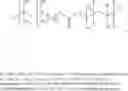
The synthesis of meth(acrylate) functionalized PVP is achieved by a methacrylation reaction of hydroxy functionalized PVP that is prepared using reactions known to those skilled in the art. The general structure of polymerizable (meth)acrylated PVP may have, for instance, the following formula:
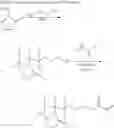
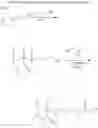
The first step toward the synthesis of (meth)acrylated PVP copolymers is the polymerization of distilled N-vinyl-2-pyrrolidone using azo initiators such as azobis(isobutyronitrile) (AIBN) and the like in the presence of chain transfer agents such as isopropanol, mercaptoethanol, isopropoxyethanol with or without a solvent to generate hydroxyl terminated PVP of different MW's between 10,000 to 1,000,000 daltons. The resulting hydroxyl terminated PVP is converted to a terminal methacrylate derivative using either methacryloyl chloride, methacrylic anhydride, or isocyanatoethyl methacrylate. One example of this embodiment is synthesized using protocol shown in Scheme 1.
Example 2
(Meth)Acrylamide Functionalized PVP Polymers
Another class of polymerizable PVP is depicted below, wherein the polymerizable functionalization is a (meth)acrylamide group.
The first step toward the synthesis of (meth)acrylamide functionalized PVP copolymers is the polymerization of distilled N-vinylpyrrolidone using azo initiators such as azobis(isobutyronitrile) (AIBN) and the like in the presence of an aminoalkylmercaptan chain transfer agent with or without a solvent to generate amino terminated PVP of different MW's between 10,000 to 1,000,000 daltons. The resulting amino terminated PVP is converted to a terminal (meth)acrylamide derivative by reaction with methacryloyl chloride, or methacrylic anhydride. One example of this embodiment is synthesized using protocol illustrated in Scheme 2.
Example 3
Amphipathic Diblock Copolymers Including PDMS-PVP Copolymers
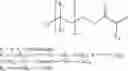
The present invention also provides methods for preparation of novel polydimethylsiloxane (PDMS)—PVP copolymers and other amphipathic copolymers of the general structure depicted in the following formula.
A retrosynthetic process for the preparation of the above class of matter is depicted in the following reaction scheme:
Example 4
Amphipathic Triblock Copolymers Including PVP-PDMS-PVP Copolymers
The synthetic methodology provided by the present invention also allows synthesis of novel PVP-PDMS-PVP triblock copolymers and other amphipathic copolymers of the general structure depicted in the following formula:
A retrosynthetic approach for the preparation of the above class of matter is depicted in the following reaction scheme, which like that in Example 3 shows the final product preceded by the intermediates which provide it preceded by the starting materials.
Example 5
Monofunctional Polymerizable Amphipathic Copolymers Including PDMS-PVP Methacrylate Copolymers
Another embodiment of the invention is general class of compounds bearing polymerizable functionality as depicted in the following formula:
A retrosynthetic approach for the preparation of the above class of matter is depicted in Scheme 5.
As disclosed above, compositions of matter provided by the present invention may be used—among other things—to make silicone hydrogel contact lenses. Persons skilled in the art are well aware in general of methods of manufacturing such contact lenses. Reference is made, for instance, to U.S. Pat. No. 7,268,198 B2 (Bausch & Lomb), entitled SILICONE HYDROGEL CONTACT LENSES; to U.S. Pat. No. 6,861,123 B2, (Johnson & Johnson), entitled SILICONE HYDROGEL CONTACT LENS; and to U.S. Pat. No. 5,260,000 (Bausch & Lomb), entitled PROCESS FOR MAKING SILICONE CONTAINING HYDROGEL LENSES.
The invention being thus described generically and with reference to specific embodiments, it will be readily apparent to those skilled in the art that the same may be varied in many ways. All such variations are encompassed by the spirit of the invention, the patented scope of which is demarcated in the appended claims.
Claims
What is claimed is:1. An amphipathic diblock copolymer compound bearing polymerizable functionality having the following general structure:
2. The compound of claim 1, wherein R1=butyl; “a” is from 2 to 50; R2═(CH2)3; “b”=1; X═O; R3═H; R4=pyrrolidinone; “d”=1-10,000; R5═C(CH3)2—O—CH2—CH2; Y═O; and R6═CH3.
3. The compound of claim 1, wherein R1=butyl; “a” is from 2 to 50; R2═(CH2)3; “b”=1; X═O; R3═H; R4=pyrrolidinone; “d”=1-10,000; R5═C(CH3)2—O—CH2—CH2; Y═NH; and R6═CH3.
4. The compound of claim 1, wherein R1=butyl; “a” is from 2 to 50; R2═(CH2)3; “b”=1; X═NH; R3═H; R4=pyrrolidinone; “d”=1-10,000; R5═C(CH3); Y═O; and R6═CH3.
5. The compound of claim 1, wherein R1=butyl; “a” is from 2 to 50; R2═(CH2)3—O—(CH2)2; “b”=1; X═O; R3═H; R4=pyrrolidinone; “d”=1-10,000; R5═C(CH3); Y═NH; and R6═CH3.
6. The amphipathic diblock copolymer of claim 1, formulated for use in the preparation of silicone hydrogel lenses.
7. The amphipathic diblock copolymer of claim 1, formulated for use in the preparation of an oxygen permeable and wettable backing material for a wound healing device.
8. The amphipathic diblock copolymer of claim 1, formulated for use in the preparation of a scaffold for tissue engineering.
9. The amphipathic diblock copolymer of claim 1, formulated for use in the preparation of a component for controlled drug release.
Images & Drawings included:





Sources:
- United States Patent and Trademark Office - verify current appl. status at the USPTO↗
Similar patent applications:
- » 20100099829
PDMS-PVP block copolymers
Recent applications in this class:
- » 20250197549 2025-06-19
THERMO-RESPONSIVE AND CONDUCTING POLYMER WITH A REVERSIBLE SOL-GEL TRANSITION - » 20250145754 2025-05-08
HYDROCARBON BASED IONOMER FOR MEMBRANE-ELECTRODE ASSEMBLY WITH HIGH PROTON CONDUCTIVITY AND DURABILITY AND A MEMBRANE-ELECTRODE ASSEMBLY INCLUDING THE SAME - » 20250109235 2025-04-03
POLYMER NANOPARTICLE COMPOSITIONS FOR NON-VIRAL GENE DELIVERY - » 20250092179 2025-03-20
PHOTOSTABLE COMPOSITIONS COMPRISING PARA-ALKOXYL PHENYL SUBSTITUTED PROPENOIC ACID (APP) COPOLYMER DERIVATIVES - » 20240368330 2024-11-07
ELECTROCHROMIC BLOCK COPOLYMERS AND DEVICES MADE WITH SUCH COPOLYMERS - » 20240368329 2024-11-07
COPOLYMERS COMPRISING (PER)FLUOROPOLYETHER CHAINS - » 20240309142 2024-09-19
CAPPED BLOCK COPOLYMERS, THEIR SYNTHESIS, MANUFACTURE, AND METHODS OF USE - » 20240228688 2024-07-11
POLYMER AND COMPOSITION THEREOF - » 20240182621 2024-06-06
Ionomer for Fuel Cell Having Dense Sulfonic Acid Groups and Method of Preparing Same - » 20240182620 2024-06-06
POLYHYDROXYALKANOATE BLOCK COPOLYMER AND METHOD FOR PREPARING THE SAME
Recent applications for this Assignee:
- » 20250069708 2025-02-27
COMPUTER-BASED METHOD FOR DETERMINING A SUNSCREEN COMPOSITION COMPRISING A PLURALITY OF UV FILTER SUBSTANCES - » 20240327777 2024-10-03
Fermentation system, feed controller, and related methods - » 20240293437 2024-09-05
METHODS OF SELECTIVELY MODULATING GASTROINTESTINAL MICROBIAL GROWTH - » 20240237688 2024-07-18
Steviol glycoside transport - » 20240148953 2024-05-09
CENTRIFUGE - » 20240026152 2024-01-25
Synthetic membrane composition comprising a polyurethane and a polyoxazoline - » 20230270920 2023-08-31
Method of making an osteoconductive fibrous article and a medical implant comprising such osteoconductive fibrous article - » 20230227862 2023-07-20
Biosynthesis of retinoids - » 20230227510 2023-07-20
Steviol glycoside transport - » 20230212486 2023-07-06
Process for the preparation of a stable beverage