Catalyst for oxidative dehydrogenation of propane to propylene
US20120083641A1
2012-04-05
12/897,686
2010-10-04
✅ Patent granted
US 8,609,568 B2
2013-12-17
-
-
Elizabeth Wood
Richard C. Litman
2031-12-31
Abstract:
The catalyst for oxidative dehydrogenation of propane to propylene includes vanadium and aluminum incorporated into the framework of a mesoporous support, viz., MCM-41, to form V—Al-MCM-41, and nickel impregnated onto the walls of the mesoporous support. Nickel loading is preferably in the range of 5 to 15% by weight of the catalyst. A process for the production of propylene from propane includes steps of placing the catalyst in a fixed bed reactor, introducing a flow of feedstock in a propane:oxygen:nitrogen ratio of about 6:6:88 by volume, maintaining the reactor at atmospheric pressure and in a temperature range of about 400 to 550° C., collecting the product, and separating propylene from the product. The process achieves propane conversion between about 6 to 22%, and a selectivity for propylene between about 22 and 70%, depending upon percent nickel content and temperature of the reaction.
Inventors:
- SHAKEEL AHMED 48 🇸🇦 DHAHRAN, Saudi Arabia
- FAIZUR RAHMAN 10 🇸🇦 DHAHRAN, Saudi Arabia
- UWAIS BADURUTHAMAL 3 🇸🇦 DHAHRAN, Saudi Arabia
- Shakeel Ahmed 1 🇸🇦 Dharhan, Saudi Arabia
Assignee:
- KING FAHD UNIVERSITY OF PETROLEUM AND MINERALS 2,608 🇸🇦 DHAHRAN, Saudi Arabia
Applicant:
Interested in similar patents?
Get notified when new applications in this technology area are published.
Classification:
B01J29/06 IPC
Catalysts comprising molecular sieves having base-exchange properties, e.g. crystalline zeolites Crystalline aluminosilicate zeolites; Isomorphous compounds thereof
B01J29/044 » CPC further
Catalysts comprising molecular sieves having base-exchange properties, e.g. crystalline zeolites; Mesoporous materials having base exchange properties, e.g. Si/Al-MCM-41 containing iron group metals, noble metals or copper Iron group metals or copper
B01J29/045 » CPC further
Catalysts comprising molecular sieves having base-exchange properties, e.g. crystalline zeolites; Mesoporous materials having base exchange properties, e.g. Si/Al-MCM-41 containing arsenic, antimony, bismuth, vanadium, niobium, tantalum, polonium, chromium, molybdenum, tungsten, manganese, technetium or rhenium
B01J29/0333 » CPC further
Catalysts comprising molecular sieves not having base-exchange properties; Mesoporous materials not having base exchange properties, e.g. Si-MCM-41 containing iron group metals, noble metals or copper Iron group metals or copper
B01J29/0341 » CPC further
Catalysts comprising molecular sieves not having base-exchange properties; Mesoporous materials not having base exchange properties, e.g. Si-MCM-41 containing arsenic, antimony, bismuth, vanadium, niobium, tantalum, polonium, chromium, molybdenum, tungsten, manganese, technetium or rhenium
C07C2529/78 » CPC further
Catalysts comprising molecular sieves having base-exchange properties, e.g. crystalline zeolites, pillared clays; Crystalline aluminosilicate zeolites; Isomorphous compounds thereof of types characterised by their specific structure not provided for in groups - containing arsenic, antimony, bismuth, vanadium, niobium, tantalum, polonium, chromium, molybdenum, tungsten, manganese, technetium or rhenium
Y02P20/52 » CPC further
Technologies relating to chemical industry; Improvements relating to the production of bulk chemicals using catalysts, e.g. selective catalysts
Y02P20/52 » CPC further
Technologies relating to chemical industry; Improvements relating to the production of bulk chemicals using catalysts, e.g. selective catalysts
C07C5/3335 » CPC main
Preparation of hydrocarbons from hydrocarbons containing the same number of carbon atoms by dehydrogenation with formation of free hydrogen; Formation of non-aromatic carbon-to-carbon double bonds only; Catalytic processes with metals
C07C11/06 » CPC further
Aliphatic unsaturated hydrocarbons; Alkenes Propene
C07C5/333 IPC
Preparation of hydrocarbons from hydrocarbons containing the same number of carbon atoms by dehydrogenation with formation of free hydrogen; Formation of non-aromatic carbon-to-carbon double bonds only Catalytic processes
B01J21/12 IPC
Catalysts comprising the elements, oxides, or hydroxides of magnesium, boron, aluminium, carbon, silicon, titanium, zirconium, or hafnium Silica and alumina
B01J21/06 IPC
Catalysts comprising the elements, oxides, or hydroxides of magnesium, boron, aluminium, carbon, silicon, titanium, zirconium, or hafnium Silicon, titanium, zirconium or hafnium; Oxides or hydroxides thereof
Description
BACKGROUND OF THE INVENTION
1. Field of the Invention
The present invention relates to catalysts for converting alkanes to alkenes, and particularly to a catalyst for the oxidative dehydrogenation of propane to propylene.
2. Description of the Related Art
Propylene is a commercially valuable product. The reactivity of the allylic carbon makes propylene useful for the production of polypropylene, acrylonitrile, propylene oxide, propylene glycol, cumene, and other products, which are useful as final products and as intermediates in the synthesis or production of other commodities.
The majority of propylene is produced by steam hydrocracking of crude petroleum, or by distillation. However, such processes are not highly selective or produce propylene in low yield. Recently, there has been renewed interest in oxidative dehydrogenation of propane for the production of propylene. Oxidative dehydrogenation is attractive because it can be accomplished at lower temperatures than cracking or distillation processes, thereby avoiding complications and expense resulting from coking of the catalyst. Nevertheless, oxidative dehydrogenation is not currently used for the production of propylene, largely due to low yields and lack of selectivity of the currently known catalysts.
Thus, a catalyst for oxidative dehydrogenation of propane to propylene solving the aforementioned problems is desired.
SUMMARY OF THE INVENTION
The catalyst for oxidative dehydrogenation of propane to propylene includes vanadium and aluminum incorporated into the framework of a mesoporous support, viz., MCM-41, to form V—Al-MCM-41, and nickel impregnated onto the walls of the mesoporous support. Nickel loading is preferably in the range of 5 to 15% by weight of the catalyst. A process for the production of propylene from propane includes steps of placing the catalyst in a fixed bed reactor, introducing a flow of feedstock in a propane:oxygen:nitrogen ratio of about 6:6:88 by volume, maintaining the reactor at atmospheric pressure and in a temperature range of about 400 to 550° C., collecting the product, and separating propylene from the product. The process achieves propane conversion between about 6 to 22%, and a selectivity for propylene between about 22 and 70%, depending upon percent nickel content and temperature of the reaction.
These and other features of the present invention will become readily apparent upon further review of the following specification and drawings.
BRIEF DESCRIPTION OF THE DRAWINGS
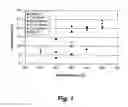
FIG. 1 is a graph showing the percent conversion of propane to propylene as a function of temperature for various samples of a catalyst for oxidative dehydrogenation of propane to propylene according to the present invention.
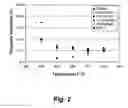
FIG. 2 is a graph showing propylene selectivity as a function of temperature for various samples of a catalyst for oxidative dehydrogenation of propane to propylene according to the present invention.
Similar reference characters denote corresponding features consistently throughout the attached drawings.
DETAILED DESCRIPTION OF THE PREFERRED EMBODIMENTS
The catalyst for oxidative dehydrogenation of propane to propylene includes vanadium and aluminum incorporated into the framework of a mesoporous support, viz., MCM-41, to form V—Al-MCM-41, and nickel impregnated onto the mesoporous support. Nickel loading is preferably in the range of 5 to 15% by weight of the catalyst. A process for the production of propylene from propane includes steps of placing the catalyst in a fixed bed reactor, introducing a flow of feedstock in a propane:oxygen:nitrogen ratio of about 6:6:88 by volume, maintaining the reactor at atmospheric pressure and in a temperature range of about 400 to 550° C., collecting the product, and separating propylene from the product. The process achieves propane conversion between about 6 to 22%, and a selectivity for propylene between about 22 and 70%, depending upon percent nickel content and temperature of the reaction.
Example 1
A homogenous gel was prepared by adding appropriate amounts of ammonium metavanadate, cetyl trimethyl ammonium bromide (CTABr), sodium aluminate, and silica sol. After preparation, the homogeneous gel was transferred into a Teflon-lined autoclave reactor, which was then heated up to 97° C. for four days. During these four days, the pH was maintained at 10.5 with the addition of a solution of 30% acetic acid. Upon the reaction being completed, the reactor was cooled down, and the mixture was separated by filtration with extensive washing with deionized water in order to remove any unwanted species, such as sodium, chloride, and nitrate ions, etc. After filtration, the solid sample was dried in air in the oven at a temperature of 100° C. overnight. The template was removed by calcining the sample in a muffle furnace at a temperature of 550° C. with a heating rate of 2° C./min, starting from room temperature. The sample was kept at this temperature for 6 hours and then cooled to room temperature.
The vanadium incorporated MCM-41 (V-MCM-41) was impregnated with a desired solution of nickel nitrate via wetness incipient impregnation method. The nickel-impregnated V-MCM-41 was dried in air in the oven at a temperature of 100° C. overnight. The nitrate was removed by calcining the sample in a muffle furnace at heating rate of 5° C./min from room temperature to 500° C. for one hour, and then cooled to room temperature.
The Ni loading was tested in the range of 5 to 15% by weight of the catalyst, and more particularly, at 5% (sample 4), 10% (sample 5), 12.5% (sample 6), and 15% (sample 7), respectively.
Example 2
The catalytic properties of the Ni-supported vanadium-aluminum-containing MCM-41 catalysts were evaluated for oxidative dehydrogenation of propane in a fixed bed micro-reactor. The feed composition was maintained at ratio of propane:oxygen:nitrogen equal to 6:6:88 cc/min at atmospheric pressure over a temperature range of 400 to 550° C.
These samples were compared to a sample of MCM-41 without metal loading (sample 1); a sample of MCM-41 loaded with vanadium, but without nickel (sample 2); and a sample of MCM-41 impregnated with nickel, but without vanadium (sample 3). The results are reported in Table 1.
| TABLE 1 |
| Results of OXDH of propane over Ni/V-MCM-41 catalysts |
| Propane | |||
| Sample | Catalyst/ | Conversion | Selectivity (%) |
| No. | Temp. (° C.) | (%) | Ethylene | Propylene | CO | CO2 | H2 |
| 1 | MCM41 | ||||||
| 450 | 3.30 | 0.00 | 27.78 | 0.00 | 72.22 | 0.00 | |
| 500 | 5.31 | 0.00 | 25.74 | 34.48 | 39.78 | 0.00 | |
| 550 | 8.12 | 2.42 | 14.70 | 33.98 | 48.90 | 0.00 | |
| 2 | VMCM41 | ||||||
| 450 | 6.23 | 0.00 | 5.41 | 0.00 | 92.81 | 1.78 | |
| 500 | 9.88 | 0.93 | 8.54 | 26.62 | 59.76 | 4.16 | |
| 550 | 19.93 | 1.89 | 18.85 | 43.58 | 31.36 | 4.32 | |
| 3 | NiMCM41 | ||||||
| 450 | 0.61 | 0.00 | 32.77 | 0.00 | 67.23 | 0.00 | |
| 500 | 5.76 | 0.00 | 23.42 | 0.00 | 76.58 | 0.00 | |
| 550 | 99.6 | 0.00* | 0.00 | 11.53 | 4.16 | 63.0 | |
| 4 | 5% Ni/VCM41 | ||||||
| 450 | 6.72 | 0.00 | 35.84 | 24.94 | 39.23 | 0.00 | |
| 500 | 12.35 | 0.00 | 23.26 | 33.70 | 43.04 | 0.00 | |
| 550 | 18.11 | 1.01 | 22.05 | 37.20 | 37.91 | 1.83 | |
| 5 | 10% Ni/VMCM41 | ||||||
| 400 | 6.41 | 0.00 | 40.12 | 0.00 | 59.88 | 0.00 | |
| 450 | 14.05 | 0.00 | 24.69 | 20.96 | 54.35 | 0.00 | |
| 500 | 18.06 | 0.00 | 22.98 | 22.82 | 50.76 | 3.43 | |
| 550 | 20.71 | 0.88 | 23.29 | 28.66 | 39.69 | 7.48 | |
| 6 | 12.5% Ni/VMCM41 | ||||||
| 400 | 8.06 | 0.00 | 69.68 | 0.00 | 30.32 | 0.00 | |
| 450 | 13.84 | 0.00 | 28.61 | 23.41 | 47.98 | 0.00 | |
| 500 | 21.20 | 0.00 | 23.445 | 27.25 | 47.08 | 2.22 | |
| 550 | 19.28 | 0.88 | 22.23 | 32.30 | 42.79 | 1.81 | |
| 7 | 15% Ni/VMCM41 | ||||||
| 400 | 9.11 | 0.00 | 36.44 | 10.69 | 52.86 | 0.00 | |
| 450 | 18.21 | 0.00 | 24.87 | 19.84 | 55.30 | 0.00 | |
| 500 | 18.69 | 0.00 | 26.00 | 20.79 | 50.17 | 3.04 | |
| 550 | 19.93 | 0.72 | 24.33 | 26.09 | 42.22 | 6.65 | |
| *CH4 = 21.26 |
A maximum selectivity of 69.68% (with a propane conversion rate of 8.06%) was achieved for propylene using 12.5 wt. % Ni on V—Al-MCM-41 catalyst at 400° C. (sample 6). On the other hand, 5.41% selectivity for propylene was observed with V-MCM-41 (without nickel) at 450° C. (with a propane conversion rate of 6.23%; sample 2). In a comparative example of MCM-41 catalyst (without any transition metals supported), the selectivity of propylene was 27.78% at a propane conversion of 3.3% at 450° C. (sample 1). This clearly demonstrates high selectivity of propylene for the catalyst composition of nickel supported V—Al-MCM-41. The Ni-based composition resulted in low CO2 selectivity as compared to V-MCM-41 and MCM-41 catalysts.
A small amount of H2 besides COx was produced during catalytic runs under the conditions of catalyst performance evaluation described above.
It will be seen that the catalyst for oxidative dehydrogenation of propane to propylene provides an alternative route for converting propane to propylene that has low energy consumption compared to conventional steam cracking, distillation, and other processes. Moreover, the catalyst is expected to have longer life due to the milder reaction conditions that avoid coking and the associated downtime required to regenerate the catalyst.
It is to be understood that the present invention is not limited to the embodiments described above, but encompasses any and all embodiments within the scope of the following claims.
Claims
We claim:1. A catalyst for oxidative dehydrogenation of propane to propylene, comprising:
MCM-41 forming a mesoporous support having vanadium and aluminum or oxides thereof incorporated into walls thereof; and
nickel or salts thereof impregnated onto the mesoporous support.
2. The catalyst for oxidative dehydrogenation of propane to propylene according to claim 1, wherein nickel forms between 5% and 15% by weight of the catalyst.
3. The catalyst for oxidative dehydrogenation of propane to propylene according to claim 1, wherein nickel forms about 12.5% by weight of the catalyst.
4. A process for oxidative dehydrogenation of propane to propylene, comprising the steps of:
maintaining flow of a feedstock containing propane over a bed of the catalyst according to claim 1 in a reactor in the presence of oxygen; and
maintaining temperature in the reactor between about 400 and 550° C.
5. The process for oxidative dehydrogenation of propane to propylene according to claim 4, wherein said step of maintaining the temperature comprises maintaining the temperature at about 400° C.
6. The process for oxidative dehydrogenation of propane to propylene according to claim 4, further comprising the step of maintaining pressure in the reactor at atmospheric pressure.
7. The process for oxidative dehydrogenation of propane to propylene according to claim 4, further comprising the steps of:
collecting gaseous reaction products; and
separating propylene from the gaseous products.
8. A catalyst for oxidative dehydrogenation of propane to propylene, consisting essentially of:
MCM-41 forming a mesoporous support having vanadium and aluminum or oxides thereof incorporated into walls thereof; and
nickel or salts thereof impregnated onto the mesoporous support.
9. The catalyst for oxidative dehydrogenation of propane to propylene according to claim 8, wherein nickel forms between 5% and 15% by weight of the catalyst.
10. The catalyst for oxidative dehydrogenation of propane to propylene according to claim 8, wherein nickel forms about 12.5% by weight of the catalyst.
11. A process for oxidative dehydrogenation of propane to propylene, comprising the steps of:
placing a catalyst in a bed of a reactor, the catalyst having vanadium and aluminum incorporated into a mesoporous MCM-41 support and between 5% and 15% by weight of nickel impregnated onto the mesoporous support;
contacting a flow of a feedstock containing propane with the catalyst bed in the presence of oxygen; and
maintaining temperature in the reactor between about 400 and 550° C.
12. The process for oxidative dehydrogenation of propane to propylene according to claim 11, wherein the reactor is a fixed bed reactor.
13. The process for oxidative dehydrogenation of propane to propylene according to claim 11, wherein said step of maintaining the temperature comprises maintaining the temperature at about 400° C.
14. The process for oxidative dehydrogenation of propane to propylene according to claim 11, further comprising the step of maintaining pressure in the reactor at atmospheric pressure.
15. The process for oxidative dehydrogenation of propane to propylene according to claim 11, further comprising the steps of:
collecting gaseous reaction products; and
separating propylene from the gaseous products.
Images & Drawings included:
Sources:
- United States Patent and Trademark Office - verify current appl. status at the USPTO↗
Similar patent applications:
Recent applications in this class:
- » 20250171382 2025-05-29
SYSTEMS AND PROCESSES FOR CATALYTIC CONVERSION OF C1-C5 ALCOHOLS TO C2-C5 OLEFIN MIXTURES - » 20220081374 2022-03-17
BUTADIENE PRODUCTION METHOD - » 20200199043 2020-06-25
Highly active catalyst for dehydrogenation of alkanes and method of preparation thereof - » 20180339953 2018-11-29
Method for manufacturing conjugated diene, and reaction device - » 20170313636 2017-11-02
Process for producing light olefins - » 20170267609 2017-09-21
Process for converting paraffin to olefin and catalyst for use therein - » 20170190639 2017-07-06
PROCESS FOR CONVERTING PARAFFIN TO OLEFIN AND CATALYST FOR USE THEREIN - » 20170088490 2017-03-30
Hydrocarbon conversion - » 20160326069 2016-11-10
Process for converting paraffin to olefin and catalyst for use therein - » 20160318828 2016-11-03
Catalytic Alkane Dehydrogenation
Recent applications for this Assignee:
- » 20250292541 2025-09-18
SYSTEM AND METHOD TO DETECT ROAD ANOMALIES - » 20250289999 2025-09-18
LUMINESCENT PAINT CONTAINING UPCONVERSION PHOSPHOR - » 20250289755 2025-09-18
CURED CEMENT COMPOSITION CONTAINING A ZEOLITE - » 20250286384 2025-09-11
SYSTEM AND METHODS FOR INTELLIGENT STABILITY AND CONTROL OF FREQUENCY OF AN INTEGRATED HYBRID RENEWABLE ENERGY SYSTEM - » 20250286379 2025-09-11
LOAD FREQUENCY STABILIZATION USING OPTIMIZED MPC-(1+PIDN) CONTROLLER FOR HIGH ORDER INTERCONNECTED RENEWABLE ENERGY BASED POWER SYSTEMS - » 20250282987 2025-09-11
INCORPORATING IMIDAZOLE-BASED NANOMATERIAL INTO DRILLING FLUIDS FOR EFFECTIVE HYDROGEN SULFIDE SCAVENGING DURING DRILLING OPERATIONS - » 20250281950 2025-09-11
VESSEL CLEANING ROBOTIC SYSTEM - » 20250281910 2025-09-11
FIBROUS SILICA LANTHANUM OXIDE-BASED CATALYST FOR DRY REFORMING OF METHANE AND METHODS OF PREPARATION THEREOF - » 20250281899 2025-09-11
METAL-ORGANIC FRAMEWORKS BASED ON UiO-66 AND METHOD FOR DIRECT AIR CAPTURE OF CARBON DIOXIDE - » 20250281898 2025-09-11
METHOD FOR REMOVING AMMONIA FROM WASTEWATER