Bianthracene compounds substituted by aromatic ring and their uses for luminescence materials
US20120309974A1
2012-12-06
13/577,777
2011-02-09
Abstract:
The present invention relates to Aromatic ring substituted dianthracene compounds and pertains to the field of synthesis of organic light-emitting materials. Aromatic ring substituted dianthracene compounds in the formula (I) present high glass transition temperature and solution efficiency, which can be used as effective blue-light emitting host materials.
Inventors:
- Lifei Cai 30 🇨🇳 Beijing, China
- Lei Dai 39 🇨🇳 Beijing, China
- Hongyu Zhao 34 🇨🇳 Beijing, China
Assignee:
- BEIJING AGLAIA TECHNOLOGY DEVELOPMENT CO., LTD. 18 🇨🇳 Beijing, China
Interested in similar patents?
Get notified when new applications in this technology area are published.
Classification:
C07C15/28 » CPC further
Cyclic hydrocarbons containing only six-membered aromatic rings as cyclic parts; Polycyclic condensed hydrocarbons containing three rings Anthracenes
C07C13/567 » CPC further
Cyclic hydrocarbons containing rings other than, or in addition to, six-membered aromatic rings; Polycyclic hydrocarbons or acyclic hydrocarbon derivatives thereof with condensed rings with three condensed rings at least one ring not being six-membered, the other rings being at the most six-membered with a fluorene or hydrogenated fluorene ring system
C07C13/72 » CPC further
Cyclic hydrocarbons containing rings other than, or in addition to, six-membered aromatic rings; Polycyclic hydrocarbons or acyclic hydrocarbon derivatives thereof with condensed rings Spiro hydrocarbons
C07C15/62 » CPC further
Cyclic hydrocarbons containing only six-membered aromatic rings as cyclic parts substituted by unsaturated carbon radicals polycyclic condensed containing four rings
C07D209/86 » CPC further
Heterocyclic compounds containing five-membered rings, condensed with other rings, with one nitrogen atom as the only ring hetero atom; Ring systems containing three or more rings [b, c]- or [b, d]-condensed; Carbazoles; Hydrogenated carbazoles with only hydrogen atoms, hydrocarbon or substituted hydrocarbon radicals, directly attached to carbon atoms of the ring system
C07D213/38 » CPC further
Heterocyclic compounds containing six-membered rings, not condensed with other rings, with one nitrogen atom as the only ring hetero atom and three or more double bonds between ring members or between ring members and non-ring members having three double bonds between ring members or between ring members and non-ring members having no bond between the ring nitrogen atom and a non-ring member or having only hydrogen or carbon atoms directly attached to the ring nitrogen atom with substituted hydrocarbon radicals attached to ring carbon atoms; Radicals substituted by singly-bound nitrogen atoms having only hydrogen or hydrocarbon radicals attached to the substituent nitrogen atom
C07D307/91 » CPC further
Heterocyclic compounds containing five-membered rings having one oxygen atom as the only ring hetero atom ortho- or peri-condensed with carbocyclic rings or ring systems Dibenzofurans; Hydrogenated dibenzofurans
C07D333/76 » CPC further
Heterocyclic compounds containing five-membered rings having one sulfur atom as the only ring hetero atom condensed with carbocyclic rings or ring systems Dibenzothiophenes
C07F5/025 » CPC further
Compounds containing elements of Groups 3 or 13 of the Periodic System; Boron compounds Boronic and borinic acid compounds
C09K11/06 » CPC further
Luminescent, e.g. electroluminescent, chemiluminescent materials containing organic luminescent materials
C07D409/10 » CPC further
Heterocyclic compounds containing two or more hetero rings, at least one ring having sulfur atoms as the only ring hetero atoms containing two hetero rings linked by a carbon chain containing aromatic rings
H05B33/14 » CPC further
Electroluminescent light sources; Light sources with substantially two-dimensional radiating surfaces characterised by the chemical or physical composition or the arrangement of the electroluminescent material, or by the simultaneous addition of the electroluminescent material in or onto the light source
C07C2603/18 » CPC further
Systems containing at least three condensed rings; Ortho- or ortho- and peri-condensed systems containing three rings containing at least one ring with less than six ring members containing five-membered rings only one five-membered ring Fluorenes; Hydrogenated fluorenes
C07C2603/24 » CPC further
Systems containing at least three condensed rings; Ortho- or ortho- and peri-condensed systems containing three rings containing only six-membered rings Anthracenes; Hydrogenated anthracenes
C07C2603/26 » CPC further
Systems containing at least three condensed rings; Ortho- or ortho- and peri-condensed systems containing three rings containing only six-membered rings Phenanthrenes; Hydrogenated phenanthrenes
C07C2603/40 » CPC further
Systems containing at least three condensed rings; Ortho- or ortho- and peri-condensed systems containing four condensed rings
C07C2603/50 » CPC further
Systems containing at least three condensed rings; Ortho- or ortho- and peri-condensed systems containing four condensed rings containing only six-membered rings Pyrenes; Hydrogenated pyrenes
C07C2603/94 » CPC further
Systems containing at least three condensed rings; Spiro compounds containing "free" spiro atoms
C09K2211/1011 » CPC further
Chemical nature of organic luminescent or tenebrescent compounds; Non-macromolecular compounds; Carbocyclic compounds Condensed systems
C07D403/10 IPC
Heterocyclic compounds containing two or more hetero rings, having nitrogen atoms as the only ring hetero atoms, not provided for by group containing two hetero rings linked by a carbon chain containing aromatic rings
C07C43/275 » CPC main
Ethers; Compounds having groups, groups or groups; Ethers having an ether-oxygen atom bound to carbon atoms both belonging to six-membered aromatic rings having all ether-oxygen atoms bound to carbon atoms of six-membered aromatic rings
C07C211/54 IPC
Compounds containing amino groups bound to a carbon skeleton having amino groups bound to carbon atoms of six-membered aromatic rings of the carbon skeleton having amino groups bound to two or three six-membered aromatic rings
C07C43/20 IPC
Ethers; Compounds having groups, groups or groups; Ethers having an ether-oxygen atom bound to a carbon atom of a six-membered aromatic ring
C07C15/38 IPC
Cyclic hydrocarbons containing only six-membered aromatic rings as cyclic parts; Polycyclic condensed hydrocarbons containing four rings
C07C15/60 IPC
Cyclic hydrocarbons containing only six-membered aromatic rings as cyclic parts substituted by unsaturated carbon radicals polycyclic condensed containing three rings
C07D401/14 IPC
Heterocyclic compounds containing two or more hetero rings, having nitrogen atoms as the only ring hetero atoms, at least one ring being a six-membered ring with only one nitrogen atom containing three or more hetero rings
C07F7/08 IPC
Compounds containing elements of Groups 4 or 14 of the Periodic System; Silicon compounds Compounds having one or more C—Si linkages
Description
THE TECHNICAL FIELD BELONGS
The present invention relates to Aromatic ring substituted Dianthracene compounds and pertains to the field of synthesis of organic light-emitting materials.
TECHNICAL BACKGROUND
In 1987, Dr Ching W. Tang, et al from Kodak Company successfully prepared sandwich-type bilayer organic light-emitting diodes by using Alq3 as light-emitting layer and Aromatic Di-Amine as hole transport layer. (Tang C. W., et al. Applied Physics Letters, 1987, 51, 913). In 1990, Burroughes J. H., et al from Cambridge University in England built light-emitting devices (LEDs) based on organic polymer (Burroughes J. H., et al. Nartue, 1990, 347, 5395). These breakthroughs greatly promoted the development of organic light-emitting technical field. Since then, scientists in different countries devoted much energy to the research and development in this field. More and more organic light-emitting materials were developed and applied. Out of all kinds of organic light-emitting materials, 9,9-Dianthranide crystal the band gap of which is about 3 eV and only can be emitted at wavelength of below 410 nm, stability in the air. And hole mobility at room temperature of Dianthranide crystal can reach 3 cm2/V·s. Consequently, Dianthranide field effect transistors get great academic interests these days. Meanwhile, its derivatives are a promising blue-emitting material, which being of importance to developing organic blue, white-light-emitting devices. (M. H. Ho, Y. S. Wu, S. W. Wen, et al., Appl. Phys. Lett., 2006, 89, 252903/1-3.).
So far, the reported Dianthranide derivatives are mainly blue-light emitting host materials with the energy level 3.1 ev, which is not conducive to the hole-transportation. (J.-H. Jou, Ch.-P. Wang, et al., Organic Electronics, 2007, 8, 29-36.) In order to raise luminous efficiency, J.-H. Jou, et al adopt total-host material, which solved problems of both holes and electron-transporting voltage barrier. The absorption spectroscopy of the two Anthracyclines of Dianthracene compounds is similar to that of separate Anthracene. (Hans Dieter Becker, Vratislav Langer, Joachim Sieler, and Hans Christian Becker, J. Org. Chem., 1992, 57 (6), 1883-1887.)
Consequently, as same as Anthracene compounds, Dianthracene can be modified structurally, raise luminous efficiency, increase of service life, and improve the stability of the devices. (Japanese patent JP200777094). Different material structures were introduced, which increased service life and improved luminescence. Moreover, Japanese patent JP2002121547 disclosed a luminescent material 9,10-Spiro Fluorene Anthracene. And the disadvantages of the luminescent material are as follows: high sublimation temperature and easy degradation. All these disadvantages above put a premium on the use of the luminescent material. With high molecular weight Dianthracene material can linked different groups at position 10, which reduced intermolecular packing and decreased sublimation temperature.
THE CONTENTS OF THIS INVENTION
Dianthracene compounds linked with two Anthracene chromophore groups both of which are nonplanar, which causes the energy level generally higher than 3 ev. The present invention modified structurally the two positions 10, in order to improve the device parameters.
On the basis of a great amount predecessors' work as well as a lot of research, Dianthracene was modified structurally, and compounds of general formula are as below:
And A1, A2 is either formula (II) or (III) respectively.
(1)
See formula (II), Z1 and Z2 are either the same or not, n=0 or 1; Z1, Z2 is respectively either substituted alkyl or un-substituted alkyl both of which linked one to fifty carbon atoms, or either substituted alkoxy or un-substituted alkoxy both of which linked one to fifty carbon atoms, or either substituted cycloalkyl or un-substituted cycloalkyl both of which linked five to fifty carbon atoms, or either substituted aralkyl or un-substituted aralkyl both of which linked six to sixty carbon atoms, or either substituted aryl or un-substituted aryl both of which linked six to sixty carbon atoms, or either substituted aryloxy or un-substituted aryloxy both of which linked six to sixty carbon atoms, or either substituted heteroaromatic group or un-substituted heteroaromatic group both of which linked five to fifty carbon atoms, or organic amine.
(2)
n=0 or 1, See formula (III), X is either substituted phenyl or un-substituted phenyl, or either substituted biphenyl or un-substituted biphenyl, or either substituted naphthyl or un-substituted naphthyl, or either substituted fluorenyl or un-substituted fluorenyl, or cyclic fluorenyl, anthracene spiro group, phenanthryl, anthracene, benzene fluorene moieties, perylene moieties, pyrenyl.
A1, A2 mentioned above is respectively one category of either formula (II) or formula (III), and N═O.
A1 and A2 mentioned above are the same.
Z1, Z2 mentioned above is respectively phenil, alkyl benzene, alkyl phenoxy, either substituted biphenyl or un-substituted biphenyl, or either substituted b Diphenylamine or un-substituted Diphenylamine.
Z1 and Z2 mentioned above are the same, both of which are phenyl or 4-tert-butyl-1-phenyls, note, n=0.
Z1, Z2 is respectively
and Y1, Y2 in the formulas is C1-4 alkyl, phenyl, 4-substituted phenyl, or 1-naphthyl, note, n=0.
X is
M in the formulas is carbon or silicon. R1, R2 is respectively either substituted alkyl or un-substituted alkyl both of which linked one to ten carbon atoms, either substituted phenyl or un-substituted phenyl, either substituted naphthyl or un-substituted naphthyl, either substituted biphenyl or un-substituted biphenyl, or linked with each other to be ring structure.
R1, R2 is respectively C1-4 alkyl, phenyl, or 4-methyl-1-phenyl, and n=0.
X is 4-tert-butyl-1-phenyl, 2-naphthyl, or 1-naphthyl, and n=1.
X is 2-phenanthryl, 2-benzene fluorene moieties, or 5-benzene fluorene moieties, and n=0.
In the synthesis methods of all the compounds mentioned above, Dianthracene bromide or iodide were introduced coupling reacting with either boric acid compounds A1, A2, boric acid ester or grignard reagent under alkaline and catalytic conditions.
And the introduced catalysts are as follows: Pd(PPh3)4, Pd(PPh3)2Cl2, Pd(Ac)2, Pd3(dba)2, Ni(dppf)2, Ni(dppe)2, Ni(dppp)2 or Pd(dppf)2. Coupling reaction solvents introduced are one of or the compounds of two maybe all the following five solvents: ether, methylbenzene, THF, 1,4-Dioxane, Dimethoxy-ethane. Alkaline solutions used for the alkaline condition are one or maybe more categories of followings: sodium carbonate, sodium bicarbonate, sodium phosphate, monometallic sodium orthophosphate, potassium carbonate, barium hydroxide, and sodium hydroxide.
All the compounds mentioned can be introduced in organic electroluminescent devices.
With the general structures, A1 and A2 can be classified into two groups that formula (II) and formula (III) with different molecular structures. A1, A2 can be any from the two groups above as long as suitable for synthesis and structural stability, then with on conditionality. Compounds of general formula can be synthesized by conventional chemical methods. And experiments and the results show that the compounds present high glass transition temperature and solution efficiency. The compounds of general formula can be used as effective blue-light emitting host materials.
“A1, A2 mentioned above is respectively one category of either formula (II) or formula (III)”, i.e. A1 and A2 are any one pairs from formula (II) and formula (III), the same kind of molecular structure, or not.
“A1, A2 is respectively one category of either formula (II) or formula (III), note, the values of n are the same.”, i.e. The molecular structure of A1 is similar to that of A2. And when both are the molecular structures of formula (II), then Z1 and Z2 are different, or when both formula (III) then X different. Namely, the compound frame structures of formula (I) are basically the same.
“A1 and A2 mentioned above are the same.” i.e. A1 and A2 are substituent groups with the same molecular structures, namely, the compounds of formula (I) are symmetrical.
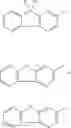
The structural formulas below gave specific examples for general formulas of di-Anthracene derivative, but more than that, any compound consistent with the rules of the general formulas are of the group.
(1) X═Y=Phenyl group, (2) X═Y=4-Methylphenyl, (3) X=1-Naphthyl, Y=4-Methylphenyl (4) 2,2′-biphenyl
DESCRIPTION OF FIGURES
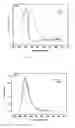
FIG. 1 shows the photoluminescence (PL) and ultra-violet spectra (UV) of B-4.
FIG. 2 shows the photoluminescence (PL) and the electroluminescence (EL) of B-4.
THE DETAILED METHOD AND BASIC PROCESSES
Some details will have to be further elaborated as we go along with patent embodiments.
Embodiment 1
The Synthesis of A-1
The synthesis of 3,5-DiphenylBroMobenzene
Added 2.6 g (0.11 mol) of freshly prepared Magnesium chips to 500 ml of three-neck flask. Under the Argon gas field, dripped in 62 ml of THF solution dissolved with 12 mL (0.114 mol) of Bromobenzene, and controlled the dropping rate to moderate the violence of the reaction. After, refluxed for about 0.5 hour, and stopped when Magnesium chips disappeared. Then the gray pasty-liquid reached. Dripped in 75 ml of THF solution containing 8.8 g (0.2 mol) of 2,4,6-tribromolodobenzene, and then under the Argon gas field stirred 3 hours at room temperature, followed 1.5 hours of refluxed. After cooling, poured the reaction solution into the freezing diluted HCl, turned acidic and stable overnight. Then after removed THF from screen-out organic layers by using evaporation method, residues were extracted by Methylene Chloride, then rinsed in turn, by Na2SO3 and water, and dried by MgSO4. After removed Methylene Chloride, 6 g of gray white solid substance left with 80% yield rate. Recrystallized by Ethanol, 4.1 g of white crystalline solid reached, melting point: 108.8˜109.4° C., MS (m/z): 308, yield rate: 66%.
The Synthesis of the Target Product A-1
Added 6 g (20 mmol around) of (3,5-Diphenylphenyl) boronic acid (see (U.S. Pat. No. 6,361,886)), 3.3 g (10 mmol around) of 10,10′-Dibromo Bianthracene and 35 mg of Tetrakis (Triphenylphosphine) Palladium [Pd (PPh3)4] to a four-neck flask. Under the Argon gas field, added 10 ml 2M of NaHCO3, 40 ml of Methylbenzene, and 15 ml Ethanol, then heated, refluxed and stirred for more than 4 hours then stopped. Then after air cooled to the room temperature, in turn followed, extracted by Ether, combined organic phases, rinsed, dried by anhydrous Magnesium Sulfate, and removed the solvent by the evaporation way. Then reached coarse products were further purified with 100 to 200-mesh silica gel column chromatography, using Petroleum Ether and Dichloromethane as eluent with 5:1 volume ratio. And 7 g of yellow solid substances reached, 73% of yield rate.
δ: 8.04 (S, 2H), 7.86˜7.92 (m, 4H), 7.76 (d, J=8.00 Hz, 12H), 7.48 (t, J=7.20 Hz, 8H), 7.34˜7.42 (m, 8H).
Embodiment 2
The Synthesis of A-2
The synthesis of 3,5-bis(4-Tert-Butylphenyl)
Added 100 ml of THF, 0.95 g (3 mmol around) of 1,3,5-Tribromobenzene and 100 mg of Tetrakis (Triphenylphosphine) Palladium [Pd (PPh3)4] to a four-neck flask. Under the Argon gas field, dripped in around 6.2 mmol of 4-tert-Butylphenylmagnesium, then heated and refluxed. After stirred for more than 2 hours stopped the reaction and air cooled to the room temperature. Then quenched with 10% of diluted HCl, followed by liquid separated, extracted, combined organic phases, rinsed, dried by anhydrous Magnesium Sulfate, and removed the solvent by the evaporation way. Then reached coarse products were further purified with 100 to 200-mesh silica gel column chromatography, using Petroleum Ether as eluent. And 0.6 g of white solid substances reached, 42% of yield rate.
HNMR (400 MHz, CDCl3) δ (ppm): 7.71 (1H, s), 7.68 (2H, s), 7.55 (4H, d, J=8.40), 7.49 (4H, d, J=8.36), 1.38 (18H, s), EI MS m/z=422.
The synthesis of 3,5-bis(4-Tert-Butylphenyl) Phenylboronic acid
Added 45 g (107 mmol around) of 3,5-bis(4-Tert-Butylphenyl) and 10 ml of anhydrous THF to a four-neck flask. Under the Argon gas field, cooled to around −80° C., slowly dripped in 80 ml 1.6M of Lithiumn-Butyl for 0.5 hour, and then stirred another half an hour at −80° C. Dissolved 24 g of Trimethylborate with 300 ml of anhydrous THF, then dripped in 28 ml around 230 mmol of this solution slowly for about 0.5 hour at −80° C. Then air warmed up the reaction system, stirred and stable overnight. Added in 150 ml 2M of HCl, and stirred for 1 hour. Then extracted by Methylene Chloride, combined organic phases, followed rinsed, and dried by anhydrous Magnesium Sulfate. And after removed the solvent by the evaporation way, the pale yellow coarse products left. Then reached coarse products were further purified with 100 to 200-mesh silica gel column chromatography, using Petroleum Ether as eluent first, then rinsed by Ethyl Acetate, reached 0.23 g (60 mmol around) of white solid substances, 55% of yield rate around.
The Synthesis of the Target Product A-2
Added 7.8 g (20 mmol around) of 3,5-bis(4-Tert-Butylphenyl), 3.3 g (10 mmol around) of 10,10′-Dibromo Bianthracene and 35 mg of Tetrakis (Triphenylphosphine) Palladium [Pd (PPh3)4] to a four-neck flask. Under the Argon gas field, added 10 ml 2M of Na2CO3, followed with 40 ml of Methylbenzene and 15 ml of Ethanol. Heated, refluxed, and stirred for more than 24 hours, then stop the reaction and air cooled to the room temperature. Then extracted by Ether, combined organic phases, followed by rinsed, dried by anhydrous Magnesium Sulfate. And after removed the solvent by the evaporation way, the coarse products left. Then reached coarse products were further purified with 100 to 200-mesh silica gel column chromatography, using Petroleum Ether and Dichloromethane as eluent with 5:1 volume ratio. And 8 g of yellow solid substances reached, 75% of yield rate around.
H NMR (400 MHz, CDCl3) δ (ppm): 8.04 (2H, t, J=1.68), 7.87-7.90 (4H, m), 7.69-7.74 (12H, m), 7.50 (8H, d, J=6.64), 7.34-7.38 (4H, m), 1.38 (36H, s), MALDI-TOF MS m/z=1035.
Embodiment 2
The Synthesis of A-14
The synthesis of N-Phenyl Carbazole-3-Boric Acid
Added 322.2 g of N-phenyl-3-Bromocarbazole (commercial product) in 2 L of THF, filled with Nitrogen gas, stirred, and cooled to −78° C. Then dripped 400 ml of Lithiumn-Butyl by controlled the dropping rate for 2 hours. 290 g of Triisopropyl Borate was diluted with 300 ml of THF, then dripped in reaction solution at −78° C. The reaction lasted for 2 hours with temperature constant. Then gradually warmed up to the room temperature, and reacted for overnight. After cooled to −10° C., dripped in 500 ml 10% of diluted HCl, stirred fort hours, followed with liquid separated and concentrated, 210 g of Boric acid reached, 70% of yield rate.
The synthesis of 3,5-bis(N-phenyl Carbazole) Bromobenzene
Added 1.8 g (6.2 mmol around) of N-Phenyl Carbazole-3-Boric Acid, 0.95 g (3 mmol around) of 1,3,5-Tribromobenzene and 100 mg Tetrakis (Triphenylphosphine) Palladium [Pd (PPh3)4] to a four-neck flask. Under the Argon gas field, added in 3 ml of 2M of Na2CO3, followed with 10 ml of Methylbenzene and 3 ml of Ethanol. Heated, refluxed, and stirred for more than 8 hours, then stop the reaction and air cooled to the room temperature. Then extracted by Dichloromethane, combined organic phases, followed by rinsed, dried by anhydrous Magnesium Sulfate. And after removed the solvent by the evaporation way, the coarse products left. Then reached coarse products were further purified with 100 to 200-mesh silica gel column chromatography, using Petroleum Ether as eluent. And 1.6 g of white solid substances reached, 60% of yield rate around.
The synthesis of 3,5-bis(N-Phenyl Carbazole) Phenylboronic acid
According to the synthetic method for 3,5-bis(4-Tert-Butylphenyl), 3,5-bis(N-Phenyl Carbazole) Phenylboronic acid can be reached with 60% of yield rate. MALDI-TOF MS m/z=677.52.
The synthesis of A-14
Added 13.55 g (20 mmol around) of 3,5-bis(N-Phenyl Carbazole) Phenylboronic acid, 3.3 g (10 mmol around) of 10,10′-Dibromo Bianthracene and 70 mg of Tetrakis (Triphenylphosphine) Palladium [Pd (PPh3)4] to a four-neck flask. Under the Argon gas field, added 10 ml 2M of Na2CO3, followed with 40 ml of Methylbenzene and 15 ml of Ethanol. Heated, refluxed, and stirred for more than 24 hours, then stop the reaction and air cooled to the room temperature. Then extracted by Ether, combined organic phases, followed by rinsed, dried by anhydrous Magnesium Sulfate. And after removed the solvent by the evaporation way, the coarse products left. Then reached coarse products were further purified with 100 to 200-mesh silica gel column chromatography, using Petroleum Ether and Dichloromethane as eluent with 5:1 volume ratio. And 10.3 g of yellow solid substances reached, 70% of yield rate around. MALDI-TOF MS m/z=1471.78.
The Synthesis of B-4
9,9-Diphenyl-2-Fluorene Boric acid
Dissolved 4.6 g of 9,9-Diphenyl-2-Bromo Fluorene (see J. AM. CHEM. SOC. 2002, 124, 11576-11577) in 100 ml of THF, stirred under Nitrogen gas field and cooled to −78° C. Constantly dripped it to the volume of 7 ml, and after stirred for 2 hours, dripped in 4 ml of Tributyl Borate. The reaction lasted for 4 hours with temperature constant, then warmed up to the room temperature and stirred overnight. After cooled to −10° C., dripped in 10% diluted HCl, the PH value reached 1, and stirred for 2 hours. Then later, followed with liquid separated, extracted by Methylene Chloride, concentrated, and further purified by silica gel column chromatography, 3 g of product can be reached, with 80% of purity.
The Synthesis of B-4
Added 7 g (20 mmol around) of 9,9-Diphenyl-2-Fluorene Boric acid, 3.3 g (10 mmol around) of 10,10′-Dibromo Bianthracene, 70 mg of [Pd2(dba)2] and 0.5 g of tri-tert-butylphosphine to a four-neck flask. Under the Argon gas field, added 10 ml 2M of Na2CO3, followed with 40 ml of Methylbenzene and 15 ml of Ethanol. Heated, refluxed, and stirred for more than 24 hours, then stop the reaction and air cooled to the room temperature. Then extracted by Ether, combined organic phases, followed by rinsed, dried by anhydrous Magnesium Sulfate. And after removed the solvent by the evaporation way, the coarse products left. Then reached coarse products were further purified with 100 to 200-mesh silica gel column chromatography, using Petroleum Ether and Dichloromethane as eluent with 5:1 volume ratio. And 6.9 g of yellow solid substances reached, 70% of yield rate around. MALDI-TOF MS m/z=987
The Synthesis of C-1
According to the synthetic method for A-14, 3,5-bis(N-Phenyl Carbazole) Phenylboronic acid was replaced by 4-Tert-Butyl Diphenyl Boric acid (commercial product) to synthesize B-4, pale yellow solid substances can be reached with 80% of yield rate. MALDI-TOF MS m/z=771.
The Synthesis of C-2
Added 4.96 g (20 mmol around) of 4-(2-Naphthyl) Phenylboronic acid (see J. Org. Chem. 2000, 65, 6319-6337), 3.3 g (10 mmol around) of 10,10′-Dibromo Bianthracene, 70 mg of [Pd2(dba)2] and 0.5 g of tri-tert-butylphosphine to a four-neck flask. Under the Argon gas field, added 10 ml 2M of Na2CO3, followed with 40 ml of Methylbenzene and 15 ml of Ethanol. Heated, refluxed, and stirred for more than 6 hours, then stop the reaction and air cooled to the room temperature. Then extracted by Ether, combined organic phases, followed by rinsed, dried by anhydrous Magnesium Sulfate. And after removed the solvent by the evaporation way, the coarse products left. Then reached coarse products were further purified with 100 to 200-mesh silica gel column chromatography, using Petroleum Ether and Dichloromethane as eluent with 5:1 volume ratio. And 5.3 g of yellow solid substances reached, 70% of yield rate around. MALDI-TOF MS m/z=759
The Synthesis of D-3
Added 4.44 g (20 mmol around) of 2-Philippine Boric acid (see Thin Solid Films 516 (2008) 8717-8720), 3.3 g (10 mmol around) of 10,10′-Dibromo Bianthracene, 70 mg of [Pd (Ac)2] and 0.5 g of tri-tert-butylphosphine to a four-neck flask. Under the Argon gas field, added 10 ml 2M of Na2CO3, followed with 40 ml of Methylbenzene and 15 ml of Ethanol. Heated, refluxed, and stirred for more than 6 hours, then stop the reaction and air cooled to the room temperature. Then extracted by Ether, combined organic phases, followed by rinsed, dried by anhydrous Magnesium Sulfate. And after removed the solvent by the evaporation way, the coarse products left. Then reached coarse products were further purified with 100 to 200-mesh silica gel column chromatography, using Petroleum Ether and Dichloromethane as eluent with 5:1 volume ratio. And 5.3 g of yellow solid substances reached, 70% of yield rate around. MALDI-TOF MS m/z=706.869
The Synthesis of D5
Added 96 g (20 mmol around) of Spiro[Fluorene-based-7,9′-Phenylfluorone]-2-Boric acid (see J. AM. CHEM. SOC. 2002, 124, 11576-11577), 3.3 g (10 mmol around) of 10, 10′-Dibromo Bianthracene, 70 mg of [Pd (Ac)2] and 0.5 g of tri-tert-butylphosphine to a four-neck flask. Under the Argon gas field, added 10 ml 2M of Na2CO3, followed with 40 ml of Methylbenzene and 15 ml of Ethanol. Heated, refluxed, and stirred for more than 6 hours, then stop the reaction and air cooled to the room temperature. Then extracted by Ether, combined organic phases, followed by rinsed, dried by anhydrous Magnesium Sulfate. And after removed the solvent by the evaporation way, the coarse products left. Then reached coarse products were further purified with 100 to 200-mesh silica gel column chromatography, using Petroleum Ether and Dichloromethane as eluent with 5:1 volume ratio. And 5.3 g of yellow solid substances reached, 70% of yield rate around. MALDI-TOF MS m/z=1083.3
1H NMR (500 MHz, CDCl3) d 8.75-8.73 (d, 1H), 8.35-8.33 (d, 1H), 8.13-8.10 (d, 1H), 8.00-7.95 (m, 3H), 7.90-7.85 (d, 1H), 7.77 (s, 1H), 7.67-7.65 (m, 1H), 7.60-7.54 (m, 9H), 7.53-7.40 (m, 4H), 7.24-7.15 (m, 7H), 7.02-7.01 (d, 2H), 6.86 (s, 1H), 6.79-6.78 (d, 1H).
The Synthesis of D-6
Added 7.9 g (20 mmol around) of Spiro[Fluorene-7,9′-Phenylfluorone]-S-Boric acid (see J. AM. CHEM. SOC. 2002, 124, 11576-11577), 3.3 g (10 mmol around) of 10, 10′-Dibromo Bianthracene, 70 mg of [Pd (Ac)2] and 0.5 g of tri-tert-butylphosphine to a four-neck flask. Under the Argon gas field, added 10 ml 2M of Na2CO3, followed with 40 ml of Methylbenzene and 15 ml of Ethanol. Heated, refluxed, and stirred for more than 6 hours, then stop the reaction and air cooled to the room temperature. Then extracted by Ether, combined organic phases, followed by rinsed, dried by anhydrous Magnesium Sulfate. And after removed the solvent by the evaporation way, the coarse products left. Then reached coarse products were further purified with 100 to 200-mesh silica gel column chromatography, using Petroleum Ether and Dichloromethane as eluent with 5:1 volume ratio. And 5.3 g of yellow solid substances reached, 70% of yield rate around. MALDI-TOF MS m/z=1083.3
1H NMR (500 MHz, CDCl3) 9.03-9.01 (d, J 8.43 Hz, 1H), 8.60-8.58 (d, J 8.19 Hz, 1H,), 8.19-8.17 (d, J 8.44 Hz, 1H), 7.97-7.95 (d, J 8.40 Hz, 1H), 7.90-7.88 (t, 4H,), 7.86-7.83 (t, 4H,), 7.81-7.78 (t, 1H,), 7.62-7.60 (d, 1H,), 7.59-7.57 (d, 2H,), 7.54-7.51 (d, 4H,), 7.50-7.47 (d, 4H,), 7.47-7.45 (d, 4H,), d 7.43-7.40 (d, 2H,), 7.40-7.39 (d, 2H,), 7.16-7.14 (d, 2H,), 7.14-7.13 (d, 1H,), 6.89-6.88 (d, 2H,), 6.88 (d, 1H,).
Claims
1. Aromatic ring substituted dianthracene compounds see formula (I),
And A1, A2 is either formula (II) or (III) respectively.
(1)
See formula (II), Z1 and Z2 are either the same or not, n=0 or 1; Z1, Z2 is respectively either substituted alkyl or un-substituted alkyl both of which linked one to fifty carbon atoms, or either substituted alkoxy or un-substituted alkoxy both of which linked one to fifty carbon atoms, or either substituted cycloalkyl or un-substituted cycloalkyl both of which linked five to fifty carbon atoms, or either substituted aralkyl or un-substituted aralkyl both of which linked six to sixty carbon atoms, or either substituted aryl or un-substituted aryl both of which linked six to sixty carbon atoms, or either substituted aryloxy or un-substituted aryloxy both of which linked six to sixty carbon atoms, or either substituted heteroaromatic group or un-substituted heteroaromatic group both of which linked five to fifty carbon atoms, or organic amine.
(2)
n=0 or 1, See formula (III), X is either substituted phenyl or un-substituted phenyl, or either substituted biphenyl or un-substituted biphenyl, or either substituted naphthyl or un-substituted naphthyl, or either substituted fluorenyl or un-substituted fluorenyl, or cyclic fluorenyl, anthracene spiro group, phenanthryl, anthracene, benzene fluorene moieties, perylene moieties, pyrenyl.
2. According to the claim 1, in the aromatic ring substituted dianthracene compounds formula mentioned above, A1, A2 is respectively one category of either formula (II) or formula (III), note, the values of n are the same.
3. According to the claim 2, in the aromatic ring substituted dianthracene compounds formula mentioned above, A1 and A2 are the same.
4. According to the claim 3, in the aromatic ring substituted dianthracene compounds formula mentioned above, Z1, Z2 is respectively phenil, alkyl benzene, alkyl phenoxy, either substituted biphenyl or
un-substituted biphenyl, or either substituted b diphenylamine or un-substituted diphenylamine.
5. According to the claim 4, in the aromatic ring substituted dianthracene compounds formula mentioned above, Z1 and Z2 are the same, both of which are either phenils or 4-tert-butyl-1-phenyls, note, n=0.
6. According to the claim 3, in the aromatic ring substituted dianthracene compounds formula mentioned above, Z1, Z2 is respectively
and Y1, Y2 in the formulas is
C1-4 alkyl, phenyl, 4-substituted phenyl, or 1-naphthyl, note, n=0.
7. According to the claim 3, in the aromatic ring substituted dianthracene compounds formula mentioned above, X is
M in the formulas is carbon or silicon. R1, R2 is respectively either substituted alkyl or un-substituted alkyl both of which linked one to ten carbon atoms, either substituted phenyl or un-substituted phenyl, either substituted naphthyl or un-substituted naphthyl, either substituted biphenyl or un-substituted biphenyl, or linked with each other to be ring structure.
8. According to the claim 7, in the aromatic ring substituted dianthracene compounds formula mentioned above, R1, R2 is respectively C1-4 alkyl, phenyl, or 4-methyl-1-phenyl, and n=0.
9. According to the claim 7, in the aromatic ring substituted dianthracene compounds formula mentioned above, X is 4-tert-butyl-1-phenyl, 2-naphthyl, or 1-naphthyl, and n=1.
10. According to the claim 3, in the aromatic ring substituted dianthracene compounds formula mentioned above, X is 2-phenanthryl, 2-benzene fluorene moieties, or 5-benzene fluorene moieties, and n=0.
11. According to claim 1, in the synthesis methods of all the compounds mentioned above, dianthracene bromide or iodide were introduced coupling reacting with either boric acid compounds A1, A2, boric acid ester or grignard reagent under alkaline and catalytic conditions.
12. According to the synthesis method of the claim 11, the introduced catalysts are as follows: Pd(PPh3)4, Pd(PPh3)2Cl2, Pd(Ac)2, Pd3(dba)2, Ni(dppf)2, Ni(dppe)2, Ni(dppp)2 or Pd(dppf)2. Coupling reaction solvents introduced are one of or the compounds of two maybe all the following five solvents: ether, methylbenzene, THF, 1,4-dioxane, dimethoxy-ethane. Alkaline solutions used for the alkaline condition are one or maybe more categories of followings: sodium carbonate, sodium bicarbonate, sodium phosphate, monometallic sodium orthophosphate, potassium carbonate, barium hydroxide, and sodium hydroxide.
13. According to claim 1, all the compounds mentioned can be introduced in organic electroluminescent devices.
Images & Drawings included:






Sources:
- United States Patent and Trademark Office - verify current appl. status at the USPTO↗
Recent applications in this class:
- » 20240116841 2024-04-11
DINAPHTHYL ETHER COMPOUND AND LUBRICANT COMPOSITIONCONTAINING SAME - » 20220194885 2022-06-23
Method of making perfluorocyclobutane-containing monomer - » 20180029968 2018-02-01
COMPOUND, RESIN, MATERIAL FOR FORMING UNDERLAYER FILM FOR LITHOGRAPHY, COMPOSITION FOR FORMING UNDERLAYER FILM FOR LITHOGRAPHY, UNDERLAYER FILM FOR LITHOGRAPHY, RESIST PATTERN FORMING METHOD, CIRCUIT PATTERN FORMING METHOD, AND PURIFICATION METHOD OF COMPOUND OR RESIN - » 20150225327 2015-08-13
Alkylated diphenyl ether compound and lubricating oil containing said compound - » 20150166447 2015-06-18
Alkylated diphenyl ether compound and lubricating oil containing said compound - » 20110311920 2011-12-22
Naphthalene derivative, resist bottom layer material, resist bottom layer forming method, and patterning process - » 20090146139 2009-06-11
Materials for organic electroluminescent devices
Recent applications for this Assignee:
- » 20190263735 2019-08-29
ORGANIC ELECTROLUMINESCENT DEVICE - » 20180301637 2018-10-18
ORGANIC ELECTROLUMINESCENT COMPONENT - » 20180297950 2018-10-18
ORGANIC ELECTROLUMINESCENT MATERIAL - » 20180171218 2018-06-21
Organic electroluminescent device - » 20180047910 2018-02-15
Organic electroluminescent device - » 20180047909 2018-02-15
Organic electronic material - » 20170029634 2017-02-02
Method for uniform dispersion of single-wall carbon nanotubes - » 20170029633 2017-02-02
Method for improving single-wall carbon nanotube dispersion - » 20160311799 2016-10-27
Method for synthesizing 2,6-bis[3′-(N-carbazolyl)phenyl]pyridine compound - » 20160260907 2016-09-08
ORGANIC ELECTROLUMINESCENT MATERIAL AND ORGANIC ELECTROLUMINESCENT DEVICE