Method and System for Performing a Golf Swing using Apparatus to Fix Two of the Three Impact Coordinates and Change the Motion Fundamentals
US20120322585A1
2012-12-20
13/163,705
2011-06-19
Abstract:
The Invention changes all three Motion Fundamentals (starting point, trajectory, engine) and the mechanics of the golf back swing. Using the golf club as apparatus, it Pre-sets and Fixes Two of the Three Coordinates of the Impact Point and lets the Third coordinate return to its Starting Point. The Engine of the swing is shifted from the upper body to the lower body at the very start. The feet (the Base of the swing) are positioned in a New Way to provide for an immediate 90 degree rotation of the Base via the New Footwork system. The New Method substantially improves both consistency and repeatability, and eliminates the majority of the mistakes caused by the Old Method and System, and virtually eliminates the causes for the common golf injuries.
Inventors:
- Svetlozar Petkov 1 🇺🇸 Lakewood Ranch, FL, United States
- Marina Petkova 1 🇨🇦 Toronto, Canada
Interested in similar patents?
Get notified when new applications in this technology area are published.
Classification:
A63B69/3623 » CPC main
Training appliances or apparatus for special sports for golf for driving
A63B69/3667 » CPC further
Training appliances or apparatus for special sports for golf Golf stance aids, e.g. means for positioning a golfer's feet
A63B2214/00 » CPC further
Training methods
G09B19/0038 » CPC further
Teaching not covered by other main groups of this subclass; Repetitive work cycles; Sequence of movements Sports
A63B69/36 IPC
Training appliances or apparatus for special sports for golf
Description
CROSS-REFERENCE
Not Applicable.
STATEMENT REGARDING FEDERALLY SPONSORED R&D
No Federally Sponsored Research and Development has been conducted in relation with this invention
NAMES OF THE PARTIES TO A JOIN RESEARCH
Not Applicable.
REFERENCE TO A SEQUENCE LISTING
Not Applicable.
BACKGROUND OF THE INVENTION
(1) Field of the Invention
The Field of the Invention is the Execution of the Golf Swing with all of its elements, including the Initial Set up, the Motion Fundamentals, the Initiation and Performance of the Backward and Forward Motion. The golf swing as currently performed addresses the ball face-on (the golfer's feet, knees, hips, and shoulders are all square to the Target Line, and the club is hanging down just in front of the body) while the actual position on the Forwards Swing and at the Moment of Impact is on-the-side (the golfer's feet, knees, hips, and shoulders are at different angles open towards the target, and the club is on the right side of the body). The general basis for that is the premise “One Address Position—One Impact Position” referred to in the Golf Media by “The address” and “The Impact”.
(2) Description of the Related Art Including Information Disclosed Under 37 CFR 1.97 and 37 CFR 1.98
The approach of the Old Method (the widely-used current method) based on the “One Address Position—One Impact Position” premise leads to 15 problems, listed below:
-
- The arms and shaft are not on plane at address and the golfer should somehow find the plane half-way through the back swing, instead of being there from the very beginning; See FIG. 4 for comparison;
- The golfer doesn't have all the pointers to allow him to visualize the future Swing Plane at the point of address—the golf club is handing down in front of the golfer regardless of the length of the current club, regardless of current lie, regardless of tilt of the ground etc. instead of using the club as a tool towards pinpointing the correct positioning and alignment;
- Problems with hands at impact—there are numerous artificial tips for the hands and arms, since they are in a very different position at address than the position at the point of impact. Therefore, artificial tips are needed to approximate the future position where the back of the left hand faces the target; See FIG. 2 for illustration.
- Problems with feet at impact and distance from the ball—numerous artificial tips for determining the distance from the ball due to the fact that the hands and arms are hanging down, off plane, and the club is not used as an apparatus to find the correct distance.
- Problems with clubface alignment at impact—numerous artificial tips for aligning the clubface which would be in a different position at impact due to the faulty set-up—a root cause for the slicing problems which occur virtually in 100% of the time with the amateur golfers of mid to high handicap (sending the ball Right of Target 100% of the time rather than being equally divided around 50-50 going Left and Right).
- Problems with lifting the club—the current system promotes a natural up-down lifting motion (since it starts at down position) where an left-to-right movement is needed to initiate a swinging; See FIG. 3 and Table 1. for illustration and explanation.
- Problems with the “one piece takeaway”—the current system hampers the advocated “one piece takeaway” due to the initiation and powering the motion by the upper body while advocating using the lower body on the forward swing;
- Problems with the need for relaxed upper body and arms—the current system hampers the advocated “relaxed upper body” due to the powering the motion by the upper body; if the upper body is the engine, it cannot be relaxed since it is engaged in being the engine;
- Problems with the left arm kept straight—the current system hampers the advocated straight left arm and mis-orients the elbows since it starts from a position of the arms loosely-hanging down;
- Problems with the repeatability of the swing—the current system hampers the advocated repeatability of the swing due to the in-motion transition from the off-plane starting point and due to the fact that it has all the 3 coordinates of the Impact Point set to virtually 0 at address, keeping all the 3 of them changing throughout the swing;
- Problems with the pendulum motion of the swing—the current system hampers the advocated pendulum motion due to the non-pendulum turn on the back swing, caused by the address position starting at the lowest point of the swing arc and using the upper body as the engine of the back turn (it is back turn rather than back swing, since a swing motion is impossible from that staring point and with that engine);
- Problems with the coming over the top motion of the swing—the current system naturally leads to the problem of coming over the top due to the non-fixed position of the right elbow (one of the 3 coordinates of the Impact Point) which allows for that type of motion;
- Problems with the head position—the current system promotes the problems with the head position changing, since it is in a very different place than it would be at impact, relative to the shoulder line;
- Problems with the order of activation—the current system leads to the unnatural FILO (First In Last Out) unfolding, which promotes faulty casting problems with the arms and hands; See Tables 2 and 3 for detailed view on the problem.
- Problems with the multi-planes—the current system leads mandatory to the unnatural notion of multiple Swing Planes, while there is only one swing plane—the one the golfer is on at impact.
Section (7) addresses the ways all these 15 problems are eliminated by the New Method and System, which are the subject of this Invention. For detailed Comparison between the Old and the New Method see Table 4.
BRIEF SUMMARY OF THE INVENTION
This invention changes both the Golf Fundamentals (address position, grip, stance, posture, alignment) and the Motion Fundamentals (starting point, engine of the motion, and trajectory of the motion), making the Golf Swing repeatable and reliable. Instead of starting by facing the ball with the chest and hips parallel to the target line and hands hanging down between the legs of the Golfer, now he starts from the position he will be at the point of impact. That is, hips turned on average 40 degrees toward target (varying between 20 and 80 depending on the type of the shot, the length of the club, the lie of the ball, the tilt of the ground etc.); shoulders turned on average 20 degrees toward target (but varying depending on the just-mentioned parameters); arms being effectively on the right side (for right-handed golfers). This changes the “engine” of the backswing and shifts it in the hips and legs, which automatically releases the tension in the upper body and enables the golfer to return on the forward swing to the familiar position where he has just been, instead of pushing the body to a new position—the actual impact position. It also changes the trajectory from 2-plane-trajectory to 1-plane-trajectory.
The New Method changes the Old fundamental concept of “One Address Position—One Impact Position” to “Unlimited Address Positions—Unlimited Impact Positions”. FIG. 1 illustrates the complexity of the Old Method caused by that notion. Since as shown in Section (9) every Impact Position is a point in a 3-dimensional space, addressing all this unlimited number of Impact Positions from a SINGLE Address Position (whatever that SINGLE position might be) mandatory leads to GUESSING of the concrete Impact Point during the brief moment of the Forward swing—100% of the time by 100% of the golfers (different golfers guess better than the others on a given day and happen to win on that day—their lucky day).
Instead, the New Method pinpoints the Impact Position by using the golf club as apparatus in the process to provide instant feedback and pinpoint the:
-
- correct distance from the ball;
- correct position of the Left Arm (the fixed position on the Z-axis on FIG. 5, FIG. 6, and FIG. 7);
- correct position of the Right Elbow (the fixed position on the Y-axis on FIG. 5, FIG. 6, and FIG. 7);
- correct angle of turning of the hips (the starting point of the hips on the X-axis on FIG. 5, FIG. 6, and FIG. 7—the only non-fixed coordinate in the new Method);
- correct clubface alignment
- correct feet alignment.
The ways the New Method eliminates the 15 problems the Old Method poses are listed below.
-
- The arms and shaft are on plane from the very beginning rather than the golfer being forced to somehow find the plane half-way through the back swing; the club is used as an extension of the straight Left Arm, which forms the Swing Plane determined by the Shoulder Line and the “Left-arm—Club Shaft” lines, crossing at the left shoulder.
- The golfer sees the Swing Plane at the very point of address which allows him to visualize the future Swing Plane immediately—it is in front of his eyes at Address.
- Hands are exactly at the position they will be at impact with the back of the Left Hand facing the Target—so no artificial tips are needed to approximate the future position;
- The feet are at the exact needed distance from the ball, determined by the swing plane and the length of the shaft—no artificial tips for determining the distance from the ball are needed.
- The clubface alignment is exactly as it will be at impact rather than becoming open once the Impact Position is reached due to the very fact that you start at the intended Impact Position—no numerous artificial tips for approximating the aligning the clubface are needed;
- Problems with lifting the club are eliminated since in the New Address Position the club is “on-the-side” and moves in a Left-to-Right swinging motion rather than in a Down-to-Up lifting motion. Note that the very TERM “down swing” used in the current Golf Media already admits to the “Up and Down” character of motion.
- The “one piece takeaway” is naturally enabled by the initiation of the backswing via the lower body and hips;
- The upper body is relaxed because the golfer arrives at the top of the backswing via the “engine” of the lower body and hips, rather than by lifting his hands and turning the upper body back;
- The left hand is kept straight from the very beginning—it starts from a position of being straight with the elbow pointing forward towards the ball and the sky (rather than to the right), and it stays straight throughout the back and the forward swing;
- The repeatability of the swing is guaranteed by the uniqueness of the address position and the fixation of the swing plane at the very point of address; as shown in FIGS. 5, 6, and 7, two of the three coordinates in the New Method are kept FIXED throughout the swing all-the-way through impact and only the 3rd axis (the hips rotation) moves from + to − and back to +.
- The pendulum motion of the swing is enabled from the very beginning rather than being forced in the second part of the swing; for the first time the term “back swing” actually reflects a swinging motion rather than a back turn, as it is with the Old Method.
- Coming over the top motion of the swing is eliminated due to keeping the right elbow (one of the 2 fixed coordinates) “in the slot” from the very Address Position.
- The head position is beside the right shoulder from the very Point of Address and returns naturally to the same position and Impact (which coincides with the Address);
- The order of activation is now FIFO (First In First Out), meaning that the legs and hips start the backswing, and they are also the first to unfold, eliminating the faulty casting problems with the arms and hands;
- There are no multi-planes anymore—the only Swing Plane is established at the very point of address rather than being guessed on the forward swing, as it is in the Old Method.
BRIEF DESCRIPTION OF THE DRAWINGS
The suggested Front Page drawing would be the one on FIG. 4.
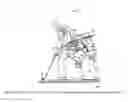
FIG. 1. Patented “Golf Swing Training Machine”, demonstrating the Complexity of the Old Method.
The drawing is referenced directly through the Canadian Patents Database to demonstrate the complexity of the current Method and Procedure for performing a golf swing. This complexity is engendered by the fundamentally wrong set-up and address and wrong “engine” of the back-swing. It is based on the “One Address Position—One Impact Position” philosophy of the Old Method.
FIG. 2. The Gap between the Address Position and the variety of possible Impact Positions.
The Gap between the Address Position (marked “OLD” on the figure) and the variety of possible Impact Positions (marked i1, i2, . . . i5 on the figure) causes pushing of the body into the unknown, rather than RETURNING to where it has just been at address, as it is in the NEW approach at the bottom portion of this drawing. The new method starts at the point of impact (marked by “NEW” at the bottom part of the figure) and allows the body to simply come back to its initial position.
FIG. 3. Comparison between the old and new method in terms of trajectories, directions, and potential energy storage.
The old method(O) starts at the lowest point of the trajectory where the entropy is at maximum and the momentum at the start of the back swing is zero. Thus, no direction or swing plane is determined—the golfer can start back virtually in any direction (presented by the 3 black arrows starting from the old point of Address “O”). By contrast, the New Method Addresses Position (marked by “N”) allows for using the Golf Club as an apparatus to determine both the correct Arms angles and correct angle of rotation of the Hips at Address/Impact.
The swing plane for the Old Method will be determined at the top of the swing rather than at address, which is the case with the New Method. The stored potential energy at the Point of Address with the Old Method is virtually Zero, as opposed to the positive potential energy stored by the New Address position (which is away from the lowest point of the swing, as shown in FIG. 3).
FIG. 4. Major differences between the Old and the New Method at Address.
To understand FIG. 4, first note that every impact position is a point in a 3-dimensional space determined by:
-
- The angle between the Left Arm and the Shoulder Line (it varies between 70 degrees with a Wedge and 20 degrees with the Driver). Marked as (1) in FIG. 4 and represented by the Z-axis in the 3-dimensional space in FIG. 5.
- The angle between the Right Arm and the Spine (it varies between −10 with the Driver and +20 degrees with the Wedge). Marked as (2) in FIG. 4 and represented by the Y-axis in the 3-dimensional space in FIG. 5.
- The angle the Hips have rotated relative to the Target Line at impact (it varies between 20 degrees with the Wedge and 80 degrees with the Driver). Marked as (3) in FIG. 4 and represented by the X-axis in the 3-dimensional space in FIG. 5.
FIG. 4 illustrates that the Old Method (on the left-hand side of the of FIG. 4):
-
- has the Address Position CONSTANT for every shot, while the New Address Position (on the right-hand side of FIG. 4) ADJUSTS to the current lie, the current slope, the length of the shaft of the current club, the intended shot to be made etc.
- makes ALL 3 Coordinates mandatory floating throughout the back swing (that is the reason why 100% of the Golfers are forced to guess the exact Impact Position 100% of the time). The New Method has the first 2 out of the 3 coordinates FIXED throughout the entire swing up-to the Impact, and only the Hips are move back and return forward to the Preset Impact Point at Address, as shown in FIG. 5.
Finally, FIG. 4 illustrates how when you align the Club-face perpendicular to the target in the single Address Position of the Old Method, the clubface (marked as (4) in FIG. 4) automatically becomes open at Impact position (which is also the Address position of the New Method). The longer the shaft of the club, the more open the Club-face becomes at Impact—that is why with the Driver (the Longest Club) 100% of the beginner, intermediate and high-handicap golfers send the ball Right of target (slice) 100% of the time, rather than having 50% sending it Right and 50% sending it Left. It is one of many direct consequences of the wrong Set Up (Address) of the Old Method. The New Method allows the golfer to align the clubface precisely as it will be at impact, using the shaft of the club as apparatus in the process, rather than leaving it open as you see it purposefully left open on the Drawing.
FIG. 5. Graphics of the Swing through the 3 Coordinates of the 3-dimensional space—Old Method
FIG. 5 presents 2 different swings leading to 2 completely different impact positions. Both of them start at the same Address Position with NO indication other than experienced guess about which swing should go to which Impact Position.
FIG. 6. Graphics of the Swing through the 3 Coordinates of the 3-dimensional space—New Method
FIG. 6 presents 2 different swings leading to 2 completely different impact positions, but this time the ADDRESS POSTIONS are different (each coinciding with its own future Impact Position). Note also how ONLY the X-coordinate (hips rotation) goes back and returns forward to the same initial position, while the other 2 coordinates (the Left Arm position Z across the chest and the Right Arm position Y “in the Slot”) stay CONSTANT so there is no need for guessing.
FIG. 7. Graphics of the Swing through the 3 Coordinates of the 3-dimensional space—Old vs. New
On FIG. 7 we see how the SAME Impact position is reached by the 2 methods:
-
- the Old Method leaves no chance for the golfer but to guess the Impact coordinates during the Forward swing;
- the New Method has 2 out of the 3 coordinates adjusted and fixed by means of using the golf club as an apparatus in the process for proper positioning for the specific Impact Point, and then just letting the hips (coordinate X) rotate back and forth, returning to the precise Impact Position they have just been in.
FIG. 8. Footwork with the New Method (Zar Point Address feet positioning).
The top-part of FIG. 8 presents how the actual shoes of the golfer would be relative to the swing line (45 degrees open in the direction of the target). The bottom part is a pure graphics presentation of the same, to emphasize the Rhombus position of the feet.
This position allows for:
-
- proper positioning of the entire body for the future “on-the-side” hit of the ball (as opposed to hitting the ball “face-on”, in front of the body);
- since the diagonals of the Rhombus are perpendicular, it allows for up to 90 degrees ADDITIONAL turn from the “base” (the feet on the ground that is).
The last statement needs some more explanation. The key is that at address the golfer places the majority of his weight “on the short diagonal” (this means that the weight is split between the left heel and the right toe at address, points A-to-A on FIG. 8, A standing for “Address”).
As the back swing starts, the weight distribution gradually moves toward “left-toe and right-heel” (that is between points B-to-B on FIG. 8, B standing for “Back”).
As the forward swing starts, the weight distribution gradually moves back to the short diagonal between points A-to-A.
This New Method of feet positing and shifting of the weight allows the golfer to perform a 90-degree rotation of the BASE alone, ONLY using feet, knees and legs, while the hips, the chest, and the shoulders are kept square to the corresponding diagonals (just for this demonstration, in order to highlight the point).
TABLES
All 4 tables are explained on the spot and do not need additional remarks.
DETAILED DESCRIPTION OF THE INVENTION
Since this is the main body of the Specification, we will answer the standard questions related to the invention while providing the detailed description.
Is the Invention an Improvement Over an Existing Method
The invention is a distinct and substantial improvement over the existing Old Method of performing a Golf Swing. It fixes the 15 specific problems caused by the Old Method and System for Initial Set-Up, Address, and Motion, listed in Section (6) with reference to the solutions listed in Section (7).
Elements and Steps of the Invention
The 8 Drawings and 4 Tables described in Section (8) and part of this application are going to be referred here.
The Steps and Elements needed to perform the Golf Swing using the New Method (subject to this application) are listed below.
| Reference Number | Name of the Step |
| 1 | Determining the Swing Line |
| 2 | Determining the right Distance from the Ball |
| 3 | Alignment of the Feet |
| 4 | Left Hand Grip |
| 5 | Right Hand Grip |
| 6 | Straightening the Spine |
| 7 | Hips Positioning |
| 8 | Feet Positioning |
| 9 | Body Positioning |
| 10 | Shoulders Positioning |
| 11 | Left Arm Positioning |
| 12 | Right Arm Positioning |
| 13 | Clubface Alignment and Re-gripping |
| 14 | Hips and Legs Initiation |
| 15 | Hinging the wrists |
| 16 | Completing the Backswing |
| 17 | Starting the downswing |
-
- Step 1. Determining the Swing Line. The Swing Line is influenced by the usual factors of the elements (wind, lie, thickness of the grass, hazards avoidance, etc.) and the planned shape of the trajectory (draw, fade, etc.). This line is different from the Target Line—it may incidentally coincide but usually is either to the left or to the right of the target line. There is nothing New in this step compared to the Old Method, it is just a mandatory preparation to do as Step 1.
- Step 2. Determining the right Distance from the Ball. Using the Club as Apparatus, position the Left Arm “across-the-chest” with the Shaft being an extension of the Left Arm, as it would be at Impact for (1) the particular Club-Shaft Length of the selected Club, (2) the particular Ground Shape the ball is on, and (3) lie of the ball. All these factors are in front of the eyes of the golfer, there is nothing to guess. The position resembles the future Impact position in general, but nothing is yet fixed—the goal of this Step 2 is only to determine the distance from the ball.
- Step 3. Alignment of the Feet. With the Swing Line and the correct Distance from the Ball being determined, the golfer is in a position to correctly place and align the feet. Both feet are aligned at 45 degrees and distance between them is 1 golf-shoe-length, which allows for 90 degrees turn of the feet-base, as explained and illustrated in FIG. 8.
- Step 4. Left Hand Grip. Now the golfer is in a position to make the initial Left Hand Grip. The back of the left hand faces the target and the golfer cannot see any knuckles, unlike the current system where he sees 2 or 3 knuckles depending the weak/string grip goal.
- Step 5. Right Hand Grip. After the left hand is in place, we position the Right Hand via the type of grip which the golfer is comfortable with, the right palm covering the left thumb. The right hand stays slightly braced just as it will be at the point of impact. Once both hands are in their initial grip position, the golfer can proceed with the hips and feet positioning (Steps 7 and 8) and later readjust the grip after the rest of the elements of the address are in place (Step 13).
- Step 6. Straightening the Spine. To provide for proper rotation of the torso, the Spine should be straightened before positioning the Arms and hips and after the Grip is in the initial place. As with Step 1, there is nothing New in this Step 6 compared to the Old Method, it is just a mandatory preparation to do before proceeding with the Set Up.
- Step 7. Hips Positioning. Now is the time to turn the Hips in a position which the Length of the Club-shaft, the Ground Shape and Tilt, and the Ball Lie all dictate for the selected club and the selected type of shot, using again the Club as Apparatus in the process. Again everything is in front of the eyes of the golfer, with nothing to guess. The turn of the hips varies between 20 and 80 degrees depending on the factors above, and more importantly is determined and fixed by those factors. Average is 40 degrees. The left hip is higher than the right hip so the hips line is tilted towards the ball. This is the way they will be at impact and we position them in the exactly same way. It enables them to become the engine for the motion of the back swing, which in turn unloads the burden from the upper body and makes it automatically relaxed. This position is very different from the position in the current system where the hips line is parallel to the target line. As shown in FIG. 6 and FIG. 7, the Hips are the only Coordinate of the 3 Impact Point Coordinates which is changing during the swing—the other 3 (Left Arm Position and Right Elbow Position) are fixed throughout—all the way to impact. In the Old Method (FIG. 5) all the 3 are moving. See also (3) in FIG. 4.
- Step 8. Feet Positioning. The aligned in Step 3. feet are ready to be positioned in an Impact-like position with most of the weight placed between the Right-foot toes and the Left-foot heel (the diagonal “C“-”B” in FIG. 8). As we swing back, the weights will move over the diagonal “A“-”D” in FIG. 8, which is between the toes of the Left foot and the heel of the right foot (at the top). This is what provides the 90-degree rotation of the feet-base.
- Step 9. Body Positioning. The body comes next and its position is determined by the position of the hips described in the precious Step 8, using the gold club as guiding apparatus. The body is tilted toward the ball as it is going to be at impact, the ball itself being slightly on the right-hand-side, rather than in front of the chest of the golfer. It is ready to turn clockwise around the spine on the backswing initiated in Step XX.
- Step 10. Shoulders Positioning. The Shoulder Line stays perpendicular to the spine and 20 degrees open toward target on average (the hips are 40 degrees open on average), just as it will be at impact, rather than being parallel to the target as it is with the current system. This enables the turning of the body to start naturally clockwise as the hips initiate the backswing in Step 14.
- Step 11. Left Arm Positioning. The Left Arm now can get in a position where it goes straight towards the ball and the shaft comes as an extension of the Left Arm toward the ball. The elbow is turned forward and towards the sky rather than pointing to the right. In the Old Method (the current system that is) both hands hang down between the legs of the golfer regardless of the length of the club-shaft, the ground shape, the tilt of the terrain, etc. The angle between Left Arm and Shoulder Line varies between 70 and 20 degrees and averages 40 degree. See (1) in FIG. 4.
- Step 12. Right Arm Positioning. The Right Arm position is determined by the Elbow Position “in the slot” (using golfers terminology) which is just above the right Hip. The exact position is determined with the help of the Golf Club again, using the Shaft Length, the Hips Rotation, and the Left Arm position for coordination. The elbow is turned forward and towards the sky rather than pointing to the left. The angle between Right Arm and Spine varies between −10 degrees and +20 degrees, averaging +10 degrees. See (2) in FIG. 4.
- Step 13. Clubface Alignment and Re-gripping. Since now the golfer is in the pre-planned future Impact Position (called Zar Point Address) he can precisely align the clubface as it is going to be at impact, rather than letting it become open at Impact as it is the case with the Old Method. The golfer aligns the face perpendicular to the Target Line. See (4) in FIG. 4.
- Step 14. Hips and Legs Initiation. The key to the initial motion is that the engine is not the upper body, but rather the legs and hips of the golfer. This enables the upper body to be relaxed from the very beginning. The hips start turning clockwise and the legs bush the arms-shaft “machinery” back down the intended swing line. Hips start turning from the very beginning of the motion and everything flows naturally on the backswing.
- Step 15. Hinging the wrists. The hinging of the wrists starts immediately after the Hips and Legs initiation since the path to the top of the Back Swing is shortened in the New Method. In the same time while performing the Back Swing, the angles of coordinates Y and Z (FIGS. 5, 6, and 7) are preserved. Those are the angle between the Left Arm and the Shoulder line on one hand, and the angle between the Right Arm and the Spine (the Right Elbow stays at the same place “in the slot” while the arm rotates back around the elbow).
- Step 16. Completing the Backswing. The backswing is completed by finishing the hinging the wrists at the top to a typical position to start the downswing. Note, that the wrists that complete the back swing will also be the last to unfold on the downswing. See Table 2 for details (point 8 in the Table).
- Step 17. Starting the downswing. The feet, knees, and hips that started the backswing (see Table 2 again) will now start the downswing, too—something also completely different in the Old Method. The New Method enables the golfer to simply return to the position he has started from, rather than passing through it and searching for the unknown Impact Position—one more key element of the New System.
Necessary and Optional Elements of the Invention
If the golfer is flexible enough, the Zar Point Footwork which brings an additional up to 90 degrees of rotation from the ground up (the base) is optional. For example younger golfers may not need the additional turn coming from the Rhombus-position of the feet.
All other Steps and Elements of the Zar Point Address and Back Swing are necessary to achieve the correct motion.
Computers or Systems that can Perform the Function of the Invention:
The current “Singing Machine” called “Iron Byron” (named after one of the greatest golfers of all time) models a swing where the motion starts from the TOP (that is, the machine doesn't have real Address Position with the club-head on the ground, nor does it have a “Back Swing”. It just swings forward from the top. The machine could be modified to demonstrate the NEW method of swinging with the Zar Point Address and the Zar Point Back Swing. Note that the machine cannot perform the swing instead of the golfer but just to demonstrate to motion and to be used as a testing device.
Can the Method be Used in a Different Way or in a Different Field
As noted in the “Computers or Systems” section, a machine can be modified to introduce and Address Position and a Back Swing to the existing model “Iron Byron”. The machine can NOT perform the swing on behalf of a human—it is just for illustration and testing of golf clubs.
Other sports that have a Swinging Motion can benefit from the Invention by adapting the Fundamentals of the New Method to their specific needs.
Products, Devices and Useful Items Produced by the Invention
The new Method of Swinging a Golf Club has an immediate and profound impact on the results of the swing—it brings consistency, predictability, repeatability, adjustability, ease of use, etc. and eliminates most of the hurdles coming from the incorrect address and backward turn of the body towards the top of the swing.
The new Method has yet another useful feature—it dramatically reduces the possibility of injuries which a so popular among golfers—lower back injuries, left knee injuries, golfers elbow etc. which stem from the improper Addressing and using the upper body as the engine for the back swing in the Old Method.
SEQUENCE LISTING
Not Applicable. For the actual list of Steps and their Sequence see the corresponding section in (9), which will enable a skillful golfer to perform the golf swing using the New Method.
| TABLE 1 |
| Comparison between the Motion Fundamentals for the old |
| and new method - the new method differs in all 3 Motion |
| Fundamentals (address, engine, and trajectory): |
| the address is sideways; |
| the engine is the lower body; |
| the trajectory is one-plane. |
| Motion fundamentals comparison - The old vs. the new Method |
| Old method: | New method: |
| 1. Face-on address | 1. Sideways address |
| 2. Upper-body engine | 2. Lower-body engine |
| 3. Two-plane trajectory | 3. One-plane trajectory |
| TABLE 2 |
| In the New Method, the Order of Activation is |
| IDENTICAL in the Back Swing and the Forward Swing. |
| Order of Activation - Zar Point Method |
| Back swing: | Forward swing: | |
| 1. Feet | 1. Feet | |
| 2. Knees | 2. Knees | |
| 3. Hips | 3. Hips | |
| 4. Body | 4. Body | |
| 5. Shoulders | 5. Shoulders | |
| 6. Arms | 6. Arms | |
| 7. Hands | 7. Hands | |
| 8. Wrists | 8. Wrists | |
| TABLE 3 |
| In the Old Method, the first 4 steps of the Back |
| Swing are REVERSED in the Forward Swing. |
| Order of Activation - The old classic Method |
| Back swing: | Forward swing: | |
| 1. Body | 4. Feet | |
| 2. Hips | 3. Knees | |
| 3. Knees | 2. Hips | |
| 4. Feet | 1. Body | |
| 5. Shoulders | 5. Shoulders | |
| 6. Arms | 6. Arms | |
| 7. Hands | 7. Hands | |
| 8. Wrists | 8. Wrists | |
| TABLE 4 |
| Differences between OLD and NEW Fundamentals (Zar Point Address) |
| Comparison Table | OLD | NEW |
| Number of Address Positions | 1 | Unlimited |
| Number of Impact Positions | 1 | Unlimited |
| Number of Swing Planes (backward and forward) | 2 | 1 |
| Number of Fixed Swing Coordinates (of 3 total) | 0/3 | 2/3 |
| Posture Comparison (address vs. impact) | Different | Same |
| Clubface Alignment (address vs. impact) | Different | Same |
| Club to Body relation (address vs. impact) | Front-to-side | Side-to-Side |
| Footwork Contribution to Rotation | 0 degrees | 90 degrees |
| Overall Type of Address Position | Face-on | Sideways |
| Predominant Direction of Arms Motion | Down-Up | Left-Right |
| Overall Motion Type for the Club | Lifting | Rotating |
| Engine of the Backswing Motion | Upper Body | Lower Body |
| Type of Backswing Motion | Turning | Swinging |
| Hitting or Swinging the Club | Hitting | Swinging |
| Swing Plane Angle | Upright | Flatter |
| Shoulder Plane | Half-way | Determined |
| Hips Rotation Angle | Guessing | Returning |
| Left Arm at Address | Vertical | Cross Chest |
| Right Arm at Address | Vertical | In Slot |
| Hips at Address | Square | Open |
| Shoulders at Address | Square | Open |
| Control over Swing Plane | Guessing | Returning |
| Control over Direction | Guessing | Returning |
| Control over Impact Position | Guessing | Returning |
| Head Lifting on the Backswing | Promotes | Prevents |
| Spine Angle Breaking | Promotes | Prevents |
| Picking-up the Club | Promotes | Prevents |
| Health Implications (injuries) | Promotes | Prevents |
Claims
1. Changing all Three Motion Fundamentals.
Changes all Three Motion Fundamentals (Table 1) of the swing (Starting point, Engine, and Trajectory), this putting the body of the player in a New State, where the starting point (the Address) has the ball and club positioned Sideways, the trajectory is a Single Plane, and the Engine is the Lower Body. All the three fundamentals are completely different with the Old Method, as Table 1 indicates.
2. Storing Potential Energy and eliminating the Entropy.
Stores potential energy (FIG. 3) in the Address Position by moving it away from the bottom of the swing arc where the potential energy is zero and the entropy is at its Maximum (point “O” in FIG. 3)—the point where the Old Method starts the Swing from. Using the Golf Club as apparatus, it pre-sets the body angles and determines the single correct direction of starting-motion on the Back Swing (point “N” in FIG. 3), instead of keeping multiple directions open for erroneous guessing.
3. Determining the Swing Plane right from the Start.
The gripped golf club is used as apparatus for aligning the left arm and the club in a straight line pointing in the ball, rather than letting the club sit down in neutral position with the arms of the player hanging down vertically in neutral position themselves. The utility of this method is that the Swing Plane is determined and fixed right from the start—it is the crossing of the above straight line (left arm plus golf club) crossed by the shoulder line.
4. Fixing the First of the Three Impact Point Coordinates and keeping it fixed throughout the swing.
The gripped golf club, after being aligned with the left arm in a straight line, is used as apparatus for determining the angle between the “Left Arm-club” line and the shoulder-line. As the FIGS. 5, 6, and 7 illustrate, this angle is one of the 3 Coordinates of the Impact point. This is also one of the 2 Coordinates which Stay Fixed throughout the Entire Swing from Address to Top to Impact. It may vary from 70 to 20 degrees depending on the length of the Club-shaft, the type of shot planned, the shape of the ground, etc. The Old Method leaves all the 3 Coordinates variable throughout the swing, which combined with the Single Address Point lead to the known fundamental problem of making 100% of the golfer guess 100% of the time.
5. Fixing the Second of the Three Impact Point Coordinates and keeping it fixed throughout the swing.
The gripped golf club, having been used as apparatus for determining the angle between the “club-arm line” and the shoulder-line, is now used to determine and fix the Right Elbow position above the Right hip (the so called “in the slot” position). As the FIGS. 5, 6, and 7 illustrate, this angle is one of the 3 Coordinates of the Impact point. This is also one of the 2 Coordinates which Stay Fixed throughout the Entire Swing from Address to Top to Impact. The position of the Right Elbow reflects the angle between the Spine and the Right Arm, which may vary between −10 and +20 degrees depending on the length of the Club-shaft, the type of shot planned, the shape of the ground, etc. The Old Method leaves all the 3 Coordinates variable throughout the swing, which along with the Single Address Point lead to the known fundamental problem of making 100% of the golfer guess 100% of the time.
6. Determining the exact Hips Rotation (the Third Impact Point Coordinate).
The gripped golf club after being aligned with the left arm in a straight line, is used as apparatus for helping to determine the angle of the hips-line relative to the target line. As the FIG. 4 shows, this angle of “openness” of the hips at Impact may vary from 20 to 80 degrees depending the length of the Club-shaft, the type of shot planned, the shape of the ground, etc.
7. Determining the exact Clubface alignment at Impact.
The gripped golf club after being aligned with the left arm in a straight line, is used as apparatus for aligning the clubface towards the target line as it is going to be at the moment of impact, rather than making the alignment in a position which is far-away from the impact position. The clubface in FIG. 4 (right-hand-side) is intentionally left open to illustrate this problem with the Old Method, which the New Method eliminates.
8. The New Method Introduces Consistency in the Motion.
In the New Method Consistency of the Motion is built-in by Design, since 2 out of the 3 coordinates are kept Fixed throughout the entire Motion and the 3rd coordinate Starts on the way Back from the Point of Return and gets back there at Impact. With the Old Method Consistency is Theoretically Impossible, when the Motion on the way Back Starts always from the Same Address Point and aims at Unlimited Number of Impact Points on the way Forward, with all 3 Coordinates floating freely.
9. Making the Back Swing a FIFO-style motion.
Makes the Back Swing a FIFO-style motion (First In First Out) to fit the FIFO-style motion of the Forward Swing, contrary to the Old Method which has that part of the Swing as a FILO motion (First-In-Last-Out) as indicated in Table 2 and Table 3. The direct utility of this change is the Elimination of the natural (but wrong according to all experts in the field) initiation of the forward swing with the Arms, which get active First due to the fact that they have Started back First.
10. Providing for pulling into the pre-set Impact Position on the Forward Swing.
Eliminates the Gap between Address Position in the Old Method and the Impact Position as demonstrated in FIG. 2 and allows the body to simply return to where it has just started, rather than being pushed through the Old Address Point to the Impact Point further forward. The New Method starts at the point of Impact (marked by “NEW” on the bottom part of the figure and known as Zar Point Address) and enables the body to simply be pulled BACK to its initial position. The difference between the 2 positions is shown in FIG. 4.
11. Radically reducing the Common Injuries.
Practically eliminates the majority of complexity stemming from the Old Method Address Position, Old Golf Fundamentals, and the Old Back Turn (rather than Back Swing), which are demonstrated by the complexity of the patented machine in FIG. 1. Consequently, it radically reduces the possibility of injuries which a so popular among golfers—lower back injuries, left knee injuries, golfers elbow etc. stemming from the improper Address Position and from using the upper body as the Engine for the back swing in the Old Method.
Images & Drawings included:



Sources:
- United States Patent and Trademark Office - verify current appl. status at the USPTO↗
Recent applications in this class:
- » 20250135313 2025-05-01
GOLF SIMULATOR THAT FOLDS INTO A CABINET - » 20250073557 2025-03-06
IMMERSIVE VIRTUAL GOLF SERVICE WITH REALITY USING XR DEVICE - » 20240342573 2024-10-17
SQUARE UP SWING TRAINER - » 20240335723 2024-10-10
Swing Exercise Machine - » 20240299822 2024-09-12
GOLF SWING TRAINER - » 20240226691 2024-07-11
DISPLAY CONTROL APPARATUS, DISPLAY CONTROL METHOD, AND DISPLAY CONTROL PROGRAM - » 20240189692 2024-06-13
SYSTEM AND METHOD FOR TRACKING SPORTS BALLS - » 20240123314 2024-04-18
GOLF BALL TRAJECTORY MONITOR - » 20240075371 2024-03-07
SYSTEMS AND METHODS FOR GOLF SWING TRAINING - » 20240058680 2024-02-22
GOLF TRAINING APPARATUS