PECVD coating methods for capped syringes, cartridges and other articles
US20130041241A1
2013-02-14
13/651,299
2012-10-12
✅ Patent granted
US 9,458,536 B2
2016-10-04
-
-
Cachet Sellman
McAndrews, Held & Malloy, Ltd.
2033-06-21
Abstract:
A method is disclosed in which a vapor-deposited coating or layer is directly or indirectly applied to at least a portion of the internal wall of the barrel of a capped pre-assembly comprising a barrel, optionally a dispensing portion, and a cap. The cap is secured to the barrel and at least substantially isolates the distal opening of the dispensing portion from pressure conditions outside the cap. A vapor-deposited coating or layer is applied directly or indirectly to at least a portion of the internal wall of the barrel while the pre-assembly is capped. The coating or layer is applied under conditions effective to maintain communication from the barrel lumen to the exterior via the front opening, optionally further via the dispensing portion lumen if present, at the end of the applying step. The capped pre-assembly can be pressure tested easily and rapidly, for example with a test duration between 1 and 60 seconds, to determine whether it has container closure integrity.
Inventors:
- John T. Felts 49 🇺🇸 Alameda, CA, United States
- Thomas E. Fisk 33 🇺🇸 Green Valley, AZ, United States
- Shawn Kinney 3 🇺🇸 Wayland, MA, United States
- Christopher Weikart 55 🇺🇸 Auburn, AL, United States
- Benjamin Hunt 10 🇺🇸 Auburn, AL, United States
- Adrian Raiche 1 🇺🇸 Auburn, AL, United States
- Brian Fitzpatrick 2 🇺🇸 West Chester, PA, United States
- Peter J. Sagona 30 🇺🇸 Pottstown, PA, United States
- Adam Stevenson 14 🇺🇸 Opelika, AL, United States
Assignee:
- SiO2 Medical Products, Inc. 61 🇺🇸 Auburn, AL, United States
Applicant:
Interested in similar patents?
Get notified when new applications in this technology area are published.
Classification:
A61B5/150236 » CPC further
Measuring for diagnostic purposes ; Identification of persons; Devices for taking samples of blood; Details; Construction or design features not otherwise provided for; manufacturing or production; packages; sterilisation of piercing element, piercing device or sampling device Pistons, i.e. cylindrical bodies that sit inside the syringe barrel, typically with an air tight seal, and slide in the barrel to create a vacuum or to expel blood
A61B5/150244 » CPC further
Measuring for diagnostic purposes ; Identification of persons; Devices for taking samples of blood; Details; Construction or design features not otherwise provided for; manufacturing or production; packages; sterilisation of piercing element, piercing device or sampling device Rods for actuating or driving the piston, i.e. the cylindrical body that sits inside the syringe barrel, typically with an air tight seal, and slides in the barrel to create a vacuum or to expel blood
A61B5/150595 » CPC further
Measuring for diagnostic purposes ; Identification of persons; Devices for taking samples of blood; Details; Details of piercing elements or protective means for preventing accidental injuries by such piercing elements; Design of protective means for piercing elements for preventing accidental needle sticks, e.g. shields, caps, protectors, axially extensible sleeves, pivotable protective sleeves; Joining techniques used for protective means by snap-lock (i.e. based on axial displacement)
A61B5/150717 » CPC further
Measuring for diagnostic purposes ; Identification of persons; Devices for taking samples of blood; Details; Details of piercing elements or protective means for preventing accidental injuries by such piercing elements; Design of protective means for piercing elements for preventing accidental needle sticks, e.g. shields, caps, protectors, axially extensible sleeves, pivotable protective sleeves; Procedure for removing protection means at the time of piercing manually removed
A61B5/150755 » CPC further
Measuring for diagnostic purposes ; Identification of persons; Devices for taking samples of blood; Details Blood sample preparation for further analysis, e.g. by separating blood components or by mixing
A61M5/31 IPC
Devices for bringing media into the body in a subcutaneous, intra-vascular or intramuscular way; Accessories therefor, e.g. filling or cleaning devices, arm-rests; Syringes Details
A61M5/178 IPC
Devices for bringing media into the body in a subcutaneous, intra-vascular or intramuscular way; Accessories therefor, e.g. filling or cleaning devices, arm-rests Syringes
A61M5/30 IPC
Devices for bringing media into the body in a subcutaneous, intra-vascular or intramuscular way; Accessories therefor, e.g. filling or cleaning devices, arm-rests; Syringes Syringes for injection by jet action, without needle, e.g. for use with replaceable ampoules or carpules
A61B5/145 IPC
Measuring for diagnostic purposes ; Identification of persons Measuring characteristics of blood , e.g. gas concentration, pH value; Measuring characteristics of body fluids or tissues, e.g. interstitial fluid, cerebral tissue
A61J7/00 IPC
Devices for administering medicines orally, e.g. spoons ; Pill counting devices; Arrangements for time indication or reminder for taking medicine
A61J7/00 IPC
Administering medicines orally; Feeding-bottles in general; Teats; Devices for receiving spittle
A61M15/00 IPC
Inhaling devices
A61M15/00 IPC
Inhalators
A61B6/00 IPC
Apparatus for radiation diagnosis, e.g. combined with radiation therapy equipment
A61M35/00 IPC
Devices for applying, e.g. spreading, media, e.g. remedies, on the human body
A61M5/315 IPC
Devices for bringing media into the body in a subcutaneous, intra-vascular or intramuscular way; Accessories therefor, e.g. filling or cleaning devices, arm-rests; Syringes; Details Pistons; Piston-rods; Guiding, blocking or restricting the movement of the rod or piston ; Appliances on the rod for facilitating dosing ; Dosing mechanisms
C23C16/401 » CPC main
Chemical coating by decomposition of gaseous compounds, without leaving reaction products of surface material in the coating, i.e. chemical vapour deposition [CVD] processes characterised by the deposition of inorganic material, other than metallic material; Deposition of compounds, mixtures or solid solutions, e.g. borides, carbides, nitrides; Oxides containing silicon
A61B5/1405 » CPC further
Measuring for diagnostic purposes ; Identification of persons; Devices for taking samples of blood ; Measuring characteristics of blood , e.g. gas concentration within the blood, pH-value of blood Devices for taking blood samples
A61B5/154 » CPC further
Measuring for diagnostic purposes ; Identification of persons; Devices for taking samples of blood specially adapted for taking samples of venous or arterial blood, e.g. with syringes Devices using pre-evacuated means Devices
A61B5/15003 » CPC further
Measuring for diagnostic purposes ; Identification of persons; Devices for taking samples of blood; Details; Source of blood for venous or arterial blood
B05D7/22 » CPC further
Processes, other than flocking, specially adapted for applying liquids or other fluent materials to particular surfaces or for applying particular liquids or other fluent materials to internal surfaces, e.g. of tubes
A61B5/150274 » CPC further
Measuring for diagnostic purposes ; Identification of persons; Devices for taking samples of blood; Details; Construction or design features not otherwise provided for; manufacturing or production; packages; sterilisation of piercing element, piercing device or sampling device Manufacture or production processes or steps for blood sampling devices
A61B5/150389 » CPC further
Measuring for diagnostic purposes ; Identification of persons; Devices for taking samples of blood; Details; Details of piercing elements or protective means for preventing accidental injuries by such piercing elements; Design of piercing elements Hollow piercing elements, e.g. canulas, needles, for piercing the skin
A61B5/150519 » CPC further
Measuring for diagnostic purposes ; Identification of persons; Devices for taking samples of blood; Details; Details of piercing elements or protective means for preventing accidental injuries by such piercing elements; Design of piercing elements; Single-ended needles Details of construction of hub, i.e. element used to attach the single-ended needle to a piercing device or sampling device
A61M5/3202 » CPC further
Devices for bringing media into the body in a subcutaneous, intra-vascular or intramuscular way; Accessories therefor, e.g. filling or cleaning devices, arm-rests; Syringes; Details; Needles; Details of needles pertaining to their connection with syringe or hub ; Accessories for bringing the needle into, or holding the needle on, the body ; Devices for protection of needles Devices for protection of the needle before use, e.g. caps
G01N2033/0096 » CPC further
Investigating or analysing materials by specific methods not covered by groups - testing material properties on thin layers or coatings
C23C16/045 » CPC further
Chemical coating by decomposition of gaseous compounds, without leaving reaction products of surface material in the coating, i.e. chemical vapour deposition [CVD] processes; Coating on selected surface areas, e.g. using masks Coating cavities or hollow spaces, e.g. interior of tubes; Infiltration of porous substrates
C23C16/54 » CPC further
Chemical coating by decomposition of gaseous compounds, without leaving reaction products of surface material in the coating, i.e. chemical vapour deposition [CVD] processes characterised by the method of coating Apparatus specially adapted for continuous coating
A61B5/153 » CPC further
Measuring for diagnostic purposes ; Identification of persons; Devices for taking samples of blood specially adapted for taking samples of venous or arterial blood, e.g. with syringes Devices
G01M3/329 » CPC further
Investigating fluid-tightness of structures by using fluid or vacuum by measuring rate of loss or gain of fluid, e.g. by pressure-responsive devices, by flow detectors for containers, e.g. radiators removably mounted in a test cell for verifying the internal pressure of closed containers
A61L31/08 » CPC further
Materials for other surgical articles, e.g. stents, stent-grafts, shunts, surgical drapes, guide wires, materials for adhesion prevention, occluding devices, surgical gloves, tissue fixation devices Materials for coatings
C23C16/505 » CPC further
Chemical coating by decomposition of gaseous compounds, without leaving reaction products of surface material in the coating, i.e. chemical vapour deposition [CVD] processes characterised by the method of coating using electric discharges using radio frequency discharges
A61B5/15 IPC
Measuring for diagnostic purposes ; Identification of persons Devices for taking samples of blood
A61M25/00 IPC
Probes; Catheters; Dilators; Drainage appliances for wounds
A61M25/00 IPC
Catheters; Hollow probes
B05D3/00 IPC
Pretreatment of surfaces to which liquids or other fluent materials are to be applied; After-treatment of applied coatings, e.g. intermediate treating of an applied coating preparatory to subsequent applications of liquids or other fluent materials
C23C16/40 IPC
Chemical coating by decomposition of gaseous compounds, without leaving reaction products of surface material in the coating, i.e. chemical vapour deposition [CVD] processes characterised by the deposition of inorganic material, other than metallic material; Deposition of compounds, mixtures or solid solutions, e.g. borides, carbides, nitrides Oxides
C23C16/04 IPC
Chemical coating by decomposition of gaseous compounds, without leaving reaction products of surface material in the coating, i.e. chemical vapour deposition [CVD] processes Coating on selected surface areas, e.g. using masks
C23C16/52 » CPC further
Chemical coating by decomposition of gaseous compounds, without leaving reaction products of surface material in the coating, i.e. chemical vapour deposition [CVD] processes characterised by the method of coating Controlling or regulating the coating process
A61M5/32 IPC
Devices for bringing media into the body in a subcutaneous, intra-vascular or intramuscular way; Accessories therefor, e.g. filling or cleaning devices, arm-rests; Syringes; Details Needles; Details of needles pertaining to their connection with syringe or hub ; Accessories for bringing the needle into, or holding the needle on, the body ; Devices for protection of needles
G01M3/32 IPC
Investigating fluid-tightness of structures by using fluid or vacuum by measuring rate of loss or gain of fluid, e.g. by pressure-responsive devices, by flow detectors for containers, e.g. radiators
G01N33/00 IPC
Investigating or analysing materials by specific methods not covered by groups -
Description
This application is a continuation in part of
- U.S. Ser. No. 13/169,811, filed Jun. 27, 2011, now pending;
- which is a divisional of
- U.S. Ser. No. 12/779,007, filed May 12, 2010, now U.S. Pat. No. 7,985,188;
- which claims the priority of:
- U.S. Provisional Ser. No. 61/222,727, filed Jul. 2, 2009;
- U.S. Provisional Ser. No. 61/213,904, filed Jul. 24, 2009;
- U.S. Provisional Ser. No. 61/234,505, filed Aug. 17, 2009;
- U.S. Provisional Ser. No. 61/261,321, filed Nov. 14, 2009;
- U.S. Provisional Ser. No. 61/263,289, filed Nov. 20, 2009;
- U.S. Provisional Ser. No. 61/285,813, filed Dec. 11, 2009;
- U.S. Provisional Ser. No. 61/298,159, filed Jan. 25, 2010;
- U.S. Provisional Ser. No. 61/299,888, filed Jan. 29, 2010;
- U.S. Provisional Ser. No. 61/318,197, filed Mar. 26, 2010; and
- U.S. Provisional Ser. No. 61/333,625, filed May 11, 2010;
and this application claims the priority of: - U.S. Provisional Ser. No. 61/636,377, filed Apr. 20, 2012.
All of the above patent applications and patent are incorporated here by reference in their entirety, including the applications they incorporate by reference.
FIELD OF THE INVENTION
The present invention relates to the technical field of coated surfaces, for example interior surfaces of pharmaceutical packages or other vessels for storing or other contact with fluids. Examples of suitable fluids include foods or biologically active compounds or body fluids, for example blood. The present invention also relates to a pharmaceutical package or other vessel and to a method for coating or layer an inner or interior surface of a pharmaceutical package or other vessel. The present invention also relates more generally to medical devices, including devices other than packages or vessels, for example catheters.
The present disclosure also relates to improved methods for processing pharmaceutical packages or other vessels, for example multiple identical pharmaceutical packages or other vessels used for pharmaceutical preparation storage and delivery, venipuncture and other medical sample collection, and other purposes. Such pharmaceutical packages or other vessels are used in large numbers for these purposes, and must be relatively economical to manufacture and yet highly reliable in storage and use.
BACKGROUND OF THE INVENTION
One important consideration in manufacturing pre-filled syringes and cartridges or other vessels (such as vials) for storing or other contact with fluids, for example, is that the contents of the pharmaceutical package or other vessel desirably will have a substantial shelf life. During this shelf life, it is important to isolate the material filling the pharmaceutical package or other vessel from the vessel wall containing it, or from barrier coating or layers or other functional coating or layers applied to the pharmaceutical package or other vessel wall to avoid leaching material from the pharmaceutical package or other vessel wall, barrier coating or layer, or other functional coating or layers into the prefilled contents or vice versa.
Commonly, after it is filled, a prefilled syringe or cartridge is capped at the distal end, as with a needle shield or other type of cap, and is closed at the proximal end by its drawn plunger tip or piston. The prefilled syringe or cartridge can be wrapped in a sterile package before use. To use the prefilled syringe or cartridge, the packaging and needle shield or other type of cap are removed, optionally a hypodermic needle or other type of dispenser is attached (if not already present), the delivery conduit or syringe is moved to a use position (such as by inserting the hypodermic needle into a patient's blood vessel or into apparatus to be rinsed with the contents of the syringe), and the plunger tip or piston is advanced in the barrel to inject the contents of the barrel. If a cartridge is being used, it is also placed into a mechanism that mechanically advances the piston to make an injection, for example using an injection spring.
An important consideration regarding medical syringes and cartridges, in particular prefilled syringes and cartridges, is to ensure that the prefilled syringe or cartridge has container closure integrity, meaning that it has been determined to be sterile, and not subject to subsequent microbiological contamination, by a mechanical, non-destructive test method. Other important considerations are that when the syringe or cartridge is being manufactured and before it has been filled, it does not have defects that would prevent the filled package from having the necessary container closure integrity. It is also important to manufacture a medical syringe or cartridge that is economical to manufacture, yet will provide the necessary container closure integrity, which can be verified by a test performed on every piece manufactured (a concept sometimes referred to as “100% inspection”).
SUMMARY OF THE INVENTION
An aspect of the invention is a method in which a vapor-deposited coating or layer is directly or indirectly applied to at least a portion of the internal wall of the barrel of a capped pre-assembly.
A capped pre-assembly is provided comprising a barrel, optionally a dispensing portion, and a cap.
The barrel has an internal wall defining a barrel lumen and a front opening through the internal wall.
The optional dispensing portion can be secured to the barrel and includes a distal opening and a dispensing portion lumen. The distal opening is located outside the barrel. The dispensing portion lumen communicates between the front opening of the barrel and the distal opening of the dispensing portion.
The cap is secured to the barrel and at least substantially isolates the front opening of the barrel and (if a dispensing portion is present) the distal opening of the dispensing portion from pressure conditions outside the cap.
A vapor-deposited coating or layer is applied directly or indirectly to at least a portion of the internal wall of the barrel. The coating or layer is applied while the pre-assembly is capped. The coating or layer is applied under conditions effective to maintain communication between the barrel lumen and the exterior via the front opening at the end of the applying step.
In an optional further elaboration of the method, the capped pre-assembly can be pressure tested easily and rapidly, for example with a test duration between 1 and 60 seconds, to determine whether it has container closure integrity.
Other aspects of the invention will become apparent from the present description, claims, and drawings.
BRIEF DESCRIPTION OF THE DRAWINGS
FIG. 1 is an elevation view of a capped pre-assembly according to an embodiment of the disclosure.
FIG. 2 is a longitudinal section of the capped pre-assembly of FIG. 1.
FIG. 3 is an enlarged fragmentary view of the capped pre-assembly of FIGS. 1 and 2.
FIG. 4 is a schematic longitudinal section of the capped pre-assembly of FIGS. 1 and 2 seated on a chemical vapor deposition coating station.
FIG. 5 is a section taken along section lines A-A of FIG. 4.
FIG. 6 is a schematic view showing more details of the chemical vapor deposition coating station shown in FIGS. 4 and 5.
FIG. 7 is a view similar to FIG. 2 of the capped pre-assembly of FIGS. 1-6, filled with a pharmaceutical preparation and fitted with a plunger tip or piston to define a pre-filled syringe. In the option shown, a plunger tip and plunger are installed.
FIG. 8 is a plot of pressure decay for 14 different samples made according to the working example set out below.
The following reference characters are used in the drawing figures:
| 12 | Capped pre-assembly |
| 14 | Barrel |
| 16 | Internal wall |
| 18 | Barrel lumen |
| 20 | Dispensing portion |
| 22 | Front opening |
| 24 | Distal opening |
| 26 | Dispensing portion lumen |
| 27 | Cap |
| 30 | (first) Vapor-deposited coating or layer |
| 32 | Opening |
| 34 | (second) vapor-deposited coating or layer |
| 36 | Plunger tip or piston |
| 38 | Plunger rod |
| 40 | Fluid material |
| 42 | Rib |
| 44 | Cylindrical surface |
| 46 | Barb |
| 48 | Catch |
| 50 | Vessel holder |
| 52 | Plot |
| 54 | Plot |
| 60 | coating station |
| 82 | Opening |
| 84 | Closed end |
| 92 | Vessel port |
| 94 | Vacuum duct |
| 96 | Vacuum port |
| 98 | Vacuum source |
| 100 | O-ring (of 92) |
| 102 | O-ring (of 96) |
| 104 | Gas inlet port |
| 106 | O-ring (of 100) |
| 108 | Probe (counter electrode) |
| 110 | Gas delivery port (of 108) |
| 114 | Housing (of 50 or 112) |
| 116 | Collar |
| 118 | Exterior surface (of 80) |
| 144 | PECVD gas source |
| 152 | Pressure gauge |
| 160 | Electrode |
| 162 | Power supply |
| 164 | Sidewall (of 160) |
| 166 | Sidewall (of 160) |
| 168 | Closed end (of 160) |
| 200 | Electrode |
| 210 | Pharmaceutical package |
| 404 | Exhaust |
| 574 | Main vacuum valve |
| 576 | Vacuum line |
| 578 | Manual bypass valve |
| 580 | Bypass line |
| 582 | Vent valve |
| 584 | Main reactant gas valve |
| 586 | Main reactant feed line |
| 588 | Organosilicon liquid reservoir |
| 590 | Organosilicon feed line (capillary) |
| 592 | Organosilicon shut-off valve |
| 594 | Oxygen tank |
| 596 | Oxygen feed line |
| 598 | Mass flow controller |
| 600 | Oxygen shut-off valve |
| 602 | Additional reservoir |
| 604 | Feed line |
| 606 | Shut-off valve |
| 614 | Headspace |
| 616 | Pressure source |
| 618 | Pressure line |
| 620 | Capillary connection |
The present invention will now be described more fully, with reference to the accompanying drawings, in which several embodiments are shown. This invention can, however, be embodied in many different forms and should not be construed as limited to the embodiments set forth here. Rather, these embodiments are examples of the invention, which has the full scope indicated by the language of the claims. Like numbers refer to like or corresponding elements throughout. The following disclosure relates to all embodiments unless specifically limited to a certain embodiment.
DEFINITION SECTION
In the context of the present invention, the following definitions and abbreviations are used:
In the present Figures, the capped pre-assembly 12 is configured as a syringe. The capped pre-assembly 12 can optionally be completed to form a syringe by adding a plunger tip or piston 36 (two interchangeable names for the same structure) and a plunger rod 38. The internal wall 16 can define at least a portion of the barrel 14. The plunger tip or piston 36 can be a relatively sliding part of the syringe, with respect to the barrel 14. The term “syringe,” however, is broadly defined to include cartridges, injection “pens,” and other types of barrels or reservoirs adapted to be assembled with one or more other components to provide a functional syringe. “Syringe” is also broadly defined to include related articles such as auto-injectors, which provide a mechanism for dispensing the contents.
RF is radio frequency.
The term “at least” in the context of the present invention means “equal or more” than the integer following the term. The word “comprising” does not exclude other elements or steps, and the indefinite article “a” or “an” does not exclude a plurality unless indicated otherwise. Whenever a parameter range is indicated, it is intended to disclose the parameter values given as limits of the range and all values of the parameter falling within said range.
“First” and “second” or similar references to, for example, coating or layers refer to the minimum number of coating or layers that are present, but do not necessarily represent the order or total number of coating or layers. These terms do not limit the number of coating or layers or the particular processing carried out at the respective stations.
For purposes of the present invention, a “precursor” is a compound having at least one of the linkages:
which is a tetravalent silicon atom connected to an oxygen or nitrogen atom and an organic carbon atom (an organic carbon atom being a carbon atom bonded to at least one hydrogen atom). A volatile organosilicon precursor, defined as such a precursor that can be supplied as a vapor in a PECVD apparatus, is an optional organosilicon precursor. Optionally, the organosilicon precursor is selected from the group consisting of a linear siloxane, a monocyclic siloxane, a polycyclic siloxane, a polysilsesquioxane, an alkyl trimethoxysilane, a linear silazane, a monocyclic silazane, a polycyclic silazane, a polysilsesquiazane, and a combination of any two or more of these precursors.
The feed amounts of PECVD precursors, gaseous reactant or process gases, and carrier gas are sometimes expressed in “standard volumes” in the specification and claims. The standard volume of a charge or other fixed amount of gas is the volume the fixed amount of the gas would occupy at a standard temperature and pressure (without regard to the actual temperature and pressure of delivery). Standard volumes can be measured using different units of volume, and still be within the scope of the present disclosure and claims. For example, the same fixed amount of gas could be expressed as the number of standard cubic centimeters, the number of standard cubic meters, or the number of standard cubic feet. Standard volumes can also be defined using different standard temperatures and pressures, and still be within the scope of the present disclosure and claims. For example, the standard temperature might be 0° C. and the standard pressure might be 760 Torr (as is conventional), or the standard temperature might be 20° C. and the standard pressure might be 1 Torr. But whatever standard is used in a given case, when comparing relative amounts of two or more different gases without specifying particular parameters, the same units of volume, standard temperature, and standard pressure are to be used relative to each gas, unless otherwise indicated.
The corresponding feed rates of PECVD precursors, gaseous reactant or process gases, and carrier gas are expressed in standard volumes per unit of time in the specification. For example, in the working examples the flow rates are expressed as standard cubic centimeters per minute, abbreviated as sccm. As with the other parameters, other units of time can be used, such as seconds or hours, but consistent parameters are to be used when comparing the flow rates of two or more gases, unless otherwise indicated.
The term “at least” in the context of the present invention means “equal or more” than the integer following the term. Thus, a barrel and dispensing portion in the context of the present invention has one or more openings. One or two openings, like the openings of a sample tube (one opening) or a syringe barrel (two openings) are preferred. If the vessel has two openings, they can be of same or different size. If there is more than one opening, one opening can be used for the gas inlet for a PECVD coating or layer method according to the present invention, while the other openings are capped.
Empirical compositions represented by the formulas SiOx, SiOxCy, and SiOxCyHz are referred to in this specification. The values of x, y, and z used throughout this specification should be understood as ratios or an empirical formula (for example for a coating or layer), rather than as a limit on the number or type of atoms in a molecule. For example, octamethylcyclotetrasiloxane, which has the molecular composition Si4O4C8H24, can be described by the following empirical formula, arrived at by dividing each of w, x, y, and z in the molecular formula by 4, the largest common factor: SiO1C2H6. The values of x, y, and z are also not limited to integers. For example, (acyclic) octamethyltrisiloxane, molecular composition Si3O2C8H24, is reducible to SiO0.67C2.67H8. Also, although SiOxCyHz is described as equivalent to SiOxCy, it is not necessary to show the presence of hydrogen in any proportion to show the presence of SiOxCy.
A “protective coating or layer” according to the present invention is a coating or layer that protects an underlying surface, coating or layer from a fluid composition contacting the coating or layer. The present pH protective coating or layers optionally can have a composition according to the empirical composition SiwOxCyHz, (or its equivalent SiOxCy) as defined herein. It generally has an atomic ratio SiwOxCy (or its equivalent SiOxCy) wherein w is 1, x is from about 0.5 to about 2.4, y is from about 0.6 to about 3.
Typically, expressed as the formula SiwOxCy, the atomic ratios of Si, O, and C in the “protective coating or layer” are, as several options:
Si 100: O 50-150: C 90-200 (i.e. w=1, x=0.5 to 1.5, y=0.9 to 2);
Si 100: O 70-130: C 90-200 (i.e. w=1, x=0.7 to 1.3, y=0.9 to 2)
Si 100: O 80-120: C 90-150 (i.e. w=1, x=0.8 to 1.2, y=0.9 to 1.5)
Si 100: O 90-120: C 90-140 (i.e. w=1, x=0.9 to 1.2, y=0.9 to 1.4), or
Si 100: O 92-107: C 116-133 (i.e. w=1, x=0.92 to 1.07, y=1.16 to 1.33)
The atomic ratio can be determined by XPS (X-ray photoelectron spectroscopy). Taking into account the H atoms, which are not measured by XPS, the coating or layer may thus in one aspect have the formula SiwOxCyHz (or its equivalent SiOxCy), for example where w is 1, x is from about 0.5 to about 2.4, y is from about 0.6 to about 3, and z is from about 2 to about 9. Typically, such coating or layer would hence contain 36% to 41% carbon normalized to 100% carbon plus oxygen plus silicon.
One of the optional embodiments of the present invention is a syringe part, for example a syringe or cartridge barrel, particularly as part of a capped pre-assembly, coated with a pH protective coating or layer.
“Slidably” means that the plunger tip or piston, closure, or other movable part is permitted to slide in a syringe barrel, cartridge, or other vessel.
DETAILED DESCRIPTION
Referring to the Figures, an aspect of the invention is a method in which a vapor-deposited coating or layer 30 is directly or indirectly applied to at least a portion of the internal wall 16 of the barrel 14 of a capped pre-assembly 12.
A capped pre-assembly 12 is provided comprising a barrel 14, optionally a dispensing portion 20, and a cap 28. The capped pre-assembly 12 can be a complete article or it can be a portion of a complete article adapted to dispense fluid, such as a syringe, a cartridge, a catheter, or other article.
The barrel 14 has an internal wall 16 defining a barrel lumen 18 and a front opening 22 through the internal wall 16. Optionally in any embodiment, the barrel 14 can further include a another opening 32 spaced from the dispensing portion 20 and communicating through the internal wall 16. Such an opening is conventional, for example, in a syringe or cartridge, where a typical example is the back opening 32 of a prefilled syringe barrel, through which the piston or plunger 36 is inserted after the barrel lumen 18 is filled with a suitable pharmaceutical preparation or other fluid material 40 to be dispensed.
The barrel 14 is formed, for example, by molding, although the manner of its formation is not critical and it can also be formed, for example, by machining a solid preform. Preferably, the barrel is molded by injection molding thermoplastic material, although it can also be formed by blow molding or a combined method.
As one preferred example, the barrel 14 can be formed by placing a dispensing portion 20 as described below in an injection mold and injection molding thermoplastic material about the dispensing portion, thus forming the barrel and securing the dispensing portion to the barrel. Alternatively, the dispensing portion (if present) and the barrel can be molded or otherwise formed as a single piece, or can be formed separately and joined in other ways. The barrel of any embodiment can be made of any suitable material. Several barrel materials particularly contemplated are COC (cyclic olefin copolymer), COP (cyclic olefin polymer), PET (polyethylene terephthalate), and polypropylene.
The optional dispensing portion 20 of the capped pre-assembly 12 is provided to serve as an outlet for fluid dispensed from the barrel lumen 18 of a completed article made from the capped pre-assembly 12. One example of a suitable dispensing portion illustrated in the Figures is a hypodermic needle 20.
Alternatively, in any embodiment the dispensing portion 20 can instead be a needle-free dispenser. One example of a suitable needle-free dispenser is a blunt or flexible dispensing portion intended to be received in a complementary coupling to transfer fluid material 40. Such blunt or flexible dispensing portions are well known for use in syringes, intravenous infusion systems, and other systems and equipment to dispense material while avoiding the hazard of working with a sharp needle that may accidentally stick a health professional or other person. Another example of a needle-free dispenser is a fluid jet or spray injection system that injects a free jet or spray of fluid directly through a patient's skin, without the need for an intermediate needle. Any type of dispensing portion 20, whether a hypodermic needle or any form of needle-free dispenser, is contemplated for use according to any embodiment of the present invention.
The dispensing portion 20 is secured to the barrel 14 and includes a distal opening 24 and a dispensing portion lumen 26. The front opening 22 communicates with the barrel lumen 18. The distal opening 24 is located outside the barrel 14. The dispensing portion lumen 26 communicates between the front opening 22 and the distal opening 24 of the dispensing portion 20. In the illustrated embodiment, the distal opening 24 is at the sharpened tip of a hypodermic needle 20.
The cap 28 is secured to the barrel 14 and at least substantially isolates the front opening 22 and the distal opening 24 of the dispensing portion 20 from pressure conditions outside the cap 28. Optionally in any embodiment, the cap 28 sufficiently isolates portions of the assembly 12 to provide a sufficient bio-barrier to facilitate safe use of the capped pre-assembly 12 for transdermal injections.
The cap 28 can isolate the distal opening 24 in various ways. Effective isolation can be provided at least partially due to contact between the cap 28 and the distal opening 24, as shown in present FIGS. 2, 3, 4, and 7. In the illustrated embodiment, the tip of the dispensing portion 20 is buried in the material of the cap 28. Alternatively in any embodiment, effective isolation can be provided at least partially due to contact between the cap 28 and the barrel 14, as also shown in present FIGS. 2, 3, 4, and 7. In the illustrated embodiment, the primary line of contact between the cap 28 and the barrel 14 is at a rib 42 (best seen in FIG. 3) encircling and seated against a generally cylindrical surface 44 at the nose of the barrel 14. Alternatively in any embodiment, effective isolation can be provided due to both of these types of contact as illustrated in FIGS. 2-3, or in other ways, without limitation.
The cap 28 of any embodiment optionally has a latching mechanism, best shown in FIG. 3, including a barb 46 and a catch 48 which engage to hold the cap 28 in place. The catch 48 is made of sufficiently resilient material to allow the cap 28 to be removed and replaced easily.
If the dispensing portion 20 is a hypodermic needle, the cap 28 can be a specially formed needle shield. The original use of a needle shield is to cover the hypodermic needle before use, preventing accidental needle sticks and preventing contamination of the needle before it is injected in a patient or an injection port. A comparable cap preferably is used, even if the dispensing portion 20 is a needle-free dispenser, to prevent contamination of the dispenser during handling.
The cap 28 can be formed in any suitable way. For example, the cap 28 can be formed by molding thermoplastic material. Optionally in any embodiment, the thermoplastic material is elastomeric material or other material that is suitable for forming a seal. One suitable category of elastomeric materials is known generically as thermoplastic elastomer (TPE). An example of a suitable thermoplastic elastomer for making a cap 28 is Stelmi® Formulation 4800 (flexible cap formulation). Any other material having suitable characteristics can instead be used in any embodiment.
As another optional feature in any embodiment the cap 28 can be sufficiently permeable to a sterilizing gas to sterilize the portions of the assembly 12 isolated by the cap. One example of a suitable sterilizing gas is ethylene oxide. Caps 28 are available that are sufficiently permeable to the sterilizing gas that parts isolated by the cap can nonetheless be sterilized. An example of a cap formulation sufficiently permeable to accommodate ethylene oxide gas sterilization is Stelmi® Formulation 4800.
Thus, an optional step in the present methods is sterilizing the capped pre-assembly 12 using a sterilizing gas. Sterilization can be performed at any suitable step, such as sterilizing the capped pre-assembly 12 alone or sterilizing a complete pre-filled syringe assembly after it is filled with a suitable pharmaceutical preparation or other material.
When carrying out the present method, a vapor-deposited coating or layer 30 is applied directly or indirectly to at least a portion of the internal wall 16 of the barrel 14. The coating or layer 30 is applied while the pre-assembly 12 is capped. The coating or layer 30 is applied under conditions effective to maintain communication between the barrel lumen 18 and the dispensing portion lumen 26 via the front opening 22 at the end of the applying step.
In any embodiment the vapor-deposited coating or layer 30 optionally can be applied through the opening 32.
In any embodiment the vapor-deposited coating or layer 30 optionally can be applied by introducing a vapor-phase precursor material through the opening and employing chemical vapor deposition to deposit a reaction product of the precursor material on the internal wall of the barrel.
In any embodiment the vapor-deposited coating or layer (30) optionally can be applied by flowing a precursor reactant vapor material through the opening and employing chemical vapor deposition to deposit a reaction product of the precursor reactant vapor material on the internal wall of the barrel.
In any embodiment the reactant vapor material optionally can be a precursor.
In any embodiment the reactant vapor material optionally can be an organosilicon precursor.
In any embodiment the reactant vapor material optionally can be an oxidant gas.
In any embodiment the reactant vapor material optionally can be oxygen.
In any embodiment the reactant vapor material optionally can include a carrier gas.
In any embodiment the reactant vapor material optionally can include helium, argon, krypton, xenon, neon, or a combination of two or more of these.
In any embodiment the reactant vapor material optionally can include argon.
In any embodiment the reactant vapor material optionally can be a precursor material mixture with one or more oxidant gases in a partial vacuum through the opening and employing chemical vapor deposition to deposit a reaction product of the precursor material mixture on the internal wall of the barrel.
In any embodiment the reactant vapor material optionally can be passed through the opening at sub-atmospheric pressure.
In any embodiment the chemical vapor deposition optionally can be plasma-enhanced chemical vapor deposition.
In any embodiment the vapor-deposited coating or layer optionally can be a gas barrier coating or layer.
In any embodiment the vapor-deposited coating or layer optionally can be an oxygen barrier coating or layer.
In any embodiment the vapor-deposited coating or layer is a water vapor barrier coating or layer.
In any embodiment the vapor-deposited coating or layer optionally can be a solvent barrier coating or layer.
In any embodiment the vapor-deposited coating or layer optionally can be a water barrier coating or layer.
In any embodiment the vapor-deposited coating or layer optionally can be a solvent barrier coating or layer for a solvent comprising a co-solvent used to increase drug solubilization.
In any embodiment the vapor-deposited coating or layer optionally can be a barrier coating or layer for water, glycerin, propylene glycol, methanol, ethanol, n-propanol, isopropanol, acetone, benzyl alcohol, polyethylene glycol, cotton seed oil, benzene, dioxane, or combinations of any two or more of these.
In any embodiment the vapor-deposited coating or layer optionally can be a solute barrier coating or layer. Examples of solutes in drugs usefully excluded by a barrier layer in any embodiment include antibacterial preservatives, antioxidants, chelating agents, pH buffers, and combinations of any of these.
In any embodiment the vapor-deposited coating or layer optionally can be a metal ion barrier coating or layer.
In any embodiment the vapor-deposited coating or layer optionally can be a barrel wall material barrier coating or layer, to prevent or reduce the leaching of barrel material such as any of the base barrel resins mentioned previously and any other ingredients in their respective compositions.
The vapor deposited coating or layer for any embodiment defined in this specification (unless otherwise specified in a particular instance) optionally can be a coating or layer, optionally applied by PECVD as indicated in U.S. Pat. No. 7,985,188. The vapor deposited coating or layer can be a barrier coating or layer, optionally a barrier coating or layer characterized as an “SiOx” coating or layer containing silicon, oxygen, and optionally other elements, in which x, the ratio of oxygen to silicon atoms, optionally can be from about 1.5 to about 2.9, or 1.5 to about 2.6, or about 2. These alternative definitions of x apply to any use of the term SiOx in this specification. The barrier coating or layer optionally can be applied, for example to the interior of a pharmaceutical package or other vessel, for example a sample collection tube, a syringe barrel, a vial, or another type of vessel. The SiOx coating or layer is particularly contemplated as a barrier to oxygen ingress or egress and a solute barrier to prevent migration of drug constituents (as in the barrel lumen 18 of a prefilled syringe or cartridge) into the barrel wall or the migration of barrel wall constituents into the drug or other contents of the barrel lumen.
In any embodiment plasma optionally can be generated in the barrel lumen 18 by placing an inner electrode into the barrel lumen 18 through the opening 32, placing an outer electrode outside the barrel 14 and using the electrodes to apply plasma-inducing electromagnetic energy which optionally can be microwave energy, radio frequency energy, or both in the barrel lumen 18.
In any embodiment the electromagnetic energy optionally can be direct current.
In any embodiment the electromagnetic energy optionally can be alternating current. The alternating current optionally can be modulated at frequencies including audio, or microwave, or radio, or a combination of two or more of audio, microwave, or radio.
In any embodiment the electromagnetic energy optionally can be applied across the barrel lumen (18).
In any embodiment, in addition to applying a first coating or layer as described above, the method optionally can include applying second or further coating or layer of the same material or a different material. As one example useful in any embodiment, particularly contemplated if the first coating or layer is an SiOx barrier coating or layer, a further coating or layer can be placed directly or indirectly over the barrier coating or layer. One example of such a further coating or layer useful in any embodiment is a pH protective coating or layer
The pH protective coating or layer optionally can be applied over at least a portion of the SiOx coating or layer to protect the SiOx coating or layer from contents stored in a vessel, where the contents otherwise would be in contact with the SiOx coating or layer. The pH protective coating or layers or layers are particularly contemplated to protect an SiOx barrier layer of a prefilled syringe or cartridge that is exposed to contents, such as a pharmaceutical preparation, having a pH between 4 and 9, alternatively between 4 and 8, alternatively between 5 and 9. Such pharmaceutical preparations have been found to attack and remove the SiOx coating or layer if unprotected by a protective coating or layer.
Thus, in any embodiment, after the applying step, another vapor-deposited coating 34 optionally can be applied directly or indirectly over the coating 30, while the pre-assembly 12 is capped, under conditions effective to maintain communication between the barrel lumen 18 and the dispensing portion lumen 26 via the front opening 22 at the end of applying the second vapor-deposited coating 34.
In any embodiment, the other vapor-deposited coating 34 can be a pH protective coating or layer.
In any embodiment, the pH protective coating or layer can include or consist essentially of SiOxCy or SiNxCy wherein x is from about 0.5 to about 2.4, optionally about 1.1, and y is from about 0.6 to about 3, optionally about 1.1.
In any embodiment, the pH protective coating or layer can include or consist essentially of SiOxCyHz, in which x is from about 0.5 to about 2.4, optionally from about 0.5 to 1, y is from about 0.6 to about 3, optionally from about 2 to about 3, and z is from about 2 to about 9, optionally from 6 to about 9.
Optionally in any embodiment, the pH protective coating or layer can be applied as the first or sole vapor-deposited coating or layer (30), instead of or in addition to its application as a further layer. This expedient may be useful, for example, where the barrel is made of glass. The presently disclosed pH protective coating or layer also reduces the dissolution of glass by contents having the pH values indicated as attacking SiOx coatings or layers.
Surprisingly, it has been found that the above stated coatings or layers can be applied to the capped pre-assembly 12 with substantially no deposition of the vapor-deposited coating 30 in the dispensing portion lumen 26. This is shown by a working example below.
Precursors
The precursor for the SiOx barrier coating or layer or for the pH protective coating or layer can include any of the following precursors useful for PECVD. The precursor for the PECVD pH protective coating or layer of the present invention optionally can be broadly defined as an organometallic precursor. An organometallic precursor is defined in this specification as comprehending compounds of metal elements from Group III and/or Group IV of the Periodic Table having organic residues, for example hydrocarbon, aminocarbon or oxycarbon residues. Organometallic compounds as presently defined include any precursor having organic moieties bonded to silicon or other Group III/IV metal atoms directly, or optionally bonded through oxygen or nitrogen atoms. The relevant elements of Group III of the Periodic Table are Boron, Aluminum, Gallium, Indium, Thallium, Scandium, Yttrium, and Lanthanum, Aluminum and Boron being preferred. The relevant elements of Group IV of the Periodic Table are Silicon, Germanium, Tin, Lead, Titanium, Zirconium, Hafnium, and Thorium, with Silicon and Tin being preferred. Other volatile organic compounds can also be contemplated. However, organosilicon compounds are preferred for performing present invention.
An organosilicon precursor is contemplated, where an “organosilicon precursor” is defined throughout this specification most broadly as a compound having at least one of the linkages:
The first structure immediately above is a tetravalent silicon atom connected to an oxygen atom and an organic carbon atom (an organic carbon atom being a carbon atom bonded to at least one hydrogen atom). The second structure immediately above is a tetravalent silicon atom connected to an —NH— linkage and an organic carbon atom (an organic carbon atom being a carbon atom bonded to at least one hydrogen atom). Optionally, the organosilicon precursor is selected from the group consisting of a linear siloxane, a monocyclic siloxane, a polycyclic siloxane, a polysilsesquioxane, a linear silazane, a monocyclic silazane, a polycyclic silazane, a polysilsesquiazane, and a combination of any two or more of these precursors. Also contemplated as a precursor, though not within the two formulas immediately above, is an alkyl trimethoxysilane.
If an oxygen-containing precursor (for example a Siloxane) is used, a representative predicted empirical composition resulting from PECVD under conditions forming a hydrophobic or lubricating pH protective coating or layer would be SiwOxCyHz or its equivalent SiOxCy as defined in the Definition Section, while a representative predicted empirical composition resulting from PECVD under conditions forming a barrier coating or layer would be SiOx, where x in this formula is from about 1.5 to about 2.9. If a nitrogen-containing precursor (for example a silazane) is used, the predicted composition would be Siw*Nx*Cy*Hz*, i.e. in SiwOxCyHz or its equivalent SiOxCy as specified in the Definition Section, O is replaced by N and the indices for H are adapted to the higher valency of N as compared to O (3 instead of 2. The latter adaptation will generally follow the ratio of w, x, y and z in a Siloxane to the corresponding indices in its aza counterpart. In a particular aspect of the invention, Siw.Nx.Cy.Hz. (or its equivalent SiNX*Cy*) in which w*, x*, y*, and z* are defined the same as w, x, y, and z for the siloxane counterparts, but for an optional deviation in the number of hydrogen atoms.
One type of precursor starting material having the above empirical formula is a linear siloxane, for example a material having the following formula:
in which each R is independently selected from alkyl, for example methyl, ethyl, propyl, isopropyl, butyl, isobutyl, t-butyl, vinyl, alkyne, or others, and n is 1, 2, 3, 4, or greater, optionally two or greater. Several examples of contemplated linear siloxanes are
hexamethyldisiloxane (HMDSO),
octamethyltrisiloxane,
decamethyltetrasiloxane,
dodecamethylpentasiloxane,
or combinations of two or more of these. The analogous silazanes in which —NH— is substituted for the oxygen atom in the above structure are also useful for making analogous pH protective coating or layers or coating or layers. Several examples of contemplated linear silazanes are octamethyltrisilazane, decamethyltetrasilazane, or combinations of two or more of these.
Another type of precursor starting material, among the preferred starting materials in the present context, is a monocyclic siloxane, for example a material having the following structural formula:
in which R is defined as for the linear structure and “a” is from 3 to about 10, or the analogous monocyclic silazanes. Several examples of contemplated hetero-substituted and unsubstituted monocyclic siloxanes and silazanes include
1,3,5-trimethyl-1,3,5-tris(3,3,3-trifluoropropyl)methyl]cyclotrisiloxane
2,4,6,8-tetramethyl-2,4,6,8-tetravinylcyclotetrasiloxane,
pentamethylcyclopentasiloxane,
pentavinylpentamethylcyclopentasiloxane,
hexamethylcyclotrisiloxane,
hexaphenylcyclotrisiloxane,
octamethylcyclotetrasiloxane (OMCTS),
octaphenylcyclotetrasiloxane,
decamethylcyclopentasiloxane
dodecamethylcyclohexasiloxane,
methyl(3,3,3-trifluoropropl)cyclosiloxane,
Cyclic organosilazanes are also contemplated, such as
Octamethylcyclotetrasilazane,
1,3,5,7-tetravinyl-1,3,5,7-tetramethylcyclotetrasilazane hexamethylcyclotrisilazane,
octamethylcyclotetrasilazane,
decamethylcyclopentasilazane,
dodecamethylcyclohexasilazane, or
combinations of any two or more of these.
Another type of precursor starting material, among the preferred starting materials in the present context, is a polycyclic siloxane, for example a material having one of the following structural formulas:
in which Y can be oxygen or nitrogen, E is silicon, and Z is a hydrogen atom or an organic substituent, for example alkyl such as methyl, ethyl, propyl, isopropyl, butyl, isobutyl, t-butyl, vinyl, alkyne, or others. When each Y is oxygen, the respective structures, from left to right, are a Silatrane, a Silquasilatrane, and a Silproatrane. When Y is nitrogen, the respective structures are an azasilatrane, an azasilquasiatrane, and an azasilproatrane.
Another type of polycyclic siloxane precursor starting material, among the preferred starting materials in the present context, is a polysilsesquioxane, with the empirical formula RSiO1.5 and the structural formula:
in which each R is a hydrogen atom or an organic substituent, for example alkyl such as methyl, ethyl, propyl, isopropyl, butyl, isobutyl, t-butyl, vinyl, alkyne, or others. Two commercial materials of this sort are SST-eM01 poly(methylsilsesquioxane), in which each R is methyl, and SST-3 MH1.1 poly(Methyl-Hydridosilsesquioxane), in which 90% of the R groups are methyl, 10% are hydrogen atoms. This material is available in a 10% solution in tetrahydrofuran, for example. Combinations of two or more of these are also contemplated. Other examples of a contemplated precursor are methylsilatrane, CAS No. 2288-13-3, in which each Y is oxygen and Z is methyl, methylazasilatrane, poly(methylsilsesquioxane) (for example SST-eM01 poly(methylsilsesquioxane)), in which each R optionally can be methyl, SST-3 MH1.1 poly(Methyl-Hydridosilsesquioxane) (for example SST-3 MH1.1 poly(Methyl-Hydridosilsesquioxane)), in which 90% of the R groups are methyl and 10% are hydrogen atoms, or a combination of any two or more of these.
The analogous polysilsesquiazanes in which —NH— is substituted for the oxygen atom in the above structure are also useful for making analogous pH protective coating or layer. Examples of contemplated polysilsesquiazanes are a poly(methylsilsesquiazane), in which each R is methyl, and a poly(Methyl-Hydridosilsesquiazane, in which 90% of the R groups are methyl, 10% are hydrogen atoms. Combinations of two or more of these are also contemplated.
One particularly contemplated precursor for the barrier coating or layer according to the present invention is a linear siloxane, for example is HMDSO. One particularly contemplated precursor for the pH protective coating or layer and the pH protective coating or layer according to the present invention is a cyclic siloxane, for example octamethylcyclotetrasiloxane (OMCTS).
It is believed that the OMCTS or other cyclic siloxane molecule provides several advantages over other siloxane materials. First, its ring structure results in a less dense pH protective coating or layer (as compared to pH protective coating or layer prepared from HMDSO). The molecule also allows selective ionization so that the final structure and chemical composition of the pH protective coating or layer can be directly controlled through the application of the plasma power. Other organosilicon molecules are readily ionized (fractured) so that it is more difficult to retain the original structure of the molecule.
In any of the PECVD methods according to the present invention, the applying step optionally can be carried out by vaporizing the precursor and providing it in the vicinity of the substrate. For example, OMCTS is usually vaporized by heating it to about 50° C. before applying it to the PECVD apparatus.
Cyclic organosilicon precursors, in particular monocyclic organosilicon precursors (like the monocyclic precursors listed elsewhere in present description), and specifically OMCTS, are particularly suitable to achieve a pH protective coating or layer.
Other Components of PECVD Reaction Mixture and Ratios of Components For pH Protective Coating or Layer
Generally, for a pH protective coating or layer, O2 can be present in an amount (which can, for example be expressed by the flow rate in sccm) which is less than one order of magnitude greater than the organosilicon amount. In contrast, in order to achieve a barrier coating or layer, the amount of O2 typically is at least one order of magnitude higher than the amount of organosilicon precursor. In particular, the volume ratio (in sccm) of organosilicon precursor to O2 for a pH protective coating or layer can be in the range from 0.1:1 to 10:1, optionally in the range from 0.3:1 to 8:1, optionally in the range from 0.5:1 to 5:1, optionally from 1:1 to 3:1. The presence of the precursor and O2 in the volume ratios as given in Tables 9-11 is specifically suitable to achieve a pH protective coating or layer.
In one aspect of the invention, a carrier gas is absent in the reaction mixture, in another aspect of the invention, it is present. Suitable carrier gases include Argon, Helium and other noble gases such as Neon and Xenon. When the carrier gas is present in the reaction mixture, it is typically present in a volume (in sccm) exceeding the volume of the organosilicon precursor. For example, the ratio of the organosilicon precursor to carrier gas can be from 1:1 to 1:50, optionally from 1:5 to 1:40, optionally from 1:10 to 1:30. One function of the carrier gas is to dilute the reactants in the plasma, encouraging the formation of a coating or layer on the substrate instead of powdered reaction products that do not adhere to the substrate and are largely removed with the exhaust gases.
Since the addition of Argon gas improves the pH protective performance (see the working examples below), it is believed that additional ionization of the molecule in the presence of Argon contributes to providing lubricity. The Si—O—Si bonds of the molecule have a high bond energy followed by the Si—C, with the C—H bonds being the weakest. pH protective appears to be achieved when a portion of the C—H bonds are broken. This allows the connecting (cross-linking) of the structure as it grows. Addition of oxygen (with the Argon) is understood to enhance this process. A small amount of oxygen can also provide C—O bonding to which other molecules can bond. The combination of breaking C—H bonds and adding oxygen all at low pressure and power leads to a chemical structure that is solid while providing lubricity.
In any of embodiments, one preferred combination of process gases includes octamethylcyclotetrasiloxane (OMCTS) or another cyclic siloxane as the precursor, in the presence of oxygen as an oxidizing gas and argon as a carrier gas. Without being bound to the accuracy of this theory, the inventors believe this particular combination is effective for the following reasons. The presence of O2, N2O, or another oxidizing gas and/or of a carrier gas, in particular of a carrier gas, for example a noble gas, for example Argon (Ar), is contemplated to improve the resulting pH protective coating or layer.
Some non-exhaustive alternative selections and suitable proportions of the precursor gas, oxygen, and a carrier gas are provided below.
OMCTS: 0.5-5.0 sccm
Oxygen: 0.1-5.0 sccm
Argon: 1.0-20 sccm
PECVD Apparatus for Forming pH Protective Coating or Layer
The low-pressure PECVD process described in U.S. Pat. No. 7,985,188 can be used to provide the barrier, lubricity, and pH protective coating or layers described in this specification. A brief synopsis of that process follows, with reference to present FIGS. 4-6.
A PECVD apparatus suitable for performing the present invention includes a vessel holder 50, an inner electrode defined by the probe 108, an outer electrode 160, and a power supply 162. The pre-assembly 12 seated on the vessel holder 50 defines a plasma reaction chamber, which optionally can be a vacuum chamber. Optionally, a source of vacuum 98, a reactant gas source 144, a gas feed (probe 108) or a combination of two or more of these can be supplied.
The PECVD apparatus can be used for atmospheric-pressure PECVD, in which case the plasma reaction chamber defined by the pre-assembly 12 does not need to function as a vacuum chamber.
Referring to FIGS. 4-6, the vessel holder 50 comprises a gas inlet port 104 for conveying a gas into the pre-assembly 12 seated on the opening 82. The gas inlet port 104 has a sliding seal provided for example by at least one O-ring 106, or two O-rings in series, or three O-rings in series, which can seat against a cylindrical probe 108 when the probe 108 is inserted through the gas inlet port 104. The probe 108 can be a gas inlet conduit that extends to a gas delivery port at its distal end 110. The distal end 110 of the illustrated embodiment can be inserted deep into the pre-assembly 12 for providing one or more PECVD reactants and other precursor feed or process gases.
FIG. 6 shows additional optional details of the coating station 60 that are usable, for example, with all the illustrated embodiments. The coating station 60 can also have a main vacuum valve 574 in its vacuum line 576 leading to the pressure sensor 152. A manual bypass valve 578 is provided in the bypass line 580. A vent valve 582 controls flow at the vent 404.
Flow out of the PECVD gas or precursor source 144 is controlled by a main reactant gas valve 584 regulating flow through the main reactant feed line 586. One component of the gas source 144 is the organosilicon liquid reservoir 588. The contents of the reservoir 588 are drawn through the organosilicon capillary line 590, which is provided at a suitable length to provide the desired flow rate. Flow of organosilicon vapor is controlled by the organosilicon shut-off valve 592. Pressure is applied to the headspace 614 of the liquid reservoir 588, for example a pressure in the range of 0-15 psi (0 to 78 cm. Hg), from a pressure source 616 such as pressurized air connected to the headspace 614 by a pressure line 618 to establish repeatable organosilicon liquid delivery that is not dependent on atmospheric pressure (and the fluctuations therein). The reservoir 588 is sealed and the capillary connection 620 is at the bottom of the reservoir 588 to ensure that only neat organosilicon liquid (not the pressurized gas from the headspace 614 flows through the capillary tube 590. The organosilicon liquid optionally can be heated above ambient temperature, if necessary or desirable to cause the organosilicon liquid to evaporate, forming an organosilicon vapor. To accomplish this heating, the pH protective coating or layer apparatus can advantageously include heated delivery lines from the exit of the precursor reservoir to as close as possible to the gas inlet into the syringe. Preheating is useful, for example, when feeding OMCTS.
Oxygen is provided from the oxygen tank 594 via an oxygen feed line 596 controlled by a mass flow controller 598 and provided with an oxygen shut-off valve 600.
Optionally in any embodiment, other precursor, reactant, and/or carrier gas reservoirs such as 602 can be provided to supply additional materials if needed for a particular deposition process. Each such reservoir such as 602 has the appropriate feed line 604 and shut-off valve 606.
Referring especially to FIG. 4, the processing station 28 can include an electrode 160 fed by a radio frequency power supply 162 for providing an electric field for generating plasma within the pre-assembly 12 during processing. In this embodiment, the probe 108 is also electrically conductive and is grounded, thus providing a counter-electrode within the pre-assembly 12. Alternatively, in any embodiment the outer electrode 160 can be grounded and the probe 108 directly connected to the power supply 162.
In the embodiment of FIGS. 4-6, the outer electrode 160 can either be generally cylindrical as illustrated in FIGS. 4 and 5 or a generally U-shaped elongated channel as illustrated in FIG. 6 (FIG. 5 being an embodiment of the section taken along section line A-A of FIG. 4). Each illustrated embodiment has one or more sidewalls, such as 164 and 166, and optionally a top end 168, disposed about the pre-assembly 12 in close proximity.
Specific PECVD conditions for application of a pH protective coating or layer are provided below.
Plasma Conditions for pH Protective Coating or Layer
Typically, the plasma in the PECVD process is generated at RF frequency. For providing a pH protective coating or layer on the interior of a vessel by a plasma reaction carried out within the vessel, the plasma of any embodiment can be generated with an electric power of from 0.1 to 500 W, optionally from 0.1 to 400 W, optionally from 0.1 to 300 W, optionally from 1 to 250 W, optionally from 1 to 200 W, even optionally from 10 to 150 W, optionally from 20 to 150 W, for example of 40 W, optionally from 40 to 150 W, even optionally from 60 to 150 W. The ratio of the electrode power to the plasma volume can be less than 100 W/ml, optionally is from 5 W/ml to 75 W/ml, optionally is from 6 W/ml to 60 W/ml, optionally is from 10 W/ml to 50 W/ml, optionally from 20 W/ml to 40 W/ml. These power levels are suitable for applying pH protective coating or layers or coating or layers to syringes and cartridges and sample tubes and pharmaceutical packages or other vessels of similar geometry having a void volume of 5 mL in which PECVD plasma is generated. It is contemplated that for larger or smaller objects the power applied, in Watts, should be increased or reduced accordingly to scale the process to the size of the substrate.
Exemplary reaction conditions for preparing a pH protective coating or layer according to the present invention in a 3 ml sample size syringe with a ⅛″ diameter tube (open at the end) are as follows:
Flow Rate Ranges:
OMCTS: 0.5-10 sccm
Oxygen: 0.1-10 sccm
Argon: 1.0-200 sccm
Power: 0.1-500 watts
Specific Flow Rates:
OMCTS: 2.0 sccm
Oxygen: 0.7 sccm
Argon: 7.0 sccm
Power: 3.5 watts
The pH protective coating or layer and its application are described in more detail below. A method for applying the coating or layer includes several steps. A vessel wall is provided, as is a reaction mixture comprising plasma forming gas, i.e. an organosilicon compound gas, optionally an oxidizing gas, and optionally a hydrocarbon gas.
Plasma is formed in the reaction mixture that is substantially free of hollow cathode plasma. The vessel wall is contacted with the reaction mixture, and the pH protective coating or layer of SiOx is deposited on at least a portion of the vessel wall.
In certain embodiments, the generation of a uniform plasma throughout the portion of the vessel to be coated is contemplated, as it has been found in certain instances to generate a better pH protective coating or layer. Uniform plasma means regular plasma that does not include a substantial amount of hollow cathode plasma (which has a higher emission intensity than regular plasma and is manifested as a localized area of higher intensity interrupting the more uniform intensity of the regular plasma).
Container Closure Integrity
Optionally in any embodiment, the container closure integrity of the capped pre-assembly can be measured before, during, or after the application of a vapor-deposited coating or layer.
A container closure integrity (CCI) test is a non-destructive leak test method intended for use in manufacturing as an in-process package integrity check. A CCI test is intended to determine the microbial barrier properties of a sterile container indirectly, as by measuring a physical property that is correlated with microbial barrier properties. Respecting the present capped pre-assemblies, the CCI test is a preliminary test that determines the package integrity of the front end of the syringe, in particular the barrel, dispensing portion, and cap. This CCI test can be carried out on the unfilled but capped pre-assembly to determine whether these components of the package have the appropriate barrier properties.
Since in the present method the dispensing portion and cap are already present and installed when the barrier coatings are applied to the barrel, the container closure integrity of the pre-assembly can be verified to assure, before the capped pre-assembly is filled with an expensive pharmaceutical preparation, that these components do not have any defects that would cause the filled package to be rejected.
Moreover, the test optionally can be carried out using the same equipment commonly used for many vapor deposition processes, in particular a vacuum arrangement to draw a vacuum on the syringe barrel and associated dispensing portion and cap, which can be combined with leak detection equipment as shown in the first working example below. Thus, the CCI test can be carried out quickly, which is very important to allow the test to be carried out on each package as it is manufactured.
Example 1 below shows a CCI test conducted on the pre-assembly in 20 seconds. More broadly, it is contemplated for any embodiment that the present CCI test can be carried out in a time between 1 second and 60 seconds, alternatively between 2 seconds and 60 seconds, alternatively between 3 seconds and 60 seconds, alternatively between 4 seconds and 60 seconds, alternatively between 5 seconds and 60 seconds, alternatively between 6 seconds and 60 seconds, alternatively between 7 seconds and 60 seconds, alternatively between 8 seconds and 60 seconds, alternatively between 9 seconds and 60 seconds, alternatively between 10 seconds and 60 seconds, alternatively between 11 second and 60 seconds, alternatively between 12 seconds and 60 seconds, alternatively between 13 seconds and 60 seconds, alternatively between 14 seconds and 60 seconds, alternatively between 15 seconds and 60 seconds, alternatively between 16 seconds and 60 seconds, alternatively between 17 seconds and 60 seconds, alternatively between 18 seconds and 60 seconds, alternatively between 19 seconds and 60 seconds, alternatively between 1 second and 20 seconds, alternatively between 2 seconds and 20 seconds, alternatively between 3 seconds and 20 seconds, alternatively between 4 seconds and 20 seconds, alternatively between 5 seconds and 20 seconds, alternatively between 6 seconds and 20 seconds, alternatively between 7 seconds and 20 seconds, alternatively between 8 seconds and 20 seconds, alternatively between 9 seconds and 20 seconds, alternatively between 10 seconds and 20 seconds, alternatively between 11 seconds and 20 seconds, alternatively between 12 seconds and 20 seconds, alternatively between 13 seconds and 20 seconds, alternatively between 14 seconds and 20 seconds, alternatively between 15 seconds and 20 seconds, alternatively between 16 seconds and 20 seconds, alternatively between 17 seconds and 20 seconds, alternatively between 18 seconds and 20 seconds, alternatively between 19 seconds and 20 seconds, alternatively between 20 seconds and 60 seconds, alternatively between 10 seconds and 50 seconds, alternatively between 10 seconds and 40 seconds, alternatively between 10 seconds and 30 seconds, alternatively between 10 seconds and 20 seconds, alternatively between 20 seconds and 50 seconds, alternatively between 20 seconds and 40 seconds, alternatively between 20 seconds and 30 seconds.
In any embodiment, the CCI test can be carried out, while drawing at least a partial vacuum through the barrel opening (32), by measuring the pressure decay of gas drawn from the barrel opening (32) and any leakage paths.
In any embodiment, the CCI test can be carried out by comparing the pressure decay of gas to a predetermined standard to determine the container closure integrity of the capped pre-assembly.
In any embodiment, the pressure decay can be measured with sufficient precision to detect a pressure decay due to an intact container versus a container having a single perforation in the cap having a diameter of 5 microns, alternatively 4 microns, alternatively 3 microns, alternatively 2 microns, alternatively 1.8 microns, alternatively 1 micron, alternatively 0.5 microns, alternatively 0.3 microns, alternatively 0.1 microns.
In any embodiment, the pressure decay can be measured within a time between 1 second and 60 seconds, alternatively between 2 seconds and 60 seconds, alternatively between 3 seconds and 60 seconds, alternatively between 4 seconds and 60 seconds, alternatively between 5 seconds and 60 seconds, alternatively between 6 seconds and 60 seconds, alternatively between 7 seconds and 60 seconds, alternatively between 8 seconds and 60 seconds, alternatively between 9 seconds and 60 seconds, alternatively between 10 seconds and 60 seconds, alternatively between 11 seconds and 60 seconds, alternatively between 12 seconds and 60 seconds, alternatively between 13 seconds and 60 seconds, alternatively between 14 seconds and 60 seconds, alternatively between 15 seconds and 60 seconds, alternatively between 16 seconds and 60 seconds, alternatively between 17 seconds and 60 seconds, alternatively between 18 seconds and 60 seconds, alternatively between 19 seconds and 60 seconds, alternatively between 20 seconds and 60 seconds, alternatively between 10 seconds and 50 seconds, alternatively between 10 seconds and 40 seconds, alternatively between 10 seconds and 30 seconds, alternatively between 10 seconds and 20 seconds.
In any embodiment, the pressure decay of gas drawn from the barrel opening (32) and any leakage paths can be measured before applying a vapor-deposited coating or layer.
In any embodiment, the pressure decay of gas drawn from the barrel opening (32) and any leakage paths can be measured while applying a vapor-deposited coating or layer.
In any embodiment, the pressure decay of gas drawn from the barrel opening (32) and any leakage paths can be measured after applying a vapor-deposited coating or layer.
Measurement of Coating or Layer Thickness
The thickness of a PECVD coating or layer such as the pH protective coating or layer, the barrier coating or layer, and/or a composite of any two or more of these coatings or layers can be measured, for example, by transmission electron microscopy (TEM). An exemplary TEM image for a pH protective coating or layer is shown in FIG. 21. An exemplary TEM image for an SiO2 barrier coating or layer is shown in FIG. 22.
The TEM can be carried out, for example, as follows. Samples can be prepared for Focused Ion Beam (FIB) cross-sectioning in two ways. Either the samples can be first coated with a thin coating or layer of carbon (50-100 nm thick) and then coated with a sputtered coating or layer of platinum (50-100 nm thick) using a K575X Emitech pH protective coating or layer system, or the samples can be coated directly with the pH protective sputtered Pt coating or layer. The coated samples can be placed in an FEI FIB200 FIB system. An additional coating or layer of platinum can be FIB-deposited by injection of an organometallic gas while rastering the 30 kV gallium ion beam over the area of interest. The area of interest for each sample can be chosen to be a location half way down the length of the syringe barrel. Thin cross sections measuring approximately 15 μm (“micrometers”) long, 2 μm wide and 15 μm deep can be extracted from the die surface using an in-situ FIB lift-out technique. The cross sections can be attached to a 200 mesh copper TEM grid using FIB-deposited platinum. One or two windows in each section, measuring about 8 μm wide, can be thinned to electron transparency using the gallium ion beam of the FEI FIB.
Cross-sectional image analysis of the prepared samples can be performed utilizing either a Transmission Electron Microscope (TEM), or a Scanning Transmission Electron Microscope (STEM), or both. All imaging data can be recorded digitally. For STEM imaging, the grid with the thinned foils can be transferred to a Hitachi HD2300 dedicated STEM. Scanning transmitted electron images can be acquired at appropriate magnifications in atomic number contrast mode (ZC) and transmitted electron mode (TE). The following instrument settings can be used.
| Scanning Transmission | ||
| Instrument | Electron Microscope | |
| Manufacturer/Model | Hitachi HD2300 | |
| Accelerating Voltage | 200 kV | |
| Objective Aperture | #2 | |
| Condenser Lens 1 Setting | 1.672 | |
| Condenser Lens 2 Setting | 1.747 | |
| Approximate Objective Lens Setting | 5.86 | |
| ZC Mode Projector Lens | 1.149 | |
| TE Mode Projector Lens | 0.7 | |
| Image Acquisition | ||
| Pixel Resolution | 1280 × 960 | |
| Acquisition Time | 20 sec.(x4 | |
For TEM analysis the sample grids can be transferred to a Hitachi HF2000 transmission electron microscope. Transmitted electron images can be acquired at appropriate magnifications. The relevant instrument settings used during image acquisition can be those given below.
| Instrument | Transmission Electron Microscope |
| Manufacturer/Model | Hitachi HF2000 |
| Accelerating Voltage | 200 kV |
| Condenser Lens 1 | 0.78 |
| Condenser Lens 2 | 0 |
| Objective Lens | 6.34 |
| Condenser Lens Aperture | #1 |
| Objective Lens Aperture for imaging | #3 |
| Selective Area Aperture for SAD | N/A |
Any of the above methods can also include as a step forming a coating or layer on the exterior outer wall of a pre-assembly 12. The exterior coating or layer optionally can be a barrier coating or layer, optionally an oxygen barrier coating or layer, or optionally a water barrier coating or layer. The exterior coating or layer can also be an armor coating or layer that protects the outer wall of a pre-assembly 12. One example of a suitable exterior coating or layer is polyvinylidene chloride, which functions both as a water barrier and an oxygen barrier. Optionally, the exterior coating or layer can be applied as a water-based coating or layer. The exterior coating or layer optionally can be applied by dipping the vessel in it, spraying it on the pharmaceutical package or other vessel, or other expedients.
PECVD Treated Pharmaceutical Packages or Other Vessels
Coated Pharmaceutical Packages or Other Vessels
Pharmaceutical packages 210 or other vessels, such as a prefilled syringe (schematically shown in FIG. 7) or cartridge are contemplated having a barrier coating or layer such as 30 at least partially covered by a pH protective coating or layer such as 34.
The pharmaceutical package 210 as shown in any embodiment, for example FIG. 7, comprises a pre-assembly 12; optionally a barrier coating or layer such as 30 on the vessel or vessel part; a pH protective coating or layer such as 34 on the vessel, vessel part, or barrier coating or layer; and a pharmaceutical composition or other fluid material 40 contained within the vessel.
The barrier coating or layer such as 30 can be an SiOx barrier coating or layer applied as described in any embodiment of this specification or in U.S. Pat. No. 7,985,188. For example, the barrier coating or layer such as 30 of any embodiment can be applied at a thickness of at least 2 nm, or at least 4 nm, or at least 7 nm, or at least 10 nm, or at least 20 nm, or at least 30 nm, or at least 40 nm, or at least 50 nm, or at least 100 nm, or at least 150 nm, or at least 200 nm, or at least 300 nm, or at least 400 nm, or at least 500 nm, or at least 600 nm, or at least 700 nm, or at least 800 nm, or at least 900 nm. The barrier coating or layer can be up to 1000 nm, or at most 900 nm, or at most 800 nm, or at most 700 nm, or at most 600 nm, or at most 500 nm, or at most 400 nm, or at most 300 nm, or at most 200 nm, or at most 100 nm, or at most 90 nm, or at most 80 nm, or at most 70 nm, or at most 60 nm, or at most 50 nm, or at most 40 nm, or at most 30 nm, or at most 20 nm, or at most 10 nm, or at most 5 nm thick. Specific thickness ranges composed of any one of the minimum thicknesses expressed above, plus any equal or greater one of the maximum thicknesses expressed above, are expressly contemplated. The thickness of the SiOx or other barrier coating or layer can be measured, for example, by transmission electron microscopy (TEM), and its composition can be measured by X-ray photoelectron spectroscopy (XPS). The pH protective coating or layer described herein can be applied to a variety of pharmaceutical packages or other vessels made from plastic or glass, for example to plastic tubes, vials, and syringes and cartridges.
The pH protective coating or layer such as 34 can be an SiOxCy pH protective coating or layer applied as described in any embodiment of this specification. For example, the vapor deposited coating or layer, here a pH protective coating or layer such as 34, comprises or consists essentially of a coating or layer of SiOxCy applied over the barrier coating or layer 30 to protect at least a portion of the barrier coating or layer from the pharmaceutical preparation such as 40 in FIG. 7. The pH protective coating or layer such as 34 is provided, for example, by applying one of the described precursors on or in the vicinity of a substrate in a PECVD process, providing a pH protective coating or layer. The coating or layer can be applied, for example, at a thickness of 1 to 5000 nm, or 10 to 1000 nm, or 10 to 500 nm, or 10 to 200 nm, or 20 to 100 nm, or 30 to 1000 nm, or 30 to 500 nm thick, or 30 to 1000 nm, or 20 to 100 nm, or 80 to 150 nm, and crosslinking or polymerizing (or both) the pH protective coating or layer, optionally in a PECVD process, to provide a protected surface.
Although not intending to be bound according to the accuracy of the following theory, the inventors contemplate that the pH protective coating or layer, applied over an SiOx barrier coating or layer on a vessel wall, functions at least in part by passivating the SiOx barrier coating or layer surface against attack by the contents of the vessel, as well as providing a more resistant or sacrificial independent coating or layer to isolate the SiOx barrier coating or layer from the contents of the vessel. It is thus contemplated that the pH protective coating or layer can be very thin, and even so improve the shelf life of the pharmaceutical package.
Another expedient contemplated here, for adjacent coating or layers of SiOx and a pH protective coating or layer, is a graded composite of SiOx and SiwOxCy, or its equivalent SiOxCy, as defined in the Definition Section. A graded composite can be separate coating or layers of a pH protective and/or barrier coating or layer or coating or layer with a transition or interface of intermediate composition between them, or separate coating or layers of a pH protective and/or hydrophobic coating or layer and SiOx with an intermediate distinct pH protective coating or layer of intermediate composition between them, or a single coating or layer that changes continuously or in steps from a composition of a pH protective and/or hydrophobic coating or layer to a composition more like SiOx, going through the pH protective coating or layer in a normal direction.
The grade in the graded composite can go in either direction. For example, the composition of SiOx can be applied directly to the substrate and graduate to a composition further from the surface of a pH protective coating or layer, and optionally can further graduate to another type of coating or layer, such as a hydrophobic coating or layer or a pH protective coating or layer. Additionally, in any embodiment an adhesion coating or layer, for example SiwOxCy, or its equivalent SiOxCy, optionally can be applied directly to the substrate before applying the barrier coating or layer. A graduated pH protective coating or layer is particularly contemplated if a coating or layer of one composition is better for adhering to the substrate than another, in which case the better-adhering composition can, for example, be applied directly to the substrate. It is contemplated that the more distant portions of the graded pH protective coating or layer can be less compatible with the substrate than the adjacent portions of the graded pH protective coating or layer, since at any point the pH protective coating or layer is changing gradually in properties, so adjacent portions at nearly the same depth of the pH protective coating or layer have nearly identical composition, and more widely physically separated portions at substantially different depths can have more diverse properties. It is also contemplated that a pH protective coating or layer portion that forms a better barrier against transfer of material to or from the substrate can be directly against the substrate, to prevent the more remote pH protective coating or layer portion that forms a poorer barrier from being contaminated with the material intended to be barred or impeded by the barrier.
The applied coating or layers or coating or layers, instead of being graded, optionally can have sharp transitions between one coating or layer and the next, without a substantial gradient of composition. Such pH protective coating or layer can be made, for example, by providing the gases to produce a coating or layer as a steady state flow in a non-plasma state, then energizing the system with a brief plasma discharge to form a coating or layer on the substrate. If a subsequent pH protective coating or layer is to be applied, the gases for the previous pH protective coating or layer are cleared out and the gases for the next pH protective coating or layer are applied in a steady-state fashion before energizing the plasma and again forming a distinct coating or layer on the surface of the substrate or its outermost previous pH protective coating or layer, with little if any gradual transition at the interface.
Vessel Made Of Glass
Another embodiment is a pharmaceutical package 210 as shown in any embodiment, for example FIG. 7, comprising a barrel 14 and/or piston 36 and/or plunger rod 38 made of glass; optionally a barrier coating or layer such as 30, a pH protective coating or layer 30 (if a sole layer) or 34 (if formed over a barrier layer) and a pharmaceutical composition or preparation or other fluid material 40 contained within the vessel. In this embodiment a barrier coating or layer is optional because a glass vessel wall in itself is an extremely good barrier coating or layer. It is contemplated to optionally provide a barrier coating or layer primarily to provide isolation: in other words, to prevent contact and interchange of material of any kind, such as ions of the glass or constituents of the pharmaceutical composition or preparation between the vessel wall and the contents of the vessel. The pH protective coating or layer as defined in this specification is contemplated to perform the isolation function independently, at least to a degree. This protection coating or layer is contemplated to provide a useful function on glass in contact with the pharmaceutical composition or preparation, as the present working examples show that borosilicate glass, commonly used today for pharmaceutical packaging, is dissolved by a fluid composition having a pH exceeding 5. Particularly in applications where such dissolution is disadvantageous or perceived to be disadvantageous, the present pH protective coating or layers or coating or layers will find utility.
The vessel can be made, for example of glass of any type used in medical or laboratory applications, such as soda-lime glass, borosilicate glass, or other glass formulations. One function of a pH protective coating or layer on a glass vessel can be to reduce the ingress of ions in the glass, either intentionally or as impurities, for example sodium, calcium, or others, from the glass to the contents of the pharmaceutical package or other vessel, such as a reagent or blood in an evacuated blood collection tube. Alternatively, a dual functional pH protective/pH protective coating or layer can be used on a glass vessel in whole or in part, such as selectively at surfaces contacted in sliding relation to other parts, to provide lubricity, for example to ease the insertion or removal of a stopper or passage of a sliding element such as a piston in a syringe, as well as to provide the isolation of a pH protective coating or layer. Still another reason to coat a glass vessel, for example with a dual functional hydrophobic and pH protective coating or layer, is to prevent a reagent or intended sample for the pharmaceutical package or other vessel, such as blood, from sticking to the wall of the vessel or an increase in the rate of coagulation of the blood in contact with the wall of the vessel, as well as to provide the isolation of a pH protective coating or layer.
A related embodiment is a barrel 14 of a syringe, cartridge, or the like as described in the previous paragraphs, in which the barrier coating or layer is made of soda lime glass, borosilicate glass, or another type of glass coating or layer on a substrate.
II. Gaseous Reactant or Process Gas Limitations of any Embodiment
Deposition Conditions of any Embodiment
The plasma for PECVD, if used, can be generated at reduced pressure and the reduced pressure can be less than 300 mTorr, optionally less than 200 mTorr, even optionally less than 100 mTorr. The physical and chemical properties of the pH protective coating or layer can be set by setting the ratio of O2 to the organosilicon precursor in the gaseous reactant, and/or by setting the electric power used for generating the plasma.
Relative Proportions of Gases of any Embodiment
The process gas can contain this ratio of gases for preparing a pH protective coating or layer:
-
- from 0.5 to 10 standard volumes of the precursor;
- from 1 to 100 standard volumes of a carrier gas,
- from 0.1 to 10 standard volumes of an oxidizing agent.
alternatively this ratio: - from 1 to 6 standard volumes of the precursor;
- from 1 to 80 standard volumes of a carrier gas,
- from 0.1 to 2 standard volumes of an oxidizing agent.
alternatively this ratio: - from 2 to 4 standard volumes, of the precursor;
- from 1 to 100 standard volumes of a carrier gas,
- from 0.1 to 2 standard volumes of an oxidizing agent.
alternatively this ratio: - from 1 to 6 standard volumes of the precursor;
- from 3 to 70 standard volumes, of a carrier gas,
- from 0.1 to 2 standard volumes of an oxidizing agent.
alternatively this ratio: - from 2 to 4 standard volumes, of the precursor;
- from 3 to 70 standard volumes of a carrier gas,
- from 0.1 to 2 standard volumes of an oxidizing agent.
alternatively this ratio: - from 1 to 6 standard volumes of the precursor;
- from 1 to 100 standard volumes of a carrier gas,
- from 0.2 to 1.5 standard volumes of an oxidizing agent.
alternatively this ratio: - from 2 to 4 standard volumes, of the precursor;
- from 1 to 100 standard volumes of a carrier gas,
- from 0.2 to 1.5 standard volumes of an oxidizing agent.
alternatively this ratio: - from 1 to 6 standard volumes of the precursor;
- from 3 to 70 standard volumes of a carrier gas,
- from 0.2 to 1.5 standard volumes of an oxidizing agent.
alternatively this ratio: - from 2 to 4 standard volumes of the precursor;
- from 3 to 70 standard volumes of a carrier gas,
- from 0.2 to 1.5 standard volumes of an oxidizing agent.
alternatively this ratio: - from 1 to 6 standard volumes of the precursor;
- from 1 to 100 standard volumes of a carrier gas,
- from 0.2 to 1 standard volumes of an oxidizing agent.
alternatively this ratio: - from 2 to 4 standard volumes of the precursor;
- from 1 to 100 standard volumes of a carrier gas,
- from 0.2 to 1 standard volumes of an oxidizing agent.
alternatively this ratio: - from 1 to 6 standard volumes of the precursor;
- from 3 to 70 standard volumes of a carrier gas,
- from 0.2 to 1 standard volumes of an oxidizing agent.
alternatively this ratio: - 2 to 4 standard volumes, of the precursor;
- from 3 to 70 standard volumes of a carrier gas,
- from 0.2 to 1 standard volumes of an oxidizing agent.
alternatively this ratio: - from 1 to 6 standard volumes of the precursor;
- from 5 to 100 standard volumes of a carrier gas,
- from 0.1 to 2 standard volumes of an oxidizing agent.
alternatively this ratio: - from 2 to 4 standard volumes, of the precursor;
- from 5 to 100 standard volumes of a carrier gas,
- from 0.1 to 2 standard volumes
- of an oxidizing agent.
alternatively this ratio: - from 1 to 6 standard volumes of the precursor;
- from 10 to 70 standard volumes, of a carrier gas,
- from 0.1 to 2 standard volumes of an oxidizing agent.
alternatively this ratio: - from 2 to 4 standard volumes, of the precursor;
- from 10 to 70 standard volumes of a carrier gas,
- from 0.1 to 2 standard volumes of an oxidizing agent.
alternatively this ratio: - from 1 to 6 standard volumes of the precursor;
- from 5 to 100 standard volumes of a carrier gas,
- from 0.5 to 1.5 standard volumes of an oxidizing agent.
alternatively this ratio: - from 2 to 4 standard volumes, of the precursor;
- from 5 to 100 standard volumes of a carrier gas,
- from 0.5 to 1.5 standard volumes of an oxidizing agent.
alternatively this ratio: - from 1 to 6 standard volumes of the precursor;
- from 10 to 70 standard volumes, of a carrier gas,
- from 0.5 to 1.5 standard volumes of an oxidizing agent.
alternatively this ratio: - from 2 to 4 standard volumes of the precursor;
- from 10 to 70 standard volumes of a carrier gas,
- from 0.5 to 1.5 standard volumes of an oxidizing agent.
alternatively this ratio: - from 1 to 6 standard volumes of the precursor;
- from 5 to 100 standard volumes of a carrier gas,
- from 0.8 to 1.2 standard volumes of an oxidizing agent.
alternatively this ratio: - from 2 to 4 standard volumes of the precursor;
- from 5 to 100 standard volumes of a carrier gas,
- from 0.8 to 1.2 standard volumes of an oxidizing agent.
alternatively this ratio: - from 1 to 6 standard volumes of the precursor;
- from 10 to 70 standard volumes of a carrier gas,
- from 0.8 to 1.2 standard volumes of an oxidizing agent.
alternatively this ratio: - 2 to 4 standard volumes, of the precursor;
- from 10 to 70 standard volumes of a carrier gas,
- from 0.8 to 1.2 standard volumes of an oxidizing agent.
Carrier Gas of any Embodiment
The carrier gas can comprise or consist of an inert gas, for example argon, helium, xenon, neon, another gas that is inert to the other constituents of the process gas under the deposition conditions, or any combination of two or more of these.
Oxidizing Gas of any Embodiment
The oxidizing gas can comprise or consist of oxygen (O2 and/or O3 (commonly known as ozone)), nitrous oxide, or any other gas that oxidizes the precursor during PECVD at the conditions employed. The oxidizing gas comprises about 1 standard volume of oxygen. The gaseous reactant or process gas can be at least substantially free of nitrogen.
III. Plasma of any Embodiment
The plasma of any PECVD embodiment can be formed in the vicinity of the substrate. The plasma can in certain cases, especially when preparing a barrier coating or layer, be a non-hollow-cathode plasma. In other certain cases, especially when preparing a pH protective coating or layer, a non-hollow-cathode plasma is not desired. The plasma can be formed from the gaseous reactant at reduced pressure. Sufficient plasma generation power input can be provided to induce pH protective coating or layer formation on the substrate.
IV. RF Power of any Embodiment
The precursor can be contacted with a plasma made by energizing the vicinity of the precursor with electrodes powered at a frequency of 10 kHz to 2.45 GHz, alternatively from about 13 to about 14 MHz.
The precursor can be contacted with a plasma made by energizing the vicinity of the precursor with electrodes powered at radio frequency, optionally at a frequency of from 10 kHz to less than 300 MHz, optionally from 1 to 50 MHz, even optionally from 10 to 15 MHz, optionally at 13.56 MHz.
The precursor can be contacted with a plasma made by energizing the vicinity of the precursor with electrodes supplied with electric power at from 0.1 to 25 W, optionally from 1 to 22 W, optionally from 1 to 10 W, even optionally from 1 to 5 W, optionally from 2 to 4 W, for example of 3 W, optionally from 3 to 17 W, even optionally from 5 to 14 W, for example 6 or 7.5 W, optionally from 7 to 11 W, for example of 8 W, from 0.1 to 500 W, optionally from 0.1 to 400 W, optionally from 0.1 to 300 W, optionally from 1 to 250 W, optionally from 1 to 200 W, even optionally from 10 to 150 W, optionally from 20 to 150 W, for example of 40 W, optionally from 40 to 150 W, even optionally from 60 to 150 W.
The precursor can be contacted with a plasma made by energizing the vicinity of the precursor with electrodes supplied with electric power density at less than 10 W/ml of plasma volume, alternatively from 6 W/ml to 0.1 W/ml of plasma volume, alternatively from 5 W/ml to 0.1 W/ml of plasma volume, alternatively from 4 W/ml to 0.1 W/ml of plasma volume, alternatively from 2 W/ml to 0.2 W/ml of plasma volume, alternatively from 10 W/ml to 50 W/ml, optionally from 20 W/ml to 40 W/ml.
The plasma can be formed by exciting the reaction mixture with electromagnetic energy, alternatively microwave energy.
V. Other Process Options of any Embodiment
The applying step for applying a pH protective coating or layer to the substrate can be carried out by vaporizing the precursor and providing it in the vicinity of the substrate.
The chemical vapor deposition employed can be PECVD and the deposition time can be from 1 to 30 sec, alternatively from 2 to 10 sec, alternatively from 3 to 9 sec. The purposes for optionally limiting deposition time can be to avoid overheating the substrate, to increase the rate of production, and to reduce the use of process gas and its constituents. The purposes for optionally extending deposition time can be to provide a thicker pH protective coating or layer for particular deposition conditions.
VI. Protective Coating or Layer Properties of any Embodiment
Thickness of any Embodiment
Optionally, the pH protective coating or layer can have a thickness determined by transmission electron microscopy (TEM), of any amount stated in this disclosure.
Composition of any Embodiment
Optionally, the pH protective coating or layer can be composed of SiwOxCyHz (or its equivalent SiOxCy) or SiwNxCyHz or its equivalent SiNxCy), each as defined previously. The atomic ratio of Si:O:C can be determined by XPS (X-ray photoelectron spectroscopy). Taking into account the H atoms, the pH protective coating or layer may thus in one aspect have the formula SiwOxCyHz, or its equivalent SiOxCy, for example where w is 1, x is from about 0.5 to about 2.4, y is from about 0.6 to about 3, and z is from about 2 to about 9.
Typically, expressed as the formula SiwOxCy, the atomic ratios of Si, O, and C are, as several options:
Si 100: O 50-150: C 90-200 (i.e. w=1, x=0.5 to 1.5, y=0.9 to 2);
Si 100: O 70-130: C 90-200 (i.e. w=1, x=0.7 to 1.3, y=0.9 to 2)
Si 100: O 80-120: C 90-150 (i.e. w=1, x=0.8 to 1.2, y=0.9 to 1.5)
Si 100: O 90-120: C 90-140 (i.e. w=1, x=0.9 to 1.2, y=0.9 to 1.4), or
Si 100: O 92-107: C 116-133 (i.e. w=1, x=0.92 to 1.07, y=1.16 to 1.33).
Alternatively, the pH protective coating or layer can have atomic concentrations normalized to 100% carbon, oxygen, and silicon, as determined by X-ray photoelectron spectroscopy (XPS) of less than 50% carbon and more than 25% silicon. Alternatively, the atomic concentrations are from 25 to 45% carbon, 25 to 65% silicon, and 10 to 35% oxygen. Alternatively, the atomic concentrations are from 30 to 40% carbon, 32 to 52% silicon, and 20 to 27% oxygen. Alternatively, the atomic concentrations are from 33 to 37% carbon, 37 to 47% silicon, and 22 to 26% oxygen.
Optionally, the atomic concentration of carbon in the pH protective coating or layer, normalized to 100% of carbon, oxygen, and silicon, as determined by X-ray photoelectron spectroscopy (XPS), can be greater than the atomic concentration of carbon in the atomic formula for the organosilicon precursor. For example, embodiments are contemplated in which the atomic concentration of carbon increases by from 1 to 80 atomic percent, alternatively from 10 to 70 atomic percent, alternatively from 20 to 60 atomic percent, alternatively from 30 to 50 atomic percent, alternatively from 35 to 45 atomic percent, alternatively from 37 to 41 atomic percent.
Optionally, the atomic ratio of carbon to oxygen in the pH protective coating or layer can be increased in comparison to the organosilicon precursor, and/or the atomic ratio of oxygen to silicon can be decreased in comparison to the organosilicon precursor.
Optionally, the pH protective coating or layer can have an atomic concentration of silicon, normalized to 100% of carbon, oxygen, and silicon, as determined by X-ray photoelectron spectroscopy (XPS), less than the atomic concentration of silicon in the atomic formula for the feed gas. For example, embodiments are contemplated in which the atomic concentration of silicon decreases by from 1 to 80 atomic percent, alternatively by from 10 to 70 atomic percent, alternatively by from 20 to 60 atomic percent, alternatively by from 30 to 55 atomic percent, alternatively by from 40 to 50 atomic percent, alternatively by from 42 to 46 atomic percent.
As another option, a pH protective coating or layer is contemplated that can be characterized by a sum formula wherein the atomic ratio C:O can be increased and/or the atomic ratio Si:O can be decreased in comparison to the sum formula of the organosilicon precursor.
Other pH Protective Coating or Layer Properties of any Embodiment
The pH protective coating or layer can have a density between 1.25 and 1.65 g/cm3, alternatively between 1.35 and 1.55 g/cm3, alternatively between 1.4 and 1.5 g/cm3, alternatively between 1.4 and 1.5 g/cm3, alternatively between 1.44 and 1.48 g/cm3, as determined by X-ray reflectivity (XRR). Optionally, the organosilicon compound can be octamethylcyclotetrasiloxane and the pH protective coating or layer can have a density which can be higher than the density of a pH protective coating or layer made from HMDSO as the organosilicon compound under the same PECVD reaction conditions.
The pH protective coating or layer optionally can prevent or reduce the precipitation of a compound or component of a composition in contact with the pH protective coating or layer, in particular can prevent or reduce insulin precipitation or blood clotting, in comparison to the uncoated surface and/or to a barrier coated surface using HMDSO as precursor.
The substrate can be a pharmaceutical package or other vessel, for protecting a compound or composition contained or received in the vessel with a pH protective coating or layer against mechanical and/or chemical effects of the surface of the uncoated substrate.
The substrate can be a pharmaceutical package or other vessel, for preventing or reducing precipitation and/or clotting of a compound or a component of the composition in contact with the inner or interior surface of the vessel. The compound or composition can be a biologically active compound or composition, for example a medicament, for example the compound or composition can comprise insulin, wherein insulin precipitation can be reduced or prevented. Alternatively, the compound or composition can be a biological fluid, for example a bodily fluid, for example blood or a blood fraction wherein blood clotting can be reduced or prevented.
The pH protective coating or layer optionally can have an RMS surface roughness value (measured by AFM) of from about 5 to about 9, optionally from about 6 to about 8, optionally from about 6.4 to about 7.8. The Ra surface roughness value of the pH protective coating or layer, measured by AFM, can be from about 4 to about 6, optionally from about 4.6 to about 5.8. The Rmax surface roughness value of the pH protective coating or layer, measured by AFM, can be from about 70 to about 160, optionally from about 84 to about 142, optionally from about 90 to about 130.
VII. Product Made of Vessel Plus Contents, Optional for any Embodiment
In any embodiment, the substrate can be a vessel having an inner or interior surface defining a lumen and an exterior surface, the pH protective coating or layer can be on the inner or interior surface of the pharmaceutical package or other vessel, and the vessel can contain a compound or composition in its lumen, for example citrate or a citrate containing composition, or for example insulin or an insulin containing composition. A prefilled syringe or cartridge is especially considered which contains injectable or other liquid drugs like insulin.
Optionally for any of the embodiments, illustrated for example in FIG. 7, the capped pre-assembly of the Figures can be filled with a fluid material 40. Examples of a suitable fluid composition are any one or a combination of any two or more members selected from the group recited in the claims.
As several examples, the fluid material 40 can be an inhalation anesthetic, a drug, or a diagnostic test material. Any of these fluid materials 40 can be an injectable material, a volatile material capable of being inhaled, or otherwise capable of being introduced into a subject.
EXAMPLE 1
Container Closure Integrity
A test was performed using as samples commercially obtained capped pre-assemblies with staked needles (1 ml. capacity “long” style syringes without plungers) similar to those of the present FIGS. 1-5. The caps 28 were made of elastomeric material. Thus, the seated caps 28 of the pre-assemblies 12 isolated the distal openings 24 due to contact between the caps 28 and the barrels 14.
A test group of ten pre-assemblies was used as supplied, with intact caps 28. A control group of five pre-assemblies (“perforated caps”) was modified by intentionally providing one round aperture of controlled diameter through the wall of each cap 28. The apertures of controlled diameter were made by pushing one fused silica glass capillary of known inside diameter (2 microns) through each cap. The capillaries were inserted from inside the barrel lumen 18 out through the hypodermic needle distal opening 24 and through the end of the needle cap 28. The capillaries thus bypassed the seals created by the ribs 42 (per FIG. 3), as well as the seals created by burying the dispensing portions 20 in the material of the caps 28. The capillaries were then cut at both ends to ensure that the capillaries were not clogged. It is believed that the outside walls of the silica glass capillaries were essentially sealed against the material of the needle cap, thus effectively limiting leakage to flow through the internal passages of the capillaries of known internal diameter and round cross-section. This test primarily evaluated the ability of the cap 28 to prevent leakage of material from the barrel lumen.
The test was conducted using an ATC (Advanced Test Concepts, Inc.) Leak Tek mass flow leak detector. The flange end or opening 32 of each pre-assembly was sealed on a test fixture comprising a seat with an O-ring seal connected in series via the conical flow cell of the ATC mass flow leak detector to a vacuum pump, with a side passage 386 provided to bypass the ATC machine when initially pumping down the barrel lumen 18 from ambient pressure. This test set-up is illustrated schematically in FIG. 30 of U.S. Pat. No. 7,985,188, with the pre-assembly 12 serving as the vessel 358.
The following testing conditions were used for test runs. A pre-assembly 12 was clamped against the O-ring of the test fixture using a clamping pressure of 40 psi to seat the pre-assembly on the test fixture. Then, the vacuum pump was operated for 5 sec. with the side passage 386 open to pump down the barrel lumen 18 to its initial vacuum. The side passage 386 was closed at an elapsed time set equal to zero seconds while the vacuum pump remained in operation to induce flow through the ATC machine. The test was started at an elapsed time of one second by measuring the vacuum level a first time as reported in the tables below in millibars, using the ATC machine. At an elapsed time of 21 seconds, providing a total test time of 20 sec., the test was concluded by measuring the vacuum level a second time as reported in the tables below in millibars, using the ATC machine. The difference between the 1st and 2nd measurements was determined for each test, reported in Tables 1 and 2, and plotted in FIG. 8 as pressure decay.
Referring to Table 1 and plot 52 presenting the data for the intact caps, the average pressure decay (in this case, more precisely, vacuum decay) was 4.8 millibars, with a maximum decay of 5.1 millibars and a standard deviation of 0.2 millibars. This maximum decay was used as a standard against which to measure the effect of introducing apertures into the intact caps.
Referring to Table 2 and plot 54 presenting the data for the perforated caps, the average pressure decay was 13.5 millibars, with a minimum decay of 11.6 millibars and a standard deviation of 2.4 millibars. Since the perforated caps clearly had a statistically significant, higher pressure decay than the intact caps, the two were easily distinguished in a 20-second test.
The pressure decay is believed to have occurred (although the invention is not limited according to the accuracy of this theory) because the initial pressure was measured after a brief period of time (one second) to allow the unit to reach a quasi-steady state. At this time, the mass flow had the indicated baseline value, believed to be related to the amount of mass extracted from the surface of container. When there was a hole in the container, by the second measurement time ambient atmosphere outside the container was pulled into the container by the vacuum, creating a larger mass flow. The amount of mass flow was related to the size of the hole. By this means a non-integral container was easily detected because it had a greater pressure decay than a predetermined standard (in this case, the standard was established by the tests on intact caps).
This method used sensitive pressure transducers to measure a pressure differential, which optionally can be converted to a mass flow rate. The mass flow rate was determined very quickly after a few seconds of drawing a vacuum on the container to be tested. This method is amenable to high speed, on-line, high sensitivity container closure integrity (CCI) testing. In every case the mass flow detector was off scale when capillaries down to 1.8 microns ID were tested. This indicates that the test can be carried out more quickly and/or with smaller capillaries than those used in this test.
A second container closure integrity test can be conducted, in which the caps 28 are perforated between the rib 42 and the portion of the cap 28 in contact with the dispensing portion 20. This test provides a failure bypassing just the seal created by the rib 42, thus testing the ability of the caps 28 to prevent contamination of the outside of the needle or other dispensing portion 20. Using both the former and the latter tests, one can completely test the container closure integrity of the seal.
EXAMPLE 2
Deposition of Coating Products in Dispensing Portion Lumen 26
The following example was carried out as described below, and shows that there was no significant increase in Si on the syringe needle based on the PECVD coating process. This example demonstrates that the interior portion of the needle did not get significantly coated during the PECVD coating process, if coated with the needle cap applied.
Two studies were untaken with 100 needles in each study.
In the first study, 96 staked-needle 1 ml capacity long style syringes, which were only coated with a barrier coating or layer 30, and 100 uncoated but otherwise similar syringes were obtained. The needles were removed from syringes by heating the plastic needle hub and needle with a flame, then pulling the needle from the syringe with tweezers. Care was taken to secure the needle with the tweezers immediately next to the plastic hub. This ensured that if the needle was collapsed by the tweezers, the collapsed area was in the middle of the needle and both ends remained open to allow solution to access the needle. The needles were removed cleanly with little to no plastic.
The needles from the coated syringes were cut into two sections, one near the needle tip approximately 11 mm long and the other section closest to the syringe body approximately 9 mm long. This was done to determine, if Si was present, where it was in the needle. The needles were placed in labeled 5 ml COP vials with 0.1 N KOH (2.0 ml coated syringe needles and 6.0 ml uncoated syringe needles). The vials were placed in a vacuum of approximately 28 inches Hg for one minute, to remove any air which was trapped in the needles. The vials were sealed with a 20 mm washed plastic stopper and crimped with an aluminum crimp cap. The vials were autoclaved at 121° C. for 60 minutes. After the vials had cooled to room temperature the solutions were transferred into 15 ml polypropylene tubes until testing was performed. Si in solution was performed by ICP/OES (inductively coupled plasma-optical emission spectroscopy).
The second tested utilized 97 coated staked-needle 1 ml. capacity long style syringes, tri-layer PECVD coated (with a barrier coating or layer 30, a pH protective coating or layer 34, and a lubricity layer as discussed in U.S. Pat. No. 7,985,188). These syringes were ethylene oxide sterilized. 100 uncoated COP 1 ml long staked needle syringes were used as a comparison. Testing was performed in the same manner as above. The results are shown in Tables 3 and 4.
The results from the first study are shown in Table 3. In that study the coated syringes had received only barrier coating. The needles from the uncoated syringes (0.155 μg/syringe) had more Si present than the needles from the coated syringes (0.102 μg/syringe) demonstrating that the coating process did not add any coating. The absence of Si from coated syringe needles is further demonstrated by the Si per unit length of needle (μg Si/mm). If a coating was present it would be expected that the portion of the needle closest to the syringe would have a higher Si per unit length than the portion of the needle furthest from the syringe. This was not observed.
The results from the second study in Table 4 again show that the difference in Si found in needles from coated syringes and needles from uncoated syringes was not significant. The amount of Si per unit length of needle was essentially the same regardless of the location of the needle.
The presence of some Si in needles was expected as stainless steel contains approximately 1% Si by weight. The weight of the needles used in these syringes was approximately 11 mg (11000 μg), therefore a Si result of 0.1-0.2 μg/syringe is not unreasonable.
It was concluded from these studies that there is no coating, or at a minimum essentially no coating, in the internal diameters of the needles of syringes coated by any of the coating processes used for the syringes tested in this study.
| TABLE 1 | ||||
| 1st | 2nd | Delta | ||
| Sample | (mbar) | (mbar) | (mbar) | |
| 1 | 990.7 | 985.8 | 4.9 | |
| 2 | 990.7 | 985.6 | 5.1 | |
| 3 | 990.7 | 985.7 | 5.0 | |
| 4 | 991.0 | 986.4 | 4.6 | |
| 5 | 991.5 | 986.8 | 4.7 | |
| 6 | 991.9 | 987.2 | 4.7 | |
| 7 | 991.2 | 986.2 | 5.0 | |
| 8 | 991.3 | 986.5 | 4.8 | |
| 9 | 991.8 | 987.4 | 4.4 | |
| 10 | 992.1 | 987.6 | 4.5 | |
| Avg | 991.3 | 986.5 | 4.8 | |
| Max | 992.1 | 987.6 | 5.1 | |
| Min | 990.7 | 985.6 | 4.4 | |
| StDev | 0.5 | 0.7 | 0.2 | |
| TABLE 2 | ||||
| 1st | 2nd | Delta | ||
| Sample | (mbar) | (mbar) | (mbar) | |
| #1Known Failure | ||||
| (2 μm) | 988.3 | 976.3 | 12.0 | |
| #2Known Failure | ||||
| (2 μm) | 987.6 | 974.9 | 12.7 | |
| #3Known Failure | ||||
| (2 μm) | 987.4 | 969.9 | 17.5 | |
| #4Known Failure | ||||
| (2 μm) | 987.4 | 973.9 | 13.5 | |
| #5Known Failure | ||||
| (2 μm) | 987.7 | 976.1 | 11.6 | |
| Avg | 987.7 | 974.2 | 13.5 | |
| Max | 988.3 | 976.3 | 17.5 | |
| Min | 987.4 | 969.9 | 11.6 | |
| StDev | 0.4 | 2.6 | 2.4 | |
| TABLE 3 |
| First Test (1-PECVD coating cycle) |
| # of | Result | ||
| Syringe Sample | syringes | (μg Si/syringe) | (μg Si/mm needle) |
| Uncoated syringe | 100 | 0.155 | 0.078 |
| Total coated needles | 96 | 0.102 | 0.050 |
| Coated needle tip end | 96 | 0.064 | 0.058 |
| Coated syringe end | 96 | 0.038 | 0.051 |
| TABLE 4 |
| Second Test (3- PECVD coating cycles) |
| # of | Result | ||
| Syringe Sample | syringes | (μg Si/syringe) | (μg Si/mm needle) |
| Uncoated syringe | 100 | 0.220 | 0.011 |
| Total coated needles | 97 | 0.244 | 0.012 |
| Coated needle tip end | 97 | 0.123 | 0.011 |
| Coated syringe end | 97 | 0.121 | 0.013 |
Claims
1. A method comprising:
providing a capped pre-assembly comprising:
a barrel comprising an internal wall defining a barrel lumen and a front opening through the internal wall; and
a cap secured to the barrel and at least substantially isolating the front opening from pressure conditions outside the cap; and
applying a vapor-deposited coating or layer directly or indirectly to at least a portion of the internal wall of the barrel, while the pre-assembly is capped, under conditions effective to maintain communication between the barrel lumen and the exterior via the front opening at the end of the applying step.
2. The invention of claim 1, in which the capped pre-assembly further comprises a dispensing portion secured to the barrel, the dispensing portion comprising a distal opening located outside the barrel, and a dispensing portion lumen communicating between the front opening and the distal opening of the dispensing portion.
3. The invention of claim 1, further comprising, before the providing step, assembling the capped pre-assembly.
4. The invention of claim 3, further comprising, before the assembling step, forming the barrel.
5. (canceled)
6. (canceled)
7. The invention of claim 4, in which the barrel is formed by placing a dispensing portion in an injection mold and injection molding the thermoplastic material about the dispensing portion, thus forming the barrel and securing the dispensing portion to the barrel.
8. (canceled)
9. (canceled)
10. (canceled)
11. The invention of claim 2, in which the cap is made of a thermoplastic elastomer.
12. The invention of claim 2, in which the cap of the pre-assembly isolates the distal opening at least partially due to:
contact between the cap and the distal opening,
contact between the cap and the barrel,
or both.
13. The invention of claim 2, in which the cap is sufficiently permeable to a sterilizing gas to sterilize the portions of the assembly isolated by the cap.
14. (canceled)
15. (canceled)
16. (canceled)
17. The invention of claim 2, in which there is substantially no deposition of the vapor-deposited coating or layer in the dispensing portion lumen.
18. The invention of claim 2, in which the barrel further comprises an opening spaced from the dispensing portion and communicating through the internal wall.
19. The invention of claim 18, in which the vapor-deposited coating or layer is applied through the opening.
20. The invention of claim 19, in which the vapor-deposited coating or layer is applied by flowing a reactant vapor material through the opening and employing chemical vapor deposition to deposit a reaction product of the reactant vapor material on the internal wall of the barrel.
21. (canceled)
22. (canceled)
23. (canceled)
24. (canceled)
25. (canceled)
26. (canceled)
27. (canceled)
28. (canceled)
29. (canceled)
30. (canceled)
31. (canceled)
32. (canceled)
33. (canceled)
34. (canceled)
35. (canceled)
36. (canceled)
37. (canceled)
38. (canceled)
39. (canceled)
40. The invention of claim 2 further comprising, while drawing at least a partial vacuum through the barrel opening, measuring the pressure decay of gas drawn from the barrel opening and any leakage paths.
41. The invention of claim 40, further comprising comparing the pressure decay of gas to a predetermined standard to determine the container closure integrity of the capped pre-assembly.
42. The invention of claim 41, in which the pressure decay is measured with sufficient precision to detect a pressure decay due to an intact container versus a container having a single perforation in the cap having a diameter of 5 microns.
43. The invention of claim 42, in which the pressure decay is measured within a time between 1 second and 60 seconds.
44. (canceled)
45. (canceled)
46. The invention of claim 40, in which the pressure decay of gas drawn from the barrel opening and any leakage paths is measured after applying a vapor-deposited coating or layer.
47. The invention of claim 2, in which the vapor-deposited coating or layer is a barrier coating or layer.
48. (canceled)
49. (canceled)
50. (canceled)
51. (canceled)
52. (canceled)
53. (canceled)
54. (canceled)
55. (canceled)
56. (canceled)
57. (canceled)
58. (canceled)
59. (canceled)
60. (canceled)
61. (canceled)
62. (canceled)
63. The invention of claim 2, in which the dispensing portion is a hypodermic needle or a needle-free dispenser.
64. A prefilled medical syringe or cartridge comprising
a capped pre-assembly comprising:
a barrel comprising an internal wall defining a barrel lumen and a front opening through the internal wall;
a cap secured to the barrel and at least substantially isolating the front opening from pressure conditions outside the cap; and
a dispensing portion secured to the barrel, the dispensing portion comprising a distal opening located outside the barrel, and a dispensing portion lumen communicating between the front opening of the barrel and the distal opening of the dispensing portion;
a piston or plunger tip closing the pre-assembly, and
a material in the barrel lumen selected from the group consisting of any one or more of the following:
Injectable Drugs
Ablavar (Gadofosveset Trisodium Injection)
Abarelix Depot
Abobotulinumtoxin A Injection (Dysport)
ABT-263
ABT-869
ABX-EFG
Accretropin (Somatropin Injection)
Acetadote (Acetylcysteine Injection)
Acetazolamide Injection (Acetazolamide Injection)
Acetylcysteine Injection (Acetadote)
Actemra (Tocilizumab Injection)
Acthrel (Corticorelin Ovine Triflutate for Injection)
Actummune
Activase
Acyclovir for Injection (Zovirax Injection)
Adacel
Adalimumab
Adenoscan (Adenosine Injection)
Adenosine Injection (Adenoscan)
Adrenaclick
AdreView (Iobenguane I 123 Injection for Intravenous Use)
Afluria
Ak-Fluor (Fluorescein Injection)
Aldurazyme (Laronidase)
Alglucerase Injection (Ceredase)
Alkeran Injection (Melphalan Hcl Injection)
Allopurinol Sodium for Injection (Aloprim)
Aloprim (Allopurinol Sodium for Injection)
Alprostadil
Alsuma (Sumatriptan Injection)
ALTU-238
Amino Acid Injections
Aminosyn
Apidra
Apremilast
Alprostadil Dual Chamber System for Injection (Caverject Impulse)
AMG 009
AMG 076
AMG 102
AMG 108
AMG 114
AMG 162
AMG 220
AMG 221
AMG 222
AMG 223
AMG 317
AMG 379
AMG 386
AMG 403
AMG 477
AMG 479
AMG 517
AMG 531
AMG 557
AMG 623
AMG 655
AMG 706
AMG 714
AMG 745
AMG 785
AMG 811
AMG 827
AMG 837
AMG 853
AMG 951
Amiodarone HCl Injection (Amiodarone HCl Injection)
Amobarbital Sodium Injection (Amytal Sodium)
Amytal Sodium (Amobarbital Sodium Injection)
Anakinra
Anti-Abeta
Anti-Beta7
Anti-Beta20
Anti-CD4
Anti-CD20
Anti-CD40
Anti-IFNalpha
Anti-IL13
Anti-OX40L
Anti-oxLDS
Anti-NGF
Anti-NRP1
Arixtra
Amphadase (Hyaluronidase Inj)
Ammonul (Sodium Phenylacetate and Sodium Benzoate Injection)
Anaprox
Anzemet Injection (Dolasetron Mesylate Injection)
Apidra (Insulin Glulisine [rDNA origin] Inj)
Apomab
Aranesp (darbepoetin alfa)
Argatroban (Argatroban Injection)
Arginine Hydrochloride Injection (R-Gene 10
Aristocort
Aristospan
Arsenic Trioxide Injection (Trisenox)
Articane HCl and Epinephrine Injection (Septocaine)
Arzerra (Ofatumumab Injection)
Asclera (Polidocanol Injection)
Ataluren
Ataluren-DMD
Atenolol Inj (Tenormin I.V. Injection)
Atracurium Besylate Injection (Atracurium Besylate Injection)
Avastin
Azactam Injection (Aztreonam Injection)
Azithromycin (Zithromax Injection)
Aztreonam Injection (Azactam Injection)
Baclofen Injection (Lioresal Intrathecal)
Bacteriostatic Water (Bacteriostatic Water for Injection)
Baclofen Injection (Lioresal Intrathecal)
Bal in Oil Ampules (Dimercarprol Injection)
BayHepB
BayTet
Benadryl
Bendamustine Hydrochloride Injection (Treanda)
Benztropine Mesylate Injection (Cogentin)
Betamethasone Injectable Suspension (Celestone Soluspan)
Bexxar
Bicillin C—R 900/300 (Penicillin G Benzathine and Penicillin G Procaine Injection)
Blenoxane (Bleomycin Sulfate Injection)
Bleomycin Sulfate Injection (Blenoxane)
Boniva Injection (Ibandronate Sodium Injection)
Botox Cosmetic (OnabotulinumtoxinA for Injection)
BR3-FC
Bravelle (Urofollitropin Injection)
Bretylium (Bretylium Tosylate Injection)
Brevital Sodium (Methohexital Sodium for Injection)
Brethine
Briobacept
BTT-1023
Bupivacaine HCl
Byetta
Ca-DTPA (Pentetate Calcium Trisodium Inj)
Cabazitaxel Injection (Jevtana)
Caffeine Alkaloid (Caffeine and Sodium Benzoate Injection)
Calcijex Injection (Calcitrol)
Calcitrol (Calcijex Injection)
Calcium Chloride (Calcium Chloride Injection 10%)
Calcium Disodium Versenate (Edetate Calcium Disodium Injection)
Campath (Altemtuzumab)
Camptosar Injection (Irinotecan Hydrochloride)
Canakinumab Injection (IIaris)
Capastat Sulfate (Capreomycin for Injection)
Capreomycin for Injection (Capastat Sulfate)
Cardiolite (Prep kit for Technetium Tc99 Sestamibi for Injection)
Carticel
Cathflo
Cefazolin and Dextrose for Injection (Cefazolin Injection)
Cefepime Hydrochloride
Cefotaxime
Ceftriaxone
Cerezyme
Carnitor Injection
Caverject
Celestone Soluspan
Celsior
Cerebyx (Fosphenyloin Sodium Injection)
Ceredase (Alglucerase Injection)
Ceretec (Technetium Tc99m Exametazime Injection)
Certolizumab
CF-101
Chloramphenicol Sodium Succinate (Chloramphenicol Sodium Succinate Injection)
Chloramphenicol Sodium Succinate Injection (Chloramphenicol Sodium Succinate)
Cholestagel (Colesevelam HCL)
Choriogonadotropin Alfa Injection (Ovidrel)
Cimzia
Cisplatin (Cisplatin Injection)
Clolar (Clofarabine Injection)
Clomiphine Citrate
Clonidine Injection (Duraclon)
Cogentin (Benztropine Mesylate Injection)
Colistimethate Injection (Coly-Mycin M)
Coly-Mycin M (Colistimethate Injection)
Cornpath
Conivaptan Hcl Injection (Vaprisol)
Conjugated Estrogens for Injection (Premarin Injection)
Copaxone
Corticorelin Ovine Triflutate for Injection (Acthrel)
Corvert (Ibutilide Fumarate Injection)
Cubicin (Daptomycin Injection)
CF-101
Cyanokit (Hydroxocobalamin for Injection)
Cytarabine Liposome Injection (DepoCyt)
Cyanocobalamin
Cytovene (ganciclovir)
D.H.E. 45
Dacetuzumab
Dacogen (Decitabine Injection)
Dalteparin
Dantrium IV (Dantrolene Sodium for Injection)
Dantrolene Sodium for Injection (Dantrium IV)
Daptomycin Injection (Cubicin)
Darbepoietin Alfa
DDAVP Injection (Desmopressin Acetate Injection)
Decavax
Decitabine Injection (Dacogen)
Dehydrated Alcohol (Dehydrated Alcohol Injection)
Denosumab Injection (Prolia)
Delatestryl
Delestrogen
Delteparin Sodium
Depacon (Valproate Sodium Injection)
Depo Medrol (Methylprednisolone Acetate Injectable Suspension)
DepoCyt (Cytarabine Liposome Injection)
DepoDur (Morphine Sulfate XR Liposome Injection)
Desmopressin Acetate Injection (DDAVP Injection)
Depo-Estradiol
Depo-Provera 104 mg/ml
Depo-Provera 150 mg/ml
Depo-Testosterone
Dexrazoxane for Injection, Intravenous Infusion Only (Totect)
Dextrose/Electrolytes
Dextrose and Sodium Chloride lnj (Dextrose 5% in 0.9% Sodium Chloride)
Dextrose
Diazepam Injection (Diazepam Injection)
Digoxin Injection (Lanoxin Injection)
Dilaudid-HP (Hydromorphone Hydrochloride Injection)
Dimercarprol Injection (Bal in Oil Ampules)
Diphenhydramine Injection (Benadryl Injection)
Dipyridamole Injection (Dipyridamole Injection)
DMOAD
Docetaxel for Injection (Taxotere)
Dolasetron Mesylate Injection (Anzemet Injection)
Doribax (Doripenem for Injection)
Doripenem for Injection (Doribax)
Doxercalciferol Injection (Hectorol Injection)
Doxil (Doxorubicin Hcl Liposome Injection)
Doxorubicin Hcl Liposome Injection (Doxil)
Duraclon (Clonidine Injection)
Duramorph (Morphine Injection)
Dysport (Abobotulinumtoxin A Injection)
Ecallantide Injection (Kalbitor)
EC-Naprosyn (naproxen)
Edetate Calcium Disodium Injection (Calcium Disodium Versenate)
Edex (Alprostadil for Injection)
Engerix
Edrophonium Injection (Enlon)
Eliglustat Tartate
Eloxatin (Oxaliplatin Injection)
Emend Injection (Fosaprepitant Dimeglumine Injection)
Enalaprilat Injection (Enalaprilat Injection)
EnIon (Edrophonium Injection)
Enoxaparin Sodium Injection (Lovenox)
Eovist (Gadoxetate Disodium Injection)
Enbrel (etanercept)
Enoxaparin
Epicel
Epinepherine
Epipen
Epipen Jr.
Epratuzumab
Erbitux
Ertapenem Injection (Invanz)
Erythropoieten
Essential Amino Acid Injection (Nephramine)
Estradiol Cypionate
Estradiol Valerate
Etanercept
Exenatide Injection (Byetta)
Evlotra
Fabrazyme (Adalsidase beta)
Famotidine Injection
FDG (Fludeoxyglucose F 18 Injection)
Feraheme (Ferumoxytol Injection)
Feridex I.V. (Ferumoxides Injectable Solution)
Fertinex
Ferumoxides Injectable Solution (Feridex I.V.)
Ferumoxytol Injection (Feraheme)
Flagyl Injection (Metronidazole Injection)
Fluarix
Fludara (Fludarabine Phosphate)
Fludeoxyglucose F 18 Injection (FDG)
Fluorescein Injection (Ak-Fluor)
Follistim AQ Cartridge (Follitropin Beta Injection)
Follitropin Alfa Injection (Gonal-f RFF)
Follitropin Beta Injection (Follistim AQ Cartridge)
Folotyn (Pralatrexate Solution for Intravenous Injection)
Fondaparinux
Forteo (Teriparatide (rDNA origin) Injection)
Fostamatinib
Fosaprepitant Dimeglumine Injection (Emend Injection)
Foscarnet Sodium Injection (Foscavir)
Foscavir (Foscarnet Sodium Injection)
Fosphenyloin Sodium Injection (Cerebyx)
Fospropofol Disodium Injection (Lusedra)
Fragmin
Fuzeon (enfuvirtide)
GA101
Gadobenate Dimeglumine Injection (Multihance)
Gadofosveset Trisodium Injection (Ablavar)
Gadoteridol Injection Solution (ProHance)
Gadoversetamide Injection (OptiMARK)
Gadoxetate Disodium Injection (Eovist)
Ganirelix (Ganirelix Acetate Injection)
Gardasil
GC1008
GDFD
Gemtuzumab Ozogamicin for Injection (Mylotarg)
Genotropin
Gentamicin Injection
GENZ-112638
Golimumab Injection (Simponi Injection)
Gonal-f RFF (Follitropin Alfa Injection)
Granisetron Hydrochloride (Kytril Injection)
Gentamicin Sulfate
Glatiramer Acetate
Glucagen
Glucagon
HAE1
Haldol (Haloperidol Injection)
Havrix
Hectorol Injection (Doxercalciferol Injection)
Hedgehog Pathway Inhibitor
Heparin
Herceptin
hG-CSF
Humalog
Human Growth Hormone
Humatrope
HuMax
Humegon
Hurnira
Humulin
Ibandronate Sodium Injection (Boniva Injection)
Ibuprofen Lysine Injection (NeoProfen)
Ibutilide Fumarate Injection (Corvert)
Idamycin PFS (Idarubicin Hydrochloride Injection)
Idarubicin Hydrochloride Injection (Idamycin PFS)
Ilaris (Canakinumab Injection)
Imipenem and Cilastatin for Injection (Primaxin I.V.)
Imitrex
Incobotulinumtoxin A for Injection (Xeomin)
Increlex (Mecasermin [rDNA origin] Injection)
Indocin IV (Indomethacin Inj)
Indomethacin Inj (Indocin IV)
Infanrix
Innohep
Insulin
Insulin Aspart [rDNA origin] lnj (NovoLog)
Insulin Glargine [rDNA origin] Injection (Lantus)
Insulin Glulisine [rDNA origin] Inj (Apidra)
Interferon alfa-2b, Recombinant for Injection (Intron A)
Intron A (Interferon alfa-2b, Recombinant for Injection)
Invanz (Ertapenem Injection)
Invega Sustenna (Paliperidone Palmitate Extended-Release Injectable Suspension)
Invirase (saquinavir mesylate)
Iobenguane I 123 Injection for Intravenous Use (AdreView)
Iopromide Injection (Ultravist)
Ioversol Injection (Optiray Injection)
Iplex (Mecasermin Rinfabate [rDNA origin] Injection)
Iprivask
Irinotecan Hydrochloride (Camptosar Injection)
Iron Sucrose Injection (Venofer)
Istodax (Romidepsin for Injection)
Itraconazole Injection (Sporanox Injection)
Jevtana (Cabazitaxel Injection)
Jonexa
Kalbitor (Ecallantide Injection)
KCL in D5NS (Potassium Chloride in 5% Dextrose and Sodium Chloride Injection)
KCL in D5W
KCL in NS
Kenalog 10 Injection (Triamcinolone Acetonide Injectable Suspension)
Kepivance (Palifermin)
Keppra Injection (Levetiracetam)
Keratinocyte
KFG
Kinase Inhibitor
Kineret (Anakinra)
Kinlytic (Urokinase Injection)
Kin rix
Klonopin (clonazepam)
Kytril Injection (Granisetron Hydrochloride)
lacosamide Tablet and Injection (Vimpat)
Lactated Ringer's
Lanoxin Injection (Digoxin Injection)
Lansoprazole for Injection (Prevacid I.V.)
Lantus
Leucovorin Calcium (Leucovorin Calcium Injection)
Lente (L)
Leptin
Levemir
Leukine Sargramostim
Leuprolide Acetate
Levothyroxine
Levetiracetam (Keppra Injection)
Lovenox
Levocarnitine Injection (Carnitor Injection)
Lexiscan (Regadenoson Injection)
Lioresal Intrathecal (Baclofen Injection)
Liraglutide [rDNA] Injection (Victoza)
Lovenox (Enoxaparin Sodium Injection)
Lucentis (Ranibizumab Injection)
Lumizyme
Lupron (Leuprolide Acetate Injection)
Lusedra (Fospropofol Disodium Injection)
Maci
Magnesium Sulfate (Magnesium Sulfate Injection)
Mannitol Injection (Mannitol IV)
Marcaine (Bupivacaine Hydrochloride and Epinephrine Injection)
Maxipime (Cefepime Hydrochloride for Injection)
MDP Multidose Kit of Technetium Injection (Technetium Tc99m Medronate Injection)
Mecasermin [rDNA origin] Injection (Increlex)
Mecasermin Rinfabate [rDNA origin] Injection (lplex)
Melphalan Hcl Injection (Alkeran Injection)
Methotrexate
Menactra
Menopur (Menotropins Injection)
Menotropins for Injection (Repronex)
Methohexital Sodium for Injection (Brevital Sodium)
Methyldopate Hydrochloride Injection, Solution (Methyldopate Hcl)
Methylene Blue (Methylene Blue Injection)
Methylprednisolone Acetate Injectable Suspension (Depo Medrol)
MetMab
Metoclopramide Injection (Reglan Injection)
Metrodin (Urofollitropin for Injection)
Metronidazole Injection (Flagyl Injection)
Miacalcin
Midazolam (Midazolam Injection)
Mimpara (Cinacalet)
Minocin Injection (Minocycline Inj)
Minocycline Inj (Minocin Injection)
Mipomersen
Mitoxantrone for Injection Concentrate (Novantrone)
Morphine Injection (Duramorph)
Morphine Sulfate XR Liposome Injection (DepoDur)
Morrhuate Sodium (Morrhuate Sodium Injection)
Motesanib
Mozobil (Plerixafor Injection)
Multihance (Gadobenate Dimeglumine Injection)
Multiple Electrolytes and Dextrose Injection
Multiple Electrolytes Injection
Mylotarg (Gemtuzumab Ozogamicin for Injection)
Myozyme (Alglucosidase alfa)
Nafcillin Injection (Nafcillin Sodium)
Nafcillin Sodium (Nafcillin Injection)
Naltrexone XR Inj (Vivitrol)
Naprosyn (naproxen)
NeoProfen (Ibuprofen Lysine Injection)
Nandrol Decanoate
Neostigmine Methylsulfate (Neostigmine Methylsulfate Injection)
NEO-GAA
NeoTect (Technetium Tc 99m Depreotide Injection)
Nephramine (Essential Amino Acid Injection)
Neulasta (pegfilgrastim)
Neupogen (Filgrastim)
Novolin
Novolog
NeoRecormon
Neutrexin (Trimetrexate Glucuronate Inj)
NPH(N)
Nexterone (Amiodarone HCl Injection)
Norditropin (Somatropin Injection)
Normal Saline (Sodium Chloride Injection)
Novantrone (Mitoxantrone for Injection Concentrate)
Novolin 70/30 Innolet (70% NPH, Human Insulin Isophane Suspension and 30%
Regular, Human Insulin Injection)
NovoLog (Insulin Aspart [rDNA origin] Inj)
Nplate (romiplostim)
Nutropin (Somatropin (rDNA origin) for Inj)
Nutropin AQ
Nutropin Depot (Somatropin (rDNA origin) for Inj)
Octreotide Acetate Injection (Sandostatin LAR)
Ocrelizumab
Ofatumumab Injection (Arzerra)
Olanzapine Extended Release Injectable Suspension (Zyprexa Relprevv)
Omnitarg
Omnitrope (Somatropin [rDNA origin] Injection)
Ondansetron Hydrochloride Injection (Zofran Injection)
OptiMARK (Gadoversetamide Injection)
Optiray Injection (loversol Injection)
Orencia
Osmitrol Injection in Aviva (Mannitol Injection in Aviva Plastic Vessel 250)
Osmitrol Injection in Viaflex (Mannitol Injection in Viaflex Plastic Vessel 250)
Osteoprotegrin
Ovidrel (Choriogonadotropin Alfa Injection)
Oxacillin (Oxacillin for Injection)
Oxaliplatin Injection (Eloxatin)
Oxytocin Injection (Pitocin)
Paliperidone Palmitate Extended-Release Injectable Suspension (Invega Sustenna)
Pamidronate Disodium Injection (Pamidronate Disodium Injection)
Panitumumab Injection for Intravenous Use (Vectibix)
Papaverine Hydrochloride Injection (Papaverine Injection)
Papaverine Injection (Papaverine Hydrochloride Injection)
Parathyroid Hormone
Paricalcitol Injection Fliptop Vial (Zemplar Injection)
PARP Inhibitor
Pediarix
PEGIntron
Peginterferon
Pegfilgrastim
Penicillin G Benzathine and Penicillin G Procaine
Pentetate Calcium Trisodium Inj (Ca-DTPA)
Pentetate Zinc Trisodium Injection (Zn-DTPA)
Pepcid Injection (Famotidine Injection)
Pergonal
Pertuzumab
Phentolamine Mesylate (Phentolamine Mesylate for Injection)
Physostigmine Salicylate (Physostigmine Salicylate (injection))
Physostigmine Salicylate (injection) (Physostigmine Salicylate)
Piperacillin and Tazobactam Injection (Zosyn)
Pitocin (Oxytocin Injection)
Plasma-Lyte 148 (Multiple Electrolytes Inj)
Plasma-Lyte 56 and Dextrose (Multiple Electrolytes and Dextrose Injection in Viaflex
Plastic Vessel 250)
PlasmaLyte
Plerixafor Injection (Mozobil)
Polidocanol Injection (Asclera)
Potassium Chloride
Pralatrexate Solution for Intravenous Injection (Folotyn)
Pramlintide Acetate Injection (Symlin)
Premarin Injection (Conjugated Estrogens for Injection)
Prep kit for Technetium Tc99 Sestamibi for Injection (Cardiolite)
Prevacid I.V. (Lansoprazole for Injection)
Primaxin I.V. (Imipenem and Cilastatin for Injection)
Prochymal
Procrit
Progesterone
ProHance (Gadoteridol Injection Solution)
Prolia (Denosumab Injection)
Promethazine HCl Injection (Promethazine Hydrochloride Injection)
Propranolol Hydrochloride Injection (Propranolol Hydrochloride Injection)
Quinidine Gluconate Injection (Quinidine Injection)
Quinidine Injection (Quinidine Gluconate Injection)
R-Gene 10 (Arginine Hydrochloride Injection)
Ranibizumab Injection (Lucentis)
Ranitidine Hydrochloride Injection (Zantac Injection)
Raptiva
Reclast (Zoledronic Acid Injection)
Recombivarix HB
Regadenoson Injection (Lexiscan)
Reglan Injection (Metoclopramide Injection)
Remicade
Renagel
Renvela (Sevelamer Carbonate)
Repronex (Menotropins for Injection)
Retrovir IV (Zidovudine Injection)
rhApo2L/TRAIL
Ringer's and 5% Dextrose Injection (Ringers in Dextrose)
Ringer's Injection (Ringers Injection)
Rituxan
Rituximab
Rocephin (ceftriaxone)
Rocuronium Bromide Injection (Zemuron)
Roferon-A (interferon alfa-3)
Romazicon (flumazenil)
Romidepsin for Injection (Istodax)
Saizen (Somatropin Injection)
Sandostatin LAR (Octreotide Acetate Injection)
Sclerostin Ab
Sensipar (cinacalcet)
Sensorcaine (Bupivacaine HCl Injections)
Septocaine (Articane HCl and Epinephrine Injection)
Serostim LQ (Somatropin (rDNA origin) Injection)
Simponi Injection (Golimumab Injection)
Sodium Acetate (Sodium Acetate Injection)
Sodium Bicarbonate (Sodium Bicarbonate 5% Injection)
Sodium Lactate (Sodium Lactate Injection in AVIVA)
Sodium Phenylacetate and Sodium Benzoate Injection (Ammonul)
Somatropin (rDNA origin) for Inj (Nutropin)
Sporanox Injection (Itraconazole Injection)
Stelara Injection (Ustekinumab)
Stemgen
Sufenta (Sufentanil Citrate Injection)
Sufentanil Citrate Injection (Sufenta)
Sumavel
Sumatriptan Injection (Alsuma)
Symlin
Symlin Pen
Systemic Hedgehog Antagonist
Synvisc-One (Hylan G-F 20 Single Intra-articular Injection)
Tarceva
Taxotere (Docetaxel for Injection)
Technetium Tc 99m
Telavancin for Injection (Vibativ)
Temsirolimus Injection (Torisel)
Tenormin I.V. Injection (Atenolol Inj)
Teriparatide (rDNA origin) Injection (Forteo)
Testosterone Cypionate
Testosterone Enanthate
Testosterone Propionate
Tev-Tropin (Somatropin, rDNA Origin, for Injection)
tgAAC94
Thallous Chloride
Theophylline
Thiotepa (Thiotepa Injection)
Thymoglobulin (Anti-Thymocyte Globulin (Rabbit)
Thyrogen (Thyrotropin Alfa for Injection)
Ticarcillin Disodium and Clavulanate Potassium Galaxy (Timentin Injection)
Tigan Injection (Trimethobenzamide Hydrochloride Injectable)
Timentin Injection (Ticarcillin Disodium and Clavulanate Potassium Galaxy)
TNKase
Tobramycin Injection (Tobramycin Injection)
Tocilizumab Injection (Actemra)
Torisel (Temsirolimus Injection)
Totect (Dexrazoxane for Injection, Intravenous Infusion Only)
Trastuzumab-DM1
Travasol (Amino Acids (Injection))
Treanda (Bendamustine Hydrochloride Injection)
Trelstar (Triptorelin Pamoate for Injectable Suspension)
Triamcinolone Acetonide
Triamcinolone Diacetate
Triamcinolone Hexacetonide Injectable Suspension (Aristospan Injection 20 mg)
Triesence (Triamcinolone Acetonide Injectable Suspension)
Trimethobenzamide Hydrochloride Injectable (Tigan Injection)
Trimetrexate Glucuronate Inj (Neutrexin)
Triptorelin Pamoate for Injectable Suspension (Trelstar)
Twinject
Trivaris (Triamcinolone Acetonide Injectable Suspension)
Trisenox (Arsenic Trioxide Injection)
Twinrix
Typhoid Vi
Ultravist (lopromide Injection)
Urofollitropin for Injection (Metrodin)
Urokinase Injection (Kinlytic)
Ustekinumab (Stelara Injection)
Ultralente (U)
Valium (diazepam)
Valproate Sodium Injection (Depacon)
Valtropin (Somatropin Injection)
Vancomycin Hydrochloride (Vancomycin Hydrochloride Injection)
Vancomycin Hydrochloride Injection (Vancomycin Hydrochloride)
Vaprisol (Conivaptan Hcl Injection)
VAQTA
Vasovist (Gadofosveset Trisodium Injection for Intravenous Use)
Vectibix (Panitumumab Injection for Intravenous Use)
Venofer (Iron Sucrose Injection)
Verteporfin Inj (Visudyne)
Vibativ (Telavancin for Injection)
Victoza (Liraglutide [rDNA] Injection)
Vimpat (lacosamide Tablet and Injection)
Vinblastine Sulfate (Vinblastine Sulfate Injection)
Vincasar PFS (Vincristine Sulfate Injection)
Victoza
Vincristine Sulfate (Vincristine Sulfate Injection)
Visudyne (Verteporfin Inj)
Vitamin B-12
Vivitrol (Naltrexone XR Inj)
Voluven (Hydroxyethyl Starch in Sodium Chloride Injection)
Xeloda
Xenical (orlistat)
Xeomin (Incobotulinumtoxin A for Injection)
Xolair
Zantac Injection (Ranitidine Hydrochloride Injection)
Zemplar Injection (Paricalcitol Injection Fliptop Vial)
Zemuron (Rocuronium Bromide Injection)
Zenapax (daclizumab)
Zevalin
Zidovudine Injection (Retrovir IV)
Zithromax Injection (Azithromycin)
Zn-DTPA (Pentetate Zinc Trisodium Injection)
Zofran Injection (Ondansetron Hydrochloride Injection)
Zingo
Zoledronic Acid for Inj (Zometa)
Zoledronic Acid Injection (Reclast)
Zometa (Zoledronic Acid for Inj)
Zosyn (Piperacillin and Tazobactam Injection)
Zyprexa Relprevv (Olanzapine Extended Release Injectable Suspension)
Liquid Drugs (Non-Injectable)
Abilify
AccuNeb (Albuterol Sulfate Inhalation Solution)
Actidose Aqua (Activated Charcoal Suspension)
Activated Charcoal Suspension (Actidose Aqua)
Advair
Agenerase Oral Solution (Amprenavir Oral Solution)
Akten (Lidocaine Hydrochloride Ophthalmic Gel)
Alamast (Pemirolast Potassium Ophthalmic Solution)
Albumin (Human) 5% Solution (Buminate 5%)
Albuterol Sulfate Inhalation Solution
Alinia
Alocril
Alphagan
Alrex
Alvesco
Amprenavir Oral Solution
Analpram-HC
Arformoterol Tartrate Inhalation Solution (Brovana)
Aristospan Injection 20 mg (Triamcinolone Hexacetonide Injectable Suspension)
Asacol
Asmanex
Astepro
Astepro (Azelastine Hydrochloride Nasal Spray)
Atrovent Nasal Spray (Ipratropium Bromide Nasal Spray)
Atrovent Nasal Spray 0.06
Augmentin ES-600
Azasite (Azithromycin Ophthalmic Solution)
Azelaic Acid (Finacea Gel)
Azelastine Hydrochloride Nasal Spray (Astepro)
Azelex (Azelaic Acid Cream)
Azopt (Brinzolamide Ophthalmic Suspension)
Bacteriostatic Saline
Balanced Salt
Bepotastine
Bactroban Nasal
Bactroban
Beclovent
Benzac W
Betimol
Betoptic S
Bepreve
Bimatoprost Ophthalmic Solution
Bleph 10 (Sulfacetamide Sodium Ophthalmic Solution 10%)
Brinzolamide Ophthalmic Suspension (Azopt)
Bromfenac Ophthalmic Solution (Xibrom)
Bromhist
Brovana (Arformoterol Tartrate Inhalation Solution)
Budesonide Inhalation Suspension (Pulmicort Respules)
Cambia (Diclofenac Potassium for Oral Solution)
Capex
Carac
Carboxine-PSE
Carnitor
Cayston (Aztreonam for Inhalation Solution)
Cellcept
Centany
Cerumenex
Ciloxan Ophthalmic Solution (Ciprofloxacin HCL Ophthalmic Solution)
Ciprodex
Ciprofloxacin HCL Ophthalmic Solution (Ciloxan Ophthalmic Solution)
Clemastine Fumarate Syrup (Clemastine Fumarate Syrup)
CoLyte (PEG Electrolytes Solution)
Combiven
Comtan
Condylox
Cordran
Cortisporin Ophthalmic Suspension
Cortisporin Otic Suspension
Cromolyn Sodium Inhalation Solution (Intal Nebulizer Solution)
Cromolyn Sodium Ophthalmic Solution (Opticrom)
Crystalline Amino Acid Solution with Electrolytes (Aminosyn Electrolytes)
Cutivate
Cuvposa (Glycopyrrolate Oral Solution)
Cyanocobalamin (CaloMist Nasal Spray)
Cyclosporine Oral Solution (Gengraf Oral Solution)
Cyclogyl
Cysview (Hexamino)evulinate Hydrochloride Intravesical Solution)
DermOtic Oil (Fluocinolone Acetonide Oil Ear Drops)
Desmopressin Acetate Nasal Spray
DDAVP
Derma-Smoothe/FS
Dexamethasone Intensol
Dianeal Low Calcium
Dianeal PD
Diclofenac Potassium for Oral Solution (Cambia)
Didanosine Pediatric Powder for Oral Solution (Videx)
Differin
Dilantin 125 (Phenyloin Oral Suspension)
Ditropan
Dorzolamide Hydrochloride Ophthalmic Solution (Trusopt)
Dorzolamide Hydrochloride-Timolol Maleate Ophthalmic Solution (Cosopt)
Dovonex Scalp (Calcipotriene Solution)
Doxycycline Calcium Oral Suspension (Vibramycin Oral)
Efudex
Elaprase (Idursulfase Solution)
Elestat (Epinastine HCl Ophthalmic Solution)
Elocon
Epinastine HCl Ophthalmic Solution (Elestat)
Epivir HBV
Epogen (Epoetin alfa)
Erythromycin Topical Solution 1.5% (Staticin)
Ethiodol (Ethiodized Oil)
Ethosuximide Oral Solution (Zarontin Oral Solution)
Eurax
Extraneal (Icodextrin Peritoneal Dialysis Solution)
Felbatol
Feridex I.V. (Ferumoxides Injectable Solution)
Flovent
Floxin Otic (Ofloxacin Otic Solution)
Flo-Pred (Prednisolone Acetate Oral Suspension)
Fluoroplex
Flunisolide Nasal Solution (Flunisolide Nasal Spray 0.025%)
Fluorometholone Ophthalmic Suspension (FML)
Flurbiprofen Sodium Ophthalmic Solution (Ocufen)
FML
Foradil
Formoterol Fumarate Inhalation Solution (Perforomist)
Fosamax
Furadantin (Nitrofurantoin Oral Suspension)
Furoxone
Gammagard Liquid (Immune Globulin Intravenous (Human) 10%)
Gantrisin (Acetyl Sulfisoxazole Pediatric Suspension)
Gatifloxacin Ophthalmic Solution (Zymar)
Gengraf Oral Solution (Cyclosporine Oral Solution)
Glycopyrrolate Oral Solution (Cuvposa)
Halcinonide Topical Solution (Halog Solution)
Halog Solution (Halcinonide Topical Solution)
HEP-LOCK U/P (Preservative-Free Heparin Lock Flush Solution)
Heparin Lock Flush Solution (Hepflush 10
Hexaminolevulinate Hydrochloride Intravesical Solution (Cysview)
Hydrocodone Bitartrate and Acetaminophen Oral Solution (Lortab Elixir)
Hydroquinone 3% Topical Solution (Melquin-3 Topical Solution)
IAP Antagonist
Isopto
Ipratropium Bromide Nasal Spray (Atrovent Nasal Spray)
Itraconazole Oral Solution (Sporanox Oral Solution)
Ketorolac Tromethamine Ophthalmic Solution (Acular LS)
Kaletra
Lanoxin
Lexiva
Leuprolide Acetate for Depot Suspension (Lupron Depot 11.25 mg)
Levobetaxolol Hydrochloride Ophthalmic Suspension (Betaxon)
Levocarnitine Tablets, Oral Solution, Sugar-Free (Carnitor)
Levofloxacin Ophthalmic Solution 0.5% (Quixin)
Lidocaine HCl Sterile Solution (Xylocalne MPF Sterile Solution)
Lok Pak (Heparin Lock Flush Solution)
Lorazepam Intensol
Lortab Elixir (Hydrocodone Bitartrate and Acetaminophen Oral Solution)
Lotemax (Loteprednol Etabonate Ophthalmic Suspension)
Loteprednol Etabonate Ophthalmic Suspension (Alrex)
Low Calcium Peritoneal Dialysis Solutions (Dianeal Low Calcium)
Lumigan (Bimatoprost Ophthalmic Solution 0.03% for Glaucoma)
Lupron Depot 11.25 mg (Leuprolide Acetate for Depot Suspension)
Megestrol Acetate Oral Suspension (Megestrol Acetate Oral Suspension)
MEK Inhibitor
Mepron
Mesnex
Mestinon
Mesalamine Rectal Suspension Enema (Rowasa)
Melquin-3 Topical Solution (Hydroquinone 3% Topical Solution)
MetMab
Methyldopate Hcl (Methyldopate Hydrochloride Injection, Solution)
Methylin Oral Solution (Methylphenidate HCl Oral Solution 5 mg/5 mL and 10 mg/5 mL)
Methylprednisolone Acetate Injectable Suspension (Depo Medrol)
Methylphenidate HCl Oral Solution 5 mg/5 mL and 10 mg/5 mL (Methylin Oral Solution)
Methylprednisolone sodium succinate (Solu Medrol)
Metipranolol Ophthalmic Solution (Optipranolol)
Migranal
Miochol-E (Acetylcholine Chloride Intraocular Solution)
Micro-K for Liquid Suspension (Potassium Chloride Extended Release Formulation for
Liquid Suspension)
Minocin (Minocycline Hydrochloride Oral Suspension)
Nasacort
Neomycin and Polymyxin B Sulfates and Hydrocortisone
Nepafenac Ophthalmic Suspension (Nevanac)
Nevanac (Nepafenac Ophthalmic Suspension)
Nitrofurantoin Oral Suspension (Furadantin)
Noxafil (Posaconazole Oral Suspension)
Nystatin (oral) (Nystatin Oral Suspension)
Nystatin Oral Suspension (Nystatin (oral))
Ocufen (Flurbiprofen Sodium Ophthalmic Solution)
Ofloxacin Ophthalmic Solution (Ofloxacin Ophthalmic Solution)
Ofloxacin Otic Solution (Floxin Otic)
Olopatadine Hydrochloride Ophthalmic Solution (Pataday)
Opticrom (Cromolyn Sodium Ophthalmic Solution)
Optipranolol (Metipranolol Ophthalmic Solution)
Patanol
Pediapred
PerioGard
Phenyloin Oral Suspension (Dilantin 125)
Phisohex
Posaconazole Oral Suspension (Noxafil)
Potassium Chloride Extended Release Formulation for Liquid Suspension (Micro-K for
Liquid Suspension)
Pataday (Olopatadine Hydrochloride Ophthalmic Solution)
Patanase Nasal Spray (Olopatadine Hydrochloride Nasal Spray)
PEG Electrolytes Solution (CoLyte)
Pemirolast Potassium Ophthalmic Solution (Alamast)
Penlac (C1-clopirox Topical Solution)
PENNSAID (Diclofenac Sodium Topical Solution)
Perforomist (Formoterol Fumarate Inhalation Solution)
Peritoneal Dialysis Solution
Phenylephrine Hydrochloride Ophthalmic Solution (Neo-Synephrine)
Phospholine Iodide (Echothiophate Iodide for Ophthalmic Solution)
Podofilox (Podofilox Topical Solution)
Pred Forte (Prednisolone Acetate Ophthalmic Suspension)
Pralatrexate Solution for Intravenous Injection (Folotyn)
Pred Mild
Prednisone Intensol
Prednisolone Acetate Ophthalmic Suspension (Pred Forte)
Prevacid
PrismaSol Solution (Sterile Hemofiltration Hemodiafiltration Solution)
ProAir
Proglycem
ProHance (Gadoteridol Injection Solution)
Proparacaine Hydrochloride Ophthalmic Solution (Alcaine)
Propine
Pulmicort
Pulmozyme
Quixin (Levofloxacin Ophthalmic Solution 0.5%)
QVAR
Rapamune
Rebetol
Relacon-HC
Rotarix (Rotavirus Vaccine, Live, Oral Suspension)
Rotavirus Vaccine, Live, Oral Suspension (Rotarix)
Rowasa (Mesalamine Rectal Suspension Enema)
Sabril (Vigabatrin Oral Solution)
Sacrosidase Oral Solution (Sucraid)
Sandimmune
Sepra
Serevent Diskus
Solu Cortef (Hydrocortisone Sodium Succinate)
Solu Medrol (Methylprednisolone sodium succinate)
Spiriva
Sporanox Oral Solution (Itraconazole Oral Solution)
Staticin (Erythromycin Topical Solution 1.5%)
Stalevo
Starlix
Sterile Hemofiltration Hemodiafiltration Solution (PrismaSol Solution)
Stimate
Sucralfate (Carafate Suspension)
Sulfacetamide Sodium Ophthalmic Solution 10% (Bleph 10
Synarel Nasal Solution (Nafarelin Acetate Nasal Solution for Endometriosis)
Taclonex Scalp (Calcipotriene and Betamethasone Dipropionate Topical Suspension)
Tamiflu
Tobi
TobraDex
Tobradex ST (Tobramycin/Dexamethasone Ophthalmic Suspension 0.3%/0.05%)
Tobramycin/Dexamethasone Ophthalmic Suspension 0.3%/0.05% (Tobradex ST)
Timolol
Timoptic
Travatan Z
Treprostinil Inhalation Solution (Tyvaso)
Trusopt (Dorzolamide Hydrochloride Ophthalmic Solution)
Tyvaso (Treprostinil Inhalation Solution)
Ventolin
Vfend
Vibramycin Oral (Doxycycline Calcium Oral Suspension)
Videx (Didanosine Pediatric Powder for Oral Solution)
Vigabatrin Oral Solution (Sabril)
Viokase
Viracept
Viramune
Vitamin K1 (Fluid Colloidal Solution of Vitamin K1)
Voltaren Ophthalmic (Diclofenac Sodium Ophthalmic Solution)
Zarontin Oral Solution (Ethosuximide Oral Solution)
Ziagen
Zyvox
Zymar (Gatifloxacin Ophthalmic Solution)
Zymaxid (Gatifloxacin Ophthalmic Solution)
Drug Classes
5-alpha-reductase inhibitors
5-aminosalicylates
5HT3 receptor antagonists
adamantane antivirals
adrenal cortical steroids
adrenal corticosteroid inhibitors
adrenergic bronchodilators
agents for hypertensive emergencies
agents for pulmonary hypertension
aldosterone receptor antagonists
alkylating agents
alpha-adrenoreceptor antagonists
alpha-glucosidase inhibitors
alternative medicines
amebicides
aminoglycosides
aminopenicillins
aminosalicylates
amylin analogs
Analgesic Combinations
Analgesics
androgens and anabolic steroids
angiotensin converting enzyme inhibitors
angiotensin II inhibitors
anorectal preparations
anorexiants
antacids
anthelmintics
anti-angiogenic ophthalmic agents
anti-CTLA-4 monoclonal antibodies
anti-infectives
antiadrenergic agents, centrally acting
antiadrenergic agents, peripherally acting
antiandrogens
antianginal agents
antiarrhythmic agents
antiasthmatic combinations
antibiotics/antineoplastics
anticholinergic antiemetics
anticholinergic antiparkinson agents
anticholinergic bronchodilators
anticholinergic chronotropic agents
anticholinergics/antispasmodics
anticoagulants
anticonvulsants
antidepressants
antidiabetic agents
antidiabetic combinations
antidiarrheals
antidiuretic hormones
antidotes
antiemetic/antivertigo agents
antifungals
antigonadotropic agents
antigout agents
antihistamines
antihyperlipidemic agents
antihyperlipidemic combinations
antihypertensive combinations
antihyperuricemic agents
antimalarial agents
antimalarial combinations
antimalarial quinolines
antimetabolites
antimigraine agents
antineoplastic detoxifying agents
antineoplastic interferons
antineoplastic monoclonal antibodies
antineoplastics
antiparkinson agents
antiplatelet agents
antipseudomonal penicillins
antipsoriatics
antipsychotics
antirheumatics
antiseptic and germicides
antithyroid agents
antitoxins and antivenins
antituberculosis agents
antituberculosis combinations
antitussives
antiviral agents
antiviral combinations
antiviral interferons
anxiolytics, sedatives, and hypnotics
aromatase inhibitors
atypical antipsychotics
azole antifungals
bacterial vaccines
barbiturate anticonvulsants
barbiturates
BCR-ABL tyrosine kinase inhibitors
benzodiazepine anticonvulsants
benzodiazepines
beta-adrenergic blocking agents
beta-lactamase inhibitors
bile acid sequestrants
biologicals
bisphosphonates
bone resorption inhibitors
bronchodilator combinations
bronchodilators
calcitonin
calcium channel blocking agents
carbamate anticonvulsants
carbapenems
carbonic anhydrase inhibitor anticonvulsants
carbonic anhydrase inhibitors
cardiac stressing agents
cardioselective beta blockers
cardiovascular agents
catecholamines
CD2O monoclonal antibodies
CD33 monoclonal antibodies
CD52 monoclonal antibodies
central nervous system agents
cephalosporins
cerumenolytics
chelating agents
chemokine receptor antagonist
chloride channel activators
cholesterol absorption inhibitors
cholinergic agonists
cholinergic muscle stimulants
cholinesterase inhibitors
CNS stimulants
coagulation modifiers
colony stimulating factors
contraceptives
corticotropin
coumarins and indandiones
cox-2 inhibitors
decongestants
dermatological agents
diagnostic radiopharmaceuticals
dibenzazepine anticonvulsants
digestive enzymes
dipeptidyl peptidase 4 inhibitors
diuretics
dopaminergic antiparkinsonism agents
drugs used in alcohol dependence
echinocandins
EGFR inhibitors
estrogen receptor antagonists
estrogens
expectorants
factor Xa inhibitors
fatty acid derivative anticonvulsants
fibric acid derivatives
first generation cephalosporins
fourth generation cephalosporins
functional bowel disorder agents
gallstone solubilizing agents
gamma-aminobutyric acid analogs
gamma-aminobutyric acid reuptake inhibitors
gamma-aminobutyric acid transaminase inhibitors
gastrointestinal agents
general anesthetics
genitourinary tract agents
GI stimulants
glucocorticoids
glucose elevating agents
glycopeptide antibiotics
glycoprotein platelet inhibitors
glycylcyclines
gonadotropin releasing hormones
gonadotropin-releasing hormone antagonists
gonadotropins
group I antiarrhythmics
group II antiarrhythmics
group III antiarrhythmics
group IV antiarrhythmics
group V antiarrhythmics
growth hormone receptor blockers
growth hormones
H. pylori eradication agents
H2 antagonists
hematopoietic stem cell mobilizer
heparin antagonists
heparins
HER2 inhibitors
herbal products
histone deacetylase inhibitors
hormone replacement therapy
hormones
hormones/antineoplastics
hydantoin anticonvulsants
illicit (street) drugs
immune globulins
immunologic agents
immunosuppressive agents
impotence agents
in vivo diagnostic biologicals
incretin mimetics
inhaled anti-infectives
inhaled corticosteroids
inotropic agents
insulin
insulin-like growth factor
integrase strand transfer inhibitor
interferons
intravenous nutritional products
iodinated contrast media
ionic iodinated contrast media
iron products
ketolides
laxatives
leprostatics
leukotriene modifiers
lincomycin derivatives
lipoglycopeptides
local injectable anesthetics
loop diuretics
lung surfactants
lymphatic staining agents
lysosomal enzymes
macrolide derivatives
macrolides
magnetic resonance imaging contrast media
mast cell stabilizers
medical gas
meglitinides
metabolic agents
methylxanthines
mineralocorticoids
minerals and electrolytes
miscellaneous agents
miscellaneous analgesics
miscellaneous antibiotics
miscellaneous anticonvulsants
miscellaneous antidepressants
miscellaneous antidiabetic agents
miscellaneous antiemetics
miscellaneous antifungals
miscellaneous antihyperlipidemic agents
miscellaneous antimalarials
miscellaneous antineoplastics
miscellaneous antiparkinson agents
miscellaneous antipsychotic agents
miscellaneous antituberculosis agents
miscellaneous antivirals
miscellaneous anxiolytics, sedatives and hypnotics
miscellaneous biologicals
miscellaneous bone resorption inhibitors
miscellaneous cardiovascular agents
miscellaneous central nervous system agents
miscellaneous coagulation modifiers
miscellaneous diuretics
miscellaneous genitourinary tract agents
miscellaneous GI agents
miscellaneous hormones
miscellaneous metabolic agents
miscellaneous ophthalmic agents
miscellaneous otic agents
miscellaneous respiratory agents
miscellaneous sex hormones
miscellaneous topical agents
miscellaneous uncategorized agents
miscellaneous vaginal agents
mitotic inhibitors
monoamine oxidase inhibitors
monoclonal antibodies
mouth and throat products
mTOR inhibitors
mTOR kinase inhibitors
mucolytics
multikinase inhibitors
muscle relaxants
mydriatics
narcotic analgesic combinations
narcotic analgesics
nasal anti-infectives
nasal antihistamines and decongestants
nasal lubricants and irrigations
nasal preparations
nasal steroids
natural penicillins
neuraminidase inhibitors
neuromuscular blocking agents
next generation cephalosporins
nicotinic acid derivatives
nitrates
NNRTIs
non-cardioselective beta blockers
non-iodinated contrast media
non-ionic iodinated contrast media
non-sulfonylureas
nonsteroidal anti-inflammatory agents
norepinephrine reuptake inhibitors
norepinephrine-dopamine reuptake inhibitors
nucleoside reverse transcriptase inhibitors (NRTIs)
nutraceutical products
nutritional products
ophthalmic anesthetics
ophthalmic anti-infectives
ophthalmic anti-inflammatory agents
ophthalmic antihistamines and decongestants
ophthalmic diagnostic agents
ophthalmic glaucoma agents
ophthalmic lubricants and irrigations
ophthalmic preparations
ophthalmic steroids
ophthalmic steroids with anti-infectives
ophthalmic surgical agents
oral nutritional supplements
otic anesthetics
otic anti-infectives
otic preparations
otic steroids
otic steroids with anti-infectives
oxazolidinedione anticonvulsants
parathyroid hormone and analogs
penicillinase resistant penicillins
penicillins
peripheral opioid receptor antagonists
peripheral vasodilators
peripherally acting antiobesity agents
phenothiazine antiemetics
phenothiazine antipsychotics
phenylpiperazine antidepressants
plasma expanders
platelet aggregation inhibitors
platelet-stimulating agents
polyenes
potassium-sparing diuretics
probiotics
progesterone receptor modulators
progestins
prolactin inhibitors
prostaglandin D2 antagonists
protease inhibitors
proton pump inhibitors
psoralens
psychotherapeutic agents
psychotherapeutic combinations
purine nucleosides
pyrrolidine anticonvulsants
quinolones
radiocontrast agents
radiologic adjuncts
radiologic agents
radiologic conjugating agents
radiopharmaceuticals
RANK ligand inhibitors
recombinant human erythropoietins
renin inhibitors
respiratory agents
respiratory inhalant products
rifamycin derivatives
salicylates
sclerosing agents
second generation cephalosporins
selective estrogen receptor modulators
selective serotonin reuptake inhibitors
serotonin-norepinephrine reuptake inhibitors
serotoninergic neuroenteric modulators
sex hormone combinations
sex hormones
skeletal muscle relaxant combinations
skeletal muscle relaxants
smoking cessation agents
somatostatin and somatostatin analogs
spermicides
statins
sterile irrigating solutions
streptomyces derivatives
succinimide anticonvulsants
sulfonamides
sulfonylureas
synthetic ovulation stimulants
tetracyclic antidepressants
tetracyclines
therapeutic radiopharmaceuticals
thiazide diuretics
thiazolidinediones
thioxanthenes
third generation cephalosporins
thrombin inhibitors
thrombolytics
thyroid drugs
tocolytic agents
topical acne agents
topical agents
topical anesthetics
topical anti-infectives
topical antibiotics
topical antifungals
topical antihistamines
topical antipsoriatics
topical antivirals
topical astringents
topical debriding agents
topical depigmenting agents
topical emollients
topical keratolytics
topical steroids
topical steroids with anti-infectives
toxoids
triazine anticonvulsants
tricyclic antidepressants
trifunctional monoclonal antibodies
tumor necrosis factor (TNF) inhibitors
tyrosine kinase inhibitors
ultrasound contrast media
upper respiratory combinations
urea anticonvulsants
urinary anti-infectives
urinary antispasmodics
urinary pH modifiers
uterotonic agents
vaccine
vaccine combinations
vaginal anti-infectives
vaginal preparations
vasodilators
vasopressin antagonists
vasopressors
VEGFNEGFR inhibitors
viral vaccines
viscosupplementation agents
vitamin and mineral combinations
vitamins
Diagnostic Tests
17-Hydroxyprogesterone
ACE (Angiotensin I converting enzyme)
Acetaminophen
Acid phosphatase
ACTH
Activated clotting time
Activated protein C resistance
Adrenocorticotropic hormone (ACTH)
Alanine aminotransferase (ALT)
Albumin
Aldolase
Aldosterone
Alkaline phosphatase
Alkaline phosphatase (ALP)
Alpha1-antitrypsin
Alpha-fetoprotein
Alpha-fetoprotien
Ammonia levels
Amylase
ANA (antinuclear antbodies)
ANA (antinuclear antibodies)
Angiotensin-converting enzyme (ACE)
Anion gap
Anticardiolipin antibody
Anticardiolipin antivbodies (ACA)
Anti-centromere antibody
Antidiuretic hormone
Anti-DNA
Anti-Dnase-B
Anti-Gliadin antibody
Anti-glomerular basement membrane antibody
Anti-HBc (Hepatitis B core antibodies
Anti-HBs (Hepatitis B surface antibody
Antiphospholipid antibody
Anti-RNA polymerase
Anti-Smith (Sm) antibodies
Anti-Smooth Muscle antibody
Antistreptolysin O (ASO)
Antithrombin III
Anti-Xa activity
Anti-Xa assay
Apolipoproteins
Arsenic
Aspartate aminotransferase (AST)
B12
Basophil
Beta-2-Microglobulin Beta-hydroxybutyrate
B-HCG
Bilirubin
Bilirubin, direct
Bilirubin, indirect
Bilirubin, total
Bleeding time
Blood gases (arterial)
Blood urea nitrogen (BUN)
BUN
BUN (blood urea nitrogen)
CA 125
CA 15-3
CA 19-9
Calcitonin
Calcium
Calcium (ionized)
Carbon monoxide (CO)
Carcinoembryonic antigen (CEA)
CBC
CEA
CEA (carcinoembryonic antigen)
Ceruloplasmin
CHSOChloride
Cholesterol
Cholesterol, HDL
Clot lysis time
Clot retraction time
CMP
CO2
Cold agglutinins
Complement C3
Copper
Corticotrophin releasing hormone (CRH) stimulation test
Cortisol
Cortrosyn stimulation test
C-peptide
CPK (Total)
CPK-MB
C-reactive protein
Creatinine
Creatinine kinase (CK)
Cryoglobulins
DAT (Direct antiglobulin test)
D-Dimer
Dexamethasone suppression test
DHEA-S
Dilute Russell viper venom
Elliptocytes.
Eosinophil
Erythrocyte sedimentation rate (ESR)
Estradiol
Estriol
Ethanol
Ethylene glycol
Euglobulin lysis
Factor V Leiden
Factor VIII inhibitor
Factor VIII level
Ferritin
Fibrin split products
Fibrinogen
Folate
Folate (serum
Fractional excretion of sodium (FENA)
FSH (follicle stimulating factor)
FTA-ABS
Gamma glutamyl transferase (GGT)
Gastrin
GGTP (Gamma glutamyl transferase)
Glucose
Growth hormone
Haptoglobin
HBeAg (Hepatitis Be antigen)
HBs-Ag (Hepatitis B surface antigen)
Helicobacter pylori
Hematocrit
Hematocrit (HCT)
Hemoglobin
Hemoglobin A1C
Hemoglobin electrophoresis
Hepatitis A antibodies
Hepatitis C antibodies
IAT (Indirect antiglobulin test)
Immunofixation (IFE)
Iron
Lactate dehydrogenase (LDH)
Lactic acid (lactate)
LDH
LH (Leutinizing hormone
Lipase
Lupus anticoagulant
Lymphocyte
Magnesium
MCH (mean corpuscular hemoglobin
MCHC (mean corpuscular hemoglobin concentration)
MCV (mean corpuscular volume)
Methylmalonate
Monocyte
MPV (mean platelet volume)
Myoglobin
Neutrophil
Parathyroid hormone (PTH)
Phosphorus
Platelets (pit)
Potassium
Prealbumin
Prolactin
Prostate specific antigen (PSA)
Protein C
Protein S
PSA (prostate specific antigen)
PT (Prothrombin time)
PTT (Partial thromboplastin time)
RDW (red cell distribution width)
Renin
Rennin
Reticulocyte count
reticulocytes
Rheumatoid factor (RF)
Sed Rate
Serum glutamic-pyruvic transaminase (SGPT
Serum protein electrophoresis (SPEP)
Sodium
T3-resin uptake (T3RU)
T4, Free
Thrombin time
Thyroid stimulating hormone (TSH)
Thyroxine (T4
Total iron binding capacity (TIBC)
Total protein
Transferrin
Transferrin saturation
Triglyceride (TG)
Troponin
Uric acid
Vitamin B12
White blood cells (WBC)
Widal test
Inhalation Anesthetics
Aliflurane
Chloroform
Cyclopropane
Desflurane (Suprane)
Diethyl Ether
Enflurane (Ethrane)
Ethyl Chloride
Ethylene
Halothane (Fluothane)
Isoflurane (Forane, Isoflo)
Isopropenyl vinyl ether
Methoxyflurane
methoxyflurane,
Methoxypropane
Nitrous Oxide
Roflurane
Sevoflurane (Sevorane, Ultane, Sevoflo)
Teflurane
Trichloroethylene
Vinyl Ether
Xenon
Images & Drawings included:
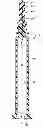
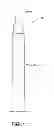


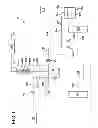
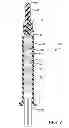
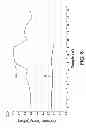
Sources:
- United States Patent and Trademark Office - verify current appl. status at the USPTO↗
Recent applications in this class:
- » 20130143146 2013-06-06
HYBRID POROUS MATERIALS AND MANUFACTURING METHODS AND USES THEREOF - » 20130084714 2013-04-04
Method for forming single-phase multi-element film by PEALD - » 20130074770 2013-03-28
FILM DEPOSITION APPARATUS AND SUBSTRATE PROCESSING APPARATUS - » 20130052445 2013-02-28
COMPOSITE OXIDE FILM AND METHOD FOR PRODUCING THE SAME - » 20130029498 2013-01-31
Method for reducing dielectric constant of film using direct plasma of hydrogen
Recent applications for this Assignee:
- » 20230150727 2023-05-18
Passivation, pH protective or lubricity coating for pharmaceutical package, coating process and apparatus - » 20220244247 2022-08-04
PECVD coated pharmaceutical packaging - » 20220175883 2022-06-09
Pre-filled pharmaceutical package comprising a liquid formulation of a VEGF-antagonist - » 20220161969 2022-05-26
Passivation, pH protective or lubricity coating for pharmaceutical package, coating process and apparatus - » 20210220435 2021-07-22
Pre-filled pharmaceutical package comprising a liquid formulation of a VEGF-antagonist - » 20210128409 2021-05-06
PECVD coated pharmaceutical packaging - » 20210101176 2021-04-08
Vessels, containers, and surfaces coated with water barrier coatings - » 20210077742 2021-03-18
Three-position plungers, film coated plungers and related syringe assemblies - » 20200270025 2020-08-27
Passivation, pH protective or lubricity coating for pharmaceutical package, coating process and apparatus - » 20200046606 2020-02-13
PECVD coated pharmaceutical packaging