No waste rolling paper
US20130056166A1
2013-03-07
13/199,630
2011-09-07
Abstract:
after years of utilizing rolling papers, I had noticed a reoccurring problem. The rolling paper is structurally sound until reaching toward the end, where the tar from the contents will ultimately accumulate and render the paper un-usable. This is a problem especially for those who are trying to save money and at the same time get their money's worth. That is to say the consumer should not have to discard any of the tobacco products they purchased, due to a flaw in the manufacturing of rolling paper.
Assignee:
- AnnMarie Renee Lambert 1 🇺🇸 Martinsville, NJ, United States
Interested in similar patents?
Get notified when new applications in this technology area are published.
Classification:
A24D1/022 » CPC main
Cigars; Cigarettes with special covers Papers for roll-your-own cigarettes
D21F11/00 IPC
Processes for making continuous lengths of paper, or of cardboard, or of wet web for fibre board production, on paper-making machines
Description
CROSS-REFERENCE TO RELATED APPLICATIONS
Not Applicable
STATEMENT REGARDING FEDERALLY SPONSORED RESEARCH OR DEVELOPMENT
Not Applicable
REFERENCE TO SEQUENCING LISTING, A TABLE, OR A COMPUTER PROGRAM LISTING COMPACT DISC APPENDIX
Not Applicable
BACKGROUND OF INVENTION
“No Waste Rolling Paper” is an accessory for tobacco products. There exists a need for a more efficient type of rolling paper, which would cut or completely eliminate the waste caused by the poor structure of current rolling paper.
BRIEF DESCRIPTION OF THE SEVERAL VIEWS OF THE DRAWING
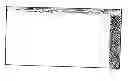
(FIG. 1): Aerial view of the standard size model rolling paper, outside of the box and laid on a flat surface. The shaded area running horizontally along the top represents the glue. The diagonally hatched area running vertically represents the thicker end of the rolling paper.
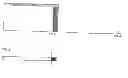
(FIG. 2): Lateral view of the standard size model rolling paper. The thicker side is illustrated by a double line and pointed arrow indicating elevation.
(FIG. 3): Lateral view of a finished “No Waste Rolling Paper” product. A dotted line symbolizes the separation between the mouth barrier and the contents inside the paper. Again, the diagonal hatching represents the thicker paper.
DETAILED DESCRIPTION OF THE INVENTION
a new and improved rolling paper, manufactured in a way that creates a natural barrier between the contents of the rolling paper and the user's mouth. The purpose therein is to create a more efficient type of paper. This is accomplished by increasing the thickness in one portion of the paper (at either end). The actual composition of the paper has not changed, and no additional materials are required in the production process. The user can fill a paper up to the indentation, caused by the thickness, and then proceed to roll as normal. The finished has a gap between the contents of the paper and the user's mouth.
Claims
1. I claim this production method of manufacturing a more efficient type of rolling paper as my invention.
Images & Drawings included:
Sources:
- United States Patent and Trademark Office - verify current appl. status at the USPTO↗
Similar patent applications:
- » 20100206893
Paper roll and waste water enzyme treatment - » 20140175212
Paper Roll Dispenser with Anti-Theft and Anti-Waste Features
Recent applications in this class:
- » 20250120429 2025-04-17
Rolling Paper and Method of Manufacture - » 20250017260 2025-01-16
Plugged Cigarette, Cigarette Shell and Method of Producing a Plugged Cigarette - » 20250017259 2025-01-16
Plugged Cigarette, Cigarette Shell and Method of Producing a Plugged Cigarette - » 20240315316 2024-09-26
Rolly Receipts Smokeable Receipt Paper - » 20240156153 2024-05-16
SMOKING PAPER WITH CUSTOM SHAPE AND SMOKING ARTICLE HAVING THE SMOKING PAPER - » 20240032585 2024-02-01
Hollow leaf tube with flavor capsule - » 20230354883 2023-11-09
SMOKING ROLLING PAPER AND A METHOD FOR PACKAGING THE SAME - » 20230337722 2023-10-26
Rolling papers with discrete adhesive areas - » 20230270156 2023-08-31
Cigarette Rolling Paper System and Method of Use - » 20230217988 2023-07-13
Process for the Manufacture of Bobbins and Booklets of Sheets of Roll-Your-Own Cigarette Paper