Wind-power generation system with over-speed protection and method of operating the same
US20130056985A1
2013-03-07
13/466,493
2012-05-08
✅ Patent granted
US 8,552,577 B2
2013-10-08
-
-
Pedro J Cuevas
Chun-Ming Shih | HDLS IPR Services
2032-06-16
Abstract:
A wind-power generation system with an over-speed protection is disclosed. The system is provided to convert wind energy into mechanical energy by a wind turbine, and mechanical energy is converted into electric energy by the wind turbine driving a generator. Also, electric energy is delivered to a power grid. The wind-power generation system mainly includes an AC crowbar, a fuse, and a DC chopper. The AC crowbar or the DC chopper is provided to consume superfluous energy outputted from the generator, thus providing an over-load operation to brake the wind turbine when the wind turbine operates under a first stage over-speed operation. Finally, the generator is isolated from the generator-side converter by disconnecting the fuse when the wind turbine operates under a second stage over-speed operation.
Inventors:
- Jun CHEN 82 🇨🇳 Shanghai, China
- Yan-Song LU 7 🇨🇳 Shanghai, China
- Xue-Xiao Luo 2 🇨🇳 Shanghai, China
Assignee:
- DELTA ELECTRONICS (SHANGHAI) CO., LTD. 610 🇨🇳 Shanghai, China
Applicant:
Interested in similar patents?
Get notified when new applications in this technology area are published.
Classification:
F03D9/255 » CPC main
Adaptations of wind motors for special use; Combinations of wind motors with apparatus driven thereby; Wind motors specially adapted for installation in particular locations; Wind motors characterised by the driven apparatus the apparatus being an electrical generator connected to an electrical general supply grid; Arrangements therefor
F03D7/0248 » CPC further
Controlling wind motors the wind motors having rotation axis substantially parallel to the air flow entering the rotor for braking by mechanical means acting on the power train
F03D7/0272 » CPC further
Controlling wind motors the wind motors having rotation axis substantially parallel to the air flow entering the rotor by measures acting on the electrical generator
H02H7/067 » CPC further
Emergency protective circuit arrangements specially adapted for specific types of electric machines or apparatus or for sectionalised protection of cable or line systems, and effecting automatic switching in the event of an undesired change from normal working conditions for dynamo-electric generators; for synchronous capacitors on occurrence of a load dump
Y02E10/72 » CPC further
Energy generation through renewable energy sources; Wind energy Wind turbines with rotation axis in wind direction
Y02E10/72 » CPC further
Energy generation through renewable energy sources; Wind energy Wind turbines with rotation axis in wind direction
F03D9/00 IPC
Adaptations of wind motors for special use; Combinations of wind motors with apparatus driven thereby; Wind motors specially adapted for installation in particular locations
H02P9/04 IPC
Arrangements for controlling electric generators for the purpose of obtaining a desired output Control effected upon non-electric prime mover and dependent upon electric output value of the generator
Description
BACKGROUND OF THE INVENTION
1. Field of the Invention
The present invention relates generally to a wind-power generation system and a method of operating the same, and more particularly to a wind-power generation system with an over-speed protection and a method of operating the same.
2. Description of Prior Art
For the most popular wind-power generation system at present, an inverter is usually used to provide electric energy with fixed frequency from the generation system to a power grid. Because the used equipment and electric machinery are often more expensive and difficult to be replaced in a large-scale wind-power generation system, the reliability of the generation system and the inverter becomes more important. In addition, the large-scale wind-power generation system is usually used in bad climatic and environmental conditions, such as a desert region or a coastal region. In these climatic and environmental conditions, changes in wind direction and wind speed are violent and frequent and even storms and typhoons often occur. Accordingly, the wind-power generation system is easily operated under an over-speed condition so that the system is easily damaged due to the generated too-high voltage.
Reference is made to FIG. 1 which is a circuit block diagram of a prior art redundant electrical brake and protection system for electric generators. The prior art redundant electrical brake and protection system for electric generators is published with a publication number (CN101087122A) by State Intellectual Property Office (SIPO). The redundant protection system includes a system wherein two energy dissipation paths are consolidated. One path includes the generator side converter 111; the other path includes the dump load resistor 221. The generator side converter 111 can also be designed to accommodate up to rated output power rating for the generator 101, while the dump load resistor 221 is sized to provide the additional needed braking power.
The wind turbine control unit 190 makes a determination regarding availability of the generator side converter 111. If the generator side converter 111 is not available, the wind turbine control unit 190 provides for engaging the braker unit 105. If the generator side converter 111 is available, a determination is made by the converter control unit 140 regarding the required amount of braking power. If the required braking power is less than the rated output power of the generator 101, the converter control unit 140 provides for dissipating power in the generator side converter 111. If the required braking power is greater than the rated output power of the generator 101, the dump load resistor 221 is operated.
Accordingly, it is desirable to provide a wind-power generation system with an over-speed protection and a method of operating the same to provide an AC crowbar or a DC chopper to consume superfluous energy outputted from the generator, thus providing an over-load operation to brake the wind turbine when the wind turbine operates under an abnormal speed; even a fuse is disconnected to isolate the generator.
SUMMARY OF THE INVENTION
An object of the invention is to provide a wind-power generation system with an over-speed protection to solve the above-mentioned problems.
The wind-power generation system with an over-speed protection provides a wind turbine to convert wind energy into mechanical energy, the wind turbine drives a generator to convert mechanical energy into an electric energy, and the electric energy is delivered to a power grid to provide a grid connection between the wind-power generation system and the power grid. The wind-power generation system includes an AC crowbar, a fuse, a generator-side converter, a DC chopper, a grid-side converter, a grid-connected filter, and a transformer.
The AC crowbar is electrically connected to the generator. The fuse is electrically connected to the AC crowbar and the generator. The generator-side converter is electrically connected to the fuse to provide an AC-to-DC conversion of electric energy. The DC chopper is electrically connected to the generator-side converter. The grid-side converter is electrically connected to the DC shopper to provide a DC-to-AC conversion of electric energy. The grid-connected filter is electrically connected to the grid-side converter to filter electric energy. The transformer is electrically connected to the grid-connected filter and the power grid to convert a voltage level of the electric energy of the grid connection between the wind-power generation system and the power grid.
The AC crowbar or the DC chopper is provided to consume superfluous energy outputted from the generator, thus providing an over-load operation to brake the wind turbine when the wind turbine operates under a first stage over-speed operation; the generator is isolated from the generator-side converter by disconnecting the fuse when the wind turbine operates under a second stage over-speed operation.
Another object of the invention is to provide a method of operating the wind-power generation system with an over-speed protection, steps of operating the wind-power generation system include: the AC crowbar or the DC chopper is provided to consume superfluous energy outputted from the generator, thus providing an over-load operation to brake the wind turbine when the wind turbine operates under a first stage over-speed operation; the generator is isolated from the generator-side converter by disconnecting the fuse when the wind turbine operates under a second stage over-speed operation.
It is to be understood that both the foregoing general description and the following detailed description are exemplary, and are intended to provide further explanation of the invention as claimed. Other advantages and features of the invention will be apparent from the following description, drawings and claims.
BRIEF DESCRIPTION OF DRAWING
The features of the invention believed to be novel are set forth with particularity in the appended claims. The invention itself, however, may be best understood by reference to the following detailed description of the invention, which describes an exemplary embodiment of the invention, taken in conjunction with the accompanying drawings, in which:
FIG. 1 is a circuit block diagram of a prior art redundant electrical brake and protection system for electric generators;
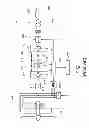
FIG. 2 is a circuit block diagram of a wind-power generation system with an over-speed protection according to the present invention;
FIG. 3 is a circuit block diagram of using a three-phase controllable rectification circuit to achieve a disconnection of a fuse according to the present invention;
FIG. 4 is a circuit block diagram of using a three-phase short-circuit contactor to achieve a disconnection of a fuse according to the present invention;
FIG. 5 is a flowchart of a method of operating a wind-power generation system with an over-speed protection according to the present invention; and
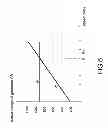
FIG. 6 is a schematic view of showing a relationship between speed and output voltage of a generator according to the present invention.
DETAILED DESCRIPTION OF THE INVENTION
Reference will now be made to the drawing figures to describe the present invention in detail.
Reference is made to FIG. 2 which is a circuit block diagram of a wind-power generation system with an over-speed protection according to the present invention. Note that, the wind-power generation system 10 is a full-power converter wind power system. The wind-power generation system 10 provides a wind turbine (now shown) to convert wind energy into mechanical energy and then the wind turbine drives a generator (not labeled) to convert the mechanical energy into an electric energy. Also, the electric energy is delivered to a power grid (not shown) so that the wind-power generation system 10 is grid-connected to the power grid. In an embodiment, the generator can be a permanent-magnet synchronous generator, but not limited. The wind-power generation system 10 includes an AC crowbar 102, a fuse 104, a generator-side converter 106, a DC chopper 108, a grid-side converter 110, a grid-connected filter 112, and a transformer 114.
The AC crowbar 102 is electrically connected to the generator. The fuse 104 is electrically connected to the AC crowbar 102 and the generator. The generator-side converter 106 is electrically connected to the fuse 104 to provide an AC-to-DC conversion of the electric energy. Essentially, the generator-side converter 106 is an AC-to-DC converter. The DC chopper 108 is electrically connected to the generator-side converter 106. Essentially, the DC chopper 108 is a DC-to-DC converter. The grid-side converter 110 is electrically connected to the DC chopper 108 to provide a DC-to-AC conversion of electric energy. Essentially, the grid-side converter 110 is a DC-to-AC converter. The grid-connected filter 112 is electrically connected to the grid-side converter 110 to filter the electric energy. The transformer 114 is electrically connected to the grid-connected filter 112 and the power grid to convert a voltage level of the grid-connected electric energy between the wind-power generation system and the power grid.
The AC crowbar 102 is provided to consume superfluous energy outputted from the generator, thus providing an over-load operation to brake the wind turbine when the wind turbine operates under a first stage over-speed operation. In an embodiment, the first stage over-speed operation is defined that a speed of the wind turbine is greater than a rated speed thereof, but not limited. Also, the speed of the wind turbine under the first stage over-speed operation can be adjusted according to parameters of various wind turbines produced by the wind turbine manufacturers. Afterward, the DC chopper 108 is provided to consume superfluous energy outputted from the generator, thus providing an over-load operation to brake the wind turbine if the wind turbine still operates under the first stage over-speed operation. Afterward, an invalid protection for the first stage over-speed operation is determined that superfluous energy outputted from the generator cannot be consumed and the wind turbine still operates under the over-load condition after the AC crowbar 102 and the DC chopper 108 are both provided. When the wind turbine operates under a second stage over-speed operation after the invalid protection for the first stage over-speed operation, the generator is isolated from the generator-side converter 106 by disconnecting the fuse 104. In an embodiment, the second stage over-speed operation is defined that a speed of the wind turbine is greater than a rated speed thereof by more than 10%, but not limited. Also, the speed of the wind turbine under the second stage over-speed operation can be adjusted according to parameters of various wind turbines produced by the wind turbine manufacturers. Hence, the fuse 104 is forcibly and devastatingly disconnected to isolate the generator from the generator-side converter 106 when the wind turbine operates under the second stage over-speed operation. Accordingly, the electric energy generated from the generator cannot be provided to the power grid, thus avoiding an abnormal power supply of the wind-power generation system 10 due to the over-speed operation.
Reference is made to FIG. 6 which is a schematic view of showing a relationship between speed and output voltage of a generator according to the present invention. Two major voltage curves—a threshold voltage V1 and a no-load voltage V2, are illustrated in the schematic view. Note that, the threshold voltage V1 represents that an output voltage of the generator reaches to a safe limitation; the no-load voltage V2 represents that an output voltage of the generator under a no-load operation. In the embodiment, the first stage over-speed operation is indicated that the speed of the wind turbine is greater than a first speed S1; wherein the first speed S1 is defined as a speed of the wind turbine when the no-load voltage V2 of the generator is equal to the threshold voltage V1 thereof. In addition, the second stage over-speed operation is indicated that the speed of the wind turbine is greater than a second speed S2. Preferably, the second speed S2 is defined that a speed of the wind turbine is greater than a rated speed thereof by more than 10%, but not limited. Also, the speed of the wind turbine under the second stage over-speed operation can be adjusted according to parameters of various wind turbines produced by the wind turbine manufacturers.
Before the wind turbine operates under the first stage over-speed operation, that is, when an abnormal acceleration of the wind turbine is detected, the blade angle of the wind turbine can be adjusted to reduce the received wind energy by the wind turbine, thus reducing the speed of the wind turbine to a normal speed.
Accordingly, the three above-mentioned ways can be implemented to reduce speed of the wind turbine before the wind turbine operates under the second stage over-speed operation:
-
- 1. The blade angle of the wind turbine is adjusted; 2. The AC crowbar 102 is provided; and 3. The DC chopper 108 is provided.
Note that, the above-mentioned ways are not limited to be used in turn or in all. The sequence and the type of the three ways are adopted according to the practical operation of the wind turbine or the experience of the operators.
Especially to deserve to be mentioned, the three ways of isolating the generator-side converter 106 by disconnecting the fuse 104 when the wind turbine operates under the second stage over-speed operation are described as follows:
-
- 1. By turning on switches of an upper-bridge arm and switches of a lower-bridge arm of the generator-side converter 106 simultaneously to disconnect the fuse 104;
- 2. By shorting the three-phase controllable rectification circuit 20 out to disconnect the fuse 104 (as shown in FIGS. 3); and
- 3. By shorting the three-phase short-circuit contactor 30 out to disconnect the fuse 104 (as shown in FIG. 4).
Various substitutions and modification of disconnecting the fuse 104 are intended to be embraced within the scope of the invention, but the above-mentioned ways are not limited.
Reference is made to FIG. 5 which is a flowchart of a method of operating a wind-power generation system with an over-speed protection according to the present invention. Note that, the wind-power generation system is a full-power converter wind power system, but not limited. The wind-power generation system provides a wind turbine to convert wind energy into mechanical energy and then the wind turbine drives a generator to convert the mechanical energy into electric energy. Also, the electric energy is delivered to a power grid so that the wind-power generation system is grid-connected to the power grid. In an embodiment, the generator can be a permanent-magnet synchronous generator, but not limited. The wind-power generation system 10 includes an AC crowbar, a fuse, a generator-side converter, a DC chopper, a grid-side converter, a grid-connected filter, and a transformer.
The AC crowbar is electrically connected to the generator. The fuse is electrically connected to the AC crowbar and the generator. The generator-side converter is electrically connected to the fuse to provide an AC-to-DC conversion of electric energy. Essentially, the generator-side converter is an AC-to-DC converter. The DC chopper is electrically connected to the generator-side converter. Essentially, the DC chopper is a DC-to-DC converter. The grid-side converter is electrically connected to the DC chopper to provide a DC-to-AC conversion of electric energy. Essentially, the grid-side converter is a DC-to-AC converter. The grid-connected filter is electrically connected to the grid-side converter to filter the electric energy. The transformer is electrically connected to the grid-connected filter and the power grid to convert a voltage level of the electric energy of the grid connection between the wind-power generation system and the power grid.
A method of operating the wind-power generation system with an over-speed protection includes the following steps: First, an AC crowbar or a DC chopper is provided (S100) to consume superfluous energy outputted from the generator, thus providing an over-load operation to brake the wind turbine when the wind turbine operates under a first stage over-speed operation. In particular, the first stage over-speed operation is defined that a speed of the wind turbine is greater than a rated speed thereof, but not limited. Afterward, a protection for the first stage over-speed operation is judged whether invalid or not to occur a second stage over-speed operation (S200). In an embodiment, the second stage over-speed operation is defined that a speed of the wind turbine is greater than a rated speed thereof by more than 10%, but not limited. Also, the speed of the wind turbine under the second stage over-speed operation can be adjusted according to parameters of various wind turbines produced by the wind turbine manufacturers. If the protection for the first stage over-speed operation is valid, namely, the second stage over-speed operation does not occur, the over-speed operation is completed. On the other hand, if the second stage over-speed operation occurs, the fuse is disconnected to isolate the generator from the generator-side converter (S300). That is, the second stage over-speed operation still occurs due to the increased speed of the wind turbine after the AC crowbar and the DC chopper are both provided, the fuse is disconnected to isolate the generator from the generator-side converter. Hence, the fuse is forcibly and devastatingly disconnected to isolate the generator from the generator-side converter when the wind turbine operates under the second stage over-speed operation. Accordingly, the electric energy generated from the generator cannot be provided to the power grid, thus avoiding an abnormal power supply of the wind-power generation system due to the over-speed operation.
Before the wind turbine operates under the first stage over-speed operation, that is, when an abnormal acceleration of the wind turbine is detected, the blade angle of the wind turbine can be adjusted to reduce the received wind energy by the wind turbine, thus reducing the speed of the wind turbine to a normal speed.
Accordingly, the three above-mentioned ways can be implemented to reduce speed of the wind turbine before the wind turbine operates under the second stage over-speed operation:
-
- 1. The blade angle of the wind turbine is adjusted; 2. The AC crowbar 102 is provided; and 3. The DC chopper 108 is provided.
Note that, the above-mentioned ways are not limited to be used in turn or in all. The sequence and the type of the three ways are adopted according to the practical operation of the wind turbine or the experience of the operators.
Especially to deserve to be mentioned, the three ways of isolating the generator-side converter by disconnecting the fuse when the wind turbine operates under the second stage over-speed operation are described as follows:
-
- 1. By turning on switches of an upper-bridge arm and switches of a lower-bridge arm simultaneously to disconnect the fuse;
- 2. By shorting the three-phase controllable rectification circuit out to disconnect the fuse (as shown in FIGS. 3); and
- 3. By shorting the three-phase short-circuit contactor out to disconnect the fuse (as shown in FIG. 4).
Various substitutions and modification of disconnecting the fuse are intended to be embraced within the scope of the invention, but the above-mentioned ways are not limited.
In conclusion, the present invention has following advantages:
-
- 1. Before the wind turbine operates under the first stage over-speed operation, that is, when an abnormal acceleration of the wind turbine is detected, the blade angle of the wind turbine can be adjusted to reduce the received wind energy by the wind turbine, thus reducing the speed of the wind turbine to a normal speed. When the wind turbine operates under the first stage over-speed operation, the AC crowbar or the DC chopper is provided to consume superfluous energy outputted from the generator, thus providing an over-load operation to brake the wind turbine. When the wind turbine operates under the second stage over-speed operation, the fuse is forcibly and devastatingly disconnected by turning on switches of the upper-bridge arm and switches of the lower-bridge arm simultaneously, shorting the three-phase controllable rectification circuit out, or shorting the three-phase short-circuit contactor out, thus reducing the speed of the wind turbine to a normal speed; and
- 2. When the wind turbine is operated under a routine inspection or maintain, the fuse is disconnected to prevent the maintenance personnel from injury or death due to the induced voltage generated from the generator of rotating during the inspection or maintain.
Although the present invention has been described with reference to the preferred embodiment thereof, it will be understood that the invention is not limited to the details thereof. Various substitutions and modifications have been suggested in the foregoing description, and others will occur to those of ordinary skill in the art. Therefore, all such substitutions and modifications are intended to be embraced within the scope of the invention as defined in the appended claims.
Claims
What is claimed is:1. A wind-power generation system with an over-speed protection providing a wind turbine to convert wind energy into mechanical energy, the wind turbine driving a generator to convert the mechanical energy into electric energy, the electric energy delivered to a power grid to provide a grid connection between the wind-power generation system and the power grid; the wind-power generation system comprising:
an AC crowbar electrically connected to the generator;
a fuse electrically connected to the AC crowbar and the generator;
a generator-side converter electrically connected to the fuse to provide an AC-to-DC conversion of electric energy;
a DC chopper electrically connected to the generator-side converter;
a grid-side converter electrically connected to the DC chopper to provide a DC-to-AC conversion of electric energy;
a grid-connected filter electrically connected to the grid-side converter to filter electric energy; and
a transformer electrically connected to the grid-connected filter and the power grid to convert a voltage level of the electric energy of the grid connection between the wind-power generation system and the power grid;
wherein the AC crowbar or the DC chopper is provided to consume superfluous energy outputted from the generator, thus providing an over-load operation to brake the wind turbine when the wind turbine operates under a first stage over-speed operation; the generator is isolated from the generator-side converter by disconnecting the fuse when the wind turbine operates under a second stage over-speed operation.
2. The wind-power generation system of claim 1, wherein the fuse is disconnected by turning on switches of an upper-bridge arm and switches of a lower-bridge arm of the generator-side converter.
3. The wind-power generation system of claim 1, wherein the wind-power generation system further comprises a controllable rectification circuit, the controllable rectification circuit is electrically connected to the fuse and the generator-side converter.
4. The wind-power generation system of claim 3, wherein the fuse is disconnected by shorting the three-phase controllable rectification circuit out.
5. The wind-power generation system of claim 1, wherein the wind-power generation system further comprises a three-phase short-circuit contactor, the three-phase short-circuit contactor is electrically connected to the fuse and the generator-side converter.
6. The wind-power generation system of claim 5, wherein the fuse is disconnected by shorting the three-phase short-circuit contactor.
7. A method of operating the wind-power generation system with an over-speed protection of claim 1, steps of operating the wind-power generation system comprising:
(a) providing the AC crowbar or the DC chopper to consume superfluous energy outputted from the generator, thus providing an over-load operation to brake the wind turbine when the wind turbine operates under a first stage over-speed operation; and
(b) isolating the generator from the generator-side converter by disconnecting the fuse when the wind turbine operates under a second stage over-speed operation.
Images & Drawings included:



Sources:
- United States Patent and Trademark Office - verify current appl. status at the USPTO↗
Recent applications in this class:
- » 20250257714 2025-08-14
SUPPLYING POWER TO AUXILIARY WIND TURBINE EQUIPMENT - » 20240309846 2024-09-19
TURBOEXPANDER ISLANDING OPERATION - » 20230383729 2023-11-30
Turboexpander islanding operation - » 20230160365 2023-05-25
Wind turbine electrical power generating system - » 20210381490 2021-12-09
Air powered electric generator - » 20210140408 2021-05-13
Method for connecting a power transformer to an electrical grid - » 20210131400 2021-05-06
Systems and methods for controlling wind converters - » 20200158085 2020-05-21
POWER CONVERTER FOR FULL CONVERSION WIND TURBINE SYSTEMS - » 20200124027 2020-04-23
WIND TURBINE WITH AN AUXILIARY POWER SUPPLY - » 20200080540 2020-03-12
Wind installation comprising a wind turbine and an airborne wind energy system
Recent applications for this Assignee:
- » 20250279716 2025-09-04
METHOD FOR CONTROLLING POWER CONVERTER AND POWER CONVERTER - » 20250277842 2025-09-04
INSULATION DETECTION APPARATUS AND METHOD, AND ENERGY STORAGE APPARATUS - » 20250253086 2025-08-07
MAGNETIC COMPONENT - » 20250226148 2025-07-10
INTEGRATED TRANSFORMER AND POWER MODULE - » 20250226134 2025-07-10
BOBBIN STRUCTURE, MAGNETIC ELEMENT AND METHOD FOR LEADING OUT COIL - » 20250202381 2025-06-19
POWER SUPPLY SYSTEM - » 20250175070 2025-05-29
POWER SUPPLY CIRCUIT AND CONTROL METHOD - » 20250158531 2025-05-15
ACTIVE CLAMP FLYBACK CONVERTER AND CONTROL METHOD - » 20250149979 2025-05-08
POWER CONVERSION DEVICE AND CONTROL METHOD - » 20250141363 2025-05-01
RECTIFIER MODULE AND TRANSFORMER