Multi-layer flame retardant fabric
US20130115409A2
2013-05-09
12/955,297
2010-11-29
✅ Patent granted
US 8,932,966 B2
2015-01-13
-
-
Jenna Johnson
Fish & Richardson P.C.
2030-11-29
Abstract:
A composite velour fabric garment includes a laminate consisting of an outer woven shell layer, an inner thermal layer of knit construction, and an intermediate layer disposed between and laminated to each of the shell layer and the thermal layer. The outer woven shell layer contains spandex in at least a weft direction for stretch and recovery in a width direction. The knit construction of the inner thermal layer provides stretch in at least a width direction, in harmony with the shell layer, and the inner thermal layer has a raised surface facing inwardly, away from the shell layer. The intermediate layer has controlled air permeability, including zero air permeability.
Inventors:
- Moshe Rock 76 🇺🇸 Brookline, MA, United States
- Jane Hunter 29 🇺🇸 Manassas, VA, United States
- David Costello 28 🇺🇸 Marblehead, MA, United States
- Gadalia Vainer 44 🇺🇸 Melrose, MA, United States
Assignee:
- MMI-IPCO, LLC 36 🇺🇸 Lawrence, MA, United States
- MMI-IPCO 1 🇺🇸 Lawrence, MA, United States
- LLC 1 🇺🇸 Lawrence, MA, United States
Applicant:
Interested in similar patents?
Get notified when new applications in this technology area are published.
Classification:
A41D31/185 » CPC main
Materials specially adapted for outerwear characterised by special function or use; Elastic using layered materials
A41D31/065 » CPC further
Materials specially adapted for outerwear characterised by special function or use; Thermally protective, e.g. insulating using layered materials
A41D31/08 » CPC further
Materials specially adapted for outerwear characterised by special function or use Heat resistant; Fire retardant
A41D31/085 » CPC further
Materials specially adapted for outerwear characterised by special function or use; Heat resistant; Fire retardant using layered materials
A41D31/102 » CPC further
Materials specially adapted for outerwear characterised by special function or use; Impermeable to liquids, e.g. waterproof; Liquid-repellent Waterproof and breathable
B32B7/12 » CPC further
Layered products characterised by the relation between layers; Layered products characterised by the relative orientation of features between layers, or by the relative values of a measurable parameter between layers, i.e. products comprising layers having different physical, chemical or physicochemical properties; Layered products characterised by the interconnection of layers; Interconnection of layers using interposed adhesives or interposed materials with bonding properties
D06N7/0092 » CPC further
Flexible sheet materials not otherwise provided for, e.g. textile threads, filaments, yarns or tow, glued on macromolecular material Non-continuous polymer coating on the fibrous substrate, e.g. plastic dots on fabrics
B32B2038/0024 » CPC further
Ancillary operations in connection with laminating processes; Mechanical treatment, e.g. roughening, deforming, stretching Crushing
B32B5/026 » CPC further
Layered products characterised by the non- homogeneity or physical structure, i.e. comprising a fibrous, filamentary, particulate or foam layer; Layered products characterised by having a layer differing constitutionally or physically in different parts characterised by structural features of a layer Knitted fabric
D06N2205/04 » CPC further
Condition, form or state of the materials Foam
D06N2209/065 » CPC further
Properties of the materials having thermal properties Insulating
D06N2209/067 » CPC further
Properties of the materials having thermal properties Flame resistant, fire resistant
D06N2209/121 » CPC further
Properties of the materials; Permeability or impermeability properties Permeability to gases, adsorption
D06N2209/123 » CPC further
Properties of the materials; Permeability or impermeability properties; Permeability to gases, adsorption Breathable
D06N2209/128 » CPC further
Properties of the materials; Permeability or impermeability properties; Permeability to liquids, absorption Non-permeable
D06N2209/1692 » CPC further
Properties of the materials having other properties Weather resistance
D10B2403/0111 » CPC further
Details of fabric structure established in the fabric forming process; Surface features; Dissimilar front and back faces One hairy surface, e.g. napped or raised
D10B2501/04 » CPC further
Wearing apparel Outerwear; Protective garments
Y10T428/23914 » CPC further
Stock material or miscellaneous articles; Pile or nap type surface or component Interlaminar
Y10T428/23929 » CPC further
Stock material or miscellaneous articles; Pile or nap type surface or component Edge feature or configured or discontinuous surface
Y10T428/23936 » CPC further
Stock material or miscellaneous articles; Pile or nap type surface or component; Edge feature or configured or discontinuous surface Differential pile length or surface
Y10T428/2395 » CPC further
Stock material or miscellaneous articles; Pile or nap type surface or component Nap type surface
Y10T428/23986 » CPC further
Stock material or miscellaneous articles; Pile or nap type surface or component With coating, impregnation, or bond
Y10T442/3008 » CPC further
Fabric [woven, knitted, or nonwoven textile or cloth, etc.]; Woven fabric [i.e., woven strand or strip material] Woven fabric has an elastic quality
Y10T442/3016 » CPC further
Fabric [woven, knitted, or nonwoven textile or cloth, etc.]; Woven fabric [i.e., woven strand or strip material]; Woven fabric has an elastic quality Including a preformed layer other than the elastic woven fabric [e.g., fabric or film or foil or sheet layer, etc.]
Y10T442/3024 » CPC further
Fabric [woven, knitted, or nonwoven textile or cloth, etc.]; Woven fabric [i.e., woven strand or strip material]; Woven fabric has an elastic quality Including elastic strand or strip
Y10T442/3854 » CPC further
Fabric [woven, knitted, or nonwoven textile or cloth, etc.]; Woven fabric [i.e., woven strand or strip material] Woven fabric with a preformed polymeric film or sheet
Y10T442/3976 » CPC further
Fabric [woven, knitted, or nonwoven textile or cloth, etc.]; Woven fabric [i.e., woven strand or strip material] Including strand which is stated to have specific attributes [e.g., heat or fire resistance, chemical or solvent resistance, high absorption for aqueous composition, water solubility, heat shrinkability, etc.]
Y10T442/3984 » CPC further
Fabric [woven, knitted, or nonwoven textile or cloth, etc.]; Woven fabric [i.e., woven strand or strip material]; Including strand which is stated to have specific attributes [e.g., heat or fire resistance, chemical or solvent resistance, high absorption for aqueous composition, water solubility, heat shrinkability, etc.] Strand is other than glass and is heat or fire resistant
Y10T442/45 » CPC further
Fabric [woven, knitted, or nonwoven textile or cloth, etc.]; Knit fabric [i.e., knit strand or strip material] Knit fabric is characterized by a particular or differential knit pattern other than open knit fabric or a fabric in which the strand denier is specified
Y10T442/463 » CPC further
Fabric [woven, knitted, or nonwoven textile or cloth, etc.]; Knit fabric [i.e., knit strand or strip material]; Knit fabric is characterized by a particular or differential knit pattern other than open knit fabric or a fabric in which the strand denier is specified; Including additional strand inserted within knit fabric Warp knit insert strand
D04B1/24 IPC
Weft knitting processes for the production of fabrics or articles not dependent on the use of particular machines; Fabrics or articles defined by such processes specially adapted for knitting goods of particular configuration wearing apparel
D04B1/14 IPC
Weft knitting processes for the production of fabrics or articles not dependent on the use of particular machines; Fabrics or articles defined by such processes Other fabrics or articles characterised primarily by the use of particular thread materials
D04B1/02 IPC
Weft knitting processes for the production of fabrics or articles not dependent on the use of particular machines; Fabrics or articles defined by such processes Pile fabrics or articles having similar surface features
B32B27/12 » CPC further
Layered products comprising synthetic resin next to a fibrous or filamentary layer
B32B27/36 » CPC further
Layered products comprising synthetic resin comprising polyesters
D04B1/04 » CPC further
Weft knitting processes for the production of fabrics or articles not dependent on the use of particular machines; Fabrics or articles defined by such processes; Pile fabrics or articles having similar surface features characterised by thread material
B32B27/322 » CPC further
Layered products comprising synthetic resin comprising polyolefins comprising halogenated polyolefins, e.g. PTFE
B32B27/40 » CPC further
Layered products comprising synthetic resin comprising polyurethanes
B32B5/142 » CPC further
Layered products characterised by the non- homogeneity or physical structure, i.e. comprising a fibrous, filamentary, particulate or foam layer; Layered products characterised by having a layer differing constitutionally or physically in different parts characterised by a layer differing constitutionally or physically in different parts, e.g. denser near its faces Variation across the area of the layer
B32B37/1284 » CPC further
Methods or apparatus for laminating, e.g. by curing or by ultrasonic bonding characterised by using adhesives Application of adhesive
B32B2038/0028 » CPC further
Ancillary operations in connection with laminating processes; Mechanical treatment, e.g. roughening, deforming, stretching Stretching, elongating
A41D2500/10 » CPC further
Materials for garments Knitted
B32B2250/03 » CPC further
Layers arrangement 3 layers
B32B2262/0269 » CPC further
Composition or structural features of fibres which form a fibrous or filamentary layer or are present as additives; Synthetic macromolecular fibres; Polyamide fibres Aromatic polyamide fibres
B32B2262/0292 » CPC further
Composition or structural features of fibres which form a fibrous or filamentary layer or are present as additives; Synthetic macromolecular fibres Polyurethane fibres
B32B2262/14 » CPC further
Composition or structural features of fibres which form a fibrous or filamentary layer or are present as additives Mixture of at least two fibres made of different materials
B32B2307/21 » CPC further
Properties of the layers or laminate having particular electrical or magnetic properties, e.g. piezoelectric Anti-static
B32B2307/304 » CPC further
Properties of the layers or laminate having particular thermal properties Insulating
B32B2307/3065 » CPC further
Properties of the layers or laminate having particular thermal properties; Resistant to heat Flame resistant or retardant, fire resistant or retardant
B32B2307/51 » CPC further
Properties of the layers or laminate having particular mechanical properties Elastic
B32B2307/724 » CPC further
Properties of the layers or laminate; Other properties Permeability to gases, adsorption
B32B2307/73 » CPC further
Properties of the layers or laminate; Other properties Hydrophobic
B32B2437/00 » CPC further
Clothing
B32B2459/00 » CPC further
Nets, e.g. camouflage nets
B32B2571/00 » CPC further
Protective equipment
D06N7/00 » CPC further
Flexible sheet materials not otherwise provided for, e.g. textile threads, filaments, yarns or tow, glued on macromolecular material
D10B2331/021 » CPC further
Fibres made from polymers obtained otherwise than by reactions only involving carbon-to-carbon unsaturated bonds, e.g. polycondensation products polyamides aromatic polyamides, e.g. aramides
Y10S428/92 » CPC further
Stock material or miscellaneous articles Fire or heat protection feature
Y10S428/921 » CPC further
Stock material or miscellaneous articles; Fire or heat protection feature Fire or flameproofing
B32B5/26 » CPC further
Layered products characterised by the non- homogeneity or physical structure, i.e. comprising a fibrous, filamentary, particulate or foam layer; Layered products characterised by having a layer differing constitutionally or physically in different parts characterised by the presence of two or more layers which are next to each other and are fibrous, filamentary, formed of particles or foamed one layer being a fibrous or filamentary layer another layer also being fibrous or filamentary
B32B5/08 » CPC further
Layered products characterised by the non- homogeneity or physical structure, i.e. comprising a fibrous, filamentary, particulate or foam layer; Layered products characterised by having a layer differing constitutionally or physically in different parts characterised by structural features of a layer the fibres or filaments of a layer being of different substances, e.g. conjugate fibres, mixture of different fibres
A41D27/00 IPC
Details of garments or of their making
B32B33/00 IPC
Layered products characterised by particular properties or particular surface features, e.g. particular surface coatings; Layered products designed for particular purposes not covered by another single class
D04B1/10 IPC
Weft knitting processes for the production of fabrics or articles not dependent on the use of particular machines; Fabrics or articles defined by such processes Patterned fabrics or articles
B32B5/04 » CPC main
Layered products characterised by the non- homogeneity or physical structure, i.e. comprising a fibrous, filamentary, particulate or foam layer; Layered products characterised by having a layer differing constitutionally or physically in different parts characterised by structural features of a layer characterised by a layer being specifically extensible by reason of its structure or arrangement, e.g. by reason of the chemical nature of the fibres or filaments
B32B5/024 » CPC further
Layered products characterised by the non- homogeneity or physical structure, i.e. comprising a fibrous, filamentary, particulate or foam layer; Layered products characterised by having a layer differing constitutionally or physically in different parts characterised by structural features of a layer Woven fabric
B32B2262/0276 » CPC further
Composition or structural features of fibres which form a fibrous or filamentary layer or are present as additives; Synthetic macromolecular fibres Polyester fibres
A41D31/02 » CPC further
Materials specially adapted for outerwear Layered materials
A41D31/00 IPC
Materials specially adapted for outerwear
B32B5/02 IPC
Layered products characterised by the non- homogeneity or physical structure, i.e. comprising a fibrous, filamentary, particulate or foam layer; Layered products characterised by having a layer differing constitutionally or physically in different parts characterised by structural features of a layer
B32B5/14 IPC
Layered products characterised by the non- homogeneity or physical structure, i.e. comprising a fibrous, filamentary, particulate or foam layer; Layered products characterised by having a layer differing constitutionally or physically in different parts characterised by a layer differing constitutionally or physically in different parts, e.g. denser near its faces
B32B27/32 IPC
Layered products comprising synthetic resin comprising polyolefins
B32B37/12 IPC
Methods or apparatus for laminating, e.g. by curing or by ultrasonic bonding characterised by using adhesives
B32B38/00 IPC
Ancillary operations in connection with laminating processes
Description
CROSS-REFERENCE TO RELATED APPLICATIONS
This application is a continuation of U.S. application Ser. No. 11/757,031, filed Jun. 1, 2007, now pending, which is a division of U.S. application Ser. No. 11/001,893, filed Dec. 1, 2004, now U.S. Pat. No. 7,776,421, which is a continuation-in-part of U.S. application Ser. No. 10/047,939, filed Oct. 23, 2001, now U.S. Pat. No. 6,927,182, issued Aug. 9, 2005. The entire disclosures of all of these applications, as well as the complete disclosures of U.S. application Ser. Nos. 10/650,098; 09/378,344; 60/098,254; 09/863,852; and 10/341,309, are incorporated herein by reference.
TECHNICAL FIELD
This invention relates to multi-layer composite fabrics.
BACKGROUND
Multi-layer composite fabrics are achieved by joining together one or more layers and materials in a fabric body for the purpose of attaining desirable combinations of properties that cannot be provided by any of the materials or layers alone. Laminated multi-layer composites (e.g., those having multiple layers joined, e.g., by adhesive) are frequently formed to enhance thermal resistance performance. Other properties can also be enhanced through multi-layer composite fabrics.
SUMMARY
According to the invention, a composite velour fabric garment including a laminate comprises: an outer woven shell layer comprising spandex in at least a weft direction for stretch and recovery in a width direction; an inner thermal layer of knit construction for stretch in at least a width direction, in harmony with the shell layer, with a raised surface facing inwardly, away from the shell layer; and an intermediate layer having controlled air permeability (including zero air permeability), the intermediate layer being disposed between and laminated to each of the shell layer and the thermal layer.
Preferred embodiments of the invention may include one or more of the following additional features. The shell layer comprises spandex in warp direction and in weft direction for stretch and recovery in both length direction and width direction, and the inner thermal layer of knit construction has stretch in both length direction and in width direction, in harmony with the shell layer. The spandex of the outer shell layer comprises one or more forms of spandex selected from the group consisting of: bare spandex filaments, covered spandex, and air tuck spandex. The garment has good stretch and recovery. The garment has good flame retardant properties. Preferably, the garment has high insulation to thermal and radiant heat. The outer shell layer comprises flame retardant material having an L.O.I. greater than about 28. Preferably the outer shell layer comprises flame retardant fibers, e.g. formed of one or more materials selected from the group consisting of: aramides, melamines, FR polyesters, inherent flame retardant materials, and blends thereof. The inner thermal layer comprises flame retardant material having an L.O.I. greater than about 28. The inner thermal layer comprises loop yarns and stitch yarns comprising flame retardant materials having an L.O.I. greater than about 28. Preferably, the loop yarns and the stitch yarns comprising flame retardant material serve to enhance heat and fire protection of the garment against radiant heat and flame. The inner thermal layer defines a multiplicity of predetermined discrete regions of contrasting insulative capacity positioned about the garment surface, by application of body mapping principals in an arrangement having correlation to insulative requirements of corresponding regions of a wearer's body. Preferably, the multiplicity of discrete regions of contrasting insulative capacity positioned about the garment comprise one or more selected regions of relatively lower insulation performance and relatively enhanced permeability created through engineering knitting technology, where the selected regions have no loop or low loop relative to surrounding regions of relatively higher loop and relatively higher insulation performance, or, alternatively, the multiplicity of discrete regions of contrasting insulative capacity positioned about the garment comprise one or more selected regions of relatively lower insulation performance and relatively enhanced permeability created through engineering printing technology, where the selected regions have a coating of binder material causing the selected regions to resist raising relative to surrounding relatively raised regions of relatively higher insulation performance. The intermediate layer having predetermined air permeability is selected from the group consisting of: foamed adhesive in a discontinuous film, adhesive in a continuous film mechanically altered by a process of crushing and stretching, breathable adhesive in a discontinuous film, and a membrane mechanically altered by a process of stretching and perforation. The breathable adhesive comprises a flame retardant polymer. Preferably, the flame retardant polymer comprises a polymeric material having an L.O.I. at or above about 28. The flame retardant polymer comprises one or more flame retarding additives. The intermediate layer has controlled air permeability in the range of about 0 CFM to about 100 CFM, and preferably in the range of about 3 CFM to about 10 CFM. The intermediate layer having predetermined air permeability has zero air permeability. The intermediate layer comprises a full film breathable membrane. Preferably, the full film breathable membrane of the intermediate layer is formed of a material selected from the group consisting of: polyurethane, polyetherester, EPTFE (stretchable poly tetra fluoro ethylene), and SPM (selective permeable membrane). One or more regions of an outer surface of the outer shell layer has a continuous or a noncontinuous coating comprising an abrading resistant material. One or more regions of an outer surface of the outer shell layer has a continuous or a noncontinuous coating comprising a pilling resistant material. One or more regions of an outer surface of the outer shell layer has a continuous or a noncontinuous coating comprising a water-repelling material. The outer shell layer is formed of a material having anti-static properties. One or more regions of the garment has good hydrostatic resistance. One or more regions of the garment has high moisture vapor transmission in static conditions and in dynamic conditions. One or more regions of the outer surface of the outer shell layer has a non-continuous or continuous coating comprising discrete coating segments of coating material applied to bind individual yarn fibers together for enhanced abrasion resistance performance The discrete coating segments of coating materials comprise discrete dots. One or more regions of an outer surface region of the outer shell layer has a non-continuous coating of binder material adhered at least at interlacing intersections for enhanced durability performance against pilling or fraying. Adhering binder material is limited in a manner to substantially avoid restriction of air permeability through the composite velour fabric garment.
The details of one or more embodiments of the invention are set forth in the accompanying drawings and the description below. Other features, objects, and advantages of the invention will be apparent from the description and drawings, and from the claims
DESCRIPTION OF DRAWINGS
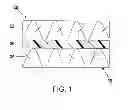
FIG. 1 is a cross-sectional view of a multi-layer composite fabric of the invention.
FIG. 2 is a perspective view of another embodiment of a multi-layer composite fabric of the invention having a pattern of raised surface regions formed on the inner surface of the inner thermal fabric layer.
FIG. 3 is a perspective view of another embodiment of a multi-layer composite fabric of the invention having regions of no loop or low loop, or otherwise unraised surface, disposed selectively about a raised surface formed on the inner surface of the inner thermal fabric layer.
Like reference symbols in the various drawings indicate like elements.
DETAILED DESCRIPTION
Referring to FIG. 1, a multi-layer composite fabric laminate 20 of the invention provides flame retardance and improved dynamic insulation performance in a velour fabric article. The composite fabric laminate 20 consists of an outer shell 22 formed, e.g., of woven fabric, and an inner thermal layer 24 formed, e.g., of knit construction, both being laminated to an intermediate, air-permeable or air impermeable barrier layer 26 disposed therebetween. The barrier layer is formed, e.g., of a discontinuous or continuous member or layer of adhesive to permit controlled air permeability (including zero air permeability). The components of the composite fabric laminate are formed of flame retardant materials and/or additives to provide flame retardant properties. In fact, the laminate is preferably almost self-extinguishing. In addition, the composite fabric laminate 20 has the properties of high moisture vapor transmission in static and dynamic conditions, good stretch and recovery, good hydrostatic resistance, e.g. as determined in accordance with ASTM D-751, i.e. by pressure application by a rising column of water, the complete disclosure of which test method is incorporated herein by reference, and high insulation to thermal and radiant heat.
Woven Outer Shell (22)
In preferred embodiments, the woven outer shell 22 contains spandex in the warp and weft directions, for two-way stretch, i.e. in the length and width directions. Alternatively, the shell may contain spandex only in the weft direction, for one-way stretch, i.e. mainly in the width direction. The spandex contained by the stretchable woven fabric shell may be in the form of bare spandex filaments, covered spandex, air tuck spandex, or as otherwise suited to the fabric construction. The woven fabric shell is thus provided with characteristics of good stretch and recovery. It may also have the characteristics of high abrasion resistance, e.g. as determined in accordance with ASTM D-3884; high pilling resistance, e.g. as determined in accordance with ASTM D-3512; very good water repellence, e.g. as determined in accordance with AATCC 22-1980; and good antistatic properties. The complete disclosures of all of these test methods are enclosed herein by reference. Methods and procedures for achieving desired levels of abrasion resistance and pilling resistance according to the invention are described, e.g., in U.S. patent application Ser. No. 10/700,405, filed Nov. 4, 2003; U.S. Provisional Patent Application No. 60/493,275, filed Aug. 7, 2003; and U.S. patent application Ser. No. 10/911,855, Aug. 5, 2004, the complete disclosures of all of which are incorporated herein by reference.
The woven fabric shell 22 may also be formed of, and/or incorporate, fibers of flame retardant materials, such as aramides, e.g. as sold under the trademark NOMEX® by E.I. du Pont de Nemours and Co., Inc., of Wilmington, Del., or blends of fibers, such as NOMEX® (aramide fibers), KEVLAR® (para-aramide fibers, also available from E.I. du Pont), and anti-static fibers. As used herein, the term flame-retardant refers to fabrics and other materials that, due to chemical treatment or inherent properties, do not ignite readily or propagate flaming under small-to-moderate fire exposure. See, e.g., Fire Protection Handbook (17th Edition), National Fire Protection Association, Quincy, Mass., 1992. (p. 3-174), the complete disclosure of which is incorporated herein by reference.
Inner Thermal Fabric Layer (24)
The inner thermal layer 24 is formed of a knit construction with an inner surface 28 facing the wearer's body. The sinker loop yarns of the inner surface may be raised and finished, e.g. in velour or shearling, or as terry loop. The knit construction of the inner thermal layer provides two-way stretch, i.e. in the length and width directions or, alternatively, it may only provide for one-way stretch, i.e. mainly in the width direction. In either case, the stretch and recovery of the inner thermal layer 24 and the outer shell 22 are in harmony, i.e., by design, a two-way stretch outer shell will be laminated with a two-way stretch inner thermal layer and a one-way stretch outer shell will be laminated with a one-way stretch inner thermal layer.
The inner thermal fabric layer 24 may also be formed of, and/or incorporate, fibers of flame retardant materials, such as aramides, e.g. as sold under the trademark NOMEX® by E.I. du Pont de Nemours and Co., Inc., of Wilmington, Del. or under the trademark PBI® by Celanese Advanced Materials, Inc. of Charlotte, N.C.; melamine e.g. as sold under the trademark BASOFIL® by Basofil Fibers, LLC of Charlotte, N.C.; FR (“flame retardant”) polyester, or other suitable materials. The pile height of the raised fibers of inner surface 28 determines the insulation properties of the composite laminate fabric 20, and, in the case of flame retardant material being incorporated in the loop yarn and stitch yarn, the height will also determine the level of radiant heat and fire protection provided against radiant heat and flame.
Referring to FIG. 2, in another embodiment of a multi-layer composite fabric laminate 30, the sinker loop construction of inner surface 30 or the inner thermal fabric layer 32 may have the form of a pattern, such as grid, box, etc., selected to generate a channeling effect, e.g. as described in U.S. application Ser. No. 10/047,939, filed Oct. 23, 2001, the complete disclosure of which is incorporated herein by reference. The resulting fabric has relatively reduced weight but still maintains a relatively high level of thermal and radiant heat insulation.
Referring to FIG. 3, in still another embodiment of a multi-layer composite fabric laminate 40, the inner surface 42 of the inner thermal fabric layer 44 may have regions 46 of low loop or no loop, or otherwise remaining unraised, disposed among relatively raised regions 48. The arrangement of the respective regions 46, 48 is determined according to principles of body mapping, with the regions 46 of low loop or no loop being positioned to generally overlie surfaces of the wearer's body requiring relatively low insulation and relatively high air permeability, e.g. in the wearer's armpit area, and raised regions 48 of surface 42 being positioned to generally overlie surfaces of the wearer's body requiring relatively more insulation and relatively less permeability. These body mapping arrangements may be achieved, e.g., through engineering knitting, where selected regions 46 or low loop or no loop are formed (as described, e.g., in U.S. Provisional Application No. 60/582,674, filed Jun. 24, 2004; in U.S. Provisional Application No. 60/605,563, filed Aug. 30, 2004; and in U.S. Provisional Application No. 60/626,191, filed Nov. 9, 2004, the complete disclosures of all of which are incorporated herein by reference). Alternatively, the mapping arrangements may be achieved, e.g., through engineering printing technology, where selected regions 46 requiring relatively less insulation and more permeability are coated with a binder material to cause the regions to resist raising (as described in U.S. Provisional Application No. 60/493,275, filed Aug. 7, 2003, in U.S. application Ser. No. 10/911,855, filed Aug. 5, 2004, and in U.S. Provisional Application No. 60/626,027, filed Nov. 8, 2004, the complete disclosures of all of which are incorporated herein by reference).
Intermediate Breathable Barrier Layer (26)
The intermediate barrier layer 26 importantly provides controlled air permeability (including zero permeability), e.g. in the range of about 0 CFM to about 100 CFM, and preferably in the range of about 3 CFM to about 10 CFM, as determined in accordance with ASTM D-737, the complete disclosure of which is incorporated herein by reference. The controlled air permeability of the breathable film serves to enhance the comfort level afforded to the wearer in dynamic conditions, where permeation by ambient air cools down the wearer by reducing the level of moisture vapor in the micro climate between the outer shell fabric 22 and the wearer's skin, and enhances the cooling down effect by increasing the heat of evaporation and convection heat loss.
The breathable intermediate barrier may have the form of a non-continuous, breathable film, or it may have the form of a non-continuous adhesive layer formed without a film, or it may have the form of an adhesive layer formed as a full layer, without a film, which is subsequently crushed to create a non-continuous layer. Methods and materials for forming a typical breathable intermediate barrier suitable for use in a composite fabric laminate 20 of the invention are described, e.g., in U.S. patent application Ser. No. 10/650,098, filed Aug. 25, 2003, the complete disclosure of which is incorporated herein by reference. The intermediate barrier, whether non-continuous film or adhesive, may also have flame retardant properties provided by selection of flame retardant polymeric materials having a Limiting Oxygen Index (“L.O.I.”) over 28, and/or by selection of flame retardant additives.
In other embodiments, e.g. where the fabric is intended for use, e.g., by firefighters or helicopter crews performing emergency rescues above or in bodies of water, the intermediate barrier may be formed of a full film breathable membrane formed of a material such as polyurethane, polyetherester, EPTFE (stretchable poly tetra fluoro ethylene), SPM (selective permeable membrane), etc. In such cases, the intermediate barrier may be impermeable, with controlled air permeability of 0 CFM in both static and dynamic conditions.
A number of embodiments of the invention have been described. Nevertheless, it will be understood that various modifications may be made without departing from the spirit and scope of the invention.
Claims
What is claimed is:1-34. (canceled)
2. (canceled)
3. (canceled)
4. (canceled)
5. (canceled)
6. (canceled)
7. (canceled)
8. (canceled)
9. (canceled)
10. (canceled)
11. (canceled)
12. (canceled)
13. (canceled)
14. (canceled)
15. (canceled)
16. (canceled)
17. (canceled)
18. (canceled)
19. (canceled)
20. (canceled)
21. (canceled)
22. (canceled)
23. (canceled)
24. (canceled)
25. (canceled)
26. (canceled)
27. (canceled)
28. (canceled)
29. (canceled)
30. (canceled)
31. (canceled)
32. (canceled)
33. (canceled)
34. (canceled)
35. A fabric of plaited knit construction comprising an inner fabric layer defining a first surface and an outer fabric layer defining a second surface, the inner and outer fabric layers being distinct and separate, yet integrated with one another,
the first surface being a raised surface comprising regions of low loop and/or no loop disposed among one or more relatively raised regions, said regions of low loop and/or no loop being spaced apart and isolated from each other by the relatively raised regions, the first surface comprising synthetic yarn fibers rendered hydrophilic and being configured to face a body surface of a wearer, and
the second surface opposite of the first surface, the second surface formed of a material selected from the group consisting of one or more moisture absorbent materials, synthetic fibers rendered hydrophilic, and the combination thereof.
36. The fabric of claim 35, wherein the fabric is configured to be incorporated in a garment, and wherein the regions of low loop and/or no loop are positioned to generally overlie surfaces of the wearer's body requiring relatively low insulation, and the relatively raised regions are positioned to generally overlie surfaces of the wearer's body requiring relatively more insulation.
37. The fabric of claim 35, wherein the fabric is incorporated as an inner thermal fabric layer in a composite fabric laminate.
38. The fabric of claim 35, wherein the fabric provides stretch in at least the width direction.
39. The fabric of claim 35, wherein the fabric provides two-way stretch.
40. The fabric of claim 35, wherein the fabric provides one-way stretch.
41. The fabric of claim 40, wherein the fabric provides one-way stretch in the width direction.
42. The fabric of claim 35, wherein the one or more relatively raised regions comprise sinker loop yarns finished as velour, shearling, or terry loop.
43. The fabric of claim 35, wherein the fabric is formed of synthetic fibers.
44. The fabric of claim 43, wherein the synthetic fibers comprise polyester fibers.
45. The fabric of claim 35, wherein the fabric has high insulation to thermal and radiant heat.
46. The fabric of claim 35, wherein the fabric comprises flame retardant material.
47. The fabric of claim 46, wherein the flame retardant material has an L.O.I. of greater than about 28.
48. The fabric of claim 46, wherein the flame retardant material comprises flame retardant fibers.
49. The fabric of claim 48, wherein the flame retardant fibers are formed of one or more materials selected from the group consisting of: aramids, melamines, FR polyesters, inherent flame retardant materials, and blends thereof.
50. The fabric of claim 46, wherein the fabric comprises loop yarns and/or stitch yarns comprising the flame retardant material.
51. The fabric of claim 50, wherein the loop yarns and/or the stitch yarns comprising the flame retardant material serve to enhance heat and fire protection of the garment against radiant heat and flame.
52. The fabric of claim 35, the regions of low loop or no loop being coated with a binder material to cause the regions low loop or no loop to resist raising relative to surrounding relatively raised regions.
53. A fabric of plaited knit construction comprising an inner fabric layer defining a first surface and an outer fabric layer defining a second surface, the inner and outer fabric layers being distinct and separate, yet integrated with one another,
the first surface being a raised surface comprising discrete pocket regions being spaced apart and isolated from each other by one or more regions of raised fibers, the first surface comprising synthetic yarn fibers rendered hydrophilic and being configured to face a body surface of a wearer, and
the second surface opposite of the first surface, the second surface formed of a material selected from the group consisting of one or more moisture absorbent materials, synthetic fibers rendered hydrophilic, and the combination thereof.
54. The fabric of claim 53, wherein the pocket regions consist of regions of low loop or no loop.
55. The fabric of claim 53, wherein the fabric has plaited knit construction with terry sinker loop.
56. The fabric of claim 53, wherein the fabric has stretch at least in the width direction.
57. The fabric of claim 35 or claim 53, wherein the second surface is a smooth surface free of raised regions.
Images & Drawings included:


Sources:
- United States Patent and Trademark Office - verify current appl. status at the USPTO↗
Similar patent applications:
- » 20050097652
Multi-layer flame retardant fabric - » 20070234463
Multi-layer flame retardant fabric - » 20090089912
Multi-layer flame retardant fabric - » 20110081517
Multi-layer flame retardant fabric
Recent applications for this Assignee:
- » 20180338563 2018-11-29
Three-dimensional channeled fabric structure for garments and/or footwear - » 20140115783 2014-05-01
THERMAL BLANKETS - » 20130196109 2013-08-01
Insulated Composite Fabric - » 20130183495 2013-07-18
Antimicrobial Fabrics - » 20130183480 2013-07-18
Fabrics Containing Multi-Groove Fibers - » 20130180056 2013-07-18
BLANKET FOR HEALTH CARE USE - » 20130180027 2013-07-18
STRETCHABLE FABRICS AND PROTECTIVE GLOVES FORMED THEREOF, INCLUDING WITH TOUCH SCREEN COMPATIBILITY - » 20130078415 2013-03-28
Temperature Responsive Smart Textile - » 20120260422 2012-10-18
THERMAL BLANKETS - » 20120210481 2012-08-23
Advanced engineered garment