Exhaust gas purification filter, and method for producing same
US20130171036A1
2013-07-04
13/822,243
2011-09-22
✅ Patent granted
US 9,238,197 B2
2016-01-19
WO; PCT/JP2011/071588; 20110922
WO; WO2012/046577; 20120412
Tom P Duong
Westerman, Hattori, Daniels & Adrian, LLP
2032-04-20
Abstract:
Provided are an exhaust gas purification filter having a high particulate matter (PM) combustion efficiency, a low coefficient of thermal expansion, and superior thermal resistance and a method for producing the same. An exhaust gas purification filter is formed by sintering columnar aluminum titanate particles whose surfaces have a catalyst material deposited thereon and which have an average aspect ratio (=number average major-axis length/number average minor-axis length) of 1.3 or more, wherein a catalyst made from the catalyst material by thermal treatment during the sintering is supported on the surface of the aluminum titanate.
Inventors:
- Hiroyoshi Mori 4 🇯🇵 Tokushima-city, Japan
- Takahiro Mishima 7 🇯🇵 Tokushima-city, Japan
- Masaaki Fukuda 1 🇯🇵 Tokushima-city, Japan
- Sachio Fukuoka 1 🇯🇵 Tokushima-city, Japan
- Takahiro Mishima 4 🇯🇵 Tokushima, Japan
- Hiroyoshi Mori 9 🇯🇵 Tokushima, Japan
- Masaaki Fukuda 1 🇯🇵 Tokushima, Japan
- Sachio Fukuoka 1 🇯🇵 Tokushima, Japan
Assignee:
- OTSUKA CHEMICAL CO., LTD. 32 🇯🇵 Osaka-city, Osaka, Japan
- OTSUKA CHEMICAL CO., LTD. 29 🇯🇵 Osaka-shi, Japan
Applicant:
Interested in similar patents?
Get notified when new applications in this technology area are published.
Classification:
B01J37/08 » CPC further
Processes, in general, for preparing catalysts; Processes, in general, for activation of catalysts Heat treatment
B01J21/16 » CPC further
Catalysts comprising the elements, oxides, or hydroxides of magnesium, boron, aluminium, carbon, silicon, titanium, zirconium, or hafnium Clays or other mineral silicates
B01J21/066 » CPC further
Catalysts comprising the elements, oxides, or hydroxides of magnesium, boron, aluminium, carbon, silicon, titanium, zirconium, or hafnium; Silicon, titanium, zirconium or hafnium; Oxides or hydroxides thereof Zirconium or hafnium; Oxides or hydroxides thereof
C04B2235/96 » CPC further
Aspects relating to ceramic starting mixtures or sintered ceramic products; Aspects relating to sintered or melt-casted ceramic products Properties of ceramic products, e.g. mechanical properties such as strength, toughness, wear resistance
B01J35/04 » CPC further
Catalysts, in general, characterised by their form or physical properties; Solids Foraminous structures, sieves, grids, honeycombs
B01J35/002 » CPC further
Catalysts, in general, characterised by their form or physical properties Catalysts characterised by their physical properties
B01J37/0009 » CPC further
Processes, in general, for preparing catalysts; Processes, in general, for activation of catalysts Use of binding agents; Moulding; Pressing; Powdering; Granulating; Addition of materials ameliorating the mechanical properties of the product catalyst
C01P2002/72 » CPC further
Crystal-structural characteristics defined by measured X-ray, neutron or electron diffraction data by d-values or two theta-values, e.g. as X-ray diagram
B01J35/00 IPC
Catalysts, in general, characterised by their form or physical properties
B01J21/063 » CPC further
Catalysts comprising the elements, oxides, or hydroxides of magnesium, boron, aluminium, carbon, silicon, titanium, zirconium, or hafnium; Silicon, titanium, zirconium or hafnium; Oxides or hydroxides thereof Titanium; Oxides or hydroxides thereof
B01J23/02 » CPC further
Catalysts comprising metals or metal oxides or hydroxides, not provided for in group of the alkali- or alkaline earth metals or beryllium
B01J35/0006 » CPC further
Catalysts, in general, characterised by their form or physical properties Catalysts containing parts with different compositions
B01J37/00 IPC
Processes, in general, for preparing catalysts; Processes, in general, for activation of catalysts
C01G23/003 » CPC further
Compounds of titanium Titanates
B01D2255/20707 » CPC further
Catalysts; Metals or compounds thereof; Transition metals Titanium
B01D2255/20715 » CPC further
Catalysts; Metals or compounds thereof; Transition metals Zirconium
B01D2255/30 » CPC further
Catalysts Silica
B01D2255/915 » CPC further
Catalysts; Physical characteristics of catalysts Catalyst supported on particulate filters
B01D2258/012 » CPC further
Sources of waste gases; Engine exhaust gases Diesel engines and lean burn gasoline engines
C01P2004/03 » CPC further
Particle morphology depicted by an image obtained by SEM
C01P2004/12 » CPC further
Particle morphology extending in one dimension, e.g. needle-like with a cylindrical shape
C01P2004/54 » CPC further
Particle morphology Particles characterised by their aspect ratio, i.e. the ratio of sizes in the longest to the shortest dimension
C01P2004/61 » CPC further
Particle morphology; Particles characterised by their size Micrometer sized, i.e. from 1-100 micrometer
C04B2235/3201 » CPC further
Aspects relating to ceramic starting mixtures or sintered ceramic products; Composition of constituents of the starting material or of secondary phases of the final product; Constituents and secondary phases not being of a fibrous nature; Metal oxides, mixed metal oxides, or oxide-forming salts thereof, e.g. carbonates, nitrates, (oxy)hydroxides, chlorides Alkali metal oxides or oxide-forming salts thereof
C04B2235/3206 » CPC further
Aspects relating to ceramic starting mixtures or sintered ceramic products; Composition of constituents of the starting material or of secondary phases of the final product; Constituents and secondary phases not being of a fibrous nature; Metal oxides, mixed metal oxides, or oxide-forming salts thereof, e.g. carbonates, nitrates, (oxy)hydroxides, chlorides; Alkaline earth oxides or oxide forming salts thereof, e.g. beryllium oxide Magnesium oxides or oxide-forming salts thereof
C04B2235/3213 » CPC further
Aspects relating to ceramic starting mixtures or sintered ceramic products; Composition of constituents of the starting material or of secondary phases of the final product; Constituents and secondary phases not being of a fibrous nature; Metal oxides, mixed metal oxides, or oxide-forming salts thereof, e.g. carbonates, nitrates, (oxy)hydroxides, chlorides; Alkaline earth oxides or oxide forming salts thereof, e.g. beryllium oxide Strontium oxides or oxide-forming salts thereof
C04B2235/3217 » CPC further
Aspects relating to ceramic starting mixtures or sintered ceramic products; Composition of constituents of the starting material or of secondary phases of the final product; Constituents and secondary phases not being of a fibrous nature; Metal oxides, mixed metal oxides, or oxide-forming salts thereof, e.g. carbonates, nitrates, (oxy)hydroxides, chlorides Aluminum oxide or oxide forming salts thereof, e.g. bauxite, alpha-alumina
C04B2235/3232 » CPC further
Aspects relating to ceramic starting mixtures or sintered ceramic products; Composition of constituents of the starting material or of secondary phases of the final product; Constituents and secondary phases not being of a fibrous nature; Metal oxides, mixed metal oxides, or oxide-forming salts thereof, e.g. carbonates, nitrates, (oxy)hydroxides, chlorides; Refractory metal oxides, their mixed metal oxides, or oxide-forming salts thereof Titanium oxides or titanates, e.g. rutile or anatase
C04B2235/3234 » CPC further
Aspects relating to ceramic starting mixtures or sintered ceramic products; Composition of constituents of the starting material or of secondary phases of the final product; Constituents and secondary phases not being of a fibrous nature; Metal oxides, mixed metal oxides, or oxide-forming salts thereof, e.g. carbonates, nitrates, (oxy)hydroxides, chlorides; Refractory metal oxides, their mixed metal oxides, or oxide-forming salts thereof; Titanium oxides or titanates, e.g. rutile or anatase Titanates, not containing zirconia
C04B2235/3418 » CPC further
Aspects relating to ceramic starting mixtures or sintered ceramic products; Composition of constituents of the starting material or of secondary phases of the final product; Constituents and secondary phases not being of a fibrous nature; Non-metal oxides, non-metal mixed oxides, or salts thereof that form the non-metal oxides upon heating, e.g. carbonates, nitrates, (oxy)hydroxides, chlorides Silicon oxide, silicic acids, or oxide forming salts thereof, e.g. silica sol, fused silica, silica fume, cristobalite, quartz or flint
C04B2235/5296 » CPC further
Aspects relating to ceramic starting mixtures or sintered ceramic products; Composition of constituents of the starting material or of secondary phases of the final product; Constituents or additives of the starting mixture chosen for their shape or used because of their shape or their physical appearance; Constituents or additives characterised by their shapes with a defined aspect ratio, e.g. indicating sphericity
C04B2235/787 » CPC further
Aspects relating to ceramic starting mixtures or sintered ceramic products; Aspects relating to sintered or melt-casted ceramic products; Physical characteristics; Grain sizes and shapes, product microstructures, e.g. acicular grains, equiaxed grains, platelet-structures Oriented grains
C04B2235/80 » CPC further
Aspects relating to ceramic starting mixtures or sintered ceramic products; Aspects relating to sintered or melt-casted ceramic products Phases present in the sintered or melt-cast ceramic products other than the main phase
C04B2235/9607 » CPC further
Aspects relating to ceramic starting mixtures or sintered ceramic products; Aspects relating to sintered or melt-casted ceramic products; Properties of ceramic products, e.g. mechanical properties such as strength, toughness, wear resistance Thermal properties, e.g. thermal expansion coefficient
F01N2330/14 » CPC further
Structure of catalyst support or particle filter Sintered material
B01D50/00 IPC
Combinations of methods or devices for separating particles from gases or vapours
C04B35/00 IPC
Shaped ceramic products characterised by their composition ; Ceramics compositions ; Processing powders of inorganic compounds preparatory to the manufacturing of ceramic products
B28B1/00 IPC
Producing shaped prefabricated articles from the material
B01D53/94 » CPC main
Separation of gases or vapours; Recovering vapours of volatile solvents from gases; Chemical or biological purification of waste gases, e.g. engine exhaust gases, smoke, fumes, flue gases, aerosols,; Chemical or biological purification of waste gases of engine exhaust gases by catalytic processes
B01J21/06 IPC
Catalysts comprising the elements, oxides, or hydroxides of magnesium, boron, aluminium, carbon, silicon, titanium, zirconium, or hafnium Silicon, titanium, zirconium or hafnium; Oxides or hydroxides thereof
B01J21/14 » CPC further
Catalysts comprising the elements, oxides, or hydroxides of magnesium, boron, aluminium, carbon, silicon, titanium, zirconium, or hafnium Silica and magnesia
C04B35/478 » CPC further
Shaped ceramic products characterised by their composition ; Ceramics compositions ; Processing powders of inorganic compounds preparatory to the manufacturing of ceramic products based on oxide ceramics based on titanium oxides or titanates based on titanates based on aluminium titanates
C01G23/00 IPC
Compounds of titanium
B01D53/944 » CPC further
Separation of gases or vapours; Recovering vapours of volatile solvents from gases; Chemical or biological purification of waste gases, e.g. engine exhaust gases, smoke, fumes, flue gases, aerosols,; Chemical or biological purification of waste gases of engine exhaust gases by catalytic processes Simultaneously removing carbon monoxide, hydrocarbons or carbon making use of oxidation catalysts
B01J37/0036 » CPC further
Processes, in general, for preparing catalysts; Processes, in general, for activation of catalysts; Use of binding agents; Moulding; Pressing; Powdering; Granulating; Addition of materials ameliorating the mechanical properties of the product catalyst; Powdering Grinding
C04B35/62685 » CPC further
Shaped ceramic products characterised by their composition ; Ceramics compositions ; Processing powders of inorganic compounds preparatory to the manufacturing of ceramic products; Forming processes; Processing powders of inorganic compounds preparatory to the manufacturing of ceramic products; Preparing or treating the powders individually or as batches ; preparing or treating macroscopic reinforcing agents for ceramic products, e.g. fibres; mechanical aspects section; Treating the starting powders individually or as mixtures characterised by the order of addition of constituents or additives
B01D2255/202 » CPC further
Catalysts; Metals or compounds thereof Alkali metals
B01D2255/204 » CPC further
Catalysts; Metals or compounds thereof Alkaline earth metals
B01D2255/2092 » CPC further
Catalysts; Metals or compounds thereof; Other metals Aluminium
C04B35/626 IPC
Shaped ceramic products characterised by their composition ; Ceramics compositions ; Processing powders of inorganic compounds preparatory to the manufacturing of ceramic products; Forming processes; Processing powders of inorganic compounds preparatory to the manufacturing of ceramic products Preparing or treating the powders individually or as batches ; preparing or treating macroscopic reinforcing agents for ceramic products, e.g. fibres; mechanical aspects section
Description
TECHNICAL FIELD
This invention relates to an exhaust gas purification filter using aluminum titanate and a method for producing the same.
BACKGROUND ART
Diesel particulate filters (DPFs) and the like are conventionally used for removal of particulate matter (PM) contained in exhaust gases discharged from internal combustion engines, particularly diesel engines. The combustion temperature of PM is as high as 550° C. to 650° C., so that high temperature is required to burn PM. Therefore, as a porous material used in a DPF and the like, a material is desired which has low thermal expansivity and superior thermal shock resistance to avoid the occurrence of fatigue due to thermal shock within the operating temperature range. Aluminum titanate meets these performance demands and has a high melting point. For this reason, aluminum titanate has been expected as a porous material used such as for a DPF and developed in various ways.
Meanwhile, since the combustion of PM requires high temperature, attention is being paid to a method in which a catalyst is supported on a DPF to steadily combust PM at low temperature. The supporting of the catalyst is performed, after the production of the DPF, by impregnating the DPF with a solution containing catalyst particles or applying the solution to the DPF, so that a catalyst layer is formed on the wall surfaces of the DPF and in the pores of the DPF walls. However, there arises a problem in that some of the pores are clogged by the catalyst layer so that pores having been previously interconnected are isolated from one another to reduce the number of exhaust gas flow channels, resulting in reduced PM combustion efficiency.
Patent Literature 1 proposes that in order to provide a sintered aluminum titanate body having not only high strength without impairing high melting point and low thermal expansivity characteristics possessed by aluminum titanate but also less degradation in mechanical strength due to repeated thermal history, a substance formed by adding magnesium oxide and silicon oxide to aluminum titanate is sintered.
Patent Literature 2 discloses the production of an exhaust gas filter using columnar aluminum titanate and proposes to produce the exhaust gas filter in which, when the columnar aluminum titanate particles have a negative coefficient of thermal expansion in the longitudinal direction, they have a positive coefficient of thermal expansion in the direction perpendicular to the longitudinal direction or in which, when the columnar particles have a positive coefficient of thermal expansion in the longitudinal direction, they have a negative coefficient of thermal expansion in the direction perpendicular to the longitudinal direction. However, the literature does not disclose a specific method for manufacturing columnar aluminum titanate. Furthermore, the literature also does not disclose specific shape features of the columnar aluminum titanate, such as the aspect ratio of the columnar shape.
To solve the problem of reduced PM combustion efficiency due to the formation of a catalyst layer on the DPF wall surfaces and in the pores of the DPF walls, Patent Literature 3 proposes a method in which a spherical pore-forming agent, a columnar pore-forming agent, and an inorganic binder are added in respective predetermined amounts to a catalyst and mixed to form a slurry and a support is immersed into the slurry. However, there arises a problem in that the catalyst may enter microcracks in the DPF to increase the coefficient of thermal expansion. There also arises a problem of poor production efficiency of the catalyst-supported DPF.
CITATION LIST
Patent Literature
- Patent Literature 1: JP-A-H01-249657
- Patent Literature 2: JP-A-H09-29023
- Patent Literature 3: JP-A-2009-663
SUMMARY OF INVENTION
Technical Problem
An object of the present invention is to provide an exhaust gas purification filter on which a catalyst is supported in a simple manner, without impregnation with a solution containing catalyst particles or application of the solution after the production of the exhaust gas purification filter, and which has a high PM combustion efficiency, a low coefficient of thermal expansion, and superior thermal resistance and to provide a method for producing the same.
Solution to Problem
The inventors conducted intensive studies to solve the above problems, thus found that, by sintering a green body made of a mixture of columnar aluminum titanate particles and a catalyst material, an exhaust gas purification filter is provided in which the catalyst is supported on the surface of the aluminum titanate and which has a high PM combustion efficiency, a low coefficient of thermal expansion, and superior thermal resistance, and completed the present invention. More specifically, the present invention provides the following.
An exhaust gas purification filter of the present invention is an exhaust gas purification filter formed by sintering columnar aluminum titanate particles whose surfaces have a catalyst material deposited thereon and which have an average aspect ratio (=number average major-axis length/number average minor-axis length) of 1.3 or more, wherein a catalyst made from the catalyst material by thermal treatment during the sintering is supported on the surface of the aluminum titanate.
A method for producing the exhaust gas purification filter of the present invention is a method that can produce the exhaust gas purification filter of the present invention and includes the steps of: producing columnar aluminum titanate particles having an average aspect ratio (=number average major-axis length/number average minor-axis length) of 1.3 or more; extruding a mixture containing the columnar aluminum titanate particles and the catalyst material to produce a filter green body; and thermally treating the filter green body to sinter the columnar aluminum titanate particles and concurrently thermally treating the catalyst material to form a catalyst, resulting in production of an exhaust gas purification filter in which the catalyst is supported on the surface of the aluminum titanate.
The average aspect ratio of the columnar aluminum titanate particles used in the present invention is more preferably 1.5 or more and the upper limit of the average aspect ratio is generally, but not necessarily limited to, 5 or less.
In the present invention, the number average minor-axis length of the columnar aluminum titanate particles is preferably 10 μm or less. The number average minor-axis length thereof is more preferably within the range of 5 to 10 μm. On the other hand, the number average major-axis length thereof is preferably within the range of 7 to 17 μm.
The number average major-axis length and number average minor-axis length of columnar aluminum titanate particles can be measured by a flow particle image analyzer, for example.
In the present invention, the catalyst to be supported on the surface of the aluminum titanate preferably contains a composite oxide containing: at least one metal of alkali metals and alkaline earth metals; and at least one of Al, Si, Ti, and Zr. Examples of the catalyst include, for example, those shown in Table 1 below.
| TABLE 1 | ||||
| Al- | Ti- | Al—Si- | Al—Ti- | Zr- |
| containing | containing | containing | containing | containing |
| MgAl2O4 | Mg2TiO4 | KAlSiO4 | K1.5Al1.5Ti6.5O16 | SrZrO3 |
| Sr3Al2O6 | Sr2TiO4 | BaAl2Si2O8 | SrAl8Ti3O19 | CaZrO3 |
| SrAl2O4 | Sr3Ti2O7 | CaAl2Si2O8 | Na2Al2Ti6O16 | BaZrO3 |
| CaAl2O4 | SrTiO3 | LiAlSiO4 | CsAlTiO4 | Na2ZrO3 |
| Ba2TiO4 | CsAlSiO4 | |||
| Li2TiO3 | NaAlSiO4 | |||
| Li4Ti5O12 | SrAl2Si2O8 | |||
| NaAlSi2O6 | ||||
| KAlSi2O6 | ||||
| K2Al2SiO6 | ||||
| NanK1−nAlSiO4 | ||||
In the present invention, the catalyst can be formed by depositing the catalyst material on the surfaces of the columnar aluminum titanate particles and thermally treating the catalyst material by the thermal treatment during the sintering of the columnar aluminum titanate particles. Thus, the catalyst can be synthesized concurrently with the sintering of a green body for the exhaust gas purification filter of the present invention, so that the catalyst can be supported on the exhaust gas purification filter in a simple manner.
Therefore, the catalyst in the present invention should preferably be one which can be synthesized by the thermal treatment of the catalyst material at a lower temperature than the thermal treatment temperature during the sintering of the columnar aluminum titanate particles. The sintering temperature for columnar aluminum titanate particles is generally within the range of 1300° C. to 1600° C. For this reason, generally, it is preferred to select a catalyst and a catalyst material which can be synthesized at a temperature within the range of 1300° C. to 1600° C. and lower than during the thermal treatment for the sintering.
The exhaust gas purification filter of the present invention preferably has a porosity of 40% to 60%. If the porosity is less than 40%, secondary PM particles will be likely to clog the pores to increase the pressure loss, which is unfavorable. In addition, the clogging of pores deteriorates the contact between PM and the catalyst, which is unfavorable also in view of PM combustion. The porosity is more preferably 45% to 55%.
In the present invention, the coefficient of thermal expansion of the filter green body in a direction of the extrusion between 30° C. and 800° C. is preferably 1.0×10⁻⁶/° C. or less and the c-axis crystal orientation ratio of the filter green body in the direction of the extrusion is preferably 0.7 or more. Since the coefficient of thermal expansion is 1.0×10⁻⁶/° C. or less, the filter can have a property of superior thermal shock resistance. The coefficient of thermal expansion is more preferably 0.0×10⁻⁶/° C. or less and the lower limit of the coefficient of thermal expansion is generally, but not necessarily limited to, −2.0×10⁻⁶/° C. or more.
Since the c-axis crystal orientation ratio in the direction of the extrusion is 0.7 or more, the coefficient of thermal expansion in the direction of extrusion can be small.
The c-axis crystal orientation ratio of the filter green body of the present invention in the direction of the extrusion can be determined from the following formula.
The c-axis crystal orientation ratio of the filter green body in the direction of extrusion=A/(A+B)
A: the degree of c-axis orientation of the filter green body in the direction of extrusion, I002/(I002+I230)
B: the degree of c-axis orientation of the filter green body in the vertical direction, I002/(I002+I230)
I002 and I230 represent the peak intensity (I002) of the (002) plane and the peak intensity (I230) of the (230) plane, respectively, wherein the extrusion surface of the filter green body is X-ray diffracted in respect of the degree of c-axis orientation in the direction of the extrusion or the vertical surface of the filter green body is X-ray diffracted in respect of the degree of c-axis orientation in the vertical direction.
In the columnar aluminum titanate particles in the present invention, the c-axis extends along the longitudinal direction of the columnar structure. Therefore, when the filter green body is formed by extrusion, the c-axes of crystals are aligned in the direction of extrusion. Thus, the coefficient of thermal expansion in the direction of extrusion can be small.
An example of a method for producing the columnar aluminum titanate particles in the present invention is a method including the steps of: mixing a source material containing a titanium source, an aluminum source, and a magnesium source while mechanochemically milling the source material; and firing the milled mixture.
By using a milled mixture obtained by mixing a source material containing a titanium source, an aluminum source, and a magnesium source while mechanochemically milling it and firing the milled mixture, columnar aluminum titanate particles having an average aspect ratio of 1.3 or more can be produced.
The temperature for firing the milled mixture is preferably within the temperature range of 1300° C. to 1600° C. By firing the milled mixture within this temperature range, the columnar aluminum titanate particles in the present invention can be more efficiently produced.
No particular limitation is placed on the firing time, but the firing is preferably performed for 0.5 to 20 hours.
An example of the mechanochemical milling is a method of milling the source material while giving it physical impact. A specific example thereof is milling using a vibration mill. It can be considered that by performing a milling process using a vibration mill, a disorder of atomic arrangement and a reduction of interatomic distance are concurrently caused by shear stress due to frictional grinding of the powder mixture, and this causes atom transfer at contact points between different kinds of particles, resulting in the formation of a metastable phase. Thus, a high reaction activity milled mixture is obtained. By firing the high reaction activity milled mixture, the columnar aluminum titanate particles in the present invention can be produced.
The mechanochemical milling is performed in a dry process using neither water nor solvent.
No particular limitation is placed on the time of mixing involved in the mechanochemical milling, but it is generally preferably within the range of 0.1 to 6 hours.
The source material for the columnar aluminum titanate particles used in the present invention preferably contains a titanium source, an aluminum source, and a magnesium source. Examples of the titanium source that can be used include compounds containing titanium oxide, and specific examples thereof include titanium oxide, rutile ores, wet cake of titanium hydroxide, and aqueous titania.
Examples of the aluminum source that can be used include compounds that can produce aluminum oxide by heat application, and specific examples thereof include aluminum oxide, aluminum hydroxide, and aluminum sulfate. Of these, aluminum oxide is particularly preferably used.
The mixing ratio of the titanium source and the aluminum source is basically Ti:Al=1:2 (in molar ratio). However, a change of plus or minus about 10% in content of each source will present no problem.
Examples of the magnesium source that can be used include compounds that can produce magnesium oxide by heat application, and specific examples thereof include magnesium hydroxide, magnesium oxide, and magnesium carbonate. Of these, magnesium hydroxide and magnesium oxide are particularly preferably used.
The magnesium source is preferably contained in the source material to give a content of 0.5% to 2.0% by weight relative to the total amount of the titanium source and the aluminum source in terms of their respective oxides. If the magnesium content is below 0.5% by weight, a sintered body having a low coefficient of thermal expansion and high mechanical strength may not be able to be obtained. On the other hand, if the magnesium content is above 2.0% by weight, columnar aluminum titanate particles having an average aspect ratio of 1.3 or more may not be able to be obtained.
Furthermore, in the method for producing the aluminum titanate particles in the present invention, a silicon source may be further contained in the source material.
By containing a silicon source in the source material, the decomposition of aluminum titanate can be reduced, whereby columnar aluminum titanate particles superior in high-temperature stability can be produced.
Examples of the silicon source include silicon oxide and silicon. Of these, silicon oxide is particularly preferably used. The content of the silicon source in the source material is preferably within the range of 0.5% to 10% by weight relative to the total amount of the titanium source and the aluminum source in terms of their respective oxides. If the content of the silicon source is within the above range, columnar aluminum titanate particles can be more stably produced.
The mixture containing the columnar aluminum titanate particles and the catalyst material can be prepared, for example, with the addition of a pore-forming agent, a binder, a dispersant, and water. The exhaust gas purification filter can be produced by forming the mixture into a green body providing a honeycomb structure, for example, by using an extruder, sealing one of two end openings of each cell of the honeycomb structure so that the cell end openings at each end of the honeycomb structure give a checkered pattern, drying the green body and then firing the obtained green body. The firing temperature is, for example, 1300° C. to 1600° C. The firing time is, for example, one to five hours.
Examples of the catalyst material include mixtures containing: at least one compound of alkali metal salts and alkaline earth metal salts; and at least one of an aluminum source, a silicon source, a titanium source, and a zirconium source.
Examples of the alkali metal include lithium, sodium, potassium, rubidium, cesium, and francium. Examples of the alkali earth metal include magnesium, calcium, strontium, barium, and radium.
The alkali metal salts include alkali metal carbonates; alkali metal hydrogen carbonates; alkali metal hydroxides; alkali metal organic acid salts, such as alkali metal acetates; alkali metal sulfates; and alkali metal nitrates, but the preferred alkali metal salts are alkali metal carbonates.
The alkaline earth metal salts include alkaline earth metal carbonates; alkaline earth metal hydrogen carbonates; alkaline earth metal hydroxides; alkaline earth metal organic acid salts, such as alkaline earth metal acetates; alkaline earth metal sulfates; and alkaline earth metal nitrates, but the preferred alkaline earth metal salts are alkaline earth metal carbonates.
Examples of the aluminum source that can be used include compounds that can produce aluminum oxide by heat application, and specific examples thereof include aluminum oxide, aluminum hydroxide, and aluminum sulfate. Of these, aluminum hydroxide is particularly preferably used.
Examples of the silicon source include silicon oxide and silicon. Of these, silicon oxide is particularly preferably used.
Examples of the titanium source that can be used include compounds containing titanium oxide, and specific examples thereof include titanium oxide, rutile ores, wet cake of titanium hydroxide, and aqueous titania. Examples of the zirconium source include zirconium oxide, zirconium carbonate hydrate, and zirconium sulfate hydrate, but the preferred is zirconium oxide.
The catalyst material is preferably compounded into 100 parts by weight of columnar aluminum titanate particles to produce 5 to 100 parts by weight of catalyst. More preferably, the catalyst material is compounded into it to produce 5 to 50 parts by weight of catalyst. If the amount of catalyst is more than 100 parts by weight, pores may be clogged to decrease the PM combustion efficiency. If the amount of catalyst is less than 5 parts by weight, the effects due to the use of the catalyst may not be able to be obtained.
Examples of the pore-forming agent include graphite, wood powder, and polyethylene. Examples of the binder include methylcellulose, ethylcellulose, and polyvinyl alcohol. Examples of the dispersant include fatty acid soap and ethylene glycol. The amounts of pore-forming agent, binder, dispersant, and water can be appropriately controlled.
Advantageous Effects of Invention
In the present invention, by the use of columnar aluminum titanate particles, the coefficient of thermal expansion of the exhaust gas purification filter can be further reduced and the strength of the exhaust gas purification filter can be increased. In addition, a large number of interconnected pores can be formed in the wall surfaces and walls of the exhaust gas filter, resulting in increased PM combustion efficiency.
By sintering an exhaust gas purification filter green body made of columnar aluminum titanate particles and a catalyst material, a catalyst can be supported on the surface of the aluminum titanate.
The catalyst supported on the surface of the aluminum titanate based on the present invention is strongly bonded to the aluminum titanate and therefore can reduce the occurrence of peel-off of the catalyst. In addition, since it can be avoided to clog the pores in the exhaust gas purification filter made of columnar aluminum titanate particles, this results in increased PM combustion efficiency. Furthermore, since the catalyst is synthesized concurrently with the sintering of the green body, the catalyst can be supported without entering microcracks in the sintered body, so that the exhaust gas purification filter can maintain a low coefficient of thermal expansion.
Since in the exhaust gas purification filter of the present invention both of the catalyst and aluminum titanate as the support have superior thermal resistance, the exhaust gas purification filter can prevent the catalyst from being deteriorated owing to high temperatures during abnormal combustion. Furthermore, since the exhaust gas purification filter can combust PM from when it is still at low temperature, it can increase fuel economy.
BRIEF DESCRIPTION OF DRAWINGS
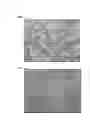
FIG. 1 is a SEM photograph showing columnar aluminum titanate particles obtained in Production Example 1 according to the present invention.
FIG. 2 is a SEM photograph showing granular aluminum titanate particles obtained in Production Example 3 as a comparison.
FIG. 3 is a SEM photograph showing a sintered honeycomb body obtained in Example 3 according to the present invention.
FIG. 4 is a SEM photograph showing a sintered honeycomb body obtained in Comparative Example 2.
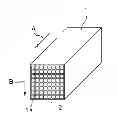
FIG. 5 is a perspective view showing a sintered honeycomb body.
FIG. 6 is a perspective view showing a sample for measuring the porosity of the sintered honeycomb body.
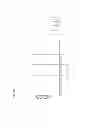
FIG. 7 is a schematic view illustrating a method for measuring the bending strength of the sintered honeycomb body.
FIG. 8 is a perspective view showing a measurement sample for the coefficient of thermal expansion of the sintered honeycomb body.
FIG. 9 is a perspective view illustrating production of a measurement sample for measuring X-ray diffraction of an extrusion surface of the sintered honeycomb body.
FIG. 10 is a perspective view showing the measurement sample for measuring X-ray diffraction of the extrusion surface of the sintered honeycomb body.
FIG. 11 is a perspective view illustrating production of a measurement sample for measuring X-ray diffraction of a vertical surface of the sintered honeycomb body.
FIG. 12 is a perspective view showing the measurement sample for measuring X-ray diffraction of the vertical surface of the sintered honeycomb body.
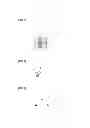
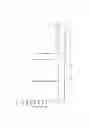
FIG. 13 is a graph showing an X-ray diffraction pattern chart of the columnar aluminum titanate particles obtained by Production Example 1 according to the present invention.
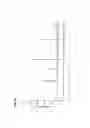
FIG. 14 is a graph showing an X-ray diffraction pattern chart of a sintered honeycomb body obtained in Example 1 according to the present invention.
FIG. 15 is a graph showing an X-ray diffraction pattern chart of a sintered honeycomb body obtained in Example 2 according to the present invention.
FIG. 16 is a graph showing an X-ray diffraction pattern chart of the sintered honeycomb body obtained in Example 3 according to the present invention.
FIG. 17 is a graph showing an X-ray diffraction pattern chart of a sintered honeycomb body obtained in Example 4 according to the present invention.
FIG. 18 is a graph showing an X-ray diffraction pattern chart of a sintered honeycomb body obtained in Example 5 according to the present invention.
DESCRIPTION OF EMBODIMENTS
Hereinafter, the present invention will be described with reference to specific examples, but is not limited by the following examples.
[Production Method of Columnar Aluminum Titanate Particles]
Production Example 1
An amount of 360.0 g of titanium oxide, 411.1 g of aluminum oxide, 9.7 g of magnesium hydroxide, and 19.0 g of silicon oxide were mixed for 2.0 hours while being milled by a vibration mill.
An amount of 500 g of the milled mixture powder obtained in the above manner was packed into a crucible and then fired at 1500° C. for four hours in an electric furnace. When the resultant product was identified in terms of crystal phase by X-ray diffractometry, it was found to be Al2TiO5.
Furthermore, the obtained product was observed in terms of shape with a scanning electron microscope (SEM) and measured, by flow particle image analysis, in terms of aspect ratio (=number average major-axis length/number average minor-axis length). Table 2 shows the composition, shape, number average major-axis length, number average minor-axis length, and aspect ratio.
FIG. 1 is a SEM photograph showing columnar aluminum titanate particles obtained in this production example.
FIG. 13 is a graph showing an X-ray diffraction pattern chart of the columnar aluminum titanate particles obtained in this production example.
Production Example 2
An amount of 354.7 g of titanium oxide, 405.0 g of aluminum oxide, 21.3 g of magnesium hydroxide, and 19.0 g of silicon oxide were mixed for 2.0 hours while being milled by a vibration mill.
An amount of 500 g of the milled mixture powder obtained in the above manner was packed into a crucible and then fired at 1500° C. for four hours in an electric furnace. When the resultant product was identified in terms of crystal phase by X-ray diffractometry, it was found to be Al2TiO5.
Furthermore, the obtained product was observed in terms of shape with a scanning electron microscope (SEM) and measured, by flow particle image analysis, in terms of aspect ratio (=number average major-axis length/number average minor-axis length). Table 2 shows the composition, shape, number average major-axis length, number average minor-axis length, and aspect ratio.
[Production Method of Granular Aluminum Titanate Particles]
Production Example 3
An amount of 340.1 g of titanium oxide, 388.3 g of aluminum oxide, 52.6 g of magnesium hydroxide, and 19.0 g of silicon oxide were mixed for 2.0 hours while being milled by a vibration mill.
An amount of 500 g of the milled mixture powder obtained in the above manner was packed into a crucible and then fired at 1500° C. for four hours in an electric furnace. When the resultant product was identified in terms of crystal phase by X-ray diffractometry, it was found to be Al2TiO5.
Furthermore, the obtained product was observed in terms of shape with a scanning electron microscope (SEM) and measured, by flow particle image analysis, in terms of aspect ratio (=number average major-axis length/number average minor-axis length). Table 2 shows the composition, shape, number average major-axis length, number average minor-axis length, and aspect ratio.
FIG. 2 is a SEM photograph showing granular aluminum titanate particles obtained in this production example.
Table 2 shows the respective compositions, shapes, major-axis lengths (number average major-axis lengths), minor-axis lengths (number average minor-axis lengths), and aspect ratios of the aluminum titanate produces obtained in Production Examples 1 to 3.
| TABLE 2 | |||||
| Major- | Minor- | ||||
| Axis | Axis | ||||
| Length | Length | Aspect | |||
| Composition | Shape | (μm) | (μm) | Ratio | |
| Production Ex. 1 | Al2TiO5 | columnar | 15.8 | 8.9 | 1.8 |
| Production Ex. 2 | Al2TiO5 | columnar | 11.7 | 8.7 | 1.3 |
| Production Ex. 3 | Al2TiO5 | granular | 12.2 | 11.6 | 1.1 |
As shown in Table 2, aluminum titanate products obtained in Production Examples 1 and 2 are columnar aluminum titanate particles having an aspect ratio of 1.3 or more. On the other hand, an aluminum titanate product obtained in Production Example 3 is granular aluminum titanate particles having an aspect ratio of below 1.3.
[Production of Sintered Honeycomb Body]
Using the aluminum titanate products obtained in Production Examples 1 to 3, sintered honeycomb bodies were produced in the following manners.
Example 1
Compounded into 80 parts by weight of the columnar aluminum titanate particles obtained in Production Example 1 were a catalyst material (containing 3.3 parts by weight of sodium carbonate, 4.85 parts by weight of aluminum hydroxide, and 14.9 parts by weight of titanium oxide), 20 parts by weight of graphite, 10 parts by weight of methylcellulose, and 0.5 parts by weight of fatty acid soap. A suitable amount of water was also added to the mixture and the mixture was then kneaded to obtain an extrudable clay.
The obtained clay was extruded and formed into a honeycomb structure by an extruder to obtain a filter green body. The cell density of the die used for this production example was, in any case, 300 cells/inch2 (46.5 cells/cm2) and the partition thickness was 500 μm.
Prepared was a slurry the solid of which was made of the columnar aluminum titanate particles and the catalyst material as described above and to which an additive, such as a viscosity modifier, was added. The slurry was applied in some of the cells of the filter green body having a honeycomb structure to seal some of the cell openings so that the open cells and sealed cells of the honeycomb structure gave a checkered pattern.
Next, the filter green body was dried by a hot-air dryer and the obtained green body was then fired at 1450° C. for an hour to obtain a sintered honeycomb body. When the resultant sintered honeycomb body was identified in terms of crystal phase by X-ray diffractometry, it was found to have a crystal phase of Al2TiO5 and a crystal phase of Na2Al2Ti6O16.
FIG. 14 is a graph showing an X-ray diffraction pattern chart of the sintered honeycomb body obtained in this example.
Example 2
A sintered honeycomb body was obtained in the same manner as in Example 1 except that the catalyst material was changed to one containing 12.0 parts by weight of cesium carbonate, 5.74 parts by weight of aluminum hydroxide, and 5.88 parts by weight of titanium oxide. When the resultant sintered honeycomb body was identified in terms of crystal phase by X-ray diffractometry, it was found to have a crystal phase of Al2TiO5 and a crystal phase of CsAlTiO4.
FIG. 15 is a graph showing an X-ray diffraction pattern chart of the sintered honeycomb body obtained in this example.
Example 3
A sintered honeycomb body was obtained in the same manner as in Example 1 except that the catalyst material was changed to one containing 7.46 parts by weight of sodium carbonate, 10.98 parts by weight of aluminum hydroxide, and 8.46 parts by weight of silicon oxide. When the resultant sintered honeycomb body was identified in terms of crystal phase by X-ray diffractometry, it was found to have a crystal phase of Al2TiO5 and a crystal phase of NaAlSiO4.
FIG. 16 is a graph showing an X-ray diffraction pattern chart of the sintered honeycomb body obtained in this example.
FIG. 3 is a SEM photograph showing the sintered honeycomb body obtained in this example.
Example 4
A sintered honeycomb body was obtained in the same manner as in Example 1 except that the catalyst material was changed to one containing 9.06 parts by weight of strontium carbonate, 9.58 parts by weight of aluminum hydroxide, and 7.38 parts by weight of silicon oxide. When the resultant sintered honeycomb body was identified in terms of crystal phase by X-ray diffractometry, it was found to have a crystal phase of Al2TiO5 and a crystal phase of SrAl2Si2O8.
FIG. 17 is a graph showing an X-ray diffraction pattern chart of the sintered honeycomb body obtained in this example.
Example 5
A sintered honeycomb body was obtained in the same manner as in Example 1 except that the catalyst material was changed to one containing 8.74 parts by weight of potassium carbonate, 9.86 parts by weight of aluminum hydroxide, and 7.60 parts by weight of silicon oxide. When the resultant sintered honeycomb body was identified in terms of crystal phase by X-ray diffractometry, it was found to have a crystal phase of Al2TiO5 and a crystal phase of KAlSiO4.
FIG. 18 is a graph showing an X-ray diffraction pattern chart of the sintered honeycomb body obtained in this example.
Example 6
A sintered honeycomb body was obtained in the same manner as in Example 1 except that the catalyst material was changed to one containing 3.53 parts by weight of sodium carbonate, 4.60 parts by weight of potassium carbonate, 10.39 parts by weight of aluminum hydroxide, and 8.01 parts by weight of silicon oxide. When the resultant sintered honeycomb body was identified in terms of crystal phase by X-ray diffractometry, it was found to have a crystal phase of Al2TiO5 and a crystal phase of Na0.5K0.5AlSiO4.
Example 7
A sintered honeycomb body was obtained in the same manner as in Example 1 except that the catalyst material was changed to one containing 1.37 parts by weight of sodium carbonate, 7.14 parts by weight of potassium carbonate, 10.07 parts by weight of aluminum hydroxide, and 7.76 parts by weight of silicon oxide. When the resultant sintered honeycomb body was identified in terms of crystal phase by X-ray diffractometry, it was found to have a crystal phase of Al2TiO5 and a crystal phase of Na0.2K0.8AlSiO4.
Example 8
A sintered honeycomb body was obtained in the same manner as in Example 1 except that the catalyst material was changed to one containing 5.84 parts by weight of sodium carbonate, 1.90 parts by weight of potassium carbonate, 10.74 parts by weight of aluminum hydroxide, and 8.27 parts by weight of silicon oxide. When the resultant sintered honeycomb body was identified in terms of crystal phase by X-ray diffractometry, it was found to have a crystal phase of Al2TiO5 and a crystal phase of Na0.8K0.2AlSiO4.
Example 9
A sintered honeycomb body was obtained in the same manner as in Example 1 except that the amount of the columnar aluminum titanate particles obtained in the Production Example 1 was changed to 90 parts by weight and the catalyst material was changed to one containing 1.65 parts by weight of sodium carbonate, 2.43 parts by weight of aluminum hydroxide, and 7.45 parts by weight of titanium oxide. When the resultant sintered honeycomb body was identified in terms of crystal phase by X-ray diffractometry, it was found to have a crystal phase of Al2TiO5 and a crystal phase of Na2Al2Ti6O16.
Example 10
A sintered honeycomb body was obtained in the same manner as in Example 1 except that the amount of the columnar aluminum titanate particles obtained in the Production Example 1 was changed to 60 parts by weight and the catalyst material was changed to one containing 6.6 parts by weight of sodium carbonate, 9.7 parts by weight of aluminum hydroxide, and 29.8 parts by weight of titanium oxide. When the resultant sintered honeycomb body was identified in terms of crystal phase by X-ray diffractometry, it was found to have a crystal phase of Al2TiO5 and a crystal phase of Na2Al2Ti6O16.
Example 11
A sintered honeycomb body was obtained in the same manner as in Example 1 except that the firing temperature for the green body was changed to 1350° C. When the resultant sintered honeycomb body was identified in terms of crystal phase by X-ray diffractometry, it was found to have a crystal phase of Al2TiO5 and a crystal phase of Na2Al2Ti6O16.
Example 12
Compounded into 80 parts by weight of the columnar aluminum titanate particles obtained in Production Example 2 were a catalyst material (containing 3.3 parts by weight of sodium carbonate, 4.85 parts by weight of aluminum hydroxide, and 14.9 parts by weight of titanium oxide), 20 parts by weight of graphite, 10 parts by weight of methylcellulose, and 0.5 parts by weight of fatty acid soap. A suitable amount of water was also added to the mixture and the mixture was then kneaded to obtain an extrudable clay.
The obtained clay was extruded and formed into a honeycomb structure by an extruder to obtain a filter green body. The cell density of the die used for this production example was, in any case, 300 cells/inch2 (46.5 cells/cm2) and the partition thickness was 500 μm.
Prepared was a slurry the solid of which was made of the columnar aluminum titanate particles and the catalyst material as described above and to which an additive, such as a viscosity modifier, was added. The slurry was applied in some of the cells of the green body having a honeycomb structure to seal some of the cell openings so that the open cells and sealed cells of the honeycomb structure gave a checkered pattern.
Next, the filter green body was dried by a hot-air dryer and the obtained green body was then fired at 1450° C. for an hour to obtain a sintered honeycomb body. When the resultant sintered honeycomb body was identified in terms of crystal phase by X-ray diffractometry, it was found to have a crystal phase of Al2TiO5 and a crystal phase of Na2Al2Ti6O16.
Example 13
A sintered honeycomb body was obtained in the same manner as in Example 12 except that the catalyst material was changed to one containing 12.0 parts by weight of cesium carbonate, 5.74 parts by weight of aluminum hydroxide, and 5.88 parts by weight of titanium oxide. When the resultant sintered honeycomb body was identified in terms of crystal phase by X-ray diffractometry, it was found to have a crystal phase of Al2TiO5 and a crystal phase of CsAlTiO4.
Example 14
A sintered honeycomb body was obtained in the same manner as in Example 12 except that the catalyst material was changed to one containing 7.46 parts by weight of sodium carbonate, 10.98 parts by weight of aluminum hydroxide, and 8.46 parts by weight of silicon oxide. When the resultant sintered honeycomb body was identified in terms of crystal phase by X-ray diffractometry, it was found to have a crystal phase of Al2TiO5 and a crystal phase of NaAlSiO4.
Example 15
A sintered honeycomb body was obtained in the same manner as in Example 12 except that the catalyst material was changed to one containing 9.06 parts by weight of strontium carbonate, 9.58 parts by weight of aluminum hydroxide, and 7.38 parts by weight of silicon oxide. When the resultant sintered honeycomb body was identified in terms of crystal phase by X-ray diffractometry, it was found to have a crystal phase of Al2TiO5 and a crystal phase of SrAl2Si2O8.
Examples 16 to 19
To evaluate the thermal resistance of the sintered honeycomb bodies obtained in Examples 1 to 4, the sintered honeycomb bodies obtained in Examples 1 to 4 were fired (aged) at 1000° C. for four hours to obtain sintered honeycomb bodies of Examples 16 to 19.
Comparative Example 1
Compounded into 80 parts by weight of the granular aluminum titanate particles obtained in Production Example 3 were a catalyst material (containing 3.3 parts by weight of sodium carbonate, 4.85 parts by weight of aluminum hydroxide, and 14.9 parts by weight of titanium oxide), 20 parts by weight of graphite, 10 parts by weight of methylcellulose, and 0.5 parts by weight of fatty acid soap. A suitable amount of water was also added to the mixture, and the mixture was then kneaded to obtain an extrudable clay.
The obtained clay was extruded and formed into a honeycomb structure by an extruder to obtain a filter green body. The cell density of the die used for this production example was, in any case, 300 cells/inch2 (46.5 cells/cm2) and the partition thickness was 500 μm.
Prepared was a slurry the solid of which was made of the granular aluminum titanate particles and the catalyst material as described above and to which an additive, such as a viscosity modifier, was added. The slurry was applied in some of the cells of the green body having a honeycomb structure to seal some of the cell openings so that the open cells and sealed cells of the honeycomb structure gave a checkered pattern.
Next, the filter green body was dried by a hot-air dryer and the obtained green body was then fired at 1450° C. for an hour to obtain a sintered honeycomb body. When the resultant sintered honeycomb body was identified in terms of crystal phase by X-ray diffractometry, it was found to have a crystal phase of Al2TiO5 and a crystal phase of Na2Al2Ti6O16.
Comparative Example 2
Compounded into 100 parts by weight of the columnar aluminum titanate particles obtained in Production Example 1 were parts by weight of graphite, 10 parts by weight of methylcellulose, and 0.5 parts by weight of fatty acid soap. A suitable amount of water was also added to the mixture and the mixture was then kneaded to obtain an extrudable clay.
The obtained clay was extruded and formed into a honeycomb structure by an extruder to obtain a green body. The cell density of the die used for this production example was, in any case, 300 cells/inch2 (46.5 cells/cm2) and the partition thickness was 500 μm.
Prepared was a slurry the solid of which was made of the columnar aluminum titanate particles as described above and to which an additive, such as a viscosity modifier, was added. The slurry was applied in some of the cells of the green body having a honeycomb structure to seal some of the cell openings so that the open cells and sealed cells of the honeycomb structure gave a checkered pattern.
Next, the filter green body was dried by a hot-air dryer and the obtained green body was then fired at 1450° C. for an hour to obtain a sintered honeycomb body.
FIG. 4 is a SEM photograph showing the sintered honeycomb body obtained in this comparative example.
Comparative Example 3
An amount of 30 g of γ-alumina (manufactured by Wako Pure Chemical Industries, Ltd.) was added to and mixed with 6.0 g of 5% by weight solution of diamminedinitro platinum (II) nitrate and the mixture was evaporated to dryness to support platinum on γ-alumina.
This product was ground in a mortar and thermally treated at 500° C. for an hour in the atmospheric environment in an electric furnace to obtain platinum-supported alumina powder.
The obtained platinum-supported alumina powder, water, and a binder were mixed to obtain a slurry. The sintered honeycomb body obtained in Comparative Example 2 was wash-coated with the slurry by sucking the slurry into the sintered honeycomb body and removing surplus slurry by air blowing. The sintered honeycomb body was dried and then thermally treated at 500° C. for an hour in the atmospheric environment in an electric furnace.
Comparative Examples 4 to 6
To evaluate the thermal resistance of the sintered honeycomb bodies obtained in Comparative Examples 1 to 3, the sintered honeycomb bodies obtained in Comparative Examples 1 to 3 were fired (aged) at 1000° C. for four hours to obtain sintered honeycomb bodies of Comparative Examples 4 to 6.
[Evaluation of Sintered Honeycomb Body]
Each of the obtained sintered honeycomb bodies was measured in terms of porosity, bending strength, coefficient of thermal expansion, degree of crystal orientation, initial pressure loss, PM combustion onset temperature, and DPF regeneration rate in the following manners.
(Porosity)
FIG. 5 is a perspective view showing a sintered honeycomb body. As shown in FIG. 5, the sintered honeycomb body 1 has eight by eight cells and its end surface 1a has a size of 1.8 cm by 1.8 cm. The arrow A represents a direction of extrusion and the arrow B represents a direction perpendicular to the direction of extrusion A.
A measurement sample for porosity was obtained by cutting, out of a central portion 2 of the above sintered honeycomb body 1 made up of eight by eight cells, a portion thereof corresponding to two by two cells to give a length of approximately 2 cm along the direction of extrusion A.
FIG. 6 is a perspective view showing the measurement sample 3. Each sintered honeycomb body was measured, using the measurement sample 3 shown in FIG. 6, in term of porosity in conformity with JIS R1634. The results are shown in Table 3.
(Bending Strength)
As shown in FIG. 7, each sintered honeycomb body was measured in terms of bending strength in conformity with JIS R1601 by pressing a pressing rod 10 against a midportion of the sintered honeycomb body 1 of eight by eight cells with the sintered honeycomb body 1 supported at bearing points 11 and 12. The results are shown in Table 3.
(Coefficient of Thermal Expansion)
In the same manner as in the measurement sample 3 for porosity described with reference to FIGS. 5 and 6, a measurement sample 3 was obtained by cutting, out of a central portion 2 of the sintered honeycomb body 1 made up of eight by eight cells, a portion thereof to give a length of approximately 2 cm along the direction of extrusion A. As shown in FIG. 8, each measurement sample 3 was measured in terms of coefficient of thermal expansion in the direction of extrusion A in conformity with JIS R1618. The results are shown in Table 3.
(Crystal Orientation Ratio)
The c-axis crystal orientation ratios of the obtained sintered honeycomb bodies were measured as crystal orientation ratios thereof.
The crystal orientation ratio was calculated from the degree of crystal orientation in the direction of extrusion and the degree of crystal orientation in the direction perpendicular to the direction of extrusion (degree of crystal orientation in the vertical direction), as shown in the following formula.
Crystal orientation ratio=degree of crystal orientation in the direction of extrusion/[(degree of crystal orientation in the direction of extrusion)+(degree of crystal orientation in the vertical direction)]
The degree of crystal orientation was determined by X-ray diffractometry. The degree of crystal orientation in the direction of extrusion was determined by measurement of X-ray diffraction of the extrusion surface of each sintered honeycomb body and calculation from the measured diffraction intensity of the (002) plane (=I(002)) and the measured diffraction intensity of the (230) plane (=I(230)) using the following formula.
Degree of crystal orientation=I(002)/{I(002)+I(230)}
The degree of crystal orientation in the vertical direction was determined by measurement of X-ray diffraction of the vertical surface of each sintered honeycomb body and calculation from I(002) and I(230) in the same manner as above.
Note that he diffraction intensity of the (002) plane is a peak appearing near 50.8° 2θ and the diffraction intensity of the (230) plane is a peak appearing near 33.7° 2θ.
FIGS. 9 and 10 are perspective views illustrating the production of a measurement sample for measuring X-ray diffraction of the extrusion surface.
As shown in FIG. 9, a region 4 of the sintered honeycomb body 1 including the end surface 1a was cut out to produce a measurement sample shown in FIG. 10. Using the measurement sample 5 shown in FIG. 10, the extrusion surface 5a of this measurement sample 5 was measured in terms of X-ray diffraction.
FIGS. 11 and 12 are perspective views illustrating the production of a measurement sample for measuring X-ray diffraction of the vertical surface, i.e., the surface perpendicular to the extrusion surface.
As shown in FIG. 11, a region 6 of the sintered honeycomb body 1 corresponding to eight by two cells was cut out along the direction of extrusion A to obtain a measurement sample 7 shown in FIG. 12. The surface (extrusion surface) 7a of this measurement sample 7 extending along the direction of extrusion A was measured in terms of X-ray diffraction.
The crystal orientation ratio of each sintered honeycomb body was calculated in the above manner. The results are shown in Table 3.
Note that the (002) plane is a plane perpendicular to the c-axis and a high intensity of the (002) plane means that the c-axis is oriented.
(PM Combustion Onset Temperature)
Each sintered honeycomb body was ground in a mortar and 10% by weight carbon black (TOKABLACK #7100F manufactured by Tokai carbon Co., Ltd.) was added as pseudo-PM to the ground product and mixed together in the mortar.
The obtained mixture was measured in terms of TG/DTA using a thermal analyzer (a thermal analyzer EXSTAR6000 TG/DTA6300 manufactured by Seiko Instruments Inc.) under the conditions of a temperature rise of 10° C./min, an atmosphere of dry air at a rate of 200 ml/min, and a sample amount of 5 mg to determine the onset temperature of TG reduction due to combustion of the carbon black. The results are shown in Table 3.
(Initial Pressure Loss and DPF Regeneration Rate)
Furthermore, the sintered honeycomb bodies of the above Examples and Comparative Examples were subjected to a DPF regeneration performance test using a diesel engine.
The procedure of regeneration rate measurement using the DPF regeneration performance test was as follows: The initial weight of each sintered honeycomb body (DPF) was previously measured and an oxidation catalyst (DOC) and the sintered honeycomb body were placed in this order in an exhaust line of the diesel engine. Next, the diesel engine was started and its exhaust flow rate was then stably kept at 500 Nm3/h. In this state, the pressures near the gas inlet and outlet of the sintered honeycomb body in the exhaust pipe were measured to determine the initial pressure loss of the sintered honeycomb body. Then, a specific amount (approximately 8 g/L) of PM was deposited on the sintered honeycomb body under the operating condition in which the exhaust temperature becomes low, the sintered honeycomb body was then removed from the exhaust line, and the weight of PM deposited was measured.
Next, the sintered honeycomb body was placed back again and the accelerator opening of the diesel engine was then controlled to raise the internal temperature of the sintered honeycomb body to 520° C. For 30 minutes after the internal temperature reached 520° C., the sintered honeycomb body was held at a temperature of 530° C.±10° C. Subsequently, the sintered honeycomb body was brought to an idling state in two minutes.
The sintered honeycomb body was removed again and its weight reduction (i.e., amount of PM combusted) was measured.
The regeneration rate was determined by the following calculation formula:
Regeneration rate (%)=100−[{(weight of PM deposited (g))−(weight of PM combusted (g))}/weight of PM deposited (g)]×100.
The results of initial pressure losses and DPF regeneration rates are shown in Table 3.
| TABLE 3 | |
| Physical Properties of Sintered Honeycomb Body |
| Base Material | Catalyst | Bending Strength | CTE |
| Composition | Shape (μm) | Aspect Ratio | Composition | Aging | Porosity (%) | (MPa) | (×10−6/° C.) | |
| Ex. 1 | Al2TiO5 | columnar | 1.8 | Na2Al2Ti6O16 | — | 50.8 | 3.8 | −1.5 |
| Ex. 2 | Al2TiO5 | columnar | 1.8 | CsAlTiO4 | — | 49.8 | 3.9 | −1.4 |
| Ex. 3 | Al2TiO5 | columnar | 1.8 | NaAlSiO4 | — | 50.2 | 3.4 | −1.5 |
| Ex. 4 | Al2TiO5 | columnar | 1.8 | SrAl2Si2O8 | — | 48.9 | 3.5 | −1.3 |
| Ex. 5 | Al2TiO5 | columnar | 1.8 | KAlSiO4 | — | 50.5 | 3.4 | −1.2 |
| Ex. 6 | Al2TiO5 | columnar | 1.8 | Na0.5K0.5AlSiO4 | — | 48.0 | 3.6 | −1.3 |
| Ex. 7 | Al2TiO5 | columnar | 1.8 | Na0.2K0.8AlSiO4 | — | 47.8 | 3.4 | −1.2 |
| Ex. 8 | Al2TiO5 | columnar | 1.8 | Na0.8K0.2AlSiO4 | — | 48.5 | 3.5 | −1.2 |
| Ex. 9 | Al2TiO5 | columnar | 1.8 | Na2Al2Ti6O16 | — | 51.2 | 3.6 | −1.5 |
| Ex. 10 | Al2TiO5 | columnar | 1.8 | Na2Al2Ti6O16 | — | 46.1 | 4.3 | −0.8 |
| Ex. 11 | Al2TiO5 | columnar | 1.8 | Na2Al2Ti6O16 | — | 58.3 | 2.1 | 0.1 |
| Ex. 12 | Al2TiO5 | columnar | 1.3 | Na2Al2Ti6O16 | — | 48.6 | 3.5 | −1.0 |
| Ex. 13 | Al2TiO5 | columnar | 1.3 | CsAlTiO4 | — | 47.2 | 3.5 | −0.9 |
| Ex. 14 | Al2TiO5 | columnar | 1.3 | NaAlSiO4 | — | 47.1 | 3.0 | −0.8 |
| Ex. 15 | Al2TiO5 | columnar | 1.3 | SrAl2Si2O8 | — | 47.3 | 3.2 | −0.9 |
| Ex. 16 | Al2TiO5 | columnar | 1.8 | Na2Al2Ti6O16 | done | 50.7 | 3.8 | −1.5 |
| Ex. 17 | Al2TiO5 | columnar | 1.8 | CsAlTiO4 | done | 49.8 | 3.9 | −1.4 |
| Ex. 18 | Al2TiO5 | columnar | 1.8 | NaAlSiO4 | done | 50.0 | 3.4 | −1.5 |
| Ex. 19 | Al2TiO5 | columnar | 1.8 | SrAl2Si2O8 | done | 48.7 | 3.5 | −1.3 |
| Comp. Ex. 1 | Al2TiO5 | granular | 1.1 | Na2Al2Ti6O16 | — | 46.5 | 3.4 | 2.5 |
| Comp. Ex. 2 | Al2TiO5 | columnar | 1.8 | — | — | 50.2 | 3.8 | −1.5 |
| Comp. Ex. 3 | Al2TiO5 | columnar | 1.8 | Pt | — | 42.2 | 3.6 | 3.2 |
| Comp. Ex. 4 | Al2TiO5 | granular | 1.1 | Na2Al2Ti6O16 | done | 46.5 | 3.4 | 2.5 |
| Comp. Ex. 5 | Al2TiO5 | columnar | 1.8 | — | done | 50.1 | 3.8 | −1.5 |
| Comp. Ex. 6 | Al2TiO5 | columnar | 1.8 | Pt | done | 41.1 | 3.4 | 3.3 |
| Physical Properties of Sintered Honeycomb Body | Evaluation of DPF Performance |
| Degree of Crystal | Degree of Crystal | Crystal | Initial | PM Combustion | DPF | ||
| Orientation in | Orientation in | Orientation | Pressure | Onset | Regenera- | ||
| Extrusion Direction A | Vertical Direction B | Ratio | Loss | Temperature | tion Rate | ||
| I002/(I002 + I230) | I002/(I002 + I230) | A/(A + B) | (kPa) | (° C.) | (%) | ||
| Ex. 1 | 0.78 | 0.12 | 0.87 | 1.88 | 472 | 95 | |
| Ex. 2 | 0.80 | 0.09 | 0.90 | 1.84 | 522 | 85 | |
| Ex. 3 | 0.80 | 0.10 | 0.89 | 1.78 | 518 | 88 | |
| Ex. 4 | 0.78 | 0.09 | 0.90 | 1.91 | 527 | 83 | |
| Ex. 5 | 0.77 | 0.10 | 0.89 | 1.80 | 510 | 88 | |
| Ex. 6 | 0.80 | 0.09 | 0.90 | 2.00 | 495 | 91 | |
| Ex. 7 | 0.76 | 0.11 | 0.87 | 1.98 | 503 | 90 | |
| Ex. 8 | 0.79 | 0.12 | 0.87 | 2.12 | 509 | 90 | |
| Ex. 9 | 0.80 | 0.12 | 0.87 | 2.04 | 498 | 89 | |
| Ex. 10 | 0.78 | 0.10 | 0.89 | 2.23 | 460 | 96 | |
| Ex. 11 | 0.51 | 0.21 | 0.71 | 1.43 | 475 | 95 | |
| Ex. 12 | 0.51 | 0.18 | 0.74 | 2.20 | 475 | 95 | |
| Ex. 13 | 0.50 | 0.18 | 0.74 | 2.24 | 528 | 83 | |
| Ex. 14 | 0.50 | 0.20 | 0.71 | 2.21 | 521 | 86 | |
| Ex. 15 | 0.48 | 0.20 | 0.71 | 2.11 | 525 | 85 | |
| Ex. 16 | 0.78 | 0.12 | 0.87 | 1.70 | 472 | 96 | |
| Ex. 17 | 0.80 | 0.09 | 0.90 | 1.84 | 530 | 82 | |
| Ex. 18 | 0.80 | 0.10 | 0.89 | 1.81 | 519 | 88 | |
| Ex. 19 | 0.78 | 0.09 | 0.90 | 1.89 | 529 | 82 | |
| Comp. Ex. 1 | 0.32 | 0.30 | 0.52 | 3.14 | 475 | 93 | |
| Comp. Ex. 2 | 0.80 | 0.10 | 0.89 | 1.91 | 600 | 43 | |
| Comp. Ex. 3 | 0.80 | 0.12 | 0.87 | 3.52 | 521 | 82 | |
| Comp. Ex. 4 | 0.32 | 0.30 | 0.52 | 3.02 | 475 | 93 | |
| Comp. Ex. 5 | 0.80 | 0.10 | 0.89 | 1.86 | 600 | 43 | |
| Comp. Ex. 6 | 0.80 | 0.12 | 0.87 | 3.49 | 590 | 45 | |
As shown in Table 3, the sintered honeycomb bodies (exhaust gas purification filters) of Examples 1 to 19 according to the present invention exhibit low coefficients of thermal expansion, high porosities, low PM combustion onset temperatures, and superior DPF regeneration rates. The reason for this is that a catalyst is supported on the surfaces of columnar aluminum titanate particles having an aspect ratio of 1.3 or more. Since there is no need for coating of catalyst on the sintered honeycomb body, it can be avoided that the catalyst enters microcracks to increase the coefficient of thermal expansion. Furthermore, since each sintered honeycomb body exhibits a high porosity and a low PM combustion onset temperature, it can prevent pressure loss of exhaust gas upon deposition of PM. Therefore, an exhaust gas purification filter can be provided which has a high PM combustion efficiency and a high DPF regeneration rate.
The sintered honeycomb bodies shown in Examples 16 to according to the present invention reveals that their coefficient of thermal expansion, porosity, and PM combustion onset temperature did not vary from those of the sintered honeycomb bodies before being aged (Examples 1 to 4), which shows that the exhaust gas purification filter of the present invention has superior thermal resistance. As seen from Comparative Example 1, with the use of granular aluminum titanate particles having an aspect ratio of below 1.3, a low coefficient of thermal expansion cannot be achieved.
As seen from Comparative Example 3, if the catalyst is applied to a sintered body by coating, a high porosity and a low coefficient of linear expansion cannot be achieved. The reason for this is that the catalyst enters pores or microcracks in the sintered body.
As seen from Comparative Example 6, this sintered honeycomb body exhibits a low porosity, a high coefficient of thermal expansion, and a high PM combustion onset temperature as compared with the sintered honeycomb body before being aged (Comparative Example 3). This is because the catalyst applied thereto by coating has low thermal resistance.
Therefore, the present invention can provide an exhaust gas purification filter on which a catalyst is supported in a simple manner and which has a high PM combustion efficiency, a low coefficient of thermal expansion, superior thermal resistance, and superior DPF regeneration rate.
REFERENCE SIGNS LIST
-
- 1 . . . sintered honeycomb body (honeycomb structure)
- 1a . . . end surface of honeycomb structure
- 2 . . . central portion of honeycomb structure
- 3 . . . measurement sample cut out of honeycomb structure
- 4 . . . region of honeycomb structure near end surface
- 5 . . . sample for measuring X-ray diffraction of extrusion surface of honeycomb structure
- 5a . . . extrusion surface
- 6 . . . region of eight by two cells of honeycomb structure
- 7 . . . sample for measuring X-ray diffraction of vertical surface of honeycomb structure
- 7a . . . vertical surface
Claims
1. An exhaust gas purification filter formed by sintering columnar aluminum titanate particles whose surfaces have a catalyst material deposited thereon and which have an average aspect ratio (=number average major-axis length/number average minor-axis length) of 1.3 or more,
wherein a catalyst made from the catalyst material by thermal treatment during the sintering is supported on the surface of the aluminum titanate.
2. The exhaust gas purification filter according to claim 1, wherein the catalyst contains a composite oxide containing: at least one metal of alkali metals and alkaline earth metals; and at least one of Al, Si, Ti, and Zr.
3. The exhaust gas purification filter according to claim 1, wherein the exhaust gas purification filter is made by sintering a filter green body formed by extrusion and the coefficient of thermal expansion of the exhaust gas purification filter in a direction of the extrusion between 30° C. and 800° C. is 1.0×10⁻⁶/° C. or less.
4. The exhaust gas purification filter according to claim 1, wherein the exhaust gas purification filter is made by sintering a filter green body formed by extrusion and the c-axis crystal orientation ratio of the exhaust gas purification filter in the direction of the extrusion is 0.7 or more.
5. The exhaust gas purification filter according to claim 1, wherein the exhaust gas purification filter has a porosity of 40% to 60%.
6. A method for producing the exhaust gas purification filter according to claim 1, the method comprising the steps of:
producing columnar aluminum titanate particles having an average aspect ratio (=number average major-axis length/number average minor-axis length) of 1.3 or more;
extruding a mixture containing the columnar aluminum titanate particles and the catalyst material to produce a filter green body; and
thermally treating the filter green body to sinter the columnar aluminum titanate particles and concurrently thermally treating the catalyst material to form a catalyst, resulting in production of an exhaust gas purification filter in which the catalyst is supported on the surface of the aluminum titanate.
7. The method for producing the exhaust gas purification filter according to claim 6, wherein the catalyst material contains: at least one compound of alkali metal salts and alkaline earth metal salts; and at least one of an aluminum source, a silicon source, a titanium source, and a zirconium source.
Images & Drawings included:





Sources:
- United States Patent and Trademark Office - verify current appl. status at the USPTO↗
Similar patent applications:
- » 20150211397
Exhaust gas purification filter and method of producing the same - » 20170157596
Exhaust gas purifying catalyst, exhaust gas purification device and filter, and method for producing said catalyst - » 20180185826
METHOD FOR PRODUCING EXHAUST GAS PURIFYING FILTER, EXHAUST GAS PURIFYING FILTER, AND EXHAUST GAS PURIFICATION DEVICE - » 20130095997
Method for producing catalyst composition, catalyst composition, diesel particulate filter using the same, and exhaust gas purification system
Recent applications in this class:
- » 20250235822 2025-07-24
EXHAUST GAS PURIFICATION CATALYST COMPOSITION, EXHAUST GAS PURIFICATION CATALYST AND EXHAUST GAS PURIFICATION SYSTEM - » 20250153102 2025-05-15
METHANE MITIGATION SYSTEM WITH USE OF WASTE HEAT FOR POWER GENERATION - » 20240342654 2024-10-17
PARTICULATE FILTER - » 20240024818 2024-01-25
OXIDATION CATALYST COMPRISING A PLATINUM GROUP METAL AND A BASE METAL OXIDE - » 20240017213 2024-01-18
CATALYTICALLY ACTIVE PARTICLE FILTER HAVING A HIGH DEGREE OF FILTERING EFFICIENCY - » 20240009621 2024-01-11
Exhaust Gas Purification Catalyst - » 20230211288 2023-07-06
ANTIMICROBIAL FILTRATION - » 20230050366 2023-02-16
Exhaust gas purification system - » 20230020768 2023-01-19
Hydrocarbon reclamator - » 20220347626 2022-11-03
Exhaust gas purification device
Recent applications for this Assignee:
- » 20250158112 2025-05-15
BINDER COMPOSITION FOR ALL-SOLID-STATE BATTERY - » 20250043841 2025-02-06
FRICTION MODIFIER, FRICTION MATERIAL COMPOSITION, FRICTION MATERIAL, AND FRICTION MEMBER - » 20240322224 2024-09-26
TITANIC ACID-BASED SOLID ELECTROLYTE MATERIAL - » 20240240087 2024-07-18
LIQUID CRYSTAL POLYMER COMPOSITION AND LIQUID CRYSTAL POLYMER MOLDED ARTICLE - » 20240141143 2024-05-02
LIQUID-CRYSTAL POLYMER COMPOSITION, MOLDED LIQUID-CRYSTAL POLYMER, AND ELECTRICAL/ELECTRONIC APPLIANCE - » 20240039039 2024-02-01
TITANIC ACID-BASED SOLID ELECTROLYTE MATERIAL - » 20230383188 2023-11-30
LIQUID CRYSTAL POLYMER COMPOSITION, LIQUID CRYSTAL POLYMER MOLDED BODY, AND ELECTRICAL AND ELECTRONIC EQUIPMENT - » 20230272833 2023-08-31
FRICTION ADJUSTING MATERIAL, FRICTION MATERIAL COMPOSITION, FRICTION MATERIAL, AND FRICTION MEMBER - » 20230204083 2023-06-29
FRICTION ADJUSTING MATERIAL, FRICTION MATERIAL COMPOSITION, FRICTION MATERIAL, AND FRICTION MEMBER - » 20230173745 2023-06-08
MODELED OBJECT AND METHOD FOR PRODUCING SAME