Layered composite oxide, oxidation catalyst, and diesel particulate filter
US20140147341A1
2014-05-29
13/881,242
2011-10-03
✅ Patent granted
US 9,091,195 B2
2015-07-28
WO; PCT/JP2011/072743; 20111003
WO; WO2012/060174; 20120510
Walter D Griffin | Jelitza Perez
Global IP Counselors, LLP
2032-09-01
Abstract:
A layered composite oxide is provided which is excellent in oxygen ion conductivity and, is capable of effectively decreasing a PM oxidation temperature without using a noble metal such as platinum or the like. The layered composite oxide is used in an oxidation catalyst, DPF, a ternary catalyst, and a NOx purification catalyst. The layered composite oxide has a composition represented by the following formula (1), La1.5Sr1.5Mn2-yByO7 . . . (1) (wherein B represents Cu and/or Fe, and y satisfies 0<y≦0.2).
Inventors:
- Kohji Masuda 2 🇯🇵 Shinagawa-ku, Japan
- Fumio Munakata 1 🇯🇵 Kunitachi-shi, Japan
- Kohji MASUDA 4 🇯🇵 Tokyo, Japan
- Fumio Munakata 1 🇯🇵 Kunitachi, Japan
Assignee:
- NISSAN MOTOR CO., LTD. 133 🇯🇵 Yokohama, Kanagawa, Japan
- Nissan Motor Co., Ltd. 2,216 🇯🇵 Yokohama, Japan
Applicant:
Interested in similar patents?
Get notified when new applications in this technology area are published.
Classification:
F01N3/2803 » CPC main
Exhaust or silencing apparatus having means for purifying, rendering innocuous, or otherwise treating exhaust for rendering innocuous by thermal or catalytic conversion of noxious components of exhaust characterised by constructional aspects of converting apparatus; Construction of catalytic reactors characterised by structure, by material or by manufacturing of catalyst support
B01J23/8892 » CPC main
Catalysts comprising metals or metal oxides or hydroxides, not provided for in group of the iron group metals or copper combined with metals, oxides or hydroxides provided for in groups - with arsenic, antimony, bismuth, vanadium, niobium, tantalum, polonium, chromium, molybdenum, tungsten, manganese, technetium or rhenium; Manganese, technetium or rhenium Manganese
F01N3/28 IPC
Exhaust or silencing apparatus having means for purifying, rendering innocuous, or otherwise treating exhaust for rendering innocuous by thermal or catalytic conversion of noxious components of exhaust characterised by constructional aspects of converting apparatus Construction of catalytic reactors
B01J23/889 IPC
Catalysts comprising metals or metal oxides or hydroxides, not provided for in group of the iron group metals or copper combined with metals, oxides or hydroxides provided for in groups - with arsenic, antimony, bismuth, vanadium, niobium, tantalum, polonium, chromium, molybdenum, tungsten, manganese, technetium or rhenium Manganese, technetium or rhenium
B01D53/944 » CPC further
Separation of gases or vapours; Recovering vapours of volatile solvents from gases; Chemical or biological purification of waste gases, e.g. engine exhaust gases, smoke, fumes, flue gases, aerosols,; Chemical or biological purification of waste gases of engine exhaust gases by catalytic processes Simultaneously removing carbon monoxide, hydrocarbons or carbon making use of oxidation catalysts
B01J23/007 » CPC further
Catalysts comprising metals or metal oxides or hydroxides, not provided for in group Mixed salts
B01J35/004 » CPC further
Catalysts, in general, characterised by their form or physical properties; Catalysts characterised by their physical properties Photocatalysts
B01J37/0036 » CPC further
Processes, in general, for preparing catalysts; Processes, in general, for activation of catalysts; Use of binding agents; Moulding; Pressing; Powdering; Granulating; Addition of materials ameliorating the mechanical properties of the product catalyst; Powdering Grinding
C01G45/1278 » CPC further
Compounds of manganese; Manganates manganites or permanganates; Manganates or manganites with a manganese oxidation state of Mn(III), Mn(IV) or mixtures thereof of the type [Mn2O7]n-, e.g. (Sr2-xNdx)Mn2O7, Tl2Mn2O7
C01G49/0072 » CPC further
Compounds of iron; Mixed oxides or hydroxides, containing manganese
C01G51/60 » CPC further
Compounds of cobalt; Cobaltates containing alkali metals, e.g. LiCoO containing manganese of the type [Mn2O7]n-
C01G53/60 » CPC further
Compounds of nickel; Nickelates containing alkali metals, e.g. LiNiO containing manganese of the type [Mn2O7]n-
H01M4/9025 » CPC further
Electrodes; Inert electrodes with catalytic activity, e.g. for fuel cells; Selection of catalytic material; Oxides, hydroxides or oxygenated metallic salts Oxides specially used in fuel cell operating at high temperature, e.g. SOFC
B01D2255/204 » CPC further
Catalysts; Metals or compounds thereof Alkaline earth metals
B01D2255/2073 » CPC further
Catalysts; Metals or compounds thereof; Transition metals Manganese
B01D2255/20738 » CPC further
Catalysts; Metals or compounds thereof; Transition metals Iron
B01D2255/20761 » CPC further
Catalysts; Metals or compounds thereof; Transition metals Copper
B01D2255/402 » CPC further
Catalysts; Mixed oxides Perovskites
B01D2255/65 » CPC further
Catalysts Catalysts not containing noble metals
B01J23/8946 » CPC further
Catalysts comprising metals or metal oxides or hydroxides, not provided for in group of the iron group metals or copper combined with noble metals also combined with metals, or metal oxides or hydroxides provided for in groups - with alkali or alkaline earth metals
B01J2523/00 » CPC further
Constitutive chemical elements of heterogeneous catalysts
C01P2002/34 » CPC further
Crystal-structural characteristics; Three-dimensional structures perovskite-type (ABO)
C01P2002/54 » CPC further
Crystal-structural characteristics; Solid solutions containing elements as dopants one element only
F01N2510/065 » CPC further
Surface coverings for exhaust purification, e.g. catalytic reaction for reducing soot ignition temperature
F01N2510/0684 » CPC further
Surface coverings for exhaust purification, e.g. catalytic reaction characterised by the distribution of the catalytic coatings having more than one coating layer, e.g. multi-layered coatings
Y02E60/50 » CPC further
Enabling technologies; Technologies with a potential or indirect contribution to GHG emissions mitigation; Hydrogen technology Fuel cells
Y02E60/50 » CPC further
Enabling technologies; Technologies with a potential or indirect contribution to GHG emissions mitigation; Hydrogen technology Fuel cells
B01J23/34 IPC
Catalysts comprising metals or metal oxides or hydroxides, not provided for in group of arsenic, antimony, bismuth, vanadium, niobium, tantalum, polonium, chromium, molybdenum, tungsten, manganese, technetium or rhenium; Manganese, technetium or rhenium Manganese
B01J23/72 IPC
Catalysts comprising metals or metal oxides or hydroxides, not provided for in group of the iron group metals or copper Copper
B01D53/94 IPC
Separation of gases or vapours; Recovering vapours of volatile solvents from gases; Chemical or biological purification of waste gases, e.g. engine exhaust gases, smoke, fumes, flue gases, aerosols,; Chemical or biological purification of waste gases of engine exhaust gases by catalytic processes
B01J23/00 IPC
Catalysts comprising metals or metal oxides or hydroxides, not provided for in group
B01J35/00 IPC
Catalysts, in general, characterised by their form or physical properties
B01J37/04 » CPC further
Processes, in general, for preparing catalysts; Processes, in general, for activation of catalysts Mixing
B01J37/08 » CPC further
Processes, in general, for preparing catalysts; Processes, in general, for activation of catalysts Heat treatment
C01G45/12 IPC
Compounds of manganese Manganates manganites or permanganates
C01G49/00 IPC
Compounds of iron
C01G51/00 IPC
Compounds of cobalt
C01G53/00 IPC
Compounds of nickel
H01M4/90 IPC
Electrodes; Inert electrodes with catalytic activity, e.g. for fuel cells Selection of catalytic material
B01J37/00 IPC
Processes, in general, for preparing catalysts; Processes, in general, for activation of catalysts
B01J23/89 IPC
Catalysts comprising metals or metal oxides or hydroxides, not provided for in group of the iron group metals or copper combined with noble metals
F01N3/035 » CPC further
Exhaust or silencing apparatus having means for purifying, rendering innocuous, or otherwise treating exhaust for cooling, or for removing solid constituents of, exhaust by means of filters in combination with other devices with catalytic reactors, e.g. catalysed diesel particulate filters
B01D2255/2063 » CPC further
Catalysts; Metals or compounds thereof; Rare earth metals Lanthanum
B01J23/10 IPC
Catalysts comprising metals or metal oxides or hydroxides, not provided for in group of rare earths
Description
CROSS-REFERENCE TO RELATED APPLICATIONS
This application is a U.S. National stage of International Application No. PCT/JP2011/072743, filed Oct. 3, 2011. This application claims priority to Japanese Patent Application No. 2010-247689, filed on Nov. 4, 2010. The entire disclosure of Japanese Patent Application No. 2010-247689 is hereby incorporated herein by reference.
BACKGROUND
1. Field of the Invention
The present invention relates to a novel layered composite oxide and, in further detail, relates to a layered composite oxide having a B-site controlled, layered perovskite-type structure and having excellent oxygen ion conductivity. The layered composite oxide of the present invention is advantageous for various catalysts and is particularly preferably used for a diesel particulate filter (DPF) configured to purify a particulate matter (PM).
2. Background Information
Materials having perovskite-type structures are represented by the general formula ABO3 and ideally belong to the cubic system but frequently have distorted structures belonging to the tetragonal system, the orthorhombic system, the six-law system, and the like. The materials having such perovskite-type structures have attracted attention as electromagnetic materials and catalyst materials due to the distortion.
In recent years, attempts have been made to synthesize layered perovskite composite oxides exhibiting excellent characteristics by layering various materials having perovskite-type structures. For example, some of the materials attract attention as materials for carbon monoxide (CO) shift catalysts and electrolyte membranes of fuel cells (FC). Also, for exhaust gas purification catalysts, there are found reports on decomposition of nitrogen oxides (NOx), but high-temperature regions apart from a practical temperature region are still employed.
On the other hand, materials having a LaGaO3-based perovskite-type structure represented by the general formula ABO3 have been known as catalysts for PM purification in internal combustion engines, and it has been reported that PM oxidation temperatures of PM oxidation catalysts containing platinum supported on the materials are preferably 450° C. (refer to, for example, Japanese Unexamined Patent Application Publication No. 2006-341265).
SUMMARY
However, a satisfactory effect can be hardly yet achieved in the above-described various applications, and in particular, it is necessary to use a noble metal such as platinum or the like in PM oxidation catalysts, leaving a room for improvement.
The present invention has been achieved in consideration of the problem of related art, and an object of the present invention is to provide a layered composite oxide having excellent oxygen ion conductivity and, particularly, being capable of effectively decreasing a PM oxidation temperature without using a noble metal such as platinum or the like, and provided an oxidation catalyst, DPF, a ternary catalyst, and a NOx purification catalyst which use the layered composite oxide.
SOLUTION TO PROBLEM
As a result of intensive research for achieving the above-described object, the inventors found that the object can be achieved by partially substituting elements at the B-site in Ruddlesden-Popper-type (general formula A3B2O7) layered perovskite with another element, leading to the achievement of the present invention.
A layered composite oxide of the present invention has a composition represented by the following formula (1):
La1.5Sr1.5Mn2-yByO7 (1)
(in the formula, B represents Cu and/or Fe, and y satisfies 0<y≦0.2).
Also, an oxidation catalyst of the present invention contains the above-described layered composite oxide.
Further, a diesel particulate filter of the present invention is a diesel particular filter which purifies a particulate matter. The diesel particulate filter includes the above-described oxidation catalyst and an integral structure-type support coated with the oxidation catalyst.
Further, a ternary catalyst of the present invention contains the above-described layered composite oxide, and a nitrogen oxide purification catalyst of the present invention contains the above-described layered composite oxide.
According to the present invention, it is possible to provide a layered composite oxide having excellent oxygen ion conductivity and, particularly, being capable of effectively decreasing a PM oxidation temperature without using a noble metal such as platinum or the like by partially substituting B-site elements in predetermined layered perovskite by another element, and to provide an oxidation catalyst, DPF, a ternary catalyst, and a NOx purification catalyst which use the layered composite oxide.
BRIEF DESCRIPTION OF DRAWINGS
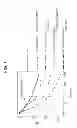
FIG. 1 is a graph showing analytical results of samples of examples.
DETAILED DESCRIPTION OF THE EMBODIMENTS
A layered composite oxide of the present invention is described below. As described above, a layered composite oxide of the present invention has a composition represented by the following formula (1):
La1.5Sr1.5Mn2-yByO7 (1)
(in the formula, B represents Cu and/or Fe, and y satisfies 0<y≦0.2).
Materials which can take a perovskite structure are generally metal oxides represented by the composition formula ABO3. A stack of 3 or 4 layers of the perovskite structure serving as a basic skeleton is referred to as a “layered perovskite material”. It is known that the layered perovskite material exhibits various physical properties by changing an A-site element present between layers or a B-site element present at the center of an oxygen octahedron.
The layered composite oxide of the present invention is generally represented by the composition formula A3B2O7 and is produced by partially substituting elements at the B-site in a material referred to as “Ruddlesden-Popper-type layered perovskite” with at least one of copper (Cu) and iron (Fe). The substitution induces atomic valence control and electronic state control and accelerates introduction of oxygen vacancies. The oxygen vacancies improve the diffusion characteristic of oxygen in a crystal lattice and behave as oxygen adsorption points on a crystal surface.
In the layered composite oxide of the present invention, oxygen octahedrons present between layers are widely distributed in a crystal lattice, and the electron density of oxygen can be widely shared, thereby improving oxygen ion conductivity. Therefore, the layered composite oxide of the present invention has excellent oxidation characteristics and typically is capable of decreasing a PM oxidation temperature and improving an oxidation rate.
In the formula (1), Cu and/or Fe can be applied as B, but cobalt (Co), chromium (Cr), nickel (Ni), and zinc (Zn) can also be used. In addition, Mn can be substituted with a transition metal element having substantially the same ion radius as Mn, such as iron (Fe), cobalt (Co), nickel (Ni), and the like.
However, in the present invention, a substitution element is preferably Cu from the viewpoint of excellent oxidation characteristics of the resultant layered composite oxide. Since Cu is bivalent while Mn is trivalent, Cu substitution accelerates introduction of oxygen vacancies due to valency control, thereby improving the oxygen diffusion characteristic in a crystal lattice of the layered composite oxide and facilitating the formation of oxygen adsorption points (oxygen vacancies) on a crystal surface.
In the formula (1), y satisfies 0<y≦0.2, but y exceeding 0.2 is undesirable because a Mn—O—Mn network may be broken due to a difference between ion radii (Cu2+: r of 0.073 nm, Mn3+: r of 0.0065 nm).
The above-described layered composite oxide of the present invention is excellent in oxygen ion conductivity and is thus excellent in oxidation characteristics, particularly PM oxidation characteristics, and can be used as various materials and catalysts requiring such a function. Specifically, the layered composite oxide of the present invention can be used as a PM oxidation catalyst due to the excellent PM oxidation characteristics, a ternary catalyst due to excellent oxidation characteristics of hydrocarbons (HC) and carbon monoxide (CO), a NOx decomposition catalyst due to NOx reduction characteristics, and a fuel cell electrode catalyst and a photocatalyst due to excellent oxygen ion conductivity.
Next, a method for producing the layered composite oxide of the present invention is described. The layered composite oxide of the present invention can be generally prepared by a solid-phase method. Specifically, the layered composite oxide can be prepared by determining a desired composition according to the formula (1), weighing lanthanum oxide (La2O3), strontium carbonate (SrCO3), manganese oxide (Mn2O3), and copper oxide (CuO) to satisfy the desired composition, mixing these materials, calcining the mixture at about 1200° C. for about 24 hours, again mixing the mixture, and then firing the mixture at 1450° C. for 24 hours.
Next, an oxidation catalyst of the present invention is described. The oxidation catalyst of the present invention contains the layered composite oxide of the present invention described above and exhibits excellent oxidation characteristics. Specifically, the oxidation characteristics of PM such as smoke and soot are excellent, and PM can be purified by oxidation at a typical temperature of 270° C. or more without using a noble metal such as Pt or the like.
The oxidation catalyst of the present invention contains the layered composite oxide as an essential component but can further contain various components other than this. Examples of the other components which can be contained include alumina capable of improving a specific surface, refractory inorganic base materials such as ceria (CeO2) and zirconia (ZrO2), and porous materials having uniform pores, such as zeolite and the like. Also, platinum (Pt), palladium (Pd), rhodium (Rh), other noble metals can be contained.
When the oxidation catalyst of the present invention is applied to an internal combustion engine, the oxidation catalyst of the present invention is preferably used by coating an integral structure-type support, such as a honeycomb-like monolith support, with the oxidation catalyst. Examples of the monolith support include ceramic supports such as cordierite, silicon carbide (SiC), and the like, and metallic supports such as stainless steel and the like, but any one of these supports can be preferably used.
Next, a diesel particulate filter (DPF) of the present invention is described. The DPF includes the oxidation catalyst of the present invention and an integral structure-type support coated with the oxidation catalyst.
The oxidation catalyst is as described above. In addition, the above-described honeycomb-like monolith support can be used as the integral structure-type support, but in particular, a honeycomb support having a shape in which ends of a plurality of cells are alternately closed on one of the sides to form a checkered pattern by cell open ends and cell closed ends in an end surface, i.e., a checkered honeycomb support, can be preferably used.
Next, a ternary catalyst and a nitrogen oxide (NOx) decomposition catalyst of the present invention are described. Both the catalysts contain the layered composited oxide of the present invention described above as an essential component. The catalysts can further contain various components other than the layered composite oxide. Like in the above-described oxidation catalyst, examples of the other components which can be contained include alumina capable of improving a specific surface, refractory inorganic base materials such as ceria (CeO2) and zirconia (ZrO2), and porous materials having uniform pores, such as zeolite and the like. Also, platinum (Pt), palladium (Pd), rhodium (Rh), other noble metals can be contained. Further, an integral structure-type support such as a honeycomb-like monolith support or the like can also be used.
EXAMPLES
The present invention is described in further detail below with reference to examples and comparative examples, but the present invention is not limited to these examples.
Example 1
According to the well-ground composition La1.5Sr1.5Mn1.95Cu0.05O7, lanthanum oxide (La2O3), strontium carbonate (SrCO3), manganese oxide (Mn2O3), and copper oxide (CuO) were weighed out and mixed using an agate mortar. Next, the resultant mixture was calcined at 1200° C. for 24 hours, and the resultant sample was again further mixed, and fired at 1450° C. for 20 hours to produce a fired product. The resultant fired product was ground to produce a layered composite oxide of this example.
Example 2
According to the well-ground composition La1.5Sr1.5Mn1.95Fe0.05O7, lanthanum oxide (La2O3), strontium carbonate (SrCO3), manganese oxide (Mn2O3), and Fe oxide (Fe2O3) were weighed out and mixed using an agate mortar. Next, the resultant mixture was calcined at 1200° C. for 24 hours, and the resultant sample was again further mixed, and fired at 1450° C. for 20 hours to produce a fired product. The resultant fired product was ground to produce a layered composite oxide of this example.
Example 3
According to the well-ground composition La1.5Sr1.5Mn1.9Fe0.1O7, lanthanum oxide (La2O3), strontium carbonate (SrCO3), manganese oxide (Mn2O3), and Fe oxide (Fe2O3) were weighed out and mixed using an agate mortar. Next, the resultant mixture was calcined at 1200° C. for 24 hours, and the resultant sample was again further mixed, and fired at 1450° C. for 40 hours to produce a fired product. The resultant fired product was ground to produce a layered composite oxide of this example.
Example 4
According to the well-ground composition La1.5Sr1.5Mn1.8Fe0.2O7, lanthanum oxide (La2O3), strontium carbonate (SrCO3), manganese oxide (Mn2O3), and Fe oxide (Fe2O3) were weighed out and mixed using an agate mortar. Next, the resultant mixture was calcined at 1200° C. for 24 hours, and the resultant sample was again further mixed, and fired at 1450° C. for 40 hours to produce a fired product. The resultant fired product was ground to produce a layered composite oxide of this example.
Comparative Example 1
According to the well-ground composition La1.5Sr1.5Mn2O7, lanthanum oxide (La2O3), strontium carbonate (SrCO3), and manganese oxide (Mn2O3) were weighed out and mixed using an agate mortar. Next, the resultant mixture was calcined at 900° C. for 24 hours, and the resultant sample was again further mixed, and fired at 1050° C. for 24 hours to produce a fired product. The resultant fired product was ground to produce a layered composite oxide of this example.
Comparative Example 2
According to the well-ground composition La1.5Sr1.5Mn1.95Ni0.05O7, lanthanum oxide (La2O3), strontium carbonate (SrCO3), manganese oxide (Mn2O3), and nickel oxide (NiO) were weighed out and mixed using an agate mortar. Next, the resultant mixture was calcined at 1200° C. for 24 hours, and the resultant sample was again further mixed, and fired at 1450° C. for 20 hours to produce a fired product. The resultant fired product was ground to produce a layered composite oxide of this example.
Performance Evaluation
The layered composite oxide produced as described above in each of the examples and PM collected from an automobile engine were weighed out at a ratio of 1/1 by mass and physically mixed using a mortar to prepare a sample of each of the examples. A mixed gas containing 10 vol % of oxygen gas (O2) and the balance amount of nitrogen gas (N2) or argon gas (Ar) was introduced into the sample of each of the examples, followed by TG-DTA (thermogravimetric-differential thermal analysis). According to a temperature schedule, the temperature was increased to 270° C. at 10° C./min under flowing of the Ar gas at 100 cc/min and kept as it was for 10 minutes, the flowing gas was switched from Ar to the O2/balance N2 mixed gas, and then the temperature was kept at 270° C. for 45 minutes under flowing of the gas at 100 cc/min. A temperature at which an exothermic peak or weight reduction was observed in TG-DTA was measured, and the temperature was evaluated as a combustion start temperature. The obtained results are shown in Table 1. FIG. 1 is a graph showing the analytical results of the samples of Examples 1 and 2 and Comparative Examples 1 and 2. In FIG. 1, “DP” is an abbreviation of diesel particulate and corresponds to PM.
| TABLE 1 | |||
| Combustion start | Activation energy | ||
| temperature (° C.) | (eV) | ||
| Example 1 | 240 to 270 | 0.14 | |
| Example 2 | 300 to 330 | 0.21 | |
| Example 3 | 270 to 300 (Ar) | — | |
| Example 4 | 270 to 300 (Ar) | — | |
| Comparative | 300 to 330 | 0.35 | |
| Example 1 | |||
| Comparative | 300 to 330 | 0.45 | |
| Example 2 | |||
Table 1 and FIG. 1 indicate that the layered composite oxides of Examples 1 to 4 within the scope of the present invention have low PM combustion start temperatures and low activation energy and excellent catalytic activity as compared with the layered composite oxides of Comparative Examples 1 and 2. In particular, it is found that an amount of substitution of B by copper (Cu) or iron (Fe) is preferably 0 to 0.2. Also, it is found that when copper (Cu) is selected, the catalytic activity is most excellent. Further, it is found that the layered composite oxides of Examples 1 to 4 within the scope of the present invention have low PM combustion temperatures and excellent catalytic activity even when not containing a noble metal.
Although the present invention is described above with reference to a few examples and comparative examples, the present invention is not limited to these examples, and modification can be made within the scope of the present invention. For example, PM combustion performance was evaluated in the examples, but the layered composite oxide of the present invention also has ternary purification performance and NOx reduction performance. In addition, it is obvious from the above-described PM combustion performance that good results are exhibited for DPF.
The excellent oxygen ion conductivity possessed by the layered composite oxide of the present invention can be applied to not only an exhaust gas purification catalyst but also a fuel cell electrode catalyst and a photocatalyst and can realize an excellent fuel cell and photocatalyst.
Claims
1. A layered composite oxide comprising:
a composition represented by the following formula (1):
La1.5Sr1.5Mn2-yByO7 (1),
wherein
in the formula, B represents Cu and/or Fe, and y satisfies 0<y≦0.2).
2. The layered composite oxide according to claim 1, wherein
B in the formula (1) is Cu.
3. An oxidation catalyst comprising the layered composite oxide according to claim 1.
4. A diesel particulate filter configured to purify a particulate matter, the diesel particulate filter comprising the oxidation catalyst according to claim 3, and comprising:
an integral structure-type support coated with the oxidation catalyst.
5. A ternary catalyst comprising the layered composite oxide according to claim 1.
6. A nitrogen oxide purification catalyst comprising the layered composite oxide according to claim 1.
7. An oxidation catalyst comprising the layered composite oxide according to claim 2.
8. A ternary catalyst comprising the layered composite oxide according to claim 2.
9. A nitrogen oxide purification catalyst comprising the layered composite oxide according to claim 2.
Images & Drawings included:
Sources:
- United States Patent and Trademark Office - verify current appl. status at the USPTO↗
Recent applications in this class:
- » 20250281912 2025-09-11
IRON MANGANESE BASED CATALYST, CATALYST PRECURSOR AND CATALYTIC PROCESS - » 20250058304 2025-02-20
MANGANESE TITANATE-CONTAINING FISCHER-TROPSCH CATALYST AND METHODS FOR MAKING AND USING SAME - » 20250041836 2025-02-06
MANGANESE TITANATE-CONTAINING FISCHER-TROPSCH CATALYST AND METHODS FOR MAKING AND USING SAME - » 20240316539 2024-09-26
POROUS CATALYST AND METHOD OF USE FOR THE TANDEM CAPTURE AND CONVERSION OF CARBON DIOXIDE TO HYDROCARBONS - » 20240299913 2024-09-12
LIGNIN-DEGRADING CATALYST, METHOD FOR MANUFACTURING SAME, METHOD FOR DEGRADING LIGNIN, AND METHOD FOR REGENERATING LIGNIN-DEGRADING CATALYST - » 20240278220 2024-08-22
MOLTEN IRON CATALYST FOR PRODUCING HIGH-CARBON ALPHA-OLEFINS FROM SYNTHESIS GAS AND PREPARATION METHOD AND APPLICATION THEREOF - » 20240269656 2024-08-15
METHOD FOR MANUFACTURING CATALYST FOR CAPTURE AND CONVERSION OF CARBON DIOXIDE - » 20230285942 2023-09-14
AMMONIA SYNTHESIS COMPOSITE CATALYST AND AMMONIA MANUFACTURING METHOD - » 20230249160 2023-08-10
CHROME-FREE COPPER CATALYSTS FOR FATTY ESTER HYDROGENOLYSIS/HYDROGENATION - » 20230241591 2023-08-03
MANGANESE-COBALT SPINEL OXIDE NANOWIRE ARRAYS
Recent applications for this Assignee:
- » 20250269841 2025-08-28
Parking Assisting Method and Parking Assistance Device - » 20250230870 2025-07-17
CONTROL METHOD FOR VEHICLE AND CONTROL DEVICE FOR VEHICLE - » 20250198504 2025-06-19
POWER TRANSMISSION DEVICE - » 20250172845 2025-05-29
LIQUID CRYSTAL OPTICAL ELEMENT - » 20250171013 2025-05-29
Travel Assistance Method and Travel Assistance Device - » 20250148803 2025-05-08
Construction Zone Determining Method and Construction Zone Determining Device - » 20250146836 2025-05-08
Lane Recognition Method and Lane Recognition Device - » 20250145140 2025-05-08
VEHICLE CONTROL DEVICE, VEHICLE CONTROL METHOD, AND NON-TRANSITORY COMPUTER-READABLE MEDIUM - » 20250142707 2025-05-01
COOLING DEVICE - » 20250132629 2025-04-24
Rotating Electric Machine