Remote control with near field communications capability
US20140259061A1
2014-09-11
14/204,377
2014-03-11
✅ Patent granted
US 9,197,313 B2
2015-11-24
-
-
Nathan Flynn | Caroline Somera
DLA Piper LLP US
2034-03-11
Abstract:
A remote control for controlling a television receiver. The remote control comprises a communication mechanism for communicating with the receiver, an active NFC reader for communicating with an active or passive NFC device, and a mechanism for transmitting the information received from the NFC device to the receiver. The remote control allows the use of a near filed communication (NFC) portable device (e.g., card or smartphone) for transactions using a television.
Assignee:
- NAGRAVISION S.A. 398 🇨🇭 CHESEAUX-SUR-LAUSANNE, Switzerland
Applicant:
Interested in similar patents?
Get notified when new applications in this technology area are published.
Classification:
H04N21/4784 » CPC further
Selective content distribution, e.g. interactive television or video on demand [VOD]; Client devices specifically adapted for the reception of or interaction with content, e.g. set-top-box [STB]; Operations thereof; End-user applications; Supplemental services, e.g. displaying phone caller identification, shopping application receiving rewards
G06Q20/38 IPC
Payment architectures, schemes or protocols Payment protocols; Details thereof
G06Q20/3278 » CPC further
Payment architectures, schemes or protocols characterised by the use of specific devices or networks using wireless devices; Short range or proximity payments by means of M-devices RFID or NFC payments by means of M-devices
H04N21/41407 » CPC further
Selective content distribution, e.g. interactive television or video on demand [VOD]; Client devices specifically adapted for the reception of or interaction with content, e.g. set-top-box [STB]; Operations thereof; Structure of client; Structure of client peripherals; Specialised client platforms, e.g. receiver in car or embedded in a mobile appliance embedded in a portable device, e.g. video client on a mobile phone, PDA, laptop
H04N21/43637 » CPC further
Selective content distribution, e.g. interactive television or video on demand [VOD]; Client devices specifically adapted for the reception of or interaction with content, e.g. set-top-box [STB]; Operations thereof; Processing of content or additional data, e.g. demultiplexing additional data from a digital video stream; Elementary client operations, e.g. monitoring of home network or synchronising decoder's clock; Client middleware; Interfacing a local distribution network, e.g. communicating with another STB or one or more peripheral devices inside the home; Adapting the video or multiplex stream to a specific local network, e.g. a IEEE 1394 or Bluetooth® network involving a wireless protocol, e.g. Bluetooth, RF or wireless LAN [IEEE 802.11]
H04N21/47815 » CPC further
Selective content distribution, e.g. interactive television or video on demand [VOD]; Client devices specifically adapted for the reception of or interaction with content, e.g. set-top-box [STB]; Operations thereof; End-user applications; Supplemental services, e.g. displaying phone caller identification, shopping application Electronic shopping
H04W4/00 IPC
Services specially adapted for wireless communication networks; Facilities therefor
G06Q20/385 » CPC further
Payment architectures, schemes or protocols; Payment protocols; Details thereof using an alias or single-use codes
G06Q20/425 » CPC further
Payment architectures, schemes or protocols; Payment protocols; Details thereof; Confirmation, e.g. check or permission by the legal debtor of payment using two different networks, one for transaction and one for security confirmation
G06Q30/0637 » CPC further
Commerce, e.g. shopping or e-commerce; Buying, selling or leasing transactions; Electronic shopping; Lists, e.g. purchase orders, compilation or processing; Processing of requisition or of purchase orders Approvals
H04B5/0031 » CPC further
Near-field transmission systems, e.g. inductive loop type; Near field system adaptations for data transfer
H04L41/50 » CPC further
Arrangements for maintenance, administration or management of data switching networks, e.g. of packet switching networks Network service management, e.g. ensuring proper service fulfilment according to agreements
H04L47/70 » CPC further
Traffic control in data switching networks Admission control; Resource allocation
H04L69/08 » CPC further
Network arrangements, protocols or services independent of the application payload and not provided for in the other groups of this subclass Protocols for interworking; Protocol conversion
H04N21/2223 » CPC further
Selective content distribution, e.g. interactive television or video on demand [VOD]; Servers specifically adapted for the distribution of content, e.g. VOD servers; Operations thereof; Server components or server architectures; Secondary servers, e.g. proxy server, cable television Head-end being a public access point, e.g. for downloading to or uploading from clients
H04N21/422 IPC
Selective content distribution, e.g. interactive television or video on demand [VOD]; Client devices specifically adapted for the reception of or interaction with content, e.g. set-top-box [STB]; Operations thereof; Structure of client; Structure of client peripherals Input-only peripherals , e.g. global positioning system [GPS]
H04N21/4126 » CPC further
Selective content distribution, e.g. interactive television or video on demand [VOD]; Client devices specifically adapted for the reception of or interaction with content, e.g. set-top-box [STB]; Operations thereof; Structure of client; Structure of client peripherals; Peripherals receiving signals from specially adapted client devices The peripheral being portable, e.g. PDAs or mobile phones
H04N21/4363 IPC
Selective content distribution, e.g. interactive television or video on demand [VOD]; Client devices specifically adapted for the reception of or interaction with content, e.g. set-top-box [STB]; Operations thereof; Processing of content or additional data, e.g. demultiplexing additional data from a digital video stream; Elementary client operations, e.g. monitoring of home network or synchronising decoder's clock; Client middleware; Interfacing a local distribution network, e.g. communicating with another STB or one or more peripheral devices inside the home Adapting the video or multiplex stream to a specific local network, e.g. a IEEE 1394 or Bluetooth® network
H04N21/4221 » CPC further
Selective content distribution, e.g. interactive television or video on demand [VOD]; Client devices specifically adapted for the reception of or interaction with content, e.g. set-top-box [STB]; Operations thereof; Structure of client; Structure of client peripherals; Input-only peripherals , e.g. global positioning system [GPS]; User interfaces specially adapted for controlling a client device through a remote control device; Remote control devices therefor characterized by hardware details Dedicated function buttons, e.g. for the control of an EPG, subtitles, aspect ratio, picture-in-picture or teletext
H04N21/4222 » CPC further
Selective content distribution, e.g. interactive television or video on demand [VOD]; Client devices specifically adapted for the reception of or interaction with content, e.g. set-top-box [STB]; Operations thereof; Structure of client; Structure of client peripherals; Input-only peripherals , e.g. global positioning system [GPS]; User interfaces specially adapted for controlling a client device through a remote control device; Remote control devices therefor characterized by hardware details Remote control device emulator integrated into a non-television apparatus, e.g. a PDA, media center or smart toy
H04N21/42221 » CPC main
Selective content distribution, e.g. interactive television or video on demand [VOD]; Client devices specifically adapted for the reception of or interaction with content, e.g. set-top-box [STB]; Operations thereof; Structure of client; Structure of client peripherals; Input-only peripherals , e.g. global positioning system [GPS]; User interfaces specially adapted for controlling a client device through a remote control device; Remote control devices therefor characterized by hardware details Transmission circuitry, e.g. infrared [IR] or radio frequency [RF]
H04N21/42222 » CPC further
Selective content distribution, e.g. interactive television or video on demand [VOD]; Client devices specifically adapted for the reception of or interaction with content, e.g. set-top-box [STB]; Operations thereof; Structure of client; Structure of client peripherals; Input-only peripherals , e.g. global positioning system [GPS]; User interfaces specially adapted for controlling a client device through a remote control device; Remote control devices therefor characterized by hardware details Additional components integrated in the remote control device, e.g. timer, speaker, sensors for detecting position, direction or movement of the remote control, microphone or battery charging device
H04N21/4627 » CPC further
Selective content distribution, e.g. interactive television or video on demand [VOD]; Client devices specifically adapted for the reception of or interaction with content, e.g. set-top-box [STB]; Operations thereof; Management operations performed by the client for facilitating the reception of or the interaction with the content or administrating data related to the end-user or to the client device itself, e.g. learning user preferences for recommending movies, resolving scheduling conflicts; Content or additional data management, e.g. creating a master electronic program guide from data received from the Internet and a Head-end, controlling the complexity of a video stream by scaling the resolution or bit-rate based on the client capabilities Rights management associated to the content
H04B5/00 IPC
Near-field transmission systems, e.g. inductive loop type
H04N5/232 IPC
Details of television systems; Studio circuitry; Studio devices; Studio equipment ; Cameras comprising an electronic image sensor, e.g. digital cameras, video cameras, TV cameras, video cameras, camcorders, webcams, camera modules for embedding in other devices, e.g. mobile phones, computers or vehicles; Television cameras ; Cameras comprising an electronic image sensor, e.g. digital cameras, video cameras, camcorders, webcams, camera modules specially adapted for being embedded in other devices, e.g. mobile phones, computers or vehicles Devices for controlling television cameras, e.g. remote control ; Control of cameras comprising an electronic image sensor
H04B7/15 » CPC main
Radio transmission systems, i.e. using radiation field; Relay systems Active relay systems
G06Q20/32 IPC
Payment architectures, schemes or protocols characterised by the use of specific devices or networks using wireless devices
G06Q30/06 IPC
Commerce, e.g. shopping or e-commerce Buying, selling or leasing transactions
H04N21/2543 » CPC further
Selective content distribution, e.g. interactive television or video on demand [VOD]; Servers specifically adapted for the distribution of content, e.g. VOD servers; Operations thereof; Management operations performed by the server for facilitating the content distribution or administrating data related to end-users or client devices, e.g. end-user or client device authentication, learning user preferences for recommending movies; Management at additional data server, e.g. shopping server, rights management server Billing, e.g. for subscription services
H04N21/478 IPC
Selective content distribution, e.g. interactive television or video on demand [VOD]; Client devices specifically adapted for the reception of or interaction with content, e.g. set-top-box [STB]; Operations thereof; End-user applications Supplemental services, e.g. displaying phone caller identification, shopping application
G06F9/54 » CPC further
Arrangements for program control, e.g. control units using stored programs, i.e. using an internal store of processing equipment to receive or retain programs; Multiprogramming arrangements Interprogram communication
G06Q20/42 IPC
Payment architectures, schemes or protocols; Payment protocols; Details thereof Confirmation, e.g. check or permission by the legal debtor of payment
H04N5/44 IPC
Details of television systems Receiver circuitry for the reception of television signals according to analogue transmission standards
H04N21/222 IPC
Selective content distribution, e.g. interactive television or video on demand [VOD]; Servers specifically adapted for the distribution of content, e.g. VOD servers; Operations thereof; Server components or server architectures Secondary servers, e.g. proxy server, cable television Head-end
H04N21/41 IPC
Selective content distribution, e.g. interactive television or video on demand [VOD]; Client devices specifically adapted for the reception of or interaction with content, e.g. set-top-box [STB]; Operations thereof Structure of client; Structure of client peripherals
H04N21/414 IPC
Selective content distribution, e.g. interactive television or video on demand [VOD]; Client devices specifically adapted for the reception of or interaction with content, e.g. set-top-box [STB]; Operations thereof; Structure of client; Structure of client peripherals Specialised client platforms, e.g. receiver in car or embedded in a mobile appliance
H04N21/6334 » CPC further
Selective content distribution, e.g. interactive television or video on demand [VOD]; Network structure or processes for video distribution between server and client or between remote clients; Control signalling between clients, server and network components; Transmission of management data between server and client, e.g. sending from server to client commands for recording incoming content stream ; Communication details between server and client ; Control signaling related to video distribution between client, server and network components; Network processes for video distribution between server and clients or between remote clients , e.g. transmitting basic layer and enhancement layers over different transmission paths, setting up a peer-to-peer communication via Internet between remote STB's; Communication protocols; Addressing; Control signals issued by server directed to the network components or client directed to client for authorisation, e.g. by transmitting a key
H04N21/8355 » CPC further
Selective content distribution, e.g. interactive television or video on demand [VOD]; Generation or processing of content or additional data by content creator independently of the distribution process; Content; Generation or processing of protective or descriptive data associated with content; Content structuring; Generation of protective data, e.g. certificates involving usage data, e.g. number of copies or viewings allowed
H04W80/00 » CPC further
Wireless network protocols or protocol adaptations to wireless operation
H04W88/16 » CPC further
Devices specially adapted for wireless communication networks, e.g. terminals, base stations or access point devices Gateway arrangements
H04N21/4185 » CPC further
Selective content distribution, e.g. interactive television or video on demand [VOD]; Client devices specifically adapted for the reception of or interaction with content, e.g. set-top-box [STB]; Operations thereof; Structure of client; Structure of client peripherals; External card to be used in combination with the client device, e.g. for conditional access for payment
H04N21/4367 » CPC further
Selective content distribution, e.g. interactive television or video on demand [VOD]; Client devices specifically adapted for the reception of or interaction with content, e.g. set-top-box [STB]; Operations thereof; Processing of content or additional data, e.g. demultiplexing additional data from a digital video stream; Elementary client operations, e.g. monitoring of home network or synchronising decoder's clock; Client middleware; Interfacing a local distribution network, e.g. communicating with another STB or one or more peripheral devices inside the home Establishing a secure communication between the client and a peripheral device or smart card
H04N21/485 » CPC further
Selective content distribution, e.g. interactive television or video on demand [VOD]; Client devices specifically adapted for the reception of or interaction with content, e.g. set-top-box [STB]; Operations thereof; End-user applications End-user interface for client configuration
Description
CROSS-REFERENCE TO RELATED APPLICATIONS
This application claims the benefit of US Provisional Application No. 61/775,737, filed Mar. 11, 2013, which is incorporated by reference in its entirety.
BACKGROUND
Near Field Communication Technology, known by the acronym “NFC”, is a wireless, high frequency communication technology, having a range of a few centimeters, for the exchange of information between multiple devices. This technology is derived from a combination of a smart card interface and a contactless reader in a single device.
An NFC device is able to communicate with other NFC devices as well as devices operating in accordance with the ISO 14443 standard (contactless smart cards).
NFC standards cover the NFC communication protocols and data exchange formats and are based on existing standards for radio frequency identification (RFID) such as ISO/IEC 14443, FeliCa and ISO/IEC 18092. They include standards defined by the “NFC Forum”, which was founded in 2004 by Nokia, Philips and Sony and includes more than 180 members.
NFC is an extension of RFID technology, allowing two-way communication between two devices, while previous systems, such as contactless smart cards, allowed only one-way communication.
NFC technology is usable only over a short distance of a few centimeters, which implies a voluntary user and prevents unintentional use.
NFC devices can be active or passive. A passive NFC device, such as a tag, a smart card or a simple chip affixed to an object contains information only readable by other NFC-enabled devices. A passive NFC device is powered by the electromagnetic field generated by a reader (active device) and therefore does not need its own power supply.
An active NFC device, however, is a device that generates an electromagnetic field. This generation can be done to communicate with a passive device (described above) or to establish a communication channel between two active devices.
The fact that a device like a smartphone has a power supply does not necessarily mean that it will work in active mode only. That is, a smartphone can handle the NFC interface in active or passive modes. In passive mode, the device emulates a chip card. In this mode, the smartphone (or any other portable device such as tablets) will store, in a secure memory, information that is normally stored in a card. Thus, when the smartphone detects an electromagnetic field, it can access the secure memory and a corresponding device having NFC capacities will be able to read information in passive mode from the secure memory.
The following are examples of known applications that use NFC technology:
-
- payment using a credit card or contactless (e.g., mobile phone , smartphone, laptop, tablet computer, etc.) mobile device on a contactless payment terminal;
- payment at a parking terminal accepting contactless payment using an NFC mobile terminal;
- contactless purchase of a ticket and contactless validation of a ticket displayed on a mobile phone;
- management of coupons, loyalty points, etc. in a store, at retailers, etc. (e.g., couponing);
- accessing and starting a vehicle using a mobile phone;
- reading product information (e.g., price, composition, allergy, etc.) in a store;
- controlling physical access to premises (e.g., meeting room, business, classroom, etc.);
- exchanging profiles between users of a social network or a game by bringing phones close together (e.g., user peer- to-peer communications);
- reading an electronic business card with a PDA (Personal Digital Assistant);
- synchronizing Internet bookmarks and contacts between a PDA and a mobile phone;
- recovering a key to a WiFi access point approaching an NFC device from an authorized terminal; and;
- accessing automation features of a building.
SUMMARY
Television sets or television receivers (e.g., set-top boxes) generally do not have an NFC interface. Currently, there is no interest in equipping these devices with NFC capabilities because the NFC communication range is short and it would be necessary to place television set/receiver very close to an NFC device to carry out a transaction. An object of the embodiments disclosed herein, therefore, is to provide a solution to this dilemma and allow the use of an NFC portable device (e.g., card or smartphone) during transactions using the television set.
Embodiments disclosed herein provide a remote control for controlling a television receiver, said remote control comprising a mechanism for communication with said receiver. The remote control further comprises an active NFC reader for communicating with an active or passive NFC device and a mechanism for transmitting information received from the NFC device to the receiver via the communication mechanism.
One feature the disclosed remote control is that it can communicate with an NFC device such as e.g., a payment card or a mobile phone having the NFC function. Thus, the user can carry out a purchase transaction, for example, through a display on his/her television set without having to get up from his/her favorite armchair to do so.
BRIEF DESCRIPTION OF THE DRAWINGS
Embodiments disclosed herein and their advantages will be better understood with reference to the enclosed drawings and to the following detailed description, in which:
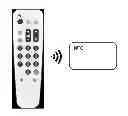
FIG. 1 shows a remote control communicating with a passive peripheral device in accordance with principles disclosed herein; and
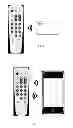
FIG. 2 shows a remote control communicating with an active peripheral device in accordance with principles disclosed herein.
DETAILED DESCRIPTION
FIG. 1 shows an example situation in which a remote control acts as a reader of a passive device. A credit card with an NFC communication interface is illustrated, but it should be appreciated that any portable device can be used. According to an embodiment, an NFC component is integrated into an electronic wallet and used in this context. Another application is responsible for transferring access rights to the receiver. These rights are loaded on to the NFC device. Other example passive devices can be e.g., tags, books, tickets, etc.
Thus, according to disclosed principles, a movie or airplane ticket can be provided with a passive NFC component, and the embodiment disclosed herein will be able to access additional services of the movie theater/airline via a connected television receiver. For example, the remote control reads the code from the airplane ticket and sends it to the receiver. This code contains at least one address and identification information. The receiver may e.g., transmit the identification information to an address contained in the code, this identification information allows the identification of the details of the ticket. The user can thus e.g., access his/her mileage account, take part in a competition or state his/her opinion on the service to earn additional miles, etc.
FIG. 2 shows an example situation in which the remote control communicates with another active device. Each device creates an electromagnetic field that enables a data exchange at a higher speed and at a longer communication distance.
As discussed above, it should be noted that even though the NFC device has its own energy source it does not mean that the device must operates in the active mode. For example, a smartphone can operate in the passive mode when used with the remote control.
In order to limit power consumption, a button for activating the NFC function is provided on the remote control. By pressing the button, the electromagnetic field emitter is activated and a response from an NFC device is expected. Once the NFC device is detected, the code is read by the remote control and the emitter is disabled. If no device is detected during a predefined time, the emitter will be disabled.
Once the code is received by the remote control, it is transmitted to the receiver according to several possible methods.
According to a first embodiment, the code is simply transmitted via the infrared emitter. A message comprising a header and the code is composed. A marking information is added to inform the receiver, upon reception of the message, that it has to re-route the received code to the application that is waiting for the arrival of the identification information (also referred to herein as information data). According to a particular embodiment, the information data received by the NFC device is encrypted by a key. This key is loaded into the receiver and into the remote control during initialization. The encrypted information data will then be transmitted to the receiver via the infrared channel. The receiver will use the same key to decrypt the information data.
According to a second embodiment, a bidirectional channel is created between the receiver and the remote control. Preferably, a radio emitter/receiver will be used for the remote control such as, for example, a Bluetooth emitter/receiver. The information data can also be encrypted according to the above described technique. Alternatively, it is possible to generate a session key by using a protocol such as Diffie-Hellmann for encrypting the information data.
The receiver then decrypts the information data and transmits it to the application that can use this data.
As mentioned above, this application can be an on-line trading site, a secured voting platform (i.e., one single person can vote, as identified by the code of the portable device), or a generic application that will react to an address contained in the code and connect the receiver to the identified distant application.
In the voting example, a voting application can be loaded into the smartphone and be identified by the voting site in a particular way, which means that the user has registered with this site and has received such an identifier.
During a program allowing television viewers to cast a vote, the viewers will be prompted to use a smartphone to cast a vote and thus, identifier will be transmitted to the remote control and to the receiver. As the receiver is connected to the Internet, it can transmit the voter's identifier along with an identifier of the current program.
Another application is used for the other side of the transaction (i.e., in the opposite direction of e.g., the vote). During the vote, the receiver extracts, from the metadata of the program, a code identifying the current program. This code is unique for each program and not predictable (for example, a random number). This code is transmitted to the remote control via the bidirectional channel and to the smartphone via the NFC communication. The vote application loaded in the smartphone can then add the user's identifier, the result of the user's choice and send a message to the voting site containing the identifier of the program, the user's identifier, and the choice. This prevents someone who has not followed the program from voting and also prevents third parties from voting without having initially registered.
According to one embodiment the receiver includes an NFC reader that contains the parameters enabling the remote control to communicate with the receiver. In fact, an in particular with radio frequency remote controls, a programming step is necessary to pair the remote control with the receiver. A setup parameter is transferred from the receiver to the remote control due to the NFC connection. This parameter will serve to identify the remote control while sending commands via a radio frequency channel and will thus allow the receiver to filter the instructions that are addressed to it. This parameter can be the frequency or frequencies to be used, or an identification code placed in the header of the transmitted data.
An alternative to this embodiment loads the setup parameters into a passive NFC device provided with the receiver. It is sufficient to use this NFC card to set the remote control and thus, enable communications with the receiver. This mechanism prevents one device from interfering with another one.
The devices to be paired, for example, the receiver and the remote control, are placed next to each other. When the devices detect each other, pairing may be initiated, i.e., the receiver detects the remote control and determines if an identifier of the remote control is already stored in a setup memory of the receiver or not. If not, a message may be displayed to the user to initiate the pairing by pressing e.g., an “OK” button or “exit” button if pairing is not desired. When the user approves the pairing, a pairing request message containing an identifier of the remote control is sent to the receiver, which returns an acknowledgement message containing parameters of the receiver that are necessary for pairing.
The pairing data of the receiver and remote control are stored in both devices so that the receiver recognizes the remote control to which it is paired to when communicating via the radio frequency channel.
The pairing may further comprise, in addition to identifiers, a cryptographic key or pairing key that is exchanged by the devices. The pairing key is then used to encrypt data transmitted by the remote control and the receiver. The devices can further be authenticated with a key pertaining to the user or to a home network.
The pairing can be permanent, but, according to a desired embodiment, the pairing is temporary. This means that, for example, a remote control paired with a specific television set can be paired with another television set, simply by placing the remote control next to another television set within the range of an NFC data transmission. In this case, the former pairing data (e.g., identifier, key, parameters) are deleted and replaced by new pairing data. This embodiment thus provides a very flexible pairing process.
According to a further embodiment, a remote control may be paired with several devices in a multi-pairing mode. In this case, when a device is placed next to another device in order to be paired, the former pairing data is not erased; instead, the prior pairing data is kept. This embodiment may be used e.g., for forming a home network.
The pairing could be applied to a remote control and television set as mentioned above, but may also be applied to any similar device having NFC capabilities (e.g., set-top-boxes, Hi-Fi installations, doors or gates, heating or air conditioner, or any device that can be controlled by a remote control). A remote control may be e.g., a smartphone, tablet, personal digital assistant, or any similar portable device. The same pairing principle could also be applied to a wireless mouse or keyboard paired with a personal computer or a tablet.
Claims
1. A remote control for controlling a television receiver, said remote control comprising:
communication means for communicating with said receiver;
an active near field communication (NFC) reader for communicating with an active or passive NFC device; and
means for transmitting information received from said NFC device to the receiver via the communication means.
2. The remote control according to claim 1, wherein the communication means for communicating with the receiver is an infrared channel.
3. The remote control according to claim 2, further comprising a key and means for encrypting data sent via the infrared channel.
4. The remote control according to claim 1, wherein the communication means is a bidirectional communication means.
5. The remote control according to claim 4, further comprising a key and means for encrypting data sent via the bidirectional communication means.
6. The remote control according to claim 4, further comprising means for generating a session key with a receiver and means for encrypting the data sent with the session key via the bidirectional communication means.
7. The remote control according to claim 1, further comprising a button for activating NFC communications, wherein when it is detected that the button is pressed, an NFC active mode is activated.
8. The remote control according to claim 7, further comprising a timer, said timer comprising a value that is initialized when it is detected that the button is pressed, means for comparing the value of the timer with a predefined value and for deactivating the active NFC mode when the value has reached the predefined value.
9. The remote control according to claim 1, wherein said communication means for communicating with said receiver requires a setting, the setting being transmitted by an NFC device via the NFC reader of said remote control.
10. A method for controlling a television receiver from a remote control, said method comprising:
communicating, using the remote control, with an active or passive NFC device; and
transmitting, from the remote control, information received from said NFC device to the receiver via communication means.
11. The method according to claim 10, wherein the communication means is an infrared channel.
12. The method according to claim 11, further comprising using a key to encrypt data sent via the infrared channel.
13. The method according to claim 10, wherein the communication means is a bidirectional communication means and said method further comprises using a key to encrypt data sent via the bidirectional communication means.
14. The method according to claim 10, wherein the communication means is a bidirectional communication means and said method further comprises generating a session key with a receiver and encrypting data sent with the session key via the bidirectional communication means.
15. The method according to claim 10, wherein the remote control comprises a button for activating NFC communications, and said method further comprises activating an NFC active mode when it is detected that the button is pressed.
16. The method according to claim 15, wherein the remote control further comprises a timer, the timer comprising a value that is initialized when it is detected that the button is pressed, and said method further comprises comparing the value of the timer with a predefined value and deactivating the active NFC mode when the value has reached the predefined value.
Images & Drawings included:
Sources:
- United States Patent and Trademark Office - verify current appl. status at the USPTO↗
Recent applications in this class:
- » 20250150665 2025-05-08
REMOTE CONTROL DEVICE FOR PREVENTING/REDUCING MALFUNCTION, ELECTRONIC DEVICE, AND CONTROL METHODS THEREOF - » 20250024092 2025-01-16
LIGHT RECEIVING DEVICE AND DISPLAY APPARATUS - » 20240388760 2024-11-21
DISPLAY DEVICE - » 20240298057 2024-09-05
DISPLAY DEVICE, AND METHOD FOR CONTROLLING DEVICE ON BASIS OF IR SIGNAL RECEIVED USING IR LED - » 20240292048 2024-08-29
REMOTE CONTROL DEVICE AND IMAGE DISPLAY DEVICE HAVING SAME - » 20240276052 2024-08-15
INFRARED COVERAGE, SELECTION, AND CALIBRATION IN A MEDIA SYSTEM - » 20240205487 2024-06-20
Method of assigning IR code set of TV using remote control, and system for supporting same - » 20240196039 2024-06-13
ELECTRONIC APPARATUS FOR CONTROLLING PERIPHERAL DEVICE WITH REMOTE CONTROL SIGNAL AND CONTROL METHOD THEREOF - » 20240129574 2024-04-18
ELECTRONIC DEVICE FOR DETERMINING LOCATION INFORMATION OF EXTERNAL ELECTRONIC DEVICE, AND OPERATING METHOD THEREOF - » 20240107102 2024-03-28
REMOTE CONTROL DEVICE, ELECTRONIC DEVICE AND CONTROL METHODS THEREOF
Recent applications for this Assignee:
- » 20240236193 2024-07-11
Method to transmit messages between a device and a remoter server - » 20240137624 2024-04-25
Watermarking multimedia fragments into two or more variants - » 20240107107 2024-03-28
Method and apparatus to create intuitive favorites for users - » 20240106831 2024-03-28
Location based authentication - » 20240056463 2024-02-15
Method and system to detect abnormal message transactions on a network - » 20230401292 2023-12-14
Security of surveillance media - » 20230396887 2023-12-07
Extended scene view - » 20230362430 2023-11-09
Techniques for managing generation and rendering of user interfaces on client devices - » 20230326884 2023-10-12
INTEGRATED CIRCUIT DEVICE - » 20230283673 2023-09-07
Method to transmit messages between a device and a remoter server