METHOD OF OPTIMIZING LOCATION, CONFIGURATION AND FREQUENCY ASSIGNMENT OF CELLULAR BASE STATIONS
US20140357282A1
2014-12-04
13/910,082
2013-06-04
Abstract:
The method of optimizing location, configuration and frequency assignment of cellular base stations optimizes the locations, frequencies and configuration for a group of cellular base stations to provide full coverage at a reduced cost, taking into account the constraints of area coverage, capacity of base station, and quality of service requirements for each user. A mathematical model is constructed using an integer program (IP). The base station locations, configuration parameters, and frequencies are optimized to determine the minimum number of base stations and their locations that will satisfy all system constraints.
Inventors:
- YASSER A. ALMOGHATHAWI 4 🇸🇦 DHAHRAN, Saudi Arabia
- SHOKRI ZAKI SELIM 1 🇸🇦 DHAHRAN, Saudi Arabia
Interested in similar patents?
Get notified when new applications in this technology area are published.
Classification:
H04W16/18 » CPC main
Network planning, e.g. coverage or traffic planning tools; Network deployment, e.g. resource partitioning or cells structures Network planning tools
Description
BACKGROUND OF THE INVENTION
1. Field of the Invention
The present invention relates to cellular telephone systems, and particularly to a method of optimizing location, configuration, and frequency assignment of cellular base stations.
2. Description of the Related Art
The cellular concept is replacing a single large cell having a high-power transmitter by many small cells having low-power transmitters, where each small cell is providing coverage to only a small portion of the service area. A cellular network could be defined as a radio network that consists of small land areas called cells, where each cell is served by fixed-location transceivers called base stations and can provide coverage over a wide geographic area, which enables a large number of portable transceivers called mobile stations to communicate with other transceivers anywhere in the network. These cells are often shown diagrammatically as hexagonal shapes, whereas, in reality, they have irregular boundaries due to the terrain over which they travel, such as hills, buildings and other objects that cause the signal to be attenuated and diminish differently in each direction.
Multiple frequencies are assigned to each cell within the cellular network, which have corresponding base stations. Those frequencies can be reused in other cells with the condition that the same frequencies are not reused in adjacent neighboring cells, which would cause co-channel interference. Hence, adjacent cells must use different frequencies, unless the two cells are sufficiently far enough from each other. Thus, the increased capacity in a cellular network results from the fact that the same radio frequency can be reused in a different area with a completely different transmission. On the other hand, if there is a single plain transmitter, only one transmission can be used on any given frequency. As the demand increases, the number of base stations may be increased. Thus, additional radio capacity is provided with no additional increase in radio spectrum. Hence, with a fixed number of channels, an arbitrarily large number of users can be served by reusing the channels throughout the coverage area.
There are several techniques to increase network capacity, and even more to cope with the explosive growth of mobile phone users. Cell splitting is one technique that is used to increase network capacity without new frequency spectrum allocation. Cell splitting is reducing the size of the cell by lowering antenna height and transmitter power. Also, another technique to increase network capacity is sectoring, which is dividing the cell into several sectors without changing its size using several directional antennas at the base station, instead of a single omnidirectional antenna. Using the sectoring technique will reduce the radio co-channel interference. Thus, network capacity will be increased. The interference between adjacent channels in a cellular network could be minimized by assigning different frequencies to adjacent cells. Hence, cells can be grouped together to form what is called a cluster. It is necessary to limit the interference between cells having the same frequency. The larger the number of cells in the cluster, the greater the distance between cells sharing the same frequencies. By making all the cells in a cluster smaller, it is possible to increase the overall capacity of the cellular system. Hence, small low power base stations should be installed in areas where there are more users. Many advantages result from using the concept of cellular networks such as increased coverage and capacity by the ability to re-use frequencies, reduced the usage of transmitted power, and reduced interference from other signals.
Mathematical programming is a modeling approach used for decision-making problems. Formulations of mathematical programming include a set of decision variables, which represent the decisions that need to be found, and an objective function, which is a function of the decision variables, which assesses the quality of the solution. A mathematical program will then either minimize or maximize the value of this objective function.
The decisions of the model are subject to certain requirements and restrictions, which can be included as a set of constraints in the model. Each constraint can be described as a function of the decision variables, which bounds the feasible region of the solution, and it is either equal to, not less than, or not more than a certain value. Also, another type of constraint can simply restrict the set of values to which a variable might be assigned. There remains the problem of identifying the decision variables, objective function and constraints with respect to the optimization of the base station location, configuration (azimuth, tilt, height and transmitted power) and frequency allocation.
Thus, a method of optimizing location, configuration, and frequency assignment of cellular base stations solving the aforementioned problems is desired.
SUMMARY OF THE INVENTION
The method of optimizing location, configuration, and frequency assignment of cellular base stations optimizes the locations, frequencies, and configuration for a group of cellular base stations to provide full coverage at a reduced cost, taking into account the constraints of area coverage, capacity of base station, and quality of service requirements for each user. A mathematical model is constructed using an integer program (IP). The base station locations, configuration parameters, and frequencies are optimized to determine the minimum number of base stations and their locations that will satisfy all system constraints.
These and other features of the present invention will become readily apparent upon further review of the following specification and drawings.
BRIEF DESCRIPTION OF THE DRAWINGS
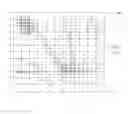
FIG. 1 is a plot of Demand Points and Candidate Sites used in validating the method of optimizing locations, configuration, and frequencies of cellular base stations according to the present invention.
FIG. 2 is a plot of optimized base station locations and frequencies determined by the method of optimizing locations of cellular base stations according to the present invention.
Similar reference characters denote corresponding features consistently throughout the attached drawings.
DETAILED DESCRIPTION OF THE PREFERRED EMBODIMENTS
At the outset, it should be understood by one of ordinary skill in the art that embodiments of the present method can comprise software or firmware code executing on a computer, a microcontroller, a microprocessor, or a DSP processor; state machines implemented in application specific or programmable logic; or numerous other forms without departing from the spirit and scope of the method described herein. The present method can be provided as a computer program, which includes a non-transitory machine-readable medium having stored thereon instructions that can be used to program a computer (or other electronic devices) to perform a process according to the method. The machine-readable medium can include, but is not limited to, floppy diskettes, optical disks, CD-ROMs, and magneto-optical disks, ROMs, RAMs, EPROMs, EEPROMs, magnetic or optical cards, flash memory, or other type of media or machine-readable medium suitable for storing electronic instructions.
The method of optimizing location, configuration, and frequency assignment of cellular base stations optimizes the location, configuration, and frequency assignment for a group of cellular base stations to provide full coverage at a reduced cost, taking into account the constraints of area coverage, capacity of base station, and quality of service requirements for each user. A mathematical model is constructed using an integer program (IP).
The base station locations are optimized to determine the minimum number of base stations and their locations that will satisfy all system constraints. The objective of this model is to minimize the total cost of the associated base stations, taking into account the constraints of area coverage, capacity of base station, and quality of service requirements for each user. If the costs of base stations are equal, then the problem is to find the minimum number of base stations that will satisfy all constraints. We assume that the demand points and candidate sites for the base stations are known.
IP involves decisions that are discrete in nature. In the following, we will refer to the form of IP as the standard form, which is described as:
Min / Max f ( x ) subject to g i ( x ) ≤ 0 h j ( x ) = 0 ,
where f(x) is the objective function to be minimized or maximized, gt(x) are the inequality constraints to the problem for i=1.2, . . . , m, hj(x) are the equality constraints to the problem for j=1, 2, . . . , n, and m, n are the number of the constraints for the inequalities and the equalities, respectively.
A COST-Walfisch-Ikegami (COST-WI), COST being the COopération européenne dans le domaine de la recherche Scientifique et Technique, a European Union Forum for cooperative scientific research that developed the COST portion of this model via experimental research, is a propagation model used to simulate an urban city environment. This model has many features that can be implemented easily and without an expensive geographical database, captures major properties of propagation, and is used widely in cellular network planning. The COST-WI model provides high accuracy for urban environments, where propagation over rooftops is the most dominant part, by the consideration of more data to describe the character of the environment. The model considers building heights (hroof), road widths (w), building separation (b), and road orientation with respect to a direct radio path (φ).
The main parameters of the model are Frequency (f), which is restricted to be in the range of 800 to 2000 MHz; Height of the transmitter hTX, which is restricted to be in the range of 4 to 50 meters; Height of the receiver hRX, which is restricted to be in the range of 1 to 3 meters; and Distance between transmitter and receiver (d), which is restricted to be in the range of 20 to 5000 meters. The model distinguishes between two situations, line-of-sight (LOS) and none-line-of sight (NLOS) situations. In the present method, we consider the situation of NLOS.
LOS means that there exists a direct path between the transmitter and receiver. For this case, the path loss (PL) is determined by the following expression:
PL=42.6+26·log d+20 log f for d−≧20m,
where PL is the path loss in decibels, d is the distance in kilometers, and f is the frequency in megahertz.
NLOS means that the path between the transmitter and receiver is partially obstructed, usually by a physical object, such as buildings, trees, hills, mountains, etc. For this case, the path loss calculation is more complicated, where the path loss is the sum of the free space loss (L0), the rooftop-to-street diffraction loss (Lrts), and the multiple screen diffraction loss (Lmsd):
PL = { L 0 + L rts + L msd for L rts + L msd > 0 L 0 for L rts + L msd ≤ 0 .
The free space loss (L0) is determined by:
L0=32.4+20·log d+20·log f,
where L0 is in dB, d is the distance between the transmitter and receiver in kilometers, and f is the frequency in MHz. The rooftop-to-street diffraction loss (Lrt) determines the loss occurred on the wave coupling into the street where the receiver is located and it is calculated by:
Lrts=−16.9−10·log w+10·log f+20·log(hroof−hRX)+LOri,
where w is the width of the street in meters, f is the frequency in MHz, hroof is the height of the base station antenna over street level in meters, hRX is the mobile antenna station height in meters, and LOri is the orientation loss obtained from the calibration with measurements, and is determined by:
L Ori = { - 10 + 0.354 · ϕ for 0 ° ≤ ϕ < 35 ° 2.5 + 0.075 · ( ϕ - 35 ° ) for 0 ° ≤ ϕ < 35 ° 4.0 + 0.114 · ( ϕ - 55 ° ) for 0 ° ≤ ϕ < 35 ° .
The multiple screen diffraction loss is determined by:
Lmsd=Lbsh+ka+kd·log d+kf·log f−9·log b,
where:
L bsh = { - 18 · log ( 1 + ( h TX - h roof ) ) for h TX > h roof 0 for h TX ≤ h roof k a = { 54 for h TX > h roof 54 - 0.8 · ( h TX - h roof ) for d ≥ 0.5 km and h TX ≤ h roof 54 - 0.8 · ( h TX - h roof ) · ( d 0.5 ) for d < 0.5 km and h TX ≤ h roof k d = { 18 for h TX > h roof 18 - 15 · ( h TX - h roof h roof - h RX ) for h TX ≤ h roof and k f = - 4 + { 0.7 · ( f 925 - 1 ) for medium sized city and suburban centers 1.5 · ( f 925 - 1 ) for metropolitan centers ,
and where hTX is the height of the base station antenna above the roof top in meters, hroof is the height of the roof above street level in meters, hRX is the height of the mobile station antenna in meters, b is the separation between buildings in meters, and d and f are as defined above.
The factor ka represents the increase of the path loss for base station antennas below the rooftop of the adjacent buildings. The factors and kd and kf control the dependence of Lmsd versus the distance and radio frequency, respectively.
In order to formulate the problem of location and configuration of base station and frequency assignment, the ith demand point is denoted by DPi, i=1, 2, . . . , n, and the jth candidate site by CSj, j=1, 2, . . . , m. Each demand point represents a cluster of uniformly distributed multiple users. The set of all candidate sites is denoted by S. A base station at candidate site j can serve demand point i, if the power received at DPi exceeds its minimum power requirements, γ. We define (i) as the set of candidate sites that can serve demand point DPi, i.e., S(i)={j|jεS, such that the power received at DPi≧γ}.
In this model, we solve the integrated problem of location and configuration of base stations and frequency assignment. The configuration of antennas in each base station involves azimuth, tilt, height, and transmitted power. The objective of this model is to minimize the total cost of the network, taking into account the constraints of area coverage, capacity of base station, and quality of service requirements for each user. This means that the problem is to find the minimum number of base stations with optimal configuration and frequency assignment that could achieve the objective of the model while satisfying all constraints.
We assume that the demand points and candidate sites are known. Denote the ith demand point by DPi, i=1, 2, . . . , n and the jth candidate site by CSj, j=1, 2, . . . , m. There is also a set of available frequencies, k, to be assigned to base stations, k=1, 2, . . . , K. We will assume that a mast carries l directional antennas where l=1, 2, . . . , N, i.e., N is either three with 120° for each sector, or six with 60° for each sector. We consider N=3, i.e., each base station has, at most, 3 directional antennas. An antenna has an azimuth angle, A where 0≦A≦359° and a tilt angle, Tε[−15°, 0]. Let P denote the power of an antenna, Pmin≦P≦Pmax, and H denote the height of an antenna, Hmin≦H≦Hmax. Let (i) be the set of candidate sites that can serve test point TPi by one of its antennas at given azimuth and tilt angles, i.e.,
S ( i ) = { ( j , l , A , T , H , P ) | j ∈ S ( i ) , l = 1 , 2 , or 3 , 0 ≤ A ≤ 359 ° , - 15 ° ≤ T ≤ 0 , H min ≤ H ≤ H max , P min ≤ P ≤ P max , such that the power received at DP i ≥ γ }
where S is the set of candidate sites and γ is threshold of minimum power.
The Integer Programming model for the location and configuration of base stations and frequency assignment problems is described as follows. The decision variables are Yj, XijlkATHP, WjlkATHP, and ZjkA.
The decision variable, Yj, j=1, 2, . . . , m, is defined as follows:
Y j = { 1 if a BS is constructed CS j 0 otherwise .
The decision variable, XijlkATHP, where i=1, 2, . . . , n, jεS(i), l=1, 2, or 3, k=1, 2, . . . , K, 0°≦A≦359°, −15°≦T≦0°, Hmin≦H≦Hmax, Pmin≦P≦Pmax, l is the antenna, k is the frequency, A is the azimuth, T is the tilt, H is the height, and P is the power, is defined as follows is defined as follows:
X ijlkATHP = { 1 if a BS at CS j with l , k , A , T , H and P has the strongest signal at DP i 0 otherwise .
The decision variable, WjlkATHP, where jεS(i), l=1, 2, or 3, k=1, 2, . . . , K, 0°≦A≦359°, −15°≦T≦0°, Hmin≦H≦Hmax, Pmin≦P≦Pmax, l is the antenna, k is the frequency, A is the azimuth, T is the tilt, H is the height, and P is the power, is defined as follows:
W jlkATHP = { 1 if at CS j , with l , k , A , T , H and P 0 otherwise .
Note that the difference of azimuth angles of the three antennas at any mast is 120°. Hence:
Wj,1,k,A,T,H,P=Wj,2k, mod(A+1120,360),t,H,P=Wj,3,k, mod(A+240,360),T,H,P.
The decision variable, ZjkA, where jεS(i), k=1, 2, . . . , K, and 0°≦A≦359°, is defined as follows:
Z jkA = { 1 if at CS j a BS has frequency k and azimuth A 0 otherwise
The objective function, which is the function to be optimized, is the total cost of the network. The objective function is described as:
Minimize Σj=1nCjYj+ΣjεS(i)Σl=13Σk=1KΣA=0360ΣT=−150ΣH=HminHmaxΣP=HminPmaxWjlkATHPCP(P) (1)
where Cj is the cost of installing a base station at CSj, and CP(P) is the cost of having an antenna with power P, which might not be a linear function.
The constraints include the following seven constraint types that bound the feasible region of the solution. First, each antenna, if chosen, at any base station has only one value of frequency, azimuth, tilt, height, and power. This set of constraints is written as:
Σk=1KΣA=0359ΣT=−150ΣH=HminHmaxΣP=HminPmaxWjlkATHP≦Yj,
where j=1, 2, . . . , m and l=1, 2, 3. Second, each base station at any location is allocated with only one frequency and has only one azimuth. This condition is represented by the following two sets of constraints:
WjlkATHP=ZjkA where jεS(i), l=1, 2, 3, k=1, 2, . . . K,
0°≦A≦359°, −15°≦T≦0°,
Hmin≦H≦Hmax,
and Pmin≦P≦Pmax (3)
Σk=1KΣA=0359ZjA≦1, j=1,2, . . . , m. (4)
Third, each demand point should be served by at least one base station. This set of constraints is represented by:
ΣjεS(i)Σl=13Σk=1KΣA=0360ΣT=−150ΣH=HminHmaxΣP=HminPmaxWjlkATHP≧1, (5)
for i=1, 2, . . . n. Fourth, each demand point should be assigned to exactly one base station. Hence this set of constraints is written as:
ΣjεS(i)Σl=13ΣA=0360ΣT=−150ΣH=HminHmaxΣP=HminPmaxXijlkATHP=1, i=1,2, . . . , n (6)
Fifth, a candidate site CSj is assigned to a demand point DPi if it is selected to construct a base station that has an antenna l with frequency k, azimuth A, tilt T, height H, and power P. This set of constraints is represented by:
WjlkATHPXijlkATHP, i=1, 2, . . . , n,
jεS(i), l=1, 2, 3, k=1, 2, . . . ,K, 0°
≦A≦359°, −15°≦T≦0°, Hmin≦H
≦Hmax, and Pmin≦P≦Pmax. (7)
Sixth, each antenna at each base station has a capacity of Q channels, so the number of demand points assigned to each base station must not exceed its limit of channels. The resulting constraint set is:
Σt−nΣk=1KΣA=0359ΣT=−150Σh=HminHmaxΣP=PminPmaxXijlkATHP≦Q, jεS(i), and l=1, 2, 3. (8)
Seventh, the quality of service constraints by which the ratio of the strongest signal received at each DPi to the received noise and signals from other base stations should be greater than a minimum requirement of signal-to-interference-plus-noise ratio, SINR. Thus, the constraint set is:
SP ( i ) P N i + TP ( i ) - SP ( i ) ≥ 10 SINR 10 , i = 1 , 2 , … , n ( 9 )
where SP(i) is the strongest power received at demand point DPi and is given by:
SP(i)=ΣjεS(i)Σl=13Σk=1KΣA=0360ΣT=−150ΣH=HminHmaxΣP=HminPmaxXijlkATHPPijlkATHP, (10)
where P is the received power at DPi. TP(i) is the total power received at DPi which is generated by all base stations at candidate sites that can serve DPi and is given by:
TP(i)=ΣjεS(i)Σl=13Σk=1KΣA=0360ΣT=−150ΣH=HminHmaxΣP=HminPmaxWjlkATHPPijlkATHP, 11)
where P is the received power at DPi. PNi is the noise power at DPi. SINR is the minimum signal-to-interference-plus-noise ratio. The complete IP model for the location and configuration of base stations and frequency assignment problems is summarized in Table 1.
| TABLE 1 |
| Base Station location, frequency assignment and configuration |
| complete IP model |
| Minimize ∑ j = 1 m C j Y j + ∑ j ∈ S ( i ) ∑ l = 1 3 ∑ k = 1 K ∑ A = 0 360 ∑ T = - 15 0 ∑ H = H min H max ∑ P = P min P max W jlkATHP C P ( P ) |
| Subject to: |
| ∑ k = 1 K ∑ A = 0 359 ∑ T = - 15 0 ∑ H = H min H max ∑ P = P min P max W jlkATHP ≤ Y j , and W jlkATHP ≤ Z jkA , ∑ A = 0 359 Z jkA ≤ 1 , |
| ∑ j ∈ S ( i ) ∑ l = 1 3 ∑ k = 1 K ∑ A = 0 360 ∑ T = - 15 0 ∑ H = H min H max ∑ P = P min P max W jlkATHP ≥ 1 , |
| ∑ j ∈ S ( i ) ∑ l = 1 3 ∑ k = 1 K ∑ A = 0 360 ∑ T = - 15 0 ∑ H = H min H max ∑ P = P min P max X ijlkATHP = 1 , and W jlkATHP ≥ X ijlkATHP |
| ∑ i = 1 n ∑ k = 1 K ∑ A = 0 359 ∑ T = - 15 0 ∑ H = H min H max ∑ P = P min P max X ijlkATHP ≤ Q |
| SP ( i ) P N i + TP ( i ) - SP ( i ) ≥ 10 SINR 10 X , Y , W , Z ∈ [ 0 , 1 ] |
To illustrate the efficiency of the above model, a map of an area that is located on the Red Sea is discretized into an 11×11 grid. The population distribution in the area can be captured using 100 demand points (DP), where each demand point represents a cluster of a uniformly distributed multiple users. This problem can be solved if all base stations have the same configuration and frequency. Therefore, we added an extra 165 demand points to add more complexity to the example. The resulting problem has no solution if all base stations use the same configuration and frequency. Plot 100 of FIG. 1 shows 265 demand points and the 100 selected candidate sites (CS). Parameters for the COST-WI are listed in Table 2. Two valued transmitter heights and other parameters having two values are shown in Table 2. The other parameters used in the numerical experiments, such as transmitted power, gains, receiver sensitivity, and base station capacity, are shown in Table 3.
| TABLE 2 |
| Parameters Considered for COST-WI Propagation Model |
| Parameter | Value | |
| Frequency | 1800 | MHz |
| Height of transmitter | 20 m|25 m |
| Height of receiver | 2 | m | |
| Height of building | 7 | m | |
| Building separation | 50 | m | |
| Width of streets | 25 | m |
| Angle | 30° | |
| TABLE 3 |
| Parameters used in Numerical Experiment |
| Parameter | Value 1 | Value 2 | |
| Transmitted power | 20 dBm | 25 dBm | |
| Transmitted antenna gain | 8 dBi | 8 dBi | |
| Received antenna gain | 2 dBi | 2 dBi | |
| Minimum power requirement | −95 dBm | −95 dBm | |
| Height of Transmitter | 20 m | 25 m | |
| Available directional antennas | 1, 2, 3 | 1, 2, 3 | |
| Antenna azimuth | 0° | 60° | |
| Available frequencies | 1 | 2 | |
| Base station capacity | 30 channels | 30 channels | |
| Antenna capacity | 10 channels | 10 channels | |
| SINR | 20 dB | 20 dB | |
The IP for base stations location and configuration problems is solved using an optimization modeling software, LINGO 12, provided by LINDO Systems Inc. The optimal solution resulted in 13 base stations as shown in FIG. 2. The location and configuration of each selected base station along with the allocated frequencies are shown in Table 4.
As observed from the results in Table 4, this IP model recommends 13 base stations to cover all the demand points. The recommendation shows that a different configuration and frequency is assigned to different base stations to reduce interference between them, and also, not all sectors of each base station are working. Optimizing the configuration of each base station adds more flexibility to the model, i.e., different azimuth, transmitted powers, and heights could be used. Also, number of operational sectors can be decided. However, the limited capacity of each antenna has complicated the model and resulted in 13 base stations to cover the service area, with a different configuration of each base station. Finally, it can be concluded that considering the antenna configuration of each base station and the frequency assignment will add more flexibility to the model and could help in reducing the interference between the base stations. It should be noted that the minimum number of base stations and their location could change if more candidate sites are included.
| TABLE 4 |
| Base Station Locations, Configuration and Allocated Frequencies |
| BS | X Coor- | Y Coor- | Azi- | Fre- | |||
| # | dinate | dinate | muth | Antenna | Height | Power | quency |
| 1 | 0.5 | 8.5 | 2 | 1 | 1 | 1 | 1 |
| 2 | 2 | 1 | |||||
| 3 | 2 | 1 | |||||
| 2 | 1.5 | 2.5 | 2 | 1 | 1 | 1 | 1 |
| 2 | 2 | 1 | |||||
| 3 | 1 | 1 | |||||
| 3 | 1.5 | 10 | 2 | 3 | 1 | 1 | 1 |
| 4 | 1.5 | 9.5 | 1 | 1 | 1 | 1 | 1 |
| 2 | 1 | 1 | |||||
| 3 | 1 | 1 | |||||
| 5 | 2.5 | 6.5 | 2 | 1 | 1 | 2 | 2 |
| 2 | 2 | 1 | |||||
| 3 | 2 | 1 | |||||
| 6 | 4.5 | 2.5 | 2 | 1 | 2 | 1 | 1 |
| 2 | 2 | 1 | |||||
| 3 | 2 | 1 | |||||
| 7 | 4.5 | 3.5 | 2 | 2 | 2 | 1 | 2 |
| 3 | 2 | 1 | |||||
| 8 | 5.5 | 6.5 | 2 | 2 | 2 | 1 | 1 |
| 3 | 2 | 1 | |||||
| 9 | 6.5 | 3.5 | 2 | 1 | 1 | 1 | 1 |
| 2 | 2 | 1 | |||||
| 3 | 1 | 1 | |||||
| 10 | 7.5 | 1.5 | 2 | 1 | 2 | 1 | 2 |
| 2 | 1 | 1 | |||||
| 3 | 2 | 1 | |||||
| 11 | 7.5 | 9.5 | 2 | 2 | 2 | 1 | 1 |
| 3 | 1 | 1 | |||||
| 12 | 8.5 | 2.5 | 2 | 1 | 2 | 1 | 2 |
| 2 | 2 | 1 | |||||
| 3 | 1 | 1 | |||||
| 13 | 9.5 | 7.5 | 2 | 2 | 2 | 1 | 1 |
| 3 | 2 | 1 | |||||
It is to be understood that the present invention is not limited to the embodiments described above, but encompasses any and all embodiments within the scope of the following claims.
Claims
We claim:1. A computer-implemented method of optimizing location, configuration and frequency assignment of cellular base stations, comprising the steps of:
inputting a plurality of known demand points and candidate base station sites;
inputting cellular radio signal propagation data relating to the demand points and the candidate base station sites;
inputting a plurality of directional antennas for each of the candidate base station sites;
solving an integer program based on the known demand points, the candidate base station sites, the plurality of directional antennas, and the cellular radio signal propagation data, the integer program solution being characterized by the following relations,
Minimize Σj=1nCjYj+ΣjεS(i)Σl=13Σk=1KΣA=0360ΣT=−150ΣH=HminHmaxΣP=HminPmaxWjlkATHPCP(P) (1)
subject to the constraints:
∑ k = 1 K ∑ A = 0 359 ∑ T = - 15 0 ∑ H = H min H max ∑ P = P min P max W jlkATHP ≤ Y j , W jlkATHP ≤ Z jkA , ∑ A = 0 359 Z jkA ≤ 1 , ∑ j ∈ S ( i ) ∑ l = 1 3 ∑ k = 1 K ∑ A = 0 360 ∑ T = - 15 0 ∑ H = H min H max ∑ P = P min P max W jlkATHP ≥ 1 , ∑ j ∈ S ( i ) ∑ l = 1 3 ∑ k = 1 K ∑ A = 0 360 ∑ T = - 15 0 ∑ H = H min H max ∑ P = P min P max X ijlkATHP = 1 , W jlkATHP ≥ X ijlkATHP , ∑ i = 1 n ∑ k = 1 K ∑ A = 0 359 ∑ T = - 15 0 ∑ H = H min H max ∑ P = P min P max X ijlkATHP ≤ Q , SP ( i ) P N i + TP ( i ) - SP ( i ) ≥ 10 SINR 10 , and X , Y , W , Z ∈ [ 0 , 1 ] ,
where, Cj is the cost of installing a base station at the jth candidate site, CP(P) is the cost of having an antenna with power P, Yj is the number of base stations serving the jth demand point, XijklATHP is a decision variable based on a base station at the jth candidate site with the lth antenna, the kth assigned frequency, at the Ath azimuth angle, having the Tth tilt at the Hth height, transmitting with the Pth power having the strongest signal at the ith demand point DPi, WjlkATHP is a decision variable based on the jth candidate site, where the lth antenna, using the kth assigned frequency, has the Ath azimuth angle, the Tth tilt at the Hth height, transmitting with the Pth power, ZjkA, is a decision variable based on a base station at the jth candidate site, having the kth assigned frequency, transmitting at the Ath azimuth angle, Q is the channel capacity of each base station, SP(i) is the strongest power received at a demand point DPi, TP(i) is the total power received at DPi. the total power being generated by all of the base stations at candidate sites that can serve DPi, PNi is the noise power at DPi, and SINR is the minimum signal-to-interference-plus-noise ratio, the Σj=1mΣk=1lCjYjk, minimization selecting the best candidate base station sites; and
displaying a plot showing the best candidate base station sites in relation to the plurality of known demand points.
2. The computer-implemented method of optimizing location, configuration and frequency assignment of cellular base stations according to claim 1, further comprising the step of running a COST-Walfisch-Ikegami radio propagation model to obtain said cellular radio signal propagation data.
3. A computer software product, comprising a non-transitory medium readable by a processor, the non-transitory medium having stored thereon a set of instructions for performing a method of optimizing location and configuration of cellular base stations, the set of instructions including:
(a) a first sequence of instructions which, when executed by the processor, causes said processor to input a plurality of known demand points and candidate base station sites;
(b) a second sequence of instructions which, when executed by the processor, causes said processor to input cellular radio signal propagation data relating to the demand points and the candidate base station sites;
(c) a third sequence of instructions which, when executed by the processor, causes said processor to input a plurality of directional antennas for each of said candidate base station sites;
(d) a fourth sequence of instructions which, when executed by the processor, causes said processor to solve an integer program based on said known demand points, said candidate base station sites, and said cellular radio signal propagation data, said integer program solution being characterized by the following relations,
Minimize Σj=1mΣk=1lCjYjk,
subject to the constraints:
∑ A = 0 359 ∑ T = - 15 0 ∑ H = H min H max ∑ P = P min P max W jlATHP ≤ Y j , W jlATHP ≤ Z jA , ∑ A = 0 359 Z jA ≤ 1 , ∑ j ∈ S ( i ) ∑ l = 1 3 ∑ A = 0 360 ∑ T = - 15 0 ∑ H = H min H max ∑ P = P min P max W jlATHP ≥ 1 , ∑ j ∈ S ( i ) ∑ l = 1 3 ∑ A = 0 360 ∑ T = - 15 0 ∑ H = H min H max ∑ P = P min P max X ijlATHP = 1 , W jlATHP ≥ X ijlATHP , ∑ i = 1 n ∑ A = 0 359 ∑ T = - 15 0 ∑ H = H min H max ∑ P = P min P max X ijlATHP ≤ Q , SP ( i ) P N i + TP ( i ) - SP ( i ) ≥ 10 SINR 10 , and X , Y , W , Z ∈ [ 0 , 1 ] ,
where, Cj is the cost of installing a base station at jth candidate site, CP(P) is the cost of having an antenna with power P, Y is the number of base stations serving the jth demand point, XijklATHP is a decision variable based on a base station at the jth candidate site with the lth antenna, the kth assigned frequency, at the Ath azimuth angle, having the Tth tilt at the Hth height, transmitting with the Pth power having the strongest signal at the ith demand point DPi, WjlkATHP is a decision variable based on the jth candidate site, where the lth antenna, using the kth assigned frequency, has the Ath azimuth angle, the Tth tilt at the Hth height, transmitting with the Pth power, ZjkA, is a decision variable based on a base station at the jth candidate site, having the kth assigned frequency, transmitting at the Ath azimuth angle, Q is the channel capacity of each base station, SP(i) is the strongest power received at demand point DPi, TP(i) is the total power received at DPi which is generated by all base stations at candidate sites that can serve DPi, PNi is the noise power at DPi, and SINR is the minimum signal-to-interference-plus-noise ratio, wherein said Σj=1mΣk=1lCjYjk, minimization selects the best candidate base station sites; and
(e) a fifth sequence of instructions which, when executed by the processor, causes said processor to display a plot showing the best candidate base station sites in relation to said plurality of known demand points.
4. The computer software product according to claim 3, further comprising a sixth sequence of instructions which, when executed by the processor, causes said processor to run a COST-Walfisch-Ikegami radio propagation model to obtain said cellular radio signal propagation data.
Images & Drawings included:









Sources:
- United States Patent and Trademark Office - verify current appl. status at the USPTO↗
Recent applications in this class:
- » 20250168651 2025-05-22
COMMUNICATION METHOD - » 20250159492 2025-05-15
MEASUREMENT CONTROL METHOD, TERMINAL, AND NETWORK SIDE DEVICE - » 20250159491 2025-05-15
CENTRALIZED UNIT (CU) DEPLOYMENT AND MANAGEMENT - » 20250142354 2025-05-01
RELAY STATION INSTALLATION POSITION CALCULATION DEVICE, INSTALLATION POSITION CALCULATION METHOD, AND INSTALLATION POSITION CALCULATION PROGRAM - » 20250142353 2025-05-01
DATA INTEGRITY AUDITING AND CORRECTION TOOL FOR CELLULAR NETWORK DEPLOYMENT - » 20250142352 2025-05-01
DYNAMIC TRACKING OF REPORTING OF CELLULAR SERVICE OUTAGE AND METHOD OF OPERATION OF THE SAME - » 20250133414 2025-04-24
FALLOUT HANDLING FOR ZERO TOUCH PROVISIONING OF CELL SITES - » 20250126485 2025-04-17
DETERMINING OVERSHOOTING CELLS OF BASE STATIONS BASED ON MACHINE LEARNING - » 20250119758 2025-04-10
VALIDATING THE INTEGRATION OF NEW CARRIER COMPONENTS AT ACCESS POINT EQUIPMENT - » 20250119757 2025-04-10
NETWORK NODE, USER EQUIPMENT, METHOD AND COMPUTER PROGRAM