COMPOSITE ELECTROLYTE CONSISTING OF FULLY STABILIZED ZIRCONIA AND PARTIALLY STABILIZED ZIRCONIA
US20140367249A1
2014-12-18
14/376,016
2013-02-01
Abstract:
Composite electrolyte materials comprising at least one component from fully stabilized zirconia (such as 10Sc1CeSZ) and at least one component from partially stabilized zirconia (such as 6SclCeSZ) as the electrolyte material for solid state electrochemical devices.
Inventors:
- Zhonglin Wu 6 🇺🇸 Bettendorf, IA, United States
- Courtney J. Mnonzyk 1 🇺🇸 Davenport, IA, United States
Assignee:
- Carleton Life Support Systems, Inc. 41 🇺🇸 Davenport, IA, United States
Interested in similar patents?
Get notified when new applications in this technology area are published.
Classification:
H01M8/1016 » CPC further
Fuel cells; Manufacture thereof; Fuel cells with solid electrolytes characterised by the electrolyte material
H01M2008/1293 » CPC further
Fuel cells; Manufacture thereof; Fuel cells with solid electrolytes operating at high temperature, e.g. with stabilised ZrO electrolyte Fuel cells with solid oxide electrolytes
C25B13/04 » CPC main
Diaphragms; Spacing elements characterised by the material
C04B35/64 » CPC further
Shaped ceramic products characterised by their composition ; Ceramics compositions ; Processing powders of inorganic compounds preparatory to the manufacturing of ceramic products; Forming processes; Processing powders of inorganic compounds preparatory to the manufacturing of ceramic products Burning or sintering processes
C04B35/488 » CPC further
Shaped ceramic products characterised by their composition ; Ceramics compositions ; Processing powders of inorganic compounds preparatory to the manufacturing of ceramic products based on oxide ceramics based on zirconium or hafnium oxides, zirconates, zircon or hafnates; Fine ceramics Composites
H01M8/10 IPC
Fuel cells; Manufacture thereof Fuel cells with solid electrolytes
C25B1/02 » CPC further
Electrolytic production of inorganic compounds or non-metals; Products Hydrogen or oxygen
Description
CROSS-REFERENCE TO RELATED APPLICATION
This application claims the benefit of Provisional Application U.S. Ser. No. 61/593,596 filed on Feb. 1, 2012.
BACKGROUND OF THE INVENTION
Performance of electrochemical devices, such as solid oxide fuel cells and ceramic oxygen separation membranes, is typically limited by the electrical resistance of the solid electrolyte materials. Solid electrolyte materials with high ionic conductivity will not only increase the electrical performance of the electrochemical devices, but also allow the device to run at a lower temperature, which may enable use of cheaper metallic components. Yttria (Y2O3) stabilized zirconia (YSZ) has long been investigated for these applications. Over the last several years, scandium oxide (Sc2O3) stabilized zirconia (ScSZ) has emerged as a viable electrolyte material to replace YSZ for these devices. The stabilization of zirconia can be full or partial, depending on the type and amount of the dopants (such as yttria). For applications requiring high mechanical strength and toughness, such as Applicant's Ceramic Oxygen Generation Systems (COGS), a fully stabilized zirconia compound may not be the best candidate due to its relatively low strength and its lack of a toughening mechanism. Partially stabilized zirconia with lower dopant contents have excellent mechanical strength and toughness, but also have lower ionic conductivity.
Several zirconia based electrolyte materials were evaluated, both fully stabilized (such as 8YSZ and 10Sc1CeSZ) and partially stabilized (such as 3YSZ, 6Sc1 CeSZ and 6ScSZ). Ceramic Oxygen Generation System units with 6Sc1 CeSZ electrolyte have been manufactured and have proven their suitability for field applications under severe environmental conditions. However, the conductivity of 6Sc1CeSZ is far below that of 10Sc1CeSZ, resulting in lower performance at the same operation conditions.
There therefore remains a need for a solid electrolyte with optimized conductivity and mechanical strength suitable for use in solid state electrochemical devices such as Ceramic Oxygen Generation Systems.
BRIEF SUMMARY OF THE INVENTION
The invention teaches composite electrolyte materials comprising at least one component from fully stabilized zirconia (such as 10Sc1CeSZ) and at least one component from partially stabilized zirconia (such as 6Sc1CeSZ) as the electrolyte material for solid state electrochemical devices.
BRIEF DESCRIPTION OF THE DRAWING
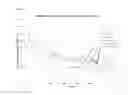
FIG. 1 is a graph showing conductivity of 10Sc1CeSZ-6Sc1CeSZ composites as a function of 10Sc1CeSZ content; and
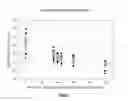
FIG. 2 is a graph showing the bar breaking strength of 10Sc1CeSZ-6Sc1CeSZ composites as a function of 10Sc1CeSZ content.
DETAILED DESCRIPTION OF PREFERRED EMBODIMENTS
This invention teaches composite electrolyte materials composed at least one component from fully stabilized zirconia (such as 10Sc1CeSZ, for example) and at least one component from partially stabilized zirconia (such as 6Sc1CeSZ, for example) as the electrolyte material for solid state electrochemical devices. The composite can be obtained through mixing electrolyte powders of fully stabilized zirconia and electrolyte powders from partially stabilized zirconia and following typical ceramic manufacturing processes. For example, 10Sc1CeSZ powder and 6Sc1CeSZ powder in a weight ratio between 1:10 to 10:1 can be mixed together. The mixture can then be processed to make components for solid state electrochemical devices. The preferred weight ratio of 10Sc1CeSZ to 6Sc1CeSZ in the mixture is 3:7 to 7:3.
Disks and bar samples with different 10Sc1CeSZ: 6Sc1CeSZ ratios were made to evaluate the ionic conductivity and the strength of the composite. Conductivity was measured using a DC method at a current density similar to a ceramic membrane under its typical intended operation conditions. Strength of bars was obtained via 4-point bending tests. FIG. 1 shows the conductivity of 10Sc1CeSZ-6Sc1CeSZ composites. Clearly the conductivity of the composites exhibits a percolation-type behavior. For example, the composite made with 60%)/10Sc1CeSZ and 40%)/6Sc1CeSZ has a conductivity which is 2.2× the conductivity of 6Sc1CeSZ. FIG. 2 shows the strength of the composite bars. The strength of the composite is about 60% of the strength of 6Sc1CeSZ and about 125% of 10Sc1CeSZ.
The 60% 10Sc1CeSZ-40% 6Sc1CeSZ composition was chosen for further evaluation as seen in Chart 1 below.
For electrolyte performance degradation, the voltage is evaluated as a function of time to generate a constant current (of oxygen ions). For Chart 1 above, the degradation rate (increase in voltage) was calculated for each 100 time period and reported as % degradation per 1000 hours. When this data was statistically analyzed using a t-test, there was a greater than 99% probability that the 10Sc1CeSZ degradation rate was lower than either of the other two, but there was only a 52% probability that the 6Sc1 CeSZ degradation rate could be distinguished from the composite electrolyte degradation rate.
In a preferred embodiment, the invention comprises an electrolyte formed by combining Zr(0.93)Sc(0.06)Ce(0.1)O(2) and Zr(0.89)Sc(0.10)Ce(0.1)O(2) powders and sintering the resulting powder compact to a sufficient density to elimination open porosity with a ratio of the first powder to the second powder ranging from 10:1 to 1:10 by weight. The mixing of the powders is performed thoroughly to the particle size using, for example, a wet ball milling process.
Sintering to acceptable densification was calculated using the “theoretical density” of the composite material as follows.
EXAMPLE 1
Made from Treibacher EA80/10.2 10Sc1CeSZ Cal 975C 12 hrs after processing, then it was mixed with EA81/10.2 6Sc1CeSZ AR and processed together
Powder not Sieved
Pellets pressed in 13 mm die to indicated green density (assumed 5.93 g/cc for green density calculations)
Sintered in small CM 1475C 4 hrs
58% green density (1.7093 g of powder)
| dry | 1.6881 | 1.6848 | 1.6844 | 1.6847 |
| susp | 1.4575 | 1.4546 | 1.4543 | 1.4547 |
| sat | 1.6887 | 1.6853 | 1.6846 | 1.6852 |
| Density | 5.765241 | 5.766442 | 5.775086 | 5.771102 |
| % Theoretical | 97.2216 | 97.24185 | 97.38762 | 97.32045 |
| Average = | 97.29288 | |||
This average of the measurements gives a density of about 5.77 g/cc, which is shown in the Example 1 as only being 97.3% of theoretical; however, the theoretical density used (5.93 g/cc) is actually for 6Sc1CeSZ and not the composite. Using the rule of mixtures to calculate a theoretical density for the composite results in about 5.83 g/cc. Comparing this theoretical density to the measured values indicates approximately 99% of theoretical density was achieved for this sample which is considered to be very good and acceptable densification.
Claims
What is claimed is:1. A method of making an electrolyte comprising the steps of:
a) combining a first powder consisting of Zr(0.93)Sc(0.06)Ce(0.1)O(2) and a second powder consisting of Zr(0.89)Sc(0.10)Ce(0.1)O(2); and
b) sintering the resulting powder compact to a sufficient density to elimination open porosity with a ratio of the first powder to the second powder ranging from 10:1 to 1:10 by weight.
2. A solid state electrolyte consisting of a first powder of
Zr(0.93)Sc(0.06)Ce(0.1)O(2) and a second powder consisting of
Zr(0.89)Sc(0.10)Ce(0.1)O(2), the first and second powders being sintered to a sufficient density to elimination open porosity with a ratio of the first powder to the second powder ranging from 10:1 to 1:10 by weight.
3. A ceramic oxygen generation system including the solid state electrolyte of claim 2.
Images & Drawings included:
Sources:
- United States Patent and Trademark Office - verify current appl. status at the USPTO↗
Similar patent applications:
Recent applications in this class:
- » 20240200213 2024-06-20
ELECTRICAL POWER GENERATION SYSTEMS AND METHODS REGARDING SAME - » 20230203684 2023-06-29
Low temperature electrolytes for solid oxide cells having high ionic conductivity - » 20220098744 2022-03-31
Electrical power generation systems and methods regarding same - » 20200115811 2020-04-16
Low temperature electrolytes for solid oxide cells having high ionic conductivity - » 20200002828 2020-01-02
Electrical power generation systems and methods regarding same - » 20180023205 2018-01-25
Low temperature electrolytes for solid oxide cells having high ionic conductivity - » 20170204527 2017-07-20
COMPOSITE ELECTROLYTE CONSISTING OF FULLY STABILIZED ZIRCONIA AND PARTIALLY STABILIZED ZIRCONIA - » 20160168734 2016-06-16
Low Temperature Electrolytes for Solid Oxide Cells Having High Ionic Conductivity - » 20160097138 2016-04-07
CARBON DIOXIDE CONVERSION TO HYDROCARBON FUEL VIA SYNGAS PRODUCTION CELL HARNESSED FROM SOLAR RADIATION - » 20160097137 2016-04-07
Fuel cell stack including a plurality of fuel cells and method of manufacturing the same
Recent applications for this Assignee:
- » 20190386582 2019-12-19
STORED ENERGY RELEASE TRIGGERED BY PIEZOELECTRIC ELEMENT - » 20180354652 2018-12-13
Flight line air refueling hose tool kit - » 20180290757 2018-10-11
Closed or semi-closed loop onboard ceramic oxygen generation system - » 20180289992 2018-10-11
System and method for monitoring PSA bed health - » 20180278182 2018-09-27
STORED ENERGY RELEASE TRIGGERED BY PIEZOELECTRIC ELEMENT - » 20180104631 2018-04-19
Water separation for a system using a PSA process - » 20170305576 2017-10-26
On-board inert gas generating air separation module recovery apparatus and method - » 20170304767 2017-10-26
Moisture resistant molecular sieve beds - » 20170297665 2017-10-19
Semi-closed circuit underwater breathing apparatus ratio regulator - » 20170296965 2017-10-19
On-board inert gas generating system prognostic health monitoring