Process and apparatus for producing synthesis gas
US20150151963A1
2015-06-04
14/559,309
2014-12-03
✅ Patent granted
US 9,365,783 B2
2016-06-14
-
-
Anthony J Zimmer | Syed Iqbal
Millen, White, Zelano, Branigan, P.C.
2034-12-28
Abstract:
The invention relates to a process and an apparatus for producing synthesis gas (5) by steam reforming, in which nitrogen is separated off from a starting material (1) containing hydrocarbons and nitrogen in order to produce a low-nitrogen feed (4) for a burner-fired steam reformer (D), with formation of a hydrocarbon-containing residual gas (2) which subsequently serves as fuel (6).
Nitrogen is separated off adsorptively (N) from the starting material and the hydrocarbon-containing residual gas (2) is used for firing the steam reformer (D).
Assignee:
- LINDE AKTIENGESELLSCHAFT 160 🇩🇪 Munchen, Germany
- Linde Aktiengesellschaft 400 🇩🇪 Munich, Germany
Applicant:
Interested in similar patents?
Get notified when new applications in this technology area are published.
Classification:
C01B2203/0216 » CPC further
Integrated processes for the production of hydrogen or synthesis gas; Processes for making hydrogen or synthesis gas containing a reforming step containing a non-catalytic reforming step containing a non-catalytic steam reforming step
C01B2203/1235 » CPC further
Integrated processes for the production of hydrogen or synthesis gas; Feeding the process for making hydrogen or synthesis gas; Composition of the feed; Organic compounds or organic mixtures used in the process for making hydrogen or synthesis gas Hydrocarbons
C10J2200/09 » CPC further
Details of gasification apparatus Mechanical details of gasifiers not otherwise provided for, e.g. sealing means
C01B3/24 » CPC main
Hydrogen; Gaseous mixtures containing hydrogen; Separation of hydrogen from mixtures containing it ; Purification of hydrogen; Production of hydrogen or of gaseous mixtures containing a substantial proportion of hydrogen by decomposition of gaseous or liquid organic compounds of hydrocarbons
C01B3/384 » CPC further
Hydrogen; Gaseous mixtures containing hydrogen; Separation of hydrogen from mixtures containing it ; Purification of hydrogen; Production of hydrogen or of gaseous mixtures containing a substantial proportion of hydrogen by reaction of gaseous or liquid organic compounds with gasifying agents, e.g. water, carbon dioxide, air by reaction of hydrocarbons with gasifying agents using catalysts the catalyst being continuously externally heated
C01B2203/0233 » CPC further
Integrated processes for the production of hydrogen or synthesis gas; Processes for making hydrogen or synthesis gas containing a reforming step containing a catalytic reforming step the reforming step being a steam reforming step
C01B2203/043 » CPC further
Integrated processes for the production of hydrogen or synthesis gas containing a purification step for the hydrogen or the synthesis gas; Purification by adsorption on solids Regenerative adsorption process in two or more beds, one for adsorption, the other for regeneration
C01B2203/046 » CPC further
Integrated processes for the production of hydrogen or synthesis gas containing a purification step for the hydrogen or the synthesis gas Purification by cryogenic separation
C01B2203/0415 » CPC further
Integrated processes for the production of hydrogen or synthesis gas containing a purification step for the hydrogen or the synthesis gas Purification by absorption in liquids
C01B2203/0475 » CPC further
Integrated processes for the production of hydrogen or synthesis gas containing a purification step for the hydrogen or the synthesis gas; Composition of the impurity the impurity being carbon dioxide
C01B2203/0495 » CPC further
Integrated processes for the production of hydrogen or synthesis gas containing a purification step for the hydrogen or the synthesis gas; Composition of the impurity the impurity being water
C01B2203/0811 » CPC further
Integrated processes for the production of hydrogen or synthesis gas; Methods of heating or cooling; Methods of heating the process for making hydrogen or synthesis gas by combustion of fuel
C01B2203/1241 » CPC further
Integrated processes for the production of hydrogen or synthesis gas; Feeding the process for making hydrogen or synthesis gas; Composition of the feed; Organic compounds or organic mixtures used in the process for making hydrogen or synthesis gas; Hydrocarbons Natural gas or methane
C01B2203/1258 » CPC further
Integrated processes for the production of hydrogen or synthesis gas; Feeding the process for making hydrogen or synthesis gas Pre-treatment of the feed
C10J3/00 » CPC main
Production of combustible gases containing carbon monoxide from solid carbonaceous fuels
C01B3/38 IPC
Hydrogen; Gaseous mixtures containing hydrogen; Separation of hydrogen from mixtures containing it ; Purification of hydrogen; Production of hydrogen or of gaseous mixtures containing a substantial proportion of hydrogen by reaction of gaseous or liquid organic compounds with gasifying agents, e.g. water, carbon dioxide, air by reaction of hydrocarbons with gasifying agents using catalysts
Description
The invention relates to a process for producing synthesis gas by steam reforming, in which nitrogen is separated off from a starting material containing hydrocarbons and nitrogen in order to produce a low-nitrogen feed for a burner-fired steam reformer, with formation of a hydrocarbon-containing residual gas which subsequently serves as fuel.
The invention further provides an apparatus for carrying out the process of the invention.
In the following, the term synthesis gas is used to refer to gas mixtures which contain predominantly of hydrogen and carbon monoxide, but also contain water and carbon dioxide (CO2). Especially carbon monoxide, hydrogen and/or a gas mixture consisting of hydrogen and carbon monoxide, known as oxo gas, are obtained as products from the synthesis gas by purification and fractionation and these are used in many ways in industry.
For the purposes of the present invention, the term low-nitrogen refers to a feed for a steam reformer when its nitrogen content does not exceed a value of 3% by volume.
Under industrial conditions, cryogenic processes are mostly used for separating the two synthesis gas components hydrogen and carbon monoxide. A prerequisite for the applicability of these processes is that the stream fed to the cryogenic gas fractionator used for carrying out the process is free of water, carbon dioxide and other materials which would lead to solids formation and thus to deposits at the low temperatures which occur. The synthesis gas is therefore firstly subjected to a multistep purification in which the major part of the materials which are undesirable in the cryogenic gas fractionator is removed in a CO2 scrub. The synthesis gas is freed of the remaining residues in an adsorber station downstream of the CO2 scrub.
Particularly when carbon monoxide having a purity of more than 99 mol % is to be obtained as product, the removal of nitrogen introduced with the synthesis gas into the cryogenic gas fractionator requires a considerable outlay in terms of apparatus and energy. In the prior art, nitrogen is therefore separated off from the starting material containing hydrocarbons and nitrogen by distillation in a cryogenic process so that the synthesis gas produced in the steam reformer is low in nitrogen. Such a process is described, for example, in the patent document EP0983218B1 (WO 98/5036; U.S. Pat. No. 5,852,061), in which the synthesis gas obtained by steam reforming is fed to a hydrocarbon synthesis. In order to prevent poisoning of the catalyst used in the hydrocarbon synthesis, nitrogen is separated off cryogenically from a hydrocarbon-containing starting material, giving a nitrogen-rich, hydrocarbon-containing residual gas which is subsequently used as fuel. However, the high costs incurred for the cryogenic removal of nitrogen, which considerably impair the economics of the process, are a disadvantage here.
The adsorptive removal of nitrogen from hydrocarbon-containing mixtures, in particular from natural gas, has been prior art for some years. Here, the gas mixture to be purified is passed through a vessel filled with a specific adsorbent. While the nitrogen present in the gas mixture is retained by the adsorbent, the major part of the hydrocarbons can be taken off again from the vessel. As soon as the adsorbent is saturated with nitrogen, the gas flow is interrupted and the adsorbent is regenerated, with the pressure in the vessel being below ambient pressure. The flushing gas enriched with desorbed materials (mostly nitrogen but also hydrocarbons) finally leaves the vessel as residual gas. Compared to the separation by distillation, the adsorptive removal of nitrogen can be carried out at considerably lower costs but a disadvantage is the comparatively low yield of the process which has hitherto ruled out its use in the treatment of feeds for steam reforming.
It is therefore an object of the present invention to provide a process and an apparatus of the type described at the outset which make it possible to overcome the above-described disadvantages of the prior art.
Upon further study of the specification and appended claims, other objects, aspects and advantages of the invention will become apparent.
According to the invention, the stated objects are achieved in terms of the process by the nitrogen being separated off adsorptively from the starting material and the hydrocarbon-containing residual gas being used for firing the steam reformer.
The process of the invention makes it possible to cover all or at least part of the fuel required for firing the steam reformer by residual gas from the adsorptive removal of nitrogen, so that, in the most favorable case, the importation of additional fuel can be dispensed with entirely. The residual gas can thus be utilized as material of value within the production of synthesis gas, as a result of which the disadvantage of the low yield of the adsorptive removal of nitrogen is largely overcome and the advantage of lower costs is almost fully brought to bear.
If the amount of the residual gas obtained in the adsorptive removal of nitrogen exceeds the amount of fuel required for firing the steam reformer, the excess amount is usefully exported as fuel and, for example, used for firing an adjacent steam reformer.
Advantageous embodiments of the process of the invention provide for carbon monoxide and/or hydrogen and/or oxo gas to be obtained as gas product from the synthesis gas produced.
Preference is given to using natural gas as starting material containing nitrogen and hydrocarbons.
The process of the invention allows gas products such as carbon monoxide and/or oxo gas to be obtained in high purity from the synthesis gas produced, and additional removal of further nitrogen can in the most favorable case be omitted entirely. Should it nevertheless be necessary to remove nitrogen from the synthesis gas, this can be carried out with a comparatively low outlay.
Furthermore, the invention provides an apparatus for producing synthesis gas having a burner-fired steam reformer and also a facility for producing a low-nitrogen feed for the steam reformer from a starting material containing hydrocarbons and nitrogen, which is connected via a line to a burner in such a way that a hydrocarbon-containing residual gas obtained in the removal of nitrogen from the starting material can be fed as fuel by the line to the burner.
In terms of an apparatus, the stated object is, according to the invention, achieved by a facility for producing a low-nitrogen feed comprising an adsorber for separating off nitrogen from the starting material containing nitrogen and hydrocarbons, which is connected to a burner for firing the steam reformer via a line in such a way that hydrocarbon-containing residual gas obtained in the adsorber can be fed as fuel via the line to the burner.
The adsorber is usefully filled with an adsorbent which is able to adsorb predominantly nitrogen from the starting material and desorb it again at a reduced pressure. Desorption of the adsorbent can be performed by flushing the adsorbent with a low-nitrogen, hydrocarbon-containing gas.
The facility for producing a low-nitrogen feed preferably has an adsorber station in which a plurality of adsorbers as are known from the prior art are connected to one another in such a way that both the low-nitrogen feed and the hydrocarbon-containing residual gas can each be obtained as continuous streams.
The invention further provides for the apparatus of the invention to be connected via a line to a fractionation facility in which oxo gas and/or carbon monoxide and/or hydrogen can be obtained as product from the synthesis gas.
In the following, the invention is illustrated by means of an example shown schematically in FIG. 1.
BRIEF DESCRIPTION OF THE DRAWINGS
Further details and advantages of the invention will be illustrated by the description hereinafter of an exemplary embodiment shown in the FIGURE, wherein:
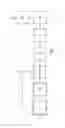
FIG. 1 shows an apparatus according to the invention for producing low-nitrogen synthesis gas from which a plurality of gas products are obtained in a downstream fractionation facility.
A starting material containing hydrocarbons and nitrogen, for example natural gas, is introduced via line 1 into a facility T in order to obtain a low-nitrogen feed 4 for the steam reformer D. In the facility T, the starting material 1 firstly goes into the adsorber station N in which nitrogen is separated off adsorptively from the starting material 1, giving a residual gas 2 containing nitrogen and hydrocarbons and also a low-nitrogen hydrocarbon stream 3. To separate off one or more further materials, for example sulphur, the low-nitrogen hydrocarbon stream 3 is fed into the separation apparatus S from which a hydrocarbon-rich stream 4 is taken off and introduced as feed into the reformer tubes R of the burner-fired steam reformer D where it is converted with the aid of a catalyst together with steam in an endothermic reaction into a synthesis gas 5 which contains hydrogen, carbon monoxide, carbon dioxide and also water and is low in nitrogen. In order to obtain the heat required for steam reforming, a part 6 of the residual gas 2 containing nitrogen and hydrocarbons is fed to the burner B arranged in the firing space F of the steam reformer D and burnt. Residual gas 7 which is not required for heating the steam reformer D is exported as fuel and, for example, used for heating a steam reformer operated in parallel (not shown).
Water is condensed out of the synthesis gas 5 in the cooler W before the synthesis gas goes via line 8 into the carbon dioxide removal A, for example an aMDEA scrub. Here, carbon dioxide is separated off to form a gas mixture 9 which consists largely of carbon monoxide and hydrogen and is conveyed further into the cryogenic gas fractionator CB. In the cryogenic gas fractionator CB, which is configured without nitrogen removal, oxo gas 10 and also carbon monoxide 11 can be produced as products having a high purity because of the substantial absence of nitrogen in the synthesis gas 5. The hydrogen-rich stream 12 is introduced into a pressure swing adsorber DWA in order to obtain a high-purity hydrogen product 13 by removal of impurities.
Without further elaboration, it is believed that one skilled in the art can, using the preceding description, utilize the present invention to its fullest extent. The preceding preferred specific embodiments are, therefore, to be construed as merely illustrative, and not limitative of the remainder of the disclosure in any way whatsoever.
The preceding examples can be repeated with similar success by substituting the generically or specifically described reactants and/or operating conditions of this invention for those used in the preceding examples.
From the foregoing description, one skilled in the art can easily ascertain the essential characteristics of this invention and, without departing from the spirit and scope thereof, can make various changes and modifications of the invention to adapt it to various usages and conditions.
The entire disclosures of all applications, patents and publications, cited herein and of corresponding German patent application DE 10 2013 020 343.0, filed Dec. 3, 2013, are incorporated by reference herein.
Claims
1. A process for producing synthesis gas (5) by steam reforming comprising:
separating off nitrogen from a starting material (1) containing hydrocarbons and nitrogen in order to produce a low-nitrogen feed (4) for a burner-fired steam reformer (D), and a hydrocarbon-containing residual gas (2) which subsequently serves as fuel (6),
wherein the nitrogen is separated off adsorptively (N) from the starting material and at least part of the hydrocarbon-containing residual gas (2) is used as fuel for firing the steam reformer (D).
2. The process according to claim 1, wherein a part of the residual gas (2) not required for firing the steam reformer (D) is exported as fuel.
3. The process according to claim 1, wherein carbon monoxide (11) and/or hydrogen (13) and/or oxo gas (10) is obtained as gas product from the synthesis gas (5) produced in steam reformer (D).
4. The process according to claim 2, wherein carbon monoxide (11) and/or hydrogen (13) and/or oxo gas (10) is obtained as gas product from the synthesis gas (5) produced in steam reformer (D).
5. The process according to claim 1, wherein natural gas containing nitrogen and hydrocarbons is used as starting material (1).
6. An apparatus for producing synthesis gas (5) comprising:
a burner-fired steam reformer (D) and a facility (T) for producing a low-nitrogen feed (4) for the steam reformer (D) from a starting material (1) containing hydrocarbons and nitrogen,
wherein said facility (T) is connected via a line (6) to a burner (B) of said steam reformer (D) in such a way that a hydrocarbon-containing residual gas (2), obtained by removal of nitrogen from the starting material in said facility (T), can be fed as fuel by the line (6) to the burner (B), and
wherein said facility for producing a low-nitrogen feed (T) comprises an adsorber (N) for separating off nitrogen from the starting material (1) containing nitrogen and hydrocarbons, which is connected to said burner (B) for firing the steam reformer (D) via said line (6) in such a way that hydrocarbon-containing residual gas (2) obtained from the adsorber (N) can be fed as fuel via said line (6) to said burner (B).
7. The apparatus according to claim 6, wherein said adsorber (N) is filled with an adsorbent which is able to adsorb predominantly nitrogen from the starting material (1) containing nitrogen and hydrocarbons and desorb nitrogen again when the adsorbent is flushed with a low-nitrogen, hydrocarbon-containing gas.
8. The apparatus according to claim 6, wherein said adsorber (N) is part of an adsorber station in which a plurality of adsorbers are connected to one another in such a way that both the low-nitrogen feed (4) and the hydrocarbon-containing residual gas (2) can each be obtained as continuous streams.
9. The apparatus according to claim 6, wherein said steam reformer (D) is connected to a fractionation facility (W, A, CB, DWA) in which carbon monoxide (11) and/or hydrogen (13) and/or oxo gas (10) can be obtained as gas product from the synthesis gas (5) produced in said steam reformer (D).
Images & Drawings included:

Sources:
- United States Patent and Trademark Office - verify current appl. status at the USPTO↗
Similar patent applications:
- » 20220213398
Process and apparatus for producing synthesis gas through thermochemical conversion of biomass and waste materials - » 20230220289
PROCESS AND APPARATUS FOR PRODUCING SYNTHESIS GAS THROUGH THERMOCHEMICAL CONVERSION OF BIOMASS AND WASTE MATERIALS - » 20150166339
Reformer tube and apparatus and also process for producing a synthesis gas - » 20230331550
PROCESS AND APPARATUS FOR PRODUCING LOW-NITROGEN SYNTHESIS GAS FROM NITROGEN-CONTAINING NATURAL GAS - » 20050220703
Process for producing synthesis gas for the fischer-tropsch synthesis and producing apparatus thereof - » 20200078723
Process for removal of acidic gas constituents from synthesis gas and apparatus for producing recycle gas
Recent applications in this class:
- » 20250270087 2025-08-28
Generating Hydrogen Via Methane Pyrolysis To Power Oilfield Equipment - » 20250197209 2025-06-19
APPARATUS AND METHOD FOR HYDROGEN GENERATION - » 20250187913 2025-06-12
METHOD FOR REMOVING AND IMMOBILISING CARBON DIOXIDE FROM THE ATMOSPHERE AND/OR A WASTE GAS - » 20250171301 2025-05-29
DEVICE AND METHOD FOR THE PYROLYSIS OF HYDROGEN-CONTAINING COMPOUNDS - » 20250136442 2025-05-01
PLANT AND PROCESS FOR PRODUCING HYDROGEN FROM SCISSION OF METHANE MOLECULES - » 20250128942 2025-04-24
PYROLYSIS AND COMBUSTION CONTROL IN PYROLYSIS REACTORS, AND ASSOCIATED SYSTEMS AND METHODS - » 20250128941 2025-04-24
PYROLYSIS AND COMBUSTION CONTROL IN PYROLYSIS REACTORS, AND ASSOCIATED SYSTEMS AND METHODS - » 20250128940 2025-04-24
HYDROCARBON PYROLYSIS SYSTEM AND METHOD - » 20250128939 2025-04-24
Delivery of high temperature hydrogen via hydrocarbon pyrolysis - » 20250109018 2025-04-03
PRODUCTION OF CHEMICALS BY DIRECT PLASMA CONVERSION OF LIQUID FEEDSTOCKS
Recent applications for this Assignee:
- » 20220025246 2022-01-27
Hydrocarbon based carrier fluid - » 20210331956 2021-10-28
METHODS FOR WASTEWATER TREATMENT - » 20210284589 2021-09-16
Method for producing a separation product containing predominantly hydrocarbons with two carbon atoms - » 20210284589 2021-09-16
Method for producing a separation product containing predominantly hydrocarbons with two carbon atoms - » 20210130264 2021-05-06
Method and system for obtaining one or more olefins - » 20200338515 2020-10-29
Method and system for forming and for catalytically reacting a reactant mixture—embodiment of the reactor - » 20200318912 2020-10-08
Controllable liquid distributor of a coiled-tube heat exchanger for realizing different liquid loadings - » 20200309327 2020-10-01
Method for operating an industrial plant with an adsorption device and industrial plant with an adsorption device - » 20200309327 2020-10-01
Method for operating an industrial plant with an adsorption device and industrial plant with an adsorption device - » 20200298191 2020-09-24
VOLUMETRIC AND GRAVIMETRIC FILL LEVEL FOR PRODUCING A GAS MIXTURE