Layered arrangement, hot-gas path component, and process of producing a layered arrangement
US20150251376A1
2015-09-10
13/630,708
2012-09-28
✅ Patent granted
US 9,527,262 B2
2016-12-27
-
-
Alex Efta
McNees Wallace & Nurick LLC
2034-05-28
Abstract:
A layered arrangement, a hot-gas path component, and a process of producing a layered arrangement are disclosed. The layered arrangement includes a substrate layer, a ceramic matrix composite layer, and a non-metal spacer between the substrate layer and the ceramic matrix composite layer configured to define one or more pockets. The hot-gas-path component includes a nickel-based superalloy layer, a ceramic matrix composite layer, and a ceramic spacer between the nickel-based superalloy layer and the ceramic matrix composite layer. The ceramic spacer is mechanically secured to one or both of the substrate layer and the ceramic matrix composite layer, and the ceramic spacer is bonded to the substrate layer or the ceramic matrix composite layer. The process includes securing a non-metal spacer between a substrate layer and a ceramic matrix composite layer of the layered arrangement.
Inventors:
- General Electric Company 115 🇺🇸 , United States
- Xiuzhang James Zhang 34 🇺🇸 Simpsonville, SC, United States
- Haiping Wang 4 🇺🇸 Greenville, SC, United States
Assignee:
- GENERAL ELECTRIC COMPANY 28,775 🇺🇸 Schenectady, NY, United States
Applicant:
Interested in similar patents?
Get notified when new applications in this technology area are published.
Classification:
B32B15/04 » CPC further
Layered products comprising a layer of metal comprising metal as the main or only constituent of a layer, next to another layer of a
B32B37/0084 » CPC further
Methods or apparatus for laminating, e.g. by curing or by ultrasonic bonding characterised in that the layers are not bonded on the totality of their surfaces Point bonding
B32B37/00 IPC
Methods or apparatus for making layered products; Treatment of the layers or of the layered products
B32B37/00 IPC
Methods or apparatus for laminating, e.g. by curing or by ultrasonic bonding
B32B2311/00 » CPC further
Inorganic materials used for the layers, laminate or apparatus components
B32B2311/00 » CPC further
Metals, their alloys or their compounds
B32B2315/02 » CPC further
Other materials containing non-metallic inorganic compounds not provided for in groups - Ceramics
B32B2605/18 » CPC further
Vehicles Aircraft
B32B3/26 » CPC further
Layered products comprising a layer with external or internal discontinuities or unevennesses, or a layer of non-planar form ; Layered products having particular features of form characterised by a particular shape of the outline of the cross-section of a continuous layer; characterised by a layer with cavities or internal voids ; characterised by an apertured layer
F01D9/02 » CPC further
Stators Nozzles; Nozzle boxes; Stator blades; Guide conduits, e.g. individual nozzles
B32B3/263 » CPC main
Layered products comprising a layer with external or internal discontinuities or unevennesses, or a layer of non-planar form ; Layered products having particular features of form characterised by a particular shape of the outline of the cross-section of a continuous layer; characterised by a layer with cavities or internal voids ; characterised by an apertured layer characterised by a layer having non-uniform thickness
B32B37/144 » CPC further
Methods or apparatus for laminating, e.g. by curing or by ultrasonic bonding characterised by the properties of the layers using layers with different mechanical or chemical conditions or properties, e.g. layers with different thermal shrinkage, layers under tension during bonding
B32B3/12 » CPC further
Layered products comprising a layer with external or internal discontinuities or unevennesses, or a layer of non-planar form ; Layered products having particular features of form characterised by a discontinuous layer, i.e. formed of separate pieces of material characterised by a layer of regularly- arranged cells, e.g. a honeycomb structure
B32B3/30 » CPC further
Layered products comprising a layer with external or internal discontinuities or unevennesses, or a layer of non-planar form ; Layered products having particular features of form characterised by a particular shape of the outline of the cross-section of a continuous layer; characterised by a layer with cavities or internal voids ; characterised by an apertured layer characterised by a layer formed with recesses or projections, e.g. hollows, grooves, protuberances, ribs
B32B9/005 » CPC further
Layered products comprising a layer of a particular substance not covered by groups - comprising one layer of ceramic material, e.g. porcelain, ceramic tile
B32B9/04 » CPC further
Layered products comprising a layer of a particular substance not covered by groups - comprising such substance as the main or only constituent of a layer, next to another layer of a
C04B37/025 » CPC further
Joining burned ceramic articles with other burned ceramic articles or other articles by heating with metallic articles characterised by the interlayer used consisting of glass or ceramic material
F01D5/187 » CPC further
Blades; Blade-carrying members ; Heating, heat-insulating, cooling or antivibration means on the blades or the members; Blades; Form or construction; Hollow blades, i.e. blades with cooling or heating channels or cavities ; Heating, heat-insulating or cooling means on blades Convection cooling
F01D11/24 » CPC further
Preventing or minimising internal leakage of working-fluid, e.g. between stages for sealing space between rotor blade tips and stator; Adjusting or regulating tip-clearance, i.e. distance between rotor-blade tips and stator casing; Actively adjusting tip-clearance by selectively cooling-heating stator or rotor components
B32B37/12 » CPC further
Methods or apparatus for laminating, e.g. by curing or by ultrasonic bonding characterised by using adhesives
B32B37/146 » CPC further
Methods or apparatus for laminating, e.g. by curing or by ultrasonic bonding characterised by the properties of the layers whereby one or more of the layers is a honeycomb structure
B32B37/16 » CPC further
Methods or apparatus for laminating, e.g. by curing or by ultrasonic bonding characterised by the properties of the layers with all layers existing as coherent layers before laminating
B32B2250/03 » CPC further
Layers arrangement 3 layers
B32B2262/105 » CPC further
Composition or structural features of fibres which form a fibrous or filamentary layer or are present as additives; Inorganic fibres Ceramic fibres
B32B2262/106 » CPC further
Composition or structural features of fibres which form a fibrous or filamentary layer or are present as additives; Inorganic fibres Carbon fibres, e.g. graphite fibres
B32B2307/304 » CPC further
Properties of the layers or laminate having particular thermal properties Insulating
B32B2603/00 » CPC further
Vanes, blades, propellers, rotors with blades
C04B35/01 » CPC further
Shaped ceramic products characterised by their composition ; Ceramics compositions ; Processing powders of inorganic compounds preparatory to the manufacturing of ceramic products based on oxide ceramics
C04B35/117 » CPC further
Shaped ceramic products characterised by their composition ; Ceramics compositions ; Processing powders of inorganic compounds preparatory to the manufacturing of ceramic products based on oxide ceramics based on aluminium oxide; Fine ceramics Composites
C04B35/185 » CPC further
Shaped ceramic products characterised by their composition ; Ceramics compositions ; Processing powders of inorganic compounds preparatory to the manufacturing of ceramic products based on oxide ceramics based on silicates other than clay rich in aluminium oxide Mullite 3Al2O3-2SiO2
C04B35/48 » CPC further
Shaped ceramic products characterised by their composition ; Ceramics compositions ; Processing powders of inorganic compounds preparatory to the manufacturing of ceramic products based on oxide ceramics based on zirconium or hafnium oxides, zirconates, zircon or hafnates
C04B35/5156 » CPC further
Shaped ceramic products characterised by their composition ; Ceramics compositions ; Processing powders of inorganic compounds preparatory to the manufacturing of ceramic products based on non-oxide ceramics based on rare earth compounds
C04B35/584 » CPC further
Shaped ceramic products characterised by their composition ; Ceramics compositions ; Processing powders of inorganic compounds preparatory to the manufacturing of ceramic products based on non-oxide ceramics based on borides, nitrides, or silicides based on silicon nitride
C04B37/003 » CPC further
Joining burned ceramic articles with other burned ceramic articles or other articles by heating by means of an interlayer consisting of a combination of materials selected from glass, or ceramic material with metals, metal oxides or metal salts
C04B37/04 » CPC further
Joining burned ceramic articles with other burned ceramic articles or other articles by heating with articles made from glass
C04B2237/068 » CPC further
Aspects relating to ceramic laminates or to joining of ceramic articles with other articles by heating; Aspects relating to interlayers, e.g. used to join ceramic articles with other articles by heating; Ceramic interlayers; Oxidic interlayers based on refractory oxides, e.g. zirconia
C04B2237/34 » CPC further
Aspects relating to ceramic laminates or to joining of ceramic articles with other articles by heating; Composition of layers of ceramic laminates or of ceramic or metallic articles to be joined by heating, e.g. Si substrates; Ceramic Oxidic
C04B2237/341 » CPC further
Aspects relating to ceramic laminates or to joining of ceramic articles with other articles by heating; Composition of layers of ceramic laminates or of ceramic or metallic articles to be joined by heating, e.g. Si substrates; Ceramic; Oxidic Silica or silicates
C04B2237/343 » CPC further
Aspects relating to ceramic laminates or to joining of ceramic articles with other articles by heating; Composition of layers of ceramic laminates or of ceramic or metallic articles to be joined by heating, e.g. Si substrates; Ceramic; Oxidic Alumina or aluminates
C04B2237/36 » CPC further
Aspects relating to ceramic laminates or to joining of ceramic articles with other articles by heating; Composition of layers of ceramic laminates or of ceramic or metallic articles to be joined by heating, e.g. Si substrates; Ceramic Non-oxidic
C04B2237/363 » CPC further
Aspects relating to ceramic laminates or to joining of ceramic articles with other articles by heating; Composition of layers of ceramic laminates or of ceramic or metallic articles to be joined by heating, e.g. Si substrates; Ceramic; Non-oxidic Carbon
C04B2237/365 » CPC further
Aspects relating to ceramic laminates or to joining of ceramic articles with other articles by heating; Composition of layers of ceramic laminates or of ceramic or metallic articles to be joined by heating, e.g. Si substrates; Ceramic; Non-oxidic Silicon carbide
C04B2237/368 » CPC further
Aspects relating to ceramic laminates or to joining of ceramic articles with other articles by heating; Composition of layers of ceramic laminates or of ceramic or metallic articles to be joined by heating, e.g. Si substrates; Ceramic; Non-oxidic Silicon nitride
C04B2237/38 » CPC further
Aspects relating to ceramic laminates or to joining of ceramic articles with other articles by heating; Composition of layers of ceramic laminates or of ceramic or metallic articles to be joined by heating, e.g. Si substrates; Ceramic Fiber or whisker reinforced
C04B2237/403 » CPC further
Aspects relating to ceramic laminates or to joining of ceramic articles with other articles by heating; Composition of layers of ceramic laminates or of ceramic or metallic articles to be joined by heating, e.g. Si substrates; Metallic Refractory metals
C04B2237/405 » CPC further
Aspects relating to ceramic laminates or to joining of ceramic articles with other articles by heating; Composition of layers of ceramic laminates or of ceramic or metallic articles to be joined by heating, e.g. Si substrates; Metallic Iron metal group, e.g. Co or Ni
C04B2237/406 » CPC further
Aspects relating to ceramic laminates or to joining of ceramic articles with other articles by heating; Composition of layers of ceramic laminates or of ceramic or metallic articles to be joined by heating, e.g. Si substrates; Metallic; Iron metal group, e.g. Co or Ni Iron, e.g. steel
C04B2237/597 » CPC further
Aspects relating to ceramic laminates or to joining of ceramic articles with other articles by heating; Processing aspects relating to ceramic laminates or to the joining of ceramic articles with other articles by heating; Aspects relating to the structure of the interlayer whereby the interlayer is continuous but porous, e.g. containing hollow or porous particles, macro- or micropores or cracks
C04B2237/704 » CPC further
Aspects relating to ceramic laminates or to joining of ceramic articles with other articles by heating; Processing aspects relating to ceramic laminates or to the joining of ceramic articles with other articles by heating; Forming laminates or joined articles comprising layers of a specific, unusual thickness of one or more of the ceramic layers or articles
C04B2237/706 » CPC further
Aspects relating to ceramic laminates or to joining of ceramic articles with other articles by heating; Processing aspects relating to ceramic laminates or to the joining of ceramic articles with other articles by heating; Forming laminates or joined articles comprising layers of a specific, unusual thickness of one or more of the metallic layers or articles
C04B2237/72 » CPC further
Aspects relating to ceramic laminates or to joining of ceramic articles with other articles by heating; Processing aspects relating to ceramic laminates or to the joining of ceramic articles with other articles by heating Forming laminates or joined articles comprising at least two interlayers directly next to each other
F05D2240/11 » CPC further
Components; Stators Shroud seal segments
F05D2240/12 » CPC further
Components; Stators Fluid guiding means, e.g. vanes
F05D2240/126 » CPC further
Components; Stators; Fluid guiding means, e.g. vanes Baffles or ribs
F05D2240/15 » CPC further
Components; Stators Heat shield
F05D2240/24 » CPC further
Components; Rotors for turbines
F05D2240/303 » CPC further
Components; Rotors; Characteristics of rotor blades, i.e. of any element transforming dynamic fluid energy to or from rotational energy and being attached to a rotor related to the leading edge of a rotor blade
F05D2240/81 » CPC further
Components; Platforms for stationary or moving blades Cooled platforms
F05D2250/232 » CPC further
Geometry; Three-dimensional prismatic conical
F05D2250/241 » CPC further
Geometry; Three-dimensional ellipsoidal spherical
F05D2250/28 » CPC further
Geometry; Three-dimensional patterned
F05D2250/291 » CPC further
Geometry; Three-dimensional machined; miscellaneous hollowed
F05D2260/20 » CPC further
Function Heat transfer, e.g. cooling
F05D2260/204 » CPC further
Function; Heat transfer, e.g. cooling by the use of microcircuits
F05D2260/22141 » CPC further
Function; Heat transfer, e.g. cooling; Improvement of heat transfer by increasing the heat transfer surface using fins or ribs
F05D2300/175 » CPC further
Materials; Properties thereof; Metals, alloys or intermetallic compounds; Alloys Superalloys
F05D2300/20 » CPC further
Materials; Properties thereof Oxide or non-oxide ceramics
F05D2300/6033 » CPC further
Materials; Properties thereof; Properties or characteristics given to material by treatment or manufacturing; Composites; e.g. fibre-reinforced Ceramic matrix composites [CMC]
Y10T428/24562 » CPC further
Stock material or miscellaneous articles; Structurally defined web or sheet [e.g., overall dimension, etc.] including variation in thickness Interlaminar spaces
Y10T428/24612 » CPC further
Stock material or miscellaneous articles; Structurally defined web or sheet [e.g., overall dimension, etc.] including variation in thickness Composite web or sheet
Y10T428/24942 » CPC further
Stock material or miscellaneous articles; Structurally defined web or sheet [e.g., overall dimension, etc.] including components having same physical characteristic in differing degree
Y10T428/24967 » CPC further
Stock material or miscellaneous articles; Structurally defined web or sheet [e.g., overall dimension, etc.] including components having same physical characteristic in differing degree; Thickness [relative or absolute] Absolute thicknesses specified
C04B37/00 IPC
Joining burned ceramic articles with other burned ceramic articles or other articles by heating
F04D29/44 IPC
Details, component parts, or accessories; Casings; Connections of working fluid for radial or helico-centrifugal pumps Fluid-guiding means, e.g. diffusers
F03D1/04 IPC
Wind motors with rotation axis substantially parallel to the air flow entering the rotor having stationary wind-guiding means, e.g. with shrouds or channels
F01D5/18 IPC
Blades; Blade-carrying members ; Heating, heat-insulating, cooling or antivibration means on the blades or the members; Blades; Form or construction Hollow blades, i.e. blades with cooling or heating channels or cavities ; Heating, heat-insulating or cooling means on blades
C04B37/02 IPC
Joining burned ceramic articles with other burned ceramic articles or other articles by heating with metallic articles
B32B9/00 IPC
Layered products characterised by particular substances used
B32B9/00 IPC
Layered products comprising a layer of a particular substance not covered by groups -
B32B37/14 IPC
Methods or apparatus for laminating, e.g. by curing or by ultrasonic bonding characterised by the properties of the layers
C04B35/515 IPC
Shaped ceramic products characterised by their composition ; Ceramics compositions ; Processing powders of inorganic compounds preparatory to the manufacturing of ceramic products based on non-oxide ceramics
Description
FIELD OF THE INVENTION
The present invention is directed to manufactured components and processes of producing manufactured components. More specifically, the present invention is directed to layered arrangements and components having a ceramic matrix composite layer within layered arrangements.
BACKGROUND OF THE INVENTION
Ceramic matrix composite materials are known for having high temperature resistance. However, components using such ceramic matrix composites can have undesirably low stress-resistance. In contrast, metal components can have high stress-resistance. However, metal components subjected to high temperatures, such as along a hot-gas path of a turbine, decrease in such stress-resistance when in such high temperatures.
Layered components having different materials are known to present challenges. Such challenges are greater for materials in direct contact that have different properties. For example, the difference in coefficients of thermal expansion, thermal conductivity, and other properties can cause the interface between these layers to delaminate and/or form undesirable features, thereby limiting the applications of such layered components.
A layered arrangement, a hot-gas path component, and a process of producing a layered arrangement that do not suffer from one or more of the above drawbacks would be desirable in the art.
BRIEF DESCRIPTION OF THE INVENTION
In an exemplary embodiment, a layered arrangement includes a substrate layer, a ceramic matrix composite layer, and a non-metal spacer between the substrate layer and the ceramic matrix composite layer configured to define one or more pockets.
In another exemplary embodiment, a hot-gas-path component of a turbine includes a nickel-based superalloy layer, a ceramic matrix composite layer, and a ceramic spacer between the nickel-based superalloy layer and the ceramic matrix composite layer. The ceramic spacer is mechanically secured to one or both of the substrate layer and the ceramic matrix composite layer, and the ceramic spacer is bonded to the substrate layer or the ceramic matrix composite layer.
In another exemplary embodiment, a process of producing a layered arrangement includes securing a non-metal spacer between a substrate layer and a ceramic matrix composite layer of the layered arrangement.
Other features and advantages of the present invention will be apparent from the following more detailed description of the preferred embodiment, taken in conjunction with the accompanying drawings which illustrate, by way of example, the principles of the invention.
BRIEF DESCRIPTION OF THE DRAWINGS
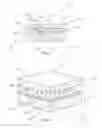
FIG. 1 shows a side view of an exemplary layered arrangement according to an embodiment of the disclosure.
FIG. 2 shows a perspective view of an exemplary layered arrangement according to an embodiment of the disclosure.
FIG. 3 shows a perspective view of an exemplary turbine nozzle having layered side walls according to an embodiment of the disclosure.
FIG. 4 shows a sectioned view of an exemplary airfoil having a layered surface according to an embodiment of the disclosure.
FIG. 5 shows a side view of an exemplary turbine shroud having a layered arrangement according to an embodiment of the disclosure.
FIG. 6. shows a sectioned view along line A-A of the exemplary turbine shroud shown in FIG. 5.
FIG. 7. shows a cutaway perspective view of an exemplary turbine shroud having a layered arrangement according to an embodiment of the disclosure.
FIG. 8 shows a perspective view of an exemplary non-metal spacer having a plurality of ridges according to the disclosure.
FIG. 9 shows a perspective view of an exemplary non-metal spacer having a plurality of ridges according to the disclosure.
FIG. 10 shows a perspective view of an exemplary non-metal spacer having a plurality of intersecting ridges according to the disclosure.
Wherever possible, the same reference numbers will be used throughout the drawings to represent the same parts.
DETAILED DESCRIPTION OF THE INVENTION
Provided is an exemplary layered arrangement, a hot-gas path component, and a process of producing a layered arrangement according to the disclosure. Embodiments of the present disclosure permit use of components in higher temperatures and/or for longer periods of time, permit positive attributes of ceramic matrix composite and metal or metallic substrates to be utilized in a layered component, permit increased turbine efficiency, permit extended use/durability of turbine components (for example, hot-gas path components), permit increased turbine quality, permit higher firing temperatures in turbines, permit a higher temperature gradient between layers of a component, or combinations thereof, for example, in comparison to using layered components having ceramic matrix composite and metal layers in direct contact.
FIGS. 1 and 2 show a layered arrangement 100 including a substrate layer 102, a ceramic matrix composite layer 104, and one or more non-metal spacers 106 between the substrate layer 102 and the ceramic matrix composite layer 104. In one embodiment, a portion of a turbine component 101 includes the layered arrangement 100 and defines a surface 111 of the turbine component 101, such as, a hot-gas path 109 (see FIG. 1), a side wall 302 (see FIG. 3) of a turbine nozzle 300 (see FIG. 3), an airfoil surface 402 (see FIG. 4) of an airfoil 400 (see FIG. 4), a turbine shroud 500 (see FIG. 5), or a combination thereof. Additionally or alternatively, the layered arrangement 100 is capable of being used with components subjected to stress, such as, a turbine case.
Referring to FIGS. 1 and 2, the substrate layer 102, the ceramic matrix composite layer 104, and the non-metal spacer(s) 106 include any suitable dimensions based upon desired properties. For example, a suitable substrate thickness 103 for the substrate layer 102 is at least about 10 mils, at least about 15 mils, at least about 20 mils, between about 10 mils and about 30 mils, between about 15 mils and about 25 mils, between about 10 mils and about 20 mils, between about 20 mils and about 30 mils, about 20 mils, or any suitable combination, sub-combination, range, or sub-range therein. A suitable ceramic matrix composite thickness 105 for the ceramic matrix composite layer 104 is at least about 20 mils, at least about 30 mils, at least about 40 mils, between about 30 mils and about 50 mils, between about 30 mils and about 40 mils, between about 40 mils and about 50 mils, between about 35 mils and about 45 mils, about 40 mils, or any suitable combination, sub-combination, range, or sub-range therein. As is described with more detail below, the dimensions of the non-metal spacer(s) 106 are dependent upon the geometry of the non-metal spacer(s) 106.
The substrate layer 102 is any suitable material. Suitable materials include, but are not limited to, nickel-based alloys and superalloys, chromium-based alloys and superalloys, cobalt-based alloys and superalloys, iron-based alloys and superalloys, or combinations thereof. In one embodiment, the substrate layer 102 has stress-resistant properties exceeding that of the ceramic matrix composite layer 104 and/or other similar ceramic matrix composite materials.
The ceramic matrix composite layer 104 is any suitable material providing properties for the desired application, such as temperature-resistances along the hot-gas path 109, where temperatures of turbine components exceed about 1,000° C. Suitable materials for the ceramic matrix composite layer 104 include, but are not limited to, carbon, silicon carbide (SiC), silicon nitride (Si3N4), alumina (Al2O3), mullite (Al2O3—SiO4), or a combination thereof. Fiber reinforcement of the ceramic matrix composite layer 104 is with carbon, silicon carbide (SiC), silicon nitride (Si3N4), alumina (Al2O3), mullite (Al2O3—SiO4), or a combination thereof.
The non-metal spacer 106 separates any suitable portion or all of the ceramic matrix composite layer 104 from the substrate layer 102. In one embodiment, the non-metal spacer 106 is mechanically secured to one or both of the substrate layer 102 and the ceramic matrix composite layer 104, for example, as is shown in FIG. 6, by interlocking of a protruding feature 602 (on the ceramic matrix composite layer 104 and/or the substrate layer 102) and a groove 604 (on the ceramic matrix composite layer 104 and/or the substrate layer 102). Additionally or alternatively, the non-metal spacer 106 is bonded to the substrate layer 102 or the ceramic matrix composite layer 104.
The dimensions and geometry of the non-metal spacer 106 depend upon the configuration of the substrate layer 102 and the ceramic matrix composite layer 104. As is shown in FIG. 5, in one embodiment, a plurality of the non-metal spacers 106 have inconsistent dimensions based upon the positioning. In other embodiments, as is shown in FIG. 3, the non-metal spacers 106 have substantially uniform dimensions. Additionally or alternatively, in some embodiments, the non-metal spacers 106 are arranged as individual spacer bodies 108 extending from a spacer coating 110 as is shown in FIG. 2, extending from the substrate layer 102 as is shown in FIG. 7, and/or extending from the ceramic matrix composite layer 104.
As is shown in FIGS. 8-10, in some embodiments, the non-metal spacers 106 are arranged as one or more ridges 802 extending along the arrangement 100 (see FIG. 1). The ridges 802 include a plateau 804 (see FIG. 8), a peak 902 (see FIG. 9), intersecting ridges 1002 (see FIG. 10), or a combination thereof. As is shown in FIG. 1, in one embodiment, a spacer thickness 107 (a thickness of the spacer bodies 108 and the spacer coating 110, if present) is at least about 35 mils, at least about 40 mils, at least about 45 mils, between about 35 mils and about 55 mils, between about 35 mils and about 45 mils, between about 45 mils and about 55 mils, between about 40 mils and about 50 mils, about 45 mils, or any suitable combination, sub-combination, range, or sub-range therein.
Referring again to FIGS. 8-10, in one embodiment, the non-metal spacer 106 defines pockets 806. The pockets 806 are capable of containing a substance 112 (see FIG. 1), such as air and/or any other suitable substance capable of greater thermal insulation than the substrate layer 102 and/or the ceramic matrix composite layer 104. Suitable substances include, but are not limited to, stagnant air, flowing air, fibers, fuel, cooling fluid (stagnant and/or flowing), liquid, gel, steam, or combinations thereof. In one embodiment, the non-metal spacers 106 and the pockets 806 are completely enclosed by the substrate layer 102 and the ceramic matrix composite layer 104, thereby preventing flow into the pockets 806. Alternatively, the non-metal spacers 106 and the pockets 806 are not completely enclosed, thereby permitting flow, into and out of one or more of the pockets 806.
The non-metal spacer 106 is any suitable material(s) capable of reducing heat transfer between the ceramic matrix composite layer 104 and the substrate layer 102 and capable of reducing the impact of stress from the substrate layer 102 on the ceramic matrix composite layer 104. Suitable materials for the non-metal spacer 106 include, but are not limited to, ceramics, yttria-stabilized zirconia, gadolinium zirconate, rare earth zirconates, thermal barrier coatings, or combinations thereof. For example, suitable materials have a thermal conductivity that is at least a predetermined amount less than the substrate layer 102, such as, being between about one-tenth and about one-third of the thermal conductivity of the substrate layer 102, being between about one-third and about one-half of the thermal conductivity of the substrate layer 102, being between about one one-quarter and about one-half of the thermal conductivity of the substrate layer 102, being between about one-quarter and about one-third of the thermal conductivity of the substrate layer 102, being between about one-tenth and about one-third of the thermal conductivity of the substrate layer 102, being about one-half, about one-quarter, about one-third, about one-tenth, or any suitable combination, sub-combination, range, or sub-range thereof.
The non-metal spacer 106, the individual spacer bodies 108, the spacer coating 110, or a combination thereof are grown and/or applied to the substrate layer 102 and/or the ceramic matrix composite layer 104. In one embodiment, such application is by electron beam physical vapor deposition (EBPVD), air plasma spray (APS), high velocity oxygen fuel (HVOF), electrostatic spray assisted vapor deposition (ESAVD), direct vapor deposition, other suitable spray techniques, or a combination thereof. In a further embodiment, the non-metal spacer 106 is positioned after machining of the substrate layer 102 and/or after forming/rigidizing of the ceramic matrix composite layer 104, thereby complementing geometric features of the substrate layer 102 and/or the ceramic matrix composite layer 104. For example, in this embodiment, the pockets 806 within the non-metal spacers 106 are at least partially defined by non-planar features of the substrate layer 102 and/or the ceramic matrix composite layer 104. In another embodiment, the non-metal spacer 106 is applied after stripping of an existing layer, such as the non-metal spacer 106 after extended use, the substrate layer 102, the ceramic matrix composite layer 104, or a combination thereof.
While the invention has been described with reference to a preferred embodiment, it will be understood by those skilled in the art that various changes may be made and equivalents may be substituted for elements thereof without departing from the scope of the invention. In addition, many modifications may be made to adapt a particular situation or material to the teachings of the invention without departing from the essential scope thereof. Therefore, it is intended that the invention not be limited to the particular embodiment disclosed as the best mode contemplated for carrying out this invention, but that the invention will include all embodiments falling within the scope of the appended claims.
Claims
1. A layered arrangement, comprising:
a substrate layer;
a ceramic matrix composite layer; and
a nonmetal spacer between the substrate layer and the ceramic matrix composite layer configured to define a plurality of pockets,
wherein the plurality of sockets contain a substance including a property of greater thermal insulation than the substrate layer, and
wherein the substrate layer. the ceramic matrix composite layer and the non-metal spacer are configured to enclose the plurality pockets, isolating each of the plurality of pockets from one another.
2. The layered arrangement of claim 1, wherein the substrate layer is nickel-based superalloy.
3. The layered arrangement of claim 1, wherein the non-metal spacer is a ceramic.
4. The layered arrangement of claim 1, wherein the non-metal spacer includes a thermal barrier coating.
5. The layered arrangement of claim 1, wherein the non-metal spacer includes a yttria-stabilized zirconia.
6. The layered arrangement of claim 1, wherein the substance includes air, the substance being at least partially trapped in the plurality of pockets within the layered arrangement.
7. The layered arrangement of claim 1, wherein the layered arrangement is a hot-gas path component of a turbine.
8. The layered arrangement of claim 1, wherein the layered arrangement is a side wall of a turbine nozzle.
9. The layered arrangement of claim 1, wherein the layered arrangement is an airfoil surface.
10. The layered arrangement of claim 1, wherein the layered arrangement is a turbine shroud.
11. The layered arrangement of claim 1, wherein the non-metal spacer includes a ridge extending along the layered arrangement.
12. The layered arrangement of claim 1, wherein the non-metal spacer includes intersecting ridges.
13. The layered arrangement of claim 1, wherein the substance includes air, the plurality of pockets trapping the substance.
14. The layered arrangement of claim 1, wherein the substance includes a thermally insulating substance.
15. The layered arrangement of claim 1, wherein the non-metal spacer is mechanically secured to one or both of the substrate layer and the ceramic matrix composite layer.
16. The layered arrangement of claim 1, wherein the non-metal spacer is bonded to the substrate layer or the ceramic matrix composite layer.
17. The layered arrangement of claim 1, wherein the non-metal spacer has a thermal conductivity that is at least one-third the thermal conductivity of the substrate layer.
18. The layered arrangement of claim 1, wherein the substrate layer is at least 10 mils thick, the ceramic matrix composite layer is at least 20 mils thick, and the non-metal spacer includes a maximum thickness dimension of at least 30 mils.
19. A hot-gas-path component of a turbine, comprising:
a nickel-based superalloy layer;
a ceramic matrix composite layer; and
a ceramic spacer between the nickel-based superalloy layer and the ceramic matrix composite layer configured to define a plurality of pockets,
wherein the ceramic spacer is mechanically secured to one or both of the substrate layer and the ceramic matrix composite layer,
wherein the ceramic spacer is bonded to the substrate layer or the ceramic matrix composite layer,
wherein the plurality of pockets contain a substance including a property of greater thermal insulation than the nickel-based superalloy layer, and
wherein the nickel-based superalloy layer, the ceramic matrix composite layer and the ceramic spacer configured to enclose the plurality of pockets, isolating each of the plurality of pockets from one another.
20. A process of producing a layered arrangement, the process comprising securing a non-metal spacer between a substrate layer and a ceramic matrix composite layer of the layered arrangement, wherein:
the non-metal spacer is configured to define a plurality of pockets;
the plurality pockets contain a substance including a property of greater thermal insulation than the substrate layer; and
the substrate layer, the ceramic matrix composite layer and the non-metal spacer are configured to enclose the plurality pockets, isolating each of the plurality of pockets from one another.
Images & Drawings included:



Sources:
- United States Patent and Trademark Office - verify current appl. status at the USPTO↗
Recent applications in this class:
- » 20250074031 2025-03-06
WEDGE-SHAPED MULTI-LAYER INTERLAYER WITH OUTER SKIN LAYERS OF VARYING THICKNESS - » 20250074030 2025-03-06
TRANSITION OF VARIABLE THICKNESSES OF COMPOSITE MATERIAL LAMINATES OF A MODULAR BLADE - » 20250058543 2025-02-20
PATTERNED STRUCTURED TRANSFER TAPE - » 20250001720 2025-01-02
MANUFACTURE OF TAPERED COMPOSITE PANELS - » 20240416614 2024-12-19
DISPLAY DEVICE INCLUDING A WINDOW AND A METHOD OF MANUFACTURING THE WINDOW - » 20240399700 2024-12-05
DISPLAY PANEL ASSEMBLY INCLUDING A FILM LAYER - » 20240239080 2024-07-18
LAMINATED STRUCTURE AND METHOD FOR MANUFACTURING THE SAME - » 20230234325 2023-07-27
GRID STRUCTURES HAVING GLUELESS SLEEVE JOINTS AND METHODS OF MANUFACTURING AND USING THE SAME - » 20230191741 2023-06-22
Thin glass substrate, method and apparatus for its production - » 20230141149 2023-05-11
Patterned structured transfer tape
Recent applications for this Assignee:
- » 20250250942 2025-08-07
Overall Engine Efficiency Rating for Turbomachine Engines - » 20250243827 2025-07-31
MULTIPLE-FLOW AIRCRAFT TURBINE ENGINE - » 20250229333 2025-07-17
SYSTEMS AND METHODS FOR SMOOTHING A CONTOUR OF AN OBJECT FORMED DURING ADDITIVE MANUFACTURING - » 20250224115 2025-07-10
TURBINE ENGINE HAVING A COMBUSTION SECTION WITH A FUEL SUPPLY ASSEMBLY - » 20250223929 2025-07-10
UNDUCTED PROPELLER GAS TURBINE COMPRISING A COOLING AIR CHANNEL AND A VARIABLE BLEED VALVE EJECTION CHANNEL - » 20250222519 2025-07-10
ADDITIVE MANUFACTURING SUPPORTS AND METHODS FOR USING SAME IN ADDITIVELY MANUFACTURING PARTS - » 20250215830 2025-07-03
SUSPENSION OF A TRIPLE-FLOW AIRCRAFT TURBINE ENGINE - » 20250215826 2025-07-03
GAS TURBINE ENGINE - » 20250215811 2025-07-03
SYSTEMS AND METHODS FOR ATTACHMENT OF MATERIALS HAVING DIFFERENT THERMAL EXPANSION COEFFICIENTS - » 20250207534 2025-06-26
GAS TURBINE ENGINES AND EPICYCLIC GEARBOXES WITH PLANET GEAR CLEARANCES