IMIDAZOLE DERIVATIVE
US20150259344A1
2015-09-17
14/432,795
2013-10-01
Abstract:
Provided is a therapeutic agent for diseases associated with a cholinergic property of the central nervous system (CNS) and/or the peripheral nervous system (PNS), diseases associated with the contraction of smooth muscle, incretion disease, diseases associated with neuronal degeneration and the like, said therapeutic agent comprising a compound represented by Formula (I):
[wherein X—Y—Z represents N—CO—NR4AR4B or the like; R1 represents a phenyl group or the like; R2A and R2B may be the same as or different from each other and independently represent a hydrogen atom or the like; R3A to R3D and R6 may be the same as or different from one another and independently represent a hydrogen atom or the like; R4A and R4B may be the same as or different from each other and independently represent an aryl group or the like; and n represents 1 or 2]
or a pharmaceutically acceptable salt thereof and having a potent activity of regulating an α7 nicotinic acetylcholine receptor (an α7 nAChR).
Inventors:
- Yoko Nakai 5 🇯🇵 Osaka, Japan
- Mitsutaka Iwata 1 🇯🇵 Osaka, Japan
- Satoshi Suetsugu 2 🇯🇵 Osaka, Japan
- Yusuke Sawayama 8 🇯🇵 Osaka, Japan
Interested in similar patents?
Get notified when new applications in this technology area are published.
Classification:
C07D471/08 » CPC main
Heterocyclic compounds containing nitrogen atoms as the only ring hetero atoms in the condensed system, at least one ring being a six-membered ring with one nitrogen atom, not provided for by groups - in which the condensed system contains two hetero rings Bridged systems
C07D233/64 » CPC further
Heterocyclic compounds containing 1,3-diazole or hydrogenated 1,3-diazole rings, not condensed with other rings having two double bonds between ring members or between ring members and non-ring members with substituted hydrocarbon radicals attached to ring carbon atoms, e.g. histidine
A61K31/4174 » CPC further
Medicinal preparations containing organic active ingredients; Heterocyclic compounds having nitrogen as a ring hetero atom, e.g. guanethidine or rifamycins having five-membered rings with two or more ring hetero atoms, at least one of which being nitrogen, e.g. tetrazole 1,3-Diazoles Arylalkylimidazoles, e.g. oxymetazolin, naphazoline, miconazole
C07D405/14 » CPC further
Heterocyclic compounds containing both one or more hetero rings having oxygen atoms as the only ring hetero atoms, and one or more rings having nitrogen as the only ring hetero atom containing three or more hetero rings
C07D409/14 » CPC further
Heterocyclic compounds containing two or more hetero rings, at least one ring having sulfur atoms as the only ring hetero atoms containing three or more hetero rings
C07D401/14 » CPC further
Heterocyclic compounds containing two or more hetero rings, having nitrogen atoms as the only ring hetero atoms, at least one ring being a six-membered ring with only one nitrogen atom containing three or more hetero rings
C07D405/12 » CPC further
Heterocyclic compounds containing both one or more hetero rings having oxygen atoms as the only ring hetero atoms, and one or more rings having nitrogen as the only ring hetero atom containing two hetero rings linked by a chain containing hetero atoms as chain links
A61K31/4178 » CPC further
Medicinal preparations containing organic active ingredients; Heterocyclic compounds having nitrogen as a ring hetero atom, e.g. guanethidine or rifamycins having five-membered rings with two or more ring hetero atoms, at least one of which being nitrogen, e.g. tetrazole 1,3-Diazoles not condensed 1,3-diazoles and containing further heterocyclic rings, e.g. pilocarpine, nitrofurantoin
C07D403/12 » CPC further
Heterocyclic compounds containing two or more hetero rings, having nitrogen atoms as the only ring hetero atoms, not provided for by group containing two hetero rings linked by a chain containing hetero atoms as chain links
A61K31/506 » CPC further
Medicinal preparations containing organic active ingredients; Heterocyclic compounds having nitrogen as a ring hetero atom, e.g. guanethidine or rifamycins having six-membered rings with two nitrogen atoms as the only ring heteroatoms, e.g. piperazine; Pyrimidines; Hydrogenated pyrimidines, e.g. trimethoprim not condensed and containing further heterocyclic rings
C07D403/04 » CPC further
Heterocyclic compounds containing two or more hetero rings, having nitrogen atoms as the only ring hetero atoms, not provided for by group containing two hetero rings directly linked by a ring-member-to-ring-member bond
A61K31/55 » CPC further
Medicinal preparations containing organic active ingredients; Heterocyclic compounds having nitrogen as a ring hetero atom, e.g. guanethidine or rifamycins having seven-membered rings, e.g. azelastine, pentylenetetrazole
A61K31/439 » CPC further
Medicinal preparations containing organic active ingredients; Heterocyclic compounds having nitrogen as a ring hetero atom, e.g. guanethidine or rifamycins having six-membered rings with one nitrogen as the only ring hetero atom the ring forming part of a bridged ring system, e.g. quinuclidine
A61K45/06 » CPC further
Medicinal preparations containing active ingredients not provided for in groups - Mixtures of active ingredients without chemical characterisation, e.g. antiphlogistics and cardiaca
C07D401/04 » CPC further
Heterocyclic compounds containing two or more hetero rings, having nitrogen atoms as the only ring hetero atoms, at least one ring being a six-membered ring with only one nitrogen atom containing two hetero rings directly linked by a ring-member-to-ring-member bond
Description
TECHNICAL FIELD
The present invention relates to a novel imidazole derivative which is a modulator of α7 nicotinic acetylcholine receptor (α7 nAChR). On the basis of such pharmacological properties, the present compound can be useful for treating, for example, diseases related to cholinergic properties in the central nervous system (CNS) and/or peripheral nervous system (PNS), diseases associated with smooth muscle contraction, endocrine disorders, neurodegenerative disorders, diseases such as inflammation and pain, and diseases associated with withdrawal symptoms caused by addictive drug abuse.
BACKGROUND ART
Recently, potential neuroprotective-effects of nicotine have been shown, and meanwhile various neurodegenerative-models in animals and cultured cells suffering from excitotoxic injury, athrepsia, ischemia, injury, neuronal cell death induced by amyloid beta (Aβ) or neurodegeneration induced by protein aggregation have been proposed. In many cases where nicotine shows neuroprotective effects, it has been found that nicotinic acetylcholine receptors containing α7 subtype are activated. These findings suggest that nicotine is useful in providing neuroprotective effects, and indicate that receptors containing α7-subtype are directly related with the effects. These data suggest that α7 nicotinic acetylcholine receptor is typically a suitable molecular-target for neuroprotection. In other words, the neuroprotection may be accomplished by developing an active agonist/positive modulator (i.e. positive allosteric modulator: PAM) of the receptor. In fact, α7 nicotinic acetylcholine receptor agonist has already been identified, and is expected to provide a possible clue to the development of neuroprotective drugs. In addition, it has recently been reported that α7 nicotinic acetylcholine receptor is also involved in inflammation. Thus, the development of a novel modulator of the receptor is expected to lead to a novel treatment for nervous system diseases, psychiatric diseases and inflammatory diseases.
In the past, there were some disclosures about modulators of α7 nicotinic acetylcholine receptor (α7 nAChR), but the chemical structures thereof are different from that of the present compound (see, Patent Reference 1 and Patent Reference 2).
CONVENTIONAL ART REFERENCES
Patent References
[Patent reference 1]WO 2003/093250
[Patent reference 2]WO 2006/138510
SUMMARY OF INVENTION
Problems to be Solved by the Invention
A problem to be solved by the present invention is to provide a novel compound which has potent modulatory-effects on the activity of α7 nicotinic acetylcholine receptor (α7 nAChR), and can be useful as a novel medicament for treating and/or preventing nervous system diseases, psychiatric diseases and inflammatory diseases.
In addition, WO 2012/133509 and WO 2012/176763 are applications related to the present application, which have already been published. The compounds therein have similar but different structures from that of the present compound. Further, the priority date of the present application is earlier than the published dates of the related applications, and they are not thus conventional art references for the present application.
Means of Solving the Problems
The present inventors have extensively studied to solve the problem and then have found that a novel compound of the following Formula (I) exhibits potent modulatory-effects on the activity of α7 nicotinic acetylcholine receptor (α7 nAChR). On the basis of the new findings, the present invention has been completed. The present invention provides an imidazole derivative of the following Formula (I) or a pharmaceutically acceptable salt thereof (hereinafter, optionally referred to as “the present compound”).
[Item 1]A compound of Formula (I):
wherein X—Y—Z is N—CO—NR4AR4B, N—COR5, CR6—CO—NR4AR4B, CR6—NR7—COR5, CR6—NR7—CONR4AR4B or CR6—NR7-Q,
R1 is phenyl or heteroaryl in which the phenyl and the heteroaryl may be each optionally substituted with 1 to 5 substituents independently selected from the group consisting of halogen, hydroxyl group, C1-6 alkyl which may be optionally substituted with 1 to 5 fluorine atoms, C1-6 alkoxy which may be optionally substituted with 1 to 5 fluorine atoms, cyano, —NR8R9, —COOR8, —CONR8R9 and —NR8COR9,
R2A and R2B are the same or different and are hydrogen atom; halogen; cyano; —COOR10; —CONR10R11; —NR10R11; —NR10COR11; C1-6 alkyl which may be optionally substituted with 1 to 5 substituents independently selected from the group consisting of halogen, hydroxyl group, C1-6 alkyl, C3-10 cycloalkyl which may be optionally substituted with 1 to 5 fluorine atoms, C1-6 alkoxy, 4- to 10-membered saturated heterocycle, cyano, —NR10R11, —COOR10, —CONR10R11 and —NR10COR11; or C3-10 cycloalkyl which may be optionally substituted with 1 to 5 substituents independently selected from the group consisting of halogen, hydroxyl group, C1-6 alkyl, C1-6 alkoxy, cyano, —NR10R11, —COOR10, —CONR10R11 and —NR10COR11; provided that when X—Y—Z is N—CO—NHEt and n=1, R2A is C1-4 alkyl which may be optionally substituted with the above substituents,
R3A, R3B, R3C, R3D and R6 are the same or different and are hydrogen atom; fluorine atom; hydroxyl group; C1-6 alkoxy which may be optionally substituted with 1 to 5 fluorine atoms; or C1-6 alkyl which may be optionally substituted with 1 to 5 fluorine atoms; provided that when any two of R3A, R3B, R3C, R3D and R6 are independently selected from C1-6 alkyl which may be optionally substituted with 1 to 5 fluorine atoms, the two alkyl groups may be combined each other together with the ring to which the alkyl groups attach to form another ring,
R4A, R4B, R5 and R7 are the same or different and are C1-6 alkyl which may be optionally substituted with 1 to 5 substituents independently selected from the group consisting of aryl or heteroaryl (in which the aryl and the heteroaryl may be optionally substituted with 1 to 5 substituents independently selected from the group consisting of halogen, hydroxyl group, C1-6 alkyl which may be optionally substituted with 1 to 5 fluorine atoms, and C1-6 alkoxy which may be optionally substituted with 1 to 5 fluorine atoms), halogen, hydroxyl group, C1-6 alkoxy, 4- to 10-membered saturated heterocycle, C3-10 cycloalkyl and —NR12R13; C3-10 cycloalkyl which may be optionally substituted with 1 to 5 substituents independently selected from the group consisting of aryl or heteroaryl (in which the aryl and the heteroaryl may be optionally substituted with 1 to 5 substituents independently selected from the group consisting of halogen, hydroxyl group, C1-6 alkyl which may be optionally substituted with 1 to 5 fluorine atoms, and C1-6 alkoxy which may be optionally substituted with 1 to 5 fluorine atoms), halogen, hydroxyl group, C1-6 alkoxy, C1-6 alkyl and —NR12R13; 4- to 10-membered saturated heterocycle which may be optionally substituted with C1-6 alkyl; aryl or heteroaryl in which the aryl and the heteroaryl may be each optionally substituted with 1 to 5 substituents independently selected from the group consisting of halogen, C1-6 alkyl which may be optionally substituted with 1 to 5 fluorine atoms, and C1-6 alkoxy which may be optionally substituted with 1 to 5 fluorine atoms; or hydrogen atom; provided that R5 is not hydrogen atom, and R4A and R4B are not concurrently hydrogen atom, and that when both R4A and R4B are independently selected from C1-6 alkyl, they may be combined each other to form 4- to 10-membered nitrogen-containing saturated heterocycle which may be optionally substituted with 1 to 5 substituents independently selected from the group consisting of fluorine atom, C1-6 alkyl and C1-6 alkoxy,
Q is 6-membered heteroaryl containing one or two nitrogen atoms [in which the heteroaryl may be optionally substituted with 1 to 3 substituents independently selected from the group consisting of C1-6 alkyl which may be optionally substituted with 1 to 5 substituents independently selected from the group consisting of fluorine atom, hydroxyl group, C1-6 alkoxy, C3-6 cycloalkyl, —NR10R11, —CONR10R11 and —NR10COR11; C3-10 cycloalkyl, C3-10 cycloalkoxy or 4- to 10-membered saturated heterocycle (in which the cycloalkyl, the cycloalkoxy and the saturated heterocycle may be each optionally substituted with 1 to 5 substituents independently selected from the group consisting of fluorine atom, hydroxyl group, C1-6 alkyl, C1-6 alkoxy, —NR14R15, —CONR14R15 and —NR14COR15); C1-6 alkoxy which may be optionally substituted with 1 to 5 substituents independently selected from the group consisting of fluorine atom, hydroxyl group, C1-6 alkoxy, —NR14R15, —CONR14R15 and —NR14COR15; halogen; cyano; —CONR14R15; —NR14COR15; and —NR14R15],
R8 to R15 are the same or different, and independent each other when the same substituent symbol exists plurally, and are hydrogen atom, or C1-6 alkyl which may be optionally substituted with 1 to 5 fluorine atoms; provided that in each combination of R8 and R9, R10 and R11, R12 and R13, or R14 and R15, (1) when one is hydrogen atom, the other is not hydrogen atom, and (2) when both of them are independently selected from C1-6 alkyl, they may be combined each other to form 4- to 10-membered nitrogen-containing saturated heterocycle, and
n is 1 or 2,
or a pharmaceutically acceptable salt thereof.
[Item 2]A compound of Formula (I):
wherein X—Y—Z is N—CO—NR4AR4B, N—COR5, CR6—CO—NR4AR4B, CR6—NR7—COR5, CR6—NR7—CONR4AR4B or CR6—NR7-Q,
R1 is phenyl or monocyclic heteroaryl in which the phenyl and the monocyclic heteroaryl may be each optionally substituted with 1 to 5 substituents independently selected from the group consisting of halogen, hydroxyl group, C1-6 alkyl which may be optionally substituted with 1 to 5 fluorine atoms, C1-6 alkoxy which may be optionally substituted with 1 to 5 fluorine atoms, cyano, —NR8R9, —COOR8, —CONR8R9 and —NR8COR9,
R2A and R2B are the same or different and are hydrogen atom; halogen; cyano; —COOR10; —CONR10R11; —NR10R11; —NR10COR11; C1-6 alkyl which may be optionally substituted with 1 to 5 substituents independently selected from the group consisting of halogen, hydroxyl group, C1-6 alkyl, C3-10 cycloalkyl which may be optionally substituted with 1 to 5 fluorine atoms, C1-6 alkoxy, 4- to 10-membered saturated heterocycle, cyano, —NR10R11, —COOR10, —CONR10R11, and —NR10COR11; or C3-10 cycloalkyl which may be optionally substituted with 1 to 5 substituents independently selected from the group consisting of halogen, hydroxyl group, C1-6 alkyl, C1-6 alkoxy, cyano, —NR10R11, —COOR10, —CONR10R11 and —NR10COR11; provided that when X—Y—Z is N—CO—NHEt and n=1, R2A is hydrogen atom; halogen; cyano: or C1-4 alkyl which may be optionally substituted with the above substituents,
R3A, R3B, R3C, R3D and R6 are the same or different and are hydrogen atom; fluorine atom; hydroxyl group; C1-6 alkoxy which may be optionally substituted with 1 to 5 fluorine atoms; or C1-6 alkyl which may be optionally substituted with 1 to 5 fluorine atoms; provided that when any two of R3A, R3B, R3C, R3D and R6 are independently selected from C1-6 alkyl which may be optionally substituted with 1 to 5 fluorine atoms, the two alkyl groups may be combined each other together with the ring to which the alkyl groups attach to form another ring,
R4A, R4B, R5 and R7 are the same or different and are C1-6 alkyl which may be optionally substituted with 1 to 5 substituents independently selected from the group consisting of aryl or heteroaryl (in which the aryl and the heteroaryl may be optionally substituted with 1 to 5 substituents independently selected from the group consisting of halogen, hydroxyl group, C1-6 alkyl which may be optionally substituted with 1 to 5 fluorine atoms, and C1-6 alkoxy which may be optionally substituted with 1 to 5 fluorine atoms), halogen, hydroxyl group, C1-6 alkoxy 4- to 10-membered saturated heterocyle, C3-10 cycloalkyl and —NR12R13, C3-10 cycloalkyl which may be optionally substituted with 1 to 5 substituents independently selected from the group consisting of aryl or heteroaryl (in which the aryl and the heteroaryl may be optionally substituted with 1 to 5 substituents independently selected from the group consisting of halogen, hydroxyl group, C1-6 alkyl which may be optionally substituted with 1 to 5 fluorine atoms, and C1-6 alkoxy which may be optionally substituted with 1 to 5 fluorine atoms), halogen, hydroxyl group, C1-6 alkoxy, C1-6 alkyl, and —NR12R13; 4 to 10-membered saturated heterocycle which may be optionally substituted with C1-6 alkyl; aryl or heteroaryl in which the aryl and the heteroaryl may be each optionally substituted with 1 to 5 substituents independently selected from the group consisting of halogen, C1-6 alkyl which may be optionally substituted with 1 to 5 fluorine atoms, and C1-6 alkoxy which may be optionally substituted with 1 to 5 fluorine atoms; or hydrogen atom; provided that R5 is not hydrogen atom and R4A and R4B are not concurrently hydrogen atom, and that when both R4A and R4B are independently selected from C1-6 alkyl, they may be combined each other to form 4- to 10-membered nitrogen-containing saturated heterocycle which may be optionally substituted with 1 to 5 substituents independently selected from the group consisting of fluorine atom, C1-6 alkyl and C1-6 alkoxy,
Q is 6-membered heteroaryl containing one or two nitrogen atoms [in which the heteroaryl may be optionally substituted with 1 to 3 substituents independently selected from the group consisting of C1-6 alkyl which may be optionally substituted with 1 to 5 substituents independently selected from the group consisting of fluorine atom, hydroxyl group, C1-6 alkoxy, C3-6 cycloalkyl, —NR10R11, —CONR10R11 and —NR10COR11; C3-10 cycloalkyl, C3-10 cycloalkoxy or 4- to 10-membered saturated heterocycle (in which the cycloalkyl, the cycloalkoxy and the saturated heterocycle may be each optionally substituted with 1 to 5 substituents independently selected from the group consisting of fluorine atom, hydroxyl group, C1-6 alkyl, C1-6 alkoxy, —NR14R15, —CONR14R15 and —NR14COR15); C1-6 alkoxy which may be optionally substituted with 1 to 5 substituents independently selected from the group consisting of fluorine atom, hydroxyl group, C1-6 alkoxy, —NR14R15, —CONR14R15 and —NR14COR15; halogen; cyano; —CONR14R15; —NR14COR15; and —NR14R15],
R8 to R15 are the same or different, and independent each other when the same substituent symbol exists plurally, and are hydrogen atom, or C1-6 alkyl which may be optionally substituted with 1 to 5 fluorine atoms; provided that in each combination of R8 and R9, R10 and R11, R12 and R13, or R14 and R15, (1) when one is hydrogen atom, the other is not hydrogen atom, and (2) when both of them are independently selected from C1-6 alkyl, they may be combined each other to form 4- to 10-membered nitrogen-containing saturated heterocycle, and
n is 1 or 2,
or a pharmaceutically acceptable salt thereof.
[Item 3] The compound of Item 1 or 2 wherein n is 1, or a pharmaceutically acceptable salt thereof.
[Item 4] The compound of any one of Items 1 to 3 wherein X—Y—Z is N—CO—NR4AR4B, N—COR5, CR6—CO—NR4AR4B or CR6—NR—COR5, or a pharmaceutically acceptable salt thereof.
[Item 5] The compound of any one of Items 1 to 4 wherein R1 is phenyl or monocyclic heteroaryl in which the phenyl and the monocyclic heteroaryl may be each optionally substituted with 1 to 5 substituents independently selected from the group consisting of halogen, hydroxyl group, C1-6 alkyl which may be optionally substituted with 1 to 5 fluorine atoms, C1-6 alkoxy which may be optionally substituted with 1 to 5 fluorine atoms, and cyano, or a pharmaceutically acceptable salt thereof.
[Item 6] The compound of any one of Items 1 to 4 wherein R1 is phenyl which may be optionally substituted with 1 to 5 substituents independently selected from the group consisting of halogen, hydroxyl group, C1-6 alkyl which may be optionally substituted with 1 to 5 fluorine atoms, C1-6 alkoxy which may be optionally substituted with 1 to 5 fluorine atoms, cyano, —NR8R9, —COOR8, —CONR8R9, and —NR8COR9, or a pharmaceutically acceptable salt thereof.
[Item 7] The compound of any one of Items 1 to 4 wherein R1 is phenyl which may be optionally substituted with 1 to 5 substituents independently selected from the group consisting of halogen, C1-6 alkyl which may be optionally substituted with 1 to 5 fluorine atoms, and C1-6 alkoxy which may be optionally substituted with 1 to 5 fluorine atoms, or a pharmaceutically acceptable salt thereof.
[Item 8] The compound of any one of Items 1 to 7 wherein R2A and R2B are the same or different and are hydrogen atom; halogen; cyano; C1-6 alkyl which may be optionally substituted with 1 to 5 substituents independently selected from the group consisting of halogen, hydroxyl group, C1-6 alkyl, C3-10 cycloalkyl which may be optionally substituted with 1 to 5 fluorine atoms, C1-6 alkoxy, 4- to 10-membered saturated heterocycle, cyano, —NR10R11, —COOR10, —CONR10R11, and —NR10COR11; or C3-10 cycloalkyl which may be optionally substituted with 1 to 5 substituents independently selected from the group consisting of halogen, hydroxyl group, C1-6 alkyl, C1-6 alkoxy, cyano, —NR10R11, —COOR10, —CONR10R11 and —NR10COR11; provided that when X—Y—Z is N—CO—NHEt and n=1, R2A is hydrogen atom, halogen, cyano, or C1-4 alkyl which may be optionally substituted with the above substituents, or a pharmaceutically acceptable salt thereof.
[Item 9] The compound of any one of Items 1 to 7 wherein R2A and R2B are the same or different and are hydrogen atom; halogen; cyano; or C1-6 alkyl which may be optionally substituted with 1 to 5 substituents independently selected from the group consisting of halogen, hydroxyl group, C1-6 alkyl, C3-10 cycloalkyl which may be optionally substituted with 1 to 5 fluorine atoms, C1-6 alkoxy and 4- to 10-membered saturated heterocycle; provided that when X—Y—Z is N—CO—NHEt and n=1 R2A is hydrogen atom, halogen, cyano, or C1-4 alkyl which may be optionally substituted with the above substituents, or a pharmaceutically acceptable salt thereof.
[Item 10] The compound of any one of Items 1 to 7 wherein R2A and R2B are the same or different and are hydrogen atom, halogen or cyano, or a pharmaceutically acceptable salt thereof.
[Item 11] The compound of any one of Items 1 to 7 wherein R2A is halogen or cyano, and R2B is hydrogen atom, or a pharmaceutically acceptable salt thereof.
[Item 12] The compound of any one of Items 1 to 10 wherein R2B is hydrogen atom, or a pharmaceutically acceptable salt thereof.
[Item 13] The compound of any one of Items 1 to 12 wherein R3A, R3B, R3C, R3D and R6 are the same or different and are hydrogen atom, or C1-6 alkyl; provided that when any two of R3A, R3B, R3C and R3D are independently selected from C1-6 alkyl, the two alkyl groups may be combined each other together with the carbon atoms to which the alkyl groups attach or the ring containing the carbon atoms to form another ring, or a pharmaceutically acceptable salt thereof.
[Item 14] The compound of any one of Items 1 to 12 wherein all of R3A, R3B, R3C, R3D and R6 are hydrogen atom, or a pharmaceutically acceptable salt thereof.
[Item 15] The compound of any one of Items 1 to 14 wherein R4A, R4B, R5 and R7 are the same or different and are C1-6 alkyl which may be optionally substituted with 1 to 5 substituents independently selected from the group consisting of aryl or heteroaryl (in which the aryl and the heteroaryl may be optionally substituted with 1 to 5 substituents independently selected from the group consisting of halogen, hydroxyl group, C1-6 alkyl which may be optionally substituted with 1 to 5 fluorine atoms, and C1-6 alkoxy which may be optionally substituted with 1 to 5 fluorine atoms), halogen, hydroxyl group, C1-6 alkoxy, 4- to 10-membered saturated heterocycle, C3-10 cycloalkyl and —NR12R13; C3-10 cycloalkyl which may be optionally substituted with 1 to 5 substituents independently selected from the group consisting of aryl or heteroaryl (in which the aryl and the heteroaryl may be optionally substituted with 1 to 5 substituents independently selected from the group consisting of halogen, hydroxyl group, C1-6 alkyl which may be optionally substituted with 1 to 5 fluorine atoms, and C1-6 alkoxy which may be optionally substituted with 1 to 5 fluorine atoms), halogen, hydroxyl group, C1-6 alkoxy, C1-6 alkyl and —NR12R13; or hydrogen atom; provided that R5 is not hydrogen atom and both R4A and R4B are not concurrently hydrogen atom, and that when both R4A and R4B are independently selected from C1-6 alkyl, they may be combined with each other to form 4- to 10-membered nitrogen-containing saturated heterocycle which may be optionally substituted with 1 to 5 substituents independently selected from the group consisting of fluorine atom, C1-6 alkyl and C1-6 alkoxy, or a pharmaceutically acceptable salt thereof.
[Item 16] The compound of any one of Items 1 to 14 wherein R4A, R4B, R5 and R7 are the same or different and are C1-6 alkyl which may be optionally substituted with 1 to 5 substituents independently selected from the group consisting of halogen, hydroxyl group, C1-6 alkoxy, 4- to 10-membered saturated heterocycle, C3-10 cycloalkyl and —NR12R13; C3-10 cycloalkyl which may be optionally substituted with 1 to 5 substituents independently selected from the group consisting of halogen, hydroxyl group, C1-6 alkoxy, C1-6 alkyl and —NR12R13; aryl or heteroaryl (in which the aryl and the heteroaryl may be each optionally substituted with 1 to 5 substituents independently selected from the group consisting of halogen, C1-6 alkyl which may be optionally substituted with 1 to 5 fluorine atoms, and C1-6 alkoxy which may be optionally substituted with 1 to 5 fluorine atoms); or hydrogen atom; provided that R3 is not hydrogen atom, and that when both R4A and R4B are independently selected from C1-6 alkyl they may be combined each other to form 4- to 10-membered nitrogen-containing saturated heterocycle which may be optionally substituted with 1 to 5 substituents independently selected from the group consisting of fluorine atom, C1-6 alkyl and C1-6 alkoxy, or a pharmaceutically acceptable salt thereof.
[Item 17] The compound of any one of Items 1 to 14 wherein R4A, R4B, R5 and R7 are the same or different and are C1-6 alkyl which may be optionally substituted with 1 to 5 substituents independently selected from the group consisting of halogen, hydroxyl group, C1-6 alkoxy, 4- to 10-membered saturated heterocycle, C3-10 cycloalkyl and —NR12R13; C3-10 cycloalkyl which may be optionally substituted with 1 to 5 substituents independently selected from the group consisting of halogen, hydroxyl group, C1-6 alkoxy, C1-6 alkyl or —NR12R13; or hydrogen atom; provided that R5 is not hydrogen atom, or a pharmaceutically acceptable salt thereof.
[Item 18] The compound of any one of Items 1 to 17 wherein R4B and R7 are hydrogen atom, or a pharmaceutically acceptable salt thereof.
[Item 19] The compound of any one of Items 1 to 18 wherein X—Y—Z is N—CO—NR4AR4B, or a pharmaceutically acceptable salt thereof.
[Item 20] The compound of any one of Items 1 to 18 wherein X—Y—Z is N—COR5, or a pharmaceutically acceptable salt thereof.
[Item 21] The compound of any one of Items 1 to 18 wherein X—Y—Z is CR6—CO—NR4AR4B, or a pharmaceutically acceptable salt thereof.
[Item 22] The compound of any one of Items 1 to 18 wherein X—Y—Z is CR6—NR7—COR5, or a pharmaceutically acceptable salt thereof.
[Item 23] The compound of any one of Items 1 to 18 wherein X—Y—Z is CR6—NR7-Q, or a pharmaceutically acceptable salt thereof.
[Item 24] The compound of any one of Items 1, 2, or 4 to 18, wherein X—Y—Z is CR6—NR7-Q, and Q is pyrimidinyl in which the pyrimidinyl may be optionally substituted with 1 to 3 substituents independently selected from the group consisting of halogen, C1-6 alkyl which may be optionally substituted with 1 to 5 fluorine atoms, and C1-6 alkoxy which may be optionally substituted with 1 to 5 fluorine atoms, or a pharmaceutically acceptable salt thereof.
[Item 25] The compound of Item 1 selected from the following compounds:
- N-cyclohexyl-4-[4-(3-fluorophenyl)-1H-imidazol-1-yl]piperidine-1-carboxamide (Example 1),
- 1-{1-[(4,4-difluorocyclohexyl)carbonyl]piperidin-4-yl}-4-phenyl-1H-imidazole-5-carbonitrile (Example 7),
- N-cyclohexyl-4-[4-(2-fluorophenyl)-1H-imidazol-1-yl]piperidine-1-carboxamide (Example 66),
- 4-{5-chloro-4-[3-(trifluoromethyl)phenyl]-1H-imidazol-1-yl}-N-(tetrahydro-2H-pyran-4-yl)piperidine-1-carboxamide (Example 94),
- N-(4,4-difluorocyclohexyl)-4-(5-methyl-4-phenyl-1H-imidazol-1-yl)piperidine-1-carboxamide (Example 105),
- 1-{1-[(4,4-difluorocyclohexyl)carbonyl]piperidin-4-yl}-4-(4-fluorophenyl)-1H-imidazole-5-carbonitrile (Example 154),
- 1-{1-[(4,4-difluorocyclohexyl)carbonyl]piperidin-4-yl}-4-(2-fluorophenyl)-1H-imidazole-5-carbonitrile (Example 156),
- N-{cis-4-[5-chloro-4-(4-fluorophenyl)-1H-imidazol-1-yl]cyclohexyl}-2-fluoro-2-methylpropanamide (Example 183),
- N-[cis-4-(5-cyano-4-phenyl-1H-imidazol-1-yl)cyclohexyl]-2-fluoro-2-methylpropanamide (Example 197),
- N-(cis-4-{5-cyano-4-[4-(trifluoromethyl)phenyl]-1H-imidazol-1-yl}cyclohexyl)-2-fluoro-2-methylpropanamide (Example 201),
- cis-4-{5-chloro-4-[4-(trifluoromethyl)phenyl]-1H-imidazol-1-yl}-N-(tetrahydro-2H-pyran-4-yl)cyclohexanecarboxamide (Example 224),
- N-{cis-4-[4-(4-chlorophenyl)-1H-imidazol-1-yl]cyclohexyl}-2-fluoro-2-methylpropanamide (Example 280),
- N-{cis-4-[4-(4-chloro-2-fluorophenyl)-1H-imidazol-1-yl]cyclohexyl}-2-fluoro-2-methylpropanamide (Example 283),
- N-{cis-4-[4-(2,4-difluorophenyl)-1H-imidazol-1-yl]cyclohexyl}-2-fluoro-2-methylpropanamide (Example 300),
- N-{cis-4-[5-cyano-4-(4-fluorophenyl)-1H-imidazol-1-yl]cyclohexyl}-2-fluoro-2-methylpropanamide (Example 332),
- cis-4-[5-chloro-4-(3,4-difluorophenyl)-1H-imidazol-1-yl]-(tetrahydro-2H-pyran-4-yl)cyclohexanecarboxamide (Example 370), and
- {(3-exo)-3-[5-chloro-4-(4-fluorophenyl)-1H-imidazol-1-yl]-8-azabicyclo[3.2.1]oct-8-yl}(4,4-difluorocyclohexyl)methanone (Example 452),
- or a pharmaceutically acceptable salt thereof.
[Item 26] The compound of Item 1 selected from the following compounds: - N-cyclohexyl-4-[4-(3-fluorophenyl)-1H-imidazol-1-yl]piperidine-1-carboxamide (Example 1),
- 1-{1-[(4,4-difluorocyclohexyl)carbonyl]piperidin-4-yl}-4-phenyl-1H-imidazole-5-carbonitrile (Example 7),
- N-cyclohexyl-4-[4-(2-fluorophenyl)-1H-imidazol-1-yl]piperidine-1-carboxamide (Example 66),
- 1-{1-[(4,4-difluorocyclohexyl)carbonyl]piperidin-4-yl}-4-(4-fluorophenyl)-1H-imidazole-5-carbonitrile (Example 154),
- N-{cis-4-[5-chloro-4-(4-fluorophenyl)-1H-imidazol-1-yl]cyclohexyl}-2-fluoro-2-methylpropanamide (Example 183),
- cis-4-[5-chloro-4-(3,4-difluorophenyl)-1H-imidazol-1-yl]-(tetrahydro-2H-pyran-4-yl)cyclohexanecarboxamide (Example 370), and
- {(3-exo)-3-[5-chloro-4-(4-fluorophenyl)-1H-imidazol-1-yl]-8-azabicyclo[3.2.1]oct-8-yl}(4,4-difluorocyclohexyl)methanone (Example 452),
- or a pharmaceutically acceptable salt thereof.
[Item 27]A pharmaceutical composition comprising the compound of any one of Items 1 to 26 or a pharmaceutically acceptable salt thereof.
[Item 28]A medicament for treating a disease due to an abnormality of the intracellular signaling mediated by acetylcholine, comprising as an active ingredient the compound of any one of Items 1 to 26 or a pharmaceutically acceptable salt thereof.
[Item 29] The medicament of Item 28 wherein the disease due to an abnormality of the intracellular signaling mediated by acetylcholine is CIAS (cognitive impairment associated with schizophrenia), Alzheimer's disease, Down's syndrome, cognitive disorder, mild cognitive disorder, memory disorder/learning disorder, attention deficit/hyperactivity disorder or cerebral angiopathy.
[Item 30]A drug comprising the combination use of the compound of any one of Items 1 to 26 or a pharmaceutically acceptable salt thereof and at least one drug selected from atypical antipsychotics.
[Item 31]A method for treating a disease due to an abnormality of the intracellular signaling mediated by acetylcholine, comprising administering a therapeutically effective amount of the compound of any one of Items 1 to 26 or a pharmaceutically acceptable salt thereof to a patient in need thereof.
[Item 32] Use of the compound of any one of Items 1 to 26 or a pharmaceutically acceptable salt thereof in the manufacture of a medicament for treating a disease due to an abnormality of the intracellular signaling mediated by acetylcholine.
[Item 33]A pharmaceutical composition comprising the compound of any one of Items 1 to 26 or a pharmaceutically acceptable salt thereof for use in the treatment of a disease due to an abnormality of the intracellular signaling mediated by acetylcholine.
Effect of the Invention
The present compound is useful as a novel medicament for treating nervous system disease, psychiatric disease, and inflammatory disease (e.g. senile dementia, attentional deficit disorder, Alzheimer's disease, and schizophrenia). The present compound is also useful as a combination drug with an atypical antipsychotic for treating nervous system disease, psychiatric disease such as schizophrenia.
DESCRIPTION OF EMBODIMENTS
The present compound may exist in a form of hydrates and/or solvates, and thus such hydrates and/or solvates are also included in the present compound.
Since the compound of Formula (I) may contain one or possibly more asymmetric carbon atoms, or may have geometrical isomerism or an axial chirality, the compound may exist as several stereoisomers. Such stereoisomers, mixtures thereof, and racemates are also included in the present compound of Formula (I).
The compound of Formula (I) wherein one or more of 1H are substituted with 2H (D) (i.e. its deuterated form) is also included in the present compound of Formula (I).
In the present invention, hydrates and solvates such as an ethanolate of the compound of Formula (I) or a pharmaceutically acceptable salt thereof are also included in the present compound of Formula (I).
The terms used herein are explained hereinafter.
The term “alkyl” refers to a straight or branched chain saturated hydrocarbon group, and for example, “C1-4 alkyl” or “C1-6 alkyl” refers to an alkyl wherein the number of the carbon atoms is 1 to 4, or 1 to 6, respectively. In the case where the alkyl is “C1-4 alkyl”, its specific example includes, for example, methyl, ethyl, propyl, isopropyl, butyl, isobutyl, sec-butyl, tert-butyl, etc. In the case where the alkyl is “C1-6 alkyl”, it includes, for example, pentyl, isopentyl, neopentyl, hexyl, etc. in addition to those mentioned above.
The term “cycloalkyl” refers to a monocyclic or polycyclic saturated hydrocarbon, and for example, “C3-10 cycloalkyl” refers to a cyclic alkyl wherein the number of the carbon atoms is 3 to 10, and also includes a group which has a partially-cross-linked structure or forms a fused ring with aryl or heteroaryl. In the case where the cycloalkyl is “C3-10 cycloalkyl”, its specific example includes, for example, cyclopropyl, cyclobutyl, cyclopentyl, cyclohexyl, cycloheptyl, cyclooctyl, adamantyl, etc.
The term “alkoxy” refers to a group wherein its straight or branched chain saturated hydrocarbon group attaches through its oxygen atom to a parent molecular moiety, and for example, “C1-6 alkoxy” refers to an alkoxy wherein the number of the carbon atoms is 1 to 6. In the case where the alkoxy is “C1-6 alkoxy”, its specific example includes, for example, methoxy, ethoxy, propoxy, isopropoxy, butyloxy, pentyloxy, isopentyloxy, neopentyloxy, hexyloxy, etc.
The term “halogen” refers to fluorine atom, chlorine atom, bromine atom or iodine atom. The preferable one among them is fluorine atom or chlorine atom.
The term “aryl” specifically includes, for example, phenyl, 1-naphthyl, 2-naphthyl, anthryl, etc. The preferable one among them includes phenyl.
The term “heteroaryl” includes a monocyclic 5- to 7-membered ring aromatic heterocyclic group, a bicyclic 8- to 11-membered aromatic heterocyclic group or a tricyclic 12 to 16-membered aromatic heterocyclic group, containing 1 to 4 atoms independently selected from the group consisting of nitrogen atom, oxygen atom and sulfur atom. It includes, for example, pyridyl, pyridazinyl, isothiazolyl, pyrrolyl, furyl, thienyl, thiazolyl, imidazolyl, pyrimidinyl, thiadiazolyl, pyrazolyl, oxazolyl, isooxazolyl, pyrazinyl, triazinyl, triazolyl, imidazolidinyl, oxadiazolyl, triazolyl, tetrazolyl, indolyl, indazolyl, chromenyl, quinolyl, isoquinolyl, benzofuranyl, benzothienyl, benzooxazolyl, benzothiazolyl, benzisooxazolyl, benzisothiazolyl, benzotriazolyl, benzimidazolyl, thioxanthene, 6,11-dihydrodibenzo[B,E]thiepinyl, etc. The preferable heteroaryl includes pyridyl, pyrimidinyl, quinolyl, and isoquinolyl.
The term “monocyclic heteroaryl” includes, for example, pyridyl, pyridazinyl, isothiazolyl, pyrrolyl, furyl, thienyl, thiazolyl, imidazolyl, pyrimidinyl, thiadiazolyl, pyrazolyl, oxazolyl, isooxazolyl, pyrazinyl, triazinyl, triazolyl, imidazolidinyl, oxadiazolyl, triazolyl, tetrazolyl, etc. The preferable one among them includes pyridyl, pyridazinyl, thienyl, imidazolyl, pyrimidinyl, etc. The most preferable one includes pyridyl and thienyl.
The term “6-membered heteroaryl which contains 1 or 2 nitrogen atoms” includes, for example, pyridyl, pyrimidinyl, pyrazinyl, pyridazinyl, etc. The preferable one among them includes pyrimidinyl.
The term “4- to 10-membered saturated heterocycle” refers to a saturated heterocycle consisting of 4 to 10 atoms comprising 1 to 2 atoms independently selected from the group consisting of nitrogen atom, oxygen atom and sulfur atom as well as carbon atoms. For example, it includes azetidine, pyrrolidine, piperidine, piperazine, morpholine, homopiperidine, tetrahydrofuran, tetrahydropyran, etc.
The term “4- to 10-membered nitrogen-containing saturated heterocycle” refers to a saturated heterocycle consisting of 4 to 10 atoms comprising at least 1 to 2 nitrogen atoms as well as carbon atoms. For example, it includes azetidine, pyrrolidine, piperidine, piperazine, homopiperidine, etc.
In the present compound of Formula (I), X—Y—Z, Q, R1, R2A, R2, R3A to R3D, R4A, R4B, R5 to R15, and n are preferably those shown below, but the technical scope of the present invention should not be limited to the following compounds.
X—Y—Z preferably includes N—CO—NR4AR4B, N—COR5, CR6—CO—NR4AR4B, CR6—NR7—COR5.
Q preferably includes 6-membered heteroaryl which contains 1 or 2 nitrogen atoms [in which the heteroaryl may be optionally substituted with 1 to 3 substituents independently selected from the group consisting of C1-6 alkyl which may be optionally substituted with 1 to 5 substituents independently selected from the group consisting of fluorine, hydroxyl group and C1-6 alkoxy; C3-8 cycloalkyl or C3-8 cycloalkoxy (in which the cycloalkyl and the cycloalkoxy may be each optionally substituted with 1 to 5 substituents independently selected from the group consisting of fluorine atom, hydroxyl group, C1-6 alkyl and C1-6 alkoxy); C1-6 alkoxy which may be optionally substituted with 1 to 5 substituents independently selected from the group consisting of fluorine atom, hydroxyl group and C1-6 alkoxy; or halogen]. It more preferably includes 6-membered heteroaryl which contains two nitrogen atoms in which the heteroaryl may be optionally substituted with 1 to 3 substituents independently selected from the group consisting of C1-6 alkyl which may be optionally substituted with 1 to 5 substituents independently selected from the group consisting of fluorine atom and C1-6 alkoxy; C3-8 cycloalkyl which may be optionally substituted with 1 to 5 fluorine atoms; C3-8 cycloalkoxy; C1-6 alkoxy which may be optionally substituted with 1 to 5 fluorine atoms; chlorine atom; or fluorine atom. It furthermore preferably includes pyrimidinyl in which the pyrimidinyl may be optionally substituted with 1 to 3 substituents independently selected from the group consisting of C1-6 alkyl which may be optionally substituted with 1 to 5 substituents independently selected from the group consisting of fluorine atom and C1-6 alkoxy; C3-8 cycloalkyl which may be optionally substituted with 1 to 5 fluorine atoms; C3-8 cycloalkoxy; C1-6 alkoxy which may be optionally substituted with 1 to 5 fluorine atoms; chlorine atom; or fluorine atom. It furthermore preferably includes pyrimidinyl in which the pyrimidinyl may be optionally substituted with 1 to 3 substituents independently selected from the group consisting of C1-6 alkyl which may be optionally substituted with 1 to 5 fluorine atoms; or C1-6 alkoxy which may be optionally substituted with 1 to 5 fluorine atoms.
R1 preferably includes phenyl or monocyclic heteroaryl in which the phenyl and the monocyclic heteroaryl may be each optionally substituted with 1 to 5 substituents independently selected from the group consisting of halogen, hydroxyl group, C1-6 alkyl which may be optionally substituted with 1 to 5 fluorine atoms, C1-6 alkoxy which may be optionally substituted with 1 to 5 fluorine atoms. It more preferably includes phenyl which may be optionally substituted with 1 to 5 substituents independently selected from the group consisting of halogen, C1-6 alkyl which may be optionally substituted with 1 to 5 fluorine atoms, C1-6 alkoxy which may be optionally substituted with 1 to 5 fluorine atoms. It furthermore preferably includes phenyl which may be optionally substituted with 1 to 5 substituents independently selected from the group consisting of fluorine atom, chlorine atom, C1-6 alkyl which may be optionally substituted with 1 to 3 fluorine atoms, and C1-6 alkoxy. It most preferably includes phenyl which may be optionally substituted with 1 to 5 substituents independently selected from the group consisting of fluorine atom, and C1-6 alkoxy.
R2A and R2B are the same or different and preferably include hydrogen atom; halogen; cyano; C1-6 alkyl which may be optionally substituted with 1 to 5 substituents independently selected from the group consisting of halogen, hydroxyl group, C1-6 alkyl, C3-10 cycloalkyl which may be optionally substituted with 1 to 5 fluorine atoms, C1-6 alkoxy or 4- to 10-membered saturated heterocycle. More preferably, R2A and R2B are the same or different and include hydrogen atom, halogen or cyano. Furthermore preferably, R2A includes halogen or cyano, and R2B includes hydrogen atom. Most preferably, R2A includes chlorine atom or cyano, and R2B includes hydrogen atom.
R3A, R3B, R3C, R3D and R6 are the same or different and preferably include hydrogen atom, fluorine atom, hydroxyl group or C1-6 alkyl. More preferable ones include hydrogen atom.
In the case where any two of R3A, R3B, R3C, R3D and R6 are independently selected from C1-6 alkyl, the two alkyl groups may be combined each other together with the ring to which the alkyl groups attach to form another ring, which in particular includes the following rings. The carbon atoms on the newly formed ring may be optionally substituted with 1 to 5 fluorine atoms. It more preferably includes r3-1 and r3-2.
R4A, R4B, R5 and R7 are the same or different and preferably include C1-6 alkyl which may be optionally substituted with 1 to 5 substituents independently selected from the group consisting of halogen, hydroxyl group, C1-6 alkoxy, 4- to 10-membered saturated heterocycle, C3-10 cycloalkyl and —NR12R13; C3-10 cycloalkyl which may be optionally substituted with 1 to 5 substituents independently selected from the group consisting of halogen, hydroxyl group, C1-6 alkoxy, C1-6 alkyl and —NR12R13; 4- to 10-membered saturated heterocycle which may be optionally substituted with C1-6 alkyl; or hydrogen atom. More preferably, they are the same or different and include C1-6 alkyl which may be optionally substituted with 1 to 5 substituents independently selected from the group consisting of halogen, C1-6 alkoxy, 4 to 10-membered saturated heterocycle and C3-10 cycloalkyl; C3-10 cycloalkyl which may be optionally substituted with 1 to 5 substituents independently selected from the group consisting of halogen, C1-6 alkoxy, C1-6 alkyl; or hydrogen atom. Furthermore preferably, they are the same or different and include C1-6 alkyl which may be optionally substituted with 1 to 5 substituents independently selected from the group consisting of fluorine atom, 4- to 10-membered saturated heterocycle and C3-10 cycloalkyl; C3-10 cycloalkyl which may be optionally substituted with 1 to 5 substituents independently selected from the group consisting of fluorine atom, C1-6 alkoxy and C1-6 alkyl; or hydrogen atom. Most preferably, they are the same or different and include C1-6 alkyl which may be optionally substituted with 1 to 5 substituents independently selected from the group consisting of fluorine atom and 4- to 10-membered saturated heterocycle; C3-10 cycloalkyl which may be optionally substituted with 1 to 5 fluorine atoms; or hydrogen atom.
R8 to R15 are the same or different and preferably include hydrogen atom or C1-6 alkyl. More preferable ones include C1-6 alkyl.
n includes 1 or 2, preferably 1.
The pharmaceutically acceptable salt of the compound of Formula (I) refers to a salt which is formed with the compound of Formula (I) and a pharmaceutically acceptable acid or base. The present compound of Formula (I) which has a basic functional group such as an amino group may form salts with various kinds of acids. Specific examples of the acid addition salt include an inorganic acid salt such as hydrochloride, hydrobromide, hydroiodide, hydrosulfate, perchlorate, and phosphate; an organic acid salt such as oxalate, malonate, maleate, fumarate, lactate, malate, citrate, tartrate, benzoate, trifluoroacetate, acetate, methanesulfonate, p-toluenesulfonate, trifluoromethanesulfonate; and an amino acid salt such as glutamate, aspartate.
The present compound of Formula (I) which has an acidic functional group such as a carboxyl group may form salts with various kinds of bases. Such pharmaceutically acceptable salts include an alkali metal salt such as sodium and potassium salt, an alkaline earth metal salt such as calcium salt, and ammonium salt. These salts can be prepared by mixing the present compound of Formula (I) with the above-mentioned base, followed by isolating it according to conventional methods such as recrystallization.
For the purpose of simplifying expressions, the following abbreviations may be used herein. o-: ortho-, m-: meta-, p-: para-, t-: tert-, s-: sec-, THF: tetrahydrofuran, DMF: N,N-dimethylformamide, NMP: N-methylpyrrolidone, DMSO: dimethylsulfoxide, d6-DMSO: deuterated dimethylsulfoxide, HEPES: N-2-hydroxyethylpiperazin-N′-2-ethanesulfonic acid, BSA: bovine serum albumin, FDSS: Functional Drug Screening System, Boc: tert-butoxycarbonyl, c-Hex: cyclohexyl, EDCI: 1-ethyl-3-(3-dimethylaminopropyl)carbodiimide, HOBt: 1-hydroxybenzotriazole, HBTU: 2-(1H-7-benzotriazol-1-yl)-1,1,3,3-tetramethyluronium hexafluorophosphate, TFA: trifluoroacetic acid
Hereinafter, processes for preparing the present compound are explained. The present compound of Formula (I) can be prepared by, for example, the following Preparation Processes A to G.
Preparation Process A
Process for Preparing Synthetic Intermediates
Synthetic intermediates a3 to a5 for the compound of Formula (I) can be prepared by, for example, the following processes.
(In the scheme, R1, R3A to R3D, R6, R7 and n are as defined in Item 1, P is a protecting group for the amino group, and R is alkyl or phenyl.)
Compound a1 can be synthesized by known methods such as an oxidation reaction of the corresponding alcohol and a reduction reaction of the corresponding ester, or is commercially available.
[Step A-1]
In this step, Compound a1 is reacted with Compound a6 to give Compound a2. The solvent used in this step is selected from the solvents as illustrated hereinafter, and is preferably ethanol or tetrahydrofuran. The reaction temperature herein is preferably −78° C. to 100° C., and the reaction time herein is preferably several minutes to several days. The process as described in, for example, Heterocycles, 1994, Vol. 39, 139-154 is known as a similar reaction and can similarly give the compound.
[Step A-2]
In this step, Compound a2 which is obtained in the above Step A-1 can be reacted with Compound a7 to give Compound a3. The solvent used in this step is selected from the solvents as illustrated hereinafter, and is preferably xylene or toluene. The reaction temperature herein is preferably room temperature to 150° C., and the reaction time herein is preferably several minutes to several days. The process as described in, for example, Heterocycles, 1994, Vol. 39, 139-154 is known as a similar reaction and can similarly give the compound.
[Step A-3]
In this step, Compound a2 which is obtained in the above Step A-1 is reacted with Compound a8 according to the above Step A-2 to give Compound a4.
[Step A-4]
In this step, Compound a2 which is obtained in the above Step A-1 is reacted with Compound a9 according to the above Step A-2 to give Compound a5.
Preparation Process B
Process for Preparing Synthetic Intermediates
Synthetic intermediates b2 to b4 for the compound of Formula (I) can be prepared by, for example, the following processes.
(In the scheme, R1, R2A, R3A to R3D, R6, R7 and n are as defined in Item 1, P is a protecting group for the amino group, and R is alkyl or phenyl.)
Compound b1 can be synthesized by known methods such as an oxidation reaction of the corresponding alcohol and a reduction reaction of the corresponding ester, or is commercially available.
Compound b5 can be synthesized by the method as desribed in, for example, Tetrahedron. Lett. 1996, 37, 8113-8116, Organic Synthesis, 2000, 77, 198, or is commercially available.
[Step B-1]
In this step, Compound b1 can be reacted with Compound a7 and Compound b5 in an appropriate solvent in the presence of an appropriate base to give Compound b2. The base used in this step is selected from the bases as illustrated hereinafter, and is preferably potassium carbonate or piperazine. The solvent used in this step is selected from the solvents as illustrated hereinafter, and is preferably dimethylformamide or tetrahydrofuran. The reaction temperature herein is preferably −78° C. to 150° C., and the reaction time herein is preferably several minutes to several days. The process as described in, for example, J. Org. Chem. 2000, 65, 1516-1524 is known as a similar reaction and can similarly give the compound.
[Step B-2]
In this step, Compound b1 is reacted with Compound a8 and Compound b5 according to the above Step B-1 to give Compound b3.
[Step B-3]
In this step, Compound b1 is reacted with Compound a9 and Compound b5 according to the above Step B-1 to give Compound b4.
Preparation Process C
Among the compounds of Formula (I), compounds of formulae [C1], [C2] and [C3] wherein X—Y—Z is N—CO—NR4AR4B (also referred to hereinafter as Compound C1, C2, and C3, respectively) can be prepared by, for example, the following processes.
(In the scheme, R1, R2A, R3A to R3D, R4A, R4B and n are as defined in Item 1, R and R are hydrogen atom, nitro, fluorine atom or trifluoromethyl, R2AX is chlorine atom, bromine atom or iodine atom, and P is a protecting group of the amino group.)
[Step C-1]
In this step, a protecting group, P, of the amino group in Compound a3 which is obtained in the above Preparation Process A is deprotected to give Compound c1. This step can be carried out according to the process described in Protective Groups in Organic Synthesis (Theodora W. Greene, Peter G. M. Wuts, John Wiley & Sons, Inc., 1999), etc.
[Step C-2]
In this step, Compound c1 which is obtained in the above Step C-1 is reacted with Compound c3 or c4 in the presence of an appropriate base in an appropriate solvent to give Compound C1. The base used in this step is selected from the bases as illustrated hereinafter, and is preferably diisopropylethylamine or triethylamine. The solvent used in this step is selected from the solvents as illustrated hereinafter, and is preferably tetrahydrofuran or methylene chloride. The reaction temperature herein is preferably −78° C. to 100° C., and the reaction time is preferably several minutes to several days. The processes as described in, for example, J. Org. Chem. 1995, 60(25), 8262-8266, Bioorg. Med. Chem. Lett. 2004, 14(3), 727-779, Tetrahedron Lett. 2001, 42(8), 1445-1447, etc. are known as a similar reaction and can similarly give the compound.
[Step C-3]
In this step, Compound C1 which is obtained in the above Step C-2 is reacted with various halogenating agents in an appropriate solvent in the presence of an appropriate acid to give Compound C2. The halogenating agent used in this step is preferably N-chlorosuccinimide, N-bromosuccinimide, N-iodosuccinimide. The solvent used in this step is selected from the solvents as illustrated hereinafter, and is preferably methylene chloride or dichloroethane. The acid used in this step is selected from the acids as illustrated hereinafter, and is preferably trifluoroacetic acid or hydrochloric acid. The reaction temperature herein is preferably −78° C. to 100° C., and the reaction time is preferably several minutes to several days. The processes as described in, for example, Bioorg. Med. Chem. Lett. 2008, 18(5), 1702-1707, J. Org. Chem. 2002, 67(17), 5913-5918, etc. are known as a similar reaction and can similarly give the compound.
[Step C-4]
In this step, Compound C2 which is obtained in the above Step C-3 is reacted in an appropriate solvent in the presence of an appropriate metal reagent to give Compound C3. The reaction temperature herein is preferably −78° C. to 150° C., and the reaction time is preferably several minutes to several days. The processes as described in, for example, Tetrahedron Lett. 2003, 44(7), 1379-1382, J. Med. Chem. 2009, 52(14), 4370-4379, Bioorg. Med. Chem. Lett. 2012, 20(9), 3009-3015, J. Org. Chem. 2002, 67(10), 3365-3373, Tetrahedron Lett. 2007, 48(13), 2339-2343, etc. are known as a similar reaction and can similarly give the compound.
[Step C-5]
In this step, Compound b2 which is obtained in the above Preparation Process B is reacted under the condition according to the above Step C-1 to give Compound c2.
[Step C-6]
In this step, Compound c2 which is obtained in the above Step C-5 is reacted with Compound c3 or c4 under the condition according to the above Step C-2 to give Compound C3.
Preparation Process D
Among the compounds of Formula (I), compounds of formulae [D1], [D2], and [D3] wherein X—Y—Z is N—COR5 (also referred to hereinafter as Compound D1, D2, and D3, respectively) can be prepared by, for example, the following processes.
(In the scheme, R1, R2A, R3A to R3D, R5, and n are as defined in Item 1, and R2AX is chlorine atom, bromine atom or iodine atom.)
[Step D-1]
In this step, Compound c1 which is obtained in the Preparation Process C is reacted with Compound d1 or d2 in the presence or absence of an appropriate condensing agent in the presence of an appropriate base in an appropriate solvent to give Compound D1. The condensing agent used in this step is preferably EDCI (including its hydrochloride) or HBTU. The base used in this step is selected from the bases as illustrated hereinafter, and is preferably diisopropylethylamine or triethylamine. The solvent used in this step is selected from the solvents as illustrated hereinafter, and is preferably dimethylformamide, tetrahydrofuran or methylene chloride. The reaction temperature herein is preferably −78° C. to 100° C., and the reaction time is preferably several minutes to several days.
[Step D-2]
In this step, Compound D1 which is obtained in the above Step D-1 is reacted under the condition according to the above Step C-3 to give Compound D2.
[Step D-3]
In this step, Compound D2 which is obtained in the above Step D-2 is reacted under the condition according to the above Step C-4 to give Compound D3.
[Step D-4]
In this step, Compound c2 which is obtained in the Preparation Process C is reacted with Compound d1 or d2 under the condition according to the above Step D-1 to give Compound D3.
Preparation Process E
Among the compounds of Formula (I), compounds of formulae [E1], [E2], and [E3] wherein X—Y—Z is CR6—NR7—COR5 or CR6—NR7-Q (also referred to hereinafter as Compound E1, E2, and E3, respectively) can be prepared by, for example, the following processes.
(In the scheme, Q, R1, R2A, R3A to R3D, R5, R6, R7, and n are as defined in Item 1, and R2AX is chlorine atom, bromine atom or iodine atom, P is a protecting group of the amino group, and LG is a leaving group such as halogen.)
Compound Q-LG can be prepared by the processes described in, for example, EP1333029 (A1), European Journal of Organic Chemistry, 6, 1593-1598 (2006), US2004/2507 A1, 2004, Tetrahedron Letters, 46, 3977-3979 (2005), WO 2011/063272 pamphlet, etc., or is commercially available.
[Step E-1]
In this step, Compound a4 which is obtained in the Preparation Process A is reacted under the condition according to the above Step C-3 to give Compound e1.
[Step E-2]
In this step, Compound e1 which is obtained in the above Step E-1 is reacted under the condition according to the above Step C-1 to give Compound e2.
[Step E-3]
In this step, Compound e2 which is obtained in the above Step E-2 is reacted with Compound d1 or d2 under the condition according to the above Step D-1 to give Compound E1.
[Step E-4]
In this step, Compound E1 which is obtained in the above Step E-3 is reacted under the condition according to the above Step C-4 to give Compound E2.
[Step E-5]
In this step, Compound b3 which is obtained in the Preparation Process B is reacted under the condition according to the above Step C-1 to give Compound e3.
[Step E-6]
In this step, Compound e3 which is obtained in the above Step E-5 is reacted with Compound d1 or d2 under the condition according to the above Step D-1 to give Compound E2.
[Step E-7]
In this step, Compound e2 which is obtained in the above Step E-2 is coupled with Compound Q-LG in the presence or absence of a catalyst in the presence of a base, under neat or in an appropriate solvent, to give Compound E3. The catalyst used herein includes a transition metal (e.g. palladium) or its salt, a complex thereof, or those which are supported on a carrier such as polymer. The base used in this step is selected from the bases as illustrated hereinafter, and is preferably diisopropylethylamine, triethylamine or potassium carbonate. The solvent used in this step should be selected depending on the types of starting compounds, etc., and includes, for example, N,N-dimethylformamide, 1-methylpyrrolidin-2-one, dimethylsulfoxide, tetrahydrofuran, dioxane, ethylene glycol dimethyl ether, methylene chloride, ethyl acetate, acetone, acetonitrile or water. These solvents each may be used alone, or in combination with two or more of them. The reaction temperature is preferably room temperature to 200° C., the reaction time is preferably several minutes to several days, and a reaction under microwave exposure can be also carried out.
[Step E-8]
In this step, Compound e3 which is obtained in the above Step E-5 is reacted with Compound Q-LG under the condition according to the above Step E-7 to give Compound E3.
Preparation Process F
Among the compounds of Formula (I), compounds of formulae [F1], and [F2] wherein X—Y—Z is CR6—CO—NR4AR4B (also referred to hereinafter as Compounds F1 and F2, respectively) can be prepared by, for example, the following processes.
(In the scheme, R1, R2A, R3A to R3D, R4A, R4B, R6, and n are as defined in Item 1, R2AX is chlorine atom, bromine atom or iodine atom, and R is alkyl, phenyl or benzyl.)
[Step F-1]
In this step, Compound a5 which is obtained in the Preparation Process A is reacted under the condition according to the above Step C-3 to give Compound f1.
[Step F-2]
In this step, the ester compound f1 which is obtained in the above Step F-1 is converted into the corresponding carboxylic acid compound f2. This step can be carried out according to the process described in Protective Groups in Organic Synthesis (Theodora W. Greene, Peter G. M. Wuts, John Wiley & Sons, Inc., 1999), etc.
[Step F-3]
In this step, Compound f2 which is obtained in the above Step F-2 is reacted with Compound f4 in the presence of an appropriate condensing agent and an appropriate base in an appropriate solvent to give Compound F1. The condensing agent used in this step is preferably EDCI (including its hydrochloride) or HBTU. The base used in this step is selected from the bases as illustrated hereinafter, and is preferably diisopropylethylamine or triethylamine. The solvent used in this step is selected from the solvents as illustrated hereinafter, and is preferably dimethylformamide, tetrahydrofuran or methylene chloride. The reaction temperature herein is preferably −78° C. to 100° C., and the reaction time is preferably several minutes to several days.
[Step F-4]
In this step, Compound F1 which is obtained in the above Step F-3 is reacted under the condition according to the above Step C-4 to give Compound F2.
[Step F-5]
In this step, Compound b4 which is obtained in the Preparation Process B is reacted under the condition according to the above Step F-2 to give Compound f3.
[Step F-6]
In this step, Compound f3 which is obtained in the above Step F-5 is reacted with Compound f4 under the condition according to the above Step F-3 to give Compound F2.
Preparation Process G
Among the compounds of Formula (I), the compounds of formulae [G1] and [G2] wherein X—Y—Z is CR6—NR7—CONR4AR4B (also referred to hereinafter as Compound G1 and G2, respectively) can be prepared by, for example, the following processes.
(In the scheme, R1, R2A, R3A to R3D, R4A, R4B, R6, R7, and n are as defined in Item 1, R and Rx are hydrogen atom, nitro, fluorine atom or trifluoromethyl, and R2AX is chlorine atom, bromine atom or iodine atom.)
[Step G-1]
In this step, Compound e2 which is obtained in the Preparation Process E is reacted with Compound c3 or c4 under the condition according to the above Step C-2 to give Compound G1.
[Step G-2]
In this step, Compound G1 which is obtained in the above Step G-1 is reacted under the condition according to the above Step C-4 to give Compound G2.
[Step G-3]
In this step, Compound e3 which is obtained in the Preparation Process E is reacted with Compound c3 or c4 under the condition according to the above Step C-2 to give Compound G2.
The imidazole derivatives wherein R2B is hydrogen atom prepared in the Preparation Processes A to G can be subject to a conventional nucleophilic substitution reaction to give compounds of Formula (I) wherein R2B has a substituent other than hydrogen atom.
The base used in each step in the above processes can be optionally selected depending on the type of reactions and starting compounds, etc.; and includes, for example, alkaline bicarbonates such as sodium bicarbonate and potassium bicarbonate; alkaline carbonates such as sodium carbonate and potassium carbonate; metal hydrides such as sodium hydride and potassium hydride; alkali metal hydroxides such as sodium hydroxide and potassium hydroxide; alkali metal alkoxides such as sodium methoxide and sodium t-butoxide; organometallic bases such as butyllithium and lithium diisopropylamide; and organic bases such as triethylamine, diisopropylethylamine, pyridine, 4-dimethylaminopyridine (DMAP) and 1,8-diazabicyclo[5.4.0]-7-undecene (DBU).
The solvent used in each step in the above processes can be optionally selected depending on the type of reactions and starting compounds, etc.; and includes, for example, alcohols such as methanol, ethanol and isopropanol; ketones such as acetone and methyl ketone; halogenated hydrocarbons such as methylene chloride and chloroform; ethers such as tetrahydrofuran (THF) and dioxane; aromatic hydrocarbons such as toluene and benzene; aliphatic hydrocarbons such as hexane and heptane; esters such as ethyl acetate and propyl acetate; amides such as N,N-dimethylformamide (DMF) and N-methyl-2-pyrrolidone; sulfoxides such as dimethylsulfoxide (DMSO); and nitriles such as acetonitrile. These solvents can be used alone or in combination with two or more of them. In addition, organic bases may be also used as the solvent depending on the type of reactions.
The present compound of Formula (I) or an intermediate thereof can be isolated and purified by well-known methods for one skilled in the art. For example, such methods include extraction, partition, reprecipitation, column chromatography (e.g. silica gel column chromatography, ion exchange column chromatography or preparative liquid chromatography) or recrystallization, etc. The recrystallization solvent used herein includes, for example, alcohol solvents such as methanol, ethanol or 2-propanol; ether solvents such as diethyl ether; ester solvents such as ethyl acetate; aromatic hydrocarbon solvents such as benzene and toluene; ketone solvents such as acetone; halogen solvents such as dichloromethane and chloroform; hydrocarbon solvents such as hexane; aprotic solvents such as dimethylformamide and acetonitrile; water, or a mixed solvent of the above-listed solvents. Other purification methods including, for example, those described in Experimental Chemistry Textbook Vol. 1 (the Chemical Society of Japan, ed., Maruzen) can be also used herein. The molecular structure of the present compound can be readily determined by spectrographic methods such as nuclear magnetic resonance method, infrared absorption spectroscopy, or circular dichroism spectroscopy, and mass spectrometry in view of each structure derived from each starting compound.
The present compound of Formula (I) or a pharmaceutically acceptable salt thereof may exhibit chirality or contain a substituent having an asymmetric carbon, which can exist as optical isomers. The present compound includes a mixture of each of the isomers and a single isomer isolated therefrom, which can be prepared according to a conventional method. Such a conventional method includes, for example, using a starting material having an asymmetric center, or introducing chirality during the process. For example, in order to obtain an optical isomer, it can be prepared by using optically active compounds as a starting material, or carrying out an optical resolution at an appropriate stage during the process. In the case where the compound of Formula (I) or an intermediate thereof has a basic functional group, the optical resolution method includes, for example, a diastereomeric method which forms a salt using an optically active acid (e.g. a monocarboxylic acid such as mandelic acid, N-benzyloxyalanine or lactic acid, a dicarboxylic acid such as tartaric acid, o-diisopropylidene tartaric acid or malic acid, a sulfonic acid such as camphor sulfonic acid or bromocamphor sulfonic acid) in an inert solvent (e.g. an alcoholic solvent such as methanol, ethanol and 2-propanol; an ether solvent such as diethylether; an ester solvent such as ethyl acetate; a hydrocarbon solvent such as toluene; an aprotic solvent such as acetonitrile; or a mixed solvent thereof). In the case where the compound of Formula (I) or an intermediate thereof has an acidic functional group such as carboxyl group, the optical resolution method can be also carried out by using an optically active amine (e.g. an organic amine such as 1-phenylethylamine, kinin, quinidine, cinchonidine, cinchonine and strychnine) to form its salt.
The temperature for forming the salt is selected from the range of −50° C. to a boiling point of a solvent as used, more preferably the range of room temperature to a boiling point of the solvent. In order to improve the optical purity, it is desirable that the temperature is once raised to around a boiling point of the solvent. When a precipitated salt is collected on a filter, the filtration may be, if necessary, carried out under a cooled condition to improve the yield. The appropriate amount of an optically active acid or amine used herein is about 0.5 to about 2.0 equivalents, preferably about 1 equivalent, per mole of the reactant. If necessary, the crystal may be recrystallized from an inert solvent (e.g. an alcoholic solvent such as methanol, ethanol and 2-propanol; an ether solvent such as diethylether; an ester solvent such as ethyl acetate; a hydrocarbon solvent such as toluene; an aprotic solvent such as acetonitrile; or a mixed solvent thereof) to give the optically active salt in a high purity. In addition, if necessary, it is also possible to treat the optically-resolved salt with an acid or a base by a conventional method to give a free form thereof.
Alternatively, in the case where the compound of Formula (I) or an intermediate thereof has carboxyl group, the optical resolution method can be also carried out by using an optically active amine (e.g. 1-phenylethylamine, etc.) to form its amide.
The present compound can be a novel medicament for treating and/or preventing a disease due to an abnormality of the intracellular signaling mediated by acetylcholine, in particular, CIAS (cognitive impairment associated with schizophrenia), Alzheimer's disease, Down's syndrome, cognitive disorder, mild cognitive disorder, memory disorder/learning disorder, attention deficit/hyperactivity disorder or cerebral angiopathy, for example.
The present compound can be also a novel medicament for treating nervous system disease, psychiatric disease, and inflammatory disease (e.g. senile dementia, attentional deficit disorder, Alzheimer's disease, and schizophrenia). The administration route of the present compound may be any of oral, parenteral or rectal administration; and the daily dosage thereof may vary depending on the type of the compound, the administration method, conditions/age of the patient, and other factors. For example, in the case of an oral administration, the present compound can be administered to human beings or mammals at typically about 0.01 to 1000 mg and more preferably about 0.1 to 500 mg per kg of body weight as a single or multiple doses. In the case of a parenteral administration such as an intravenous injection, the present compound can be administered to human beings or mammals at typically about 0.01 mg to 300 mg and more preferably about 1 mg to 100 mg per kg of body weight. The term “treating” used herein also includes a prophylactic administration.
The dosage forms of the present compound include, for example, tablets, capsules, granules, powders, syrups, suspensions, injections, suppositories, eye drops, ointments, embrocations, adhesive skin patches, and inhalants. These formulations can be prepared according to conventional methods. In addition, liquid formulations may be in a form wherein the present compound is dissolved or suspended in water, appropriate aqueous solutions, or other appropriate media at the time of use. Tablets and granules may be coated according to known methods. Furthermore, these formulations may comprise additional ingredients which are useful for the treatment.
The present compound can be used in combination with an atypical antipsychotic drug. The atypical antipsychotic drug includes, for example, olanzapine, risperidone, paliperidone, quetiapine, ziprasidone, aripiprazole, asenapine, iloperidone, clozapine, sertindole, blonanserin and lurasidone.
EXAMPLES
Hereinafter, details are further explained in particular in Reference Examples, Examples and Test Examples, but the present invention is not intended to be limited thereto. In addition, compounds were identified by, for example, elementary analysis, mass spectra, high performance liquid chromatograph-mass spectrometer, LCMS, IR spectra, NMR spectra, and high performance liquid chromatography (HPLC).
For the purpose of simplifying expressions herein, the following abbreviations may be optionally used in Reference Examples, Examples and the tables in Examples. When referring to substituents in abbreviation, Me is methyl group, Et is ethyl group, Ph is phenyl group, Ts is tosyl group. TFA is trifluoroacetic acid. The following abbreviations are used in NMR data: s: singlet; d: doublet; dd: doublet of doublet; t: triplet; td: triplet of doublet; q: quartet; m: multiplet; br: broad; brs: broad singlet; brd: broad doublet; brt: broad triplet; and J: a coupling constant.
High performance liquid chromatograph-mass spectrometer: The measurement conditions of LCMS are shown below; the observed value of mass spectrometry [MS(m/z)] is shown as MH+, and the retention time is shown as Rt (minutes, min). In addition, the conditions used in measuring each of observed values are shown as A to G.
Measurement Condition A
Detector: Waters ACQUITY UPLC
Column: ACQUITY UPLC BEH C18 1.7 μm 2.1×50 mm column
Solvent: Solution A: 0.05% HCOOH/H2O, Solution B: CH3CN
Gradient Condition:
0.0-1.3 min; A/B=90:10 to 1:99 (linear gradient)
1.35-1.5 min; A/B=1:99
1.5-2 min; A/B=90:10
Flow Rate: 0.75 mL/min
UV: 220 nm, 254 nm
Column temperature: 50° C.
Measurement Condition B
Detector: Shimadzu LCMS-2020
Column: Phenomenex Kinetex 1.7 μm C18 2.1 mm×50 mm
Solvent: Solution A: MeOH, Solution B: 0.05% TFA/H2O
Gradient condition:
0 min: A/B=30:70
0-1.90 min: A/B=99:1
1.91-3.00 min: A/B=30:70
Flow Rate: 0.5 ml/min.
UV: 220 nm
Column temperature: 40° C.
Measurement Condition C
Detector: A series of Agilent 1100 for a series of API (manufactured by Applied Biosystems)
HPLC: API 150EX LC/MS system (manufactured by Applied Biosystems)
Column: YMC CombiScreen Hydrosphere C18 (S-5 μM, 12 nm, 4.6×50 mm)
Solvent: Solution A: 0.05% TFA/H2O, Solution B: 0.05% TFA/MeOH
Gradient Condition:
0.0-6.0 min; A/B=75:25 to 1:99 (linear gradient)
Flow rate: 3.5 mL/min
UV: 254 nm
Measurement Condition D
Detector: Shimadzu, LC: 20A, MS: 2010
Column: Xtimate C18 2.1*30 mm, 3 μm
Solvent: Solution A: 1.5 mL/4 L TFA/H2O, Solution B: 0.75 mL/4 L TFA/MeCN
Gradient Condition:
Using the elution gradient 10%-80% (solvent B) over 2.2 minutes and holding at 80% for 0.3 minutes
Flow rate: 0.8 mL/min
UV: 220 nm
Measurement Condition E
Detector: Shimadzu, LC: 20A, MS: 2010
Column: Xtimate C18 2.1*30 mm, 3 μm
Solvent: Solution A: 1.5 mL/4 L TFA/H2O, Solution B: 0.75 mL/4 L TFA/MeCN
Gradient Condition:
Using the elution gradient 30%-90% (solvent B) over 2.2 minutes and holding at 90% for 0.3 minutes
Flow rate: 0.8 mL/min
UV: 220 nm
Measurement Condition F
Detector: Shimadzu, LC: 20A, MS: 2010
Column: Xtimate C18 2.1*30 mm, 3 μm
Solvent: Solution A: 1.5 mL/4 L TFA/H2O, Solution B: 0.75 mL/4 L TFA/MeCN
Gradient Condition:
Using the elution gradient 0%-60% (solvent B) over 2.2 minutes and holding at 60% for 0.3 minutes
Flow rate: 0.8 mL/min
UV: 220 nm
Measurement Condition G
Detector: Agilent, LC: 1200, MS: 6110
Column: Xbrige RP-18 2.1*50 mm, 5 μm
Solvent: Solution A: 0.5 mL/1 L NH3.H2O/H2O, Solution B: MeCN
Gradient Condition:
Using the elution gradient 10%-80% (solvent B) over 2.0 minutes and holding at 80% for 0.5 minutes
Flow rate: 1.0 mL/min
UV: 220 nm
Reference Example 1
tert-Butyl 4-[4-(3-fluorophenyl)-1H-imidazol-1-yl]piperidine-1-carboxylate (Reference Example 1)
a) Preparation of 5-(3-fluorophenyl)-4-[(4-methylphenyl)sulfonyl]-4,5-dihydro-1,3-oxazole (Compound cmp-1)
To a solution of 3-fluorobenzaldehyde (6.68 g) in ethanol (200 ml) and tetrahydrofuran (60 ml) was added p-toluenesulfonylmethylisocyanide (10 g) at room temperature, and sodium cyanide (252 mg) dissolved in a small amount of water was added dropwise thereto, and then the mixture was stirred at room temperature for 3 hours. The reaction solution was concentrated under reduced pressure, and then to the resulting residue was added ethyl acetate. The mixture was dried over anhydrous magnesium sulfate, and then concentrated under reduced pressure to give Compound cmp-1 (15.8 g).
LCMS; [M+H]+/Rt (min): Measurement Condition (320/1.02: A)
b) Preparation of tert-butyl 4-[4-(3-fluorophenyl)-1H-imidazol-1-yl]piperidine-1-carboxylate (Reference Example 1)
To Compound cmp-1 (15.8 g) were added tert-butyl 4-aminopiperidine-1-carboxylate (15.4 g) and xylene (100 ml) at room temperature, and the mixture was stirred under nitrogen atmosphere for 13 hours with heating at 135° C. The reaction solution was concentrated under reduced pressure, and then the resulting residue was purified by silica gel column chromatography to give Reference Example 1 (5.63 g).
LCMS; [M+H]+/Rt (min): Measurement Condition (346/0.70: A)
Reference Example 2
4-(5-Bromo-4-phenyl-1H-imidazol-1-yl)piperidine (Reference Example 2)
To a solution of tert-butyl 4-(4-phenyl-1H-imidazol-1-yl)piperidine-1-carboxylate (1 g) obtained in a similar manner to Reference Example 1 in methylene chloride (10 ml) were added N-bromosuccinimide (816 mg) and trifluoroacetic acid (1.18 ml) at room temperature, and then the mixture was heated to reflux at 50° C. for 3 hours. The reaction was quenched by adding aqueous saturated sodium hydrogen carbonate to the reaction solution under ice cooling, which was then extracted with chloroform. The organic layer was dried over sodium sulfate and the solvent was removed under reduced pressure, and then the resulting residue was purified by silica gel column chromatography (Eluting solvent; chloroform:methanol=100:0 to 90:10) to give Reference Example 2 (900 mg).
LCMS; [M+1H]+/Rt (min): Measurement Condition (306/0.18: A)
Reference Example 3
tert-Butyl 4-(5-cyano-4-phenyl-1H-imidazol-1-yl)piperidine-1-carboxylate (Reference Example 3
a) Preparation of tert-butyl 4-(5-formyl-4-phenyl-1H-imidazol-1-yl)piperidine-1-carboxylate (Compound cmp-2)
To a solution of 40% aqueous glyoxal solution (1.52 g) in dimethylformamide (50 ml) was added tert-butyl 4-aminopiperidine-1-carboxylate (2.8 g) at room temperature, and the mixture was stirred at room temperature for 8 hours, and then thereto were added (1-phenyl-1-tosyl)methylisocyanide (2 g) and potassium carbonate (2.41 g), and the mixture was stirred at room temperature for 18 hours. The reaction was quenched by adding 1 mol/L hydrochloric acid to the reaction solution, which was then extracted with chloroform. The organic layer was dried over sodium sulfate and the solvent was removed under reduced pressure, and then the resulting residue was purified by silica gel column chromatography (Eluting solvent; chloroform:methanol=100:0 to 90:10) to give Compound cmp-2 (549 mg).
LCMS; [M+H]+/Rt (min): Measurement Condition (356/1.58: B)
b) Preparation of tert-butyl 4-(5-cyano-4-phenyl-1H-imidazol-1-yl)piperidine-1-carboxylate (Reference Example 3)
To an aqueous solution (10 ml) of hydroxylamine hydrochloride (754 mg) was added sodium hydrogen carbonate (916 mg) at room temperature, and then thereto was added a solution of Compound cmp-2 (549 mg) in ethanol (5 ml), and the mixture was stirred at room temperature for 15 hours. Then, the precipitated solid was collected on a filter and washed with water, and then dried at 60° C. to give a solid (298 mg). Then, thereto was added acetic anhydride (15 ml) at room temperature, and the mixture was stirred under reflux for 15 hours. The reaction solution was concentrated under reduced pressure, and then extracted with chloroform, and the organic layer was dried over sodium sulfate and the solvent was removed under reduced pressure. The resulting residue was purified by silica gel column chromatography (Eluting solvent; chloroform:methanol=100:0 to 90:10) to give Reference Example 3 (254 mg).
1H-NMR (300 MHz, CDCl3) δ: 8.03-7.99 (m, 2H), 7.69 (s, 1H), 7.50-7.40 (m, 3H), 4.38-4.24 (m, 3H), 2.94-2.86 (m, 2H), 2.24-2.20 (m, 2H), 2.01-1.88 (m, 2H), 1.49 (s, 9H).
Reference Example 4
tert-Butyl 4-(5-fluoro-4-phenyl-1H-imidazol-1-yl)piperidine-1-carboxylate (Reference Example 4)
A solution of tert-butyl 4-(4-phenyl-1H-imidazol-1-yl)piperidine-1-carboxylate (250 mg) obtained in a similar manner to Reference Example 1 in tetrahydrofuran (5 ml) was cooled to −78° C., and then thereto was added n-butyllithium/hexane solution (2.69 mol/l: 0.30 ml), and the mixture was stirred at −78° C. for 20 minutes. Then, to the reaction mixture was added a solution of tert-butyldimethylchlorosilane (121 mg) in tetrahydrofuran (5 ml) dropwise at −78° C., and then the mixture was warmed to room temperature and stirred for 4 hours. The mixture was cooled again to −78° C., and then thereto was added n-butyllithium/hexane solution (2.69 mol/l: 0.30 ml), and the mixture was stirred at −78° C. for 1 hour. Then, to the reaction mixture was added a solution of N-fluorobenzenesulfonimide (252 mg) in tetrahydrofuran (5 ml) at −78° C., and then the mixture was stirred at −78° C. for 1 hour and at room temperature for 1 hour. The reaction was quenched by adding 1 mol/L hydrochloric acid to the reaction solution under ice cooling, which was then extracted with ethyl acetate. The organic layer was dried over sodium sulfate and the solvent was removed under reduced pressure, and then the resulting residue was purified by silica gel column chromatography (Eluting solvent; chloroform:methanol=100:0 to 90:10) to give Reference Example 4 (18 mg).
1H-NMR (300 MHz, CDCl3) δ: 7.78-7.76 (m, 2H), 7.43-7.38 (m, 2H), 7.30 (s, 1H), 7.27-7.22 (m, 1H), 4.35-4.31 (m, 2H), 4.1.4-4.03 (m, 1H), 2.90-2.82 (m, 2H), 2.13-2.08 (m, 2H), 1.96-1.83 (m, 211), 1.49 (s, 9H).
Reference Example 5
tert-Butyl 4-(2-fluoro-4-phenyl-1H-imidazol-1-yl)piperidine-1-carboxylate (Reference Example 5)
A solution of tert-butyl 4-(4-phenyl-1H-imidazol-1-yl)piperidine-1-carboxylate (160 mg) obtained in a similar manner to Reference Example 1 in tetrahydrofuran (5 ml) was cooled to −78° C., and then n-butyllithium/hexane solution (2.69 mol/l: 0.19 ml) was added thereto, and the mixture was stirred at −78° C. for 30 minutes. Then, to the mixture was added a solution of N-fluorobenzenesulfonimide (161 mg) in tetrahydrofuran (5 ml) dropwise at −78° C., and then the mixture was stirred at −78° C. for 1 hour and at room temperature for 15 hours. The reaction was quenched by adding aqueous saturated ammonium chloride to the reaction solution under ice cooling, which was then extracted with ethyl acetate. The organic layer was dried over sodium sulfate and the solvent was removed under reduced pressure, and then the resulting residue was purified by silica gel column chromatography (Eluting solvent; chloroform:methanol=100:0 to 90:10) to give Reference Example 5 (10 mg).
1H-NMR (300 MHz, CDCl3) δ: 7.90-7.76 (m, 2H), 7.42-7.36 (m, 3H), 7.23 (s, 1H), 4.35-4.31 (m, 2H), 4.13-4.02 (m, 1H), 2.90-2.82 (m, 2H), 2.13-2.09 (m, 2H), 1.96-1.82 (m, 2H), 1.49 (s, 9H).
Reference Example 6
cis-4-(4-Phenyl-1H-imidazol-1-yl)cyclohexanecarboxylic acid (Reference Example 6)
To a solution of methyl cis-4-(4-phenyl-11H-imidazol-1-yl)cyclohexanecarboxylate (280 mg) obtained in a similar manner to Reference Example 1 in methanol/tetrahydrofuran (2.5 ml/5 ml) was added 2 mol/1 aqueous sodium hydroxide (2.5 ml) at room temperature, and then the mixture was stirred at room temperature for 3 hours. The mixture was concentrated under reduced pressure, and then to the resulting residue were added chloroform and 1 mol/1 hydrochloric acid. The mixture was extracted with chloroform five times, and then the combined organic layer was dried over sodium sulfate and concentrated under reduced pressure to give Reference Example 6 (146 mg).
LCMS; [M+H]+/Rt (min): Measurement Condition (271/0.39: B)
Example 1
N-Cyclohexyl-4-[4-(3-fluorophenyl)-1H-imidazol-1-yl]piperidine-1-carboxamide (Example 1)
a) Preparation of 4-[4-(3-fluorophenyl)-1H-imidazol-1-yl]piperidine hydrochloride (Compound cmp-3)
To Reference Example 1 (5.63 g) was added 4 mol/L hydrogen chloride/ethyl acetate solution (50 ml) at room temperature, and the mixture was stirred at room temperature for 30 minutes. The reaction solution was concentrated under reduced pressure to give Compound cmp-3 (4.06 g).
LCMS; [M+H]+/Rt (min): Measurement Condition (246/0.18: A)
b) Preparation of N-cyclohexyl-4-[4-(3-fluorophenyl)-1H-imidazol-1-yl]piperidine-1-carboxamide (Example 1)
To a solution of Compound cmp-3 (1 g) in tetrahydrofuran (15 ml) were added cyclohexyl isocyanate (0.48 ml) and triethylamine (1.3 ml) at room temperature, and the mixture was stirred at room temperature for 18 hours. The reaction solution was concentrated under reduced pressure, and then the resulting residue was purified by silica gel column chromatography (Eluting solvent; chloroform:methanol=100:0 to 90:10) to give Example 1 (960 mg).
LCMS; [M+H]+/Rt (min): Measurement Condition (371/0.63: A)
1H-NMR (400 MHz, MeOD) δ: 7.62 (s, 1H), 7.52-7.45 (m, 2H), 7.33 (s, 1H), 6.93 (s, 1H), 6.73 (s, 1H), 4.36 (s, 1H), 4.15-4.11 (m, 3H), 3.67 (s, 1H), 2.96-2.89 (m, 2H), 2.15-2.13 (m, 2H), 1.97-1.90 (m, 2H), 1.71-1.62 (m, 41H), 1.40-1.37 (m, 2H), 1.14-1.11 (m, 4H)
Example 2
N-(Bicyclo[2.2.1]hept-2-yl)-4-[4-(3-fluorophenyl)-1H-imidazol-1-yl]piperidine-1-carboxamide Example 2)
To a solution of exo-2-aminonorbornene (0.027 ml) in tetrahydrofuran (0.5 ml) were added triphosgene (27 mg) and triethylamine (0.064 ml) under ice cooling, and the mixture was stirred for 1 hour under ice cooling. Then, to the reaction mixture were added a solution of Compound cmp-3 (53 mg) in tetrahydrofuran (0.5 ml) and triethylamine (0.082 ml) under ice cooling, followed by adding a small amount of water thereto so as to be homogenized, and then the mixture was stirred at room temperature for 2 hours. The reaction solution was concentrated under reduced pressure, and then the resulting residue was purified by silica gel column chromatography to give Example 2 (14 mg).
LCMS; [M+H]+/Rt (min): Measurement Condition (383/0.65: A)
Example 3
4-[4-(3-Fluorophenyl)-1H-imidazol-1-yl]-N-[trans-4-(trifluoromethyl)cyclohexyl]piperidine-1-carboxamide (Example 3)
To a solution of trans-4-trifluoromethylcyclohexanecarboxylic acid (0.045 ml) in toluene (5 ml) were added diphenylphosphoryl azide (0.137 ml) and triethylamine (0.096 ml), and the mixture was stirred for 3 hours with heating at 95° C. Then, the mixture was cooled to room temperature, and thereto were added a solution of Compound cmp-3 (53 mg) in tetrahydrofuran and triethylamine (0.082 ml), followed by adding a small amount of water so as to be homogenized, and then the mixture was stirred at room temperature for 2 hours. The reaction solution was concentrated under reduced pressure, and then the resulting residue was purified by silica gel column chromatography to give Example 3 (22 mg).
LCMS; [M+H]+/Rt (min): Measurement Condition (439/0.70: A)
Example 4
N-(trans-4-Methoxycyclohexyl)-4-{4-[4-(trifluoromethyl)phenyl]-1H-imidazol-1-yl}piperidine-1-carboxamide (Example 4)
To a solution of 4-{4-[4-(trifluoromethyl)phenyl]-1H-imidazol-1-yl}piperidine hydrochloride (200 mg) obtained in a similar manner to Reference Example 1, Example 1a) in dimethylformamide (6 ml) were added diisopropylethylamine (0.47 ml) and phenyl(trans-4-methoxycyclohexyl)carbamate (136 mg) at room temperature, and the mixture was stirred for 60 hours with heating at 70° C. The reaction solution was concentrated under reduced pressure, and then the resulting residue was purified by silica gel column chromatography (Eluting solvent; chloroform:methanol=100:0 to 90:10) to give Example 4 (11 mg).
LCMS; [M+H]+/Rt (min): Measurement Condition (451/1.27: B)
Example 5
N-tert-Butyl-4-[5-chloro-4-(3-fluorophenyl)-1H-imidazol-1-yl]piperidine-1-carboxamide (Example 5)
To a solution of N-tert-butyl-4-[4-(3-fluorophenyl)-1H-imidazol-1-yl]piperidine-1-carboxamide (48 mg) obtained in a similar manner to Example 1 in methylene chloride (3 ml) were added N-chlorosuccinimide (29 mg) and trifluoroacetic acid (0.06 ml) at room temperature, and then the mixture was heated to reflux at 50° C. for 40 hours. The reaction was quenched by adding aqueous saturated sodium hydrogen carbonate to the reaction solution under ice cooling, which was then extracted with chloroform. The organic layer was dried over sodium sulfate and the solvent was removed under reduced pressure, and then the resulting residue was purified by silica gel column chromatography (Eluting solvent; chloroform:methanol=100:0 to 90:10) to give Example 5 (9 mg).
LCMS; [M+H]+/Rt (min): Measurement Condition (379/1.59: B)
1H-NMR (300 MHz, CDCl3) δ: 7.76-7.73 (m, 1H), 7.70-7.65 (m, 1H), 7.61 (s, 1H), 7.41-7.34 (m, 1H), 7.02-6.98 (m, 1H), 4.37 (brs, 1H), 4.26-4.09 (m, 3H), 2.96-2.87 (m, 2H), 2.18-2.13 (m, 2H), 1.96-1.83 (m, 2H), 1.38 (s, 9H).
Example 6
[4-(4-Phenyl-1H-imidazol-1-yl)piperidin-1-yl](4,4-difluorocyclohexyl)methanone (Example 6)
To a solution of 4-(4-phenyl-1H-imidazol-1-yl)piperidine dihydrochloride (300 mg) obtained in a similar manner to Reference Example 1, Example 1a) in methylene chloride (10 ml) were added 4,4-difluorocyclohexylcarboxylic acid (246 mg) and diisopropylethylamine (0.87 ml), HBTU (569 mg) at room temperature, and the mixture was stirred at room temperature for 5 hours. The reaction solution was concentrated under reduced pressure, and then the resulting residue was purified by silica gel column chromatography (Eluting solvent; chloroform:methanol=100:0 to 90:10) to give Example 6 (370 mg).
LCMS; [M+H]+/Rt (min): Measurement Condition (374/0.54: A)
Example 7
1-{1-[(4,4-Difluorocyclohexyl)carbonyl]piperidin-4-yl}-4-phenyl-1H-imidazole-5-carbonitrile (Example 7)
To a solution of Example 6 (370 mg) in methylene chloride (12 ml) were added N-iodosuccinimide (391 mg) and trifluoroacetic acid (0.52 ml) at room temperature, and then the mixture was stirred at room temperature under protecting from light for 18 hours. The reaction was quenched by adding aqueous sodium thiosulfate to the reaction solution, which was then extracted with chloroform. The organic layer was dried over sodium sulfate and the solvent was removed under reduced pressure, and then to the residue were added dimethylformamide (6 ml), copper iodide (67 mg), and potassium cyanide (113 mg) at room temperature, and the mixture was stirred for 15 hours with heating at 150° C. The reaction solution was concentrated under reduced pressure, and then the resulting residue was purified by silica gel column chromatography (Eluting solvent; chloroform:methanol=100:0 to 90:10) to give Example 7 (269 mg).
LCMS; [M+H]+/Rt (min): Measurement Condition (399/1.49: B)
1H-NMR (300 MHz, CDCl3) δ: 8.03-7.99 (m, 2H), 7.68 (s, 1H), 7.50-7.38 (m, 3H), 4.92-4.89 (m, 1H), 4.41-4.36 (m, 1H), 4.11-4.07 (m, 1H), 3.30-3.26 (m, 1H), 2.69-2.60 (m, 2H), 2.30-1.67 (m, 12H).
Example 8
2-Fluoro-N-{cis-4-[4-(4-fluorophenyl)-1H-imidazol-1-yl]cyclohexyl}-2-methylpropanamide (Example 8)
To a solution of tert-butyl {cis-4-[4-(4-fluorophenyl)-1H-imidazol-1-yl]cyclohexyl}carbamate (2.89 g) obtained in a similar manner to Reference Example 1 in methanol (20 ml) was added 4 mol/L hydrogen chloride/dioxane solution (5 m) at room temperature, and then the mixture was stirred at room temperature for 5 hours. The reaction solution was concentrated under reduced pressure, and then to the residue were added dichloromethane (40.2 ml), diisopropylethylamine (7.00 ml), HBTU (4.57 g), and 2-fluoro-2-methylpropionic acid (1.28 g) at room temperature, and the mixture was stirred at room temperature for 3 hours. The reaction solution was concentrated under reduced pressure, and then the resulting residue was purified by aminosilica gel column chromatography (Eluting solvent; hexane:chloroform=20:80 to 0:100) to give Example 8 (2.86 g).
1H-NMR (400 MHz, CDCl3) δ: 7.70 (dd, J=9, 5.5 Hz, 2H), 7.56 (s, 1H), 7.19 (s, 1H), 7.03 (t, J=9 Hz, 2H), 6.46 (br, 1H), 4.00-4.12 (m, 2H), 2.01-2.10 (m, 2H), 1.74-1.98 (m, 6H), 1.58 (s, 3H), 1.52 (s, 3H).
Example 9
cis-N-Cyclohexyl-4-(4-phenyl-1H-imidazol-1-yl)cyclohexanecarboxamide (Example 9)
To a solution of Reference Example 6 (49 mg) in dimethylformamide (3 ml) were added cyclohexylamine (41 mg), WSC.HCl (69 mg), HOBt (49 mg), and triethylamine (0.15 ml) at room temperature, and then the mixture was stirred at room temperature for 72 hours. The mixture was concentrated under reduced pressure, and then the resulting residue was purified by silica gel column chromatography (Eluting solvent; chloroform:methanol=100:0 to 90:10) to give Example 9 (23 mg).
1H-NMR (300 MHz, CDCl3) δ: 7.78-7.75 (m, 2H), 7.59-7.58 (m, 1H), 7.39-7.19 (m, 4H), 5.35-5.32 (m, 1H), 4.06-3.97 (m, 1H), 3.84-3.73 (m, 1H), 2.44-2.42 (m, 1H), 2.31-2.18 (m, 2H), 2.13-1.06 (m, 16H).
Examples 10 to 137
Compounds listed in Table 1 were obtained by using corresponding starting compounds according to the methods of Reference Examples 1 to 5 and Examples 1 to 5 or 7.
| TABLE 1 |
| LCMS; [M + H]+/Rt | |||||
| (min): Measurement | |||||
| Example | R1 | R2A | R2B | R4A | Condition |
| 10 | H | H | 389/0.58: A | ||
| 11 | H | H | 403/0.65: A | ||
| 12 | H | H | 401/0.54: A | ||
| 13 | H | H | 379/0.56: A | ||
| 14 | H | H | 367/0.58: A | ||
| 15 | H | H | 371/0.60: A | ||
| 16 | H | H | 407/0.57: A | ||
| 17 | H | H | 367/0.60: A | ||
| 18 | H | H | 367/0.60: A | ||
| 19 | H | H | 402/0.61: A | ||
| 20 | H | H | 387/0.67: A | ||
| 21 | H | H | 399/0.64: A | ||
| 22 | H | H | 423/0.65: A | ||
| 23 | H | H | 421/0.78: A | ||
| 24 | H | H | 433/0.75: A | ||
| 25 | H | H | 457/0.75: A | ||
| 26 | H | H | 389/0.69: A | ||
| 27 | H | H | 401/0.66: A | ||
| 28 | H | H | 425/0.67: A | ||
| 29 | H | H | 423/0.59: A | ||
| 30 | H | H | 357/0.61: A | ||
| 31 | H | H | 357/0.61: A | ||
| 32 | H | H | 407/0.64: A | ||
| 33 | H | H | 401/0.51: A | ||
| 34 | H | H | 389/0.76: A | ||
| 35 | H | H | 425/0.74: A | ||
| 36 | H | H | 339/0.50: A | ||
| 37 | H | H | 353/0.54: A | ||
| 38 | H | H | 365/0.57: A | ||
| 39 | H | H | 389/0.53: A | ||
| 40 | H | H | 383/0.48: A | ||
| 41 | H | H | 421/0.62: A | ||
| 42 | H | H | 421/0.61: A | ||
| 43 | H | H | 395/0.56: A | ||
| 44 | H | H | 431/0.54: A | ||
| 45 | H | H | 385/0.68: A | ||
| 46 | H | H | 397/0.70: A | ||
| 47 | H | H | 439/0.69: A | ||
| 48 | H | H | 389/0.53: A | ||
| 49 | H | H | 389/0.53: A | ||
| 50 | H | H | 407/0.59: A | ||
| 51 | H | H | 367/0.60: A | ||
| 52 | H | H | 451/0.66, 0.67: A | ||
| 53 | H | H | 419 /0.67: A | ||
| 54 | H | H | 419/0.64: A | ||
| 55 | H | H | 397/0.61: A | ||
| 56 | H | H | 431/0.69: A | ||
| 57 | H | H | 431/0.66: A | ||
| 58 | H | H | 409/0.62: A | ||
| 59 | H | H | 455/0.66: A | ||
| 60 | H | H | 455/0.62: A | ||
| 61 | H | H | 433/0.59: A | ||
| 62 | H | H | 328/2.68: C | ||
| 63 | H | H | 345/0.55: B | ||
| 64 | H | H | 345/0.67: B | ||
| 65 | H | H | 401/0.77: B | ||
| 66 | H | H | 371/1.30: B | ||
| 67 | H | H | 345/0.80: B | ||
| 68 | H | H | 401/0.61: B | ||
| 69 | H | H | 451/1.20: B | ||
| 70 | H | H | 357/0.65: A | ||
| 71 | H | H | 383/0.66: A | ||
| 72 | H | H | 417/0.73: A | ||
| 73 | Cl | H | 387/0.93: A | ||
| 74 | Cl | H | 403/0.59: A | ||
| 75 | Cl | H | 453/0.88: A | ||
| 76 | Cl | H | 373/0.88: A | ||
| 77 | Cl | H | 423/0.91: A | ||
| 78 | Cl | H | 417/0.83: A | ||
| 79 | Cl | H | 359/0.52: A | ||
| 80 | Cl | H | 391/0.94: A | ||
| 81 | Cl | H | 405/0.97: A | ||
| 82 | Cl | H | 435/0.86: A | ||
| 83 | Cl | H | 391/0.97: A | ||
| 84 | Cl | H | 405/1.03: A | ||
| 85 | Cl | H | 362/3.58: C | ||
| 86 | Cl | H | 379/1.63: B | ||
| 87 | Cl | H | 391/1.55: B | ||
| 88 | Cl | H | 447/1.52: B | ||
| 89 | Cl | H | 417/1.43: B | ||
| 90 | Cl | H | 435/1.51: B | ||
| 91 | Cl | H | 405/1.63: B | ||
| 92 | Cl | H | 379/1.47: B | ||
| 93 | Cl | H | 457/1.64: B | ||
| 94 | Cl | H | 457/1.63: B | ||
| 95 | Cl | H | 435/1.56: B | ||
| 96 | Cl | H | 485/1.68: B | ||
| 97 | Cl | H | 485/1.67: B | ||
| 98 | CN | H | 379/4.36: C | ||
| 99 | CN | H | 414/0.87: A | ||
| 100 | CN | H | 352/1.50: C | ||
| 101 | Br | H | 432/0.92: A | ||
| 102 | Me | H | 367/0.53: A | ||
| 103 | Et | H | 381/0.88: A | ||
| 104 | Br | H | 468/0.89: A | ||
| 105 | Me | H | 403/0.51: A | ||
| 106 | F | H | 372/3.89: C | ||
| 107 | H | 438/2.93: C | |||
| 108 | H | 393/0.63: B | |||
| 109 | H | 367/0.41: B | |||
| 110 | H | 383/0.54: B | |||
| 111 | H | 357/0.40: B | |||
| 112 | H | 397/0.76: B | |||
| 113 | H | 429/0.54: B | |||
| 114 | H | Me | 367/0.56: A | ||
| 115 | H | F | 371/3.90: C | ||
| 116 | H | Cl | 387/4.37:C | ||
| 117 | H | H | 393/0.80: A | ||
| 118 | H | H | 429/0.77: A | ||
| 119 | H | H | 388/0.66: A | ||
| 120 | H | H | 424/0.66: A | ||
| 121 | H | H | 345/0.55: A | ||
| 122 | H | H | 359/0.59: A | ||
| 123 | H | H | 359/0.61: A | ||
| 124 | H | H | 373/0.65: A | ||
| 125 | H | H | 395/0.58: A | ||
| 126 | H | H | 409/0.62: A | ||
| 127 | H | H | 389/0.51: A | ||
| 128 | H | H | 403/0.55: A | ||
| 129 | H | H | 359/0.52: A | ||
| 130 | H | H | 394/0.64: A | ||
| 131 | H | H | 422/0.79: A | ||
| 132 | H | H | 354/0.85: B | ||
| 133 | H | H | 354/0.58: B | ||
| 134 | Cl | H | 388/1.07: B | ||
| 135 | Cl | H | 388/1.25: B | ||
| 136 | Cl | H | 424/0.73: B | ||
| 137 | Cl | H | 424/0.98: B | ||
Examples 138 to 160
Compounds listed in Table 2 were obtained by using corresponding starting compounds according to the methods of Reference Example 1 or 3, and Examples 5 to 7.
| TABLE 2 |
| LCMS; [M + H]+/Rt | ||||
| (min): Measurement | ||||
| Example | R1 | R2A | R5 | Condition |
| 138 | H | 442/0.78: A | ||
| 139 | H | 410/0.68: A | ||
| 140 | H | 387/0.57: A | ||
| 141 | H | 385/0.58: A | ||
| 142 | H | 368/0.47, 0.49: A | ||
| 143 | H | 406/0.64: A | ||
| 144 | H | 392/0.63: A | ||
| 145 | H | 440/0.68: A | ||
| 146 | H | 440/0.68: A | ||
| 147 | H | 418/0.60: A | ||
| 148 | Cl | 438/0.91: A | ||
| 149 | Cl | 426/0.98: A | ||
| 150 | Cl | 392/0.86: A | ||
| 151 | Cl | 392/0.80: A | ||
| 152 | Cl | 408/0.95: A | ||
| 153 | CN | 363/1.62: B | ||
| 154 | CN | 417/1.57: B | ||
| 155 | CN | 417/1.47: B | ||
| 156 | CN | 417/1.31: B | ||
| 157 | CN | 467/1.69: B | ||
| 158 | CN | 467/1.62: B | ||
| 159 | CN | 433/1.64: B | ||
| 160 | CN | 433/1.59: B | ||
Examples 161 to 203
Compounds listed in Table 3 were obtained by using corresponding starting compounds according to the methods of Reference Example 1 or 5, and Example 5, 7 or 8.
| TABLE 3 |
| LCMS; [M + H]+/Rt | ||||
| (min): Measurement | ||||
| Example | R1 | R2A | R5 | Condition |
| 161 | H | 394/0.76: A | ||
| 162 | H | 456/0.77: A | ||
| 163 | H | 488/0.87: A | ||
| 164 | H | 327/2.96: C | ||
| 165 | H | 353/3.32: C | ||
| 166 | H | 389/1.20: C | ||
| 167 | Cl | 360/3.84: C | ||
| 168 | Cl | 386/4.19: C | ||
| 169 | Cl | 422/3.40: C | ||
| 170 | Cl | 372/1.75: B | ||
| 171 | Cl | 358/1.60: B | ||
| 172 | Cl | 364/1.64: B | ||
| 173 | Cl | 416/1.68: B | ||
| 174 | Cl | 412/1.69: B | ||
| 175 | Cl | 382/1.70: B | ||
| 176 | Cl | 376/0.99: A | ||
| 177 | Cl | 390/1.05: A | ||
| 178 | Cl | 428/1.74: B | ||
| 179 | Cl | 422/1.00: A | ||
| 180 | Cl | 436/1.05: A | ||
| 181 | Cl | 376/0.96: A | ||
| 182 | Cl | 390/1.01: A | ||
| 183 | Cl | 382/1.65: B | ||
| 184 | Cl | 416/1.71: B | ||
| 185 | Cl | 382/0.91: A | ||
| 186 | Cl | 412/0.99: A | ||
| 187 | Cl | 434/0.94: A | ||
| 188 | Cl | 394/1.68: B | ||
| 189 | Cl | 434/1.62: B | ||
| 190 | Cl | 464/1.70: B | ||
| 191 | Cl | 406/1.68: B | ||
| 192 | Cl | 440/1.74: B | ||
| 193 | Cl | 432/1.83: B | ||
| 194 | Cl | 432/1.84: B | ||
| 195 | Cl | 426/1.86: B | ||
| 196 | Cl | 426/1.91: B | ||
| 197 | CN | 355/1.52: B | ||
| 198 | CN | 349/1.54: B | ||
| 199 | CN | 419/1.80: B | ||
| 200 | CN | 419/1.79: B | ||
| 201 | CN | 423/1.73: B | ||
| 202 | CN | 423/1.68: B | ||
| 203 | CN | 385/1.54: B | ||
Examples 204 to 207
Compounds listed in Table 4 were obtained by using corresponding starting compounds according to the methods of Reference Example 1, and Example 5 or 8.
| TABLE 4 |
| LCMS; | ||||
| [M + H]+/Rt | ||||
| (min): | ||||
| Ex- | Measurement | |||
| ample | R1 | R2A | R5 | Condition |
| 204 | H | 352/0.75: B | ||
| 205 | H | 388/0.47: B | ||
| 206 | Cl | 386/1.75: B | ||
| 207 | Cl | 422/1.60: B | ||
Examples 208 to 230
Compounds listed in Table 5 were obtained by using corresponding starting compounds according to the methods of Reference Example 1 or 6, and Example 5, 7 or 9.
| TABLE 5 |
| LCMS; [M + H]+/Rt | |||||
| (min): Measurement | |||||
| Example | R1 | R2A | R4A | R4B | Condition |
| 208 | H | H | 366/0.64: A | ||
| 209 | H | H | 370/0.62: A | ||
| 210 | H | H | 344/0.56: A | ||
| 211 | H | H | 372/0.46: A | ||
| 212 | H | H | 406/0.59: A | ||
| 213 | H | 392/0.57: A | ||
| 214 | H | H | 456/0.72: A | ||
| 215 | H | 442/0.73: A | ||
| 216 | H | H | 388/0.84: B | ||
| 217 | Cl | H | 360/0.92: A | ||
| 218 | Cl | H | 386/4.02: C | ||
| 219 | Cl | H | 434/1.64: B | ||
| 220 | Cl | H | 416/1.58: B | ||
| 221 | Cl | H | 388/1.48: B | ||
| 222 | Cl | H | 386/1.55: B | ||
| 223 | Cl | H | 484/1.85: B | ||
| 224 | Cl | H | 456/1.74: B | ||
| 225 | Cl | H | 484/1.81:B | ||
| 226 | Cl | H | 456/1.72: B | ||
| 227 | Cl | H | 406/1.55: B | ||
| 228 | CN | H | 351/1.59: B | ||
| 229 | CN | H | 377/1.66: B | ||
| 230 | CN | H | 413/1.56: B | ||
Examples 231 to 234
Compounds listed in Table 6 were obtained by using corresponding starting compounds according to the methods of Reference Example 1 or 6, and Example 5 or 9.
| TABLE 6 |
| LCMS; [M + H]+/Rt (min): | ||||
| Example | R1 | R2A | R4A | Measurement Condition |
| 231 | H | 352/0.60:B | ||
| 232 | H | 326/0.50:B | ||
| 233 | Cl | 386/1.78:B | ||
| 234 | Cl | 360/1.66:B | ||
Example 235
N-[cis-4-(4-Phenyl-1H-imidazol-1-yl)cyclohexyl]-6-(trifluoromethyl)pyrimidin-4-amine (Example 235)
To a solution of cis-4-(4-phenyl-1H-imidazol-1yl)cyclohexaneamine hydrochloride (55 mg) obtained in a similar manner to Reference Example 1, Example 1a) and diisopropylethylamine (122 μl) in NMP (2 ml) was added 4-chloro-6-trifluoromethylpyrimidine (35 mg), and the mixture was stirred at 50° C. for 4 hours. To the reaction solution was added water (50 ml), and the mixture was extracted with ethyl acetate (80 ml×twice). The organic layer was dried over anhydrous magnesium sulfate, and then passed through a filter, and the solvent was removed under reduced pressure. The residue was purified by silica gel column chromatography (Eluting solution: hexane/ethyl acetate=50:50 to 0:100) to give the titled compound 39 mg.
LCMS; [M+H]+/Rt (min): Measurement Condition (388/0.62: A)
1H-NMR (CDCl3) δ: 1.71-2.37 (8H, m), 3.20-3.54 (1H, m), 3.85-4.42 (1H, m), 5.58-5.89 (1H, m), 6.65 (1H, s), 7.09-7.39 (3H, m), 7.53 (1H, s), 7.60-7.80 (3H, m), 8.61 (1H, s)
Examples 236 to 239
Compounds listed in Table 7 were obtained by using corresponding starting compounds according to the method of Example 235.
| TABLE 7 |
| LCMS; [M + H]+/ | |||
| Rt (min): | |||
| Measurement | |||
| Example | R1 | R2A | Condition |
| 236 | H | 407/0.65:A | |
| 237 | Cl | 440/0.81:A | |
| 238 | CN | 432/1.12:A | |
| 239 | Me | 420/0.74:A | |
Examples 240 and 241
Compounds listed in Table 8 were obtained by using corresponding starting compounds according to the methods of Reference Example 1 and Examples 1 to 5.
| TABLE 8 |
| LCMS; [M + H]+/Rt (min): | ||||
| Example | R1 | R2A | R4A | Measurement Condition |
| 240 | H | 385/1.14:B | ||
| 241 | Cl | 419/1.90:B | ||
Examples 242 to 243
Compounds listed in Table 9 were obtained by using corresponding starting compounds according to the methods of Reference Example 1 and Example 5 or 6.
| TABLE 9 |
| LCMS; [M + H]+/Rt (min): | ||||
| Example | R1 | R2A | R5 | Measurement Condition |
| 242 | H | 406/1.18:B | ||
| 243 | Cl | 440/1.79:B | ||
Examples 244 to 259
Compounds listed in Table 10 were obtained by using corresponding starting compounds according to the methods of Reference Examples 1 to 5 and Examples 1 to 5 or 7.
| TABLE 10 |
| LCMS; [M + H]+/Rt | ||||
| (min):Measurement | ||||
| Example | R1 | R2A | R4A | Condition |
| 244 | H | 373/0.54:B | ||
| 245 | H | 373/0.52:B | ||
| 246 (TFA salt) | H | 423/1.47:B | ||
| 247 (TFA salt) | H | 423/1.41:B | ||
| 248 | H | 407/1.30:B | ||
| 249 (TFA salt) | H | 407/1.19:B | ||
| 250 | H | 441/1.71:B | ||
| 251 | H | 441/1.62:B | ||
| 252 | Cl | 407/1.38:B | ||
| 253 | Cl | 407/1.58:B | ||
| 254 | Cl | 408/1.08:B | ||
| 255 | CN | 396/0.98:A | ||
| 256 | Me | 421/1.10:B | ||
| 257 | Me | 359/0.96:B | ||
| 258 | Me | 385/1.25:B | ||
| 259 | Me | 387/0.45:B | ||
Examples 260 to 276
Compounds listed in Table 11 were obtained by using corresponding starting compounds according to the methods of Reference Example 1 or 3 and Examples 5 to 7.
| TABLE 11 |
| LCMS; [M + H]+/Rt | ||||
| (min):Measurement | ||||
| Example | R1 | R2A | R5 | Condition |
| 260 | H | 334/1.11:B | ||
| 261 | H | 392/1.42:B | ||
| 262 | Cl | 442/1.60:B | ||
| 263 | Cl | 368/1.78:B | ||
| 264 | Cl | 408/1.69:B | ||
| 265 | CN | 429/0.97:A | ||
| 266 | CN | 359/1.81:B | ||
| 267 | CN | 389/1.72:B | ||
| 268 | CN | 371/1.40:B | ||
| 269 | CN | 389/1.45:B | ||
| 270 | CN | 389/1.20:B | ||
| 271 | CN | 435/1.60:B | ||
| 272 | CN | 435/0.92:B | ||
| 273 | CN | 435/1.77:B | ||
| 274 | CN | 435/2.05:B | ||
| 275 | Me | 406/1.04:B | ||
| 276 | Me | 372/0.45:B | ||
Examples 277 to 354
Compounds listed in Table 12 were obtained by using corresponding starting compounds according to the methods of Reference Example 1 and Example 5, 7 or 8.
| TABLE 12 |
| LCMS; [M + H]+/Rt | ||||
| (min): | ||||
| Example | R1 | R2A | R5 | Measurement Condition |
| 277 | H | 348/1.23:B | ||
| 278 | H | 414/1.46:B | ||
| 279 | H | 410/0.86:B | ||
| 280 | H | 364/0.96:B | ||
| 281 | H | 360/0.94:B | ||
| 282 | H | 372/0.52:B | ||
| 283 | H | 382/1.43:B | ||
| 284 | H | 382/0.97:B | ||
| 285 | H | 360/0.51:B | ||
| 286 | H | 364/0.95:B | ||
| 287 | H | 378/0.53:B | ||
| 288 | H | 352/0.51:B | ||
| 289 | H | 338/0.43:B | ||
| 290 | H | 398/0.65:B | ||
| 291 | H | 368/0.66:B | ||
| 292 | H | 354/0.49:B | ||
| 293 | H | 414/1.02:B | ||
| 294 | H | 348/0.57:B | ||
| 295 | H | 432/1.15:B | ||
| 296 | H | 432/1.14:B | ||
| 297 | H | 348/0.50:B | ||
| 298 | H | 414/0.92:B | ||
| 299 | H | 366/0.92:B | ||
| 300 | H | 366/0.59:B | ||
| 301 | H | 366/0.62:B | ||
| 302 | H | 366/0.73:B | ||
| 303 | H | 432/1.23:B | ||
| 304 | H | 432/1.26:B | ||
| 305 | H | 364/0.55:B | ||
| 306 | H | 382/0.94:B | ||
| 307 | H | 378/0.88:B | ||
| 308 | H | 394/0.61:B | ||
| 309 | H | 394/0.68:B | ||
| 310 | H | 366/1.59:D | ||
| 311 | H | 414/1.60:D | ||
| 312 | H | 384/1.57:D | ||
| 313 | H | 384/1.53:D | ||
| 314 | H | 384/1.44:D | ||
| 315 | H | 366/1.33:D | ||
| 316 | H | 400/1.68:D | ||
| 317 | H | 400/1.55:D | ||
| 318 | H | 400/1.62:D | ||
| 319 | H | 396/1.41:D | ||
| 320 | Cl | 448/1.89:B | ||
| 321 | Cl | 444/1.91:B | ||
| 322 | Cl | 394/1.84:B | ||
| 323 | Cl | 406/1.77:B | ||
| 324 | Cl | 466/1.96:B | ||
| 325 | Cl | 448/1.86:B | ||
| 326 | Cl | 400/1.47:B | ||
| 327 | Cl | 466/1.86:B | ||
| 328 | Cl | 466/1.80:B | ||
| 329 | Cl | 400/1.50:B | ||
| 330 | Cl | 466/1.87:E | ||
| 331 | Cl | 448/1.96:D | ||
| 332 | CN | 373/1.54:B | ||
| 333 | CN | 389/1.71:B | ||
| 334 | CN | 385/1.78:B | ||
| 335 | CN | 431/1.91:B | ||
| 336 | CN | 397/1.41:B | ||
| 337 | CN | 373/1.13:E | ||
| 338 | CN | 373/1.56:E | ||
| 339 | CN | 391/2.11:D | ||
| 340 | CN | 391/2.12:D | ||
| 341 | CN | 391/2.11:D | ||
| 342 | CN | 391/2.19:D | ||
| 343 | CN | 391/2.28:D | ||
| 344 | CN | 439/2.14:D | ||
| 345 | CN | 439/1.87:E | ||
| 346 | CN | 439/2.36:D | ||
| 347 | CN | 457/2.36:D | ||
| 348 | CN | 457/1.77:E | ||
| 349 | CN | 457/2.37:D | ||
| 350 | CN | 457/1.75:E | ||
| 351 | Me | 362/1.07:B | ||
| 352 | Me | 386/0.49:B | ||
| 353 | Me | 420/1.12:B | ||
| 354 | Me | 358/0.85:B | ||
Examples 355 to 381
Compounds listed in Table 13 were obtained by using corresponding starting compounds according to the methods of Reference Example 1 or 6 and Example 5, 7 or 9.
| TABLE 13 |
| LCMS; [M + H]+/Rt (min): | ||||
| Example | R1 | R2A | R4A | Measurement Condition |
| 355 | H | 372/0.85:B | ||
| 356 | H | 372/0.70:B | ||
| 357 | H | 390/1.10:B | ||
| 358 | H | 390/1.10:B | ||
| 359 | Cl | 406/0.68:B | ||
| 360 | Cl | 406/0.67:B | ||
| 361 | Cl | 428/1.43:B | ||
| 362 | Cl | 422/1.70:B | ||
| 363 | Cl | 422/1.74:B | ||
| 364 | Cl | 378/1.76:B | ||
| 365 | Cl | 392/1.76:B | ||
| 366 | Cl | 392/1.77:B | ||
| 367 (TFA salt) | Cl | 424/1.83:B | ||
| 368 | Cl | 424/1.81:B | ||
| 369 (TFA salt) | Cl | 424/2.00:B | ||
| 370 | Cl | 424/1.80:B | ||
| 371 | Cl | 424/1.68:B | ||
| 372 (TFA salt) | Cl | 472/1.95:B | ||
| 373 | CN | 397/1.41:B | ||
| 374 (TFA salt) | CN | 415/1.66:B | ||
| 375 | CN | 415/1.65:B | ||
| 376 | CN | 415/1.86:B | ||
| 377 | CN | 447/1.92:B | ||
| 378 (TFA salt) | CN | 415/1.80:B | ||
| 379 (TFA salt) | CN | 415/1.62:B | ||
| 380 | CN | 463/1.72:B | ||
| 381 | Me | 386/0.83:B | ||
Examples 382 to 404
Compounds listed in Table 14 were obtained by using corresponding starting compounds according to the methods of Reference Examples 1 to 5 and Examples 1 to 5 or 7.
| TABLE 14 |
| LCMS; [M + H]+/Rt (min): | ||||
| Example | R1 | R2A | R4A | Measurement Condition |
| 382 | H | 397/0.68:A | ||
| 383 | H | 379/1.30:B | ||
| 384 | H | 451/0.76:B | ||
| 385 | H | 415/2.13:F | ||
| 386 | H | 451/1.90:G | ||
| 387 | H | 415/2.16:F | ||
| 388 | H | 451/1.60:D | ||
| 389 | H | 415/1.65:D | ||
| 390 | Cl | 431/2.00:B | ||
| 391 (TFA salt) | Cl | 467/1.93:B | ||
| 392 (TFA salt) | Cl | 433/1.71:B | ||
| 393 | Cl | 413/0.72:B | ||
| 394 | Cl | 485/1.57:B | ||
| 395 | Cl | 451/2.13:F | ||
| 396 | Cl | 485/2.02:D | ||
| 397 | Cl | 451/1.69:D | ||
| 398 | Cl | 485/1.95:D | ||
| 399 | Cl | 451/1.63:G | ||
| 400 (TFA salt) | CN | 458/1.63:B | ||
| 401 (TFA salt) | CN | 424/1.39:B | ||
| 402 | CN | 476/2.08:D | ||
| 403 | CN | 476/1.47:E | ||
| 404 | CN | 476/2.07:D | ||
Examples 405 to 424
Compounds listed in Table 15 were obtained by using corresponding starting compounds according to the methods of Reference Examples 1 to 5 and Examples 1 to 5 or 7.
| TABLE 15 |
| LCMS; [M + H]+/Rt (min): | ||||
| Example | R1 | R2A | R4A | Measurement Condition |
| 405 | H | 397/0.67:A | ||
| 406 | H | 379/1.32:A | ||
| 407 | H | 451/0.70:B | ||
| 408 | H | 415/1.00:B | ||
| 409 | H | 451/2.09:B | ||
| 410 | H | 415/2.15:B | ||
| 411 | H | 415/1.66:D | ||
| 412 | H | 451/1.60:D | ||
| 413 | Cl | 431/1.97:B | ||
| 414 | Cl | 413/0.72:B | ||
| 415 | Cl | 485/1.98:D | ||
| 416 | Cl | 451/1.71:D | ||
| 417 | Cl | 485/2.04:D | ||
| 418 | Cl | 451/1.77:D | ||
| 419 | Cl | 485/2.03:D | ||
| 420 | Cl | 451/1.75:D | ||
| 421 | CN | 422/1.97:B | ||
| 422 | CN | 476/2.10:D | ||
| 423 | CN | 476/1.46:E | ||
| 424 | CN | 476/1.86:G | ||
Examples 425 to 445
Compounds listed in Table 16 were obtained by using corresponding starting compounds according to the methods of Reference Example 1 or 3 and Examples 5 to 7.
| TABLE 16 |
| LCMS; [M + H]+/Rt (min): | ||||
| Example | R1 | R2A | R5 | Measurement Condition |
| 425 | H | 418/1.18:B | ||
| 426 | H | 436/1.60:B | ||
| 427 | H | 418/1.25:B | ||
| 428 | H | 400 /1.13:B | ||
| 429 | H | 436/1.91:G | ||
| 430 | H | 436/1.63:D | ||
| 431 | Cl | 452/1.88:B | ||
| 432 | Cl | 470/1.88:B | ||
| 433 (TFA salt) | Cl | 418/1.69:B | ||
| 434 | Cl | 452/1.74:B | ||
| 435 | Cl | 434/0.70:B | ||
| 436 | Cl | 436/2.19:F | ||
| 437 | Cl | 470/2.01:D | ||
| 438 | Cl | 436/1.74:D | ||
| 439 | Cl | 470/2.00:D | ||
| 440 | Cl | 436/1.70:D | ||
| 441 (TFA salt) | CN | 409/1.35:B | ||
| 442 (TFA salt) | CN | 443/1.60:B | ||
| 443 | CN | 461/2.17:D | ||
| 444 | CN | 461/1.43:E | ||
| 445 | CN | 461/1.91:G | ||
Examples 446 to 464
Compounds listed in Table 17 were obtained by using corresponding starting compounds according to the methods of Reference Example 1 or 3 and Examples 5 to 7.
| TABLE 17 |
| LCMS; [M + H]+/Rt (min): | ||||
| Example | R1 | R2A | R5 | Measurement Condition |
| 446 | H | 418/1.12:B | ||
| 447 | H | 436/1.59:B | ||
| 448 | H | 418/1.39:B | ||
| 449 | H | 400/1.07:B | ||
| 450 | H | 436/2.11:B | ||
| 451 | H | 436/1.61:D | ||
| 452 | Cl | 452/1.80:B | ||
| 453 | Cl | 470/1.88:B | ||
| 454 | Cl | 452/1.82:B | ||
| 455 | Cl | 434/1.74:B | ||
| 456 | Cl | 436/1.76:D | ||
| 457 | Cl | 470/2.09:D | ||
| 458 | Cl | 436/1.83:D | ||
| 459 | Cl | 470/2.08:D | ||
| 460 | Cl | 436/1.81:D | ||
| 461 | CN | 443/1.80:B | ||
| 462 | CN | 461/2.13:D | ||
| 463 | CN | 461/2.05:D | ||
| 464 | CN | 461/2.12:D | ||
Test Example
Hereinafter, pharmacological test results of the representative compounds of the present invention are demonstrated and pharmacological actions of such compounds are explained, but the present invention should not be limited thereto.
Test Example 1
Evaluation of PAM activity with human α7 nACh receptor stably expressing cells
(1) Human α7 nAChR stably expressing cells
Human α7 nAChR stably expressing cells were generated and cultured. In particular, GH4C1 cells derived from rat pituitary (cat#CCL-82.2, ATCC, USA) were used as a host cell. pcDNA3.1Zeo vector containing a nucleotide sequence encoding a protein GenBank BAC81731 and pcDNA3.1 vector containing human α7 nAChR gene (cat#V790-20, invitrogen, Carlsbad, Calif., USA) were transfected to the cells to give aequorins and human α7 nAChR stably expressing cells. The aequorins and human α7 nAChR stably expressing cells were screened with Zeocin (cat#R25001, invitrogen, Carlsbad, Calif., USA) and Geneticin (cat#10131-027, invitrogen, Carlsbad, Calif., USA), respectively.
The cells were cultured in F-10 Nutrient Mixture (Ham) medium (cat#11550-043, invitrogen, Carlsbad, Calif., USA) containing 2.5% fetal bovine serum (cat#2917354, ICN Biomedicals, Inc, USA), 15% inactivated horse serum (cat#26050-088, invitrogen, Carlsbad, Calif., USA), 1 μg/mL Geneticin, and 5 μg/mL Puromycin (cat#14861-84, invitrogen, Carlsbad, Calif., USA), in a Collagen Type 1-coated dish (cat#4030-010, iwaki, Tokyo, Japan). During the culture, the medium was replaced with fresh medium in every 2 to 3 days, and the cells were treated with TrypLE Express (cat#45604-021, invitrogen, Carlsbad, Calif., USA) to collect them in every 7 days. Thus, the cells were subcultured.
Seven days after subculturing, the cells were treated with TrypLE Express to collect them when they were about 80% confluent. The cells were suspended in a reaction medium containing Hanks (cat#14065-056, invitrogen, Carlsbad, Calif., USA)/20 mmol/L Hepes (cat#15630-080, invitrogen, Carlsbad, Calif., USA), Buffer (pH 7.4), F-10 Nutrient Mixture (Ham), and 0.1 mg/mL Geneticin, and the suspension was seeded in a 384-well plate (cat#781090, Greiner, Germany) at 20000 cells/25 μL per well.
On the next day after seeding, Viviren (cat#E649X, Promega, Madison, Wis., USA) was added to the medium so that the final concentration could be 4 μM (15 μL/well). The plates were centrifuged and then placed in the dark for 4 hours at room temperature.
(2) Preparation of the Test Samples
Each of the test compounds was dissolved in DMSO to prepare each test sample at a concentration of 1000-fold the final concentration. To the solution was added Hanks/20 mM HEPES/0.2% BSA (cat#A3803, Sigma, St. Louis, Mo., USA), and the concentration was adjusted to 6-fold the final concentration.
(3) Evaluation of PAM Activity
FDSS7000 (Hamamatsu Photonics) was used to detect the luminescence signal evoked by α7 nAChR stimulation. The cells and a luminescent substrate were put on a plate, and the test sample was added thereto. After 150 seconds, ACh whose concentration shows 20% (EC20) of the maximal signal was added thereto. After the addition of ACh, the luminescence signal (the central wavelength: 465 nm) was measured for 138 seconds to calculate RLU (Max-Min). The ratio of the RLU (Max-Min) of the test-compound-containing wells to that of the control wells was defined as PAM activity.
Tables 18 to 25 show α7 PAM activity data of the representative compounds in the present invention.
| TABLE 18 | ||
| α7PAM | ||
| (%) | ||
| Example | @10 μM | |
| 1 | 836 | |
| 2 | 117 | |
| 3 | 493 | |
| 4 | 220 | |
| 5 | 1151 | |
| 6 | 292 | |
| 7 | 644 | |
| 8 | 476 | |
| 9 | 121 | |
| 10 | 597 | |
| 11 | 116* | |
| 12 | 283 | |
| 13 | 161 | |
| 14 | 351 | |
| 15 | 596 | |
| 16 | 1391 | |
| 17 | 1103 | |
| 18 | 1864 | |
| 19 | 3672 | |
| 20 | 656 | |
| 21 | 291 | |
| 22 | 1950 | |
| 23 | 209 | |
| 24 | 228 | |
| 25 | 2162 | |
| 26 | 563 | |
| 27 | 139 | |
| 28 | 798 | |
| 29 | 378 | |
| 30 | 319 | |
| 31 | 300 | |
| 32 | 993 | |
| 33 | 126* | |
| 34 | 596 | |
| 35 | 878 | |
| 36 | 193 | |
| 37 | 366 | |
| 38 | 311 | |
| 39 | 823 | |
| 40 | 129 | |
| 41 | 832 | |
| 42 | 122 | |
| 43 | 250 | |
| 44 | 880 | |
| 45 | 260 | |
| 46 | 104* | |
| 47 | 143 | |
| 48 | 305 | |
| 49 | 445 | |
| 50 | 489 | |
| 51 | 520 | |
| 52 | 205 | |
| 53 | 256 | |
| 54 | 371 | |
| 55 | 403 | |
| 56 | 169 | |
| 57 | 302 | |
| 58 | 318 | |
| 59 | 707 | |
| 60 | 616 | |
| 61 | 915 | |
| 62 | 146 | |
| 63 | 160 | |
| 64 | 149 | |
| 65 | 241 | |
| 66 | 1037 | |
| 67 | 317 | |
| 68 | 143 | |
| 69 | 305 | |
| 70 | 158 | |
| 71 | 422 | |
| 72 | 1616 | |
| 73 | 2536 | |
| 74 | 779 | |
| 75 | 1034 | |
| TABLE 19 | ||
| α7PAM | ||
| (%) | ||
| Example | @10 μM | |
| 76 | 1297 | |
| 77 | 1198 | |
| 78 | 1068 | |
| 79 | 112* | |
| 80 | 1436 | |
| 81 | 1479 | |
| 82 | 1133 | |
| 83 | 671 | |
| 84 | 747 | |
| 85 | 1647 | |
| 86 | 1310 | |
| 87 | 1273 | |
| 88 | 701 | |
| 89 | 596 | |
| 90 | 297 | |
| 91 | 1498 | |
| 92 | 758 | |
| 93 | 1539 | |
| 94 | 981 | |
| 95 | 761 | |
| 96 | 474 | |
| 97 | 197 | |
| 98 | 1659 | |
| 99 | 1702 | |
| 100 | 708 | |
| 101 | 1350 | |
| 102 | 641 | |
| 103 | 452 | |
| 104 | 1349 | |
| 105 | 1385 | |
| 106 | 945 | |
| 107 | 144 | |
| 108 | 576 | |
| 109 | 457 | |
| 110 | 201 | |
| 111 | 153 | |
| 112 | 1254 | |
| 113 | 882 | |
| 114 | 133 | |
| 115 | 1092 | |
| 116 | 131 | |
| 117 | 853 | |
| 118 | 1923 | |
| 119 | 1302 | |
| 120 | 208 | |
| 121 | 201 | |
| 122 | 459 | |
| 123 | 345 | |
| 124 | 572 | |
| 125 | 466 | |
| 126 | 780 | |
| 127 | 170 | |
| 128 | 188 | |
| 129 | 330 | |
| 130 | 376 | |
| 131 | 738 | |
| 132 | 151 | |
| 133 | 101 | |
| 134 | 171 | |
| 135 | 154 | |
| 136 | 309 | |
| 137 | 328 | |
| 138 | 597 | |
| 139 | 274 | |
| 140 | 127 | |
| 141 | 253 | |
| 142 | 163 | |
| 143 | 1286 | |
| 144 | 346 | |
| 145 | 363 | |
| 146 | 572 | |
| 147 | 484 | |
| 148 | 700 | |
| 149 | 862 | |
| 150 | 137 | |
| TABLE 20 | ||
| α7PAM | ||
| (%) | ||
| Example | @10 μM | |
| 151 | 155 | |
| 152 | 945 | |
| 153 | 538 | |
| 154 | 644 | |
| 155 | 252 | |
| 156 | 522 | |
| 157 | 236 | |
| 158 | 132 | |
| 159 | 692 | |
| 160 | 367 | |
| 161 | 233* | |
| 162 | 323* | |
| 163 | 144 | |
| 164 | 176 | |
| 165 | 557 | |
| 166 | 389 | |
| 167 | 221 | |
| 168 | 829 | |
| 169 | 454 | |
| 170 | 530 | |
| 171 | 551 | |
| 172 | 480 | |
| 173 | 400 | |
| 174 | 224 | |
| 175 | 397 | |
| 176 | 258* | |
| 177 | 389* | |
| 178 | 775 | |
| 179 | 269 | |
| 180 | 375 | |
| 181 | 641 | |
| 182 | 682* | |
| 183 | 791 | |
| 184 | 303* | |
| 185 | 576 | |
| 186 | 254 | |
| 187 | 379 | |
| 188 | 581 | |
| 189 | 624 | |
| 190 | 131 | |
| 191 | 364* | |
| 192 | 274* | |
| 193 | 187 | |
| 194 | 1177 | |
| 195 | 142 | |
| 196 | 498 | |
| 197 | 637 | |
| 198 | 799 | |
| 199 | 230* | |
| 200 | 180* | |
| 201 | 224 | |
| 202 | 263 | |
| 203 | 641 | |
| 204 | 172 | |
| 205 | 110 | |
| 206 | 102 | |
| 207 | 115 | |
| 208 | 202 | |
| 209 | 139 | |
| 210 | 122 | |
| 211 | 390 | |
| 212 | 135 | |
| 213 | 271 | |
| 214 | 273 | |
| 215 | 369 | |
| 216 | 235 | |
| 217 | 1207 | |
| 218 | 1727 | |
| 219 | 371 | |
| 220 | 120 | |
| 221 | 538 | |
| 222 | 592 | |
| 223 | 694 | |
| 224 | 1345 | |
| 225 | 151 | |
| TABLE 21 | ||
| α7PAM | ||
| (%) | ||
| Example | @10 μM | |
| 226 | 688 | |
| 227 | 818 | |
| 228 | 286 | |
| 229 | 1065 | |
| 230 | 1579 | |
| 231 | 149 | |
| 232 | 113 | |
| 233 | 102* | |
| 234 | 130* | |
| 235 | 631 | |
| TABLE 22 | ||
| α7PAM | ||
| (%) | ||
| Example | @10 μM | |
| 236 | 158 | |
| 237 | 405 | |
| 238 | 139 | |
| 239 | 207 | |
| 240 | 280 | |
| 241 | 314 | |
| 242 | 297 | |
| 243 | 290 | |
| 244 | 175 | |
| 245 | 197 | |
| 246 | 1256 | |
| 247 | 448 | |
| 248 | 901 | |
| 249 | 384 | |
| 250 | 1002 | |
| 251 | 369 | |
| 252 | 648 | |
| 253 | 899 | |
| 254 | 192 | |
| 255 | 759 | |
| 256 | 1345 | |
| 257 | 439 | |
| 258 | 1174 | |
| 259 | 420 | |
| 260 | 146 | |
| 261 | 399 | |
| 262 | 603 | |
| 263 | 193 | |
| 264 | 781 | |
| 265 | 990 | |
| 266 | 149 | |
| 267 | 594 | |
| 268 | 725 | |
| 269 | 452 | |
| 270 | 569 | |
| 271 | 275 | |
| 272 | 138 | |
| 273 | 139 | |
| 274 | 351 | |
| 275 | 912 | |
| 276 | 244 | |
| 277 | 424 | |
| 278 | 834 | |
| 279 | 236 | |
| 280 | 787 | |
| 281 | 411 | |
| 282 | 229 | |
| 283 | 390 | |
| 284 | 398 | |
| 285 | 869 | |
| 286 | 469 | |
| 287 | 1082 | |
| 288 | 327 | |
| 289 | 125 | |
| 290 | 194 | |
| 291 | 420 | |
| 292 | 101 | |
| 293 | 211 | |
| 294 | 326 | |
| 295 | 444* | |
| 296 | 589* | |
| 297 | 866 | |
| 298 | 166 | |
| 299 | 893 | |
| 300 | 1379 | |
| 301 | 828 | |
| 302 | 325 | |
| 303 | 208 | |
| 304 | 600* | |
| 305 | 1285 | |
| 306 | 1145 | |
| 307 | 634 | |
| 308 | 513 | |
| 309 | 181* | |
| 310 | 227 | |
| TABLE 23 | ||
| α7PAM | ||
| (%) | ||
| Example | @10 μM | |
| 311 | 290 | |
| 312 | 662 | |
| 313 | 273* | |
| 314 | 591 | |
| 315 | 501 | |
| 316 | 267* | |
| 317 | 345* | |
| 318 | 179* | |
| 319 | 328 | |
| 320 | 1340 | |
| 321 | 800 | |
| 322 | 314 | |
| 323 | 421 | |
| 324 | 860 | |
| 325 | 210 | |
| 326 | 1196 | |
| 327 | 1479 | |
| 328 | 859* | |
| 329 | 643 | |
| 330 | 154 | |
| 331 | 467* | |
| 332 | 464 | |
| 333 | 233 | |
| 334 | 212* | |
| 335 | 312 | |
| 336 | 557 | |
| 337 | 492 | |
| 338 | 192 | |
| 339 | 351 | |
| 340 | 377 | |
| 341 | 233 | |
| 342 | 369 | |
| 343 | 380* | |
| 344 | 220 | |
| 345 | 153 | |
| 346 | 169 | |
| 347 | 130 | |
| 348 | 131 | |
| 349 | 290 | |
| 350 | 670* | |
| 351 | 540 | |
| 352 | 164 | |
| 353 | 518 | |
| 354 | 230 | |
| 355 | 118* | |
| 356 | 119* | |
| 357 | 130* | |
| 358 | 126* | |
| 359 | 581 | |
| 360 | 598 | |
| 361 | 794 | |
| 362 | 1896 | |
| 363 | 3665 | |
| 364 | 537 | |
| 365 | 1064 | |
| 366 | 834 | |
| 367 | 1380 | |
| 368 | 941 | |
| 369 | 404 | |
| 370 | 1309 | |
| 371 | 962 | |
| 372 | 569 | |
| 373 | 966 | |
| 374 | 820 | |
| 375 | 457 | |
| 376 | 426 | |
| 377 | 988 | |
| 378 | 854 | |
| 379 | 685 | |
| 380 | 1574 | |
| 381 | 377 | |
| 382 | 222 | |
| 383 | 598 | |
| 384 | 652* | |
| 385 | 218* | |
| TABLE 24 | ||
| α7PAM | ||
| (%) | ||
| Example | @10 μM | |
| 386 | 880 | |
| 387 | 315* | |
| 388 | 335* | |
| 389 | 163* | |
| 390 | 683 | |
| 391 | 1703 | |
| 392 | 771 | |
| 393 | 1002 | |
| 394 | 455 | |
| 395 | 869 | |
| 396 | 585 | |
| 397 | 522 | |
| 398 | 607 | |
| 399 | 891 | |
| 400 | 1151 | |
| 401 | 879 | |
| 402 | 498 | |
| 403 | 590* | |
| 404 | 292 | |
| 405 | 402 | |
| 406 | 629 | |
| 407 | 904 | |
| 408 | 140 | |
| 409 | 576 | |
| 410 | 197 | |
| 411 | 229 | |
| 412 | 423 | |
| 413 | 1407 | |
| 414 | 1019 | |
| 415 | 997 | |
| 416 | 2077 | |
| 417 | 1080 | |
| 418 | 1193 | |
| 419 | 913 | |
| 420 | 1189 | |
| 421 | 426 | |
| 422 | 131 | |
| 423 | 390* | |
| 424 | 210 | |
| 425 | 155 | |
| 426 | 308 | |
| 427 | 305 | |
| 428 | 144 | |
| 429 | 111* | |
| 430 | 110* | |
| 431 | 836 | |
| 432 | 1131 | |
| 433 | 345 | |
| 434 | 512 | |
| 435 | 1030 | |
| 436 | 300 | |
| 437 | 533 | |
| 438 | 235 | |
| 439 | 813 | |
| 440 | 508 | |
| 441 | 451 | |
| 442 | 1038 | |
| 443 | 368* | |
| 444 | 208 | |
| 445 | 272 | |
| 446 | 143 | |
| 447 | 268 | |
| 448 | 276 | |
| 449 | 183 | |
| 450 | 128 | |
| 451 | 143* | |
| 452 | 1150 | |
| 453 | 1286 | |
| 454 | 1120 | |
| 455 | 1052 | |
| 456 | 1339 | |
| 457 | 865 | |
| 458 | 434 | |
| 459 | 730 | |
| 460 | 390 | |
| TABLE 25 | ||
| α7PAM | ||
| (%) | ||
| Example | @10 μM | |
| 461 | 162 | |
| 462 | 384 | |
| 463 | 181* | |
| 464 | 124* | |
| *α7PAM (%) @1 μM |
Tables 18 to 25 demonstrate that the present compounds have PAM activity for α7 nAChR according to the evaluation test of PAM activity. In particular, Examples 18, 19, 22, 25, 72, 73, 85, 93, 98, 99, 118, 218, 230, 362, 363, 380, 391 and 416 show a stronger PAM activity than others.
Test Example 2
Evaluation of Cognitive Function with Mice in Novel Object Recognition Test (Hereinafter. Referred to as “mORT”)
Slc:ddY mice (25 to 30 g, male, Japan SLC) can be used in the novel object recognition test wherein the interval between the 1st trial (training) and the 2nd trial (test) correlates with the memory loss for the objects used in the 1st trial, and a significant memory-loss is observed when the 2nd trial is performed 24 hours after the 1st trial. According to the test mechanism, the present compounds were administered prior to the 1st trial, and the enhancement effect on memory in the 2nd trial was evaluated. The results confirmed that Examples 1, 183, 280, 370 and 452 have a significant memory enhancing effect in 3 mg/kg (oral).
Test Example 3
Evaluation on Improvement Against Cognitive Impairment with Rats in Y-Shaped Maze Test (Hereinafter, Referred to as “Y-Maze Test”)
In Y-maze test, 0.6 mg/kg scopolamine HBr (cat#S0929, Sigma Aldrich, Japan) can be subcutaneously administered to Slc:Wistar rats (280 to 300 g, male, Japan SLC) to cause cognitive impairment and decrease the percentage of spontaneous alternation behavior. According to the test mechanism, the present compounds were treated prior to the administration of scopolamine, and the improvement effect on cognitive impairment is evaluated. The results confirmed that compounds of Examples 1 and 183 have a significant improvement effect on memory disorder in 3 mg/kg (oral).
INDUSTRIAL APPLICABILITY
As explained above, the derivative of Formula (I) or a pharmaceutically acceptable salt thereof has potent modulatory-effects on the activity of α7 nicotinic acetylcholine receptor (α7 nAChR), and is thus useful for treating, for example, diseases associated with cholinergic properties in the central nervous system (CNS) and/or peripheral nervous system (PNS), diseases associated with smooth muscle contraction, endocrine disorders, neurodegenerative disorders, diseases such as inflammation and pain, and diseases associated with withdrawal symptoms caused by addictive drug abuse.
Claims
1. A compound of Formula (I):
wherein X—Y—Z is N—CO—NR4AR4B, N—COR5, CR6—CO—NR4AR4B, CR6—NR7—COR5, CR6—NR7—CONR4AR4B or CR6—NR7-Q,
R1 is phenyl or monocyclic heteroaryl in which the phenyl and the monocyclic heteroaryl may be each optionally substituted with 1 to 5 substituents independently selected from the group consisting of halogen, hydroxyl group, C1-6 alkyl which may be optionally substituted with 1 to 5 fluorine atoms, C1-6 alkoxy which may be optionally substituted with 1 to 5 fluorine atoms, cyano, —NR8R9, —COOR8, —CONR8R9 and —NR8COR9,
R2A and R2B are the same or different and are hydrogen atom; halogen; cyano; —COOR10; —CONR10R11; —NR10R11; —NR10COR11; C1-6 alkyl which may be optionally substituted with 1 to 5 substituents independently selected from the group consisting of halogen, hydroxyl group, C1-6 alkyl, C3-10 cycloalkyl which may be optionally substituted with 1 to 5 fluorine atoms, C1-6 alkoxy, 4- to 10-membered saturated heterocycle, cyano, —NR10R11, —COOR10, —CONR10R11 and —NR10COR11; or C3-10 cycloalkyl which may be optionally substituted with 1 to 5 substituents independently selected from the group consisting of halogen, hydroxyl group, C1-6 alkyl, C1-6 alkoxy, cyano, —NR10R11, —COOR10, —CONR10R11 and —NR10COR11; provided that when X—Y—Z is N—CO—NHEt and n=1, R2A is hydrogen atom, halogen, cyano, or C1-4 alkyl which may be optionally substituted with the above substituents,
R3A, R3B, R3C, R3D and R6 are the same or different and are hydrogen atom; fluorine atom; hydroxyl group; C1-6 alkoxy which may be optionally substituted with 1 to 5 fluorine atoms; or C1-6 alkyl which may be optionally substituted with 1 to 5 fluorine atoms; provided that when any two of R3A, R3B, R3C, R3D and R6 are independently selected from C1-6 alkyl which may be optionally substituted with 1 to 5 fluorine atoms, the two alkyl groups may be combined each other together with the ring to which the alkyl groups attach to form another ring,
R4A, R4B, R5 and R7 are the same or different and are C1-6 alkyl which may be optionally substituted with 1 to 5 substituents independently selected from the group consisting of aryl and heteroaryl (in which the aryl and the heteroaryl may be optionally substituted with 1 to 5 substituents independently selected from the group consisting of halogen, hydroxyl group, C1-6 alkyl which may be optionally substituted with 1 to 5 fluorine atoms, and C1-6 alkoxy which may be optionally substituted with 1 to 5 fluorine atoms), halogen, hydroxyl group, C1-6 alkoxy, 4- to 10-membered saturated heterocycle, C3-1 cycloalkyl and —NR12R13; C3-10 cycloalkyl which may be optionally substituted with 1 to 5 substituents independently selected from the group consisting of aryl and heteroaryl (in which the aryl and the heteroaryl may be optionally substituted with 1 to 5 substituents independently selected from the group consisting of halogen, hydroxyl group, C1-6 alkyl which may be optionally substituted with 1 to 5 fluorine atoms, and C1-6 alkoxy which may be optionally substituted with 1 to 5 fluorine atoms), halogen, hydroxyl group, C1-6 alkoxy, C1-6 alkyl and —NR12R13; 4- to 10-membered saturated heterocycle which may be optionally substituted with C1-6 alkyl; aryl or heteroaryl (in which the aryl and the heteroaryl may be each optionally substituted with 1 to 5 substituents independently selected from the group consisting of halogen, C1-6 alkyl which may be optionally substituted with 1 to 5 fluorine atom, and C1-6 alkoxy which may be optionally substituted with 1 to 5 fluorine atoms); or hydrogen atom; provided that R5 is not hydrogen atom, R4A and R4B are not concurrently hydrogen atom, and when both R4A and R4B are independently selected from C1-6 alkyl, then they may be combined each other to form 4- to 10-membered nitrogen-containing saturated heterocycle which may be optionally substituted with 1 to 5 substituents independently selected from the group consisting of fluorine atom, C1-6 alkyl and C1-6 alkoxy,
Q is 6-membered heteroaryl which contains 1 or 2 nitrogen atoms [in which the heteroaryl may be optionally substituted with 1 to 3 substituents independently selected from the group consisting of C1-6 alkyl which may be optionally substituted with 1 to 5 substituents independently selected from the group consisting of fluorine atom, hydroxyl group, C1-6 alkoxy, C3-6 cycloalkyl, —NR10R11, —CONR10R11 and —NR10COR11; C3-10 cycloalkyl, C3-10 cycloalkoxy or 4- to 10-membered saturated heterocycle (in which the cycloalkyl, the cycloalkoxy and the saturated heterocycle may be each optionally substituted with 1 to 5 substituents independently selected from the group consisting of fluorine atom, hydroxyl group, C1-6 alkyl, C1-6 alkoxy, —NR14R15, —CONR14R15 and —NR14COR15); C1-6 alkoxy which may be optionally substituted with 1 to 5 substituents independently selected from the group consisting of fluorine atom, hydroxyl group, C1-6 alkoxy, —NR14R15, —CONR14R15 and —NR14COR15; halogen; cyano; —CONR14R15; —NR14COR15; or —NR14R5],
R8 to R15 are the same or different, and independent each other when the same substituent symbol exists plurally, and are hydrogen atom or C1-6 alkyl which may be optionally substituted with 1 to 5 fluorine atoms; provided that in each combination of R8 and R9, R10 and R11, R12 and R13, or R14 and R15, (1) when one is hydrogen atom, the other is not hydrogen atom, and (2) when both of them are independently selected from C1-6 alkyl, they may be combined each other to form 4- to 10-membered nitrogen-containing saturated heterocycle, and
n is 1 or 2, or a pharmaceutically acceptable salt thereof.
2. The compound of claim 1 wherein n is 1, or a pharmaceutically acceptable salt thereof.
3. The compound of claim 1 wherein X—Y—Z is N—CO—NR4AR4B, N—COR5, CR6—CO—NR4AR4B or CR6—NR7—COR5, or a pharmaceutically acceptable salt thereof.
4. The compound of claim 1 wherein R1 is phenyl or monocyclic heteroaryl in which the phenyl and the monocyclic heteroaryl may be each optionally substituted with 1 to 5 substituents independently selected from the group consisting of halogen, hydroxyl group, C1-6 alkyl which may be optionally substituted with 1 to 5 fluorine atoms, C1-6 alkoxy which may be optionally substituted with 1 to 5 fluorine atoms, and cyano, or a pharmaceutically acceptable salt thereof.
5. The compound of claim 1 wherein R2A and R2B are the same or different and are hydrogen atom; halogen; cyano; or C1-6 alkyl which may be optionally substituted with 1 to 5 substituents independently selected from the group consisting of halogen, hydroxyl group, C1-6 alkyl, C3-10 cycloalkyl which may be optionally substituted with 1 to 5 fluorine atoms, C1-6 alkoxy, and 4- to 10-membered saturated heterocycle; provided that when X—Y—Z is N—CO—NHEt and n=1, R2A is hydrogen atom, halogen, cyano, or C1-4 alkyl which may be optionally substituted with the above substituents, or a pharmaceutically acceptable salt thereof.
6. The compound of claim 1 wherein R3A, R3B, R3C, R3D and R6 are the same or different and are hydrogen atom, or C1-6 alkyl; provided that when any two of R3A, R3B, R3C and R3D are independently selected from C1-6 alkyl, the two alkyl groups may be combined each other together with the carbon atoms to which the alkyl groups attach or the ring containing the carbon atoms to form another ring, or a pharmaceutically acceptable salt thereof.
7. The compound of claim 1 wherein R4A, R4B, R5 and R7 are the same or different and are C1-6 alkyl which may be optionally substituted with 1 to 5 substituents independently selected from the group consisting of halogen, hydroxyl group, C1-6 alkoxy, 4- to 10-membered saturated heterocycle, C3-10 cycloalkyl and —NR12R13; C3-10 cycloalkyl which may be optionally substituted with 1 to 5 substituents independently selected from the group consisting of halogen, hydroxyl group, C1-6 alkoxy, C1-6 alkyl and —NR12R13; aryl or heteroaryl in which the aryl and the heteroaryl may be each optionally substituted with 1 to 5 substituents independently selected from the group consisting of halogen, C1-6 alkyl which may be optionally substituted with 1 to 5 fluorine atoms, and C1-6 alkoxy which may be optionally substituted with 1 to 5 fluorine atoms; or hydrogen atom; provided that R5 is not hydrogen atom, or a pharmaceutically acceptable salt thereof.
8. The compound of claim 1 wherein R4B and R7 are hydrogen atom, or a pharmaceutically acceptable salt thereof.
9. The compound of claim 1 wherein X—Y—Z is N—CO—NR4AR4B, or a pharmaceutically acceptable salt thereof.
10. The compound of claim 1 wherein X—Y—Z is N—COR5, or a pharmaceutically acceptable salt thereof.
11. The compound of claim 1 wherein X—Y—Z is CR6—CO—NR4AR4B, or a pharmaceutically acceptable salt thereof.
12. The compound of claim 1 selected from the following compounds:
N-cyclohexyl-4-[4-(3-fluorophenyl)-1H-imidazol-1-yl]piperidine-1-carboxamide (Example 1), 1-{1-[(4,4-difluorocyclohexyl)carbonyl]piperidin-4-yl}-4-phenyl-1H-imidazole-5-carbonitrile (Example 7),
N-cyclohexyl-4-[4-(2-fluorophenyl)-1H-imidazol-1-yl]piperidine-1-carboxamide (Example 66), 4-{5-chloro-4-[3-(trifluoromethyl)phenyl]-1H-imidazol-1-yl}-N-(tetrahydro-2H-pyran-4-yl)piperidine-1-carboxamide (Example 94),
N-(4,4-difluorocyclohexyl)-4-(5-methyl-4-phenyl-1H-imidazol-1-yl)piperidine-1-carboxamide (Example 105),
1-{1-[(4,4-difluorocyclohexyl)carbonyl]piperidin-4-yl}-4-(4-fluorophenyl)-1H-imidazole-5-carbonitrile (Example 154),
1-{1-[(4,4-difluorocyclohexyl)carbonyl]piperidin-4-yl}-4-(2-fluorophenyl)-1H-imidazole-5-carbonitrile (Example 156),
N-{cis-4-[5-chloro-4-(4-fluorophenyl)-1H-imidazol-1-yl]cyclohexyl}-2-fluoro-2-methylpropanamide (Example 183),
N-[cis-4-(5-cyano-4-phenyl-1H-imidazol-1-yl)cyclohexyl]-2-fluoro-2-methylpropanamide (Example 197),
N-(cis-4-{5-cyano-4-[4-(trifluoromethyl)phenyl]-1H-imidazol-1-yl}cyclohexyl)-2-fluoro-2-methylpropanamide (Example 201),
cis-4-{5-chloro-4-[4-(trifluoromethyl)phenyl]-1H-imidazol-1-yl}-N-(tetrahydro-2H-pyran-4-yl)cyclohexanecarboxamide (Example 224),
N-{cis-4-[4-(4-chlorophenyl)-1H-imidazol-1-yl]cyclohexyl}-2-fluoro-2-methylpropanamide (Example 280),
N-{cis-4-[4-(4-chloro-2-fluorophenyl)-1H-imidazol-1-yl]cyclohexyl}-2-fluoro-2-methylpropanamide (Example 283),
N-{cis-4-[4-(2,4-difluorophenyl)-1H-imidazol-1-yl]cyclohexyl}-2-fluoro-2-methylpropanamide (Example 300),
N-{cis-4-[5-cyano-4-(4-fluorophenyl)-1H-imidazol-1-yl]cyclohexyl}-2-fluoro-2-methylpropanamide (Example 332),
cis-4-[5-chloro-4-(3,4-difluorophenyl)-1H-imidazol-1-yl]-(tetrahydro-2H-pyran-4-yl)cyclohexanecarboxamide (Example 370), and
{(3-exo)-3-[5-chloro-4-(4-fluorophenyl)-1H-imidazol-1-yl]-8-azabicyclo[3.2.1]oct-8-yl}(4,4-difluorocyclohexyl)methanone (Example 452),
or a pharmaceutically acceptable salt thereof.
13. The compound of claim 1 selected from the following compounds:
N-cyclohexyl-4-[4-(3-fluorophenyl)-1H-imidazol-1-yl]piperidine-1-carboxamide (Example 1), 1-{1-[(4,4-difluorocyclohexyl)carbonyl]piperidin-4-yl}-4-phenyl-1H-imidazole-5-carbonitrile (Example 7),
N-cyclohexyl-4-[4-(2-fluorophenyl)-1H-imidazol-1-yl]piperidine-1-carboxamide (Example 66), 1-{1-[(4,4-difluorocyclohexyl)carbonyl]piperidin-4-yl}-4-(4-fluorophenyl)-1H-imidazole-5-carbonitrile (Example 154),
N-{cis-4-[5-chloro-4-(4-fluorophenyl)-1H-imidazol-1-yl]cyclohexyl}-2-fluoro-2-methylpropanamide (Example 183),
cis-4-[5-chloro-4-(3,4-difluorophenyl)-1H-imidazol-1-yl]-(tetrahydro-2H-pyran-4-yl)cyclohexanecarboxamide (Example 370), and
{(3-exo)-3-[5-chloro-4-(4-fluorophenyl)-1H-imidazol-1-yl]-8-azabicyclo[3.2.1]oct-8-yl}(4,4-difluorocyclohexyl)methanone (Example 452),
or a pharmaceutically acceptable salt thereof.
14. A pharmaceutical composition comprising a compound of claim 1 or a pharmaceutically acceptable salt thereof.
15. (canceled)
16. The method of claim 18 wherein the disease due to an abnormality of the intracellular signaling mediated by acetylcholine is CIAS (cognitive impairment associated with schizophrenia), Alzheimer's disease, Down's syndrome, cognitive disorder, mild cognitive disorder, memory disorder/learning disorder, attention deficit/hyperactivity disorder, or cerebral angiopathy.
17. A drug comprising the combination use of a compound of claim 1 or a pharmaceutically acceptable salt thereof and at least one agent selected from atypical antipsychotics.
18. A method for treating a disease due to an abnormality of the intracellular signaling mediated by acetylcholine, comprising administering a therapeutically effective amount of a compound of claim 1 or a pharmaceutically acceptable salt thereof to a patient in need thereof.
19. (canceled)
20. A pharmaceutical composition comprising a compound of claim 1 or a pharmaceutically acceptable salt thereof and a pharmaceutically acceptable excipient.
Images & Drawings included:
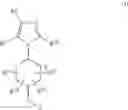




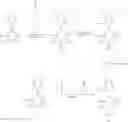






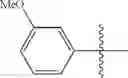


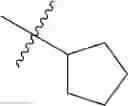


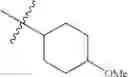
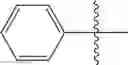


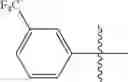


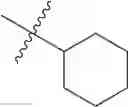


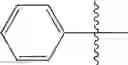


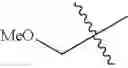


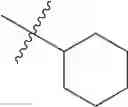


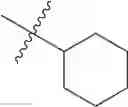


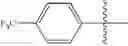
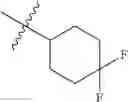


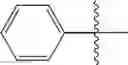


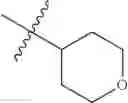
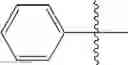


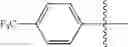


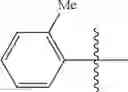


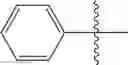


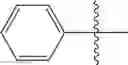


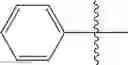
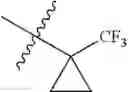


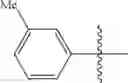


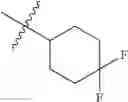


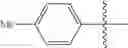


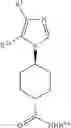




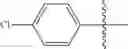


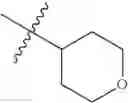


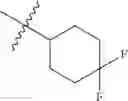

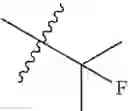


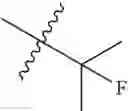


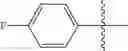


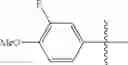


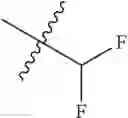


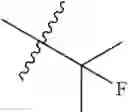


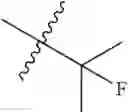


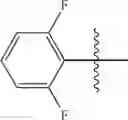


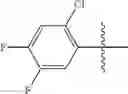


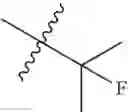


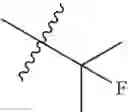


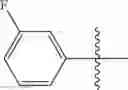

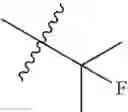



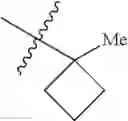
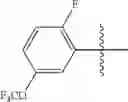

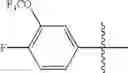
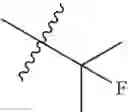
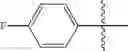

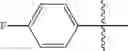


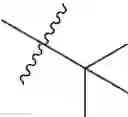
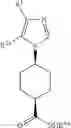

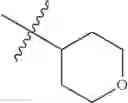
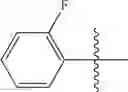

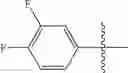


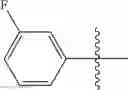


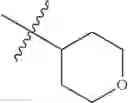

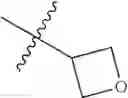


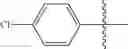


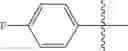


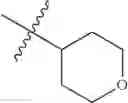

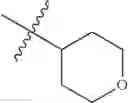


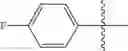


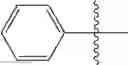


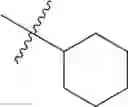


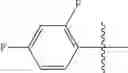
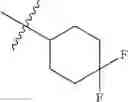


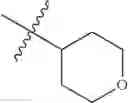
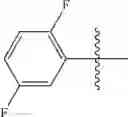


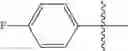


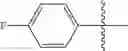


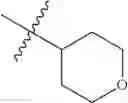


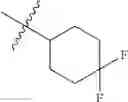


Sources:
- United States Patent and Trademark Office - verify current appl. status at the USPTO↗
Similar patent applications:
- » 20050143375
Imidazole derivatives - » 20050143377
Bicyclic imidazole derivatives, the preparation thereof and their use as pharmaceutical compositions - » 20050113342
Imidazole derivatives and their use as pharmaceutical agents - » 20050137197
1H-imidazole derivatives as cannabinoid receptor modulators - » 20050054686
Imidazole derivatives - » 20050137241
Imidazole derivatives, processes for preparing them and their uses - » 20050043277
Production of imidazole derivatives and novel intermediates of the derivatives - » 20050009878
Imidazole derivatives - » 20050054679
1H-imidazole derivatives having CB1 agonistic, CB1 partial agonistic or CB1-antagonistic activity - » 20050148601
Neurokinin-3 receptor modulators: diaryl imidazole derivatives
Recent applications in this class:
- » 20250115608 2025-04-10
HORMONE RECEPTOR MODULATORS FOR TREATING METABOLIC CONDITIONS AND DISORDERS - » 20250084082 2025-03-13
HUPERZINE B CRYSTAL AND PREPARATION AND APPLICATION THEREOF - » 20250059191 2025-02-20
CRYSTALLINE FORMS OF DIAZABICYCLOOCTANE DERIVATIVE AND PRODUCTION PROCESS THEREOF - » 20250051326 2025-02-13
CRYSTALLINE FORMS OF CFTR MODULATORS - » 20240391920 2024-11-28
RING-MODIFIED PROLINE SHORT PEPTIDE COMPOUND AND USE THEREOF - » 20240391919 2024-11-28
DIAZABICYCLOOCTANONES AS INHIBITORS OF SERINE BETA-LACTAMASES - » 20240383897 2024-11-21
THERAPEUTIC COMPOUNDS - » 20240368163 2024-11-07
COMPOUNDS AND METHODS FOR MODULATING SPLICING - » 20240336611 2024-10-10
ANALOGS FOR THE TREATMENT OF DISEASE - » 20240254126 2024-08-01
NOVEL BISPIDONE LIGANDS AND TRANSITION METAL COMPLEXES THEREOF