Process for the preparation of tofacitinib and intermediates thereof
US20150322072A1
2015-11-12
14/652,474
2013-12-17
✅ Patent granted
US 9,481,679 B2
2016-11-01
WO; PCT/IB2013/061046; 20131217
WO; WO2014/097150; 20140626
Noble Jarrell | Daniel Carcanague
2033-12-17
Abstract:
The present invention provides compounds of Formula III and Formula VI, and processes for their preparation. The present invention further provides use of the compounds of Formula III and Formula VI for the preparation of tofacitinib or isomers or a mixture of isomers or salts thereof.
Inventors:
- Chandra Has Khanduri 20 🇮🇳 Gurgaon, India
- Mohammed Salman Hashmi 4 🇮🇳 Aligarh, India
- Yoginder Pal SACHDEVA 1 🇮🇳 Faridabad, India
Assignee:
- SUN PHARMACEUTICAL INDUSTRIES LIMITED 113 🇮🇳 Mumbai, India
Applicant:
Interested in similar patents?
Get notified when new applications in this technology area are published.
Classification:
C07D213/74 » CPC further
Heterocyclic compounds containing six-membered rings, not condensed with other rings, with one nitrogen atom as the only ring hetero atom and three or more double bonds between ring members or between ring members and non-ring members having three double bonds between ring members or between ring members and non-ring members having no bond between the ring nitrogen atom and a non-ring member or having only hydrogen or carbon atoms directly attached to the ring nitrogen atom with hetero atoms or with carbon atoms having three bonds to hetero atoms with at the most one bond to halogen, e.g. ester or nitrile radicals, directly attached to ring carbon atoms; Nitrogen atoms Amino or imino radicals substituted by hydrocarbon or substituted hydrocarbon radicals
C07D487/04 » CPC main
Heterocyclic compounds containing nitrogen atoms as the only ring hetero atoms in the condensed system, not provided for by groups - in which the condensed system contains two hetero rings Ortho-condensed systems
C07D213/61 » CPC further
Heterocyclic compounds containing six-membered rings, not condensed with other rings, with one nitrogen atom as the only ring hetero atom and three or more double bonds between ring members or between ring members and non-ring members having three double bonds between ring members or between ring members and non-ring members having no bond between the ring nitrogen atom and a non-ring member or having only hydrogen or carbon atoms directly attached to the ring nitrogen atom with hetero atoms or with carbon atoms having three bonds to hetero atoms with at the most one bond to halogen, e.g. ester or nitrile radicals, directly attached to ring carbon atoms Halogen atoms or nitro radicals
C07D211/56 » CPC further
Heterocyclic compounds containing hydrogenated pyridine rings, not condensed with other rings with only hydrogen or carbon atoms directly attached to the ring nitrogen atom having no double bonds between ring members or between ring members and non-ring members with hetero atoms or with carbon atoms having three bonds to hetero atoms with at the most one bond to halogen, e.g. ester or nitrile radicals, directly attached to ring carbon atoms Nitrogen atoms
C07D471/04 » CPC further
Heterocyclic compounds containing nitrogen atoms as the only ring hetero atoms in the condensed system, at least one ring being a six-membered ring with one nitrogen atom, not provided for by groups - in which the condensed system contains two hetero rings Ortho-condensed systems
Description
FIELD OF THE INVENTION
The present invention provides compounds of Formula II, Formula III, and Formula VI, and processes for their preparation. The present invention further provides use of the compounds of Formula II, Formula III, and Formula VI for the preparation of tofacitinib or isomers or a mixture of isomers or salts thereof.
BACKGROUND OF THE INVENTION
Tofacitinib chemically is 3-{(3R,4R)-4-methyl-3-[methyl(7H-pyrrolo[2,3-d]pyrimidin-4-yl)amino]piperidin-1-yl}-3-oxopropanenitrile of Formula I.
Tofacitinib is a Janus kinase 3 (JAK3) inhibitor.
U.S. Pat. No. RE41,783 provides a process for the preparation of a tofacitinib intermediate, (1-benzyl-4-methylpiperidin-3-yl)-methylamine, wherein 1-benzyl-4-methylpiperidin-3-one is stirred with methylamine in the presence of acetic acid for 16 hours at room temperature, then the mixture obtained is further stirred with triacetoxy sodium borohydride for 24 hours to provide (1-benzyl-4-methylpiperidin-3-yl)-methylamine. The amination process described in U.S. Pat. No. RE41,783 is a two-step process, wherein an imine intermediate is first formed in situ by the reaction between 1-benzyl-4-methylpiperidin-3-one and methylamine. This imine intermediate on treatment with triacetoxy sodium borohydride provides (1-benzyl-4-methylpiperidin-3-yl)-methylamine. This process involves long reaction hours and costly reagents, for example, triacetoxy sodium borohydride.
U.S. Pat. No. 6,696,567 provides a process involving six steps for the preparation of (1-benzyl-4-methylpiperidin-3-yl)-methylamine starting from 4-methylpyridine and benzylchloride. The process provided therein involves the use of costly and corrosive reagents, for example, borontrifluoride etherate, hydrogen peroxide, and triacetoxy sodium borohydride.
U.S. Pat. No. 7,084,277 provides a process involving four steps for the preparation of (1-benzyl-4-methylpiperidin-3-yl)-methylamine starting from 4-methyl-pyridin-3-ylamine. The process provided therein involves the use of costly starting material and/or reagents, for example, 4-methyl-pyridin-3-ylamine, rhodium on alumina and sodium triacetoxyborohydride.
The prior art processes for the preparation of (1-benzyl-4-methylpiperidin-3-yl)-methylamine involve a number of reaction steps and make use of costly and corrosive starting materials and/or reagents. Accordingly, these processes are not suitable at an industrial scale. Therefore, there is still a need in the art to develop an economically attractive process for the preparation of (1-benzyl-4-methylpiperidin-3-yl)-methylamine.
SUMMARY OF THE INVENTION
The present inventors have developed an economically attractive and environmentally friendly process for the preparation of (1-benzyl-4-methylpiperidin-3-yl)-methylamine. The process of the present invention involves the use of less expensive chemicals and reagents, fewer reaction steps in the reaction sequence, and reduced reaction times.
The present invention provides compounds of Formula II, Formula III, and Formula VI, and processes for their preparation. The present invention further provides the use of the compounds of Formula II, Formula III, and Formula VI for the preparation of tofacitinib or isomers or a mixture of isomers or salts thereof.
DETAILED DESCRIPTION OF THE INVENTION
A first aspect of the present invention provides a process for the preparation of a compound of Formula II
comprising treating 3-bromo-4-methylpyridine with benzyl halide,
wherein X− is Cl−, Br−, or I−.
A second aspect of the present invention provides a process for the preparation of a compound of Formula III
comprising the steps of:
-
- a) treating 3-bromo-4-methylpyridine with benzyl halide to obtain a compound of Formula II; and
-
- b) treating the compound of Formula II with methylamine to obtain the compound of Formula III,
wherein X− is Cl−, Br−, or I−.
- b) treating the compound of Formula II with methylamine to obtain the compound of Formula III,
A third aspect of the present invention provides a process for the preparation of a compound of Formula III
comprising treating a compound of Formula II
with methylamine to obtain the compound of Formula III,
wherein X− is Cl−, Br−, or I−.
A fourth aspect of the present invention provides a process for the preparation of a compound of Formula IV
wherein the process comprises the steps of:
-
- a) treating 3-bromo-4-methylpyridine with benzyl halide to obtain a compound of Formula II;
-
- b) treating the compound of Formula II with methylamine to obtain a compound of Formula III; and
-
- c) reducing the compound of Formula III to obtain the compound of Formula IV,
wherein X− is Cl−, Br−, or I−.
- c) reducing the compound of Formula III to obtain the compound of Formula IV,
A fifth aspect of the present invention provides a process for the preparation of a compound of Formula IV
wherein the process comprises the steps of:
-
- a) treating a compound of Formula II
-
- with methylamine to obtain a compound of Formula III; and
-
- b) reducing the compound of Formula III to obtain the compound of Formula IV,
wherein X− is Cl−, Br−, or I−.
- b) reducing the compound of Formula III to obtain the compound of Formula IV,
A sixth aspect of the present invention provides a process for the preparation of a compound of Formula IV
wherein the process comprises reducing a compound of Formula III
to obtain the compound of Formula IV,
wherein X− is Cl−, Br−, or I−.
A seventh aspect of the present invention provides a process for the preparation of a compound of Formula VI
comprising treating a compound of Formula V
with benzyl halide to obtain the compound of Formula VI,
wherein X is Cl, Br, or I, and X− is Cl−, Br−, or I−.
An eighth aspect of the present invention provides a process for the preparation of a compound of Formula III
comprising the steps of:
-
- a) treating a compound of Formula V
-
- with benzyl halide to obtain a compound of Formula VI; and
-
- b) treating the compound of Formula VI with methylamine to obtain the compound of Formula III,
wherein X is Cl, Br, or I, and X− is Cl−, Br−, or I−.
- b) treating the compound of Formula VI with methylamine to obtain the compound of Formula III,
A ninth aspect of the present invention provides a process for the preparation of a compound of Formula III
comprising treating a compound of Formula VI
with methylamine to obtain the compound of Formula III,
wherein X is Cl, Br, or I, and X− is Cl−, Br−, or I−.
A tenth aspect of the present invention provides a process for the preparation of a compound of Formula IV
wherein the process comprises the steps of:
-
- a) treating a compound of Formula V
-
- with benzyl halide to obtain a compound of Formula VI;
-
- b) treating the compound of Formula VI with methylamine to obtain a compound of Formula III; and
-
- c) reducing the compound of Formula III to obtain the compound of Formula IV,
wherein X is Cl, Br, or I, and X− is Cl−, Br−, or I−.
- c) reducing the compound of Formula III to obtain the compound of Formula IV,
An eleventh aspect of the present invention provides a process for the preparation of a compound of Formula IV
wherein the process comprises the steps of:
-
- a) treating a compound of Formula VI
-
- with methylamine to obtain a compound of Formula III; and
-
- b) reducing the compound of Formula III to obtain the compound of Formula IV,
wherein X is Cl, Br, or I, and X− is Cl−, Br−, or I−.
- b) reducing the compound of Formula III to obtain the compound of Formula IV,
A twelfth aspect of the present invention provides a process for the preparation of tofacitinib of Formula I
or isomers or a mixture of isomers or salts thereof, wherein the process comprises the steps of:
-
- a) treating 3-bromo-4-methylpyridine with benzyl halide to obtain a compound of Formula II;
-
- b) treating the compound of Formula II with methylamine to obtain a compound of Formula III;
-
- c) reducing the compound of Formula III to obtain a compound of Formula IV; and
-
- d) converting the compound of Formula IV into tofacitinib of Formula I or isomers or a mixture of isomers or salts thereof,
wherein X− is Cl−, Br−, or I−.
- d) converting the compound of Formula IV into tofacitinib of Formula I or isomers or a mixture of isomers or salts thereof,
A thirteenth aspect of the present invention provides a process for the preparation of tofacitinib of Formula I
or isomers or a mixture of isomers or salts thereof wherein, the process comprises the steps of:
-
- a) treating a compound of Formula II
-
- with methylamine to obtain a compound of Formula III;
-
- b) reducing the compound of Formula III to obtain a compound of Formula IV; and
-
- c) converting the compound of Formula IV into tofacitinib of Formula I or isomers or a mixture of isomers or salts thereof,
wherein X− is Cl−, Br−, or I−.
- c) converting the compound of Formula IV into tofacitinib of Formula I or isomers or a mixture of isomers or salts thereof,
A fourteenth aspect of the present invention provides a process for the preparation of tofacitinib of Formula I
or isomers or a mixture of isomers or salts thereof, wherein the process comprises the steps of:
-
- a) reducing a compound of Formula III
-
- to obtain a compound of Formula IV; and
-
- b) converting the compound of Formula IV into tofacitinib of Formula I or isomers or a mixture of isomers or salts thereof,
wherein X− is Cl−, Br−, or I−.
- b) converting the compound of Formula IV into tofacitinib of Formula I or isomers or a mixture of isomers or salts thereof,
A fifteenth aspect of the present invention provides a process for the preparation of tofacitinib of Formula I
or isomers or a mixture of isomers or salts thereof, wherein the process comprises the steps of:
-
- a) treating a compound of Formula V
-
- with benzyl halide to obtain a compound of Formula VI;
-
- b) treating the compound of Formula VI with methylamine to obtain a compound of Formula III;
-
- c) reducing the compound of Formula III to obtain a compound of Formula IV; and
-
- d) converting the compound of Formula IV into tofacitinib of Formula I or isomers or a mixture of isomers or salts thereof,
wherein X is Cl, Br, or I, and X− is Cl−, Br−, or I−.
- d) converting the compound of Formula IV into tofacitinib of Formula I or isomers or a mixture of isomers or salts thereof,
A sixteenth aspect of the present invention provides a process for the preparation of tofacitinib of Formula I
or isomers or a mixture of isomers or salts thereof, wherein the process comprises the steps of:
-
- a) treating a compound of Formula VI
-
- with methylamine to obtain a compound of Formula III;
-
- b) reducing the compound of Formula III to obtain a compound of Formula IV; and
-
- c) converting the compound of Formula IV into tofacitinib of Formula I or isomers or a mixture of isomers or salts thereof,
wherein X is Cl, Br, or I, and X− is Cl−, Br−, or I−.
- c) converting the compound of Formula IV into tofacitinib of Formula I or isomers or a mixture of isomers or salts thereof,
The compound of Formula V or 3-bromo-4-methylpyridine, can be prepared by any method provided in the prior art, for example, U.S. Pat. Nos. 7,456,192 and 5,733,912; Chinese Patent No. CN 100460394; or U.S. Publication No. 2007/0078135, or as described herein. The compound of Formula V or 3-bromo-4-methylpyridine is treated with a benzyl halide to obtain the compound of Formula VI or the compound of Formula II in a solvent. The benzyl halide is selected from the group comprising benzyl chloride, benzyl bromide, and benzyl iodide. The solvent is selected from the group comprising toluene, acetone, dichloromethane, tetrahydrofuran, ethanol, and mixtures thereof. The compound of Formula V or 3-bromo-4-methylpyridine is treated with the benzyl halide up to the reflux temperature of the solvent for about 2 hours to about 30 hours. The product may be isolated from the mixture by methods including cooling, decantation, filtration, concentration, chromatography, distillation, evaporation, centrifugation, or a combination thereof. The obtained mixture may further be dried.
The compound of Formula VI or the compound of Formula II is treated with methylamine to obtain the compound of Formula III in the optional presence of a catalyst. A solvent can also be used. Methylamine can be used in the form of a solution, for example, an aqueous solution or methanolic solution. The solvent is selected from the group comprising methanol, ethanol, propanol, and mixtures thereof. The catalyst is selected from the group comprising cuprous oxide, copper powder, cuprous iodide, and cuprous bromide. The compound of Formula VI or the compound of Formula II is treated with methylamine up to a temperature of 100° C. in a pressure vessel for about 2 hours to about 30 hours. The product may be isolated from the mixture by methods including cooling, decantation, filtration, concentration, chromatography, distillation, evaporation, centrifugation, or a combination thereof.
The compound of Formula III is reduced in the presence of a reducing agent to obtain the compound of Formula IV in a solvent. The reducing agent is selected from the group comprising sodium borohydride and potassium borohydride. The solvent is selected from the group comprising methanol, ethanol, propanol, water, and mixtures thereof. The compound of Formula III is reduced in the presence of the reducing agent at about 0° C. to about 50° C. for about 2 hours to about 30 hours. The product may be isolated from the mixture by methods including cooling, decantation, filtration, concentration, chromatography, distillation, evaporation, centrifugation, or a combination thereof, and may further be crystallized.
The compound of Formula IV prepared according to the process of the present invention may be converted into tofacitinib of Formula I
or isomers or a mixture of isomers thereof by following any method provided in the prior art, for example, by following Example 14 of U.S. Pat. No. RE41,783 or by following Example 6 of U.S. Pat. No. 7,301,023.
Tofacitinib of Formula I or isomers of tofacitinib or a mixture of isomers thereof may be converted into a salt by following any method provided in the prior art, for example, by following Example 1 of U.S. Pat. No. 6,965,027 or by following Example 1 or Example 8 of PCT Publication No. WO 2012/135338.
The term “about”, as used herein, when used along values assigned to certain measurements and parameters means a variation of up to 10% from such values, or in case of a range of values, means up to a 10% variation from both the lower and upper limits of such ranges.
A seventeenth aspect of the present invention provides a compound of Formula II
wherein X− is Cl−, Br−, or I−.
An eighteenth aspect of the present invention provides a compound of Formula III
wherein X− is Cl−, Br−, or I−.
A nineteenth aspect of the present invention provides a compound of Formula VI
wherein X is Cl, Br, or I, and X− is Cl−, Br−, or I−.
A twentieth aspect of the present invention provides the use of a compound of Formula II
for the preparation of tofacitinib or isomers or a mixture of isomers or salts thereof,
wherein X− is Cl−, Br−, or I−.
A twenty-first aspect of the present invention provides the use of a compound of Formula III
for the preparation of tofacitinib or isomers or a mixture of isomers or salts thereof, wherein X− is Cl−, Br−, or I−.
A twenty-second aspect of the present invention provides the use of a compound of Formula VI
for the preparation of tofacitinib or isomers or a mixture of isomers or salts thereof, wherein X is Cl, Br, or I, and X− is Cl−, Br−, or I−.
Methods:
1H NMR spectra were recorded on a Bruker® AVANCE III 400 MHz NMR spectrometer (Pulse length: 10.75 μsec; Power Level: 2.00 dB; Inter pulse delay: 6.50 μsec; Probe: 5 mm SE1 1H/D−; Sweep Width: 8223.685 Hz; Dwell time: 60.800 μsec). Mass analysis was performed on an Applied Biosystems® API 2000 triple quadrupole mass spectrometer by molecular weight in +ve ionization.
While the present invention has been described in terms of its specific embodiments, certain modifications and equivalents will be apparent to those skilled in the art and are intended to be included within the scope of the present invention.
EXAMPLES
Example 1
Preparation of 3-bromo-4-methylpyridine (Formula V, wherein X═Br)
4-Methylpyridine (50 g) was added slowly to aluminum chloride (182 g) with vigorous stirring under nitrogen over 1 hour. The resulting mixture was maintained at 95° C. to 105° C. and bromine (51 g) was introduced through the condenser over 5 hours. The reaction mixture was stirred at 95° C. to 105° C. for 15 hours. Additional bromine (32 g) was added to the reaction mixture over 3 hours and the reaction mixture was stirred for 20 hours at 95° C. to 105° C. The mixture was cooled to 25° C. to 30° C. and poured over crushed ice (1.3 kg) slowly with vigorous stirring. A saturated aqueous sodium hydroxide solution was added to the aqueous mixture until all the inorganic material was dissolved. The aqueous layer was extracted with dichloromethane (2×300 mL), and the combined organic layer was recovered under vacuum. The oil obtained was fractionally distilled under 13 mm pressure to obtain the title compound.
Yield=46 g (49%)
Example 2
Preparation of 1-benzyl-3-bromo-4-methylpyridinium bromide (Formula VI, wherein X═Br and X−═Br− or Formula II, wherein X−═Br−)
Benzyl bromide (16.4 g) was added to a solution of 3-bromo-4-methylpyridine (Formula V, obtained according to Example 1, 15 g) in toluene (150 mL). The resulting mixture was heated to 110° C. and then maintained at 105° C. to 110° C. for 20 hours under inert atmosphere. The mixture was cooled to 5° C. and then maintained at 5° C. to 10° C. for 1 hour. The solid was filtered, washed with toluene (30 mL), and dried under vacuum at 50° C. to 55° C. for 10 hours.
Yield=25.95 g (87%)
Melting Point=205° C. to 208° C.
1H NMR (CD3OD, 400 MHz): 9.4 (1H, br), 8.9 (1H, d), 8.06 (1H, d), 7.4-7.5 (5H, m), 5.8 (2H, s), 2.7 (3H, s).
Mass (m/z): 263 [M+]
The compounds of Formula VI or Formula II wherein X═Br and X−═Cl− or I−, and the compounds of Formula VI, wherein X═Cl or I and X−═Br−, or I−, can be prepared by a method analogous to that as described in Example 2.
Example 3
Preparation of 1-benzyl-4-methyl-3-(methylamino)pyridinium bromide (Formula III, wherein X−═Br−)
Cuprous oxide (0.2 g) was added to a mixture of 1-benzyl-3-bromo-4-methylpyridinium bromide (Formula VI, obtained according to Example 2, 5 g) in methanolic methylamine solution (11.5%, 25 g) under nitrogen atmosphere. The reaction mixture was heated to 75° C. in an autoclave and maintained at this temperature for 24 hours. The solvent was recovered completely under vacuum to obtain a dark brown oily mass.
Yield=4.05 g (95%)
1H NMR (CDCl3, 400 MHz): 9.2 (1H, br), 8.7 (1H, br), 8.07 (1H, br), 7.6-7.7 (5H, m), 6.0 (2H, br), 2.84 (3H, s), 2.3 (3H, br).
Mass (m/z): 213[M+]
The compounds of Formula III, wherein X−═Cl− or I−, can be prepared by a method analogous to that as described in Example 3.
Example 4
Preparation of (1-benzyl-4-methylpiperidin-3-yl)-methylamine (Formula IV)
Sodium borohydride (7.28 g) was added to a cooled solution (0° C. to 5° C.) of 1-benzyl-4-methyl-3-(methylamino)pyridinium bromide (Formula III, obtained according to Example 3, 13 g) in ethanol (68 mL) and water (7.5 mL) at 0° C. to 5° C. over 30 minutes. The temperature of the reaction mass was raised to 25° C. and the reaction mixture was stirred for 20 hours at 20° C. to 25° C. Water (50 mL) was added to the resulting mass and it was filtered to remove inorganic salt. The filtrate was extracted with dichloromethane (2×100 mL) followed by the recovery of the solvent under vacuum at 35° C. to obtain a dark brown oily mass. The oily mass was treated with 10% ethanolic hydrochloric acid and then crystallized in acetone to provide the title compound.
Yield=5.2 g (53.7%)
Claims
1. A process for the preparation of a compound of Formula IV
wherein the process comprises reducing a compound of Formula III
to obtain the compound of Formula IV,
wherein X− is Cl−, Br−, or I−.
2. A process for the preparation of a compound of Formula VI
comprising treating a compound of Formula V
with a benzyl halide to obtain the compound of Formula VI,
wherein X is Cl, Br, or I, and X− is Cl−, Br−, or I−.
3. The process according to claim 2, wherein the compound of Formula VI is further treated with methylamine to obtain a compound of Formula III,
wherein X− is Cl−, Br−, or I.
4. A process for the preparation of a compound of Formula III
comprising treating a compound of Formula VI
with methylamine to obtain the compound of Formula III,
wherein X is Cl, Br, or I, and X− is Cl−, Br−, or I−.
5. The process according to claim 3, wherein the compound of Formula III is further reduced to obtain a compound of Formula IV
6. The process according to claim 4, wherein the compound of Formula III is further reduced to obtain a compound of Formula IV
7. The process according to claim 1, wherein the compound of Formula IV is further converted into tofacitinib of Formula I
or isomers or a mixture of isomers or salts thereof.
8. The process according to claim 5, wherein the compound of Formula IV is further converted into tofacitinib of Formula I
or isomers or a mixture of isomers or salts thereof.
9. The process according to claim 6, wherein the compound of Formula IV is further converted into tofacitinib of Formula I
or isomers or a mixture of isomers or salts thereof.
10. The process according to claim 2, wherein the benzyl halide is selected from the group comprising benzyl chloride, benzyl bromide, and benzyl iodide.
11. The process according to claim 2, wherein the compound of Formula V is treated with the benzyl halide in a solvent selected from the group comprising toluene, acetone, dichloromethane, tetrahydrofuran, ethanol, and mixtures thereof.
12. The process according to claim 3 or 4, wherein the compound of Formula VI is treated with methylamine in the presence of a catalyst.
13. The process according to claim 12, wherein the catalyst is selected from the group comprising cuprous oxide, copper powder, cuprous iodide, and cuprous bromide.
14. The process according to claim 3 or 4, wherein the compound of Formula VI is treated with methylamine in a solvent selected from the group comprising methanol, ethanol, propanol, and mixtures thereof.
15. The process according to claim 1, 5, or 6, wherein the reduction is carried out in the presence of a reducing agent selected from the group comprising sodium borohydride and potassium borohydride.
16. The process according to claim 1, 5, or 6, wherein the compound of Formula III is reduced to obtain the compound of Formula IV in a solvent selected from the group comprising methanol, ethanol, propanol, water, and mixtures thereof.
17. A compound of Formula III,
wherein X− is Cl−, Br−, or I−.
18. A compound of Formula VI,
wherein X is Cl, Br, or I, and X− is Cl−, Br−, or I−.
19. (canceled)
20. (canceled)
Images & Drawings included:
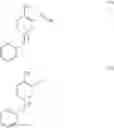


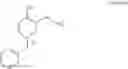


Sources:
- United States Patent and Trademark Office - verify current appl. status at the USPTO↗
Similar patent applications:
Recent applications in this class:
- » 20250289825 2025-09-18
COMPOUNDS THAT INTERACT WITH RAS SUPERFAMILY PROTEINS FOR TREATMENT OF CANCERS, INFLAMMATORY DISEASES, RASOPATHIES, AND FIBROTIC DISEASE - » 20250289824 2025-09-18
EGFR INHIBITOR FOR THE TREATMENT OF CANCER - » 20250289823 2025-09-18
USE OF PYRAZOLOPYRIMIDINE DERIVATIVES FOR THE TREATMENT OF PI3K-DELTA RELATED DISORDERS - » 20250282788 2025-09-11
BICYCLIC KETONE COMPOUNDS AND METHODS OF USE THEREOF - » 20250282787 2025-09-11
SUBSTITUTED IMIDAZO[1,2-c]PYRIMIDINES AS PRC2 INHIBITORS - » 20250282786 2025-09-11
Tricyclic TLR7 Agonists and Uses Thereof - » 20250282785 2025-09-11
PYRROLIDINONE DERIVATIVES AS INHIBITORS OF NF KAPPA B INDUCING KINASE - » 20250282784 2025-09-11
CYTOCHROME BD OXIDASE INHIBITORS AND USES THEREOF - » 20250282783 2025-09-11
PROTEIN STABILIZING COMPOUNDS CONTAINING USP28 AND/OR USP25 TARGETING LIGANDS - » 20250282782 2025-09-11
PYRAZOLOPYRAZINE COMPOUNDS AS SHP2 INHIBITORS
Recent applications for this Assignee:
- » 20240391993 2024-11-28
METHODS AND COMPOSITIONS FOR TREATING PLAQUE PSORIASIS - » 20240199718 2024-06-20
GLP-1 Analogues - » 20240115523 2024-04-11
Infusion dosage form of norepinephrine - » 20230338366 2023-10-26
PARENTERAL UNIT DOSAGE FORM OF DIHYDROERGOTAMINE - » 20230303678 2023-09-28
METHODS FOR TREATMENT OF SUBJECTS WITH PLAQUE PSORIASIS OF THE SCALP - » 20230285301 2023-09-14
MULTI-PARTICULATE PHARMACEUTICAL COMPOSITION OF QUETIAPINE - » 20230248724 2023-08-10
Method of Injecting Dihydroergotamine Into The Body - » 20230117549 2023-04-20
METHOD OF INJECTING OCTREOTIDE ACETATE INTO THE BODY - » 20230087099 2023-03-23
Perfusion dosage form - » 20230058942 2023-02-23
Extended release multiparticulates of ranolazine