Method for preparing nickel-cobalt-manganese hydroxide
US20160016815A1
2016-01-21
14/775,397
2013-04-28
✅ Patent granted
US 9,815,709 B2
2017-11-14
WO; PCT/CN2013/074976; 20130428
WO; WO2014/139200; 20140918
Steven Bos
Hahn Loeser & Parks, LLP—San Diego
2033-05-17
Abstract:
A method for preparing nickel-cobalt-manganese hydroxide. The method comprises the following steps: (1) dissolving microcrystalline cellulose into water to obtain a suspension; and adding a nickel source, a cobalt source, and a manganese source into the suspension to obtain a solution containing nickel, cobalt, and manganese; (2) adding hexamethylenetetramine into the solution containing nickel, cobalt, and manganese, heating the reaction solution to 80-90° C., and reacting for 5-10 min, then heating with a microwave hydrothermal synthesis instrument at a frequency of 2450 MHz for 10-60 min; and (3) filtering the reaction solution obtained in step (2), and taking the filter residue, washing the filter residue with pure water and ethanol respectively, then drying, crushing, and screening the filter residue to obtain nickel-cobalt-manganese hydroxide. Nickel-cobalt-manganese hydroxide prepared from the abovementioned method has a uniform particle size and consistent morphology and structure; thus solving the problems of the uncontrollable appearance and structure and the inconsistent performances of the product caused by the vigorous reaction in the existing method for preparing nickel-cobalt-manganese hydroxide.
Inventors:
- Yannan OU 1 🇨🇳 Guangdong, China
- Changdong LI 51 🇨🇳 Guangdong, China
- Haijun YU 42 🇨🇳 Guangdong, China
Assignee:
- HUNAN BRUNP RECYCLING TECHNOLOGY CO., LTD. 52 🇨🇳 Hunan, China
- Guangdong Brunp Recycling Technology Co., Ltd 1 🇨🇳 Guangdung, China
Applicant:
Interested in similar patents?
Get notified when new applications in this technology area are published.
Classification:
C01G53/006 » CPC main
Compounds of nickel Compounds containing, besides nickel, two or more other elements, with the exception of oxygen or hydrogen
H01M4/0471 » CPC further
Electrodes; Electrodes composed of, or comprising, active material; Processes of manufacture in general involving thermal treatment, e.g. firing, sintering, backing particulate active material, thermal decomposition, pyrolysis
H01M4/505 » CPC further
Electrodes; Electrodes composed of, or comprising, active material; Selection of substances as active materials, active masses, active liquids of inorganic oxides or hydroxides of manganese of mixed oxides or hydroxides containing manganese for inserting or intercalating light metals, e.g. LiMnO or LiMnOxFy
H01M4/525 » CPC further
Electrodes; Electrodes composed of, or comprising, active material; Selection of substances as active materials, active masses, active liquids of inorganic oxides or hydroxides of nickel, cobalt or iron of mixed oxides or hydroxides containing iron, cobalt or nickel for inserting or intercalating light metals, e.g. LiNiO, LiCoO or LiCoOxFy
C01G53/00 IPC
Compounds of nickel
H01M4/04 IPC
Electrodes; Electrodes composed of, or comprising, active material Processes of manufacture in general
H01M4/485 » CPC further
Electrodes; Electrodes composed of, or comprising, active material; Selection of substances as active materials, active masses, active liquids of inorganic oxides or hydroxides of mixed oxides or hydroxides for inserting or intercalating light metals, e.g. LiTiO or LiTiOxFy
C01P2004/03 » CPC further
Particle morphology depicted by an image obtained by SEM
H01M10/052 » CPC further
Secondary cells; Manufacture thereof; Accumulators with non-aqueous electrolyte Li-accumulators
C01P2004/32 » CPC further
Particle morphology extending in three dimensions Spheres
C01P2004/61 » CPC further
Particle morphology; Particles characterised by their size Micrometer sized, i.e. from 1-100 micrometer
Description
TECHNICAL FIELD
The present invention relates to a method for preparing nickel-cobalt-manganese hydroxide.
BACKGROUND
With the continuous development of the digital product industry, there is an increasing need for the battery. Lithium nickel-cobalt-manganese oxide is an important cathode material for a lithium battery, with an increasingly wide production and use, and a large market demand. Nickel-cobalt-manganese hydroxide, i.e., a nickel-cobalt-manganese ternary precursor, can be synthesized into lithium nickel-cobalt-manganese oxide by adding a lithium source, therefore, nickel-cobalt-manganese hydroxide is a necessary material for producing lithium nickel-cobalt-manganese oxide. The size, morphology and structure of nickel-cobalt-manganese hydroxide have direct effects on the size, morphology and structure of the subsequent processing lithium nickel-cobalt-manganese oxide. Therefore, the performances of the nickel-cobalt-manganese ternary precursor decide the performances of lithium nickel-cobalt-manganese oxide.
Currently, the common method for preparing nickel-cobalt-manganese hydroxide is the direct precipitation method, wherein a strongly basic precipitant is added into the solution of nickel, cobalt, and manganese, thus synthesizing nickel-cobalt-manganese hydroxide, i.e., a nickel-cobalt-manganese ternary precursor. Such method is widely used, but due to the vigorous reaction, the appearance and structure of the nickel-cobalt-manganese ternary precursor is uncontrollable, and the performances of the products are inconsistent, thus affecting the performances of the subsequent processing battery material.
SUMMARY OF THE INVENTION
In order to solve the problems of the uncontrollable appearance and structure and the inconsistent performances of the product caused by the vigorous reaction in the existing method for preparing nickel-cobalt-manganese hydroxide, the object of the present invention is to provide a method for preparing nickel-cobalt-manganese hydroxide, so as to obtain a precursor of the excellent lithium nickel-cobalt-manganese oxide ternary cell material.
The object of the present invention can be achieved by the following technical solutions:
a method for preparing nickel-cobalt-manganese hydroxide, comprising the following steps:
(1) dissolving microcrystalline cellulose (as a template excipient) into water, and stirring to homogeneity to obtain a suspension; and adding a nickel source, a cobalt source, and a manganese source into the suspension, wherein the mass ratio among the nickel source, the cobalt source, and the manganese source is (1-3):1:(1-1.5), the ratio between the total mass of the nickel source, the cobalt source, and the manganese source and the mass of the microcrystalline cellulose is (1-3):1, stirring to homogeneity to obtain a solution containing nickel, cobalt, and manganese;
(2) adding hexamethylenetetramine (a weak basic nucleating agent) into the solution containing nickel, cobalt, and manganese, making the ratio between the total mass of the nickel source, the cobalt source, and the manganese source and the mass of the hexamethylenetetramine being 1:(1-5), and stirring to homogeneity to obtain a reaction solution; heating the reaction solution to 80-90° C., and reacting for 5-10 min, then heating with a microwave hydrothermal synthesis instrument at a frequency of 2450 MHz for 10-60 min;
(3) filtrating the reation solution obtained in step (2), and taking the filter residue, washing the filter residue with pure water and ethanol respectively, then drying, crushing, and screening the filter residue, thus obtaining nickel-cobalt-manganese hydroxide;
the nickel source is one of nickel acetate, nickel chloride or nickel sulfate;
the cobalt source is one of cobalt acetate, cobalt chloride or cobalt sulfate;
the manganese source is one of manganese acetate, manganese chloride or manganese sulfate.
As compared to the prior art, the present invention has the advantages and effects as follows:
1. As microcrystalline cellulose is used as a template in the present invention, the nickel, cobalt, and manganese ions are interacted with the hydroxyls on the surface of microcrystalline cellulose, and can be nucleated and grown homogeneously along the distribution of the hydroxyls of microcrystalline cellulose, so that the prepared nickel-cobalt-manganese hydroxide has a uniform particle size, and consistent morphology and structure.
2. Hexamethylenetetramine is used in the present invention to promote the nucleation of nickel-cobalt-manganese hydroxide. Hexamethylenetetramine is reacted with water, and OH— is gradually formed, thus controlling the nickel, cobalt, and manganese ions to be nucleated stably on the surface of microcrystalline cellulose. On the contrary, in the conventional direct addition of strongly basic precipitating agent, the strongly basic precipitating agent makes the nickel, cobalt, and manganese ions to be nucleated and grown rapidly in a short time, and it is hard to control the nickel, cobalt, and manganese ions to be nucleated stably on the surface of microcrystalline cellulose, which renders the product has a big size, and inconsistent morphology and structure.
3. As a microwave heating method is used in the present invention, the nucleation and growth of nickel-cobalt-manganese hydroxide on the surface of the microcrystalline cellulose is accelerated, and the reaction rate is increased, so that the problem of the long time-consuming of the natural growth of nickel-cobalt-manganese hydroxide on the surface of the microcrystalline cellulose is solved
BRIEF DESCRIPTION OF THE DRAWINGS
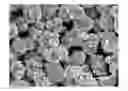
FIG. 1 shows a scanning electron micrograph of nickel-cobalt-manganese hydroxide prepared in example 1.
DETAILED DESCRIPTION
The present invention is further illustrated in detail below in combination with the examples and the drawings, but the embodiments of the present invention are not limited thereto.
Example 1
A method for preparing nickel-cobalt-manganese hydroxide, comprising the following steps:
(1) dissolving 2 g of microcrystalline cellulose into 80 mL of water, and stirring to homogeneity to obtain a suspension; adding 1 g of nickel acetate, 1 g of cobalt acetate, and 1 g of manganese acetate into the suspension, and stirring to homogeneity to obtain a solution containing nickel, cobalt, and manganese;
(2) adding 3 g of hexamethylenetetramine into the solution containing nickel, cobalt, and manganese, and stirring to homogeneity to obtain a reaction solution; heating the reaction solution to 80° C. and reacting for 5 min, then heating with a microwave hydrothermal synthesis instrument (Type No.: XH-800S-10 from Beijing XiangHu Science and Technology Development Co., Ltd, hereinafter) at a frequency of 2450 MHz for 30 min.
(3) filtrating the reaction solution obtained in step (2), and taking the filter residue, washing the filter residue with pure water and ethanol respectively, then drying the filter residue at 60° C., crushing, and screening, thus obtaining nickel-cobalt-manganese hydroxide.
As shown in FIG. 1, the obtained nickel-cobalt-manganese hydroxide had a uniform particle size of about 10 μm, consistent spherical morphology, and consistent structure.
Example 2
A method for preparing nickel-cobalt-manganese hydroxide, comprising the following steps:
(1) dissolving 4 g of microcrystalline cellulose into 100 mL of water, and stirring to homogeneity to obtain a suspension; adding 2 g of nickel chloride, 2 g of cobalt chloride, and 2 g of manganese chloride into the suspension, and stirring to homogeneity to obtain a solution containing nickel, cobalt, and manganese;
(2) adding 6 g of hexamethylenetetramine into the solution containing nickel, cobalt, and manganese, and stirring to homogeneity to obtain a reaction solution; heating the reaction solution to 90° C. and reacting for 10 min, then heating with a microwave hydrothermal synthesis instrument at a frequency of 2450 MHz for 60 min.
(3) filtrating the reaction solution obtained in step (2), and taking the filter residue, washing the filter residue with pure water and ethanol respectively, then drying the filter residue at 60° C., crushing, and screening, thus obtaining nickel-cobalt-manganese hydroxide.
Nickel-cobalt-manganese hydroxide prepared in this example had a similar particle size and morphology as those in example 1, with a uniform particle size of about 10 μm, consistent spherical morphology, and consistent structure.
The abovementioned examples are the preferred embodiments of the present invention, but the embodiments of the present invention are not limited thereto. Any other changes, modifications, alternatives, combinations, and simplifications, all of which shall be the equivalent replacements, without departing from the spirit principle of the present invention, should be included in the scope of protection of the present invention.
Claims
1. A method for preparing nickel-cobalt-manganese hydroxide, characterized by comprising the following steps:
(1) dissolving microcrystalline cellulose into water, and stirring to homogenity to obtain a suspension; adding a nickel source, a cobalt source, and a manganese source into the suspension, wherein the mass ratio among the nickel source, the cobalt source, and the manganese source is (1-3):1:(1-1.5), and the ratio between the total mass of the nickel source, the cobalt source, and the manganese source and the mass of the microcrystalline cellulose is (1-3):1, and stirring to homogeneity to obtain a solution containing nickel, cobalt, and manganese;
(2) adding hexamethylenetetramine into the solution containing nickel, cobalt, and manganese, making the ratio between the total mass of the nickel source, the cobalt source, and the manganese source and the mass of the hexamethylenetetramine being 1:(1-5), and stirring to homogeneity to obtain a reaction solution; heating the reaction solution to 80-90° C., and reacting for 5-10 min, then heating with a microwave hydrothermal synthesis instrument at a frequency of 2450 MHz for 10-60 min;
(3) filtrating the reation solution obtained in step (2), and taking filter residue, washing the filter residue with pure water and ethanol respectively, then drying, crushing, and screening the filter residue, thus obtaining nickel-cobalt-manganese hydroxide.
2. The method for preparing nickel-cobalt-manganese hydroxide according to claim 1, characterized in that the nickel source is one of nickel acetate, nickel chloride or nickel sulfate.
3. The method for preparing nickel-cobalt-manganese hydroxide according to claim 1, characterized in that the cobalt source is one of cobalt acetate, cobalt chloride or cobalt sulfate.
4. The method for preparing nickel-cobalt-manganese hydroxide according to claim 1, characterized in that the manganese source is one of manganese acetate, manganese chloride or manganese sulfate.
Images & Drawings included:
Sources:
- United States Patent and Trademark Office - verify current appl. status at the USPTO↗
Recent applications in this class:
- » 20250042769 2025-02-06
METHOD OF MAKING PARTICULATE (OXY)HYDROXIDES, AND PARTICULATE (OXY)HYDROXIDES - » 20250033995 2025-01-30
COMPOSITION FOR FORMING ELECTRODE ACTIVE MATERIAL LAYER FOR LITHIUM ION SECONDARY BATTERIES - » 20250011188 2025-01-09
WASHING METHOD FOR TERNARY PRECURSOR - » 20240317603 2024-09-26
COBALT AND COPPER-DOPED NICKEL FERRITE NANOPARTICLES AS CATALYST FOR DIRECT METHANOL FUEL CELLS - » 20240317602 2024-09-26
COBALT AND COPPER-DOPED NICKEL FERRITE NANOPARTICLES AS CATALYST FOR DIRECT METHANOL FUEL CELLS - » 20240308872 2024-09-19
TRANSITION METAL-CONTAINING HYDROXIDE, POSITIVE ELECTRODE ACTIVE MATERIAL USING TRANSITION METAL-CONTAINING HYDROXIDE AS PRECURSOR, AND METHOD FOR PRODUCING TRANSITION METAL-CONTAINING HYDROXIDE - » 20240294394 2024-09-05
COMPOSITE TRANSITION METAL PRECURSOR FOR CATHODE ACTIVE MATERIAL, AND SECONDARY BATTERY CATHODE ACTIVE MATERIAL PREPARED THEREFROM - » 20240270599 2024-08-15
LITHIUM NICKEL-BASED COMPOSITE OXIDE AS A POSITIVE ELECTRODE ACTIVE MATERIAL FOR SOLID-STATE LITHIUM-ION RECHARGEABLE BATTERIES - » 20240262707 2024-08-08
CATHODE MATERIALS FOR SECONDARY BATTERIES - » 20240217839 2024-07-04
POSITIVE ELECTRODE MATERIAL FOR LITHIUM BATTERY, PREPARATION METHOD THEREOF AND LITHIUM BATTERY
Recent applications for this Assignee:
- » 20250121410 2025-04-17
ULTRASONIC VIBRATING SCREEN - » 20250091021 2025-03-20
PROCESSING DEVICE FOR LITHIUM BATTERY POSITIVE ELECTRODE MATERIAL - » 20240372083 2024-11-07
METHOD FOR PREPARING SILICON-CARBON COMPOSITE ANODE MATERIAL AND USE THEREOF - » 20240332659 2024-10-03
Stirring mechanism for extracting lithium from waste liquid of lithium iron phosphate battery - » 20240332556 2024-10-03
Orderly differentiated recycling and processing apparatus for waste batteries - » 20240327950 2024-10-03
Stirring mechanism for extracting lithium from waste liquid of lithium iron phosphate battery - » 20240327239 2024-10-03
Method for preparing ternary cathode precursor material with low sulfur content and high specific surface area - » 20240326109 2024-10-03
Disassembling mechanism for waste battery module - » 20240326065 2024-10-03
Underwater crushing mechanism for aluminum housing battery - » 20240274913 2024-08-15
Method for recovering waste lithium cobalt oxide battery