Method and device for commissioning a smart home appliance
US20160094360A1
2016-03-31
14/870,086
2015-09-30
✅ Patent granted
US 11,356,290 B2
2022-06-07
-
-
Nicholas R Taylor | Sm Z Islam
Maginot, Moore & Beck LLP
2038-09-10
Abstract:
The disclosure provides a method for commissioning a smart home appliance, having the following features: detecting that the smart home appliance is due to be commissioned; configuring the smart home appliance in an interactive voice operation with a user of the smart home system; and adding the smart home appliance to the smart home system. The disclosure also provides a corresponding device, a corresponding computer program and a corresponding storage medium.
Inventors:
- Markus Engelhardt 2 🇩🇪 Moessingen, Germany
- Desmond Low 2 🇩🇪 Stuttgart, Germany
- Alexander Grosch 2 🇩🇪 Winnenden, Germany
Assignee:
- Robert Bosch GMBH 19,123 🇩🇪 Stuttgart, Germany
Applicant:
Interested in similar patents?
Get notified when new applications in this technology area are published.
Classification:
H04L12/2814 » CPC main
Data switching networks characterised by path configuration, e.g. LAN [Local Area Networks] or WAN [Wide Area Networks]; Home automation networks; Exchanging configuration information on appliance services in a home automation network Exchanging control software or macros for controlling appliance services in a home automation network
H04L41/0803 » CPC further
Arrangements for maintenance, administration or management of data switching networks, e.g. of packet switching networks; Configuration management of networks or network elements Configuration setting
H04L12/2807 » CPC main
Data switching networks characterised by path configuration, e.g. LAN [Local Area Networks] or WAN [Wide Area Networks]; Home automation networks Exchanging configuration information on appliance services in a home automation network
G10L15/22 » CPC further
Speech recognition Procedures used during a speech recognition process, e.g. man-machine dialogue
H04L12/28 IPC
Data switching networks characterised by path configuration, e.g. LAN [Local Area Networks] or WAN [Wide Area Networks]
Description
This application claims priority under 35 U.S.C. §119 to application no. DE 10 2014 219 763.5, filed on Sep. 30, 2014 in Germany, the disclosure of which is incorporated herein by reference in its entirety.
BACKGROUND
The present disclosure relates to a method for commissioning a smart home appliance. The present disclosure also relates to a corresponding device, a corresponding computer program and a corresponding storage medium.
The generic term “smart home” is being used increasingly in building automation to cover technical processes and systems in homes and residential buildings that are designed to facilitate an increase in the quality of life and home-living, security or energy efficiency by means of networked and remotely controllable appliances and installations and automatable procedures. This term therefore also includes both the networking together of building services and domestic appliances such as lamps, blinds, heating system, cooker, refrigerator and washing machine and the networking together of home entertainment equipment for instance by central storage and home-wide use of video and audio content. Thus in this sense of the term, a home is a smart home in particular when numerous luminaires, control switches and appliances used in the home are networked together.
The challenge here is the networking together of the smart home appliances, in the respect that it presents the problem of adding additional communications partners to the smart home infrastructure. Commissioning or adding new components is conventionally done using additional devices having a display and keypad, such as a PC, notebook or smartphone. For instance WO 2013071999 A1 proposes a method that comprises the steps of providing a data storage medium which is associated with the smart home appliance and which stores setup data for incorporating the smart home appliance into the smart home system, of the central control unit of the smart home system reading the setup data stored on the data storage medium, and of forming a communication channel between the smart home appliance and the central control unit on the basis of the setup data.
SUMMARY
The disclosure provides a method for commissioning a smart home appliance, a corresponding device, a corresponding computer program and a corresponding storage medium.
One advantage of this solution is its low cost. For instance, additional components do not need to be registered in the system or configured in order to commission the smart home appliance, which dispenses with the need for an additional device having a display and keypad and for special software. Instead, configuration steps such as the assignment to a specific room in which the component is installed or specifying the required behavior and other specific parameters of the component, can take place in a simple interactive voice operation. This form of commissioning means that there is no need either to own or to be versed in how to use a PC, notebook, smartphone or the like, and the user is spared from using complicated software.
The disclosure defines further advantageous embodiments. For instance, the smart home appliance can itself detect that it is due to be commissioned. In this case, the subsequent interactive voice operation takes place directly between the smart home appliance and the user, which equates to an intuitive approach to configuring new hardware components.
In another variant, the smart home system detects that the smart home appliance is due to be commissioned, and therefore the interactive voice operation can take place between the user and a component of the smart home system, which component is networked to the smart home appliance. Even smart home appliances that do not have a facility for voice control can thereby be commissioned.
It can still be time-consuming to use interactive voice operation to configure a plurality of components. Therefore the smart home system preferably automatically makes predetermined settings at the smart home appliance before it enters into interactive voice operation with the user. In this scenario, the interactive voice operation can occur simply in the form of querying the settings that need clarifying.
According to one embodiment of the disclosure, the interactive voice operation comprises for this purpose both voice recognition and voice output, and is conducted by a suitable interactive voice system. Users who have visual impairments, for instance a cataract or age-related macular degeneration, and even blind users thereby have access to commissioning the smart home appliance.
A keypad or the touch sensor in a display may provide further assistance in configuring the smart home appliance. The advantages of voice-controlled commissioning can hence be combined advantageously with the haptic feedback of traditional input devices.
Finally, one possibility to consider is that of configuring the smart home system for the first time before commissioning the smart home appliance. If it proves necessary to integrate additional appliances, for instance to configure a network forming the basis of the smart home system, then a commercial PC can be used, for instance, to perform an initial configuration before additional smart home appliances are added to the smart home system without using such tools.
BRIEF DESCRIPTION OF THE DRAWINGS
Exemplary embodiments of the disclosure are presented in the drawings an are explained in more detail in the description below.
In the drawings:
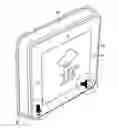
FIG. 1 shows the perspective view of a smart home appliance to be commissioned according to the disclosure.
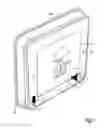
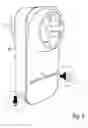
FIG. 2 shows the perspective view of a further smart home appliance to be commissioned according to the disclosure.
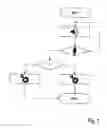
FIG. 3 is an abstract flow diagram for explaining the interactive voice operation conducted in a method according to the disclosure.
DETAILED DESCRIPTION
The fundamental procedure of a method according to an embodiment of the disclosure shall now be explained with reference to FIG. 1. The subject of the proposed method is here the smart home appliance 10 shown in the illustration, which is meant to be commissioned in a smart home system, which is not shown in full in the drawing. For this purpose, the smart home system has already been configured for the first time using a PC (also not shown) prior to the planned commissioning of the smart home appliance 10.
The smart home appliance 10 comprises for this purpose a display 12 arranged opposite the rear mounting surface, which display comprises four capacitive touch sensors 14, which can be used to assist in the configuration procedure as required. Obviously, an alternative embodiment may use instead an optional keypad or another input device without departing from the scope of the disclosure. In addition, a simpler smart home appliance without display and controls, such as the radio-controlled socket 20 shown in FIG. 2, is possible. A computer program stored on a machine-readable storage medium of the smart home appliance 10, 20 is configured to execute the steps of the method described below.
The smart home system initially detects that the smart home appliance 10, 20 is due to be commissioned and automatically makes predetermined settings at the smart home appliance 10, 20 by, for example, copying to the smart home appliance 10, 20 the basic configuration of a similar component already incorporated in the smart home system. Then the smart home system enters into an interactive voice operation with the user via a component of the smart home system, which component is networked to the smart home appliance 10, 20. As part of this interactive voice operation, the smart home system guides the user through the steps required for configuring the smart home appliance 10, 20, which involves in particular querying the settings of the smart home appliance 10, 20 that still need clarifying.
Instead of the smart home system detecting that the smart home appliance 10, 20 is due to be commissioned, this detection can also be performed by the smart home appliance 10, 20 itself, with said interactive voice operation taking place between precisely this smart home appliance 10, 20 and the user. Detecting a renewed commissioning or change to the configuration alternatively can also be initiated by a voice command or a control button.
The interactive voice operation is here conducted primarily by an interactive voice system of the smart home system and comprises both voice recognition and voice output. The abstract flow diagram shown in FIG. 3 explains this procedure using the example of configuring a parameter. Finally, after the interactive voice operation has concluded, the smart home appliance 10, 20 is added to the smart home system.
Claims
What is claimed is:1. A method for commissioning a smart home appliance in a smart home system, the method comprising:
detecting that the smart home appliance is due to be commissioned;
configuring the smart home appliance via an interactive voice operation with a user of the smart home system; and
adding the smart home appliance to the smart home system.
2. The method according to claim 1, wherein:
the detecting that the smart home appliance is due to be commissioned is performed by the smart home appliance; and
the interactive voice operation takes place between the smart home appliance and the user.
3. The method according to claim 1, wherein:
the detecting that the smart home appliance is due to be commissioned is performed by the smart home system; and
the interactive voice operation takes place between the user and a component of the smart home system, the component of the smart home system being networked to the smart home appliance.
4. The method according to claim 3, wherein the configuring of the smart home appliance involves (i) predetermined settings and (ii) settings that need clarifying, the configuring of the smart home appliance further comprising:
automatically configuring the smart home appliance with the predetermined settings using the smart home system;
entering into the interactive voice operation with the user after the automatic configuring; and
querying the settings that need clarifying during the interactive voice operation with the user.
5. The method according to claim 1, wherein:
the interactive voice operation includes voice recognition and voice output; and
the interactive voice operation is conducted using an interactive voice system.
6. The method according to claim 1, wherein an input device is used to assist the configuring of the smart home appliance, the input device being at least one of a touch sensor of a display and a keypad.
7. The method according to claim 1, further comprising:
configuring the smart home system before commissioning the smart home appliance.
8. A device for commissioning a smart home appliance in a smart home system, the device comprising:
a first component configured to detect that the smart home appliance is due to be commissioned;
a second component configured to configure the smart home appliance via an interactive voice operation with a user of the smart home system; and
a third component configured to add the smart home appliance to the smart home system.
9. A computer program for commissioning a smart home appliance in a smart home system, the computer program being configured to, when executed on a computer:
detect that the smart home appliance is due to be commissioned;
configure the smart home appliance via an interactive voice operation with a user of the smart home system; and
add the smart home appliance to the smart home system.
10. The computer program according to claim 9, wherein the computer program is stored on a machine-readable storage medium.
Images & Drawings included:
Sources:
- United States Patent and Trademark Office - verify current appl. status at the USPTO↗
Recent applications in this class:
- » 20250141709 2025-05-01
SERVER AND HOME APPLIANCE SYSTEM INCLUDING THE SAME - » 20250088383 2025-03-13
SYSTEM AND METHOD FOR CONTROLLING PLAYBACK OR RECORDING OF MEDIA ASSETS BASED ON A STATE OF A SECONDARY DEVICE - » 20240187276 2024-06-06
Multi-Source Smart-Home Device Control - » 20240154837 2024-05-09
System and method for controlling playback or recording of media assets based on a state of a secondary device - » 20240031192 2024-01-25
System and method for aggregating and analyzing the status of a system - » 20230370301 2023-11-16
Methods, systems, and media for media content streaming device setup - » 20230308306 2023-09-28
HOUSEHOLD APPLIANCES WITH PERSONALITY MANAGEMENT - » 20230299995 2023-09-21
AUGMENTED FUNCTIONS FOR COOPERATIVE ENHANCEMENT - » 20230155855 2023-05-18
System and method for aggregating and analyzing the status of a system - » 20230148087 2023-05-11
Automatic device orchestration and configuration
Recent applications for this Assignee:
- » 20250154889 2025-05-15
PRESSURE CONTROL IN AN EXHAUST AFTERTREATMENT SYSTEM - » 20250154580 2025-05-15
ENZYME TRANSLOCATORS IN NANOGAP WITH 3' -ESTERS - » 20250147582 2025-05-08
METHOD FOR DETERMINING AN EYE DISTANCE IN A PAIR OF DATA GLASSES, AND DATA GLASSES - » 20250146568 2025-05-08
DRIVE ASSEMBLY AND VEHICLE HAVING SUCH A DRIVE ASSEMBLY - » 20250146495 2025-05-08
Flexible Pump Assembly for Use in a Fan Drive - » 20250140882 2025-05-01
FUEL CELL SYSTEM HAVING ENERGY RECUPERATION - » 20250137810 2025-05-01
METHOD FOR MATCHING A DIGITAL ROAD MAP - » 20250137033 2025-05-01
DNA UNFOLDING USING A FREE-END TAG FLOW MODIFIER - » 20250119751 2025-04-10
A BLUETOOTH COMMUNICATION METHOD AND SYSTEM - » 20250118116 2025-04-10
Diagnostic Protocol Search With Improved Efficiency